Category Archives: Greece

Paul stood before Galilo at Corinth

Luke records, in the book of Acts, an important historical event involving Paul during the 18 months he worked at Corinth

12 But when Gallio was proconsul of Achaia, the Jews made a united attack on Paul and brought him before the tribunal,
13 saying, “This man is persuading people to worship God contrary to the law.”
14 But when Paul was about to open his mouth, Gallio said to the Jews, “If it were a matter of wrongdoing or vicious crime, O Jews, I would have reason to accept your complaint.
15 But since it is a matter of questions about words and names and your own law, see to it yourselves. I refuse to be a judge of these things.”
16 And he drove them from the tribunal.
17 And they all seized Sosthenes, the ruler of the synagogue, and beat him in front of the tribunal. But Gallio paid no attention to any of this. (Acts 18:12-17 ESV)

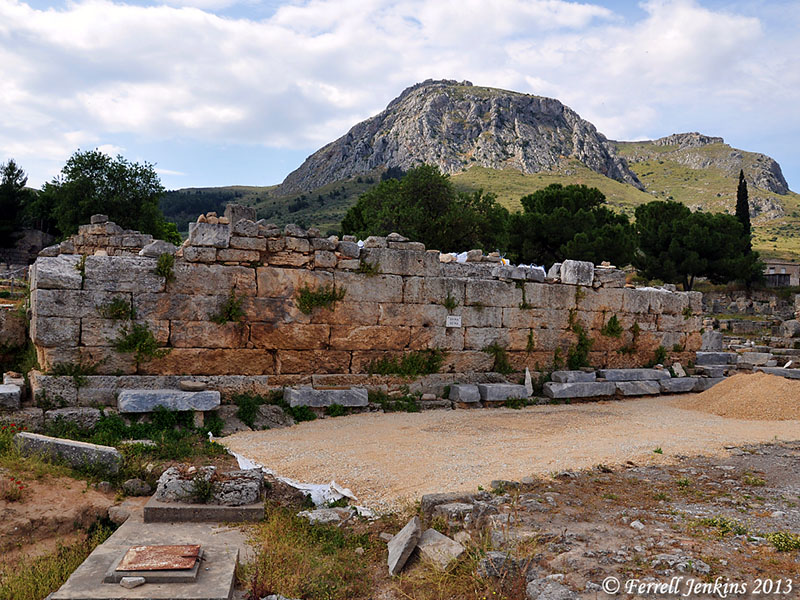
The photo below shows the actual platform or bema mentioned in Acts 18. Popular English versions use the terms tribunal, judgment seat, place of judgment, or judge’s bench.

The bema in the agora of Corinth. The Acrocorinth is in the distance. Photo by Ferrell Jenkins.

The bema in the agora of Corinth. Photo by Ferrell Jenkins.

The bema dates to A.D. 44, but could be as early as the time of Augustus (Murphy-O’Connor, St. Paul’s Corinth, 28).

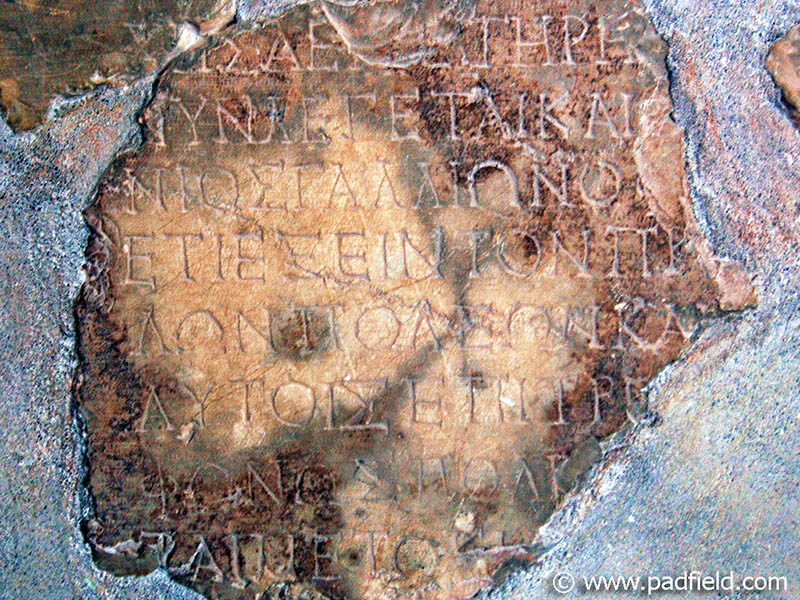
An inscription found at Delphi names Gallio the proconsul of Achaia. Gallio was the brother of the famous Roman Stoic philosopher Seneca. Gallio’s terms as proconsul of Achaia is usually dated to either A.D. 51/52 or 52/53. This is an important chronological help in our study of Paul’s journeys. In the largest fragment of the inscription, the name of ΓΑΛΛΙΩ (GALLIO)  may be seen in the center of the third line from the top.

The Delphi (Gallio) inscription. Photo by David Padfield.

The Delphi (Gallio) inscription. Photo by David Padfield.

I have been to Delphi at least two times, but the broken pieces of the Gallio Inscription were in a storage room. I did have written permission to see the fragment, but the slides I made were of poor quality. Thanks to David Padfield for permission to use the nice photo above which is now displayed in the museum at Delphi.

The theater at Corinth

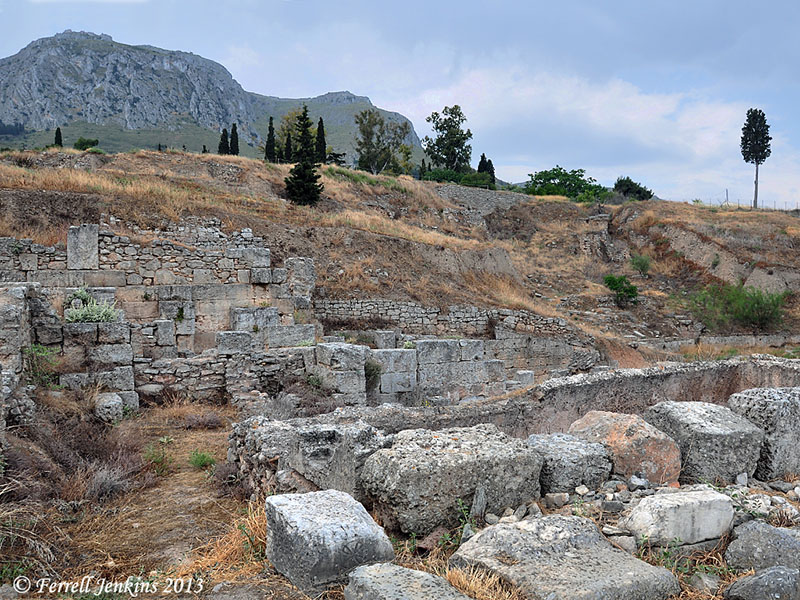
The theater at Corinth is a short distance from the agora and the Temple of Apollo. Reddish and Fant describe the theater:

The theater dates from the 5th century B.C.E. and later was rebuilt by the Romans, who added a multistory stage building . In Paul’s time it seated approximately 14,000 spectators. (A Guide to Biblical Sites in Greece and Turkey, p. 59)

According to the same source, both the theater and the odeion, “were later used for gladiatorial spectacles; the theater was even fitted for mock sea battles.”

Ruins of the theater at Corinth. Photo by Ferrell Jenkins.

Ruins of the theater at Corinth. Photo by Ferrell Jenkins.

The theater is not on the typical tourist route at Corinth, but it can be reached along a rugged path north of the major excavated area.

The Apostle Paul spent 18 months among the Corinthians.

And he stayed a year and six months, teaching the word of God among them. (Acts 18:11 ESV)

The Fountain of Glauke at Corinth

In addition to the Spring (or Fountain) of Peirene, Corinth had another significant water supply — the Fountain of Glauke. Reddish and Fant describe the fountain:

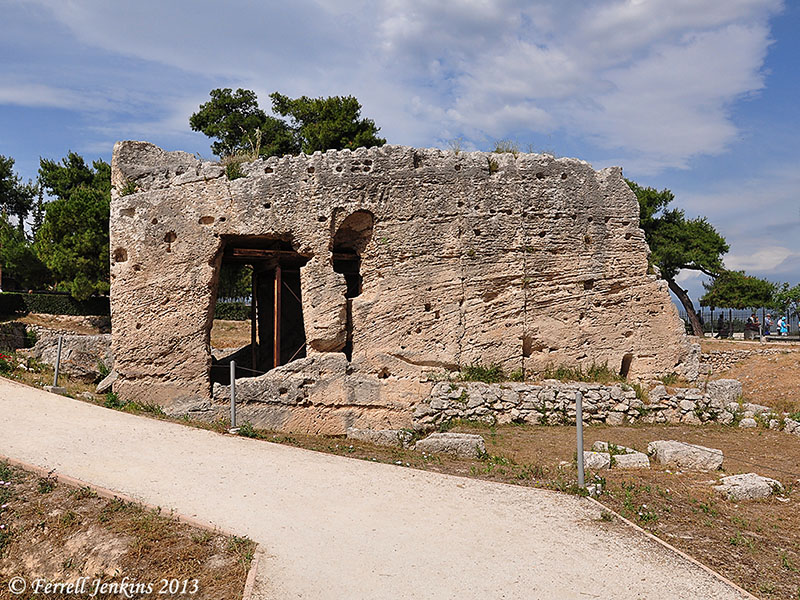
To the west of the temple [of Apollo] and on a lower level lies the Fountain of Glauke, supplied with water by a conduit from the Acrocorinth, virtually nothing of which remains except four reservoirs cut in the rock. It was named for the legendary daughter of a king of Corinth who threw herself into its waters to escape the flames of the magical robe sent her by Medea. Originally the fountain was covered by a building approximately 45 feet long and 40 feet wide. (A Guide to Biblical Sites in Greece and Turkey, 59).

The Fountain of Glauke at Corinth. Photo by Ferrell Jenkins.

The Fountain of Glauke at Corinth. Photo by Ferrell Jenkins.

Among the Christians at Corinth during the time of the Apostle Paul, we can certainly imagine that some of them visited these sites we have learned about as a result of the archaeological excavations over the past century. See Acts 18; 1 Corinthians; 2 Corinthians.

The Lechaion Road at Corinth

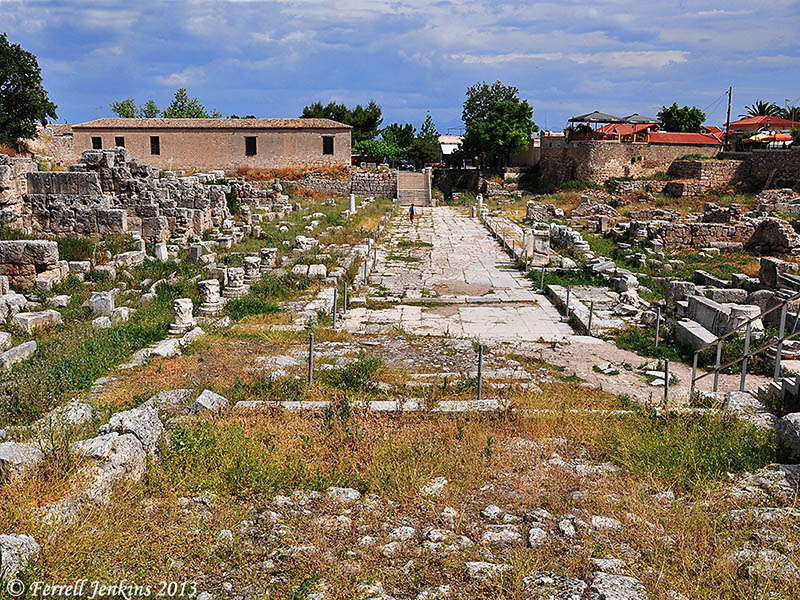
The Lechaion Road was the famous road that ran from the port of Corinth to the city. In Corinth the road was 20 to 25 feet wide, made of limestone, and flanked on either side by raised sidewalks and shops. The road ended at the agora which was directly to our back when we made the photo.

The Lechaion Road in Corinth. Photo by Ferrell Jenkins.

The Lechaion Road in Corinth. Photo by Ferrell Jenkins.

The Apostle Paul came to Corinth in the fall of A.D. 51 and remained until the spring of A.D. 53. During the eighteen months in the city he preached to both Jews and Greeks (Acts 18:1-4, 11).

A case can be made that there was a “lost letter” written by Paul to the Corinthians (1 Corinthians 5:9).

The document we call First Corinthians was written from Ephesus about A.D. 53/54.

Paul may have made a second visit to the city which ended in sorrow; some call this the “painful visit” of 2 Corinthians 2:1; 12:14; 13:1-4.

Paul proposed a third visit (2 Corinthians 12:14; 13:1-2), which probably took place during the three month stay in Greece (Acts 20:2-3). We believe that Paul wrote the letter to the Romans during this visit. Romans was delivered to the Romans by Phoebe, a servant of the church at Cenchreae (Romans 16:1).

National Geographic’s Top 10 Museums and Galleries

National Geographic recently released a list of Top 10 Museums and Galleries here.

  1. Smithsonian Institution, Washington, D.C.
  2. Le Louvre, Paris, France
  3. The Acropolis Museum, Athens, Greece
  4. State Hermitage, St. Petersburg, Russia
  5. The British Museum, London, England
  6. The Prado, Madrid, Spain
  7. The Metropolitan Museum of Art, New York City
  8. The Vatican Museum, Vatican City, Italy
  9. The Uffizi Gallery, Florence, Italy
  10. Rijksmuseum, Amsterdam, the Netherlands
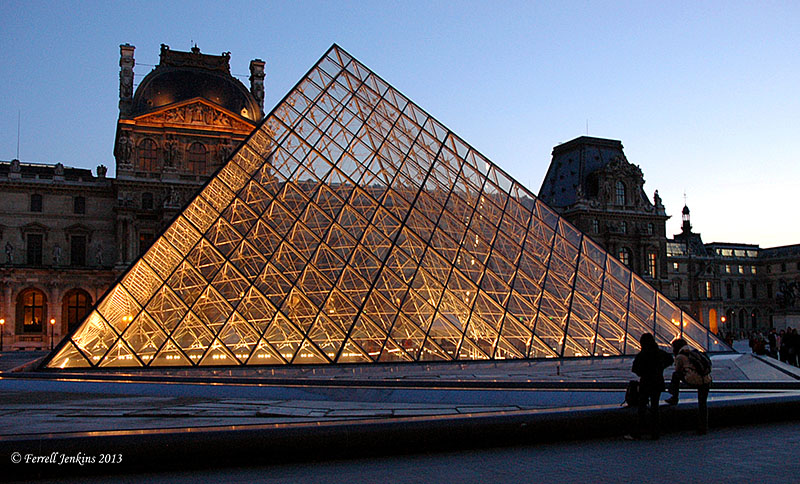
Entrance to the Louvre at night. Photo by Ferrell Jenkins.

Entrance to the Louvre at night. Photo by Ferrell Jenkins.

Over the years I have had the opportunity to visit each of these museums at least once. While I enjoy the art, I am usually looking for artifacts that provide some background for the Bible. That would make a good list.

If I should be asked to suggest number 11, it would be the Pergamon Museum, Berlin, Germany.

Following the news in the Bible World

Beginning with the Six Day War (June 5-10, 1967) I have tried to keep alert to the situation in the countries that are often called the Bible lands or the Bible World. This phrase is given to the countries of Iran, Iraq, Turkey, Syria, Lebanon, Jordan, Israel, Egypt, Greece, et al. where the events of the Bible transpired. Over the past 47 years I have traveled in all of these countries, some extensively, except Iran.

The current news coming out of Egypt is not good, and it is sad to see the conditions there. I wish for peace and justice for the people of Egypt, and the other countries mentioned above. I wish it also for those who would like to travel to these ancient lands to better learn the history, both secular and biblical.

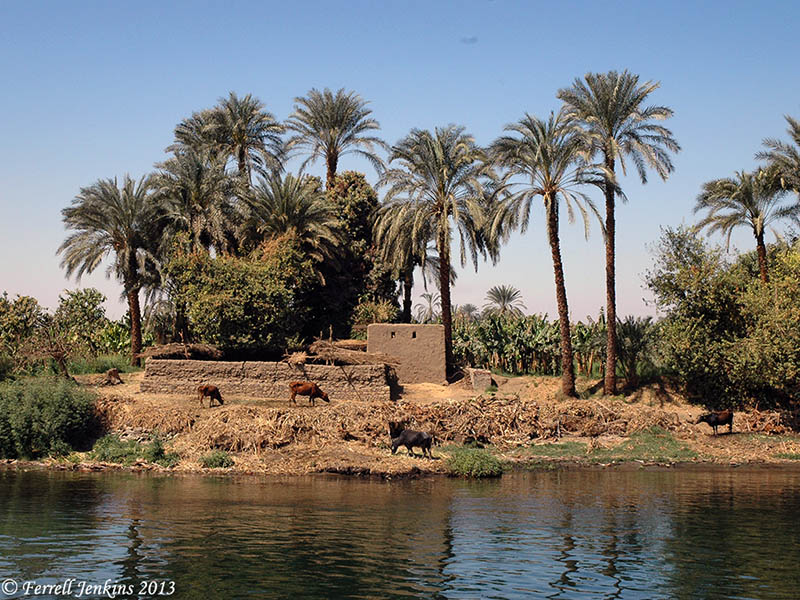
A scene on the Nile River in Upper Egypt. Photo by Ferrell Jenkins.

A scene on the Nile River in Upper Egypt. Photo by Ferrell Jenkins.

The photo above was made from the Nile River in Upper Egypt, near the ancient town of Edfu. When I look at it I am reminded of the Genesis account of the seven lean cows and seven plump cows that Joseph saw coming up out of the Nile (Genesis 41).

Xanathos in Lycia

The photo I am sharing today was made at ancient Xanthos, a city of Lycia, now in southwestern Turkey. The city is situated in the Lycian mountains a few miles from the Mediterranean coast and the ancient city of Patara (Acts 21:1). The small town of Kinik lies in the valley below Xanthos.

Roman Emperor Vespasian

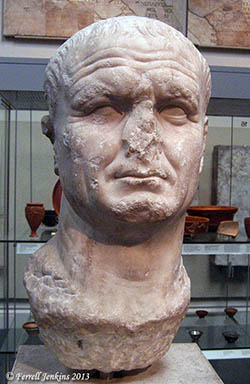
Emperor Vespasian. BM. Photo by F. Jenkins

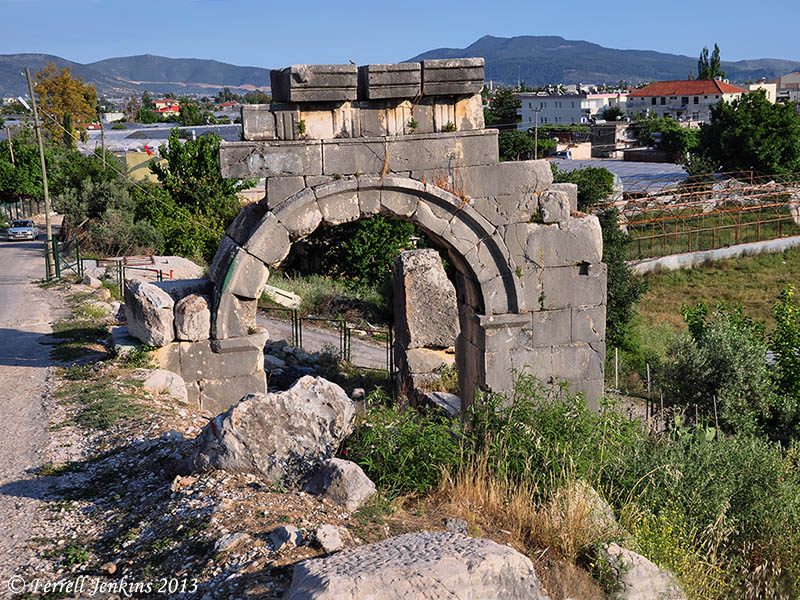
A road runs up the hill through the ancient ruins. One of the first monuments we come to is a Roman arch dedicated to the emperor Vespasian  (A.D. 69-79) by the Council and People of Xanthos. George E. Bean says,

The pavement which survives in part belongs to an ancient road which led up from Patara and the Letoum. – Lycian Turkey, 60.

Our view is made from above the arch. To the left you can see the narrow modern road leading to the parking lot at Xanthos.

Arch built by Vespasian partially below modern road level. Photo by Ferrell Jenkins.

Arch built by Vespasian partially below modern road level. Photo by Ferrell Jenkins.

This photo illustrates the build up of debris over the centuries.

Writers such as Bean tell of the time when the Persians conquered western Asia about 540 B.C. Rather than surrender, the fighting men of Xanathos placed their women, children, slaves, and property on the acropolis and set fire to it. These men then went forth and fought to the death.  This account reminds us of the one recorded by Josephus about the fall of Masada during the Jewish Wars against the Romans (The Jewish War 7.8.6).

For more information about Xanathos, and Lycia in general, see the nice Lycian Turkey website here.

Monument from Xanathos now in British Museum

The ancient Greek city of Xanthos (Xanthus) is mentioned in the Iliad as the greatest of the cities of Lycia. The site is located near Letoon, and a few miles north of Patara, the port where the Apostle Paul changed ships on the return from the Third Journey (Acts 21:1-2).

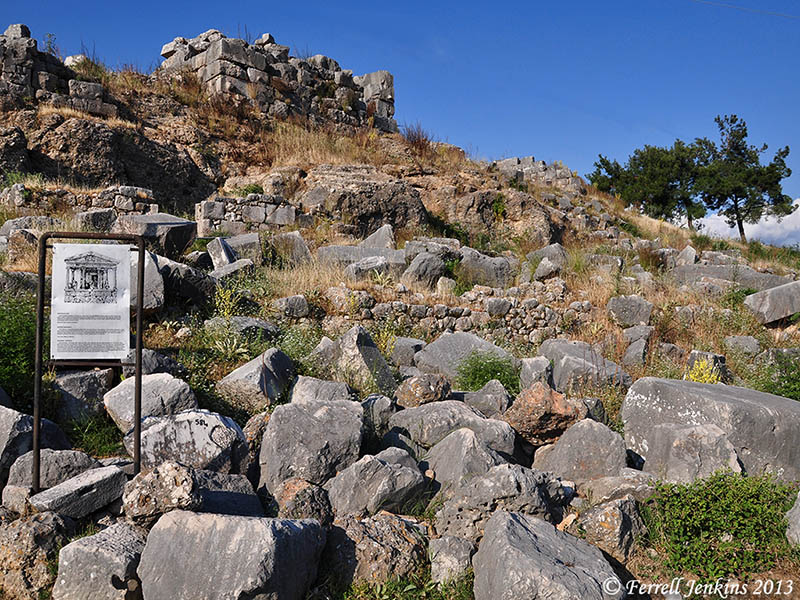
Our visit to Xanathos was limited due to the lateness of the day, but we took time to get a few photos of some significant ruins. Our first stop was what the Blue Guide Turkey calls “the few sad remains of the Nereid Monument.”

Xanathos_site-of-Nereid-Mon_fjenkins052012_043t

The site of the Nereid Monument at Xanathos. Photo by Ferrell Jenkins.

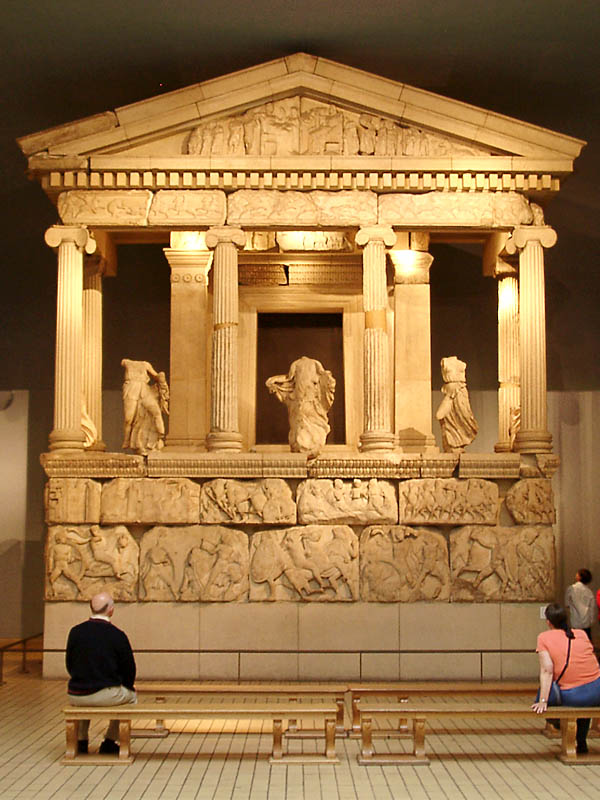
Charles Fellows took statues and friezes from the Monument to the British Museum in 1841-42, where they have been reconstructed.

Nereid Monument in British Museum. Photo by Ferrell Jenkins.

Nereid Monument in the British Museum. Photo by Ferrell Jenkins.

The sign at the original site (visible in the first photo) says,

This famous classical era monument was removed in its entirety to the British Museum in the last century [an old sign] and all that remains are a few rows of stones from the foundations and podium. This 4 by 6 columns Ionic temple style monument is embellished with reliefs and statues [sic]. The statues of twelve females between the columns are those of water spirits known as Nereids.

The Monument dates as early as 390 B.C.

The significance of Gaza

After my first tour to the Bible Lands, including Rome, Greece (Athens and Corinth), Egypt, Lebanon, Syria (Damascus), Jordan, and Israel, in April/May, 1967, I decided to make a second tour the following year. For many years, I always added some new places on each tour. In 1968 I added Beersheba and Gaza. The Gaza Strip (named such because of the long, narrow size of the small entity) had been under Egyptian control for several decades until June, 1967.

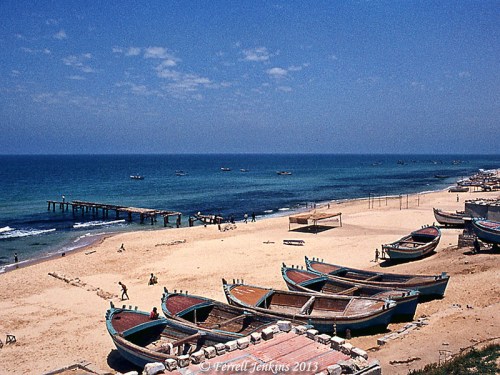
There was not much to see at Gaza. By the time we visited in 1968, Gaza was under Israeli control. We drove to the coast where there were only a few houses and some small fishing boats. This is one of the few slides that I have to illustrate the visit to Gaza.

Gaza on the Mediterranean Sea in May, 1968. Photo by Ferrell Jenkins.

Gaza on the Mediterranean Sea in May, 1968. Photo by Ferrell Jenkins.

Gaza is mentioned several times in the Old Testament. Here is a summary of these references.

  • Gaza was the southwestern boundary of the Canaanites in the table of Nations (Genesis 10:19).
  • The original inhabitants of Gaza were replaced by the Caphtorim, likely the ancestors of the Philistines (Deuteronomy 2:23).
  • Joshua defeated Canaanites “even as far as Gaza” (Joshua 10:41).
  • Joshua eliminated the Anakites except in Gaza, Gath, and Ashdod (Joshua 11:21-22). We recognized these cities as later belonging to the Philistines.
  • Gaza is listed as belonging to the tribe of Judah (Joshua 15:47; Judges 1:18).
  • The Midianites oppressed Israel, “as far as Gaza”, for seven years (Judges 6:4).
  • Samson had contact with the inhabitants of Gaza (Judges 16).
  • Gaza is listed as one of the five Philistine cities in the time of the Israelite Judges (1 Samuel 6:17).
  • Solomon controlled territory as far southwest as Gaza (1 Kings 4:24).
  • Hezekiah defeated the Philistines as far as Gaza and its territory (2 Kings 18:8).
  • Jeremiah makes reference to Gaza being conquered by Pharaoh (Jeremiah 47:1).
  • The prophets of Judah pronounced judgments upon Gaza (Amos 1:6-7; Zephaniah 2:4; Zechariah 9:5).

The only New Testament reference to Gaza is in Acts 8:26. Philip the evangelist was instructed to go south on the road that descends from Jerusalem to Gaza. English translators struggle with the issue of whether the city was desert, or the road leading to the city ran through a desert area. (I will leave that for some other time.)

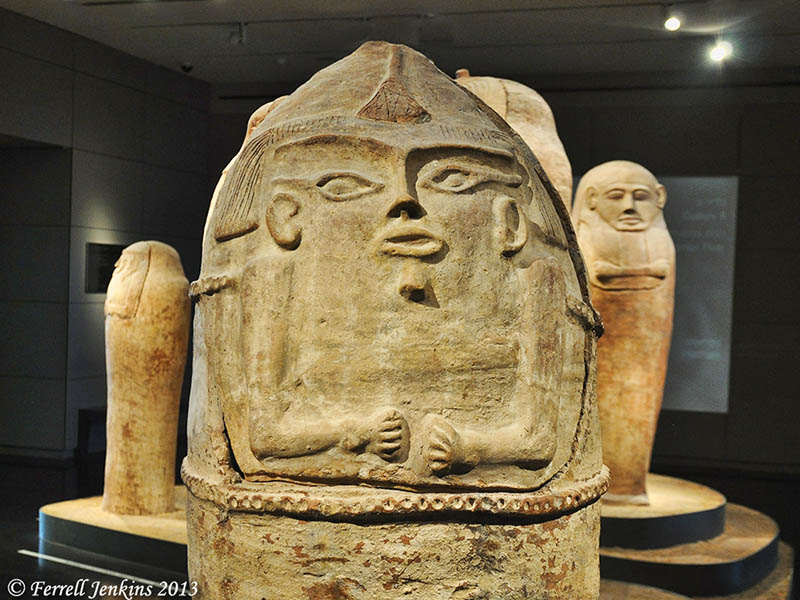
The first display one sees as he enters the archaeology wing of the Israel Museum is that of the anthropoid coffins from Deir el-Balah, a site south of Gaza city. The coffins, excavated by Trude Dothan in 1972, bear evidence of Egyptian influence. They date to the 13th century B.C.
Anthropoid Coffins from Deir el-Balah in the Israel Museum. Photo by Ferrell Jenkins.

Anthropoid Coffins from Deir el-Balah in the Israel Museum. Photo by Ferrell Jenkins.

The Antikythera Shipwreck and “Danger at sea”

The following post appeared in part on this blog June 4, 2012. I am repeating some of it for the benefit of those who missed it, and because it provides some complementary information for the study of Acts 27. A few changes have been made to make it more useful in connection with the Acts study.

The Antikythera Shipwreck is a special exhibition at the Athens (Greece) National Museum which is scheduled to run from April 2012 to April 2013.

The Ship and the Treasures

The shipwreck off the eastern coast of Antikythera is dated to 60-50 BC, a period during which maritime trade and transportation of works of Greek art from the Eastern Mediterranean to Italy flourished. Its cargo dates from the 4th to the 1st century BC. The ship was a freighter of about 300 tons capacity and was sailing towards Italy.

Bronze and marble sculpture luxurious glass vessels and golden jewellery, a large amount of pottery and bronze couches formed part of its cargo. Amongst these the famous “Antikylhera Mechanism” still contributes an enormous amount to our knowledge of ancient Greek technology and astronomy. All the finds recovered from the shipwreck bear witness to the aesthetic preferences of their orderers or potential purchasers but, above all, they reflect the new phenomenon of art trade, the first in the history of the West civilization.

The Mechanism

Constructed in the second half of the second century BC, the Mechanism comprises gears, scales, axles, and dials. The inscriptions on the surface of the Mechanism refer to astronomical and calendar calculations, while the inscriptions on its metal protective plates contain instructions for its use. The Antikythera Mechanism is the earliest preserved portable astronomical calculator. It displayed the positions of the Sun, the Moon and most probably the five planets known in antiquity. It was used to predict solar and lunar eclipses, it kept an accurate calendar of many years, and displayed the date of Pan-Hellenic games (Olympia, Nemea, Isthmia, Delphi and Dodona.

We had visited Thera (aka Santorini) during our Aegean cruise. Antikythera (“opposite Kythera”) is a Greek island between Crete and the Peloponnese (where Corinth is located). This area is north of where Paul’s ship encountered the storm that drove it off course (Acts 27:8-16).

In the earlier post I included two of the sculptures being transported on the ship. Go here to see those photos. I will share some different photos today.

One display case deals with the “Self-Sufficient Microcosm.” In addition to cargo, there were a few human skeletal remains on the ship. Those who traveled by sea often had to take their own food supplies on board with them. It is thought that olives and snails were part of the daily diet. There were stones “for grinding seeds, liquefying vegetables and herbs, and stirring liquids.”

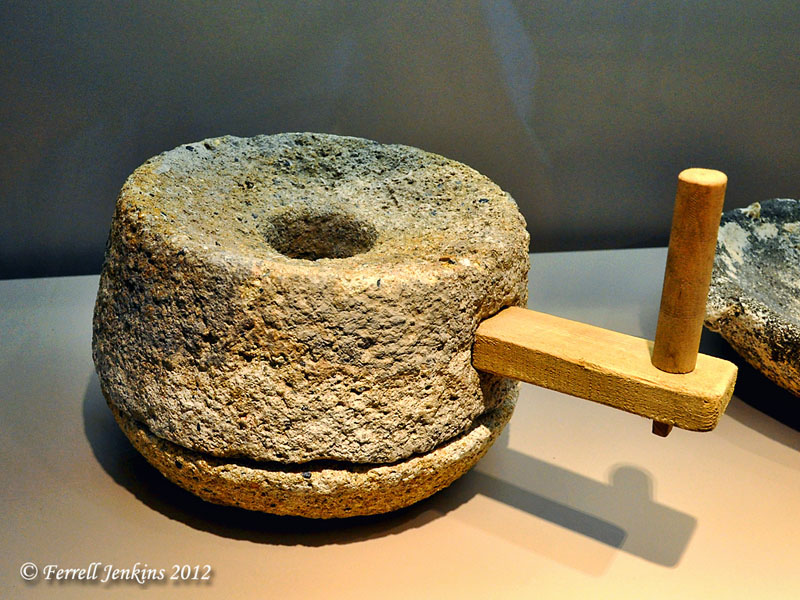
A manually operated quern was used for grinding grain.

Manually operated quern for grinding grain. Photo by Ferrell Jenkins.

Manually operated quern for grinding grain. Photo by Ferrell Jenkins.

Salted meat and fish, as well as olives, and wine could be stored for transport in amphorae and other containers. This display shows some of the amphorae as they might have been scattered on the sea bed.

Amphorae used for transporting goods. Photo by Ferrell Jenkins.

Amphorae used for transporting goods. Photo by Ferrell Jenkins.

Many of the sculptures found with the ship wreckage are encrusted with sea organisms. Be sure to see the previous post. There was one marble statue of a boy. The sign accompanying the sculpture says,

The boy is depicted nude and half bent-over with his head raised. The upper part of his torso leans sharply forward.

Some believe that this young man was preparing for wrestling. Others think he was a pancratiast (one who participated in both wrestling and boxing). Notice that the left side of the statue (our view on the right) is covered with sea organisms. The right side seems to have been buried in sediment on the sea bed, and thus protected.
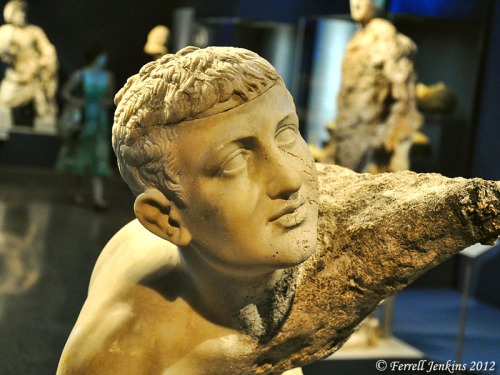
Statue of a boy from the Antikythera shipwreck. Photo by Ferrell Jenkins.

Statue of a boy from the Antikythera shipwreck. Photo by Ferrell Jenkins.

Numerous bronze pieces are displayed. I especially like the one known as “The Antikythera Philosopher.” See the previous article.

We typically think of ships from the Roman period, and earlier, staying near the shore (coasters). This was certainly true of many of the sea journeys of the Apostle Paul (Acts 20:5, 13-16; 27:5-7).

Greek archaeologists announce here the discovery of two Roman-era shipwrecks in water nearly a mile deep. Sailing to Italy required leaving the safety of the nearby shore for deep waters. Such was true of Paul’s journey to Rome after leaving Crete (Acts 27).

Paul spoke of the dangers at sea in his second letter to the Corinthians (11:24-29) about A.D. 55.

  • Three times I was shipwrecked.
  • A night and a day I was adrift at sea.
  • He mentioned “Danger at sea.”

The Malta shipwreck is the only one recorded in Acts, and it occurred after the writing of 2 Corinthians. Hughes mentions at least nine voyages between Acts 9 and 18. Paul says three of these ended in shipwreck. Hughes says there were at least another nine voyages between the writing of 2 Corinthians and the Malta shipwreck (The Second Epistle to the Corinthians, NICNT, 410-411).

At least some of the ships used by Paul were grain ships (Acts 27:38), but there may have been other cargo on some of them.

If you visit Athens between now and April 2013, be sure to take some time for The Antikythera Shipwreck.