Category Archives: Israel

Visualizing Isaiah 21: a watchtower

Isaiah 21 contains oracles concerning Babylon, Edom, and Arabia. The watchman is to describe what he sees. From his watchtower where he stood day and night he was able to announce the fall of Babylon.

For thus the Lord said to me: “Go, set a watchman; let him announce what he sees. When he sees riders, horsemen in pairs, riders on donkeys, riders on camels, let him listen diligently, very diligently.” Then he who saw cried out: “Upon a watchtower I stand, O Lord, continually by day, and at my post I am stationed whole nights. (Isa 21:6-8 ESV)

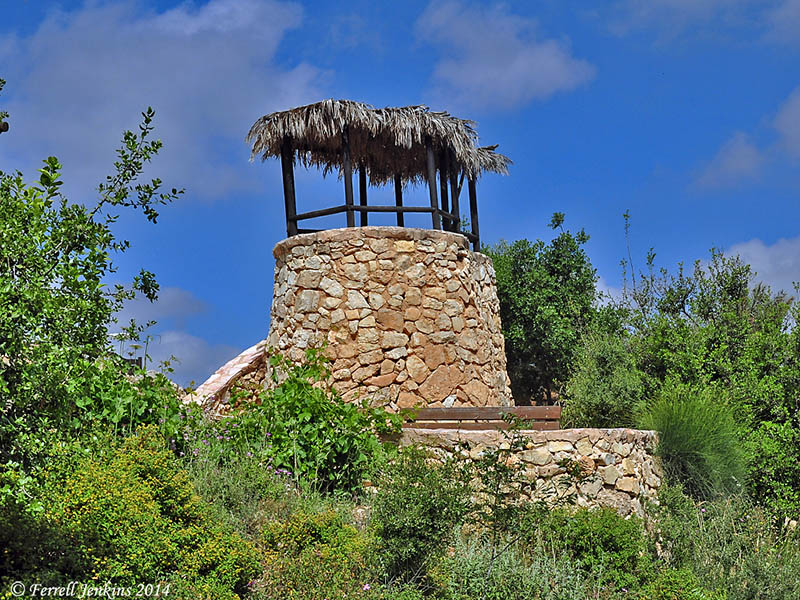
More information about the role of the watchman may be found in Ezekiel 3 and 33. The photo below shows a watchtower reminiscent of Biblical times.

Watchtower at the Ibex Garden, Yad Hashmona. Photo by Ferrell Jenkins.

Watchtower at the Ibex Garden, Yad Hashmona. Photo by Ferrell Jenkins.

Visualizing Isaiah 20: Sargon the king of Assyria

For many years there was no reference to Sargon II (722-705 B.C.) in the available Assyrian records. Yet, the prophet Isaiah, writing at the time of the Assyrian captivity of the northern kingdom of Israel, mentions Sargon’s campaign against Ashdod.

In the year that the commander in chief, who was sent by Sargon the king of Assyria, came to Ashdod and fought against it and captured it– (Isaiah 20:1 ESV)

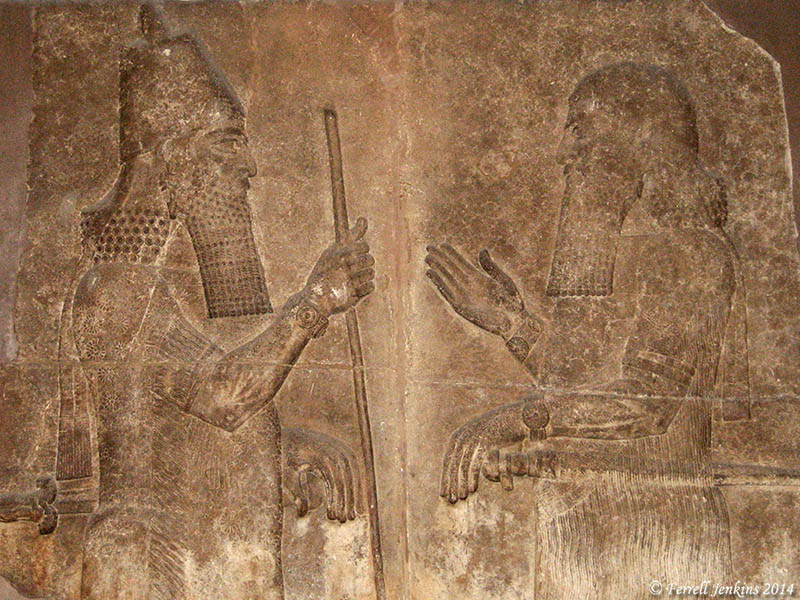
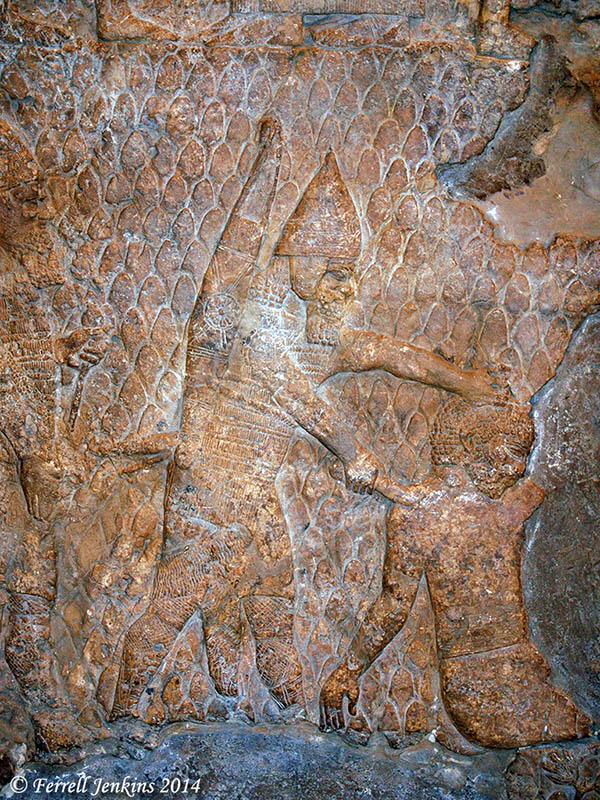
The palace of Sargon was discovered by Emile Botta at Khorsabad in 1843. This was the period of “monumental” discoveries in archaeology. Both the British Museum and the Louvre have impressive artifacts from the palace of Sargon. The photo below shows Sargon (on the left) receiving one of  his ministers.

Sargon II received a minister. British Museum. Photo by Ferrell Jenkins.

Sargon II receives a minister. British Museum. Photo by Ferrell Jenkins.

D. J. Wiseman explains the historical context of what happened at Ashdod.

In 716 bc Sargon sent his army commander (turtan; the *‘tartan’) to war against the Arabs in Sinai. This led to the reception of tribute from the pharaoh Shilkanni (Osorkon IV) of Egypt and from Samsi, queen of the Arabs. Despite these Assyrian successes, the people of Ashdod displaced their Assyrian-nominated ruler, Ahimetu, by a usurper Iadna (or Iamani) who initiated yet another Syro-Palestinian league against Assyria, doubtless relying on Egyptian help. In 712 bc the same turtan was sent to conquer Ashdod (Is. 20:1), which was reduced to the status of an Assyrian province. Since Azaqa (’Azeqah or Tell es-Zakariye) on the Judaean border near Lachish surrendered in this campaign, it will be seen how narrowly independent Judah escaped a further invasion. Iamani fled to Nubia for refuge, only to be extradited to Nineveh by the ruler Shabaka. (The New Bible Dictionary, 3rd edition)

One hundred twenty years after the discovery of Sargon’s palace, archaeologists working at Ashdod discovered fragments of a cuneiform stele of Sargon II at Ashdod. For more information about the discovery and a photograph of it see “Sargon II, Ashdod, and Isaiah 20:1” here.

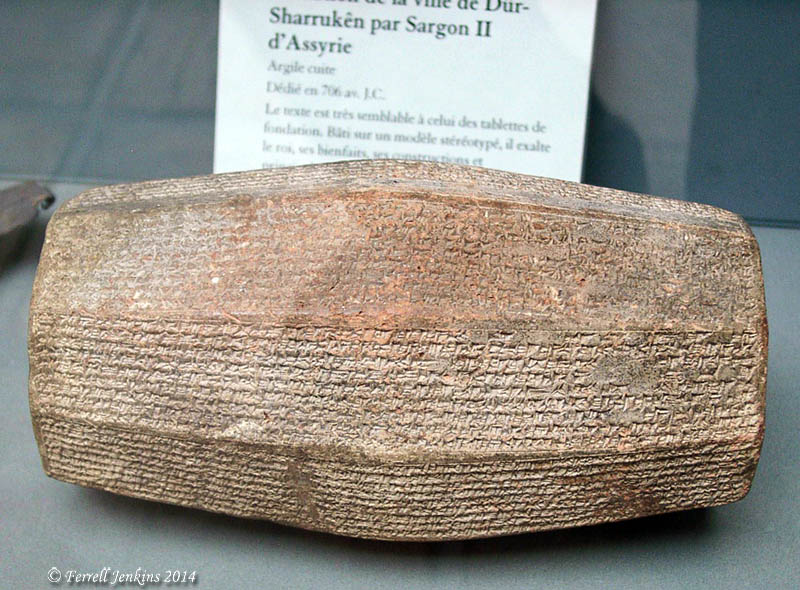
This inscription tells of the building of Sargon's palace. Louvre. Photo by Ferrell Jenkins.

This inscription tells of the building of Sargon’s palace. Louvre. Photo by Ferrell Jenkins.

Visualizing Isaiah 18: “the rivers of Cush”

Israel and Judah found themselves positioned between the great political and military powers of the time: Assyria and Babylon to the north (or east) and Egypt to the south. In Isaiah 18 and 19, the prophet deals with the power to the south. Cush is likely more or less synonymous with Egypt for this purpose. The region is described as one of unrest.

Ah, land of whirring wings that is beyond the rivers of Cush, (Isaiah 18:1 ESV)

The IVP Bible Background Commentary comments on Cush, and explains the difference between Cush and modern Ethiopia.

Cush can refer to several different places in the Old Testament, though it most frequently is the designation for the area translations usually render “Ethiopia.” This is misleading, for the area Cush refers to is not modern Ethiopia (Abyssinia), but the area along the Nile just south of Egypt, ancient Nubia (in modern Sudan). The boundary between Egypt and Nubia in ancient times was usually either at the first or second cataract of the Nile. It is unlikely that Nubia ever extended much beyond the sixth cataract at Khartoum.

The Theological Wordbook of the Old Testament comments on the term Cush (Ethiopia) as it is used in several Old Testament prophecies.

In several cases, especially in the prophets, Ethiopia is used in parallel construction as a synonym of Egypt (Isa 20:3-5; Ezek 30:4; Nah 3:9). This probably represents the dominance of Ethiopia (or, more precisely, Nubia) over Egypt between 750 and 663 B.C. Terhakah was a notable Nubian pharaoh who tried, unsuccessfully, to block Sennacherib’s westward expansion (2Kings 19:9 ; Isa 37:9). After 663 B. C. Egypt was independent of Nubia (Jer 46:9; Ezek 25:4, 5, 9).

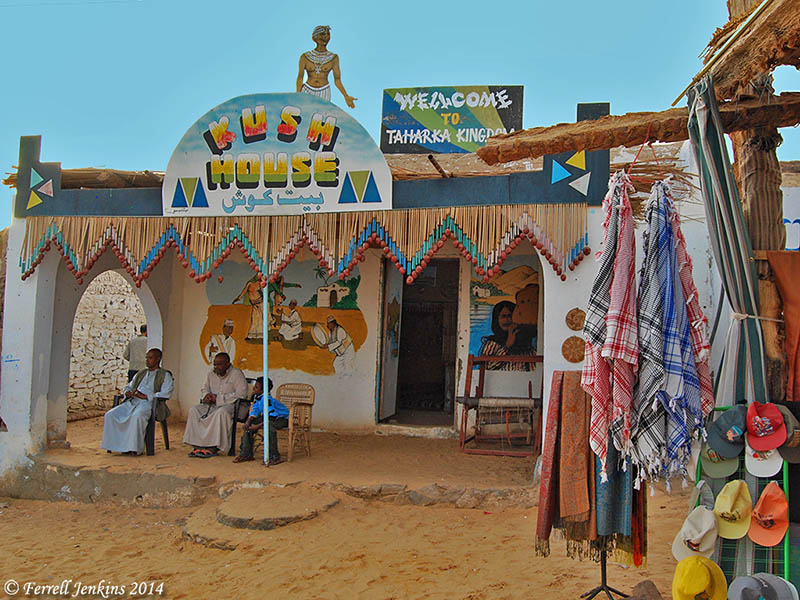
Nubians now live in Sudan and southern Egypt near Aswan. Some of these people were displaced as a result of the building of the New High dam at Aswan and the formation of Lake Nasser. Some of the Nubians still live in Sudan. They are energetic people and good at selling their wares to the visiting tourists. At the first cataract of the Nile some Nubians have set up a small village with shops and camel rides for those brave enough to try. Notice the example below called Kush (Cush) House.

A Nubian village at Aswan, Egypt, highlights the connection with Cush. Photo by Ferrell Jenkins.

Nubian village at Aswan, Egypt, highlights connection with Cush. Photo: F. Jenkins.

One sign reads “Welcome to Taharka Kingdom.” Taharka ((English Bible: Tirhakah). A photo showing Tirhakah under the protection of the god Amun is available here.

Visualizing Isaiah 17: olives and altars

In the oracle concerning Damascus (Syria), Isaiah uses illustrations of the gleaning of grain and olives –plants common in that time.

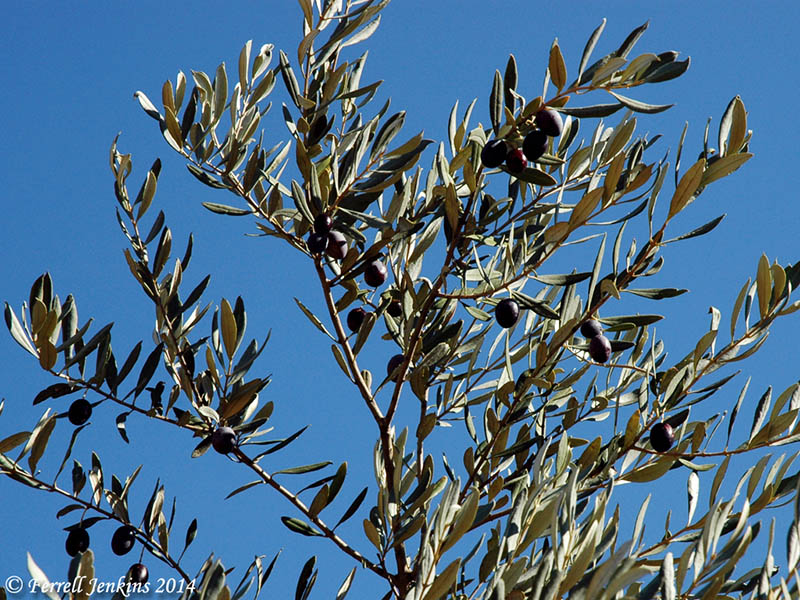
Gleanings will be left in it, as when an olive tree is beaten– two or three berries in the top of the highest bough, four or five on the branches of a fruit tree, declares the LORD God of Israel. (Isaiah 17:6 ESV)

We could probably shake off several more of the olives from the limbs below and have a better illustration of what Isaiah says, but hopefully this will serve to illustrate the point.

Olives on a branch at Neot Kedumim. Photo by Ferrell Jenkins.

Olives on a branch at Neot Kedumim. Photo by Ferrell Jenkins.

Another thing Isaiah says is that Damascus would no longer look to the altars they had made with their own hands. These images, and the gods they represented, would fail.

He will not look to the altars, the work of his hands, and he will not look on what his own fingers have made, either the Asherim or the altars of incense. (Isaiah 17:8 ESV)

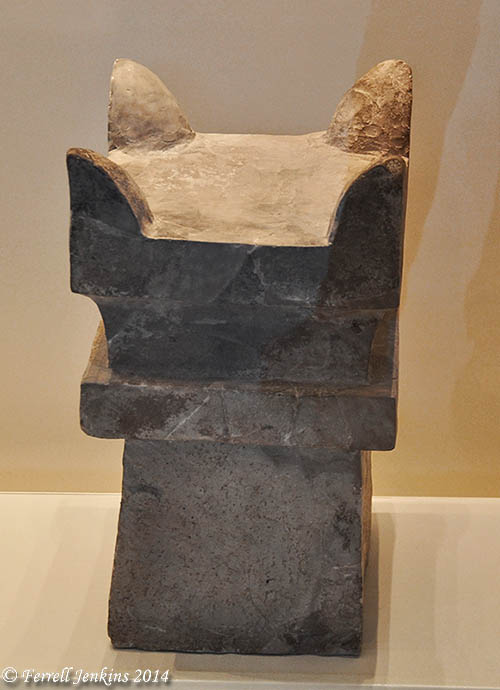
Altars of incense came in all sizes in those days, and many have been uncovered by archaeologists working at various sites. The altar below, now displayed in the Israel Museum, is from Megiddo.

Altar of Incense from Megiddo. Israel Museum. Photo by Ferrell Jenkins.

Horned altar of Incense from Megiddo. Israel Museum. Photo by Ferrell Jenkins.

Visualizing Isaiah 15-16: the fords of the Arnon in Moab

When the prophets of ancient Israel pointed out the coming judgment of God upon the Israelites they typically pointed out that their enemies had already, or were going to, face the same judgment. This applied not only to the major powers such as Assyrian, Babylon, or Egypt, but also smaller powers that lived closer. It included Syria (Damascus), the Philistines, Moab, Edom, and the Ammonites. When Judah is being addressed there will be also a reference to Israel (Ephraim, Samaria).

Chapter 15 begins “an oracle concerning Moab.” We have, in previous posts, mentioned many of the Moabite towns. I think you can use the search box and locate photos of Dibon, Nebo, Medeba (Madaba), Elealeh, and Kir-hareseth. Isaiah mentions the daughters of Moab fleeing across the Arnon.

Like fleeing birds, like a scattered nest, so are the daughters of Moab at the fords of the Arnon. (Isaiah 16:2 ESV)

We commonly think of the Arnon River (or gorge) serving as the dividing line between Moab (to the south) and Ammon (to the north). However, you will notice that most of the towns mentioned above are north of the Arnon. The boundary changed throughout Biblical history. At the time of Isaiah the boundary certainly includes cities north of the Arnon.

The Arnon River is shown on this map. BibleAtlas.org.

The Arnon River is shown on this map. BibleAtlas.org.

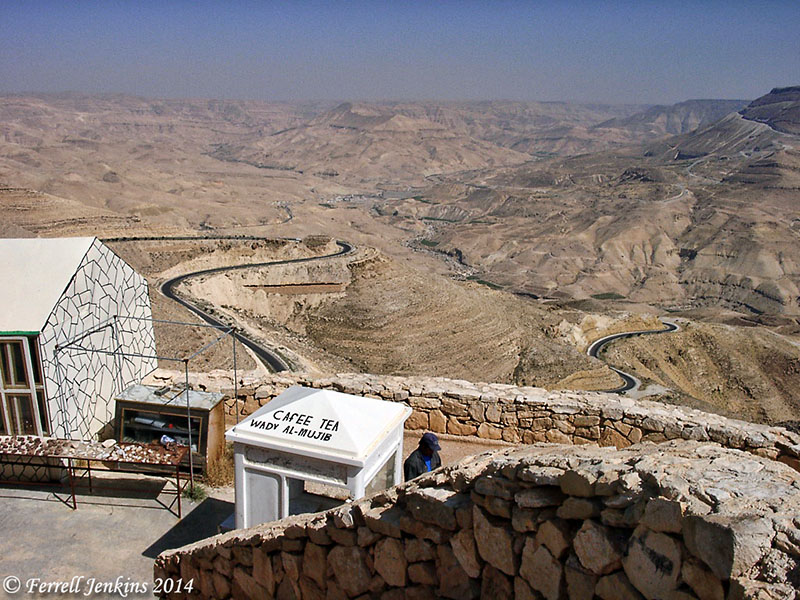
The Arnon is now known as the Wadi el-Mujib in Jordan. It was not an easy one to cross in ancient times.  The river served as a major barrier for north-south travel. A modern road runs through it today. The river flows from East to West where it empities into the Dead Sea. The locals now refer to this as the “Grand Canyon of Jordan.”

The Arnon gorge in Transjordan. View south. Photo by Ferrell Jenkins.

The Arnon gorge in Transjordan. View south. Photo by Ferrell Jenkins.

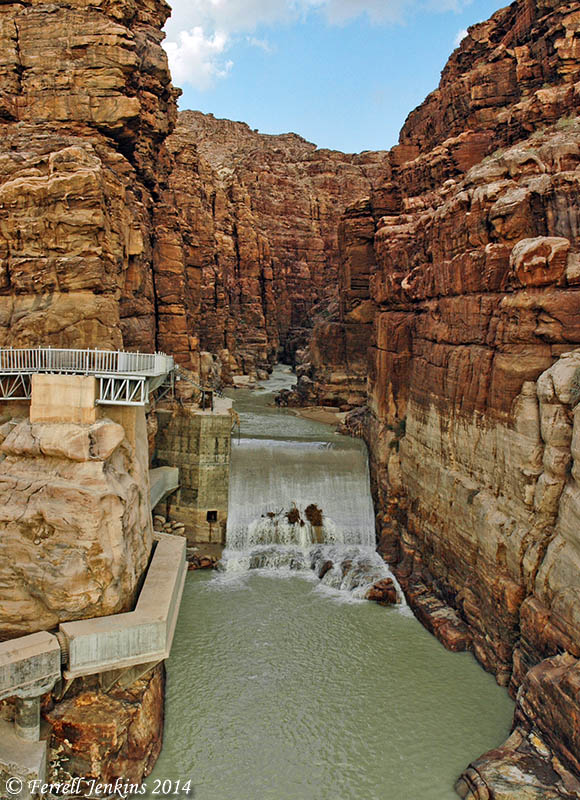
From this point the river flows west about 13 miles till it reaches the Dead Sea. A modern road now runs along the Dead Sea, and a small dam has been constructed to help control the water when it fills the gorge.

The Arnon River immediately before flowing into the Dead Sea. Photo by Ferrell Jenkins.

The Arnon River immediately before flowing into the Dead Sea. View east. Photo by Ferrell Jenkins.

No camels during the Patriarchal Age?

That’s what they are saying. It is a popular theme of those who want to put Bible believers in their place. Camels are mentioned repeatedly in Genesis 12-37, a section of Scripture set during the Middle Bronze Age (about 2100–1550 B.C.). Many of the well-known Bible characters of the Patriarchal Age are mentioned as riding camels.

A few days ago I was beginning to locate my sources to respond to the recent article in the New York Times, and in Time. While I was working on Visualizing Isaiah, Todd Bolen came out with two great articles on the subject. I include these links for the two people who read my blog but do not read the Bible Places Blog.

First, you should read the post about the Domestication of the Camel.

Then read.

Both are these posts are well documented with scholarly links you can track down to your own satisfaction. Don’t be unprepared the next time this subject comes up.

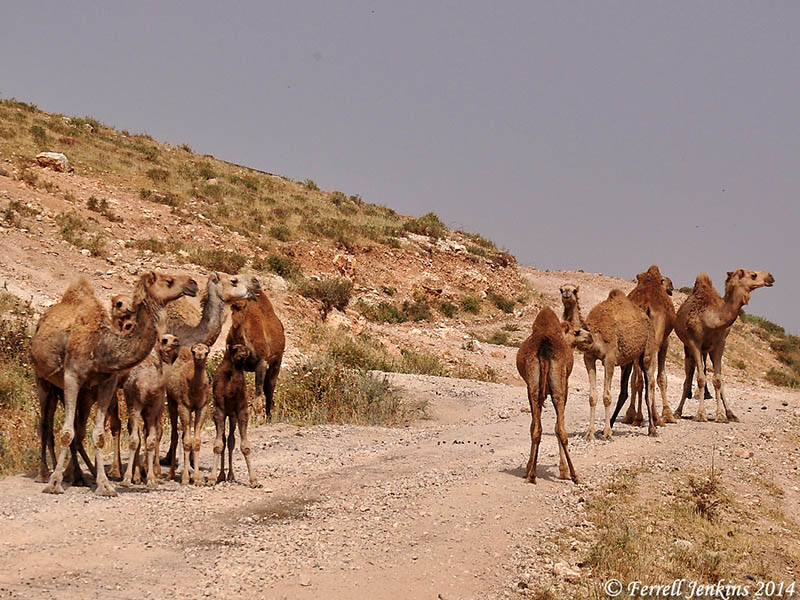
Camels at Abel-meholah, possibly the home of the prophet Elisha. Photo by Ferrell Jenkins.

Camels at Abel-meholah, possible home of the prophet Elisha. Photo by Ferrell Jenkins.

Isaiah 13: jackals & hyenas in the palaces of Babylon

Babylon would not become the dominant power of the ancient near east until about 626 B.C. (The Assyrian capital of Nineveh fell in 612 B.C., and Assyria was finished at the battle of Carchemish in 605 B.C.). But Isaiah looks ahead to the overthrow of Babylon, an event which would occur in 539 B.C. at the hands of the Medes and Persians.

It will never be inhabited or lived in for all generations; no Arab will pitch his tent there; no shepherds will make their flocks lie down there. But wild animals will lie down there, and their houses will be full of howling creatures; there ostriches will dwell, and there wild goats will dance. Hyenas will cry in its towers, and jackals in the pleasant palaces; its time is close at hand and its days will not be prolonged. (Isaiah 13:20-22 ESV)

Persian interest in Babylon declined by the end of the 5th century B.C. With capitals already at Susa and Persepolis why did they need a third? Alexander the Great first came to Babylon in 331 B.C. intending to make Babylon the capital of a new commercial empire. The great conqueror died in Babylon in June, 323 B.C. His successor in the region, Antiochus I, built a new capital at Seleucia on the Tigris River. This is the region near modern Baghdad.

The palaces where once the leaders of Babylon strolled past the windows were to be occupied by the wild animals of the area.

Jackal at Haibar Wildlife Reserve. Photo by Ferrell Jenkins.

Jackal at Hai-Bar Wildlife Reserve. Photo by Ferrell Jenkins.

The second photo is of a hyena, another of the wild animals that would inhabit the empty palaces and towers of Babylon.

A hyena at Hai Bar Nature Reserve. Photo by Ferrell Jenkins.

A hyena at Hai-Bar Nature Reserve. Photo by Ferrell Jenkins.

A series of articles on the major kings of Babylon are available at the following links.

Visualizing Isaiah 12: wells of salvation

Isaiah describes the Messianic Age as one that will be characterized by many spiritual blessings. The pleasant waters of Shiloah had been rejected by God’s people, but in the time to come Judah would joyfully draw water from the wells of salvation.

With joy you will draw water from the wells of salvation. (Isaiah 12:3 ESV)

The term mayan (wells) is often used in the Old Testament of springs, fountains, wells, or pools of water.

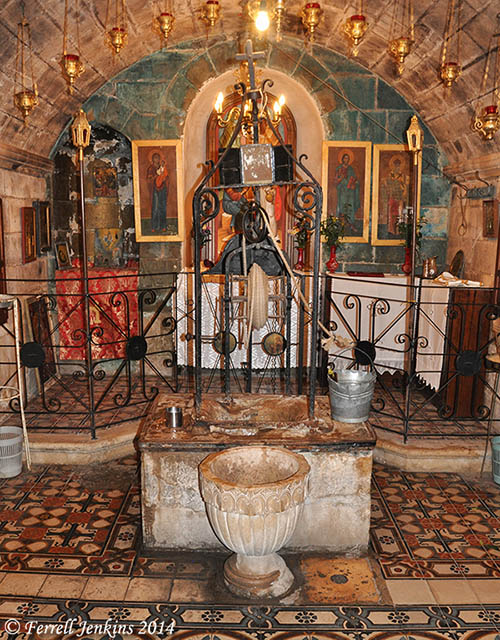
We might think of a well like the one where Jesus stopped at Sychar in Samaria.

Jesus answered her, “If you knew the gift of God, and who it is that is saying to you, ‘Give me a drink,’ you would have asked him, and he would have given you living water.” The woman said to him, “Sir, you have nothing to draw water with, and the well is deep. Where do you get that living water? Are you greater than our father Jacob? He gave us the well and drank from it himself, as did his sons and his livestock.” Jesus said to her, “Everyone who drinks of this water will be thirsty again, but whoever drinks of the water that I will give him will never be thirsty again. The water that I will give him will become in him a spring of water welling up to eternal life.” The woman said to him, “Sir, give me this water, so that I will not be thirsty or have to come here to draw water.” (John 4:10-15 ESV)

Jacob's well in Samaria. Photo by Ferrell Jenkins.

Jacob’s well in Samaria. Photo by Ferrell Jenkins.

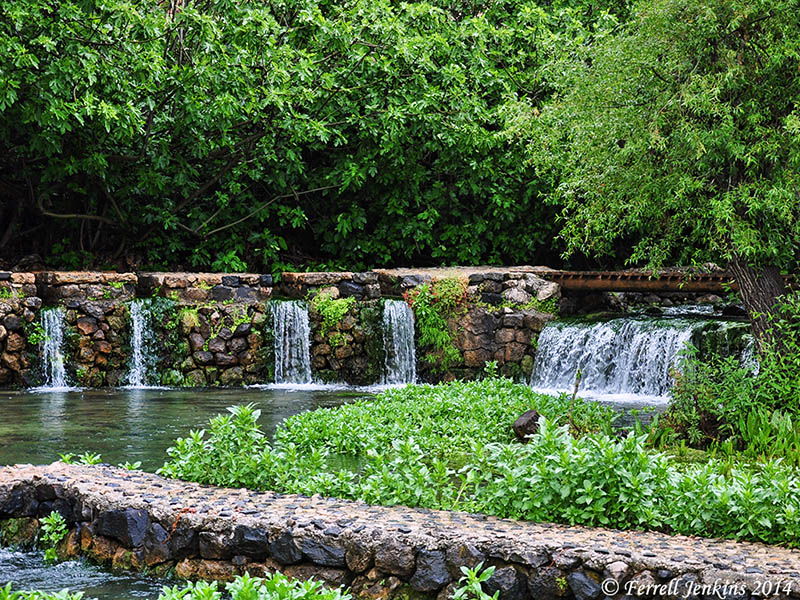
Or, we might think of a spring like the beautiful one at the source of the Banias River at Caesarea Philippi. This spring and river becomes a major source of the Jordan River.

The source of the Banias River, source of the River Jordan. Photo by Ferrell Jenkins.

The source of the Banias River. Photo by Ferrell Jenkins.


Visualizing Isaiah 11: the River

Immediately upon looking at Isaiah 11 I think of the reference to the Messiah –  “a shoot from the stump of Jesse.” Look back to chapter 4 for an illustration for that.

I could show you individual photos of many of the animals mentioned in verses 6-7, but I do not have the wild and vicious with the tame and gentle. It doesn’t happen in the animal kingdom, but it is true in the kingdom of the Messiah. See, for example, Colossians 3:11 where there is not Greek and Jew, circumcised and uncircumcised, barbarian, Scythians, salve, free. In Christ these distinctions are broken down.

Here I have chosen to concentrate on the promise of the return of a remnant from captivity, an event that took place initially in 536 B.C.

And the LORD will utterly destroy the tongue of the Sea of Egypt, and will wave his hand over the River with his scorching breath, and strike it into seven channels, and he will lead people across in sandals. And there will be a highway from Assyria for the remnant that remains of his people, as there was for Israel when they came up from the land of Egypt. (Isaiah 11:15-16 ESV)

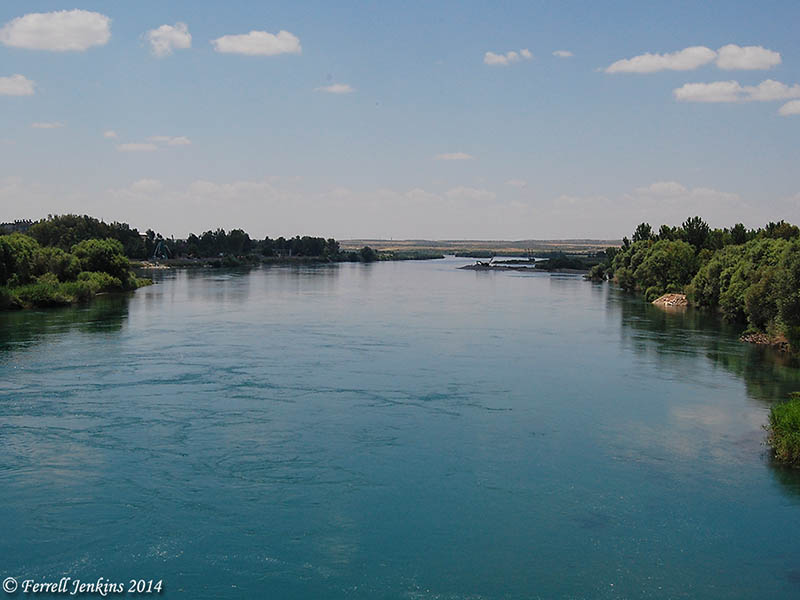
The Euphrates is the largest, longest and most important river of Western Asia. It is nearly 1800 miles long and was the northeastern boundary of the land promised to Abraham (Genesis 15:18). The empires of Assyria and Babylon, the greatest enemies of Israel, were east of the Euphrates. The Old Testament prophets often put the Euphrates by metonymy for these countries to designate the place from which the punishment of God would come (Isaiah 7:20; 8:7; Jeremiah 46:10

The Euphrates was so significant in the history of Israel that the phrase “the River” is used frequently in the Old Testament to indicate the Euphrates.
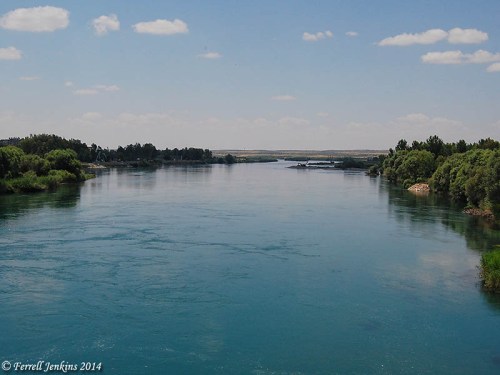
View north of the Euphrates River at Berecik, Turkey. Photo by Ferrell Jenkins.

The Euphrates River, looking north, at Birecik, Turkey. Photo by Ferrell Jenkins.

The LORD said that He would bring “the waters of the River, the king of Assyria and all his glory” like a flood to rise to the neck of His people (Isaiah 8:6-8). Now He promises to strike the River and allow His people to return from the exile in sandals. In fact, He says, “there will be a highway from Assyria for the remnant that remains of his people” 11:16).

When Assyrian kings stated in their annals that they crossed the river Euphrates they mean that they went to war against nations west of the River.

Visualizing Isaiah 10: “Assyria, the rod of my anger”

The Assyrians are first introduced in Isaiah 7. In chapter 10 we are informed that they are “the rod of [the LORD’s] anger.” They will serve the purpose of God to punish His people. Isaiah tells us that the Assyrians did not plan to be doing the will of the LORD; they only wanted to destroy many nations.

Ah, Assyria, the rod of my anger; the staff in their hands is my fury! Against a godless nation I send him, and against the people of my wrath I command him, to take spoil and seize plunder, and to tread them down like the mire of the streets. But he does not so intend, and his heart does not so think; but it is in his heart to destroy, and to cut off nations not a few; for he says: “Are not my commanders all kings? (Isaiah 10:5-8 ESV)

In the photos below I hope to illustrate a few ways the Assyrians punished the Judeans. Certainly the same was true of the northern kingdom of Israel (2 Kings 17:5-6).

The Assyrians destroyed northern cities of Israel such as Hazor and the site sometimes identified as Geshur or NT Bethsaida in 732 B.C. By 722/21 Samaria lay in ruins. Assyria continued south into Judah. Sennacherib claims to have destroyed 46 strong cities of Judea in addition to all of the nearby villages (The Taylor Prism).

Assyrian King Sennacherib left reliefs of his war against Lachish on his palace wall at Nineveh. The following photos are portions of that relief now displayed in the British Museum. Many Judeans were taken into captivity. Other begged for mercy in the hilly Shephelah of Judah.

Judeans begging for mercy. Photo by Ferrell Jenkins.

Judeans begging for mercy. Photo by Ferrell Jenkins.

The plea was unsuccessful for some of them. This portion shows an Assyrian commander killing a Judean.

An Assyrian soldier kills a Judean. Photo by Ferrell Jenkins.

An Assyrian soldier kills a Judean. Photo by Ferrell Jenkins.

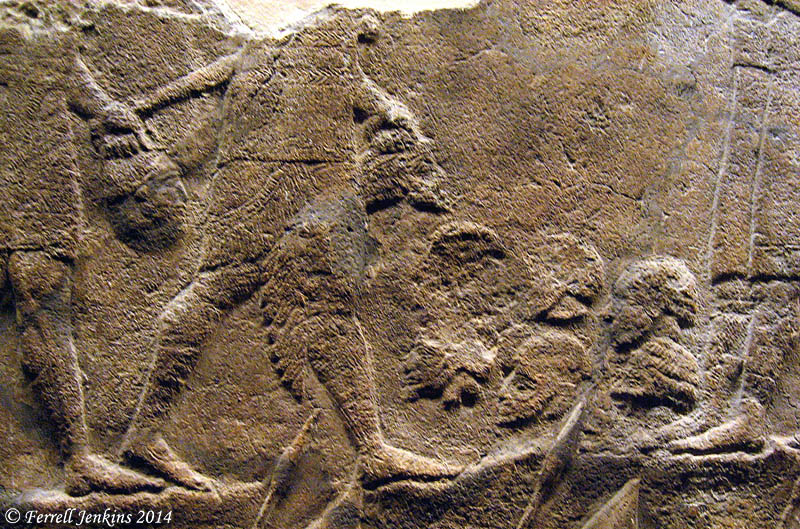
This portion of the relief shows heads of the slain being brought together for accounting. Some Egyptian reliefs show hands and other body parts being gathered for the same purpose.

Heads of Judeans being collected to get a count. Photo by Ferrell Jenkins.

Heads of Judeans being collected to get a count. Photo by Ferrell Jenkins.

A 25-minute Discovery Channel video entitled The Assyrians: Masters of War uses Assyrian reliefs to tell the story of their savagery in war. Lachish is emphasized. Click here. (HT: Bible Places Blog).