Jehoash Tablet must be returned to owner

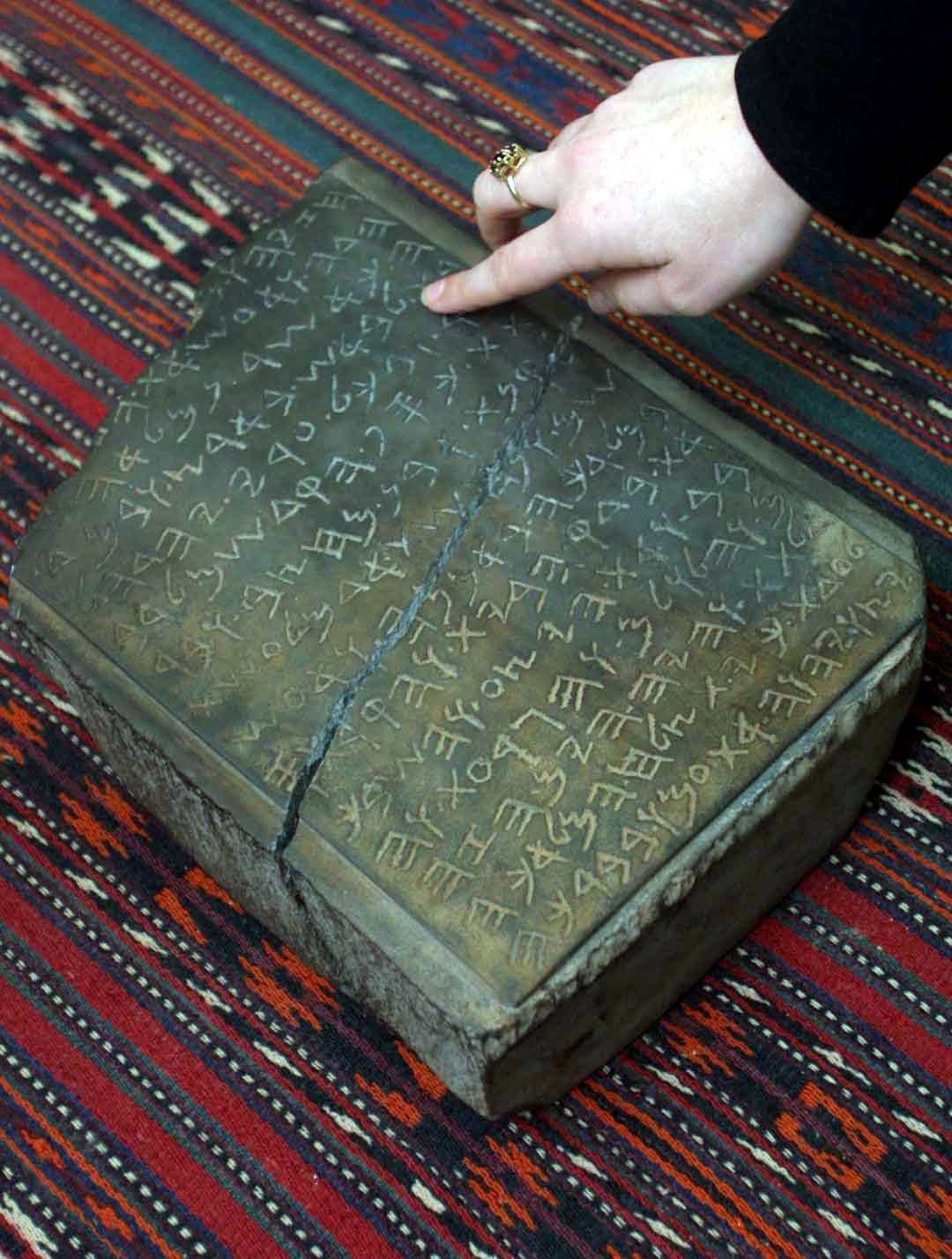
The Supreme Court of Israel ordered that the Jehoash Tablet, a 9th century inscription about repairs to the temple in the days of King Jehoash of Judah, must be returned to the owner.

The Jerusalem District Court had earlier ruled that he state had not proved that this  inscription was a forged document.

Chiseled in ancient Hebrew and dated to the ninth century BCE, the tablet describes renovations of the First Temple – which is said to have been built by King Solomon – ordered by Jehoash. It corresponds to the account in II Kings 12:1-17, in which the king laments the state of the temple and commands that money the priests collect from the people be used to fix it up.

îùøã äçéðåêThe Jehoash Tablet

Read the account in today’s Haaretz here.

Matthew Kalman has been keeping abreast of this decade-long case and reports at Bible and Interpretation here.

Like the James Ossuary, we will probably never know if this document is authentic.

Report by Gordon Franz on the “International Noah and Judi Mountain Symposium” – Sirnak, Turkey

Gordon Franz sent me the report on his recent visit to southeastern Turkey and the “International Noah and Judi Mountain Symposium.” He said, “If you want to post it on your site, you are more than welcome.” This is an issue of much importance, and I am delighted to share it with our readers and help give it wide distribution.

Twice I have visited Eastern Turkey. In 2007 I was aware of the argument for Cudi Dagh (or Mount Judi), but was advised by my Turkish tour operator not to go to the mountain. Still hopeful of seeing the mountain someday.

Here is the first part of Gordon’s report:

Report on the “International Noah and Judi Mountain Symposium” – Sirnak, Turkey

By Gordon Franz

Introduction
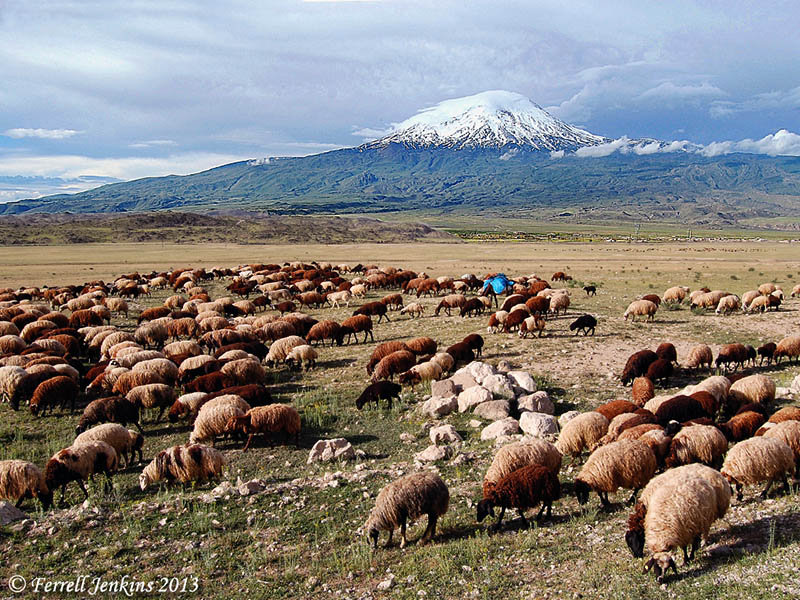
The “International Noah and Judi Mountain” symposium was held in Sirnak, Turkey, under the auspices of Sirnak University. One of the purposes of this conference was to set forth the case for Cudi Dagh, the mountain just to the south of Sirnak, as the landing-place of Noah’s Ark in South East Turkey. This mountain is not to be confused with the (late) traditional Mount Ararat, called Agri Dagh, in northeastern Turkey.
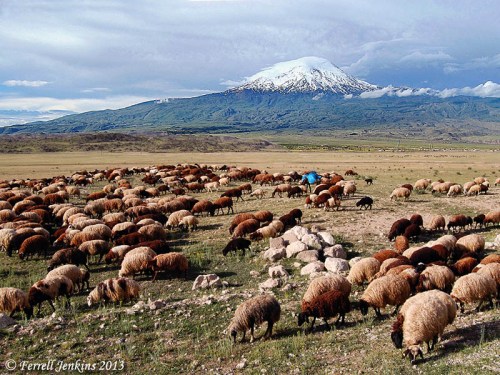
Ararat (Agri Dagh) in north eastern Turkey. Photo by Ferrell Jenkins.

Traditional Mount Ararat (Agri Dagh) in north eastern Turkey. Photo by Ferrell Jenkins.

Interestingly, at this conference I learned of another mountain that allegedly Noah’s Ark landed on. It is located at Mount Gemikaya in Azerbaijan. By my count, that is the sixth mountain vying for the honors of this historical event: two in Turkey, three in Iran, and one in Azerbaijan. The Iranian and Azerbaijani sites are far outside the Land of Ararat / Urartu, and in the case of the Iranian sites, deep inside the Land of Media. We can safely dismiss these mountains as the place where Noah’s Ark landed according to the Bible. To be truthful, Agri Dagh must be dismissed as well because it is a post-Flood volcanic peak in a plain, and not within the “mountains (plural) of Ararat” (Gen. 8:4).

The Setting of the Symposium
The symposium was held at the Sehr-I Nuh Otel (translation: Noah’s City Hotel) in Sirnak, just north of Cudi Dagh (Cudi or Judi Mountain). This mountain is within the “mountains of Ararat” (Gen. 8:4) where Noah’s Ark landed. The facilities at the hotel were first class, the food was absolutely delicious, and we had a spectacular view of Cudi Dagh from the panorama view windows as we ate our meals.
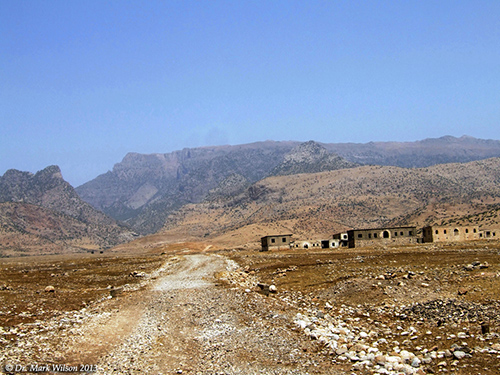
Cudi Dagh (Mount Judi). Photo courtesy of Dr. Mark Wilson.

Cudi Dagh (Mount Judi). Photo courtesy of Dr. Mark Wilson.

Special thanks goes to Dr. Mehmet Ata Az, a philosophy professor at Sirnak University, for coordinating the speakers and making sure our needs were met. He truly has a servant’s heart and our best interest in mind. Thank you my friend!

— ♦ —

At this point Gordon gives a synopsis of select papers, including his own on the topic, “Did Sennacherib, King of Assyria, Worship Wood from Noah’s Ark?

Read the report in its entirety at Gordon’s Life and Land Seminars site. I think you will be profited, and perhaps enlightened, by doing so.

The Fountain of Glauke at Corinth

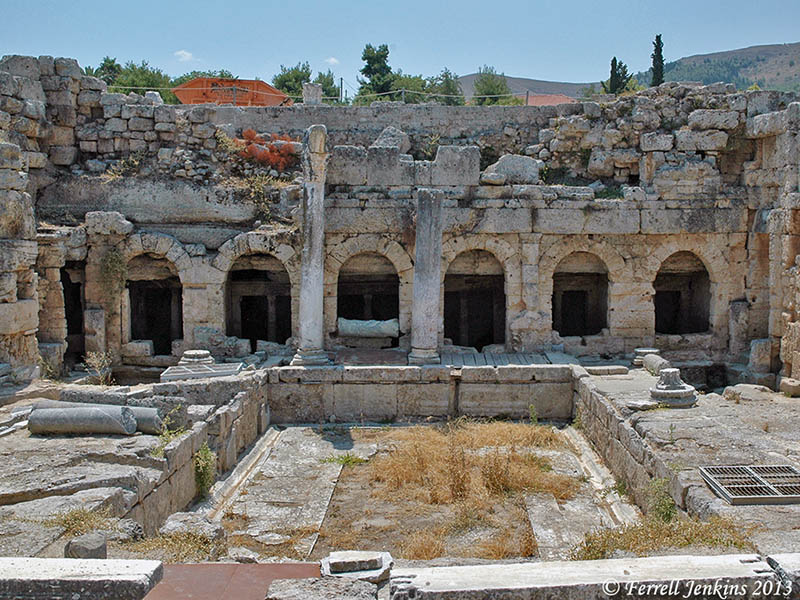
In addition to the Spring (or Fountain) of Peirene, Corinth had another significant water supply — the Fountain of Glauke. Reddish and Fant describe the fountain:

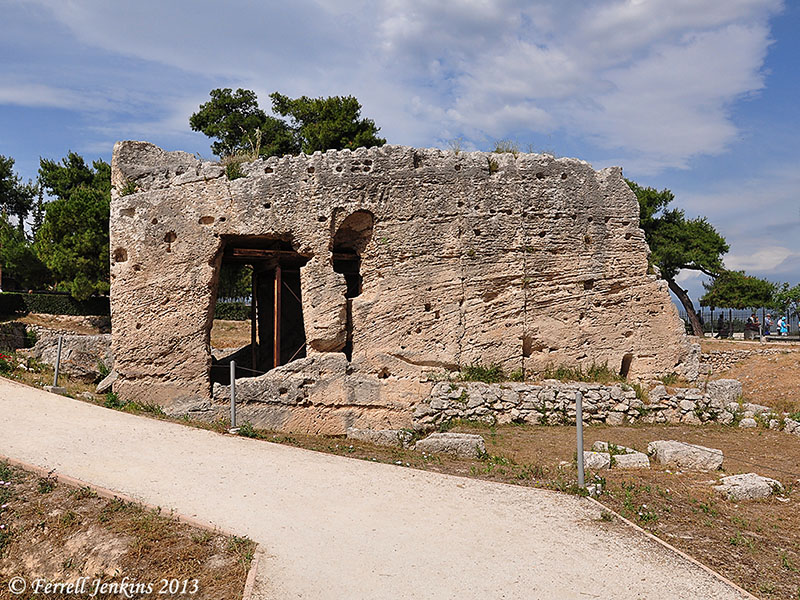
To the west of the temple [of Apollo] and on a lower level lies the Fountain of Glauke, supplied with water by a conduit from the Acrocorinth, virtually nothing of which remains except four reservoirs cut in the rock. It was named for the legendary daughter of a king of Corinth who threw herself into its waters to escape the flames of the magical robe sent her by Medea. Originally the fountain was covered by a building approximately 45 feet long and 40 feet wide. (A Guide to Biblical Sites in Greece and Turkey, 59).

The Fountain of Glauke at Corinth. Photo by Ferrell Jenkins.

The Fountain of Glauke at Corinth. Photo by Ferrell Jenkins.

Among the Christians at Corinth during the time of the Apostle Paul, we can certainly imagine that some of them visited these sites we have learned about as a result of the archaeological excavations over the past century. See Acts 18; 1 Corinthians; 2 Corinthians.

More on the Vandalization of the Protestant Cemetery in Jerusalem

This is a brief follow-up on our report here of the vandalization of the Protestant Cemetery. Trent Dutton, “Our man in Jerusalem”, reports that once AP released a story about the vandalism, several Middle East and American news outlets have come to the cemetery for photographs, and have re-posted the story.

Fox News: http://www.foxnews.com/world/2013/10/09/vandals-damage-graves-in-jerusalem-in-latest-attack-against-christians/?intcmp=latestnews

Washington Times: http://www.washingtontimes.com/news/2013/oct/9/jerusalem-grave-vandals-set-christians-edge/

Ma’an News (Jordanian) discusses this in the context of the general problem faced by some Arabs: http://www.maannews.net/eng/ViewDetails.aspx?ID=634823

YouTube: http://www.youtube.com/watch?v=4GY6D02dksI

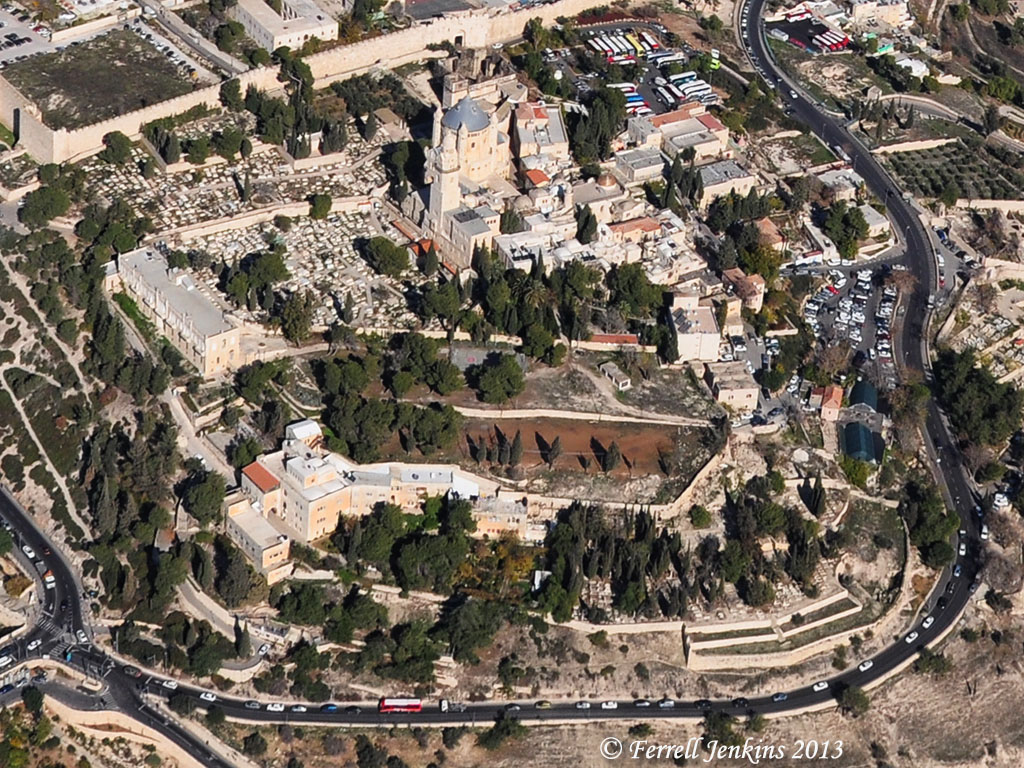
The aerial photo below shows the Church of the Dormitian, the Catholic, Armenian, and Greek cemeteries in the upper left portion. Along the bottom of the photo, overlooking the road along the south of the Old City where it joins with the Hebron Road, is the Jerusalem University College. The Protestant Cemetery can be seen among the trees just above our copyright notice. Click on the photo for a larger image.

Aerial photo of the Protestant Cemetery. Photo by Ferrell Jenkins.

Aerial photo of the Protestant Cemetery. Photo by Ferrell Jenkins.

You can probably see that it would be rather easy for one to enter the cemetery from the road below.

HT: Trent Dutton

The Fountain of Peirene at Corinth

In the first century A.D. Corinth was the capital of the Roman province of Achaia and had direct communication with Rome. This was a wonderful place for Paul to teach the gospel of Christ (Acts 18).

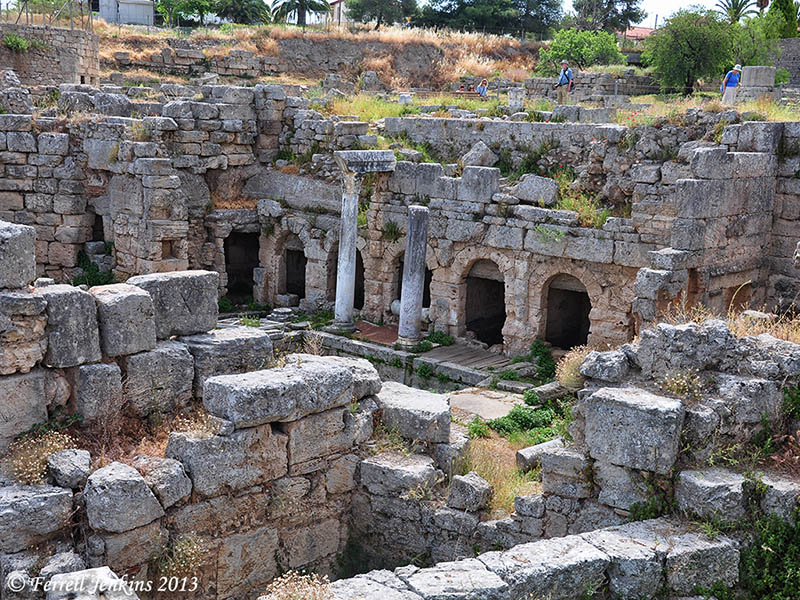
A large city such as Corinth needed a good water supply. Water from subterranean springs flowed underneath the city and was captured in a reservoir with a capacity of over 81,000 gallons. The Fountain of Peirene was the city’s most important water supply. Even now, if one stands anywhere near the openings in the once impressive structure he can hear the water flowing in the natural spring underneath the city.

The Fountain of Peirene at Corinth. Photo by Ferrell Jenkins.

The Fountain of Peirene at Corinth. Photo by Ferrell Jenkins.

An ornamental fountain once welcomed those who made the turn off the Lechaion Road to the Spring of Peirene.

An ornamental fountain in front of the spring. Photo by Ferrell Jenkins.

An ornamental fountain in front of the spring. Photo by Ferrell Jenkins.

The Lechaion Road at Corinth

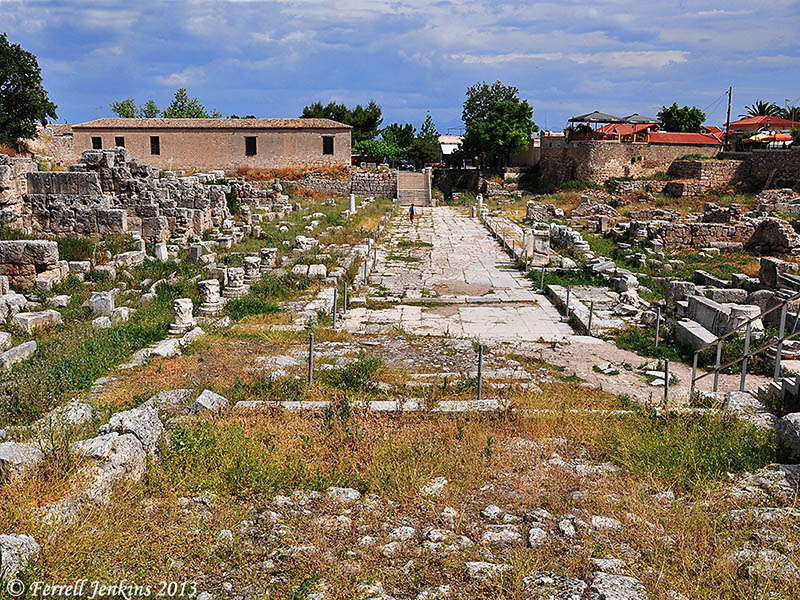
The Lechaion Road was the famous road that ran from the port of Corinth to the city. In Corinth the road was 20 to 25 feet wide, made of limestone, and flanked on either side by raised sidewalks and shops. The road ended at the agora which was directly to our back when we made the photo.

The Lechaion Road in Corinth. Photo by Ferrell Jenkins.

The Lechaion Road in Corinth. Photo by Ferrell Jenkins.

The Apostle Paul came to Corinth in the fall of A.D. 51 and remained until the spring of A.D. 53. During the eighteen months in the city he preached to both Jews and Greeks (Acts 18:1-4, 11).

A case can be made that there was a “lost letter” written by Paul to the Corinthians (1 Corinthians 5:9).

The document we call First Corinthians was written from Ephesus about A.D. 53/54.

Paul may have made a second visit to the city which ended in sorrow; some call this the “painful visit” of 2 Corinthians 2:1; 12:14; 13:1-4.

Paul proposed a third visit (2 Corinthians 12:14; 13:1-2), which probably took place during the three month stay in Greece (Acts 20:2-3). We believe that Paul wrote the letter to the Romans during this visit. Romans was delivered to the Romans by Phoebe, a servant of the church at Cenchreae (Romans 16:1).

Joseph’s Tomb at Shechem

Before Joseph died in Egypt, he exacted a promise from the sons of Israel that when God visited them to deliver them from bondage they would carry his bones from Egypt. Upon his death he was embalmed and placed in a coffin in Egypt (Genesis 50:25-26). This is what we would expect in Egypt.

The request regarding his bones manifests an understanding of the promise that the LORD would give to the descendants of Abraham the land where Abraham dwelt (Genesis 15:13-16). It also manifests a strong faith regarding the fulfillment of that promise.

Moses took the bones of Joseph with the Israelites when they fled Egypt. This was the strangest thing one can imagine — transporting the mummified body of Joseph through forty years of wilderness wandering.

Moses took the bones of Joseph with him, for Joseph had made the sons of Israel solemnly swear, saying, “God will surely visit you, and you shall carry up my bones with you from here.” (Exodus 13:19 ESV)

Eventually, Joseph’s bones were buried at Shechem.

As for the bones of Joseph, which the people of Israel brought up from Egypt, they buried them at Shechem, in the piece of land that Jacob bought from the sons of Hamor the father of Shechem for a hundred pieces of money. It became an inheritance of the descendants of Joseph. (Joshua 24:32 ESV)

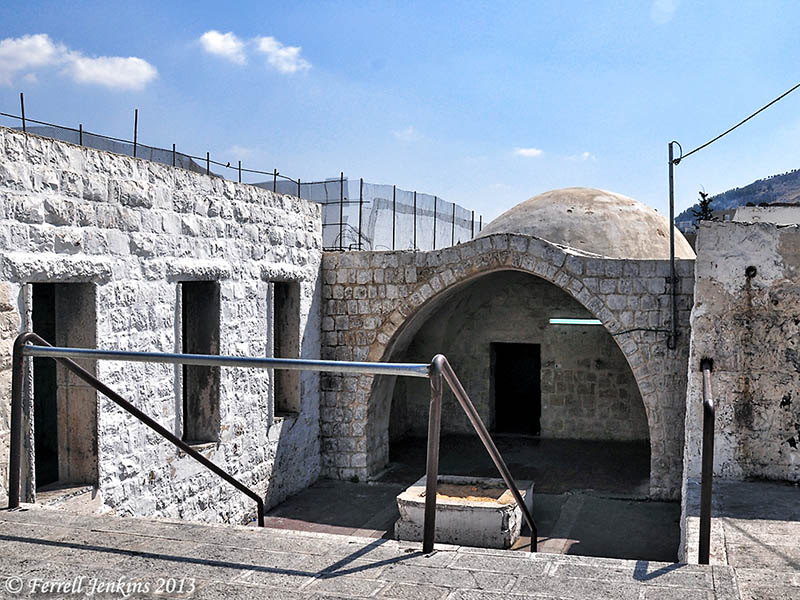
Tomb of Joseph near Shechem. Photo by Ferrell Jenkins.

Tomb of Joseph near Shechem. Photo by Ferrell Jenkins.

The building pictured above is a fairly recent structure that is called the Tomb of Joseph. Jewish settlers come to the empty building, now within the Palestinian territory, frequently. Sometimes fights erupt. One of the recent clashes is described here.

Vandalism in Protestant Cemetery on Mount Zion

A little over a year ago I visited the Protestant Cemetery on Mount Zion in Jerusalem. Shortly thereafter a series of articles were posted about some of the persons buried there. See here for Spafford; here for Starkey; here for Schick; here for Fisher.

My friends Trent and Rebekah are currently students at the Jerusalem University College that adjoins the cemetery. In fact, one enters the locked cemetery gate through JUC property. Unfortunately, it would be possible for a person to enter the cemetery from the southwest corner where there is no fence.

Trent reports vandalism of some of the tombs with crosses last Sunday.

I’m sure you know of the “price tag” policy and campaign. [Yes, see here.]

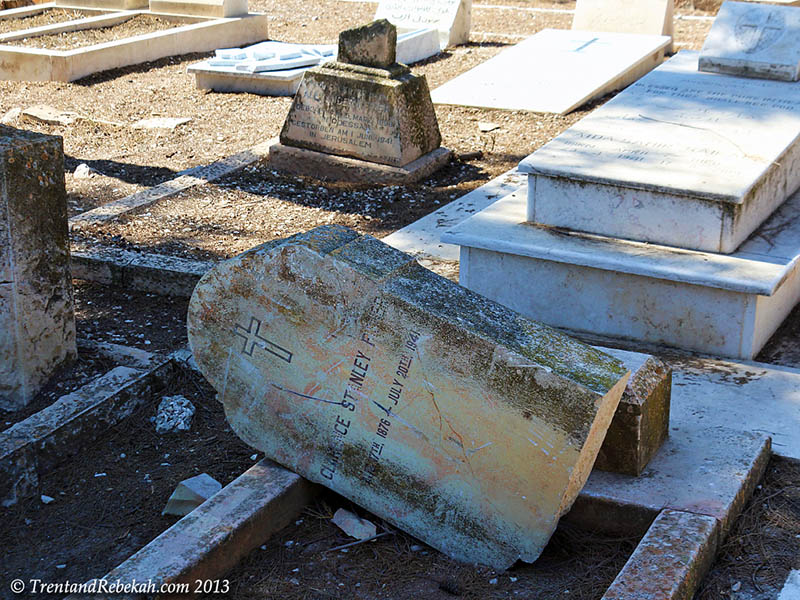
At some point on Sunday, not sure exactly when, vandals said to be associated with a Price Tag group entered the cemetery (not hard to do from the back/side) and smashed multiple tombstones which were bearing crosses. They also damaged at least one tombstone with Arabic writing.  I checked all the graves which you have written about on the blog (at least what I could find on the blog).  The only grave with damage seemed to be Clarence Fisher.  After talking with Dr. Wright, he says this tombstone was actually damaged in a similar attack about six months ago (photo attached).  The stone has been set back somewhat upright on the grave.

The incident on Sunday was incorrectly reported by some outlets as the nearby Catholic Cemetery.

Here is Trent’s photo of the broken headstone over Clarence Fisher’s grave.

Tomb of Clarence Fisher vandalized in Protestant Cemetery.

Tomb of Clarence Fisher vandalized in Protestant Cemetery.

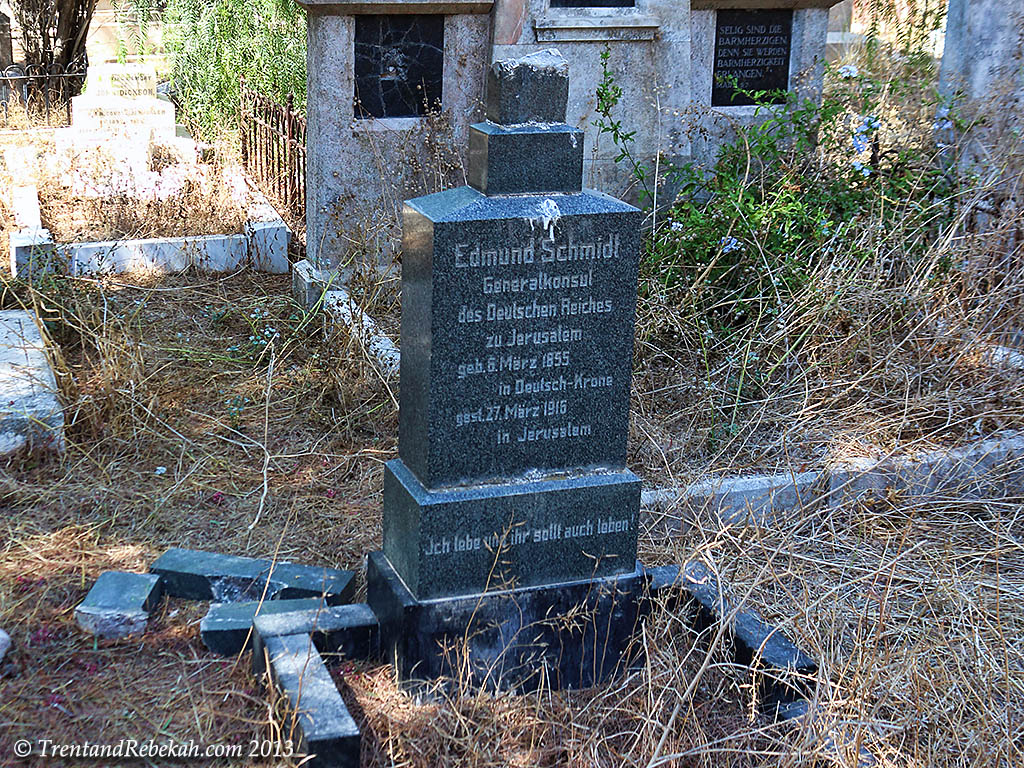
Another photo shows damage to the tomb of Edmund Schmidt, a German consul to Jerusalem.

Vandalized tomb of Edmund Schmidt.

Vandalized tomb of Edmund Schmidt.

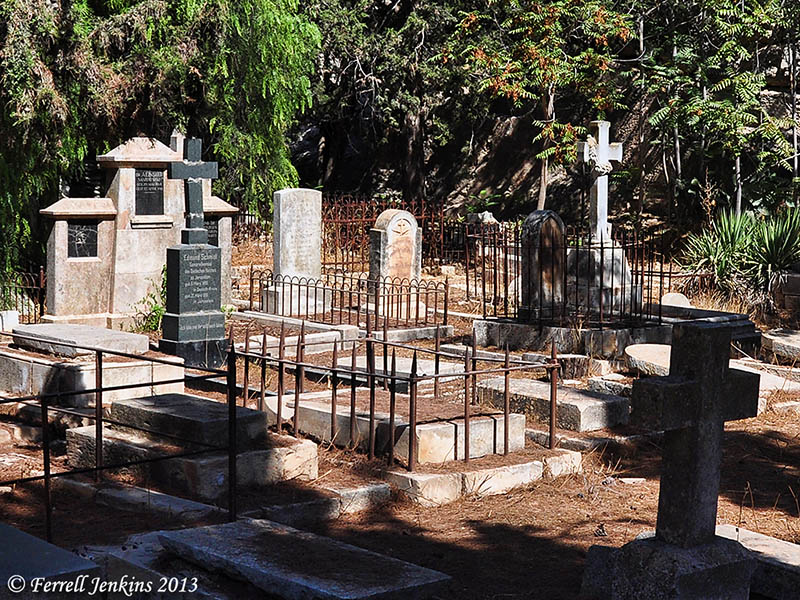
In browsing my photos of September, 2012, I noticed that the cross on this tomb had already been broken and poorly repaired. In the photo above you will see the three pieces of the cross to the left of the headstone.

Tomb of Edmund Schmidt, September, 2012. Photo by Ferrell Jenkins.

Tomb of Edmund Schmidt, September, 2012. Photo by Ferrell Jenkins.

I also noticed that numerous crosses had been broken.

When we destroy that of which we are ignorant we reflect lack of appreciation of any history. It happens all over the world. If we destroy that with which we disagree, what will happen when someone disagrees with us?

The apostle Paul spoke of himself as one who previously destroyed what he presently was rebuilding.

For if I rebuild what I tore down, I prove myself to be a transgressor. (Gal 2:18 ESV)

Ynet reports here and here the arrest of four Jewish youths in this episode.

Looting and vandalism in Petra

Looting and vandalism of historic or archaeological sites is nothing new. We have reported on vandalism in Israel, but especially in the war-torn countries of Syria and Iraq.

Heritage Daily has an article here on looting and vandalism at Petra. Petra was designated a UNESCO World Heritage Site in 1985. Archaeologists from Brown University have been working in Petra since 2009. They have been able to photograph excavated area each year. Now they report on signs of recent vandalism. The article says,

The damage caused by looting is nothing new and some of the more iconic buildings at Petra bear witness to this. A giant urn carved above the entrance to the Monastery bears the marks of hundreds of gunshots. The local Bedouin tribesmen living in and among the ancient ruins say the damage was caused when local men would open fire with rifles, seeking the loot thought to be inside the urn which is actually made of solid stone.

Heritage Daily has established from sources at Brown University that they are lobbing for additional security at the site and robust investigation to target the individuals concerned. However lack of funds for the Petra Archaeological Park and the isolated rugged area is hindering this work.

There is a considerable amount of natural wear over the centuries. In some cases we must imagine how the stones looked when they were carved by the Nabateans who lived in the area.

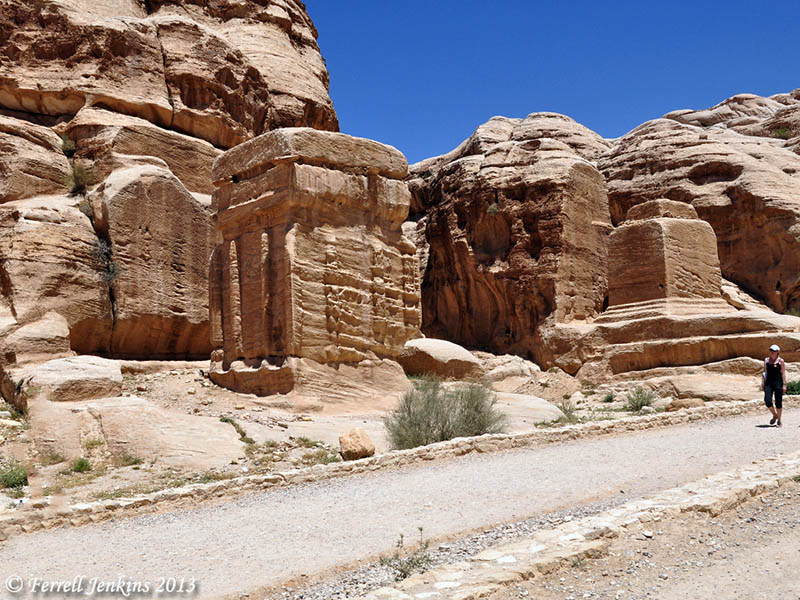
Nabatean Djinn blocks at Petra. Photo by Ferrell Jenkins.

Nabatean Djinn blocks at Petra. Some sources refer to these as god-blocks.Photo by Ferrell Jenkins.

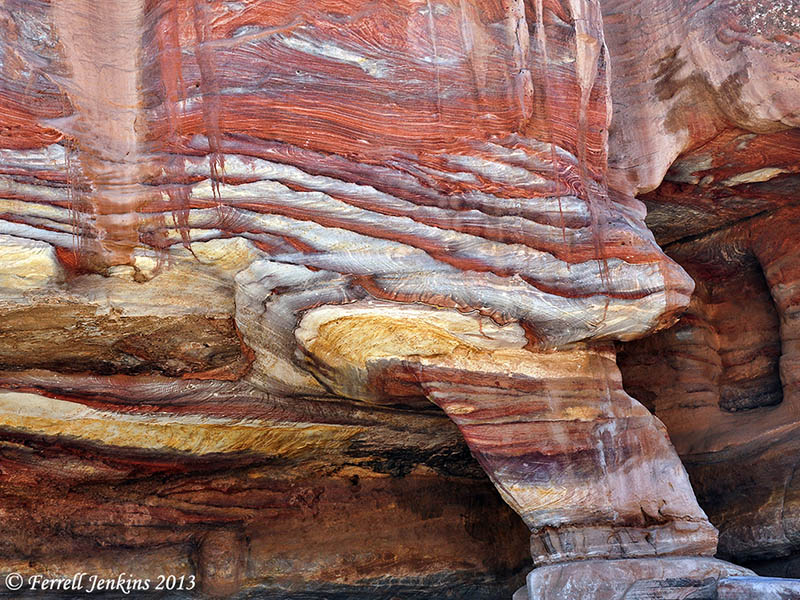
I have noticed erosion in the structures cut from the beautiful sandstone at Petra since my first visit in 1967. Some of this may have been caused by those who fill little bottles with the various colors of sand to sell to the tourists.

Natural erosion is evidence in these structures cut from the beautiful sandstone structures of Petra. Photo by Ferrell Jenkins.

Natural erosion is evidenced in these structures cut from the beautiful sandstone structures of Petra. Photo by Ferrell Jenkins.

This territory was once inhabited by the Biblical Edomites, but the structures we see today were carved from stone by the Nabateans who inhabited the area from about the fourth century B.C. to the early second century A.D.

One of the most famous Nabatean rulers was Aretas IV (about 9 B.C. to A.D. 40). It was during his reign, which extended at far north as Damascus, when Paul escaped Damascus (2 Corinthians 11:32-33). See here.

HT: Jack Sasson

Google is 15

Google search is celebrating a 15th birthday with an interactive heading. Take a look at google.com. This has proven to be a powerful tool which I use several times each day.

You can go back in history and see what a Google search results page looked like when the program was launched. Search for Google in 1998.

Fifteen. Does this mean Google will be able to get a learner’s permit?

Anyone out there remember when we searched at CERN?