Category Archives: Turkey

Jerash (Gerasa) in Jordan

Jerash is also called Gerasa and Jarash. It was founded by Alexander the Great about 332 B.C., but declined as an important city about 300 B.C. The ruins are seen today are principally from the second century A.D. Roman city. We can imagine what the city of the time of Jesus looked like.

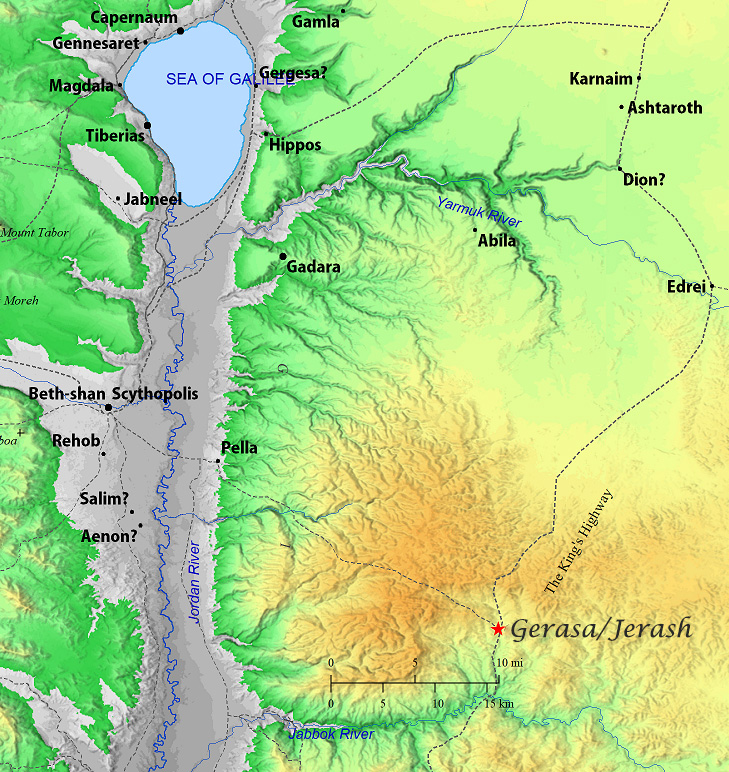
Gerasa/Jerash

This map shows the relationship of Gerasa/Jerash to Galilee, the principal area of Jesus’ ministry. Photo prepared with BibleMapper v.5. ferrelljenkins.blog.

Jerash is located in a well-watered valley in the mountains of Gilead. The modern village is inhabited mostly by Circassians, who were brought there by the Turks in the last part of the 19th century.

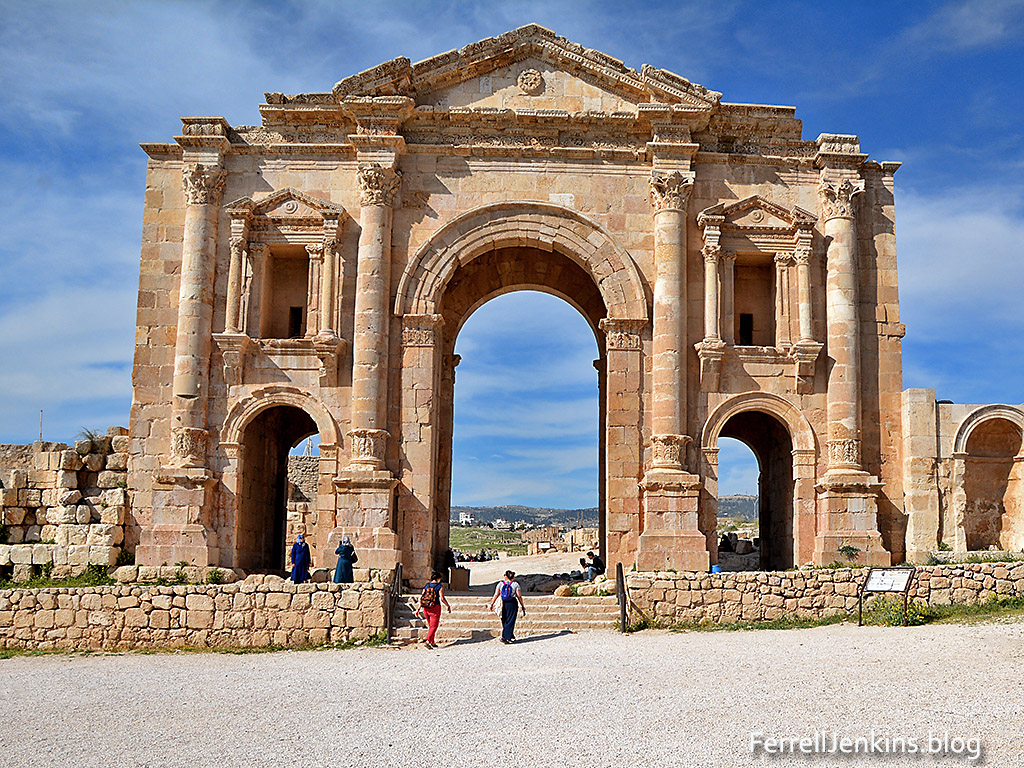
Hadrian's Arch, Jerash, Jordan. Photo: ferrelljenkins.blog.

The Triumphal Arch was constructed at the time of the visit of the Emperor Hadrian in A.D. 129. Photo by Ferrell Jenkins.

A German traveler named Seetzen rediscovered Gerash for the Western world in 1806. Excavations were begun in the 1920s. The main points of interest include the following: Triumphal Arch (built in 129 A.D. to celebrate Hadrian’s visit; Oval-shaped Forum (only one of its kind from the Roman period, from 1st century); Temple of Artemis (columns are 45 feet high with Corinthian capitals); Cathedral Church (ca. A.D. 350-375). Thirteen Byzantine churches have been excavated at Jerash.

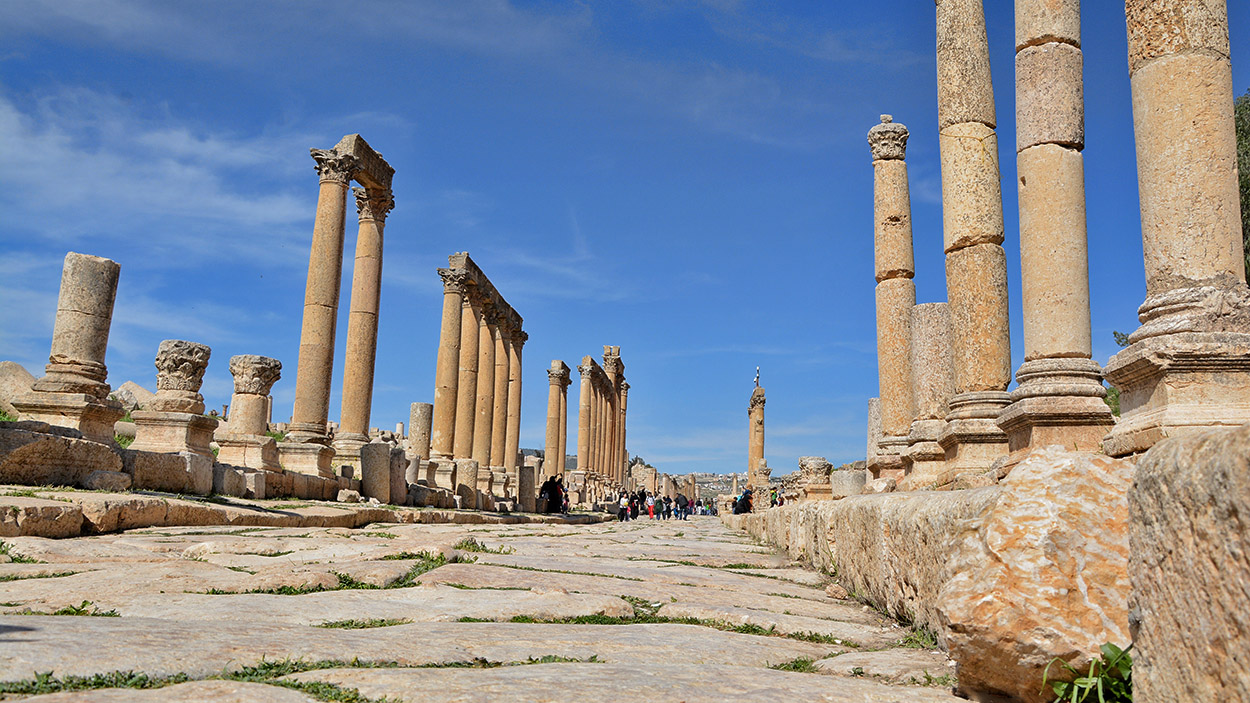
Cardo from Roman city Jerash, Jordan. Photo: ferrelljenkins.blog.

A view of the cardo of Jerash in Jordan. Jerash was one of the cities of the Decapolis. Photo by Ferrell Jenkins.

People from the Decapolis followed Jesus during His ministry in Galilee. Jerash was the second largest city of the Decapolis, after Damascus (Matthew 4:23-25). When Jesus traveled through the Decapolis he possibly visited the area around Jerash (Mark 7:31).

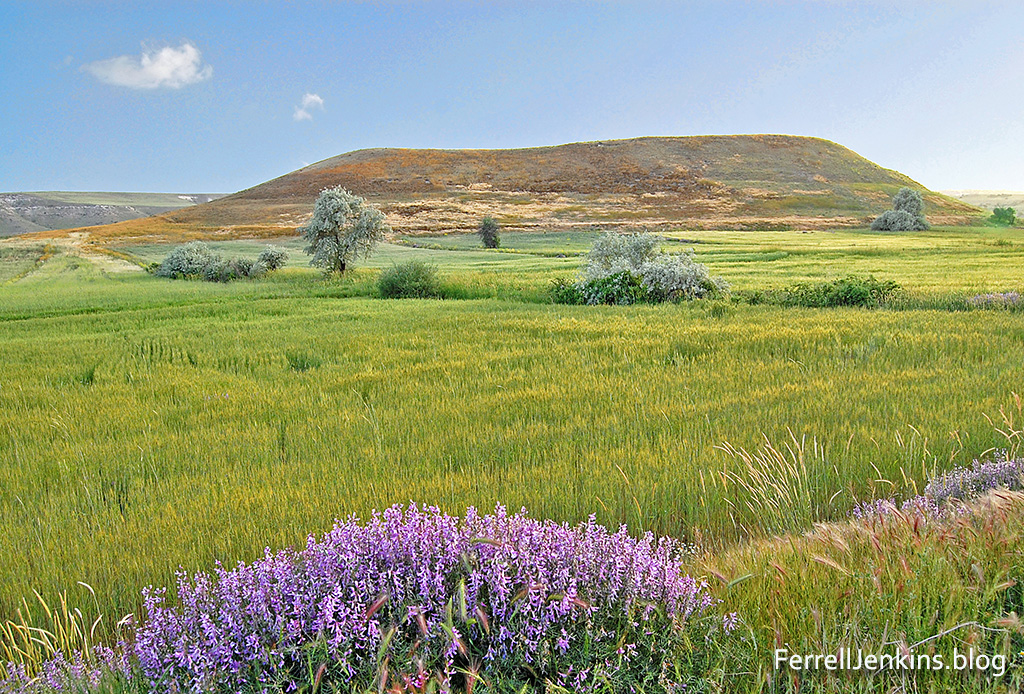
Beautiful mound covers the site of ancient Lystra

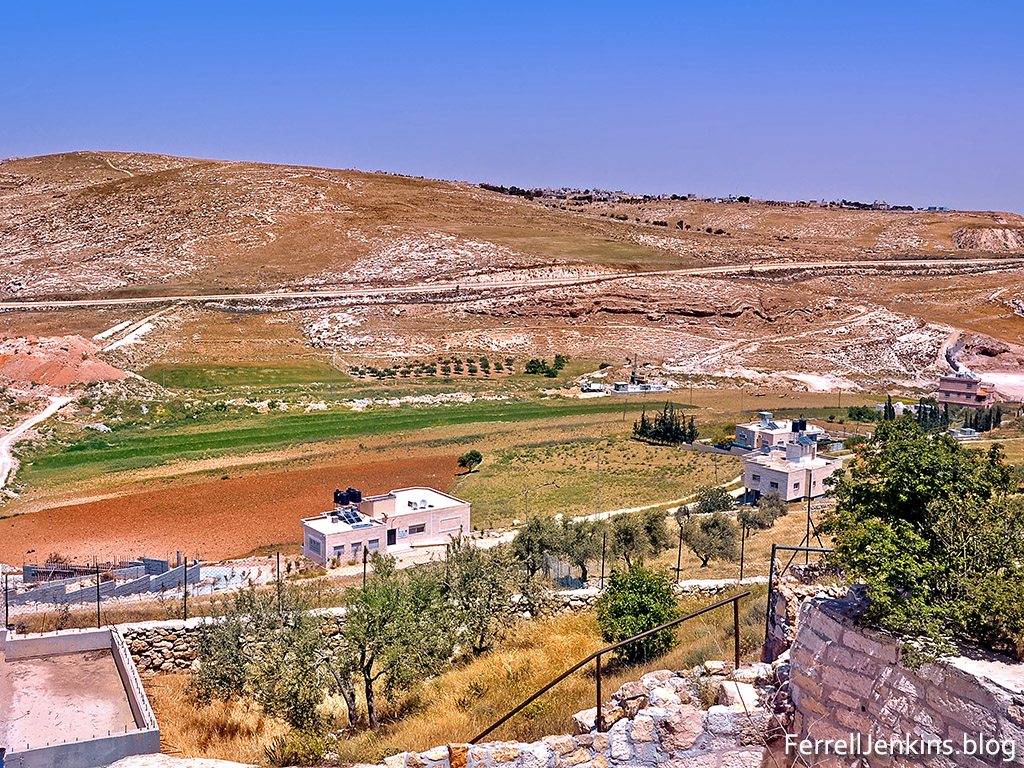
The mound of Lystra, now called Zordula, is located about 18 miles south of Konya (biblical Iconium), Turkey, near the village of Hatunsaray.

Lystra was visited by Paul and Barnabas on the First Missionary or Preaching Journey (Acts 14). Lystra and Derbe were towns of Lycaonia (Acts 14:6). The locals spoke the Lycaonian language. They called Barnabas, Zeus, and Paul, Hermes (14:12). Inscriptions have been found that identify these particular gods with Lycaonia.

This was the home of young Timothy, “the son of a Jewish woman who was a believer, but his father was a Greek” (Acts 16:1). Timothy accepted the invitation of Paul to join him on the second journey. Two of Paul’s epistles were written to Timothy.

The mound of Lystra, 18 miles south of modern Konya. View to the south. Photo by Ferrell Jenkins.

Ferrell’s Favorite Foto # 34 – “I will make your enemies your footstool”

A monarch with his foot on the neck of a subdued enemy is a common motif in the ancient near east. An illustration such as this helps us visualize certain Biblical texts.

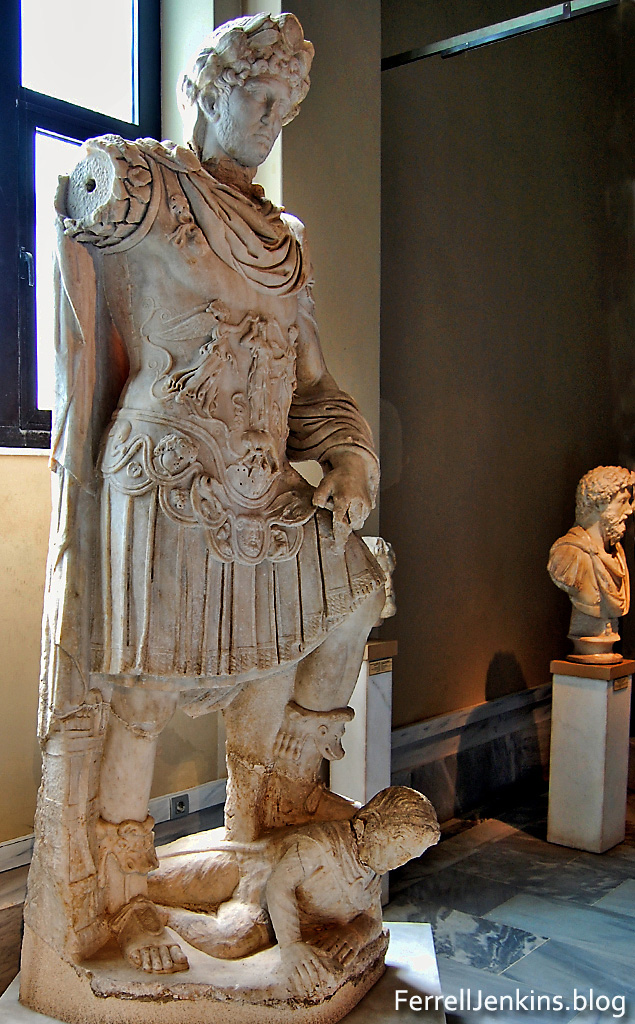
Here I wish to use an illustration from the Roman world shortly after New Testament times. In the statue below we see the Emperor Hadrian (A.D. 117-138) with his foot on the neck of a subdued enemy.

Roman Emperor Hadrian with foot on an enemy. Istanbul Archaeological Museum. Photo: ferrelljenkins.blog.

The Roman Emperor Hadrian with his foot on an enemy. Istanbul Archaeological Museum. Photo: ferrelljenkins.blog.

This statue is displayed in the Istanbul Archaeology Museum. It is made of marble and is said to have come from Hierapitna, Crete.

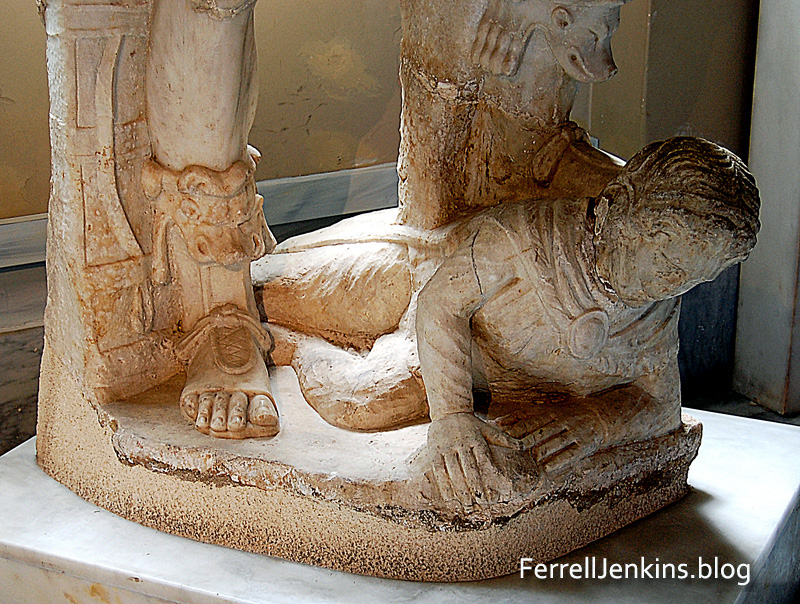
The photo below is a closeup of the captive with the Emperor’s foot on his neck.

Closeup of an enemy with the foot of Hadrian on his back. Photo: ferrelljenkins.blog.

The Roman Emperor Hadrian has his foot on the back of an enemy that has been subdued. Istanbul Archaeology Museum. Photo: ferrelljenkins.blog.

In the New Testament, Peter quotes Psalm 110:1 to show that Jesus is now seated on the throne of David at the right hand of God (Acts 2:35).

The apostle Paul understood this. He said of Jesus,

For he must reign until he has put all his enemies under his feet. (1 Corinthians 15:25 ESV)

The last enemy is death (1 Corinthians 15:26).

The illustrations here and in other posts are suitable for use in PowerPoint presentations for sermons and Bible classes. We only ask that you leave our credit line intact so others will know how to reach our material.

For examples from the Old Testament see here.

Check our Index on Bethlehem & Birth of Jesus

We have a few indexes prepared of topics that have been covered widely on this blog. One is an Index of article on Bethlehem and the Birth of Jesus here. It also includes some articles about the origin of Santa Claus at Myra, Turkey. We encourage you to take a look at these articles.

Our photo was made from the Franciscian Shepherd’s field in Bethlehem and this is the first time we have used it. I call it Shepherd’s Field by Day.

 And in the same region there were shepherds out in the field, keeping watch over their flock by night. (Luke 2:8 ESV)

Shepher's Field by Day. Photo: ferrelljenkins.blog.

Shepherd’s Field by Day. Photo by Ferrell Jenkins.

It is not possible to post as often at this time as I did in years past, but I want to encourage you to use this site often in your Bible study. Use the Search box to locate posts about Bible places, people and customs. I think will enhance your study of the Bible.

Thanks for telling others about the blog.

Ferrell’s Favorite Foto # 32 – the beauty of the simple

The water of Laodicea, site of one of the seven churches mentioned in the book of Revelation, came from hot springs immediately south of the city. By the time the water reached Laodicea it was lukewarm.  Jesus described the church as being like the water supply of the city.

“I know your works: you are neither cold nor hot. Would that you were either cold or hot! So, because you are lukewarm, and neither hot nor cold, I will spit you out of my mouth.” (Revelation 3:15-16 ESV)

Laodicea was one of three cities of the Lycus River Valley in Asia Minor (Colossians 2:1; 4:15-16). Today this area is in Turkey. Toward the end of the first century the book of Revelation was sent to several churches of Asia (Revelation 1:11).

This photo shows part of the water distribution tower at ancient Laodicea. Mount Cadmus, location of Laodicea, is seen in the distance.

Part of the water distribution system of ancient Laodices in Asia Minor (modern Turkey). Photo: ferrelljenkins.blog.

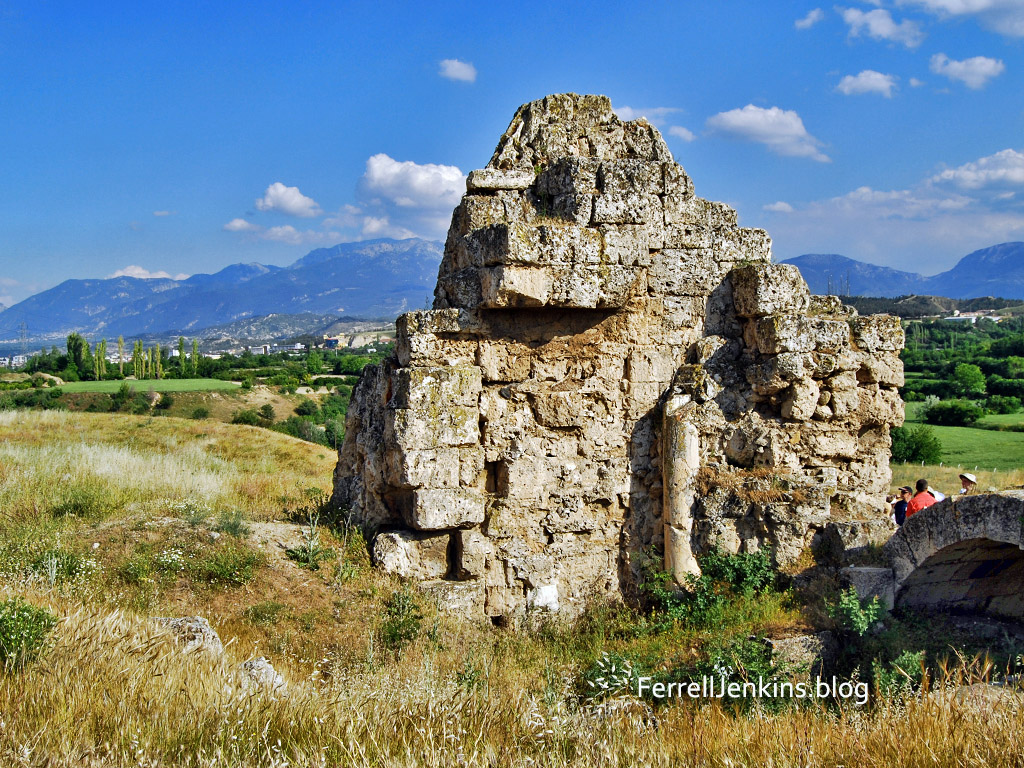
Ruins of the ancient water distribution system at Laodicea. Mount Cadmus, the location of Colossae, is visible in the distance. Photo by Ferrell Jenkins.

Notice in the previous photo to the right of the ruins you will see several people gathered. They are looking at the calcified clay pipes that once distributed water to the residences of Laodicea. When the water left the spring it was warm, but by the time it arrived at Laodicea it was lukewarm.

How here is our favorite foto for today.

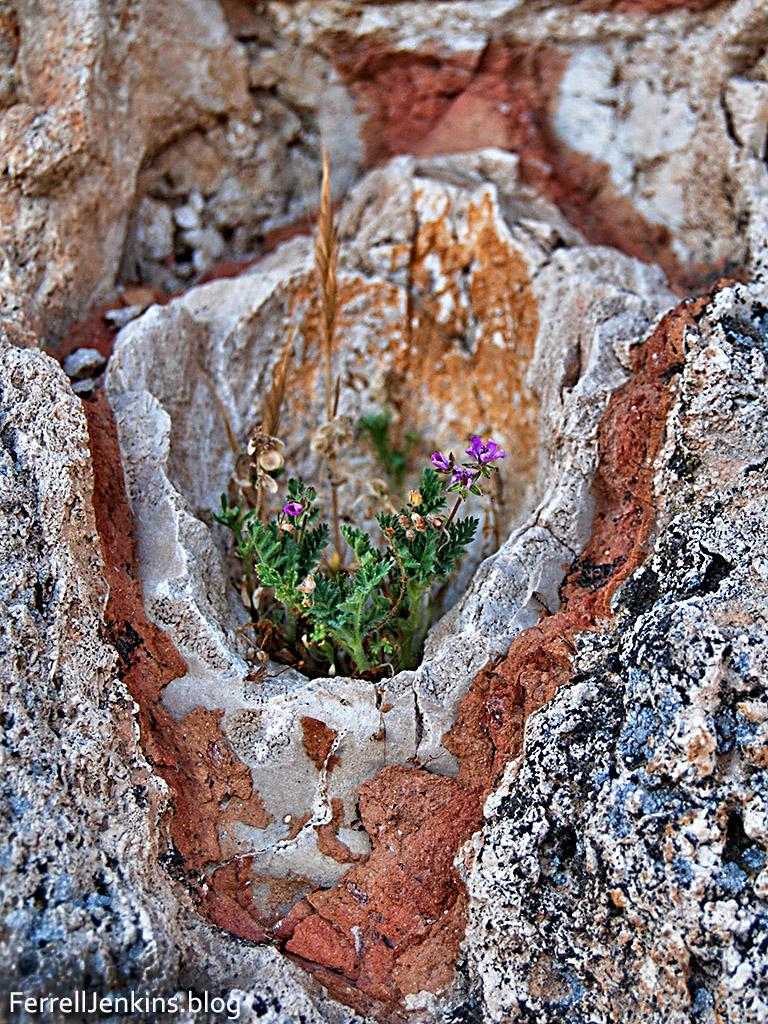
Some fern, grain and tiny flowers grown in the calcified pipe that once brought water to Laodices. Photo: ferrelljenkins.blog.

This picture shows one of the broken clay pipes in the water distribution system, now calcified. But notice the little plants growing in the pipe. Photo by Ferrell Jenkins.

A florist could hardly do better. This pipe apparently became so clogged that dirt could settle in it and provide a bed for these little plants.

Great Resource for Teaching Acts

The new Photo Companion to the Bible, produced by Todd Bolen and BiblePlaces.com, is a wonderful resource for those who teach the Bible. The first set in this series of material was on the book of Ruth. Next came the Gospels. And now we have the book of Acts.

There are more than 4000 images in this set on Acts. The images for each of the 28 chapters are included in a PowerPoint presentation with annotations explaining the image selection and background.

I could say much more about the value of this collection of material, but I suggest you go immediately to the detailed information here. You will see samples of the work and ordering information. For a limited time you can get this material at a special sale price.

Ferrell’s Favorite Fotos #3

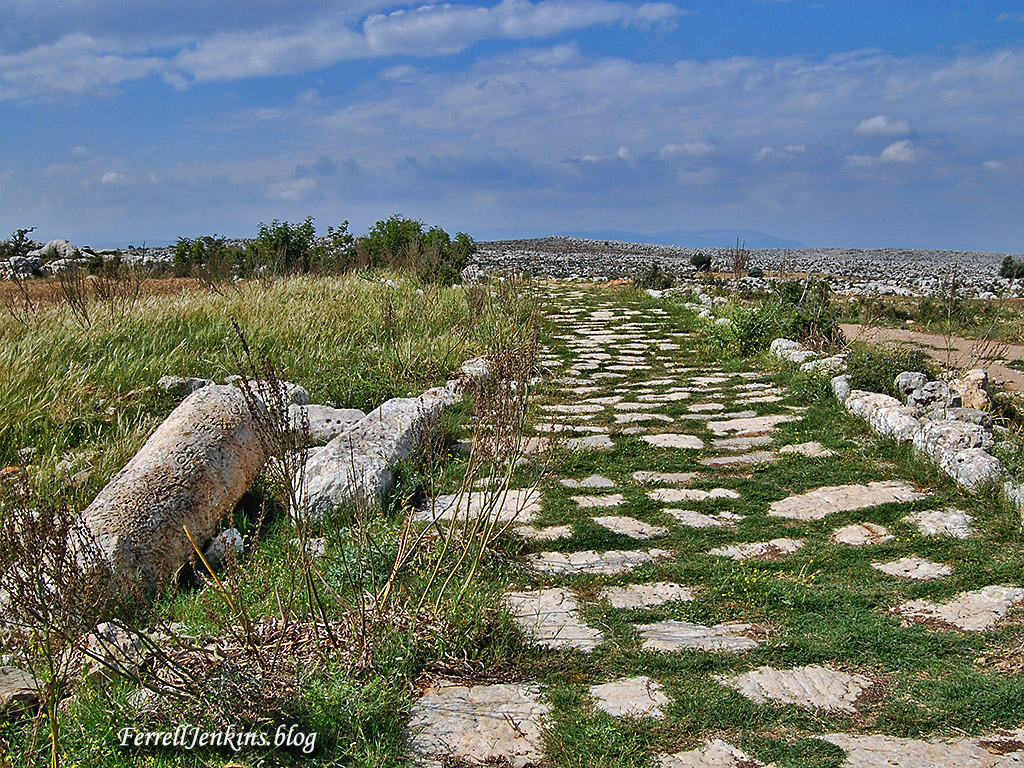
It was quite a thrill when I first found and walked on this nice stretch of Roman Road near the Turkish village of Saglikli about 12 miles north of Tarsus of Cilicia. Tarsus served as one of the great crossroads of history. It was the home of Saul of Tarsus, later known as the Apostle Paul who described it as “no insignificant city” (Acts 21:39; 9:11; 22:3).

Roman road north of Tarsus in Cilicia. ferrelljenkins.blog.

Roman Road near the Turkish village of Saglikli, about 12 miles north of Tarsus in Cilicia. Home of Saul of Tarsus. Photo by Ferrell Jenkins.

This road that was constructed about A.D. 200 during the reign of the Emperor Septimius Severus. Did Paul and Silas follow this same route on an earlier road during the second journey?

Ferrell’s Favorite Fotos #2

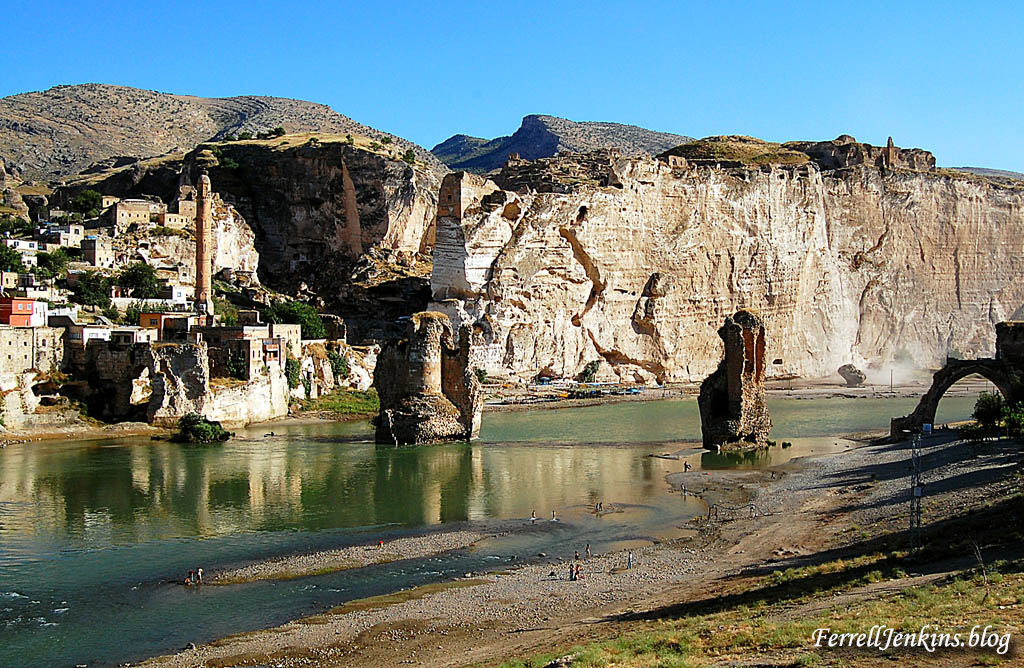
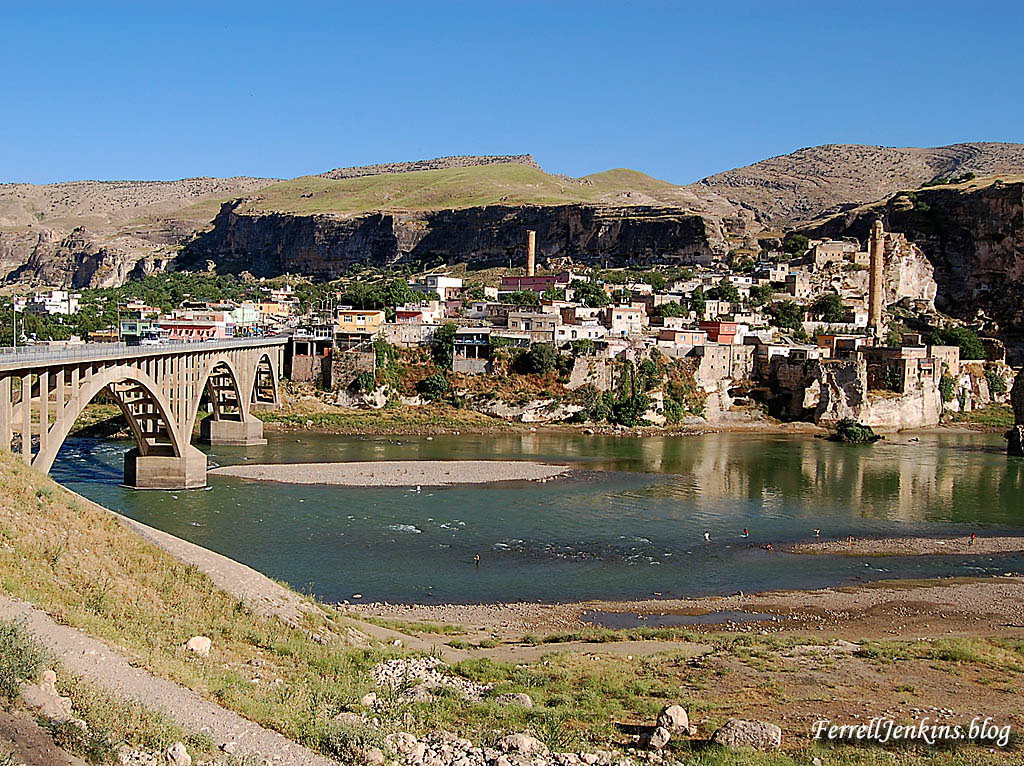
Hasankef in southeastern Turkey is an old town to be flooded by the Tigris River. Hasankef is located about 37 km. [23 miles] south of Batman, Turkey, and about 300 km. [187 miles] north of Mosul, Iraq, site of ancient Nineveh. National Geographic, Nov. 2018, describes what is happening here in an article entitled “Flooding History.”

The northern portion of the two photos. The citizens can be relocated, but the history will be flooded. FerrellJenkins.blog.

The northern portion of the two photos. The citizens of Hasankef, Turkey, can be relocated, but the history will be flooded. Photo by Ferrell Jenkins.

It takes two photos to make this a favorite.

The Tigris River at Hasankef, Turkey. FerrellJenkins.blog.

The southern portion of Hasankef, Turkey. This town will be flooded by the Tigris River as a result of the building of dams on the river. Photo by Ferrell Jenkins.

The Tigris River is mention only twice in the Bible.

  • Named as the third river flowing out of Eden (Genesis 2:14). Raises interesting questions about the location of Eden.
  • Associated with a vision seen by Daniel further south in ancient Babylon (Daniel 10:4).

Trephination was not that uncommon

Archaeologists working at Tel Megiddo excavated skeletons of two brothers from the Canaanite (Late Bronze) period dating to about 3,500 years ago,  who had a “complex medical procedure” known as trephination (or trephanation). An article in Haaretz includes several nice photos in the Premium Magazine here.

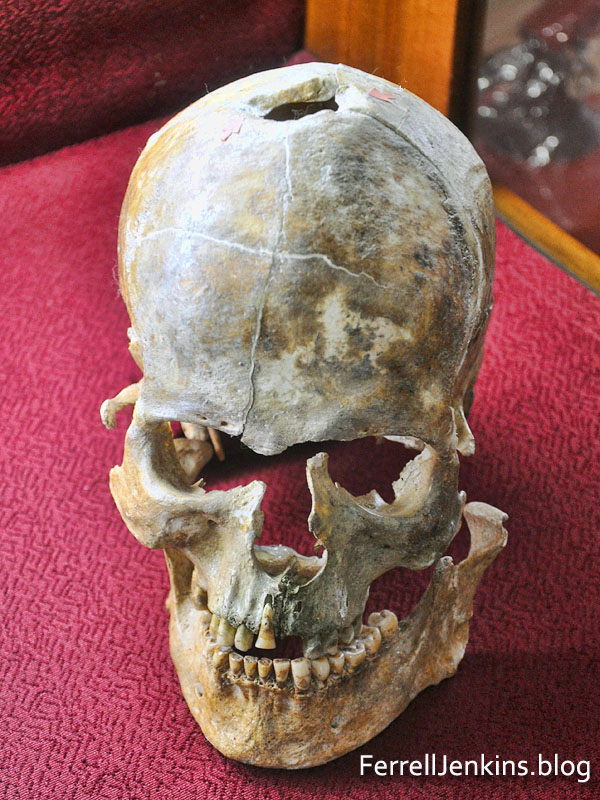
A few years ago Leon Mauldin and I traveled to some of the cities along the Turkish Black Sea Coast that may have been associated with the delivery of Peter’s epistles. See the  index of my articles here. In Samsun we visited the small archaeological museum and noted some skulls from Ikiztepe that had undergone the medical practice of trephination.

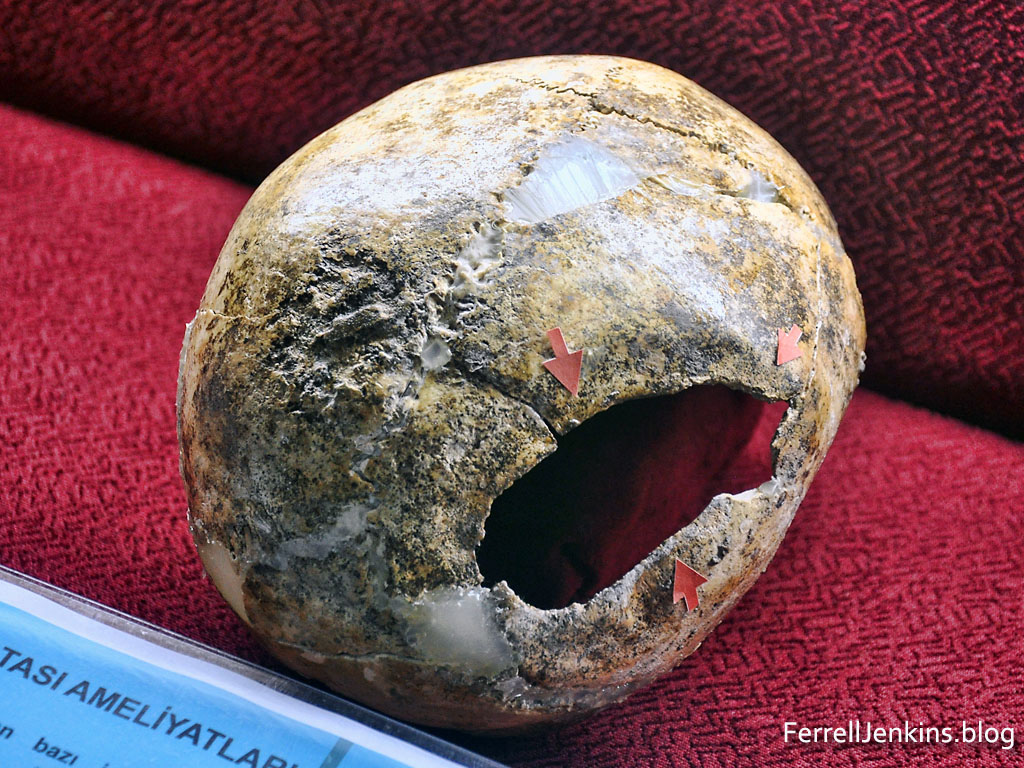
Ancient brain surgery that cut a hole in the skull to relieve pressure is referred to as trepination. A few of the skulls found at Ikiztepe are displayed in the museum. They are said to belong to Bronze Age III. I think that would be in the neighborhood of 1600 B.C. Here are two of the photos I made that show the hole drilled in the skull.

Example of Tripanation, Bronze Age III, Ikiztepe. Samsun Archaeological Museum. Photo by Ferrell Jenkins.

Example of Trepination, Bronze Age III, Ikiztepe. Samsun Archaeological Museum. Photo by Ferrell Jenkins.

The surgery in the case below required a much larger hole.

Example of Trephenation, Bronze Age III, Ikiztepe. Samsun Archaeological Museum. Photo by Ferrell Jenkins.

Example of Trephenation, Bronze Age III, Ikiztepe. Samsun Archaeological Museum. Photo by Ferrell Jenkins.

There is no indication whether the surgery was successful, or what happened to the surgeon if it failed.

Joe Zias, in an article in Mikhmanim (Spring 1999), says there have been 29 skulls showing trepanation (trephination) discovered in Israel. He says the survival rate based on “inflammatory or bone remodeling” indicate a 77 percent survival rate in these cases. The earlier link I had to this article is broken. I am currently unable to locate a link to this article which also deals with other medical issues in ancient Israel. One of the better known examples comes from Jericho.

Before any surgery involving the skull you should ask your surgeon about his or her grade in trepanation.

Was Philip martyred at Hierapolis/Pamukkale?

A recent article by an Italian journalist Giuseppe Mancini in al-Monitor caught my attention earlier this week. He says,

Hierapolis is the most popular archaelogical site in Turkey, with its peak of 2 million tourists in 2014 and a comparable number anticipated for 2018. In fact, most of them — largely Russians on day trips from Antalya — see only the natural features of the place: the white cascades of travertine created by thermal waters flowing downhill. The venue is better known in Turkish as Pamukkale, literally the “cotton castle,” whose light blue natural pools are featured in every tourism brochure.

Mancini discusses the archaeological work done by Italian scholars. In 2011 they were convinced that they had located the tomb of Philip the Apostle (Matthew 10:3). He laments that most of the tourists visit only a limited area of Pamukkale.

Few tourists walk the paved roads among the ruins or sit in the well-preserved theater. Fewer still are adventurous enough to climb the steep hill overlooking Pamukkale and Hierapolis — guides apparently advise against going there — where the Christian St. Philip the Apostle was killed, buried and venerated for many centuries.

I have observed the same thing and understand the reasons. (1) The tomb of Philip is an archaeological site. (2) It is a relatively long distance from the cascades, pools, and shops. (3) Tour groups are limited in time and (4) the greater number of tour members would not take time to visit a site like this. Let me show you.

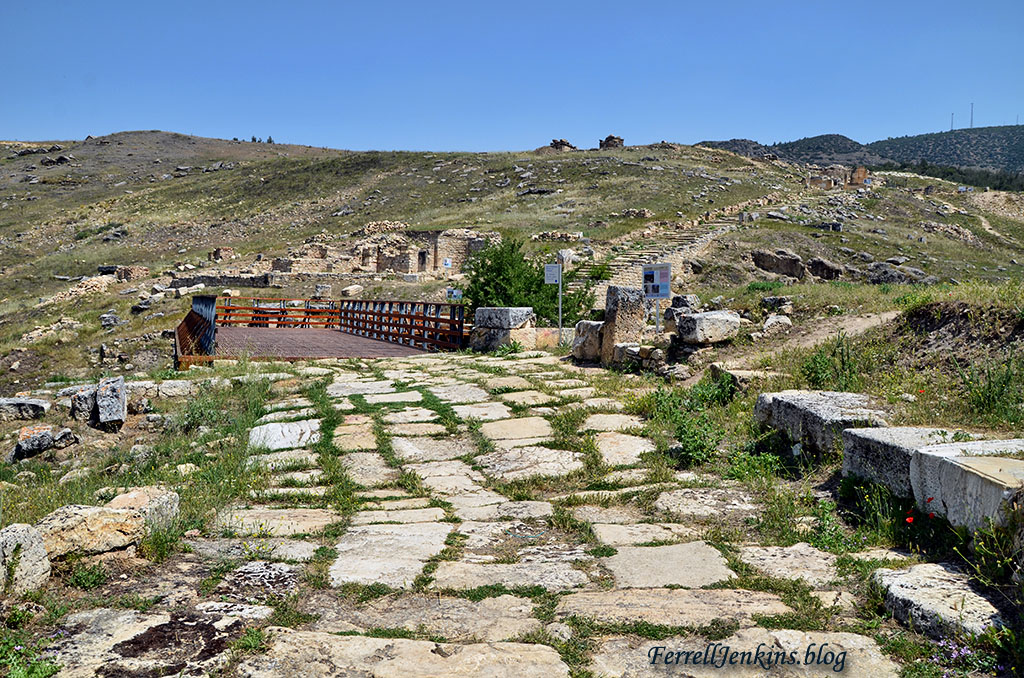
You will be able to see the buildings dedicated to Philip right of the center of the photo on the top of the hill. First you get to walk on ruins of an ancient road.

After walking a rather long distance to the approach to the Martyrium of Philip, we come to this road. Photo by Ferrell Jenkins.

After walking a rather long distance to the approach to the Martyrium of Philip, we pass through the Byzantine walls of Hierapolis. Photo by Ferrell Jenkins.

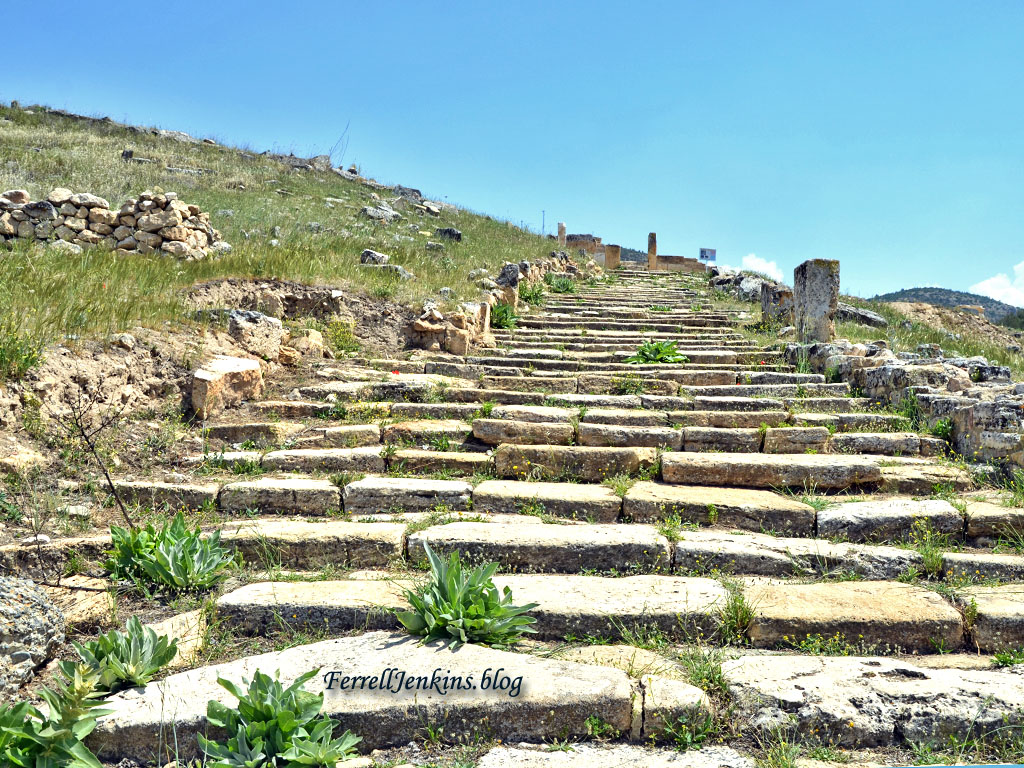
But that is not all. Next you must climb these steps to a plateau near the tomb and complex of buildings.
Tradition associates this with Philip the Apostle, but some scholars think the reference is to Philip the Evangelist. Photo by Ferrell Jenkins.

Tradition associates these steps with the Martyrium of Philip the Apostle. Photo by Ferrell Jenkins.

When you think you have almost arrived, you see steep steps that must be climbed to the plateau where the Martyrium is located.
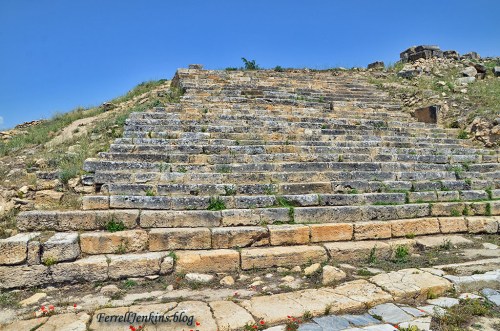
The final steps leading to the Martyrium of Philip. Photo by Ferrell Jenkins.

The final steps leading to the Martyrium of Philip. Photo by Ferrell Jenkins.

Then you come to the ruins of the church where pilgrims came to honor Philip.

The tomb of Philip is said to have been in this building. Photo by Ferrell Jenkins.

Pilgrims came to this building to honor Philip. Photo by Ferrell Jenkins.

There is another building of significance at the site. It is an octagonal building said to have been where Philip was martyred. Only the strongest portions of the building stand.
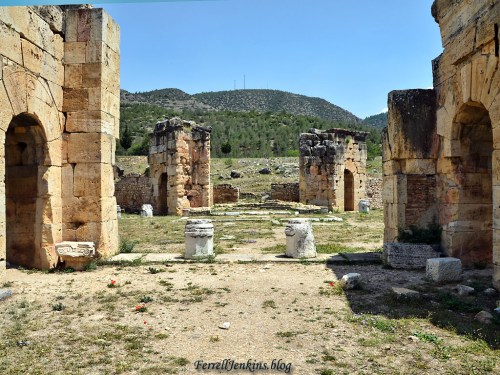
The Martyrium of Philip was built in the early 5th century A.D. on the site thought to be where Philip was martyred. Photo by Ferrell Jenkins.

The Martyrium of Philip was constructed in the early 5th century A.D. on the site thought to be where Philip was martyred. Photo by Ferrell Jenkins.

Fant and Reddish say,

The martyrium was apparently used neither as a church (no altar has been found) nor as a burial site (no tomb has been found) but rather served as a place for processions and special services in honor of the saint. (A Guide to Biblical Sites in Greece and Turkey, p. 215).

According to Fatih Cimok these building were destroyed by fire in the 6th century and never rebuilt (Biblical Anatolia, p 160).

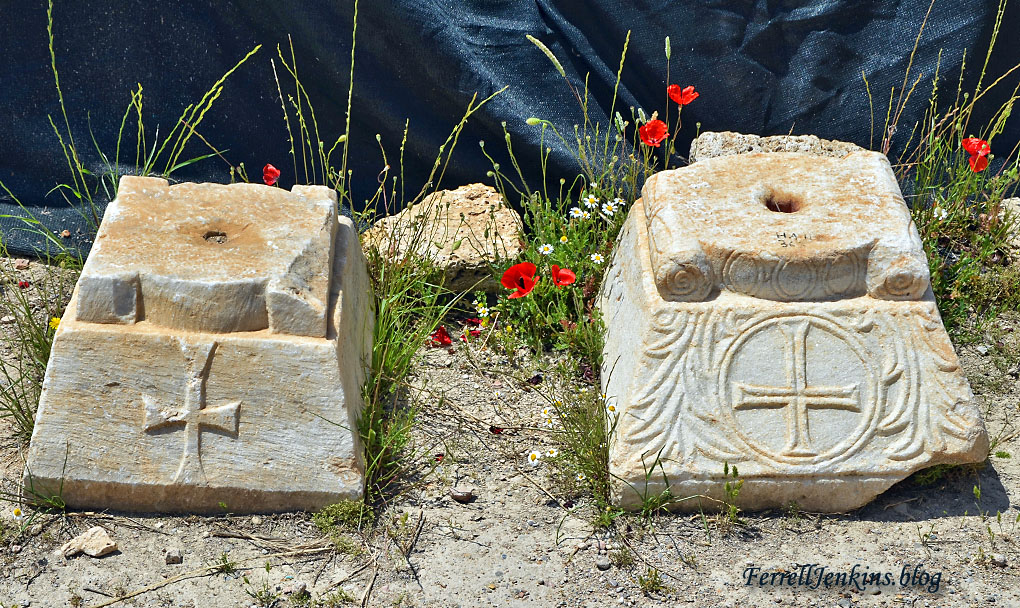
A number of crosses are found at the site engraved on various stones. Cimok says,

Inscriptions speak of “the people of the Jews,” “the settlement of the Jews who dwell in Hierapolis,” and “The archives of the Jews.” (Ibid.)

Crosses on column bases in the Martyrium of Philip at Hierapolis. Photo by Ferrell Jenkins.

Crosses on column bases in the Martyrium of Philip at Hierapolis. Photo by Ferrell Jenkins.

There is much more to see at Hierapolis, including a small but nice museum. Perhaps at a later time I will show you the Hellenistic Theater, the street and arch dedicated to Emperor Domitian, and some of the elaborate tombs. In fact, some have been discussed before. You may locate the posts by typing Hierapolis or Pamukkale in the Search Box.

Resources: In addition to sources cited here, I cited Mark Wilson’s Biblical Turkey in the previous post. These are wonderful resources to use in preparation for a trip to Turkey.