Category Archives: Greece

Turkey wants British Museum to return sculptures from the Mausoleum of Halicarnassus

According to an article in The Guardian (here), the town of Bodrum in Southwest Turkey wants the British Museum to return several priceless sculptures once associated with the Mausoleum of Halicarnassus in the 4th century B.C.

Human rights legislation that has overturned the convictions of terrorists and rapists could now rob the British Museum of sculptures created for one of the seven wonders of the ancient world.

A Turkish challenge in the European court of human rights will be a test case for the repatriation of art from one nation to another, a potential disaster for the world’s museums.

Halicarnassus is where Mausolus built a gigantic tomb in honor of himself. Leon Mauldin and I visited the site earlier in the year. You may read about our visit (with photos) here. It became known as one of the Seven Wonders of the Ancient World.

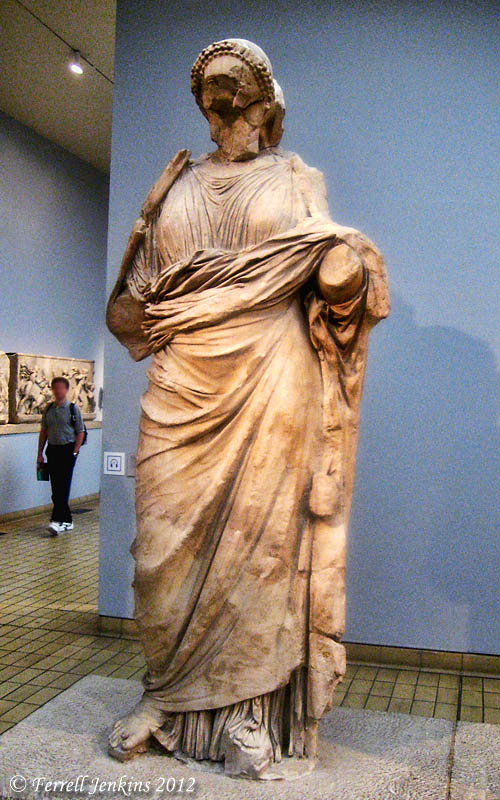
Two of the sculptures that the town of Bodrum wants returned are through to be of Mausolus and Artemisia, his wife. Here is a photo of the marble statue thought to be Mausolus.

Statue of Mausolus in British Museum. Photo by Ferrell Jenkins.

Statue of Mausolus in British Museum. Photo by Ferrell Jenkins.

The next statue is usually identified as Artemisia, wife of Mausolus.

Statues from the Mausoleum of Maussollos - Marble, About 350 B.C

Statue from Halicarnassus, usually identified as Artemisia, the wife of Mausolos. Photo by Ferrell Jenkins.

Another reason to visit the British Museum soon, or Turkey later.

HT: Jack Sasson

Acts 20–21 — Paul’s Travel Itinerary with Photo Illustrations

The precision and chronological exactitude with which this journey is recounted is amazing. F. F. Bruce says,

The description of this critical journey of Paul and his disciples to Jerusalem is given in considerable detail; some have compared the detailed description in the Third Gospel of Jesus’ critical journey to Jerusalem with His disciples. But the kind of details is different; the chronological exactitude of this second “we” narrative of acts is due mainly to the fact that Luke was one of the party and kept a log-book. (The Book of Acts in the NICNT, 407).

Acts 20:6    —    Paul left Philippi “after the days of Unleavened Bread”(Passover). He was hurrying to be in Jerusalem “on the day of Pentecost” (20:16). This would be 50 days after Passover. He had been in Ephesus on Pentecost one year earlier (1 Cor. 16:8).
Acts 20:6    —    Paul came to Troas within 5 days. Tarried 7 days. A “door” had been opened for Paul at Troas less than a year earlier, but he was not able to enter it (2 Cor. 2:12).
Acts 20:7    —    On the first day of week — gathered together with the disciples to break bread.
Acts 20:11    —    Monday (or ? Sunday) — Paul departed. This depends on whether they followed the Jewish practice of sundown beginning the new day, or the Roman practice of mid-night to mid-night.
Acts 20:13-14    —    Assos. Paul’s companions went by boat from Troas to Assos. Paul traveled overland.
Acts 20:14    —    Mitylene (on the island of Lesbos).
Acts 20:15    —    Following day — opposite Chios.
Acts 20:15    —    Next day — Samos.

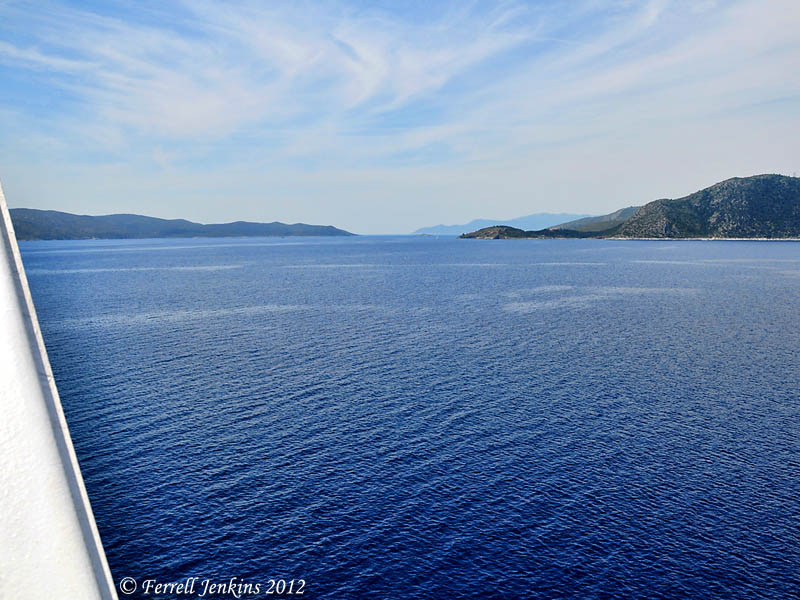
The photo below was made from a ship after it passed from north to south through the narrow strait between Samos (on the left) and the Turkish coast (on the right).  The ancient site of Trogyllium is located on the small peninsula extending into the Aegean Sea.
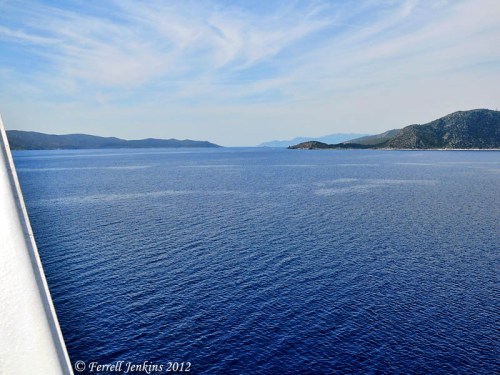
Samos-Turkey Strait. View North. Photo by Ferrell Jenkins.

View north of the Samos-Turkey Strait. Photo by Ferrell Jenkins.

Acts 20:15    —    Tarried at Trogyllium. (Appears in Western and Byzantine texts and in the KJV and NKJV.) The omission of the name in most manuscripts is explained by Bruce M. Metzger:

“Chiefly because of superior external attestation, a majority of the Committee preferred the shorter text” (A Textual Commentary on the Greek New Testament, 478).

Ramsay points out that the information is,

“in itself highly probable, for the promontory of Trogyllian or Trogylia projects far out between Samos and Miletus, and the little coasting vessel would naturally touch there, perhaps becalmed, or for some other reason” (The Church in the Roman Empire, 155).

Acts 20:15    —    The day following — Miletus.

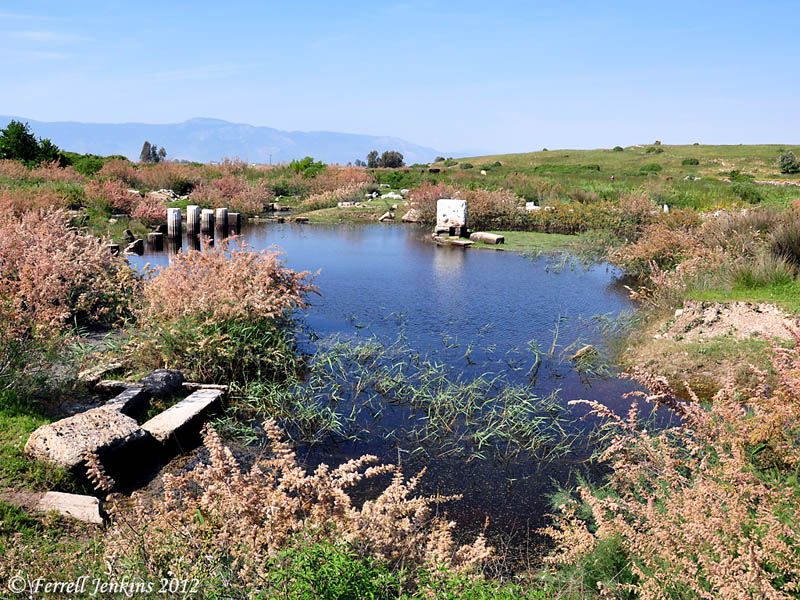
This photo shows some standing water in the Lion Harbor of Miletus.
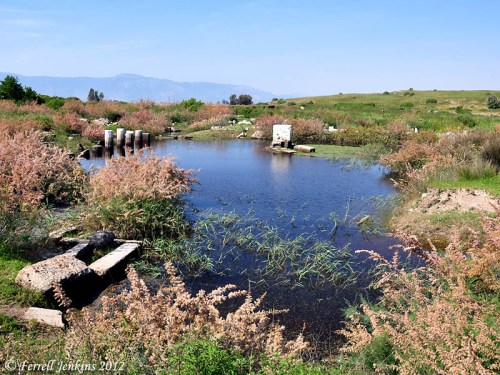
Ruins of the Lion Harbor at Miletus. Photo by Ferrell Jenkins.

Ruins of the Lion Harbor at Miletus. Photo by Ferrell Jenkins.

Acts 20:16    —    Paul had decided to sail past Ephesus — to be in Jerusalem on Pentecost (fifty days after leaving Philippi).

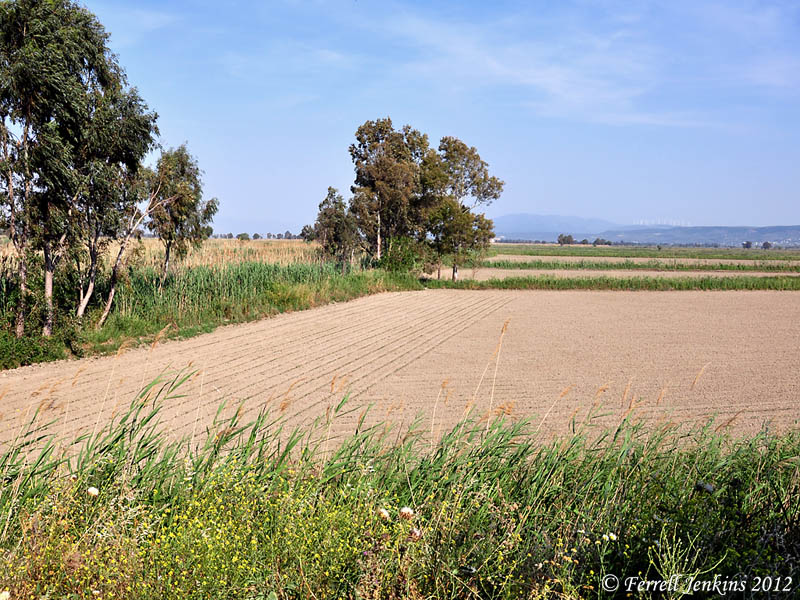
From Miletus Paul sent for the Ephesian elders. Consider the distance. How long would it take the courier to go to them and for them to come to him at Miletus? The distance was 63 miles by land or 38 if they went across the gulf of Latmos. This gulf is now silted up, leaving only a small inland lake.

The photo shows the site of the Gulf of Latmos which is now silted up. Turkish farmers grow rice in the area. The Meander River flows to the left of this photograph.
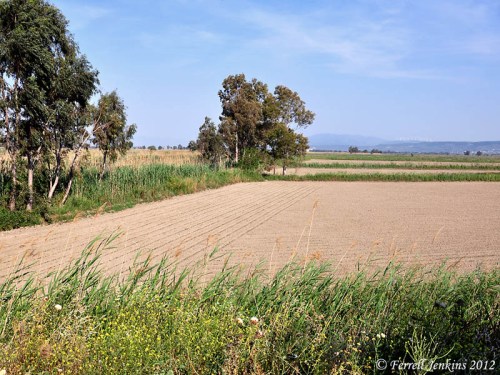
Site of Lake Latmos, now silted up, within two miles of Miletus. Photo by Ferrell Jenkins.

Site of the Gulf of Latmos, now silted up, within 2 miles of Miletus. Photo: F. Jenkins.

Acts 21:1    —    Set sail on a straight course to Cos.

  •  Next day to Rhodes. Tradition identifies this stop at St. Paul’s Bay at Lindos.
  • Patara.
  • Patara to Tyre. According to Chrysostom this trip took five days (Homily XLV.2; cf. Bruce, The Book of Acts in NICNT  421). They were always at the mercy of the wind. When they came within sight of Cyprus they sailed past to the south of the island as they headed to Syria (21:3).

Acts 21:4    —    Tyre — Paul tarried 7 days (note 20:6-7).
Acts 21:7    —    Ptolemais [modern Acre in Israel] — stayed one day.
Acts 21:8    —    Caesarea. They arrived the next day. The text does not say whether they went by boat or land. At Caesarea they stayed with Philip for “many days” (21:10).

Acts 21:15-17    —    Up to Jerusalem of Judea (cf. 21:10).

Acts 21:18    —    The following day Paul and the others visited James and the elders.

If our study of the Book or Acts, or any book of the Bible, is only a cursory one without attention to details, we miss much of what was intended for us.

Note: Use the Search Box to locate posts about Philippi, Assos and Mitylene, Ephesus, Miletus, Rhodes, Tyre, Ptolemais, and Caesarea.

Acts 17 — Photo Illustrations

Paul came to Thessalonica on his second journey (A.D. 50-53; Acts 17).

Now when they had passed through Amphipolis and Apollonia, they came to Thessalonica, where there was a synagogue of the Jews. (Acts 17:1 ESV)

Thessalonica (called Thessaloniki now) is in biblical Macedonia. The area is still known as Macedonia, but is not to be confused with the modern country by that name. It is marked on maps of Greece as FYROM (former Yugoslav Republic of Macedonia). I know too little about the dispute to make any comments.

Paul wrote two letters to the church at Thessalonica while he was at Corinth. Aristarchus, a Macedonian of Thessalonica accompanied Paul on the voyage to Rome (Acts 27:2). When Demas forsook Paul he went to Thessalonica (2 Timothy 4:10).

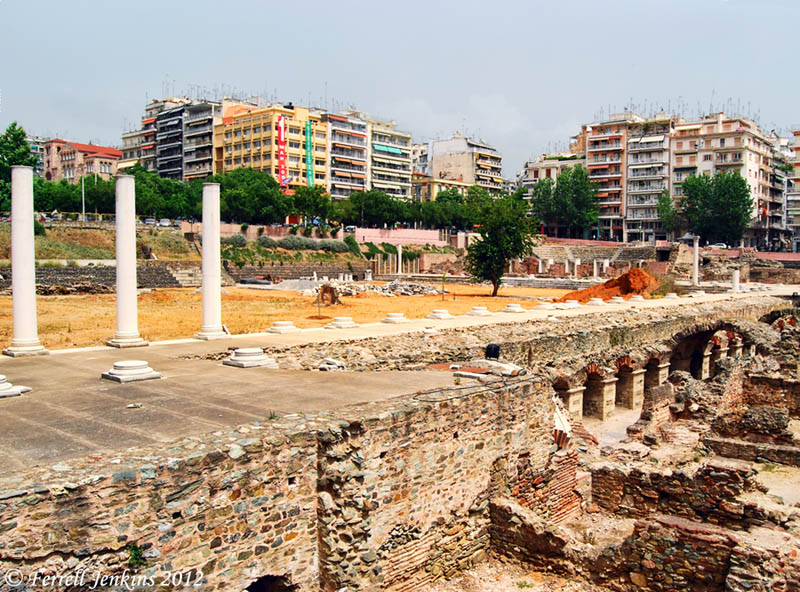
The photo below shows excavated ruins of the 2nd-3rd century A.D. Roman Forum in the center of the modern city of Thessalonica. Fant and Reddish comment on the Forum:

Extensive, ongoing excavations are being conducted in this area. Likely the same site was the location for the Hellenistic agora as well. The forum originally covered two extensive terraces. The forum originally covered two extensive terraces. The one to the north contained a large courtyard surrounded on four sides by two-story stoas; to the rear of the stoa on the east side stood the odeion, originally a theater for music and performances, later converted into an arena for gladiatorial contests. (A Guide to Biblical Sites in Greece and Turkey, 137).

Roman forum in the center of Thessalonica. Photo by Ferrell Jenkins.

Roman Forum in the center of Thessalonica. Photo by Ferrell Jenkins.

I think if you click on the photo to enlarge it, you will see the odeion to the right of the image.

There are several posts about Thessalonica on this blog. Just put the word Thessalonica in the Search Box. You will also find posts about Amphipolis, Berea, and Athens.

Acts 16 — Photo Illustrations (corrected)

What is the best way to correct a blunder? Shall I totally delete the post and start anew, or shall I edit the existing one? I decided to leave the existing one for the time being and post the correction here.

Forum/Agora. One reader suggests that I have incorrectly identified the forum at Philippi as the agora. Some sources indicate that the forum was primarily used for civic or judicial matters while the agora was considered the commercial center or market place.

My intention was to use both words because they are often used interchangeably. At Philippi, Corinth, and other places, these activities are not far removed from each other. In fact, the Forum at Philippi, and the Agora at Corinth contain a Bema (judgment seat) as well as numerous commercial shops.

I am not at home and do not have access to some of the sources I might normally use to check these things, but I have access to some dictionaries online.

The American Heritage Dictionary gives this definition for forum:

The public square or marketplace of an ancient Roman city that was the assembly place for judicial activity and public business.

The Compact Oxford English Dictionary defines the forum…

(in an ancient Roman city) a public square or marketplace used for judicial and other business.

The Wrong Photo. But my serious blunder was in the photo I labeled as the forum/agora. After publishing it I began to think I had uploaded the wrong photo. A friend has written privately to remind me that I have posted a photo of one of the basilicas at Philippi rather than the forum. I plead guilty. My oversight.

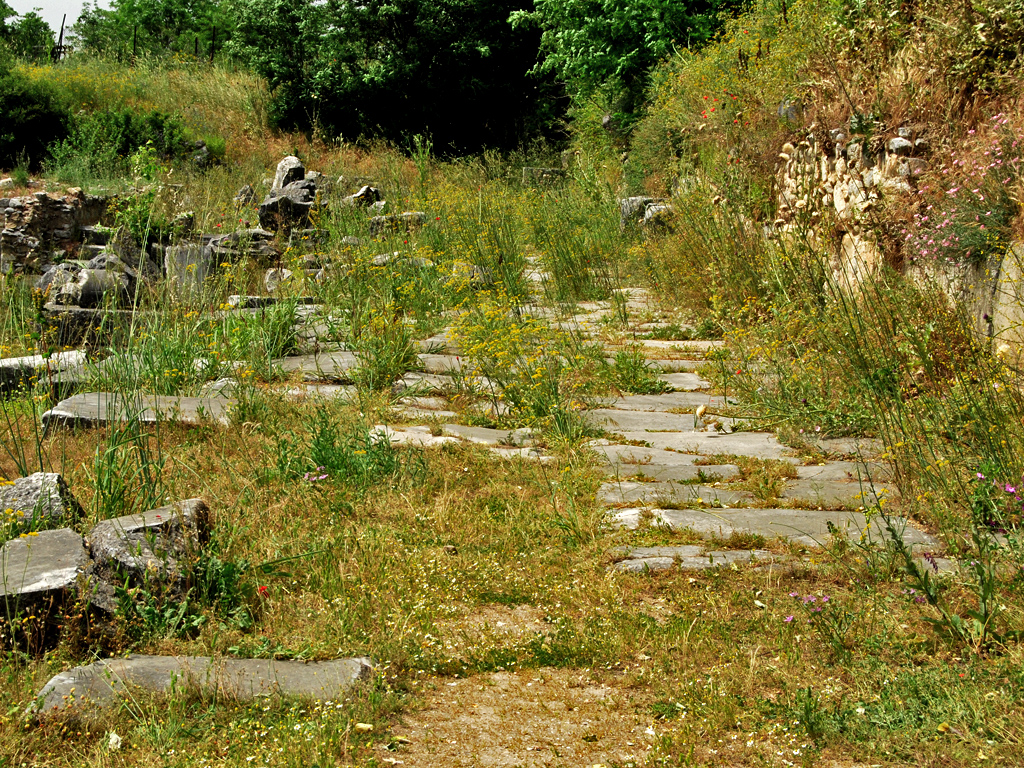
Here is a photo of a portion of the Via Egnatia (the Egnatian Way) in the forum at Philippi. Much of it is covered by several feet of earth. The modern road runs above the ancient one.

A portion of the Via Egnatia in the Forum at Philippi. Photo by Ferrell Jenkins.

A portion of the Via Egnatia in the Forum at Philippi. Photo by Ferrell Jenkins.

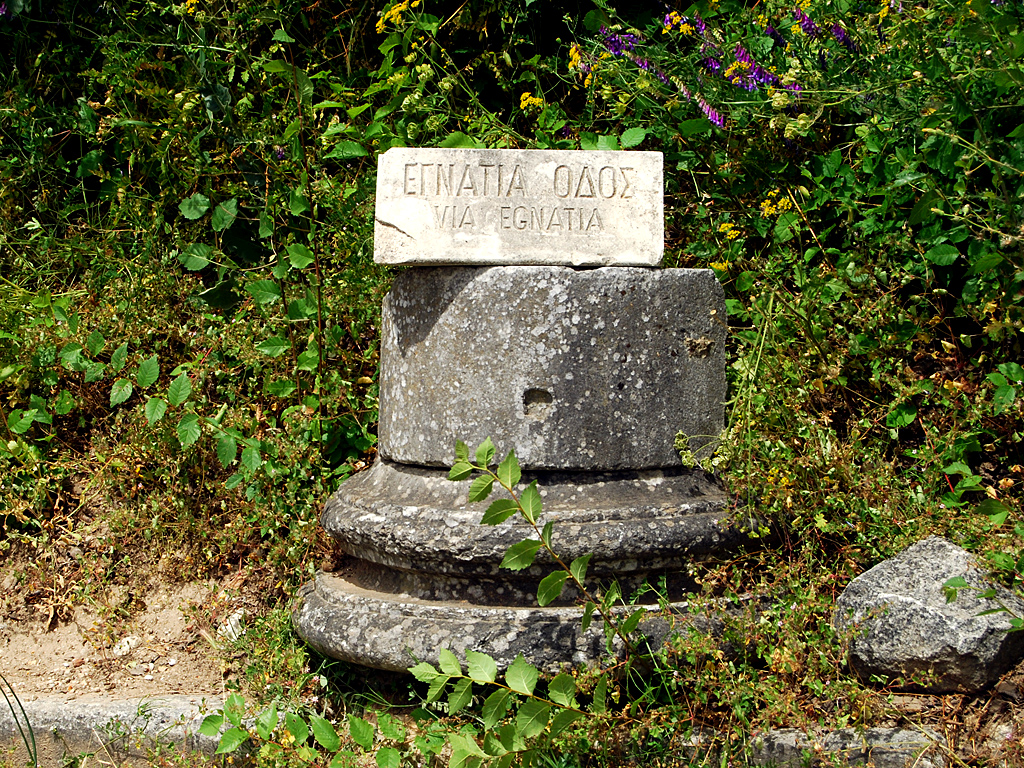
The next photo shows a sign that once sat on the road.

Identifying the Via Egnatia in the Forum at Philippi. Photo by Ferrell Jenkins.

Identifying the Via Egnatia in the Forum at Philippi. Photo by Ferrell Jenkins.

Perhaps later I will post a photo of some of the shops in the forum.

Acts 16 — Photo Illustrations

The Apostle Paul came to Philippi on his second preaching journey. Luke accurately describes the city with these words:

So putting out to sea from Troas, we ran a straight course to Samothrace, and on the day following to Neapolis; and from there to Philippi, which is a leading city of the district of Macedonia, a Roman colony; and we were staying in this city for some days. (Act 16:11-12 NAU)

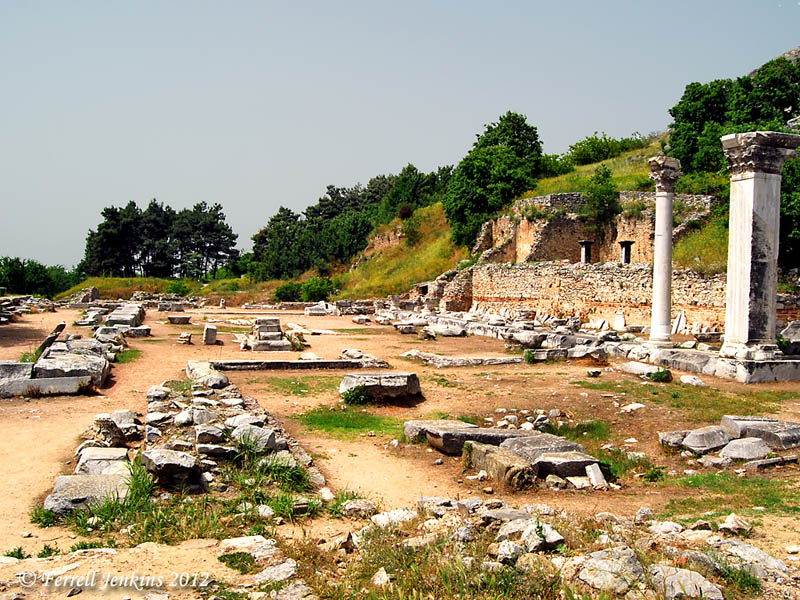
The photo below shows ruins of the forum (or agora) of the city where much of the activity took place. Portions of the famous Egnatian Way may be seen at the edge of the forum, but partially buried under the earth and modern road on the right. [See correction here.]

Forum of Philippi. Photo by Ferrell Jenkins.

The Forum (Agora) of Philippi. Photo by Ferrell Jenkins.

At Philippi, Paul preached to and baptized Lydia and her household, and the jailer.

Another PLBL Giveaway

Todd Bolen, over at the Bible Places Blog, is giving away another five volumes of the Pictorial Library of the Bible Lands. Any five you choose. The entry period ends Friday. Check details here.

Two arrested in Greece for antiquities theft

Numerous news sources are reporting the arrest of two men east of Thessaloniki (Thessalonica), Greece, with a 4th century B.C. gold wreath and armband. The arrest was near the Biblical sites of Amphipolis and Apollonia. We recognize those as places passed by Paul and his companions as they traveled the Via Egnatia between Philippi and Thessalonica.

Now when they had passed through Amphipolis and Apollonia, they came to Thessalonica, where there was a synagogue of the Jews. (Acts 17:1 ESV)

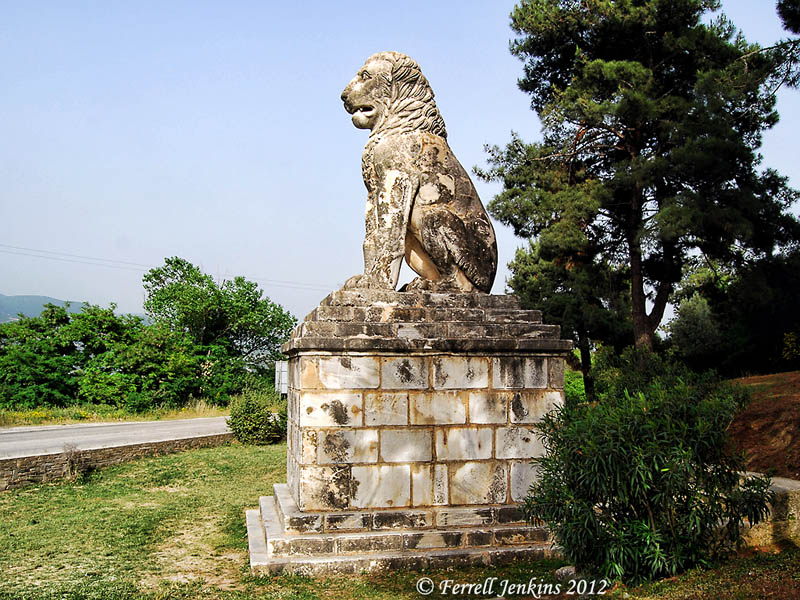
Very little archaeological work has been done in Amphipolis and Apollonia. One interesting artifact on the Strymon River at Amphipolis is this lion from the 4th century B.C.

The Lion of Amphipolis, Greece. Photo by Ferrell Jenkins.

The Lion of Amphipolis, Greece. Photo by Ferrell Jenkins.

The news report in The Republic, Columbus, Indiana, here  includes two nice photos of the wreath.

The photo of the gold wreath below comes from 4th century B.C. Greece. It is now displayed in the Metropolitan Museum, New York City.

Gold crown from Greece. Metropolitan Museum, NY. Photo by Ferrell Jenkins.

Gold crown from Greece. Metropolitan Museum, NY. Photo by Ferrell Jenkins.

Paul spoke of his beloved brothers at Philippi as his joy and crown.

Therefore, my brothers, whom I love and long for, my joy and crown, stand firm thus in the Lord, my beloved. (Philippians 4:1 ESV)

HT: Jack Sasson

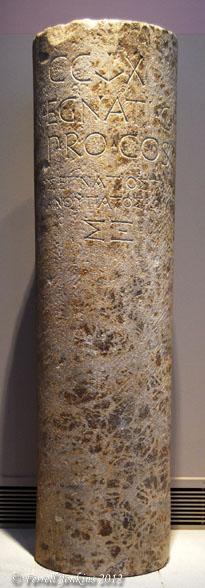
Another Milestone — One Million Hits

Milestone from the Via Egnatian. Thessalonica Museum. Photo by Ferrell Jenkins.

Milestone from the Via Egnatian displayed in the Thessaloniki Museum. Photo by Ferrell Jenkins.

A few minutes ago the counter on this blog indicated that we have reached one million hits since beginning the blog about five years ago.

This is not much compared to many secular web sites, or even some biblioblogs, but I am pleased with the results over these years.

Ferrell’s Travel Blog was begun to keep friends and family of our tour members informed about the progress of a tour in 2007. Had I realized it was to become a regular part of my life, averaging more than 1100 hits a day, I would have named it differently. But I didn’t, and here we are.

Thanks for following the blog. I am especially pleased when Bible class teachers write to tell me they are using the material in their Bible classes.

I have enjoyed the contact with some well-informed people who have taken time to communicate with me regarding the subjects I write about. Thanks to all who have taken the time to leave a comment on the blog, in person, by Facebook, or by Email.

We celebrated becoming half a millionaire November 21, 2010, here.

Some days I think of discontinuing the blog; other days I don’t.

The photo of the milestone from the Via Egnatian, a Roman road used by the Apostle Paul, seems appropriate today.

The Antikythera Shipwreck and “Danger at sea”

The Antikythera Shipwreck is a special exhibition at the Athens (Greece) National Museum which is scheduled to run from April 2012 to April 2013.

The shipwreck off the eastern coast of Antikythera is dated to 60-50 BC, a period during which maritime trade and transportation of works of Greek art from the Eastern Mediterranean to Italy flourished. Its cargo dates from the 4th to the 1st century BC. The ship was a freighter of about 300 tons capacity and was sailings towards Italy.

We had visited Thera (aka Santorini) during our Aegean cruise. Antikythera (“opposite Kythera”) is a Greek island between Crete and the Peloponnese (where Corinth is located).

The statue below is made of Parian marble. Scholars in the field suggest that this is possibly Achilles. Being on the bottom of the Aegean Sea for centuries shows its effects on the statue.

Possibly Achilles. The Antikythera Shipwreck. Athens National Museum. Photo by Ferrell Jenkins.

Possibly Achilles in Parian Marble. The Antikythera Shipwreck. Athens National Museum. Photo by Ferrell Jenkins.

Numerous bronze pieces are displayed. The bust below is part of a portrait statue known as “The Antikythera Philosopher.” The head, hands, feet, and pieces of the himation were recovered and are displayed. This piece of art is said to date to about 230 B.C.

The Antikythera Philosopher. Athens National Museum. Photo by Ferrell Jenkins.

The Antikythera Philosopher. Athens National Museum. Photo by Ferrell Jenkins.

We typically think of ships from the Roman period, and earlier, staying near the shore. This was certainly true of many of the sea journeys of the Apostle Paul (Acts 20:5, 13-16 27:5-7).

Greek archaeologists announce here the discovery of two Roman-era shipwrecks in water nearly a mile deep. Sailing to Italy required leaving the safety of the nearby shore for deep waters. Such was true of Paul’s journey to Rome after leaving Crete (Acts 27).

Paul spoke of the dangers at sea in his second letter to the Corinthians (11:24-29) about A.D. 55.

  • Three times I was shipwrecked.
  • A night and a day I was adrift at sea.
  • He mentioned “Danger at sea.”

The Malta shipwreck is the only one recorded in Acts, and it occurred after the writing of 2 Corinthians. Hughes mentions at least nine voyages between Acts 9 and 18. Paul says three of these ended in shipwreck. Hughes says there were at least another nine voyages between the writing of 2 Corinthians and the Malta shipwreck (The Second Epistle to the Corinthians, NICNT, 410-411).

At least some of the ships used by Paul seem to have been grain ships (Acts 27:38), but there may have been other cargo on some of them.

If you visit Athens between now and April 2013, be sure to take some time for The Antikythera Shipwreck.

Major revision of the Pictorial Library of the Bible Lands

Todd Bolen announces the release of a total revision of the Pictorial Library of Bible Lands. This revised and expanded edition is the culmination of 9 years of work. The previous version contained 6000 photographs in 10 volumes. According to the announcement,

This new edition consists of 18 volumes with nearly 18,000 photographs, adding hundreds of new sites and re-visiting the old favorites.

Here are just a few features of the new edition of the Pictorial Library of Bible Lands.

  • Eight new volumes: (Lebanon, Eastern and Central Turkey, The Greek Islands, and more. New subjects include Cultural Images, Signs, and Trees, Plants, and Flowers.
  • New Photos: For example, more than 1000 new photos have been added to the Jerusalem volume.
  • New Photographers. In addition to the photos by Todd Bolen, the work of more than 40 photographers are included in this new set.
  • New Maps. New, original maps have been created to identify the sites.
  • New Indexes. Every photograph is indexed in a list of more than 400 pages.
  • You get the hi-res photos and the photos already in PowerPoint. You can use the presentation as it is or include individual slides in your own lesson.
  • And more…
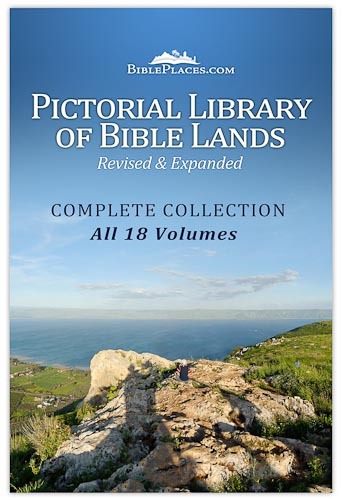
Pictorial Library Complete Collection. BiblePlaces.Com.

Front cover of the new Pictorial Library Complete Collection.

For those who already own the previous collection, Bible Places is offering the new 18-volume set for the upgrade price of $179. The entire set for new purchasers is $389.

Would you prefer to make your own photos? Try buying a good digital SLR camera starting at about $1500, flying to Israel (not to mention Lebanon, Egypt, Turkey, Greece, the Greek Islands, Italy, et al.), renting a car for a few weeks, buying the gas. Oh, and don’t forget to hire a private plane for a few hours so you can get some good aerial photos. That might cost at least $389. 🙂 And what if the lighting conditions were not right for a good photos the day you were at a site? What if you don’t have time to get your photos organized and write a description of each one? Need I go on to make a point? Did I mention that living and teaching in Israel for a decade helps?

Every church should have a set of this material for the teachers to use in their teaching. Over the years I have found that some short-sighted groups (churches) will not make such an expenditure. The other choice is to buy the set for yourself.

I hear several lessons a week, and every one of them could be improved by the use of photos from this wonderful collection.

Learn more about the new Pictorial Library of Bible Lands in the following places:

Charles Savelle has a good interview with Todd Bolen at the BibleX blog here.

I have profited much from the work of Todd Bolen and am delighted to count him as a friend and to recommend this collection of photographs to every teacher of the Bible.

Follow the BiblePlaces.com Blog here.