Category Archives: Bible Study

Another sunset photo on the Sea of Galilee

In response to our recent post on Sunset from En Gev on the Sea of Galilee here, Randy Myers tried to post an image of a photo he made of a sunset on the Sea of Galilee about two weeks ago.

I contacted Randy and asked permission to post his photo on the blog. It is a beautiful photo with Tiberias in the shadows. The bird in flight adds a really nice touch.

Sunset on the Sea of Galilee. Photo by Randy Myers.

Sunset on the Sea of Galilee. Photo by Randy Myers.

Much of the activity of Jesus during His earthly ministry involved the Sea of Galilee and the various ports on its shore. Here is one example.

After Jesus healed a man with a withered hand on the Sabbath, the Pharisees and the Herodians made a plan to destroy Him.

Jesus withdrew with his disciples to the sea, and a great crowd followed, from Galilee and Judea and Jerusalem and Idumea and from beyond the Jordan and from around Tyre and Sidon. When the great crowd heard all that he was doing, they came to him. (Mark 3:7-8 ESV)

Randy, thanks for sharing this photo with us.


Sunset from En Gev on the Sea of Galilee

Travelers to the Sea of Galilee are always delighted to get a sunrise photo from Tiberias. If you travel around the lake to the eastern shore in the late afternoon you might see two things. Because the winds from the Mediterranean come from the north east you might see the stormy waves on the sea. And you might see a beautiful sunset.

The photo below is made from Kibbutz En Gev. The small village, home to some of the fishing and touring boats that ply the Sea of Galilee, is located in the shadow of the impressive mound of Hippos (Susita).

Sunset from En Gev. Photo by Ferrell Jenkins.

Sunset from En Gev. Photo by Ferrell Jenkins.

The harbor of Hippos (Susita) is located immediately south of En Gev. It is one of 15 or more ancient harbors now known to have existed in the time of Jesus.

Heavy rains bring flooding at Qumran

Jack Sasson, the Agade list, passes along a video about heavy rains Sunday in the area of Qumran on the shore of the Dead Sea in the Wilderness of Judea. (I think the rain was mostly in the Judean mountains.)

The video by אביחי שורשן is posted on YouTube.

Qumran is where the Dead Sea Scrolls were found in 1947.

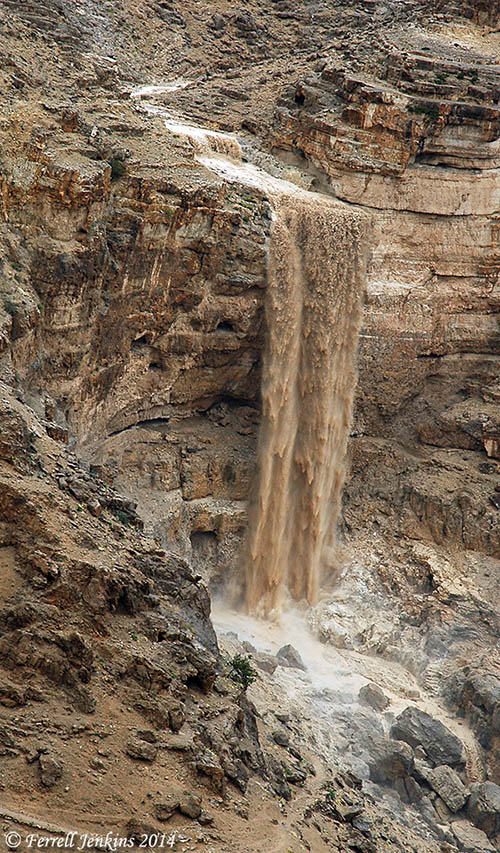
This video reminds me of the fortunate experience I had in April 2006 when strong rains in the central mountain range caused floods in the wilderness near Saint George Monastery on Wadi Qelt. Read about it, and see more photos, here.

Floods in the desert of Judea overlooking Wadi Qelt at St. George Monastery. Photo by Ferrell Jenkins.

Floods in the Judea wilderness near St. George Monastery. Photo by Ferrell Jenkins.

Prof. Yossi Garfinkel speaks in Tampa

Prof. Yossi Garfinkel speaks at Florida College

Prof. Yossi Garfinkel speaks at Florida College

Yosef Garfinkel is head of the Berman Center for Biblical Archaeology at Hebrew University in Jerusalem. He has been involved in numerous archaeological excavations in Israel. Last year he began the fourth archaeological excavation at Lachish. Prior to that he directed the dig at Khirbet Qeiyafa, a site overlooking the Elah Valley where David fought Goliath, from 2007 to 2013.

Garfinkel identifies Khirbet Qeiyafa as Biblical Shaaraim (Joshua 15:36; 1 Samuel 17:52; 1 Chronicles 4:31). He identifies two large buildings dating to the Iron Age at Khirbet Qeiyafa as a palace of David and a royal storeroom. We reported on this identification with photos here.

I think it is still impossible to say if Garfinkel’s identifications are correct, but I can say that his presentation will be interesting and enlightening. I have heard him speak at the Society of Biblical Literature annual meetings.

Florida College — Temple Terrace, FL
Puckett Auditorium
Tuesday, November 18 — 7:30 p.m.

This presentation is part of the Life Enrichment program at Florida College. These programs are intended primarily for students, faculty and staff of Florida College, but there should be some seats available for visitors who are interested in the subject.

Jesus taught the crowds from a boat

What kind of boat did Jesus sit in when he spoke parables to the multitudes gathered around the cove of the sower?

That same day Jesus went out of the house and sat beside the sea. And great crowds gathered about him, so that he got into a boat and sat down. And the whole crowd stood on the beach.  (Matthew 13:1-2 ESV)

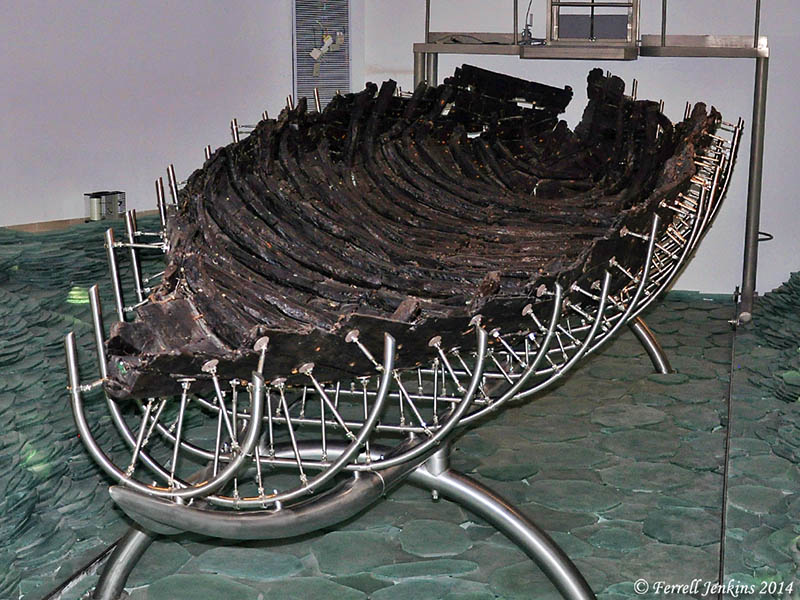
We can not know details about the boat mentioned in this text. Only one boat from the Roman period has been discovered in the Sea of Galilee.

A boat that belonged to the Roman period (dated from the first century B.C. to the first century A.D.) was discovered buried in the mud on the shore of the Sea of Galilee in January, 1986, by two members of the Kibbutz Ginosar. Two years of drought made possible the discovery. The discovery was made south of the Kibutz and north of the Migdal, the traditional site of Magdala (or Tarichea in Greek).

The boat measures 26.90 x 7.55 feet. Shelly Wachsmann, nautical archaeologist for the Israel Antiquities Authority and Museums, says,

The boat was most likely used for fishing and transport of people and cargo. It could have been sailed, or rowed by a crew consisting of four oarsmen and a helmsman. – (An Ancient Boat Discovered in the Sea of Galilee, a brochure once sold at the Museum.)

The boat is now displayed in the Yigal Allon Centre at Kibbutz Ginosar.
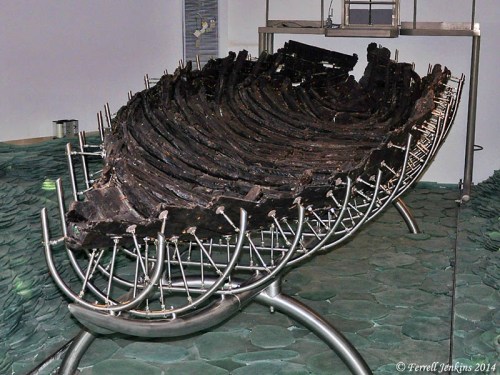
The Roman boat discovered in the Sea of Galilee in 1986. Photo by Ferrell Jenkins.

The Roman boat discovered in the Sea of Galilee in 1986. Photo by Ferrell Jenkins.

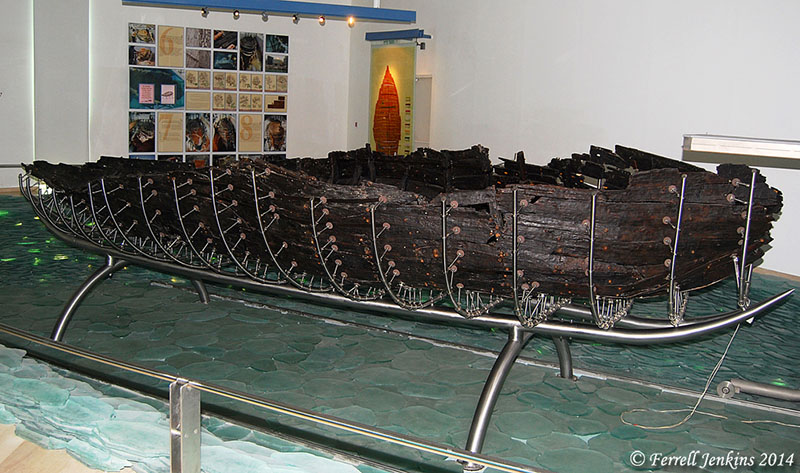
The photo below shows the side view of the boat. The display on the wall informs us that,

The boat is made mostly of oak and cedar, together with other types of wood, some recycled from disused boats. Thus far, laboratory tests have found eleven types of wood in the boat. Some were used to build the hull and others were added in smaller pieces later, to replace missing parts or repair faulty ones. The result is an intricate wooden patchwork vessel.

Twelve, not eleven, trees are shown on the display: Cedar, Tabor Oak, Christ Thorn, Carob, Aleppo Pine, Hawthorn, Plane Tree, Atlantic Terebinth, Sycomore, Laurel, Willow, and Judas Tree.
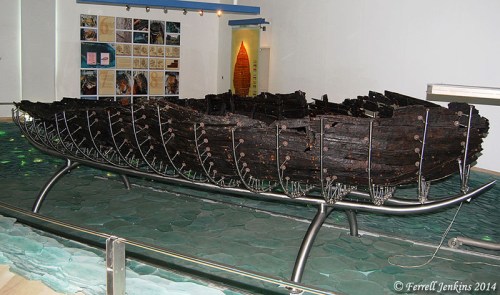
The Roman boat displayed in the Yigal Allon Museum. Photo by Ferrell Jenkins.

The Roman boat displayed in the Yigal Allon Museum. Photo by Ferrell Jenkins.

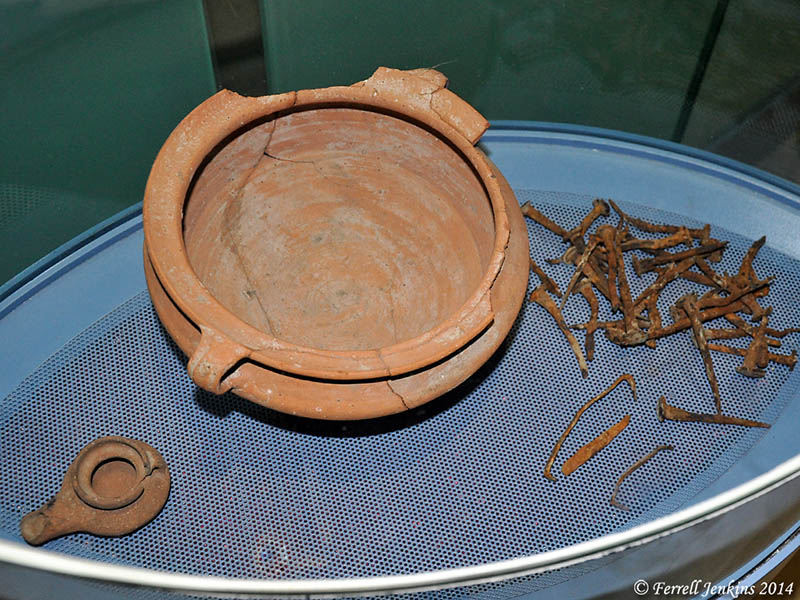
A pottery lamp was found inside the overturned boat, and a cooking pot was found outside the boat near the prow. These vessels, along with some nails from the boat, are displayed at the museum.
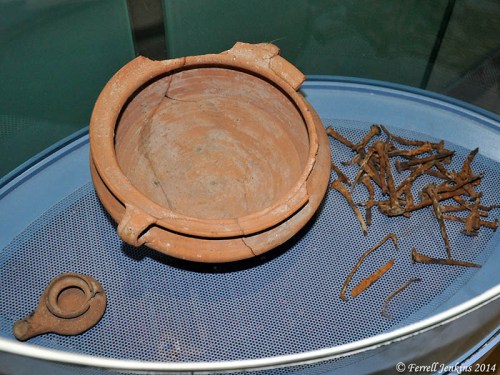
Pottery found in association with the boat, and nails from the boat. Photo by Ferrell Jenkins.

Pottery found in association with the boat, and nails from the boat. Photo by FJ.

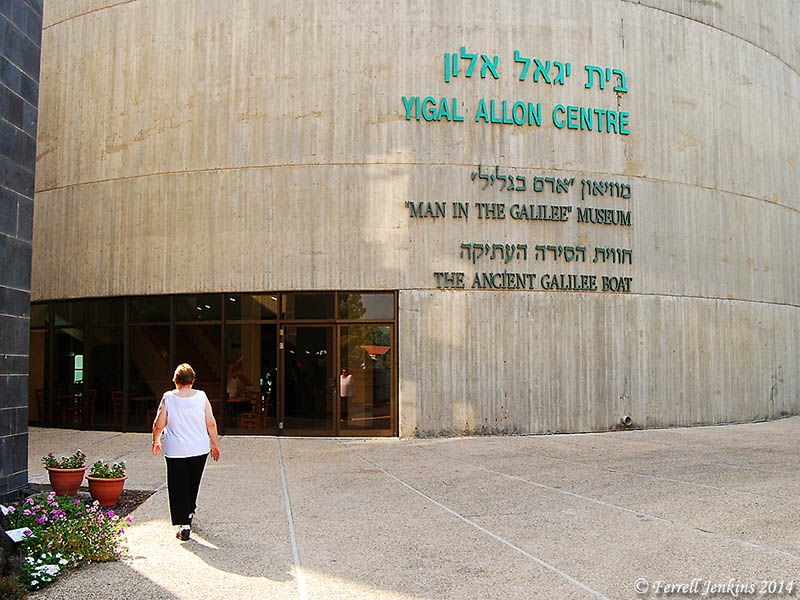
At first the boat was placed in a tank in a temporary building while the conservation took place. It is now beautifully displayed in the Yigal Allon Centre, a museum at Kibbutz Ginosar on the east shore of the Sea of Galilee.
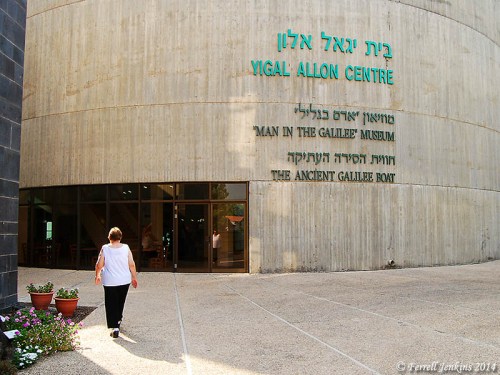
Entrance to the Yigal Allon Center where the Roman boat is displayed. Photo by Ferrell Jenkins.

Entrance to the Yigal Allon Centre where the Roman boat is displayed. Photo by FJ.

The boat used by Jesus and the disciples would have been larger (John 6:22; Mark 4:38). But on some occasions Jesus had a boat standing ready for Him (Mark 3:9). Perhaps one like this one.

The story of the discovery of the boat is told by Shelly Wachsmann in the Biblical Archaeology Review (14:05; Sept/Oct 1988). This little tidbit might be of interest here:

On Sunday [February 9, 1986], we were startled to read newspaper reports of a wreck from Jesus’ time that had been discovered in the Sea of Galilee. Somehow the news had leaked. By Monday the press was writing in front page stories about the discovery of the “boat of Jesus.”

The media hype was soon overwhelming. The Ministry of Tourism actively promoted the “Jesus connection” in the hope of drawing pilgrims to Israel. In Tiberias, Ultra-Orthodox Jews, fearful that excavation of the boat would promote Christian missionary work, demonstrated against it.

During the Jewish War in Galilee the Roman Emperor Vespasian made headquarters in Tarichea (= Magdala) for a period of time. The Romans engaged the Jews in a fierce naval battle. The outcome was not good for the local residents. I suggest you consult Josephus’ Wars of the Jews, book 3, for details. Notice this brief account of the outcome.

529 but as many of these were repulsed when they were getting ashore, they were killed by the arrows upon the lake; and the Romans leaped out of their vessels, and killed a great many more upon the land: one might then see the lake all bloody, and full of dead bodies, for not one of them escaped. 530 And a terrible stink, and a very sad sight there was on the following days over that country; for as for the shores, they were full of shipwrecks, and of dead bodies all swelled; and as the dead bodies were inflamed by the sun, and putrefied, they corrupted the air, insomuch that the misery was not only the object of pity to the Jews, but to those who hated them and had been the authors of that misery. 531 This was the upshot of the naval battle. The number of the slain, including those who were killed in the city before, was six thousand and five hundred. (Jewish Wars 3:529-531)

The Ginosar about which we speak is on the shore of the region called the land of Gennesaret in the Gospels (Matthew 14:34; Mark 6:53). The lake is called the lake of Gennesaret in Luke 5:1.

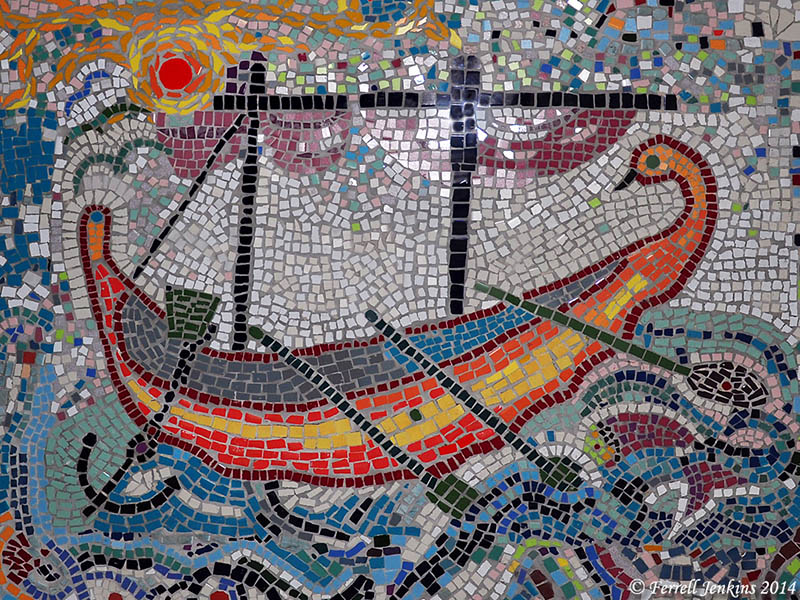
A mosaic with a similar boat had been found earlier at nearby Magdala. The original has been displayed at Capernaum for many years, but it was in poor condition the last time I saw it there. A modern replica, pictured below, may be seen in the Yigal Allon Centre.
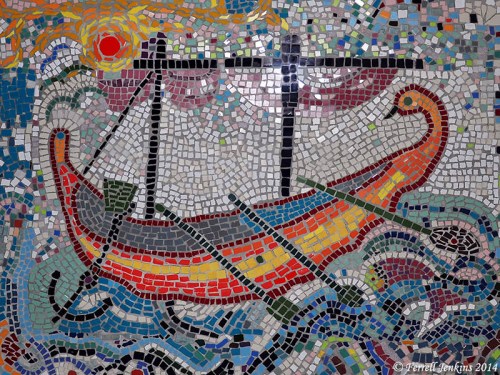
Replica of a mosaic discovered at Magdala. Photo by Ferrell Jenkins.

Replica of a mosaic discovered at Magdala. Photo by Ferrell Jenkins.

Boats played an important role in life around the Sea of Galilee in the time of Jesus. They were important in His ministry as well.

Cove of the Sower – from land, sea, and air

Over the past few years I have tried to get some good photos of the Cove of the Sower (also called the Cove of the Parables) and have written about it twice before. Some have suggested that this place on the north shore of the Sea of Galilee would have been the place where Jesus spoke in parables to large numbers who assembled to hear Him.

Read the full account given by Mark in 4:1-20. Here is the way it begins:

Again he began to teach beside the sea. And a very large crowd gathered about him, so that he got into a boat and sat in it on the sea, and the whole crowd was beside the sea on the land. And he was teaching them many things in parables, and in his teaching he said to them: “Listen! Behold, a sower went out to sow. (Mark 4:1-3 ESV)

Parallel accounts may be read in Matthew 13:1-15 and Luke 8:4-10.

B. Cobbey Crisler conducted some experiments at places where the Bible records that large crowds gathered. The attempt was to see if the large number were able to hear a speaker without the aid of modern sound equipment. The places were Kadesh-barnea, Shiloh,  and The Cove of the Sower in Galilee (“The Accoustics and Crowd Capacity of Natural Theaters in Palestine.” Biblical Archaeologist, 1976. Vol. 39. Num. 4).

The study indicated that the Cove of the Sower would allow between 5000 and 7000 people to hear.

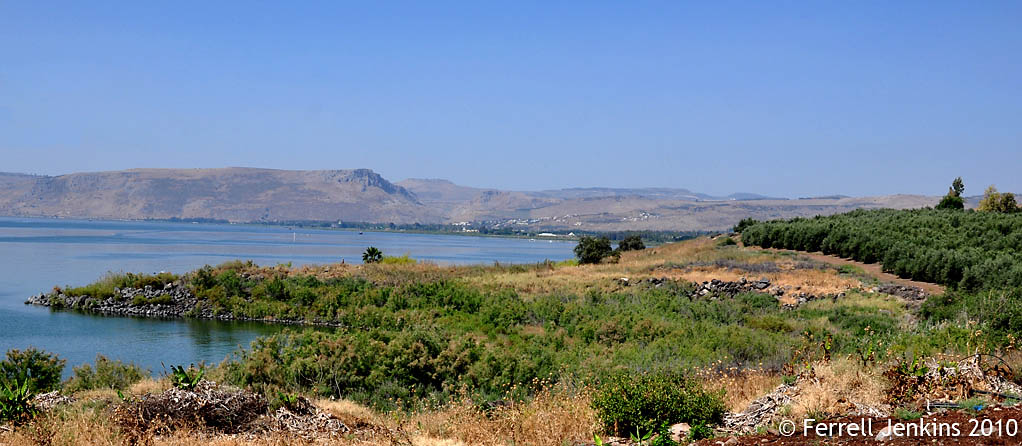
Over the years different crops have been planted in the area, and this makes it difficult to compare older and more recent photos. The highway runs just above the level of the top of the trees seen on the right (north). This photo is made looking west.

The Cove of Sower from top of area. Photo by Ferrell Jenkins.

The Cove of Sower from top of area. Photo by Ferrell Jenkins.

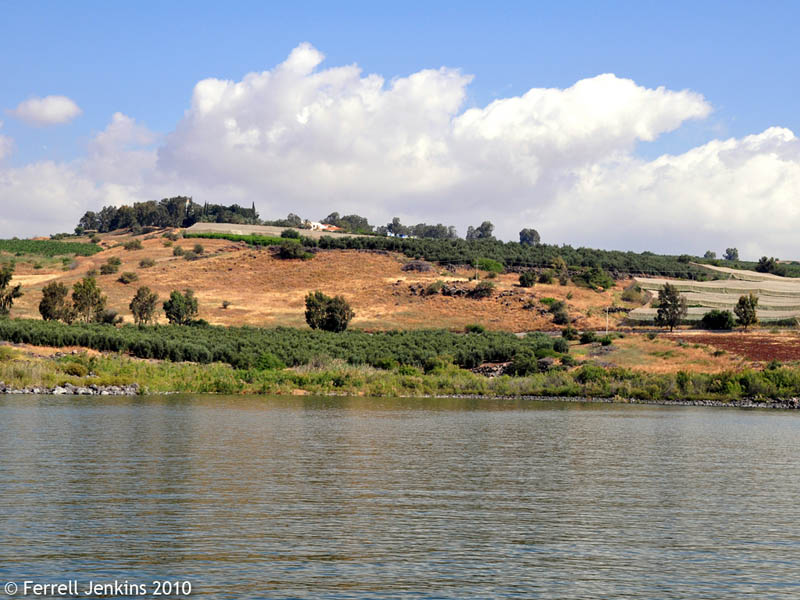
The photo below was made from a boat a short distance south of the shore. You can see the extension of the natural theater stretching up the hill above the trees. Hidden in the clump of trees on the top of the hill, and to the left is the traditional Mount of Beatitudes. This would be a good candidate for the place of the Sermon on the Mount.

Cove of the Sower From the Sea of Galilee by Ferrell Jenkins.

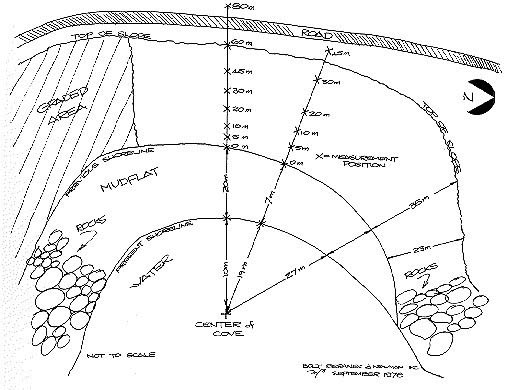
The following sketch from Crisler’s article in Biblical Archaeologist may help you to understand more clearly about the cove.

Cove of Sower sketch from Crisler's article in BA.

The terrain and the crops have changed since Crisler wrote. For those who may be curious, the covered areas are where bananas grow today. Both bananas and citrus trees have been brought to the country since the time of Jesus.

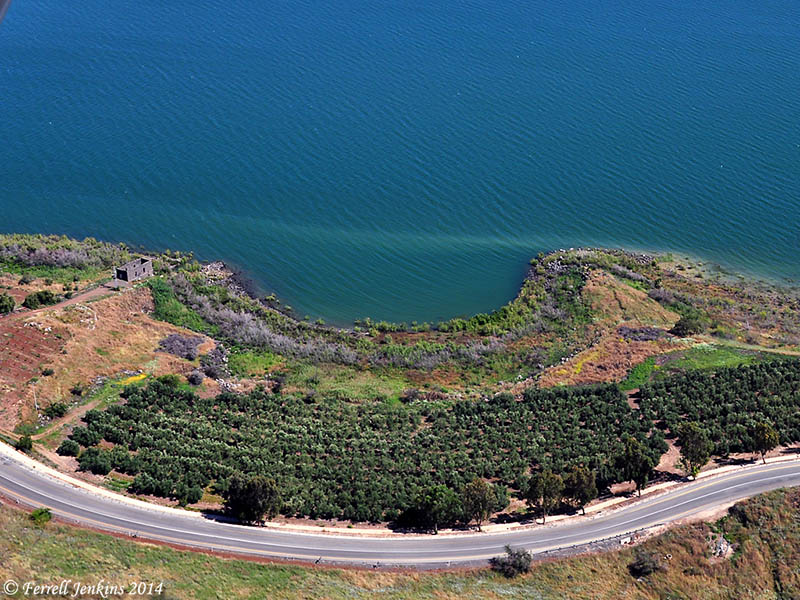
More recently I have been able to make a few aerial photos of the area. The first one was made from above the modern paved road looking down on the cove.

The Cove of the Sower from the air, looking south. Photo by Ferrell Jenkins.

The Cove of the Sower from the air, looking south. Photo by Ferrell Jenkins.

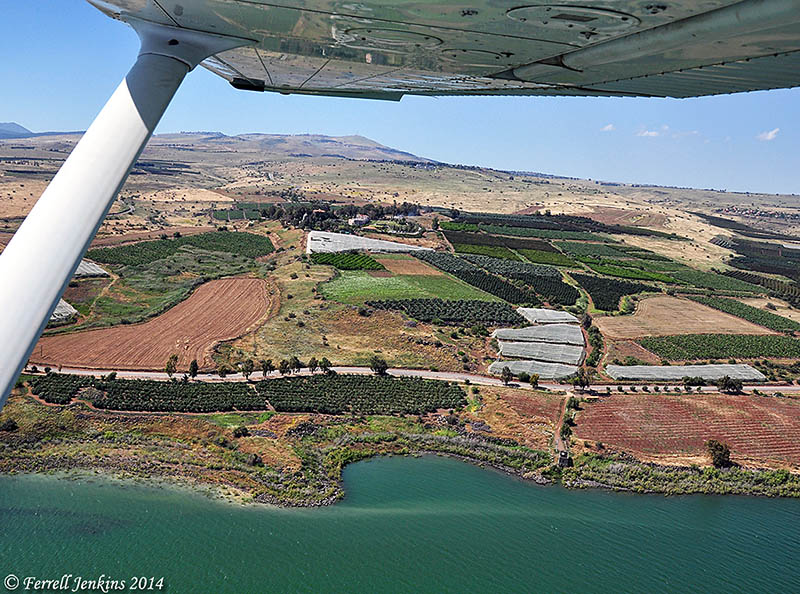
The next aerial view shows the cove and the hill above it from the south.

Aerial View of the Cove of the Sower looking north. Photo by Ferrell Jenkins.

Aerial View of the Cove of the Sower looking north. Photo by Ferrell Jenkins.

I trust that this information and these photos will enhance your understanding of the portions of Scripture mentioned above.

Halley’s Bible Handbook on sale today

Halley’s Bible Handbook with the New International Version is available for a limited time in Kindle format for $3.99. This is the completely revised and expanded 25th edition of this famous book. I notice that the sections on archaeology and geography have been revised by Carl G. Rasmussen.

This is one of the first books I owned. It can be helpful to everyone, especially those who do not have access to a larger library. It is the sort of book you can take with you to Bible classes to be able to have a little information about a lot of topics.

Babylon – index of articles

The Babylonian Empire was relatively short lived (626–539 B.C.), but it played a large role in biblical history. We have written about all of the Babylonian kings mentioned in the Bible. In this post I am pulling together an index collection of these articles to make it easy for one studying about the Babylonian captivity to locate all of them in one convenient place.

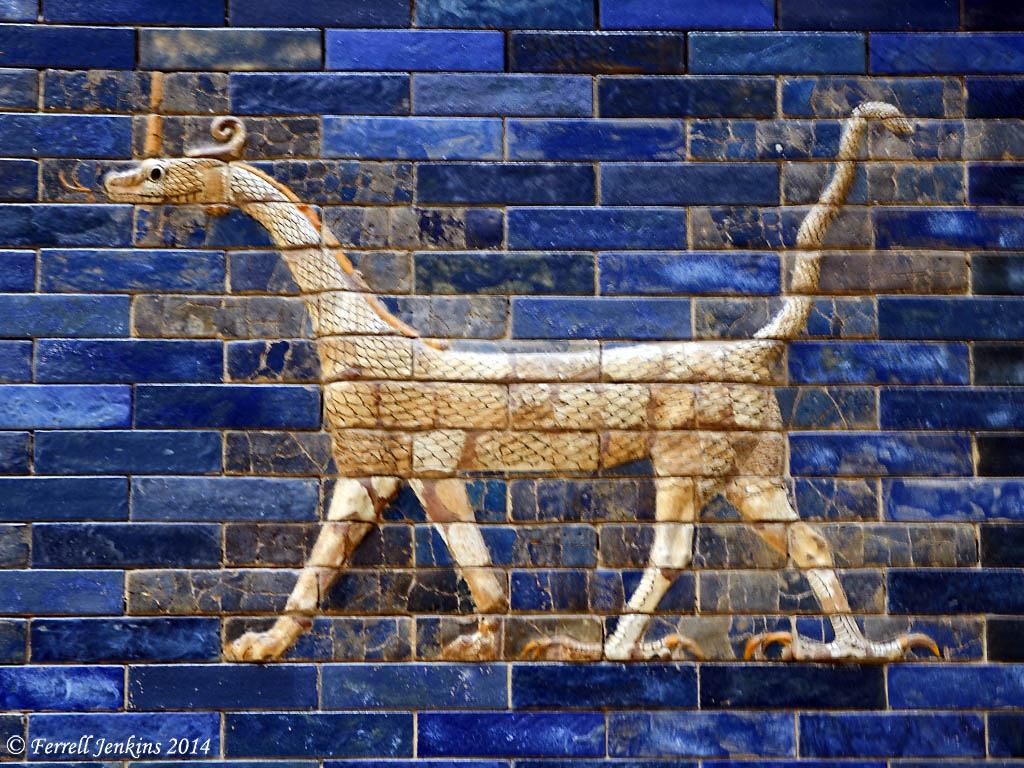
Dragon made of chrome brick on the Ishtar Gate. (Museum of the Ancient Near East, Berlin). The dragon is a composite creature with the head of a fire-spewing dragon, body and tail of a serpent, front feet of a feline, and back feet of a bird. This provides a good illustration of the apocalyptic language found in the Old Testament prophets. Photo by Ferrell Jenkins.

The dragon made of chrome brick on the Ishtar Gate from ancient Babylon was an emblem of Marduk (Museum of the Ancient Near East, Berlin). The dragon is a composite creature with the head of a fire-spewing dragon, body and tail of a serpent, front feet of a feline, and back feet of a bird. This provides a good illustration of the apocalyptic imagery found in the Old Testament prophets and the book of Revelation. Photo by Ferrell Jenkins.

The articles below, especially those with an * after the title, are considered minor references. They still might provide some helpful material and photos for the Bible student and teacher.

I trust this list will be helpful to students and teachers alike.

In the future, when I write something about Babylon I will try to remember to include a link in this index. I would appreciate learning if you find this index helpful.

Repairs made during the time of Hadrian

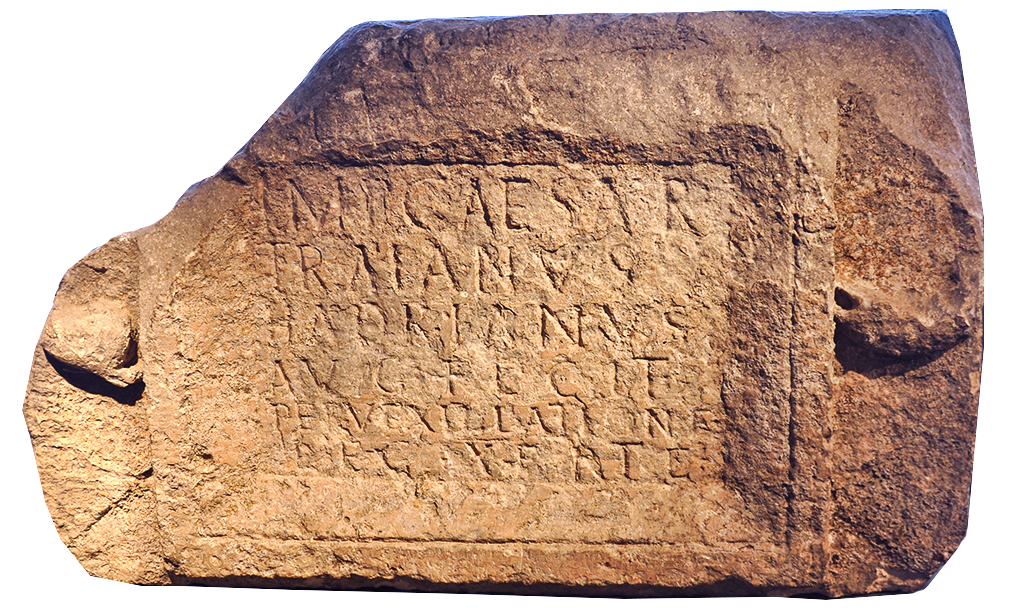
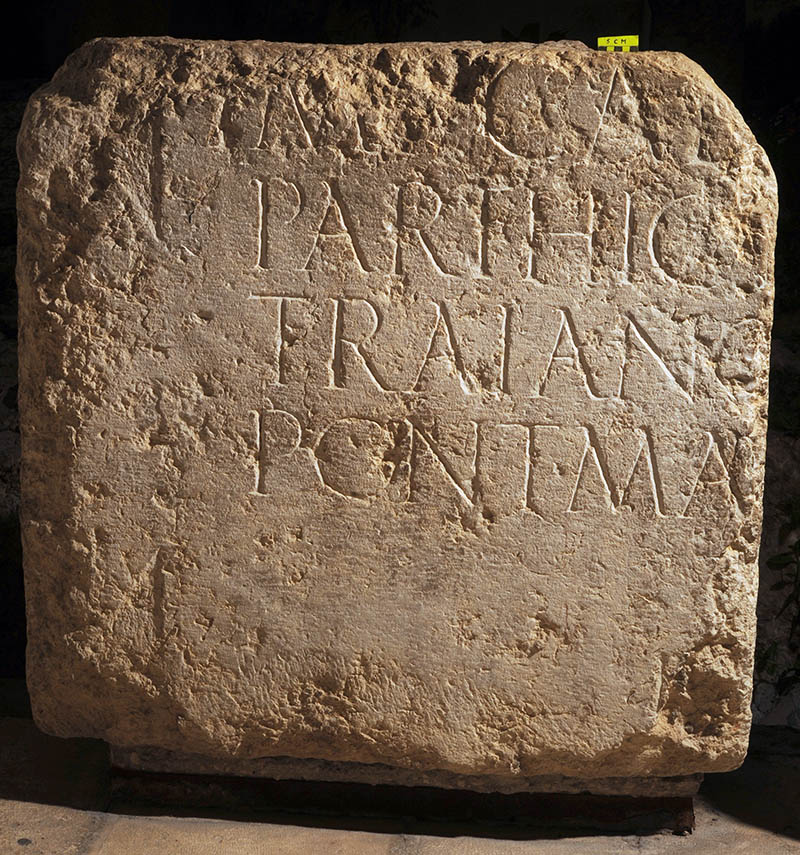
Hadrian has been in the news this week because of the recently discovered inscription found north of Damascus Gate in Jerusalem. In the Israel Museum there is an inscription that reads,

The August emperor Caesar Trajan Hadrian made [the aqueduct] by [means of] the unit of the Tenth Legion Fretensis.

Inscription says Hadrian made the aqueduct. Israel Museum. Photo by Ferrell Jenkins.

Inscription says Hadrian made the aqueduct. Israel Museum. Photo by Ferrell Jenkins.

This inscription was taken from the aqueduct at Caesarea Maritima and dates to near the time of Hadrian’s visit about A.D. 130. The accompanying sign in the Israel Museum says,

other dedicatory inscriptions discovered on the aqueduct indicate that additional work was conducted by soldiers of the Second, Sixth, and Tenth Legions throughout the Roman Period.

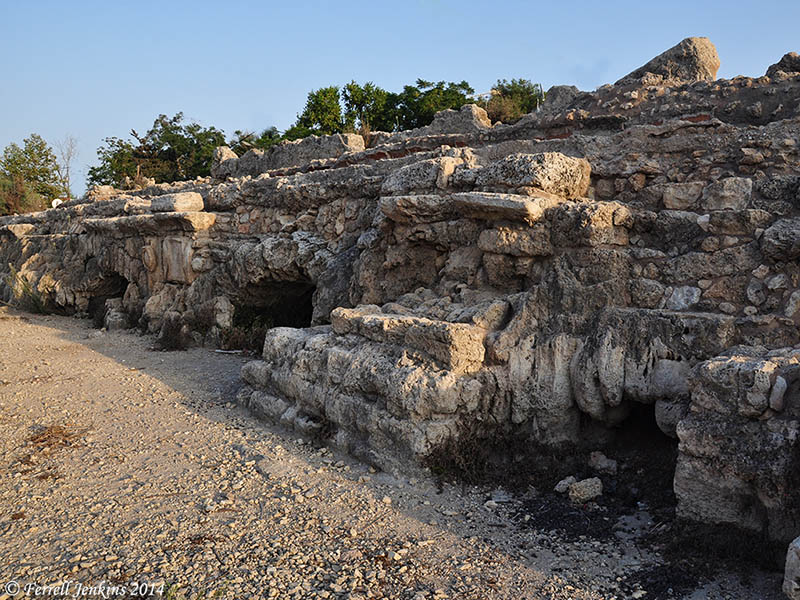
A couple of years ago I learned from Carl Rasmussen that a portion of the famous Caesarea aqueduct could be seen about 3 miles from Caesarea near the town of Bet Hannanya. (See his directions and photos here.) The photo below shows a portion of the aqueduct at that place.

Aqueduct at Bet Hannanya. The inscription in our next photo is visible at the far left of the photo. Photo by Ferrell Jenkins

Aqueduct at Bet Hannanya. The inscription in our next photo is visible at the left of this photo. Photo by Ferrell Jenkins.

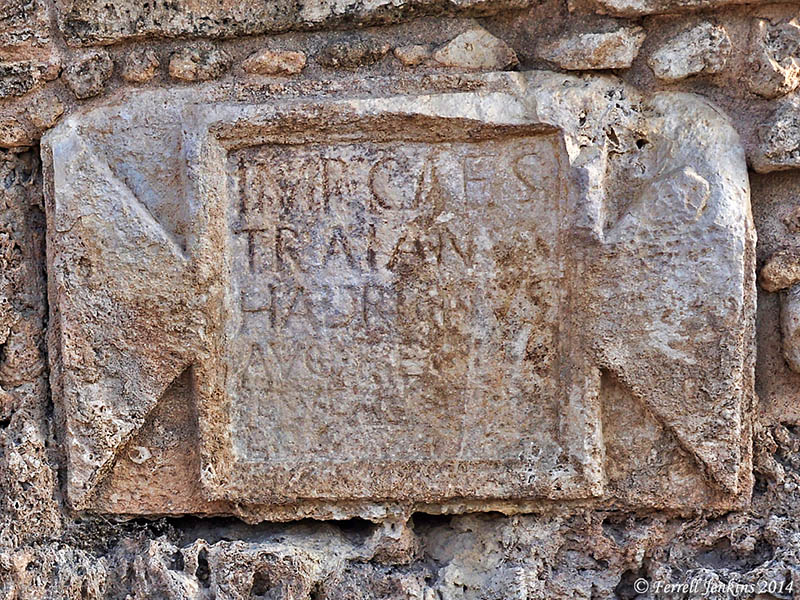
The inscription in this aqueduct is the same as the one on display in the Israel Museum.

Inscription mentioning Hadrian at Bet Hannanya. Photo by Ferrell Jenkins.

Inscription mentioning Hadrian at Bet Hannanya. Photo by Ferrell Jenkins.

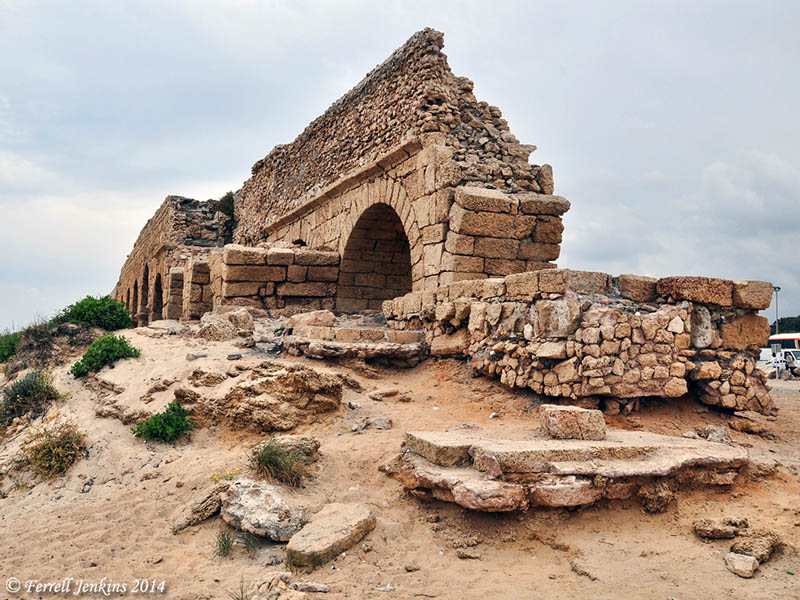
Meanwhile, at Caesarea Maritima, visitors may see the high-level aqueduct at the point where it come to an end likely due to erosion from the waves of the sea. According to Murphy-O’Connor the eastern channel (on the right) was “built by a Roman Procurator about the middle of the C1 AD.” The western channel was built by Hadrian. Some attribute the eastern channel to Herod the Great.

The high level aqueduct at Caesarea Maritima. Photo by Ferrell Jenkins.

The high level aqueduct at Caesarea Maritima. Photo by Ferrell Jenkins.

Caesarea Maritima was a first century Roman capital and seaport. The gospel was first preached to the Gentiles here when Peter came from Joppa to Caesarea to tell Cornelius words by which he could be saved (Acts 10, 11).

The Apostle Paul used the harbor at Caesarea several times. He was imprisoned here for two years before departing for Rome (Acts 24:27; 27:1).

Emperor Hadrian inscription uncovered in Jerusalem

The Israel Antiquities Authority announced Tuesday the discovery earlier this month of a partial inscription bearing the name and titles of the Roman Emperor Hadrian (A.D. 117-135). The English translation of the Latin inscription reads,

(1st hand) To the Imperator Caesar Traianus Hadrianus Augustus, son of the deified Traianus Parthicus, grandson of the deified Nerva, high priest, invested with tribunician power for the 14th time, consul for the third time, father of the country (dedicated by) the 10th legion Fretensis (2nd hand) Antoniniana.

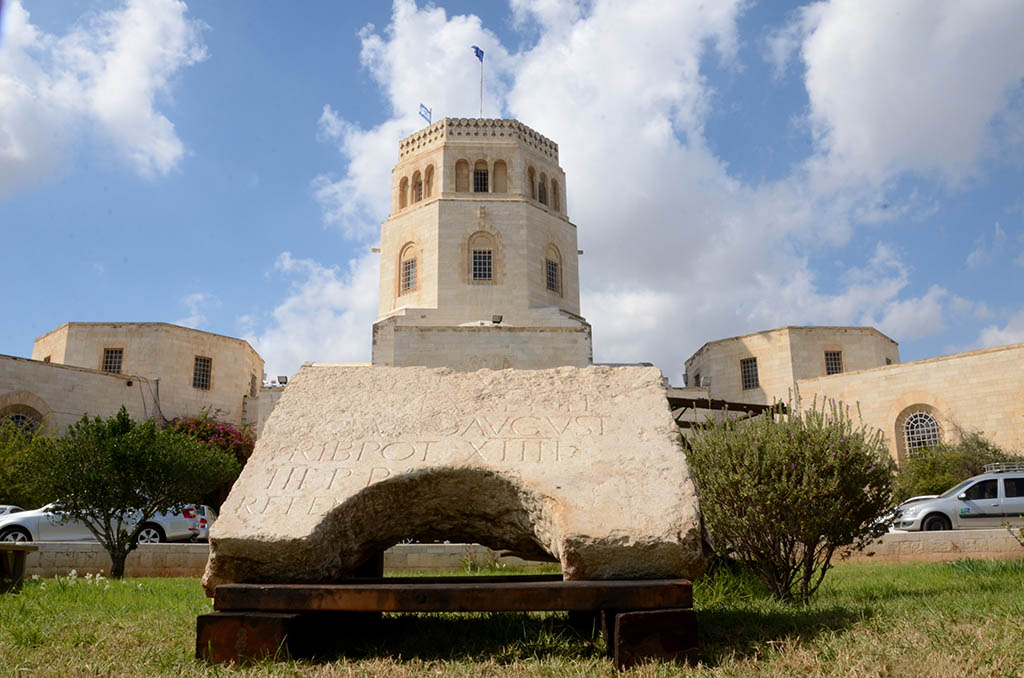
Inscription bearing name and titles of Hadrian is displayed in front of the Rockefeller Museum, headquarters of the Israel Antiquities Authority, Jerusalem. Photo by Yoli Shwartz, courtesy IAA.

Inscription bearing name and titles of Hadrian is displayed in front of the Rockefeller Museum, headquarters of the Israel Antiquities Authority, Jerusalem. Photo by Yoli Shwartz, courtesy IAA.

The discovery was made north of Damascus Gate during a salvage operation. Dr. Rina Avner and Roie Greenwald were the excavation directors. IAA experts discovered that this inscription was part of an inscription already known from a discovery by French archaeologist Charles Clermont-Ganneau (1846-1923) in the late 19th century. That inscription is displayed in the courtyard of the Studium Biblicum Franciscanum Museum.

Part of the Hadrian inscription discovered in the late 19th century by Clermont Ganneau, now located in Studium Biblicum Franciscanum Museum. Photo by Garo Nalbandian, courtesy of the Museum.

Part of the Hadrianic inscription discovered in the late 19th century by Clermont-Ganneau, now located in Studium Biblicum Franciscanum Museum. Photo by Garo Nalbandian, courtesy of the Museum.

The IAA Press Release says,

The events of the Bar Kokhba revolt are ascribed to the reign of the emperor Hadrian. He is remembered in Jewish history for having issued dictates imposing the persecution and forced conversions of Jews, which the sources referred to as the ‘Hadrianic decrees’.

The history of the Bar Kokhba revolt is known from, among other things, the works of the contemporary Roman historian Cassius Dio, who also mentions Hadrian’s visit to Jerusalem in the year 129/130 CE, within the framework of the emperor’s travels in the eastern empire. These travels are also documented on coins issued in honor of the occasion and in inscriptions specifically engraved prior to his arrival in different cities. This is apparently exactly what happened in Jerusalem.

The completion of the two parts of the text reveals an especially large inscription that is quite impressive. According to Dr. Abner, “The inscription itself might have set in the top of a free-standing triumphal arch on the city’s northern boundary such the Arch of Titus in Rome.”

The fate of Jerusalem following the destruction of the Second Temple (70 CE) and prior to the Bar Kokhba revolt (132-136 AD) is one of the major issues in the history of the city and in terms of the Jewish people’s connection to it.

We know from ancient writers and the inscriptions on coins that the new city, which Hadrian established, was granted the status of ‘colonia’ (that is, a city whose citizens and gods are Roman) and its name was changed to Aelia Capitolina (COLONIA AELIA CAPITOLINA in Latin). That name incorporates within it the emperor’s name that is in the inscription, whose full name is Publius Aelius Hadrianus, and Rome’s main family of dieties [sic, deities].

The complete English Press Release is available here.

I read this first in the The Times of Israel, but soon found that it was discussed widely on several blogs. Todd Bolen has included several additional links at Bible Places Blog here.

We have written about other Hadrianic arches in Athens, Antalya (Attalia), and Jerash. A recent series on the Tenth Roman Legion is available here.