Tag Archives: Syria

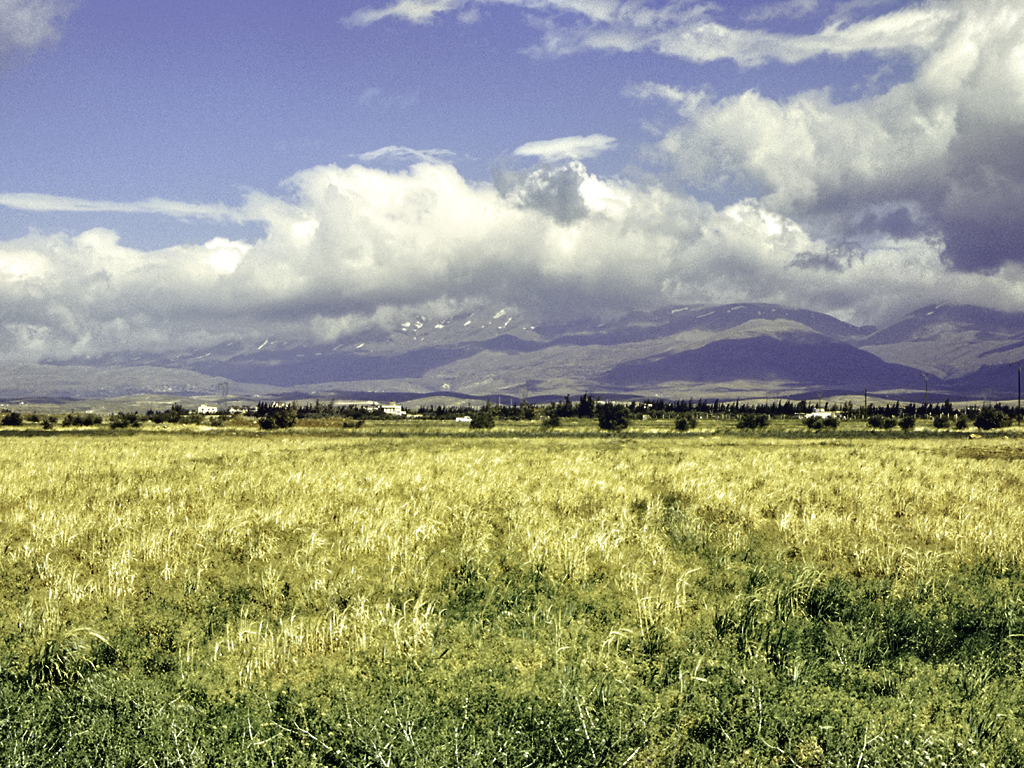
Mount Hermon within Syria

Enjoyable Visits to Syria

The modern country of Syria has been often in the news in the past few months and years. In Biblical times Syria had contacts with Biblical Israel. When I requested all forms of Bible references to Syria In the English Standard Version I found 133 matches in in 114 verses. Only nine of these are in the New Testament. We might find additional verses if we searched for various towns or regions of Syria such as Damascus, Hamath or Riblah we would have more. ccc

Because of the significance of Syria in Biblical times, I included the region in some of my tours.

I had the pleasure of visiting Syria several times since the first visit in 1967.During the early years of leading groups to the Bible Lands the tours were longer than those now. The first tour was April 24-May 9, 1967. On that tour my group of 19 visited Rome, Cairo, Beirut, Amman, Jerusalem in Jordan, and made a crossing at Mandelbaum Gate as the place of crossing was known, into Israel. While in Jerusalem, Jordan, we made a trip to Petra in one day. On the final days of the tour we visited Athens and Corinth in Greece before returning to the USA.

Incidentally, as a matter of interest to those who now pay five or six thousand dollars for a tour of seven to ten days That tour of 16 days cost $963.00 from New York. This included a room with bath, and three meals a day. Some hotels had rooms with a shower somewhere along the hall that had to be shared by several visitors.

On Monday, May 1, 1967, our group made a day trip from Beirut to Baalbek, Lebanon and Damascus, Syria.

The street called Straight in Damascus, Syria. Photo by Ferrell Jenkins on one of his visits to Damascus in the late 1960s or early 1970s.

From that time, almost annually we visited Damascus until about 1974. In a 1976 brochure there is this warning:

SPECIAL NOTICE: Political conditions in Lebanon have made it unsafe for tourists during the Summer and Fall of 1975. If conditions are not safe at the time of our tour, we have an alternate plan which wisely uses the time in Cairo, Damascus and Jerusalem.

My recollection is that no other tour included Damascus.

In May, 2002 David McClister, one of my colleagues at Florida College, and I spent three weeks traveling in Lebanon, Syria and Jordan. The time was about equally divided between the three countries. We covered Syria by traveling along the southern border adjoining Lebanon, then we went north as far as possible along the Mediterranean. We turned East and visited places such as Ebla before going north to Aleppo. From there we visited sites to the north including the Euphrates River. This was near the Turkish border and Carchemish.

After that we returned to Damascus for a few days and then we traveled in Jordan for a week.

“The stork in the heavens knows her time”

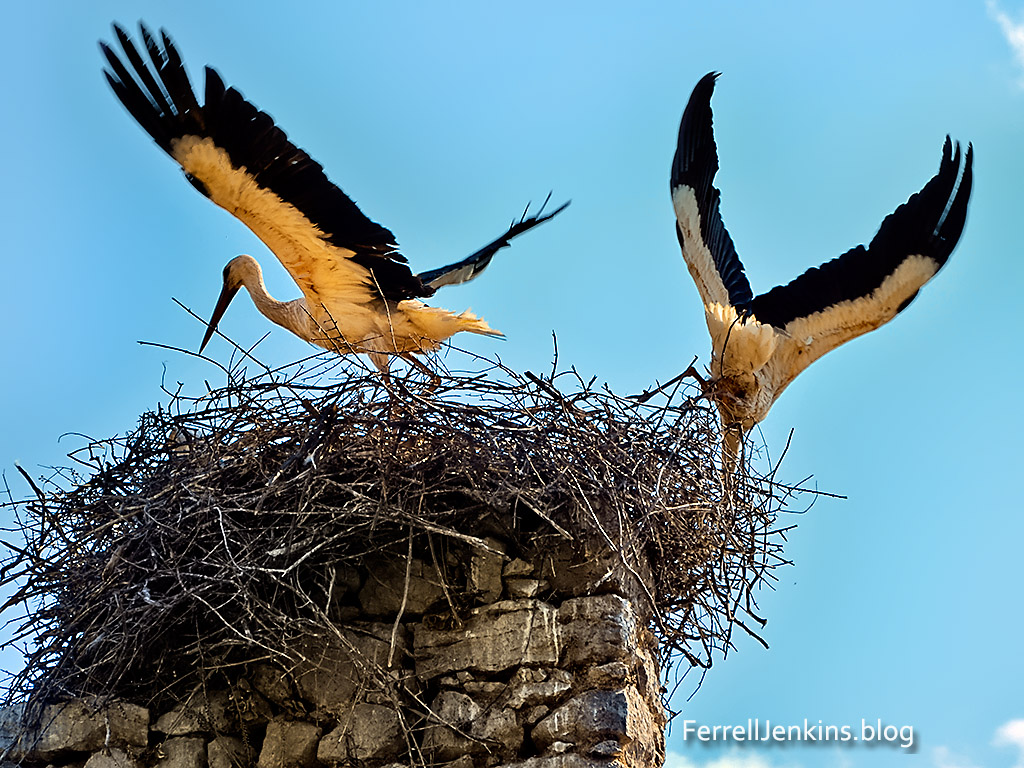
The stork is listed among the unclean birds in Leviticus 11:19 and Deuteronomy 14:18. The Psalmist says, “the stork has her home in the fir trees” (Psalm 104:17.

I have not seen a stork nest in a fir tree, but I have often seen them on the top of electric poles, chimneys, and ruined columns.

These storks are building a nest on the top of an old brick column at Kovanlik, Turkey. This photo was made yards away from the beginning of the Via Sebaste or Imperial Road that leads northeast across the mountains from the Pamphylian coastal plain to the Anatolian plateau. The approximate location is 37 10.4234N, 30 35.875E. Photo by Ferrell Jenkins

The prophet Jeremiah uses the faithfulness of the stork as it moves from one continent to another and then returns as an illustration of the faithfulness not seen in the people of the LORD.

Even the stork in the heavens knows her times, and the turtledove, swallow, and crane keep the time of their coming, but my people know not the rules of the LORD. (Jeremiah 8:7 ESV)

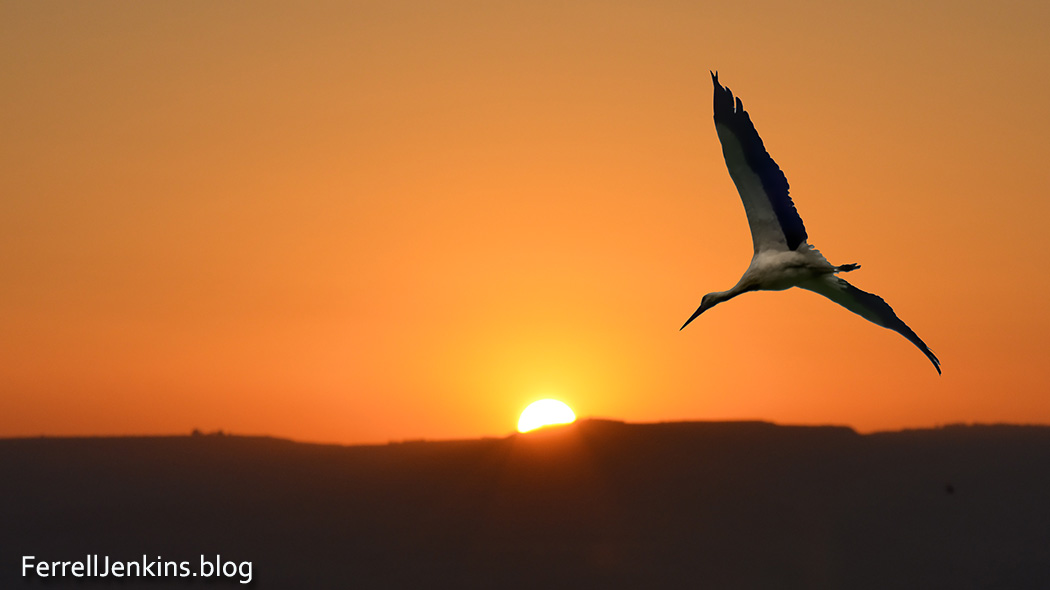
I have seen this played out repeatedly in my travels in Israel and Turkey. The storks fly from Europe and other northern climes to Africa in the fall of the year. The Great Rift provides the way for them to navigate through Syria and Israel/Jordan.

A stork heading north and a sunrise over the Golan Heights. Photo: ferrelljenkins.blog.

This is a composite photo showing a stork in the Jordan Valley and a sunrise over the Golan Heights. Photos by Ferrell Jenkins.

The prophet Zechariah also uses the wingspan of the stork as an illustration. In one of his visions he says,

Then I lifted my eyes and saw, and behold, two women coming forward! The wind was in their wings. They had wings like the wings of a stork, and they lifted up the basket between earth and heaven. (Zechariah 5:9 ESV)

The Keren Kayemeth Leisrael JNF website provides good information about storks, and other birds, in the Hulah valley here. Here is another nice site with information about storks and some good photos.

HT: Dr. Mark Wilson, author of Biblical Turkey, who gave the directions of the Via Sebaste mentioned with the first photo to Leon Mauldin and me. An article by Mark R. Fairchild in BAR includes a map showing two possible routes from Perga in Pampylia to Pisidian Antioch. The caption with the map suggests the Via Sebaste as possibly being used by Paul, but Dr. Fairchild does not think Paul would have traveled that way. Nonetheless it is possible that Paul might have used this route in one direction or the other, more likely on the return. (Fairchild, Mark R. “Why Perga?” Biblical Archaeology Review 39.6 (2013): 53–59.)

Carchemish and the Rise of Babylon as a World Power

It was a day of high excitement at Carchemish in 605 B.C. when Pharaoh Neco came all the way from Egypt to this city now on the border between Syria and Turkey. On an earlier excursion from Egypt to Carchemish in 609 B.C., Neco killed Josiah, king of Judah, at Megiddo.

The map illustrating Pharaoh Neco’s trip to Carchemish is included in Bible Mapper v. 5. Click on the map to see a larger, more easily read, map.

Pharaoh Neco came to assist the Assyrians as they fought the Babylonians. But the emerging world power from the southern Euphrates city of Babylon overpowered the Assyrians and the Egyptians and sent Neco running back to Egypt. Nebuchadnezzar, king of Babylon, chased Neco to the border of Egypt.

It is still exciting at Carchemish. I have been within sight of Carchemish a few times. Military installations are clearly visible on top of the tell. The first time I was near Carchemish was in 1995. The tour operator handling my tour in Turkey advised me not to go to Carchemish (Karkamis) because it is “zero on the border” of Turkey and Syria. You may see other photos of Carchemish by using the search box with that word.

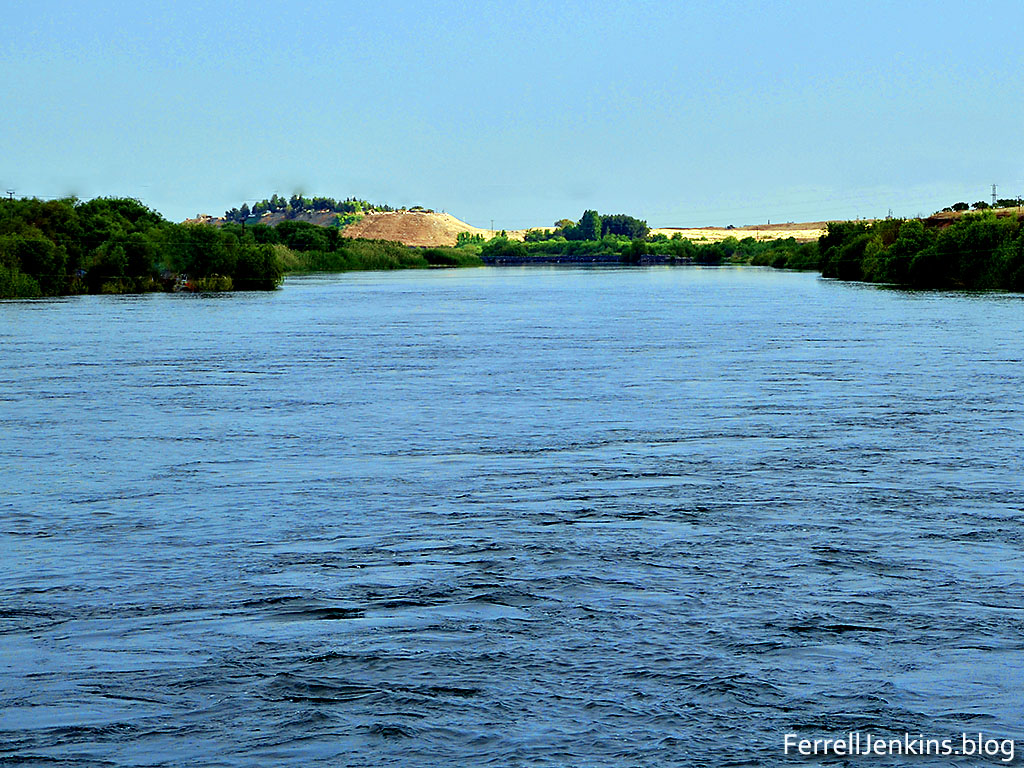
This photo was made in Turkey. The site of ancient Carchemish can be seen in the distance to the left of center. The River Euphrates makes a left turn before the mound and continues to flow into Syria and Iraq before flowing into the Persian Gulf. Photo by Ferrell Jenkins.

Ferrell’s Favorite Fotos #19

Riblah served as a base of operation for the Egyptian Pharaoh Necho and the Babylonian King Nebuchadnezzar. The city is located on a broad plain about 50 miles south of Hamath (modern Hama in Syria), on the main road between Egypt and Mesopotamia. The Orontes River flows past the site on the west side. On a modern map you will locate Riblah in Syria immediately north of the border with Lebanon.

There is little more than a “country store” at the village today, but the name Riblah is preserved as Ribleh, Syria.

  • Pharaoh Necho imprisoned Jehoahaz, king of Judah, at Riblah. He later took him to Egypt where he died. The date was about 609 B.C. (2 Kings 23:31-34).
  • Zedekiah, puppet king of Judah, tried to escape capture by the Babylonians. He fled Jerusalem but was captured on the plains of Jericho and brought to Riblah. There Nebuchadnezzar passed sentence on him. His sons were slaughtered in his sight and he was bound with brass fetters and taken to Babylon. The date was 586 B.C. (2 Kings 25:5-7; see also Jeremiah 39:5-6; 52:9-10).
  • The officials of Zedekiah were taken to Riblah where they were put to death (2 Kings 25:19-21; see also Jeremiah 52:26-27).

In 2002 David McClister, a colleague at Florida College, and I spent several days visiting sites in Syria. Riblah was the most difficult to locate. Most folks, after seeing the site, would probably say, “What’s the big deal?”  Even though Riblah is mentioned only these few times in the Old Testament, it’s location makes it important in all movement between the south (Egypt and Israel) and Mesopotamia.

The ancient mount of Riblah, once headquarters of Babyonian king Nebuchadnezzar. FerrellJenkins.blog.

The ancient mount of Riblah, once headquarters of Babyonian king Nebuchadnezzar. Slide scan. Photo by Ferrell Jenkins in 2002.

This post is a repeat, but I thought the favorite photo needed more explanation than most of the images I am using.

Ferrell’s Favorite Fotos #4

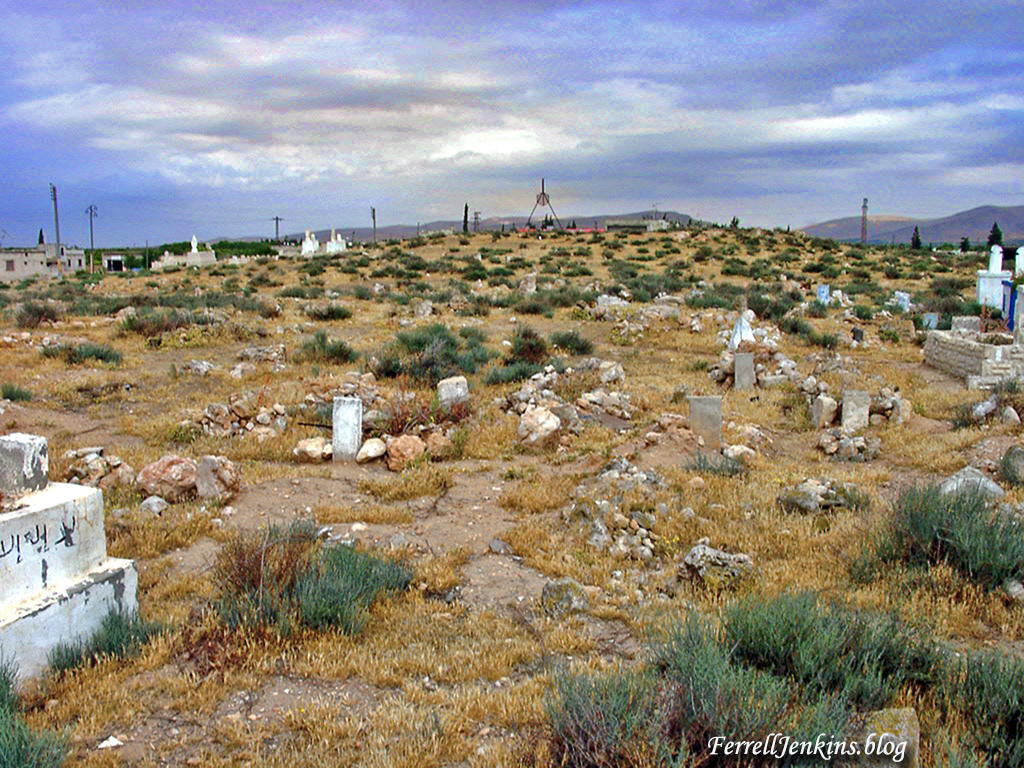
Of the places David McClister and I tried to locate in Syria in 2002, this was the most difficult.

The Syrian village of Ribleh. Site of the ancient town of Riblah where Nebuchadnezzar set up his headquarters, and where he killed the sons of Jechoniah in his presence, put out his eyes, bound him, and took him to Babylon. FerrellJenkins.blog.

The Syrian village of Ribleh. Site of the ancient town of Riblah where Nebuchadnezzar set up his headquarters, and where he killed the sons of Zedekiah in his presence, put out his eyes, bound him, and took him to Babylon. Scanned slide photo by Ferrell Jenkins.

See the Index of articles about Babylon, including a few references to Riblah, here.

Zedekiah, puppet king of Judah, tried to escape capture by the Babylonians. He fled Jerusalem but was captured on the plains of Jericho and brought to Riblah. There Nebuchadnezzar passed sentence on him. His sons were slaughtered in his sight and he was bound with brass fetters and taken to Babylon. The date was 586 B.C. (2 Kings 25:5-7; see also Jeremiah 39:5-6; 52:9-10).

Transporting cedars for the temple

The cedars grew in the high mountains of the Lebanon range, the north-south range along the Mediterranean coast.

Cedars also grow in the Amanus mountains north of Antakya, Turkey (Antioch of Syria in Acts 11 and 13). I have seen a small number of cedars still growing in the Taurus Mountains of Turkey. In Lebanon, the most famous of the trees are growing in the high mountains about 100 miles north of Beirut near the town of Besharre, but there are also some growing southeast of Beirut at Barouk.

(A geographical note for those who may not know. If we go east we have the Bekah Valley and then the Anti-Lebanon range of mountains. The Lebanon range continues south and becomes the mountains of upper and lower Galilee, and the mountains of Samaria and Judea. The Bekah Valley continues south to become the Hula Valley, passing through the Sea of Galilee, the Jordan Valley, passing through the Dead Sea, the Arabah, etc. The Anti-Lebanon mountain range continues south through the Golan Heights, the Mountains of Gilead, and the trans-Jordan plateau or highlands.)

Browsing in Pritchard’s Ancient Near Eastern Texts, I noted numerous reference to ancient rulers cutting cedars and transporting them to built projects in their home country.

Gudea of Lagash (2141-2122 B.C.) calls the Amanus Mountains “the Cedar Mountain.” He says “he formed into rafts cedar logs 60 cubits long, cedar logs 50 cubits long (and) KU-wood logs 25 cubits long and brought them (thus) out of the mountain.”

Tiglath-Pileser I, King of Assyria (1114-1076 B.C.), says he went to the Lebanon mountains and cut cedar beams for a temple.

Ashurnasirpal II, King of Assyria (883-859 B.C.),  says, “I ascended the mountains of the Amamus … and cut down (there) logs of cedars” and other trees.

Shalmaneser III, King of Assyria (858-824 B.C.), claims that he ascended the mountain Amanus and cut cedar and pine timber.

Esarhaddon, king of Assyria (680-649 B.C.), claims he made 22 kings of the Hatti transport material for his palace: “big logs, long beams (and) thin boards from cedar and pine trees, products of the Sirara and Lebanon (La-na-na) mountains which had grown for a long time into tall and strong timber….” Sirara was one of the towns of southern Mesopotamia. Esarhaddon left his image and an inscription on the cliffs above Dog River in Lebanon.

Nebuchadnezzar II, king of Babylon (605-562 B.C.), refers to the Lebanon as the “[Cedar] Mountain, the luxurious forest of Marduk, the smell of which is sweet.” He says no other god has desired and no other king has felled the trees. He says Marduk desired the cedars “as a fitting adornment for the palace of the ruler of heaven and earth.”

The Neo-Babylonian king claims to have rid the country (Lebanon) of a foreign enemy and returned scattered inhabitants to their settlements. In order to transport cedars to Babylon, he explains some of his projects.

What no former king had done (I achieved): I cut through steep mountains, I split rocks, opened passages and (thus) I constructed a straight road for the (transport of the) cedars. I made the Arahtu flo[at] (down) and carry to Marduk, my king, mighty cedars, high and strong, of precious beauty and of excellent dark quality, the abundant yield of the Lebanon, as (if they be) reed stalks (carried by) the river. Within Babylon [I stored] mulberry wood. I made the inhabitants of the Lebanon live in safety together and let nobody disturb them. In order that nobody might do any harm [to them] I ere[cted there] a stela (showing) me (as) everlasting king (of this region) and built … I, myself, … established.…

The Arahtu was a canal built by Nebuchadnezzar near Babylon that was used in the transportation of the cedars. Some of the kings speak of building roads for the transportation of the cedars.

In 1971 I was able to make a photo of the inscription left by Nebuchadnezzar at Dog River north of Beirut. Some more recent travelers have found this covered by vines. Click on the photo for a larger image and you will get a better view of some of the cuneiform writing.
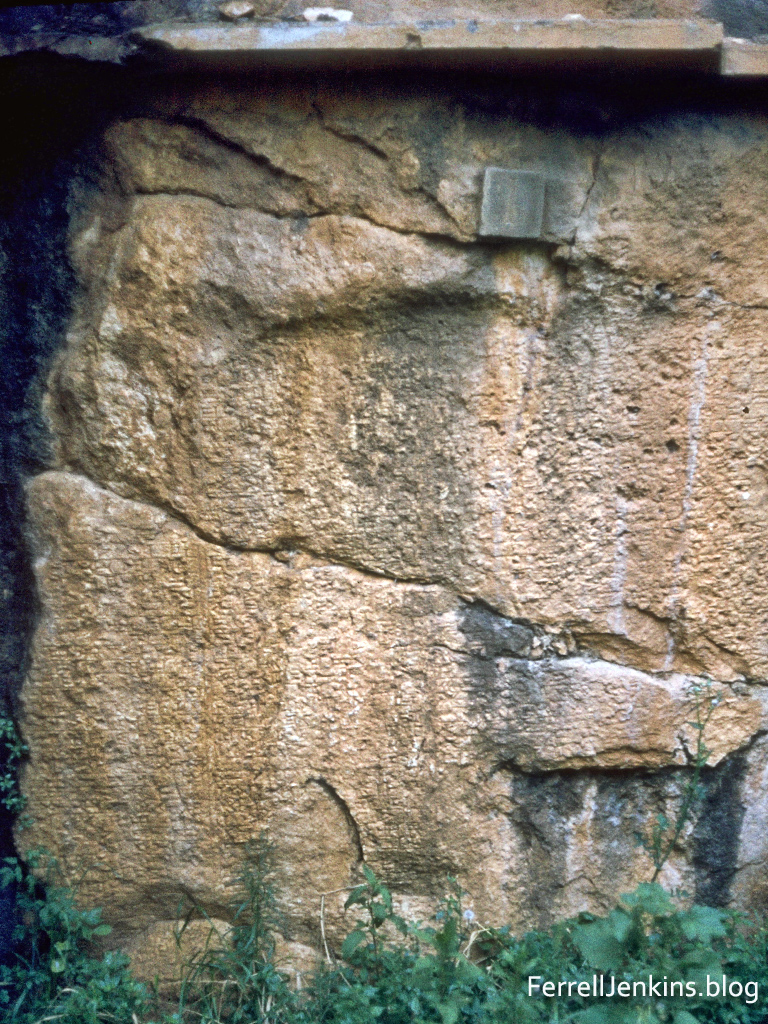
Nebuchadnezzar's inscription made on the right bank of Dog River in Lebanon. FerrellJenkins.blog.

Nebuchadnezzar’s inscription made on the right bank of Dog River in Lebanon. On the left bank on the rock cliffs there are reliefs and inscriptions by Ramses II of Egypt, and Assyrian kings Shalmaneser III (?) and Esarhaddon. Photo by Ferrell Jenkins.

Hiram, king of Tyre, promised Solomon that he would transport cedars by sea to Joppa.

And we will cut whatever timber you need from Lebanon and bring it to you in rafts by sea to Joppa, so that you may take it up to Jerusalem. (2 Chronicles 2:16 ESV)

The parallel text in 1 Kings 5:9 says,

My servants shall bring it down to the sea from Lebanon, and I will make it into rafts to go by sea to the place you direct. And I will have them broken up there, and you shall receive it. And you shall meet my wishes by providing food for my household.” (1 Kings 5:9 ESV)

The comment in The IVP Bible Background Commentary: Old Testament explains:

Transport of the logs along the Palestinian coast south would have involved either tying them together into rafts, which required staying very close to shore for fear of storms breaking them up, or loading them on ships. Assyrian reliefs show Phoenician ships both loaded with logs and towing them.

This photograph illustrates the comment above, but the biblical text indicates that the logs cut for Solomon were made into rafts.
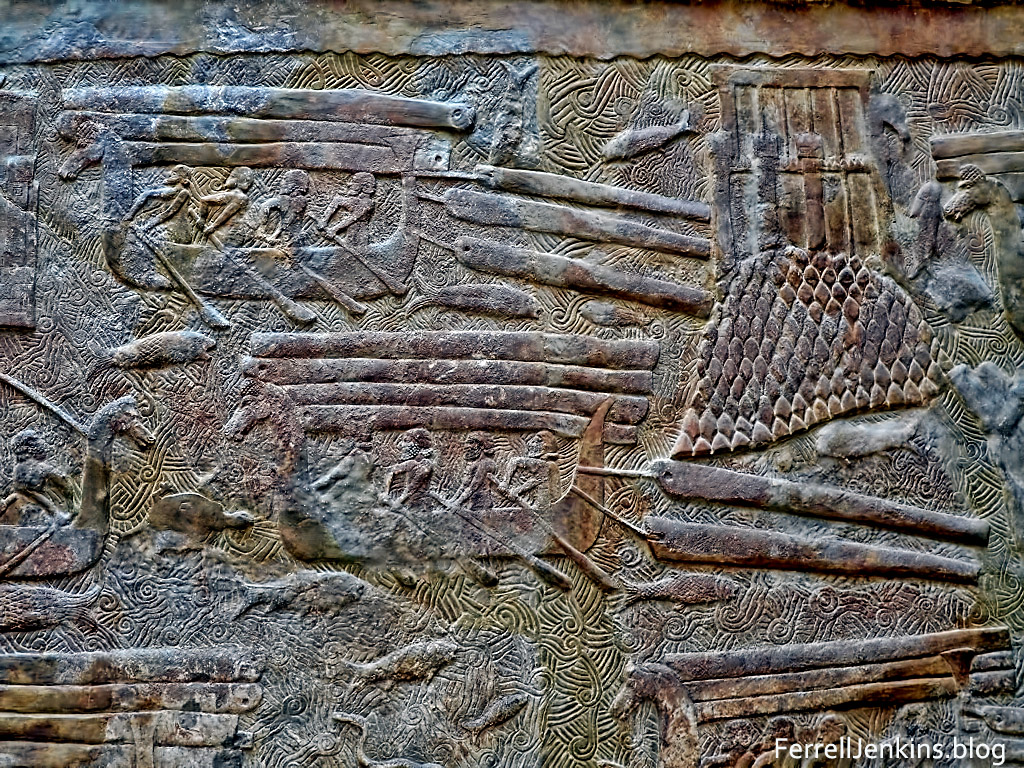
Sargon transporting cedar logs from Lebanon by sea. Displayed in the Louvre. Photo by Ferrell Jenkins.

Sargon transporting cedar logs from Lebanon by sea. Displayed in the Louvre. Photo by Ferrell Jenkins.

Lebanon had two famous rivers, both of which had their source in the Bekah valley. The Orontes River flowed north past Kadesh, Hamath, and other cities and then turned west to flow past Antioch into the Mediterranean at Seleucia.

The Leontes River (also known as the Letani), flowed through the Lebanon mountains and into the Mediterranean a few miles north of Tyre. Since we know of other rulers floating the timbers on rivers, I have thought that perhaps some of those going to Jerusalem may have been moved from the southern forests by means of the Leontes, then tied into rafts near the coast for the trip to Joppa.
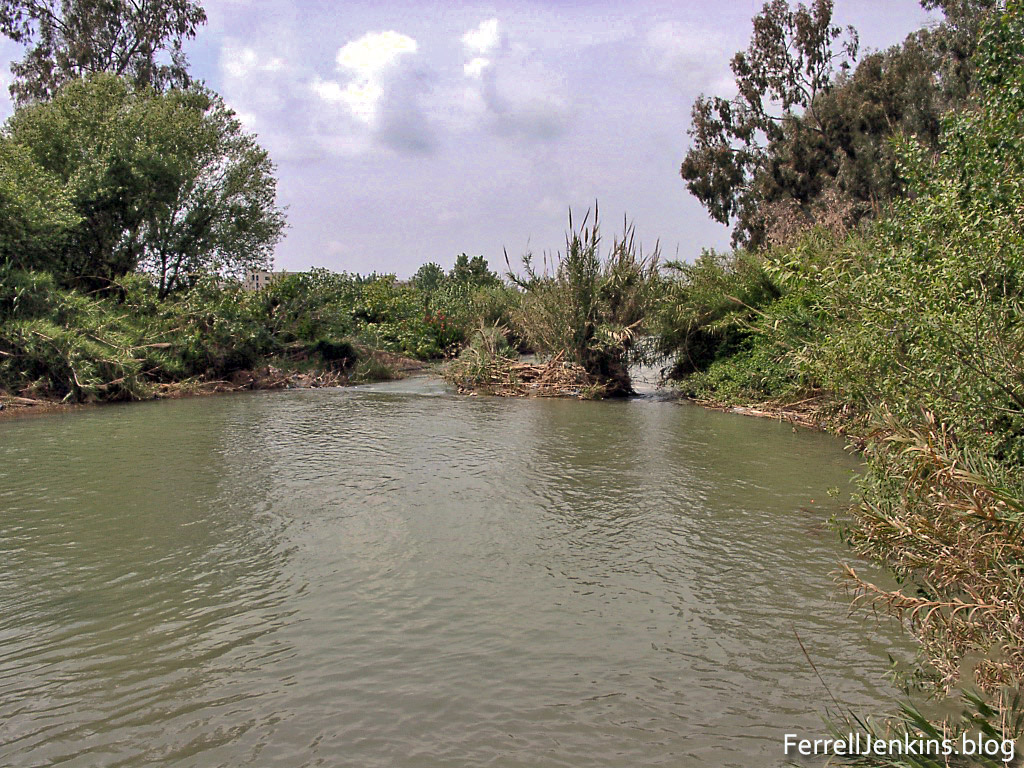
The Litani river a few miles north of Tyre, Lebanon. Photo by Ferrell Jenkins.

The Leontes (= Litani) river a few miles north of Tyre, Lebanon. Photo: Ferrell Jenkins.

The distance from the mouth of the Leontes River to Joppa is about 95 miles (152 km). Our photos below is an aerial view of Joppa and its modern harbor.
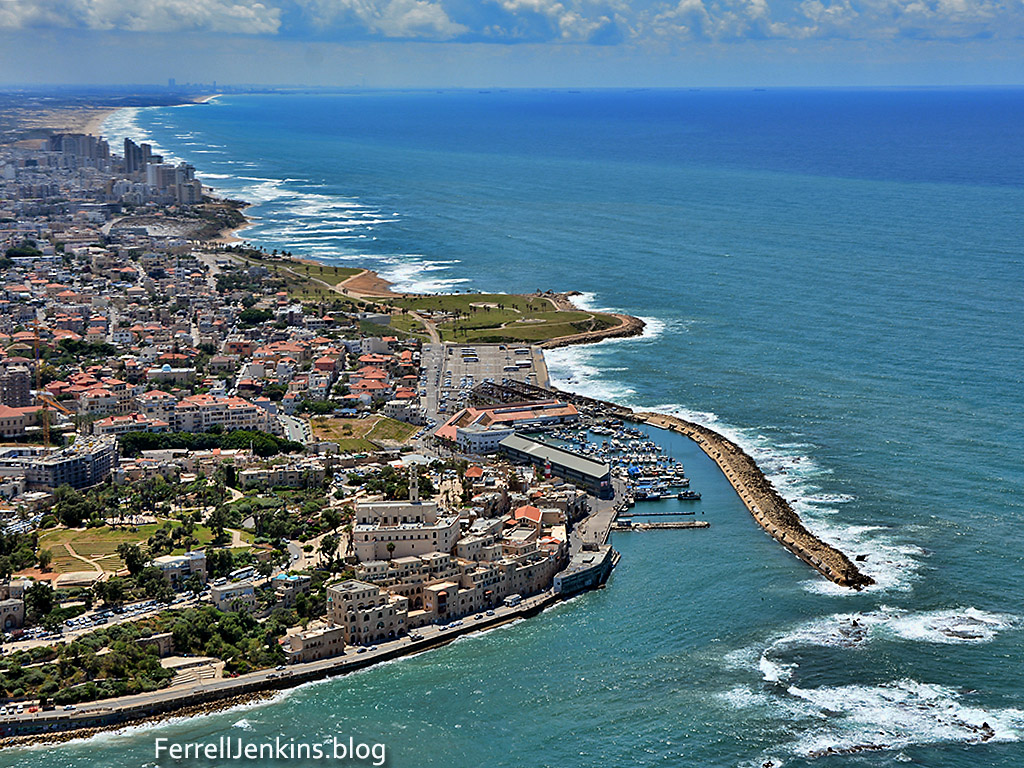
Aerial view of Joppa, showing the modern harbor. ferrelljenkins.blog.

The modern harbor at Joppa. We know that the tel (a green mound with some paths on it) you see in the left bottom quarter of the photo was inhabited by Egyptians as early as the 15th century B.C. Photo by Ferrell Jenkins.

The Archaeological Encyclopedia of the Holy Land (1990) says,

Some scholars believe that the port referred to is that of Tell Qasile, east of Jaffa.

If that is so, the logs would be floated up the Yarkon River a short distance to Tell Qasile which is a little northeast of Joppa, close enough to be considered Joppa.

From Joppa the logs were transported by Solomon’s men across the plain of Sharon and up into the mountains of Judea. Quite a project without trucks or trains. In addition to the temple, the Bible records that Solomon built “the House of the Forest of Lebanon” (I Kings 7:2).

Our final photograph shows some stone anchors displayed at Tel Qasile which is located on the grounds of the Eretz Israel Museum in Tel Aviv. I notice that these are larger than anchors found at the Sea of Galilee. These would be more suitable for use on a river such as the Yarkon.
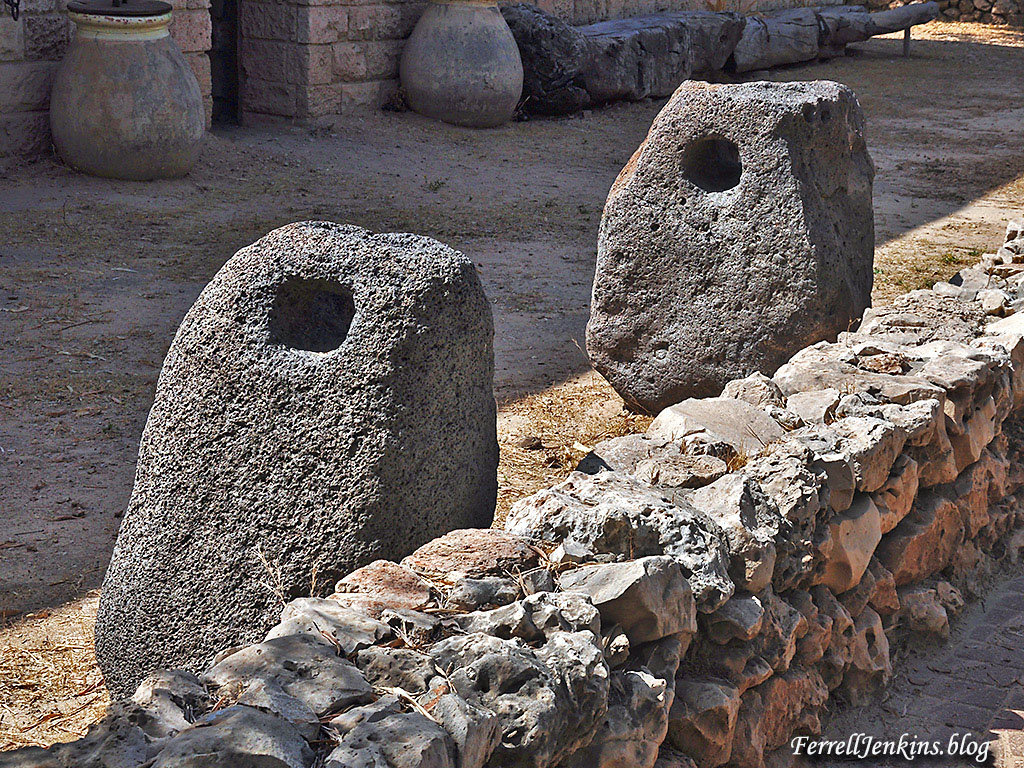
Stone anchors displayed at Tel Qasile at the Eretz Israel Museum, Tel Aviv. FerrellJenkins.blog.

Stone anchors displayed at Tel Qasile at the Eretz Israel Museum, Tel Aviv. Photo by Ferrell Jenkins.

 

Thomson on the pesky sparrows in Syria

William M. Thomson writes of the pesky sparrows in Syria.

No traveler in Syria will need an introduction to the sparrow on the house-top. They are a tame, troublesome, vivacious, and impertinent generation, and nestle just where they are not wanted. They stop up the stoves-pipes and water-gutters with their rubbish, build nests in the windows and under the beams in the roof, and would stuff your hat full of stubble if they found it hanging in a place to suit them. They are extremely pertinacious in asserting their right of possession, and have not the least reverence for any place or thing. David alludes to these characteristics of the sparrow in the eighty-fourth Psalm, when he complains that they had appropriated even the altars of God for their nests [Psalm 84:3]. Concerning himself, he says, “I watch, and am as a sparrow alone upon the house-top” [Psalm 102:7]. When one of them has lost its mate—a matter of every-day occurrence—he will sit on the house-top alone, and lament by the hour his sad bereavement. As these birds are not much relished for food, five sparrows may still be sold for “two farthings;” and when we see the eagerness with which they are destroyed as a worthless nuisance, we can appreciate the assurance that our heavenly Father, who takes care of them, so that not one can fall to the ground without his notice, will surely take care of us, who “are of more value than many sparrows.” [Matthew 10:29, 31; Luke 12:6-7] (Thomson, William M. The Land and the Book. New York: Harper & Brothers, 1886. Vol. 2, p.59.

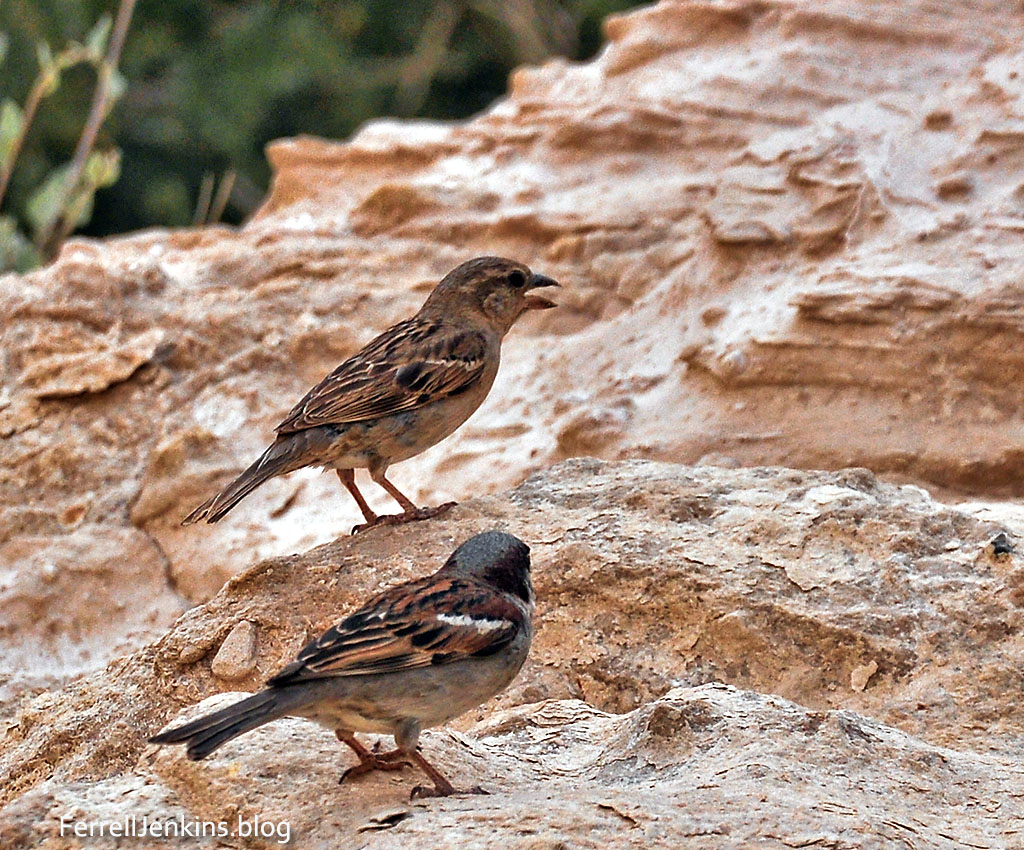
The photo below shows one of the many varieties of sparrows found in the Middle East.

Two sparrows at Ein Avedat in the Negev of Israel. Photo by Ferrell Jenkins.
Two sparrows at Ein Avedat in the Negev of Israel. Photo by Ferrell Jenkins.
The first verse mentioned by Thomson illustrates the nuisance of the sparrow, making a nest even at the altars of the LORD.

Even the sparrow finds a home, and the swallow a nest for herself, where she may lay her young, at your altars, O LORD of hosts, my King and my God. (Psalm 84:3 ESV)

The next speaks of the lonely sparrow.

I lie awake; I am like a lonely sparrow on the housetop. (Psalm 102:7 ESV)

The last reference speaks of the custom of buying sparrows.

Are not two sparrows sold for a penny? And not one of them will fall to the ground apart from your Father. But even the hairs of your head are all numbered. Fear not, therefore; you are of more value than many sparrows. (Matthew 10:29-31 ESV)

The IVP Bible Background Commentary: New Testament (Keener, Craig S.)  explains this custom.

Sparrows were one of the cheapest items sold for poor people’s food in the marketplace, the cheapest of all birds. Two were here purchased for an assarion, a small copper coin of little value (less than an hour’s work); Luke 12:6 seems to indicate that they were even cheaper if purchased in larger quantities. This is a standard Jewish “how much more” argument: If God cares for something as cheap as sparrows, how much more does he care for people!

The Lord’s use of simple examples from nature and everyday life to illustrate great truths provides an example for all who teach.

Aleppo National Museum – #4

See our previous articles on Aleppo here, here, here, and here.

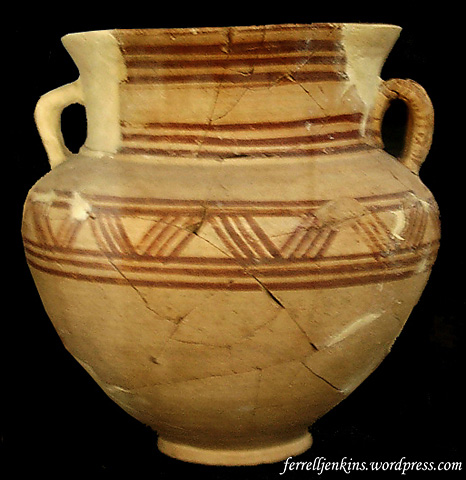
The Ebla tablets were discovered by an Italian team of excavators at Tell Mardikh in Syria (about 30 miles S of Aleppo) in 1975. More than 17,000 cuneiform tablets were discovered, dating to the mid-third millennium B.C. when Ebla was the capital of a great Canaanite empire. Scholars state that there are important affinities between the Eblaite language and biblical Hebrew, both being members of the Northwest Semitic family.

Pottery from Tell Mardikh (Ebla) in Aleppo Museum. Photo by Ferrell Jenkins.
Pottery from Tell Mardikh (Ebla) in Aleppo Museum. Photo by Ferrell Jenkins.
It is my understanding that the Aleppo National Museum became the main repository of the Ebla tablets. In a major controversy between the archaeologist (Paolo Matthiae) and the epigrapher (Giovanni Pettinato), the Museum took the side of Professor Matthiae.

The controversy between these two scholars played out in scholarly and popular archaeological journals in the late 1970s and the early 1980s.

We have posted several articles about Ebla in previous years. You need only put the word Ebla in the Search box to locate those.

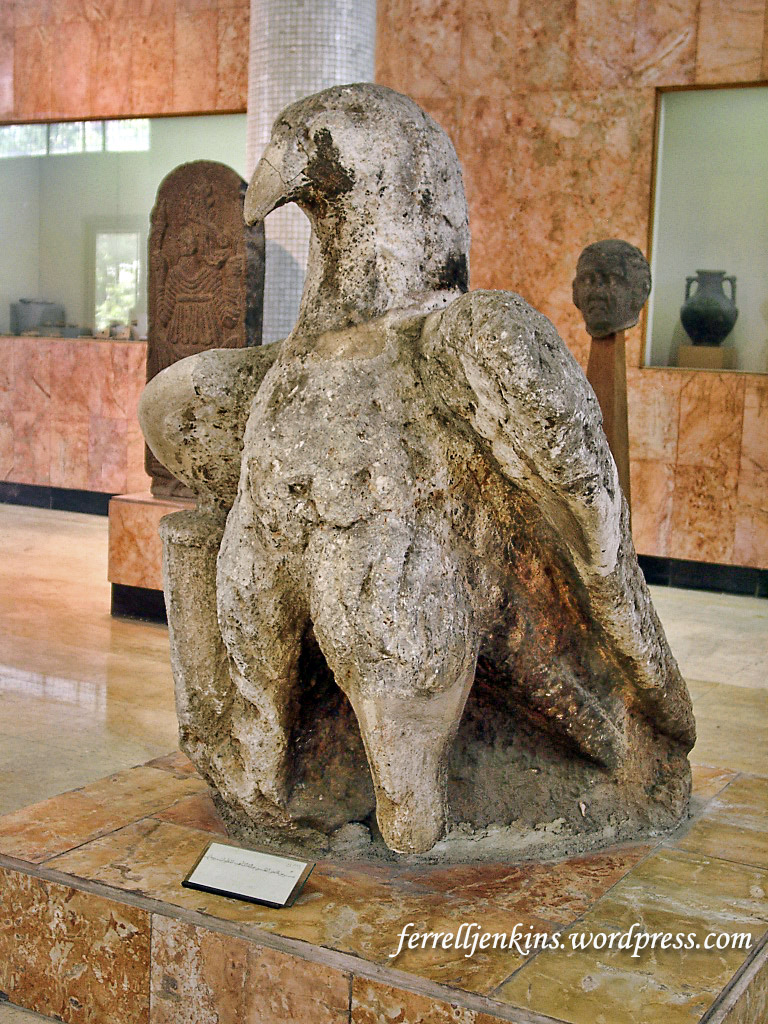
A large eagle caught our attention. David and I were of the opinion that it belonged to the Roman period, but one of the guards we spoke with insisted that it belonged to the Hellenistic period.

An eagle possible from the Hellenistic Period in the Aleppo Museum. Photo by Ferrell Jenkins.

An eagle possibly from the Hellenistic Period in the Aleppo National Museum. Photo by Ferrell Jenkins.

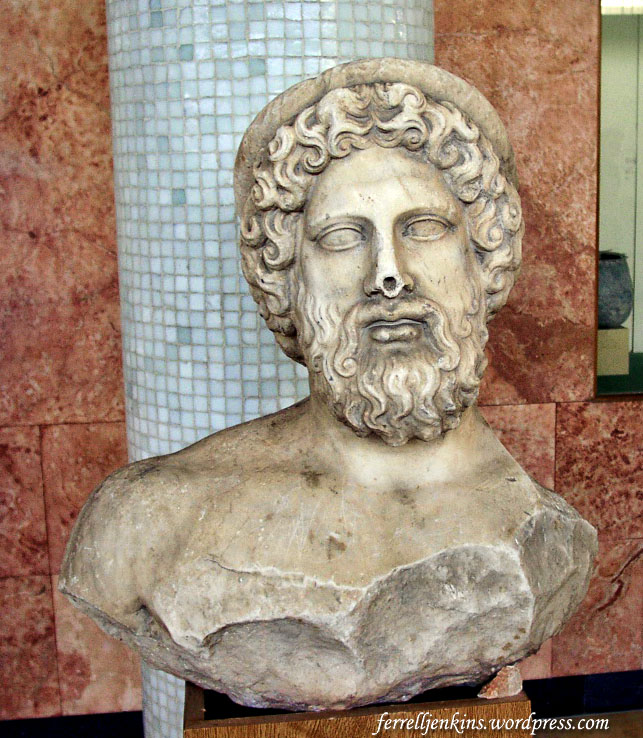
Statues and busts of Asclepios are fairly common throughout the ancient Greek world. Asclepios was known as a god of medicine in the Greek religion. I do not know where this bust was discovered.

Bust of the god Asclepios. Photo by Ferrell Jenkins.

Bust of the god Asclepios. Photo by Ferrell Jenkins.

Even though the quality of the photos leaves much to be desired, I am hopeful that these photos and brief descriptions will be of benefit to those who have not been, and may never get to see the Aleppo National Museum.

This concludes the series on Aleppo.

Aleppo National Museum – #3

See our previous articles on Aleppo here, here, and here.

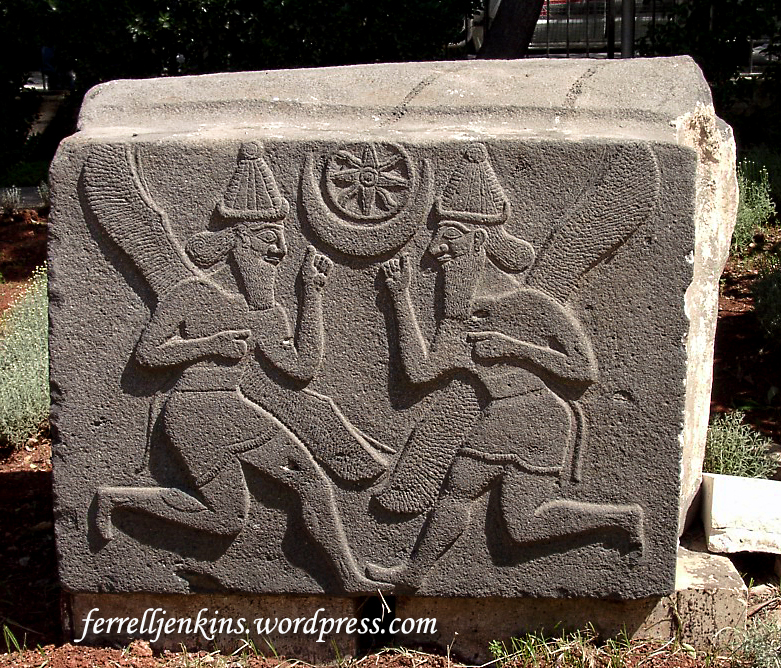
We have one more nice Neo-Hittite piece displayed in the courtyard of the Aleppo National Museum. It shows genii with the symbols of the sun and the moon. These symbols are typical on Neo-Hittite and Assyrian reliefs.

Neo-Hittite genii with image of sun and moon on a basalt block in the courtyard of the Aleppo National Museum. Photo by Ferrell Jenkins.

Neo-Hittite genii with image of sun and moon on a block in the courtyard of the Aleppo National Museum. Photo by Ferrell Jenkins.

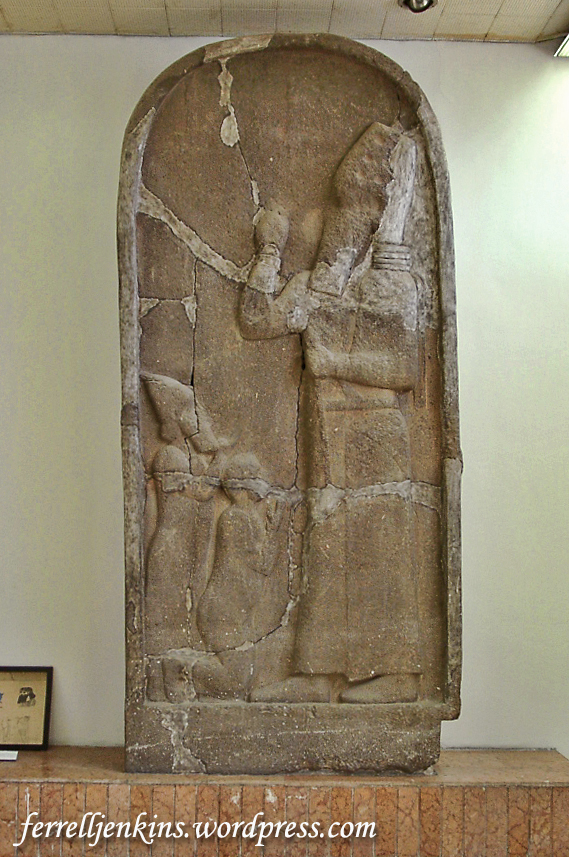
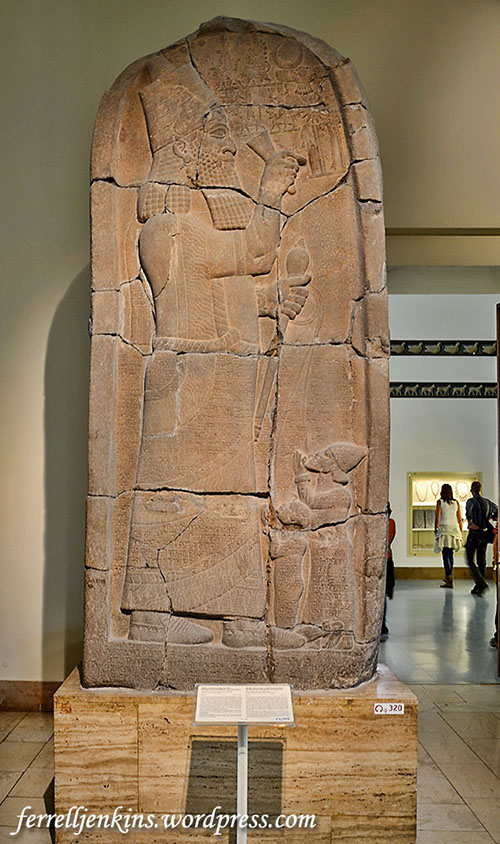
Assyrian. The museum has one stele depicting Esarhaddon, the son of Sennacherib and his successor as king of Assyria (680-559 B.C.; 2 Kings 19:37; Isaiah 37:38; Ezra 4:2). I am not certain about the identity of the rulers who are bowing before Esarhaddon, but I suspect this represents the same persons as the much better stele in the Berlin museum. The stele there depicts the king holding ropes leading to the lips of Tirhakah of Egypt and Ethiopia [Cush] (in ANET, 293, he is referred to as king of Nubia) and Ba’alu of Tyre. If so, then the bowing figure with Negroid features was an ally of Hezekiah against the Assyrians (2 Kings 19:9. The Berlin stele comes from Zinjirli and was discovered in 1888.

First, here is the Aleppo stele.

A broken relief showing Esarhaddon with two captured rulers, one on bended knee, before him. Photo by Ferrell Jenkins.

A broken relief showing Esarhaddon with two captured rulers, one on bended knee, before him. Photo by Ferrell Jenkins.

And here is the Berlin stele (VA 2708).

Stele of Esarhaddon displayed in the Pergamum Museum, Berlin. VA 2708. Photo by Ferrell Jenkins.

Stele of Esarhaddon displayed in the Pergamum Museum, Berlin. VA 2708. Photo by Ferrell Jenkins.

I have the impression that the stele displayed in Aleppo may be one made by a beginner and was never finished. Notice the lack of proportion in the legs of the kneeling figure, and the absence of clear decorations at the top.

One final post on the Museum coming next.