Category Archives: Old Testament

Herod built a temple to Augustus at Samaria

Samaria, the capital of the northern kingdom of Israel, was well known in Old Testament times. In New Testament times the term Samaria seems to be used of a region rather than a city. See Luke 17:11; John 4:4-7; Acts 1:8; 8:1,9,14; 9:31; 15:3.

The city of Samaria had been rebuilt by Herod the Great and named Sebaste in honor of the Emperor Augustus. The modern name of the small town of Samaria is Sebastia.

Herod the Great built a temple to Augustus with a monumental staircase over the palace area of the Israelite kingdom. The temple was destroyed, but later rebuilt along the same plan by Septimius Severus (Roman emperor, A.D. 193-211). The monumental staircase still stands at the top of the tell.

Monumental steps mark the site of Herod's Temple to Augustus. Photo by Ferrell Jenkins.

Monumental steps from the time of Septimius Severus mark the site of Herod’s Temple to Augustus. Photo by Ferrell Jenkins.

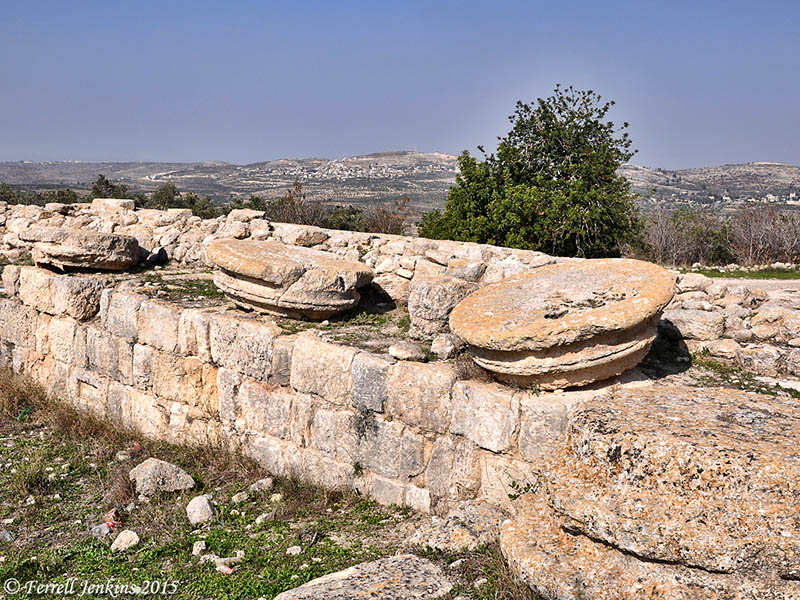
Some remnants of column capitals rest at the top of the steps.

Remnants of some of the columns rest at the top of the staircase. Photo by Ferrell Jenkins.

Remnants of some of the columns rest at the top of staircase. Photo by Ferrell Jenkins.

This was the second of three temples erected by Herod in honor of Augustus. In two previous posts we have discussed the temple at Caesarea Maritima and the one in the district of Caearea Philippi (perhaps Omrit).

Carl Rasmussen wrote about the Imperial Cult a few months back on his Holy Land Photos’ Blog here. He says,

IMHO we also need to give emphasis to the fact that Herod the Great had built  three Imperial Cult Temples — all less than 40 miles from Nazareth/Capernaum.  By the time that Jesus began his public ministry these Imperial Cult Temples (namely those at Caesarea Maritima, Sebastia, and the one near Caesarea Philippi [= Omrit])  had been in existence for over 40 years!

In my recent lecture at the Florida College Lectureship I discussed two texts from the ministry of Jesus that may be understood in the light of the Emperor worship prevalent in the country. One was the location of Peter’s confession of Jesus: “You are the Christ, the Son of the living God” (Matthew 16:16 ESV). See a discussion here. The second text I used was the one involving the question, “Is it lawful to pay taxes to Caesar, or not?” (Matthew 22:17). More about that in a post to follow.

Dust storms afflict Egypt, Palestine, and Israel

Almost four years ago I wrote a post about the strong East winds of the Middle East, also calling attention to the winds from the south. Several bloggers have called attention to a recent occurrence of the winds affecting Egypt, Palestine, and Israel in particular. I thought it would be appropriate to reprint some of that earlier material here with an update.

— • —

Almost everyone who has visited Israel has learned of the West winds that make their way through the depressions around the Sea of Galilee and create storms on the Sea. Unless you travel in the “transitional season” or in the (dry) summer season you may not have learned about the East wind. This wind is called the sirocco. In Egypt it is known as the khamsin, and in Israel as the sharav.

Denis Baly, The Geography of the Bible (1974 ed., pp. 51-53), explains these winds. He says they occur in the transitional seasons from early April to mid-June, and from mid-September to the end of October. Baly says,

It is this intense dryness and the fine dust in the air which are so exhausting, for other hot days, though troublesome, do not have the same effect. People with a heart condition, nervous complaints, or sinus trouble are particularly affected, but even the mildest-tempered person is apt to become irritable and to snap at other people for no apparent reason. Tourists find the sirocco especially frustrating, for not only does travel become fatiguing, but the fine yellowish dust which fills the air drains it of all color, blots out all but the immediate vicinity, and makes photography a mockery.

Here is how Larry Haverstock described his day walking the Jesus Trail in an Email to me.

No blog last night because of the storm. I woke to high winds from the east which dusted up the air so badly that photos were mostly useless. Worst part was that it was directly against me and really HOT. Pushing against 20+ mph winds really took the steam out of me. By the end of the day I was utterly exhausted.  Drank my full 3 litres and had good dinners and breakfasts, but energy levels are still very low.

The photo below is one of the aerial shots Larry and I made a week earlier. It was made while flying over the west shore of the Sea of Galilee, with the view to the west. You can see Mount Arbel and the Wadi Hamam below. The Via Maris runs in this valley which is also called the Valley of the Doves. You will notice two lines of mountains further west.

I am rather sure that this is the route Larry was walking. Larry lived in Washington state for many years. I think he is not bothered by the sudden rains, but the intense heat and strong wind from the east may be another matter. I want you to think about the fact that all of the biblical characters from the Patriarchs to Jesus and His disciples encountered conditions similar to these (and worse).
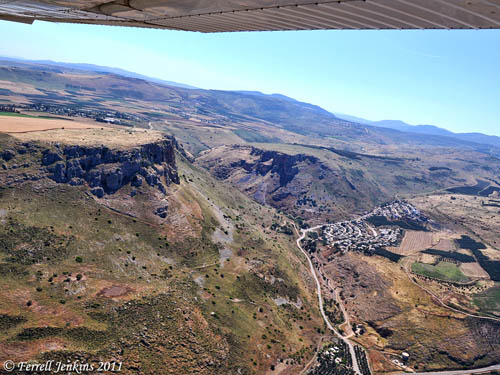
Aerial view of Arbel, Wadi Hamam, and the Via Maris. Photo by Ferrell Jenkins.

Aerial view of Arbel, Wadi Hamam, and the Via Maris. Photo by Ferrell Jenkins.

Baly cites several biblical references to the east and south winds that bring in the hot air and the dust storms. He says, “Where the mountains come close to the sea a strong sirocco pours down the slopes like a flood, at 60 miles an hour or more, stirring the sea into a fury.”

By the east wind you shattered the ships of Tarshish. (Psalm 48:7 ESV)

In the prophecy against Tyre, Ezekiel says,

“Your rowers have brought you out into the high seas. The east wind has wrecked you in the heart of the seas. (Ezekiel 27:26 ESV)

Notice Elihu’s comments to Job about the south wind.

Do you know the balancings of the clouds, the wondrous works of him who is perfect in knowledge,  you whose garments are hot when the earth is still because of the south wind?  (Job 37:16-17 ESV)

Jesus also observed the effect of the south wind:

And when you see the south wind blowing, you say, ‘There will be scorching heat,’ and it happens. (Luke 12:55 ESV)

Do you remember Jonah’s problems after enjoying the shade of his plant?

When the sun rose, God appointed a scorching east wind, and the sun beat down on the head of Jonah so that he was faint. And he asked that he might die and said, “It is better for me to die than to live.” (Jonah 4:8 ESV)

Baly calls attention to the effect of the spring siroccos on the crops.

The spring siroccos destroy the winter grass and may damage the crops if they come too soon, and hence they appear constantly in the Bible as a symbol of the impermanence of riches or of human life.

Note these additional references in your own study: Psalm 103:16; Isaiah 40:6-8; Hosea 13:15; Ezekiel 17:10; James 1:11. In a recent post Barry Britnell (Exploring Bible Lands) add Deuteronomy 28:15-24 here.

Larry Haverstock’s own description which he later wrote here in his blog is included here. (There are some great pictures of his descent from Mount Arbel.)

It was while making this first effort of the morning that I encountered my nemesis for the rest of the day.  It was only 10 o’clock but already a hot wind was blowing in my face.  What I couldn’t know at that moment was that as I climbed the western slope the mountain was acting as a shield so that I wouldn’t feel the brunt of this wind until I summited.  As soon as I stepped out upon the actual heights of Arbel I knew I was in for an unusual day.

The view was phenomenal and despite the dust in the air I got the following shot of the Plain of Gennesaret.  This is the Northwest corner of the Sea.  Just out of sight on the waterfront to the right are the ruins of ancient Magdala from whence one very famous Mary came.  All the rest of the shoreline is the area in which Jesus spent a tremendous amount of time, preached some of His very most famous sermons, worked many miracles, and made His home in Capernaum which is along the shore as it turns the corner and heads off to the right in the distance.  Much food for thought when you stand in this place.

Unfortunately, the wind was howling and dangerous here.  I don’t have a weather report, but guess it was in the vicinity of 40 miles an hour since I was actually being pushed off balance and forced to take a step now and then to keep from falling over.  It did give me pause, but I was determined to take the shorter, harder, steeper trail down, so I spent about 20 minutes re-rigging my equipment.  Fearing the monopod “sword” might jam itself on the rocks somehow I removed it from the under arm position and strapped it vertically to the back of the pack.  Then, using the extra leather chin strap rope I’d brought along for emergency, I took off my hat and lashed it on the back of the pack too.  This hat had a very wide and stiff brim which had helped shield my face from the gale on the way up, but was now a liability, capable of catching the wind and pulling me off balance, so I stowed it.  Then I took the pack’s belly straps and lengthened them so that rather than directly clutching my stomach, they came out and over the front pack so that I could tightly restrain it from swinging.  Having thus reduced my exposure to the wind I started down.

It was now man against mountain, rather than nonchalant tourist with a camera time.…

Shortly afterwards I called attention to the comparative photos that Dr. Carl G. Rasmussen has included in his Zondervan Atlas of the Bible, and on his Holy Land Photos website here. These photos provide a vivid contrast that the dust storms make.

In today’s Weekend Roundup at Bible Places Blog, Todd Bolen calls attention to the current article in The Jerusalem Post here, and the 25 or so outstanding large photos from Egypt, Palestine, and Israel in London’s Daily Mail here. Be sure to look at these photos.

I have experienced a delayed flight in Egypt due to the sand storms, and the scorching hot wind with dust in Israel, but nothing like these photos reveal.

Post-traumatic stress as early as 1300 B.C.

A team of scholars at Anglia Ruskin University in the East of England released a report showing evidence of post-traumatic stress as early as 1300 B.C. The study involved documents from ancient Mesopotamia.

Accounts of soldiers being visited by “ghosts they faced in battle” fitted with a modern diagnosis of PTSD.

The condition was likely to be as old as human civilisation, the researchers concluded.

Prof Jamie Hacker Hughes, a former consultant clinical psychologist for the Ministry of Defence, said the first description of PTSD was often accredited to the Greek historian Herodotus.

The brief notice is available at BBC here. I found it interesting that the photo associated with the article shows an Assyrian king of the 9th century B.C. with a bow and arrow, and two others with javelins. In fact, this is not a war or battle relief. A view of the entire relief shows that it was the king is on a lion hunt. But, that has nothing to do with the validity of the report.

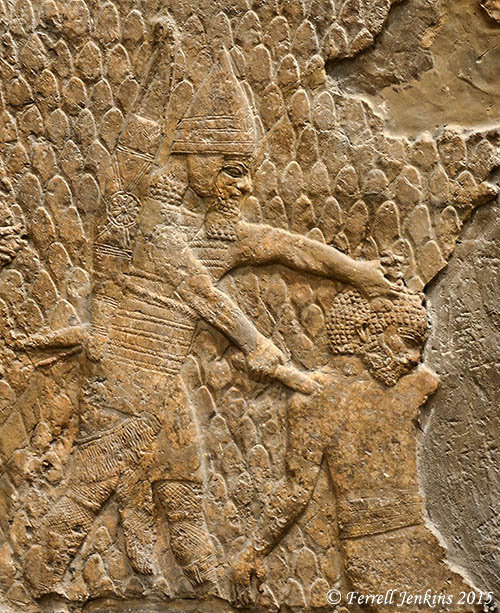
Several examples of the cruelty of war in ancient times is the limestone relief of the siege of Lachish which was found in Sennacherib’s (704-681 B.C.) palace at Nineveh. A replica of the relief may be seen in the Israel Museum, but the original is in its own designated room in the British Museum.

An Assyrian warrior kills one of the locals at Lachish. Photo by Ferrell Jenkins.

An Assyrian warrior kills one of the locals at Lachish. Photo by Ferrell Jenkins.

The Bible mentions the siege of Lachish in several places, including 2 Chronicles 32:9-10.

After this, Sennacherib king of Assyria, who was besieging Lachish with all his forces, sent his servants to Jerusalem to Hezekiah king of Judah and to all the people of Judah who were in Jerusalem, saying, “Thus says Sennacherib king of Assyria, ‘On what are you trusting, that you endure the siege in Jerusalem? (ESV)

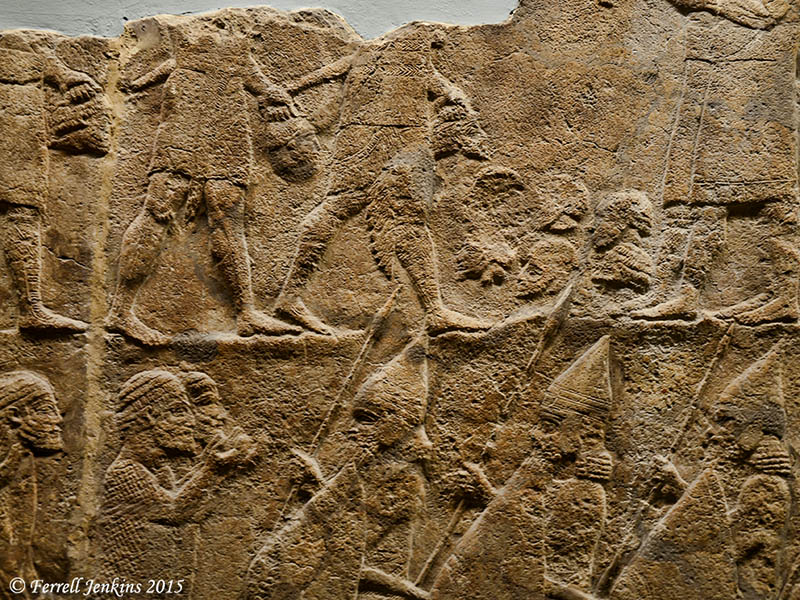
Counting the heads of the dead at Lachish. Photo by Ferrell Jenkins.

Counting the heads of the dead at Lachish. Photo by Ferrell Jenkins.

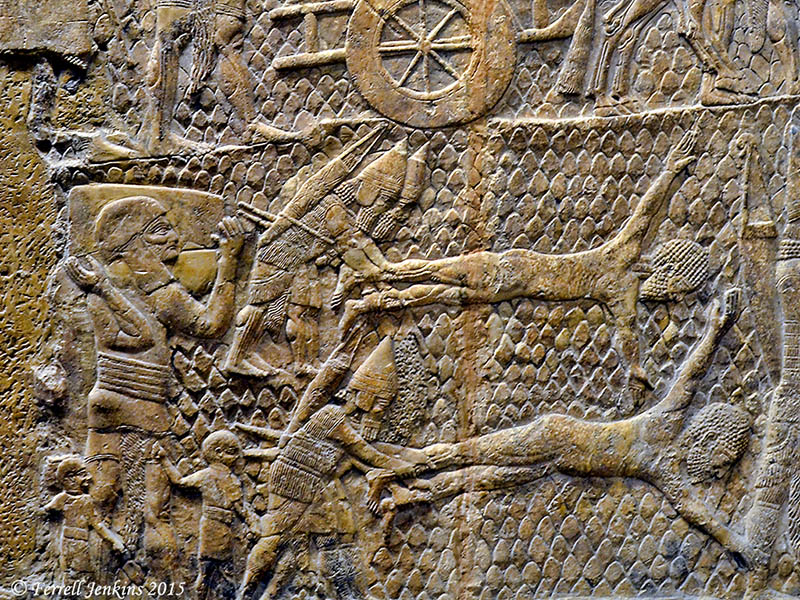
Some scholars suggest that the next panel portrays the Assyrians flaying the Judeans.

Bodies of the dead at Lachish. Photo by Ferrell Jenkins.

Bodies of the dead at Lachish. Photo by Ferrell Jenkins.

One panel shows local citizens being impaled on poles. After a day of impaling, beheading, or counting heads, it might be easy enough to see “ghosts”.

We can desire that all men come to accept the teaching of Jesus when one of His disciples used a sword to advance the cause of the Lord.

Then Jesus said to him, “Put your sword back into its place. For all who take the sword will perish by the sword.” (Matthew 26:52 ESV)

HT: Agade list

Auschwitz happened in my lifetime

Over the years I have been able to visit some places that proved exhilarating. Others have left me somber and contemplative. None more than Auschwitz.

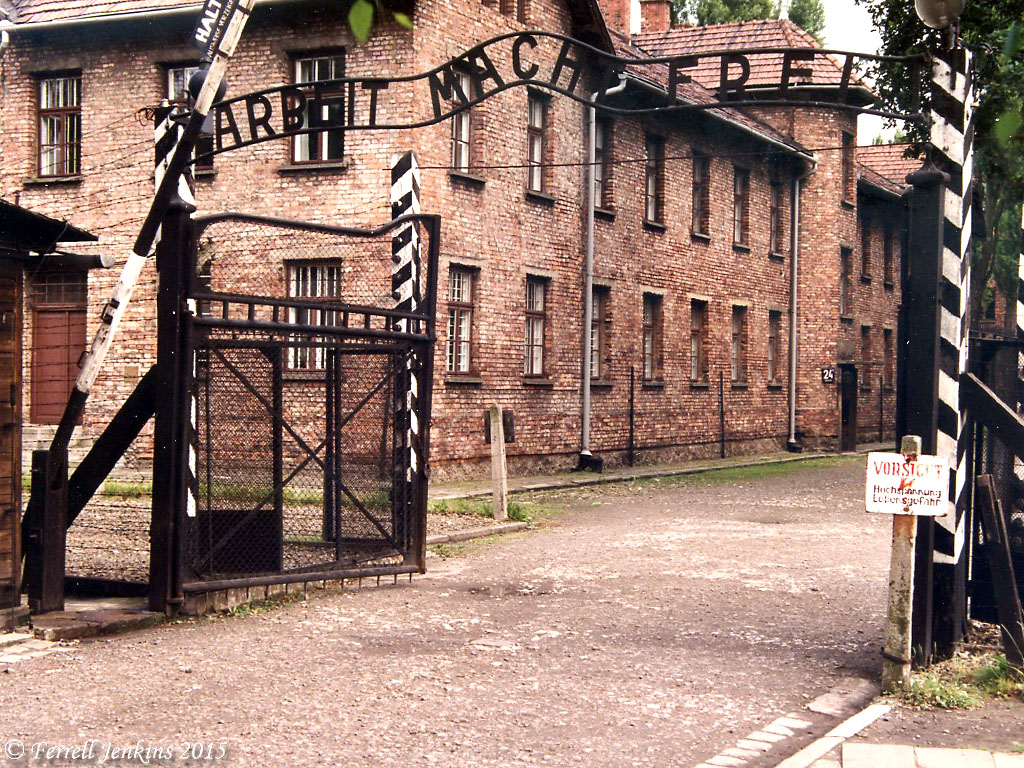
Seventy years ago today Soviet troops entered the camp and liberated the survivors. The iconic sign at the entrance reads “ARBEIT MACHT FREI” (“Work makes free”). There is truth in the statement by itself, but in this case it was deceptive. Reports say that about a million people, mostly Jews, were killed there between 1940 and 1945.

The entrance to Auschwitz. Photo by Ferrell Jenkins, 1991.

The entrance to Auschwitz. Photo by Ferrell Jenkins, 1991.

Numerous questions come to mind as we contemplate this horrible tragedy. Why did it happen? Why were Jews singled out for elimination? Has something similar, on a lesser scale, happened to other groups? Doubtless. Could it happen again? In the United States? Could Christians face a similar situation?

When we think that we are superior to other humans we overlook the basic premise of creation.

Then God said, “Let us make man in our image, after our likeness. And let them have dominion over the fish of the sea and over the birds of the heavens and over the livestock and over all the earth and over every creeping thing that creeps on the earth.” So God created man in his own image, in the image of God he created him; male and female he created them. (Genesis 1:26-27 ESV)

The apostle Paul spoke to the same issue before the Areopagus in Athens.

And he made from one man every nation of mankind to live on all the face of the earth, having determined allotted periods and the boundaries of their dwelling place, that they should seek God, and perhaps feel their way toward him and find him. Yet he is actually not far from each one of us, for “‘In him we live and move and have our being’; as even some of your own poets have said, “‘For we are indeed his offspring.’ (Acts 17:26-28 ESV)

The Google Cultural Institute has produced an interesting presentation on the “Evacuation and Liberation of the Auschwitz Camp” here.

Flying over Beit She’an, Bethshan, Beth-shan

The Israelis call it Beit She’an, but English Bible readers will know it as Bethshan. The town is mentioned only a few times in the Old Testament. The English Standard Version uses both Beth-shan and Beth-shean to identify this town. Other English versions use a variety of spellings including Bethshan.

From atop the ancient tell, called Tell el-Husn or Tel Beth She’an, one has an impressive view of the area. Occupational levels date back at least to 3000 B.C. Artifacts from Canaan, Egypt, Anatolia, north Syria, and Mesopotamia have been uncovered from the mound.

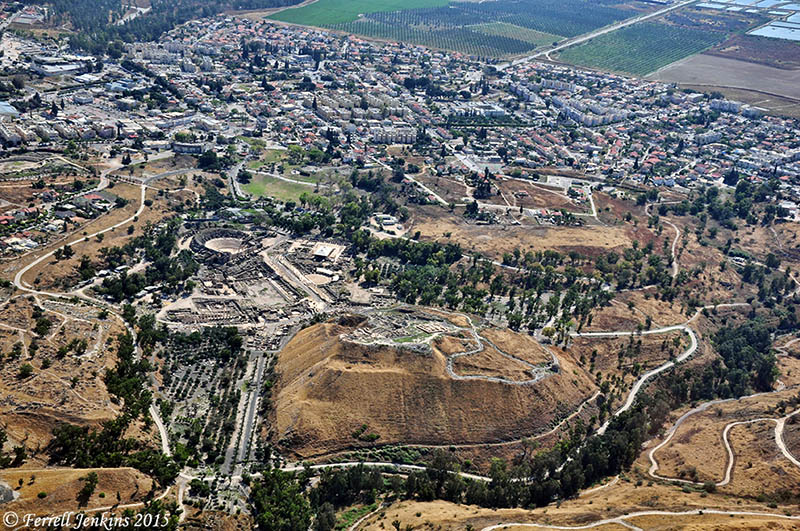
The photo below was made from the air with a view northeast. A small portion of the Harrod Valley, with some fish ponds, is visible in the top of the photo. The River Harod flows to the east of the tel hidden by the line of trees.

Tel Husn (Bethshan) is visible in the bottom of the image. Photo by Ferrell Jenkins.

Tel Husn (Bethshan) is visible in the bottom of the image. Photo by Ferrell Jenkins.

For many Bible students the first event that comes to mind is the defeat of King Saul at the hands of the Philistines. After his death on nearby Mount Gilboa, Saul’s body was taken to Beth-shean and fastened to the wall of the city (1 Samuel 31).

During the Greek period the city was named Scythopolis (city of the Scythians) and expanded to the foot of the tell.

In 63 B.C. the Romans, under the general Pompey, made the city part of the Decapolis (a league of ten cities; Matthew 4:25; Mark 5:20; 7:21). This was the only city of the Decapolis west of the Jordan River. The city was populated by gentiles, Jews and Samaritans.

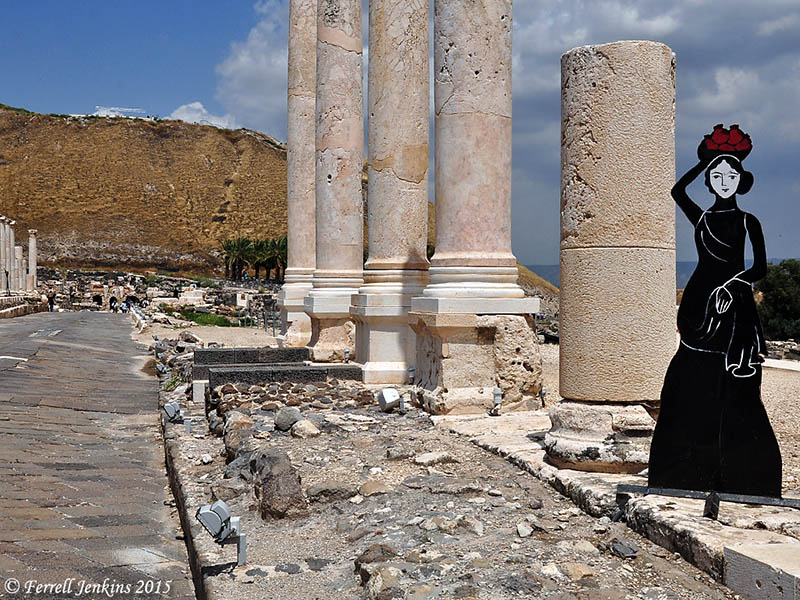
The main street of the Byzantine city. The tel of ancient Bethshan is visible at the end of the street. Photo by Ferrell Jenkins.

The main street of the Byzantine city. The tel of ancient Bethshan is visible at the end of the columned street. Photo by Ferrell Jenkins.

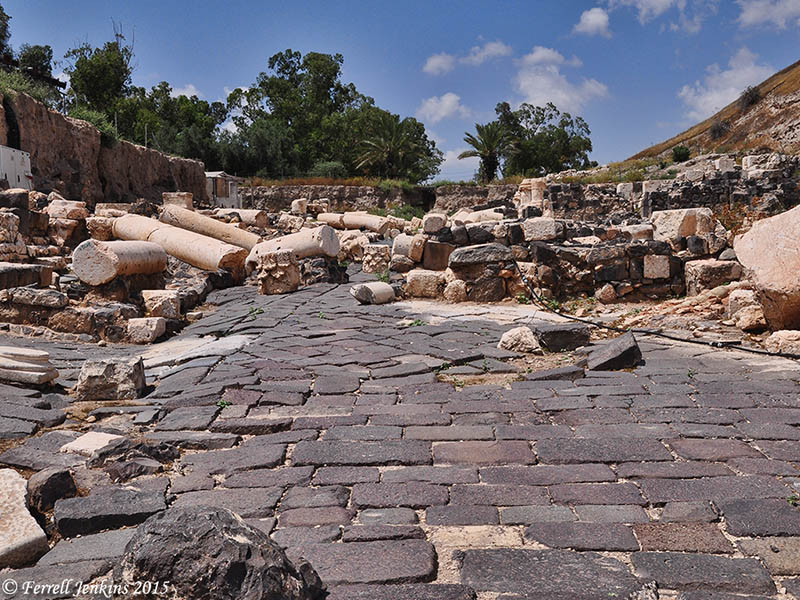
The city grew to its largest size during the Byzantine period as a “Christian” city. It came under Muslim control in A.D. 636, and was destroyed by an earthquake in A.D. 749.

Some of the earthquake damage at Bethshan. Photo by Ferrell Jenkins.

Some of the earthquake damage at Bethshan. Photo by Ferrell Jenkins.

The destroyed Byzantine city lies between the theater and the mound. That’s a lot of history in one small place.

The other Aphek – of Asher

The Anchor Yale Bible Dictionary follows William F. Albright in listing five towns named Aphek.

  1. Aphek of Asher (Joshua 19:29-30).
  2. Aphek of Aram (1 Kings 20:26-30).
  3. Aphek in Lebanon (Joshua 13:4).
  4. Aphek in Sharon (Joshua 12:18; 1 Samuel 4:1; 1 Samuel 29).
  5. Aphekah in Judah (Joshua 15:33).

In the previous post we discussed Aphek in Sharon where the Philistines were encamped while the Israelites were about two miles away at Ebenezer.

There was also a town named Aphek (Afek) located within the territory of the tribe of Asher.

Then the boundary turns to Ramah, reaching to the fortified city of Tyre. Then the boundary turns to Hosah, and it ends at the sea; Mahalab, Achzib, Ummah, Aphek and Rehob– twenty-two cities with their villages. This is the inheritance of the tribe of the people of Asher according to their clans– these cities with their villages. (Joshua 19:29-31 ESV)

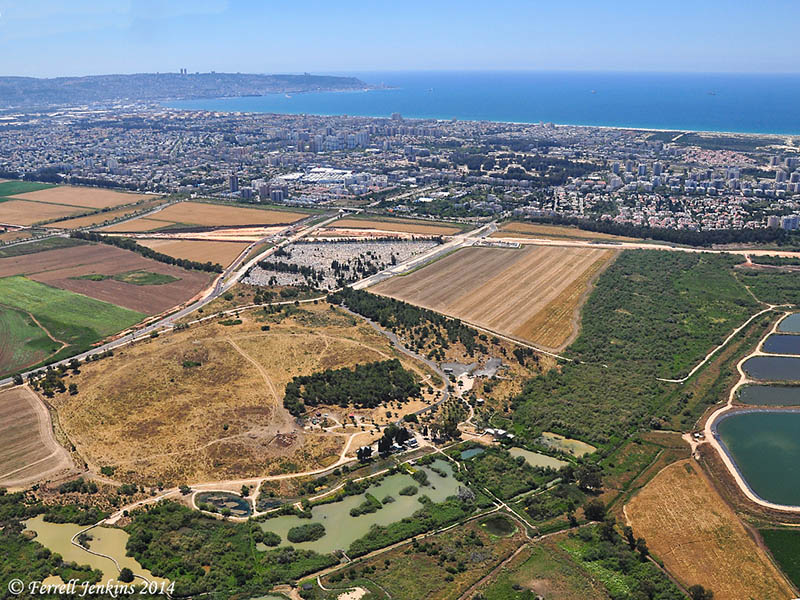
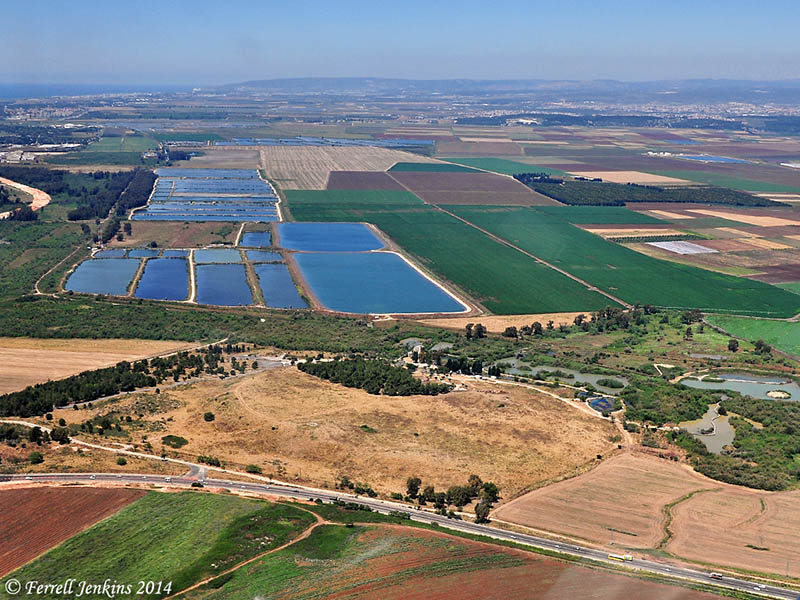
The aerial photo below shows Aphek of Asher in the Plain of Akko (Acco, Acre). The city of Haifa and the western end of Mount Carmel can be seen jutting out into the Mediterranean Sea.

Aphek of Asher. View southwest toward the Bay of Haifa. Photo by Ferrell Jenkins.

Aphek of Asher. View southwest toward the Bay of Haifa. Photo by Ferrell Jenkins.

In this photo we see the tel in the foreground with Mount Carmel to the south. the Ladder of Tyre in the distance to the north.

Aphek of Asher. View south toward Mount Carmel. Photo by Ferrell Jenkins.

Aphek of Asher. View south toward Mount Carmel north-northeast toward the Ladder of Tyre. Photo by Ferrell Jenkins.

Various sites with the same name can be confusing, but a little investigation helps to distinguish them.

Note: Thanks to the keen eye of A.D. Riddle for catching my mistake above. I did not recall circling the tel while we were flying. I had never been to Afek, so when the pilot pointed it out I began shooting continuously. I appreciate A.D. correcting this.

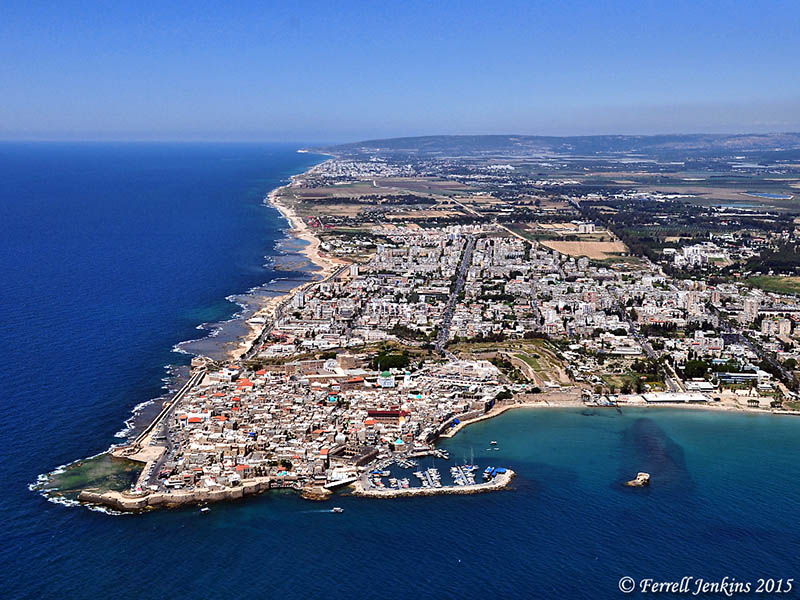
The photo below stretches all the way from Akko (Acre) to the Ladder of Tyre. You should be able to make out a white mark stretching into the sea in the distance.

The Mediterranean coast from Akko (Acre) north to the Ladder of Tyre. Photo by Ferrell Jenkins.

The Mediterranean coast from Akko (Acre) north to the Ladder of Tyre. Photo: Jenkins.

For additional information about this stretch of land, see our earlier post here.

Aphek – where the Philistines were encamped

One of the significant battles between Israel and the Philistines took place during the time of Samuel when the ark of the covenant was located in the tent of meeting at Shiloh.

And the word of Samuel came to all Israel. Now Israel went out to battle against the Philistines. They encamped at Ebenezer, and the Philistines encamped at Aphek. (1 Samuel 4:1 ESV)

Israel encamped at Ebenezer, and the Philistines encamped at Aphek in the plain of Sharon. This indicates that the two places were fairly close to each other. Aphek is located about 21 miles west of Shiloh. Ebenezer is about 2 miles east of Aphek.

Herod the Great built a city at the site of Aphek and named it Antipatris in honor of his father.

Herod was also a lover of his father, if any other person ever was so; for he made a monument for his father, even that city which he built in the finest plain that was in his kingdom, and which had rivers and trees in abundance, and named it Antipatris. He also built a wall around a citadel that lay above Jericho, and was a very strong and very fine building, and dedicated it to his mother, and called it Cypros. (Jewish Wars 1:417)

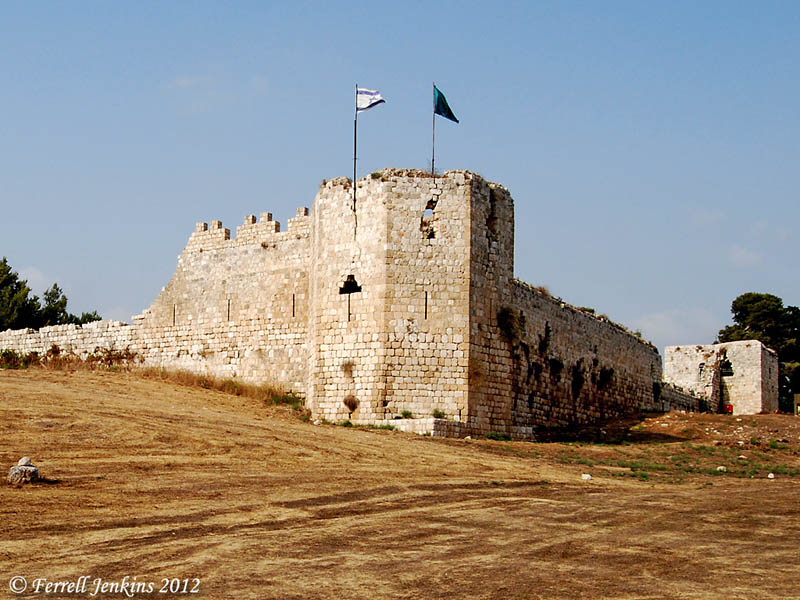
Because Aphek/Antipatris sat on a major south-north and west-east routes, it was dominated by many nations. The dominant feature of the site today is the Turkish fort. Inside are the excavated ruins of buildings from Canaanite to Herodian/Roman times.

The apostle Paul stayed overnight at Antipatris on his journey from Jerusalem to Caesarea (Acts 23:31).

Aphek/Antipatris is known by the modern name Ras el-Ain because it is located at the headwaters of the Yarkon River which flows into the Mediterranean about 11 miles to the west.

Source of the Yarkon River at Aphek/Antipatris. Photo by Ferrell Jenkins.

Source of the Yarkon River at Aphek/Antipatris. Photo by Ferrell Jenkins.

Aphex/Antipatris is now dominated by the ruins of an Ottoman fortress.

The Crusader castle of Mirabel, later used as a Turkish fortress. Photo by Ferrell Jenkins.

The Ottoman fortress at Aphek/Antipatris. Photo by Ferrell Jenkins.

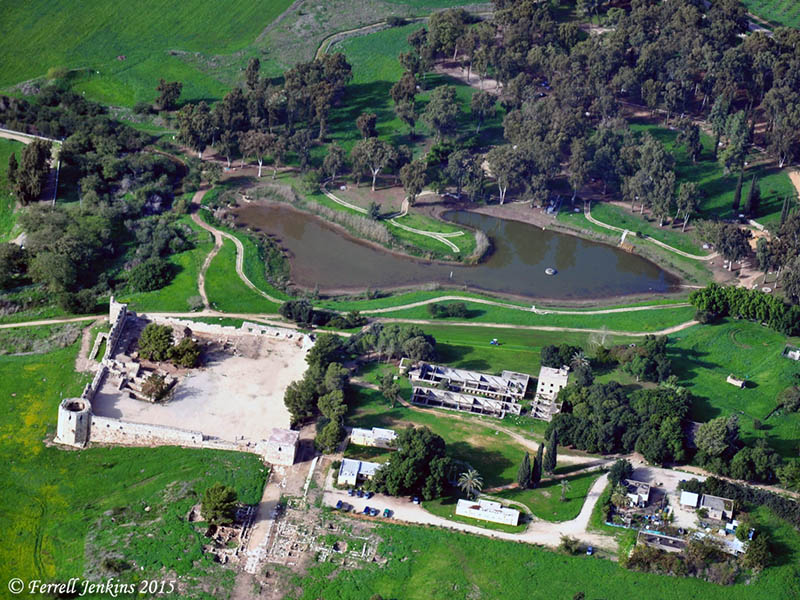
Our final photo shows the fortress and the source of the Yarkon River from the air. Notice in the previous photos the grass is brown. Those photos were made in August. The next photo was made in December and the grass is green.

Aerial photograph of Aphek/Antipatris. Photo by Ferrell Jenkins.

Aerial photograph of Aphek/Antipatris. Photo by Ferrell Jenkins.

Leon Mauldin has written about Aphek here.

In the next post we plan to write about “The Other Aphek.”


A miscellany of topics

In the past few weeks I have been occupied trying to get some out-of-print material ready for reprint. Occasionally I read something that I think should be shared. Take a look at these.

Ephesus Museum Open. Carl Rasmussen reports on his HolyLandPhotos’Blog that the Ephesus Museum in Seljuk is open after being closed for renovation.

Gentile References in Matthew. Charles Savelle presents a list of “Gentile References in Matthew” at BibleX.

Bible Places Blog. Todd Bolen’s Weekend Roundups have been extremely helpful the past couple of weeks. See here for the most current one.

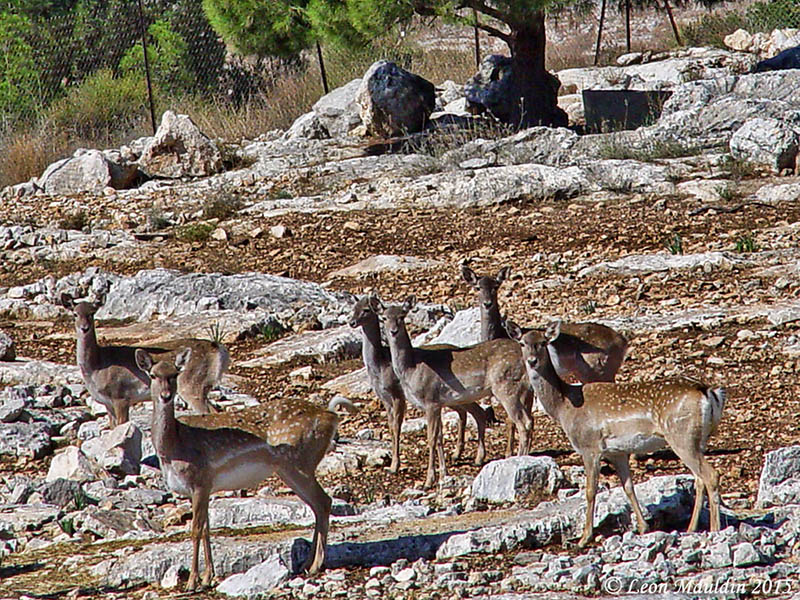
The Fallow Deer. Shmuel Browns writes about how the Fallow Deer was reintroduced into Israel from Iran. Fascinating story with photos here. Browns does not say where he made his photos, but mentions that some of the deer were taken to Neot Kadumim. When Leon Mauldin and I visited Neot Kedumim in 2005 the deer there were young. I note that they are not as gray as those in Shmuel’s photos. Perhaps the age accounts for the difference.

Young fallow deer at Neot Kedumim. Photo by Leon Mauldin.

Young fallow deer at Neot Kedumim. Photo by Leon Mauldin.

Using Maps in Bible Study. Wayne Stiles writes about “The Value of Using Maps in Your Bible Study” here.

Mount Gilboa. The Times of Israel carries an article here with beautiful photos, of the Gilboa Mountains and the wildflowers growing there in the winter and spring.

A poppy and a bee at the Pool of Bethesda, Jerusalem. Photo by Ferrell Jenkins.

A poppy and a bee at the Pool of Bethesda, Jerusalem. Photo by Ferrell Jenkins.

Responding to Newsweek. Darrell L. Bock has two more responses here to the Newsweek article on The Bible.

How Many Saviors? Amazon has Ronald Nash’s Is Jesus the Only Savior? available in Kindle format for $1.99 for a limited time. This book can be very helpful in this time of emphasis on pluralism and inclusivism.
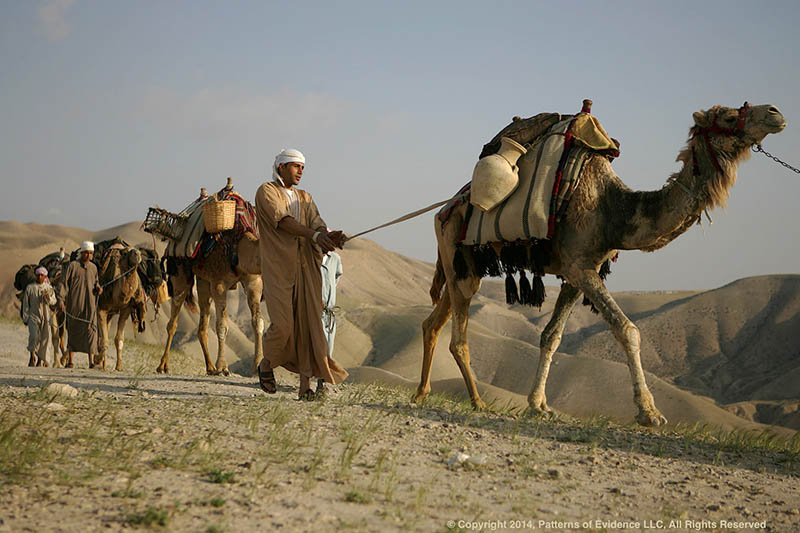
The Exodus. Last Friday I heard Gretchen Carlson’s interview with filmmaker Tim Mahoney on Fox News. It was the first I had heard of the film Patterns of Evidence: Exodus. The film is debuting Monday, January 19 at select theaters nationwide.

A wide variety of scholars are interviewed in the film, including Charles Aling, Manfred Bietak, John Bimson, Israel Finkelstein, James K. Hoffmeier, David Rohl (who has advanced a revised chronology ancient Egypt and Palestine),
Bryant Wood, and others.

For info on the film and places it will be shown see Patterns of Evidence: The Exodus. Here is the trailer.

A few nice photos are available for download.

From Patterns of Evidence.

From Patterns of Evidence.

You are on your own to see/hear and evaluate.

Added Note (Jan. 19, 2015). Todd Bolen calls attention to a review of the film by Larry Largent. This review confirms my suspicions that the flim was an effort to push a revised chronology. Take a look at this review at Biblical Remains.

“You shall not steal…You shall not covet”

“You shall not steal. “You shall not bear false witness against your neighbor. “You shall not covet your neighbor’s house; you shall not covet your neighbor’s wife, or his male servant, or his female servant, or his ox, or his donkey, or anything that is your neighbor’s.” (Exodus 20:15-17 ESV; cf. Romans 13:9)

The Ten Commandments, given to the nation of Israel, were clear about the attitude one should take toward the property belonging to others. Coveting causes one to desire the wife, or the property, of another man.

The reason the donkey and ox of another was not to be coveted or stolen was because these were the man’s means of income. How could he work without his donkey or ox?

A loaded donkey at Seleucia. Photo by Ferrell Jenkins.

A loaded donkey at Seleucia. Photo by Ferrell Jenkins.

It may be that none of my readers own a donkey or an ox, but the principle is clear. You shall not take that which belongs to another person. When I was teaching I had to deal with this issue a few times. I am confident that it happened other times, but I did not know about it at the time.

When a student turns in a report or paper that was written by another student he/she is stealing the work of another and pretending that it is his own. Occasionally a student will look over and take an answer that another person has given to a question. That is stealing.

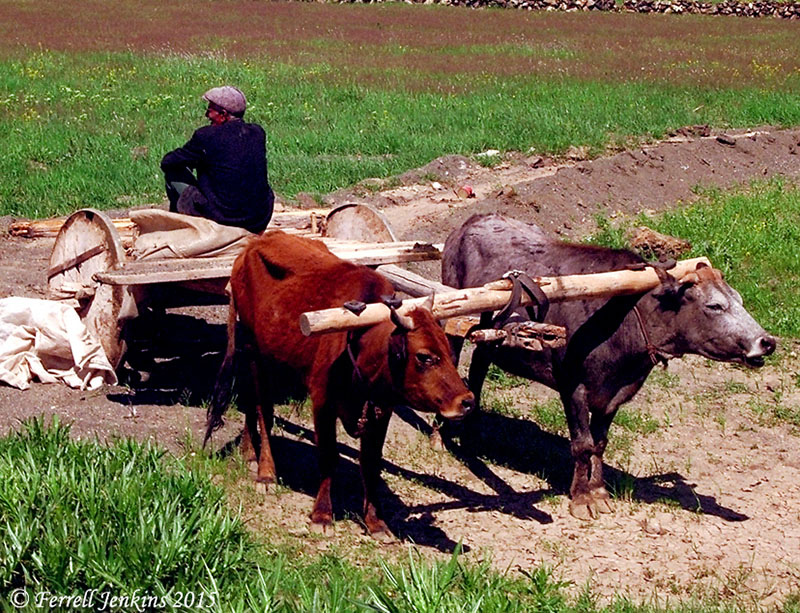
Oxen hitched to a small wagon near Mount Ararat in Turkey. Photo by Ferrell Jenkins.

Oxen hitched to a small wagon near Mount Ararat in Turkey. Photo by Ferrell Jenkins.

There is such a thing as intellectual property. The government of the United Kingdom describes intellectual property as “the words you’ve written.” It includes “things you write, make or produce.” Like photos, for example.

A student once told me that there was a student on campus who would make a CD of ten of your favorite songs for $1 for each song.  What if a person spends literally several thousand of dollars to purchase equipment, travel a long distance and make photos. Would it be o.k. to take that property and treat it as one’s own.

Several years ago I had a young person to copy some of my posts without permission and post them on his own web site. He cropped the photos to cut off the copyright notice. He said he didn’t know. His web site was closed down.

Recently someone living in a fashionable neighborhood in another country registered a internet site using my name. (I could post a photo of his house from Google earth!) He had this entire web site posted on his new domain, but he made it impossible for readers to reach me. All Email was directed to him (or her?).

There are strict laws governing this sort of thing. In the USA we have the DMCA (Digital Millennium Copyright Act). I have learned that some (perhaps most or all) of the hosting companies take this seriously. The DMCA “implements the 1996 treaties of the World Intellectual Property Organization (WIPO)” (Wikipedia, here), to which most of the nations in the United Nations subscribe. Once I got to the correct company, the offending web site was closed very quickly.

Even the Code of Hammurabi (ruled 1728-1686 B.C., according to Pritchard) contained numerous laws containing the penalties for stealing. Law 8 says,

If a seignior stole either an ox or a sheep or an ass or a pig or a boat, if it belonged to the church (or) if it belonged to the state, he shall make thirtyfold restitution; if it belonged to a private citizen, he shall make good tenfold. If the thief does not have sufficient to make restitution, he shall be put to death. (ANET).

I think that most of us are pleased when someone finds our material useful and even wants to share it with others. But stealing one’s property is another matter.

Our PHOTO PERMISSION page is liberal regarding private and classroom non-commercial use of our photos as long as credit is given.

Thanks for reading this blog. I hope you find it helpful in your own study and teaching.

The Other Bethlehem – Part 1

Everyone who has studied the earthly ministry of Christ knows that He was born in Bethlehem, the city of David, about six miles south of the ancient city of Jerusalem (Micah 5:2; Matthew 2:1-8; Luke 2:4,15). This village is designated as Bethlehem of Judea or Bethlehem Ephrath.

So Rachel died, and she was buried on the way to Ephrath (that is, Bethlehem), (Genesis 35:19 ESV)

The only reference to Bethlehem in the New Testament apart from the birth account in Matthew and Luke calls Bethlehem a village (kome; John 7:42) and ties it with the prophecy of Micah 5:2.

The other Bethlehem is located in the tribal territory of Zebulun (Joshua 19:15), about 7 miles northwest of Nazareth. For a list of the twelve cities of Zebulun see Joshua 19:10-15.

After the destruction of the temple in Jerusalem (A.D. 70) Bethlehem of Zebulun,

was known under the name of Bethlehem Zoriah — Bethlehem of Tyre — and was the seat of the priestly order of the family of Malchiah. Identified with Beit Lahm in Lower Galilee. (Avraham Negev, ed. The Archaeological Encyclopedia of the Holy Land, rev. ed., p. 58.

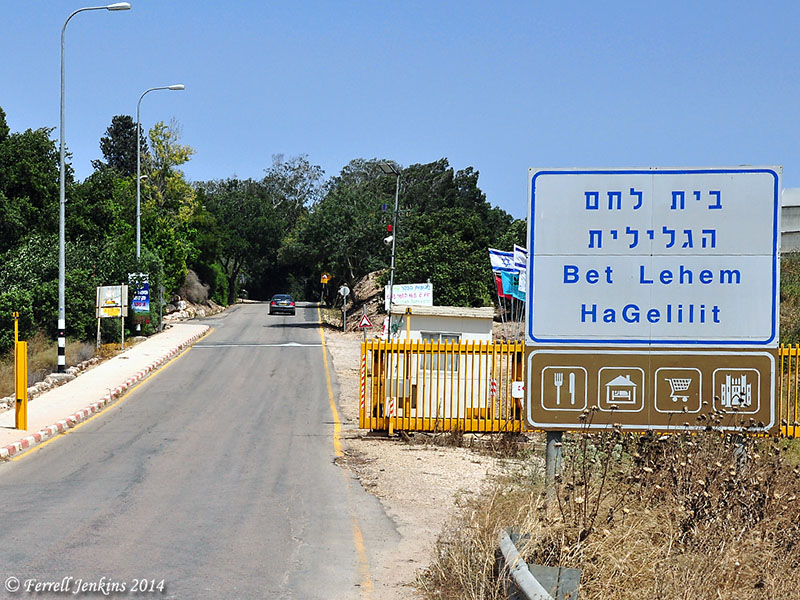
Galilean Bethlehem is now a small Jewish moshav, a cooperative agricultural settlement. The photo below shows the entrance to the moshav.

Entrance to the moshav of Beit Lehem HaGelit. Photo by Ferrell Jenkins.

Entrance to the moshav of Beit Lehem HaGelilit. Photo by Ferrell Jenkins.

The small map below shows the location of Galilean Bethlehem.

Map showing Galilean Bethlehem. BibleAtlas.org

Map showing Galilean Bethlehem. New Testament Nazareth would be located at the far right of the map under the “h” in Japh. Credit: Biblos.com.

Could Jesus have been born here? Primarily because of the proximity of Galilean Bethlehem to Nazareth, some scholars have suggested that this was the birthplace of Jesus. National Geographic writer Marisa Larson raises this question in a Feb. 11, 2008, followup to the Dec., 2007, feature “Bethlehem 2007 A.D.”

Larson cites Aviram Oshri, a senior archaeologist with the Israeli Antiquities Authority, as someone who thinks that it was more likely that the historical Jesus was born in Bethlehem of Galilee rather than the Bethlehem of Judea.

“If the historical Jesus were truly born in Bethlehem,” Oshri adds, “it was most likely the Bethlehem of Galilee, not that in Judaea. The archaeological evidence certainly seems to favor the former, a busy center [of Jewish life] a few miles from the home of Joseph and Mary, as opposed to an unpopulated spot almost a hundred miles from home.” In this Bethlehem, Oshri and his team have uncovered the remains of a later monastery and the largest Byzantine church in Israel, which raises the question of why such a huge house of Christian worship was built in the heart of a Jewish area. The Israeli archaeologist believes that it’s because early Christians revered Bethlehem of Galilee as the birthplace of Jesus. “There is no doubt in my mind that these are impressive and important evidence of a strong Christian community established in Bethlehem [of Galilee] a short time after Jesus’ death,” he says. (copied from here, 12/27/14).

Oshri also expressed his views in Archaeology 58:6 (Nov.-Dec. 2005). He says that there is evidence of “a strong Christian community established in Bethlehem [of Galilee] a short time after Jesus’ death.” In fact, the first archaeological evidence is of a sixth century church [building].

Even if Christians of Galilee “revered Bethlehem of Galilee as the birthplace of Jesus” it does not negate the clear historical records of Matthew and Luke regarding the birthplace of Jesus in Bethlehem of Judea and the reason for the couple from Nazareth returning to the ancestral home in Judea.

If the Bible were written by men unaided by the Holy Spirit I think it would be reasonable to place the birth of Jesus in Bethlehem of Galilee and his upbringing in nearby Nazareth. There is an amazing undesigned coincidence here.

  • The Messiah was to be from the tribe of Judah (Genesis 49:10), and of the family of David (2 Samuel 7:11).
  • The birth of the Messiah was prophesied to be in Bethlehem Ephrath (Micah 5:2; Matthew 2:6). This was the Bethlehem of Judea.
  • The couple living in Nazareth were both of the family of David (Matthew 1:20; Luke 1:27,32,69). The legal line is traced through Joseph, and the blood line is traced through Mary in Luke’s account.
  • Joseph and Mary responded to the decree of the emperor Augustus that they return to their ancestral home for registration (Luke 2:1-5).

If Jesus had been born in Galilean Bethlehem, and if the Gospels had been written much later, as most critics claim, then they would have recorded a different story.

The ease with which writers could mix up the two Bethlehems, but did not, provides an  illustration of the amazing accuracy of the Bible.

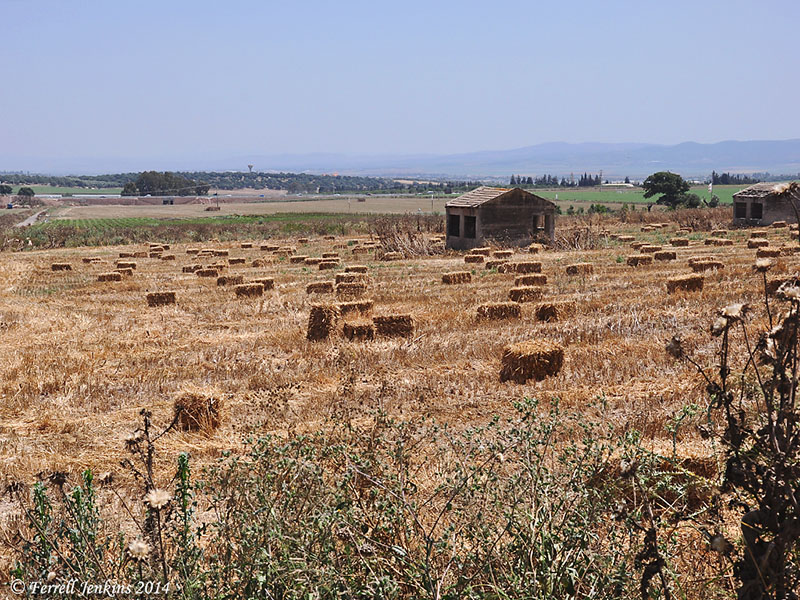
Beit Lehem HaGelilit is situated on the north side of the western end of the Jezreel Valley.

Valley from Beit Lehem HaGelit. Photo by Ferrell Jenkins.

View SE to the Jezreel Valley from Beit Lehem HaGelilit. Photo by Ferrell Jenkins.

On the hills of lower Galilee, to the east and north of Galilean Bethlehem, there are Olive orchards, and cows grazing among the oaks.

Cows graze among the Allon Oak trees at Galilean Bethlehem. Photo by Ferrell Jenkins.

Cows graze among the Oaks at Galilean Bethlehem. Photo by Ferrell Jenkins.

Bethlehem of Galilee may be mentioned one other time in the Bible as the home and burial place of Ibzan the judge (Judges 12:8). The context in which he is mentioned is dealing with various judges of the tribes of Zebulun and Ephraim.

In  a post to follow I plan to share some of the recent history of Galilean Bethlehem.