Category Archives: Jordan

Pilate promoted the Imperial Cult by setting up shields in Jerusalem

In addition to the use of coins, Pilate used other means to promote the Imperial (Emperor) Cult in Roman Palestine.

In the previous post we called attention to the article by Prof. Joan E. Taylor who said that the coinage of Pilate and the Pilate inscription from Caesarea,

“indicate a prefect determined to promote a form of Roman religion in Judaea.”

The residence of the governor of Judea was at Caesarea Maritima, but he came to Jerusalem for special events. Pilate would likely stay at Herod’s place. This is where he would have set up shields in honor of the Emperor Tiberius. Both Josephus (JW 2:169ff.) and Philo of Alexandria (Legatio ad Gaium) record this episode.

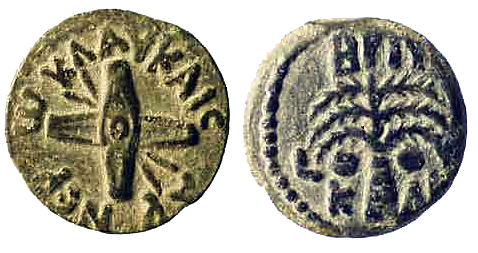
What were these shields? This coin that was minted later by Felix, prefect of Judea about AD 52-59 (Acts 23-24) might give us an idea. The obverse of the coin shows two oblong shields and two spears.

Coin of the Prefect Felix showing shields and spears.

Coin of the Prefect Felix showing two oblong shields and two crossed spears.

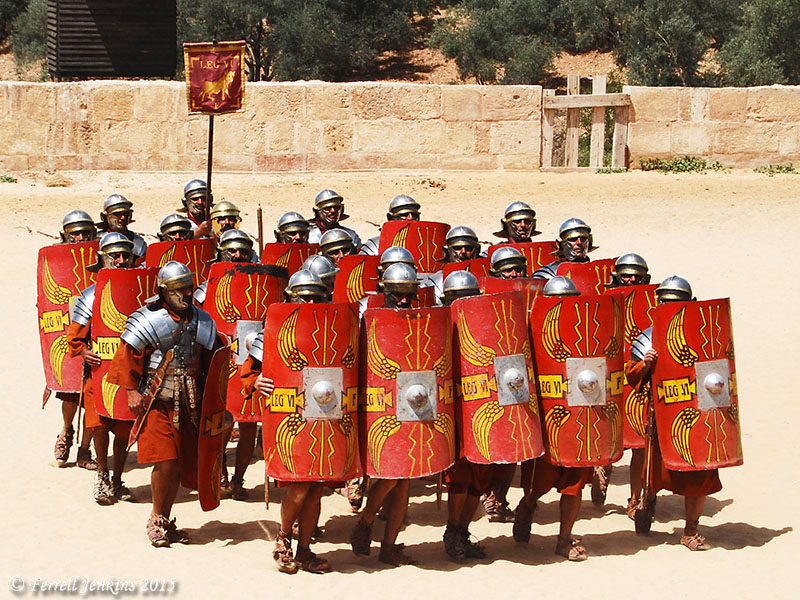
The actors involved in the RACE show at Jerash, Jordan, show us what the shields of the 6th Roman Legion might have looked like.

Enactment of soldiers of the 6th Roman Legion. Photo by Ferrell Jenkins.

Enactment of soldiers of the 6th Roman Legion. Photo by Ferrell Jenkins.

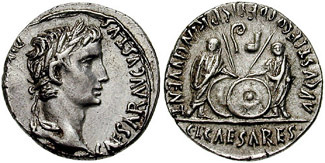
A denarius bearing the image of Augustus was struck in Lyon between 2 BC and AD 4. The reverse shows Gaius and Lucius standing, facing, holding shields and spears. In this case the shields are round, and are shown in association with the lituus and simpulum, symbols of the Imperial Cult. (I think you can easily find larger images of this coin on the Internet.)

Coin of Augustus showing shields, lituus, and simpulum.

Coin of Augustus showing shields, lituus, and simpulum.

Our point in all of this is to show that when Pilate erected the shields in Jerusalem it was in fact a symbol of the Imperial cult.

Next we plan to discuss the tiberium built by Pilate at Caesarea.

NASA photos of Israel and Middle East

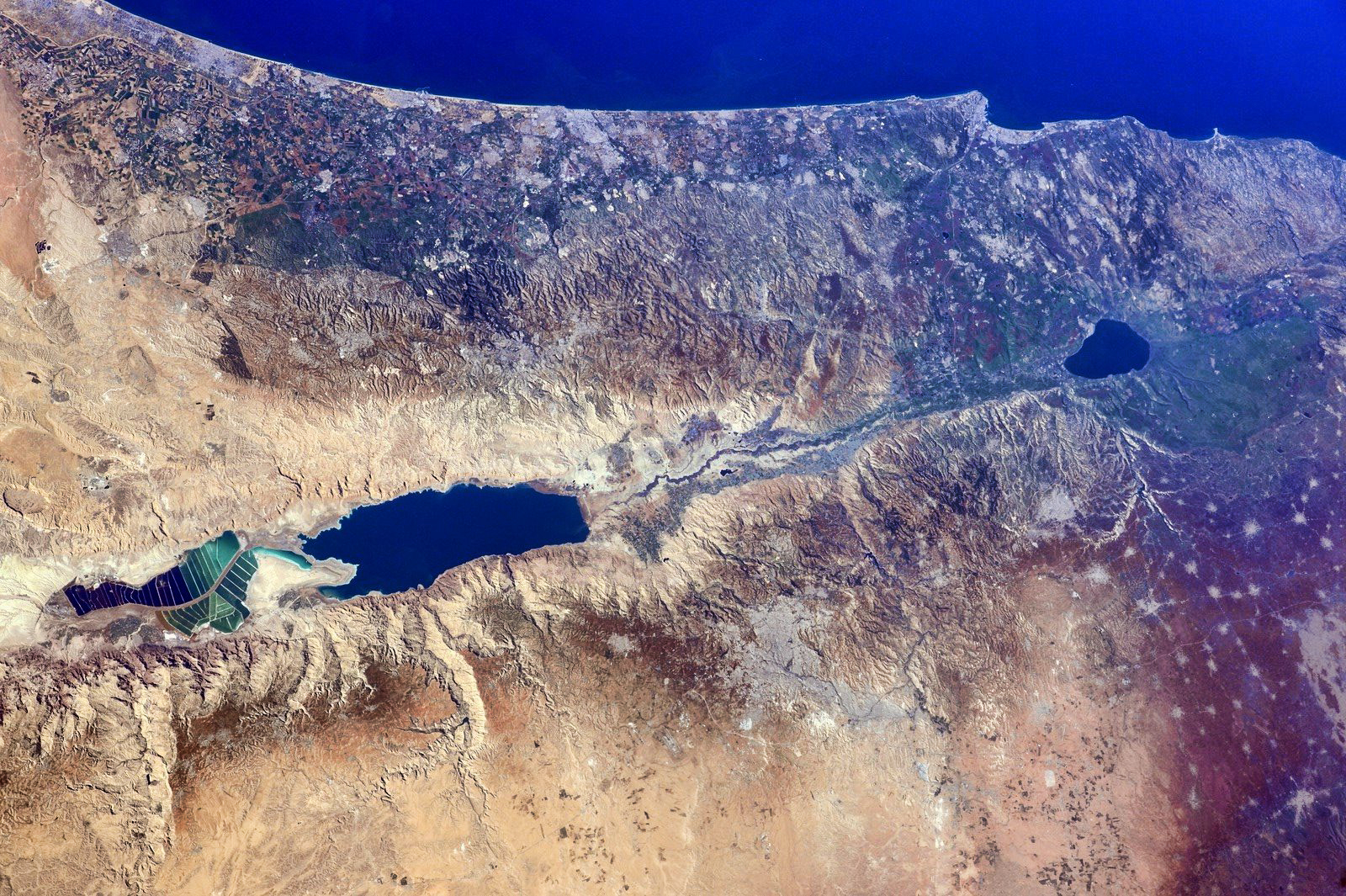
NASA has posted several excellent photos made by Barry Wilmore from the International Space Station on Facebook. The photos were made on Christmas day, 2014. See how many landmarks you can identify. Click on the photo for a larger image. Do you see Tyre?

Israel, the West Bank, and part of Jordan from the ISS. Photo: NASA/Barry Wilmore.

Israel, the West Bank, and part of Jordan from the ISS. Photo: NASA/Barry Wilmore.

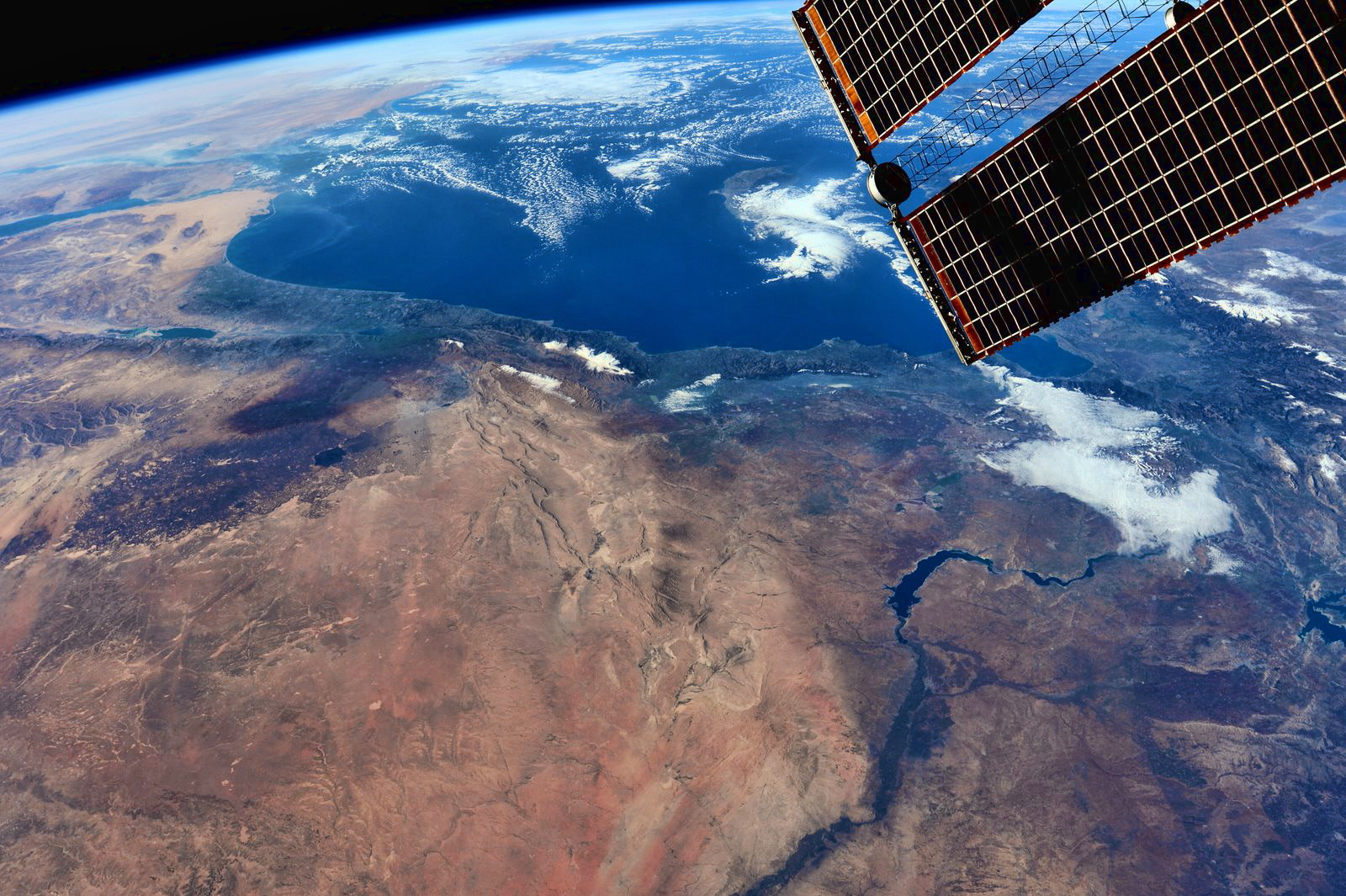
The photo below shows portions (or all) of (L to R) Egypt, Sinai Peninsula, Israel, Jordan, Lebanon, Syria, Turkey (including Euphrates River), and Iraq. Great photo.

The Middle East from the ISS. Photo: NASA/Barry Wilmore.

The Middle East from the ISS. Photo: NASA/Barry Wilmore.

Get out your Bible atlases and study these photos.

Our tax dollars put to good use, I would say.

“Sunrise, sunset…”

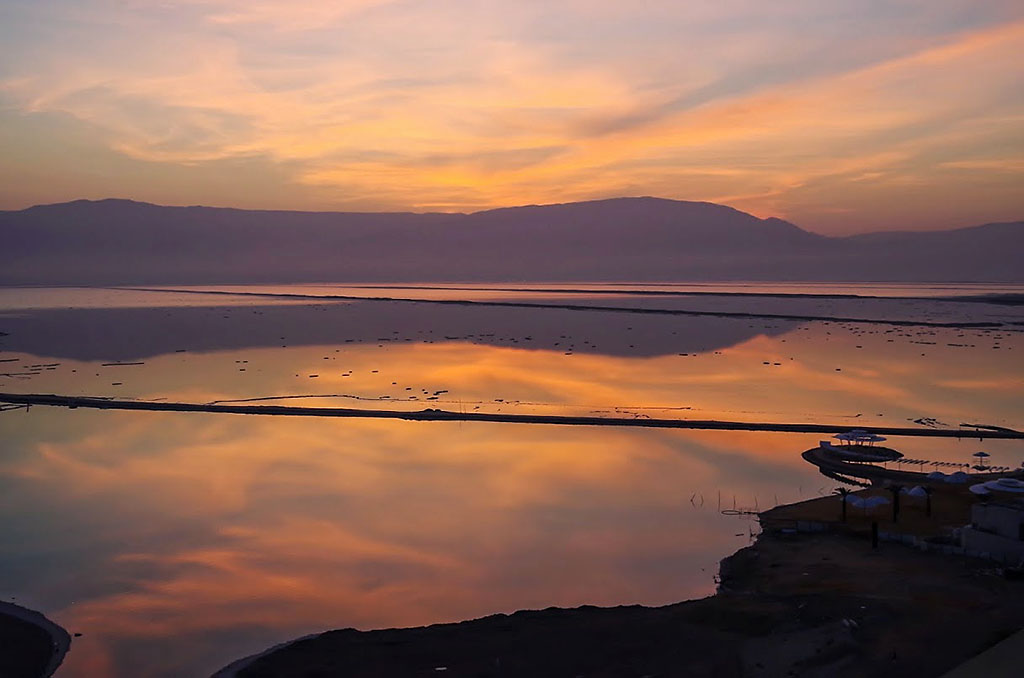
In response to our recent sunset photos on the Sea of Galilee Mark Hoffman sent a beautiful photo of a sunrise from Ein Bokek, a resort site located on the southern end of the west shore of the Dead Sea. When I asked Professor Hoffman for permission to elevate his photo to a post, he graciously granted it. The photo was made in January, 2014.

Sunrise on the Dead Sea from Ein Bokek. Photo by Mark Vitalis Hoffman.

Sunrise on the Dead Sea from Ein Bokek. Photo by Mark Vitalis Hoffman.

The Mountains of Moab are visible to the East in the modern country of Jordan, and reflected in the waters of the Dead Sea.

The Dead Sea is known as the Salt Sea in Genesis 14:3.

Mark Hoffman writes a practical blog for teachers and preacher who use any sort of technology. It is called Biblical Studies and Technological Tools. The subtitle is “From scroll to screen… codex to computer….” There you will find lots of helpful material relating to Bible software programs.

Last year I recommended two of his posts to my tour group. Others might enjoy these picture taking tips.

Thanks to Mark for sharing this beautiful photo.

Book on the origin of Israel available

Daniel I. Block’s book, Israel: Ancient Kingdom or Late Invention?, is available in Kindle format today for $2.99. The retail price of the hardback is $28.

The publisher (B&H) of the 2008 book describes it as

a collection of essays responding to the radical claims that Israel and its history actually began following the Babylonian exile, and that the history of Israel we read about in the Bible is a fictionalized account.

Contributors are leading Bible and archaeology scholars who bring extra-biblical evidence to bear for the historicity of the Old Testament and provide case studies of new work being done in the field of archaeology.

The book includes the following essays dealing with some of the current discussions in Biblical studies.

  • Israel – Ancient Kingdom or Late Invention? – Daniel I. Block
  • The Value and Limitations of the Bible and Archaeology – Alan R. Millard
  • Contextual Criticism as a Framework for Biblical Interpretation – John M. Monson
  • North-West Semitic Inscriptions and Biblical Interpretation – Joel Drinkard
  • From Joseph to David: Mari and Israelite Pastoral Traditions – Daniel E. Fleming
  • Major Geographical Issues in the Accounts of the Exodus – James K. Hoffmeier
  • Slavery and Slave Laws in Ancient Hatti and Israel – Harry A. Hoffner Jr.
  • Were the Israelites Really Canaanites? – Alan R. Millard
  • Syria and the Bible: The Luwian Connection – Richard S. Hess
  • David and Solomon’s Jemsalem: Do the Bible and Archaeology Disagree? – Alan R. Millard
  • Who Were Israel’s Transjordanian Neighbors and How Did They Differ? – Gerald L. Mattingly
  • Shalmaneser III and Israel – K. Lawson Younger Jr.
  • Did the Israelites Really Learn Their Monotheism in Babylon? Simon J. Shenvin
  • Did Persian Zoroastrianism Influence Judaism? – Edwin M. Yamauchi
  • Interpreting the Bible as an Ancient Near Eastern Document – John H. Walton

The Route of the Exodus and the Location of Mount Sinai

Over the past 48 years I have had the opportunity to visit almost all parts of the Bible World. I certainly have not solved all of the problems that are raised about locations of certain events, but I have tried to look at the major claims whether it is the location of Cana, the site for the baptism of Jesus, the place of the crucifixion and burial of Jesus, the location of Ararat, or the route of the exodus and the location of Mount Sinai, et al.

In this post I have pulled together a list of some things I have written about the route of the Exodus and the location of Mount Sinai. I hope you will find the posts helpful when you study this subject.

  • Pharaoh’s chariot wheels and other things that won’t float – Examining the claims of the late Ron Wyatt here.
  • Location of the Red Sea crossing and Mount Sinai here.
  • Location of Mount Sinai here.
  • Solomon’s Seaport at Ezion-geber here.
  • Sharks at Sharm el-Sheikh in the Sinai here. Sharm el-Sheikh is at the Straits of Tiran.
  • “Cracked Pot Archaeology” here.
  • Pseudo Archaeologists here.
  • Goshen and the Great Bitter Lake here.
  • Another day in Goshen here.

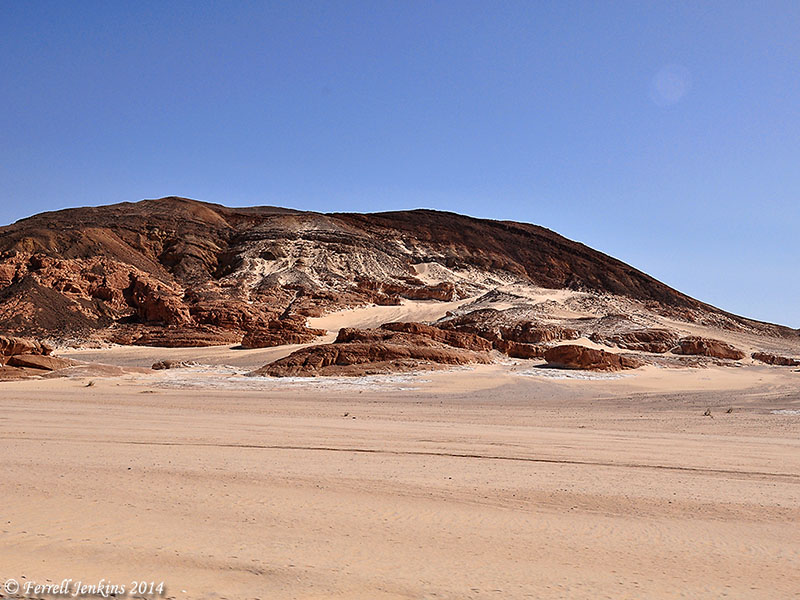
Below are a couple of photos that show the changing scenery that one sees in the Sinai Peninsula.

Sinai Peninsula near the Gulf of Eilat or Aqaba. Photo by Ferrell Jenkins.

Sinai Peninsula near the Gulf of Eilat or Aqaba. Photo by Ferrell Jenkins.

Read some scholarly presentations on the subject. Such as these recent Bible atlases.

  • Beitzel, Barry J. The New Moody Atlas of the Bible, 106-114.
  • Currid, John D. and David P. Barrett. Crossway ESV Bible Atlas, 77-91.
  • Rasmussen, Carl G. Zondervan Atlas of the Bible, 100-105.
Wadi Feiran in the Sinai Peninsula. Photo by Ferrell Jenkins.

Wadi Feiran in the Sinai Peninsula. Photo by Ferrell Jenkins.

Or books such as…

  • Hoffmeier, James K. Israel in Egypt: The Evidence for the Authenticity of the Exodus Tradition, chs. 8-9.

The Associates for Biblical Research includes several articles about the Exodus at their website here.

  • Is Mount Sinai in Saudi Arabia? here.
  • Mount Sinai is Not Jebel Al-Lawz in Saudi Arabia here.

I am hopeful you will browse through this material and remember to examine it more closely the next time you study Exodus.

London and the British Museum

We finally reached the third of the big three museums with Ancient Near Eastern collections that we had planned to visit. We spent large portions of two days in the museum. The museum is open every day of the week. Closing time is 5:30 p.m. every day except Friday when the time is 8:30 p.m. There is no required entry fee, but a request is made for a £5 (about $8.50) or more donation.

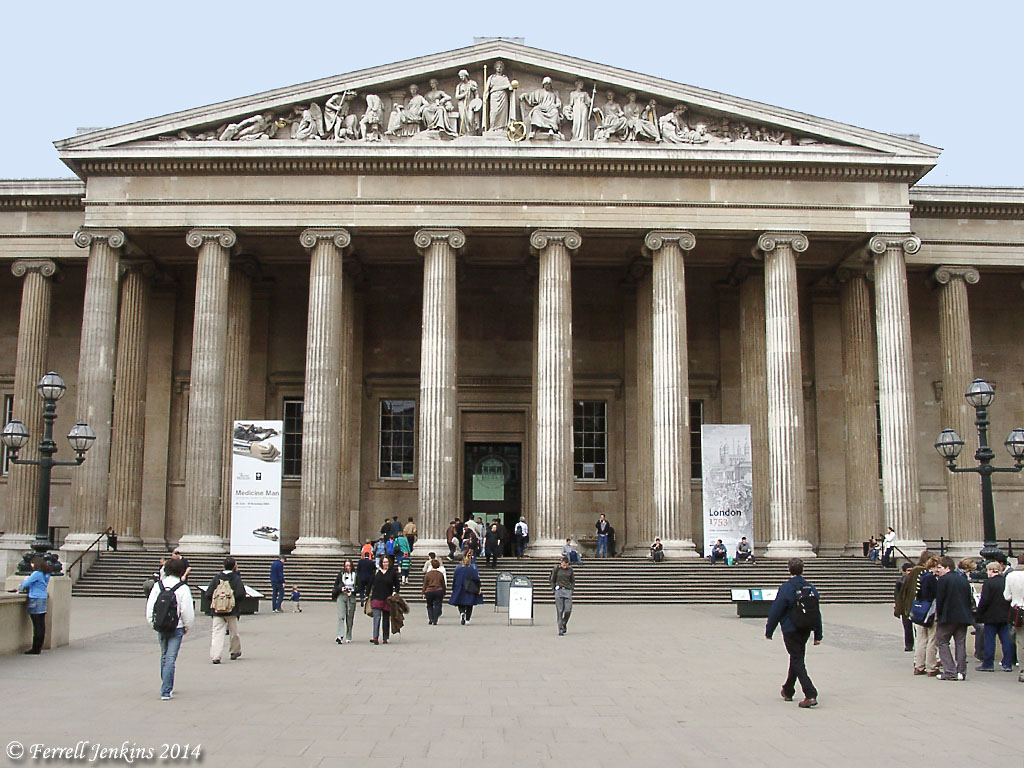
I have emphasized the crowds in the Pergamum Museum, and the Louvre. The same was true in the British Museum. The photo below was made a few years ago at the end of September. Once school is in session one should be able to find times without hugh crowds. Many galleries have natural light that comes in. Some photos are better with the natural light and others are better with the artificial light, depending on the glare on the case.

British Museum entrance on Great Russel Street, London. Photo by Ferrell Jenkins.

British Museum entrance on Great Russell Street, London. Photo by Ferrell Jenkins.

The British Museum was founded in 1753 to house the collection of Sir Hans Sloane which had been left to the nation. It is now among the greatest museums of the world.

Each of the big three museums has a specialty depending on the areas where the country has done archaeological work. The Pergamum museum is loaded with material from Mesopotamia and Turkey. The Louvre has a fabulous collection from the Levant, especially Syria, and Iran (Persia). The British Museum is big on the Levant, Egypt and Mesopotamia. All three have nice Roman and Greek galleries.

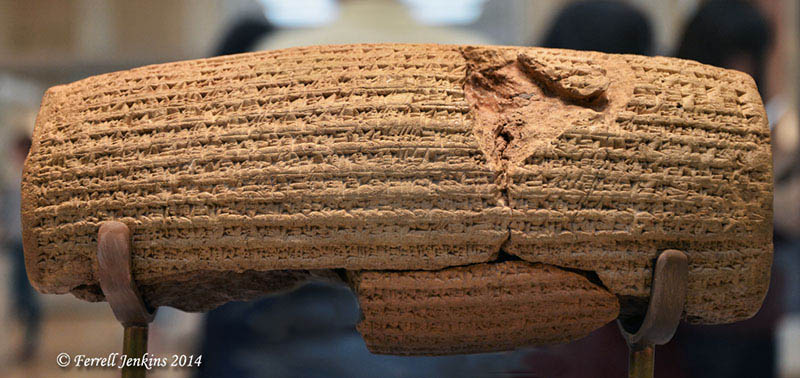
I knew that the Cyrus Cylinder had been part of a traveling exhibit for a few years. When we got near the Ancient Iran Room I told my wife that I would make a quick run to see what was there. I was delighted to see the Cyrus Cylinder prominently displayed.

Cyrus Cylinder in the British Museum. Photo by Ferrell Jenkins.

Cyrus Cylinder in the British Museum. Photo by Ferrell Jenkins.

The Cyrus Cylinder is important to Bible students because Cyrus is the Persian king who allowed the Judeans to return to Jerusalem and rebuild the temple.

Now in the first year of Cyrus king of Persia, that the word of the LORD by the mouth of Jeremiah might be fulfilled, the LORD stirred up the spirit of Cyrus king of Persia, so that he made a proclamation throughout all his kingdom and also put it in writing:  “Thus says Cyrus king of Persia, ‘The LORD, the God of heaven, has given me all the kingdoms of the earth, and he has charged me to build him a house at Jerusalem, which is in Judah. Whoever is among you of all his people, may the LORD his God be with him. Let him go up.’” (2 Chronicles 36:22-23 ESV; cf. Ezra 1:1-4).

Some artifacts that I had expected to see were not on display. Cases are changed and artifacts are moved around. Sometimes there will be a sign saying that the items is on loan, being photographed, or studied. In other instances there is no reference to the removed item. One significant item that I missed seeing in its usual place is the Babylonian Chronicle that gives the date of the Babylonian capture of Jerusalem in 597 B.C. Another missing item was the Standard of Ur.

A BBC report says that the 80,000 artifacts displayed in the British Museum amount to only 1% of the artifacts held by the Museum. On several occasions I have made inquiry about an artifact and been given a time when someone would be available to show it to me.

The British Museum web site provides information about planning a visit, and it also includes an online collection with photos.

Paris and the Louvre

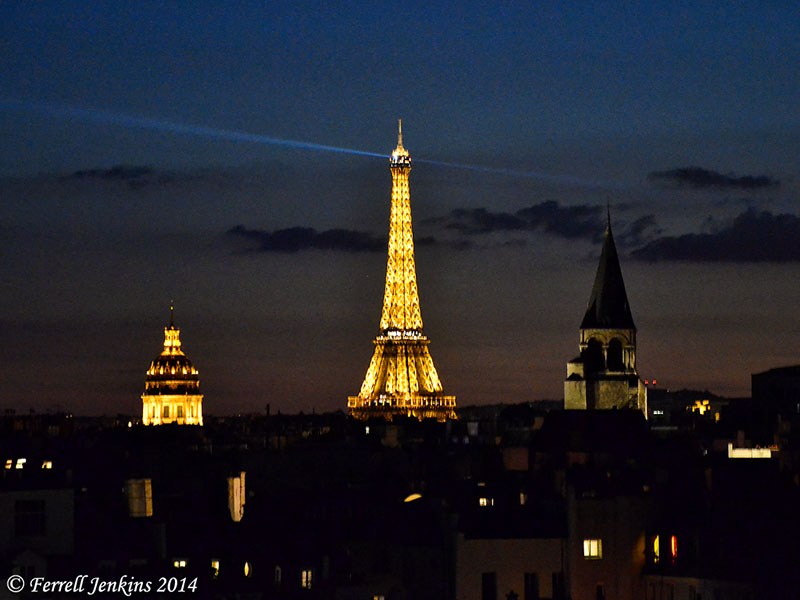
Paris is known as the City of Light. From the roof of our hotel in the St. Michel area we could see some of the significant monuments. This photo, made without tripod, shows the Eiffel Tower. I think the building to the left is the Hotel des Invalides which among other things is the burial site of Napoleon Bonaparte. The building to the right is St. Germain des Prés. In the opposite direction from the hotel we had a nice view of the Cathedral of Notre Dame.

Paris at Night. Photo by Ferrell Jenkins.

Paris at Night. Photo by Ferrell Jenkins.

We were able to spend two of our Paris days in the Louvre. This museum displays excellent collections of archaeological artifacts from Mesopotamia, Persia (Iran), the Levant (Syria, Jordan, some sites of the current West Bank), Greece, and Rome. There is an Egyptian collection, but I do not find it as satisfactory as the other collections.

The Louvre is always closed on Tuesday and certain rooms may be closed on other days, or a half day. Years ago I learned to have two or three days in Paris in order to be able to visit all of the galleries I wanted to see. Yes, we saw the Mona Lisa, too.

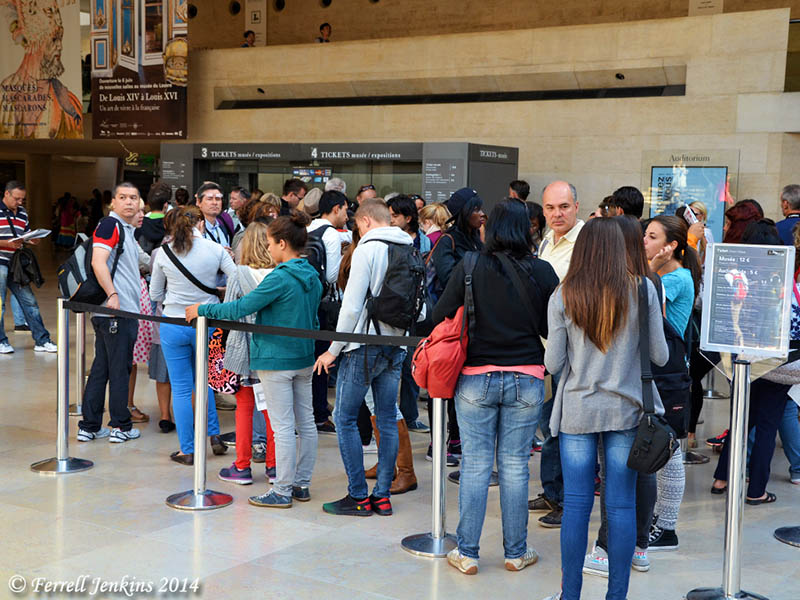
The lines to get tickets for the Louvre are long. The photo below shows two of the six or more places to buy tickets, in addition to automated machines, under the great pyramid. It is best to buy tickets online or from one of the shops such as the Tourism office near the Opera. Tickets are about $20.00 per person for each day of entry. Those with tickets are able to enter through a short line while long lines wait outside just to get into the building to wait in line to buy tickets. The Museum web site explains about advance tickets under “Plan Your Visit” here.

One of the ticket lines at the Louvre. Photo by Ferrell Jenkins.

One of the ticket lines inside the Louvre. Photo by Ferrell Jenkins.

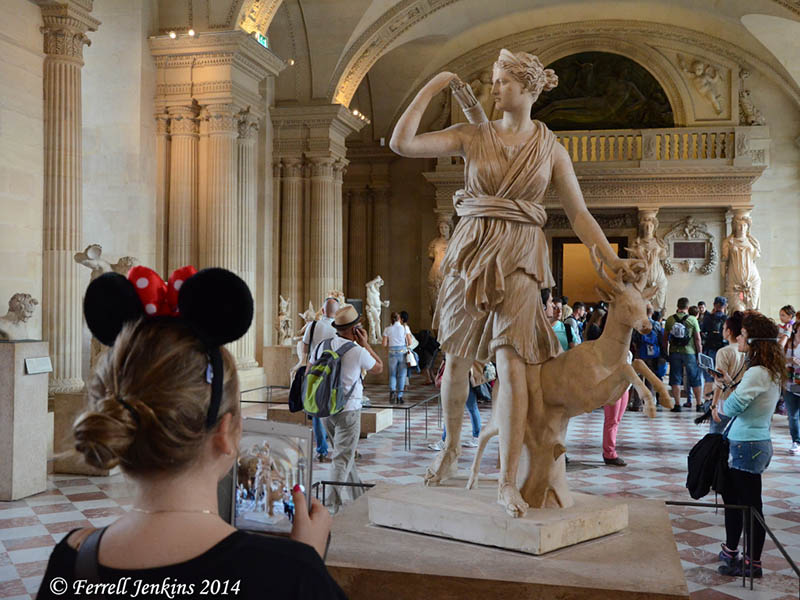
There were large crowds in the Louvre. Some galleries attract guides with tour groups. It’s fun to watch. The guide is nearly running with an umbrella or flag. The tourists are trying to keep up, but snapping their cameras or cell phones at busts they probably will not be able to identify once they are at home. I saw a young lady making a photo of the Roman Diana. I assume she had been at Disneyland Paris a day or two earlier. She did a nice job of composing her photo. When I saw her later and noted that she was a young teenager I was impressed that she wanted to visit the Louvre.

Euro Disney one day; the Louvre the next day. Photo by Ferrell Jenkins.

Euro Disney one day; the Louvre the next day. Photo by Ferrell Jenkins.

I have been to China, but I think most of the citizens have come to Berlin, Paris, and London to visit the museums.

Photography is permitted in the Louvre. I even made a few shots using flash when I thought it would not damage the artifact. None of the guards seemed to object. Items behind glass always create a problem for photographers. By visiting the museum two days I was able to check the first photos to be sure they were sharp. On the second day I was able to remake some of those that were not good.

Choosing a guide; Losing a guide and friend

During my first two or three tours I remember guides asking if I had been “here” before. Actually I have had guides that made up answers to things they did not know, but I did not use them again. Finding and keeping a good guide became an important part of planning a good tour. In the comments to follow I will limit myself to Israel.

My first tour was a few weeks prior to the Six-Day War in 1967. The Old City of Jerusalem and the West Bank were still part of the Hashemite Kingdom of Jordan. We crossed from Jordan into Israel through the Mandelbaum Gate. Today the Grand Court and Olive Tree hotels stand nearby. After the war I continued to use Arab guides, all of whom would designate themselves as Christian (usually Lutheran or Greek Orthodox). My two favorite guides for many years were John and Anise. Both were knowledgeable in the events of Scripture and the places of these events. And both of them were good in handling a group. As these men reached the time of their retirement I had to scurry to locate other guides. One year all of the young Arab guides were called in for training by the Israelis. I had a Jewish young lady who had led only two tours prior to mine. I had to do a lot to help her with the group and the information.

In the mid-80s I began to listen in on other guides when visiting various sites. I looked for someone who was knowledgeable in the Bible and the history of the sites. I wanted someone whose English would be understandable to visitors from the United States. I would introduce myself to guides I though might be good with my groups, and we would exchange cards. I needed someone who knew the land and the book, and who was informed in archaeological matters.

In looking through old group photos I find two guides that begin to dominate. Eliemelech Ben Meir was my guide in 1994, but I see Yehuda Guy in some of the photos as late as 1998. I liked both men, and we worked together well I thought. They were both willing for me to make additional comments and explanations for the benefit of the group.

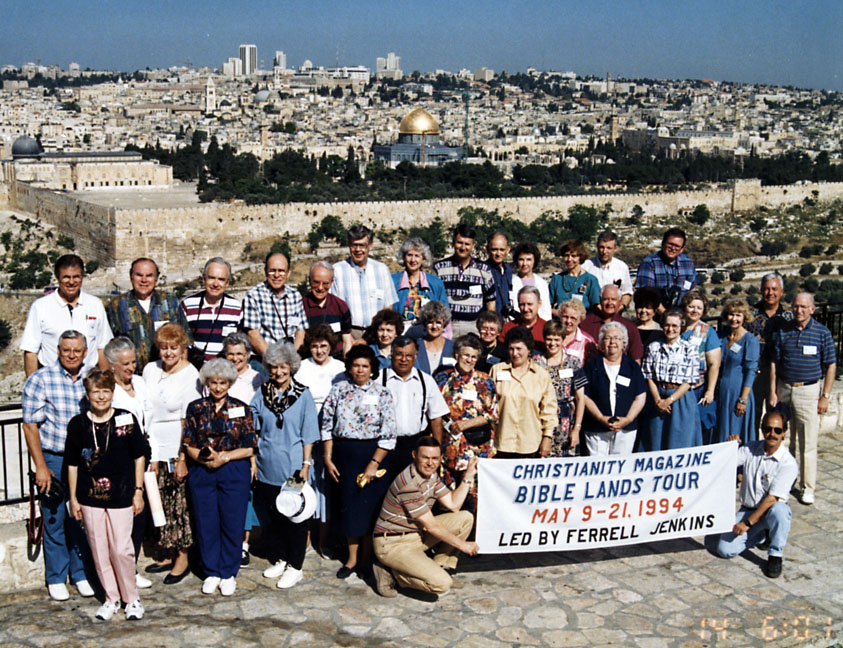
In looking through old group photos, the first photo I find with Elie Ben Meir is a tour twenty years ago in May, 1994. Elie is helping me hold the tour banner. I see that Yehuda continued to guide some groups for a few years. Some years I had two tours to Israel. Eventually it was also Elie guiding some tours. Elie told me that he was introduced to me by my Arab guide Anise whose health was failing.
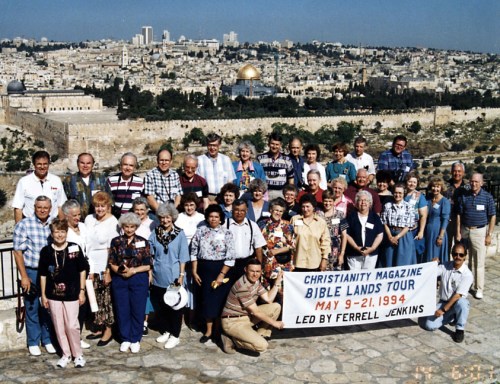
Ferrell Jenkins 1994 group with Elie Ben Meir.

1994 Group with Elie Ben Meir.

Over the past twenty year period Elie and I became good friends. In addition to the group tours I have made several personal study tours to Israel. Almost always I would be in touch with Elie. He brought his wife Maxine and the young daughters Adi and Danya to have dinner with the group in 2000. From year to year I would see them grow into beautiful young ladies. (I have a few digital photos made on a Sony camera that used a 3½ inch floppy drive, but the quality is too poor to use.)

Elie was not what we might call a “religious” Jew. He told me that on his first visit to Israel he stayed at a “religious kibbutz,” but by the time that stay ended he decided he would not be “religious.” Elie and Maxine wanted their girls to learn the Jewish customs, but bacon from the Armenian butcher would not be uncommon on a weekend morning. Some of the members of my groups would ask me how could Elie know the Bible so well and not be a Christian.

Elie’s family lived mostly in the Cleveland, Ohio, area. When he visited his mother or sister he would give me a call and talk a while. During the mid-2000s I told Elie about my mother who was suffering from Alzheimer’s Disease. Then the time came when Elie wanted to talk with me about a similar condition his mother was enduring. His trips to the USA became more frequent to assist his siblings in the care for her. I ferried items that Elie or his family needed from the USA to Israel − some special hair-care product for the girls or some beef jerky for the family. Even when I stayed over to visit sites I had not yet been to, Elie and one or both girls would come to the hotel and eat with me.

Elie enjoyed Bluegrass Music. Sometimes, as we drove away from the Tel Aviv airport at the beginning of a new tour he would ask, “Does anyone in the group play Bluegrass?” He kept his guitar in the storage area under the bus so he could pick a little in the evening at the hotel.

On Elie’s last trip to the USA he went to Cleveland to visit family. He left me a call on May 7, but I was already in Turkey by that time and did not receive the call until May 30. On the same day he sent me an Email with this heading and message.

Adi Meyerson, bass | Spring ’14 Ensemble & Recital Series | New School Jazz – New York City – The New School.
Hey Ferrell!
In case you happen to be in NY City!
Hope you and Elizabeth are well!
Sincerely,
Elie
http://events.newschool.edu/event/adi_meyerson_bass_spring_14_ensemble_recital_series_new_school_jazz#.U2rftO29Kc2

Elie was really on his way to NYC to hear his daughter perform. He had sent me other clippings about her.

By May 14 Barry Britnell was forwarding Emails that he received from Maxine because Elie was to be Barry’s guide in early June. She wrote,

There has been a tragedy and Elie had a serious stroke on Sunday night and is now in hospital in Cleveland in critical condition.

I was also receiving updates from Susan who was in touch with Elie’s sister Lynne in Cleveland. Elie had been having headaches for a few days when Lynne took him to the hospital. At some point he had a stroke. By May 18 the outlook did not seem good. Maxine sent Barry, John Barnett (I have not met John, but Elie always spoke highly of him), and me the following Email on May 24th.

So sorry to have to bring you the sad news that Elie passed away on Friday night 11:30pm. He died peacefully with all his siblings, daughters and myself by his side. Much love to all
Maxine

The complete obituary from the Cleveland Plain Dealer reads as follows:

MEYERSON ELIE MELECH BEN MEIR (MALCOLM MEYERSON), beloved husband of Maxine (nee Rabinowitz). Loving father of Adi and Danya. Dear brother of Jay (Jacquie) Meyerson, David (Honey) Meir-Levi, Lynne (Jacob) Meckler. Cherished son of Evelynne and the late Bernard Meyerson. Graveside services will be held Sunday, May 25 at 11:30 a.m. at the Mt. Sinai Cemetery, (SOM Center and White Rd.), Mayfield Village, OH. Family will receive friends at the residence of Jacquie and Aaron Meyerson,… SUNDAY FOLLOWING SERVICES UNTIL 8 P.M.

Elie had a number of qualities that were admirable. He was always ready to recommend the businesses of Moslems and Christians that he thought were honorable people. He warned his groups about those he thought were less than honorable. He always insisted on Fawzy (of Bethany) as the driver for my tours. Fawzy is an excellent driver whom I have known since the days of working with Anise. Elie knew woodworking. He spent time at that during those hard years of 2001-2005 when practically no tourists visited Israel. He did the electrical work for Yigael Shiloh in the City of David excavation. Elie had on his phone the personal numbers of acquaintances such as Sam Wolff (Gezer) and Eilat Mazar (City of David).

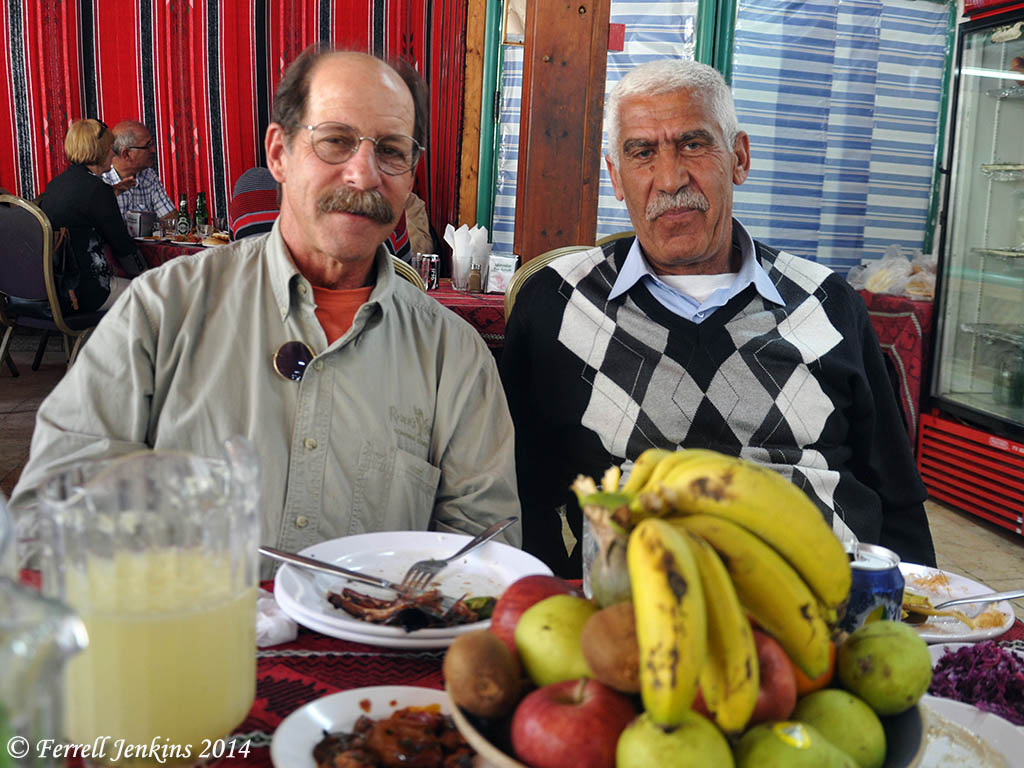
On my tour in 2013, Elie and Fawzy invited me to eat with them at Jericho. Here is the photo I made of them. You can see that Elie was a young man. I remember talking with him about his age and retirement, but I will not try to depend on my memory for that.
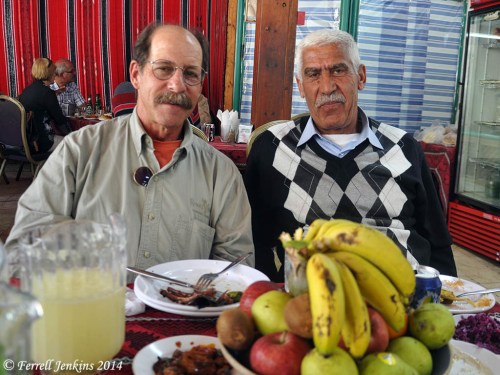
Elie and Fawzy in Jericho. Photo by Ferrell Jenkins.

Elie and Fawzy in Jericho. Photo by Ferrell Jenkins.

I extend my deepest sympathy to Maxine, Adi, and Danya, whom I have met, and to other family members whom I have not met. I think the hundreds of persons who have spent about 10 days listening to Elie help turn the Bible places from black and white to color, one of his favorite expressions, will share my sentiment.



Visualizing Isaiah 40: He will tend His flock like a shepherd

The LORD comforts His people. Isaiah 40 is a beautiful chapter showing the care the LORD has for His people, even when they go astray.

He will tend his flock like a shepherd; he will gather the lambs in his arms; he will carry them in his bosom, and gently lead those that are with young. (Isaiah 40:11 ESV)

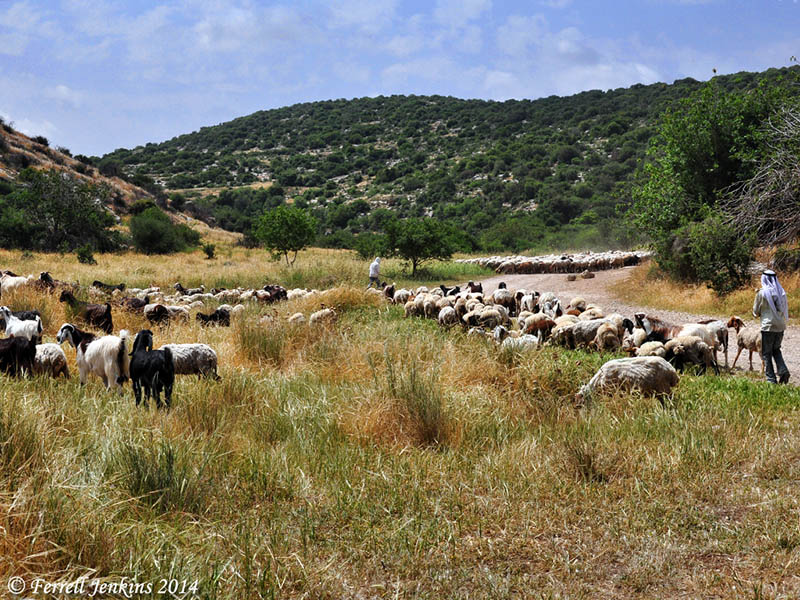
The photo below is just one of hundreds that I have made of shepherds with their sheep. Notice that there are two separate flocks and two shepherds.

Shepherds tending their flocks at Socoh. Photo by Ferrell Jenkins.

Shepherds tending their flocks at Socoh. Photo by Ferrell Jenkins.

Socoh is identified with the tel on the left of the photo. It is located on the south side of the Elah valley. Socoh was a city of Judah where the Philistines gathered to fight with Saul and the men of Israel (1 Samuel 17).

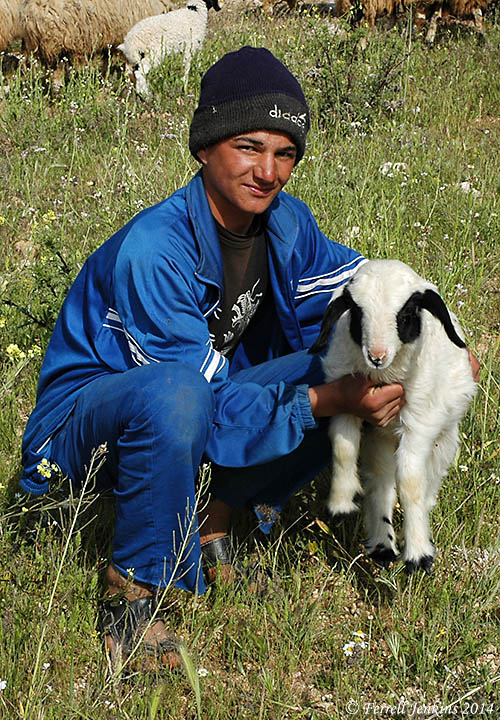
Shepherds frequently take the lambs in their arms. The Photo below was made near Heshbon in Jordan.

A shepherd and a lamb. Photo by Ferrell Jenkins.

A shepherd and a lamb. Photo by Ferrell Jenkins.

Visualizing Isaiah 35: the desert shall rejoice

Isaiah prophesies the return of the redeemed to Zion, a promise that would be fulfilled with the return from the Babylonian exile. The illustration is one that would be vivid to those who lived on the ridge above the wilderness of Judah.

The wilderness and the dry land shall be glad; the desert shall rejoice and blossom like the crocus; it shall blossom abundantly and rejoice with joy and singing. The glory of Lebanon shall be given to it, the majesty of Carmel and Sharon. They shall see the glory of the LORD, the majesty of our God. (Isaiah 35:1-2 ESV)

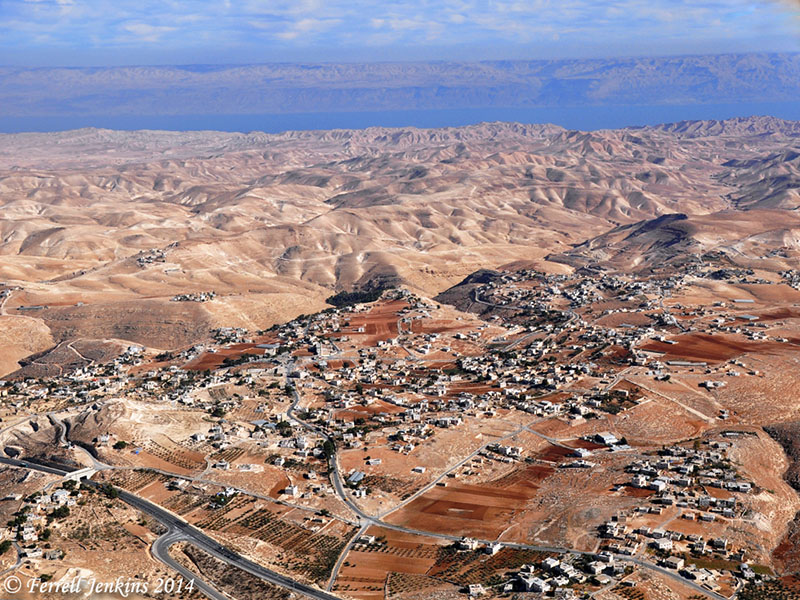
Our aerial view  was made toward the east from a location a few miles south of Jerusalem. In the distance you will see the Dead Sea and the Transjordan plateau. At this point it is the Biblical land of Moab.

Aerial view east across the wilderness of Judah and the Dead Sea to the Transjordan Plateau. Photo by Ferrell Jenkins.

Aerial view east across the wilderness of Judah and the Dead Sea to the Transjordan Plateau. Photo by Ferrell Jenkins.

For illustrations of the streams in the desert, see here (Isaiah 35:5-7).

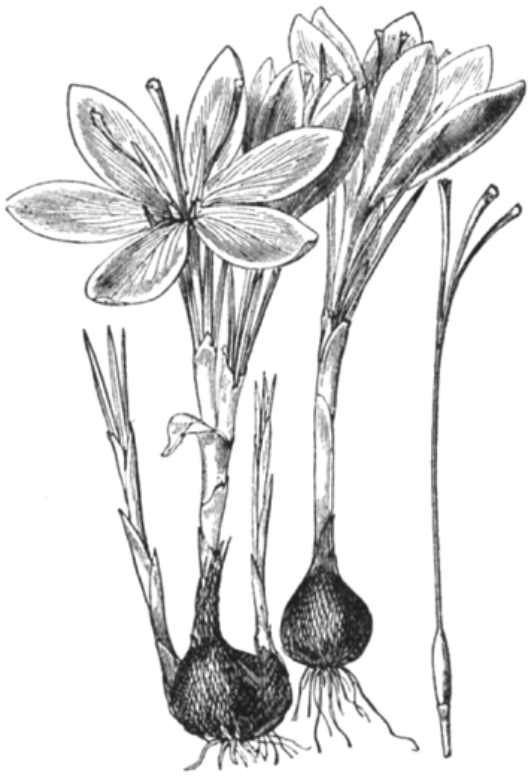
Saffron Crocus. The Illustrated Bible Treasury.

Saffron Crocus. The Illustrated Bible Treasury.

When I first began to travel, during the early days of the State of Israel, it was rather common for tour operators to include a phrase such as “See the desert blossom as a rose” in the tour brochure. The word rose came from the King James Version of Isaiah 35:1. The Hebrew term here is chabatstseleth. BDB defines it as a “meadow-saffron or crocus.”

Identifying plants and animals of Bible times is not easy. One common mistake is to find a plant of a certain name in our local language and identify it with one we read about in the Bible.

The point is rather simple. Places that were dry and barren would become watered and beautiful with the return of the redeemed.