Category Archives: Israel

Rainbow over the Dead Sea

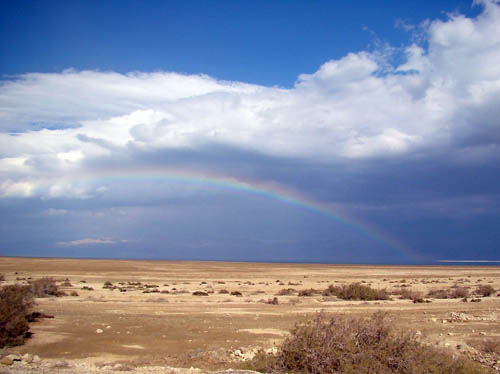
My friend Leon Mauldin is in Israel. He sent me a nice photo in which he captured a rainbow over the Dead Sea. I publish it here with his permission. This view looks east toward the Transjordan tableland. You can’t see the mountains because of the heavy clouds. To the far right of the photo you will see a glimmer of light on the surface of the Dead Sea.

Rainbow over the Dead Sea. Photo by Leon Mauldin.

Rainbow over the Dead Sea. Photo by Leon Mauldin.

The land in the foreground of the photo was covered by the water of the Dead Sea just forty years ago. With less water flowing into the Dead Sea the level has been declining over the past few decades.

The name Dead Sea is not used in the Bible. Rather, this body of water is called the Sea of the Arabah, the Salt Sea, or the Eastern Sea. The Bible describes the territory of the Transjordan tribes, Reuben and Gad, this way:

The Arabah and the Jordan River were also a border, from the sea of Chinnereth to the sea of the Arabah (that is, the Salt Sea), beneath the watershed of Pisgah to the east. (Deuteronomy 3:17).

Josepus called this body of water Lake Asphaltitis.

Royal seals from the time of Hezekiah

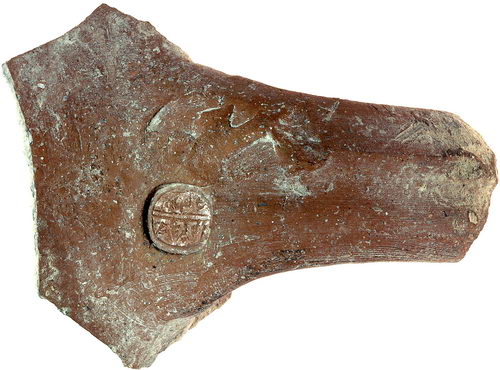
The Israel Antiquities Authority has announced the discovery of several impressive artifacts from Umm Tuba, in the southern hill of Jerusalem. These items include royal seal impressions from the time of Hezekiah, king of Judah (c. 716-687 BC; Schultz, ISBE).

A large building that dates to the time of the First and Second Temples, in which there was an amazing wealth of inscriptions, was discovered in a salvage excavation conducted by Zubair Adawi, on behalf of the Israel Antiquities Authority, in the village of Umm Tuba in southern Jerusalem (between Zur Bahar and the Har Homa quarter), prior to construction work by a private contractor.

Considering the limited area of the excavation and the rural nature of the structure that was revealed, the excavators were surprised to discover in it so many royal seal impressions that date to the reign of Hezekiah, King of Judah (end of the eighth century BCE). Four “LMLK” type impressions were discovered on handles of large jars that were used to store wine and oil in royal administrative centers. These were found together with the seal impressions of two high ranking officials named Ahimelekh ben Amadyahu and Yehokhil ben Shahar, who served in the kingdom’s government. The Yehokhil seal was stamped on one of the LMLK impressions before the jar was fired in a kiln and this is a very rare instance in which two such impressions appear together on a single handle.

Royal seal from the time of Hezekiah. Photo: Mariana Saltzberger, IAA.

Royal seal from the time of Hezekiah. Photo: Mariana Saltzberger, IAA.

The site of this discovery has been identified as Biblical Netofa (English Netophah). Two of David’s “mighty men” (or warriors) were from Netophah.

Zalmon the Ahohite, Maharai the Netophathite, Heleb the son of Baanah the Netophathite, Ittai the son of Ribai of Gibeah of the sons of Benjamin (2 Samuel 23:28-29).

The full press release may be seen at the IAA site at the bottom of the page.  A ZIP file of the seven pictures is available here for those interested.

HT: Joseph Lauer and several bloggers.

The Vulture

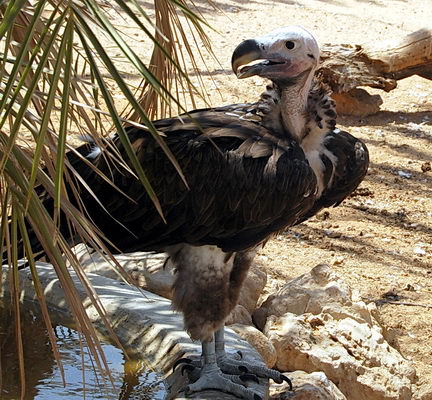
Vultures were among the unclean animals for the Israelites (Leviticus 11:13, 18; Deuteronomy 14:12, 17). This means that Israelites were not permitted to eat vultures. In some of the references both eagles and vultures are mentioned.

Vulture at the Hai-Bar Reserve in Israel. Photo by Ferrell Jenkins.

Vulture at the Hai-Bar Reserve in Israel. Photo by Ferrell Jenkins.

In the Greek New Testament the word aetos is translated both eagle (Revelation 8:13; 12:14) and vulture (Matthew 24:28; Luke 17:37).

One of the most memorable comments about the vulture was made by Jesus in His discussion of the destruction of Jerusalem. He described the condition of the Jewish state at the time when the Roman armies invaded the country.

Wherever the corpse is, there the vultures will gather. (Matthew 24:28 ESV)

Not a pretty picture. And a clear warning for all.

A meditation for Sunday

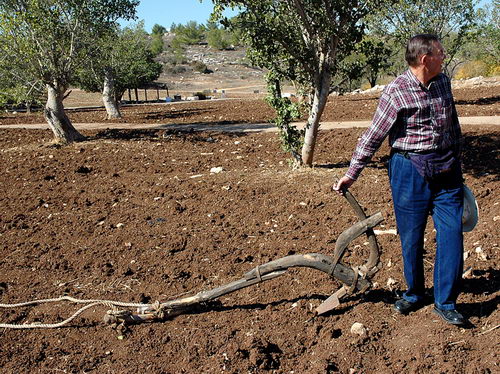
As they were going along the road, someone said to him, “I will follow you wherever you go.” And Jesus said to him, “Foxes have holes, and birds of the air have nests, but the Son of Man has nowhere to lay his head.” To another he said, “Follow me.” But he said, “Lord, let me first go and bury my father.” And Jesus said to him, “Leave the dead to bury their own dead. But as for you, go and proclaim the kingdom of God.” Yet another said, “I will follow you, Lord, but let me first say farewell to those at my home.” Jesus said to him, “No one who puts his hand to the plow and looks back is fit for the kingdom of God.” (Luke 9:57-62)

Illustrating a parable at Neot Kedumim in Israel. Photo by Leon Mauldin.

Illustrating a parable at Neot Kedumim in Israel. Photo by Leon Mauldin.

Antonia Fortress discussion

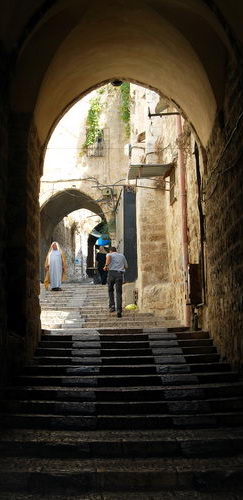
A street in the Moslem Quarter of Jerusalem. Photo by F. Jenkins.

A street in the Moslem Quarter of Jerusalem. Photo by F. Jenkins.

Todd Bolen calls attention to an article by Ehud Netzer in the curent Biblical Archaeology Review on the location of the Antonia Fortress. Read the post here.

Leen Ritmeyer posted a response to Netzer and included some of his great diagrams here.

With Todd’s photo and Leen’s diagrams you will have some great material to help you understand the location of the Antonia.

The Antonia may not be the place where Jesus appeared before Pontius Pilate, as we once thought, but it is the place where Paul stayed under the custody of the Romans before his transfer to Caesarea Maritima.

English versions refer to the building as the barracks (Acts 21:37). Paul’s speech on the stairs was from the steps leading from the temple precinct to the Antonia.

Our photo above was made in the Moslem Quarter of Jerusalem near the site of the Antonia.  I think the street is Bab Hutta. These little side streets are always so intriguing.

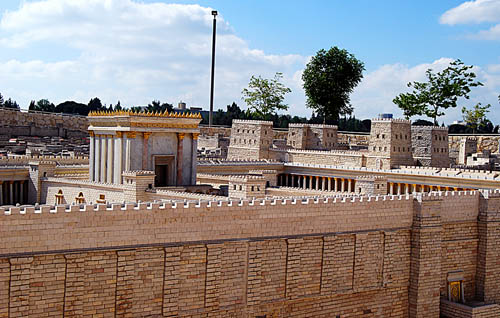
The photo below shows the Temple Mount in the Second Temple model at the Israel Museum. The Antonia is the large building on the right, the northwest corner of the Temple Mount.

The Temple Mount and the Antonia Fortress. Photo by F. Jenkins.

The Temple Mount and the Antonia Fortress. Photo by F. Jenkins.

Thanks for following our tours

Thanks to your interest we noticed an increase in readers during our trip to Egypt. We appreciate your interest in the subjects we write about.

A blog is different from a web page. On a web page, such as the Biblical Studies Info Page, there are many categories and pages available. When you check the blog you see the last entry at the top of the page. You must click on the Archives listing, or use the Search Box to locate earlier posts.

A list of some other trips we have covered on this blog might be helpful to you (from the most recent to the earliest).

  • Egyptian Adventure (begin January 16, 2009).
  • Israel (personal study) trip (begin August 20, 2008).
  • Steps of Paul and John (Greece and Turkey) (May, 2008).
  • Bible Land Tour of Israel and Jordan (April, 2008).
  • Scotland Highlights (September 2007).
  • Biblical & Historical Sites in Turkey (May and June, 2007).

The purpose of these trips is educational. We seek to relate the history and the land to the biblical account.

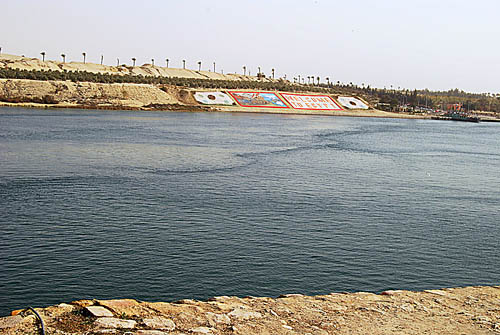
Suez Canal near Ismailia. Photo by Ferrell Jenkins.

Suez Canal near Ismailia. Photo by Ferrell Jenkins.

This view of the Suez Canal at Ismailia looks from the east to the west. The ancient Egyptians dug numerous canals in the general area. This modern canal was officially opened November 17, 1869.

We would like for you to continue to check the blog several times a week as we write about other matters of interest to Bible students.

The Story of Sinuhe – an Egyptian traveler

The earliest description of Canaan comes from an Egyptian literary text. In The Story of Sinuhe (see-NUU-hay) written in the 20th century B.C., a traveler tells of his pleasant stay in northern Canaan (possibly the Beka Valley of Lebanon). He describes the land as follows:

Figs were in it, and grapes. It had more wine than water. Plentiful was its honey, abundant its olives. Every (kind of) fruit was on its trees. Barley was there, and emmer. There was no limit to any (kind of) cattle. (qtd. in Pritchard, Ancient Near Eastern Texts, 19)

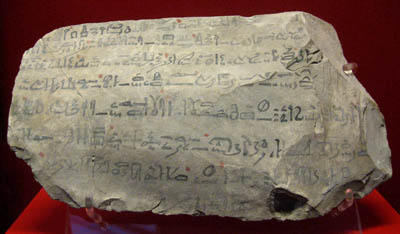
This description reminds one of the promise God made to the Israelites to bring them into a land flowing with milk and honey (Exodus 3:8). A copy of The Story of Sinuhe written on stone is on display in the Ashmolean Museum, Oxford, England. The stone below, now in the British Museum, contains the final stanza of the Story or Tale.

Final stanza of the Story of Sinuhe in the British Museum. Photo by Ferrell Jenkins.

The Tale of Sinuhe in the British Museum. Photo by Ferrell Jenkins.

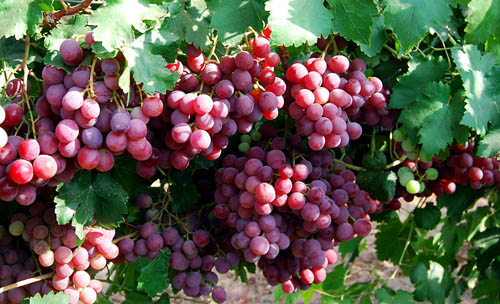
The photo of grapes from Lachish reminds us of the abundance of the land through which Sinuhe traveled.

Grapes near Lachish. Photo by Ferrell Jenkins.

Grapes on the vine near Lachish. Photo by Ferrell Jenkins.

Comment about Lachish

I note that we have an interesting comment on the post about Lachish on July Fourth. You might enjoy reading it.

Favorite photo of 2008?

Elizabeth and I were driving from lunch today when I asked her what she thought would be my favorite photo of 2008. That excludes the grandson, of course. After some discussion we both agreed that it was a difficult decision. She suggested the En Gedi waterfall. Good suggestion. We posted one of those photos here. I debated about posting a different view, but then decided to go with another choice.

Early in the year I posted a 1984 photo of the Jordan River waterfall here. In April, while my group was eating lunch at Banias, the site of Caesarea Philippi, I broke away with David Padfield to visit the nearby Jordan Waterfall. The fall is also known as the Banias Waterfall. In order for this photo be understood it might be good if I showed you a photo of the surrounding terrain.

The photo below was made from above the waterfall. The waterfall is in the depression to the left of the rocky area; you are seeing the top of large trees. Caesarea Philippi is between the two closest hills. The Banias River begins as a spring there and soon cuts its way into the surrounding earth and rock. It is not really the Jordan until it joins with other sources, including the Dan River.
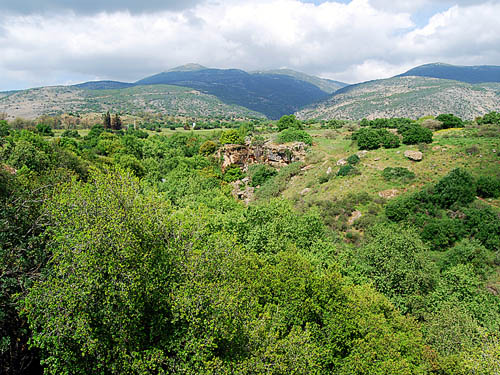
Vicinity of the Jordan River Waterfall. Photo by Ferrell Jenkins.

Vicinity of the Jordan River Waterfall. Photo by Ferrell Jenkins.

Once we make our way down into the depression among the trees we see the beautiful waterfall.
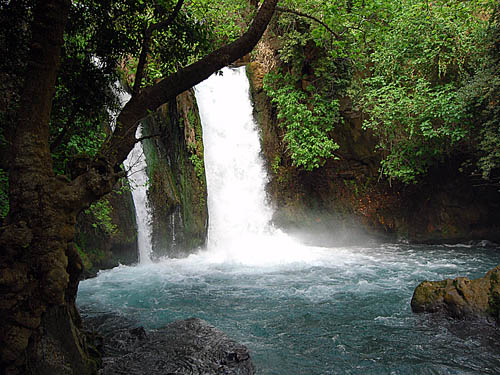
Jordan River Waterfall. Photo by Ferrell Jenkins.

Jordan River Waterfall. Photo by Ferrell Jenkins.

On my first trip in 1967 it was impossible to visit either the source of the river or the waterfall because it was within Syria. After Israel captured the territory, it became possible to make the visit.

Was this absolutely my favorite photo of 2008? Probably not. I was blessed to visit Israel (twice), Jordan, Turkey, Greece and the Greek islands. There were too many favorites to make a choice.

Matthew uses the term district or region to describe the area Jesus visited with His disciples (Matthew 16:13). The Kings James Version coasts is misleading. Mark’s term is villages (Mark 8:27). It was not far from here that Jesus was confessed as the Christ by Peter.

Jesus went out, along with His disciples, to the villages of Caesarea Philippi; and on the way He questioned His disciples, saying to them, “Who do people say that I am?”  They told Him, saying, “John the Baptist; and others say Elijah; but others, one of the prophets.” And He continued by questioning them, “But who do you say that I am?” Peter answered and said to Him, “You are the Christ.” (Mark 8:27-29 NASB; also read Matthew’s account)

Top archaeological discoveries of 2008

Todd Bolen has posted his “Top 8 of 2008: Archaeological Discoveries Related to the Bible” at the BiblePlaces Blog. Take a look.