Category Archives: Egypt

Some Museums in Turkey

My Ancient Crossroads Tour of Biblical and Historical Turkey is compete. Yesterday most of the tour members returned home. A few had other plans of travel before returning.

There are some wonderful museums in Turkey, but many of them are undergoing restoration at this time.

We missed seeing the main section of the Museum of Anatolian Civilizations in Ankara due to restoration. A nice,  small section containing mostly classical materials was open, but the great collection of Hittite materials (our reason for going there) was closed. According to an article in the Harriyet Daily News it reopened last Friday.

The Archaeological Museum in Antakya (Antioch of Syria, Acts 11, 13) was almost bare. Only a few of the lesser quality mosaics were on the walls. A new museum will open soon. I had told the group that we would see some good Hittite materials there, but they had already been moved. Incidentally, the Church of St. Peter and the Simon Stylites Monastery were also closed for renovation.

We did better at the fabulous museum in Antalya (Attalia of Acts 14:25). The Roman period statuary from Perga in Pamphylia (Acts 13:13-14; 14:25) is housed there.

In Istanbul we were able to visit the Ancient Orient section of the Archaeological Museum. The museum containing material from the classical world was closed. An excellent selection of materials was housed in a small area of the Museum.  The third floor, where artifacts from Palestine are housed was closed. Our appeal for entry failed.  There is where some very famous pieces are housed − the Siloam Tunnel inscription, the Gezer Calendar, the Herodian Temple inscription forbidding gentiles from entering the Temple, et al.

The Ancient Orient building houses a large number of bulls, dragons, and oxen from the procession street of ancient Babylon. I think it is second only to the Pergamum Museum in Berlin. There are excellent Hittite materials, including the oldest treaty between nations. It is the treaty between the Hittites and Pharaoh Ramses of Egypt after the battle of Kadesh on the Orontes. There are several pieces from the Assyrians, and a clay cylinder from the time of Nebuchadnezzar.

Here is a picture of one of the basalt Hittite column bases from Sinjerli. It is a double sphinx, dating to the 8th century B.C., that came from the entrance to Palace III.
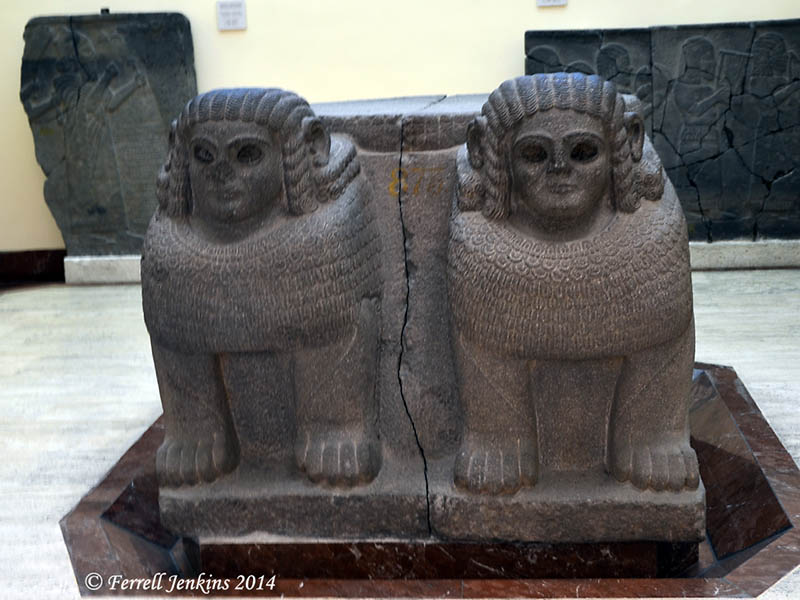
Hittite Column Base from Sinjerli. Photo by Ferrell Jenkins.

Front view of Hittite column base from Sinjerli. Photo by Ferrell Jenkins.

Below is the side view of this column base. Note that the figure of a lion shows a human head and wings of a bird. This provides a good illustration for the apocalyptic imagery in Daniel, Ezekiel, Zechariah, and Revelation.
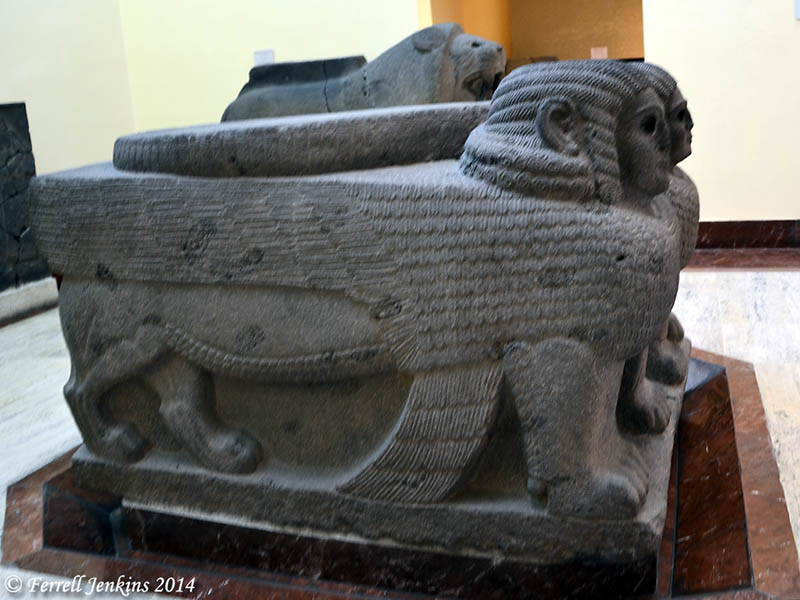
Side view of Hittite Column Base from Sinjerli. Photo by Ferrell Jenkins.

Side view of Hittite Column Base from Sinjerli. Photo by Ferrell Jenkins.

These are the Hittites with whom the ancient Israelites had dealings. Solomon imported horses and chariots from Egypt and Kue and exported them to the Hittites (1 Kings 10:29). See 2 Kings 7:6 for another reference to these people in the days of the prophet Elisha.

All things considered, maybe it didn’t turn out so bad after all.
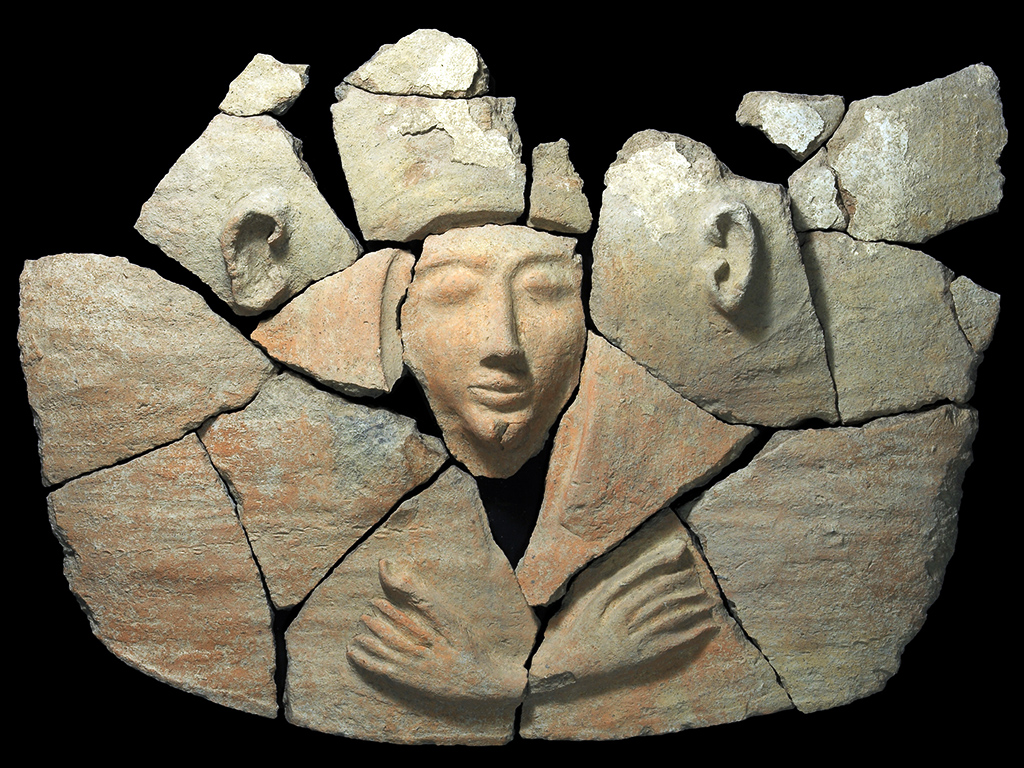
Wealthy Canaanite coffin discovered in Jezreel Valley

The Israel Antiquities Authority announced today the discovery of a “3,300 year old coffin” at Tel Shadud on the north side of the Jezreel Valley.

Part of a burial site dating to the Late Bronze Age (thirteenth century BCE) was exposed in an excavation at the foot of Tel Shadud. According to the excavation directors, Dr. Edwin van den Brink, Dan Kirzner and Dr. Ron Be’eri of the Israel Antiquities Authority, “During the excavation we discovered a unique and rare find: a cylindrical clay coffin with an anthropoidal lid (a cover fashioned in the image of a person) surrounded by a variety of pottery consisting mainly of storage vessels for food, tableware, cultic vessels and animal bones. As was the custom, it seems these were used as offerings for the gods, and were also meant to provide the dead with sustenance in the afterlife.” The skeleton of an adult was found inside the clay coffin and next to it were buried pottery, a bronze dagger, bronze bowl and hammered pieces of bronze. “Since the vessels interred with the individual were produced locally”, the researchers say, “We assume the deceased was an official of Canaanite origin who was engaged in the service of the Egyptian government”. Another possibility is that the coffin belonged to a wealthy individual who imitated Egyptian funerary customs. The researchers add that so far only several anthropoidal coffins have been uncovered in the country. The last ones discovered were found at Deir el-Balah some fifty years ago. According to the archaeologists, “An ordinary person could not afford the purchase of such a coffin. It is obvious the deceased was a member of the local elite”.

Coffin lid from Tel Shadud. Photo: Clara Amit, courtesy of the Israel Antiquities Authority.

Anthropoid coffin lid from Tel Shadud. Photograph: Clara Amit, courtesy of the Israel Antiquities Authority.

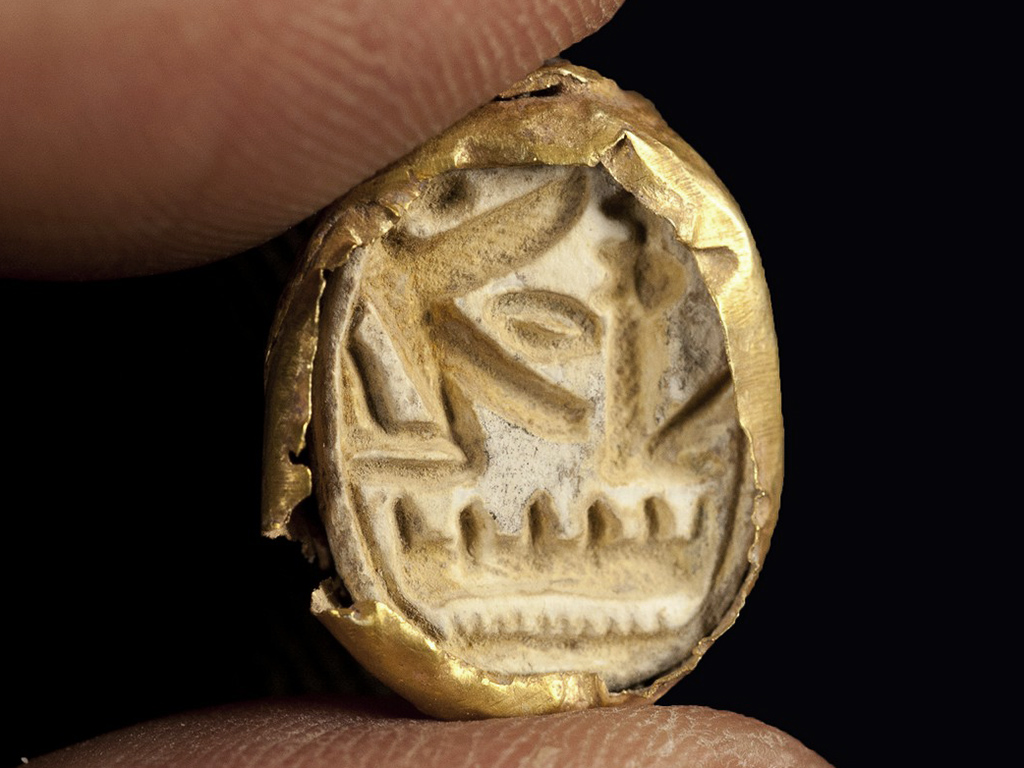
The graves of two men and two women who may have been members of his family were also located near the coffin. The discovery of the coffin at Tel Shadud is evidence of Egyptian control of the Jezreel Valley in the Late Bronze Age (thirteenth century BCE). During the period when the pharaohs governed the country, Egyptian culture greatly influenced the local Canaanite upper class. Signs of Egyptian influence are occasionally discovered in different regions and this time they were revealed at Tel Shadud and in the special tomb of the wealthy Canaanite. A rare artifact that was found next to the skeleton is an Egyptian scarab seal, encased in gold and affixed to a ring. The scarab was used to seal documents and objects. The name of the crown of Pharaoh Seti I, who ruled ancient Egypt in the thirteenth century BCE, appears on the seal. Seti I was the father of Ramses II, identified by some scholars as the pharaoh mentioned in the biblical story of the Israelites’ exodus from Egypt.§ Already in the first year of his reign (1294 BCE) a revolt broke out against Seti I in the Bet Shean Valley. Seti conquered that region and established Egyptian rule in Canaan. Seti’s name on the seal symbolizes power and protection, or the strength of the god Ra – the Sun God – one of the most important deities in the Egyptian pantheon. The winged Uraeus (cobra), protector of the pharaoh’s name or of the sovereign himself, is clearly visible on the seal. The reference to the pharaoh Seti on the scarab found in the coffin aided the archaeologists in dating the time of the burial to the thirteenth century BCE – similar to the burials that were exposed at Deir el-Balah and Bet She‘an, which were Egyptian administrative centers.

§ Other scholars date the exodus from Egypt about two centuries earlier than Ramses II.

Gold Scarab of Egyptian Pharaoh Seti I. Photograph: Clara Amit, courtesy of the Israel Antiquities Authority.

Gold Scarab of Egyptian Pharaoh Seti I. Photograph: Clara Amit, courtesy of the Israel Antiquities Authority.

Tel Shadud, often called Tel Sarid, is identified with the Biblical site of Sarid included within the territory of Zebulun.

The third lot came up for the people of Zebulun, according to their clans. And the territory of their inheritance reached as far as Sarid. Then their boundary goes up westward and on to Mareal and touches Dabbesheth, then the brook that is east of Jokneam. From Sarid it goes in the other direction eastward toward the sunrise to the boundary of Chisloth-tabor. From there it goes to Daberath, then up to Japhia. (Joshua 19:10-12 ESV)

The offspring of Abraham were given the land of the Canaanite.

You found his heart faithful before you, and made with him the covenant to give to his offspring the land of the Canaanite, the Hittite, the Amorite, the Perizzite, the Jebusite, and the Girgashite. And you have kept your promise, for you are righteous. (Nehemiah 9:8 ESV)

The IAA news release, with more photos, is currently available here. See the report in Arutz Sheva, the Israel National News, here.

HT: Joseph Lauer, traveling in Israel.


Visualizing Isaiah 32: like the shade of a great rock in a weary land

Isaiah again looks beyond the exile and the return to the time of the Messiah. In the kingdom of righteousness every person who wishes will be able to find a hiding place or shelter. This speaks of the spiritual blessings available.

Behold, a king will reign in righteousness, and princes will rule in justice. Each will be like a hiding place from the wind, a shelter from the storm, like streams of water in a dry place, like the shade of a great rock in a weary land. (Isaiah 32:1-2 ESV)

We have shown several instances of streams in the desert (begin here). Our photo below shows a “great rock” in the weary land of the wilderness (or desert) of Paran. These gigantic sandstone pillars are located in the Timna Valley about 15 miles north of Eilat. Ruins of an Egyptian temple and evidence of copper mining have been found in the area. I can tell you from personal experience that one feels very small standing among these vast pillars.

Solomon's Pillars at Timna in the desert of Paran. Photo by Ferrell Jenkins.

Solomon’s Pillars at Timna in the desert of Paran. Photo by Ferrell Jenkins.

The rest and protection provided between these pillars reminds us of the wonderful Christian hymn “Rock of Ages.”

Visualizing Isaiah 31: Egypt relies on horses and chariots

A woe is announced on those who go to Egypt for help in the form of horses and chariots.

Woe to those who go down to Egypt for help and rely on horses, who trust in chariots because they are many and in horsemen because they are very strong, but do not look to the Holy One of Israel or consult the LORD! (Isaiah 31:1 ESV)

The prophet explains that this would be a mistake for Israel.

The Egyptians are man, and not God, and their horses are flesh, and not spirit. When the LORD stretches out his hand, the helper will stumble, and he who is helped will fall, and they will all perish together. (Isaiah 31:3 ESV)

The temple walls throughout Egypt are replete with reliefs of the Pharaohs riding in their chariots pulled by powerful horses. Their enemies are portrayed as tiny and trodden down. The photo below is on one of the large interior walls of the Mortuary Temple of Ramses III at Medinet Habu in the Valley of the Kings at Luxor. Various conquered enemies are portrayed on the walls of the temple.

Relief from the mortuary temple of Ramses III. Photo by Ferrell Jenkins.

Relief from the mortuary temple of Ramses III. Photo by Ferrell Jenkins.

Solomon had made this mistake earlier, but Israel failed to learn from it (1 Kings 10:26). Moses prohibited the kings of Israel from returning to Egypt to acquire horses.

“Moreover, he shall not multiply horses for himself, nor shall he cause the people to return to Egypt to multiply horses, since the LORD has said to you, ‘You shall never again return that way.’(Deuteronomy 17:16 NAU)


Visualizing Isaiah 19: “the idols of Egypt will tremble”

Isaiah 19 is a continuation of the announcement of the LORD’S judgment upon Egypt.

An oracle concerning Egypt. Behold, the LORD is riding on a swift cloud and comes to Egypt; and the idols of Egypt will tremble at his presence, and the heart of the Egyptians will melt within them. (Isaiah 19:1 ESV)

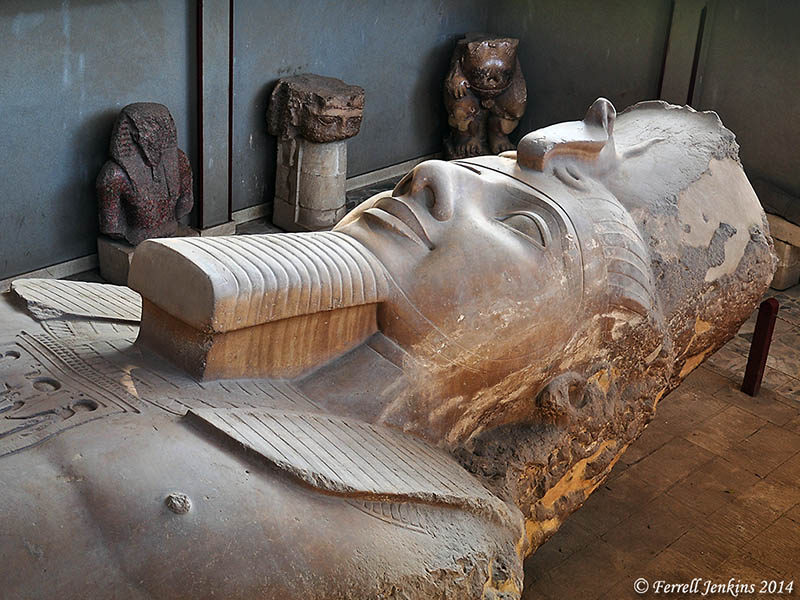
All over Egypt we see evidence of the ancient fallen power. This fallen statue of Ramses II at Memphis illustrates what happened.

Fallen colossal statue of Ramses II at Memphis. Photo by Ferrell Jenkins.

Fallen colossal statue of Ramses II at Memphis. Photo by Ferrell Jenkins.

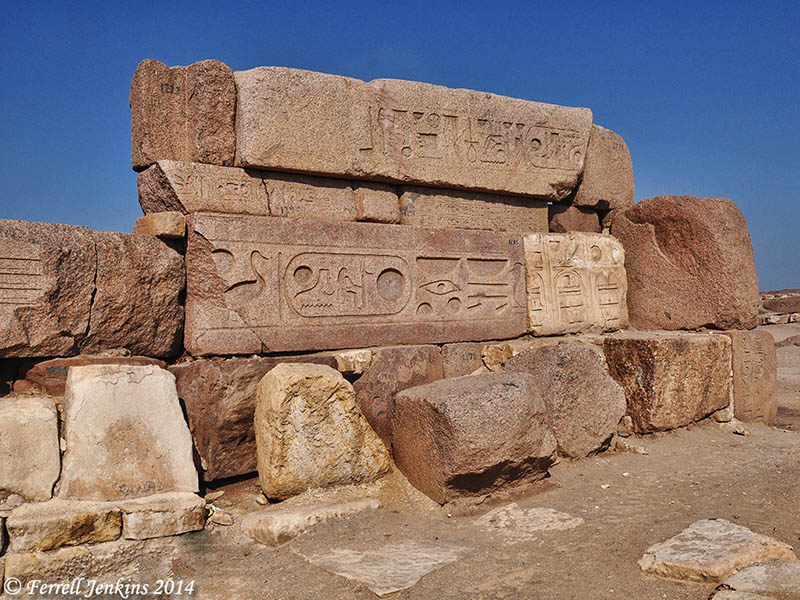
The princes (leaders) of Zoan, and other places in Egypt, are likened to pillars that were to be crushed. Columns, pillars, and statues are scattered over the ruins of ancient Zoan (Tanis) in the land of Goshen. In the photo below we see columns stacked up.

Fallen stonework piled together at Zoan (Tanis) in the Land of Goshen. Photo by Ferrell Jenkins.

Fallen stonework piled together at Zoan (Tanis) in Goshen. Photo by Ferrell Jenkins.

Those who are the pillars of the land will be crushed, and all who work for pay will be grieved. The princes of Zoan are utterly foolish; the wisest counselors of Pharaoh give stupid counsel. How can you say to Pharaoh, “I am a son of the wise, a son of ancient kings”? Where then are your wise men? Let them tell you that they might know what the LORD of hosts has purposed against Egypt. The princes of Zoan have become fools, and the princes of Memphis are deluded; those who are the cornerstones of her tribes have made Egypt stagger. (Isaiah 19:10-13 ESV)

Visualizing Isaiah 18: “the rivers of Cush”

Israel and Judah found themselves positioned between the great political and military powers of the time: Assyria and Babylon to the north (or east) and Egypt to the south. In Isaiah 18 and 19, the prophet deals with the power to the south. Cush is likely more or less synonymous with Egypt for this purpose. The region is described as one of unrest.

Ah, land of whirring wings that is beyond the rivers of Cush, (Isaiah 18:1 ESV)

The IVP Bible Background Commentary comments on Cush, and explains the difference between Cush and modern Ethiopia.

Cush can refer to several different places in the Old Testament, though it most frequently is the designation for the area translations usually render “Ethiopia.” This is misleading, for the area Cush refers to is not modern Ethiopia (Abyssinia), but the area along the Nile just south of Egypt, ancient Nubia (in modern Sudan). The boundary between Egypt and Nubia in ancient times was usually either at the first or second cataract of the Nile. It is unlikely that Nubia ever extended much beyond the sixth cataract at Khartoum.

The Theological Wordbook of the Old Testament comments on the term Cush (Ethiopia) as it is used in several Old Testament prophecies.

In several cases, especially in the prophets, Ethiopia is used in parallel construction as a synonym of Egypt (Isa 20:3-5; Ezek 30:4; Nah 3:9). This probably represents the dominance of Ethiopia (or, more precisely, Nubia) over Egypt between 750 and 663 B.C. Terhakah was a notable Nubian pharaoh who tried, unsuccessfully, to block Sennacherib’s westward expansion (2Kings 19:9 ; Isa 37:9). After 663 B. C. Egypt was independent of Nubia (Jer 46:9; Ezek 25:4, 5, 9).

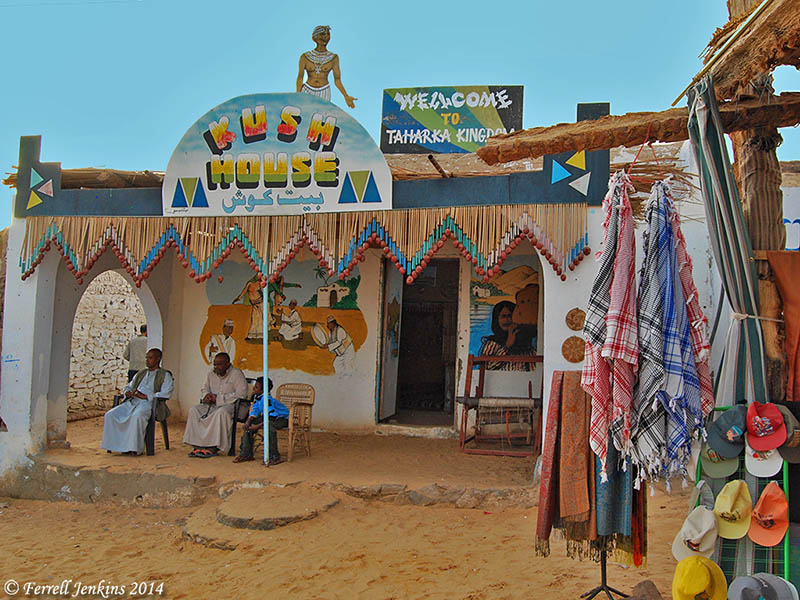
Nubians now live in Sudan and southern Egypt near Aswan. Some of these people were displaced as a result of the building of the New High dam at Aswan and the formation of Lake Nasser. Some of the Nubians still live in Sudan. They are energetic people and good at selling their wares to the visiting tourists. At the first cataract of the Nile some Nubians have set up a small village with shops and camel rides for those brave enough to try. Notice the example below called Kush (Cush) House.

A Nubian village at Aswan, Egypt, highlights the connection with Cush. Photo by Ferrell Jenkins.

Nubian village at Aswan, Egypt, highlights connection with Cush. Photo: F. Jenkins.

One sign reads “Welcome to Taharka Kingdom.” Taharka ((English Bible: Tirhakah). A photo showing Tirhakah under the protection of the god Amun is available here.

No camels during the Patriarchal Age?

That’s what they are saying. It is a popular theme of those who want to put Bible believers in their place. Camels are mentioned repeatedly in Genesis 12-37, a section of Scripture set during the Middle Bronze Age (about 2100–1550 B.C.). Many of the well-known Bible characters of the Patriarchal Age are mentioned as riding camels.

A few days ago I was beginning to locate my sources to respond to the recent article in the New York Times, and in Time. While I was working on Visualizing Isaiah, Todd Bolen came out with two great articles on the subject. I include these links for the two people who read my blog but do not read the Bible Places Blog.

First, you should read the post about the Domestication of the Camel.

Then read.

Both are these posts are well documented with scholarly links you can track down to your own satisfaction. Don’t be unprepared the next time this subject comes up.

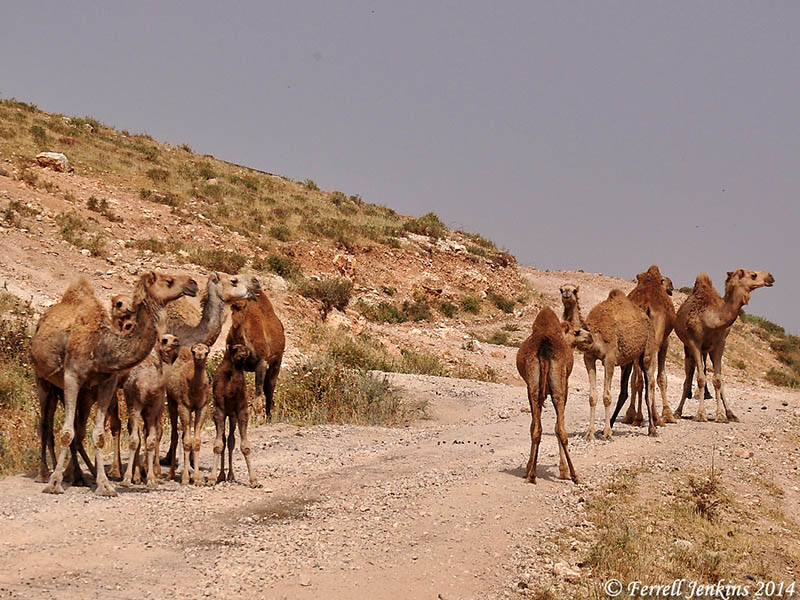
Camels at Abel-meholah, possibly the home of the prophet Elisha. Photo by Ferrell Jenkins.

Camels at Abel-meholah, possible home of the prophet Elisha. Photo by Ferrell Jenkins.

Visualizing Isaiah 11: the River

Immediately upon looking at Isaiah 11 I think of the reference to the Messiah –  “a shoot from the stump of Jesse.” Look back to chapter 4 for an illustration for that.

I could show you individual photos of many of the animals mentioned in verses 6-7, but I do not have the wild and vicious with the tame and gentle. It doesn’t happen in the animal kingdom, but it is true in the kingdom of the Messiah. See, for example, Colossians 3:11 where there is not Greek and Jew, circumcised and uncircumcised, barbarian, Scythians, salve, free. In Christ these distinctions are broken down.

Here I have chosen to concentrate on the promise of the return of a remnant from captivity, an event that took place initially in 536 B.C.

And the LORD will utterly destroy the tongue of the Sea of Egypt, and will wave his hand over the River with his scorching breath, and strike it into seven channels, and he will lead people across in sandals. And there will be a highway from Assyria for the remnant that remains of his people, as there was for Israel when they came up from the land of Egypt. (Isaiah 11:15-16 ESV)

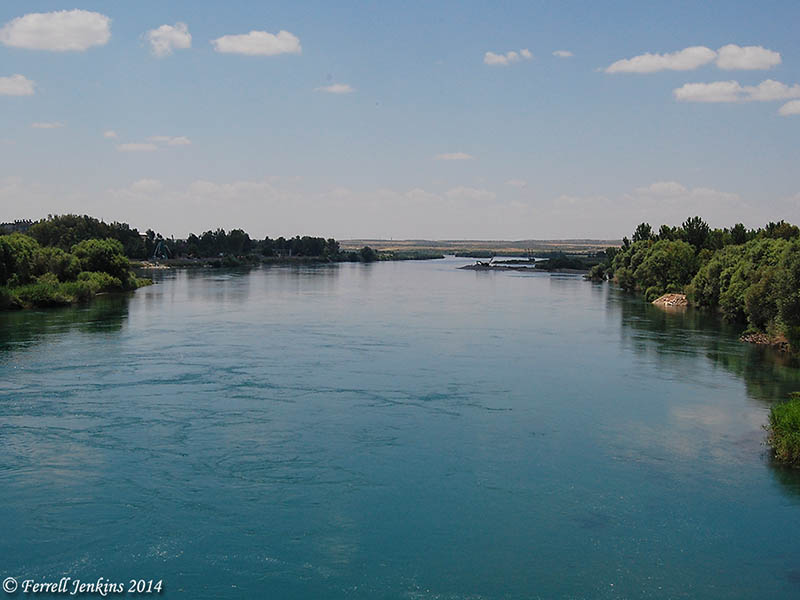
The Euphrates is the largest, longest and most important river of Western Asia. It is nearly 1800 miles long and was the northeastern boundary of the land promised to Abraham (Genesis 15:18). The empires of Assyria and Babylon, the greatest enemies of Israel, were east of the Euphrates. The Old Testament prophets often put the Euphrates by metonymy for these countries to designate the place from which the punishment of God would come (Isaiah 7:20; 8:7; Jeremiah 46:10

The Euphrates was so significant in the history of Israel that the phrase “the River” is used frequently in the Old Testament to indicate the Euphrates.

View north of the Euphrates River at Berecik, Turkey. Photo by Ferrell Jenkins.

The Euphrates River, looking north, at Birecik, Turkey. Photo by Ferrell Jenkins.

The LORD said that He would bring “the waters of the River, the king of Assyria and all his glory” like a flood to rise to the neck of His people (Isaiah 8:6-8). Now He promises to strike the River and allow His people to return from the exile in sandals. In fact, He says, “there will be a highway from Assyria for the remnant that remains of his people” 11:16).

When Assyrian kings stated in their annals that they crossed the river Euphrates they mean that they went to war against nations west of the River.

Visualizing Isaiah 9: the Philistines on the west

Isaiah 9 contains several geographical references. I decided to concentrate on the reference to the Philistines in verse 12. Notice that the text mentions the Syrians (Arameans) on the east, literally northeast of Israel and Judah, and the Philistines on the west (literally the southwest).

“The Syrians on the east and the Philistines on the west devour Israel with open mouth. For all this his anger has not turned away, and his hand is stretched out still.” (Isaiah 9:12 ESV)

Both powers were perennial enemies of Israel. Both would take part in attacks on Israel. The Philistines also are mentioned in 2:6 and 11:14.

It is commonly understoos that the Philistines of the Old Testament were the Sea People. The five major cities of the Philistines were Ashdod, Gaza, Ashkelon, Gath, and Ekron (1 Samuel 6:17).

A row of signs at the entry to Tel Ashkelon picture some of the peoples who lived there. This sign represents the Philistines. Photo by Ferrell Jenkins.

A row of signs at the entry to Tel Ashkelon picture some of the people who lived there. This sign represents the Philistines. Photo by Ferrell Jenkins.

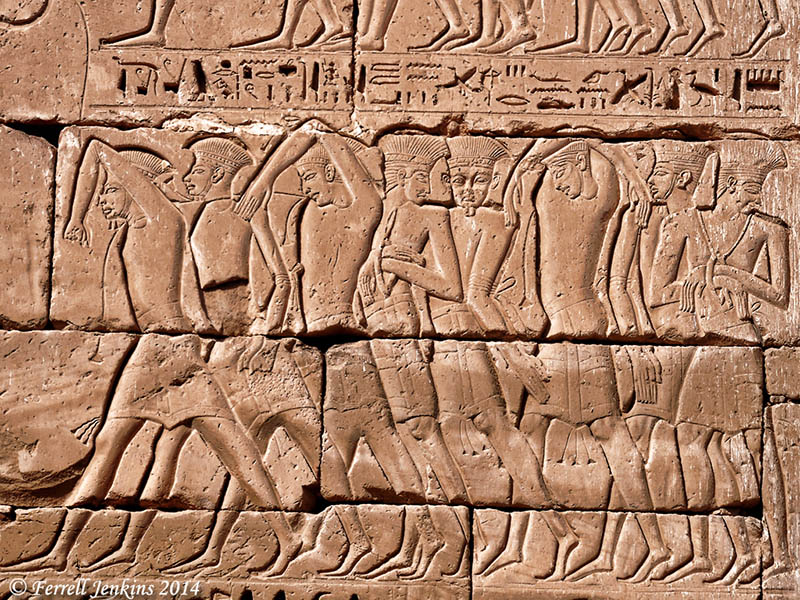
The temple of Medinet Habu is located near the Colossi of Memnon at Thebes (Luxor), Egypt. The temple was built during the reign of Rameses III (reigned 1186–1155 B.C.). The structures at the site were built by the Pharaoh to serve as an administrative complex and funerary temple. The most interesting aspects of the temple to me are the reliefs of the Sea Peoples that the king claims to have subjugated. Notice that some of these men are bound.

This is a portion of a wall at Medinet Habu showing the subjugation of the Sea People by Ramses III. Photo by Ferrell Jenkins.

A portion of a wall at Medinet Habu shows the subjugation of the Sea People by Ramses III. Notice the distinctive feathered hats and animal skin skirts. Photo by Ferrell Jenkins.

These peoples might seem more powerful than Israel at the moment, but the LORD will punish them. Both Damascus and the Philistines fell to the Assyrians within a few years.

The LORD continued to remind Israel and Judah that He was willing to save them from the coming oppression:

For all this his anger has not turned away, and his hand is stretched out still. (Isaiah 9:21 ESV)

Visualizing Isaiah: Trusting in horses and chariots

The prophet Isaiah describes what had happened to the people of Judah and Jerusalem.

Their land is filled with silver and gold, and there is no end to their treasures; their land is filled with horses, and there is no end to their chariots. (Isaiah 2:7 ESV)

The nation had come to depend on instruments of war rather than the LORD God.

Before the entry into the promised land, the LORD said that His people would desire a king. He laid down restrictions for that king. One of the stipulations is stated this way:

Only he must not acquire many horses for himself or cause the people to return to Egypt in order to acquire many horses, since the LORD has said to you, ‘You shall never return that way again.’ (Deuteronomy 17:16 ESV)

Solomon is especially noted for his trade in horses and chariots from Egypt (1 Kings 10:28-29).

Ahab, king of the northern kingdom of Israel, had a powerful army. The Assyrian king Shalmanesser III met Ahab and 11 other kings in the Battle of Qarqar in 853 B.C. The stone monolith from Kurkh records that Ahab provided 2,000 chariots and 10,000 foot soldiers to the confederacy.

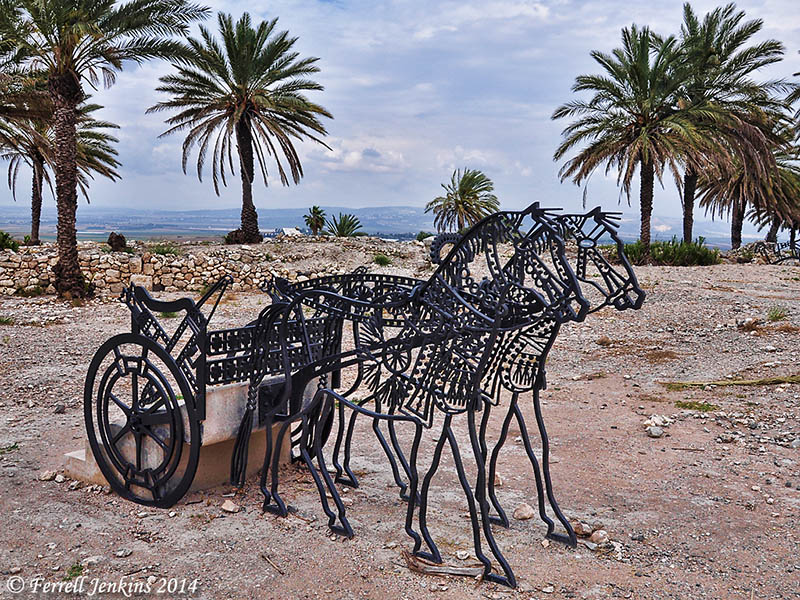
Stables have been uncovered during excavations at Megiddo. The town is so clearly associated with horses and chariots that a metal sculpture has been erected at the site.

Metal sculpture of horses and chariot at Megiddo. Photo by Ferrell Jenkins.

Metal sculpture of horses and chariot at Megiddo. Photo by Ferrell Jenkins.

Because Megiddo was located on the main trunk road between Egypt and the empires of the north (Hittites and Syria) and those of the east (Assyria, Babylon, and Persia), we should not find this surprising.

Solomon is said to have built the house of the LORD, his own house, the Millo and the Wall of Jerusalem, and the cities of Hazor, Megiddo, and Gezer (1 Kings 9:15). The same context makes reference to chariot cities built by Solomon:

and all the store cities that Solomon had, and the cities for his chariots, and the cities for his horsemen, and whatever Solomon desired to build in Jerusalem, in Lebanon, and in all the land of his dominion. (1 Kings 9:19 ESV

Isaiah was spot-on.