Category Archives: Egypt

Russian archaeologists say enclosure wall uncovered at Memphis, Egypt

Not much is left at the ancient Egyptian city of Memphis. This is not surprising to those who believe the Bible includes prophecy about various ancient nations.
The prophet Ezekiel has this to say about Memphis.

This is what the sovereign LORD says: I will destroy the idols, and put an end to the gods of Memphis. There will no longer be a prince from the land of Egypt; so I will make the land of Egypt fearful.  (Ezekiel 30:13)

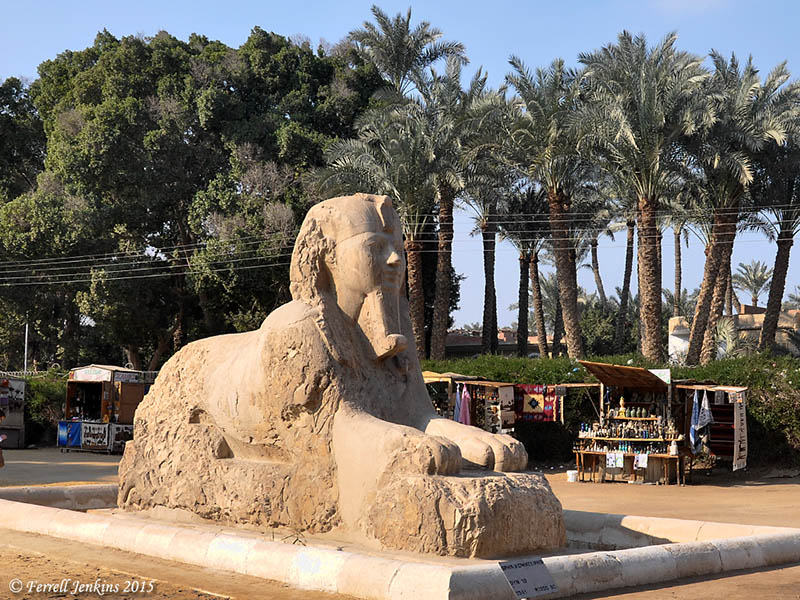
The alabaster sphinx of Rameses II  (13th century B.C.) is one of the nicest pieces on display at the open air museum. It is also one of the few artifacts to be seen. The prophecy has surely come to pass.

Alabaster sphinx of Rameses II at Memphis. Photo by Ferrell Jenkins.

Alabaster sphinx of Rameses II at Memphis. Photo by Ferrell Jenkins.

A recent article in The Cairo Post here reports that an archaeology team of the Russian Institute of Egyptology has uncovered ruins of the enclosure wall that surrounded Memphis about 3200 B.C.

The article includes a note saying the new Grand Egyptian Museum, being built near the Giza Pyramids, is scheduled to open in 2018. The uprising in Egypt that occurred in 2011 has caused the delayed opening of the Museum.

HT: Agade List

Egyptian culture evident in discovery near Tel Halif

TTel Halif is located between Hebron and Beersheba in the Negev (Negeb, Negev region, South land or South country).

Abram continually journeyed by stages down to the Negev. (Genesis 12:9 NET)

Now Isaac had returned from Beer-lahai-roi and was dwelling in the Negeb. (Genesis 24:62 ESV)

Tel Halif (= Arabic, Tell el-Khuweifeh). In an article about the Biblical identity of Tel Halif, Oded Borowski points out that this was territory allotted “to the tribe of Simeon (Joshua 19:1-9) and later to the tribe of Judah (Joshua 15:20-32).” He discusses various efforts to equate the site with a site named in the Bible. Borowski narrows his discussion to four main candidates: Sharuhen, Hormah, Ziklag, and Rimmon. He think Rimmon (= En-Rimmon) is the correct choice (Biblical Archaeology Review, Vol. 51, Issue 1). Rimmon is mentioned five times in the Bible (Joshua 19:7; 1 Chronicles 4:32; Joshua 15:32; Nehemiah 11:29; Zechariah 14:10). I am not in a position to venture even a guess.

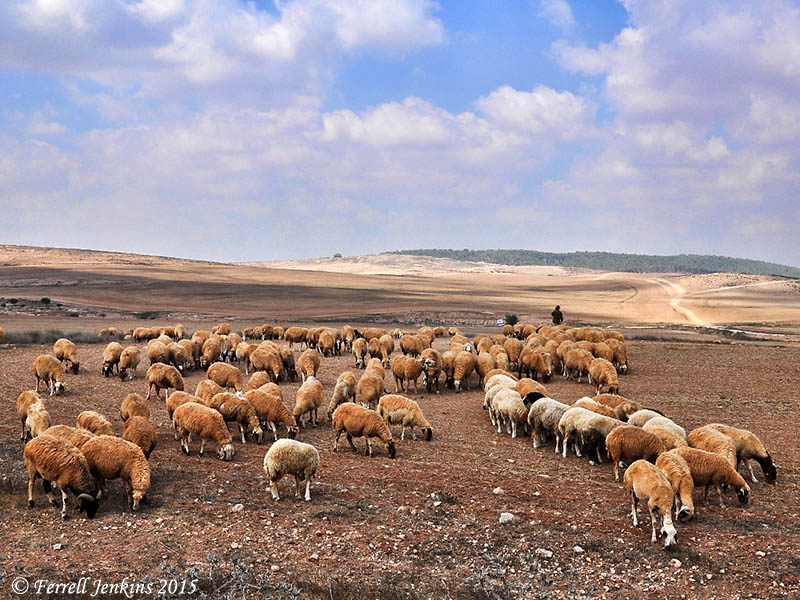
The photo below shows the terrain near Tel Halif, north of Beersheba.

Sheep in the Negev near Tel Halif. Photo by Ferrell Jenkins.

Sheep in the Negev near Tel Halif. Photo by Ferrell Jenkins.

The Israel Antiquities Authority announced today the discovery of artifacts excavated from a cave near Tel Halif, in the region of Kibbutz Lahav, in the south of Israel.

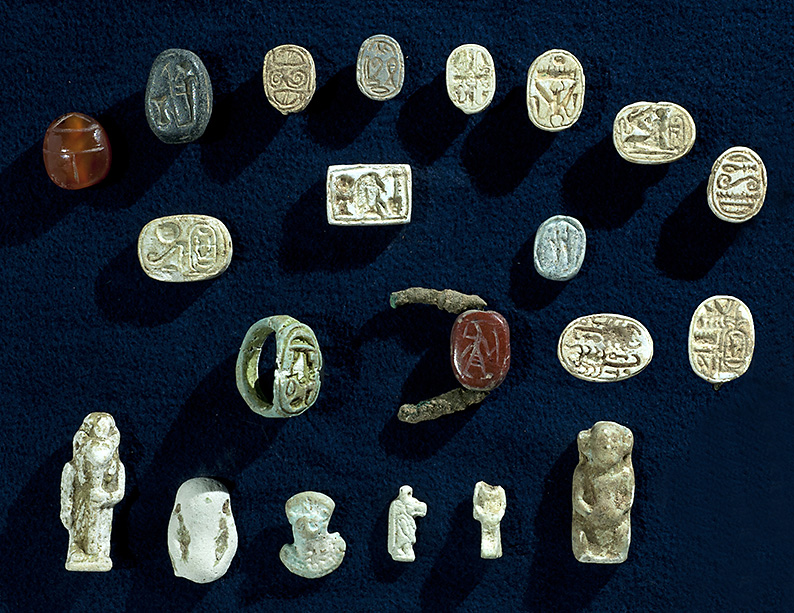
The artifacts included “seals, seal rings, figurines and amulets in the image of gods sacred to the Egyptian culture.” The archaeologists say,

The collection indicates “the presence of an administrative center that existed in the region.”

Other artifacts discovered included seal rings made of faience and a wealth of figurines and amulets in the image of gods sacred to the Egyptian culture.

A collection of artifacts with characteristics of the Egyptian culture, which were discovered in the excavation. Photographic credit: Clara Amit, courtesy of the Israel Antiquities Authority.

A collection of artifacts with characteristics of the Egyptian culture, which were discovered in the excavation. Photographic credit: Clara Amit, courtesy of the Israel Antiquities Authority.

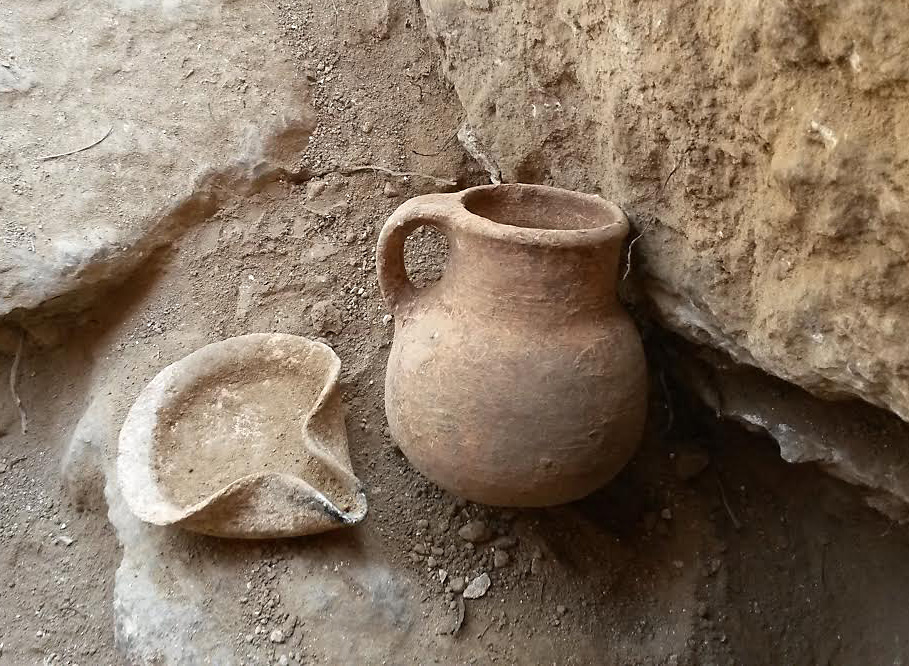
Items dating as late as the Iron Age were also found during the excavation conducted by the Unit for the Prevention of Antiquities Robbery of the IAA. The excavation followed the discovery that the cave had been plundered.

An oil lamp and a ceramic jar that date to the Iron Age, which were discovered in the cave. Photographic credit: the Unit for the Prevention of Antiquities Robbery of the Israel Antiquities Authority.

An oil lamp and a ceramic jar that date to the Iron Age, which were discovered in the cave. Photographic credit: the Unit for the Prevention of Antiquities Robbery of the Israel Antiquities Authority.

According to Dr. Daphna Ben-Tor, curator of Egyptian archaeology at the Israel Museum,

“Most of the scarab seals found in the excavation date to the fifteenth–fourteenth centuries BCE. During this period Canaan was ruled by Egypt”. Dr. Ben-Tor adds, “The names of kings appeared on some of the seals. Among other things, we can identify a sphinx lying opposite the name of the pharaoh Thutmose who reigned from about 1504–1450 BCE. Another scarab seal bears the name of Amenhotep who reigned from about 1386–1349 BCE. Still another scarab depicts Ptah, the principal god of the city of Memphis.”

The Biblical record indicates Egyptian influence in Israel as late as the Iron Age.

 (Pharaoh, king of Egypt, had attacked and captured Gezer. He burned it and killed the Canaanites who lived in the city. He gave it as a wedding present to his daughter, who had married Solomon.) (1 Kings 9:16 NET)

The prophet Isaiah warned about reliance on Egypt in the 8th century B.C. (Isaiah 30:1-5).

HT: Joseph Lauer


Dust storms afflict Egypt, Palestine, and Israel

Almost four years ago I wrote a post about the strong East winds of the Middle East, also calling attention to the winds from the south. Several bloggers have called attention to a recent occurrence of the winds affecting Egypt, Palestine, and Israel in particular. I thought it would be appropriate to reprint some of that earlier material here with an update.

— • —

Almost everyone who has visited Israel has learned of the West winds that make their way through the depressions around the Sea of Galilee and create storms on the Sea. Unless you travel in the “transitional season” or in the (dry) summer season you may not have learned about the East wind. This wind is called the sirocco. In Egypt it is known as the khamsin, and in Israel as the sharav.

Denis Baly, The Geography of the Bible (1974 ed., pp. 51-53), explains these winds. He says they occur in the transitional seasons from early April to mid-June, and from mid-September to the end of October. Baly says,

It is this intense dryness and the fine dust in the air which are so exhausting, for other hot days, though troublesome, do not have the same effect. People with a heart condition, nervous complaints, or sinus trouble are particularly affected, but even the mildest-tempered person is apt to become irritable and to snap at other people for no apparent reason. Tourists find the sirocco especially frustrating, for not only does travel become fatiguing, but the fine yellowish dust which fills the air drains it of all color, blots out all but the immediate vicinity, and makes photography a mockery.

Here is how Larry Haverstock described his day walking the Jesus Trail in an Email to me.

No blog last night because of the storm. I woke to high winds from the east which dusted up the air so badly that photos were mostly useless. Worst part was that it was directly against me and really HOT. Pushing against 20+ mph winds really took the steam out of me. By the end of the day I was utterly exhausted.  Drank my full 3 litres and had good dinners and breakfasts, but energy levels are still very low.

The photo below is one of the aerial shots Larry and I made a week earlier. It was made while flying over the west shore of the Sea of Galilee, with the view to the west. You can see Mount Arbel and the Wadi Hamam below. The Via Maris runs in this valley which is also called the Valley of the Doves. You will notice two lines of mountains further west.

I am rather sure that this is the route Larry was walking. Larry lived in Washington state for many years. I think he is not bothered by the sudden rains, but the intense heat and strong wind from the east may be another matter. I want you to think about the fact that all of the biblical characters from the Patriarchs to Jesus and His disciples encountered conditions similar to these (and worse).
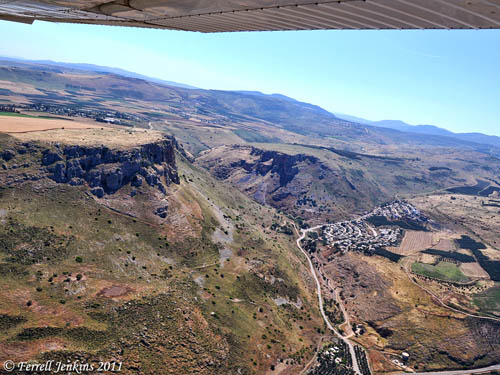
Aerial view of Arbel, Wadi Hamam, and the Via Maris. Photo by Ferrell Jenkins.

Aerial view of Arbel, Wadi Hamam, and the Via Maris. Photo by Ferrell Jenkins.

Baly cites several biblical references to the east and south winds that bring in the hot air and the dust storms. He says, “Where the mountains come close to the sea a strong sirocco pours down the slopes like a flood, at 60 miles an hour or more, stirring the sea into a fury.”

By the east wind you shattered the ships of Tarshish. (Psalm 48:7 ESV)

In the prophecy against Tyre, Ezekiel says,

“Your rowers have brought you out into the high seas. The east wind has wrecked you in the heart of the seas. (Ezekiel 27:26 ESV)

Notice Elihu’s comments to Job about the south wind.

Do you know the balancings of the clouds, the wondrous works of him who is perfect in knowledge,  you whose garments are hot when the earth is still because of the south wind?  (Job 37:16-17 ESV)

Jesus also observed the effect of the south wind:

And when you see the south wind blowing, you say, ‘There will be scorching heat,’ and it happens. (Luke 12:55 ESV)

Do you remember Jonah’s problems after enjoying the shade of his plant?

When the sun rose, God appointed a scorching east wind, and the sun beat down on the head of Jonah so that he was faint. And he asked that he might die and said, “It is better for me to die than to live.” (Jonah 4:8 ESV)

Baly calls attention to the effect of the spring siroccos on the crops.

The spring siroccos destroy the winter grass and may damage the crops if they come too soon, and hence they appear constantly in the Bible as a symbol of the impermanence of riches or of human life.

Note these additional references in your own study: Psalm 103:16; Isaiah 40:6-8; Hosea 13:15; Ezekiel 17:10; James 1:11. In a recent post Barry Britnell (Exploring Bible Lands) add Deuteronomy 28:15-24 here.

Larry Haverstock’s own description which he later wrote here in his blog is included here. (There are some great pictures of his descent from Mount Arbel.)

It was while making this first effort of the morning that I encountered my nemesis for the rest of the day.  It was only 10 o’clock but already a hot wind was blowing in my face.  What I couldn’t know at that moment was that as I climbed the western slope the mountain was acting as a shield so that I wouldn’t feel the brunt of this wind until I summited.  As soon as I stepped out upon the actual heights of Arbel I knew I was in for an unusual day.

The view was phenomenal and despite the dust in the air I got the following shot of the Plain of Gennesaret.  This is the Northwest corner of the Sea.  Just out of sight on the waterfront to the right are the ruins of ancient Magdala from whence one very famous Mary came.  All the rest of the shoreline is the area in which Jesus spent a tremendous amount of time, preached some of His very most famous sermons, worked many miracles, and made His home in Capernaum which is along the shore as it turns the corner and heads off to the right in the distance.  Much food for thought when you stand in this place.

Unfortunately, the wind was howling and dangerous here.  I don’t have a weather report, but guess it was in the vicinity of 40 miles an hour since I was actually being pushed off balance and forced to take a step now and then to keep from falling over.  It did give me pause, but I was determined to take the shorter, harder, steeper trail down, so I spent about 20 minutes re-rigging my equipment.  Fearing the monopod “sword” might jam itself on the rocks somehow I removed it from the under arm position and strapped it vertically to the back of the pack.  Then, using the extra leather chin strap rope I’d brought along for emergency, I took off my hat and lashed it on the back of the pack too.  This hat had a very wide and stiff brim which had helped shield my face from the gale on the way up, but was now a liability, capable of catching the wind and pulling me off balance, so I stowed it.  Then I took the pack’s belly straps and lengthened them so that rather than directly clutching my stomach, they came out and over the front pack so that I could tightly restrain it from swinging.  Having thus reduced my exposure to the wind I started down.

It was now man against mountain, rather than nonchalant tourist with a camera time.…

Shortly afterwards I called attention to the comparative photos that Dr. Carl G. Rasmussen has included in his Zondervan Atlas of the Bible, and on his Holy Land Photos website here. These photos provide a vivid contrast that the dust storms make.

In today’s Weekend Roundup at Bible Places Blog, Todd Bolen calls attention to the current article in The Jerusalem Post here, and the 25 or so outstanding large photos from Egypt, Palestine, and Israel in London’s Daily Mail here. Be sure to look at these photos.

I have experienced a delayed flight in Egypt due to the sand storms, and the scorching hot wind with dust in Israel, but nothing like these photos reveal.

NASA photos of Israel and Middle East

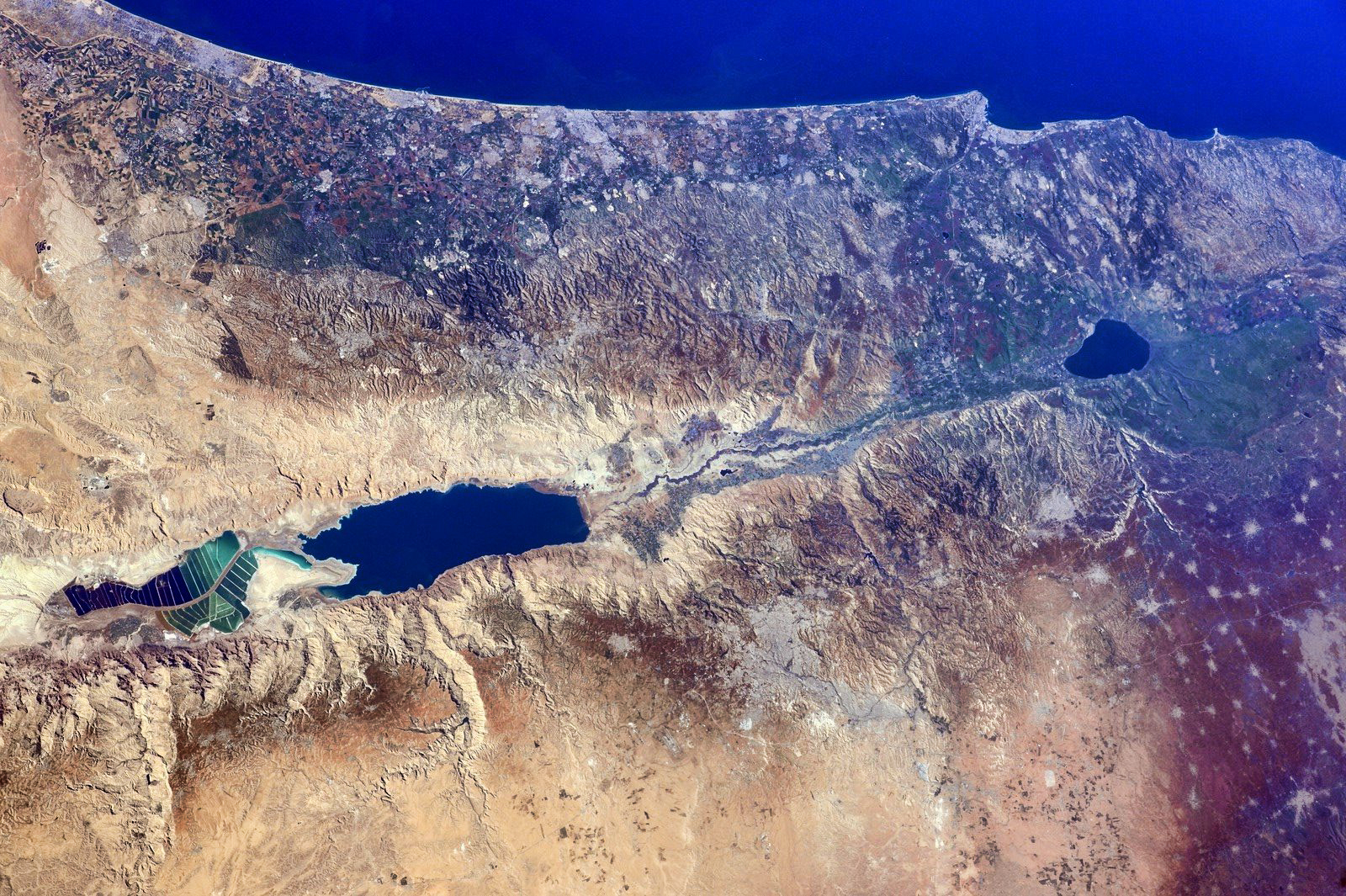
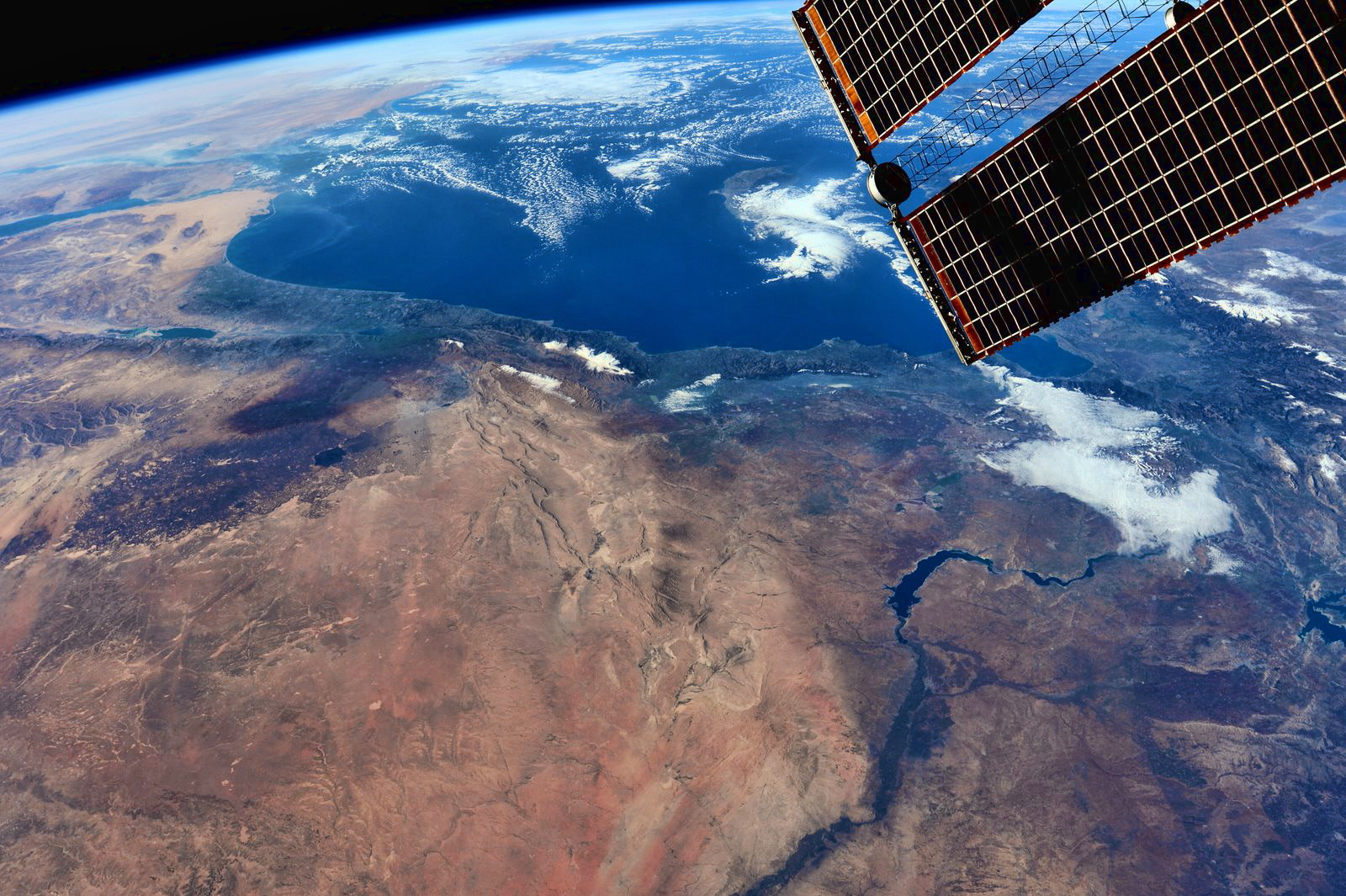
NASA has posted several excellent photos made by Barry Wilmore from the International Space Station on Facebook. The photos were made on Christmas day, 2014. See how many landmarks you can identify. Click on the photo for a larger image. Do you see Tyre?

Israel, the West Bank, and part of Jordan from the ISS. Photo: NASA/Barry Wilmore.

Israel, the West Bank, and part of Jordan from the ISS. Photo: NASA/Barry Wilmore.

The photo below shows portions (or all) of (L to R) Egypt, Sinai Peninsula, Israel, Jordan, Lebanon, Syria, Turkey (including Euphrates River), and Iraq. Great photo.

The Middle East from the ISS. Photo: NASA/Barry Wilmore.

The Middle East from the ISS. Photo: NASA/Barry Wilmore.

Get out your Bible atlases and study these photos.

Our tax dollars put to good use, I would say.

Babylon – index of articles

The Babylonian Empire was relatively short lived (626–539 B.C.), but it played a large role in biblical history. We have written about all of the Babylonian kings mentioned in the Bible. In this post I am pulling together an index collection of these articles to make it easy for one studying about the Babylonian captivity to locate all of them in one convenient place.

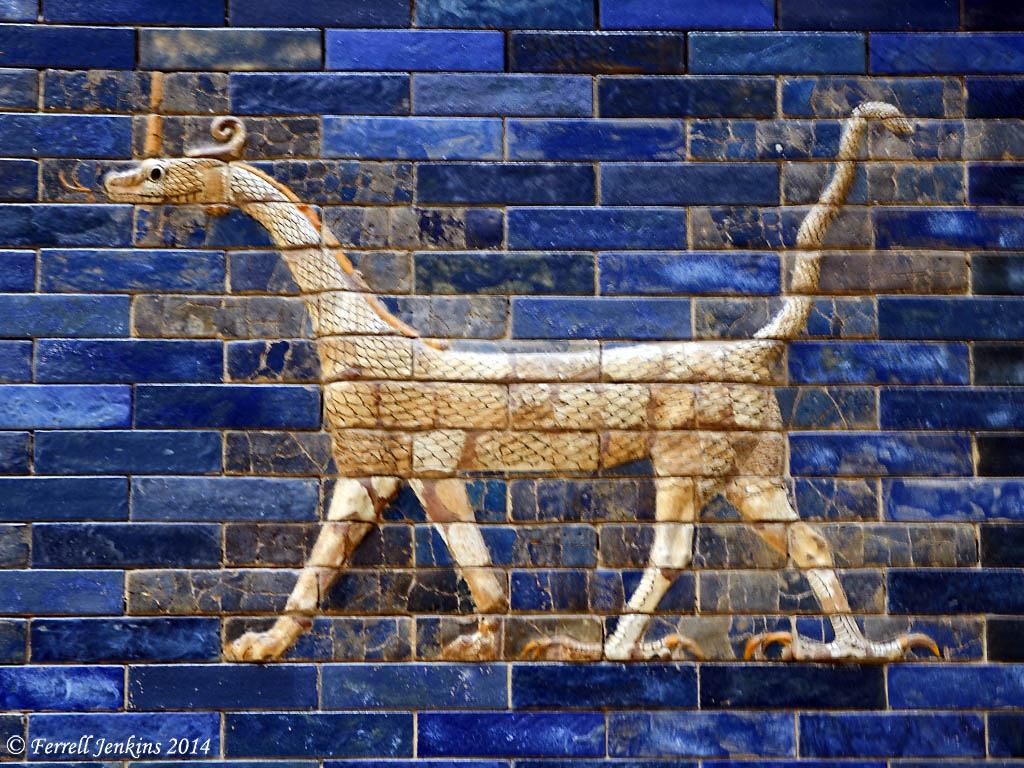
Dragon made of chrome brick on the Ishtar Gate. (Museum of the Ancient Near East, Berlin). The dragon is a composite creature with the head of a fire-spewing dragon, body and tail of a serpent, front feet of a feline, and back feet of a bird. This provides a good illustration of the apocalyptic language found in the Old Testament prophets. Photo by Ferrell Jenkins.

The dragon made of chrome brick on the Ishtar Gate from ancient Babylon was an emblem of Marduk (Museum of the Ancient Near East, Berlin). The dragon is a composite creature with the head of a fire-spewing dragon, body and tail of a serpent, front feet of a feline, and back feet of a bird. This provides a good illustration of the apocalyptic imagery found in the Old Testament prophets and the book of Revelation. Photo by Ferrell Jenkins.

The articles below, especially those with an * after the title, are considered minor references. They still might provide some helpful material and photos for the Bible student and teacher.

I trust this list will be helpful to students and teachers alike.

In the future, when I write something about Babylon I will try to remember to include a link in this index. I would appreciate learning if you find this index helpful.

Group claims world’s oldest pyramid “ruined” by restorers

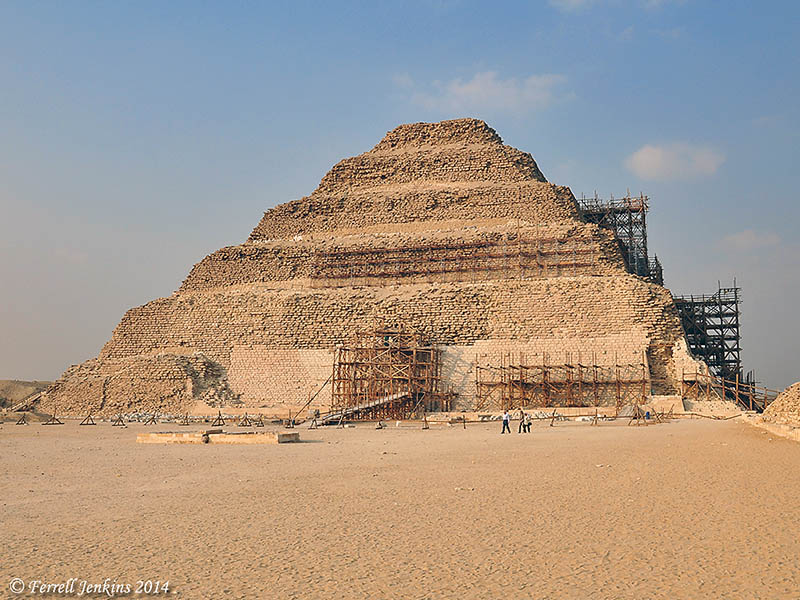
According to a report in the International Business Times, activists in Egypt are angry with the Minister of Antiquities for re-hiring a company to restore the Step Pyramid of Zoser at Saqqara. The group says the firm “caused damage and major deterioration to the structure while trying to repair it.” The report may be read here.

Saqqara is significant because it is the location of the oldest freestanding stone building in the world. The architect of this structure was the vizier and physician Imhotep. Zoser reigned about 2600 B.C.

Hachette World Guide on Cairo, Alexandria and Environs, describes the pyramid in these terms:

The Step Pyramid is formed of six unequal sections and is not, in the strict sense, a pyramid tat all. The plan is not square, but oblong in the S-W sense, and the summit is formed by a terrace (also oblong) and not by a Pyramidion. The dimensions of the base are approximately 397 feet by 357 feet. The present height of the Pyramid is 193 feet. It would originally have been some 196 feet. The verticle slope of the steps is on an average of some 16°, the horizontal [slope is] 22°.

On my last visit to Egypt in January, 2011, I noticed scaffolding on all sides of the step pyramid.

The Step Pyramid of Zoser at Saqqara. Photo by Ferrell Jenkins.

The Step Pyramid of Zoser at Saqqara. Photo by Ferrell Jenkins.

This pyramid, as well as the great pyramids of Giza, was built long before the time of the  biblical characters who visited Egypt — Abraham, Joseph, Jacob, et al.

HT: Jack Sasson

The Route of the Exodus and the Location of Mount Sinai

Over the past 48 years I have had the opportunity to visit almost all parts of the Bible World. I certainly have not solved all of the problems that are raised about locations of certain events, but I have tried to look at the major claims whether it is the location of Cana, the site for the baptism of Jesus, the place of the crucifixion and burial of Jesus, the location of Ararat, or the route of the exodus and the location of Mount Sinai, et al.

In this post I have pulled together a list of some things I have written about the route of the Exodus and the location of Mount Sinai. I hope you will find the posts helpful when you study this subject.

  • Pharaoh’s chariot wheels and other things that won’t float – Examining the claims of the late Ron Wyatt here.
  • Location of the Red Sea crossing and Mount Sinai here.
  • Location of Mount Sinai here.
  • Solomon’s Seaport at Ezion-geber here.
  • Sharks at Sharm el-Sheikh in the Sinai here. Sharm el-Sheikh is at the Straits of Tiran.
  • “Cracked Pot Archaeology” here.
  • Pseudo Archaeologists here.
  • Goshen and the Great Bitter Lake here.
  • Another day in Goshen here.

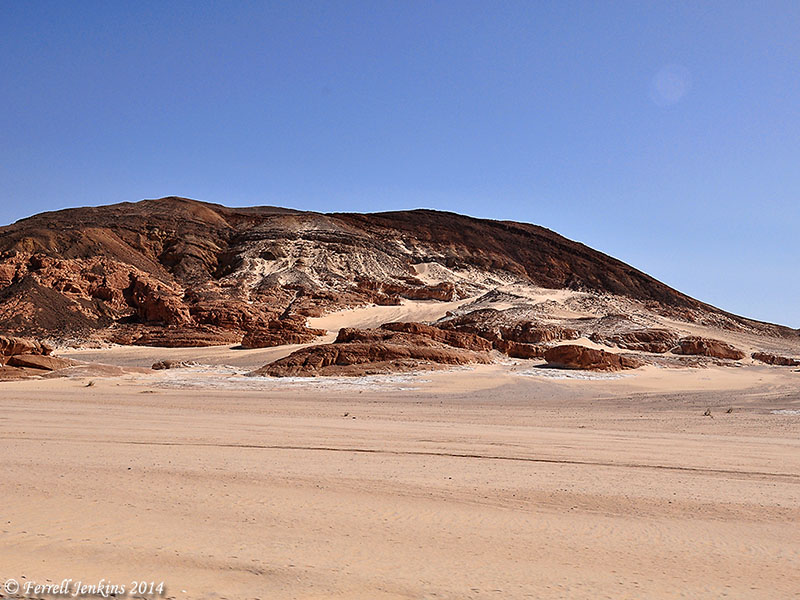
Below are a couple of photos that show the changing scenery that one sees in the Sinai Peninsula.

Sinai Peninsula near the Gulf of Eilat or Aqaba. Photo by Ferrell Jenkins.

Sinai Peninsula near the Gulf of Eilat or Aqaba. Photo by Ferrell Jenkins.

Read some scholarly presentations on the subject. Such as these recent Bible atlases.

  • Beitzel, Barry J. The New Moody Atlas of the Bible, 106-114.
  • Currid, John D. and David P. Barrett. Crossway ESV Bible Atlas, 77-91.
  • Rasmussen, Carl G. Zondervan Atlas of the Bible, 100-105.
Wadi Feiran in the Sinai Peninsula. Photo by Ferrell Jenkins.

Wadi Feiran in the Sinai Peninsula. Photo by Ferrell Jenkins.

Or books such as…

  • Hoffmeier, James K. Israel in Egypt: The Evidence for the Authenticity of the Exodus Tradition, chs. 8-9.

The Associates for Biblical Research includes several articles about the Exodus at their website here.

  • Is Mount Sinai in Saudi Arabia? here.
  • Mount Sinai is Not Jebel Al-Lawz in Saudi Arabia here.

I am hopeful you will browse through this material and remember to examine it more closely the next time you study Exodus.

Paris and the Louvre

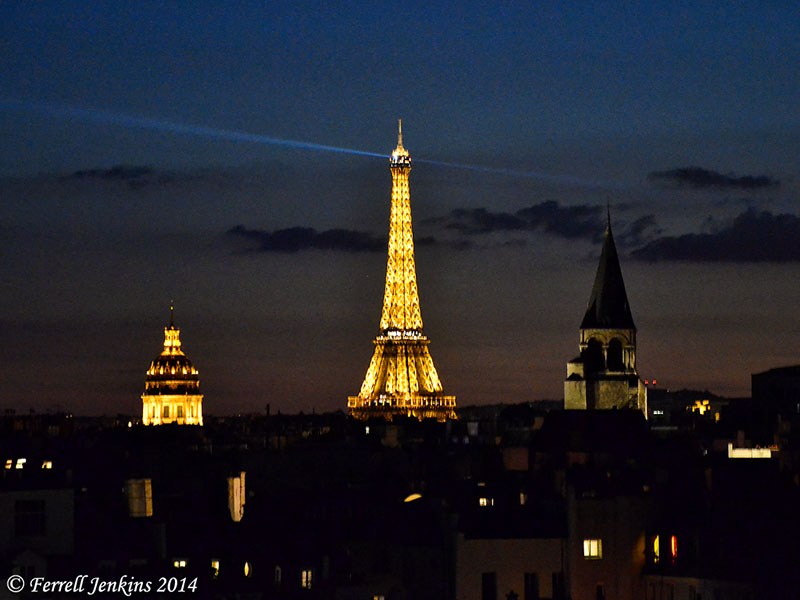
Paris is known as the City of Light. From the roof of our hotel in the St. Michel area we could see some of the significant monuments. This photo, made without tripod, shows the Eiffel Tower. I think the building to the left is the Hotel des Invalides which among other things is the burial site of Napoleon Bonaparte. The building to the right is St. Germain des Prés. In the opposite direction from the hotel we had a nice view of the Cathedral of Notre Dame.

Paris at Night. Photo by Ferrell Jenkins.

Paris at Night. Photo by Ferrell Jenkins.

We were able to spend two of our Paris days in the Louvre. This museum displays excellent collections of archaeological artifacts from Mesopotamia, Persia (Iran), the Levant (Syria, Jordan, some sites of the current West Bank), Greece, and Rome. There is an Egyptian collection, but I do not find it as satisfactory as the other collections.

The Louvre is always closed on Tuesday and certain rooms may be closed on other days, or a half day. Years ago I learned to have two or three days in Paris in order to be able to visit all of the galleries I wanted to see. Yes, we saw the Mona Lisa, too.

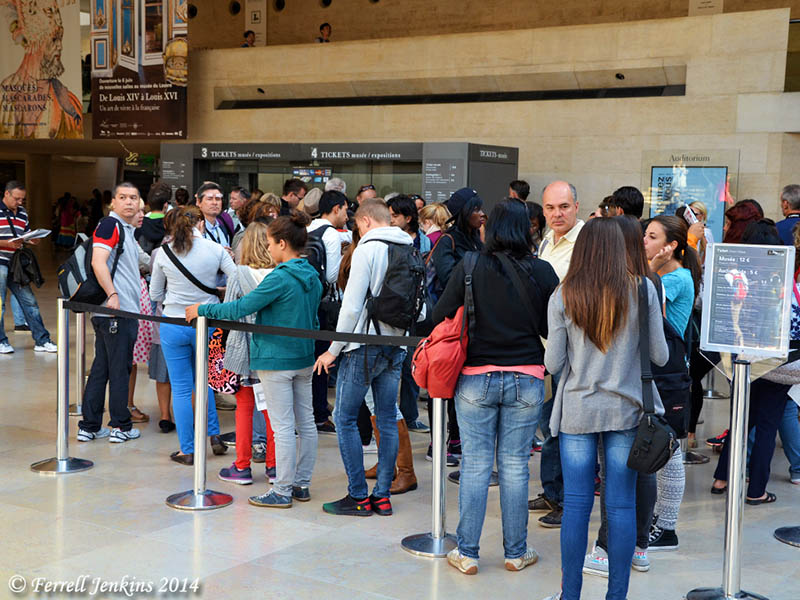
The lines to get tickets for the Louvre are long. The photo below shows two of the six or more places to buy tickets, in addition to automated machines, under the great pyramid. It is best to buy tickets online or from one of the shops such as the Tourism office near the Opera. Tickets are about $20.00 per person for each day of entry. Those with tickets are able to enter through a short line while long lines wait outside just to get into the building to wait in line to buy tickets. The Museum web site explains about advance tickets under “Plan Your Visit” here.

One of the ticket lines at the Louvre. Photo by Ferrell Jenkins.

One of the ticket lines inside the Louvre. Photo by Ferrell Jenkins.

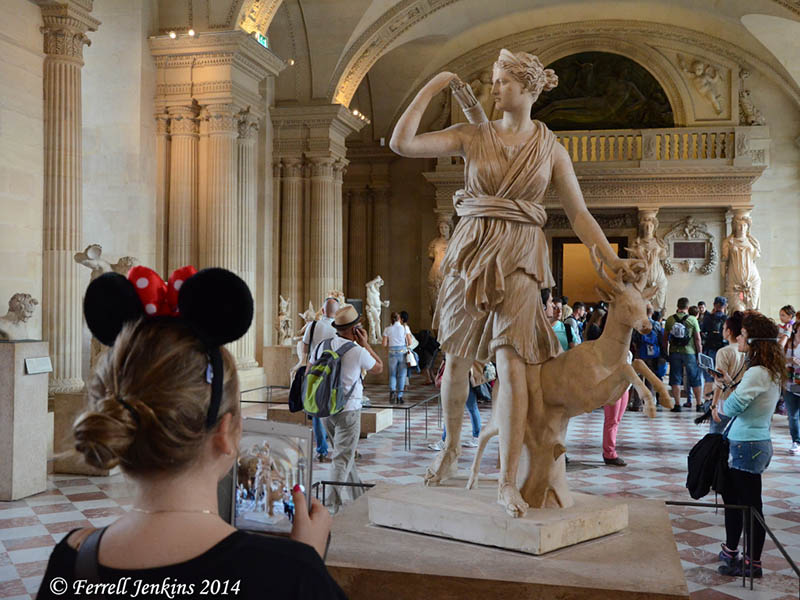
There were large crowds in the Louvre. Some galleries attract guides with tour groups. It’s fun to watch. The guide is nearly running with an umbrella or flag. The tourists are trying to keep up, but snapping their cameras or cell phones at busts they probably will not be able to identify once they are at home. I saw a young lady making a photo of the Roman Diana. I assume she had been at Disneyland Paris a day or two earlier. She did a nice job of composing her photo. When I saw her later and noted that she was a young teenager I was impressed that she wanted to visit the Louvre.

Euro Disney one day; the Louvre the next day. Photo by Ferrell Jenkins.

Euro Disney one day; the Louvre the next day. Photo by Ferrell Jenkins.

I have been to China, but I think most of the citizens have come to Berlin, Paris, and London to visit the museums.

Photography is permitted in the Louvre. I even made a few shots using flash when I thought it would not damage the artifact. None of the guards seemed to object. Items behind glass always create a problem for photographers. By visiting the museum two days I was able to check the first photos to be sure they were sharp. On the second day I was able to remake some of those that were not good.

Traveling in Europe

For the past week my wife and I have been traveling in Europe, revisiting some of the places we have enjoyed with groups over the years. Berlin is one of those places. We did some of the typical sightseeing, but the main visit was the museums with Ancient Near Eastern collections.

My first visit to the Pergamum Museum was about 1978. I returned several times when the Museum was behind the Berlin Wall, and have been there several times since the fall of the wall.

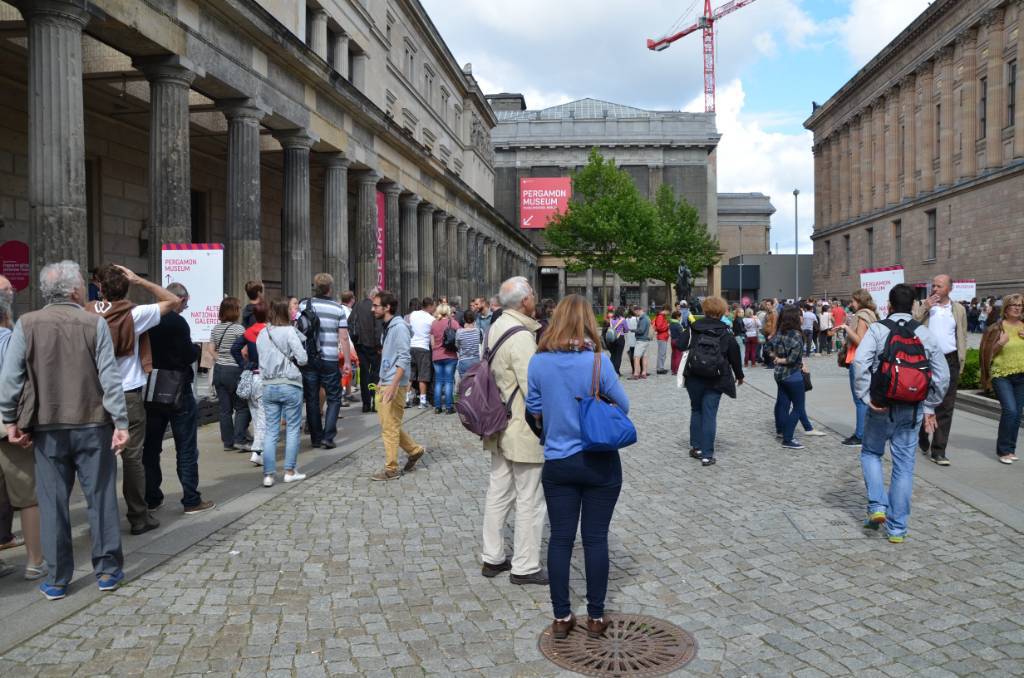
The Egyptian collection formerly was in the west, but now is housed in the Neues Museum in the building on the left of the photo below. Considerable construction is underway in the area. The former entry to the Pergamum Museum is closed. The red sign in the distance points to the temporary entry. Crowds are so large that people wait in line for four hours or more to buy at ticket and gain admission to the Museum. The only way to avoid this is to purchase a ticket online with a 30 minute time span for admission. I purchased a two day Museum pass after I arrived in Berlin and then made an appointment online for two different days. A single entry costs about 13 Euro (a little under $20 per entry).

berlin_pergamum-crowd-01fj_1

Crowds waiting in line to enter the Pergamum Museum. Photo by Ferrell Jenkins.

The Pergamum Altar already has some scaffolding in place. At the end of September the exhibition will close for __________ years (you know about government projects).

The visit was somewhat disappointing because of the appointment requirement, but mostly because portions of the Museum are closed. Whole galleries pertaining to the the Greco-Roman world are not open. The great Ishtar Gate from Babylon is open, and the Miletus Marketgate, which was covered with netting the last time I was in Berlin, is now one of the nicest exhibits. The halls dealing with Babylon, Assyria, and the Hittites were open.

Later I hope to share some representative photos with you, but I confess that I am traveling with a Samsung Tab 4 and have had difficulty getting the single photo above loaded into the blog. I refused to pay the $20+ a day to be online at the hotel. I only ate at one place that offered time online, and they could not locate the card with the passport. 😦

We are in Paris now and I have Wi-Fi at the hotel. The Louvre is closed on Tuesdays, so I went to the Tourism office and purchased tickets to the museum in order to avoid the long lines the next two days. The tickets here are under $20 per entry.

If any reader has experience in loading photos from an Android tablet into WordPress I would be glad to hear about it. Who knows, maybe I will be able to load a second photo.


Gaza is in the news again

After my first tour to the Bible Lands, including Rome, Greece (Athens and Corinth), Egypt, Lebanon, Syria (Damascus), Jordan, and Israel, in April/May, 1967, I decided to make a second tour the following year. For many years, I always added some new places on each tour. In 1968 I added Beersheba and Gaza. The Gaza Strip (named such because of the long, narrow size of the small entity) had been under Egyptian control for several decades until June, 1967
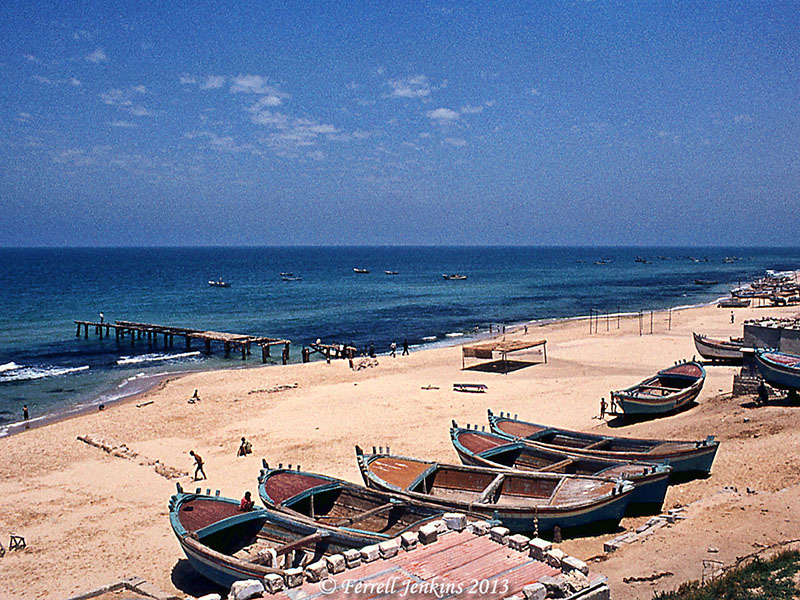
There was not much to see at Gaza. By the time we visited in 1968, Gaza was under Israeli control. We drove to the coast where there were only a few houses and some small fishing boats. This is one of the few slides that I have to illustrate the visit to Gaza.

Gaza on the Mediterranean Sea in May, 1968. Photo by Ferrell Jenkins.

Gaza on the Mediterranean Sea in May, 1968. Photo by Ferrell Jenkins.

Gaza is mentioned several times in the Old Testament. Here is a summary of these references.

  • Gaza was the southwestern boundary of the Canaanites in the table of Nations (Genesis 10:19).
  • The original inhabitants of Gaza were replaced by the Caphtorim, likely the ancestors of the Philistines (Deuteronomy 2:23).
  • Joshua defeated Canaanites “even as far as Gaza” (Joshua 10:41).
  • Joshua eliminated the Anakites except in Gaza, Gath, and Ashdod (Joshua 11:21-22). We recognized these cities as later belonging to the Philistines.
  • Gaza is listed as belonging to the tribe of Judah (Joshua 15:47; Judges 1:18).
  • The Midianites oppressed Israel, “as far as Gaza”, for seven years (Judges 6:4).
  • Samson had contact with the inhabitants of Gaza (Judges 16).
  • Gaza is listed as one of the five Philistine cities in the time of the Israelite Judges (1 Samuel 6:17).
  • Solomon controlled territory as far southwest as Gaza (1 Kings 4:24).
  • Hezekiah defeated the Philistines as far as Gaza and its territory (2 Kings 18:8).
  • Jeremiah makes reference to Gaza being conquered by Pharaoh (Jeremiah 47:1).
  • The prophets of Judah pronounced judgments upon Gaza (Amos 1:6-7; Zephaniah 2:4; Zechariah 9:5).

The only New Testament reference to Gaza is in Acts 8:26. Philip the evangelist was instructed to go south on the road that descends from Jerusalem to Gaza. English translators struggle with the issue of whether the city was desert, or the road leading to the city ran through a desert area. (I will leave that for some other time.)

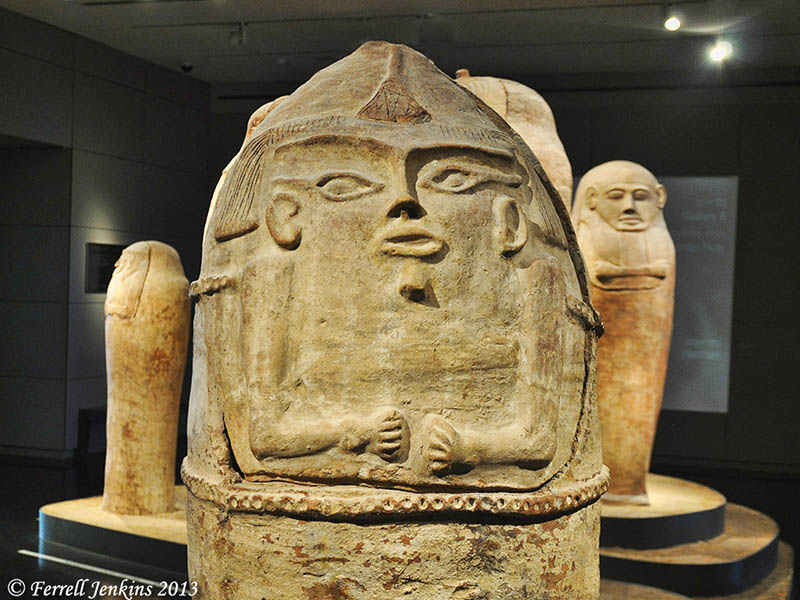
The first display one sees as he enters the archaeology wing of the Israel Museum is that of the anthropoid coffins from Deir el-Balah, a site south of Gaza city. The coffins, excavated by Trude Dothan in 1972, bear evidence of Egyptian influence. They date to the 13th century B.C.
Anthropoid Coffins from Deir el-Balah in the Israel Museum. Photo by Ferrell Jenkins.

Anthropoid Coffins from Deir el-Balah in the Israel Museum. Photo by Ferrell Jenkins.

Reprint from January 7, 2012.