Category Archives: Culture

Google is 15

Google search is celebrating a 15th birthday with an interactive heading. Take a look at google.com. This has proven to be a powerful tool which I use several times each day.

You can go back in history and see what a Google search results page looked like when the program was launched. Search for Google in 1998.

Fifteen. Does this mean Google will be able to get a learner’s permit?

Anyone out there remember when we searched at CERN?

Solomon’s Seaport at Ezion-geber

The cedar from Lebanon was brought by sea to Joppa for the building of Solomon’s temple (2 Chronicles 2:16). But that port was not adequate to meet Israel’s needs. Scripture informs us that Solomon built a fleet of ships at Ezion-geber.

King Solomon built a fleet of ships at Ezion-geber, which is near Eloth on the shore of the Red Sea, in the land of Edom. And Hiram sent with the fleet his servants, seamen who were familiar with the sea, together with the servants of Solomon. And they went to Ophir and brought from there gold, 420 talents, and they brought it to King Solomon. (1Kings 9:26-28 ESV)

Then Solomon went to Ezion-geber and Eloth on the shore of the sea, in the land of Edom. And Hiram sent to him by the hand of his servants ships and servants familiar with the sea, and they went to Ophir together with the servants of Solomon and brought from there 450 talents of gold and brought it to King Solomon. (2 Chronicles 8:17-18 ESV)

Ezion-geber is said to be near Eloth (Elat, Elath, in some English versions). We pointed out in the previous post that Nelson Glueck thought he had located Ezion-geber at Tell el-Kheleifeh and that it was the same as Eloth. In 1962 Beno Rothenberg demonstrated that the installation at Tell el-Kheleifeh could not have been for copper smelting. In 1965 Glueck wrote an article in which he agreed with Rothenberg. This means that Tell el-Kheleifeh may not be Ezion-geber.

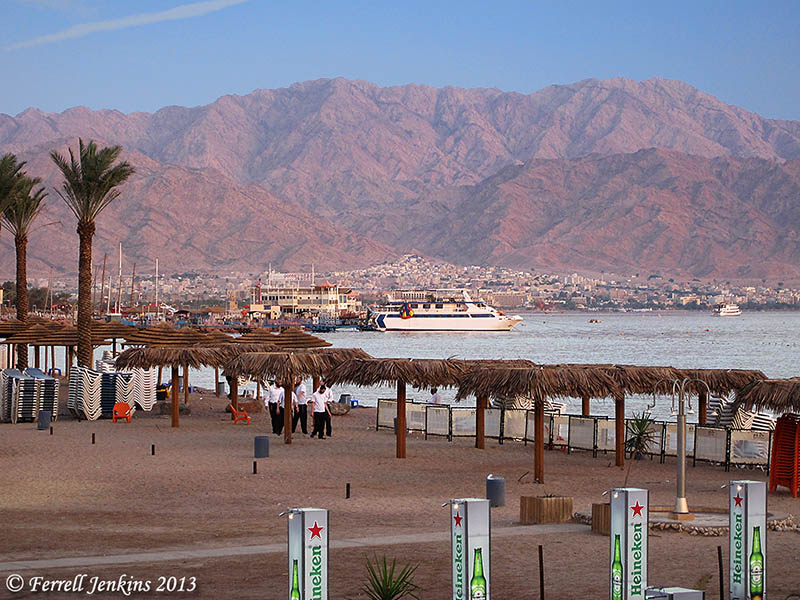
The north end of the Gulf of Eilat.Aqabah. The view is to the east and the city of Aqabah, Jordan. Tell el-Kheleifeh is only a few blocks north of the shore. Photo by Ferrell Jenkins.

The north end of the Gulf of Eilat/Aqabah. The view is to the east and the city of Aqabah, Jordan. Tell el-Kheleifeh is only a short distance north of the shore in Jordan. Photo by Ferrell Jenkins.

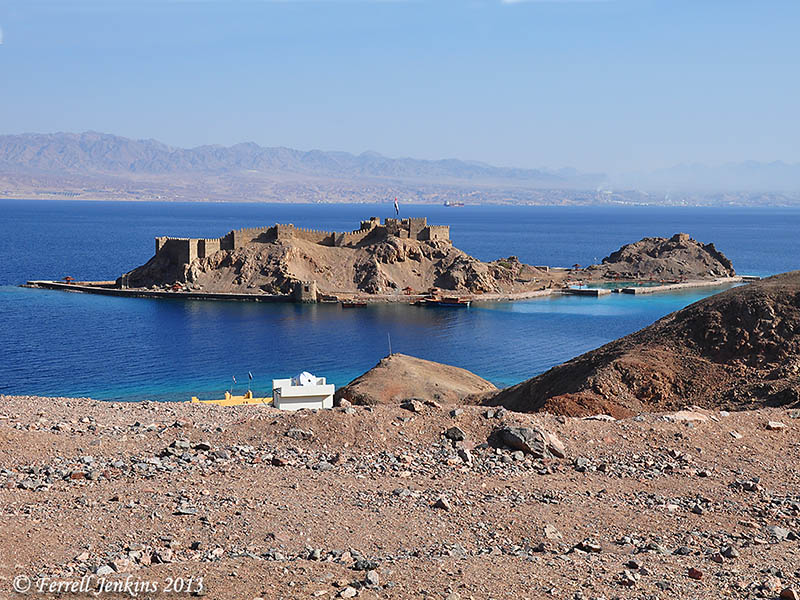
Alexander Flinder says the coastline at Tell el-Kheleifeh is a “sandy beach, with shallow water – totally unsuitable for small craft, let alone for a substantial merchant fleet” (“Is This Solomon’s Seaport?” BAR, July/August 1989, p. 38). Flinder has suggested that Ezion-geber may have been on a small island in the Gulf of Eilat/Aqabah called Jezirat Faraun (Pharaoh’s Island). It is located about seven miles south of modern Eilat, but now under Egyptian control. Flinder’s study shows that there has been an artificial harbor at this location in several historical periods and that it was characteristic of other known Phoenician ports. See the complete article for more details and photos.

Pharaoh's Island in the Gulf of Eilat/Aqabah from the west. Photo by Ferrell Jenkins.

Pharaoh’s Island in the Gulf of Eilat/Aqabah from the west. Photo by Ferrell Jenkins.

Meir Lubetski, ABD, says,

Unique were the underwater archaeological findings which established the existence of an artificial enclosed harbor bordering a sizable natural anchorage, with jetties built out into the water to influence currents opposite the island on the shore of the mainland.

I can only point to a suggestion regarding the identity of Ezion-geber with Eloth (Elath). Kenneth A. Kitchen (New Bible Dictionary, 3rd ed., 1996, p. 305). says the two places were,

  • Separate stations during the Israelite wandering (Numbers 33:35-36; Deuteronomy 2:8).
  • Ezion-geber appears to be mentioned alone in the 10th-9th centuries, and is the point from which Solomon sent ships.
  • Jehoshaphat’s planned expedition from Ezion-geber was wrecked (1 King 22:48; 2 Chronicles 20:36-37).
  • King Uzziah of Judah captured Elath/Eloth from Edom and rebuilt it in the 8th century (2 Kings 14:22).
  • Ahaz lost the port to the Edomites (2 Kings 16:6).
View of Pharaoh's Island from the west. The view looks east across the Gulf of Eilat/Aqabah. The land in the distance is Saudi Arabia, the Biblical land of Midian. Photo by Ferrell Jenkins.

View of Pharaoh’s Island from the west. The view looks east across the Gulf of Eilat/Aqabah to Saudi Arabia, the Biblical land of Midian. Photo by Ferrell Jenkins.

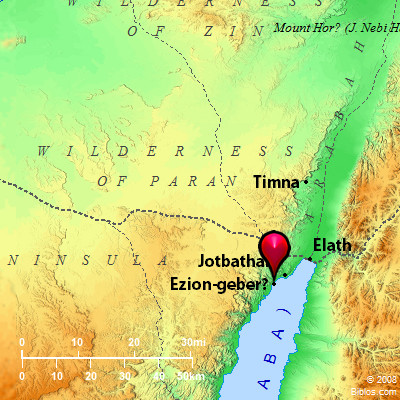
The map at BibleAtlas.org shows the places we have discussed in this and the previous post. Notice the location of Ezion-geber is indicating, with a question mark, the location of Pharaoh’s Island.

Map of Ezion-geber, Elath, and Timnah. BibleAtlas.org.

Map of Ezion-geber, Elath, and Timnah. BibleAtlas.org.

Copper production in the time of Solomon

The “promised land” was described to the Israelites as “a land whose stones are iron, and out of whose hills you can dig copper” (Deuteronomy 8:9). Copper was mined in the Arabah of Israel as far back as the 13th-12th century B.C. Copper is still mined at Timna about 25 miles north of Eilat (close to Ezion-geber). Belgian engineers made a survey proving the presence of 100,000 tons of metallic copper. Iron ore has been found in the Negev and in eastern Upper Galilee (Vilnay, The Israel Guide, 17).

The Bible does not say that Solomon had copper mines at Ezion-geber, but the presence of mining facilities dating to the 10th century B.C. indicates that this may have been one of the reasons why the King built a port and had a navy stationed there (1 Kings 9:26-28). Ezion-geber was more than 220 miles from Jerusalem. The copper provided a good medium of exchange for gold, spices, and other items that Israel needed.

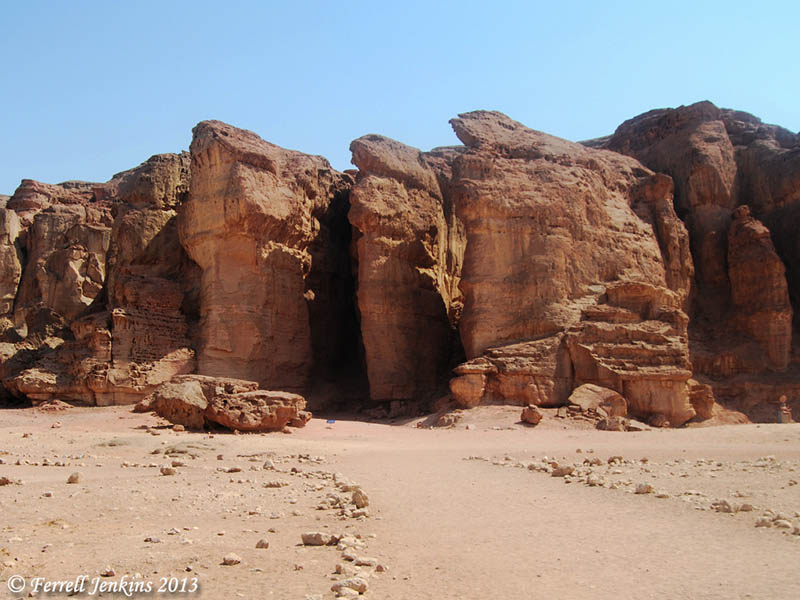
These massive pillars at Timna have been associated with Solomon for a long time. Photo by Ferrell Jenkins.

The Pillars of Solomon. These massive pillars at Timna have been associated with Solomon for a long time. Photo by Ferrell Jenkins.

In 1938, Nelson Glueck, reported that he had found a copper-refining plant at Tell el-Kheleifeh, which he identified as Ezion-geber, on the north shore of the Gulf of Aqabah (the Israelis call it the Gulf of Eilat). This site is now within Jordanian territory. Glueck identified the copper-refining plant as King Solomon’s copper mines, and explained that the apertures in the buildings served as flueholes. Through them, he thought, “the strong winds from the north-northwest entered into the furnace rooms of this structure,” which he called a “smelter, to furnish a natural draft to fan the flames.”

It is true that copper smelting was done in the Arabah in the time of Solomon, but Glueck later changed his mind about the building he had formerly identified as the refining plant. In 1962 Beno Rothenberg demonstrated that the installation at Tell el-Kheleifeh could not have been for copper smelting.

Glueck was convinced by the findings of Rothenberg that the apertures in the building “resulted from the decay and or burning of wooden beams laid across the width of the walls for bonding or anchoring purposes.” This does not affect any statement of the Bible, but it does mean that the old argument about the copper refining plant found in the Arabah is no longer valid. Glueck’s identification of Tell el-Kheleifeh with Ezion-geber is no longer accepted. We plan to follow this post with one on Solomon’s seaport.

A recent excavation and study, including archaeometric dating (of Site 30 of the southern Arabah) conducted by Erez Ben-Yosef, et al. has provided a new chronological framework for Iron Age copper production at Timna (Israel). Ben-Yosef says the study,

resulted in a new chronological framework for Iron Age copper production in this region. The main period of copper smelting in the southern Arabah was during the 10th century B.C.E., and the extent of New Kingdom Egyptian control over copper production in Timna was more limited than previously believed. (“A New Chronological Framework for Iron Age Copper Production at Timna (Israel).” BASOR 367 (2012), p. 65.

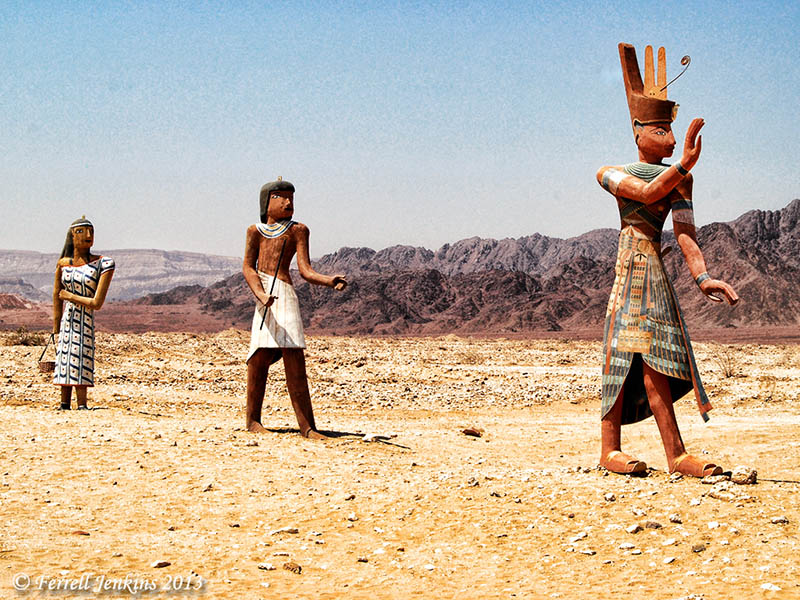
Egyptians welcome visitors to Timna Park. It is true that Egyptians worked in the area during the 13th-12th centuries B.C., but Ben-Yosef says their control over the copper production “was more limited than previously believed.”

Entrance to the Timna Park. Photo by Ferrell Jenkins.

Egyptians welcome visitors to the Timna Park. Perhaps some Israelites should be added. Photo by Ferrell Jenkins.

Other post having to do with copper may be read here, here, and here.

This paragraph provides documentation for some of the material mentioned above. For more information one may check the following books or articles by Nelson Glueck: “The First Campaign at Tell el-Kheleifeh,” Bulletin of the American Schools of Oriental Research, Oct., 1938; The Other Side of the Jordan, 1940; Rivers in the Desert, 1949; the change was announced in “Ezion-geber,” The Biblical Archaeologist, Sept., 1965.

Trying to drive a bargain

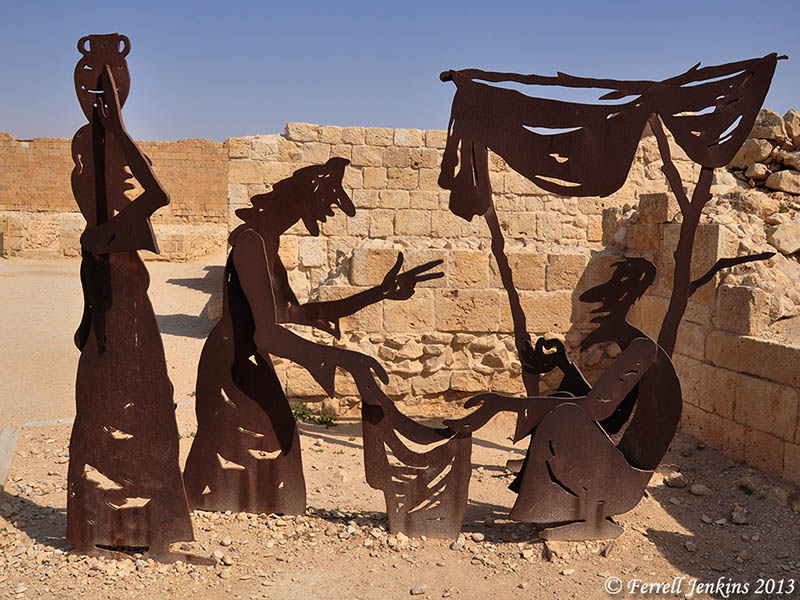
In Israel many of the national parks have metal sculptures that I find fascinating. The one below at Avedat, a Nabatean city located on the ancient spice route, is of a peddler trying to sell his wares to a couple of buyers.

The buyer tries to talk down the peddler. Photo by Ferrell Jenkins.

The buyer tries to talk down the peddler. Photo by Ferrell Jenkins.

I was reminded of one of the wise sayings of Solomon.

 “Bad, bad,” says the buyer, but when he goes away, then he boasts. (Proverbs 20:14 ESV)

Bargaining is one of the most difficult things for many Americans who travel to the Bible lands to do. Americans are accustomed to prices being fixed. Some, however, really like a good bargain.

Roman period wine presses at Eretz Israel Museum

The Eretz Israel Museum, located on the campus of Tel Aviv University in Tel Aviv, is a wonderful, educational museum to visit. Many of the exhibits are outside, including an archaeological tel (Tel Qasile), and others are in several different small buildings.

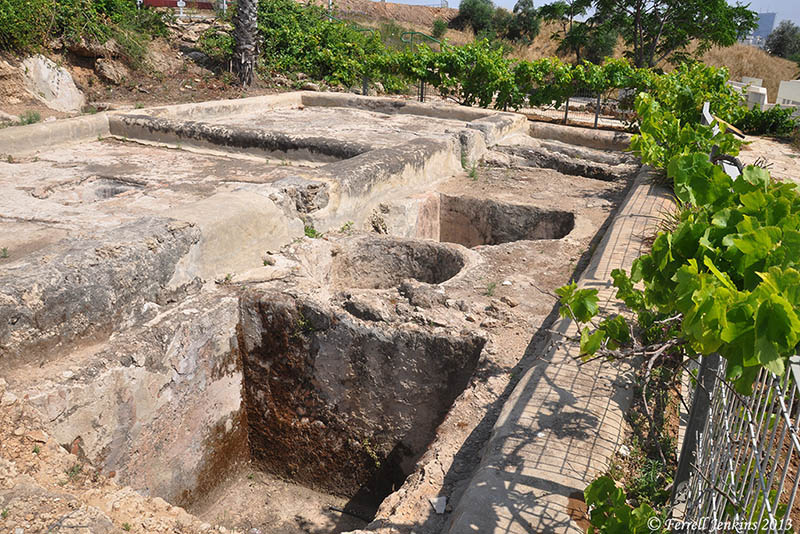
In the photo below we see two Roman period wine presses. (Common English versions use the spelling winepress.) The treading floors are on the left and the collecting vats are on the right.

Roman winepresses at Eretz Israel Museum, Tel Aviv. Photo by Ferrell Jenkins.

Roman wine presses at Eretz Israel Museum, Tel Aviv. Photo by Ferrell Jenkins.

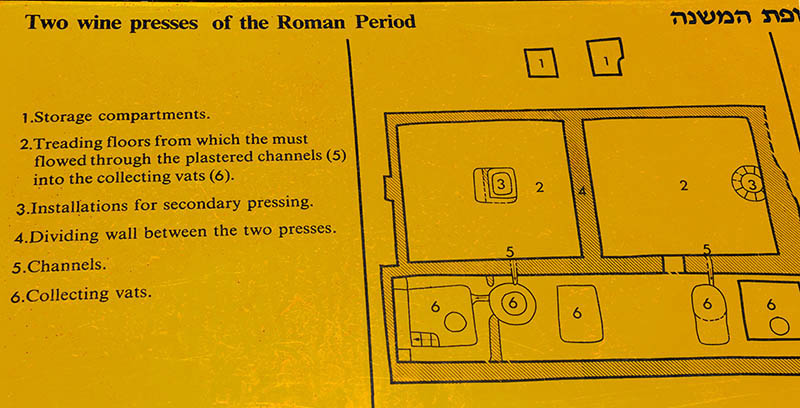
The sign below provides needed explanation for those who have not seen a wine press from the Roman period.

Explanation of Roman winepresses at Eretz Israel Museum, Tel Aviv. Photo by Ferrell Jenkins.

Explanation of the Roman wine presses at Eretz Israel Museum. Photo: Ferrell Jenkins.

One of the parables of Jesus illustrates how common such wine presses were in Biblical times.

“Hear another parable. There was a master of a house who planted a vineyard and put a fence around it and dug a winepress in it and built a tower and leased it to tenants, and went into another country. (Matthew 21:33 ESV)

See a photo of the Byzantine wine press at Avdat here. The Museum website may be visited here.

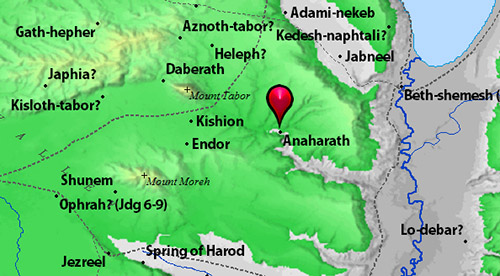
Tel Rekhesh may be Anaharath

The Jewish Press reported here on the discovery of a Canaanite cult altar at Tel Rekhesh, an archaeological mound east of Mount Tabor. Archaeologists from the University of Tenri, Japan, and the Institute of Archaeology of Galilee Kinneret Academic College, have been working together at the site for the past six years. I have had the site on my “wish list” for the past three years, but have not yet visited the it.

The reports says,

The same excavations also revealed large parts of a Jewish farmhouse dating back to the Second Temple. Researchers were able to establish that this was a place of Jewish dwellers based on typical stone tools, oil lamps and coins minted in the city of Tiberias.

“The diggers received a big surprise,” said Chairman of the Institute of Archaeology of Galilee Kinneret Academic College Dr. Mrdechai [Mordechai] Avi’am. “In the ruins of the second floor of the farmhouse, they discovered a Canaanite cult statue, similar to a statue that stood in the sanctuary of a temple which is yet to be located.”

“Similar stones have been discovered in a number of Canaanite sites, such as Hazor,” Dr. Avi’am said. “The same stone was later used as part of a doorframe in one of the rooms of the Jewish structure. This is the unique development of archaeological hills in Israel, where successive generations mingle ritual objects on their way from the world of the Canaanite mythology to monotheism.”

This region is located in the territory allotted to the tribe of Issachar (Joshua 19:17-23). Y. Aharoni identified Tel Rekhesh with the Biblical site of Anaharath (Joshua 19:19).

Location of Anaharath. BibleAtlas.org.

Location of Anaharath. BibleAtlas.org.

In a page About the Site, the web page says,

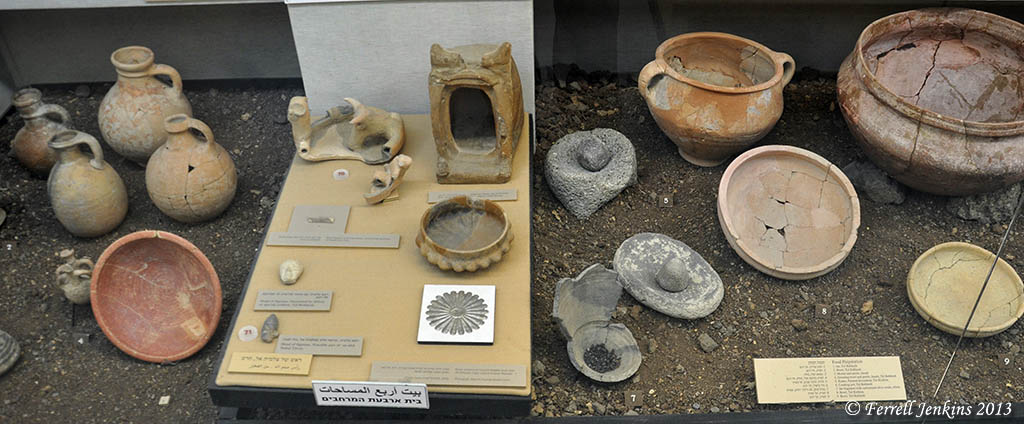
Some of the findings from the site, collected by local people, are now exhibited in the archaeological museum in the Kibbutz Ein-Dor, some 5 km from Tel Rekhesh.  The collection includes a fragment of Egyptian stela, a clay model of a temple, and complete pottery from various periods.

The photo below is one I made earlier this year. At least seven of the artifacts displayed in this case are identified as being from Tel Rekhesh. Most of them are used in food preparation. The shrine in the center (“model of a temple”) is a replica. I failed to get a photo of the Egyptian stela fragment.

At least 7 of the artifacts displayed in this case at The Ein Dor Archaeological Museum are from Tel Rekesh. Photo by Ferrell Jenkins.

At least 7 of the artifacts displayed in this case at The Ein Dor [En-dor, Endor] Archaeological Museum are from Tel Rekesh. Photo by Ferrell Jenkins. Click to enlarge.

The web site for the Tel Rekhesh project is available here, but the content is not current. Todd Bolen includes a photo of Tel Rekhesh in the Tabor River valley here.

HT: Joseph I. Lauer

Herod the Great: The King’s Final Journey

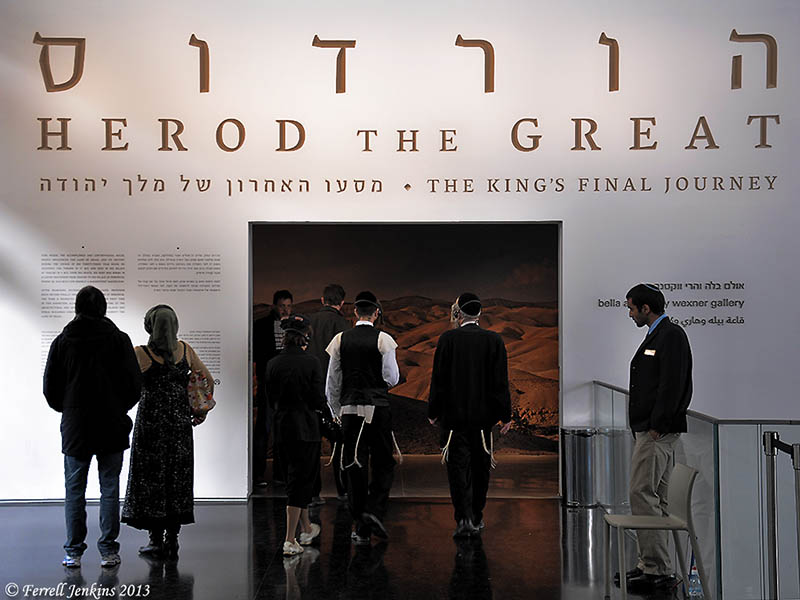
The Israel Museum exhibition of Herod the Great: The King’s Final Journey is scheduled to continue through January 4, 2014. This is a wonderful exhibit. If you can’t make it by the deadline, you may take a gallery tour here. This includes photos, drawings, explanations, and videos that walk you through the exhibit.

Entrance to the Herod the Great exhibit in the Israel Museum. Photo by Ferrell Jenkins.

Entrance to the Herod the Great exhibit in the Israel Museum.

For additional information about Herod and some of his building projects, see here, herehere, and other places.

Leen Ritmeyer was with a group allowed to make some photos within the exhibit. Read about it here.

Evidence of Cinnamon in use 3000 years ago

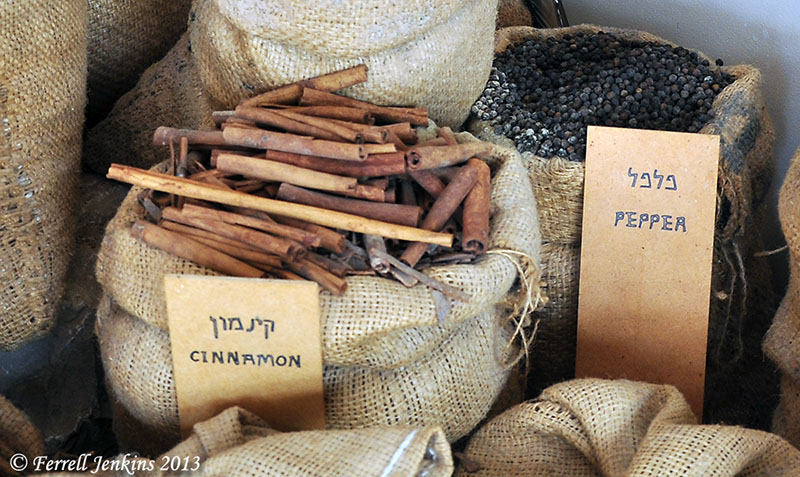
Live Science reports (here) on the investigation of 27 flasks from five archaeological sites in Israel showing that cinnamon was stored in them. The flasks date back to about 1000 years B.C. Ten of the 27 flasks contain “cinnamaldehyde, the compound that gives cinnamon its flavor, indicating that the spice was stored in these flasks.” Tel Dor is the only site named in the report.

At this time cinnamon was found in the Far East with the closest places to Israel being southern India and Sri Lanka located at least 3,000 miles (nearly 5,000 kilometers) away. A form of it was also found in the interior of Africa, but does not match the material found in these flasks.

This discovery “raises the intriguing possibility that long-range spice trade from the Far East westward may have taken place some 3,000 years ago,” researchers write in a paper to be published in the journal Mediterranean Archaeology and Archaeometry. Although cinnamon can be purchased today at any grocery or bulk food store, 3,000 years ago, people in the Levant would have needed to take part in trade that extended beyond the edge of the known world in order to acquire it, something this discovery suggests they were willing to do.

This trade may go back ever further into antiquity and involve other goods and parts of the Middle East. The researchers note, for example, that black pepper from India has been found in the mummy of Ramesses II, a pharaoh of Egypt who lived more than 3,200 years ago.

Cinnamon displayed on the Spice Route at Avedat. Photo by Ferrell Jenkins.

Cinnamon and pepper displayed on the ancient Spice Route at Avedat.

Cinnamon is mentioned only four times in the Bible.

  • Cinnamon was used in the anointing oil for the tabernacle (Exodus 30:23).
  • The adulterous woman tells the young man that she has perfumed her bed with cinnamon and other spices (Proverbs 7:17).
  • Cinnamon is used in the sexual/sensuous context of Song of Solomon 4:14.
  • Cinnamon is one of the spices imported by Babylon (the ancient Roman Empire) in Revelation 18:13.

Much archaeological work goes on in the library and in the lab.

HT: Joseph I. Lauer

Crusader period hospital building in Jerusalem

The Israel Antiquities Authority announced yesterday that a building from the Crusader period (1099–1291 A.D.) has been excavated. The building is in an area of the Christian Quarter of Jerusalem known as the Muristan (“a corruption of the Persian word for hospital”). Our first photo shows part of the Muristan near the old structure. You can see the tower of the Lutheran Church of the Redeemer. This is near the Church of the Holy Sepulcher.

The Muristan in the Christian Quarter of the Old City of Jerusalem. The tower of the Lutheran Church of the Redeemer is visible. Photo by Ferrell Jenkins.

The Muristan in the Christian Quarter of the Old City of Jerusalem. The tower of the Lutheran Church of the Redeemer is visible. Photo by Ferrell Jenkins.

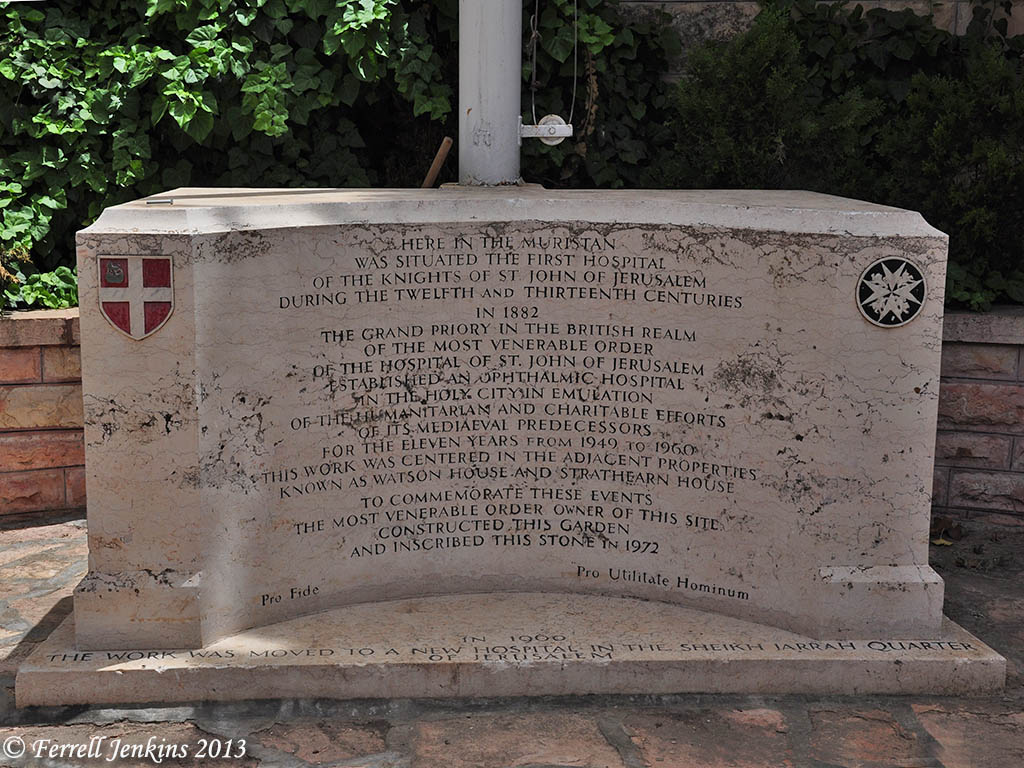
Between the Lutheran Church and the Armenian Quarter on Muristan Street stands a monument identifying the area where the hospital of St. John of Jerusalem was established. Click on the image if you wish to read the inscription.
Marker identifying the location of the hospital built by the "Order of St. John of the Hospital in Jerusalem." Photo by Ferrell Jenkins.

Marker identifying the location of the hospital built by the “Order of St. John of the Hospital in Jerusalem.” Photo by Ferrell Jenkins.

The Press Release contains several bits of historical information that may be of interest to readers. Here is the full Press Release.

— ♦ —

The Israel Antiquities Authority conducted an excavation in the impressive Crusader building, which is similar in appearance to the Knights Halls in Akko and stands 6 meters high, prior to the construction of a restaurant by the Grand Bazaar Company

Part of an enormous structure dating to the Crusader period (1099–1291 CE), which was a busy hospital,  has currently been revealed to the public following excavations and research by the Israel Antiquities Authority there in cooperation with the Grand Bazaar Company of East Jerusalem. The building, owned by the Waqf, is situated in the heart of the Christian Quarter in the Old City of Jerusalem, in a region known as “Muristan” (a corruption of the Persian word for hospital), near David Street, the main road in the Old City.

Until a decade or so ago the building served as a bustling and crowded fruit and vegetable market. Since then it stood there desolate. In the wake of the Grand Bazaar Company’s intention to renovate the market as a restaurant, the Israel Antiquities Authority conducted archaeological soundings there.

The structure, only a small part of which was exposed in the excavation, seems to extend across an area of fifteen dunams! Its construction is characterized by massive pillars and ribbed vaults and it stands more than six meters high. The image we have is that of a great hall composed of pillars, rooms and smaller halls.
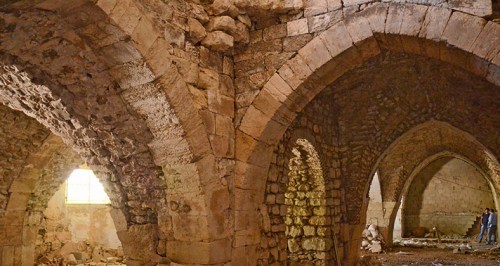
Ruins of the Crusader hospital built by the Order of St. John of the Hospital in Jerusalem. Yoli Shwartz, courtesy of the Israel Antiquities Authority.

Ruins of the Crusader hospital built by the Order of St. John of the Hospital in Jerusalem. Photo by Yoli Shwartz, courtesy of the Israel Antiquities Authority.

According to Renee Forestany and Amit Re’em, the excavation directors on behalf of the Israel Antiquities Authority, “We’ve learned about the hospital from contemporary historical documents, most of which are written in Latin.  These mention a sophisticated hospital that is as large and as organized as a modern hospital. The hospital was established and constructed by a Christian military order named the “Order of St. John of the Hospital in Jerusalem” and known by its Latin name the Hospitallers (from the word hospital). These righteous warriors took an oath to care for and watch over pilgrims, and when necessary they joined the ranks of the fighters as an elite unit.

The hospital was comprised of different wings and departments according to the nature of the illness and the condition of the patient – similar to a modern hospital. In an emergency situation the hospital could accept as many as 2,000 patients. The Hospitallers treated sick men and women of different religions. There is information about Crusaders who ensured their Jewish patients received kosher food. All that notwithstanding, they were completely ignorant in all aspects of medicine and sanitation: an eyewitness of the period reports that a Crusader doctor amputated the leg of a warrior just because he had a small infected wound – needless to say the patient died. The Muslim Arab population was instrumental in assisting the Crusaders in establishing the hospital and teaching them medicine. Arab culture has always held the medical profession in high regard and Arab physicians were famous far and wide.

In addition to the medical departments, the hospital also functioned as an orphanage where abandoned newborns were brought. Mothers who did not want their offspring would come there with covered heads and hand over their infants. In many instances when twins were born, one of them was given to the orphanage. The orphans were treated with great devotion and when they reached adulthood they served in the military order.

We can learn about the size of the hospital from contemporary documents. One of the documents recounts an incident about a staff member who was irresponsible in the performance of his work in the hospital. That person was marched alongside the building awhile, and the rest of the staff, with whips in hand, formed a line behind him and beat him. This spectacle was witnessed by all of the patients.

The Ayyubid ruler Saladin lived near the hospital following the defeat of the Crusaders, and he also renovated and maintained the structure. He permitted ten Crusader monks to continue to reside there and serve the population of Jerusalem.

The building collapsed in an earthquake that struck in 1457 CE and was buried beneath its ruins, which is how it remained until the Ottoman period. In the Middle Ages parts of the structure were used as a stable and the bones of horses and camels were found in excavations, alongside an enormous amount of metal that was used in shoeing the animals.

According to Monser Shwieki, the project manager, “The magnificent building will be integrated in a restaurant slated to be constructed there, and its patrons will be impressed by the enchanting atmosphere of the Middle Ages that prevails there”. According to Shwieki, “The place will be open to the public later this year”.

Click here to download high resolution pictures . Photograph credit: Yoli Shwartz, courtesy of the Israel Antiquities Authority.

HT: Joseph I. Lauer

Painting the eyes

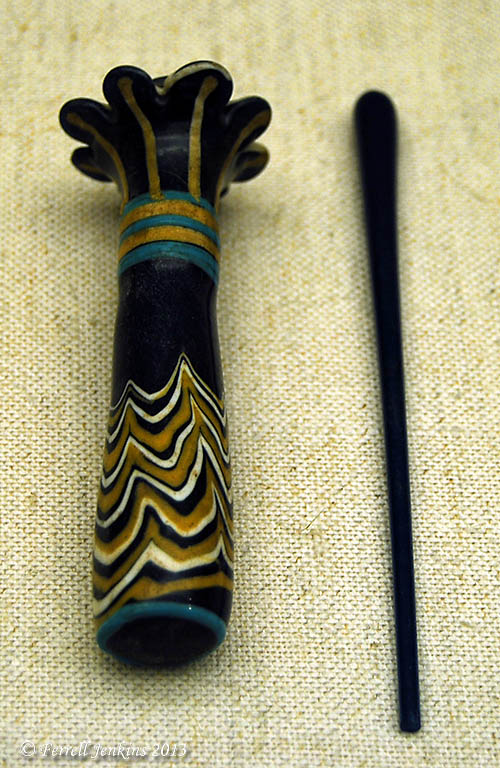
Cosmetics and the painting of one’s eyes is nothing new. The photo below shows a Palm-column flask and kohl stick displayed in Boston’s Museum of Fine Arts. The item is said to date between 1386 and 1212 B.C. Information with the item says,

The palm-column flask is one of the best represented types of glass vessels from the New Kingdom. It served as a container for the cosmetic kohl, or eyepaint, made of ground galena mixed with fat or resin and applied to the lids with the slender glass rod.

Palm-column flask and kohl stick. Museum of Fine Arts, Boston. Photo by Ferrell Jenkins.

Palm-column flask and kohl stick. Museum of Fine Arts, Boston. Photo” Ferrell Jenkins.

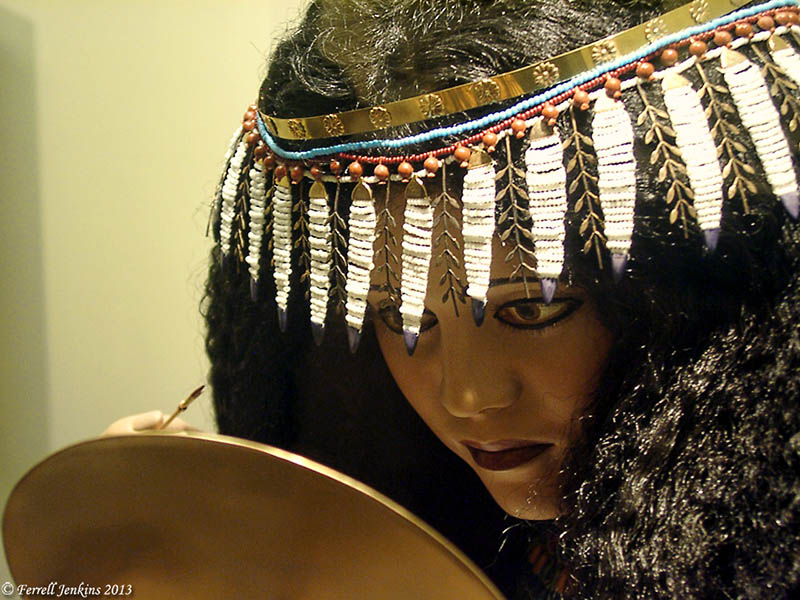
It was centuries later when Jehu came to see Jezebel at Jezreel. Jezebel, the widow of King Ahab, wanted to make a good appearances on Jehu.

When Jehu came to Jezreel, Jezebel heard of it. And she painted her eyes and adorned her head and looked out of the window. (2 Kings 9:30 ESV)

Perhaps Jezebel did not know that she was preparing herself for her death.

Royal Ontario Museum exhibit showing an Egyptian woman painting her eyes. Photo by Ferrell Jenkins.

Royal Ontario Museum exhibit showing an Egyptian woman painting her eyes. Photo by Ferrell Jenkins.

The prophets also spoke of this practice, but not in a complimentary way, in Jeremiah 4:30 and Ezekiel 23:40.