Category Archives: Bible Study

Visiting Iznik (Nicea, Nicaea), Turkey – Part 5

The Walls and Gates of Iznik/Nicea

Our first photo shows the Istanbul Gate from inside the city wall. The gates of the city are named much the same way many streets or highways are named in USA cities, to designate the next significant city in that direction.
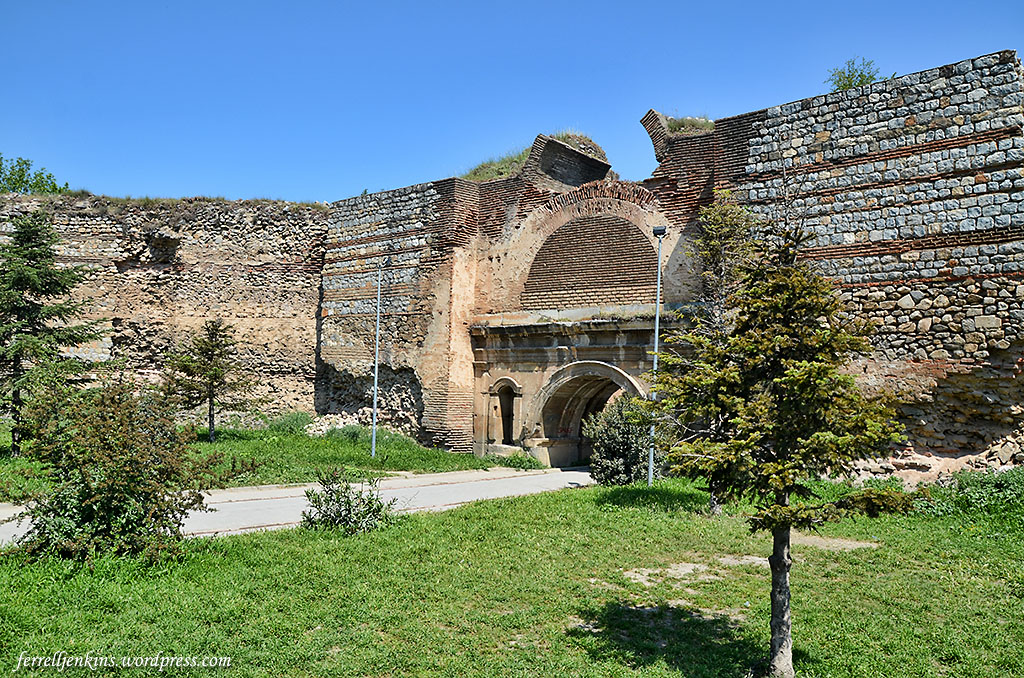
The Istanbul Gate in the north wall of Iznik/Nicea. Photo by Ferrell Jenkins.

A portion of the wall of Iznik/Nicea and the Istanbul Gate in the north wall. Photo by Ferrell Jenkins.

A nice promotional brochure on Iznik, published by the Republic of Turkey Ministry of Culture and Tourism in 2011 has these comments about the walls and gates.

The pentagon shaped city walls that surround İznik are 4970 metres [about 3.1 miles] in length. Although these city walls were constructed in the Hellenistic era, they have lost all the characteristics peculiar to this era. Only the wall parts constructed in the Roman and Byzantine periods have survived to the present. In the 8th century, the city walls were made higher and the bastions were built by using the construction materials brought from the theatre.
Historic Gates   The historic gates in İznik were actually constructed as triumphal arches in the reigns of the Emperor Vespasianus (69–79) and Emperor Titus (79–81), and were restored to a large scale in the time of Emperor Hadrian [117-138]. The city walls were built by connecting these arches to each other. Reflecting the architectural technique and style of the Roman Period, the İstanbul, Lefke and Yenişehir gates still stand splendid today, although the remaining gate, the Göl Gate is in ruins. (p. 17)

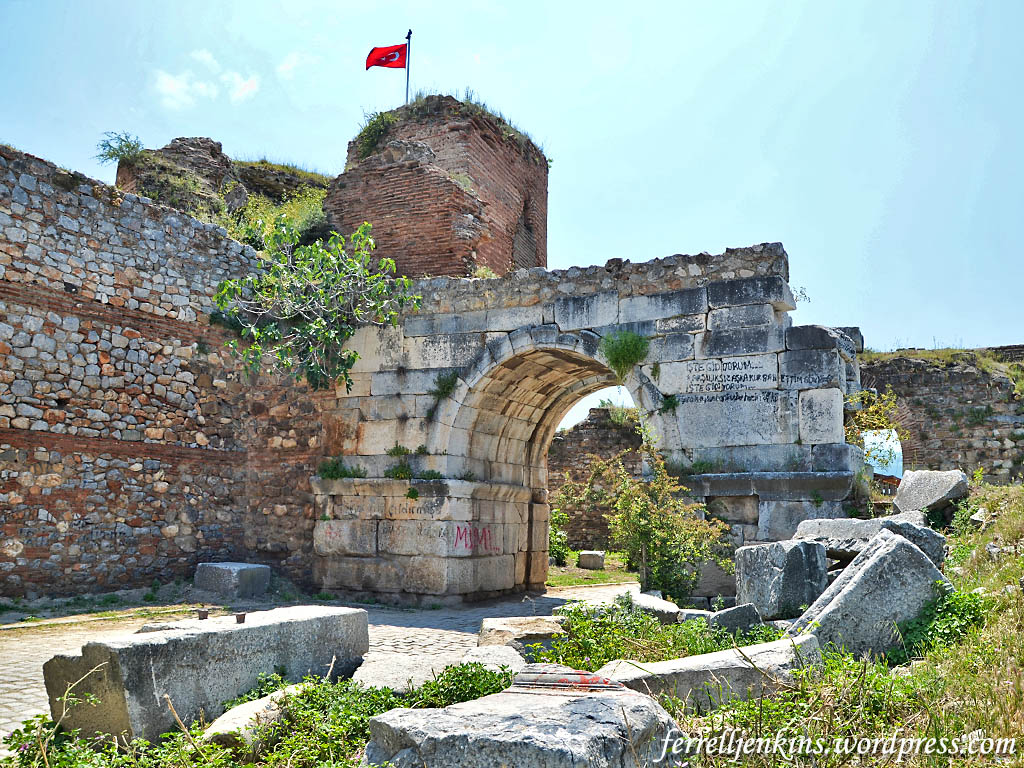
From the outside we see a portion of the Istanbul gate as one enters Iznik.
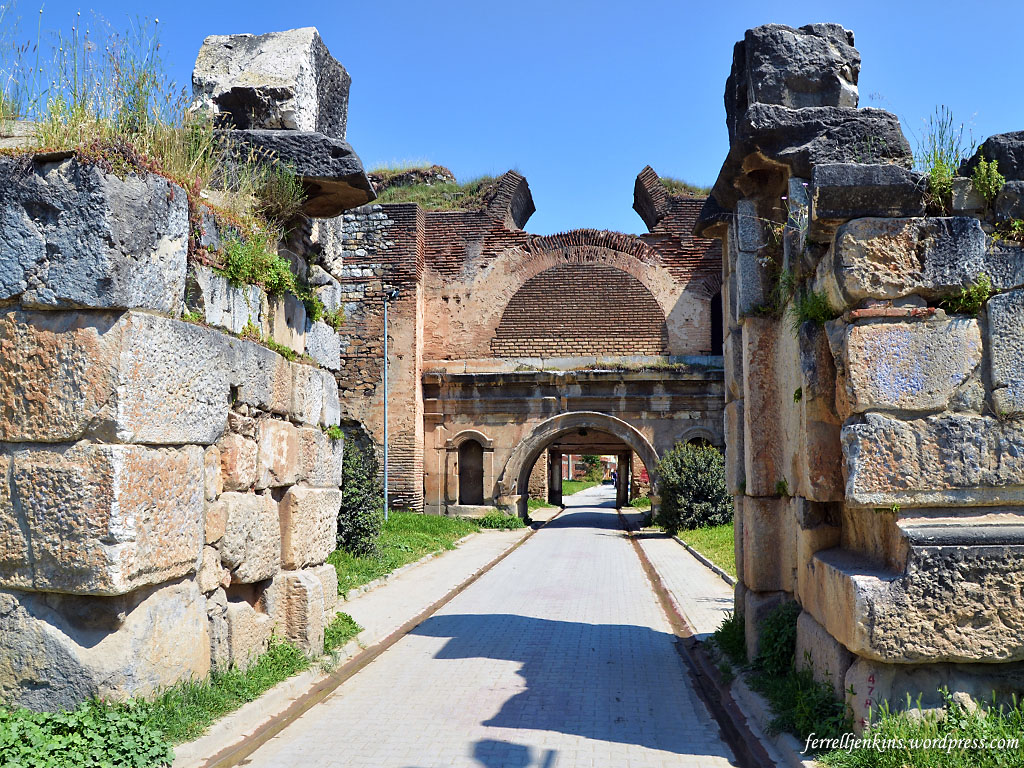
The Istanbul Gate in the north wall of Iznik/Nicea. Photo by Ferrell Jenkins.

The Istanbul Gate in the north wall of Iznik/Nicea. Photo by Ferrell Jenkins.

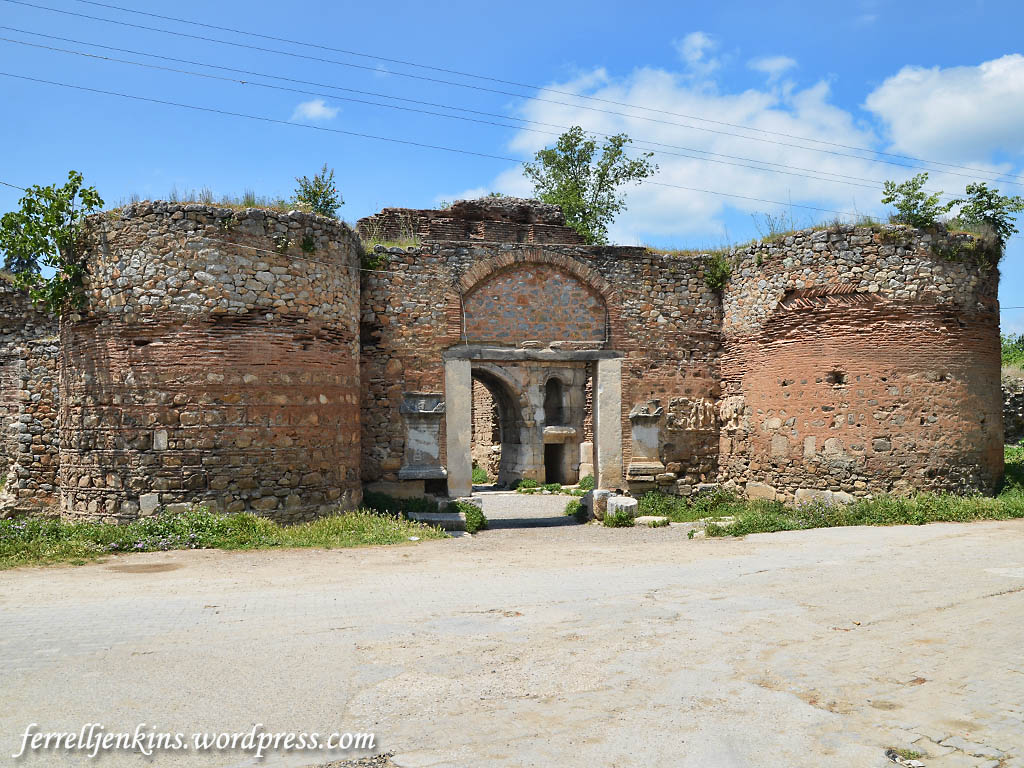
The Yenişehir Gate, marking the south entry to Iznik, is still in need of considerable repair. Several of the old towers are visible at various places around the city wall.
The Yenişehir Gate on the south side of Iznik. Photo by Ferrell Jenkins.

The Yenişehir Gate on the south side of Iznik. Photo by Ferrell Jenkins.

The Lefke Gate on the east side of the walled city of Iznik is probably the most interesting one. First we see ruins of an ancient aqueduct.
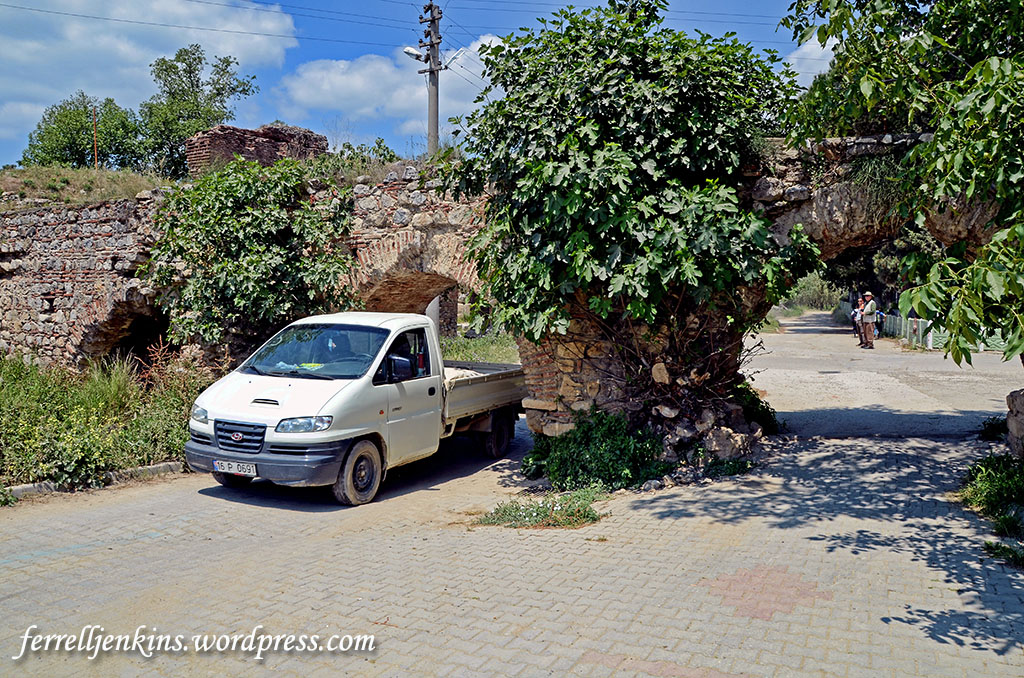
The Lefke Gate Aqueduct on the east side of Iznik. Photo by Ferrell Jenkins.

The Lefke Gate Aqueduct on the east side of Iznik. Photo by Ferrell Jenkins.

Then we see the outer Lefke Gate. There are numerous examples of recycled materials in this gate.
The Lefke Outer Gate. Photo by Ferrell Jenkins.

The Lefke Outer Gate. Photo by Ferrell Jenkins.

The first of the inner gates have Greek inscriptions showing that it was dedicated to the Roman Emperor Hadrian in A.D. 123.
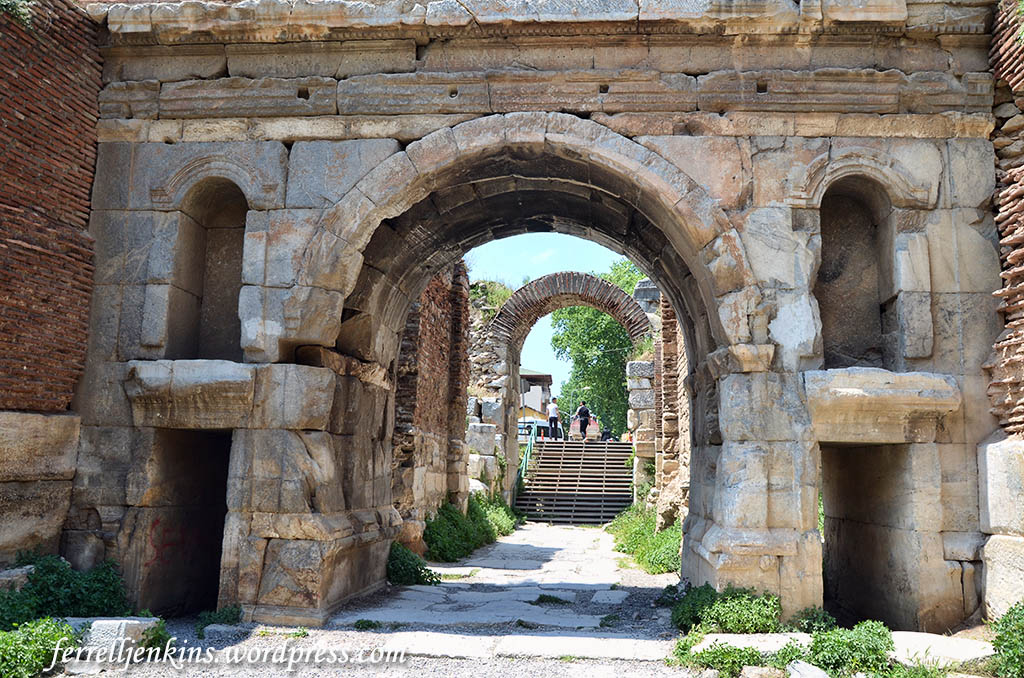
Roman period inscriptions are visible in the Lefke Gate. Photo by Ferrell Jenkins.

Roman period inscriptions are visible in the Lefke Gate. Photo by Ferrell Jenkins.

There seems to have been no restoration of the Lake (Göl) Gate, but some portions of the towers and walls can be seen.
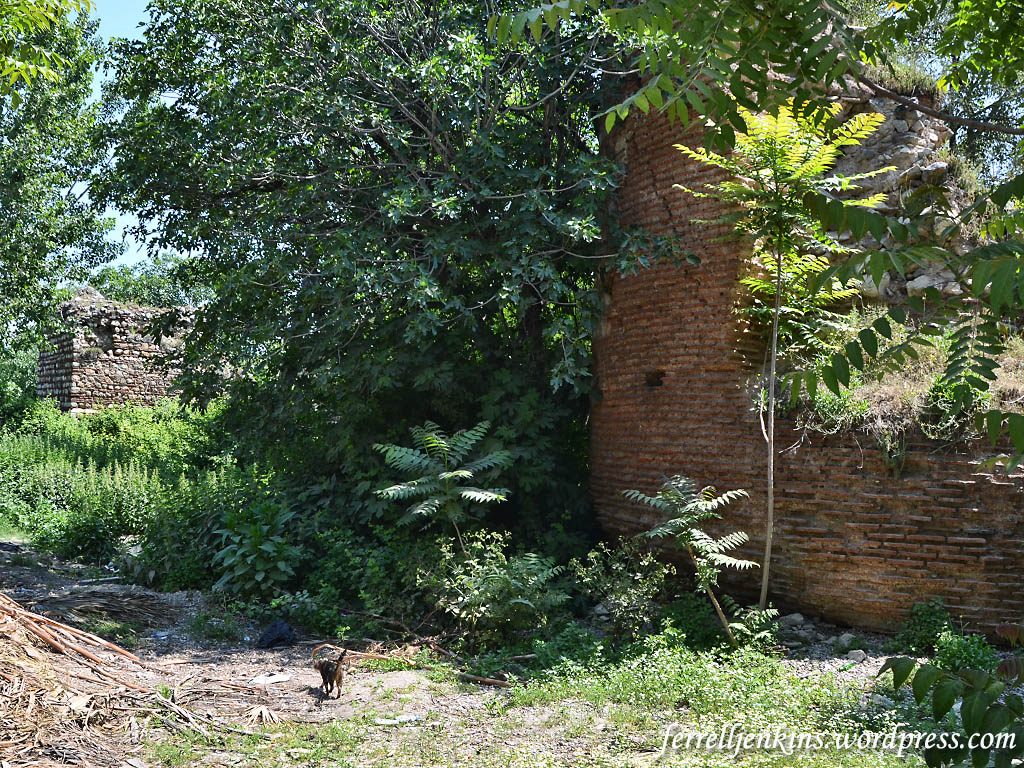
Ruins of the Lake Gate. Photo by Ferrell Jenkins.

Ruins of the Lake (Gate. Photo by Ferrell Jenkins.

We will stop here and continue in the next post to show you a few other important structures in Iznik/Nicea.
Visiting Iznik (Nicea, Nicaea), Turkey – Part 3

The First Ecumenical Council

If the New Testament is the complete and final revelation of God’s will to man, as it claims (2 Timothy 3:16-17), then no council of men, of whatever rank, has the right to change the apostolic order.

But as the churches grew and became popular, they began to imitate the government in leadership and they became more important to the leaders of the Roman Empire. When a controversy concerning the nature of Christ threatened to divide the Christians, the Emperor Constantine the Great (A.D. 307-337) called a council to meet at Nicea (or Nicaea, modern Iznik in Turkey) to discuss the issues.

Arian (c. A.D. 250-336), a presbyter of the church in Alexandria, Egypt, taught that Jesus was a created being inferior to God the Father. We speak of those who followed his teaching as Arians. It was this teaching that prompted the convening of the Council of Nicea in A.D. 325. Most works on church history covering this period will have a section devoted to Arian and the Council of Nicea.

Certain Latin terms entered the language of Christendom at that time.

  1. Homoousios – meaning that Jesus was of the same essence as God. This was the position taken by those gathered at the Council of Nicea.
  2. Homoiousios – meaning that Jesus was of like essence as God.
  3. Heteroousios – meaning that Jesus was of a different essence or substance than God. This view which relegated Jesus to a secondary god beneath the Father was the view of Arian and his followers.

There had been other councils, but this was the first that was to represent all of Christendom. In this sense the gathering failed. Of the 200 to nearly 400 church leaders (the numbers vary depending on the source) gathered at Nicea only a handful of them were from the West (the Latin or Roman church). The vast majority were from the East (the Greek church).

Constantine…

supplied postal wagons to transport bishops to Nicaea, as well as food and lodging during their trips. While they were in the city he took care of their needs and provided a large building for their sessions. (Cambridge History of Christianity, II:73.)

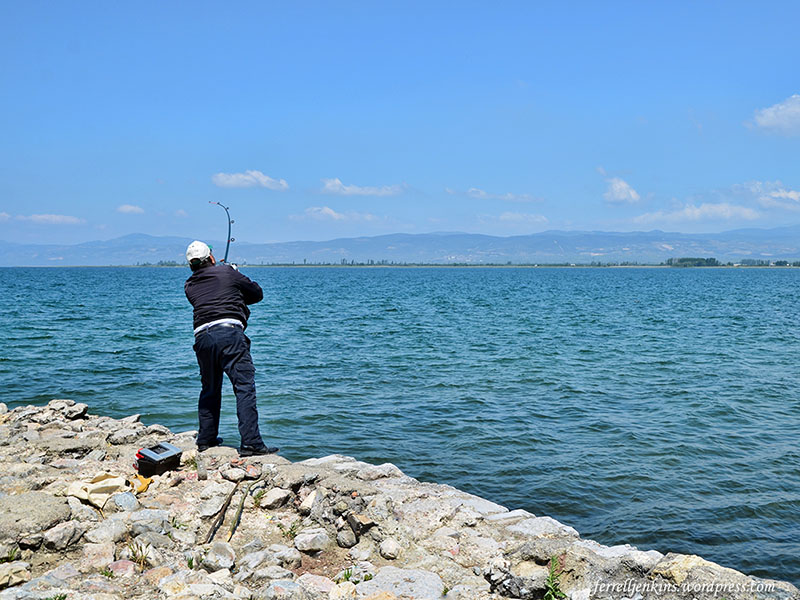
The imperial palace, located on the shore of Lake Ascania (Iznik), now lies nearly ten feet below water due to earthquakes (“Underwater basilica in Iznik to shed light on Roman era.” Hurriyet Daily News, July 25, 2016). Our guide took us to the location outside the Lake Gate where a few ruins could be seen. Ben Witherington says,

Unfortunately for this city, earthquakes struck in A.D. 358, 362, and 368, ruining many of the monumental buildings and structures (http://benwitherington.blogspot.com/2008/06/historic-nicea-iznik.html).

A fisherman stands on some of the ruins of the ancient imperial palace. Photo by Ferrell Jenkins.

A fisherman stands on some of the ruins of the ancient imperial palace. Photo by Ferrell Jenkins.

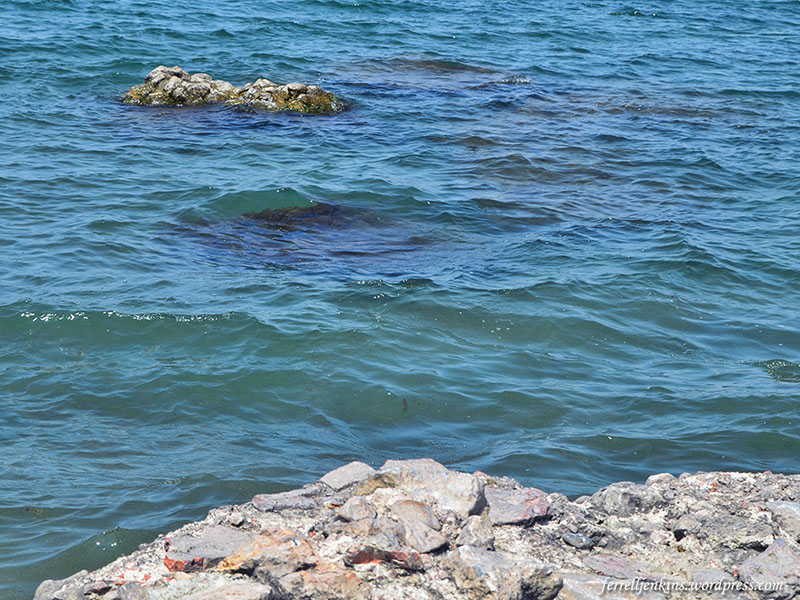
Notice a few stones above the current water level and the dark shadow of some ruins below the surface in the next photo.

A few ruins of the palace where the first council met can be seen underneath the water. Photo by Ferrell Jenkins.

A few ruins of the palace where the first council met can be seen underneath the water. At least one portion of stone emerges from the water. Photo by Ferrell Jenkins.

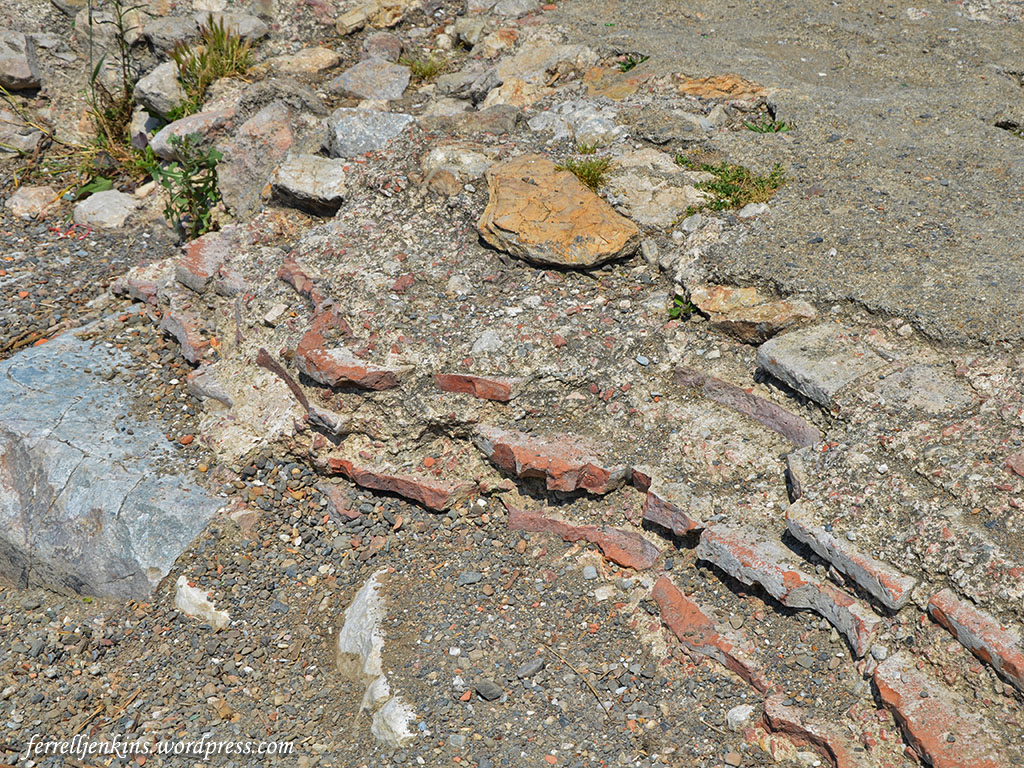
In our last photo you will see some of the red tile (or brick) typical of the late Roman/early Byzantine period, as well as part of a marble column.

Late Roman and early Byzantine material. Photo by Ferrell Jenkins.

Late Roman and early Byzantine material. Photo by Ferrell Jenkins.

In case you have read or heard that the Council of Nicea is responsible for the content of the canon of the New Testament I suggest you read Justin L. Petersen’s 2011 article (Petersen, Justin L. “Making (up) History: Fact, Fiction, and the First Council of Nicaea.” Ed. Wayne A. Detzler. Christian Apologetics Journal 9.1 (2011): 67-77).

Visiting Iznik (Nicea, Nicaea), Turkey – Part 2

Read Part I here.

The Testimony of History Regarding
Church Government

Churches and religious doctrines were not always what they are today. In fact, in New Testament times (during the first century A.D.) there were no major branches of Christendom, no denominations. There was no church organization larger than a single local church overseen by a plurality of bishops (overseers), elders, or shepherds. These terms were used interchangeably. Today, however, one encounters hundreds of denominational groups, and universal organizations. What has happened since the first century to bring about this change? It did not happen suddenly, but was a gradual process over the centuries.

The Apostles of Christ warned in their sermons and letters of departures or apostasy from apostolic teaching and practice. See Acts 20:29-30, 2 Thessalonians 2:3, and 1 Timothy 4:1 as examples. Notice Paul’s warning to the elders of the church at Ephesus barely a quarter of a century after the establishment of the church in Jerusalem in A.D. 30.

I know that after my departure fierce wolves will come in among you, not sparing the flock;  and from among your own selves will arise men speaking twisted things, to draw away the disciples after them.  (Acts 20:29-30 ESV)

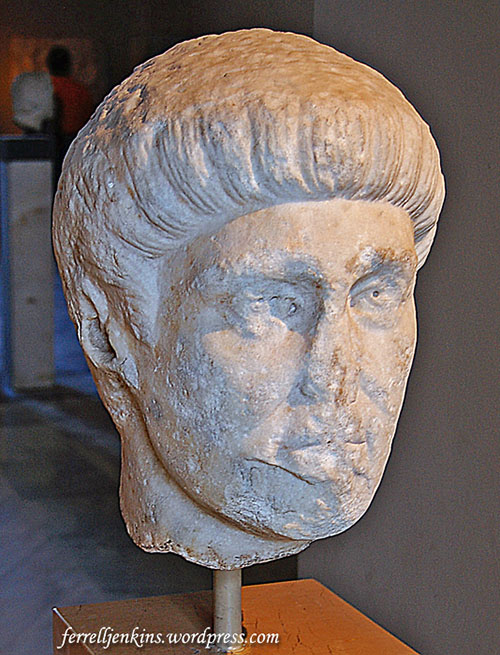
Emperor Constantine the Great (A.D. 507-337). Statue in Istanbul Archaeological Museum. Photo by Ferrell Jenkins.

Emperor Constantine the Great (A.D. 307-337). Statue in Istanbul Archaeological Museum. Photo by Ferrell Jenkins.

Historian Philip Schaff wrote about the changes in church government which were evident by the second century:

“We cannot therefore assume any strict uniformity. But the whole church spirit of the age tended towards centralization; it everywhere felt a demand for compact, solid unity; and this inward bent, amidst the surrounding dangers of persecution and heresy, carried the church irresistibly towards the episcopate…. Such a unity was offered in the bishop, who held a monarchical, or more properly a patriarchal relation to the congregation…. And in proportion as every church pressed towards a single centre, this central personage must acquire a peculiar importance and subordinate the other presbyters to itself…” (History of the Christian Church, II:142-143).

“Among the city bishops the metropolitans rose above the rest, that is, the bishops of the capital cities of the provinces” (Schaff, II:153).

Immediately after the discussion of the monarchal episcopate, Schaff discussed “Germs of the Papacy.” In A.D. 588, John the Faster, patriarch of Constantinople [later known as Istanbul], assumed the title of “universal bishop.” The emperor, in A.D. 606, took the title from John and conferred it upon Boniface III, bishop of Rome. This was the first pope, almost 600 years after the establishment of the New Testament church.

F. F. Bruce says,

“There was in apostolic times no distinction between elders (presbyters) and bishops such as we find from the second century onwards: the leaders of the Ephesian church are indiscriminately described as elders, bishops (i.e. superintendents) and shepherds (or pastors)” (Bruce, The Book of Acts, 415).

By the fourth century enough changes had taken place that the Roman emperor Constantine called together the bishops of the churches, mostly from the eastern part of his empire, to discuss various issues that were dividing the churches.

The Arch of Constantine with the Colosseum in the background. Photo by Ferrell Jenkins.

The Arch of Constantine with the Colosseum in the background. Photo by Ferrell Jenkins.

This is where Iznik (ancient Nicaea or Nicea) enters the picture. In A.D. 325 the first of seven Ecumenical councils was held here. After five more councils in Constantinople, Ephesus, and Chalcedon, the seventh of these councils was held again in Nicea.

In the next post we will begin our visit of Nicea.

Visiting Iznik (Nicea, Nicaea), Turkey – Part 1

This is the first in a series of posts about Nicea, the site of the first and seventh ecumenical councils.

My travels in Turkey – A brief survey

A couple of years ago I wrote a little piece here about why a Bible student should want to visit Turkey. In a category entitled Post New Testament church history I said,

The Ecumenical Councils met in the place we now call Turkey in the following cities: Nicaea, Constantinople, Ephesus, Chalcedon.

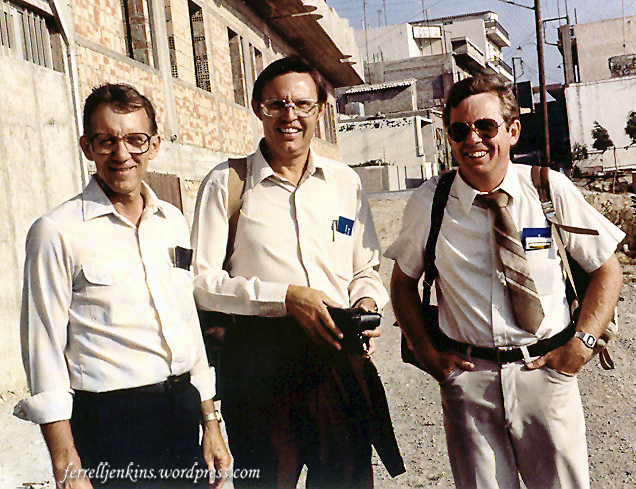
My first trip to Turkey was in 1968 when I visited the area of the seven churches of the book of Revelation and the city of Istanbul. It was not until 1984 that I went back to the area with Melvin Curry and Phil Roberts, a couple of teaching colleagues, for a more detailed study. We also visited several of the Greek islands mentioned in the Bible. Then in 1985 I put together a tour I called, from that time forward, Steps of Paul and John. This tour included biblical sites in Greece and Turkey. At the end of that tour Raymond Harris, a fellow preacher, and I visited all of the sites associated with Paul’s first journey with the exception of Cyprus – a place I had already visited.

Melvin Curry, Ferrell Jenkins, Phil Roberts in Heraklion, Crete.

In Heraklion, Crete, we stayed with a former student and her family during the 1984 trip. My recollection is that she made this photo as we left for the airport to go to Athens. Left to right: Melvin Curry, Ferrell Jenkins, Phil Roberts.

In 1987 I conducted my first Ancient Crossroads tour to include the Hittite territory of Anatolia, Cappadocia, and the sites associated with Paul’s first journey. In 1995 the Steps of Paul and John tour included a cruise of the Greek islands. This cruise, touching at places like Patmos, Rhodes, and Crete, would be repeated several times over the years.

I had been able to visit most New Testament sites in Turkey, but certain Old Testament sites had eluded me because they were far away in eastern Turkey near the borders of Syria, Iraq, Iran and the Soviet Union (now Armenia). In 1995 I was joined by Curtis Pope with whom I taught, and his brother Kyle, for a visit in eastern Turkey. We picked up a car in Adana, visited sites associated with Abraham and the Patriarchs, and went through the region of Urartu as far as the traditional Mount Ararat.

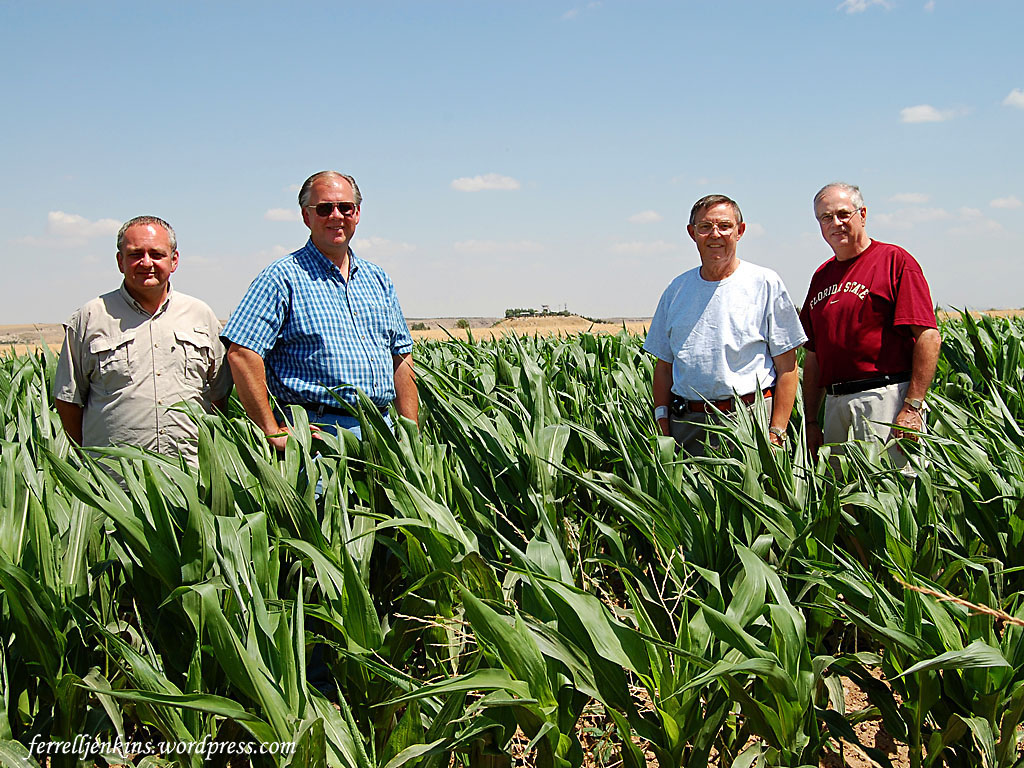
That is an excursion I would repeat in more detail in 2007 with Leon Mauldin, David Padfield, and Gene Taylor. Leon and I went back to the region of Paddan-Aram in 2014. In 2007, we had visited the Black Sea region of Turkey to explore the cities that might have been visited by the messenger who delivered the Epistles of Peter. See this Index of Articles dealing with this subject. This included the Roman provinces of Pontus and Bithynia.

Eastern Turkey tour by Padfield, Mauldin, Jenkins, and Taylor (left to right). Carchemish in the background.

Eastern Turkey tour by Padfield, Mauldin, Jenkins, and Taylor (left to right). Carchemish is in the background center. We joked that we were out, standing in our field.

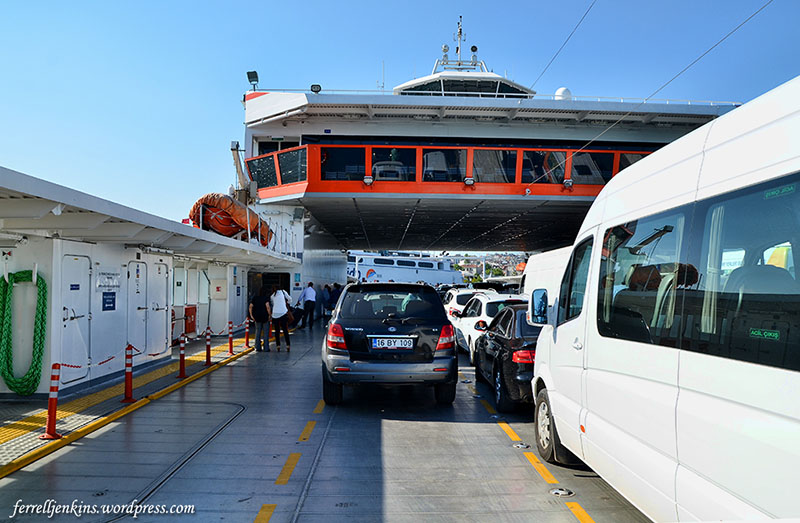
Now it was time to visit the site of two of the Ecumenical Councils in Bithynia. Leon and I arranged to do this in 2014. From Istanbul it is possible to rent a car and travel to Iznik (Nicaea, Nicea) across one of the bridges connecting Europe with Asia. That would take a lot of time. We decided to hire a guide/driver to pick us up at our hotel in Istanbul in Europe, take a ferry across the Sea of Mamara to the Asian side into ancient Bithynia, and visit Iznik in one day. This excursion would cost us almost $900.

The return ferry from Nicea to Istanbul. Photo by Ferrell Jenkins.

The return ferry from Nicea to Istanbul. Photo by Ferrell Jenkins.

Here is where I hope to pick up in the next article and begin to tell you about the visit to Iznik. There will probably be about seven articles in the series, with lots of photos. I trust you will find them interesting and profitable.

Consider the lilies of the field

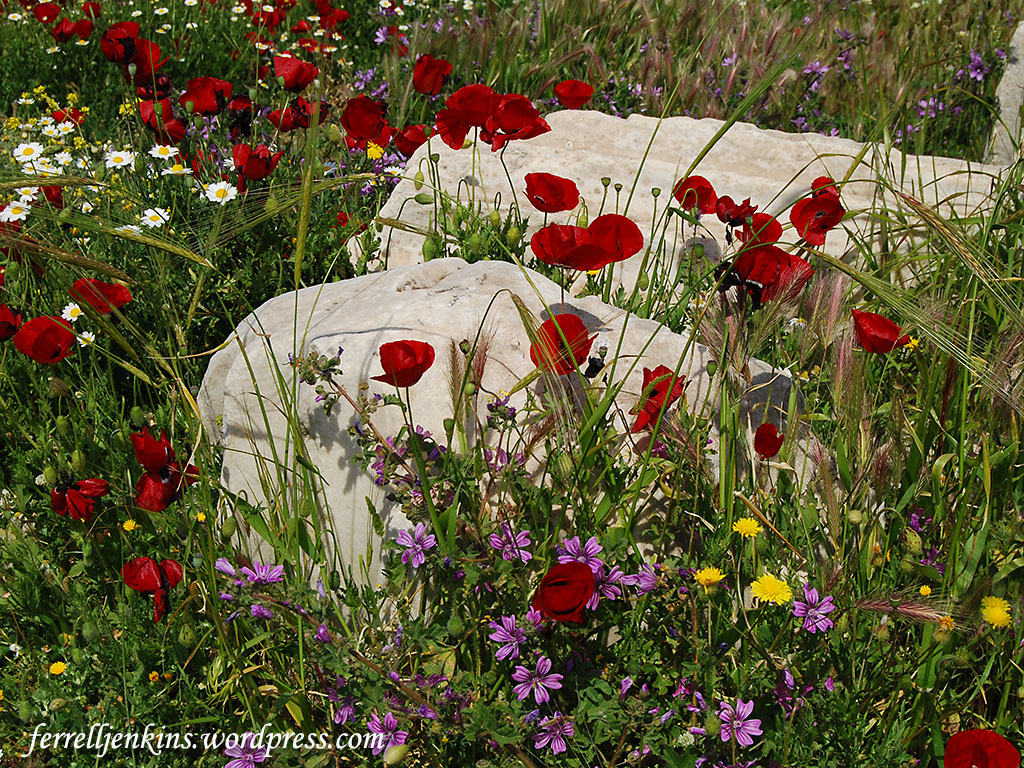
The wild flowers covered the acropolis of ancient Pergamum like a carpet the day we were there in 2008. Pergamum is mentioned only in Revelation 1:11 and 2:12.

Wild flowers growing at ancient Pergamum. Photo by Ferrell Jenkins.

Wild flowers growing at ancient Pergamum. Photo by Ferrell Jenkins.

Jesus said,

 28 And why are you anxious about clothing? Consider the lilies of the field, how they grow: they neither toil nor spin,
29 yet I tell you, even Solomon in all his glory was not arrayed like one of these.
30 But if God so clothes the grass of the field, which today is alive and tomorrow is thrown into the oven, will he not much more clothe you, O you of little faith?
31 Therefore do not be anxious, saying, ‘What shall we eat?’ or ‘What shall we drink?’ or ‘What shall we wear?’
32 For the Gentiles seek after all these things, and your heavenly Father knows that you need them all.
33 But seek first the kingdom of God and his righteousness, and all these things will be added to you.
34 “Therefore do not be anxious about tomorrow, for tomorrow will be anxious for itself. Sufficient for the day is its own trouble. (Matthew 6:28-34 ESV)

Paul sailed along the coast of Pamphylia

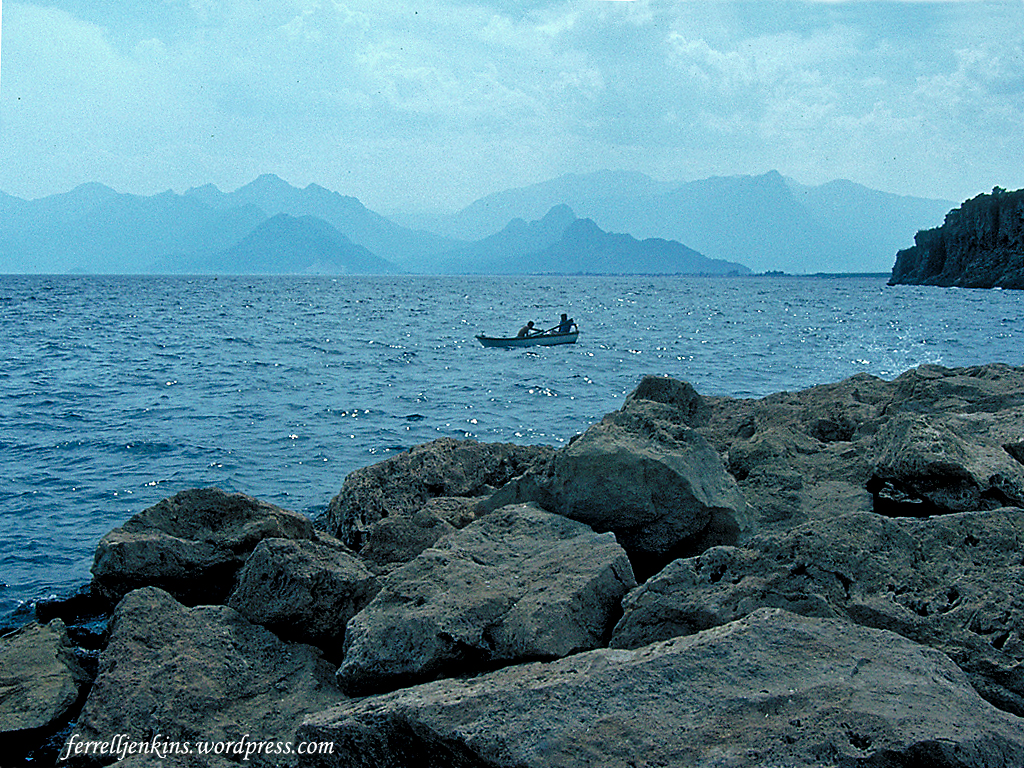
From time to time I hope to share with you some photos without much narrative. The photo today is scanned from a slide I made early one morning when I left my group at Antalya (biblical Attalia, Acts 14:25) and drove east along the Pamphylian and Lycian coast to Myra and Patara. This photo shows the mountains of Lycia.

Early morning view of the coast of Pamphylia in 1987. Photo by Ferrell Jenkins.

Early morning view of the coast of Pamphylia in 1987. Photo by Ferrell Jenkins.

Pamphylia is mentioned five times in the book of Acts, but Lycia is mentioned only once, in the account of Paul’s voyage to Rome.

And when we had sailed across the open sea along the coast of Cilicia and Pamphylia, we came to Myra in Lycia. (Acts 27:5 ESV)

One can image Paul saw scenes similar to this many times during the various sea voyages he made.

Getting as close as possible – “zero on the border”

Saturday afternoon I was reading an article about the Turkish military moving across the Euphrates River at Karkamiş (Carchemish) into the Syrian town of Jarabulus. In modern times it is not possible to follow a line of travel that one might wish—for example, following the travels of Abraham, or the movement of the Babylonians and the Egyptians at the battle of Carchemish.

We do our best to get as close as possible. In Syria I have visited the Euphrates river about 25 miles south of Jarabulus/Carchemish, but in Turkey I have been to the base of the Tell of the ancient city of Carchemish, and seen the bridge crossing the river to Jarabulus. A travel expert in Istanbul once described Carchemish to me as being “Zero on the border.”

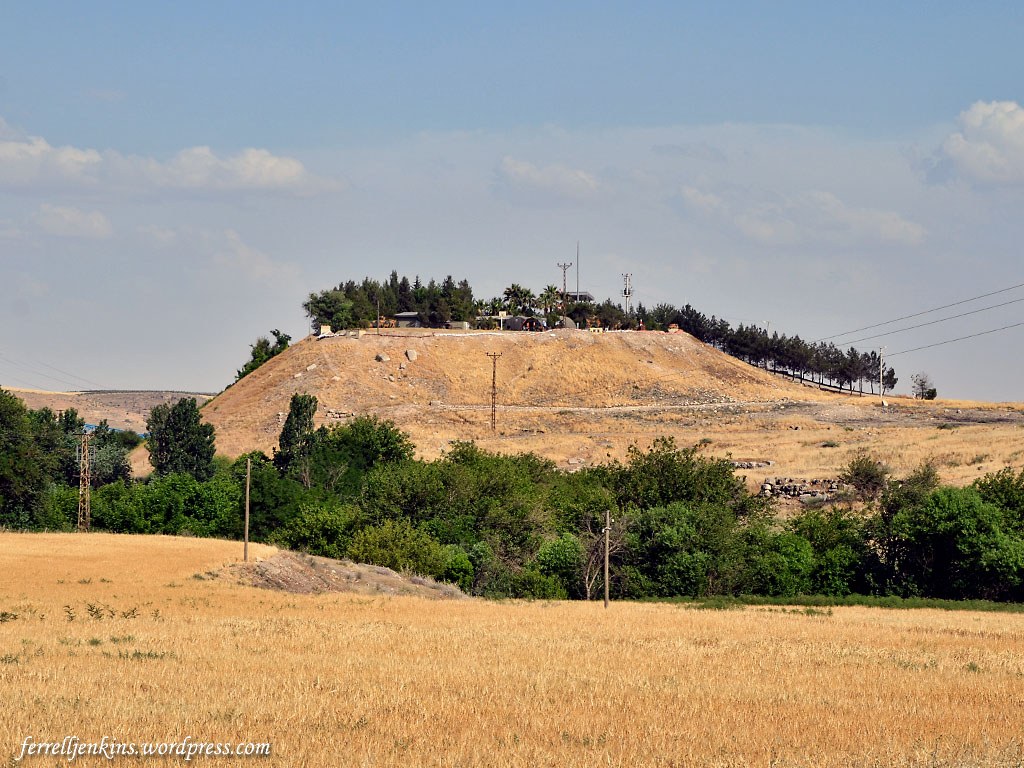
The mound of ancient Carchemish overlooking the Euphrates River. Photo by Ferrell Jenkins.The mound of ancient Carchemish overlooking the Euphrates River. Photo by Ferrell Jenkins.

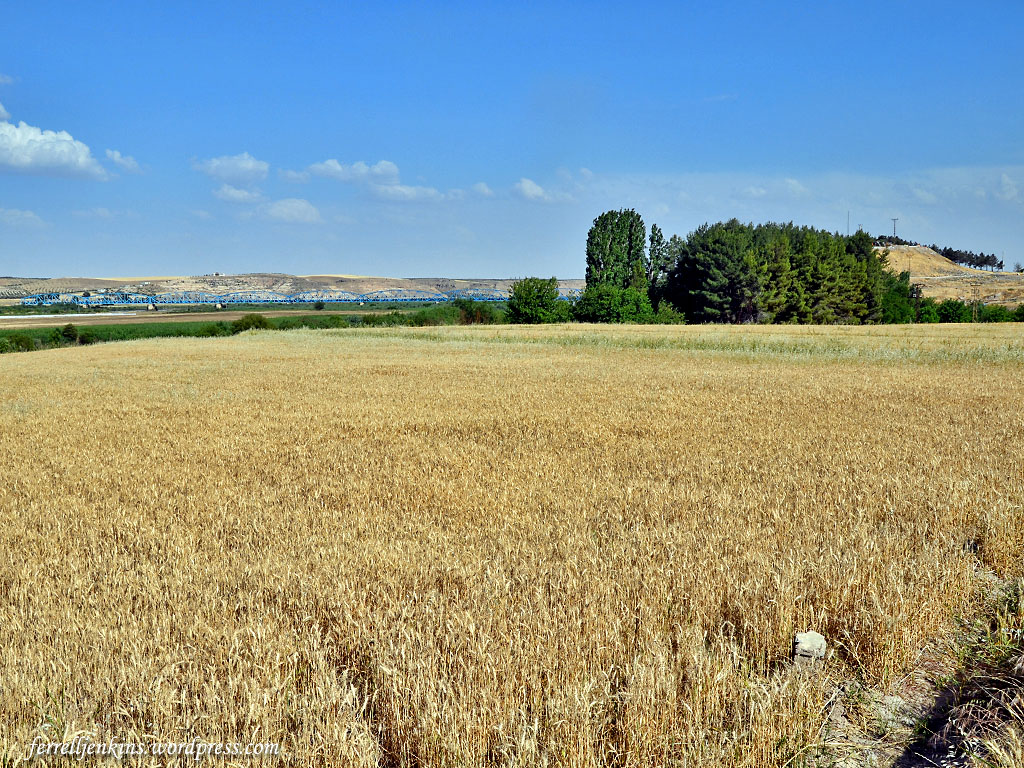
The mound of ancient Carchemish overlooking the Euphrates River. To the left of the tell you may get a glimpse of a blue structure above the trees. That is the bridge crossing the Euphrates River. Photo by Ferrell Jenkins.

The next picture shows the bridge that crosses the Euphrates. Click on the photo for a larger image. A small portion of the ancient city of Carchemish is in Syria.

Tell Carchemish is mostly hidden behind the trees. The bridge crossing the Euphrates River is clearly visible. Syrian hills are visible in the distance. Photo by Ferrell Jenkins.Tell Carchemish is mostly hidden behind the trees. The bridge crossing the Euphrates River is clearly visible. Syrian hills are visible in the distance. Photo by Ferrell Jenkins.

Tell Carchemish is mostly hidden behind the trees. The bridge crossing the Euphrates River is clearly visible. Syrian hills are visible in the distance. Photo by Ferrell Jenkins.

The ancient site of Carchemish (modern Karkamiş in Turkey) was identified by George Smith in 1876, and later excavated by the British Museum beginning in 1911. The various directors included Hogarth, Thompson, Wooley, and Lawrence (of Arabia). Many remains of Assyrian and Neo-Hittite periods were uncovered.

Carchemish is mentioned only a few times in the Bible, but it was one of the most significant cities in the ancient Bible world.

  • Isaiah made a reference to Carchemish (Isaiah 10:9). The city had been sacked by Sargon II in 717 B.C.
  • Pharaoh Necho of Egypt went up to Carchemish on the Euphrates to assist the Assyrians against the Babylonians in 609 B.C. (2 Chronicles 35:20; Jeremiah 46:2). King Josiah of Judah tried to stop him, but was killed.

One of the Babylonian Chronicles says that Nebuchadnezzar “crossed the river to go against the Egyptian army which lay in Carchemish.”

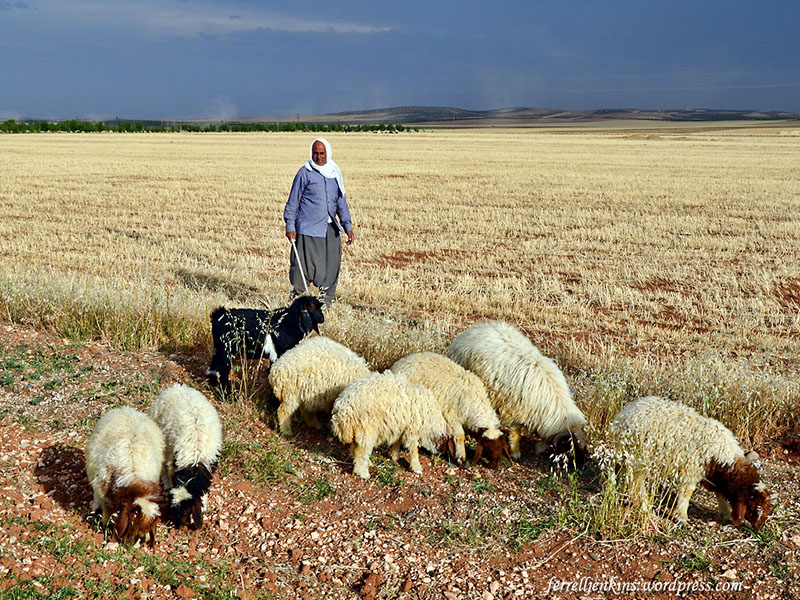
As we left Carchemish on our way to Gaziantep we saw a local Kurdish shepherd tending a few sheep. Shepherds like to take the sheep to the wheat fields after they have been cut. Times do change. Another photo I have shows clearly that this shepherd is using a piece of PVC pipe as a staff. He is wearing the baggy pants typical of older Kurdish men.

Shepherd with sheep near Carchemish, Turkey. Photo by Ferrell Jenkins.

Shepherd with sheep near Carchemish, Turkey. Photo by Ferrell Jenkins.

Some other interesting things happened that afternoon at Carchemish, but I will save them for another post.

Subscribe to the BiblePlaces Newsletter

Perhaps many of our readers already follow Todd Bolen’s BiblePlaces Blog and receive his BiblePlaces Newsletter. But there may be a few who do not receive the Newsletter.

The most recent BiblePlaces Newsletter was distributed Tuesday. It includes some featured BiblePlaces Photos under the title “Never Been There Before!” One would think that Dr. Bolen, who lived and taught ten years or more in Israel, and visited the country other times, would have already visited all of the places where Bible events took place. It doesn’t work that way. In the current BiblePlaces Newsletter he takes us to some places he had never been to…

  • Kerioth, possible hometown of Judas Iscariot
  • …see a Canaanite Wall in Hebron
  • the location of the Praetorium entrance in Jerusalem
  • Ramah, the hometown of the prophet Samuel
  • the tomb of Joseph
  • the Wadi Farah

After fifty years of traveling to Israel half of these are now on my bucket list. With each Newsletter you receive free high resolution photos and a free PowerPoint presentation.

Not on the list to receive the Newsletter, and missed this valuable one? Todd has given me permission to share the link to this Newsletter. Click here. At the bottom of the page you will have an opportunity to sign up to receive it whenever it is published (usually several times a year).

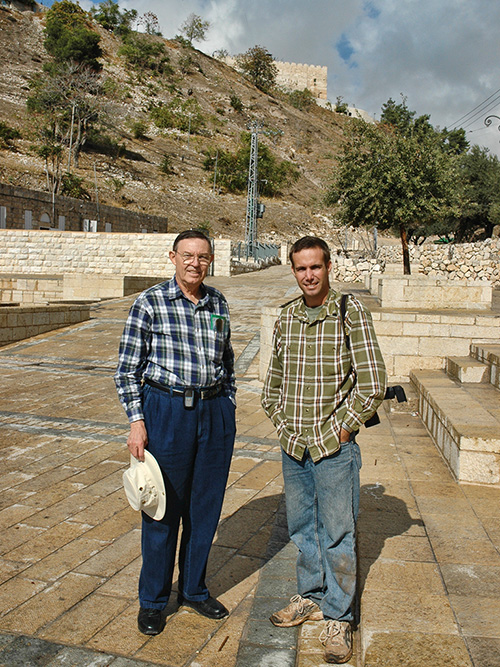
I don’t recall when I first began to use the Pictorial Library of Biblical Lands (PLBL), but I do recall the first time I met Todd Bolen. It was in Jerusalem in 2005. Leon Mauldin and I had made our way from the City of David to Gihon Spring. Todd and his students from the Master’s College IBEX program in Israel were helping clean out some of the area and working on the pottery. We had made prior arrangement to meet. It was about lunch time so Todd took his students on a tour of the area known as the tombs of the kings, down to the place where the Kidron and Hinnom valleys join, and to the site of En Rogel. He invited us to go along and visit as we walked.

Ferrell Jenkins and Todd Bolen at the plaza in front of Gihon Spring. The "Pinnacle" of the Tempe (the south east corner) may be seen in the distance.

Ferrell Jenkins and Todd Bolen at the plaza in front of Gihon Spring. The “Pinnacle” of the Tempe (the south east corner) may be seen in the distance. Photo by Leon Mauldin.

Leon snapped this photo of us. I see that Todd has aged a bit since then. We have had several occasions for short visits since that time, and I am delighted to say that BiblePlaces licenses my photos for publication.

If you teach the Bible you need the PLBL. You may buy the entire set, or begin with a few volumes covering areas you are now teaching. For complete information visit BiblePlaces.com.

“You brood of vipers”

When the Pharisees and Sadducees came to John the Baptist for baptism, John said,

But when he saw many of the Pharisees and Sadducees coming to his baptism, he said to them, “You brood of vipers! Who warned you to flee from the wrath to come?”  (Matthew 3:7 ESV)

Jesus used the same language of the Scribes and Pharisees.

You serpents, you brood of vipers, how are you to escape being sentenced to hell? (Matthew 23:33 ESV) cf. 12:34)

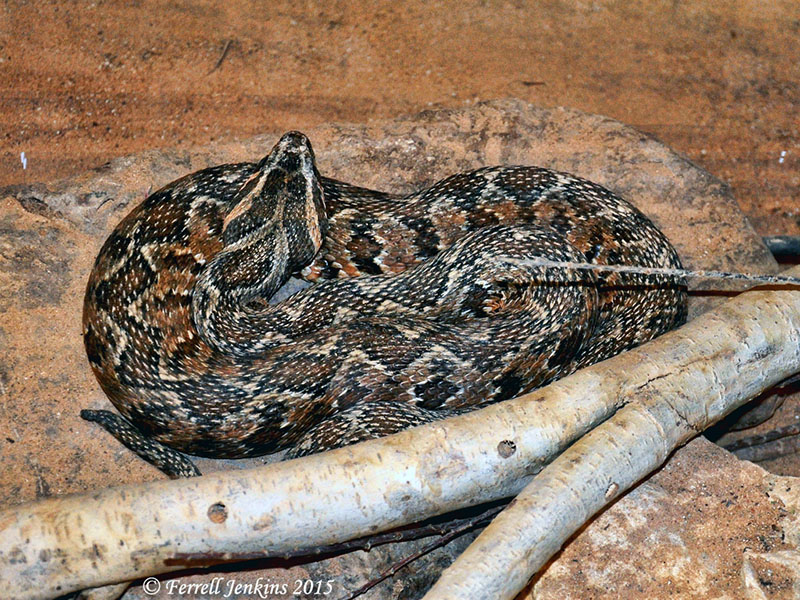
The photo below shows the Palestinian Viper (behind tough plastic!) at the Hai Bar Animal and Nature Reserve, north of Eilat, Israel.

Palestinian Viper at the HaiBar Reserve near Eilat, Israel. Photo by Ferrell Jenkins.

Palestinian Viper at the HaiBar Reserve near Eilat, Israel. Photo by Ferrell Jenkins.

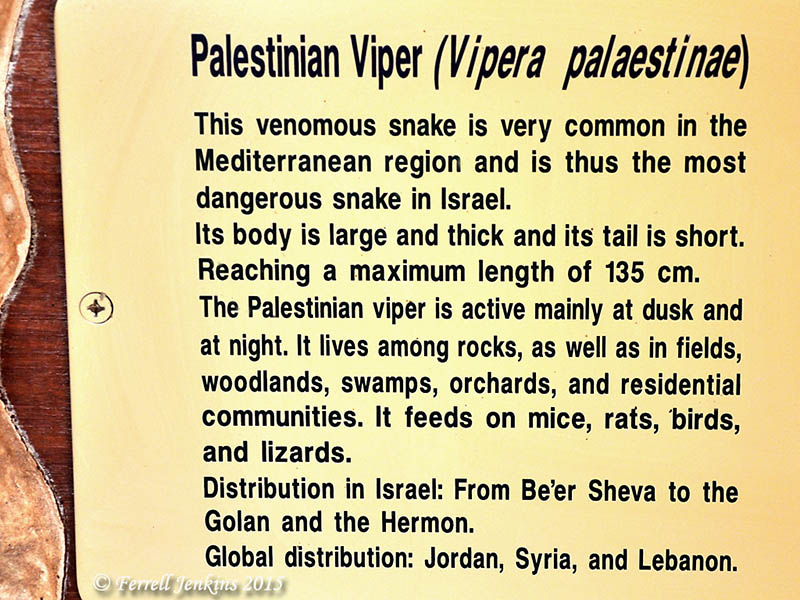
The sign at the Reserve gives some explanation about this poisonous viper.

Description of the Palestinian Viper at HaiBar Reserve.

Description of the Palestinian Viper at HaiBar Reserve.

A visit to Hai Bar is a wonderful experience.

Update

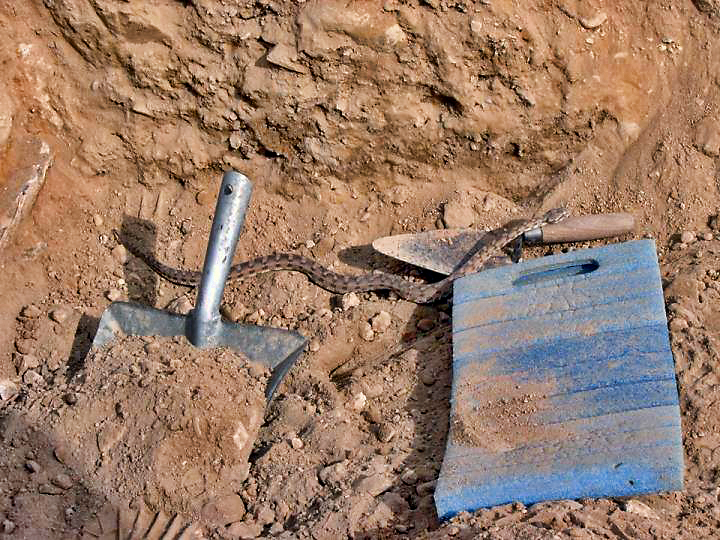
Dr. David E. Graves left a photo and some comments to this post on Facebook. I wanted to repeat them here so more readers could see.

Palestinian Viper at Tall el-Hammam. Photo by Dr. David E. Graves.

Palestinian Viper at Tall el-Hammam. Photo by Dr. David E. Graves.

David says, “I was sitting on a rock excavating [at Tall el-Hammam in the Jordan Valley] and the snake was hibernating (winter) under it. I stood up to take a picture of a lizard and the snake appeared out of the same hole.

He adds, “The locals call the snake a 5 stepper!! If you get bit you get 5 steps and your down.”

Traditions about Abraham at Şanliurfa, Turkey – Part 2

Without deciding the issue of the location of the Ur of the Chaldeans of Genesis 11:28 and 31 (also Genesis 15:7 and Nehemiah 9:7), we understand from the Old Testament that Abraham lived for a time at Haran about 25 miles south of Şanliurfa in southeastern Anatolia (modern Turkey).

Local Muslim tradition in Urfa claims that Abraham was born in a cave in the city, and legend says he was hidden by his mother in the cave for 15 months.

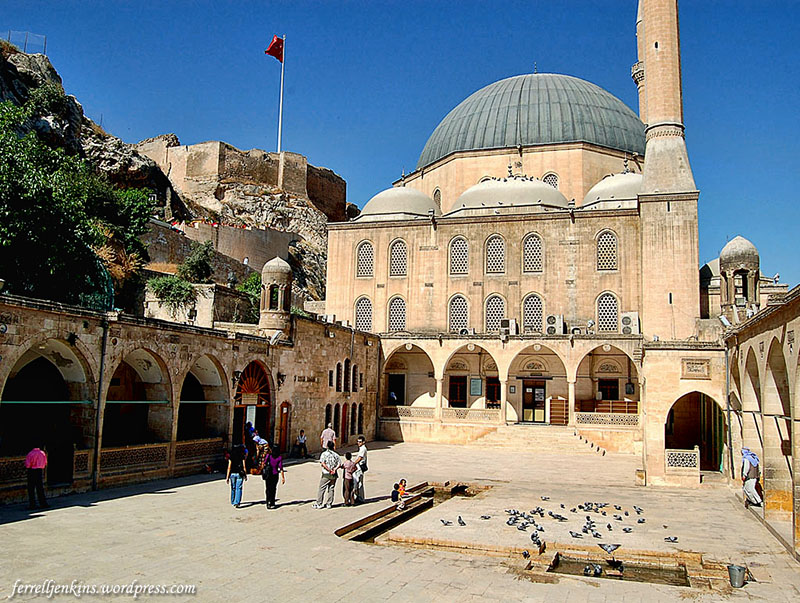
In the first photograph you see the Mosque associated with the cave of Abraham and the Citadel (Kale) which is thought to date to the Hellenistic period.

To the left of the courtyard is an entrance to the cave in which it is claimed that Abraham was born.

Citadel, mosque, cave. Photo by Ferrell Jenkins.

Citadel, mosque, and cave in Urfa. Photo by Ferrell Jenkins.

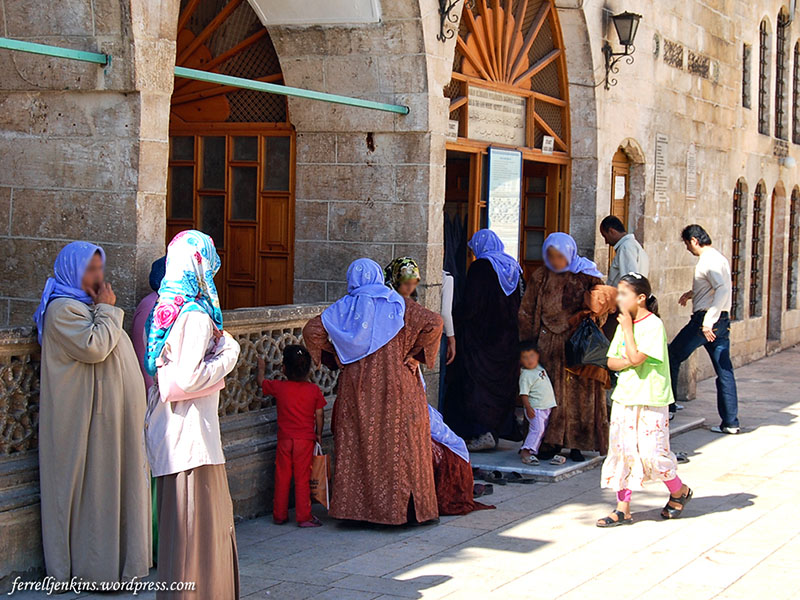
Men and women have separate entrances to the cave.

Men and women lined up to enter through separate doors. Photo by Ferrell Jenkins.

Men and women enter through separate doors. Photo by Ferrell Jenkins.

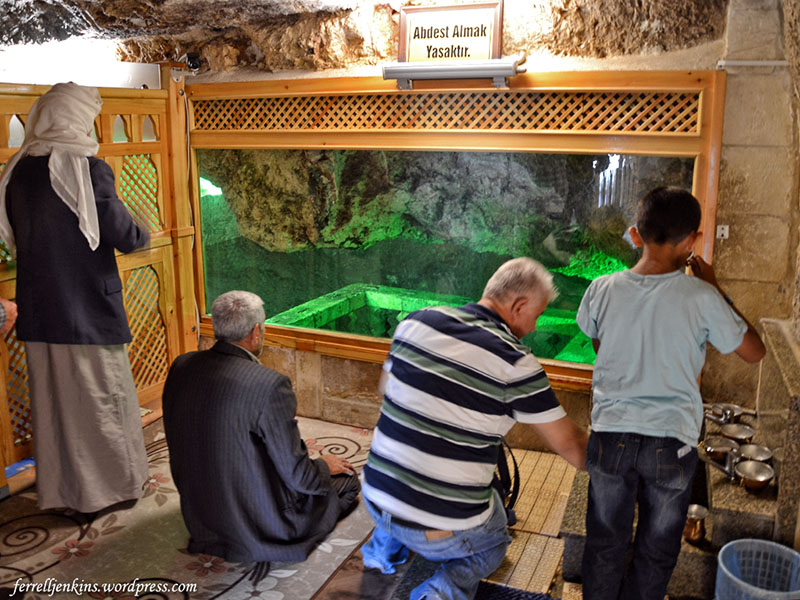
There appears to be a spring in the cave. Men are able to see further into the cave and have the opportunity to drink from the water using one of the cups that are provided. I do not know about the arrangement for the women.

Men worship in the Cave of Abraham at Urfa. Photo by Ferrell

Men worship in the Cave of Abraham at Urfa. Photo by Ferrell Jenkins.

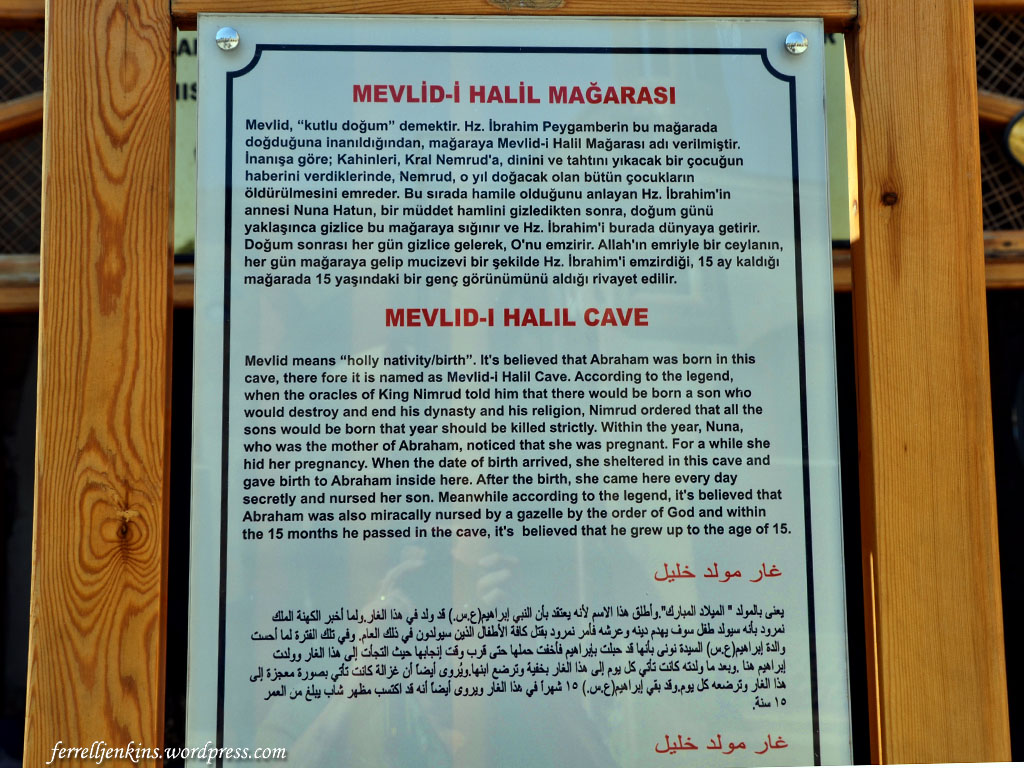
A sign at the cave explains the tradition. It seems not to have been written by native English speakers, but I think you will be able to make out the meaning.

Sign at the cave of Abraham. Photo by Ferrell Jenkins.

Sign at the cave of Abraham. Photo by Ferrell Jenkins.

Here is my copy of the sign without corrections.

Mevlid means “holly nativity/birth”. It’s believed that Abraham was born in this cave, there fore it is named as Mevlid-i Halil Cave. According to the legend, when the oracles of King Nimrud told him that there would be born a son who would destroy and end his dynasty and his religion, Nimrud ordered that all the sons would be born that year should be killed strictly. Within the year, Nuna, who was the mother of Abraham, noticed that she was pregnant. For a while she hid her pregnancy. When the date of birth arrived, she sheltered in this cave and gave birth to Abraham inside here. After the birth, she came here every day secretly and nursed her son. Meanwhile according to the legend, it’s believed that Abraham was also miracally nursed by a gazelle by the order of God and within the 15 months he passed in the cave, it’s believed that he grew up to the age of 15.

I understand the last sentence to say that Abraham grew to age 15 in just 15 months! The legend seems to mix a bit of the story of the birth and infancy of Moses who was hidden among the reeds along the Nile River for three months by his parents (Exodus 2:2-4; Hebrews 11:23) with the murder of the innocents by the hands of Herod the Great in an attempt to kill the infant Jesus (Matthew 2:16).

Like Christians and Jews, Muslims have a multitude of traditions and legends that have grown up around Biblical and Quranic characters.

Read Part 1 about Abraham and Şanliurfa here.