Category Archives: Bible Lands

Friends traveling in Israel on the Sabbath

Luke Chandler recently returned from participating in the excavation at Khirbet Qeiyafa. Before leaving Israel he spent a few days with Trent and Rebekah who are excavating at Azekah. Luke reports on some of the fun the three Gentiles had on an Israeli Sabbath. See here.

Two observations

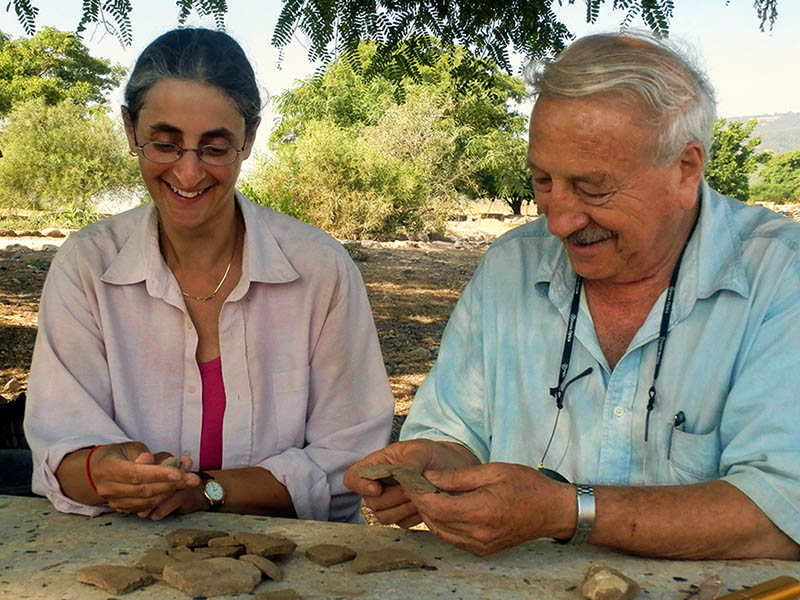
Safety. Constantly I am asked if it is safe to travel in Israel. Usually I respond by saying that I would rather be in Israel than downtown [name any town you wish]. Look at these young people. Do they look frightened? You have the answer.

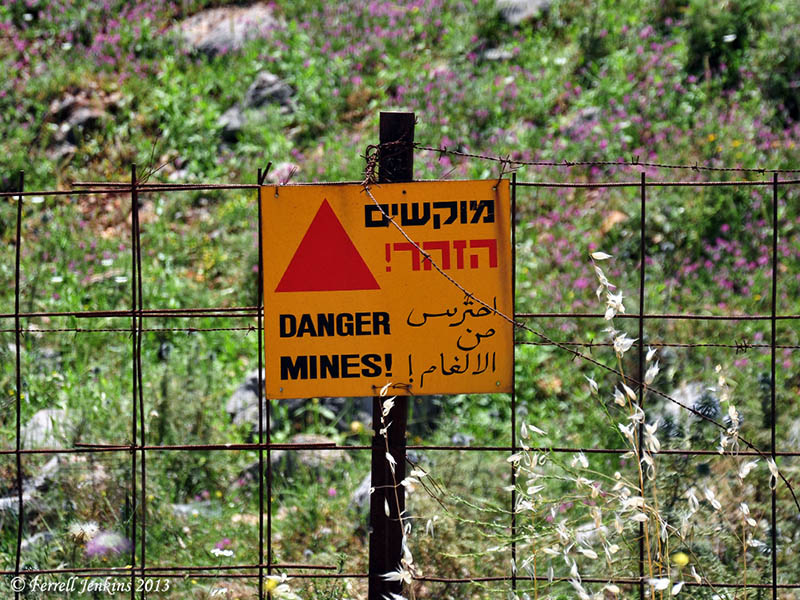
There are some places one should not go, like a field in which the landmines have not been cleared. The sign below is on Highway 99 between Dan and Banias (Caesarea Philippi).

A sign along Hwy 99 between Dan and Banias. Photo by Ferrell Jenkins.

A sign along Hwy 99 between Dan and Banias. Photo by Ferrell Jenkins.

Israel on the Sabbath. From mid-afternoon on Friday until Saturday sundown many Israeli hotels are jam-packed with Israelis who are observing the sabbath and allowing others to do the work. Don’t get the wrong impression. Many secular Israelis are visiting the beaches and parks of the country. But, early on Saturday, until mid-afternoon, is a great time for those who are not observing the sabbath to travel on the highways and visit sites of interest.

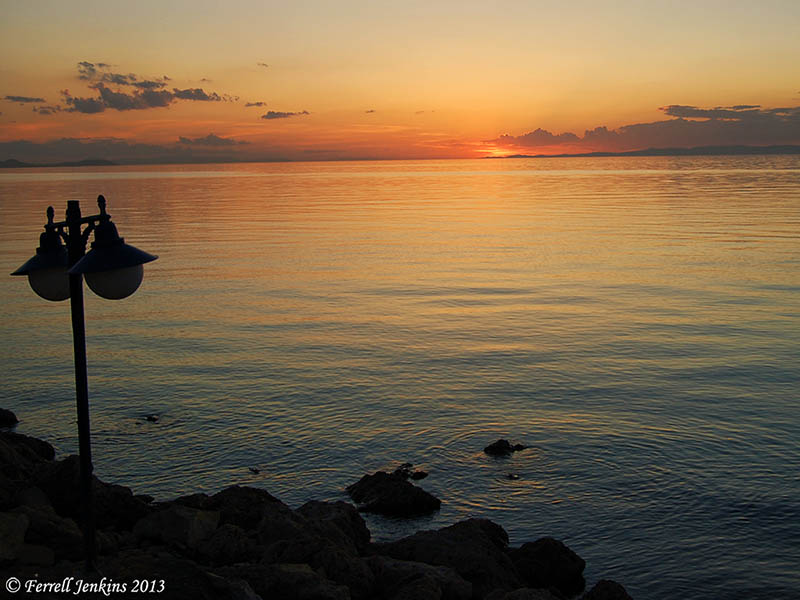
Sunset on Lake Van in Eastern Turkey

Lake Van in eastern Turkey is a large inland body of water of about 1400 square miles at an elevation of 5737 feet. The lake is fed by a number of rivers and is highly alkaline. It is said that folks sometimes wash their clothes in the lake. Along the south side of the lake the elevation reaches 7324 feet at one point.

Sunset on Lake Van. Photo made June 5, 2007 by Ferrell Jenkins.

Sunset on Lake Van. Photo made June 5, 2007 by Ferrell Jenkins.

In Assyrian records this area was called Urartu. In the Bible it is called Ararat. The English term Ararat is a transliteration of the Hebrew term. The four references where the term appears are Genesis 8:4, 2 Kings 19:37 = Isaiah 37:38, and Jeremiah 51:27. The King James version uses the term Armenia in 2 Kings 19:37 and Isaiah 37:38 because that is what the territory was later called. The Septuagint uses Armenia only in Isaiah 37:38.

The ark of Noah is said to have “rested upon the mountains of Ararat” (Gen. 8:4). Note that it does not say “Mount Ararat” but the “mountains of Ararat.” The assassins of Sennacherib, after killing the king of Assyria at Nineveh in 681 B.C., escaped into “the land of Ararat” (2 Kings 19:37; Isaiah 37:38). Jeremiah called upon the kingdom of Ararat to fight against Babylon (Jeremiah 51:27).

Note: This post is a repeat from October 26, 2011.

Egyptian sphinx fragment found at Hazor

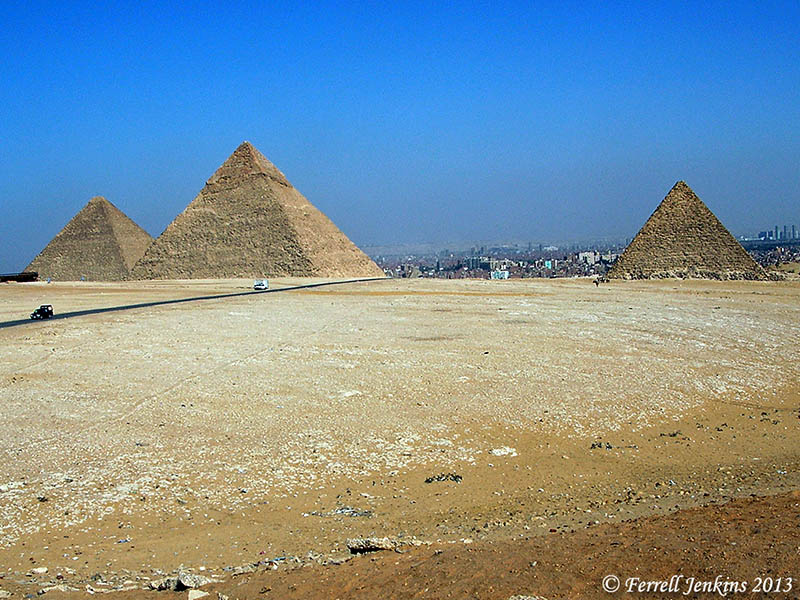
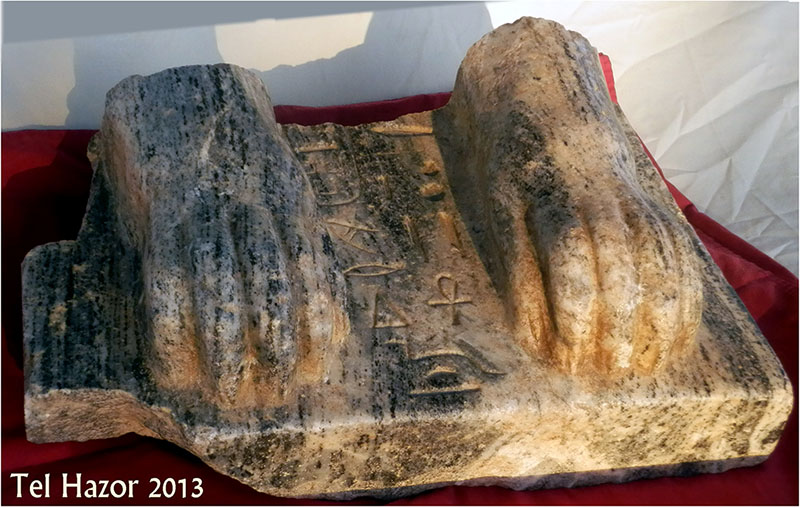
The Hebrew University of Jerusalem announced today the discovery at Hazor of a sphinx fragment of Pharaoh Mycerinus. Mycerinus is the builder of the smallest of the three great pyramids of Giza in Egypt. The photo below was made facing east toward the Nile Valley. The pyramid of Mycerinus is on the right. The pyramid, built about 2500 B.C., is 204 feet high.
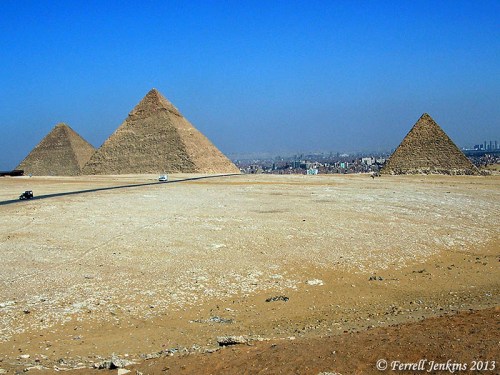
The pyramids of Giza" Cheolps, Chephren, and Mycerinus (left to right). Photo by Ferrell Jenkins.

Pyramids of Giza: Cheops, Chephren, & Mycerinus (left to right). Photo: Ferrell Jenkins.

The press release from Jerusalem says,

At a site in Tel Hazor National Park, north of the Sea of Galilee, archeologists from the Hebrew University of Jerusalem have unearthed part of a unique Sphinx belonging to one of the ancient pyramid-building pharaohs.

The Hazor Excavations are headed by Prof. Amnon Ben-Tor, the Yigael Yadin Professor in the Archaeology of Eretz Israel at the Hebrew University’s Institute of Archaeology, and Dr. Sharon Zuckerman, a lecturer at the Hebrew University’s Institute of Archaeology.
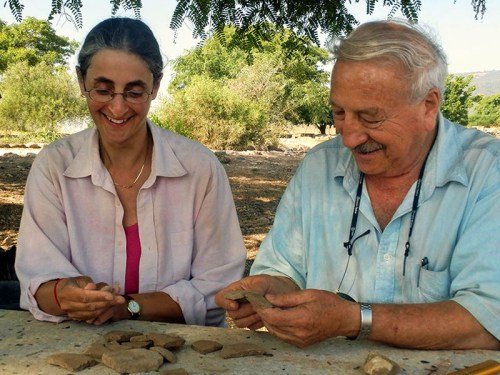
Prof. Amnon Ben-Tor and Dr. Sharon Zuckerman of the Hebrew University’s Institute of Archaeology, who are leading the Hazor Excavations (Photo courtesy archaeologists Prof. Amnon Ben-Tor and Dr. Sharon Zuckerman)

Prof. Amnon Ben-Tor and Dr. Sharon Zuckerman of the Hebrew University’s Institute of Archaeology, who are leading the Hazor Excavations (Photo courtesy archaeologists Prof. Amnon Ben-Tor and Dr. Sharon Zuckerman)

Working with a team from the Institute of Archaeology, they discovered part of a Sphinx brought over from Egypt, with a hieroglyphic inscription between its front legs. The inscription bears the name of the Egyptian king Mycerinus, who ruled in the third millennium BCE, more than 4,000 years ago. The king was one of the builders of the famous Giza pyramids.

As the only known Sphinx of this king discovered anywhere in the world — including in Egypt — the find at Hazor is an unexpected and important discovery. Moreover, it is only piece of a royal Sphinx sculpture discovered in the entire Levant area (the eastern part of the Mediterranean).

Along with the king’s name, the hieroglyphic inscription includes the descriptor “Beloved by the divine manifestation… that gave him eternal life.” According to Prof. Ben-Tor and Dr. Zuckerman, this text indicates that the Sphinx probably originated in the ancient city of Heliopolis (the city of ‘On’ in the Bible), north of modern Cairo.

The Sphinx was discovered in the destruction layer of Hazor that was destroyed during the 13th century BCE, at the entrance to the city palace. According to the archaeologists, it is highly unlikely that the Sphinx was brought to Hazor during the time of Mycerinus, since there is no record of any relationship between Egypt and Israel in the third millennium BCE.

More likely, the statue was brought to Israel in the second millennium BCE during the dynasty of the kings known as the Hyksos, who originated in Canaan. It could also have arrived during the 15th to 13th centuries BCE, when Canaan was under Egyptian rule, as a gift from an Egyptian king to the king of Hazor, which was the most important city in the southern Levant at the time.

Hazor is the largest biblical-era site in Israel, covering some 200 acres, and has been recognized as a World Heritage Site by UNESCO. The population of Hazor in the second millennium BCE is estimated to have been about 20,000, making it the largest and most important city in the entire region. Its size and strategic location on the route connecting Egypt and Babylon made it “the head of all those kingdoms” according to the biblical book of Joshua (Joshua 11:10). Hazor’s conquest by the Israelites opened the way to the conquest and settlement of the Israelites in Canaan. The city was rebuilt and fortified by King Solomon and prospered in the days of Ahab and Jeroboam II, until its final destruction by the Assyrians in 732 BCE.

Documents discovered at Hazor and at sites in Egypt and Iraq attest that Hazor maintained cultural and trade relations with both Egypt and Babylon. Artistic artifacts, including those imported to Hazor from near and far, have been unearthed at the site. Hazor is currently one of Israel’s national parks.

The Hebrew University began the Hazor excavation in the mid-1950s and continued them in the late 1960s. Excavations at the site were resumed in 1990 by Prof. Amnon Ben-Tor, who was joined in 2006 by Dr. Sharon Zuckerman, as part of the Selz Foundation Hazor Excavations in Memory of Yigael Yadin. The present excavation area is managed by Shlomit Becher, a doctoral student of the Hebrew University’s Institute of Archaeology, and is sponsored by the Israel Exploration Society (IES) in cooperation with the Israel Antiquities Authority and the Israel Nature and Parks Authority.
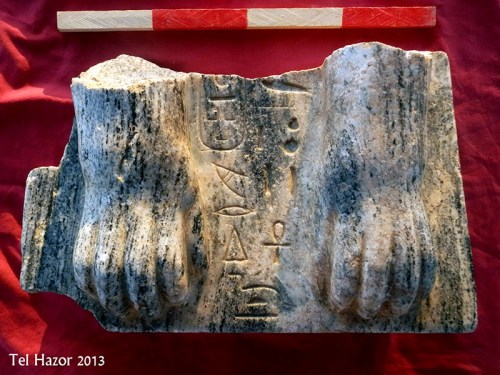
Two views of a Sphinx statue fragment found by Hebrew University of Jerusalem archaeologists at the Tel Hazor excavations north of the Sea of Galilee in Israel. An inscription ties the Sphinx to Mycerinus, an Egyptian king and pyramid  builder, circa 2500 BCE. This is the only known statue bearing this pharaoh's name. (Photo courtesy archaeologists Prof. Amnon Ben-Tor and Dr. Sharon Zuckerman)

Two views (above and below) of a Sphinx statue fragment found by Hebrew University of Jerusalem archaeologists at the Tel Hazor excavations north of the Sea of Galilee in Israel. An inscription ties the Sphinx to Mycerinus, an Egyptian king and pyramid builder, circa 2500 BCE. This is the only known statue bearing this pharaoh’s name. (Photo courtesy archaeologists Prof. Amnon Ben-Tor and Dr. Sharon Zuckerman)
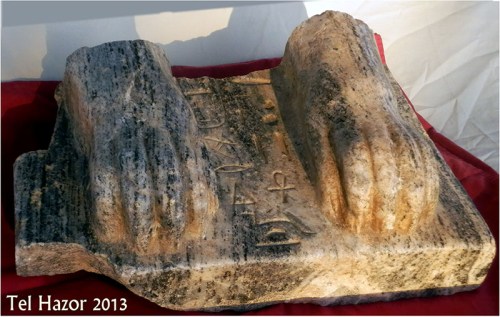
hu130709_hazor_sphinx2t

Thanks to Prof. Ben-Tor and Dr. Zuckerman for making available these nice photos. We understand better what we are able to see.

HT: Joseph I. Lauer

The topography of Kir-hareseth

Kir-hareseth figures prominently in a story recorded in 2 Kings 3. After the death of Ahab (853 B.C.), Mesha, king of Moab, rebelled against the king of Israel. Jehoram (or Joram; 852–841 B.C.), the king of Israel, did not want to give up the tribute that Mesha had been paying Israel. Jehoram prepared for war and convinced Jehoshaphat (870/69–848 B.C.), king of Judah, to join him to engage Mesha in war. They  decided to take the long, circuitous wilderness route. They would go south of the Dead Sea and approach Moab from the south through Edom.

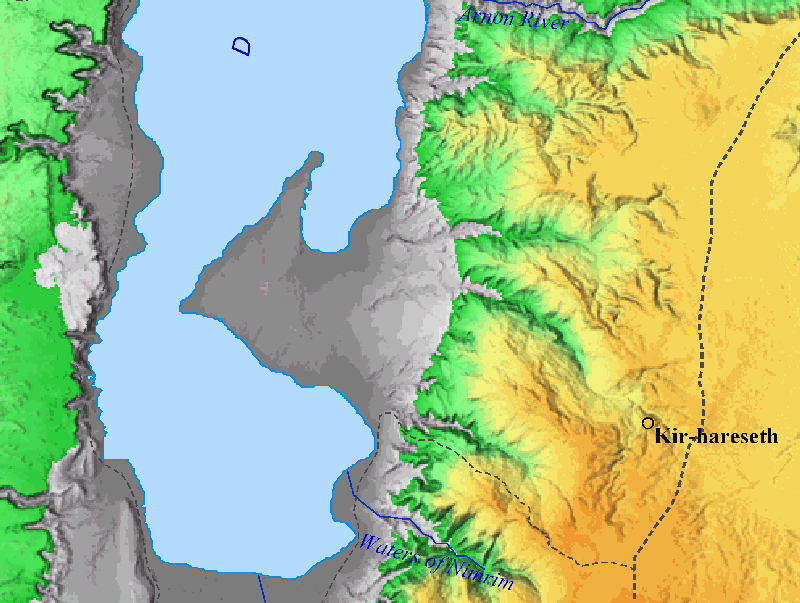
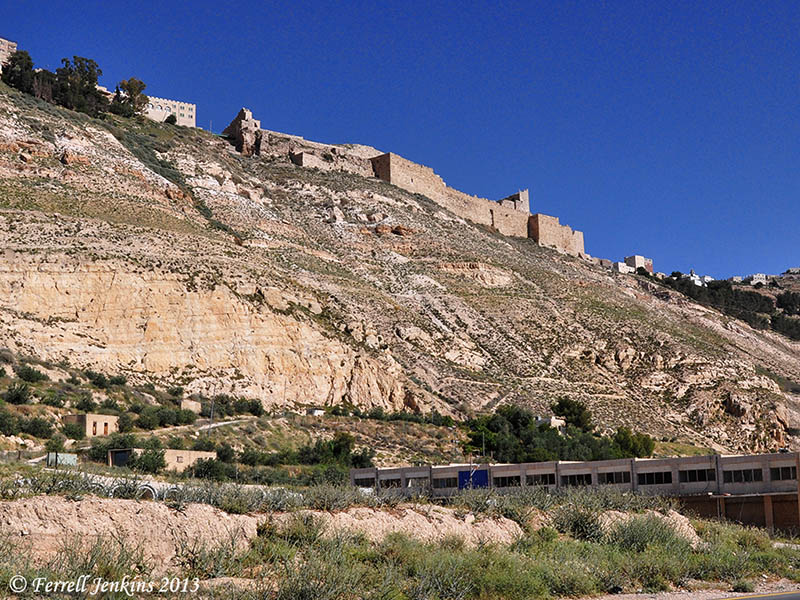
In the map below you see that Kir-hareseth (site of Karak or Kerak, Jordan) sits only a few miles from the desert and the ancient King’s Highway. The famous Karak Crusader castle provides a view to the west toward the Dead Sea.

Location of Kir-hareseth, modern Kerak in Jordan.

Location of Kir-hareseth, modern Karak in Jordan.

Notice that a valley runs northeasterly from Kir-hareseth to the Dead Sea. Remember that the Dead Sea would be dry south of the Lisan (tongue) except for water that is pumped from the north. In the photos below we can see how this area looks today.

Kerak castle from the west side of the ridge on which it stands. Photo by Ferrell Jenkins.

Karak castle from the west side of the ridge on which it stands. Photo by Ferrell Jenkins.

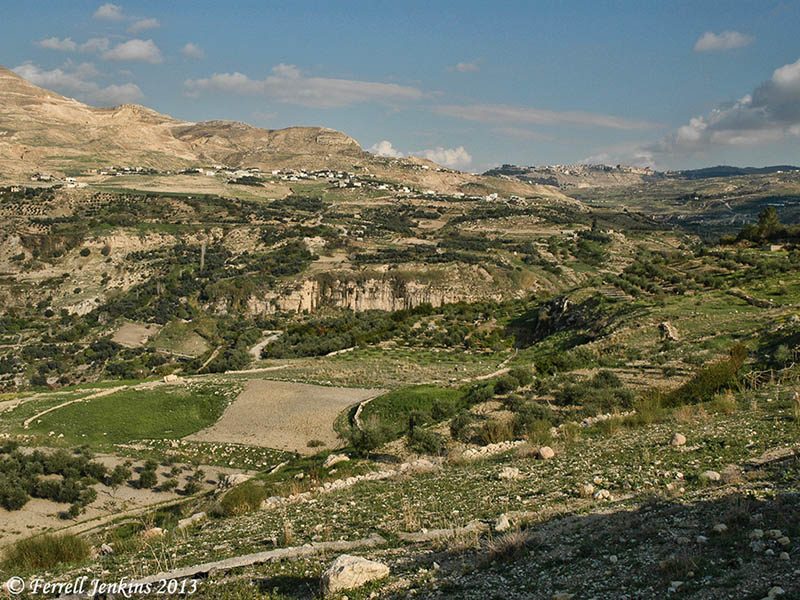
When we travel down the valley toward the Dead Sea, we can turn back toward the east to see Karak castle on the far right of the ridge. Click on the photo for a larger view.

View from the valley below Kir-hareseth. The view is to the east. Photo by Ferrell Jenkins.

View to the east from the valley below Kir-hareseth. Photo by Ferrell Jenkins.

In the next photo we turn to look down the valley toward the Dead Sea (to the west).

View toward the west from below the Kerak castle. Photo by Ferrell Jenkins.

View toward the west from below the Karak castle. Photo by Ferrell Jenkins.

After the king of Moab offered his oldest son on the wall of the city, the Israelites departed and returned home.

Then he took his oldest son who was to reign in his place and offered him for a burnt offering on the wall. And there came great wrath against Israel. And they withdrew from him and returned to their own land. (2 Kings 3:27 ESV)

The valley we have shown above would be the most natural route to take back to Israel. Kir-hareseth is almost 3000 feet above sea level; the Dead Sea is about 1300 feet below sea level. Highway 50 follows the valley and dead ends at highway 65 which runs north-south along the east side of the Dead Sea.

Understanding the topography of an event helps a lot.

Karak castle plays a role in the 2005 movie Kingdom of Heaven. I found it fascinating because I had been to many of the Crusader sites mentioned in it.

Following the news in the Bible World

Beginning with the Six Day War (June 5-10, 1967) I have tried to keep alert to the situation in the countries that are often called the Bible lands or the Bible World. This phrase is given to the countries of Iran, Iraq, Turkey, Syria, Lebanon, Jordan, Israel, Egypt, Greece, et al. where the events of the Bible transpired. Over the past 47 years I have traveled in all of these countries, some extensively, except Iran.

The current news coming out of Egypt is not good, and it is sad to see the conditions there. I wish for peace and justice for the people of Egypt, and the other countries mentioned above. I wish it also for those who would like to travel to these ancient lands to better learn the history, both secular and biblical.

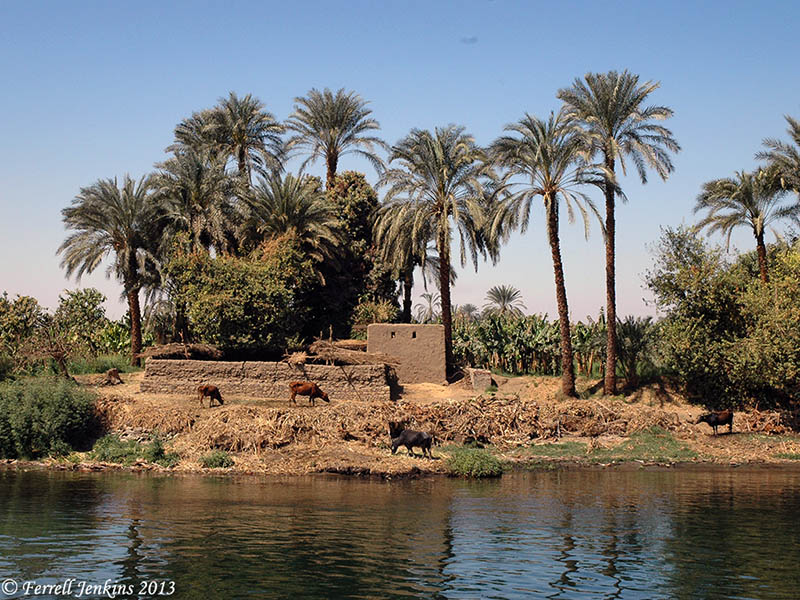
A scene on the Nile River in Upper Egypt. Photo by Ferrell Jenkins.

A scene on the Nile River in Upper Egypt. Photo by Ferrell Jenkins.

The photo above was made from the Nile River in Upper Egypt, near the ancient town of Edfu. When I look at it I am reminded of the Genesis account of the seven lean cows and seven plump cows that Joseph saw coming up out of the Nile (Genesis 41).

In search of Dalmanutha

After the feeding of the four thousand, Jesus went to the district of Dalmanutha.

And immediately he got into the boat with his disciples and went to the district of Dalmanutha. (Mark 8:10 ESV)

This is the only Biblical reference to a place called Dalmanutha. Where was it? When we read the parallel account in Matthew 15:32-39, we learn that Jesus came to the region of Magadan.

And after sending away the crowds, he got into the boat and went to the region of Magadan.  (Matthew 15:39 ESV)

Todd Bolen, at Bible Places Blog, notes that some scholars equate Dalmanutha with Magadan/Magdala. He says,

Mendel Nun has proposed that Dalmanutha be identified with a small anchorage north of Magdala (Anchor Bible Dictionary 2:4). Dalmanutha may not be a proper name but simply the Aramaic word for harbor.

In an article on “Ancient Harbors Of The Sea Of Galilee,” Gordon Franz discusses the location of Magdala/Dalmanutha. Perhaps Dalmanutha “is a transliteration of the Syrian word for harbor.” Or, the term may derive from the harbor that existed here. Franz describes the harbor:

It consisted of two parts; an open dock for loading and unloading during the summer, and a basin, with a 70 m breakwater to protect the ships from the winter storms. (Bible and Spade (1991) Volume 4, 04. p. 120.)

This new discussion about Dalmanutha has been prompted by a recent lecture by Dr. Ken Dark at the Centre for the Study of Christian Origins in the School of Divinity, University of Edinburgh. Helen Bond reports here that Dark spoke of mapping the area around Nazareth and the Sea of Galilee. Notice the summary of Dark’s comments on Dalmanutha:

A new research project is synthesising existing data and using air- and satellite-photography to re-examine the area, combined with the first extensive archaeological survey of the Ginosar valley. The latter has identified a very large, but previously-unrecognised, Late Hellenistic, Roman-period, and later, settlement between the modern town of Migdal (on the western side of the valley) and the coast, just south of Kibbutz Ginosar.  It is hard to imagine that a Roman-period coastal community of this size is nowhere mentioned in textual sources, and the site might be identified with one of the unlocated toponyms known from the Bible, perhaps the Dalmanutha of Mark 8:10.

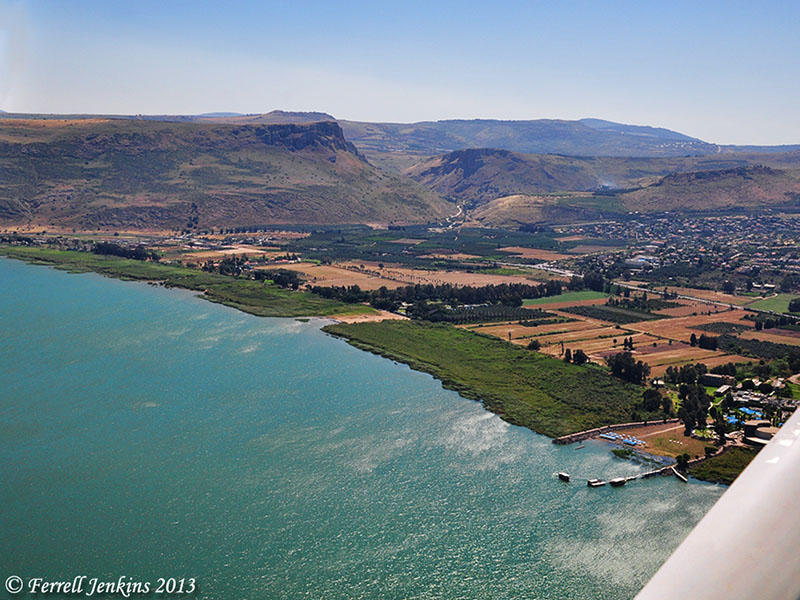
The aerial photo below shows the general area under consideration. Magdala is on the left of the photo. On the right you can see the museum at Nof Ginosaur where the Roman Boat is shown. Part of the building is hidden behind the wing strut of the airplane.

Aerial view of the Plain of Genessaret from Magdala on the south (left) to Nof Ginosaur on the north (right). Photo by Ferrell Jenkins.

Aerial view of the Plain of Genessaret from Magdala on the south (left) to Nof Ginosaur on the north (right). Photo by Ferrell Jenkins.

The green strip between the water and the land is covered by water this year. You see two places where the growth has been cleared away to make room for a beach.

So, we have several options for the location or meaning of Dalmanutha. In a post to follow I will show you the traditional site of Dalmanutha.

HT: Bible Places Blog; Larry Hurtado’s Blog

Facebook site for Tell el-Amarna

Some archaeological projects have Facebook pages. Check out this one on the Egyptian site of Tell el-Amarna here.

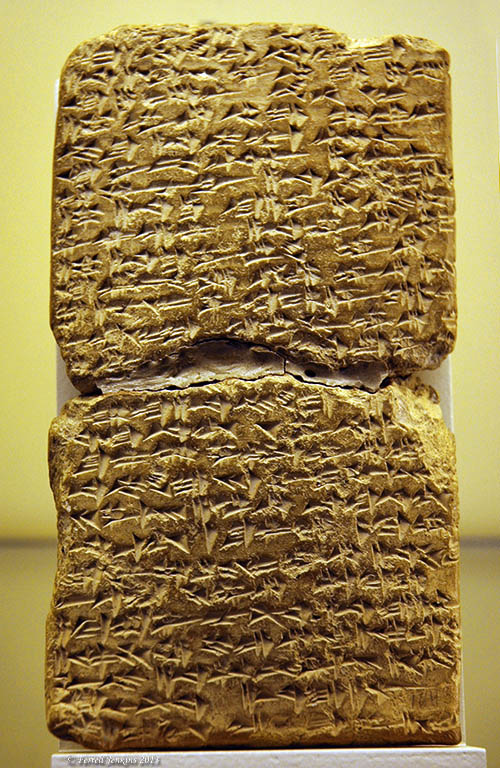
Amarna Letter from the Egyptian ruler of Jerusalem to Amenophis III. Pergamum Museum, Berlin. Photo by Ferrell Jenkins.

Amarna Letter from the Egyptian ruler of Jerusalem to Amenophis III. Pergamum Museum, Berlin. Photo by Ferrell Jenkins.

This letter dates to the reign of Amenophis III (1391-1353 B.C.).

Overview of Jerusalem from the Haas Promenade

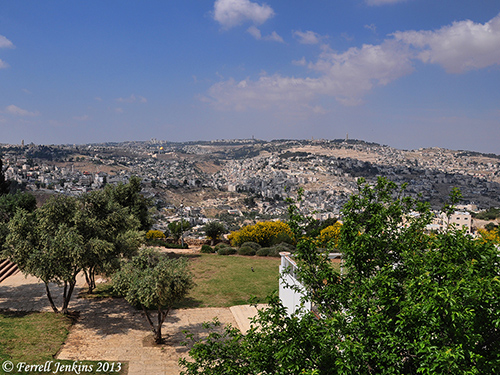
The Haas Promenade is fairly easy to reach from the Hebron Road (Derech Hevron) on the south side of Jerusalem. From there one has a beautiful view of the Old City of Jerusalem and the surrounding area. Those who know the city will enjoy this photo more than those who do not.

View of Jerusalem from the Haas Promenade. Photo by Ferrell Jenkins.

View of Jerusalem from the Haas Promenade. Photo by Ferrell Jenkins.

In this photo you can see the entirety of the southern wall of the Old City. From left to right notice the Church of the Dormition, the Dome of the Rock, the depression of the Kidron Valey, Mount Scopus, and the Mount of Olives. You can see the three towers of Olivet.

Because I have not been posting very much lately, and to show my appreciation for those of you who subscribe and continue to visit the blog, I have linked the image above to one large enough to use in PowerPoint presentations. I hope you and your viewers will enjoy.

As the mountains surround Jerusalem, so the LORD surrounds his people, from this time forth and forevermore. (Psalm 125:2 ESV)

“Extinct” frog alive and well in Hula Valley

The Hula painted frog was declared extinct in 1996. But, an Israeli park ranger recently found one. Researchers have caught a total of 14 of these frogs since then. Read the story in the Smithsonian’s Smart News here.

There is no word whether this might have been the frog mentioned  in the account of the plagues the LORD sent on Egypt (Exodus 8). 🙂

He sent swarms of biting insects against them, as well as frogs that overran their land. (Psalm 78:45 NET)

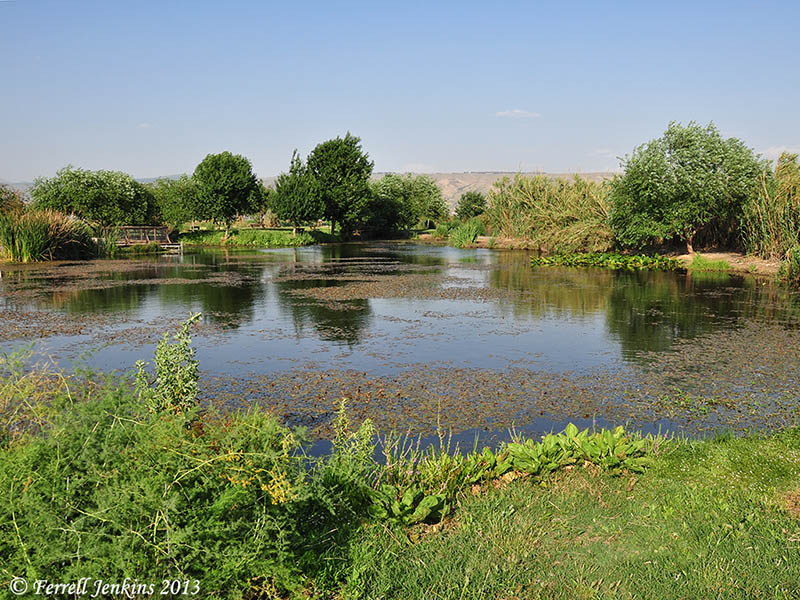
A portion of the Hula Lake/Agamon Lake restoration project. Photo by Ferrell Jenkins.

A portion of the Hula Lake/Agamon Lake restoration project. Photo by Ferrell Jenkins.

See here for more info on the Lake Hula restoration project.

HT: Alan Cornett

Churning to make butter

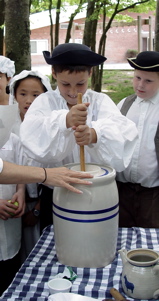
Churning Butter

Churning Butter

When I was a kid in the rural south, churning was done in a heavy duty ceramic pot. Butter was made by moving the stick (which had a sort of paddle attached) up and down.  I did not live in Colonial times, but the churn we used looked very much like the one shown in the picture to the left. Ours was a bit taller, I think.

The practice of churning to make butter has been around for thousands of years. It is mentioned in the Wisdom Literature of the Bible.

For the churning of milk produces butter, And pressing the nose brings forth blood; So the churning of anger produces strife. (Proverbs 30:33 NAU)

The ESV consistently uses the word pressing, from the Hebrew mits, three times in that verse.

For pressing milk produces curds, pressing the nose produces blood, and pressing anger produces strife. (Proverbs 30:33 ESV)

The NET Bible probably best conveys the meaning of the text by the use of churning, punching, and stirring up.

For as the churning of milk produces butter and as punching the nose produces blood, so stirring up anger produces strife. (Proverbs 30:33 NET)

The photo below shows a pottery churn from Beersheba, now displayed in the Israel Museum. The sign associated with the churn says,

The churn, used for making butter from milk, first appeared in the Chalcolithic Period [6,500–5,500 years ago] and became an important symbol of the time. To speed up the churning process, a rope was tied to the handles, and the churn was rocked back and forth.

Chalcolithic pottery churn from Beersheba. Israel Museum. Photo by Ferrell Jenkins.

Chalcolithic pottery churn from Beersheba. Israel Museum. Photo by Ferrell Jenkins.

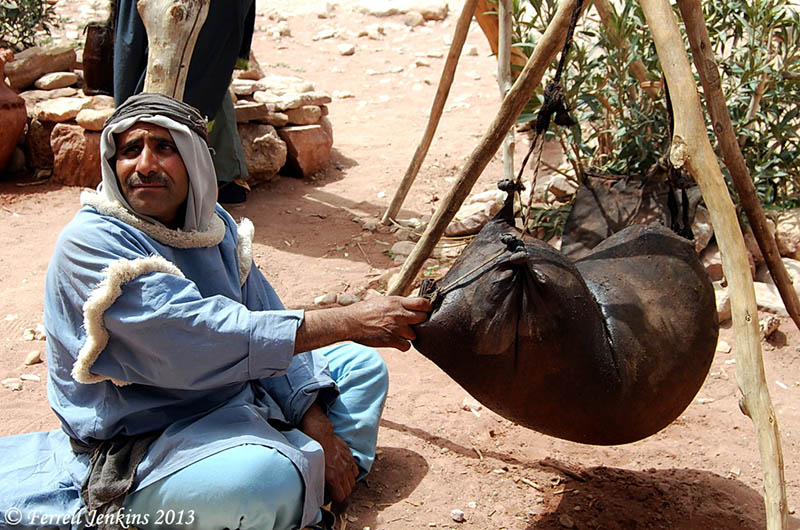
During a visit to Petra, Jordan, in 2008, a group of people were portraying the costumes and activity of earlier Bedouin. Many of the customs portrayed are the same as those we read about in the Bible.

In the photo below the man is rocking a churn made from an animal skin.

Bedouin churning in an animal skin at Petra. Photo by Ferrell Jenkins.

Bedouin churning butter in an animal skin at Petra. Photo by Ferrell Jenkins.

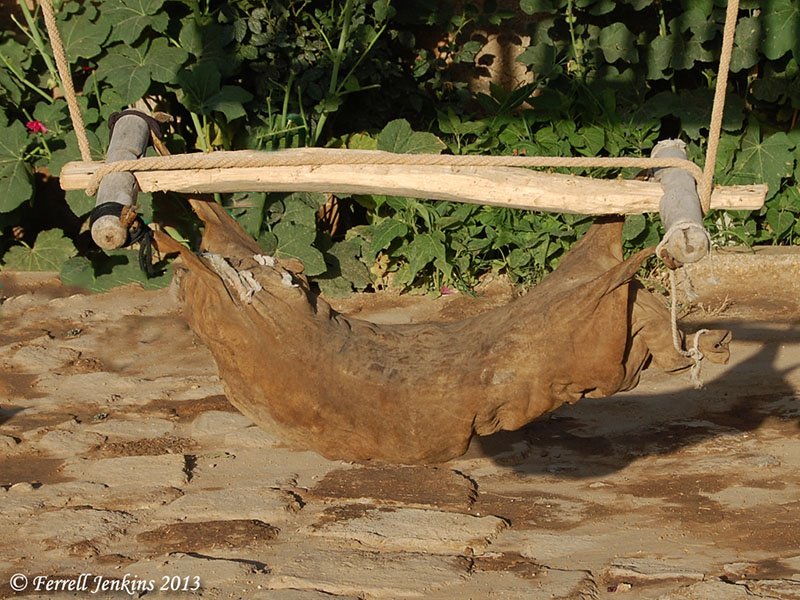
Finally, here is a photo that I made at Haran in southeastern Turkey, once the home of Abraham (Genesis 11:31 – 12:4), showing a churn made from an animal skin.

Churn made from animal skin at Haran. Photo by Ferrell Jenkins.

Churn made from animal skin at Haran. Photo by Ferrell Jenkins.