Category Archives: Bible Lands

Flying over Beit She’an, Bethshan, Beth-shan

The Israelis call it Beit She’an, but English Bible readers will know it as Bethshan. The town is mentioned only a few times in the Old Testament. The English Standard Version uses both Beth-shan and Beth-shean to identify this town. Other English versions use a variety of spellings including Bethshan.

From atop the ancient tell, called Tell el-Husn or Tel Beth She’an, one has an impressive view of the area. Occupational levels date back at least to 3000 B.C. Artifacts from Canaan, Egypt, Anatolia, north Syria, and Mesopotamia have been uncovered from the mound.

The photo below was made from the air with a view northeast. A small portion of the Harrod Valley, with some fish ponds, is visible in the top of the photo. The River Harod flows to the east of the tel hidden by the line of trees.
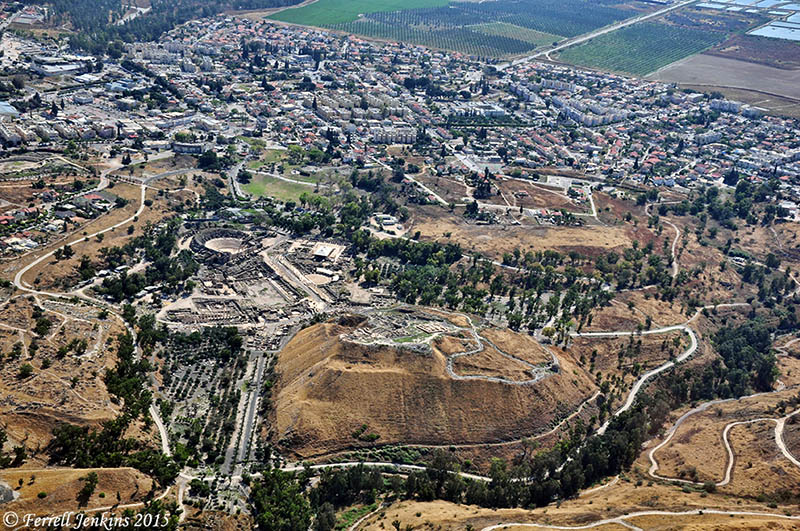
Tel Husn (Bethshan) is visible in the bottom of the image. Photo by Ferrell Jenkins.

Tel Husn (Bethshan) is visible in the bottom of the image. Photo by Ferrell Jenkins.

For many Bible students the first event that comes to mind is the defeat of King Saul at the hands of the Philistines. After his death on nearby Mount Gilboa, Saul’s body was taken to Beth-shean and fastened to the wall of the city (1 Samuel 31).

During the Greek period the city was named Scythopolis (city of the Scythians) and expanded to the foot of the tell.

In 63 B.C. the Romans, under the general Pompey, made the city part of the Decapolis (a league of ten cities; Matthew 4:25; Mark 5:20; 7:21). This was the only city of the Decapolis west of the Jordan River. The city was populated by gentiles, Jews and Samaritans.
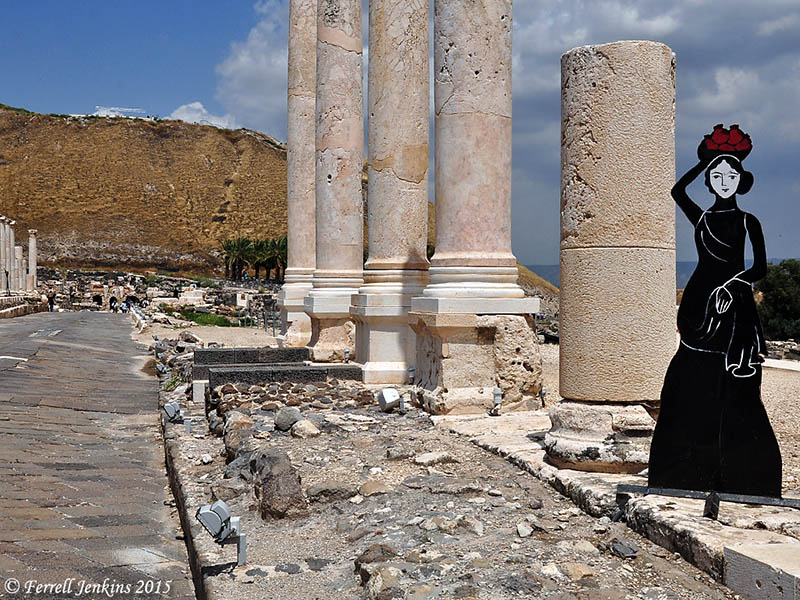
The main street of the Byzantine city. The tel of ancient Bethshan is visible at the end of the street. Photo by Ferrell Jenkins.

The main street of the Byzantine city. The tel of ancient Bethshan is visible at the end of the columned street. Photo by Ferrell Jenkins.

The city grew to its largest size during the Byzantine period as a “Christian” city. It came under Muslim control in A.D. 636, and was destroyed by an earthquake in A.D. 749.
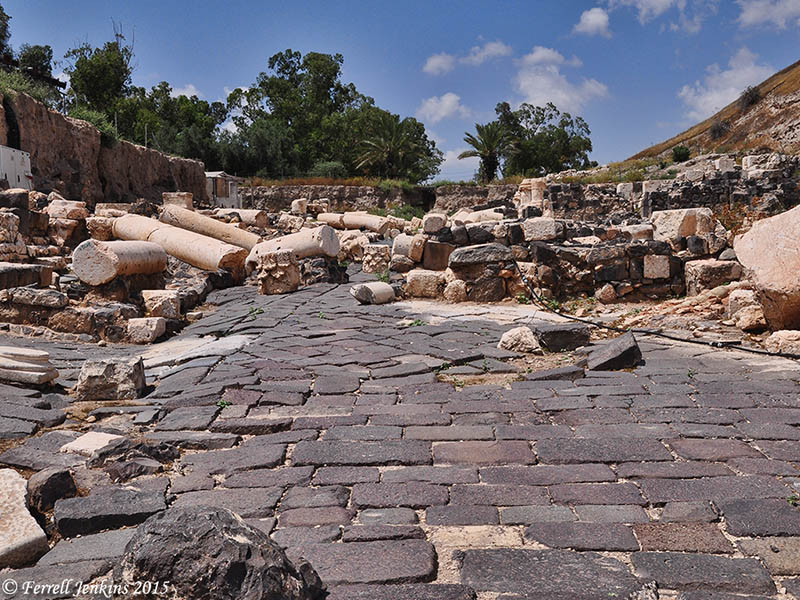
Some of the earthquake damage at Bethshan. Photo by Ferrell Jenkins.

Some of the earthquake damage at Bethshan. Photo by Ferrell Jenkins.

The destroyed Byzantine city lies between the theater and the mound. That’s a lot of history in one small place.
A miscellany of topics

In the past few weeks I have been occupied trying to get some out-of-print material ready for reprint. Occasionally I read something that I think should be shared. Take a look at these.

Ephesus Museum Open. Carl Rasmussen reports on his HolyLandPhotos’Blog that the Ephesus Museum in Seljuk is open after being closed for renovation.

Gentile References in Matthew. Charles Savelle presents a list of “Gentile References in Matthew” at BibleX.

Bible Places Blog. Todd Bolen’s Weekend Roundups have been extremely helpful the past couple of weeks. See here for the most current one.

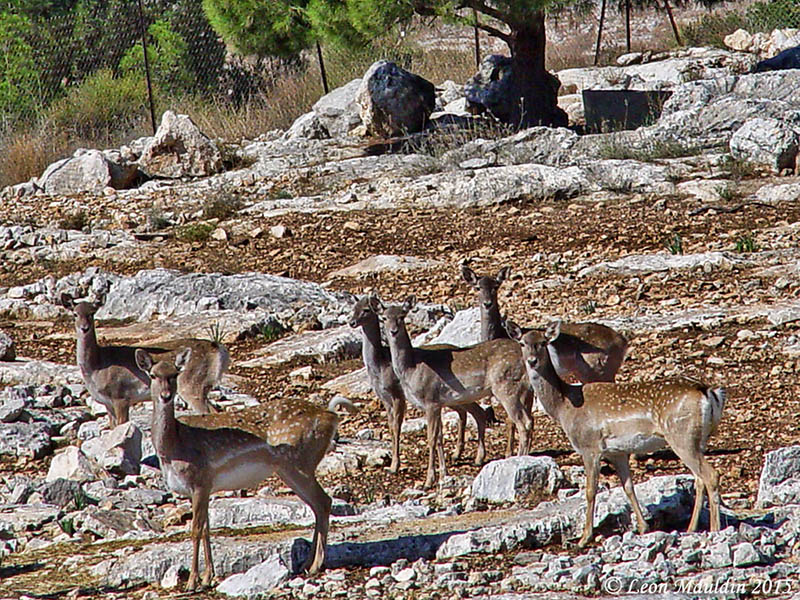
The Fallow Deer. Shmuel Browns writes about how the Fallow Deer was reintroduced into Israel from Iran. Fascinating story with photos here. Browns does not say where he made his photos, but mentions that some of the deer were taken to Neot Kadumim. When Leon Mauldin and I visited Neot Kedumim in 2005 the deer there were young. I note that they are not as gray as those in Shmuel’s photos. Perhaps the age accounts for the difference.

Young fallow deer at Neot Kedumim. Photo by Leon Mauldin.

Young fallow deer at Neot Kedumim. Photo by Leon Mauldin.

Using Maps in Bible Study. Wayne Stiles writes about “The Value of Using Maps in Your Bible Study” here.

Mount Gilboa. The Times of Israel carries an article here with beautiful photos, of the Gilboa Mountains and the wildflowers growing there in the winter and spring.

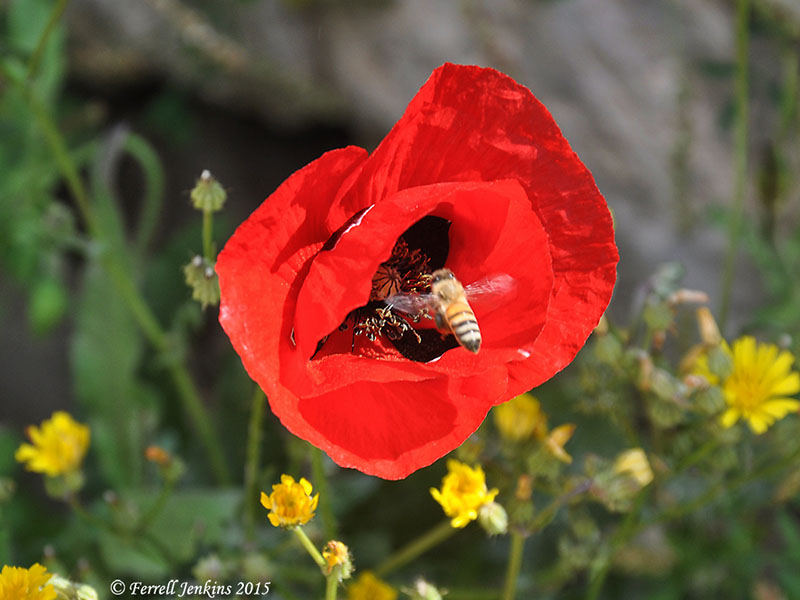
A poppy and a bee at the Pool of Bethesda, Jerusalem. Photo by Ferrell Jenkins.

A poppy and a bee at the Pool of Bethesda, Jerusalem. Photo by Ferrell Jenkins.

Responding to Newsweek. Darrell L. Bock has two more responses here to the Newsweek article on The Bible.

How Many Saviors? Amazon has Ronald Nash’s Is Jesus the Only Savior? available in Kindle format for $1.99 for a limited time. This book can be very helpful in this time of emphasis on pluralism and inclusivism.
The Exodus. Last Friday I heard Gretchen Carlson’s interview with filmmaker Tim Mahoney on Fox News. It was the first I had heard of the film Patterns of Evidence: Exodus. The film is debuting Monday, January 19 at select theaters nationwide.

A wide variety of scholars are interviewed in the film, including Charles Aling, Manfred Bietak, John Bimson, Israel Finkelstein, James K. Hoffmeier, David Rohl (who has advanced a revised chronology ancient Egypt and Palestine),
Bryant Wood, and others.

For info on the film and places it will be shown see Patterns of Evidence: The Exodus. Here is the trailer.

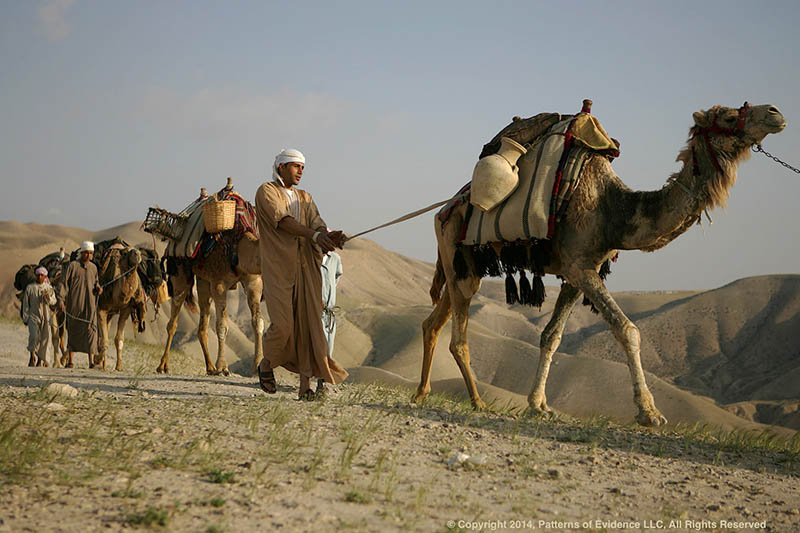
A few nice photos are available for download.

From Patterns of Evidence.

From Patterns of Evidence.

You are on your own to see/hear and evaluate.

Added Note (Jan. 19, 2015). Todd Bolen calls attention to a review of the film by Larry Largent. This review confirms my suspicions that the flim was an effort to push a revised chronology. Take a look at this review at Biblical Remains.

NASA photos of Israel and Middle East

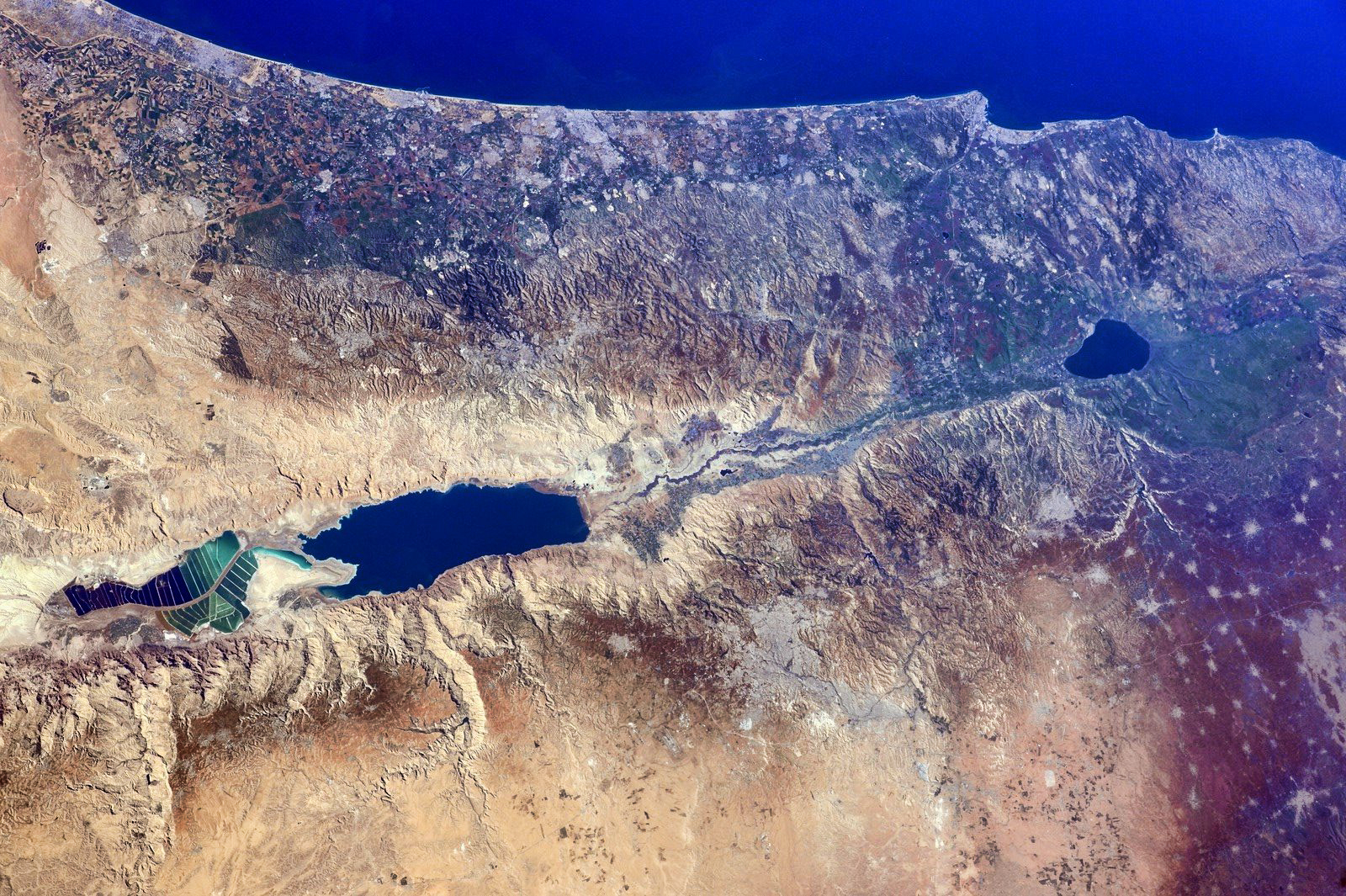
NASA has posted several excellent photos made by Barry Wilmore from the International Space Station on Facebook. The photos were made on Christmas day, 2014. See how many landmarks you can identify. Click on the photo for a larger image. Do you see Tyre?

Israel, the West Bank, and part of Jordan from the ISS. Photo: NASA/Barry Wilmore.

Israel, the West Bank, and part of Jordan from the ISS. Photo: NASA/Barry Wilmore.

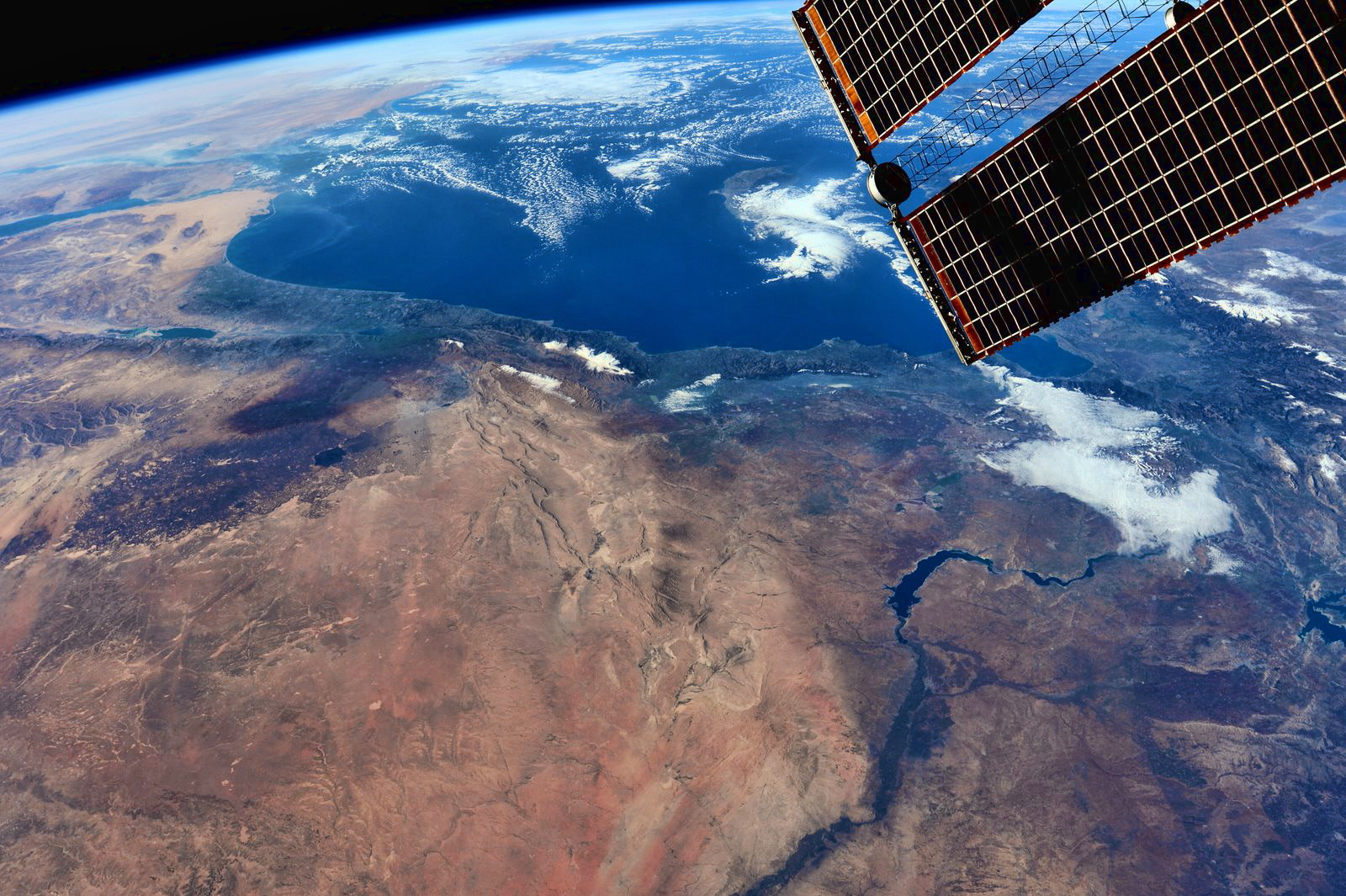
The photo below shows portions (or all) of (L to R) Egypt, Sinai Peninsula, Israel, Jordan, Lebanon, Syria, Turkey (including Euphrates River), and Iraq. Great photo.

The Middle East from the ISS. Photo: NASA/Barry Wilmore.

The Middle East from the ISS. Photo: NASA/Barry Wilmore.

Get out your Bible atlases and study these photos.

Our tax dollars put to good use, I would say.

Frankincense and Myrrh in the Bible

Frankincense and myrrh are mentioned together in the Song of Solomon and in the account of the visit of the magi from the east to see Jesus. Several significant things can be learned from these Biblical verses.

Look first at Song of Solomon 3:6.

“What is this coming up from the wilderness Like columns of smoke, Perfumed with myrrh and frankincense, With all scented powders of the merchant? (Song of Solomon 3:6 NAU)

  • Myrrh and frankincense are associated with the wilderness (desert; Hebrew, midbar).
  • Perhaps incense used in sacrifice or offering, “like columns of smoke.”
  • Associated with perfume and scented or fragrant powders.
  • Something traveling merchants would bring from the wilderness.

Song of Solomon 4:13-14 provides more insights.

“Your shoots are an orchard of pomegranates With choice fruits, henna with nard plants,  Nard and saffron, calamus and cinnamon, With all the trees of frankincense, Myrrh and aloes, along with all the finest spices. (Song of Solomon 4:13-14 NAU)

  • Associated with trees, and classified with spices.
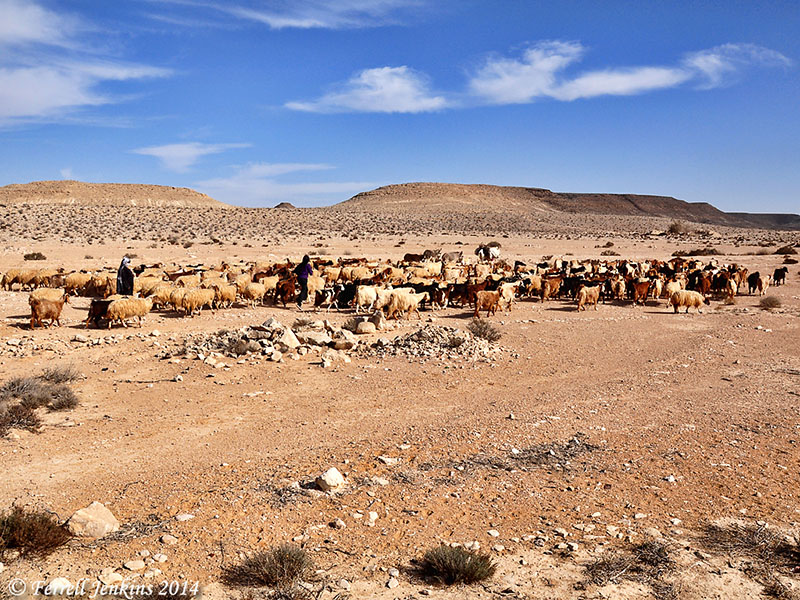
The wilderness of Zin near Avdat. Photo by Ferrell Jenkins.

The wilderness of Zin near Avdat. Photo by Ferrell Jenkins.

The reference in the New Testament is in the account of the birth of Jesus (Matthew 2:1-11).

  • Frankincense and myrrh are in the category with gold, and offered as gifts to one who is considered a king and is being worshiped.
  • The magi have come from east of Jerusalem and Bethlehem.
  • Gold, frankincense, and myrrh are considered treasures.

All of these tips harmonize with what is known about frankincense and myrrh. The plants or trees from which these come are known to grow in the desert regions. They are not native to Biblical Israel. Traveling merchants from Arabia traveled long distances across the desert, making stops at Petra, Avdat, and other places on their way to Gaza and other Mediterranean ports where the products could be shipped throughout the Mediterranean world.

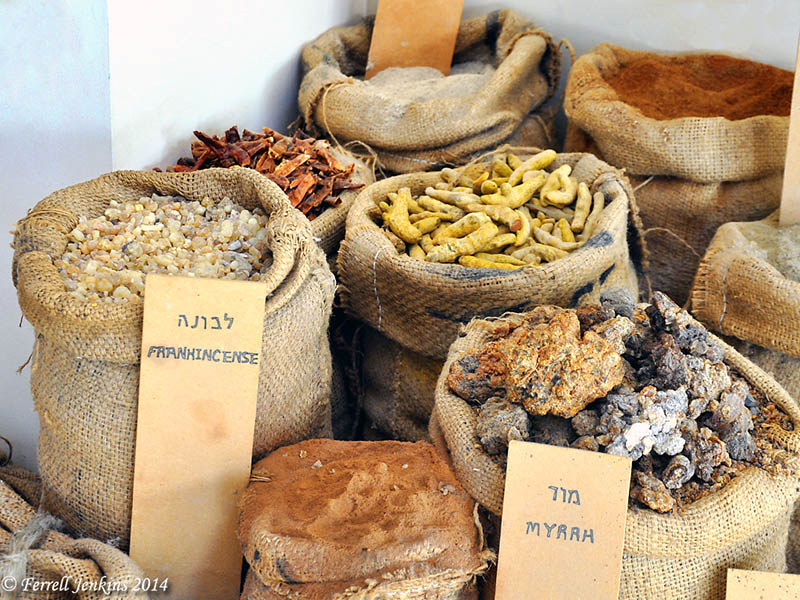
The photo below was made at Avdat (Ovdat), a Nabatean site in the Negev. The city was especially significant in the first century B.C. and the first century A.D. Avdat was stop number 62 on the famous Incense Route. It is now part of Israel’s National Park system, and a World Heritage Site. A display at the ticket office and shop explains about the Incense Route and shows some of the goods that were transported across the desert.

The header we are using for this blog, showing a caravan crossing the desert, was made at Avdat.

Frankincense and Myrrh on the Spice Route at Avedat. Photo by Ferrell Jenkins.

Frankincense and Myrrh on the Spice Route at Avdat. Photo by Ferrell Jenkins.

This post is a revision of one posted December 14, 2011.

Index of articles on Bethlehem and the Birth of Jesus

Bethlehem and the Birth of Jesus.  Our total number of posts has now grown to more than 1700 and this makes it difficult to locate a post you may need. This index is prepared to assist you in your study of the birth of Jesus in ancient Bethlehem. Most, if not all, of the posts include at least one photo illustrating the lesson.

Other places near Bethlehem. Most of the links below are related to Herod the Great and the fortress he built near Bethlehem. I see that I have normally used the spelling Herodium, but sometime Herodion.

Historical Connections to Modern Christmas Celebrations. These post are post-biblical, historical references to customs associated with Christmas.

When other posts on this subject are written I will try to remember to update the list.

Fishing the Sea of Galilee

In previous posts we have looked at the fish of the Sea of Galilee, ports of the Sea of Galilee, and Tabgha (Heptapegon) which has been called the fishermen’s suburb of Capernaum.

In this post we will concentrate on how the fishing was done.

  • Some fishing was done by casting a hook into the sea (Matthew 17:27).
  • The cast-net could be thrown by an individual fisherman (Matthew 4:18).
  • The seine or dragnet required several workers (Matthew 13:47).
  • The trammel net involved tying together several nets (Mark 1:19-20).

The Hook. I suppose fish hooks are common enough not to need a photo but I will include them in this photo made in the Eretz Israel Museum, Tel Aviv. it shows a cast-net and some fishing hooks in the lower right corner. Note the lead weights on the bottom of the net. Lead weights such as these have been found at various archaeological excavations.

Cast-Net and fish hooks. Eretz Israel Museum. Photo by Ferrell Jenkins.

Cast-Net and fish hooks. Eretz Israel Museum. Photo by Ferrell Jenkins.

The Cast-Net. This photo shows a fisherman casting a net in the warm, shallow water near Tabgha. The cast-net can be thrown from the edge of the water or from a boat.

Fisherman casting a net in the warm water at Tabgha. Photo by Ferrell Jenkins.

Fisherman casting a net in the warm water at Tabgha. Photo by Ferrell Jenkins.

The Seine or Dragnet. In the parable of the net in Matthew 13:47-50, the Greek word for net is sagene. I note that the NAU and the NKJ use the term dragnet, while other versions use the generic net. This is clearly the seine which gathers all kinds of fish that must then be sorted by the fishermen.

I understand about the seine. As a youngster I visited an uncle and aunt who lived near New Hope, Alabama. My uncle set a seine on the Flint River. In the morning he would say, “Let’s go down to the river and see if we have caught anything.” But, I have not seen the seine in use on the Sea of Galilee except in older photos. Here is a photo from the American Colony and Eric Matson collection available from Life in the Holy Land.

Fishermen bringing in a seine (or dragnet). Photo: Life in the Holy Land.

Fishermen bringing in a seine (or dragnet). Photo: Life in the Holy Land.

The next photo is one that I have enhanced from the Eric Matson collection at the Library of Congress.

Fishermen using a seine. Photo: Eric Matson Collection, LOC.

Fishermen using a seine. Photo: Eric Matson Collection, LOC.

A modern adaptation of the seine or dragnet is seen in modern times. I learned that it is called the Purse Seine. The first photo, scanned from a 1992 slide, shows the seine is heavy with the catch of the night.

Fishing boat getting ready to unload a purse seine at Tiberias. Photo by Ferrell Jenkins, 1992.

Fishing boat getting ready to unload a purse seine. Photo by Ferrell Jenkins.

The next photo shows the fishermen getting ready to unload the catch.

Fishing boat using purse-seine on Sea of Galilee - March 1992

Fishing boat using purse-seine on Sea of Galilee – March 1992

The Trammel Net. Nun says that the net being used by the early disciples of Jesus is the trammel net (Mark 1:19-20). This type of net was made by tying together several cast-nets. You can locate many photo illustrations by searching for “trammel nets” in Google. Here is another photo from the Matson collection showing the mending of nets at Ain Geb (En Gev).

Girls of Ain Geb, a Jewish settlement on the east side of the Sea of Galilee. Girls of the settlement mending fishing nets. Photo: Eric Matson collection LOC.

Girls of Ain Geb, a Jewish settlement on the east side of the Sea of Galilee. Girls of the settlement mending fishing nets. Photo: Eric Matson collection LOC.


Fish of the Sea of Galilee

In 1993 Mendel Nun published an article in Biblical Archaeology Review entitled “Cast Your Net Upon the Waters: Fish and Fishermen in Jesus’ Time.” Nun, now deceased, explains the meaning of his name:

For more than 50 years, I have lived at Kibbutz Ein Gev on the shore of the Kinileret [Kinneret], the Sea of Galilee. For much of that time, I have been a fisherman. The Hebrew letter nun (N) means fish in Aramaic. My former name—I was born in Latvia—began with an N. When I became a fisherman, I simply took that first letter as my new surname. (BAR 19:06 (Nov/Dec 1993)

Nun explains that he was continually surprised “at how accurately the New Testament writers reflect natural phenomena on the lake.”

A more detailed source of information by Nun is his 1989 The Sea of Galilee and Its Fishermen in the New Testament.

Nun says there are 18 species of indigenous fish in the Sea of Galilee, and that 10 of those are important commercially. The edible fish are classified as follows:

  • Musht. This group includes the popular Tilapia Galilea, commonly called Saint Peter’s fish.
  • Biny (Barbels). “This group consists of three species of the Carp family.” The two most common species are the Barbus longiceps and the Barbus Canis. Both are used by Jews for Sabbath meals and feasts.
  • Kinneret Sardine. “At the height of the fishing season, tens of tons of sardines are caught every night.” In New Testament times these fish were preserved by pickling. Magdala was known as the center of this industry.

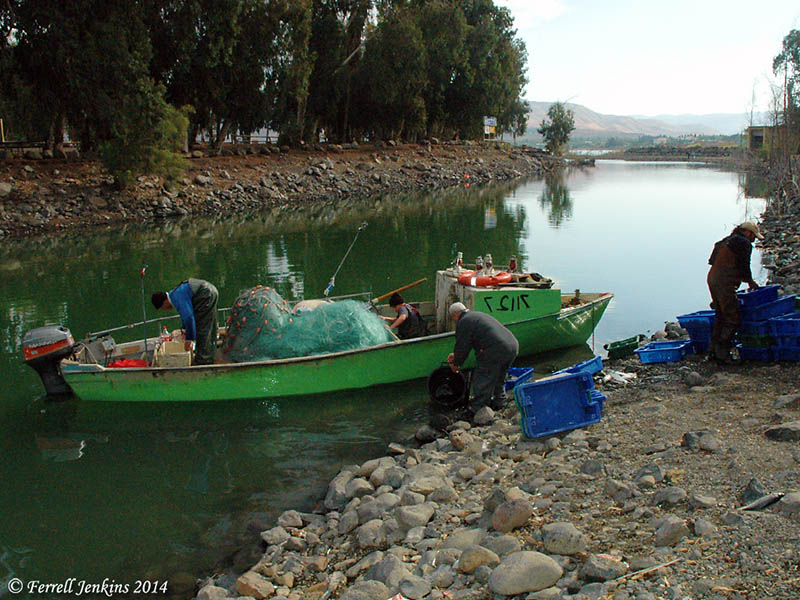
Our first photo shows fishermen unloading their catch of Musht early in the morning. This photo was made where the Jordan River exits from the south end of the Sea of Galilee.

Fishermen coming in from a night of fishing. Photo by Ferrell Jenkins.

Fishermen coming in from a night of fishing. Photo by Ferrell Jenkins.

Fish are unloaded to be taken to restaurants and markets in the area. I have seen this fish for sale in the Old City of Jerusalem.

Fishermen unloading their catch at the outlet of the Jordan River from the Sea of Galilee. Photo by Ferrell Jenkins.

Fishermen unloading their catch at the outlet of the Jordan River from the Sea of Galilee. Photo by Ferrell Jenkins.

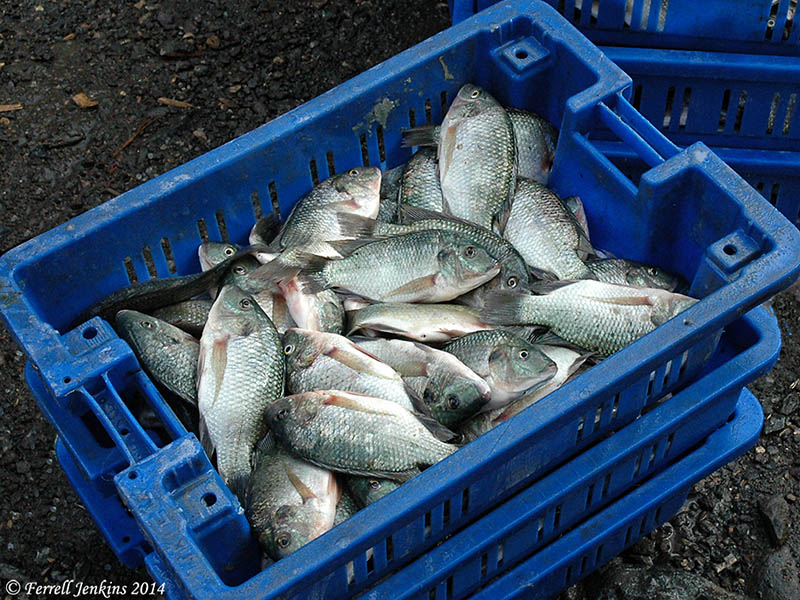
Here is a closeup of one of the containers of Saint Peter’s fish. You can see that these fish would be ideal of pan frying.

Musht (Saint Peter's fish) from the Sea of Galilee. Photo by Ferrell Jenkins.

Musht (Saint Peter’s fish) from the Sea of Galilee. Photo by Ferrell Jenkins.

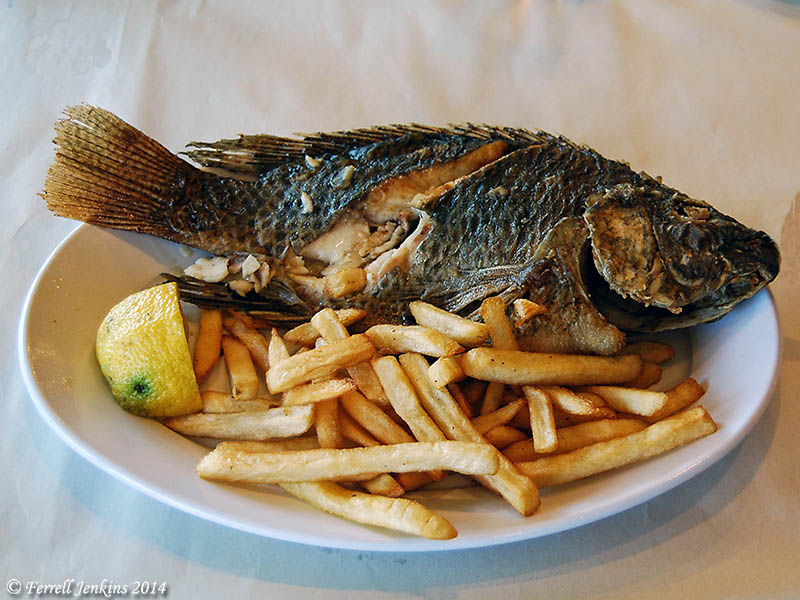
Tourists may have eaten these fish at lunch during their tour of the Galilee region. It makes a good meal, but some tourists use a napkin to cover the eyes while they enjoy eating the fish.

Saint Peter's fish is a common meal at restaurants around the Sea of Galilee. Photo by Ferrell Jenkins.

Saint Peter’s fish is a popular meal at restaurants around the Sea of Galilee. Photo by Ferrell Jenkins.

The next photo, also early in the morning, shows the catch of Biny, a much larger fish than the Musht. The Biny reaches a weight of 6 or 7 kilo (13-15 pounds).

Fisherman at Tiberias Port unloading the catch of Biny. Photo by Ferrell Jenkins.

Fisherman at Tiberias Port unloading the catch of Biny. Photo by Ferrell Jenkins.

In 2010 Israel announced a two year ban on fishing in the Sea of Galilee (see here). I don’t know how vigorously this ban was enforced. I know that in previous years I would see numerous boats heading to port after a night of fishing, but in the past few years this has not been so. Today’s Haaretz reports that the two-year fishing ban has been cut to a four-month annual break.

Instead of a blanket moratorium on fishing in the lake for two years, fishing will be barred only from April 15 to August 15, the spawning season of the lake’s tilapia populations.

The full article may be read here.

Hopefully we will return with some more information about fishing at the time of Jesus and a brief look at some of the New Testament episodes that involve fishing.

Thoughts for today and everyday

I will give thanks to the LORD with my whole heart; I will recount all of your wonderful deeds. I will be glad and exult in you; I will sing praise to your name, O Most High. (Psalm 9:1-2 ESV)

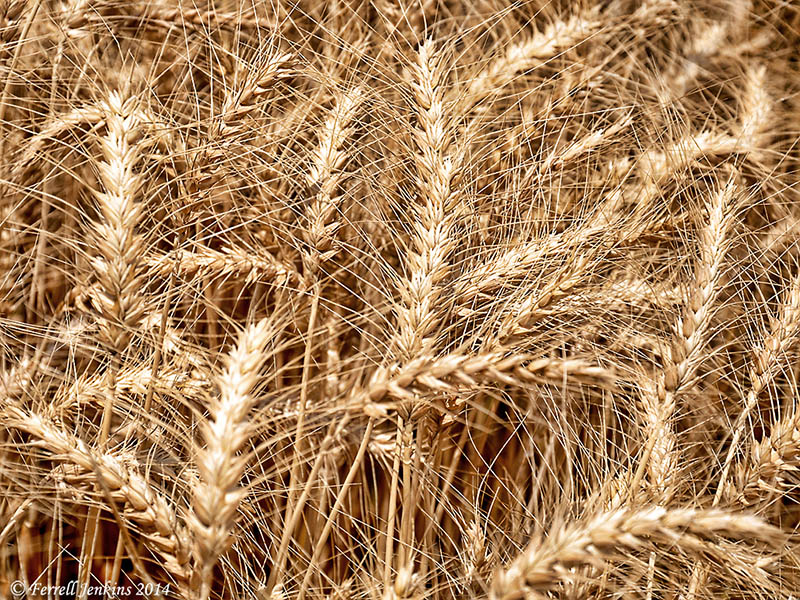
Wheat at En Dor. Photo by Ferrell Jenkins.

Wheat at En Dor. Photo by Ferrell Jenkins.

Do not be anxious about anything. Instead, in every situation, through prayer and petition with thanksgiving, tell your requests to God. (Philippians 4:6 NET)

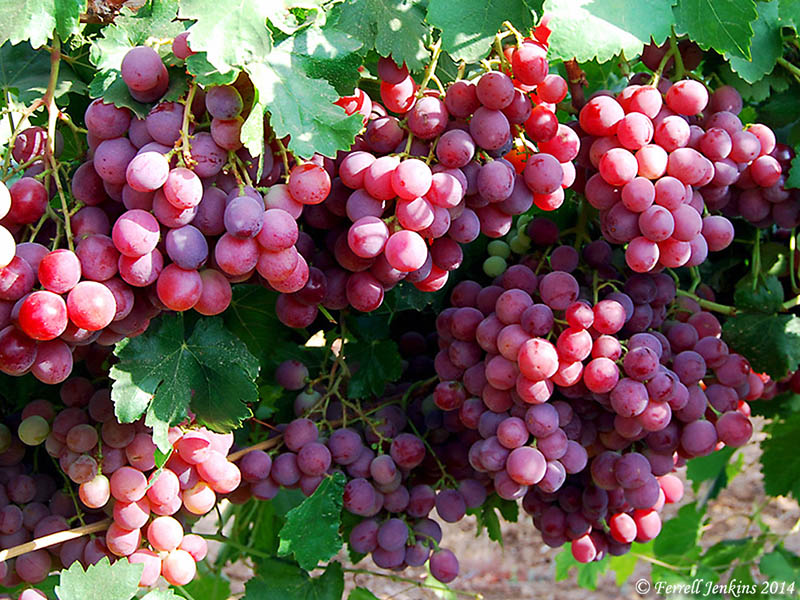
Grapes at Lachish. Photo by Ferrell Jenkins.

Grapes at Lachish. Photo by Ferrell Jenkins.


Mount Arbel and the Sea of Galilee

Our photo today was made from NW of the Sea of Galilee. The formation on the right is known as Mount Arbel. The agricultural area you see slopes down to the Plain of Gennesaret which stretches about 2½ miles to the Sea (Matthew 14:34).

View of Mount Arbel and the Sea of Galilee from the NW. Photo by Ferrell Jenkins.

View of Mount Arbel and the Sea of Galilee from the NW. Photo by Ferrell Jenkins.

Across the Sea of Galilee is a portion of the Golan Heights, known in Old Testament times as Bashan. This territory was taken by Israel from Og the king of Bashan and eventually became territory belonging to the tribe of Manasseh.

Then they turned and went up by the way to Bashan. And Og the king of Bashan came out against them, he and all his people, to battle at Edrei. But the LORD said to Moses, “Do not fear him, for I have given him into your hand, and all his people, and his land. And you shall do to him as you did to Sihon king of the Amorites, who lived at Heshbon.” So they defeated him and his sons and all his people, until he had no survivor left. And they possessed his land. (Numbers 21:33-35 ESV)

A city within the territory of Bashan was named Golan, and became one of the Israelite Cities of Refuge (Joshua 20:8).

Mount Arbel has its own history outside the Biblical text, but I will save that for another time.

“Sunrise, sunset…”

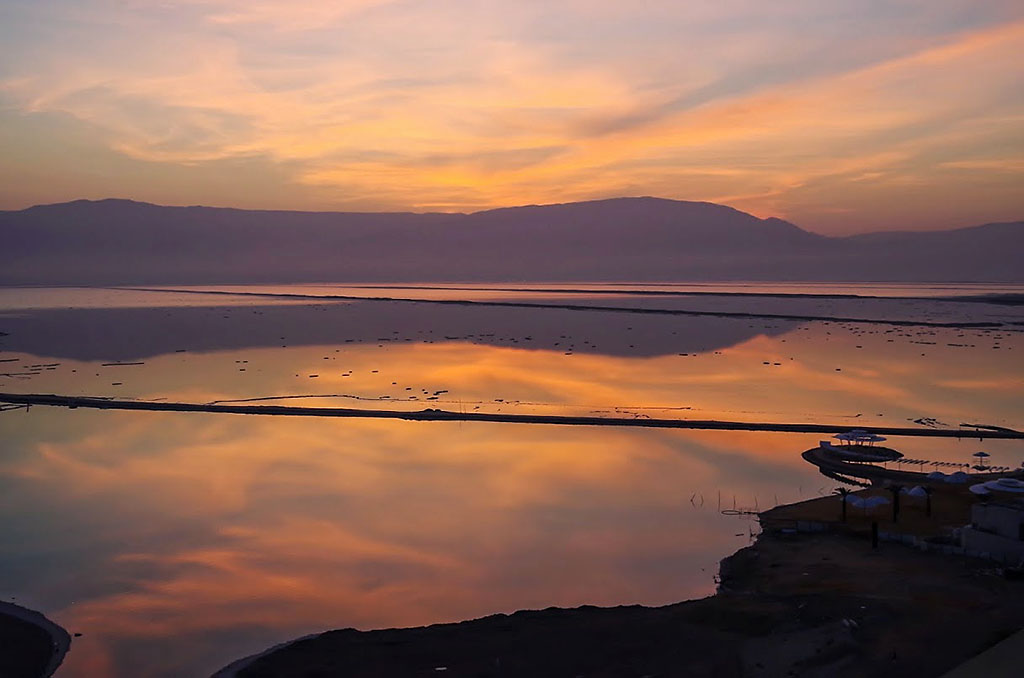
In response to our recent sunset photos on the Sea of Galilee Mark Hoffman sent a beautiful photo of a sunrise from Ein Bokek, a resort site located on the southern end of the west shore of the Dead Sea. When I asked Professor Hoffman for permission to elevate his photo to a post, he graciously granted it. The photo was made in January, 2014.

Sunrise on the Dead Sea from Ein Bokek. Photo by Mark Vitalis Hoffman.

Sunrise on the Dead Sea from Ein Bokek. Photo by Mark Vitalis Hoffman.

The Mountains of Moab are visible to the East in the modern country of Jordan, and reflected in the waters of the Dead Sea.

The Dead Sea is known as the Salt Sea in Genesis 14:3.

Mark Hoffman writes a practical blog for teachers and preacher who use any sort of technology. It is called Biblical Studies and Technological Tools. The subtitle is “From scroll to screen… codex to computer….” There you will find lots of helpful material relating to Bible software programs.

Last year I recommended two of his posts to my tour group. Others might enjoy these picture taking tips.

Thanks to Mark for sharing this beautiful photo.