Tag Archives: West Bank

“Rejoice and be glad” you are not in Jerusalem

U.S. President Barack H. Obama plans a visit to Israel, the West Bank, Jordan, beginning Wednesday. Preparations are already under way. Arutz Sheva 7 reports here on the problems already evident.

In addition to the fact that Jerusalem is now one of the most difficult cities to navigate (my opinion based on 47 years of travel experience), the Passover is approaching. Jewish families must make many special preparations.

The President will be staying at the famous King David Hotel. If you planned to visit the Herodian Family Tomb behind the hotel, just forget it for a few days.

Over 5,000 police will be directly involved in providing security for Obama and his entourage, while hundreds of others will be helping out in indirect ways. For example, over 100 officers will be added to the police help line specifically to deal with issues called in by citizens relating to the Obama visit. Police will keep citizens updated on all aspects of the visit by phone and through social media.

Over 1,000 police alone will be deployed around the King David Hotel, where Obama will be staying, and will follow Obama around as he pays visits to people and institutions during his three day visit here.

Here is a photo of the King David Hotel from across the western part of the Hinnom Valley. It was taken either from the Protestant Cemetery, the Campus of Jerusalem University College, or a few meters to the north of that.
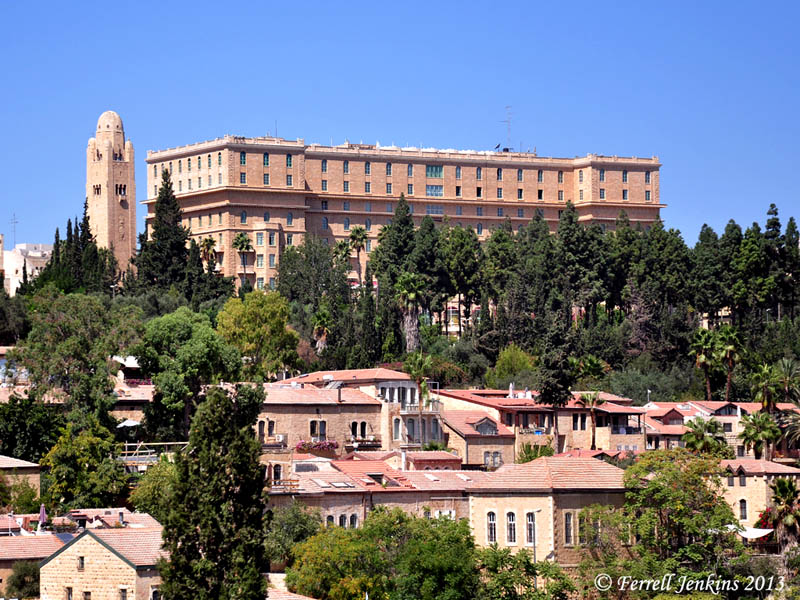
King David Hotel from the slope of Mount Zion. Photo by Ferrell Jenkins.

King David Hotel from the slope of Mount Zion. Photo by Ferrell Jenkins.

Take a look at some of the traffic problems.

Already on Sunday, long before Obama arrives, traffic in Jerusalem was extremely choked, as police began setting up barricades, and many Jerusalemites took to the road to finish their Passover shopping while the roads are still open.

Among the roads to be closed sporadically during Obama’s visit will be Road 1, between Ben Gurion Airport and the entrance to Jerusalem, as well as main Jerusalem thoroughfares such as Herzl Boulevard and Derech Hevron [Hebron Road]. Police said they will make every effort to ensure that roads are closed only of absolutely necessary.

Several years ago I was in Jerusalem when President Clinton came to visit. Our hotel was far from the Old City, but policemen were stationed about a block apart. Nations normally enjoy these high level visits, but I am not sure this current one means very much, but it keeps Air Force One running. (O.K., you have a right to your opinion.)

HT: Barry Britnell
Herod the Great in the Israel Museum

Are you planning a visit to Jerusalem during the upcoming months? I suggest you visit the Israel Museum. There is much to see that is of importance to Bible students. We called attention to some of the archaeological artifacts several times.

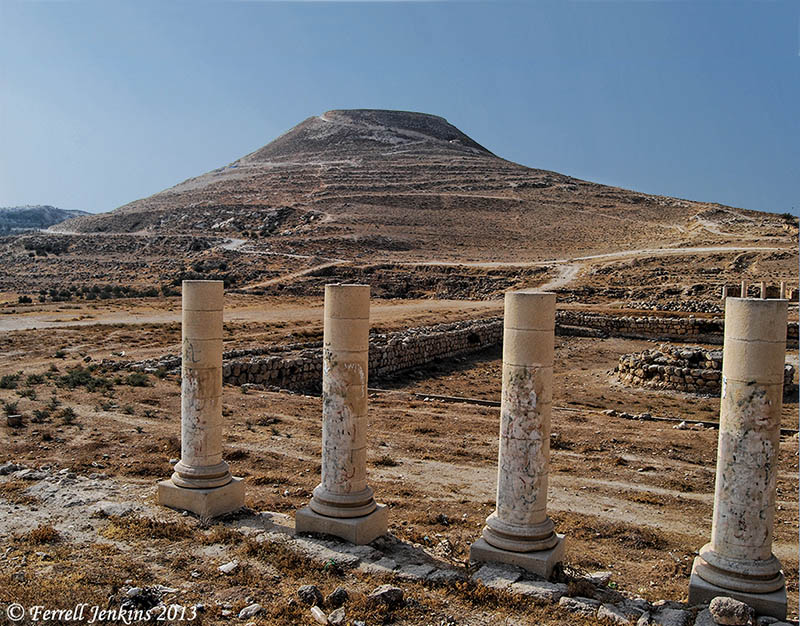
We have written about the Herodium here, here, here, here, and here (and perhaps a few other places) in this blog.

View of the Herodium toward the east. Photo by Ferrell Jenkins

View of the Herodium toward the east. Photo by Ferrell Jenkins

The Israel Museum recently opened a new exhibition called Herod the Great: The King’s Final Journey. The exhibition includes a reconstruction of the tomb and sarcophagus of the King from the Herodium. I suggest you begin by reading the article about the exhibition in The New York Times here.

Shmuel Browns, a tour guide in Israel, and a fellow-blogger, is quoted in the article. Please take a look at the beautiful photos and descriptions of the new exhibition by Browns.

Carl Rasmussen calls attention to the articles by Browns, and includes a nice photo of the large model of what Prof. Netzer thought the monumental tomb of Herod might have looked like here.

I’m looking forward to seeing this exhibition in a few weeks.

The Great Pool at Gibeon

There are two references in the Bible to the pool of Gibeon. The first is in the account of a conflict between Abner and those aligned with King Saul, and Joab and the servants of David (2 Samuel).

Abner the son of Ner, and the servants of Ish-bosheth the son of Saul, went out from Mahanaim to Gibeon.  And Joab the son of Zeruiah and the servants of David went out and met them at the pool of Gibeon. And they sat down, the one on the one side of the pool, and the other on the other side of the pool.  (2 Samuel 2:12-13 ESV)

Arnold’s entry in The Anchor Yale Bible Dictionary says,

This “pool” undoubtedly refers to the impressive water system uncovered at el-Jib during recent archaeological excavations” [by Pritchard in the 1950s].

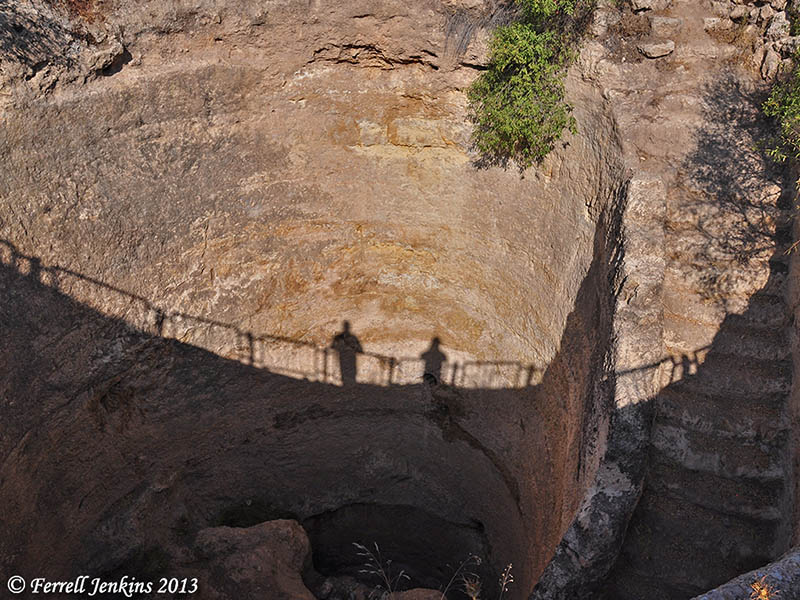
The pool had been constructed in the late 12th or early 13th century B.C. At first, it was thought to be a reservoir intended to hold water. Later it was learned that it served as a stairway leading to a source of water underneath the city.

After the destruction of Jerusalem by the Babylonians, the king of Babylon   made Gedaliah governor over the land. A rebellion led by a man named Ishmael killed Gedaliah at Mizpah (Jeremiah 41). The followers of Gedaliah and the men of Ishmael met at the great pool in Gibeon.

they took all their men and went to fight against Ishmael the son of Nethaniah. They came upon him at the great pool that is in Gibeon. (Jeremiah 41:12 ESV)

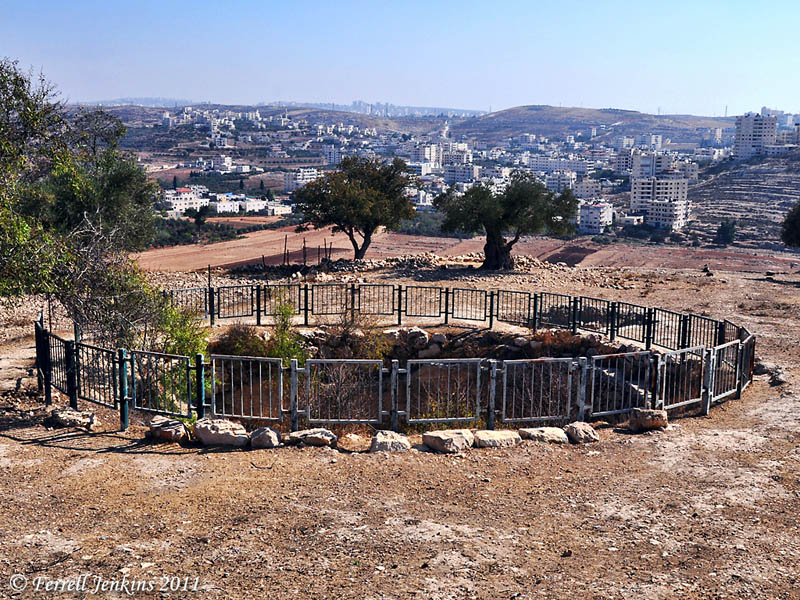
The great pool of Gibeon, cut from rock, measures 37 feet in diameter and 35 feet deep. Photo by Ferrell Jenkins.

The great pool of Gibeon, cut from rock, measures 37 feet in diameter and 35 feet deep. The steps led to the source of water located underneath. Photo by Ferrell Jenkins, whose shadow is visible, along with Leon Mauldin, standing at ground level.

For more information see James B. Pritchard’s Gibeon Where the Sun Stood Still (1962). For a ground level photo of the pool, see here.

“Every man under his vine” again

A few days ago I wrote here about a biblical way of describing a time of peace and prosperity.

And Judah and Israel lived in safety, from Dan even to Beersheba, every man under his vine and under his fig tree, all the days of Solomon. (1 Kings 4:25 ESV)

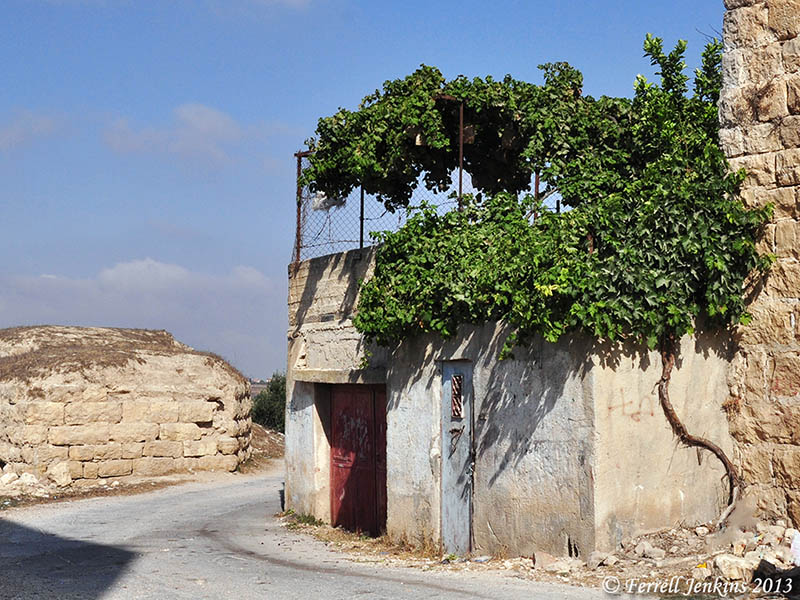
I mentioned that it is not uncommon in the Middle East to see a vine running up the side of a house to cover a porch on the roof. Since the last post I located one of my photos showing this practice. This photo was made at El Jib, the site believed to be Gibeon (Joshua 9; 2 Samuel 2).

A vine growing up the side of a house to provide shade on the roof. Photo by Ferrell Jenkins at Gibeon.

A vine growing up the side of a house to provide shade on the roof. Photo by Ferrell Jenkins at Gibeon (El Jib).

The Watchtower

The watchtower was sometimes used as a lookout for the enemy (2 Chronicles 20:24; Isaiah 21:8; 32:14).

Watchtowers, or just towers, were also built in the fields. They might provide a place for a watchman to keep watch over the field (Isaiah 5:2; Matthew 21:33). Stones were picked up out of the fields to make the tower which also served as a place for workmen to go for shade in the heat of the day.

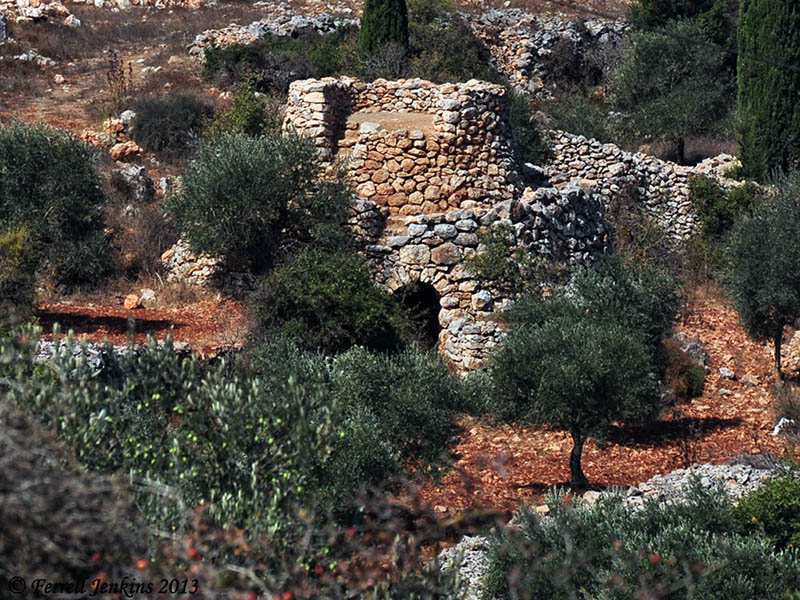
The only place we see watchtowers today is in the West Bank, and these are usually off the main roads. During the past few years I have photographed several of these old watchtowers. So far as I know they are no longer in use. I am sure that I have shown some watchtowers before, but I thought you might enjoy some of these new photos.

A watchtower in an olive orchard in the West Bank. Photo by Ferrell Jenkins.

A watchtower in an olive orchard in the West Bank. Photo by Ferrell Jenkins.

Jacob’s Well — from Jacob to Jesus

Jesus came to Sychar, a city of Samaria, near the piece of land Jacob had owned (John 4:5; Genesis 33:19). The territory was apportioned to the descendants of Joseph, and Joseph was buried there at Shechem (Joshua 24:32). It was a place of great historic importance.

We are not able to speak with certainty regarding the location of Sychar. Some scholars associate the site with Shechem; others think it should be identified with the village of Askar which is located a short distance north. The traditional Jacob’s Well is located at Shechem in the valley between Mount Gerizim and Mount Ebal. The modern town of Nablus now fills this valley.

André Parrot says,

“Of all the ‘holy places’ of Palestine, none has more reason to be considered authentic than Jacob’s well. Indeed, there is no reason why its authenticity should be questioned” (Land of Christ 65).

Parrot describes the water as “cool and pleasant-tasting…drawn from a depth of 128 feet.” I have drunk the water several times, but in the past couple of decades my guides have advised against it due to pollution in the area.

The Samaritan woman said, “the well is deep” (John 4:11). Parrot reports the well is 128 feet deep. Murphy-O’Connor says it is 22.5 meters deep (about 74 feet). McGarvey cites several measurements mentioned in 19th century writers and reminds us that the well became filled with stones cast in by travelers trying to hear how long it would take a stone to hit the bottom (Lands of the Bible 283). He reports that the well was often dry.

There are numerous springs in the area of Shechem. Jacob, as a late-comer to the region, might have found it necessary to dig a well to assure water for his family and cattle.

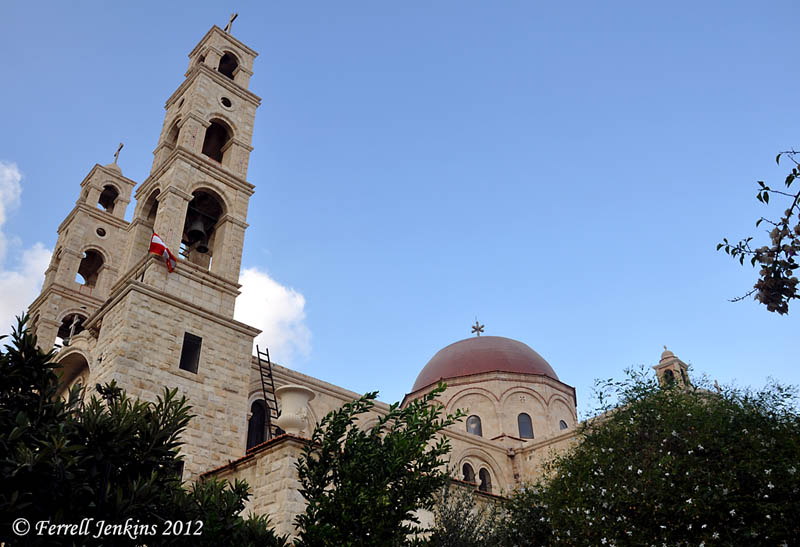
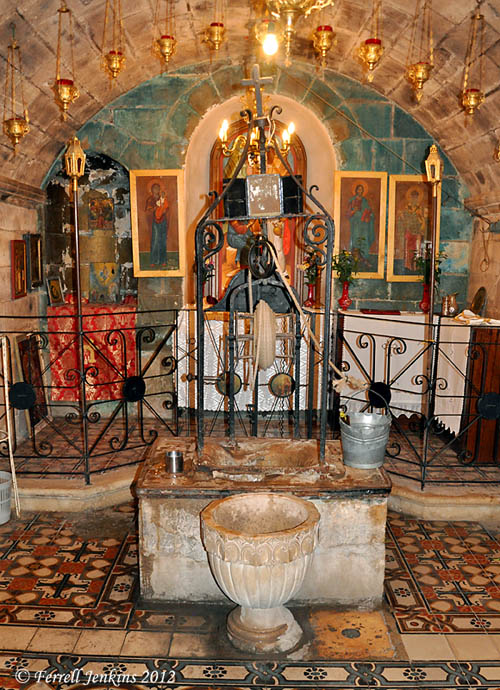
A church was erected over the well about A.D. 380. The Crusaders built another church on the site in the 12th century. The property came under the control of the Greek Orthodox church in 1860. By the end of the 19th century the Greeks began a new church, but construction was halted during World War I. The new building was completed in 2007. This photo shows the towers and dome of the church today.

New Greek Orthodox Church covering Jacob's Well. Photo by Ferrell Jenkins.

New Greek Orthodox Church covering Jacob’s Well. Photo by Ferrell Jenkins.

It has been difficult for groups to visit Jacob’s Well in recent years due to the situation in Nablus and the West Bank. Today we were able to visit the church and make photos.

Jacob's Well. Photo by Ferrell Jenkins.

Jacob’s Well. in a Greek Orthodox Setting. Photo by Ferrell Jenkins.

We had a nice day visiting Beth Shean, Spring of Harod (it was dry); Jezreel, Samaria, as well as Jacob’s Well.

Israel government plans to preserve Tel Shiloh

Haaretz announces that the “Israeli government allocates NIS 5 million to preserve Tel Shiloh in West Bank.” According to the article, a large tourist center is planned at the site.

This is a precedent-setting decision, since Israeli governments up to now have not allocated funds for renovation and preservation of the site, located within the area of the Binyamin Regional Council. The committee’s decision to embark on the project states that “Tel Shiloh is a unique heritage asset” for the Jewish people, and mention was made of the fact that work at the site will be backed by supplementary funds totaling some NIS 10 million, to be provided by private sources.

The full article may be read here. For our US readers, 5 million NIS [New Israeli Shekels] equals approximately $1,338,000.

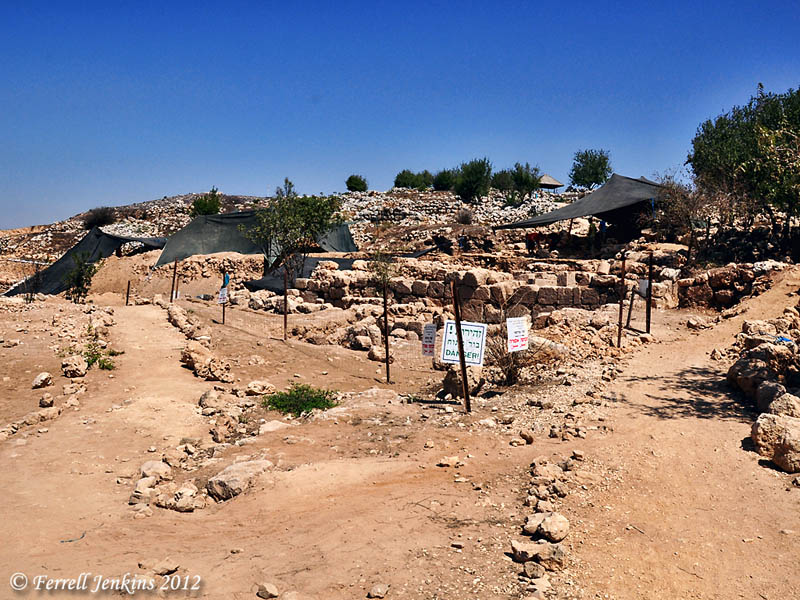
Some archaeological work was already underway last September when Leon Mauldin and I visited Tel Shiloh. The new excavation at the base of the mound dates to the Byzantine and Islamic period.

Tel Shiloh. New excavations at the base of the mound. Photo by Ferrell Jenkins.

Tel Shiloh. New excavations at the base of the mound. Photo by Ferrell Jenkins.

Shiloh is highly significant in Biblical history.

  • The tabernacle was set up at Shiloh, and it was here that the final division of the land among the tribes took place (Joshua 18).
  • Shiloh is located in specific terms.

However, there is an annual festival to the LORD in Shiloh, which is north of Bethel (east of the main road that goes up from Bethel to Shechem) and south of Lebonah.” (Judges 21:19 NET)

  • The Israelites took the ark of the covenant to the battle field near the coastal plain (1 Samuel 4). The ark never returned to Shiloh.
  • Shiloh was the home of Samuel (1 Samuel 1-3).

More info about Shiloh, with earlier photos, may be seen here.

HT: Joseph Lauer

“Gibeon, for the king” bulla discovered

The Temple Mount Sifting Project, Jerusalem, announced yesterday the discovery of a clay bulla bearing the name of the biblical city of Gibeon. The name of Gibeon (GB’N) occurs with LMLK (for the king).

The Pool of Gibeon. Photo by Ferrell Jenkins in 2011.

The Pool of Gibeon at El-Jib. Photo by Ferrell Jenkins in 2011.

Gabriel Barkay summarizes his report of this discovery.

A small fragment of a clay bulla was discovered in the wet sifting carried out at Tzurim Valley National Park, the site of the Temple Mount Sifting Project. The bulla carries an Ancient Hebrew inscription: “[g]b’n/lmlk“, i.e. “Gibeon, for the King”. The bulla originates from the eastern slope of the Temple Mount, descending into the Kidron Valley. The bulla belongs to a group of bullae which were called by N. Avigad “Fiscal Bullae”.

Presently we know more than 50 bullae of this type. They comprise two groups, one with names of cities in the kingdom of Judah, and the other with names of royal officials. All the fiscal bullae known until now come from the antiquities market, and our bulla is the first one to come from a controlled archaeological project. This bulla enables us to fully illuminate and discuss the entire phenomenon of the fiscal bullae.

Barkay says the known bullae,

include names of 19 different cities of Judah, and dates of the reign of one of the Judean kings, usually in hieratic numerals, as well as the particle lmlk, “for the king”.

He says,

The fiscal bullae represent a taxation system from the different Judean cities, based on yearly taxes, which probably replaced the previous one, reflected in the royal Judean jars and their seal impressions, from the time of King Hezekiah.

The discovery of the fiscal bulla with the name of Gibeon from the slope of the Temple Mount, authenticates all the other fiscal bullae, and enables us to study a variety of subjects connected to the history of Judah in the 7th century BCE.

Two brief reports on the Project may be read here.

Name of Gibeon is not new. This is not the first time the name of Gibeon has been discovered from the past. During the excavations conducted by James Pritchard for the Museum of the University of Pennsylvania and the Church Divinity School of the Pacific between 1956 and 1962, over 25 inscription were found with the name Gibeon. In fact, this is how Pritchard first knew with certainy that the Arab town El Jib was to be identified as Gibeon.

Some of the inscribed jar handles discovered by Pritchard’s excavation at El Jib are displayed at the University of Pennsylvania Archaeological Museum in Philadelphia.

Gibeon is an important town in Biblical history. The first Biblical reference is in Joshua 9.

Recently I have been scanning a few slides I made at Gibeon in 1970 and 1976. Hopefully I will be able to provide some comparison photos for you to see the vast difference between then and now.

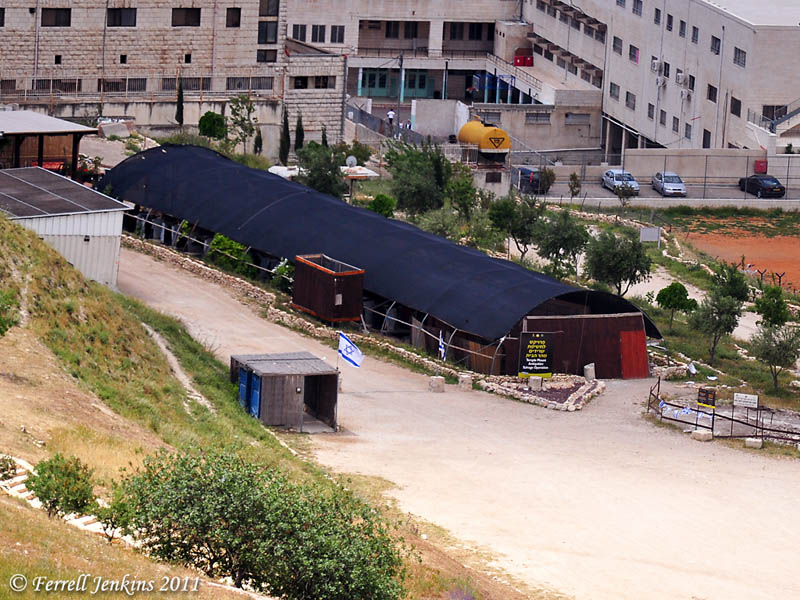
The Temple Mount Sifting Project began after it was discovered that the Moslems in control of the Temple Mount, where the Dome of the Rock is located, were dumping debris from work they were doing on the Temple Mount. This project has been underway for more than two years. A temporary building has been erected in Tzurim Valley National Park for the sifting project.

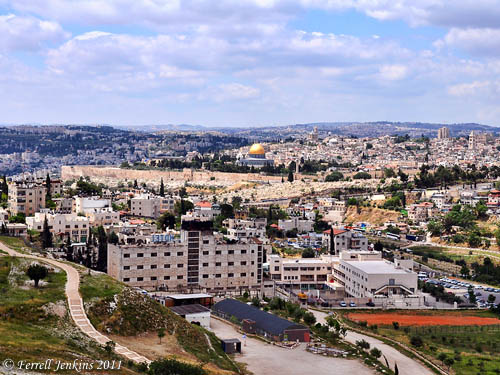
The photo below was made from Mount Scopus. Here we see the temporary building of the Temple Mount Sifting Project in the foreground. The slope of the Mount of Olives is on the left (east). The Kidron Valley begins to the right of the buildings in the center of the photo and continues south under the eastern wall of the Old City of Jerusalem which you can see clearly in this photo. Click on the photo for a larger image.

Jerusalem from Mount Scopus. The Temple Mount Sifting Project building is in the foreground. Photo by Ferrell Jenkins.

Jerusalem from Mount Scopus. The Temple Mount Sifting Project building is in the foreground. Photo by Ferrell Jenkins.

The next photo is a closeup of the building used by The Temple Mount Sifting Project. Some wonderful pieces have been discovered from the first temple period, as well as other periods, as a result of the work done here.

View from Mount Scopus of the Temple Mount Sifting Project building. Photo by Ferrell Jenkins.

View from Mount Scopus of The Temple Mount Sifting Project building. Photo by Ferrell Jenkins.

Gordon Franz has an interesting article by Stephanie Hernandez about participation in the TMSP on his Life and Land site here.

Perhaps in the days to come we will be favored with a photo of the new bulla with the name of Gibeon on it. In the mean time, see how many times you can find the word Gibeon or Gibeonite/s in the Bible.

The fig tree

When the children of Israel came to the end of the period of Wilderness Wandering, the LORD reminded them of the wonderful land into which He was bringing them.

“For the LORD your God is bringing you into a good land, a land of brooks of water, of fountains and springs, flowing forth in valleys and hills; a land of wheat and barley, of vines and fig trees and pomegranates, a land of olive oil and honey; a land where you will eat food without scarcity, in which you will not lack anything; a land whose stones are iron, and out of whose hills you can dig copper. (Deuteronomy 8:7-9 NAU)

The fig is the first fruit tree specifically named in the Bible. Adam and Eve used the leaves of the fig tree to make coverings (loincloths) for themselves when they learned their condition before God.

Then the eyes of both of them were opened, and they knew that they were naked; and they sewed fig leaves together and made themselves loin coverings. (Genesis 3:7 NAU)

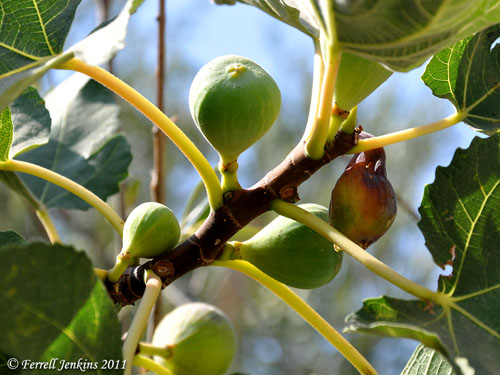
During the past two weeks we noticed ripe figs in several places in Israel and the West Bank. The photo below of the ripe figs was taken at Tel Balata (= Shechem).

Ripe figs at Shechem, Early September. Photo by Ferrell Jenkins.

Ripe figs at Shechem, Early September. Photo by Ferrell Jenkins.

Don’t underestimate the donkey

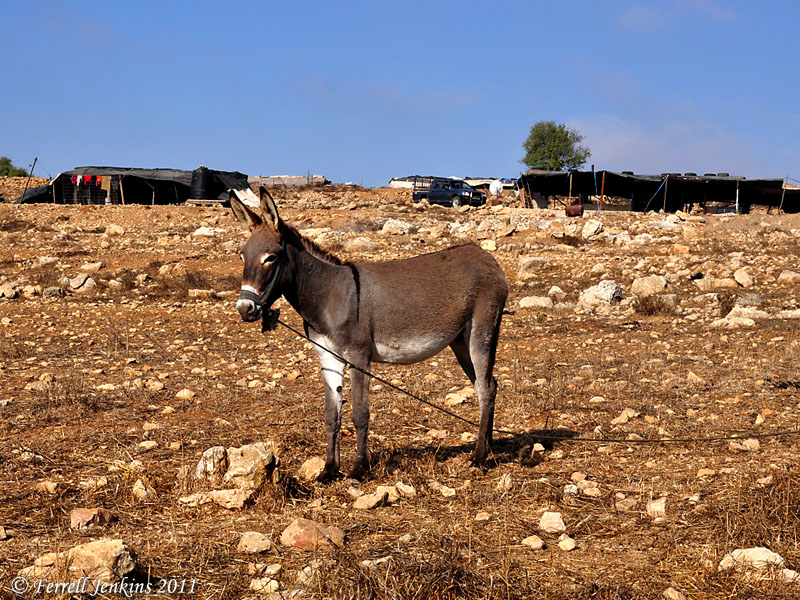
Yesterday when our driver was trying to locate the way to el-Jib (= Gibeon) we passed an area in the territory of Benjamin where someone, presumably a Bedouin, had two tents, some small fields, a truck, and a donkey tethered out front.

Donkey and Bedouin Tents Near Gibeon. Photo by Ferrell Jenkins.

Donkey and Bedouin Tents Near Gibeon. Photo by Ferrell Jenkins.

There are many biblical references to the donkey. I will list just one for now. The importance of the donkey is seen in the Ten Commandments. The neighbor’s donkey is not to be coveted. Most urban dwellers of today would never think of doing that. But in Bible times the donkey was used in the fields, carried heavy loads, provided transportation for the owner, and supplied fertilizer for some crops.

“You shall not covet your neighbor’s house; you shall not covet your neighbor’s wife, or his male servant, or his female servant, or his ox, or his donkey, or anything that is your neighbor’s.” (Exodus 20:17 ESV)

Today was a slow day — finalizing some matters and packing to return home. Resting a little, too.  Ready to begin the long flight back home in a short time. Did I complete the “bucket list” for this trip? Not quite. Probably completed about 80% of it. Well that leaves some places to begin with for the next trip. Like my friend Larry often says, “Life is good!”