Surprising ancient dolmen exposed in the Galilee

The Israel Antiquities Authority, in conjunction with Tel Hai College and Hebrew University of Jerusalem, released the following Press Release March 5, 2017.
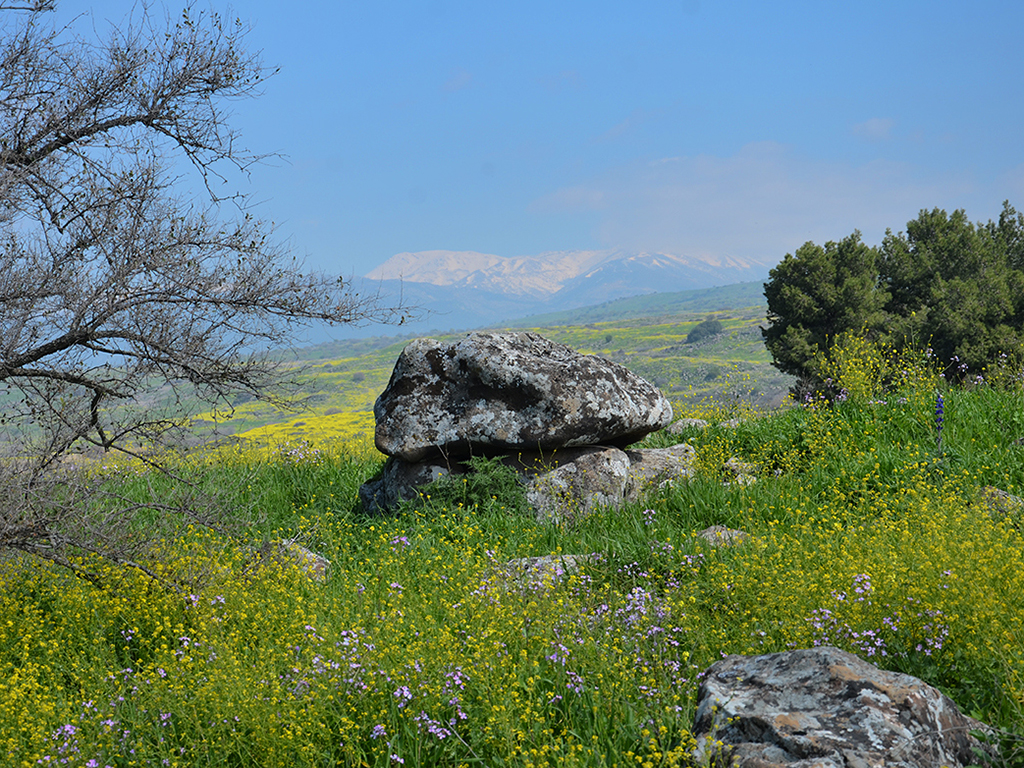
The 4,000 year old dolmen.View facing north toward Mount Hermon. Photographic credit: Gonen Sharon, Tel Hai College.

The 4,000 year old dolmen.View facing north toward snow-covered Mount Hermon. Photographic credit: Gonen Sharon, Tel Hai College.

— “ —

A rare and mysterious ancient dolmen was  exposed that is more than 4,000 years old and decorated with ancient rock art

According to researchers, “This is the first art ever documented in a dolmen in the Middle East”

Archaeologists from Tel Hai College, the Israel Antiquities Authority and the Hebrew University of Jerusalem have recently discovered a mysterious dolmen (a large table-like stone structure) over 4,000 years old in a large field of dolmens, adjacent to Kibbutz Shamir in the Upper Galilee. What makes this dolmen so unique is its huge dimensions, the structure surrounding it and most importantly the artistic decorations engraved in its ceiling. The study was published last weekend (2/3) in the scientific journal PLOS One.

Aerial photograph of the dolmen field. Photo: Shmuel Magal, Courtesy Israel Antiquities Authority.

Aerial photograph of the dolmen field. Photo: Shmuel Magal, Courtesy Israel Antiquities Authority.

The dolmen was discovered during a fortuitous visit to the site by Professor Gonen Sharon of the Galilee Studies Program at the Tel Hai College. It is just one of more than 400 huge stone structures dating to the Intermediate Bronze Age (over four thousand years ago) that are located in the dolmen field around Kibbutz Shamir. When Professor Sharon entered the chamber built beneath the largest dolmen he was surprised to discover rock drawings engraved in its ceiling.

From left to right: Professor Gonen Sharon of Tel Hai College and Uri Berger of the Israel Antiquities Authority. Photographic credit: Shmuel Magal, courtesy of the Israel Antiquities Authority.

From left to right: Professor Gonen Sharon of Tel Hai College and Uri Berger of the Israel Antiquities Authority. Photographic credit: Shmuel Magal, courtesy of the Israel Antiquities Authority.

The discovery of the engravings led to a research project of the dolmen and its environs which produced new revelations concerning the dolmen phenomenon in Israel. “This is the first art ever documented in a dolmen in the Middle East”, said Uri Berger, an archaeologist with the Israel Antiquities Authority and partner in the study. “The engraved shapes depict a straight line going to the center of an arc. About fifteen such engravings were documented on the ceiling of the dolmen, spread out in a kind of arc along the ceiling. No parallels exist for these shapes in the engraved rock drawings of the Middle East, and their significance remains a mystery. The panel depicting the art was scanned in the field by the Computerized Archaeology Laboratory of the Hebrew University. By means of an innovative technique, a three-dimensional model of the engraving was produced. “The three-dimensional scan enabled us to identify engravings that otherwise could not be seen with the naked eye”, explained Professor Lior Grossman, the laboratory director.

The chamber inside the dolmen where the engravings were found on its ceiling is large, measuring 2 × 3 meters, and the stone covering it is also huge, weighing an estimated fifty tons at least! This is one of the largest stones ever used in the construction of dolmens in the Middle East. The dolmen was enclosed within an enormous stone heap (tumulus) c. 20 meters in diameter, and its stones are estimated to weigh a minimum of 400 tons. At least four smaller dolmens that were positioned at the foot of the decorated dolmen were identified inside the stone heap. In other words, what we have here is a huge monumental structure built hierarchically (with a main cell and secondary cells). This is the first time such a hierarchical dolmen has been identified in the Middle East.

The 4,000 year old dolmen. Credit: Gonen Sharon, Tel Hai College.
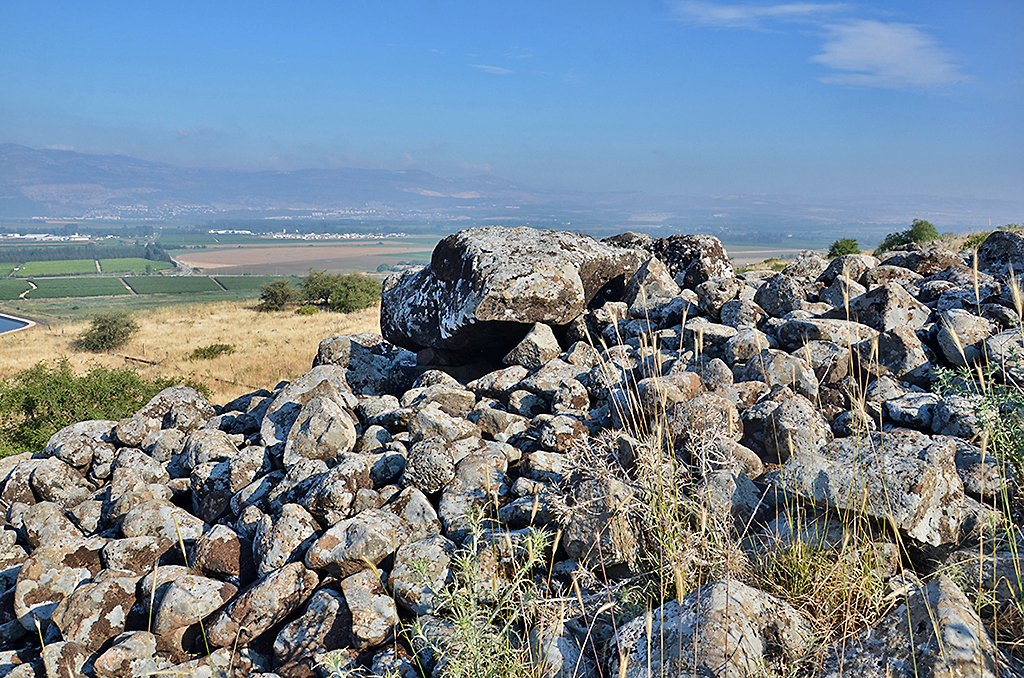
The 4,000 year old dolmen overlooking the Hula Valley. Credit: Gonen Sharon, Tel Hai College.

The 4,000 year old dolmen. Credit: Gonen Sharon, Tel Hai College.

The 4,000 year old dolmen. Credit: Gonen Sharon, Tel Hai College.

The huge dolmen at Kibbutz Shamir is just one of hundreds of enormous densely scattered structures in this region. It bears witness to the existence of a significant and established governmental system in the region during the “Middle Ages” of the Bronze Age. Archaeologists tend to interpret the past based on material finds. The absence of cities, large settlements and monumental buildings attests to the collapse of the governmental and economic systems during a “dark period” in history. The dolmens tell a different story about the period – a story about a society that had a complex governmental and economic system that executed monumental engineering projects but did not leave behind any other archaeological evidence.

“The gigantic dolmen at Kibbutz Shamir is without doubt an indication of public construction”, says Professor Sharon, “that required a significant amount of manpower over a considerable period of time. During that time all of those people had to be housed and fed. The building of such a huge construction necessitated knowledge of engineering and architecture that small nomadic groups did not usually possess. And even more importantly, a strong system of government was required here that could assemble a large amount of manpower, provide for the personnel and above all direct the implementation and control of a large and lengthy project”.

Despite all this, the circumstances surrounding the construction of the dolmens, the technology involved in it and the culture of the people who built them are still one of the great mysteries of the archeology of Israel.
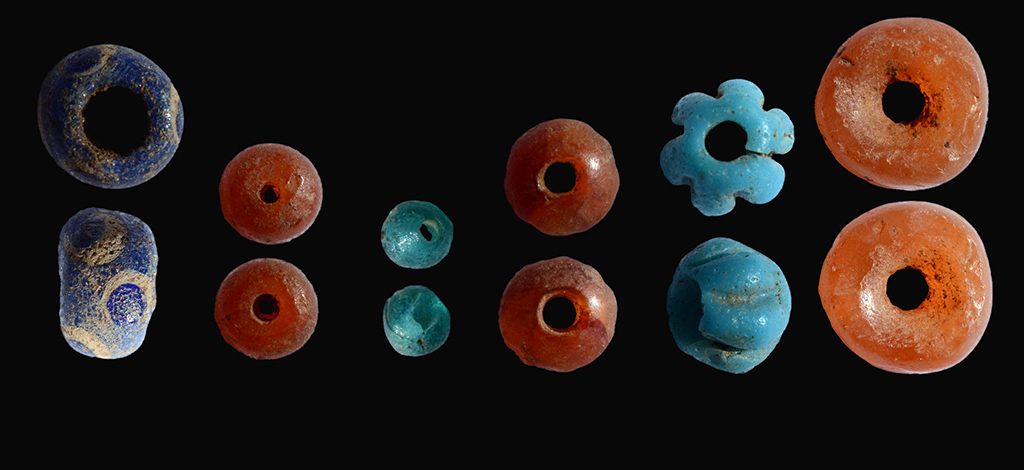
Colored beads that were uncovered in the archaeological excavation inside the dolmen. Credit: Shmuel Magal, courtesy of the Israel Antiquities Authority.

Colored beads that were uncovered in the archaeological excavation inside the dolmen. Credit: Shmuel Magal, courtesy of the Israel Antiquities Authority.

What is a Dolmen – A dolmen (stone table) is a megalithic structure (mega = large, lithos = stone) thousands of years old that is built of huge stones. The basic shape of the dolmen resembles a table, and most of them are surrounded by a heap of stones. Dolmens are known elsewhere in the world, from Ireland to Korea. Thousands of dolmens are scattered across the Middle East, from Turkey to Yemen. In the Golan Heights thousands of dolmens of different types were identified which are scattered in concentrations (dolmens fields) on the plateau. Although they are very common and stand out quite prominently in the landscape of ancient Israel, the mystery surrounding the dolmens’ age and their purpose have still not been resolved.

The Dolmen Field at Kibbutz Shamir– the field was first surveyed by the late Moshe Kagan in the 1950’s. More than 400 huge structures overlooking the Hula Valley were identified in the field.

— ” —

HT: Israeli newspapers; Joseph Lauer
Ossuaries of interest

Many known ossuaries are undecorated. This means that after a while most people may not remember whose bones are contained therein. But there are some notable exceptions.

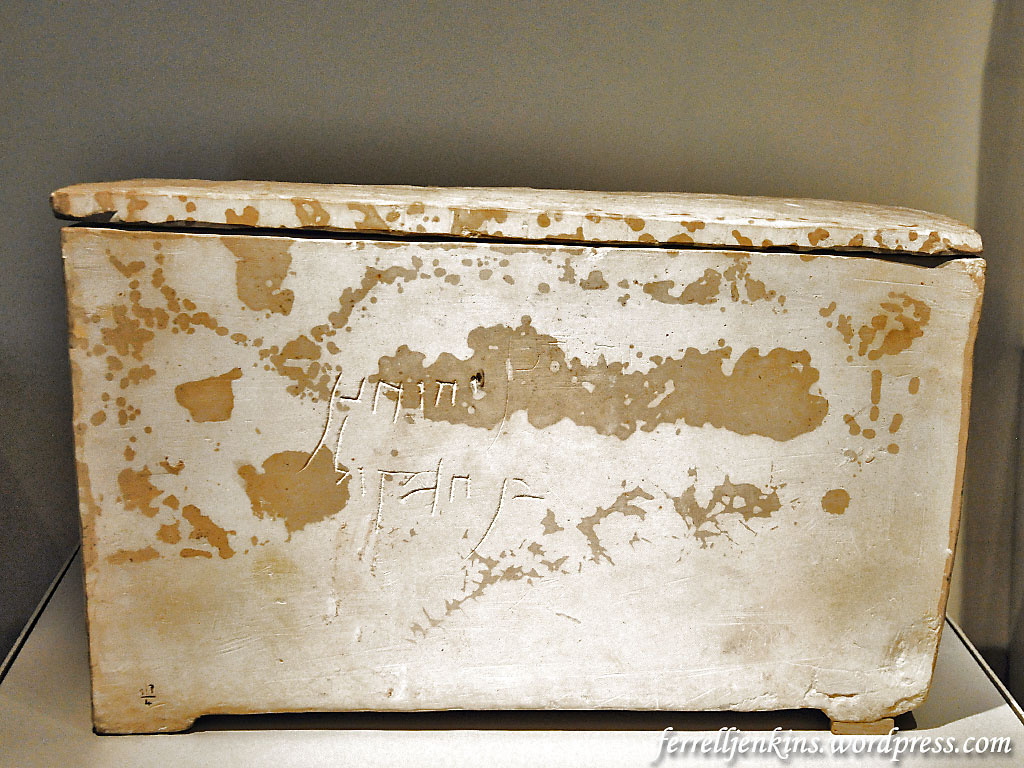
Caiaphas was the son-in-law of Annas. He was appointed high priest by Valerius Gratus, procurator of Judea, in A.D. 18 and deposed by Vitellius, legate of Syria, in A.D. 36 at the same time Pilate was removed as procurator of Judea. Caiaphas was the Jewish high priest before whom Jesus was tried (John 18:13-14, 24).

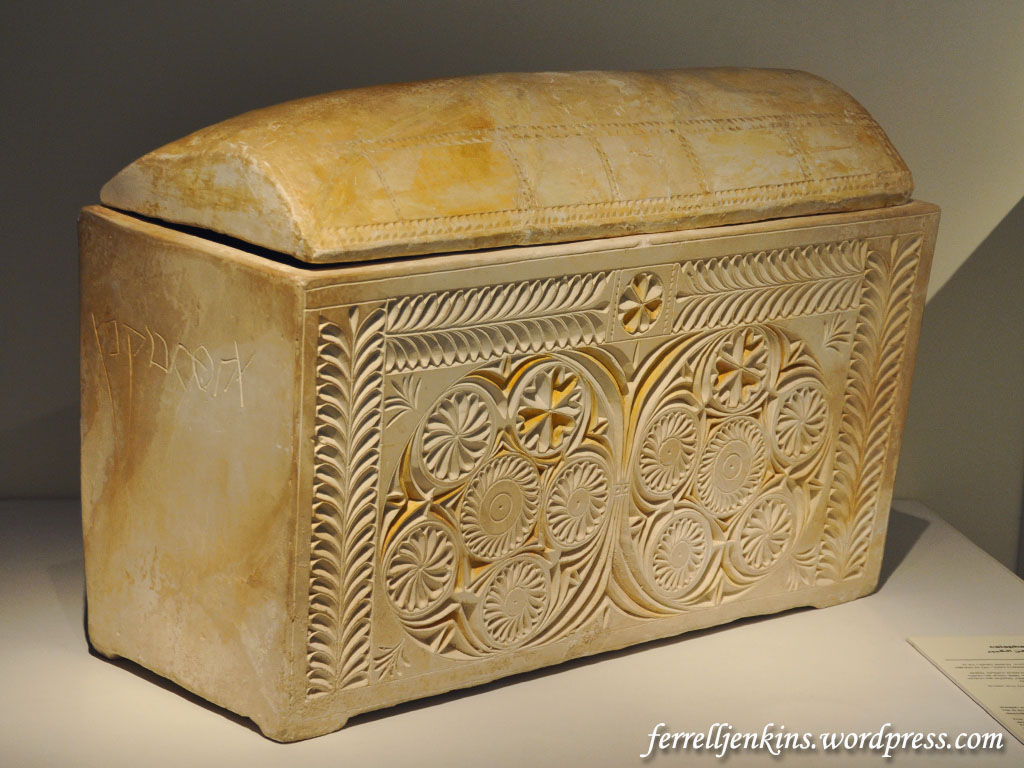
In November, 1990, a burial cave was found accidentally during construction of a water park at a promenade overlooking the Peace Forest just south of the old city of Jerusalem. The cave contained 12 ossuaries, two of which contained the name of the well-known family of the high priest Caiaphas. One ossuary bore the inscription Qafa, and the other bore the name Yehosef bar Qayafa (Joseph, son of Caiaphas) and Yehosef bar Qafa (Joseph, son of Caiaphas). Inside this beautiful ossuary was found the bones of six different people: 2 infants, a child between 2 and 5, a young boy between 13 and 18, an adult woman and “a male of about 60 years!”

According to Josephus, Caiaphas was named Joseph Caiaphas (Ant. 18.2.2).

The Caiaphas ossuary is on display in the Israel Museum. (See articles: Zvi Greenhut, “Burial Cave of the Caiaphas Family,” BAR 18.5 (1992): 29-36. Ronny Reich, “Caiaphas Name Inscribed on Bone Boxes,” BAR 18.5 (1992): 38-44.)

Ossuary of Caiaphas displayed in the Israel Museum. Photo by Ferrell Jenkins.

Ossuary of Caiaphas displayed in the Israel Museum. Photo by Ferrell Jenkins.

Simon the Builder. According to Mare “there are Herodian family tombs on Mount Scopus, just to the north of the Mount of Olives.” He says that one of the ossuaries has an Aramaic inscription naming a certain Simon, who is honored as “Builder of the temple” (The Archaeology of the Jerusalem Area, p. 198).

Ossuary of Simon the Builder displayed in the Israel Museum. Photo by Ferrell Jenkins.

Ossuary of Simon the Builder displayed in the Israel Museum. Photo by Ferrell Jenkins.

The first archaeological evidence of crucifixion was uncovered in 1968 when, during a controlled archaeological dig under the direction of the late Vasillios Tzaferis, an ossuary (bone box, or receptacle) was found north of Jerusalem, in the same tomb mentioned above, containing the bones of a man who had been crucified. His name was “Yehohanan, the son of Hagakol.” He is thought to have been between 24 and 28 years of age, and was about 5 feet 6 inches in height. His heel bone was recovered with an iron nail in it.

Ossuary of Yehohanan son of Hagkol displayed in the Israel Museum. Photo by Ferrell Jenkins.

Ossuary of Yehohanan son of Hagkol in the Israel Museum. Photo by Ferrell Jenkins.

Nothing is quiet as touching as the burial of child. The ossuary pictured below is a small one likely used for the bones of an infant or small child. It is displayed on the grounds of the Trappist Monastery at Latrun Abbey in Israel.

Ossuary for an infant displayed at the Latrun Abbey. Photo by Ferrell Jenkins.

Ossuary for an infant displayed at the Latrun Abbey. Photo by Ferrell Jenkins.

These three articles should provide a little insight into burial practices of the Jews at the time of Jesus.

I have found the chapter on “Tombs and Burial Customs” in Jodi Magness’ Stone and Dung, Oil and Spit, helpful.

The Ossuaries at Dominus Flevit

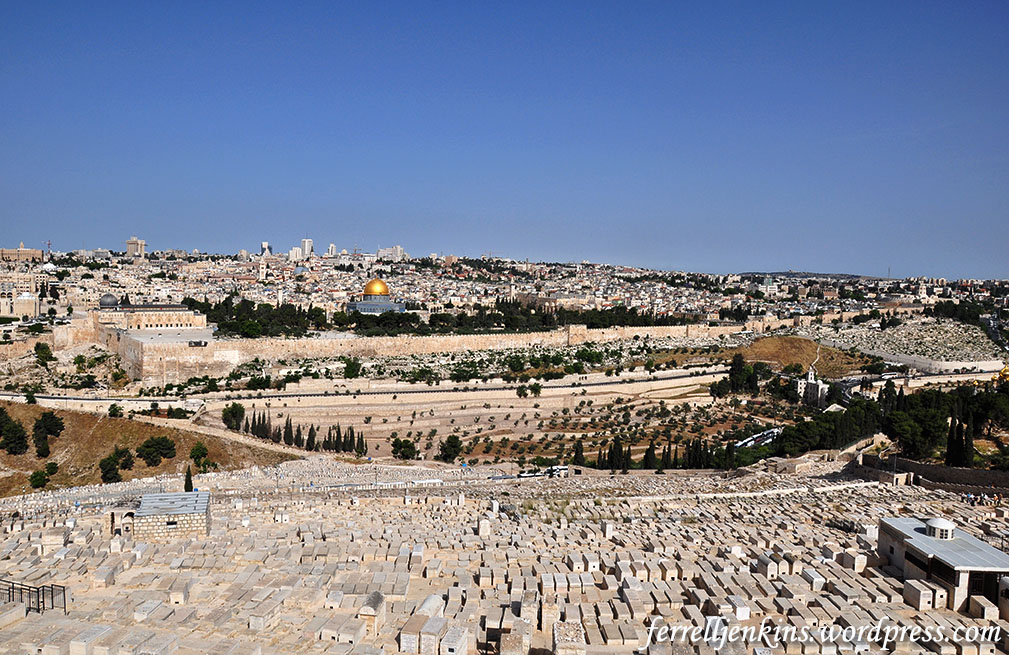
Thousands of Jewish graves are visible on the western slope of the Mount of Olives. Some of the grave markers are visible in this photo made from the Mount of Olives to the west. The Old City of Jerusalem is visible in the top half of the photo. I don’t know how old these graves are, but some of them are fairly recent.

Jewish graves visible on the western slope of the Mount of Olives. Photo by Ferrell Jenkins.

Jewish graves visible on the western slope of the Mount of Olives. Photo by Ferrell Jenkins.

But there are older graves in the area. If you have walked down from the observation plaza on the Mount of Olives, where the peddlers and camel jockeys abound, to the Garden of Gethsemane, you have likely passed the entrance to the Franciscan chapel of Dominus Flevit. Tradition has it that this is where Jesus stopped to weep over Jerusalem.

And when he drew near and saw the city, he wept over it (Luke 19:41 ESV)

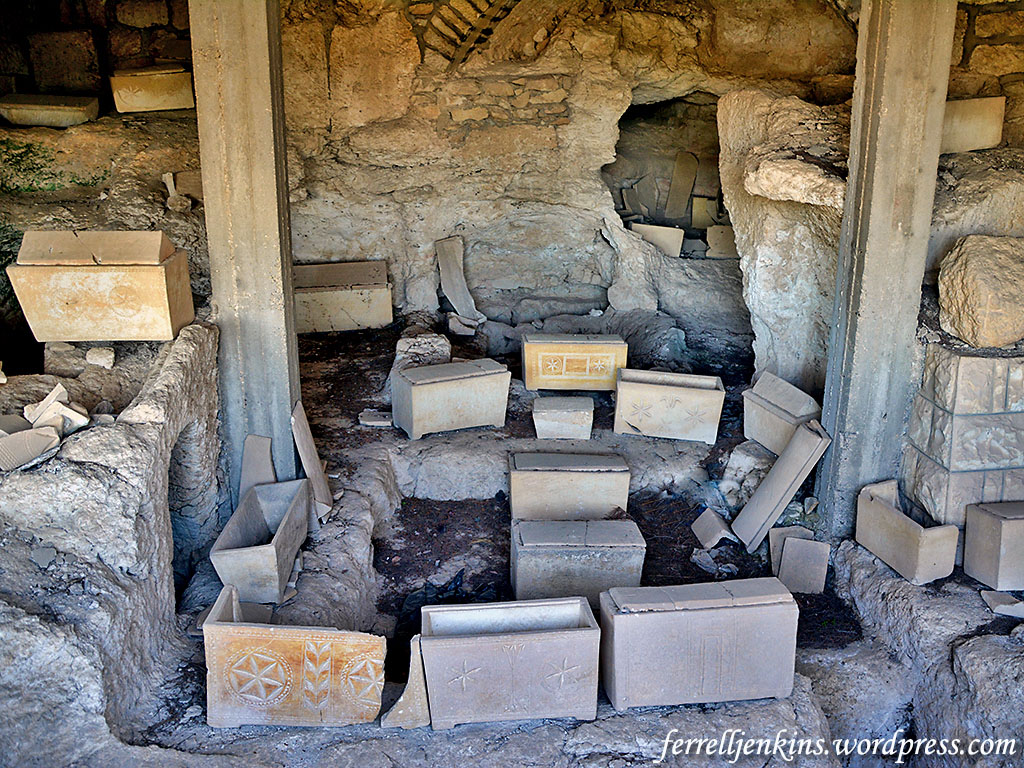
Ossuaries in one of the tombs at Dominus Flevit on the western slope of the Mount of Olives. Photo by Ferrell Jenkins.

Ossuaries in one of the tombs at Dominus Flevit on the western slope of the Mount of Olives. Photo by Ferrell Jenkins.

The Dominus Flevit cemetery complex contains three tombs. Murphy-O’Connor says,

The first two on the right (counting from the entrance gate) are typical kokhim graves of the period 100 BC–AD 135, the dead were buried in narrow horizontal shafts and later their bones were collected in beautifully made stone boxes (ossuaries) in order to make room for others. (The Holy Land, 5th ed. p. 145)

Harold Mare describes the content of the cemeteries,

Beside seven sarcophagi, many ossuary (bone) boxes were excavated at the Dominus Flevit cemetery. The ossuary boxes, made of stone or wood and averaging 25 inches long, 15 inches wide, and 13 inches high, were decorated with inscribed designs on the sides and tops and often had names inscribed on them as well. Examples of these boxes can be seen in site in the excavation area at the Dominus Flevit and at the Israel Museum, Jerusalem. These boxes were used to contain the bones of the dead in secondary burials after the disintegration of the flesh. They were evidently used in Jerusalem until A.D. 70 or possibly until 135. (Mare, W. Harold. The Archaeology of the Jerusalem Area. Grand Rapids: Baker, 1987. p. 198.)

Mare also points out that several biblical names are found on various ossuaries. This does not mean that the ossuaries belonged to a known biblical character, but that the names were common during the period. John McRay gives a list of names found at this site:

Also found on the ossuaries were forty-three inscriptions. Written in Hebrew, Aramaic, and Greek, the inscriptions contain names familiar to readers of the New Testament– Yeshua (Aramaic for Jesus), Miriam (Mary), Martha, Eleazar (Lazarus), Judas, Salome, Matthew, Joseph, Jairus, John, Mattia (Matthias), Sapphira, Menahem (Manaean), Simeon, and Zechariah. (McRay, John. Archaeology and the New Testament. Grand Rapids: Baker, 1991. p. 197.)

Both of our photos are sized for PowerPoint use in teaching.

Ossuaries in ancient Jerusalem and Judea

From about 30 B.C. to A.D. 70 (some scholars extend these dates to as late as A.D. 135), ossuaries were used by the Jews in secondary burials. Numerous of these stone receptacles have been discovered. Most of the dead were first buried in caves or rock-cut tombs. After the flesh had decayed, the bones were placed in an ossuary or “bone box.” This provided space for more burials.

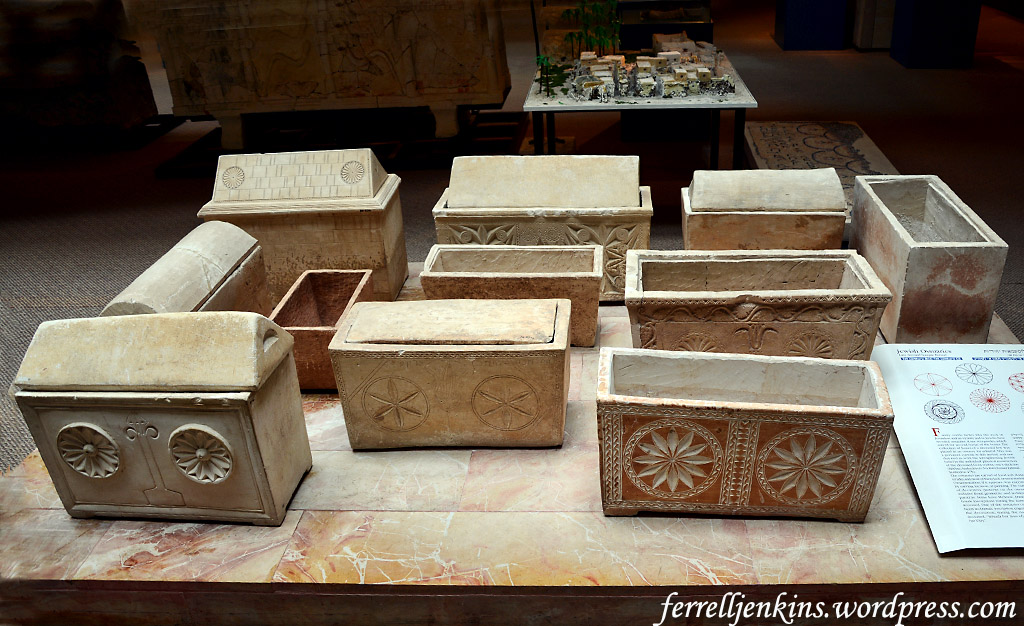
The Hecht Museum at Haifa University has a nice display of ossuaries. Six of these have lids on them. The lid is missing on five others.

Display of Jewish Ossuaries in the Hecht Museum. Photo by Ferrell Jenkins.

Display of Jewish Ossuaries in the Hecht Museum. Photo by Ferrell Jenkins.

The sign with the display states that,

This was a prevalent custom in this period, and one that tied in with the strengthening Jewish belief in the individual, physical resurrection of the deceased from within one’s skeleton (Mishna, Sanhedrin 6:5-6; Babylonian Talmud, Sanhedrin 47b).

This is the description of the ossuaries.

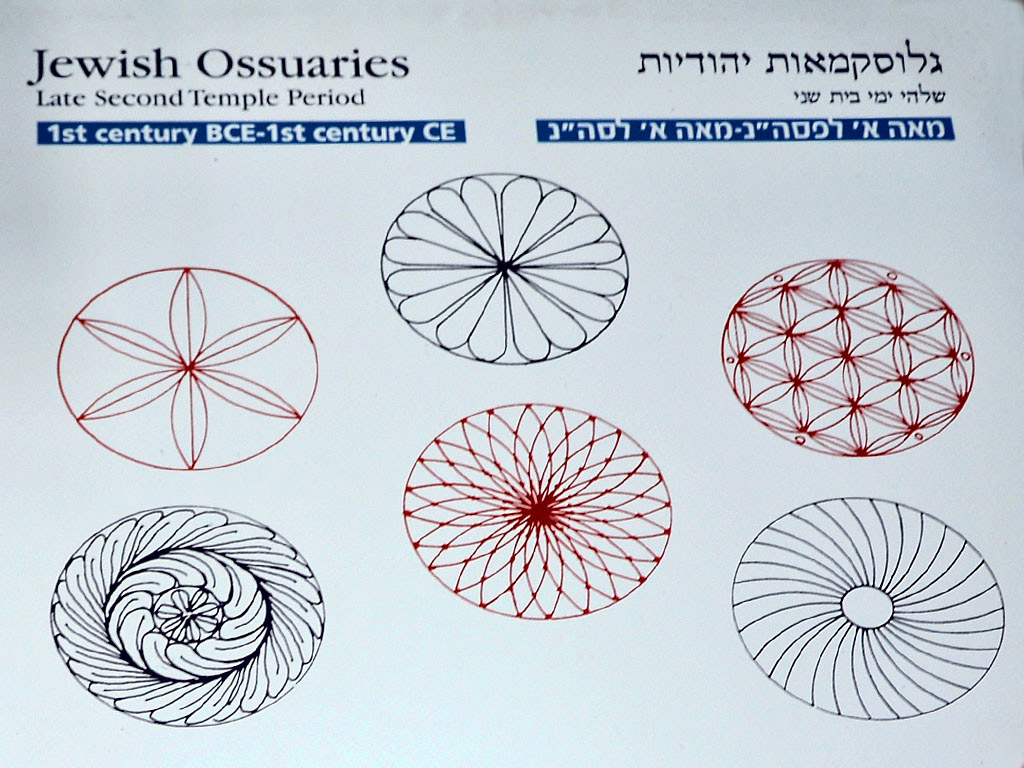
The ossuaries are carved of local soft stone (chalk), and most of them lack ornamentation. Ornamentation, if it appears, was executed by carving, incision, or painting. The variety of decorative patterns on the ossuaries includes floral, geometric and architectural patterns. Some have Hebrew, Aramaic, or Greek inscriptions stating the name of the deceased.

The top of the sign shows some of the decorations found on ossuaries. Note above, the statement that most ossuaries lacked ornamentation.

Decorations found on Jewish Ossuaries. Photo by Ferrell Jenkins.

Decorations found on Jewish Ossuaries. Photo by Ferrell Jenkins.

Rachel Hachlili describes the typical ossuary:

These ossuaries are small limestone boxes approximately 20 inches long, 10 inches wide and 12 inches high. Usually they have a flat, gabled, or rounded lid. All these ossuaries were used for secondary burials; approximately a year after the original burial, when the body had decomposed, the bones of the deceased were collected and placed in the ossuary. (BAR, July/Aug. 1979).

Stone cutting was one of the main occupations of ancient Israel, and some stone cutters evidently specialized in made-to-order ossuaries.

In a future post I plan to show a cemetery filled with ossuaries.

12th Dead Sea Scrolls Cave found, but the scrolls are gone

Early this morning, February 8, 2017, I received a press release from Hebrew University in Jerusalem.

— “ —

Hebrew University archaeologist Dr. Oren Gutfeld: “This is one of the most exciting archaeological discoveries, and the most important in the last 60 years, in the caves of Qumran.”

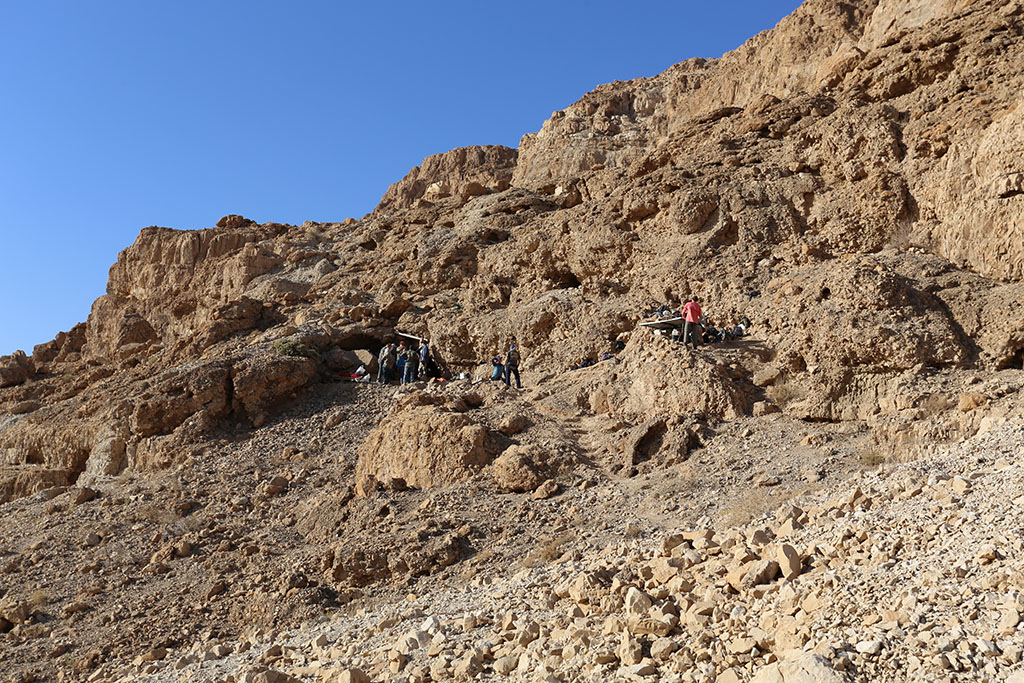
Excavations in a cave on the cliffs west of Qumran, near the northwestern shore of the Dead Sea, prove that Dead Sea scrolls from the Second Temple period were hidden in the cave, and were looted by Bedouins in the middle of the last century. With the discovery of this cave, scholars now suggest that it should be numbered as Cave 12.

Fault cliff and entrance to Cave 12 (on left). Photos: Casey L. Olson & Oren Gutfeld.

Fault cliff and entrance to Cave 12 (on left). Photos: Casey L. Olson & Oren Gutfeld.

The surprising discovery, representing a milestone in Dead Sea Scroll research, was made by Dr. Oren Gutfeld and Ahiad Ovadia from the Hebrew University of Jerusalem’s Institute of Archaeology, with the help of Dr. Randall Price and students from Liberty University in Virginia USA.

The excavators are the first in over 60 years to discover a new scroll cave and to properly excavate it.

The excavation was supported by the Civil Administration of Judea and Samaria, by the Israel Nature and Parks Authority, and the Israel Antiquities Authority (IAA), and is a part of the new “Operation Scroll” launched at the IAA by its Director-General, Mr. Israel Hasson, to undertake systematic surveys and to excavate the caves in the Judean Desert.

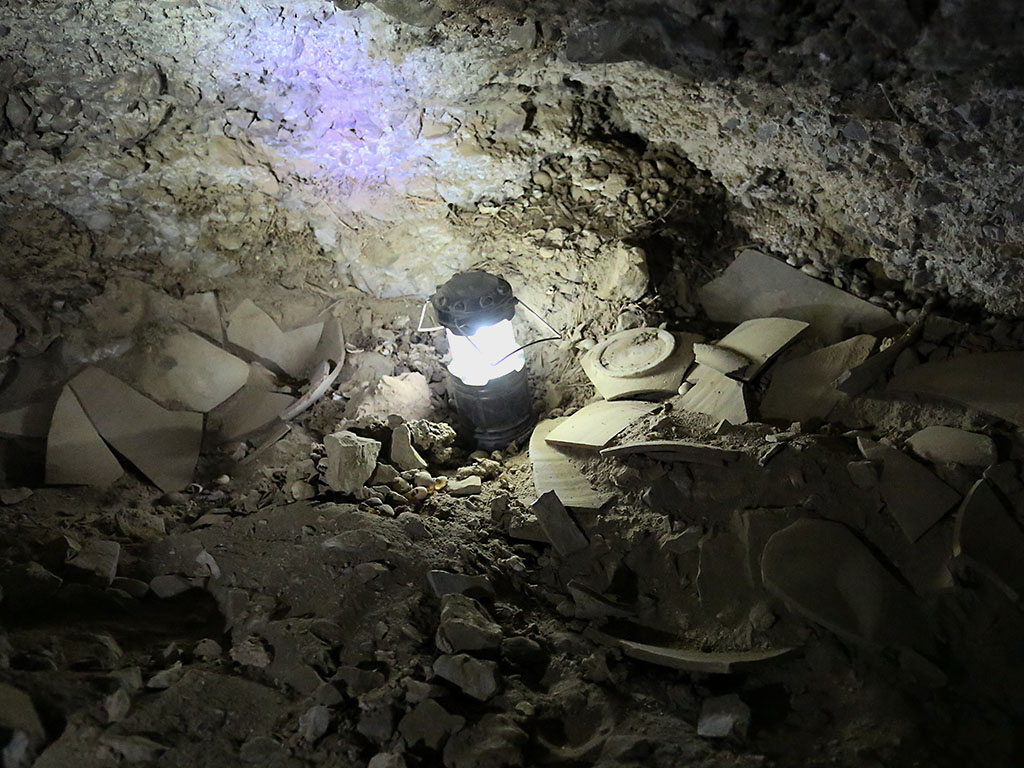
Fragments of jars that contained scrolls. Photos: Casey L. Olson & Oren Gutfeld.

Fragments of jars that contained scrolls. Photos: Casey L. Olson & Oren Gutfeld.

Excavation of the cave revealed that at one time it contained Dead Sea scrolls. Numerous storage jars and lids from the Second Temple period were found hidden in niches along the walls of the cave and deep inside a long tunnel at its rear. The jars were all broken and their contents removed, and the discovery towards the end of the excavation of a pair of iron pickaxe heads from the 1950s (stored within the tunnel for later use) proves the cave was looted.

Until now, it was believed that only 11 caves had contained scrolls. With the discovery of this cave, scholars have now suggested that it would be numbered as Cave 12. Like Cave 8, in which scroll jars but no scrolls were found, this cave will receive the designation Q12 (the Q=Qumran standing in front of the number to indicate no scrolls were found).

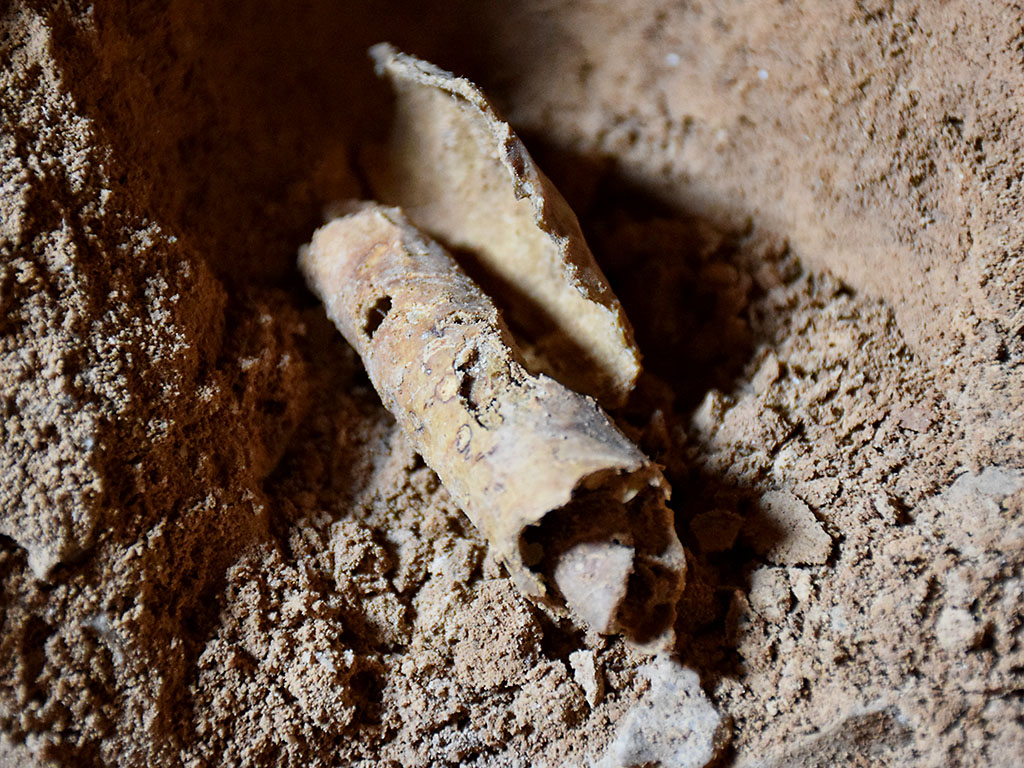
“This exciting excavation is the closest we’ve come to discovering new Dead Sea scrolls in 60 years. Until now, it was accepted that Dead Sea scrolls were found only in 11 caves at Qumran, but now there is no doubt that this is the 12th cave,” said Dr. Oren Gutfeld, an archaeologist at the Hebrew University’s Institute of Archaeology and director of the excavation. “Although at the end of the day no scroll was found, and instead we ‘only’ found a piece of parchment rolled up in a jug that was being processed for writing, the findings indicate beyond any doubt that the cave contained scrolls that were stolen. The findings include the jars in which the scrolls and their covering were hidden, a leather strap for binding the scroll, a cloth that wrapped the scrolls, tendons and pieces of skin connecting fragments, and more.”

Remnant of scroll found in Cave 12. Photo: Casey L. Olson & Oren Gutfeld.

Remnant of scroll found in Cave 12. Photo: Casey L. Olson & Oren Gutfeld.

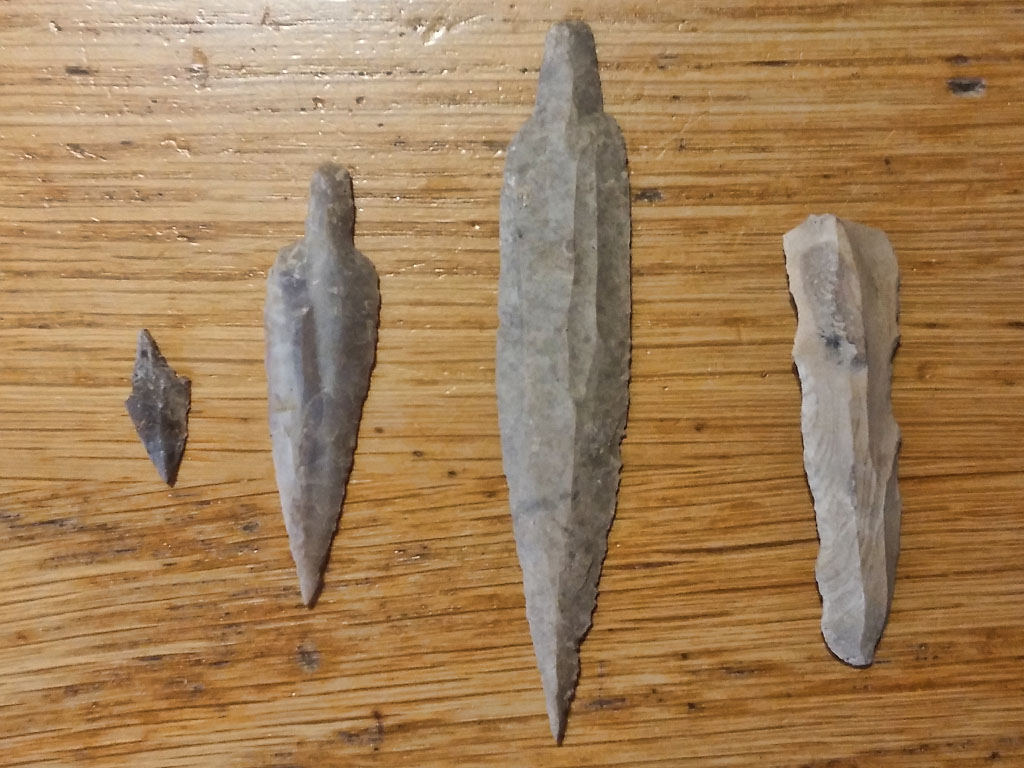
The finds from the excavation include not only the storage jars, which held the scrolls, but also fragments of scroll wrappings, a string that tied the scrolls, and a piece of worked leather that was a part of a scroll. The finding of pottery and of numerous flint blades, arrowheads, and a decorated stamp seal made of carnelian, a semi-precious stone, also revealed that this cave was used in the Chalcolithic and the Neolithic periods.

Neolithic flint tools found in the cave. Photos: Casey L. Olson and Oren Gutfeld.

Neolithic flint tools found in the cave. Photos: Casey L. Olson and Oren Gutfeld.

This first excavation to take place in the northern part of the Judean Desert as part of “Operation Scroll” will open the door to further understanding the function of the caves with respect to the scrolls, with the potential of finding new scroll material. The material, when published, will provide important new evidence for scholars of the archaeology of Qumran and the Dead Sea caves.

“The important discovery of another scroll cave attests to the fact that a lot of work remains to be done in the Judean Desert and finds of huge importance are still waiting to be discovered,” said Israel Hasson, Director-General of the Israel Antiquities Authority. “We are in a race against time as antiquities thieves steal heritage assets worldwide for financial gain. The State of Israel needs to mobilize and allocate the necessary resources in order to launch a historic operation, together with the public, to carry out a systematic excavation of all the caves of the Judean Desert.”

— ” —

Index of articles – the Romans and the ministry of Jesus

The Romans had occupied the land they later called Palestine for nearly a century when Jesus began His ministry. This means that there was no one alive at that time who remembered when the Romans were not in control.
The writings of Josephus cover this period and New Testament writers called attention to the Roman rulers.

In those days a decree went out from Caesar Augustus that all the world should be registered. (Luke 2:1 ESV)

In the fifteenth year of the reign of Tiberius Caesar, Pontius Pilate being governor of Judea, and Herod being tetrarch of Galilee, and his brother Philip tetrarch of the region of Ituraea and Trachonitis, and Lysanias tetrarch of Abilene, (Luke 3:1 ESV)

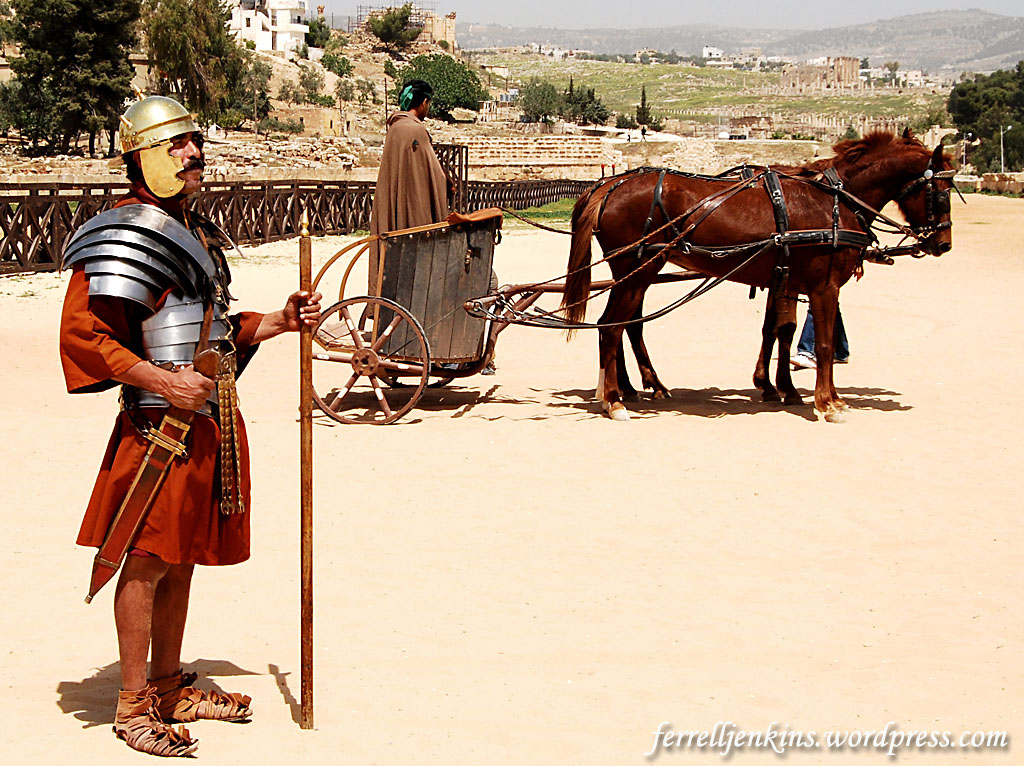
Roman soldiers roamed the country and eventually destroyed the Holy City Jerusalem. The culture of Rome can still be seen in the ruins of various cities.

Roman Centurion and a Charioteer at Jerash (the RACE show at Jerash). Photo by Ferrell Jenkins.

I am not sure that this list of posts about the Roman empire in Palestine is a complete one, but I think it will be helpful as you study the impact of Rome and its culture on the ministry of Jesus and His apostles. We could compile another list specifically from the book of Acts, the New Testament Epistles, and the book of Revelation. Use the Search Box to locate other subjects you may be looking for.

Bal’ama is thought to be Biblical Ibleam

We always wanted to travel through the hill country of Samaria (Manasseh and Ephraim) on our tours, but there were many years that this was not possible due to the political situation. When travel was possible we drove (from the north) through Jenin, the plain of Dothan, Samaria, Shechem (Mounts Ebal and Gerizim, Jacob’s Well), and other sites as time permitted. If we could not travel along the central mountain range we drove through the Jordan Valley.

Sometime when traveling through Jenin, our guide would mention that there is a tel (tell, archaeological mound) on the south side of the city, but we never saw it. Traveling in a bus normally provides a better view because one is sitting higher, but I now understand why we did not see this tel. The excavation report explains that the spring entrance at road level became visible only after the 1996-1997 road work. The road runs through the Wadi Bal’ama.

The site on the south side of Jenin is known as Khirbet Bal’ama, or Khirbet Belameh. Several 19th and 20th century archaeologists identified this site with Biblical Ibleam.

Ibleam was a Canaanite town in the territory given to the Israelite tribe of Manasseh. As the Israelites settled in the land, there were Canaanite cities that they failed to capture. One of them was Ibleam (Joshua 17:11). The Biblical text says,

Manasseh did not drive out the inhabitants of Beth-shean and its villages, or Taanach and its villages, or the inhabitants of Dor and its villages, or the inhabitants of Ibleam and its villages, or the inhabitants of Megiddo and its villages, for the Canaanites persisted in dwelling in that land. (Judges 1:27 ESV)

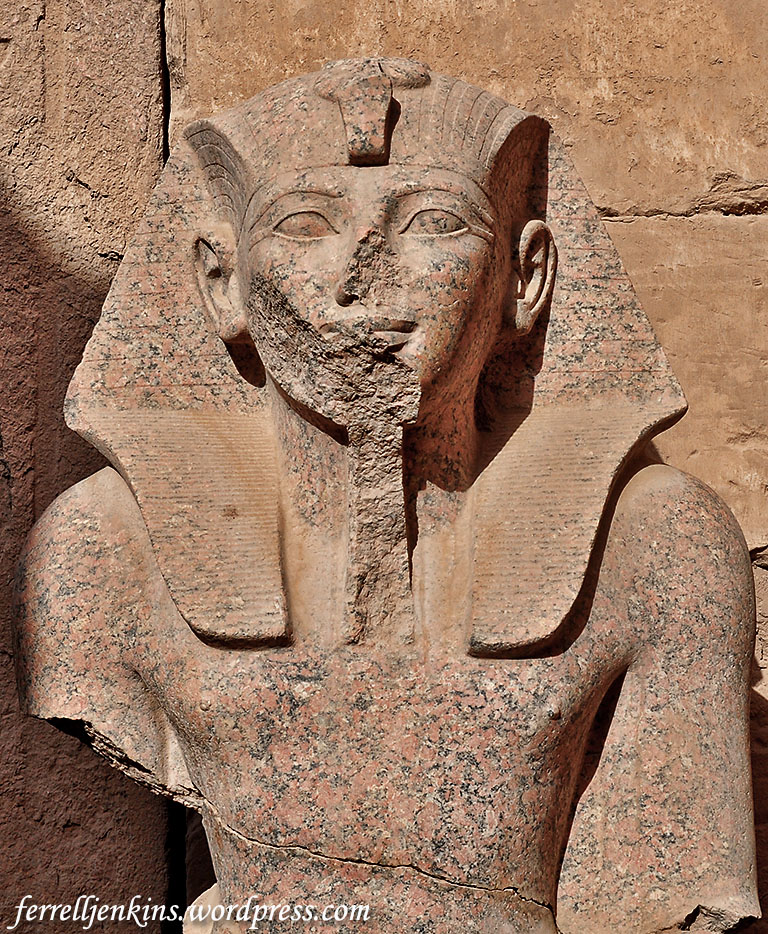
Thutmose III was the ruler of Egypt (1504-1450 B.C.) during the 18th Dynasty. Some scholars place the beginning of his rule at 1490 and others at 1479.

Thutmose III at the Temple of Amum at Karnak. Photo by Ferrell Jenkins.

Seated statue of Thutmose III at the Karnak Temple. Photo by Ferrell Jenkins.

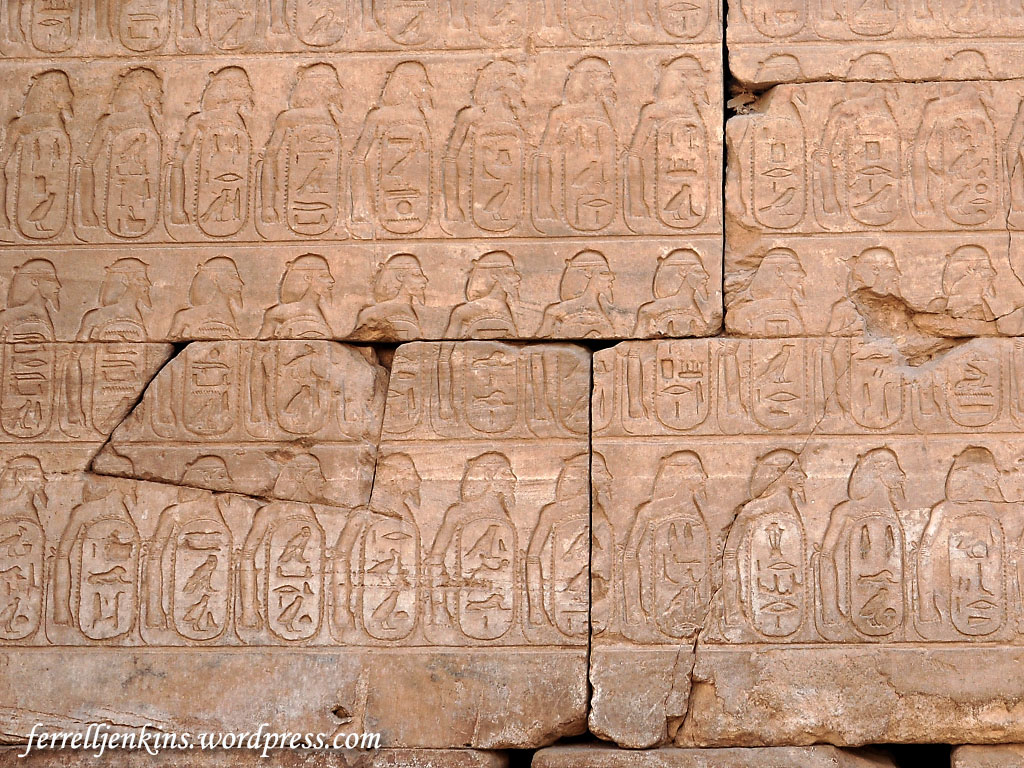
Thutmose made a military excursion into Canaan and left a record of it on the walls of the Karnak Temple. Our photo shows a few of the bound rulers of various cities. I don’t have a translation of the cartouches and do not know if Bal’ama is shown in this photo, but it is included somewhere on the walls of Karnak.

Part of the city list left by Thutmose III at Karnak Temple. Photo by Ferrell Jenkins.

Part of the city list left by Thutmose III at Karnak Temple. Photo by Ferrell Jenkins.

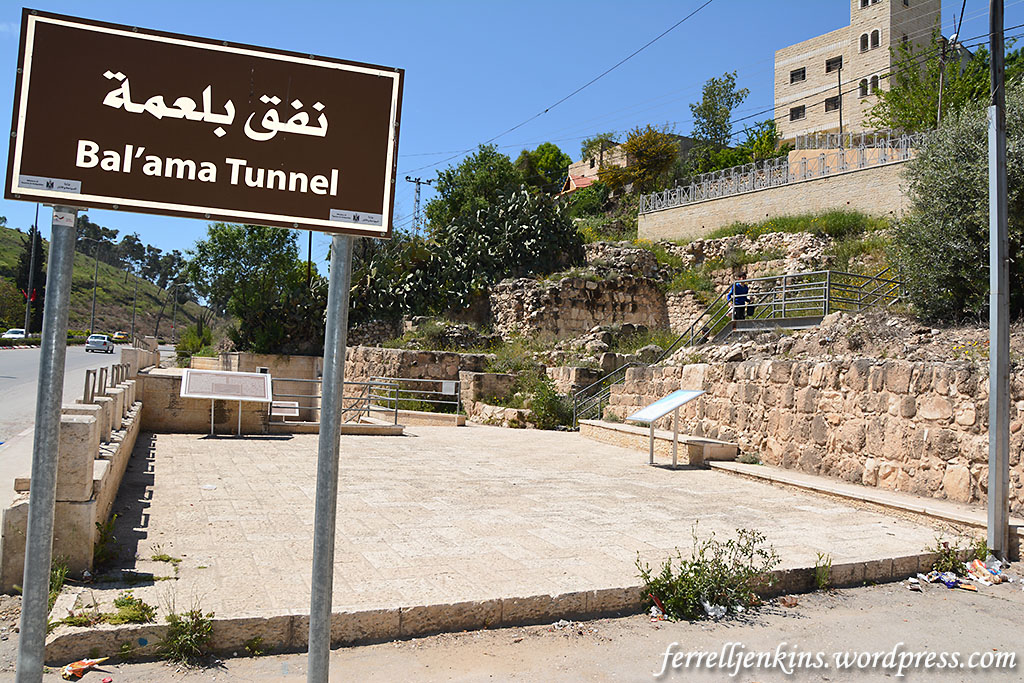
My interest in Bal’ama was renewed when I read A.D. Riddle’s article in the Bible Places Blog here. Last April, 2016, I had this site in mind when we were able to drive through the West Bank from Galilee to Jerusalem. As we drove south of Jenin I caught a glimpse of the new sign marking the entrance to Bal’ama Tunnel. Note that the sign is in Arabic and English. I may be wrong, but I don’t think this sign was there in 2015 when I drove through Jenin, but I may have been looking to the east of the highway.

Bal'ama is marked as Bal'ama Tunnel on the west side of the road from Jenin to Dothan, Samaria, and Nablus (Shechem). Photo by Ferrell Jenkins.

Bal’ama is marked as Bal’ama Tunnel on the west side of the road from Jenin to Dothan, Samaria, and Nablus (Shechem). Photo by Ferrell Jenkins.

There are two information signs posted at the site of Khirbet Bal’ama. The first reads,

Khirbet Bal’ama is a Canaanite fortified city that occupied a strategic position controlling the historic route of Wadi Bal’ama which connects the Arraba Plain with Marj Ibn Amer (“Jarzeel [Jezreel] Valley”). In the ancient record, the site is identified with the name “Ibleam“, and was mentioned in the Egyptian Royal Archive in the 15th century B.C. With reference to the classical records, Bal’ama was known as “Belemoth”, and was mentioned as a major town during the Bronze Age and beginnings of the Iron Age. It was inhabited during the Persian, Hellenistic, Roman, Byzantine, Early Islamic periods, also during the crusader/Ayyubid, Mamluk and Ottoman periods. Excavations at the site carried out by a Joint Palestinian-Dutch team between 1998 and 2000, revealed the water system and parts of a city walls dating back to the Bronze Age at the western perimeter of the site, ruins for houses dating back to the second Iron Age, a winery from the Roman period and remnants of a tower on top of the hill dating back to the crusader/Ayyubid and Mamluk periods. A cemetery on the southern top of the hill adjacent to Khirbet Bal’ama was discovered as well.

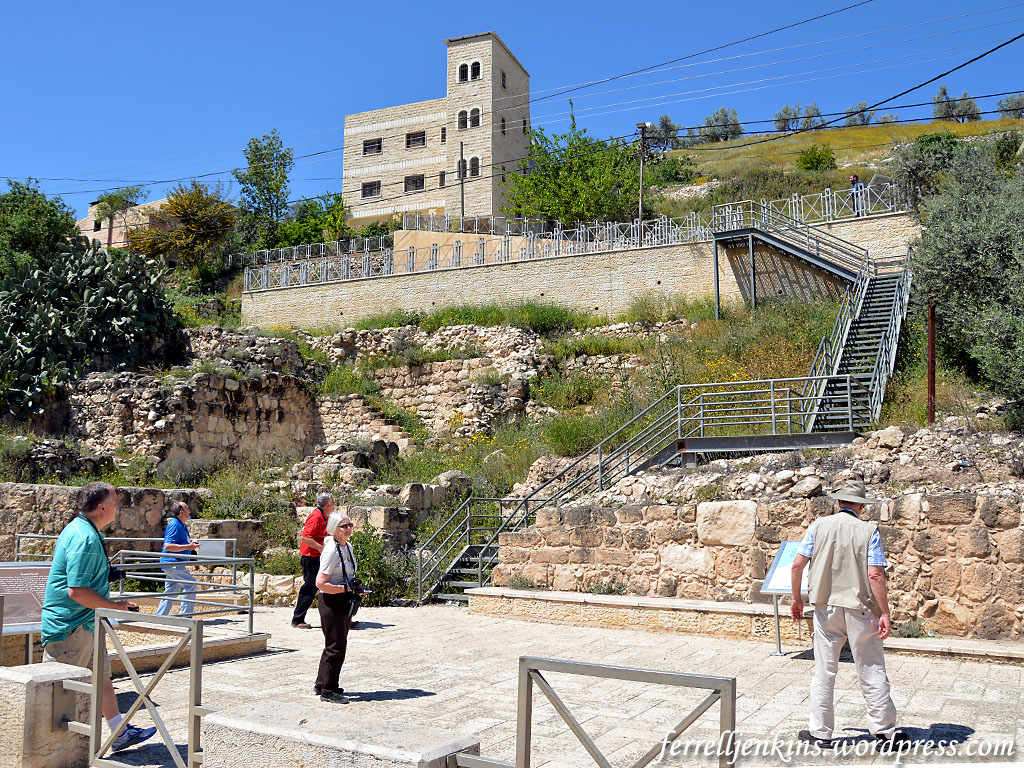
Khirbet Bal’ama is visible to the right of the new building on the slope. There are two entrances to the tunnel; one at street level and another at the level of the platform on the slope.

The site of Khirbet Bal'ama south of Jenin. Photo by Ferrell Jenkins.

The site of Khirbet Bal’ama south of Jenin. Photo by Ferrell Jenkins.

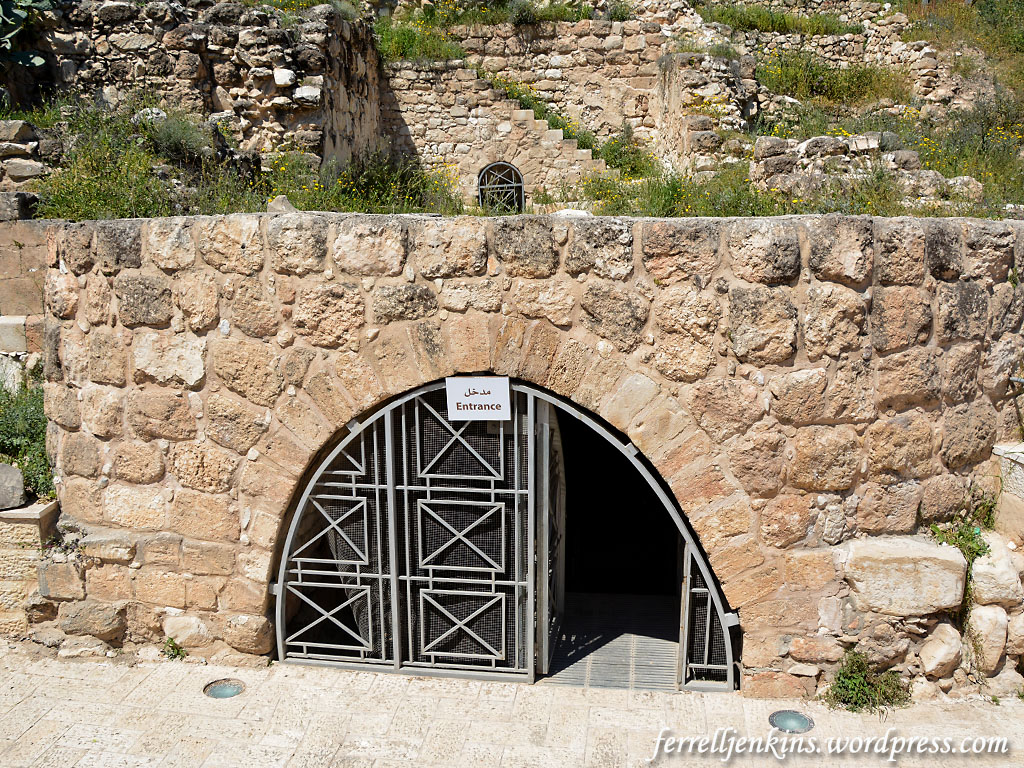
Riddle includes some nice photos of the site, but we can add one with the entrance to the tunnel system open.

Entrance to the tunnel at Khirbet Bal'ama. Photo by Ferrell Jenkins.

Entrance to the tunnel at Khirbet Bal’ama. Photo by Ferrell Jenkins.

Another sign on the entrance plaza describes the water tunnel system.

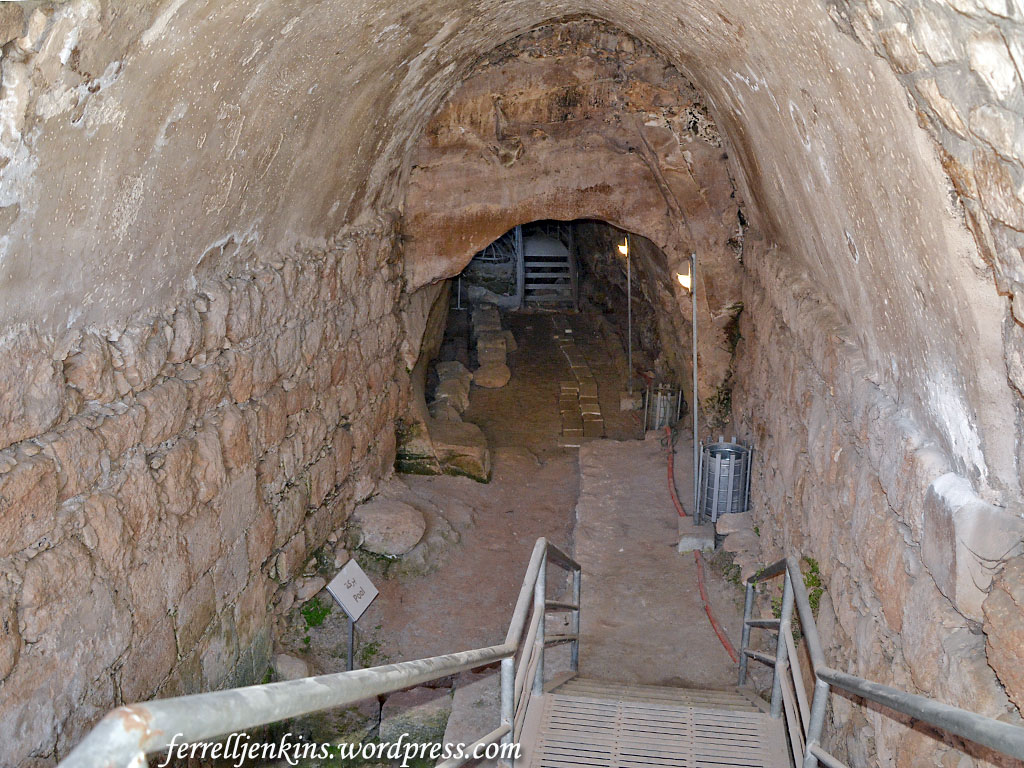
The water tunnel is located at the eastern foot of Khirbet Bal’ama. It was first described by Victor Guerin in 1874 and then by G. Schumacher [who had earlier excavated at Megiddo] in 1910. The rock-cut tunnel was dug to give access to the water source at the foot of the hill. It was designed primarily to be used in times of war and siege. The Bal’ama water tunnel system is one of the major systems in Palestine, like other systems found in Jerusalem, Tel el-Muteselim (Megiddo), Tel el-Qadah (Hazor) and Tell el-Jazari (Gezer). The tunnel consists of three parts, namely the archway at the lowest entrance, the rock-cut tunnel going upward to the west, and the upper stone-built narrow passage. The discovered tunnel is 115 metres in length; 105 metres of it is rock-cut and includes 57 stairs. Archaeological objects were found, such as pottery vessels, glass objects, coins, and some inscriptions.

And we can add a photo of the actual lower water tunnel. Riddle says,

The tunnel was apparently constructed in the Iron Age, though this is based largely on inference rather than clear, direct evidence

Beginning of the Bal'ama Tunnel on the east side of the city. Photo by Ferrell Jenkins.

Beginning of the Bal’ama Tunnel on the eastern (northeast, Riddle) side of the city. Photo by Ferrell Jenkins.

Due to lunch plans at Samaria and other sites on our schedule for the day we were not able to walk through the tunnel. Always a reason to return.

Riddle cites two excavation reports. He says the first may be difficult to access in the United States, but I am pleased to say that both documents are now available on Academia under the name of Hamdan Taha. This is for those who have a more technical interest in the site.

Taha, Hamdan and Gerrit van der Kooij. The Water Tunnel System at Khirbet Bal’ama. Archaeological Project Report of the 1996–2000 Excavations and Surveys, volume II. Ramallah: Ministry of Tourism and Antiquities, Department of Antiquities and Cultural Heritage. 2007.

Taha, Hamdan. “Excavation of the Water Tunnel at Khirbet Belameh, 1996-1997.” in Proceedings of the First International Congress on the Archaeology of the Ancient Near East, Rome, May 18th-23rd 1998. 2000: 1587-1613.

Special offer on Carta Jerusalem resources

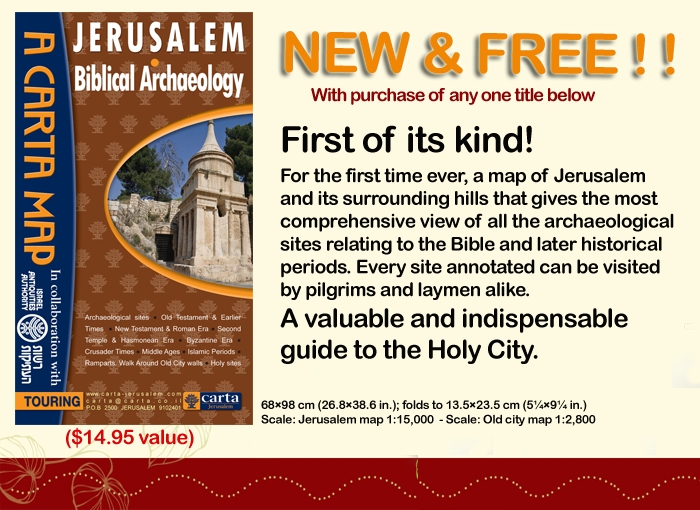
Yesterday I received a review copy of Jerusalem • Biblical Archaeology from Carta. This is a wonderful resource for anyone traveling to Jerusalem, or anyone interested in the archaeology of the Holy City.

The map of the Biblical Archaeological Sites of Jerusalem are printed on one side of this 2 ft. by 3 ft. map. Half of the other side is an enlargement of the archaeological sites in the Old City. The other half contains helpful information about sites on both sides of the map.

This map was prepared by Carta Jerusalem with the assistance of Yuval Baruch PhD, in collaboration with The Israel Antiquities Authority.

This is exactly the type map I like to use when rambling through Jerusalem.

And here is a special offer from Carta.

carta-jer-arch-map

This offer allows 20% off the list price of…

  • Leen Ritmeyer, The Quest (list price $60.00; sale price $48.00).
  • Dan Bahat, The Carta Jerusalem Atlas (list price $60.00; sale price $48.00).
  • Josephus, The Jewish War (list price $60.00; sale price $48.00). See Todd Bolen’s review of the book here.

These are all great books. And you get the map free when you buy one of them. Use the Search box for Jerusalem Archaeological Sites to locate the map.

This offer is good until January 31st ONLY! Use Voucher Code: 20-off

You can check the Carta Jerusalem website here for details of this special offer.

New Book: The World’s Oldest Alphabet

Carta Jerusalem is sending me a review copy of this book when it is published next month. It is somewhat technical, but there are readers of our blog who have an interest in the subject.

The World’s Oldest Alphabet

Hebrew as the Language of the Proto-Consonantal Script
By Douglas Petrovich

From the Introduction by Eugene H. Merrill,
Distinguished Professor of Old Testament Studies (Emeritus)
Dallas Theological Seminary:

“. . . The breakthrough as to the question of the origins of the alphabet represented in this volume is the fruit of the author’s intensive and extensive research and fastidious attention to detail. His acclaimed expertise in epigraphy, paleography, lexicography, and comparative linguistics and literature has led him to the conviction that of all options one can currently advance as to the ultimate origins of the alphabet, the identification of proto-Hebrew is the very best candidate. . . .”

New book Douglas Petrovich.

Carta is offering 25% off until January 31st only.

For about 150 years, scholars have attempted to identify the language of the world’s first alphabetic script, and to translate some of the inscriptions that use it. Until now, their attempts have accomplished little more than identifying most of the pictographic letters and translating a few of the Semitic words. With the publication of The World’s Oldest Alphabet, a new day has dawned. All of the disputed letters have been resolved, while the language has been identified conclusively as Hebrew, allowing for the translation of 16 inscriptions that date from 1842 to 1446 BC. It is the author’s reading that these inscriptions expressly name three biblical figures (Asenath, Ahisamach, and Moses) and greatly illuminate the earliest Israelite history in a way that no other book has achieved, apart from the Bible.

 About the Author:

Douglas Petrovich (Ph.D., M.A., Th.M., M.Div.) teaches Ancient Egypt at Wilfrid Laurier University (Waterloo, Canada). He formerly was the academic dean and a professor at Novosibirsk Biblical-Theological Seminary (Russia), as well as at Shepherds Theological Seminary (U.S.A.), where he taught all levels of biblical Hebrew. He earned a Ph.D. from the University of Toronto, with a major in Syro-Palestinian archaeology, a first minor in ancient Egyptian language, and a second minor in ancient Near Eastern religions. His research interests include biblical history and exegesis, Egyptology, and ancient Near Eastern history (including archaeology, epigraphy, chronology, and iconography).

Petrovich has done extensive work in the area pertaining to the exodus and conquest. I have heard him speak on this subject at the annual meeting of the Near East Archaeological Society, and now I look forward to studying the book.

Click here for sample pages

Carta is offering 25% OFF UNTIL JANUARY 31st ONLY when you order from their online store. Use Vocher Code: 25-off
Order now and guarantee your copy

My Thoughts on the Nile in 2009

This is a re-post from USA Inauguration Day in 2009.

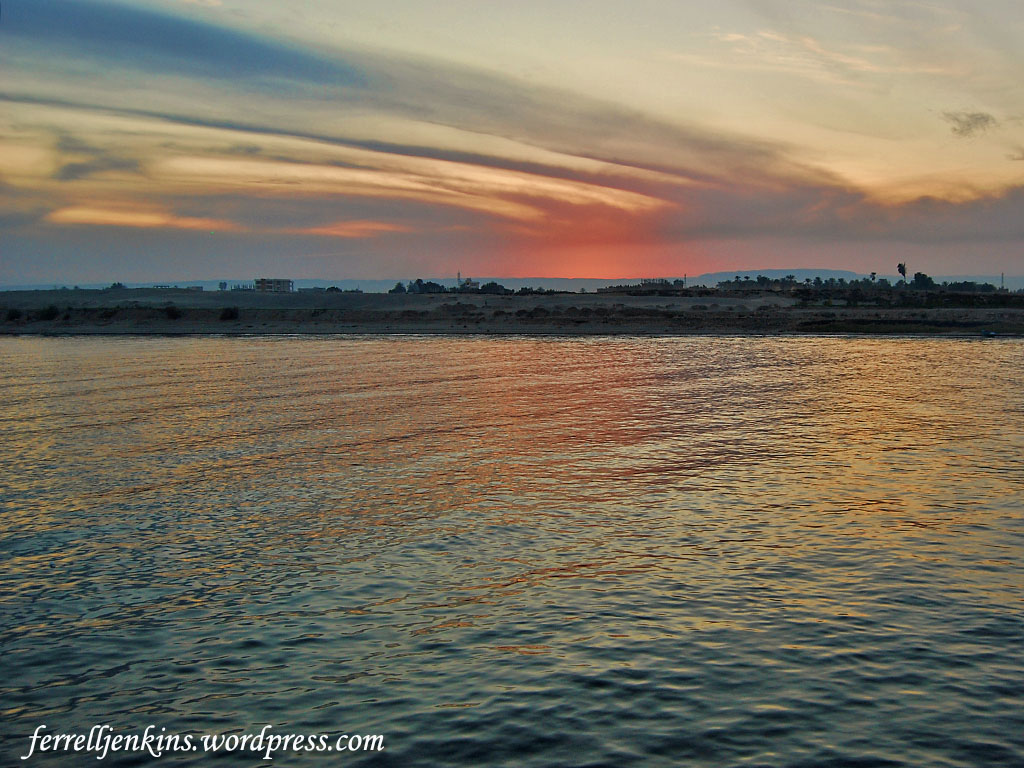
Shortly before sunset, January 20, 2009, I made a few photos of the Nile River looking toward the west bank of the river. I thought I would share this one with you.

Sunset on the Nile, January 20, 2009. Photo by Ferrell Jenkins.

Sunset on the Nile, January 20, 2009. Photo by Ferrell Jenkins.

We are anchored on the Nile a few miles south of Luxor. From my cabin on the Tu Ya cruise boat I am watching the Al Jazeera Network live coverage of the inauguration ceremonies in Washington. The choice of the majority of voters on November 2 was not my choice, but I must say that I am proud at this moment to be an American.

The American ideal of freedom and justice for all is a noble one. Surely there are times when this ideal is not met, but it remains the dream that holds us together, many as one. The diversity of our nation is a testimony to the vitality of that dream.

The inaugural ceremony is the same whether watching it live in Washington, on Al Jezeera in Egypt, or on CBS, NBC, CNN, Fox, or one of the other networks in the United States. Well, maybe. The thing that makes the difference is the commentary afterwards and the news chosen to run underneath the live event.