Category Archives: Travel

Just doing a little road work

When I was a kid in North Alabama I found Indian arrowheads in the cotton fields when we hoed and picked cotton. (Yes, I really did!) The only Indian I ever heard of (on the radio) was Tonto.

In Israel, ancient ruins are discovered as foundations are dug for new buildings or roads are being widened. It happened recently along Highway 38 at Eshtaol, the area where Samson grew up (physically) (Judges 13:24-25). Eshtaol is located about 10 miles west of Jerusalem as one approaches the Sorek Valley and Beth Shemesh. I have stopped several times for gas and water at the station on the left side of the highway.

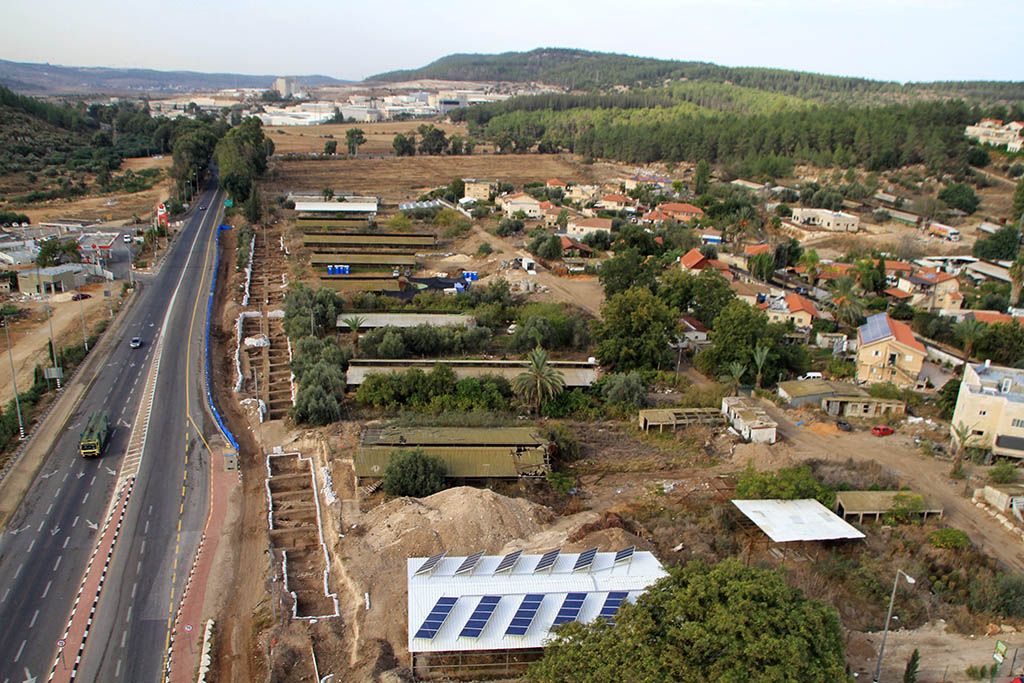
An aerial view of the large excavation along Highway 38. Photo: Sky View Company, courtesy of the IAA.

An aerial view of the large excavation along Highway 38. Photograph: Sky View Company, courtesy of the Israel Antiquities Authority.

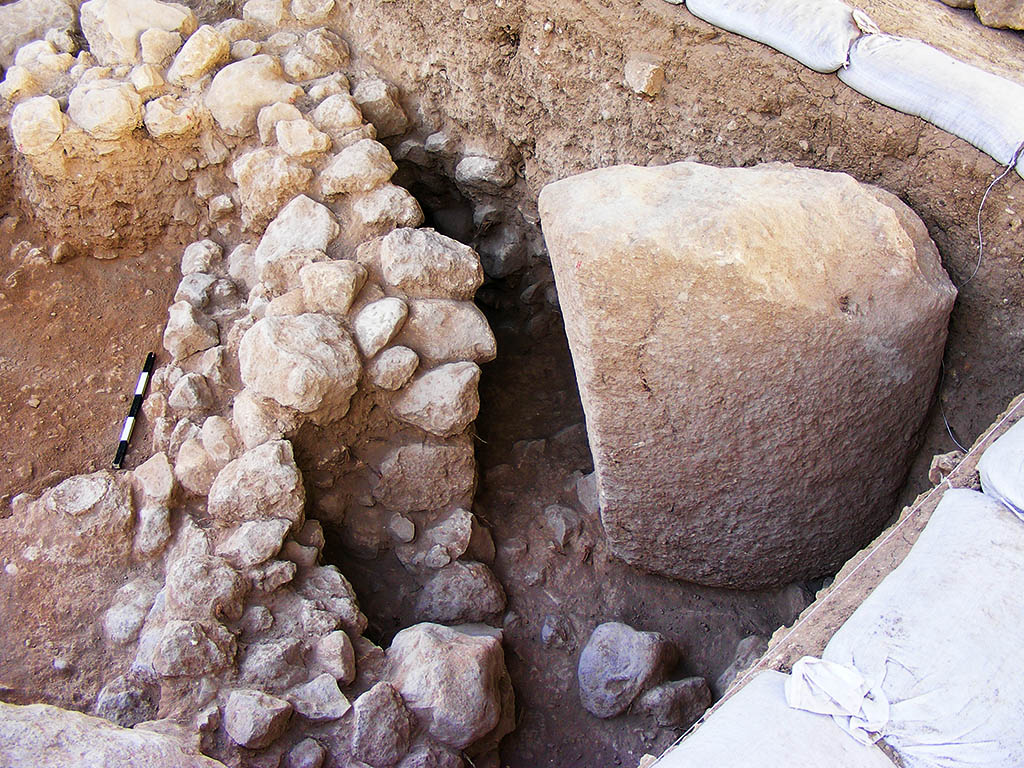
Archaeologists working on behalf of the Israel Antiquities Authority exposed a site belonging to the Pre-Pottery Neolithic period. Buildings belonging to the end of the Chalcolithic period exposed a large standing stone (massebah) 51 inches high. The archaeologists said,

“The standing stone was smoothed and worked on all six of its sides, and was erected with one of its sides facing east. This unique find alludes to the presence of a cultic temple at the site”.  …  “In the past numerous manifestations have been found of the cultic practice that existed in the Chalcolithic period; however, from the research we know of only a few temples at ‘En Gedi and at Teleilat Ghassul in Transjordan”.

A Chalcolithic period building and the standing stone (massebah) positioned at the end of it. Photo: Assaf Peretz, courtesy IAA.

A Chalcolithic period building and the standing stone (massebah) positioned at the end of it. Photo: Assaf Peretz, courtesy IAA.

The IAA news release is available here. The photos we have used here, and four others, are available here. Several Israeli papers have articles about the find, including the one in Arutz Sheva here.

Todd Bolen discussed the identification of Eshtaol here.

Did you know C. S. Lewis died Nov. 22, 1963?

Recently I have been reading C. S. Lewis – A Life: Eccentric Genius, Reluctant Prophet by Alister McGrath. He says that Warnie found his brother dead at the foot of his bed at 5:30 p.m. [in Oxford], “Friday, 22 November 1963.” Then comes this paragraph:

At that same time, President John F. Kennedy’s motorcade left Dallas’s Love Field Airport, beginning its journey downtown. An hour later, Kennedy was fatally wounded by a sniper. He was pronounced dead at Parkland Memorial Hospital. Media reports of Lewis’s death were completely overshadowed by the substantially more significant tragedy that unfolded that day in Dallas.

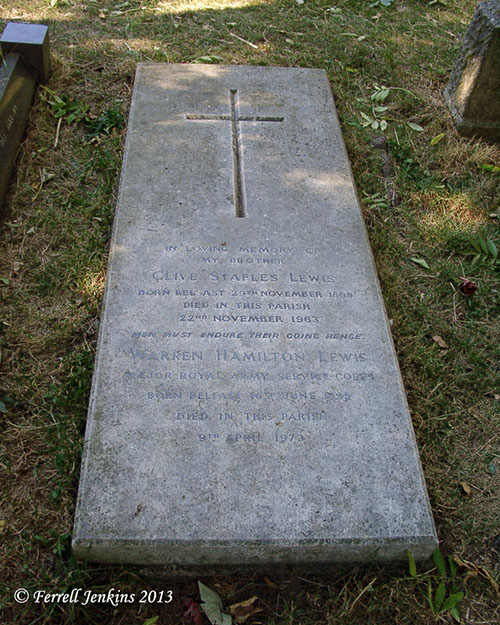
C. S. Lewis was buried in the churchyard of Holy Trinity, Headington Quarry, Oxford after a private, and very small service. Warnie chose a phrase from a Shakespearean calendar that was in their home back in Belfast at the time of their mother’s death in August 1908: “Men must endure their going hence.” The quotation is from Shakespeare’s King Lear.

The grave of C. S. Lewis. Photo by Ferrell Jenkins.

The grave of C. S. Lewis. Photo by Ferrell Jenkins.

McAlister suggests that a better epitaph might be one from Lewis’s own words,

a seed patiently waiting in the earth: waiting to come up a flower in the Gardner’s good time, up into the real world, the real waking. I suppose that our whole present life, looked back on from there, will seem only a drowsy half-waking. We are here in the land of dreams. But cock-crow is coming.

C. S. Lewis is appreciated by many for the Chronicles of Narnia. Others have found his popular apologetic writings helpful. More information, including photos, about sites associated with Lewis is available here.

Where were you on November 22, 1963?

Most of us who were old enough to remember know exactly where were were and what we were doing the day President John F. Kennedy was assassinated.

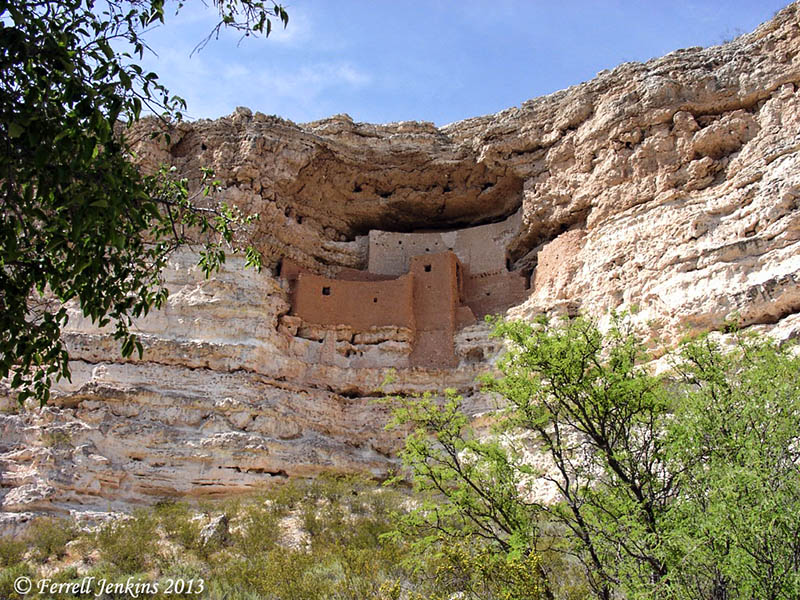
I was in a speaking engagement that week in Prescott, Arizona. David Curtis, a college friend, was the minister there at the time and he wanted to take me to see Montezuma Castle and Camp Verde, Arizona. This was an hour’s trip from Prescott. We could easily make the trip, have a little time to visit the sites, and be back in time for the evening service.

Montezuma Castle National Monument. Photo by Ferrell Jenkins, May, 2003.

Montezuma Castle National Monument. Photo by Ferrell Jenkins, May, 2003.

In Camp Verde we visited a small museum with artifacts illustration life about time shortly after the Civil War. We saw a framed newspaper front page on the wall with some wording like “President Dead.” It was about Abraham Lincoln. We stopped at a store in the center of the little town to get some refreshments. Someone came in and said, “Did you hear about the president?” Then another person said something similar. We went along by saying we had heard. We thought it was some of the local promotion.

After a few minutes someone mentioned specifically that Kennedy has been shot in Dallas. Well, you know that we had the car radio on all the way back to Prescott.

In 2003 my wife and I visited the same area. The old newspaper article was no longer displayed on the wall of the little museum. I asked the lady who showed us around about it. She confirmed that it had been there, but that she did not know where it was now (2003).

Where were you that fateful day?

Damage Reported at Mari in Syria

The French archaeologist André Parrot (1901-1980) carried out several excavations at Mari between 1933 and 1960. Having read about recent damage to the ancient buildings of Mari, I wanted to share a couple of photos of artifacts from the site.

The first statue is of the Iku-Shamagan, King of Mari. It dates to about 2650 B.C. and is from the temple of Ishtar in Mari. The statue is about 47 inches high and was displayed in the Damascus Museum in 2002 when I made this photograph.

King of Mari statue in Damascus Museum. Photo by Ferrell Jenkins 2002.

Iku-Shamagan, King of Mari, praying. Statue in Damascus Museum. Photo by Ferrell Jenkins 2002.

The small (about 20 inches high) statue of Ebih-II, the superintendent of Mari, was discovered in the temple of Ishtar. It dates to the period of about 2900-2750 B.C. and is made of gypsum, with eyes of shells and lapis lazuil. This artifact, along with several others, is displayed in the Louvre.

Attendant to Ebih II of Mari. Louvre. Photo by Ferrell Jenkins.

Statue of Ebih II superintendent of Mari. Louvre. Photo by Ferrell Jenkins.

Mari is located far east in Syria near the Euphrates River. The city was located on the main route between Assyria and Babylon. If Abraham first lived in south Mesopotamia then he might have passed this way on the trip to Haran (Genesis 11:27 – 12:5).

Project Syrian Archaeology has some photos of poor quality showing damage to historical sites at their Facebook page here.

Caesarea Maritima – the Lower Palace

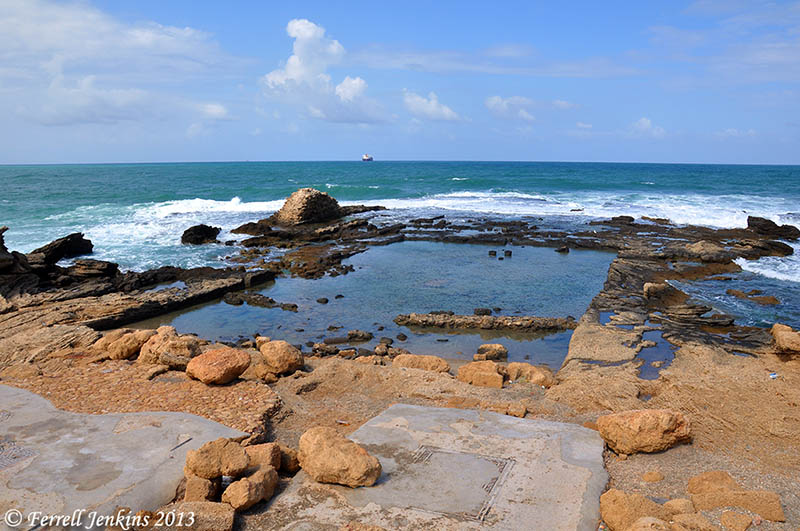
A few columns of the Palace of the Procurators have been restored at Caesarea. The late Jerome Murphy-O’Connor describes the lower level of the Palace.

From the west colonnade one can look down to the sea shore at a point where its dominant feature is a rectangular rock-cut pool (35 x 18). There are channels to the sea on both sides. A square statue base can be discerned in the middle. The colonnaded pool was originally the centerpiece of a two-storey building (83 x 51 m) which surrounded it on all sides. Presumably it was here that the Roman procurators lived. Wave action and the activities of stone robbers have ensured that virtually nothing remains. A staircase in the north-east corner gave access to the upper level. (The Holy Land, Fifth Edition, p. 243)

Our photo below shows this area. In the foreground you will see portions of some mosaics.

The lower level of the Place of the Procurators. Photo by Ferrell Jenkins.

The lower level of the Place of the Procurators. Photo by Ferrell Jenkins.

This was not a bad place for the Roman procurators to live a luxurious life while the Apostle Paul was held in custody nearby (Acts 23:23 – 26:32).

Procurators associated with Caesarea in the New Testament include…

  • Pilate (A.D. 26-26) – John 18, et al.
  • Felix (A.D. 52-59) – Acts 23-25
  • Festus (A.D. 59-61) – Acts 24-26

The Jewish rulers associated with Caesarea include…

  • Herod the king [Agrippa I] (A.D. 37-44) – Acts 12
  • Herod Agrippa II (lived A.D. 27-100) – Acts 25-26

The Pool of Siloam like you have never seen it

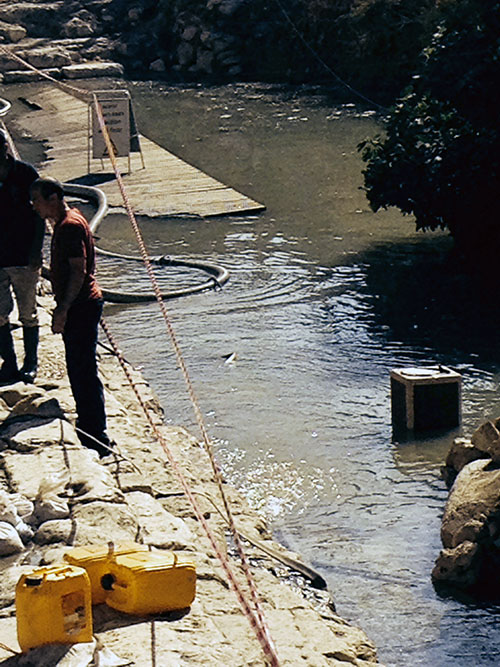
Elie, my friend and guide in Israel, sent me a photo just a few minutes ago that he made Sunday at the pool of Siloam.

Water in the pool of Siloam due to a clogged drain. Photo: Elie Ben-Meir

Water in the pool of Siloam due to a clogged channel. Photo: Eliemelech Ben-Meir

Here is the explanation Elie gave:

Thought you might enjoy this shot of the pool. We couldn’t get in because of a clog in the channel that caused the pool to fill up and flood! We had to walk around and come in from the top past Ibrahim Siams antiquities shop and walk down the wooden stairs!

The Hippodrome at Caesarea Maritima

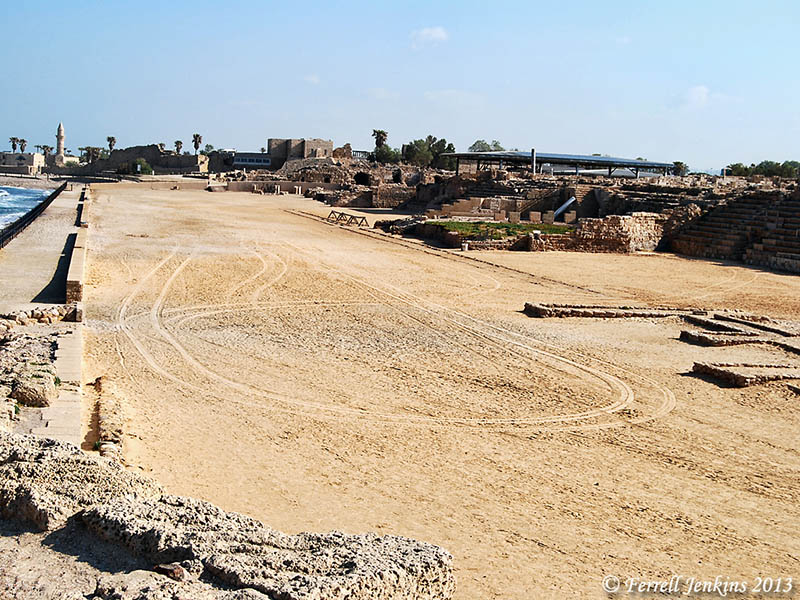
Herod the Great built a hippodrome along the Mediterranean coast at Caesarea Maritima in 10 B.C. to celebrate the opening of the city. In the second century A.D. the south end of the hippodrome was reconstructed as an amphitheater to be used for gladiatorial contests.

The seaside Hippodrome at Caesarea Maritima. Photo by Ferrell Jenkins.

The seaside Hippodrome at Caesarea Maritima. Photo by Ferrell Jenkins.

The apostle Paul was in prison at Caesarea for two years between A.D. 58 and 60 (Acts 23:23 – 26:32).

We discussed Paul’s possible use of the charioteer in Philippians 3:12-14 here.

Jerome Murphy-O’Connor – 1935-2013

The École Biblique et Archéologique in Jerusalem announced Monday the death of Jerome Murphy-O’Connor (1935-2013).

Fr. Jerome Murphy-O’Connor, O.P., passed away peacefully on Monday, November 11, 2013. He was 78 years old.

Fr. Murphy-O’Connor taught for more than four decades at the École Biblique et Archéologique. He was a world-renowned biblical scholar and author of numerous books on St. Paul and the Holy Land. Many throughout the world counted him their friend.

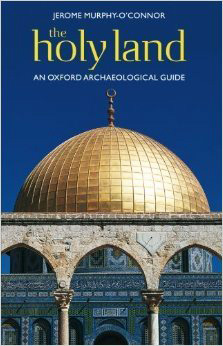
The writings of Murphy-O’Connor have been helpful to me. I have especially enjoyed The Holy Land An Oxford Archaeological Guide which is now in its 5th edition. In my recommendations of books for those traveling to Israel I have annotated this book with the words “Excellent. The Best.” I am pleased to say that I have seen several tour members using their copy of the book. I see the book is now available for the Kindle.

Holy Land

St. Paul’s Corinth: Texts and Archaeology (Good News Studies, Vol. 6) has been helpful in studying about Corinth. His article about traveling conditions in the first century in the second issue of (the now defunct) Bible Review has been extremely helpful in studying Paul’s journeys. (Murphy-O’Connor. “On the Road and on the Sea with St. Paul.” Bible Review 1:2 (1985).

HT: Jack Sasson; Bible Places Blog.

Excitement at Carchemish

It must have been exciting to be at Carchemish in 605 B.C. when Pharaoh Neco came all the way from Egypt to this city now on the border between Syria and Turkey. On an earlier excursion from Egypt to Carchemish in 609 B.C., Neco killed Josiah, king of Judah, at Megiddo.

Pharaoh Neco came to assist the Assyrians as they fought the Babylonians. But the emerging world power from the southern Euphrates city of Babylon overpowered the Assyrians and the Egyptians and sent Neco running back to Egypt. Nebuchadnezzar, king of Babylon, chased Neco to the border of Egypt.

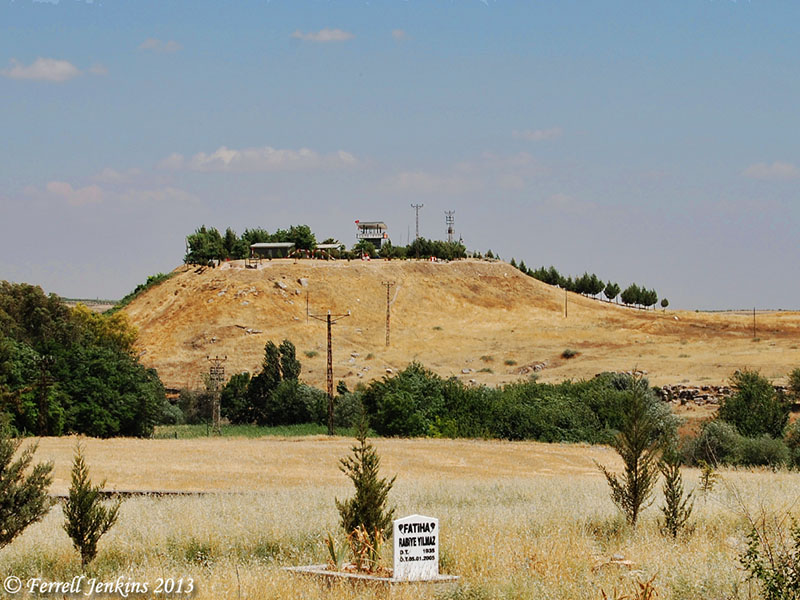
It is still exciting at Carchemish. I have been within sight of Carchemish once. The military installations were clearly visible on top of the tell. The tour operator handling my tour in Turkey a previous time advised me not to go to Carchemish (Karkamis) because it is “zero on the border” of Turkey and Syria.
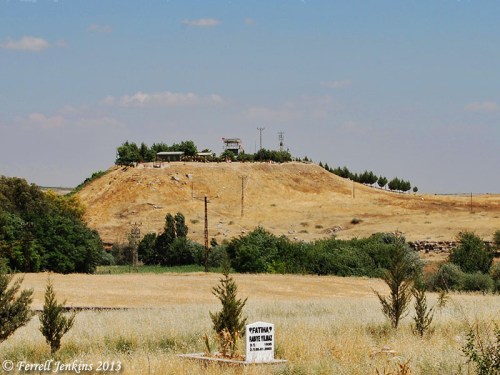
Carchemish with a Turkish military base on top. Photo by Ferrell Jenkins 2007.

Carchemish with a Turkish military base on top. Photo by Ferrell Jenkins 2007.

We were excited to learn that new excavations had begun at Carchemish. That was before the recent “uncivil war” in Syria. Now, two reports give a little glimpse into the archaeological work there.

The first report from the WorldBulletin reports:

What could be the largest discovered inscribed tablet (stele), dating to the reign of Babylonian king Nebuchadnezzar II between 605-562 BC, has been discovered in the Turkish city of Karkamis on the military zone along the Turkey-Syria border.

Noting that the excavations sites are untroubled despite their proximity to the Syrian civil war, Dr. Nicola Marchetti said the Karkamis archeological museum is scheduled to open next year.

“Excavations are right on a military zone with 55 hectares in Turkey and 35 in Syria,” said Marchetti, the head of the Turkish and Italian excavation teams, at a press conference held in the Assembly Hall of the Metropolitan Municipality.

Excavations this year also unearthed a cuneiform tablet at the palace of Carchemish king Katuwa dating to 800 BC, as well as over 300 sculptures, a Luwian hieroglyphic inscription and a mosaic.

Read the full report here. I assume the work described in this report is somewhere other than the top of the high mound.

A report from ANSAmed used a few more words about the stele dating to the reign of Nebuchadnezzar.

Marchetti is proudest of a stele, or commemorative slab, carved with the face of Babylonian King Nebuchadnezzar, the conqueror of Karkemish. He destroyed Jerusalem and the Temple of Salomon in 587 BC, and built the Hanging Gardens of Babylon, which were the seventh wonder of the ancient world.

”It’s a beautiful, compact piece of limestone”, Marchetti enthuses of this unique, historic find.

This report may be read here. It continues to tell about some recent al-Qaeda activity near the border in Syria affected by the excavation.

While it’s an almost peaceful cohabitation, it is also true that the dig is within a Turkish military base. This offers the Italians a relative sense of safety – except on September 3, when al-Qaeda attacked the Syrian town of Jarabulus, eventually wresting it from the ”official” anti-Assad Free Syrian Army (FSA) insurgents. ”It was hell on earth. Bullets were flying everywhere”, says Marchetti, who teaches Near Eastern archeology at Bologna University.

”Luckily, archeologists dig holes. We dove in. We kept digging inside the deeper ones. The Turkish military kept telling us, stay down”. Calm was restored once the FSA fighters gave themselves up to the Turks in order to flee al-Qaeda. An armed truce has held since, allowing the Italian team to unearth new treasures.

Now we know why archaeologists dig trenches and holes.

I look forward to seeing that new archaeological museum at Karkamis. Karkamis is a small town of less than 5000 population.

HT: Jack Sasson

The Meat Market at Corinth

Paul taught the saints at Corinth to,

Eat whatever is sold in the meat market without raising any question on the ground of conscience. (1 Corinthians 10:25 ESV)

The Greek word used here for “meat market” is makellon. Archaeological discoveries at Corinth include inscriptions mentioning the meat market and the fish market.

Henry J. Cadbury writes about visiting the Corinth excavations in July, 1933. He says he especially wanted to see “first hand the Erastus inscription….” Some of his comments in the article are still interesting today.

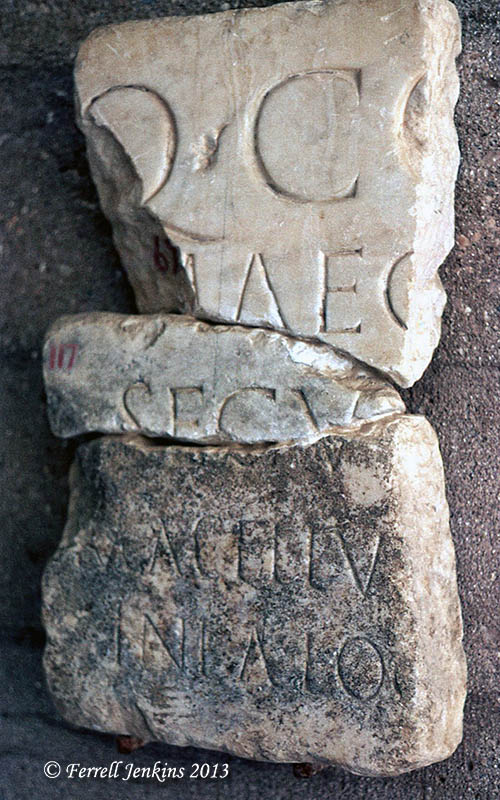
But what was particularly unexpected by me was to note among the inscribed fragments of marble in the new museum one containing quite clearly MACELLV.

As the piece has only seven other letters and these quite unintelligible the discovery of this single word is extremely tantalizing. But since the fragment in question was found in 1898, now thirty-five years ago, while so far as I know its one clear word has never been brought into connection with Paul’s reference to a Corinthian macellum, it is worth while now to do so. And the fragment does not stand quite alone; nine other fragments of the same inscription have been found, and furthermore another copy apparently of a similar inscription is represented by eleven fragments.

Citing A. B. West and L. R. Taylor, Cadbury says the various inscriptions mentioning the macellum at Corinth date to the “last years of Augustus or to the reign of Tiberias.”

In my earliest years of traveling to Corinth I saw this inscription each time I was there. Below is a digitized slide photo from 1971. This inscription was in an open hall surrounding the courtyard of what Cadbury called in 1934 “the new museum” at Corinth. At some point, perhaps in the 1990s the inscription was no longer on display. My guide at the time was well informed and had likewise seen the inscription. Inquiry in the office of the museum provided no information. Finally, a few years ago (probably 2008 or 2012) I found one of the workers preparing for the renovation of  a “newer” museum at Corinth. She informed me that the inscription was in their storeroom and that it would eventually be displayed again.

In the photo below you will see the Latin word MACELLV[M] in the fourth line from the top. Paul used the same Greek word in 1 Corinthians 10:25.

Makellum inscription at Corinth Museum in 1971. Photo by Ferrell Jenkins.

Makellum inscription at Corinth Museum in 1971. Photo by Ferrell Jenkins.

Cadbury refers to published inscriptions from Corinth. This is No. 124. It is thought to have consisted of three blocks. The beginning of the five lines in the first block of No. 124 reads as follows:

Q . C O
M A E C
S E C V
M A C E L L V
I N E A . L O C

New Testament Christians did not live in a vacuum, and the books of the New Testament were not written in a vacuum. Understanding the historical and social context of these writings helps us to better apply them to our own time.

Documentation: Henry J. Cadbury. “The Macellum of Corinth.” JBL 53:2 (1934): 134-141.