Category Archives: Travel

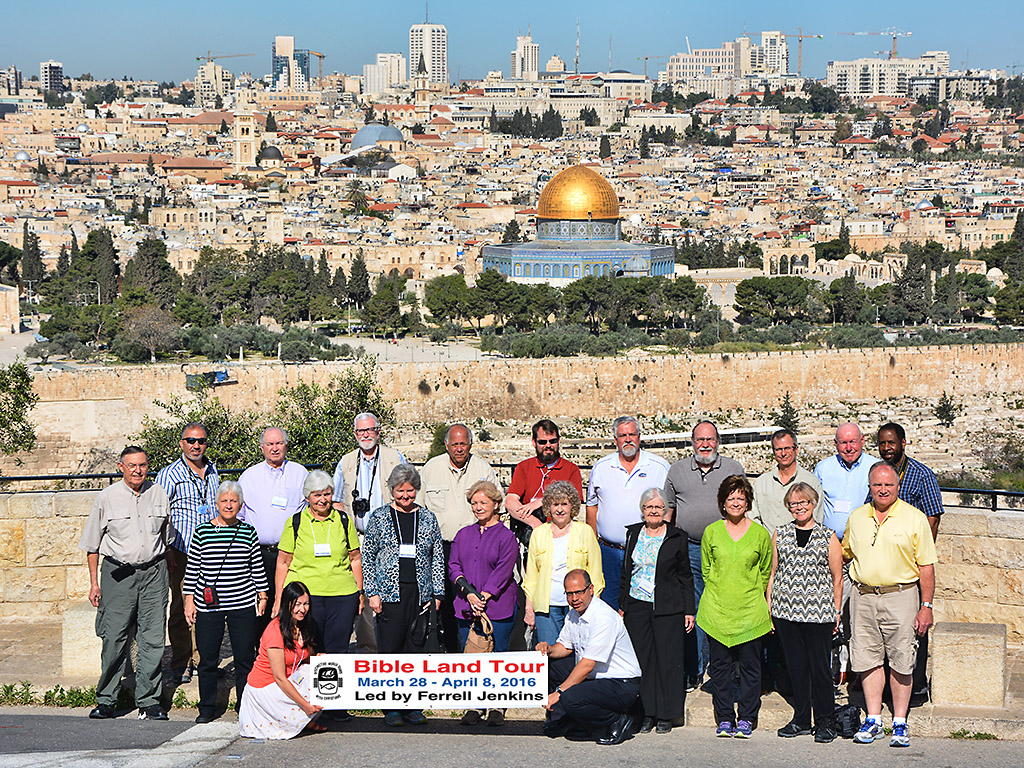
Photo of 50th Anniversary tour group

Our journey is Israel is now beginning the second half. We enjoyed a beautiful day in Jerusalem visiting sites related to the Bible. This is an especially significant tour for me. It is my 50th Anniversary tour. The first one  that included Israel was in 1967. Overall it is the 84th tour that I have directed.

Our group this year comes from Florida, Alabama, Georgia, Indiana, Missouri, Texas, Oklahoma and Guatemala. I think eleven of us have traveled together before.

50th Anniversary Tour Group led by Ferrell Jenkins.

50th Anniversary Tour Group led by Ferrell Jenkins.

Nothing compares to studying the Bible in the land where it was written and where the events described in it took place. I am thankful to have shared this experience with so many over this half century.

Only one example of Roman crucifixion discovered

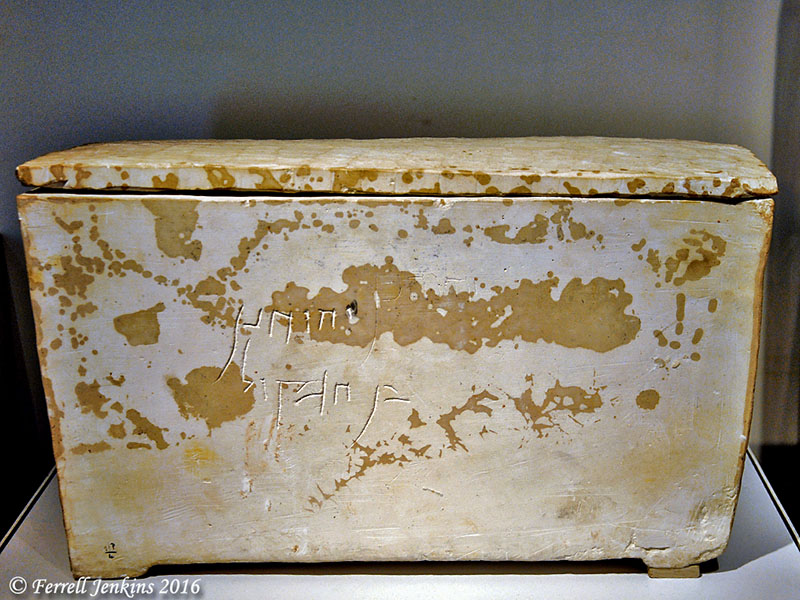
The Romans were adept at crucifixion, according to many historical sources. The first archaeological evidence of crucifixion was uncovered in 1968 when, during a controlled archaeological dig under the direction of the late Vasillios Tzaferis, an ossuary (bone box, or receptacle) was found north of Jerusalem containing the bones of a man who had been crucified. His name was “Yehohanan, the son of Hagakol.” He is thought to have been between 24 and 28 years of age, and was about 5 feet 6 inches in height.

Ossuary of Yehohanan, son of Hagkol. Dates to first century A.D., and is made of soft limestone. Israel Museum. Photo by Ferrell Jenkins.

Ossuary of Yehohanan, son of Hagkol. Dates to first century A.D., and is made of soft limestone. Israel Museum. Photo by Ferrell Jenkins.

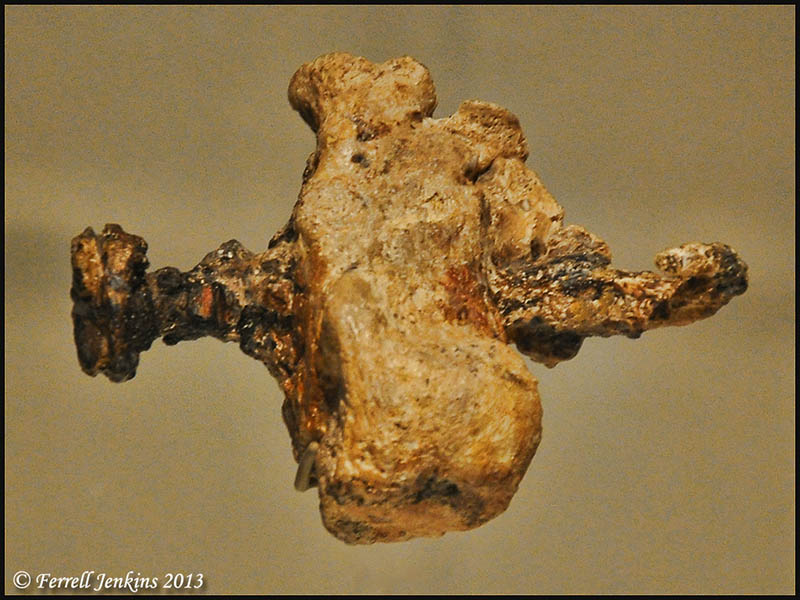
Both the ossuary and a replica of the heel bone are displayed in the Israel Museum. When Yehohanan was removed from the cross the nail pulled away from the wood. He was buried with the nail in his heel.

Ankle bone of a man crucified outside Jerusalem in Roman times. Photo by Ferrell Jenkins.

Ankle bone replica of  Yehohanan, son of Hagkol, who was crucified outside Jerusalem in Roman times. Display in Israel Museum. Photo by Ferrell Jenkins.

On Pentecost, Peter proclaimed the truth about Jesus. He said,

This man was handed over to you by God’s deliberate plan and foreknowledge; and you, with the help of wicked men, put him to death by nailing him to the cross. (Acts 2:23 NIV)

No ossuary or bones belonging to Jesus have been found. I am aware of the speculation that a tomb in the Talpiot neighborhood of Jerusalem contained the family of Jesus, and possibly even the ossuary of Jesus. One summary of this speculation was published by Bible Places Blog here.

The angel at the empty tomb of Jesus announced to the women who had gone to complete the burial,

He is not here, for he has been raised, just as he said. Come and see the place where he was lying. (Matthew 28:6 NET)

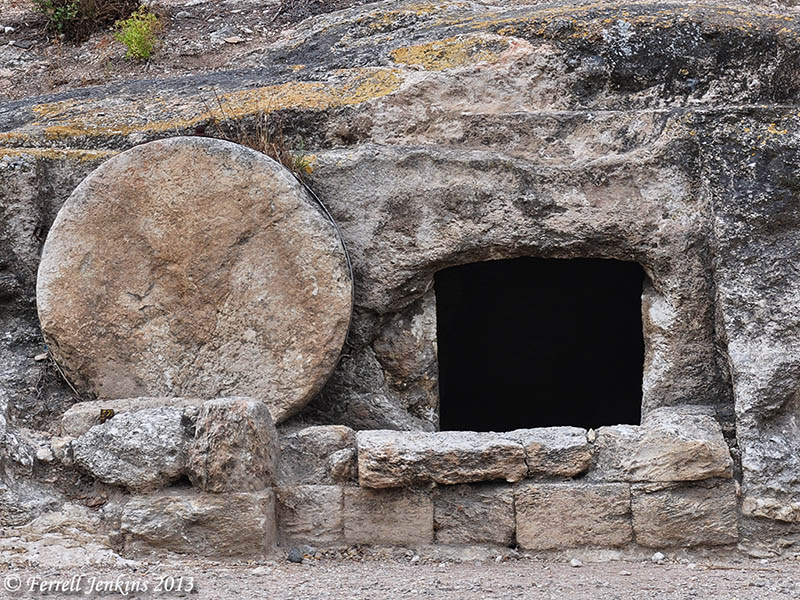
Rock tomb with rolling stone near Jezreel Valley. Photo by Ferrell Jenkins.

Roman period rock tomb with rolling stone near Jezreel Valley. Photo by Ferrell Jenkins.

SourceFlix has posted a nice brief video of Passion Week Archaeology here.

Post updated from March, 2013.

Roman road from Elah valley to Bethlehem

Portions of roads from the Roman period are found throughout Israel, and we have posted about several of them.

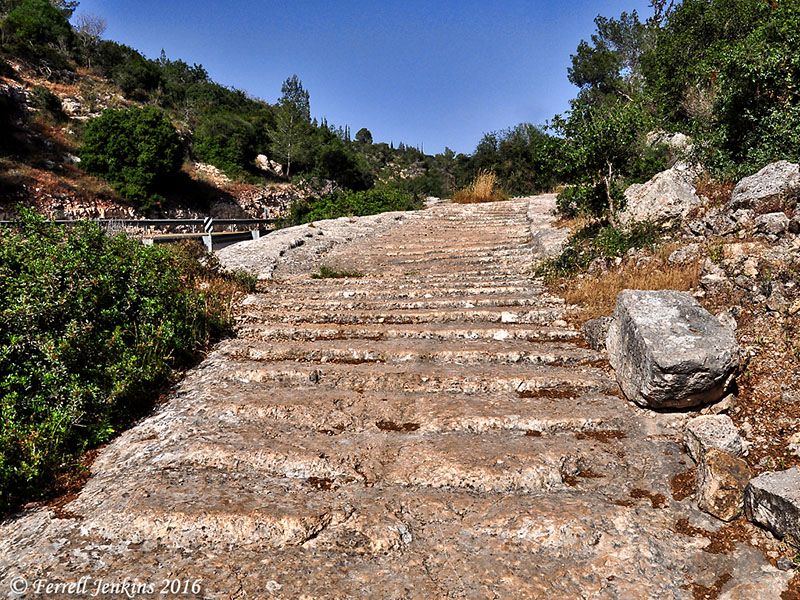
One interesting Roman road is the stepped road leading from the Valley of Elah up to Bethlehem. This photo was made 4.2 km west of Mata on Highway 375. I am not sure of the date of this unusual stretch of Roman Road, but I think most of the Roman roads date to the late first century or the second century A.D.

These steps would have made the trip up into, and down from, the mountains of Judea easier for both man and beast. This is likely the same route, centuries before the Romans controlled the area, taken by David as he went from Bethlehem to take some special provisions to his brothers on the firing line in the Valley of Elah (1 Samuel 17:15-22). Note especially verse 15:

… but David went back and forth from Saul to feed his father’s sheep at Bethlehem. (1 Samuel 17:15 ESV)

Roman Road 4.2 km W of Mata on Hwy 375. S of Hwy. Photo by Ferrell Jenkins.

Roman Road 4.2 km W of Mata on Hwy 375. S of Hwy. Photo by Ferrell Jenkins.

When David was in the cave at Adullam he wished for a drink of water from “the well of Bethlehem that is by the gate.”  The Biblical text records that three of his mighty men, without the knowledge of David, made their way to Bethlehem to bring him some of that water (2 Samuel 23:15-17). David refused to drink the water and poured it out to the LORD. I think the three mighty men would have used this same route.

The Dead Sea: what is deader than dead?

Haaretz, an Israeli newspaper, has a fabulous article about the Dead Sea which they call “Israel’s endangered natural wonder.” This report consists of an article, photographs, aerial footage, and an animated map showing how the Dead Sea is drying up. The article is by Nir Hasson. Use this link to access all of the material.

In 1972 the Dead Sea was about 1301 feet below sea level. This year it is more than 1407 feet below sea level. Water that once flowed all the way from Mount Hermon and the streams of both Cis-Jordan and Trans-Jordan is now being used to provide water for the population and agricultural interests.

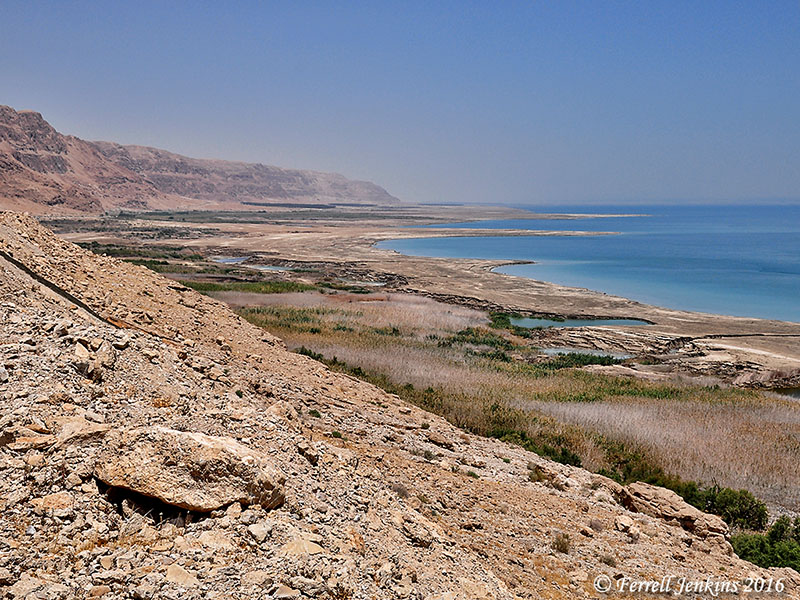
In my photo below you will see a few of the sinkholes that have been formed in recent years. According to Hasson there were 220 sinkholes along the shore in 1996, but in 2015 the count had risen to 5,548. The water of the Sea once covered all of the area below where I was standing to make the photo.

Sinkholes along the western shore of the Dead Sea. Photo by Ferrell Jenkins.

Sinkholes along the western shore of the Dead Sea. Photo by Ferrell Jenkins.

Previously we have called attention to the photos of the sinkholes by Shmuel Browns, Israel Tour Guide. This would be a good time to take a look at them if you have not done so before. Go here.

The Dead Sea is called the Salt Sea in the Old Testament (Genesis 14:3; Numbers 34:3, 12; Deuteronomy 3:17, et al.

Pigeon Valley and Uçhisar in Cappadocia

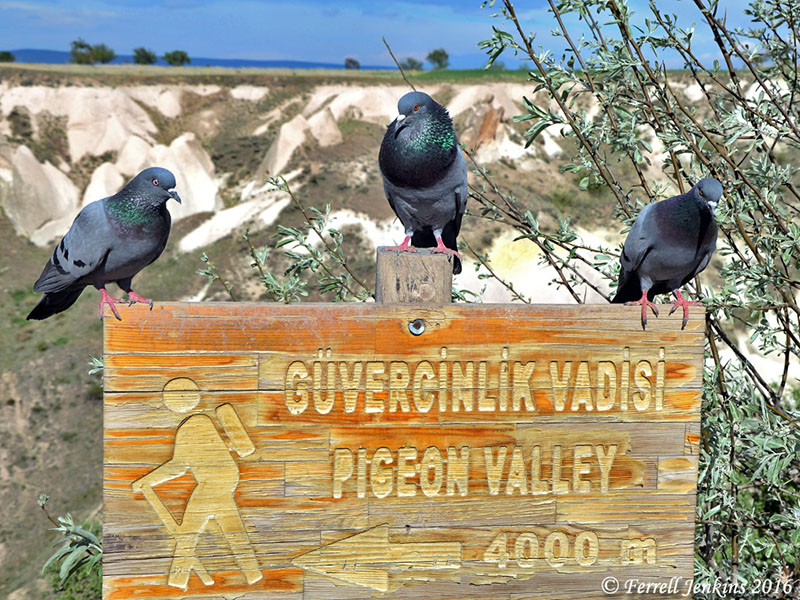
Both here and on social media a large number of readers showed an interest in our recent post about the fairy chimneys of Cappadocia here. I thought you might enjoy seeing some pictures in the vicinity of Pigeon Valley. Three well-fed pigeons are standing guard over the entrance to the sign pointing to the trail for those who wish to hike in the valley.

Pigeon Valley sign in Cappadocia. Photo by Ferrell Jenkins.

Pigeon Valley sign in Cappadocia. Photo by Ferrell Jenkins.

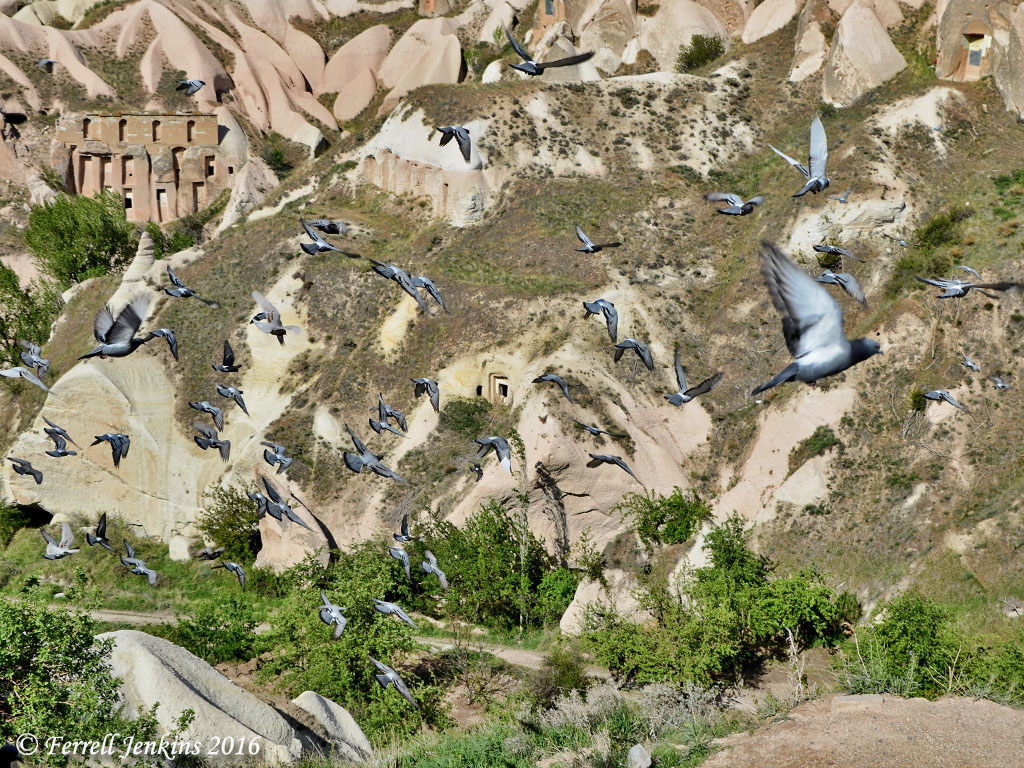
Hundreds of pigeons make their way through the valley to the delight of the bus loads of tourists and hikers who stop by.

Pigeons flying in Pigeon Valley, Cappadocia. Photo by Ferrell Jenkins.

Pigeons flying in Pigeon Valley, Cappadocia. Photo by Ferrell Jenkins.

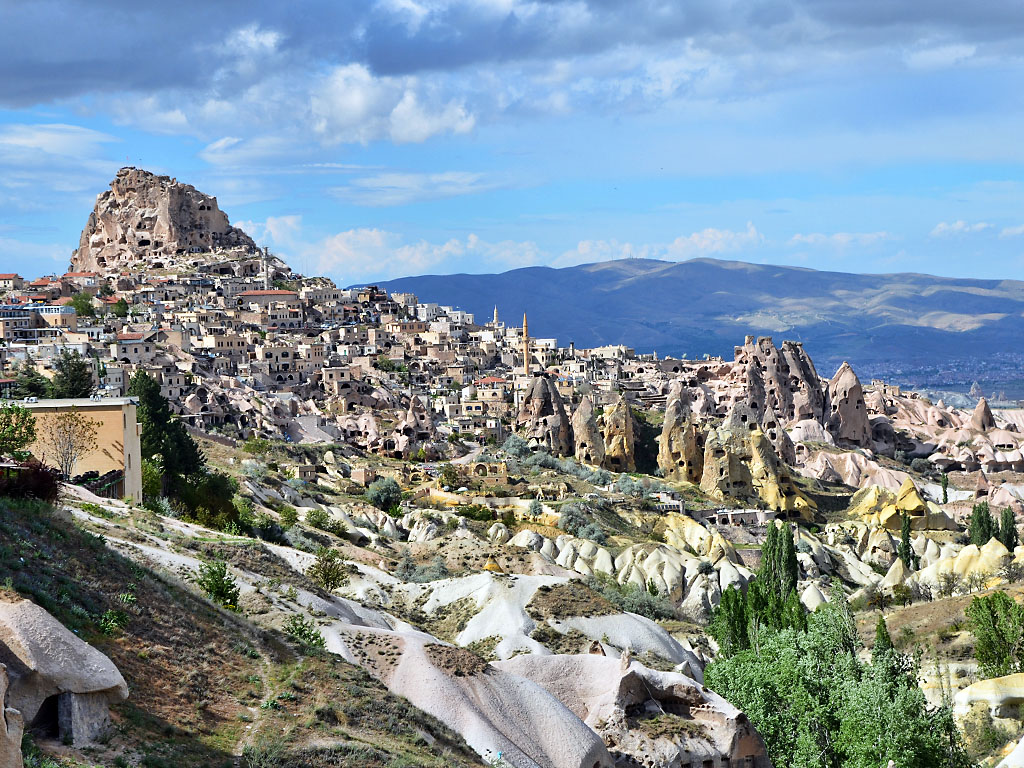
From Pigeon Valley one has a great view of the natural fortress of Uçhisar. Click on the photo for a larger image. You will be able to see the modern houses built among those dug from the natural formations of the area.

Uchisar in Cappadocia from Pigeon Valley. Photo by Ferrell Jenkins.

A view of Uchisar in Cappadocia from Pigeon Valley. Photo by Ferrell Jenkins.

The apostle Peter addressed his two epistles to Christians living in Cappadocia (1 Peter 1:1).

The fairy chimneys of Cappadocia

The New Testament mentions Cappadocia only twice.

  1. Devout Jews from Cappadocia were present in Jerusalem on Pentecost (Acts 2:9).
  2. Peter’s letters were addressed to Christians living in Cappadocia (1 Pet. 1:1).

In the centuries after New Testament times many Christians settled in this volcanic region of perhaps 50,000 cones, now part of Turkey.

John Freely describes Cappadocia in these words:

“Most of this part of Cappadocia is covered with a deep layer of tufa, a soft stone of solidified mud, ash and lava which once poured down from the now extinct volcanoes on Hasan Dagi and Ericiyes Dagi, the two great mountain peaks of Cappadocia. In the eons since then the rivers of the region have scoured canyons, gorges, valleys and gulleys through the soft and porous stone, and the elements have eroded it into fantastic crags, folds, turrets, pyramids, spires, needles, stalagmites, and cones, creating a vast outdoor display of stone sculptures in an incredible variety of shapes and colours” (The Companion Guide to Turkey, 238).

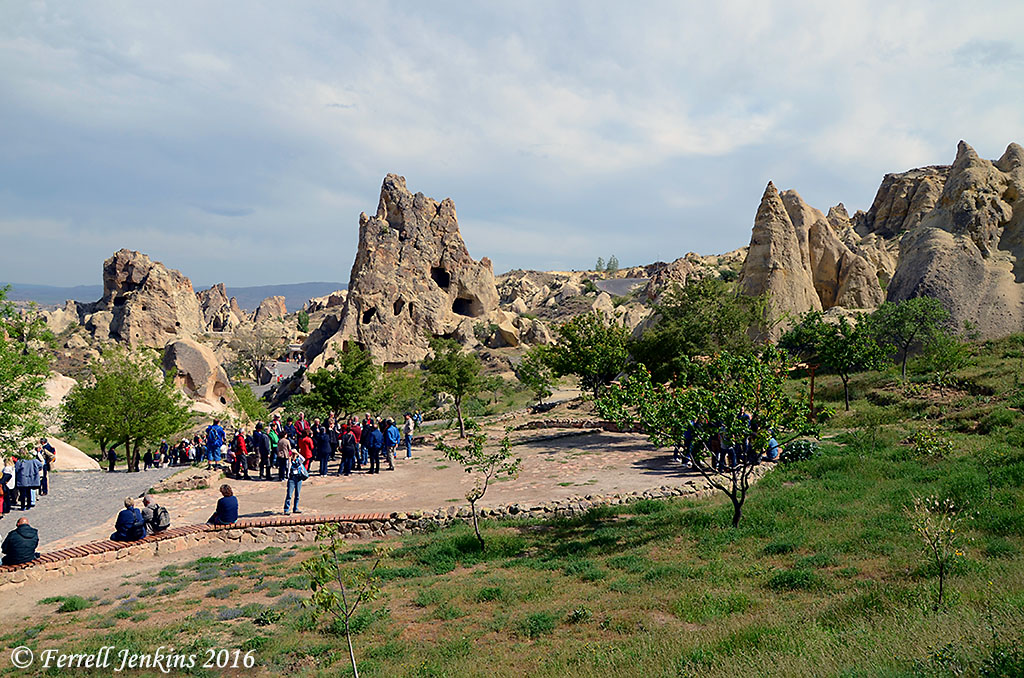
Our first photo today shows an area of Cappadocia known as Pasabagi Valley where the fairy chimneys may be seen in abundance.

Fairy Chimneys in Pasabagi Valley, Cappadocia. Photo by Ferrell Jenkins.

Fairy Chimneys in Pasabagi Valley, Cappadocia. Photo by Ferrell Jenkins.

The second photo is from the same area, but shows cones.

Fairy Chimneys in Pasabagi Valley, Cappadocia. Photo by Ferrell Jenkins.

Fairy Chimneys in Pasabagi Valley, Cappadocia. Photo by Ferrell Jenkins.

Digging in the vineyard

Vineyards are mentioned in more than 100 verses of the Bible. When traveling in the Bible lands one still sees many vineyards and the various work activities related to them.

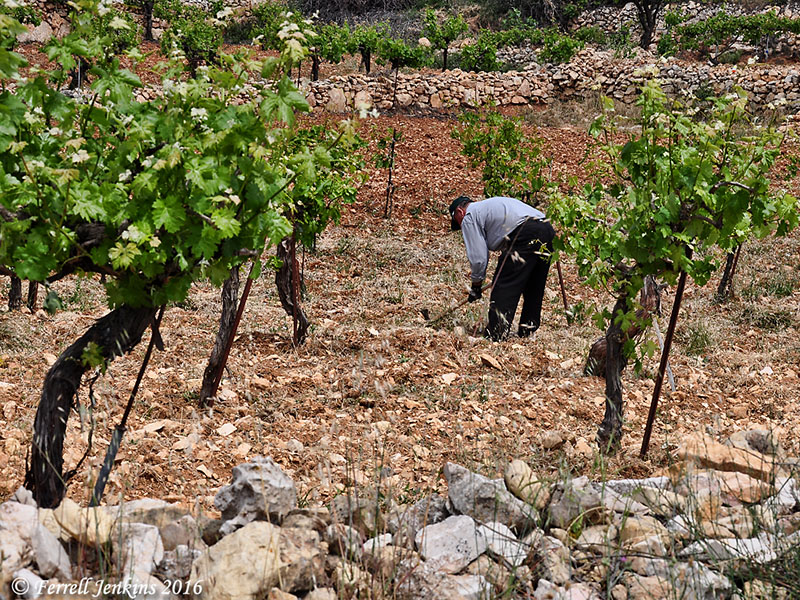
The photo below was made south of Bethlehem. It shows a man digging in the rocky soil within a vineyard.

Man digging in vineyard between Bethlehem and Hebron. Photo by Ferrell Jenkins.

Man digging in vineyard between Bethlehem and Hebron. Photo by Ferrell Jenkins.

One might recall the song of the unfruitful vineyard in Isaiah 5.

He dug it and cleared it of stones, and planted it with choice vines; he built a watchtower in the midst of it, and hewed out a wine vat in it; and he looked for it to yield grapes, but it yielded wild grapes. (Isaiah 5:2 ESV)

Or the parable of Jesus in Matthew 21.

“Hear another parable. There was a master of a house who planted a vineyard and put a fence around it and dug a winepress in it and built a tower and leased it to tenants, and went into another country. (Matthew 21:33 ESV)

The aqueducts at Caesarea Maritima

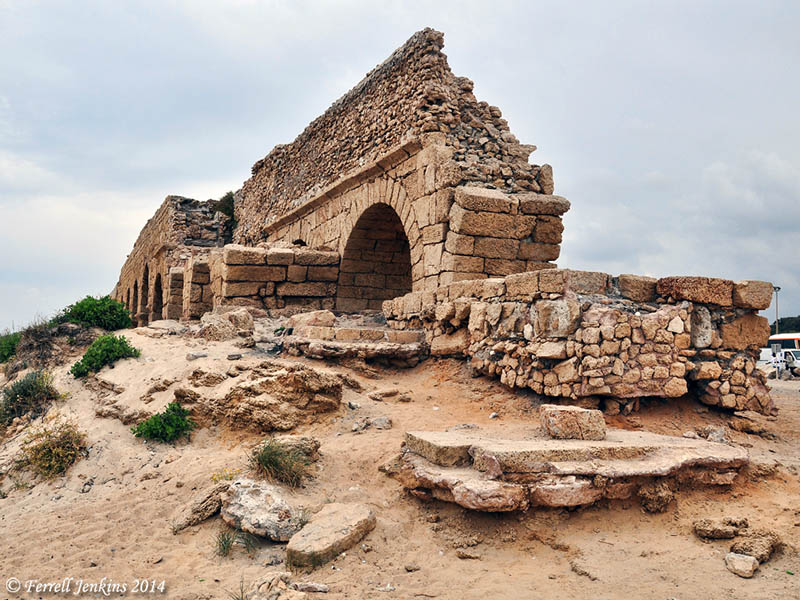
At Caesarea Maritima, visitors may see the high-level aqueduct at the point where it comes to an end likely due to erosion from the waves of the sea. According to Murphy-O’Connor the eastern channel (on the right) was “built by a Roman Procurator about the middle of the C1 AD.” The western channel was built by Hadrian. Some attribute the eastern channel to Herod the Great.

The high level aqueduct at Caesarea Maritima. Photo by Ferrell Jenkins.

The high level aqueduct at Caesarea Maritima. Photo by Ferrell Jenkins.

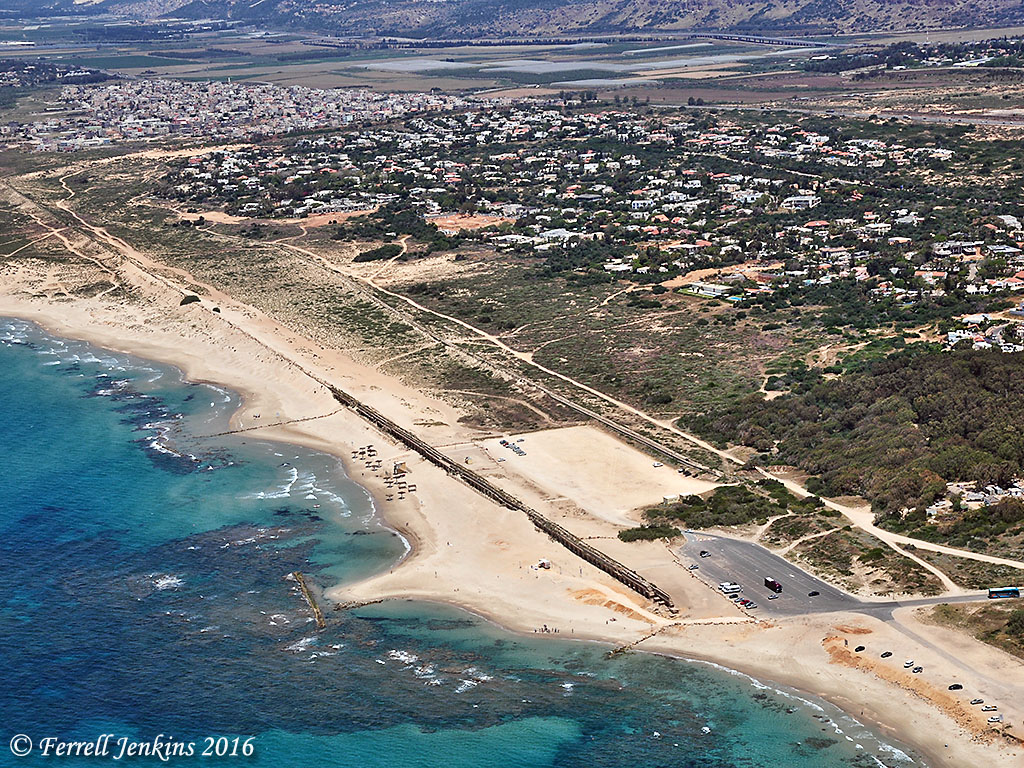
The next image is an aerial photo showing a long stretch of the high level aqueduct at Caesarea. You can also see the low level aqueduct a few yards inland (east). The low level aqueduct was built in the late 4th or early 5th century A.D.

Aerial view of the aqueduct north of the city. Photo by Ferrell Jenkins.

Aerial view of the aqueduct north of the city. Photo by Ferrell Jenkins.

Caesarea Maritima was a first century Roman capital and seaport. The gospel was first preached to the Gentiles here when Peter came from Joppa to Caesarea to tell Cornelius words by which he could be saved (Acts 10, 11).

The Apostle Paul used the harbor at Caesarea several times. He was imprisoned in the city for two years before departing for Rome (Acts 24:27; 27:1).

Bringing in the sheaves

From the time I was a child I recall the song “Bringing in the Sheaves” by Knowles Shaw. I see it was written in 1874, already an old song when I first sang it. I really miss the old songs. Some song leaders seem to forget that it is the repetition of songs that allows the children to learn them – just like they recall all of the TV jingles. Here are the words, now in public domain.

  1. Sowing in the morning, sowing seeds of kindness,
    Sowing in the noontide and the dewy eve;
    Waiting for the harvest, and the time of reaping,
    We shall come rejoicing, bringing in the sheaves.

    • Refrain:
      Bringing in the sheaves, bringing in the sheaves,
      We shall come rejoicing, bringing in the sheaves;
      Bringing in the sheaves, bringing in the sheaves,
      We shall come rejoicing, bringing in the sheaves.
  2. Sowing in the sunshine, sowing in the shadows,
    Fearing neither clouds nor winter’s chilling breeze;
    By and by the harvest, and the labor ended,
    We shall come rejoicing, bringing in the sheaves.
  3. Going forth with weeping, sowing for the Master,
    Though the loss sustained our spirit often grieves;
    When our weeping’s over, He will bid us welcome,
    We shall come rejoicing, bringing in the sheaves.

The meaning is clear. We continue to do kind deeds when times are good and when they are bad. Eventually “we shall come rejoicing, bringing in the sheaves.”

What are sheaves, and what is the basis of this encouraging song?

Perhaps the author recalled young Joseph’s dream of binding sheaves in the field when his sheaf stood upright and the sheaves of the brothers gathered around it and bowed down (Genesis 37:7).

Or, maybe it was the experience of Ruth gathering the left over grain among the sheaves in the field of Boaz at Bethlehem (Ruth 2:7, 15).

It seems that Shaw knew the words of Psalm 126:6.

He who goes out weeping, bearing the seed for sowing, shall come home with shouts of joy, bringing his sheaves with him. (Psalm 126:6 ESV)

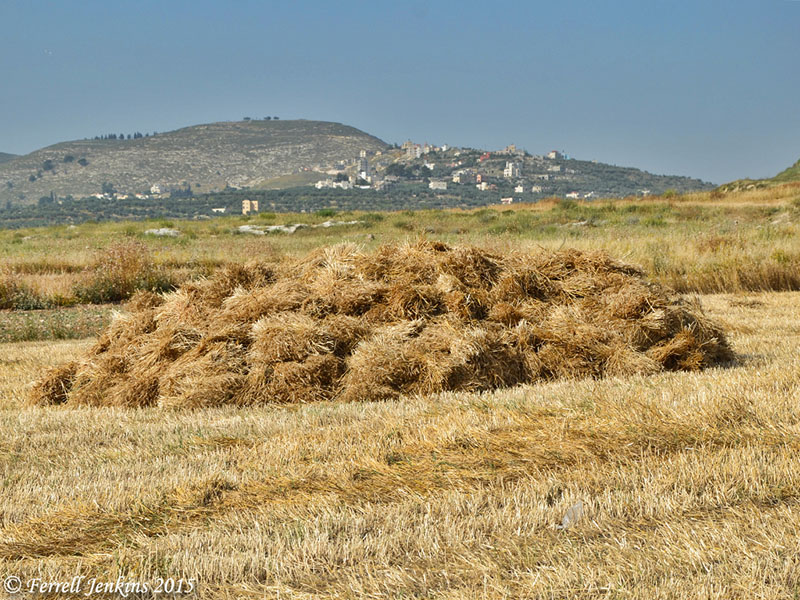
Toward the end of May last year, in the vicinity of Samaria, we saw sheaves in the field ready to be brought in for storage and use for the remainder of the year.

Sheaves in the field near ancient Samaria. Photo by Ferrell Jenkins.

Sheaves in the field near ancient Samaria. Photo by Ferrell Jenkins.

If you click on this photo and look carefully at the larger image you will see that the sheaves have been bound to hold them together.

Sheaves bound in the field, ready to be taken from the fields. Photo by Ferrell Jenkins.

Sheaves bound in the field, ready to be taken from the fields. Photo by Ferrell Jenkins.

I fear that many of our folks today just dismiss the older songs that have themes they don’t readily understand. If we use this as an excuse, it is a reflection on our knowledge of the Bible. Perhaps its time to learn.

Bertha Spafford Vester explains how the early American Colony residents of Jerusalem made a living by engaging in various projects from weaving cloth to growing wheat. She recounts an interesting story about cutting grain and binding sheaves.

Our Swedish and American farmers had tilled these bits of ground so well that there was evidence of excellent crops. Some Orthodox Jews came to inspect the wheat and offered us a higher than usual price for it to make matzoth (unleavened bread) for their Feast of the Passover on condition that we harvested it under their supervision. We agreed.

We had no machinery; it was harvested by hand. One stipulation they made was that we should not begin work until the sun had risen and dried any moisture from dew fallen during the night. After breakfast we all went out to work in the field, our Jewish overseers keeping watch. As our custom was when working, washing dishes, or over the washtub, or at any other task, we sang hymns. So now we started in the harvest field. Singing helped the work, which went with a swing. But we were not allowed to sing by these Orthodox Jews. Peradventure a bit of moisture might fall from our mouths and cause fermentation. It would no longer be unleavened. So we gathered the sheaves silently. (Our Jerusalem, 190-191)

Are you sowing seeds of kindness?

HT: Timeless Truths for lyrics info.

Turning from idols to serve the living God

Recently I was browsing through photos made in the Archaeological Museum of Thessaloniki (Salonica, Thessalonica), Greece, in 2008. I was impressed with the images of various gods and goddesses that were known in the city in the first century A.D. There were statues and busts of Egyptian gods such as Isis, Serapis, and Harpokrates/Horus. Greek gods and goddesses such as Dionysus, Hades, Apollo, Athena, Aphrodite, Demeter, and the mother of the gods often associated with Kybele (Cybele) were known. And there were others.
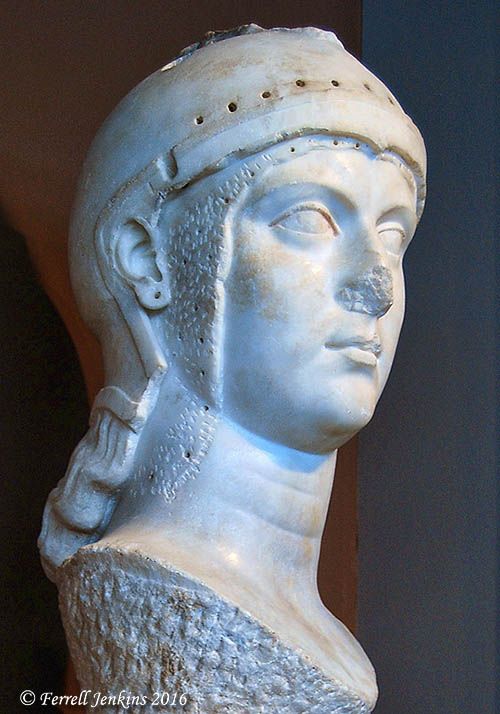
Athena. Archaeology Museum of Thessaloniki. Photo by Ferrell Jenkins.

Athena. Archaeology Museum of Thessaloniki. Photo by Ferrell Jenkins.

Immediately my mind was drawn to Paul’s commendation of the saints at Thessalonica in the middle of the first century A.D.

 6 And you became imitators of us and of the Lord, for you received the word in much affliction, with the joy of the Holy Spirit,
7 so that you became an example to all the believers in Macedonia and in Achaia.
8 For not only has the word of the Lord sounded forth from you in Macedonia and Achaia, but your faith in God has gone forth everywhere, so that we need not say anything.
9 For they themselves report concerning us the kind of reception we had among you, and how you turned to God from idols to serve the living and true God,
10 and to wait for his Son from heaven, whom he raised from the dead, Jesus who delivers us from the wrath to come.  (1 Thessalonians 1:6-10 ESV)

But there were other “gods” known to the Thessalonians. The deified Alexander, considered a son of Zeus, was represented in the museum. Another significant form of idolatry was the Cult of the Emperor of Rome. A sign associated with one display says,

The cult of the emperor was both an instrument of imperial policy propaganda and a means for the transmission of Roman culture. The image of the emperor gives a concrete form to the abstract idea of the Empire. Whether a full-length statue or a bust, it makes his presence felt everywhere: in outdoor and indoor spaces, in fora, in villas, and in libraries.

Here is a statue of Octavian Augustus, the first emperor of Rome (27 B.C. – A.D. 14). Augustus was emperor at the time of the birth of Christ (Luke 2:1).
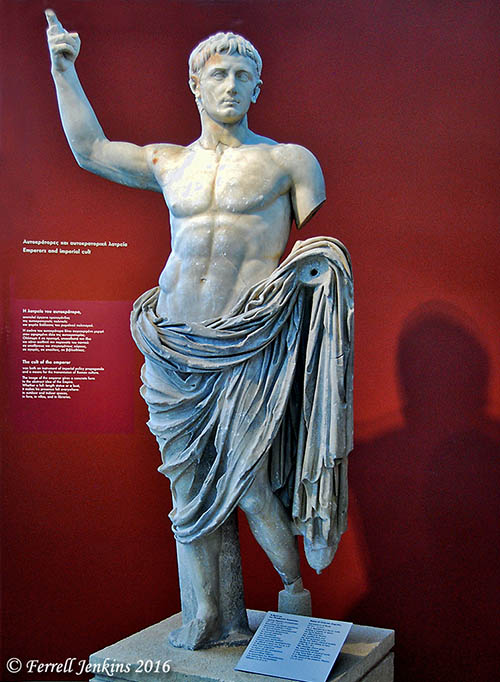
Statue of Augustus, Archaeology Museum of Thessaloniki. Photo by Ferrell Jenkins.

Statue of Augustus, Archaeology Museum of Thessaloniki. Photo by Ferrell Jenkins.

Claudius, Vespasian, Titus, and other emperors were represented in the museum displays.

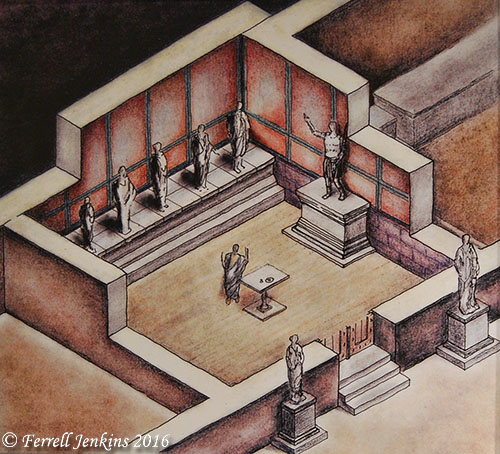
An interesting temporary exhibition was about the discovery of an important archaeological site known as Kalindoia. The site is located about 48 km (30 miles) southeast of Thessalonica. Paul traveled a few miles north of Kalindoia when he went from Philippi, via Amphipolis and Apollonia, to Thessalonica (Acts 17:1). Below is the drawing of the chamber of the imperial cult. A temple for imperial worship was located here from the 1st century B.C. to the 3rd century A.D.
Artist conception of the chamber of the Imperial Cult. Photo by Ferrell Jenkins.

Artist conception of the chamber of the Imperial Cult. Photo by Ferrell Jenkins.

The sign associated with this drawing states that there were pedestals for statues here. “One of them was the statue of Emperor Octavian Augustus.” The Cult of the Emperor was especially pervasive in the eastern part of the Roman Empire and may have some bearing on understanding the man of lawlessness (sin) in 2 Thessalonians 2. It is certainly helpful in understanding the background of the book of Revelation.

But that’s not all. Another sign mentions the eponymous local heroes such as war heroes, deified mythological figures, or the heroized dead “were also worshipped.”

The gospel of Christ has power to touch the hearts of men and inform them about the difference between idols made of “gold or silver or stone, an image formed by the art and imagination of man,” and the God who does not dwell in temples made by man (Acts 17:29 ESV).