Category Archives: Photography

A good day in Israel

Our group had a wonderful day visiting Caesarea Maritima, Mount Carmel, Megiddo, and Nazareth Village. I captured some nice photos, but am just too tired from the jet lag to work on them for posting. Maybe tomorrow.

Everyone in the group seems to be well and enjoying the experience. Tonight we are at Tiberias on the Sea of Galilee.

Safe arrival in Israel

Our group arrived safely in Israel at the Ben Gurion Airport near Tel Aviv about 5:10 p.m. (7 hours ahead of EDT). After claiming all but 2 pieces of luggage for the entire group, we had time to go to Joppa for a short visit before sundown.

Later we drove north along the Plain of Sharon to Netanya where we are staying at a hotel overlooking the Mediterranean Sea. This provides a beautiful view of the sea, and the moon is full. I look forward to seeing the waves by day light.

Tomorrow we plan to visit Caesarea Maritima, Mount Carmel, Mediggo, and the Nazareth Village before arriving at Tiberias on the Sea of Galilee.

Jane and Olen have been with me on several tours, and many of you have come to enjoy Jane’s blog. She reports on lots of interesting stuff that goes on behind the scene. I encourage you to follow her Journeys With Jane as we make this journey through Israel and Jordan. The URL is http://journeyswithjane.blogspot.com.

Departing for Israel and Jordan

Shortly we will be departing Atlanta for Israel.

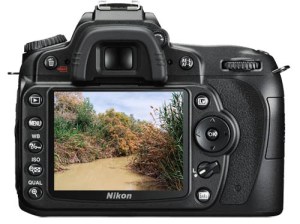
Nikon D90. Photo of the Jordan River by Ferrell Jenkins.

Ready to photograph scenes of the Bible World.

Thanks for following the blog. Hopefully you will find it interesting and helpful. After a few days in Israel we will cross the Jordan River into Jordan to visit important sites there. Then we will cross back into Israel for the conclusion of our tour.

The photo in the camera LCD screen is of the Jordan River at the traditional Bethany Beyond the Jordan from the Jordan side of the River.

These things took place in Bethany beyond the Jordan, where John was baptizing. (John 1:28 NAU)

Jodanian students work at Umm Qais

Jordanian students from the International Academy Amman spent a week excavating at Umm Qais. The full article may be read in The Jordan Times here.
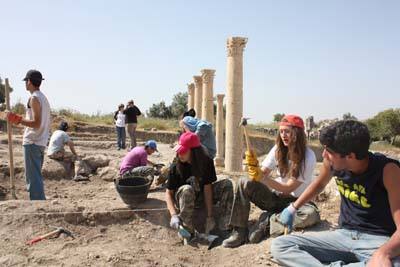
Students from the International Academy in Amman work at Um Qais. Photo by Taylor Luck, Jordan Times.

Students from the International Academy in Amman work at Um Qais. Photo by Taylor Luck, Jordan Times.

Umm Qais (a common spelling) is the site of Gadara, one of the cities of the Decapolis. Mendel Nun discovered 16 ancient ports around the Sea of Galilee, including one for the city of Gadara. He describes Gadara:

Gadara, the most magnificent of the Hellenistic towns that circled the Sea of Galilee, was located on the heights of Gilead above the Yarmuk River. The marine suburb and the city’s harbor were located on the southeastern shore of the lake, at Tel Samra (now Ha-on Holiday Village). In form, Gadara’s harbor resembles that of Sussita—a closed basin with an opening to the south—but it is much larger and more luxurious. The central breakwater is 800 feet long and its base 15 feet wide. The promenade was 650 feet long, built with finely chiseled stones, only one of which remains. The 150-foot-wide basin covered an area of 3 acres.

This harbor is superior to the one at Sussita not only because of its size but also because of its facilities. At the center of the promenade are the remains of a tower. Ruins of a large structure—probably the building of the harbor administration—are scattered on the ground near the harbor gate.

Gadara’s maritime character is attested by its coins, which depicted ships of war for some 250 years. The city’s harbor at Tel Samra was almost certainly not only an anchorage for ships. Second-century coins from Gadara commemorate the Naumachia—naval battle games performed for the inhabitants of Gadara. Until recently, researchers assumed that these games took place on the Yarmuk River, which flows into the Jordan just south of the Sea of Galilee; but this does not seem likely, and no remains of a facility of this kind have been found at this site. The large harbor basin at Tel Samra, however, with its 1,600-foot-long combined promenade and breakwater, would surely have been more suitable to accommodate the throngs of spectators as they arrived. In addition, Gadara’s harbor must have been used by thousands of visitors to the famous baths at Hamat Gader, located 5 miles southeast of the sea. The ancient Roman road connecting Beth Shean and Sussita passed near Tel Samra, and the road to Hamat Gader branched off this road. (Mendel Nun. “Ports of Galilee.” Biblical Archaeology Review 25:04; July/Aug 1999)

From Umm Qais (Gadara) one has a great view of the Sea of Galilee and the Yarmuk River valley. We are told that Jesus visited the region of Decapolis.

Then he returned from the region of Tyre and went through Sidon to the Sea of Galilee, in the region of the Decapolis. (Mark 7:31 ESV)

The Gospel of Matthew informs us about the healing by Jesus of two demon-possessed men in the country of the Gadarenes (Matthew 8:28). Mark puts this event in the country of the Gerasenes (Mark 5:1-20). Luke adds that they “sailed to the country of the Gerasenes, which is opposite Galilee” (Luke 8:26).

The photo below was made in the late afternoon when citizens of the local Jordanian village came out to enjoy the view. The view across the Sea is not clear, but you can see the entire western coast line. In the right foreground you can see a bunker used by the Jordanians in recent wars in the region. The hill directly across from the bunker is the beginning of the Golan Heights. Prior to 1967 this was in Syria. The Yarmuk River flows into the Jordan River south of the Sea of Galilee. All of the significant rivers of Jordan that flow into the Jordan River have dams on them, thus decreasing the amount of water flowing into the Jordan.
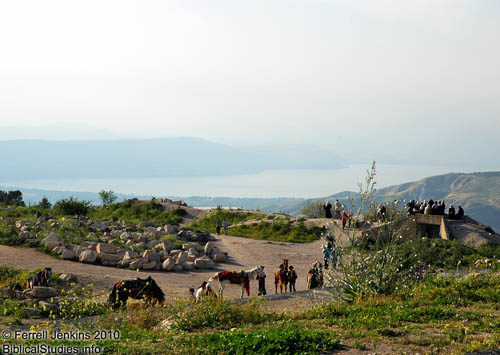
Late afternoon view of the Sea of Galilee from Umm Qais. Photo by Ferrell Jenkins.

The next photo was made in 2002. It shows a portion of the nymphaeum (attractive water fountain) and the Yarmuk Valley.
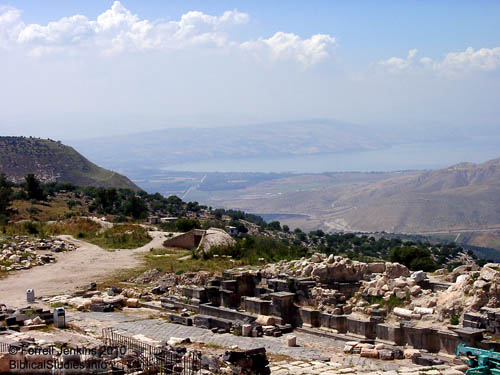
The Sea of Galilee from Umm Qais (Gadara). Photo by Ferrell Jenkins.

The Sea of Galilee from Umm Qais (Gadara). Photo by Ferrell Jenkins.

Todd Bolen posted a beautiful, clear photo that also shows the Yarmuk River valley and the nymphaeum here. Note that the nymphaeum had undergone some reconstruction when his photo was made.

HT: Joseph Lauer

Jaffa Gate reopened today

The Jerusalem Post reports the reopening of Jaffa Gate after two months of renovation.

A large black cloth that has shrouded Jaffa Gate in both darkness and mystery over the past two months was removed Wednesday morning during a special ceremony to rededicate the famous Jerusalem landmark, revealing the extensive “face-lift” recently given to one of the Old City’s most important and well-known points of entry.

The gate’s freshly-cleaned Jerusalem stones, a completely refurbished white ceiling inside its entryway, and other aesthetic fruits of the renovation labor were immediately apparent after the cloth came down.

The complete report is available here.

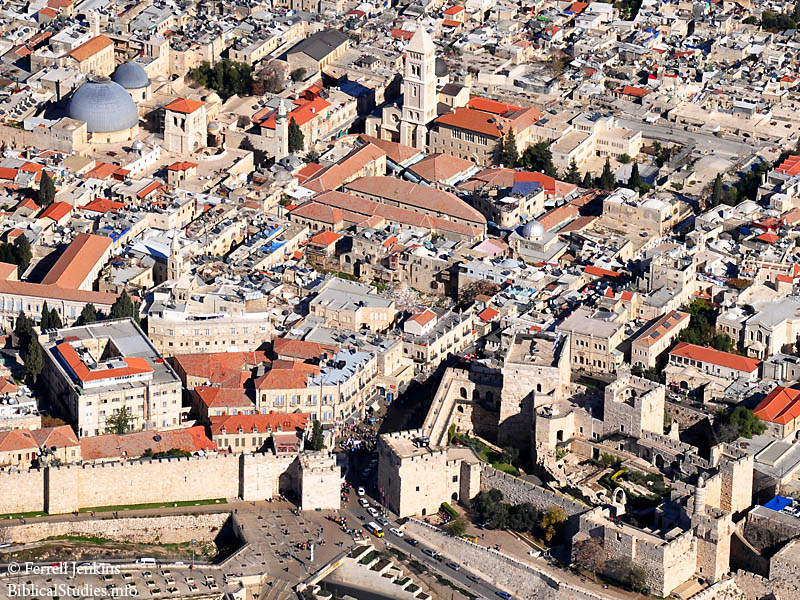
Here is an aerial photo of the Jaffa Gate (in the bottom of the photo) and the Christian Quarter of the Old City of Jerusalem in December.

Aerial view of Jaffa Gate and the Christian Quarter. Photo by Ferrell Jenkins.

Aerial view of Jaffa Gate and the Christian Quarter. Photo by Ferrell Jenkins.

Did someone say “Free”?

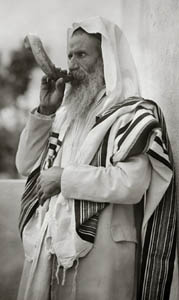
Yemenite Rabbi blowing shofar.

Yemenite Rabbi blowing shofar.

Todd Bolen is giving away a PowerPoint presentation, and the associated jpg images, of Jewish People in the Early 1900s. These photos are part of the The American Colony and Eric Matson Collection that Todd has made available.

We have recommended the entire collection here.

For the free presentation or the images, click here. The photo to the right is a miniature of one showing a Yemenite Rabbi blowing a shofar. It dates to between 1934 and 1939. Shofar is the Hebrew word often translated trumpet (2 Kings 9:13) or ram’s horn (Leviticus 25:9) in English versions of the Bible.

Caves where the Dead Sea Scrolls were found

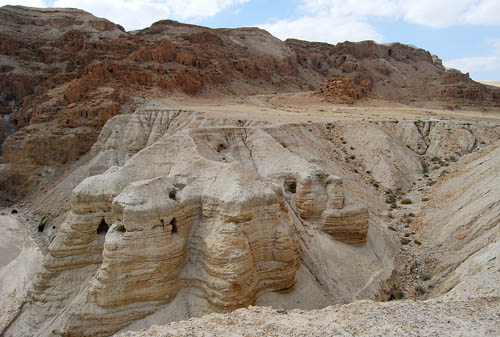
Almost everyone who visits Israel with a tour group makes a stop at Qumran. The guide gets a commission when you buy Ahava beauty products! But that’s o.k. Also, everyone who wishes listens to the story of Qumran and the discovery of the Dead Sea Scrolls. Most folks get a photo of Cave 4 where many of the fragments of biblical books were found.

Qumran Cave 4. Photo by Ferrell Jenkins.

Cave 4 at Qumran. Photo by Ferrell Jenkins.

There are other caves in the area where important scrolls were found. Todd Bolen has written an informative post, especially about how to locate Caves 1 and 2, at the Bible Places Blog here. He even includes a PDF file so you can print the material and carry it with you on your next trip to Israel.

Scholarship or theft?

Someone unknown to me has copied numerous of my posts and posted them at their own site here.

I am delighted for others to use my material with a credit line, but this source includes no indication of the source of the material. It cost me many thousands of dollars to obtain the photos that I use on this page. Gaining permission to use material is not that difficult, and a credit line is certainly required.

You shall not steal. (Exodus 20:15 NAU)

He who steals must steal no longer; but rather he must labor, performing with his own hands what is good, so that he will have something to share with one who has need. (Ephesians 4:28 NAU)

Update Regarding Ethical and Legal Violations (March 27, 2010)

I knew that the person back of the actions mentioned above had done something unethical (sinful, according to the Hebrew Bible and the New Testament). I knew they were in violation of copyright law. After doing a little check, I learned that the practice is an infringement of the agreement made with WordPress, and a violation of the DMCA (Digital Millennium Copyright Act).

After checking the archives of the web site, I learned that this practice has been going on since December, 2009. The owner has used my photos with the same or similar captions, but has removed “Photo by Ferrell Jenkins” or other credits that I included. Outrageous, isn’t it?

Update (March 29, 2010): In response to my letter stating that my material had been plagiarized, WordPress has notified me that the offending web site “has been removed.” Thank you, WordPress. You are a great service.

Update # 2 (March 29, 2010): Soon after the single post that I reported to WordPress was taken down, others were moved to the top of the blog. Later, I reported 40 of my blogs that were copied. Late this afternoon I received this note: “The entire blog has now been removed, as per these multiple reports.”

ArchaeologyExcavations taken down from WordPress.

High places of the Gate

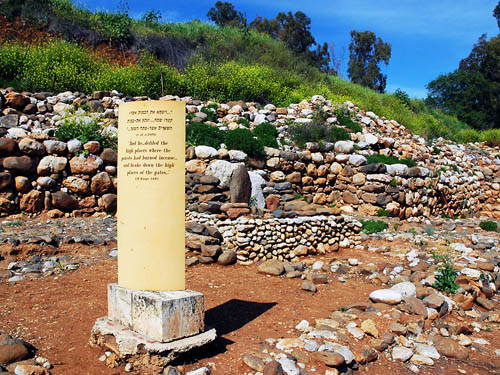
Standing stones (high places, bamah) are often found at the gate of Biblical cities. The photo below shows some standing stones from the gate of Tel Dan.  The informational sign immediately to the left of the standing stones includes a quotation from 2 Kings 23:8. The text describes the reforms of King Josiah of Judah (641/40–609 B.C.).

He brought all the priests from the cities of Judah and ruined the high places where the priests had offered sacrifices, from Geba to Beer Sheba. He tore down the high place of the goat idols situated at the entrance of the gate of Joshua, the city official, on the left side of the city gate. (2 Kings 23:8 NET)

[On “goat idols” see Leviticus 17:7 and 2 Chronicles 11:15]

Standing stones at the gate of Tel Dan. Photo by Ferrell Jenkins.

Standing stones at the gate of Tel Dan. Photo by Ferrell Jenkins.

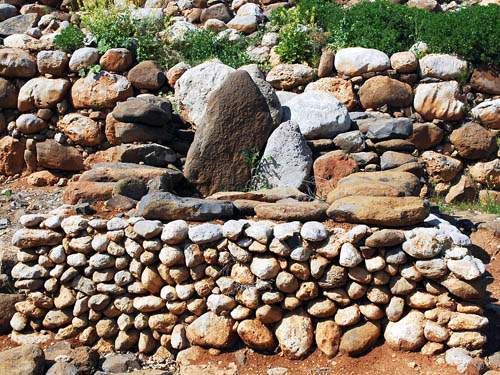
Here is a closer view showing the standing stones. The placement of these stones at the gate of the city allowed everyone who came into the city to make obeisance to whatever god was represented.

Standing stones at the gate of Tel Dan. Photo by Ferrell Jenkins.

Bamah at the gate of Tel Dan. Photo by Ferrell Jenkins.

See the previous post (here) for more information about the standing stones.

Ancient Egypt in Pictures

Ancient Egypt in Pictures is the title of a slide-show collection of 47 nice photos on the Fox News web site here. Archaeology is alive and well in Egypt these days.

Egypt is an important travel destination for students of ancient history and archaeology, as well as for those interested in background studies for the Bible.

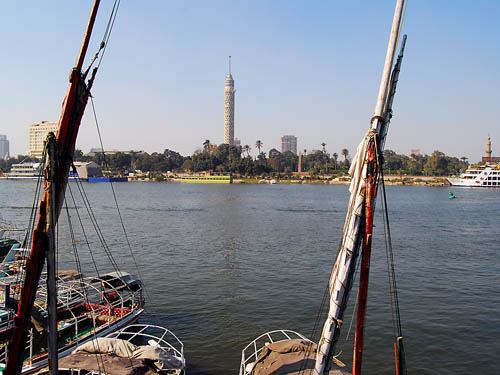
Nile River at Cairo. El Borg tower across river. Photo by Ferrell Jenkins.

Nile River at Cairo. El Borg tower across the river. Photo by Ferrell Jenkins.

HT: David Padfield