Category Archives: Old Testament

The Persian horned viper (serpent)

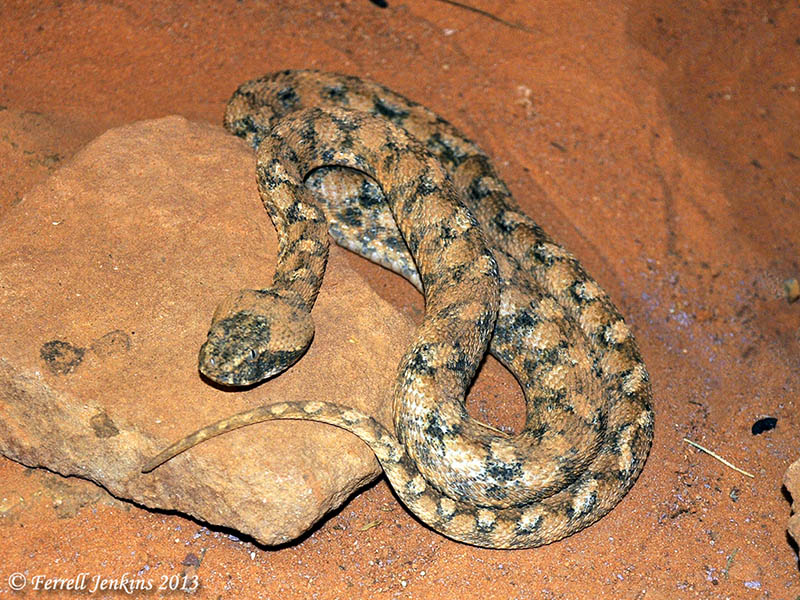
In the previous post we wrote about the serpents in the wilderness. Our photo today shows a Persian horned viper that we saw at the Hai Bar Reserve north of Eilat.

The Persian horned viper at Hai Bar Reserve. Photo by Ferrell Jenkins.

The Persian horned viper at the Hai Bar Reserve. Photo by Ferrell Jenkins.

Persian Horned Viper (Pseudocerastes persicus)

This venomous snake of the viper family has a thick and clumsy body that can reach a maximum length of 90 cm. A ground-dweller, it prefers sandy areas, especially in desert wadies in a rocky landscape. The Persian horned viper is mainly nocturnal. Above each eye is a small protrusion in the form of a horn, made of scales.

This snake feeds on rodents, birds, and even animal carcasses. The young feed on lizards. It emits a warning sound by blowing through its mouth.

Distribution in Israel: in the Negev, between Dimona, Sede Boker and Yotvata. it is common in Makhtesh Ramon and its nearby wadies.

Global distribution: from the deserts of Pakisan to Sinai. It is interesting that the snake has a pit at the opening of its nostril. it is not known whether the pit is part of a valve system to protect the nostril from dust or whether it conceals a special sensory organ.

In Jacob’s last words describing his sons, he speaks of Dan:

Dan shall be a serpent in the way, a viper by the path, that bites the horse’s heels so that his rider falls backward. (Genesis 49:17 ESV)

The Hebrew lexicon by Holladay says the word viper in this verse means a “horned snake.” BDB and TWOT likewise. The NAU version is the only popular one that I check regularly that includes the word horned.

For information about the Palestinian Viper (Vipera palestinae) see here.

Serpents in the wilderness

Tel Arad is located in the Negev about 20 miles east of Beersheba, and five miles west of the town of Arad.

The biblical account informs us that the king of Arad fought against Israel and took some as captives.

When the Canaanite, the king of Arad, who lived in the Negeb, heard that Israel was coming by the way of Atharim, he fought against Israel, and took some of them captive. (Numbers 21:1).

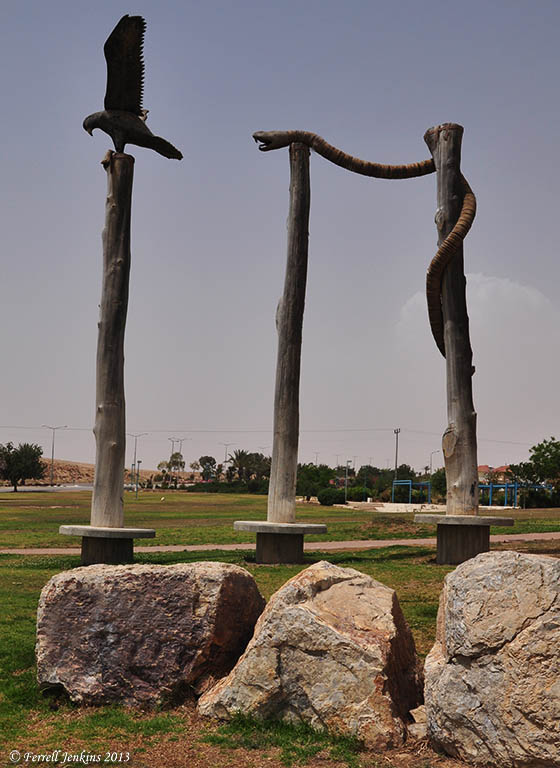
There is a little park on the west side of modern Arad decorated with wooden sculptures. I assume that the creatures depicted may be typical of the desert region.

Sculptures in the park at Arad, Israel. Photo by Ferrell Jenkins.

Sculptures in the park at Arad, Israel. Photo by Ferrell Jenkins.

When I see the sculpture of the serpent on the pole I think of the incident in the wilderness when the Israelites spoke against God and against Moses,

Then the LORD sent fiery serpents among the people, and they bit the people, so that many people of Israel died. (Numbers 21:6 ESV)

The LORD provided a remedy for those who repented of their sin.

7 And the people came to Moses and said, “We have sinned, for we have spoken against the LORD and against you. Pray to the LORD, that he take away the serpents from us.” So Moses prayed for the people. 8 And the LORD said to Moses, “Make a fiery serpent and set it on a pole, and everyone who is bitten, when he sees it, shall live.” 9 So Moses made a bronze serpent and set it on a pole. And if a serpent bit anyone, he would look at the bronze serpent and live. (Numbers 21:7-9 ESV)

Tel Rekhesh may be Anaharath

The Jewish Press reported here on the discovery of a Canaanite cult altar at Tel Rekhesh, an archaeological mound east of Mount Tabor. Archaeologists from the University of Tenri, Japan, and the Institute of Archaeology of Galilee Kinneret Academic College, have been working together at the site for the past six years. I have had the site on my “wish list” for the past three years, but have not yet visited the it.

The reports says,

The same excavations also revealed large parts of a Jewish farmhouse dating back to the Second Temple. Researchers were able to establish that this was a place of Jewish dwellers based on typical stone tools, oil lamps and coins minted in the city of Tiberias.

“The diggers received a big surprise,” said Chairman of the Institute of Archaeology of Galilee Kinneret Academic College Dr. Mrdechai [Mordechai] Avi’am. “In the ruins of the second floor of the farmhouse, they discovered a Canaanite cult statue, similar to a statue that stood in the sanctuary of a temple which is yet to be located.”

“Similar stones have been discovered in a number of Canaanite sites, such as Hazor,” Dr. Avi’am said. “The same stone was later used as part of a doorframe in one of the rooms of the Jewish structure. This is the unique development of archaeological hills in Israel, where successive generations mingle ritual objects on their way from the world of the Canaanite mythology to monotheism.”

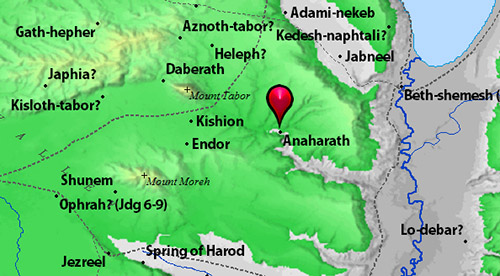
This region is located in the territory allotted to the tribe of Issachar (Joshua 19:17-23). Y. Aharoni identified Tel Rekhesh with the Biblical site of Anaharath (Joshua 19:19).

Location of Anaharath. BibleAtlas.org.

Location of Anaharath. BibleAtlas.org.

In a page About the Site, the web page says,

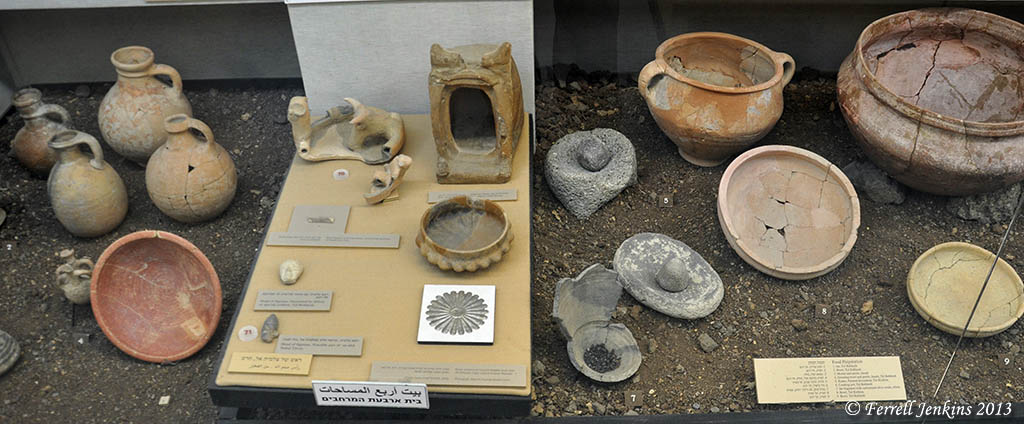
Some of the findings from the site, collected by local people, are now exhibited in the archaeological museum in the Kibbutz Ein-Dor, some 5 km from Tel Rekhesh.  The collection includes a fragment of Egyptian stela, a clay model of a temple, and complete pottery from various periods.

The photo below is one I made earlier this year. At least seven of the artifacts displayed in this case are identified as being from Tel Rekhesh. Most of them are used in food preparation. The shrine in the center (“model of a temple”) is a replica. I failed to get a photo of the Egyptian stela fragment.

At least 7 of the artifacts displayed in this case at The Ein Dor Archaeological Museum are from Tel Rekesh. Photo by Ferrell Jenkins.

At least 7 of the artifacts displayed in this case at The Ein Dor [En-dor, Endor] Archaeological Museum are from Tel Rekesh. Photo by Ferrell Jenkins. Click to enlarge.

The web site for the Tel Rekhesh project is available here, but the content is not current. Todd Bolen includes a photo of Tel Rekhesh in the Tabor River valley here.

HT: Joseph I. Lauer

Beit Jamal may be En-Gannim

Beit Jamal (or Beit Jemâl) is sometimes identified with the En-Gannim of Joshua 15:34. Note the association with other towns belonging to the tribe of Judah in the general vicinity:

33 And in the lowland, Eshtaol, Zorah, Ashnah,
34 Zanoah, En-gannim, Tappuah, Enam,
35 Jarmuth, Adullam, Socoh, Azekah,
36 Shaaraim, Adithaim, Gederah, Gederothaim: fourteen cities with their villages. (Joshus 15:33-36 ESV)

The International Standard Bible Encyclopedia (Rev.) describes En-Gannim as,

A town in the “valley” or Shephelah territory of Judah, named with Zanoah and Eshtaol (Josh. 15:34). Two places have been suggested as locations: one is Khirbet Umm Jina, very close to Beth-shemesh; the other is at Beit Jemâl about 3 km (2 mi) to the south.

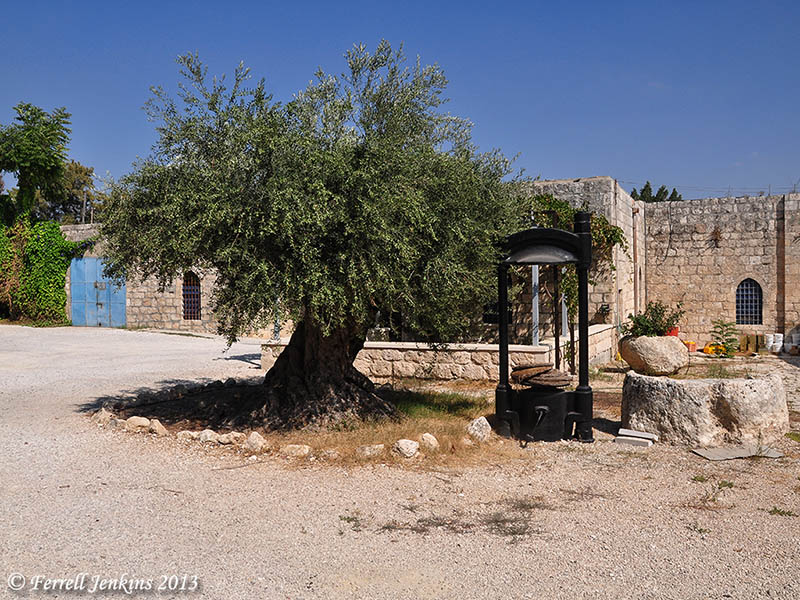
Beit Jamal is today the site of a small monastery nestled in an area of Olive groves. I came across it while looking for the road to Jarmuth (Hebrew, Yarmuth) (Joshua 10:3, 5, 23; 12:11; 15:35; Nehemiah 11:29).

A large olive tree with two old olive presses at Beit Jamal. Photo by Ferrell Jenkins.

A large olive tree with two old olive presses at Beit Jamal. Photo by Ferrell Jenkins.

This little monastery caught my attention a few days ago when Haaretz reported a “price tag” attack on the community. The article explains that “price tag” is “Israeli shorthand for anti-Arab hate crimes.” The article says,

Jewish extremists originally used the term “price tag” to describe vandalism and violence that targeted Israelis as well as Palestinians and was aimed at preventing or avenging evacuations of West Bank settlers.

Here are some appropriate parting words for all of us.

The LORD lift up His countenance on you, And give you peace. (Numbers 6:26 NAU)

May mercy and peace and love be multiplied to you. (Jude 1:2 NAU)

Evidence of Cinnamon in use 3000 years ago

Live Science reports (here) on the investigation of 27 flasks from five archaeological sites in Israel showing that cinnamon was stored in them. The flasks date back to about 1000 years B.C. Ten of the 27 flasks contain “cinnamaldehyde, the compound that gives cinnamon its flavor, indicating that the spice was stored in these flasks.” Tel Dor is the only site named in the report.

At this time cinnamon was found in the Far East with the closest places to Israel being southern India and Sri Lanka located at least 3,000 miles (nearly 5,000 kilometers) away. A form of it was also found in the interior of Africa, but does not match the material found in these flasks.

This discovery “raises the intriguing possibility that long-range spice trade from the Far East westward may have taken place some 3,000 years ago,” researchers write in a paper to be published in the journal Mediterranean Archaeology and Archaeometry. Although cinnamon can be purchased today at any grocery or bulk food store, 3,000 years ago, people in the Levant would have needed to take part in trade that extended beyond the edge of the known world in order to acquire it, something this discovery suggests they were willing to do.

This trade may go back ever further into antiquity and involve other goods and parts of the Middle East. The researchers note, for example, that black pepper from India has been found in the mummy of Ramesses II, a pharaoh of Egypt who lived more than 3,200 years ago.

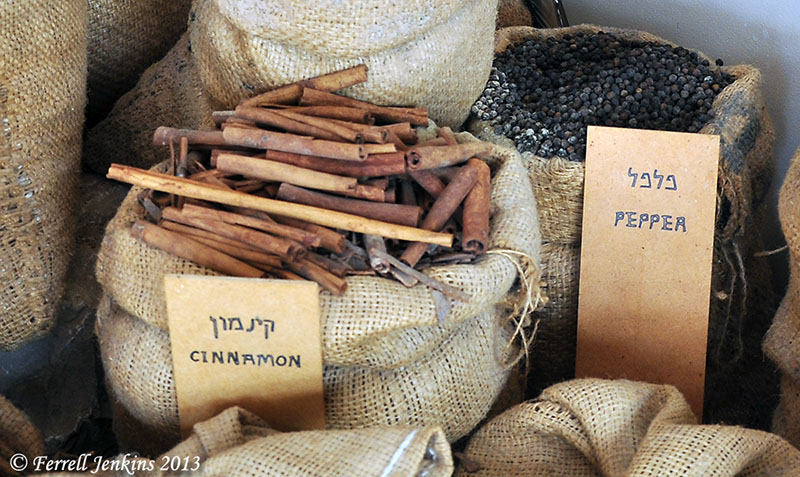
Cinnamon displayed on the Spice Route at Avedat. Photo by Ferrell Jenkins.

Cinnamon and pepper displayed on the ancient Spice Route at Avedat.

Cinnamon is mentioned only four times in the Bible.

  • Cinnamon was used in the anointing oil for the tabernacle (Exodus 30:23).
  • The adulterous woman tells the young man that she has perfumed her bed with cinnamon and other spices (Proverbs 7:17).
  • Cinnamon is used in the sexual/sensuous context of Song of Solomon 4:14.
  • Cinnamon is one of the spices imported by Babylon (the ancient Roman Empire) in Revelation 18:13.

Much archaeological work goes on in the library and in the lab.

HT: Joseph I. Lauer

Sargon II, Ashdod, and Isaiah 20:1

Ashdod was located along an international highway known as the Way of the Sea, the Way of Philistia, or the Via Maris. This was the important route connecting Egypt and Assyria. We have already discussed, in the past few posts, that the Assyrian king Sargon II captured Ashdod in 712/11 B.C. The prophet Isaiah makes reference to this event in Isaiah 20:1.

 The LORD revealed the following message during the year in which King Sargon of Assyria sent his commanding general to Ashdod, and he fought against it and captured it. (Isa 20:1 NET)

Sometime discoveries are made, but get little attention. A discovery at Tel Ashdod in 1963 falls into this category. Tel Ashdod was excavated from 1962 to 1972 under the direction of Moshe Dothan. David Noel Freedman wrote an article in Biblical Archaeologist (26:4, 1963)) about “The Second Season at Ancient Ashdod.” He describes the fragments of a stele of Sargon II.

Fragments of another stele, commemorating the victories of Sargon, were found at Ashdod during the current season, thus offering direct confirmation and vivid illustration of the biblical and Assyrian accounts. In all, three pieces of the stele were discovered. Enough can be made of their contents to show that the inscription duplicated in content if not precisely in wording other victory steles of the Assyrian king. By comparing the Ashdod stele with the others it will be possible to reconstruct the missing parts, one of which described the actual conquest of Ashdod. The inscription was carved in cuneiform signs characteristic of Sargon and his period, on all four sides of a slab of basalt which had been imported from a region north of Megiddo. It may have served as a pedestal for an obelisk, or a statue of the emperor. It must have been erected between the year of victory at Ashdod and the death of the king in 705 B.C., perhaps in 707 when a similar stele was set up in Cyprus. With the accession of Sennacherib in 704, most of the vessel countries revolted; Hezekiah of Judah and Sidqa of Ashkelon were the ringleaders in the west. They were able to liberate Ashdod from Assyrian control, and doubtless the event was observed by the destruction of Sargon’s victory stele, symbol of foreign oppression. These fragments of a monumental Assyrian inscription are the first ever found in Palestine.

The photos below were published in an article by Hayam Tadmor (“Philistia Under Assyrian Rule.” Biblical Archaeologist (29:3, 1966). Several years ago I used a digital camera to copy the photo. Sorry it is not better, but at least you can see the pieces. A photo of the piece in the middle below is also published in a BAR article (Jan-Feb, 2007) by H. Shanks on the “Assyrian Palace Discovered in Ashdod,” but the quality is about the same.
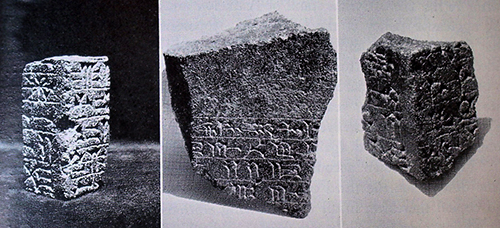
Fragment of the Sargon II inscription found at Ashdod.

Fragment of the Sargon II inscription found at Ashdod.

For several years the fragments were displayed in a case across from the replica of the Siege of Lachish in the Israel Museum. For the past years the fragments have not been on display. I made inquiry at the Museum earlier this year without any success. I wonder if the pieces have been moved to the Corine Maman Museum of Philistine Culture in Ashdod. Can anyone help with this?

This discovery is one of those that complement the biblical record. Sargon II (721–705 B.C.) is mentioned only once in the Bible — Isaiah 20:1. Isaiah says that the commanding general of Sargon II fought against Ashdod and captured it.

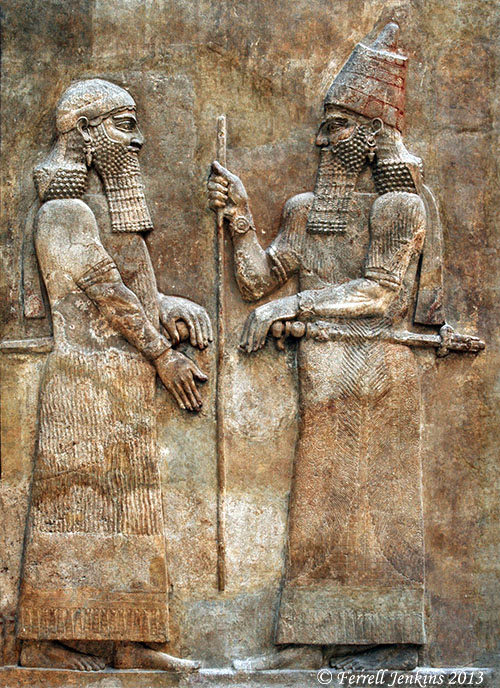
The photo below shows Sargon II (right) facing a person who is generally considered to be an Assyrian high dignitary. (See the discussion in Fant & Reddish, Lost Treasures of the Bible, 133-140.

Sargon II and an attendant. Displayed in Louvre. Photo by Ferrell Jenkins.

Sargon II and an official. Displayed in Louvre. Photo by Ferrell Jenkins.

Jack Finegan says of the reference to Sargon II in Isaiah 20:1,

… for a long time this was the only place in extant literature where his name was known.

The palace of Sargon II was discovered by Paul Emile Botta at Khorsabad in 1843. This relief comes from that palace, and is displayed in the Louvre. Other reliefs and artifacts from the palace are exhibited in the British Museum and the Oriental Institute of the University of Chicago.

Written copies of Isaiah existed in what we know as the Dead Sea Scrolls nearly 2000 years before the discovery of Sargon’s palace and archive. Perhaps we should be slow to think of Isaiah and other biblical writers as being unhistorical. To say this in a positive way, this illustrates the historical trustworthiness of the Bible. That the only reference to Sargon is specifically linked to Ashdod is even more impressive.

The Philistine city of Ashdod in the Bible

Ashdod is mentioned in the Bible as one of five cities of the Philistine Pentapolis (1 Samuel 6:17). The city is mentioned earlier among the Canaanite cities in the Ebla tablets. Here is a brief survey of the events recorded in the Bible.

  • Some of the Anakim were left in Gaza, Gath, and Ashdod after Israel entered the land (Joshua 11:22).
  • Ashdod was among some cities that remained under Philistine control even though it had been assigned to the tribe of Judah (Joshua 13:2-3; 15:46-47).
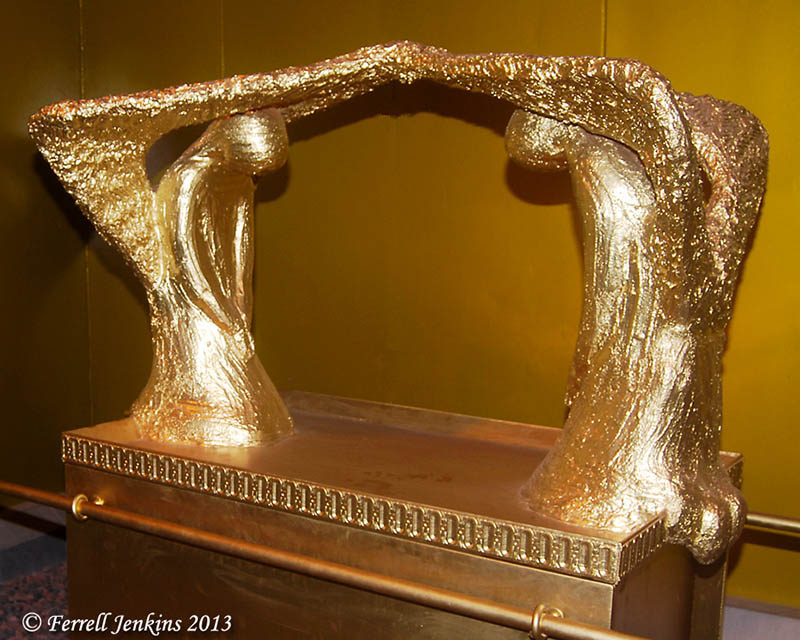
  • When Israel lost the Ark of the Covenant at Ebenezer, the Philistines brought it to Ashdod and placed it in the temple of Dagon (1 Samuel 5:1-8).
Representation of the Ark of the Covenant in the Tabernacle in the Wilderness at Timna. Photo by Ferrell Jenkins.

Representation of the Ark of the Covenant in the Tabernacle in the Wilderness at Timna.

  • Uzziah, king of Judah (767-740/39 B.C.), made war against Ashdod. He broke down the wall of Ashdod and built cities in the area (2 Chronicles 26:6).
  • King Sargon II of Assyria captured Ashdod in 712/711 B.C. (Isaiah 20:1).
  • After the return from Babylon, Nehemiah faced problems because some of the Judeans had married women of Ashdod. Their children spoke the language of Ashdod, and could not speak the language of Judah (Nehemiah 13:23-24).
  • The prophets Jeremiah, Amos, Zephaniah, and Zechariah spoke against Ashdod (Jeremiah 25:20; Amos 1:8; 3:9; Zephaniah 2:4; Zechariah 9:6).
  • Ashdod was known as Azotus in New Testament times (Acts 8:40).

In the next post we hope to discuss Isaiah 20:1 and the archaeological discovery that complements this text.

Visiting Ashdod-Yam — New Testament Azotus

Back in May, my friend Dan and I visited the site of Ashdod-Yam. The site is located a little over 3 miles NW of Tel Ashdod. Tel Ashdod, the city mentioned in the Old Testament, is difficult to visit. My young friends, Trent and Rebekah, mentioned visiting Ashdod a few weeks ago. The site, “now a cow pasture,”  is enclosed by a highway and railroad track on one side and an industrial park on the other. Finding the right hole in the fence is not easy.

You can see a small photo of the excavated area at Tel Ashdod in Journal 118 of Hadashot Arkheologiyot here. Biblical Archaeological Review has a full page photo of the Assyrian palace excavated at Tel Ashdod. (See “Assyrian Palace Discovered in Ashdod.” BAR, Jan/Feb 2007.)

Sargon II took the city of Ashdod in 712/711 B.C., an event mentioned in Isaiah 20:1. By Roman times Ashdod consisted of two cities, the coastal town of Azotus Paralios and the inland town of Azotus Mesogeius. (There is too much history for inclusion here.)

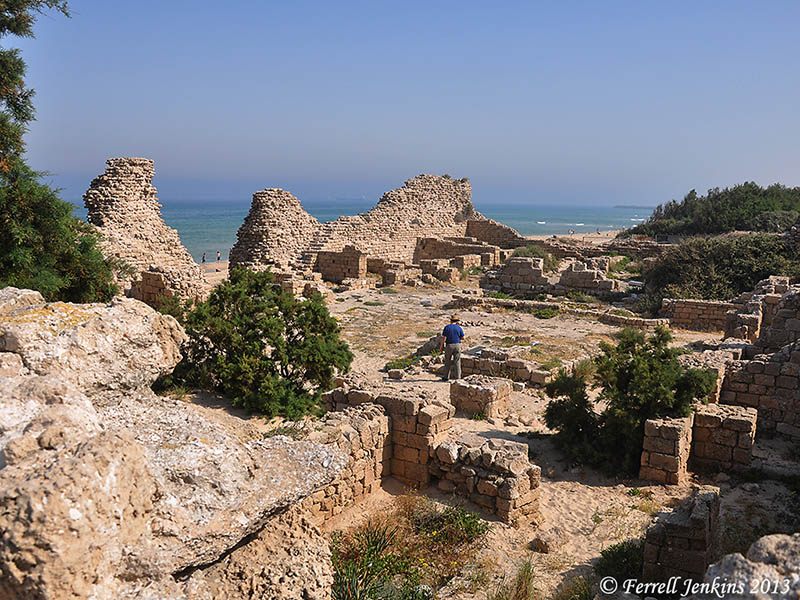
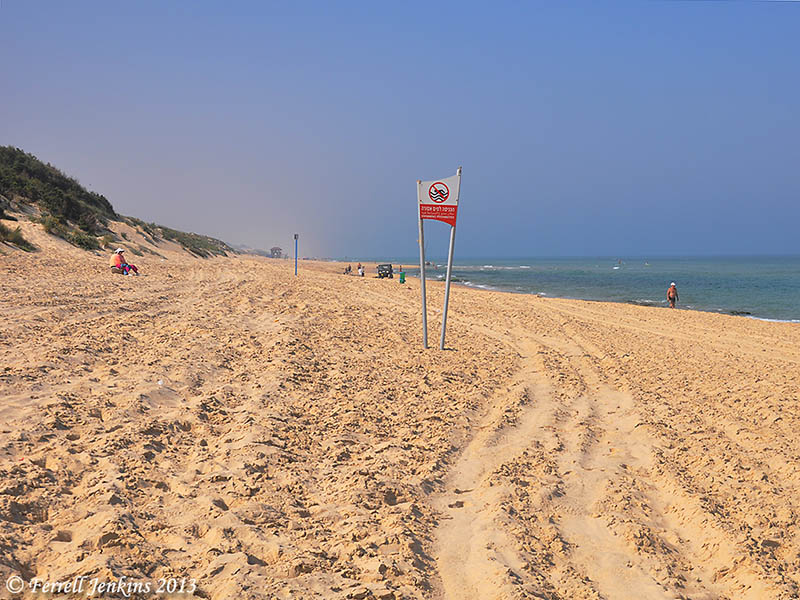
The citadel at Ashdod-Yam with a view north toward the modern city of Ashdod. Photo by Ferrell Jenkins.

The citadel, an early Islamic and Crusader fortress, at Ashdod-Yam with a view north. Photo by Ferrell Jenkins.

Azotus is mentioned only once in the Bible. After the baptism of the man of Ethiopia, the evangelist Philip “found himself at Azotus.”

But Philip found himself at Azotus, and as he passed through he preached the gospel to all the towns until he came to Caesarea. (Acts 8:40 ESV)

Except for the fortress, the large site of Ashdod-Yam resembles sand dunes. A joint excavation conducted by the Institute of Archaeology of Tel Aviv University and the Institut für Alttestamentliche Wissenschaft of the Leipzig University has just completed the current season. The excavation web site may may be accessed here.

Ashdod Yam. A view south toward Ashkelon. The large tel can be seen sloping down on the left of the photo. Photo by Ferrell Jenkins.

Ashdod-Yam. A view south toward Ashkelon. The large tel can be seen sloping down on the left of the photo. Photo by Ferrell Jenkins.

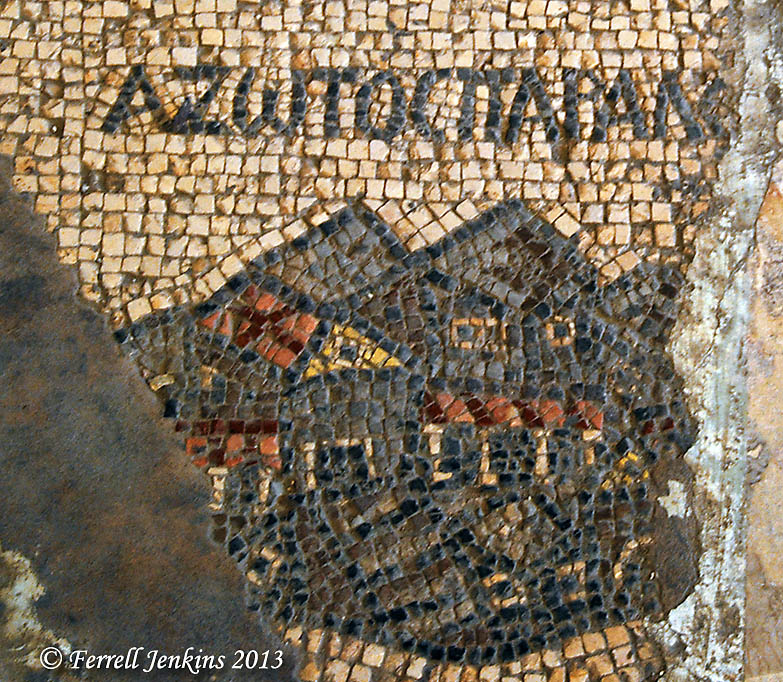
Below is a photo of the name of Azotos Paralios in the 6th century Madaba mosaic map.

Azotus Paralios is portrayed on the 6th century A.D. Madaba mosaic map. Photo by Ferrell Jenkins.

Azotos Paralios is portrayed on the Madaba mosaic map. Photo by Ferrell Jenkins.

City of David inscription may name a Bible character

The Israel Antiquities Authority announced Sunday the discovery of “a layer of rich finds including thousands of broken pottery shards, clay lamps and figurines … in the area of the Gihon Spring in the City of David, in the Walls around Jerusalem National Park.”

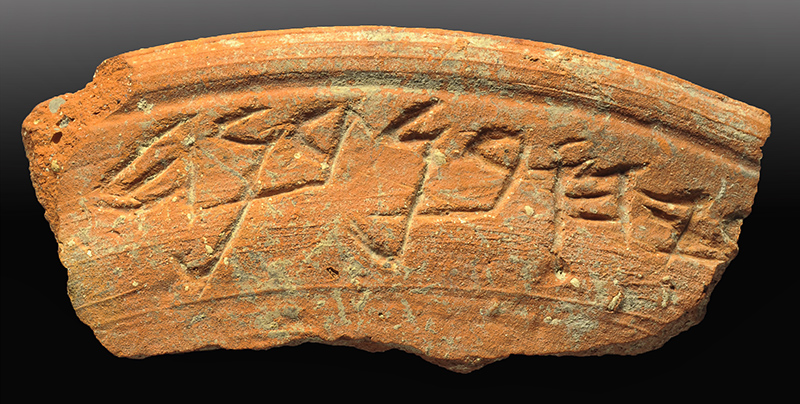
Most intriguing is the recent discovery of a ceramic bowl with a partially preserved inscription in ancient Hebrew. While not complete, the inscription presents us with the name of a seventh century BCE figure, which resembles other names known to us from both the Biblical and archaeological record [see Press Release] and providing us with a connection to the people living in Jerusalem at the end of the First Temple period.

Pottery sherd of a bowl from the end of the First Temple Period, bearing the inscription "ryhu bn bnh." Photo: Clara Amit, Israel Antiquities Authority.

Pottery sherd of a bowl from the end of the First Temple Period, bearing the inscription “ryhu bn bnh.” Photo: Clara Amit, Israel Antiquities Authority.

Dr. Joe Uziel and Nashon Zanton, directors of the dig, were working in ruins belonging to the period of the destruction of the Temple by the Babylonians when the inscription was found. They say that the name most similar to the inscription is “Zechariah the son of Benaiah, the father of the Prophet Jahaziel.”

 And the Spirit of the LORD came upon Jahaziel the son of Zechariah, son of Benaiah, son of Jeiel, son of Mattaniah, a Levite of the sons of Asaph, in the midst of the assembly.  And he said, “Listen, all Judah and inhabitants of Jerusalem and King Jehoshaphat: Thus says the LORD to you, ‘Do not be afraid and do not be dismayed at this great horde, for the battle is not yours but God’s. (2 Chronicles 20:14-15 ESV)

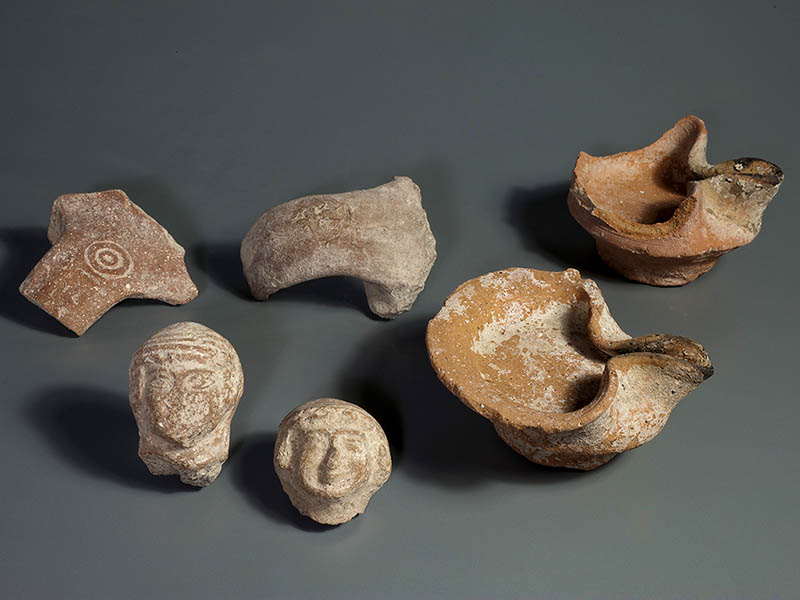
More information about this discovery is available in the IAA Press Release here. Other finds from the same area, shown in the photo below, are impressive.

Various finds from the fill layer of the end of the First Temple Period: oil lamps, LMLK stamped handles and female figurines. Photo: Clara Amit, Israel Antiquities Authority.

Various finds from the fill layer of the end of the First Temple Period: oil lamps, LMLK stamped handles and female figurines. Photo: Clara Amit, Israel Antiquities Authority.

HT: Joseph I. Lauer; Todd Bolen, Bible Places Blog (see here for more news links)

The Assyrians at the Source of the Tigris River

The Tigris River (called Dicle in Turkish) begins in the mountains of ancient Ararat and flows to the Persian Gulf. The Tigris is mentioned twice in the Bible. It is said to be the third of the rivers flowing out of the garden of Eden. It flows on the east side of Assyria (Genesis 2:14). The river is also mentioned in Daniel 10:4. The prophet stood beside “the great river, the Tigris.” Ancient Nineveh, near Mosul in northern Iraq, was built on the Tigris.

The Tigris River south of Diyabakir, Turkey. Photo by Ferrell Jenkins.

The Tigris River south of Diyabakir, Turkey. Photo by Ferrell Jenkins.

Ziyaret Tepe is identified with the Assyrian city of Tushhan. The city dates back to the Early Bronze Age (about 3000 B.C.), but there is a concentration of interest in the Late Assyrian period, c. 882–611 B.C. This corresponds to the biblical period of the Divided Kingdom.

Dr. Tim Matney, director of the Ziyaret Tepe Archaeological Expedition in southeastern Turkey, writes today about a visit to the source of the Tigris.

About 90km north of Diyarbakir there is a place in the Taurus Mountains where the Dibni Su, one of the two main sources of the Tigris River, comes flowing out of a large cave. The Dibni Su actually originates much deeper in the mountains, but the ancient Assyrians thought this to be the source of the Tigris and it is a dramatic landscape that had great significance to them. The modern name of the place is Birkleyn Gorge.

Take a look at three nice photos posted by Matney at the Ziyaret Tepe website here.

Matney says there are four small rock inscriptions made by Assyrian kings Tiglath-pileser I (1114–1076 B.C.) and Shalmaneser III (858–824 B.C.). Six Bible references may be found for Tiglath-pileser (2 Kings 15:29; 16:7,10; 1 Chronicles 5:6,26; 2 Chronicles 28:20), and two for Shalmaneser (2 Kings 17:3; 18:9). [See Comments below. The biblical kings are Tiglath-pileser III (745–727 B.C.), and Shalmaneser V (726–722 BC). Perhaps I will say more about these kings in a future post. My oldest son and I have the same name, and sometimes folks get us mixed up unless they know us.]

Ziyaret Tepe is scheduled to be flooded by the Tigris River as part of the project by the Turkish government to provide power and irrigation for the southeastern region of Turkey.

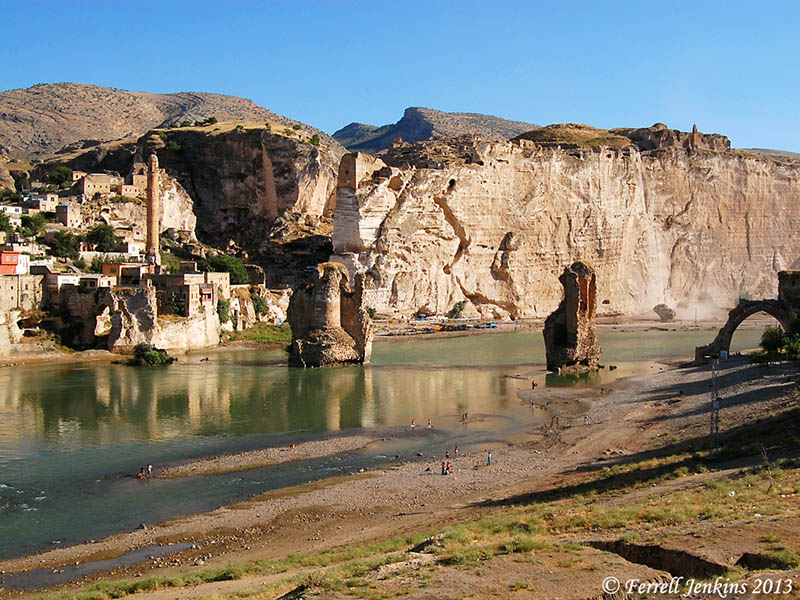
I have not visited Ziyaret Tepe, but have visited the general area (Diyabakir, Batman, et al. The photo below was made at Hasankef, an old town also scheduled to be flooded by the Tigris.

The Tigris River at Hasankef in southeastern Turkey. Photo by Ferrell Jenkins.

The Tigris River at Hasankef in southeastern Turkey. Photo by Ferrell Jenkins.

In addition to the Ziyaret Tepe blog, there is an interesting report on the site, with maps, at Past Horizons.

HT: Jack Sasson