Category Archives: Old Testament

Frankincense and Myrrh in the Bible

Frankincense and myrrh are mentioned together in the Song of Solomon and in the account of the visit of the magi from the east to see Jesus. Several significant things can be learned from these Biblical verses.

Look first at Song of Solomon 3:6.

“What is this coming up from the wilderness Like columns of smoke, Perfumed with myrrh and frankincense, With all scented powders of the merchant? (Song of Solomon 3:6 NAU)

  • Myrrh and frankincense are associated with the wilderness (desert; Hebrew, midbar).
  • Perhaps incense used in sacrifice or offering, “like columns of smoke.”
  • Associated with perfume and scented or fragrant powders.
  • Something traveling merchants would bring from the wilderness.

Song of Solomon 4:13-14 provides more insights.

“Your shoots are an orchard of pomegranates With choice fruits, henna with nard plants,  Nard and saffron, calamus and cinnamon, With all the trees of frankincense, Myrrh and aloes, along with all the finest spices. (Song of Solomon 4:13-14 NAU)

  • Associated with trees, and classified with spices.
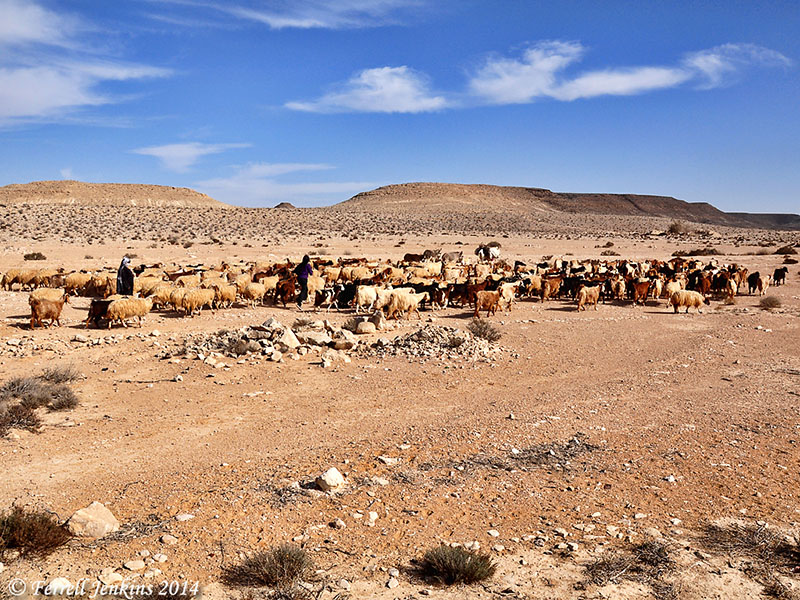
The wilderness of Zin near Avdat. Photo by Ferrell Jenkins.

The wilderness of Zin near Avdat. Photo by Ferrell Jenkins.

The reference in the New Testament is in the account of the birth of Jesus (Matthew 2:1-11).

  • Frankincense and myrrh are in the category with gold, and offered as gifts to one who is considered a king and is being worshiped.
  • The magi have come from east of Jerusalem and Bethlehem.
  • Gold, frankincense, and myrrh are considered treasures.

All of these tips harmonize with what is known about frankincense and myrrh. The plants or trees from which these come are known to grow in the desert regions. They are not native to Biblical Israel. Traveling merchants from Arabia traveled long distances across the desert, making stops at Petra, Avdat, and other places on their way to Gaza and other Mediterranean ports where the products could be shipped throughout the Mediterranean world.

The photo below was made at Avdat (Ovdat), a Nabatean site in the Negev. The city was especially significant in the first century B.C. and the first century A.D. Avdat was stop number 62 on the famous Incense Route. It is now part of Israel’s National Park system, and a World Heritage Site. A display at the ticket office and shop explains about the Incense Route and shows some of the goods that were transported across the desert.

The header we are using for this blog, showing a caravan crossing the desert, was made at Avdat.
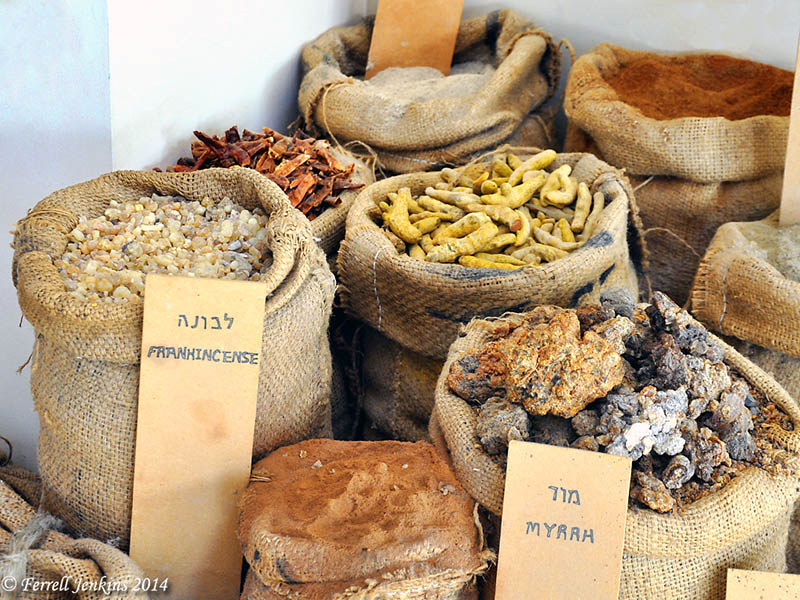
Frankincense and Myrrh on the Spice Route at Avedat. Photo by Ferrell Jenkins.

Frankincense and Myrrh on the Spice Route at Avdat. Photo by Ferrell Jenkins.

This post is a revision of one posted December 14, 2011.
Thoughts for today and everyday

I will give thanks to the LORD with my whole heart; I will recount all of your wonderful deeds. I will be glad and exult in you; I will sing praise to your name, O Most High. (Psalm 9:1-2 ESV)

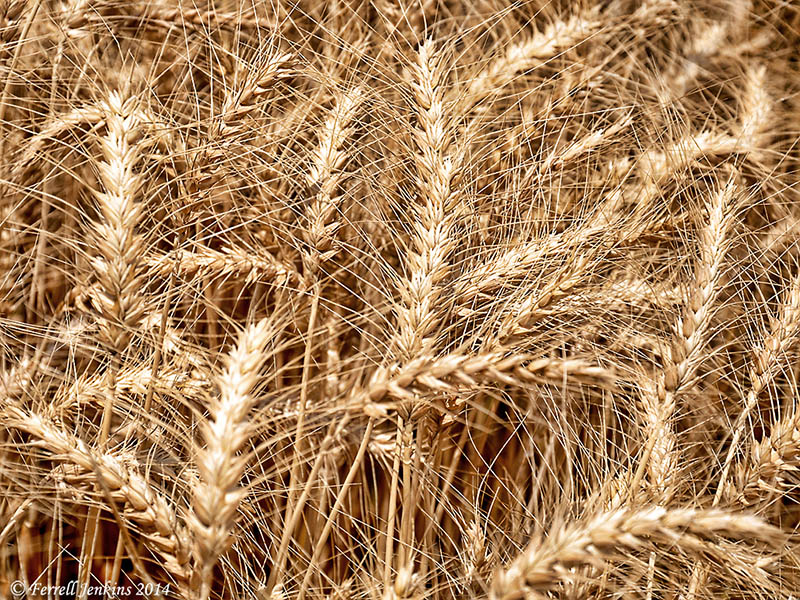
Wheat at En Dor. Photo by Ferrell Jenkins.

Wheat at En Dor. Photo by Ferrell Jenkins.

Do not be anxious about anything. Instead, in every situation, through prayer and petition with thanksgiving, tell your requests to God. (Philippians 4:6 NET)

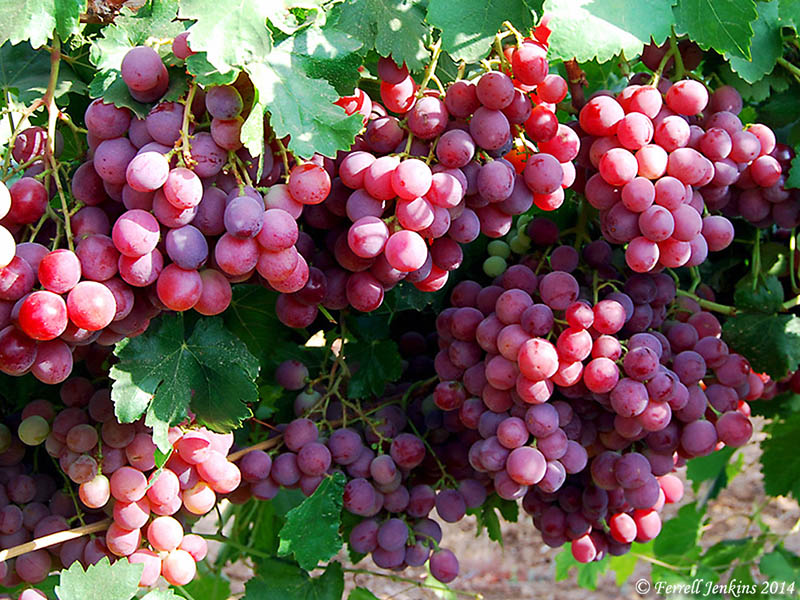
Grapes at Lachish. Photo by Ferrell Jenkins.

Grapes at Lachish. Photo by Ferrell Jenkins.


Mount Arbel and the Sea of Galilee

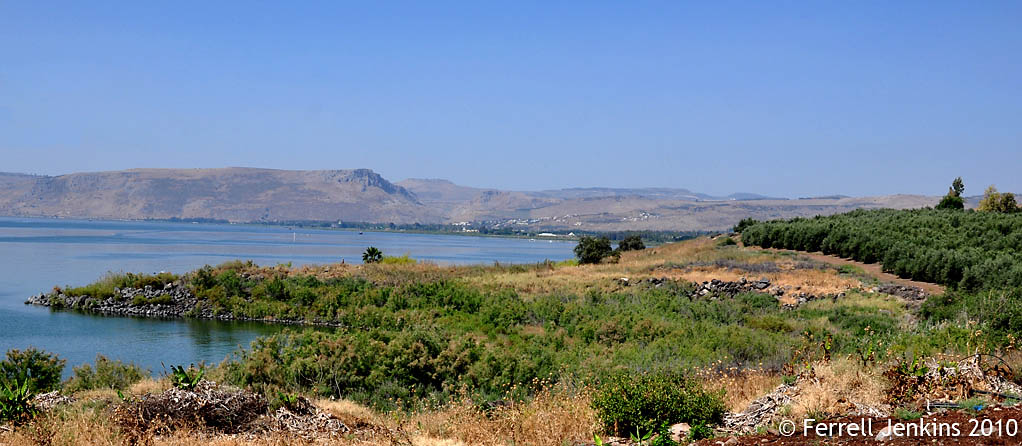
Our photo today was made from NW of the Sea of Galilee. The formation on the right is known as Mount Arbel. The agricultural area you see slopes down to the Plain of Gennesaret which stretches about 2½ miles to the Sea (Matthew 14:34).

View of Mount Arbel and the Sea of Galilee from the NW. Photo by Ferrell Jenkins.

View of Mount Arbel and the Sea of Galilee from the NW. Photo by Ferrell Jenkins.

Across the Sea of Galilee is a portion of the Golan Heights, known in Old Testament times as Bashan. This territory was taken by Israel from Og the king of Bashan and eventually became territory belonging to the tribe of Manasseh.

Then they turned and went up by the way to Bashan. And Og the king of Bashan came out against them, he and all his people, to battle at Edrei. But the LORD said to Moses, “Do not fear him, for I have given him into your hand, and all his people, and his land. And you shall do to him as you did to Sihon king of the Amorites, who lived at Heshbon.” So they defeated him and his sons and all his people, until he had no survivor left. And they possessed his land. (Numbers 21:33-35 ESV)

A city within the territory of Bashan was named Golan, and became one of the Israelite Cities of Refuge (Joshua 20:8).

Mount Arbel has its own history outside the Biblical text, but I will save that for another time.

“Sunrise, sunset…”

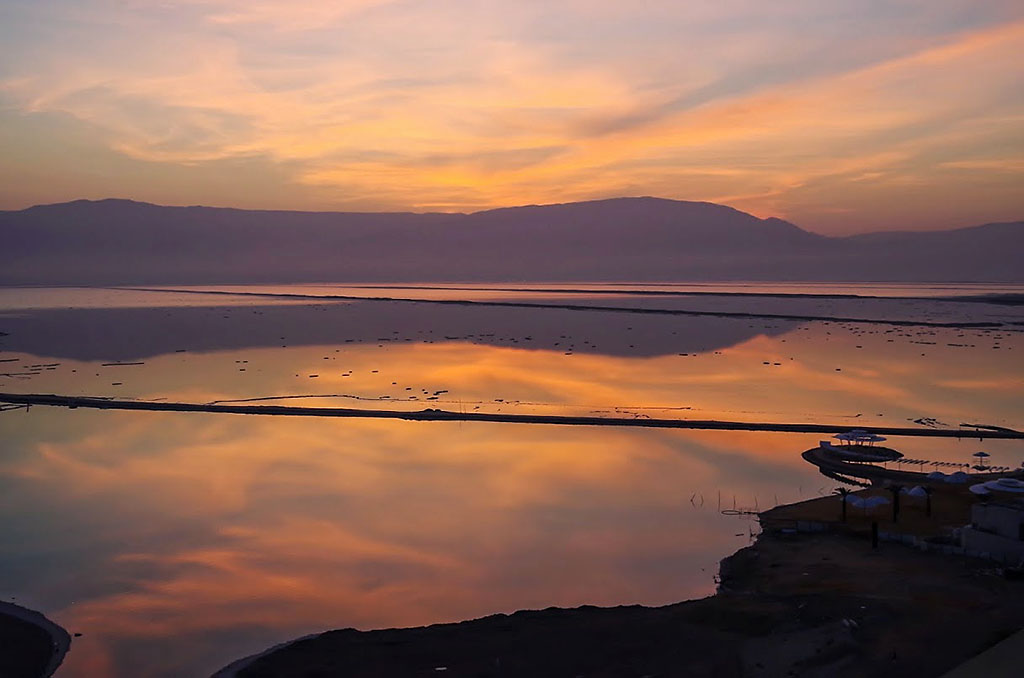
In response to our recent sunset photos on the Sea of Galilee Mark Hoffman sent a beautiful photo of a sunrise from Ein Bokek, a resort site located on the southern end of the west shore of the Dead Sea. When I asked Professor Hoffman for permission to elevate his photo to a post, he graciously granted it. The photo was made in January, 2014.

Sunrise on the Dead Sea from Ein Bokek. Photo by Mark Vitalis Hoffman.

Sunrise on the Dead Sea from Ein Bokek. Photo by Mark Vitalis Hoffman.

The Mountains of Moab are visible to the East in the modern country of Jordan, and reflected in the waters of the Dead Sea.

The Dead Sea is known as the Salt Sea in Genesis 14:3.

Mark Hoffman writes a practical blog for teachers and preacher who use any sort of technology. It is called Biblical Studies and Technological Tools. The subtitle is “From scroll to screen… codex to computer….” There you will find lots of helpful material relating to Bible software programs.

Last year I recommended two of his posts to my tour group. Others might enjoy these picture taking tips.

Thanks to Mark for sharing this beautiful photo.

Prof. Yossi Garfinkel speaks in Tampa

Prof. Yossi Garfinkel speaks at Florida College

Prof. Yossi Garfinkel speaks at Florida College

Yosef Garfinkel is head of the Berman Center for Biblical Archaeology at Hebrew University in Jerusalem. He has been involved in numerous archaeological excavations in Israel. Last year he began the fourth archaeological excavation at Lachish. Prior to that he directed the dig at Khirbet Qeiyafa, a site overlooking the Elah Valley where David fought Goliath, from 2007 to 2013.

Garfinkel identifies Khirbet Qeiyafa as Biblical Shaaraim (Joshua 15:36; 1 Samuel 17:52; 1 Chronicles 4:31). He identifies two large buildings dating to the Iron Age at Khirbet Qeiyafa as a palace of David and a royal storeroom. We reported on this identification with photos here.

I think it is still impossible to say if Garfinkel’s identifications are correct, but I can say that his presentation will be interesting and enlightening. I have heard him speak at the Society of Biblical Literature annual meetings.

Florida College — Temple Terrace, FL
Puckett Auditorium
Tuesday, November 18 — 7:30 p.m.

This presentation is part of the Life Enrichment program at Florida College. These programs are intended primarily for students, faculty and staff of Florida College, but there should be some seats available for visitors who are interested in the subject.

Cove of the Sower – from land, sea, and air

Over the past few years I have tried to get some good photos of the Cove of the Sower (also called the Cove of the Parables) and have written about it twice before. Some have suggested that this place on the north shore of the Sea of Galilee would have been the place where Jesus spoke in parables to large numbers who assembled to hear Him.

Read the full account given by Mark in 4:1-20. Here is the way it begins:

Again he began to teach beside the sea. And a very large crowd gathered about him, so that he got into a boat and sat in it on the sea, and the whole crowd was beside the sea on the land. And he was teaching them many things in parables, and in his teaching he said to them: “Listen! Behold, a sower went out to sow. (Mark 4:1-3 ESV)

Parallel accounts may be read in Matthew 13:1-15 and Luke 8:4-10.

B. Cobbey Crisler conducted some experiments at places where the Bible records that large crowds gathered. The attempt was to see if the large number were able to hear a speaker without the aid of modern sound equipment. The places were Kadesh-barnea, Shiloh,  and The Cove of the Sower in Galilee (“The Accoustics and Crowd Capacity of Natural Theaters in Palestine.” Biblical Archaeologist, 1976. Vol. 39. Num. 4).

The study indicated that the Cove of the Sower would allow between 5000 and 7000 people to hear.

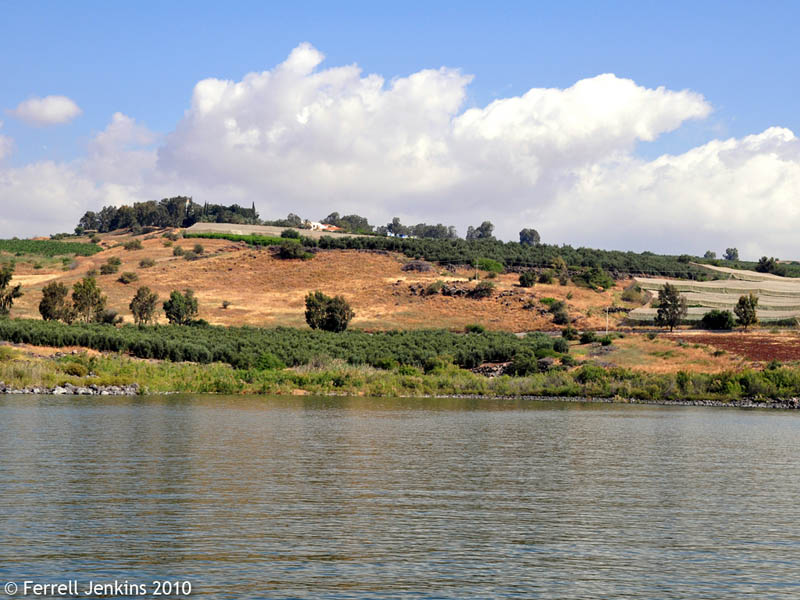
Over the years different crops have been planted in the area, and this makes it difficult to compare older and more recent photos. The highway runs just above the level of the top of the trees seen on the right (north). This photo is made looking west.

The Cove of Sower from top of area. Photo by Ferrell Jenkins.

The Cove of Sower from top of area. Photo by Ferrell Jenkins.

The photo below was made from a boat a short distance south of the shore. You can see the extension of the natural theater stretching up the hill above the trees. Hidden in the clump of trees on the top of the hill, and to the left is the traditional Mount of Beatitudes. This would be a good candidate for the place of the Sermon on the Mount.

Cove of the Sower From the Sea of Galilee by Ferrell Jenkins.

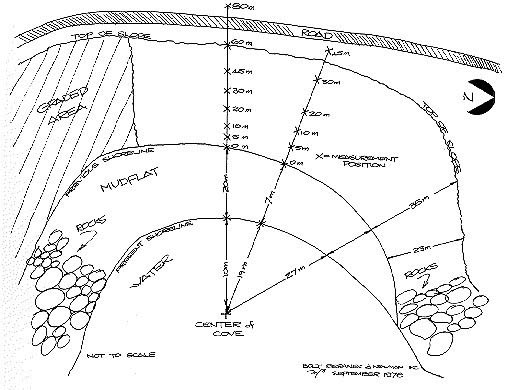
The following sketch from Crisler’s article in Biblical Archaeologist may help you to understand more clearly about the cove.

Cove of Sower sketch from Crisler's article in BA.

The terrain and the crops have changed since Crisler wrote. For those who may be curious, the covered areas are where bananas grow today. Both bananas and citrus trees have been brought to the country since the time of Jesus.

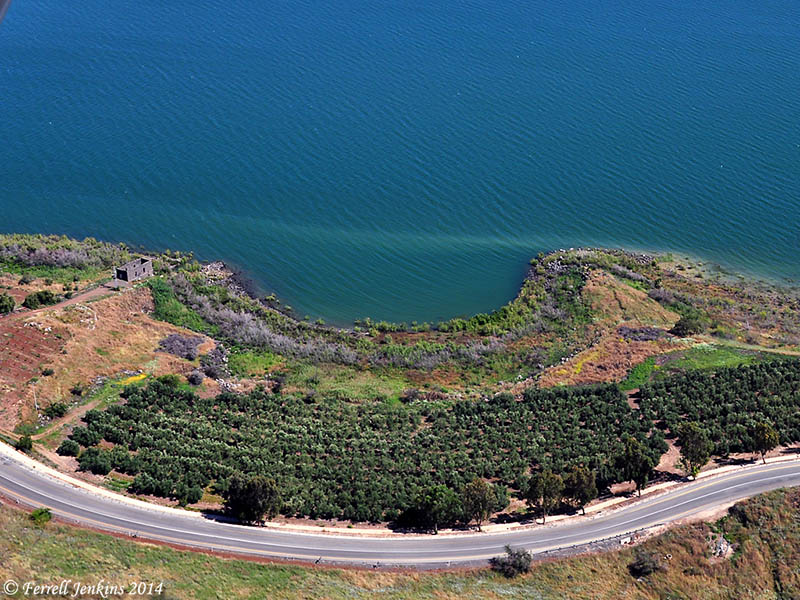
More recently I have been able to make a few aerial photos of the area. The first one was made from above the modern paved road looking down on the cove.

The Cove of the Sower from the air, looking south. Photo by Ferrell Jenkins.

The Cove of the Sower from the air, looking south. Photo by Ferrell Jenkins.

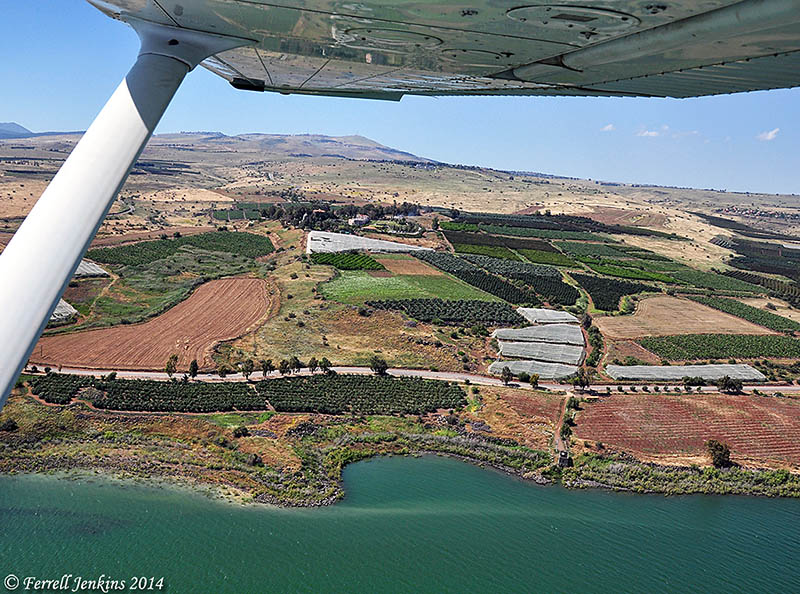
The next aerial view shows the cove and the hill above it from the south.

Aerial View of the Cove of the Sower looking north. Photo by Ferrell Jenkins.

Aerial View of the Cove of the Sower looking north. Photo by Ferrell Jenkins.

I trust that this information and these photos will enhance your understanding of the portions of Scripture mentioned above.

Halley’s Bible Handbook on sale today

Halley’s Bible Handbook with the New International Version is available for a limited time in Kindle format for $3.99. This is the completely revised and expanded 25th edition of this famous book. I notice that the sections on archaeology and geography have been revised by Carl G. Rasmussen.

This is one of the first books I owned. It can be helpful to everyone, especially those who do not have access to a larger library. It is the sort of book you can take with you to Bible classes to be able to have a little information about a lot of topics.

Eric Cline – 1177 BC – Live Stream

The Explorers Club — New York City
Public Lecture Series featuring Eric Cline

Event open to: Public — Date: November 03, 2014
Time: 6:00 pm Reception, 7:00 pm Lecture
Location: NYC Headquarters, 46 E 70th Street, New York, NY, 10021

1177 BC: The Year Civilization Collapsed

This event will be streamed live. Please visit our Live Stream page here at 7pm on the evening of the event to view the lecture for free.

Here is a brief summary of the lecture provided by The Explorers Club.

For more than three hundred years during the Late Bronze Age, from about 1500 BC to 1200 BC, the Mediterranean region played host to a complex international world in which Egyptians, Mycenaeans, Minoans, Hittites, Assyrians, Babylonians, Cypriots, and Canaanites all interacted, creating a cosmopolitan and globalized world-system such as has only rarely been seen before the current day. It may have been this very internationalism that contributed to the apocalyptic disaster that ended the Bronze Age. When the end came, as it did after centuries of cultural and technological evolution, the civilized and international world of the Mediterranean regions came to a dramatic halt in a vast area stretching from Greece and Italy in the west to Egypt, Canaan, and Mesopotamia in the east. Large empires and small kingdoms, that had taken centuries to evolve, collapsed rapidly. With their end came the world’s first recorded Dark Ages.

It was not until centuries later that a new cultural renaissance emerged in Greece and the other affected areas, setting the stage for the evolution of Western society as we know it today. Blame for the end of the Late Bronze Age is usually laid squarely at the feet of the so-called Sea Peoples, known to us from the records of the Egyptian pharaohs Merneptah and Ramses III. However, as was the case with the fall of the Roman Empire, the end of the Bronze Age empires in this region was not the result of a single invasion, but of multiple causes. The Sea Peoples may well have been responsible for some of the destruction that occurred at the end of the Late Bronze Age, but it is much more likely that a concatenation of events, both human and natural — including earthquake storms, droughts, rebellions, and systems collapse — coalesced to create a “perfect storm” that brought the age to an end.

For more information about Dr. Cline, see here.

HT: Joseph I. Lauer

Index to Olives and Olive Trees

The olive tree was one of the most important plants in Bible times, and it still is today throughout portions of Europe and the Middle East.

The wood of the olive tree was used in some of the furnishings of the temple (1 Kings 6:23-33).

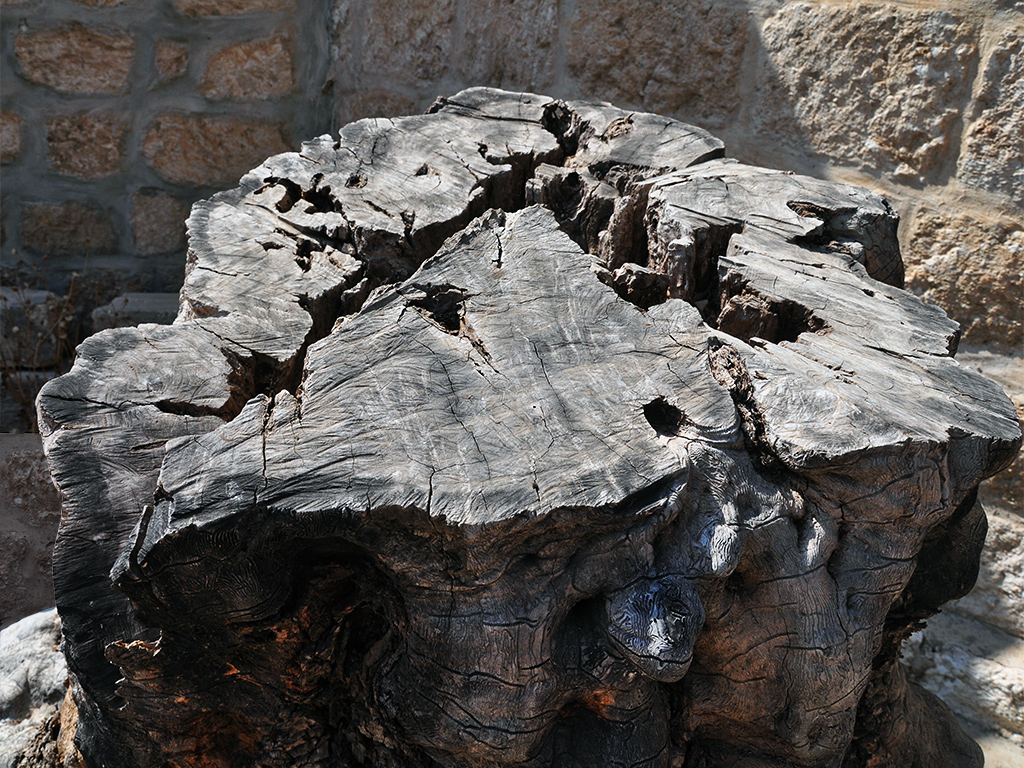
Stump of an olive tree at Beit Jimal. Photo by Ferrell Jenkins.

Stump of an olive tree at Beit Jamal (? En-Gannim). Photo by Ferrell Jenkins.

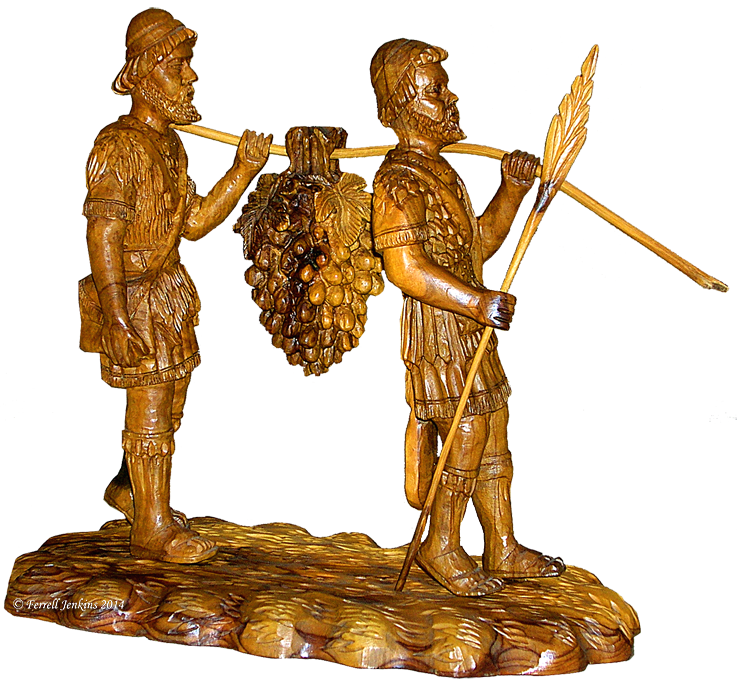
Wood from dead or destroyed olive trees is often turned into carvings and souvenirs such as this carving of the faithful spies (Caleb and Joshua; Numbers 14:30) that I secured in Bethlehem many years ago.

Then they came to the valley of Eshcol and from there cut down a branch with a single cluster of grapes; and they carried it on a pole between two men, with some of the pomegranates and the figs. That place was called the valley of Eshcol, because of the cluster which the sons of Israel cut down from there. (Numbers 13:23-24 NAU)

Olive wood carving of the faithful spies. Photo by Ferrell Jenkins.

Olive wood carving of the faithful spies. Photo by Ferrell Jenkins.

Index to Articles About the Olive Tree and Olives

Related minor posts about olives.

When I add other posts pertaining to olives I will try to remember to add them to this index.

Uruk (Erech) in the Pergamum Museum

The Pergamon Museum’s Ancient Near Eastern Department (Vorderasiatisches Museum) has a collection of artifacts from Uruk, now know as modern Warka in Iraq. German excavators began work at Uruk in November 1912. An English sign with the display of artifacts explains the significance of the city.

In the Old Testament, Uruk is mentioned under the name Erech, along with Babylon and other important ancient cities. But written references to Uruk extend much further into the past. The city plays a role in the Gilgamesh epic which can be traced back to the second half of the 3rd millennium BC. The legendary Sumerian king Gilgamesh whose exploits are the subject of the poem is credited with building the wall that surrounded the city. A number of objects uncovered at Uruk before 1939 came to Berlin and the museum with the division of finds following on the excavations. Together with artifacts from Babylon and Assur, they document the material legacy of ancient oriental cultures.

Uruk was the major center for the worship of the goddess Inana/Ishtar. The first photo shows a portion from the façade of the Inanna Temple built by the Kassite ruler Kara-indash at Uruk about 1413 B.C. The museum explains,

Standing male and female deities alternate in the niches. Life-giving water pours forth onto the earth from the vessels in their hands. The hump-like symbols on the projecting elements of the niched façade and on the garments of the male divinities refer to the mountainous region where the Kassites originated. An inscription on the bricks names the Kassite ruler Kara-indash as the person who commissioned the structure.

Portion of the façade of the Inanna/Ishtar Temple at Warka (Uruk/Erech). Photo by Ferrell Jenkins.

Portion of the façade of the Inanna/Ishtar Temple at Warka (Uruk/Erech). Display in the Pergamum Museum, Berlin. Photo by Ferrell Jenkins.

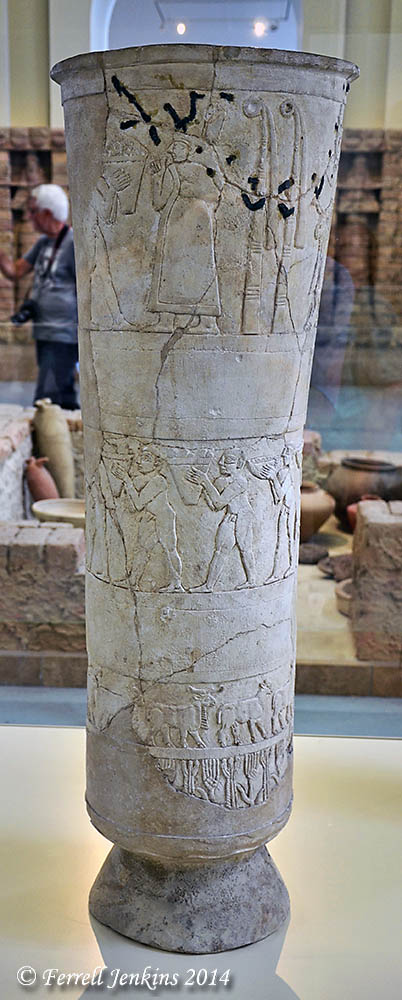
The next photo shows a reproduction of a limestone cult vessel from Uruk.

Stone cult vessel from Uruk. Photo by Ferrell Jenkins.

Stone cult vessel from Uruk. Photo by Ferrell Jenkins.

The Museum explains the design on the vessel.

The limestone vase from the Eanna Temple precinct at Uruk is one of the most impressive works of pictorial art produced in the Uruk Period. The arrangement of the motifs reflects the Sumerian world view, with life-giving water flowing forth in the lowest zone to sustain the plant and animal world above. The representations continue with a procession of nude men bearing votive offerings for the goddess Inanna which culminates in the upper register.

The New International Dictionary of Biblical Archaeology points out,

There are no direct references to Sumer in the Bible, although it corresponds to the “land of Shinar” mentioned eight times in the OT.

Amraphel is designated as the king of Shinar (Genesus 14:1). Notice a couple of other references.

The beginning of his [Nimrod] kingdom was Babel, Erech, Accad, and Calneh, in the land of Shinar. (Genesis 10:10 ESV)

And as people migrated from the east, they found a plain in the land of Shinar and settled there. (Genesis 11:2 ESV)

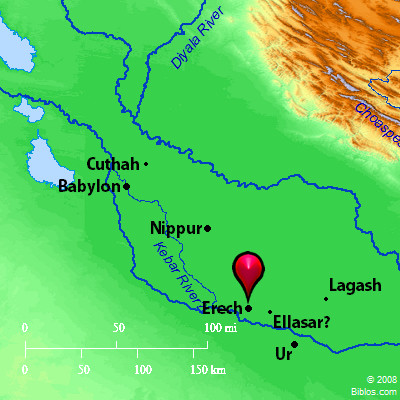
This map of southern Mesopotamia (modern Iraq) shows the location of Erech (Uruk) north of traditional Ur.

This map shows the location of Erech (Warka). Map: biblos.com.

This map shows the location of Erech (Warka in southern Iraq). Map: biblos.com.