Category Archives: New Testament

Children in the Marketplaces

To those dissatisfied with both Jesus and John the Baptist, Jesus used a simple illustration that must have happened many times in each city of ancient Israel.

“But to what shall I compare this generation? It is like children sitting in the marketplaces and calling to their playmates, “‘We played the flute for you, and you did not dance; we sang a dirge, and you did not mourn.’ For John came neither eating nor drinking, and they say, ‘He has a demon.’ The Son of Man came eating and drinking, and they say, ‘Look at him! A glutton and a drunkard, a friend of tax collectors and sinners!’ Yet wisdom is justified by her deeds.” (Matthew 11:16-19 ESV; see also Luke 7:31-34) Some English versions use market places).

Keener, in The IVP Bible Background Commentary: New Testament, explains:

Spoiled children who pretend to have weddings and funerals (one later game was called “bury the grasshopper”) stand for Jesus’ and John’s dissatisfied opponents; dissatisfied with other children who will not play either game, they are sad no matter what. The term for “mourn” here is “beat the breast,” a standard mourning custom in Jewish Palestine. Custom mandated that bystanders join in any bridal or funeral processions.

This photograph made at Nazareth Village helps to illustrate the Biblical text.
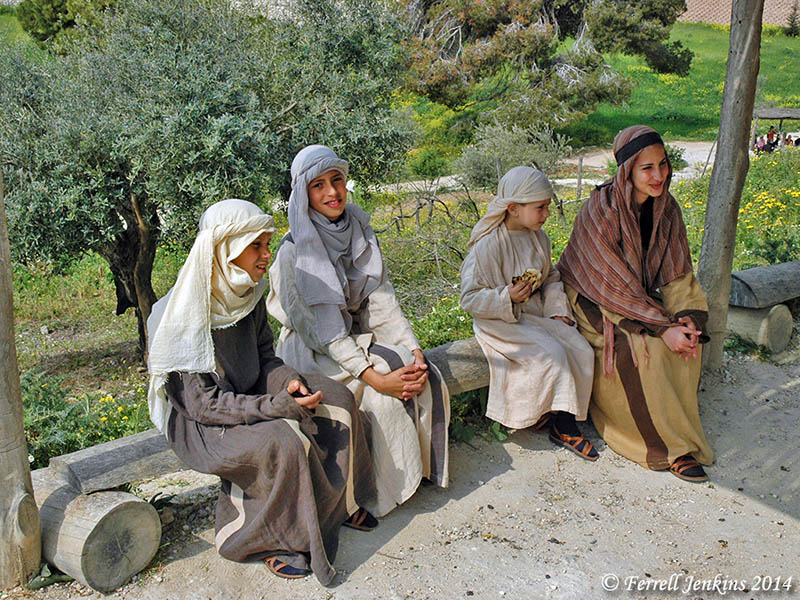
Children at Nazareth Village. Photo by Ferrell Jenkins.
Children at Nazareth Village. Photo by Ferrell Jenkins.
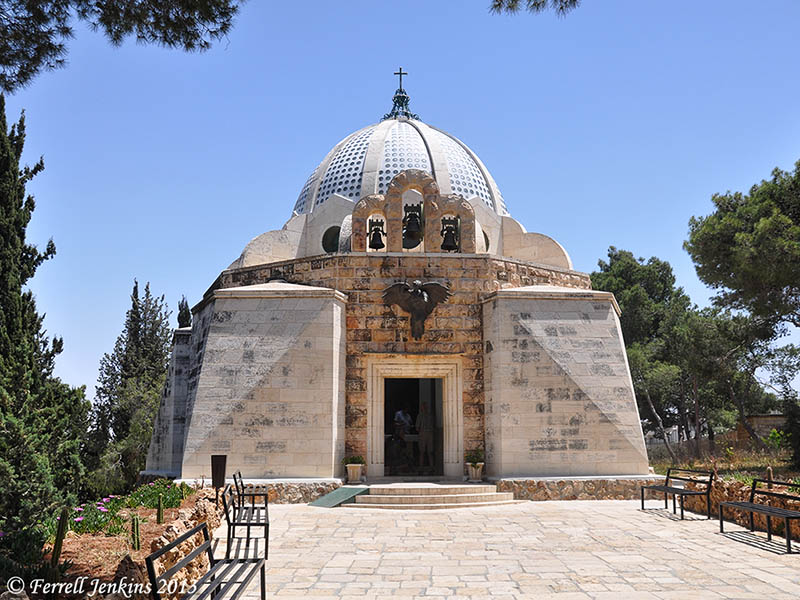
Photo of the year 2013 – Gethsemane

As we approached the end of the year 2013 I began to think of the wonderful places I visited and the photos I made. What photo stands out as the “photo of the year”? I have some unique photos, and I have other photos from places I have photographed many times. I won’t say that this is the best photo I made during the year, but it is one with great meaning to multitudes of Christians.

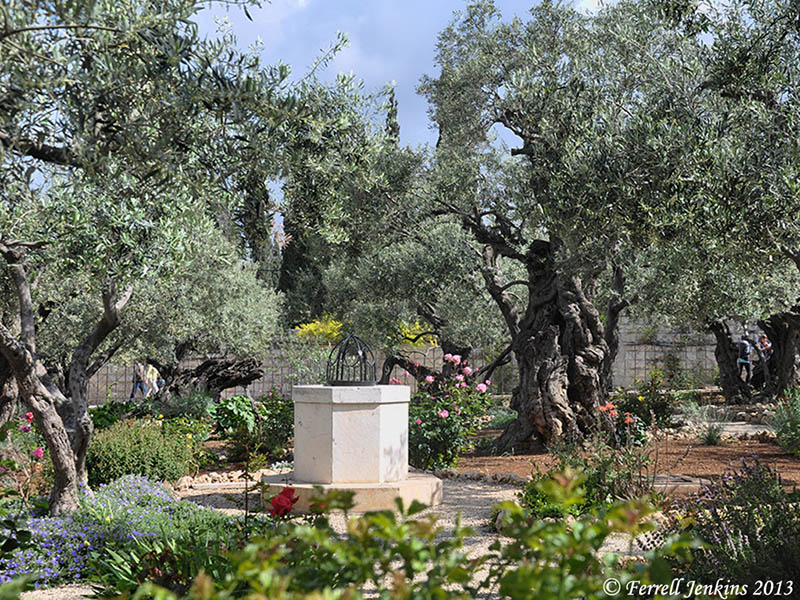
This photo that I wish to share with you is of the traditional Garden of Gethsemane. One thing is for sure. If the “place” mentioned in the New Testament is not here, it could not have been very far away.

Gethsemane is a place well known in the minds of Christians, for according to the Gospels it was there that Jesus prayed alone to the Father before his arrest and trial. The word Gethsemane means oil-press. It is the name of an olive orchard on the Mount of Olives. Not many olive trees remain on the mountain originally named for them. This photo was made in the modern Garden at the Church of All Nations.

As a gift to our faithful readers I want to share a hi-res image suitable for teaching and preaching presentations. Click here for the larger image.

A place called Gethsemane. Photo by Ferrell Jenkins, 2013.

Mark’s account of Jesus’ visit to Gethsemane begins this way:

And they went to a place called Gethsemane. And he said to his disciples, “Sit here while I pray.” And he took with him Peter and James and John, and began to be greatly distressed and troubled. And he said to them, “My soul is very sorrowful, even to death. Remain here and watch.” And going a little farther, he fell on the ground and prayed that, if it were possible, the hour might pass from him. (Mark 14:32-35 ESV)

Read the following verses for the complete story.

I visited several places in 2013 that I have not yet written about. Hopefully I will be able to get to some of these in the following months.

Visiting the shepherd’s fields near Bethlehem

After the birth of Jesus in Bethlehem, Luke records that an announcement of His birth was made to shepherds in the field at night.

And in the same region there were shepherds out in the field, keeping watch over their flock by night. And an angel of the Lord appeared to them, and the glory of the Lord shone around them, and they were filled with great fear. And the angel said to them, “Fear not, for behold, I bring you good news of great joy that will be for all the people. For unto you is born this day in the city of David a Savior, who is Christ the Lord. (Luke 2:8-11 ESV)

There was enough distance that the shepherds said, “Let us go over to Bethlehem and see this thing that has happened, which the Lord has made known to us.” (Luke 2:15 ESV)

We do not know the exact time of the birth of Jesus. We have a reasonable degree of certitude about the place of His birth, but places such as the field of the shepherds are not certain. As a result, traditions have risen about the place. Here I will mention three places that one can visit a short distance east of Bethlehem, near the wilderness of Judea. This area is known as Beit Sahour.

The first place is the Shepherd’s Field of the Franciscan Custody of the Holy Land (a Roman Catholic site). The photo shows the modern church built over a cave.

The Shepherd's Field of the Franciscan Custody of the Holy Land. Photo by Ferrell Jenkins.

The Shepherd’s Field of the Franciscan Custody of the Holy Land. Photo: F. Jenkins,

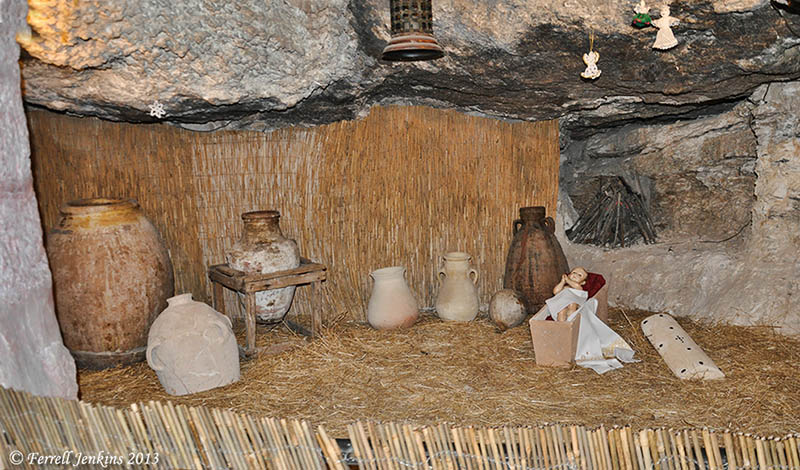
Under the church there is a large cave. These caves are not uncommon in the central mountain range. A display illustrating the birth of Jesus can be seen in the cave. One little note of interest. It is often pointed out that the manger of Luke 2:7 might be a feeding trough cut from stone. In this display the baby is placed in an ossuary! Notice the lid to the right.

Display in cave at Shepherd's Field. Photo by Ferrell Jenkins.

Display in cave at Shepherd’s Field. Photo by Ferrell Jenkins.

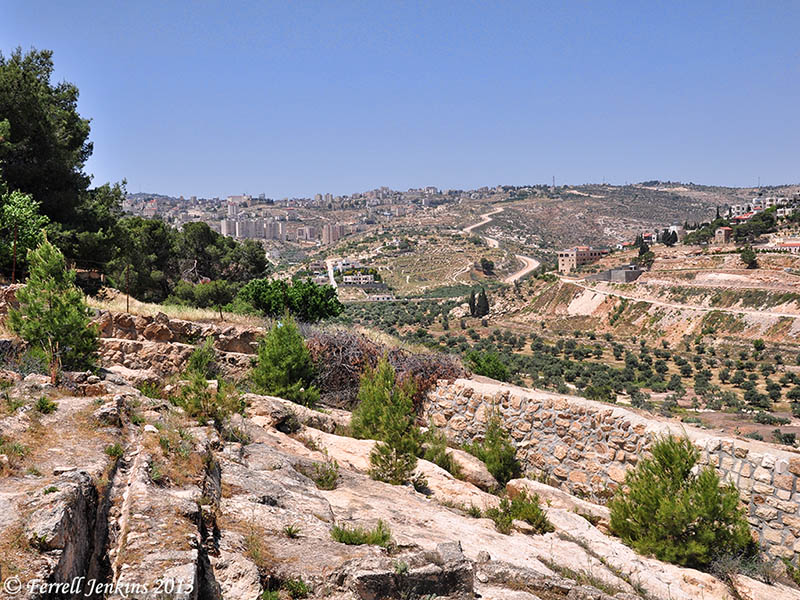
Outside one sees fields and olive groves.

Shepherd's fields at Beit Sahour. Photo by Ferrell Jenkins

Shepherd’s fields at Beit Sahour. Photo by Ferrell Jenkins.

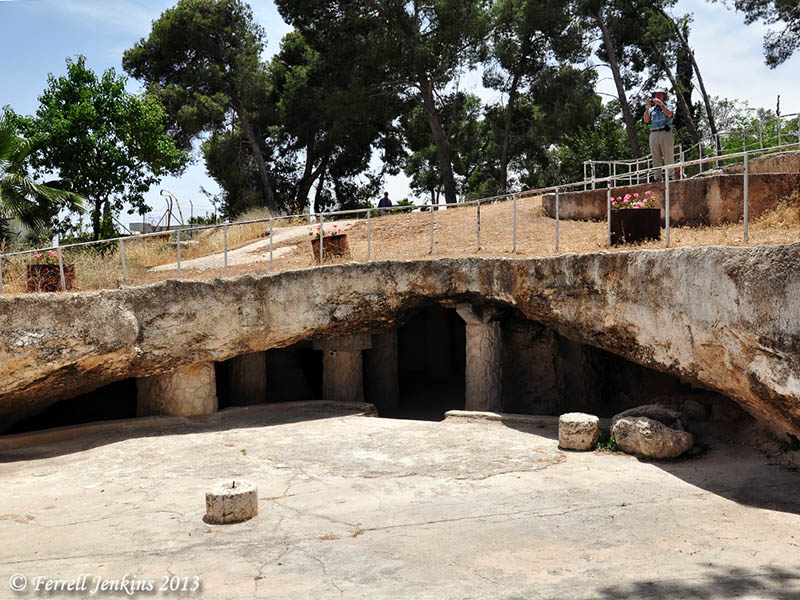
Not far away is the Shepherd’s Field of the YMCA. Some call it the Protestant Shepherd’s Field. There is a large cave on the property overlooking the fields of the region.

Caves at YMCA Shepherd's Field. Photo by Ferrell Jenkins.

Caves at YMCA Shepherd’s Field. Photo by Ferrell Jenkins.

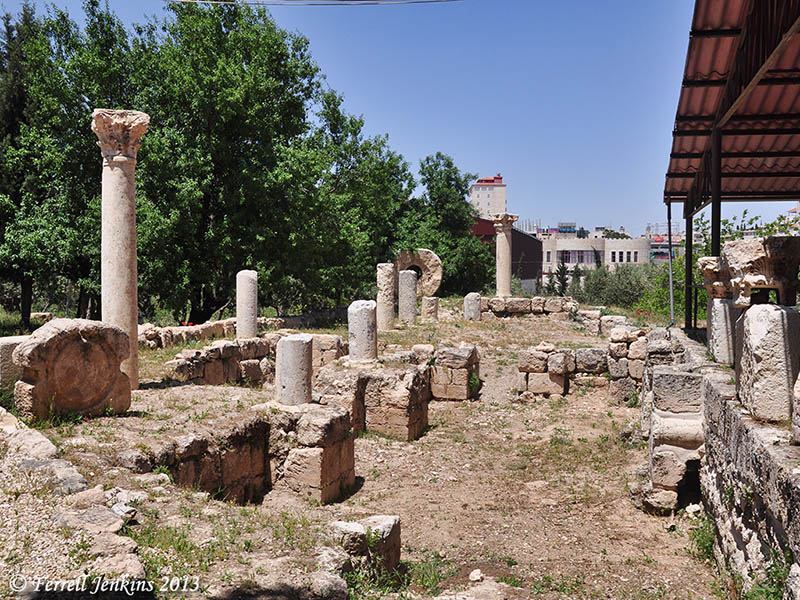
The Greek Orthodox site features ruins of a Byzantine church dating from the 5-7th centuries.

Byzantine church ruins at the Greek Orthodox site of the Shepherd's field. Photo by Ferrell Jenkins.

Byzantine church ruins at the Greek Orthodox site. Photo by Ferrell Jenkins.

Carl Rasmussen wrote about the “3 Christmases in Bethlehem” here, and Mark Ziese wrote about the Milk Grotto here. We have written about the Church of the Nativity several times, including here.

Reading the blogs

The majority of the content of this blog deals with biblical studies, archaeology, travel and photography. Concentration is especially on travel in the Bible World. As a result of this I follow several blogs that are extremely helpful. These include:

Bible Places Blog. Todd Bolen’s Weekend Roundup, and Midweek Roundup are extremely helpful, as are his insightful comments on recent archaeological announcements.

HolyLandPhotos’ Blog by Carl Rasmussen covers numerous lesser known places. Recently he has covered some sites visited, or probably visited, by Paul on his journeys through Asia Minor (modern Turkey).

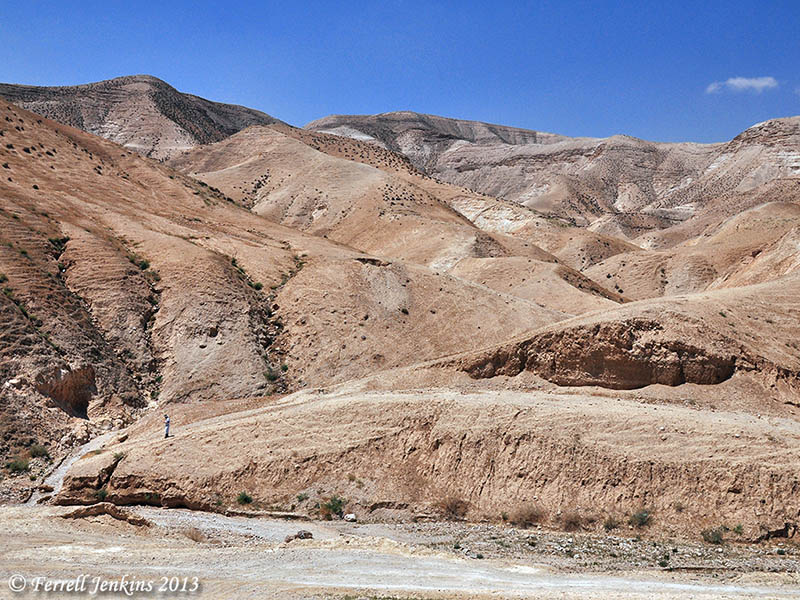
The wilderness of Judea. Photo by Ferrell Jenkins.

The wilderness of Judea. Photo by Ferrell Jenkins.

I have a few former students  who write about these areas. You might enjoy taking a look at Leon’s Message Board (Leon Mauldin), Exploring Bible Lands (Barry Britnell), Luke Chandler’s Blog. Leon recently posted photos of the gathering of olives at Shechem. Trent and Rebekah, former tour members, have posted some helpful articles during their six months in Israel.

Gordon Franz writes less frequently on his Life and Land Seminars, but most of his material reflects a considerable amount of research. As part of his ongoing Cracked Pot Archaeology series he posted a response to the theory that the Arabia of “Mount Sinai in Arabia” (Galatians 4:25) is in modern Saudi Arabia.

Leen Ritmeyer,  Ritmeyer Archaeological Design, writes about the way the buildings looked in Bible times as well as recent discoveries and developments.

Wayne Stiles seeks to connect the Bible and its Lands to Life. In a recent post he discussed the “Top 5 Gifts for Bible Lands Study.”

Shmuel Browns, Israel-tourguide, has an interesting blog with great photos. A recent post features fascinating photos of Nahal Prat or Wadi Qelt. This may be where Jeremiah was told to go and bury his loincloth (shorts) (Jeremiah 13:4-7). Most English versions use the word Euphrates for the Hebrew term Perath. The NET Bible transliterates the term. Nahal Prat is near Jeremiah’s hometown Anatot (Anathoth). We wrote about a morning with Shmuel here.

Recently I learned of two new blogs dealing with the Bible lands and customs. Mark Ziese writes Bible Lands Explorer. Mark’s most recent post is about the Milk Grotto in Bethlehem. Yep, a place dedicated to Mary feeding baby Jesus. Willis Britt writes on Lessons From The Land. A recent series deals with Preaching and the Land.

Believe me, there is quite an education in reading these blogs.

I keep links to these and other blogs on the Scholarly page at the Biblical Studies Info Page.

Zondervan Essential Atlas of the Bible

Frequently we have mentioned and recommended the Zondervan Atlas of the Bible by Carl G. Rasmussen. Every Bible student needs at least one or two good atlases to assist them in their study of the Scriptures.

Last month I attended some annual professional meetings in Baltimore and was pleased to see that Zondervan already had copies of the new Zondervan Essential Atlas of the Bible. One of the sales reps gave me a copy for review here.
At first appearance, the ZEAB has a beautiful cover of stiff, durable paper. It is a convenient 9 1/8″ x 7 3/8″ in size. The content is basically the same as the larger hard back edition. There has been some editing of the text to condense the book from 303 pages to 159 pages.

There are two major sections to the book: Geographical Section and Historical Section. The Geographical Section includes an Introduction to the Middle East as a Whole, and discusses the geography of Israel and Jordan, Egypt, Syria and Lebanon, and Mesopotamia.

The Historical Section covers the entire Bible from the Pre-Patriarchal Period to the Seven Churches of Revelation, with an additional chapter on Jerusalem, in 17 chapters.

The maps are superbly drawn and easy to read. A timeline accompanies each chapter. Rasmussen is noted for his Holy Land Photos web site. The photos are beautiful and helpful in illustrating the content.

This book has been prepared by a teacher, and I consider that a plus. In addition to his work at Bethel University, Carl continues to serve as an adjunct professor at Jerusalem University College. He has spent 16 years of his adult life in the Bible lands. His  Holy Land Photos’ Blog provides helpful, up-to-date, information about both familiar and unfamiliar places mentioned in the Bible. He has also led numerous tours through Bible lands.

This Atlas sells for $16.99. I see that Amazon has the Zondervan Essential Atlas of the Bible for $12.97. A Kindle version is about $3 less.

Either version is ideal for a person to take with them to Bible class, or on a tour of Bible lands.

The larger Zondervan Atlas of the Bible still remains indispensable for the serious student. I am trying to say you should have both books.

Carl has assisted me on several occasions in locating some of those hidden, out-of-the-way, places that most visitors to the Bible lands never see. I am pleased to commend this new edition of his book.

Scenes around Tell Ḥesbân (Heshbon)

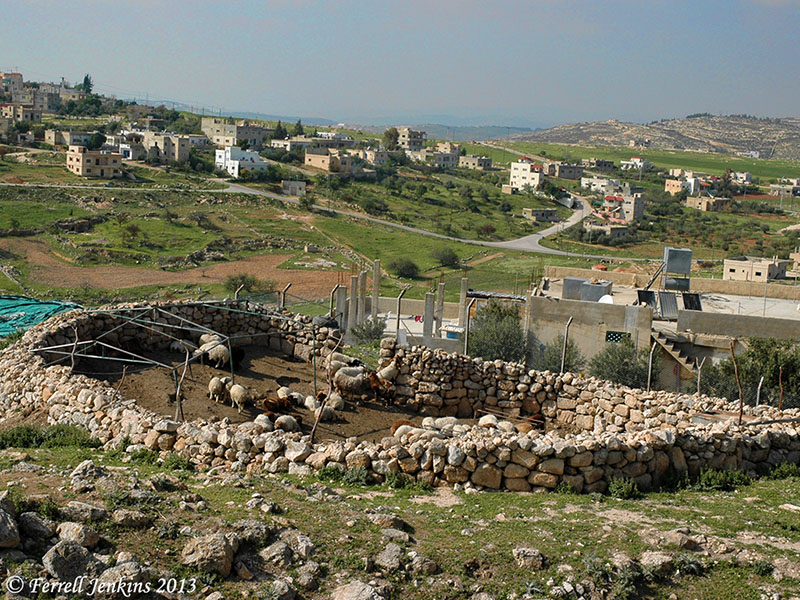
The photo below was made from the top of Tell Ḥesbân in Transjordan. It provides us a view of the general area of Moab during the period of the United Kingdom of Israel, and the Divided Kingdoms of Israel and Judah.

Sheepfold on the slope of Tell Ḥesbân. View of territory of Moab. Photo by Ferrell Jenkins.

Sheepfold on the slope of Tell Ḥesbân. View of territory of Moab. Photo by Ferrell Jenkins.

There are several biblical references to the sheepfold, or the fold of the sheep (Jeremiah 50:6; Micah 2:12; John 10:1, 16). Jesus used an illustration involving the sheepfold:

Truly, truly, I say to you, he who does not enter the sheepfold by the door but climbs in by another way, that man is a thief and a robber. But he who enters by the door is the shepherd of the sheep. (John 10:1-2 ESV)

We associate the land of Moab with Ruth the grandmother of King David.

So Naomi returned, and with her Ruth the Moabitess, her daughter-in-law, who returned from the land of Moab. And they came to Bethlehem at the beginning of barley harvest. (Ruth 1:22)

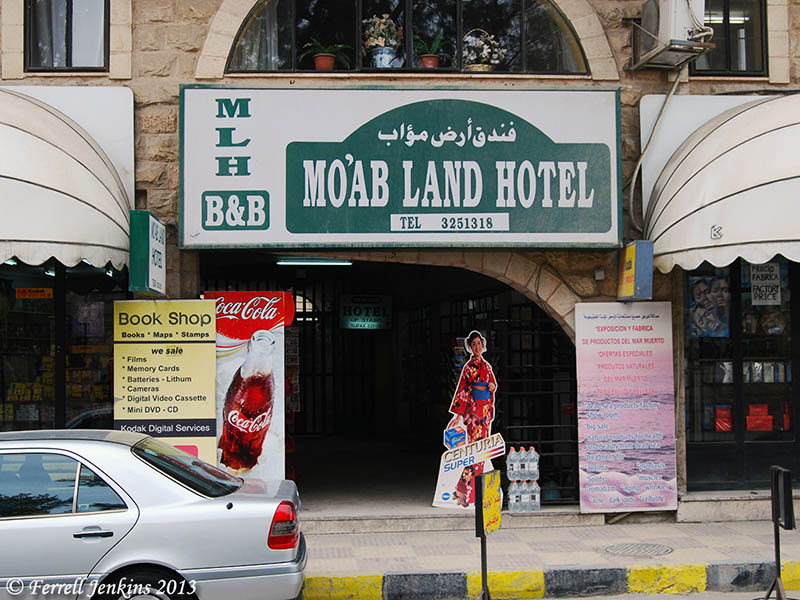
I find it fascinating that the modern locals pick up on the ancient names in order to attract the tourists who visit the area. At Madaba, about six miles south of Ḥesbân, there is a small hotel named Mo’ab Land Hotel. How appropriate.

The Moab Land Hotel in Madaba, Jordan. Photo by Ferrell Jenkins.

The Moab Land Hotel in Madaba, Jordan. Photo by Ferrell Jenkins.

Caesarea Maritima – the Lower Palace

A few columns of the Palace of the Procurators have been restored at Caesarea. The late Jerome Murphy-O’Connor describes the lower level of the Palace.

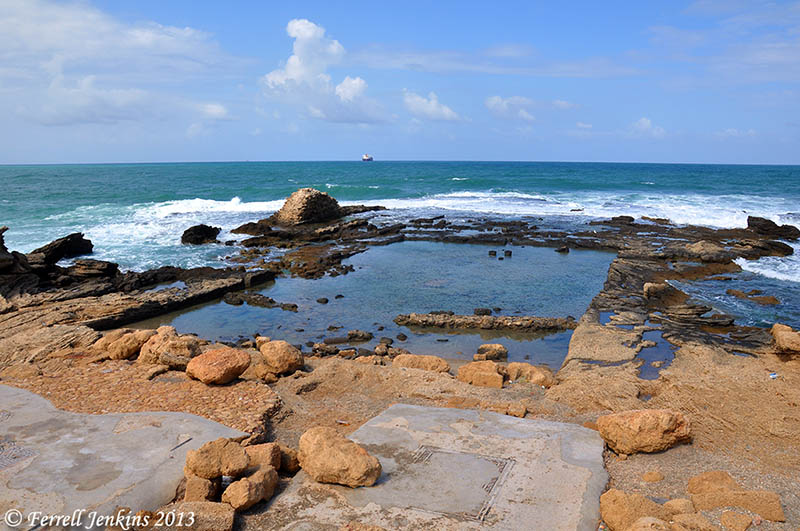
From the west colonnade one can look down to the sea shore at a point where its dominant feature is a rectangular rock-cut pool (35 x 18). There are channels to the sea on both sides. A square statue base can be discerned in the middle. The colonnaded pool was originally the centerpiece of a two-storey building (83 x 51 m) which surrounded it on all sides. Presumably it was here that the Roman procurators lived. Wave action and the activities of stone robbers have ensured that virtually nothing remains. A staircase in the north-east corner gave access to the upper level. (The Holy Land, Fifth Edition, p. 243)

Our photo below shows this area. In the foreground you will see portions of some mosaics.

The lower level of the Place of the Procurators. Photo by Ferrell Jenkins.

The lower level of the Place of the Procurators. Photo by Ferrell Jenkins.

This was not a bad place for the Roman procurators to live a luxurious life while the Apostle Paul was held in custody nearby (Acts 23:23 – 26:32).

Procurators associated with Caesarea in the New Testament include…

  • Pilate (A.D. 26-26) – John 18, et al.
  • Felix (A.D. 52-59) – Acts 23-25
  • Festus (A.D. 59-61) – Acts 24-26

The Jewish rulers associated with Caesarea include…

  • Herod the king [Agrippa I] (A.D. 37-44) – Acts 12
  • Herod Agrippa II (lived A.D. 27-100) – Acts 25-26

The Pool of Siloam like you have never seen it

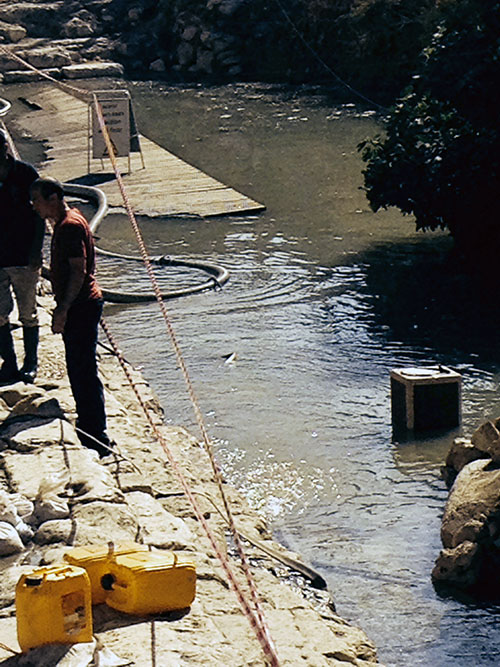
Elie, my friend and guide in Israel, sent me a photo just a few minutes ago that he made Sunday at the pool of Siloam.

Water in the pool of Siloam due to a clogged drain. Photo: Elie Ben-Meir

Water in the pool of Siloam due to a clogged channel. Photo: Eliemelech Ben-Meir

Here is the explanation Elie gave:

Thought you might enjoy this shot of the pool. We couldn’t get in because of a clog in the channel that caused the pool to fill up and flood! We had to walk around and come in from the top past Ibrahim Siams antiquities shop and walk down the wooden stairs!

The Hippodrome at Caesarea Maritima

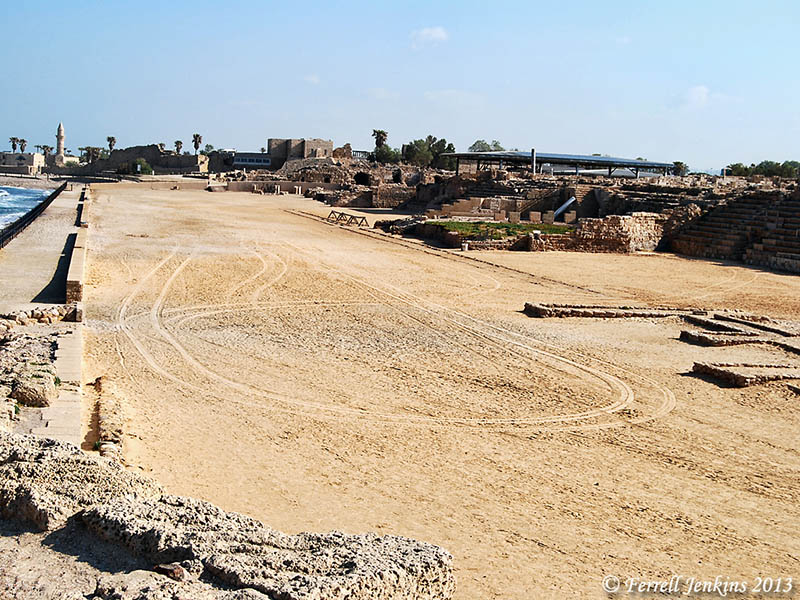
Herod the Great built a hippodrome along the Mediterranean coast at Caesarea Maritima in 10 B.C. to celebrate the opening of the city. In the second century A.D. the south end of the hippodrome was reconstructed as an amphitheater to be used for gladiatorial contests.

The seaside Hippodrome at Caesarea Maritima. Photo by Ferrell Jenkins.

The seaside Hippodrome at Caesarea Maritima. Photo by Ferrell Jenkins.

The apostle Paul was in prison at Caesarea for two years between A.D. 58 and 60 (Acts 23:23 – 26:32).

We discussed Paul’s possible use of the charioteer in Philippians 3:12-14 here.

Jerome Murphy-O’Connor – 1935-2013

The École Biblique et Archéologique in Jerusalem announced Monday the death of Jerome Murphy-O’Connor (1935-2013).

Fr. Jerome Murphy-O’Connor, O.P., passed away peacefully on Monday, November 11, 2013. He was 78 years old.

Fr. Murphy-O’Connor taught for more than four decades at the École Biblique et Archéologique. He was a world-renowned biblical scholar and author of numerous books on St. Paul and the Holy Land. Many throughout the world counted him their friend.

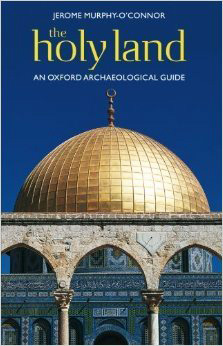
The writings of Murphy-O’Connor have been helpful to me. I have especially enjoyed The Holy Land An Oxford Archaeological Guide which is now in its 5th edition. In my recommendations of books for those traveling to Israel I have annotated this book with the words “Excellent. The Best.” I am pleased to say that I have seen several tour members using their copy of the book. I see the book is now available for the Kindle.

Holy Land

St. Paul’s Corinth: Texts and Archaeology (Good News Studies, Vol. 6) has been helpful in studying about Corinth. His article about traveling conditions in the first century in the second issue of (the now defunct) Bible Review has been extremely helpful in studying Paul’s journeys. (Murphy-O’Connor. “On the Road and on the Sea with St. Paul.” Bible Review 1:2 (1985).

HT: Jack Sasson; Bible Places Blog.