Category Archives: New Testament

Paul sailed along the coast of Pamphylia

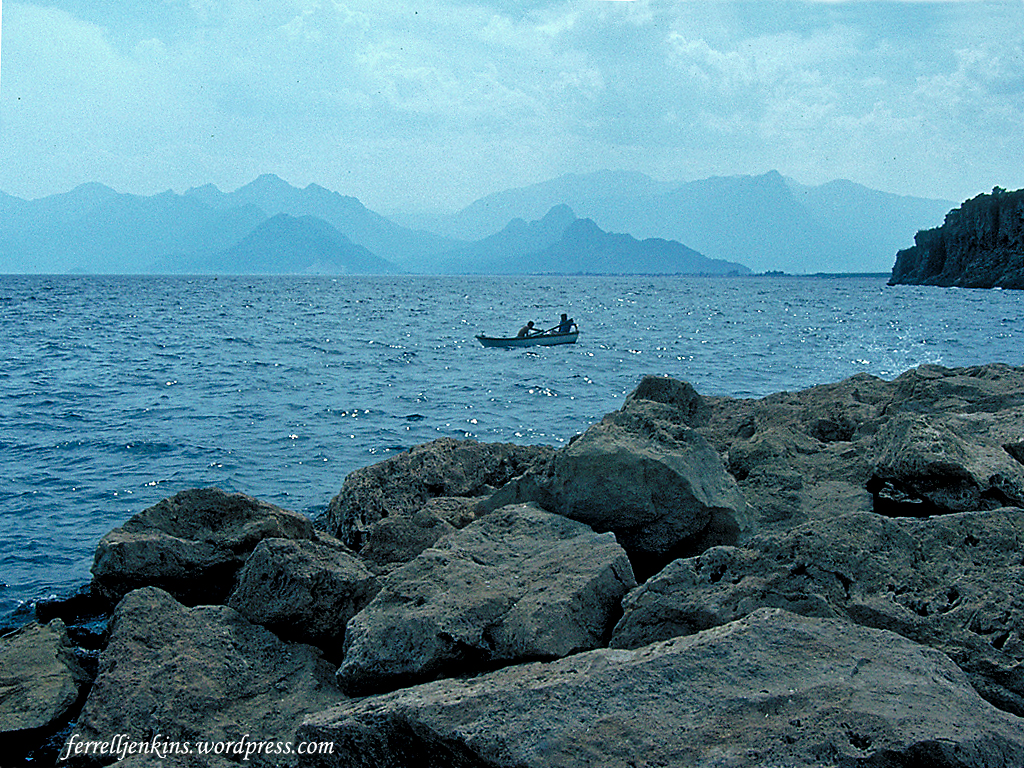
From time to time I hope to share with you some photos without much narrative. The photo today is scanned from a slide I made early one morning when I left my group at Antalya (biblical Attalia, Acts 14:25) and drove east along the Pamphylian and Lycian coast to Myra and Patara. This photo shows the mountains of Lycia.

Early morning view of the coast of Pamphylia in 1987. Photo by Ferrell Jenkins.

Early morning view of the coast of Pamphylia in 1987. Photo by Ferrell Jenkins.

Pamphylia is mentioned five times in the book of Acts, but Lycia is mentioned only once, in the account of Paul’s voyage to Rome.

And when we had sailed across the open sea along the coast of Cilicia and Pamphylia, we came to Myra in Lycia. (Acts 27:5 ESV)

One can image Paul saw scenes similar to this many times during the various sea voyages he made.

“You brood of vipers”

When the Pharisees and Sadducees came to John the Baptist for baptism, John said,

But when he saw many of the Pharisees and Sadducees coming to his baptism, he said to them, “You brood of vipers! Who warned you to flee from the wrath to come?”  (Matthew 3:7 ESV)

Jesus used the same language of the Scribes and Pharisees.

You serpents, you brood of vipers, how are you to escape being sentenced to hell? (Matthew 23:33 ESV) cf. 12:34)

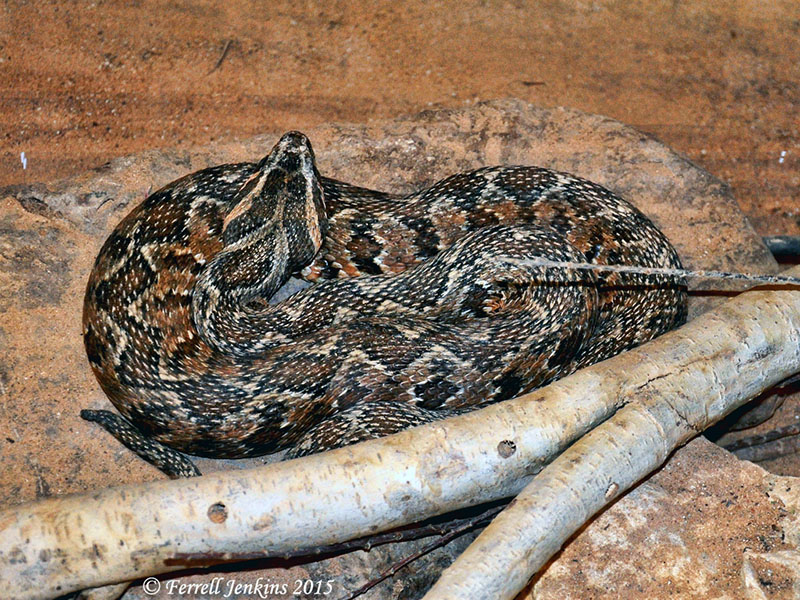
The photo below shows the Palestinian Viper (behind tough plastic!) at the Hai Bar Animal and Nature Reserve, north of Eilat, Israel.

Palestinian Viper at the HaiBar Reserve near Eilat, Israel. Photo by Ferrell Jenkins.

Palestinian Viper at the HaiBar Reserve near Eilat, Israel. Photo by Ferrell Jenkins.

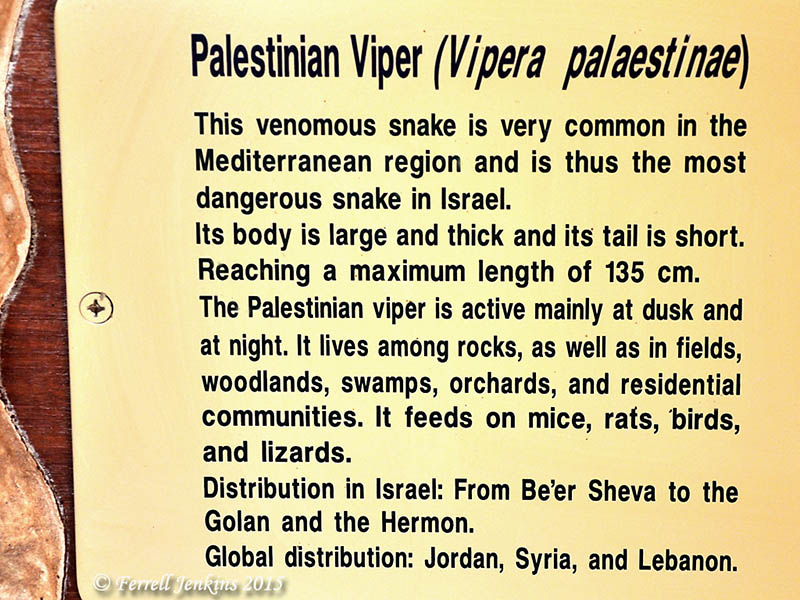
The sign at the Reserve gives some explanation about this poisonous viper.

Description of the Palestinian Viper at HaiBar Reserve.

Description of the Palestinian Viper at HaiBar Reserve.

A visit to Hai Bar is a wonderful experience.

Update

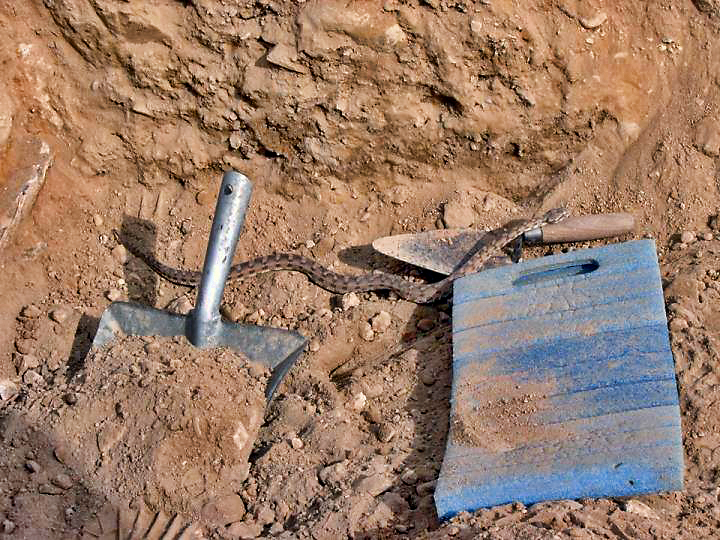
Dr. David E. Graves left a photo and some comments to this post on Facebook. I wanted to repeat them here so more readers could see.

Palestinian Viper at Tall el-Hammam. Photo by Dr. David E. Graves.

Palestinian Viper at Tall el-Hammam. Photo by Dr. David E. Graves.

David says, “I was sitting on a rock excavating [at Tall el-Hammam in the Jordan Valley] and the snake was hibernating (winter) under it. I stood up to take a picture of a lizard and the snake appeared out of the same hole.

He adds, “The locals call the snake a 5 stepper!! If you get bit you get 5 steps and your down.”

Traditions about Abraham at Şanliurfa, Turkey – Part 2

Without deciding the issue of the location of the Ur of the Chaldeans of Genesis 11:28 and 31 (also Genesis 15:7 and Nehemiah 9:7), we understand from the Old Testament that Abraham lived for a time at Haran about 25 miles south of Şanliurfa in southeastern Anatolia (modern Turkey).

Local Muslim tradition in Urfa claims that Abraham was born in a cave in the city, and legend says he was hidden by his mother in the cave for 15 months.

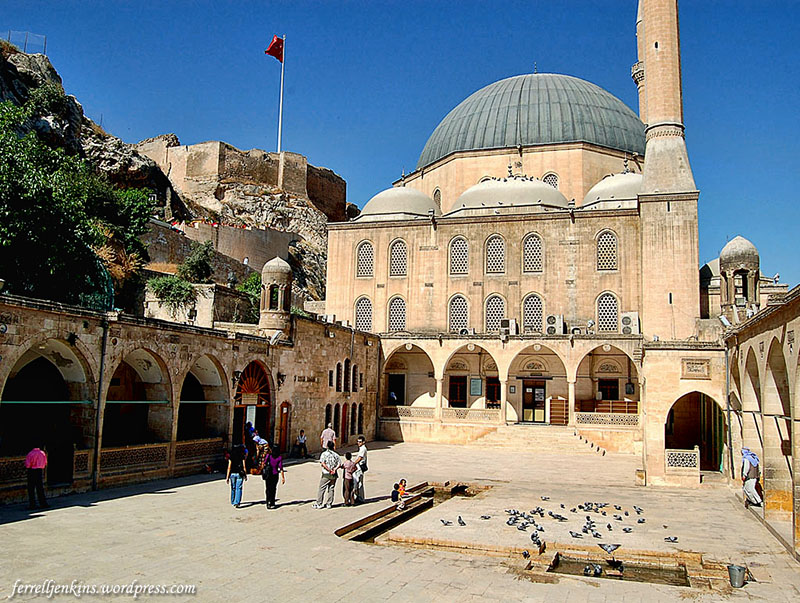
In the first photograph you see the Mosque associated with the cave of Abraham and the Citadel (Kale) which is thought to date to the Hellenistic period.

To the left of the courtyard is an entrance to the cave in which it is claimed that Abraham was born.

Citadel, mosque, cave. Photo by Ferrell Jenkins.

Citadel, mosque, and cave in Urfa. Photo by Ferrell Jenkins.

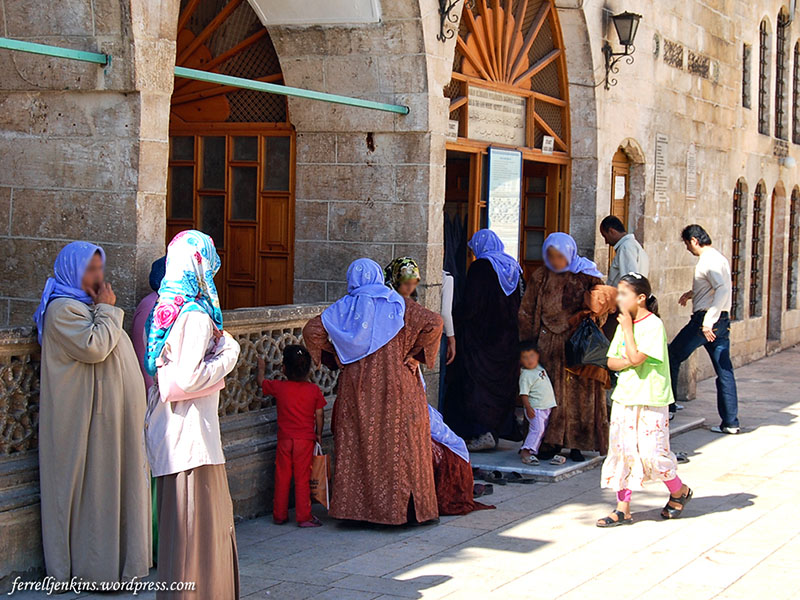
Men and women have separate entrances to the cave.

Men and women lined up to enter through separate doors. Photo by Ferrell Jenkins.

Men and women enter through separate doors. Photo by Ferrell Jenkins.

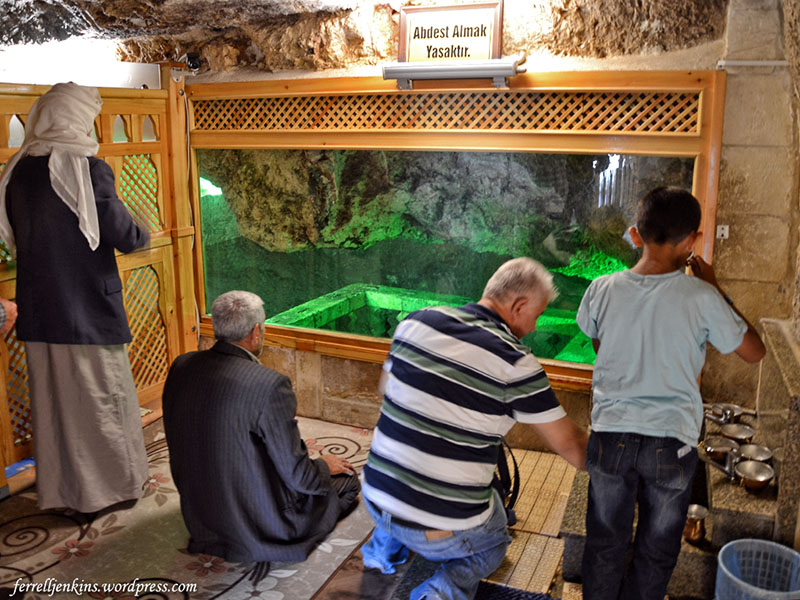
There appears to be a spring in the cave. Men are able to see further into the cave and have the opportunity to drink from the water using one of the cups that are provided. I do not know about the arrangement for the women.

Men worship in the Cave of Abraham at Urfa. Photo by Ferrell

Men worship in the Cave of Abraham at Urfa. Photo by Ferrell Jenkins.

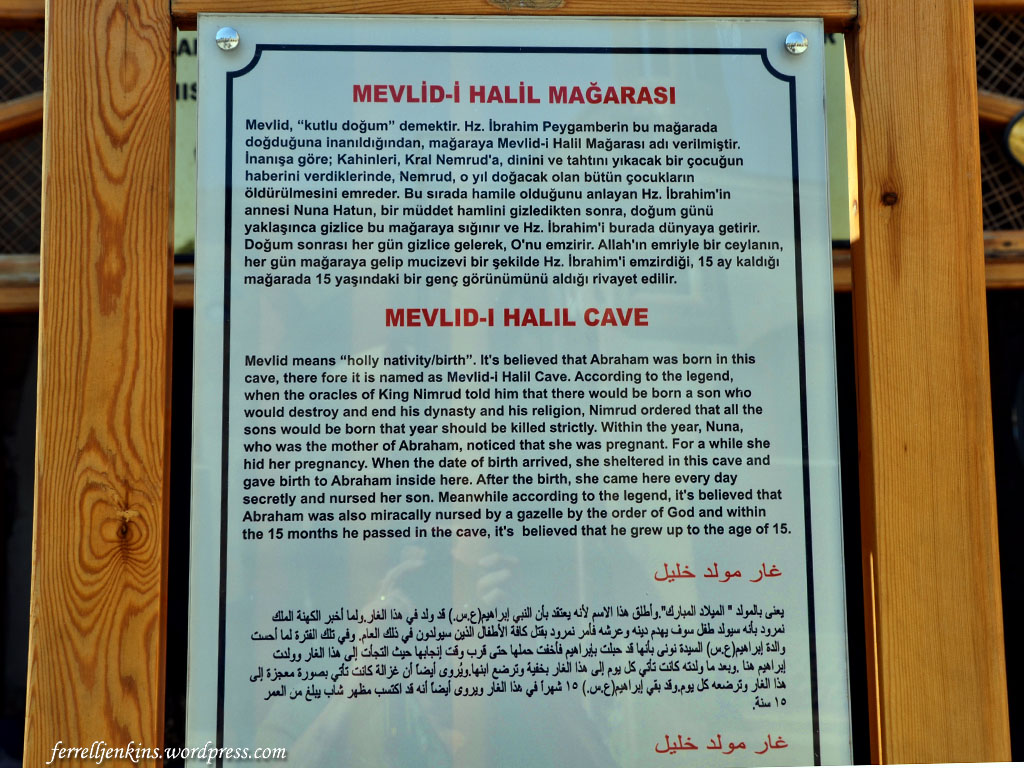
A sign at the cave explains the tradition. It seems not to have been written by native English speakers, but I think you will be able to make out the meaning.

Sign at the cave of Abraham. Photo by Ferrell Jenkins.

Sign at the cave of Abraham. Photo by Ferrell Jenkins.

Here is my copy of the sign without corrections.

Mevlid means “holly nativity/birth”. It’s believed that Abraham was born in this cave, there fore it is named as Mevlid-i Halil Cave. According to the legend, when the oracles of King Nimrud told him that there would be born a son who would destroy and end his dynasty and his religion, Nimrud ordered that all the sons would be born that year should be killed strictly. Within the year, Nuna, who was the mother of Abraham, noticed that she was pregnant. For a while she hid her pregnancy. When the date of birth arrived, she sheltered in this cave and gave birth to Abraham inside here. After the birth, she came here every day secretly and nursed her son. Meanwhile according to the legend, it’s believed that Abraham was also miracally nursed by a gazelle by the order of God and within the 15 months he passed in the cave, it’s believed that he grew up to the age of 15.

I understand the last sentence to say that Abraham grew to age 15 in just 15 months! The legend seems to mix a bit of the story of the birth and infancy of Moses who was hidden among the reeds along the Nile River for three months by his parents (Exodus 2:2-4; Hebrews 11:23) with the murder of the innocents by the hands of Herod the Great in an attempt to kill the infant Jesus (Matthew 2:16).

Like Christians and Jews, Muslims have a multitude of traditions and legends that have grown up around Biblical and Quranic characters.

Read Part 1 about Abraham and Şanliurfa here.

Traditions about Abraham at Şanliurfa, Turkey – Part 1

It might be best to begin by saying that Şanlıurfa (Glorious Urfa), often shortened to Urfa, is located in southeastern Turkey about 25 miles north of Haran, the home of Abraham before he went to the land of Canaan (Genesis 11:31). Some writers associate Urfa with Ur, the original home of Abraham. Prior to the 19th century scholars generally were unsure of the location of Ur, whether in the north or south of Mesopotamia.

Since Leonard Wooley identified a site in southern Mesopotamia (modern Iraq) in the 20th century with Ur of the Chaldeans, that site generally been accepted by most scholars. There have been those, however, who argue that the Biblical Ur should be identified with Urfa, or the general area in northern Mesopotamia. This is a site in modern Turkey, and a region we know as biblical Paddan-Aram (Genesis 25:30, et al. Cyrus H. Gordon argued for this position, and Barry Beitzel places Ur in the north in The Moody Atlas of Bible Lands. Others, such as Rasmussen in Zondervan Atlas of the Bible, acknowledge that some place Ur in the north. I leave this discussion for your further study.

Muslim tradition reveres Urfa as the birthplace and early home of Abraham. Abraham is identified prominently among the 28 prophets of the Muslim faith. Much of what is said in the Quran (Koran) about various Old Testament-period characters of the Bible (including Jesus, John the Baptist, and Mary) is taken from the Jewish Talmud and Christian apocrypha — books not accepted as part of the biblical canon. Geisler and Saleeb cite W. St. Clair-Tisdall’s The Sources of Islam to show the direct dependence of some of these stories.

The influence of the Jewish  apocrypha can be seen on the Qur’anic stories of Cain and Abel, Abraham and the idols, and the Queen of Sheba. [see pages 11-30 and 39-45] The direct influence of Christian apocrypha can be seen in the story of seven sleepers and the childhood miracles of Jesus. (Geisler, Norman L., and Abdul Saleeb. Answering Islam: The Crescent in Light of the Cross. 2nd ed. Grand Rapids, MI: Baker Books, 2002.)

Clair-Tisdall’s book is available at Google books. The story of Abraham and the idols is found in Sura 21 of the Quran, but it does not include the legendary story about the fish that we will recount below.

The Lonely Planet volume on Turkey (13th edition) succinctly explains the story. [For a number of years I have recommended the Lonely Planet guide books to my tour members. I find them very helpful, especially for the independent traveler.]

Legend had it that Abraham (Ibrahim), a great Islamic prophet, was in old Urfa destroying pagan gods one day when Nimrod, the local Assyrian king, took offence at this rash behaviour. Nimrod had Abraham immolated on a funeral pyre, but God turned the fire into water and the burning coals into fish. Abraham himself was hurled into the air from the hill where the fortress stands, but landed safely in a bed of roses.

The picturesque Gölbaşhi area of Urfa is a symbolic re-creation of this story. Two rectangular pools of water (Bahkll Göl and Ayn-i Zeliha) are filled with supposedly sacred carp, while the area west of the Hasan Padisah Camii is a gorgeous rose garden. Local legend has it that anyone catching the carp will go blind. Consequently, these appear to be the most pampered, portly fish in Turkey. (p. 565).

As with many “Jewish” and  “Christian” sites we speak of the traditional location of this or that. Sometimes, when there is little evidence to suggest the historical nature of such, we refer to something as a legendary account. Such would be the case with this story of Abraham and Nimrod.

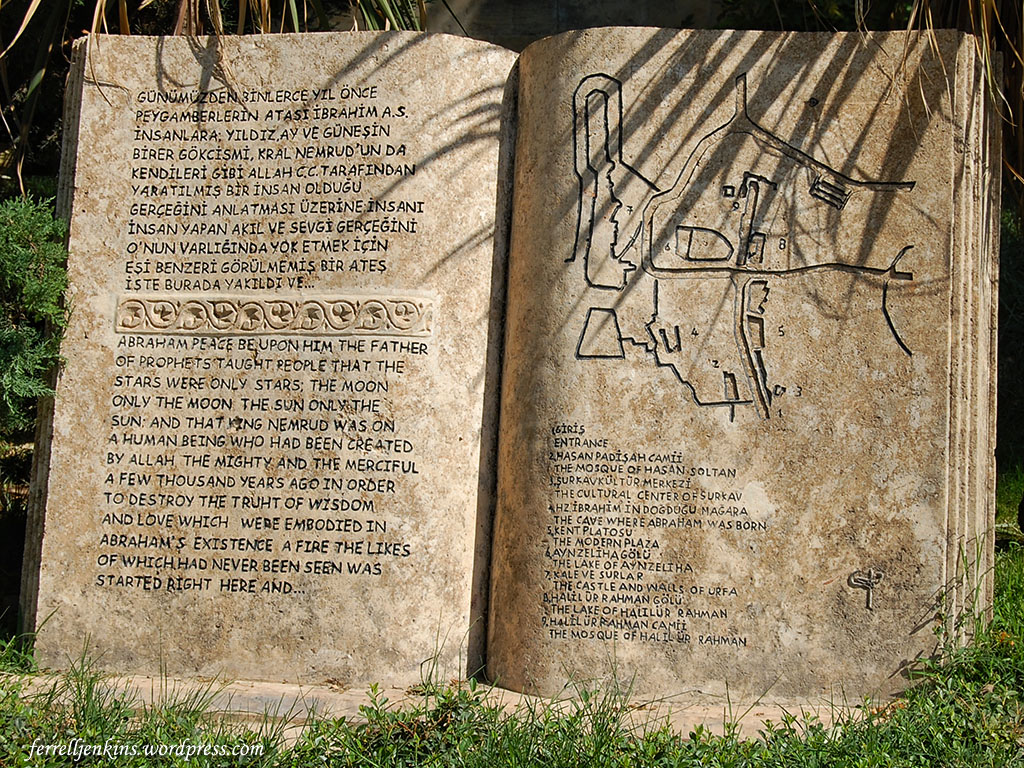
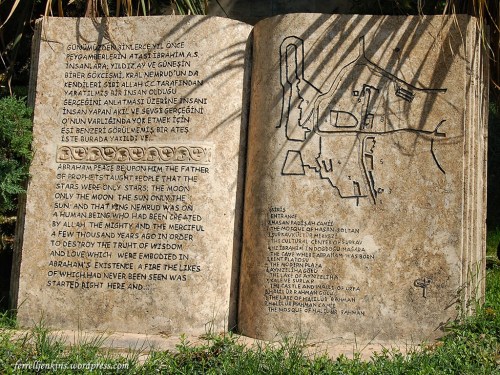
Şanlıurfa is a beautiful small city and a pleasure to visit. I have had the opportunity to do so three times. The Gölbaşhi park in the historic area is easy to visit. Our photo below shows a plan of the area on one side and the aforementioned story of Abraham on the other.
The legend of Abraham's association with Urfa. Photo by Ferrell Jenkins.

The legend of Abraham’s association with Urfa. Photo by Ferrell Jenkins.

Pool in the Gölbaşhi area of Urfa. My friend Gene, wearing the Florida State shirt and holding the camera at ready, bought extra bowls of food for the little boy so we could get photos of him feeding the fish.

Children enjoy feeding the sacred carp in the pool. Photo by Ferrell Jenkins.

Children enjoy feeding the sacred carp in the pool. Photo by Ferrell Jenkins.

A look at some of these fish illustrate why the Lonely Planet writer said they appear to be “the most pampered, portly fish in Turkey.”

The sacred carp of Urfa rush to get the food. Photo by Ferrell Jenkins.

The sacred carp of Urfa rush to get the food. Photo by Ferrell Jenkins.

A word of explanation is in order. I had never met a Muslim until my first trip to the Bible lands in 1967. In Cairo, Egypt, we sat on the floor of the Mohammad Ali mosque and listened as our guide explained about the mosque and the Muslim religion. He then answered as many questions as we wanted to ask. Through the past half century I have made many friends among the Muslims, including visiting in some homes, and I have had the opportunity to travel widely in the Middle East. I have good Muslim neighbors.

In Part 2 we will visit the cave identified as the birthplace of Abraham.

A crown of thorns and a reed

Sunday I was reading this text from Matthew prior to the Communion/Lord’s Supper.

And they stripped him and put a scarlet robe on him, and twisting together a crown of thorns, they put it on his head and put a reed in his right hand. And kneeling before him, they mocked him, saying, “Hail, King of the Jews!” And they spit on him and took the reed and struck him on the head. (Matthew 27:28-30 ESV)

Immediately I thought about sharing photos of the “thorns” his tormentors put on the head of Jesus and the “reed” they put in his right hand.

There are several possible plants growing in Israel that would be suitable for a crown of thorns. The United Bible Societies Fauna and Flora of the Bible has this comment.

Bible readers and commentators have naturally always been eager to identify the plant from which the crown of thorns was plaited by the soldiers. Zizyphus has been suggested from the time of Linnaeus, who added the name ‘spina Christi’ to it. The difficulty, however, is that this does not grow in the region where the event took place. Modern botanists sometimes suggest Poterium spinosum, which forms a mass of vegetation all over the country. It grows leaves twice a year, and has small red flowers. The thorns are numerous and cover the bush completely. (p. 185)

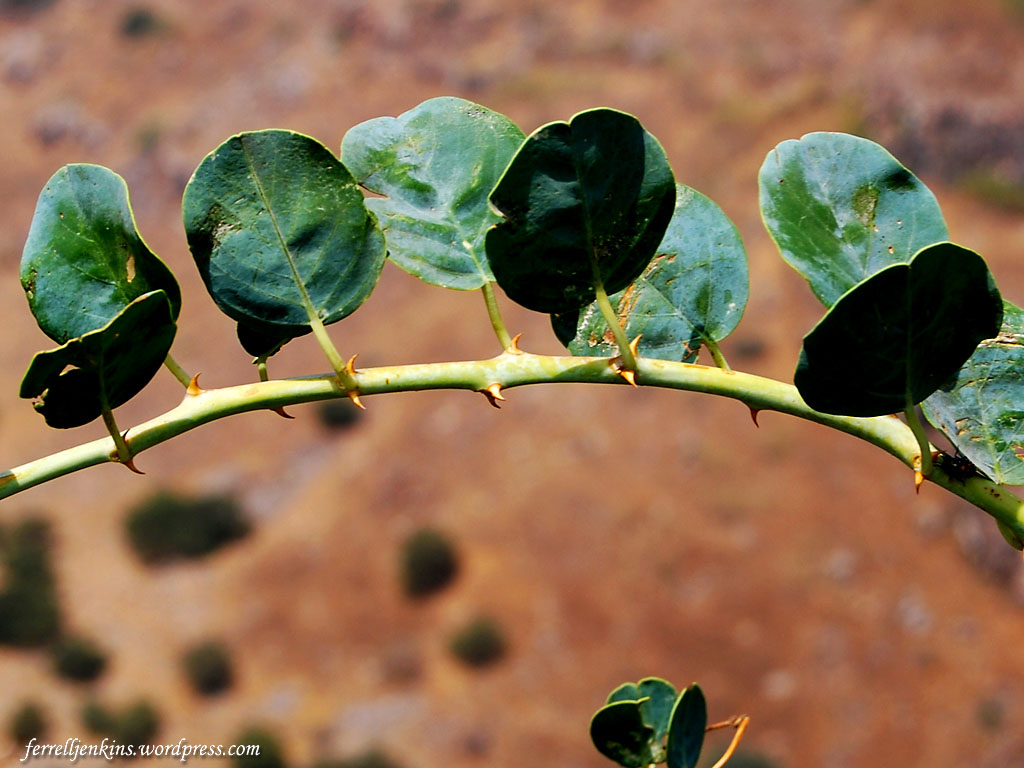
The photo below shows the ziziphus spina-christi growing at Gamla in Galilee.

The thorn (ziziphus spina-christi) growing at Gamla. Photo by Ferrell Jenkins.

The thorn (ziziphus spina-christi) growing at Gamla. Photo by Ferrell Jenkins.

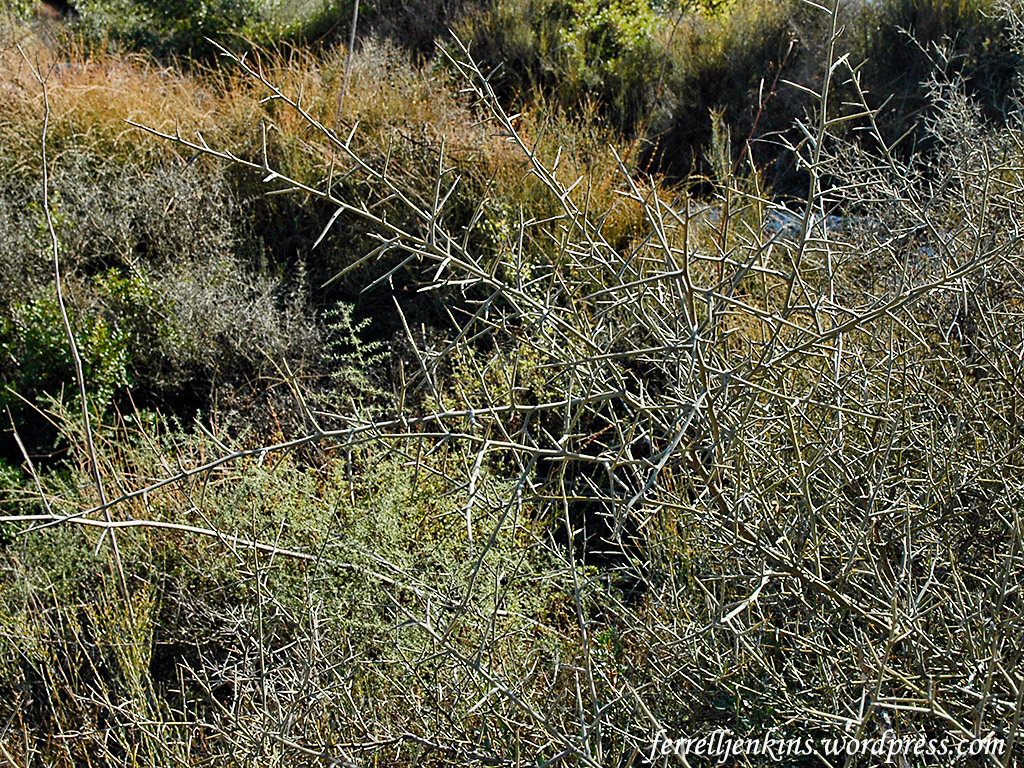
I think the following photo made at Neot Kedumim shows the Thorny burnet (Poterium spinosum).  You can see several examples, some in bloom, in the Pictorial Library of Bible Lands, Vol. 16 (Trees, Plants and Flowers).

Thorns crowing at Neot Kedumim. Photo by Ferrell Jenkins.

Thorns growing at Neot Kedumim. Photo by Ferrell Jenkins.

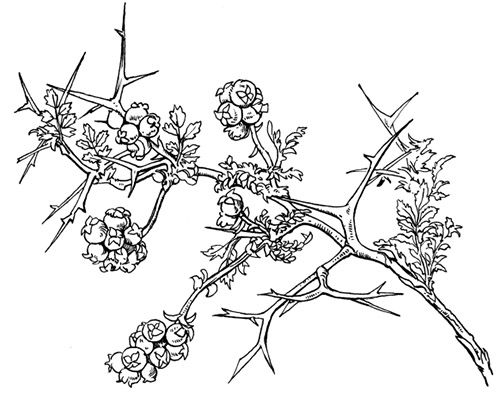
Here is a drawing from UBS’s 1000 Bible Images. I have observed several thorn plants with long spikes such as these.

Thorny burnet. 1000 Bible Images.

Thorny burnet. 1000 Bible Images.

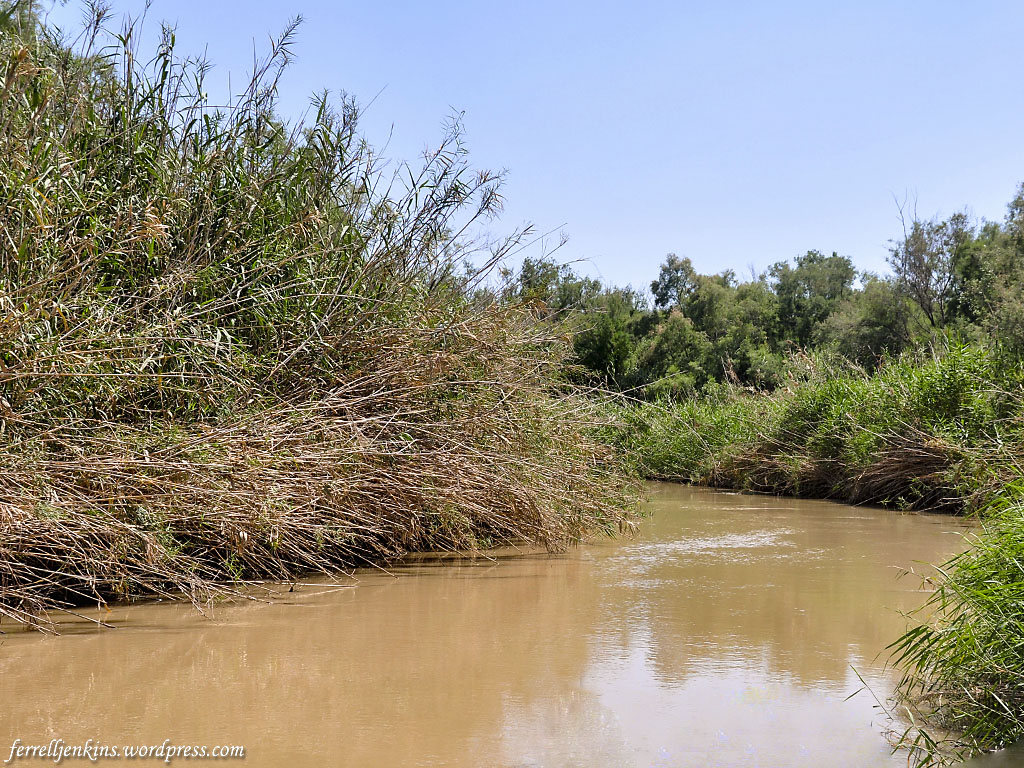
Reeds grow commonly around streams and in marshy areas. Reeds can be seen in abundance along the banks of the Jordan River at Qasr el-Yahud, the traditional site of the baptism of Jesus (Matthew 3:13-17).

Reeds growing on the banks of the Jordan River. Photo by Ferrell Jenkins.

Reeds growing on the banks of the Jordan River. Photo by Ferrell Jenkins.

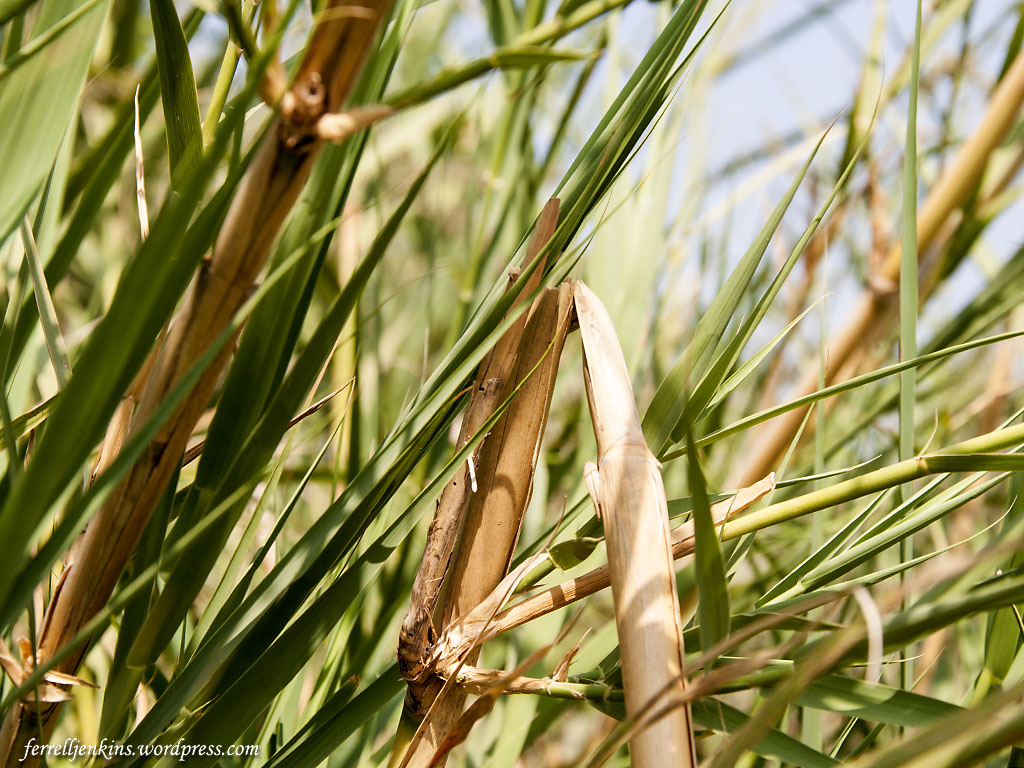
The final photo is a close-up of reeds growing in a marshy area near Omrit in the northern Hula Valley.

Reeds growing in a marshy area at the foot of Omrit in northern Israel. Photo by Ferrell Jenkins.

Reeds growing in a marshy area near Omrit in northern Israel. Photo by Ferrell Jenkins.

The reed was first used as an instrument of mockery, as if it were a scepter, and then as an instrument of punishment with which to beat Him.

Jonah’s encounter with the great fish

Recently we called attention to significant biblical events that took place at Joppa. One of these was the account of Jonah taking a ship for Tarshish from Joppa to avoid going to Nineveh (Jonah 1:3).

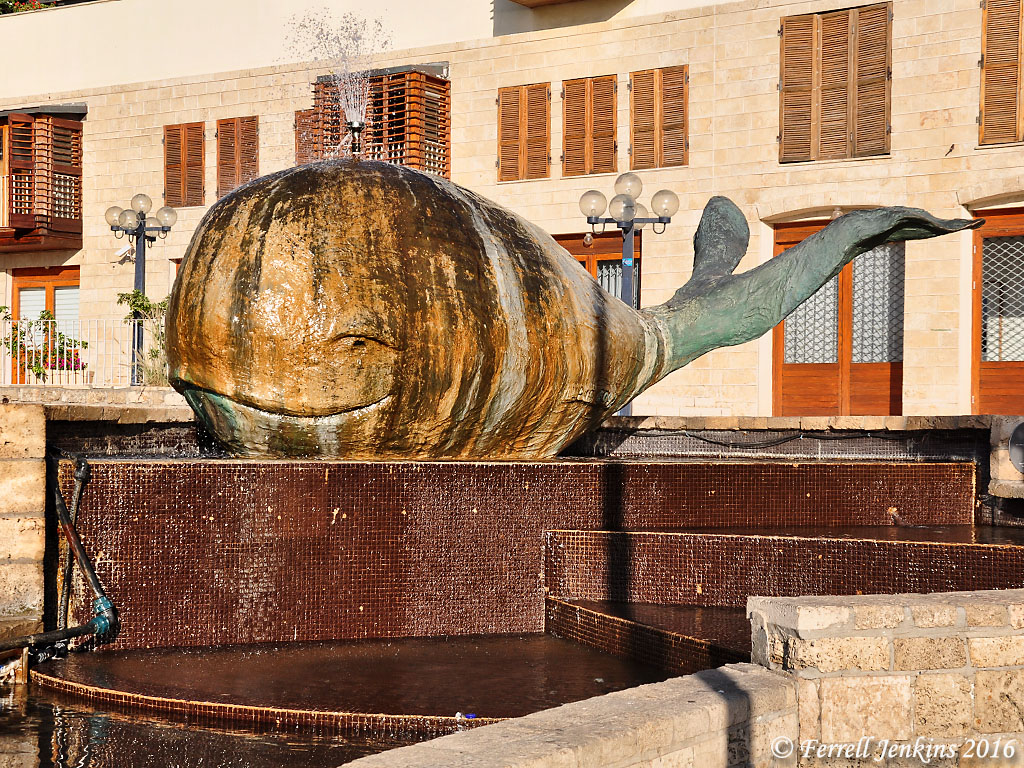
The folks at Joppa (Jaffa; Yafo) have not forgotten what happened to Jonah.

Visitors to Joppa (Jaffa; Yafo) are minded of the story of Jonah and the great fish. Photo by Ferrell Jenkins.

Visitors to Joppa (Jaffa; Yafo) are reminded of the story of Jonah and the great fish.

The biblical account says,

And the LORD appointed a great fish to swallow up Jonah. And Jonah was in the belly of the fish three days and three nights. (Jonah 1:17 ESV)

The NET Bible uses the phrase huge fish.

The New Testament accounts of Jesus’ reference to this event use the phrase “great fish” or “sea monster” in Matthew 12:40 and Luke 11:29-30. Of the commonly used English versions, only the King James Version makes reference to a whale.

For just as Jonah was three days and three nights in the belly of the great fish, so will the Son of Man be three days and three nights in the heart of the earth. (Matthew 12:40 ESV)

Some repair photos at the Holy Sepulcher

In the last post we mentioned the long-needed repair of the shrine (edicule) in the Holy Sepulcher, the traditional site of the tomb in which Jesus was placed after the crucifixion.

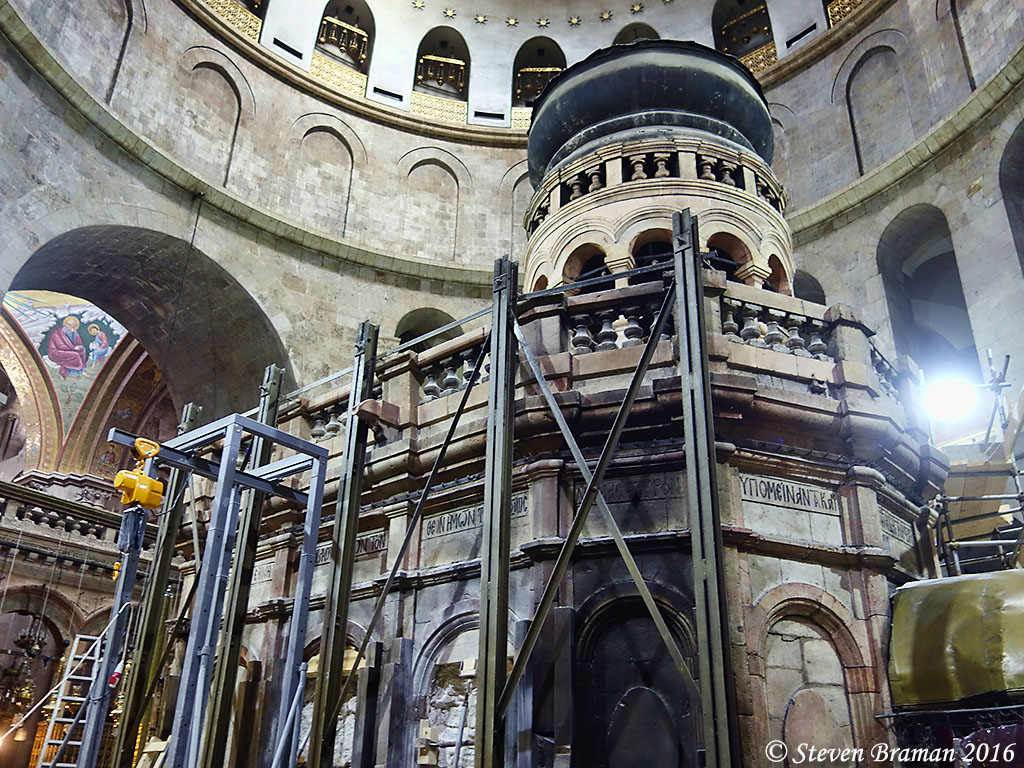
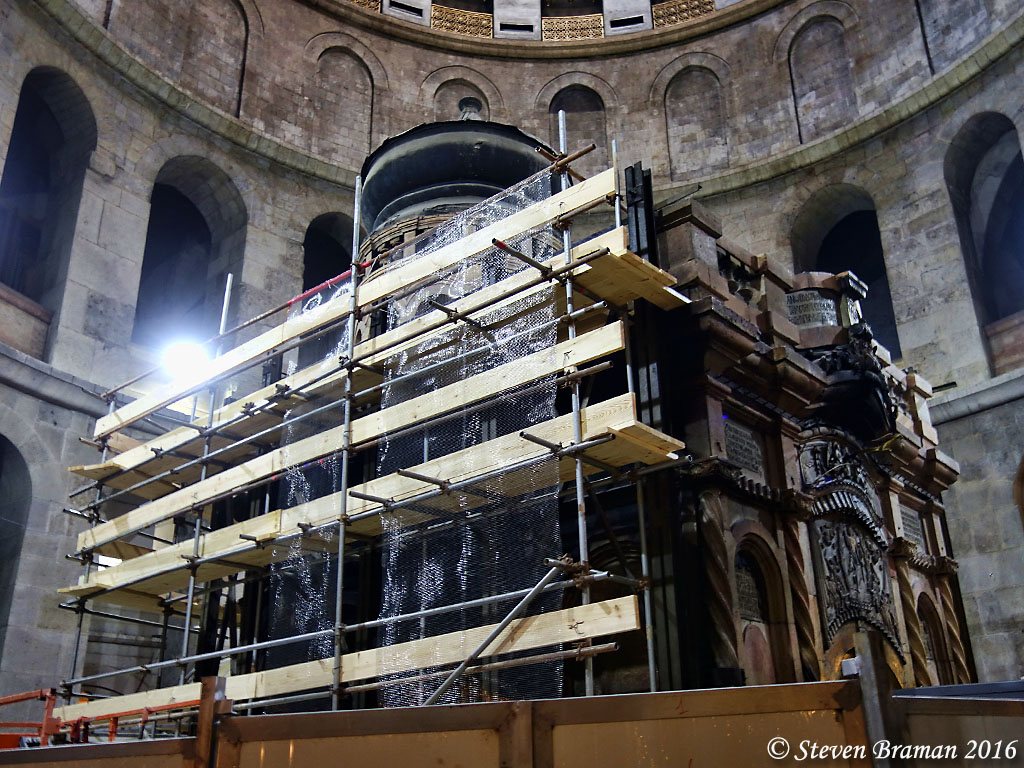
One of my traveling friends, Steven Braman, just returned from the excavation at Lachish. He offered to send some photos he made within the Holy Sepulcher on June 24th. I am sharing two of these with our readers.

Shrine of the Holy Sepulcher under repair June 24, 2016.

Shrine of the Holy Sepulcher under repair June 24, 2016.

Repair of the shrine of the Holy Sepulcher, June 24, 2016.

Repair of the shrine of the Holy Sepulcher, June 24, 2016.

Tim Blamer, one of our readers, left this comment.

I was there last week. The scaffolding and construction is quite extensive now. Any peace and tranquility that was in the church is now overwhelmed by the sound of construction and heavy equipment moving around. People could still go in to view the tomb, but it’s clear something major is being done.

Thanks to Steven and Tim. I never observed much “peace and tranquility” in the church.

Repair of the Shrine in the Holy Sepulcher

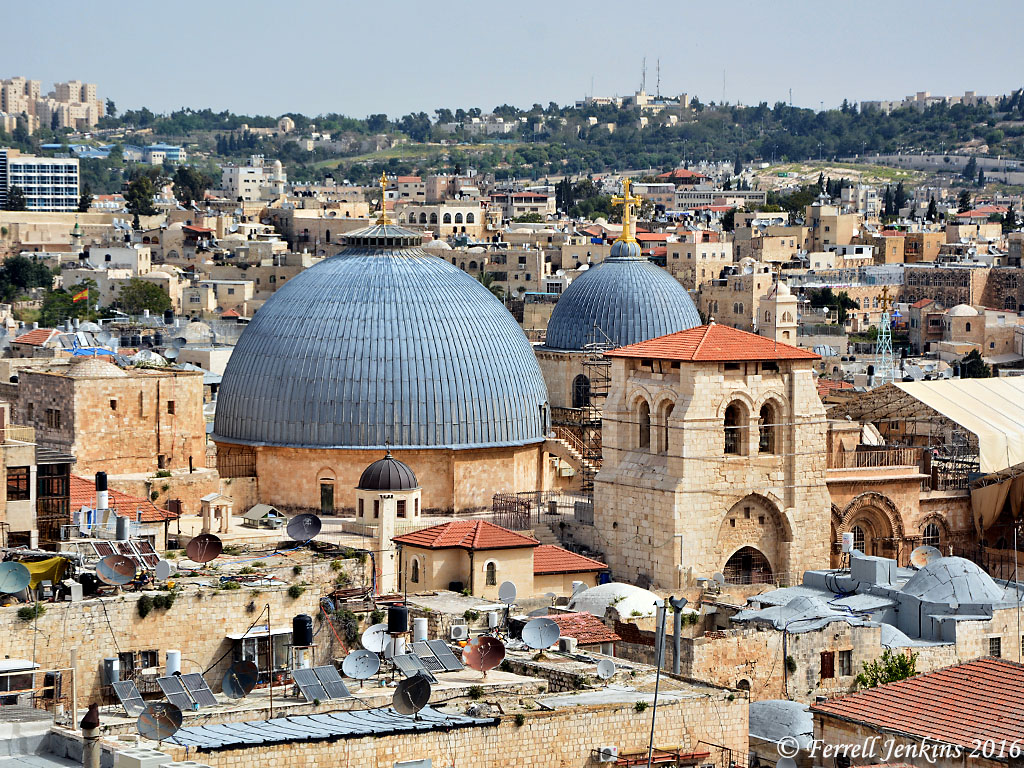
The dome of the Holy Sepulcher (Sepulchre) is easily recognizable to all visitors of the Old City of Jerusalem. It is the larger of two gray domes seen in the photo below. The smaller dome marks the traditional site of Calvary, the place where Jesus was crucified. The Church of the Holy Sepulcher was built by the Roman Emperor Constantine after his mother Helena visited Jerusalem. Murphy-O’Connor dates the dedication of the building to September 17, 335.

The gray domes of the Holy Sepulchre (left) and the site of Calvary (right) from the roof of the Citadel. Photo by Ferrell Jenkins.

The gray domes of the Holy Sepulcher (left) and the site of Calvary (right) from the roof of the Citadel. Photo by Ferrell Jenkins.

An edicule or small building within the church is said to cover the tomb in which Jesus was laid after the crucifixion, that is, the tomb of Joseph of Arimathea (Matthew 27:57-60). The photo below shows some of the metal used to secure the structure in recent years.

For years it was known that the structure needed to be repaired. Finally, someone donated $1.3 million dollars to be sure the work could begin. Widespread reports indicate the work in now underway to remove the structure and then replace it.

The Edicule of the Holy Sepulchre. Photo by Ferrell Jenkins.

The Edicule of the Holy Sepulcher. Photo by Ferrell Jenkins.

At this time the original tomb is covered by stone. The Franciscan Museum in the Old City of Jerusalem has a model to show what the original tomb looked like.

Model of the tomb at the Holy Sepulchre. Franciscian Museum. Photo by Ferrell Jenkins.

Cross section model of the tomb at the Holy Sepulchre in the Franciscan Museum, Jerusalem. Photo by Ferrell Jenkins.

Jerome Murphy-O’Connor asks the question, “Is this the place where Christ died and was buried?” He answers, “Yes, very probably.”

But Murphy-O’Connor also describes vividly the situation one finds today.

One expects the central shrine of Christendom to stand out in majestic isolation, but anonymous buildings cling to it like barnacles. One looks for numinous light, but it is dark and cramped. One hopes for peace, but the ear is assailed by a cacophony of warring chants. One desires holiness, only to encounter a jealous possessiveness: the six groups of occupants—Latin Catholics, Greek Orthodox, Armenian Orthodox, Syrians, Copts, Ethiopians—watch one another suspiciously for any infringement of rights. The frailty of humanity is nowhere more apparent than here; it epitomizes the human condition. The empty who come to be filled will leave desolate, those who permit the church to question them may begin to understand why hundreds of thousands thought it worthwhile to risk death or slavery in order to pray here. (The Holy Land, 5th Ed., p. 49).

Whether most of us will ever see the remains of the actual tomb is unknown. Our faith in the resurrected Christ does not depend on the actual tomb in which He was placed after being taken down from the cross. It depends rather on the testimony of those reliable witnesses who saw Him after the resurrection. Luke reports that eyewitness testimony (Luke 1:1-4). Here is what he says the women who went to the tomb on the first day of the week were told when they found the empty tomb.

He is not here, but has risen. Remember how he told you, while he was still in Galilee,  that the Son of Man must be delivered into the hands of sinful men and be crucified and on the third day rise.” (Lukw 24:6-7 ESV)

When Todd Bolen reported (here) the plans to dismantle and rebuilt the shrine he said,

Maybe one of these days they’ll get around to moving the ladder.

This ladder is said by some to have been leaning against the facade above the entry to the church since the 18th century because the various religious groups can not agree who should remove it. The ladder has become a symbol of division. An interesting article about the Immovable Ladder may be found in Wikipedia here.

The ladder above the entrance to the church of the Holy Sepulcher. Photo by Ferrell Jenkins.

The immovable ladder above the entrance to the church of the Holy Sepulcher. Photo by Ferrell Jenkins.

The harbor at Joppa (Jaffa, Yafo)

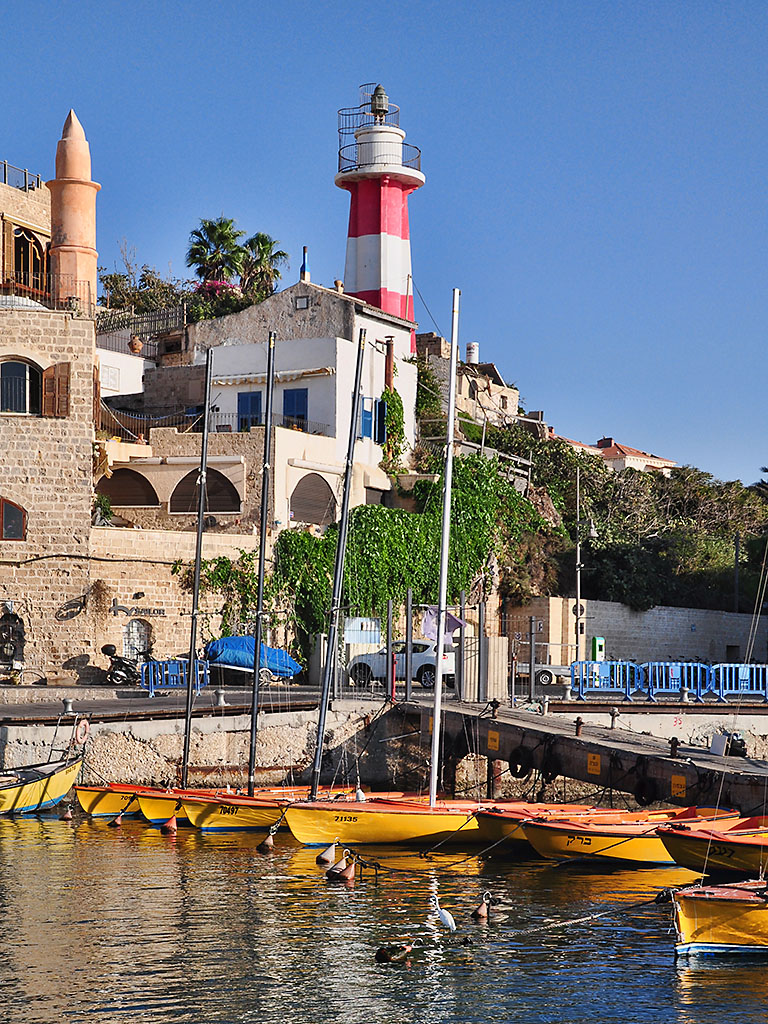
The harbor at Joppa/Jaffa/Yafo was once a much more significant harbor, but never an adequate one. Only a small leisure harbor remains today. Our late afternoon photo shows the lighthouse rising above some of the buildings of the city.

The leisure harbor at Joppa/Jaffa. Photo by Ferrell Jenkins.

The leisure harbor at Joppa/Jaffa. Photo by Ferrell Jenkins.

Joppa is located in the Plain of Sharon and served as the seaport for Jerusalem which is about 35 miles away. The city is now called Jaffa, or Yafo. Joppa was a walled town as early as the reign of Pharaoh Thutmose III (1490-1435 B.C.) who mentions Joppa in his town lists.

Here are a few of the biblical highlights for Joppa.

  • Joppa was assigned to the tribe of Dan, but was not controlled by the Israelites till the time of David (Joshua 19:46).
  • Hiram of Tyre floated cedar from Lebanon to Joppa for Solomon’s Temple (2 Chronicles 2:16).
  • Jonah sought a ship for Tarshish at Joppa to avoid going to Nineveh (Jonah 1:3).
  • Cedars from Lebanon again were floated to Joppa for the rebuilding of the temple (520-516 B.C.; Ezra 3:7). The port of the city is behind St. Peter’s Church.
  • Tabitha (Dorcas) lived in Joppa. When she died the disciples sent for Peter who was a Lydda. He came to Joppa and raised Dorcas (Acts 9:36-42). (Acts 10:6).
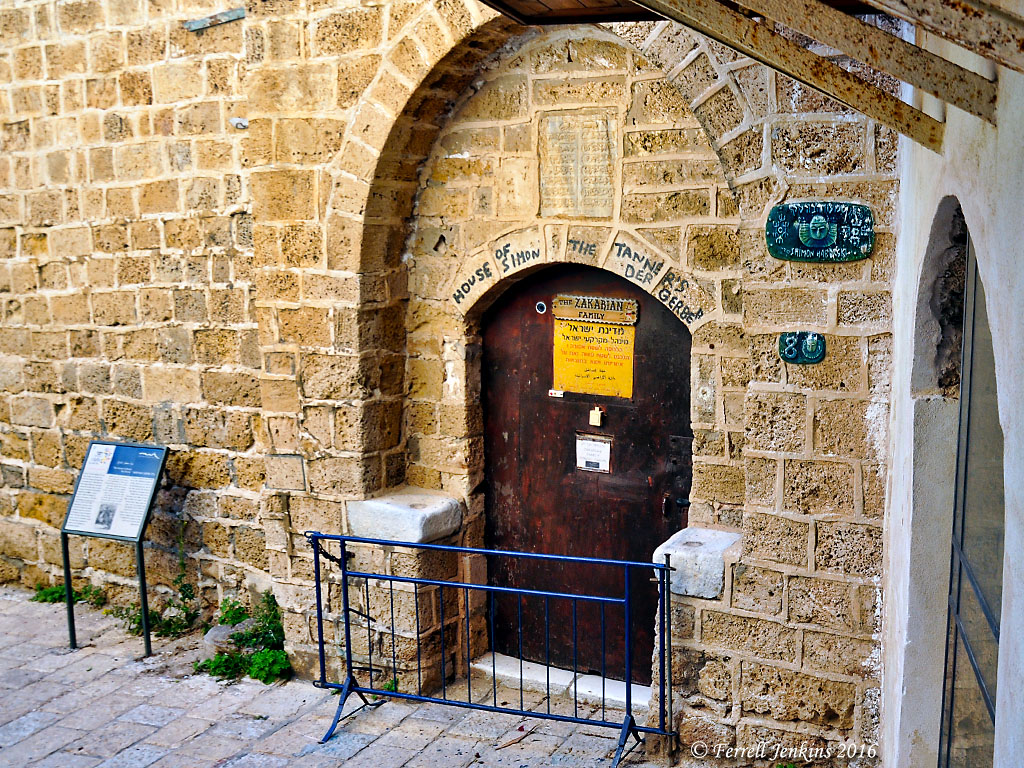
  • Peter stayed many days in Joppa with Simon the tanner (Acts 9:43). His house was by the sea (Acts 10:6). A house near the port is shown as the house of Simon, but there is no way to know this with certainty.
  • Peter received the housetop vision and learned that he was to go to Caesarea to preach the gospel to the Gentiles at the house of the Roman centurion Cornelius (Acts 10:23).
The traditional house of Simon the Tanner at Joppa. Photo by Ferrell Jenkins.

The traditional house of Simon the Tanner at Joppa. Photo by Ferrell Jenkins.

Galilee from Mount Arbel at dusk

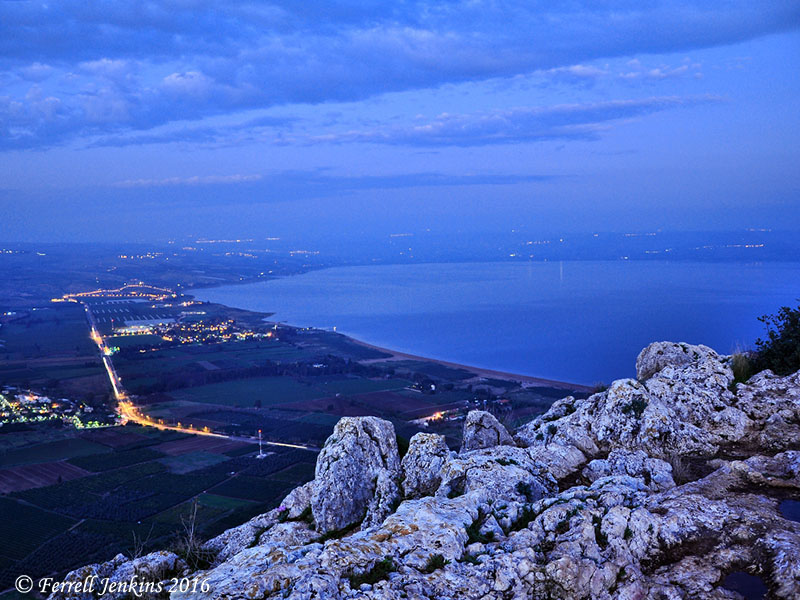
The photo below is one I made from Mount Arbel shortly after sundown on a December day a few years ago. Haze often covers the Sea of Galilee, but my experience is that it tends to clear in the late afternoon.

View from Mount Arbel showing the northern end of the Sea of Galilee shortly after sunset. Photo by Ferrell Jenkins.

View from Mount Arbel showing the northern end of the Sea of Galilee shortly after sunset. Photo by Ferrell Jenkins.

From Mount Arbel we see the Plain of Genessaret below to the north (left). On the north end of the Sea of Galilee we have the sites of Tabgha and Capernaum, with the Mount of Beatitudes on the hill above the lake. Chorazin is a few miles up the hill. Magdala is below Mount Arbel about where the large shrub is showing on the right. Tiberias is further to the south (right). Across the lake we have the Plain of Bethsaida and the Golan Heights.

Much of the earthly ministry of Jesus took place in this vicinity, and He often worked at this time of day when it was cooler.

When it was evening, many demon-possessed people were brought to him. He drove out the spirits with a word, and healed all who were sick. In this way what was spoken by Isaiah the prophet was fulfilled: “He took our weaknesses and carried our diseases.” (Matthew 8:16-17 NET)