Category Archives: New Testament

Ossuaries in ancient Jerusalem and Judea

From about 30 B.C. to A.D. 70 (some scholars extend these dates to as late as A.D. 135), ossuaries were used by the Jews in secondary burials. Numerous of these stone receptacles have been discovered. Most of the dead were first buried in caves or rock-cut tombs. After the flesh had decayed, the bones were placed in an ossuary or “bone box.” This provided space for more burials.

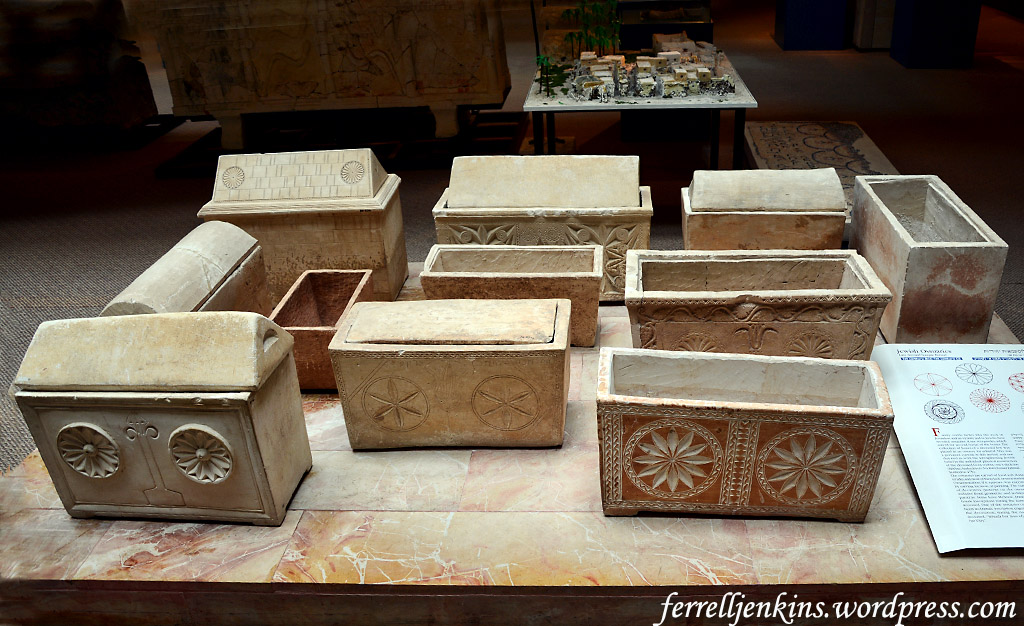
The Hecht Museum at Haifa University has a nice display of ossuaries. Six of these have lids on them. The lid is missing on five others.

Display of Jewish Ossuaries in the Hecht Museum. Photo by Ferrell Jenkins.

Display of Jewish Ossuaries in the Hecht Museum. Photo by Ferrell Jenkins.

The sign with the display states that,

This was a prevalent custom in this period, and one that tied in with the strengthening Jewish belief in the individual, physical resurrection of the deceased from within one’s skeleton (Mishna, Sanhedrin 6:5-6; Babylonian Talmud, Sanhedrin 47b).

This is the description of the ossuaries.

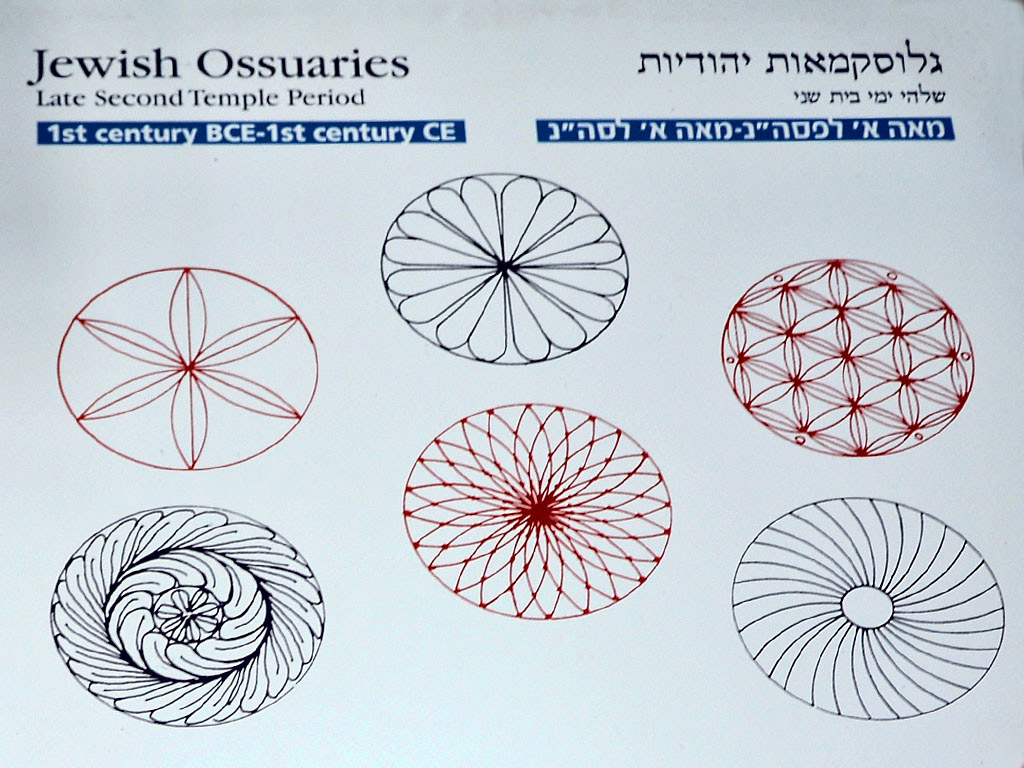
The ossuaries are carved of local soft stone (chalk), and most of them lack ornamentation. Ornamentation, if it appears, was executed by carving, incision, or painting. The variety of decorative patterns on the ossuaries includes floral, geometric and architectural patterns. Some have Hebrew, Aramaic, or Greek inscriptions stating the name of the deceased.

The top of the sign shows some of the decorations found on ossuaries. Note above, the statement that most ossuaries lacked ornamentation.

Decorations found on Jewish Ossuaries. Photo by Ferrell Jenkins.

Decorations found on Jewish Ossuaries. Photo by Ferrell Jenkins.

Rachel Hachlili describes the typical ossuary:

These ossuaries are small limestone boxes approximately 20 inches long, 10 inches wide and 12 inches high. Usually they have a flat, gabled, or rounded lid. All these ossuaries were used for secondary burials; approximately a year after the original burial, when the body had decomposed, the bones of the deceased were collected and placed in the ossuary. (BAR, July/Aug. 1979).

Stone cutting was one of the main occupations of ancient Israel, and some stone cutters evidently specialized in made-to-order ossuaries.

In a future post I plan to show a cemetery filled with ossuaries.

Index of articles – the Romans and the ministry of Jesus

The Romans had occupied the land they later called Palestine for nearly a century when Jesus began His ministry. This means that there was no one alive at that time who remembered when the Romans were not in control.
The writings of Josephus cover this period and New Testament writers called attention to the Roman rulers.

In those days a decree went out from Caesar Augustus that all the world should be registered. (Luke 2:1 ESV)

In the fifteenth year of the reign of Tiberius Caesar, Pontius Pilate being governor of Judea, and Herod being tetrarch of Galilee, and his brother Philip tetrarch of the region of Ituraea and Trachonitis, and Lysanias tetrarch of Abilene, (Luke 3:1 ESV)

Roman soldiers roamed the country and eventually destroyed the Holy City Jerusalem. The culture of Rome can still be seen in the ruins of various cities.

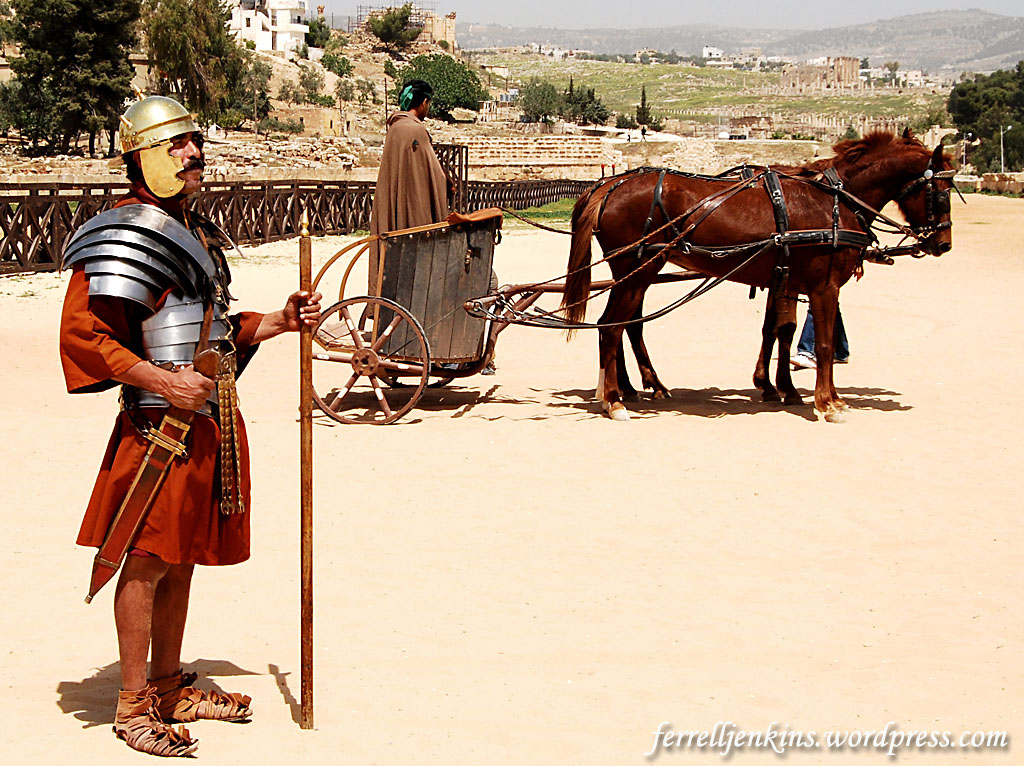
Roman Centurion and a Charioteer at Jerash (the RACE show at Jerash). Photo by Ferrell Jenkins.

I am not sure that this list of posts about the Roman empire in Palestine is a complete one, but I think it will be helpful as you study the impact of Rome and its culture on the ministry of Jesus and His apostles. We could compile another list specifically from the book of Acts, the New Testament Epistles, and the book of Revelation. Use the Search Box to locate other subjects you may be looking for.

The Kangal sheep dog of Anatolia

Shepherds in every part of the world have problems they must contend with as they care for their sheep. The Bible uses the analogy of the sheep and the wolves in several places. Jesus warned about the “hired hand” who would abandon the sheep.

He who is a hired hand and not a shepherd, who does not own the sheep, sees the wolf coming and leaves the sheep and flees, and the wolf snatches them and scatters them. (John 10:12 ESV)

Within the past few years I have come across an interesting practice used by shepherds in Anatolia (Central Turkey), and only recently came across an article in a 2003 issue of Saudi Aramco World about the same shepherds. It begins this way,

There are grey wolves in Turkey, thousands of them. There are also bears, jackals, and—recorded just last year for the first time in a quarter century—Anatolian leopards. All are the enemies of sheep and goats. As predators, they live at the expense of the prey animals, the meat-eaters against the grass-eaters. But on Turkey’s Anatolian plateau, the prey have a strong friend, more than a match for any predator: the kangal dog.

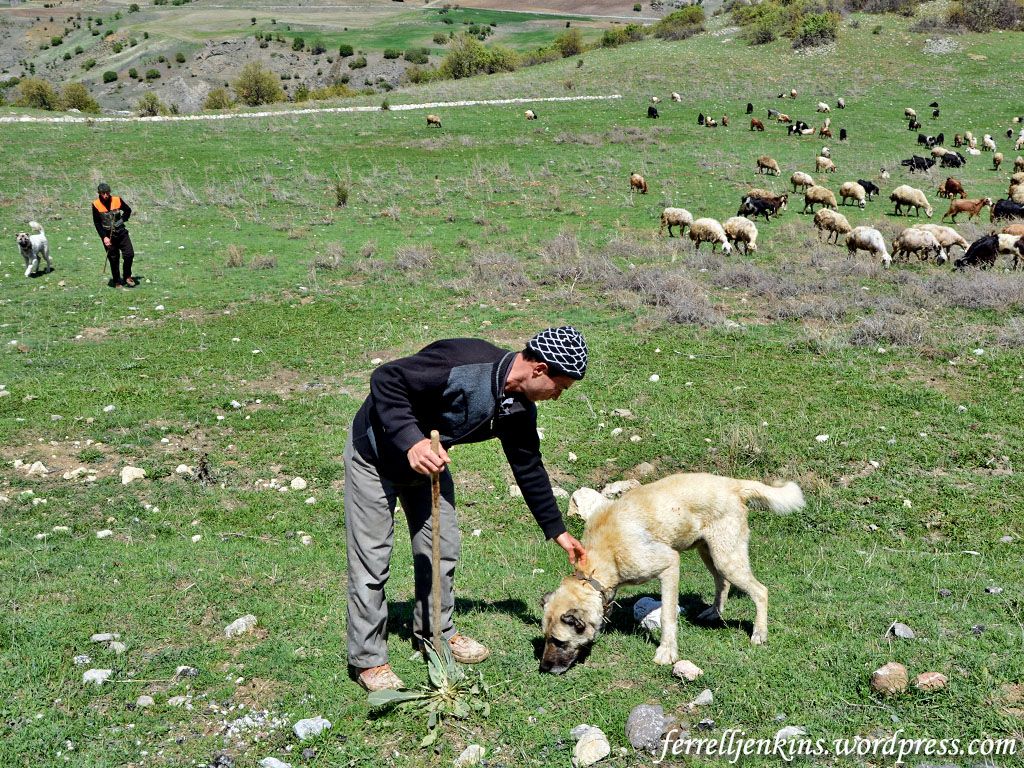
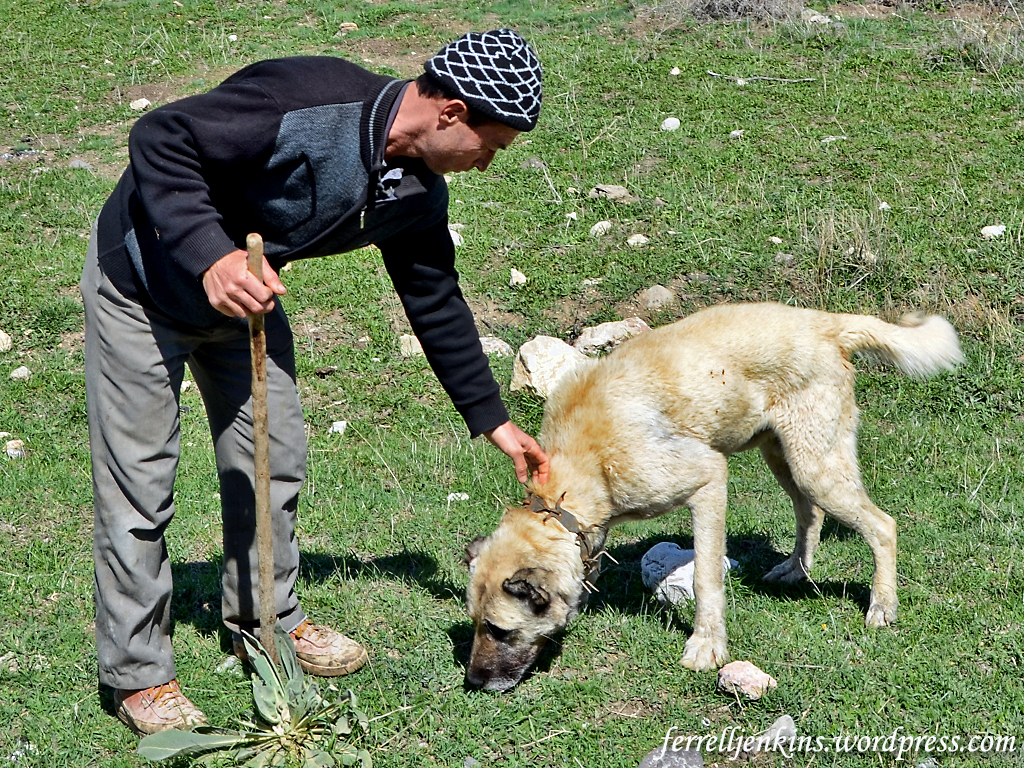
On our last visit to the ancient Hittite city of Hattusas (modern Boghazkale) we saw a large number of sheep grazing over the ruins of the ancient city. Our guide said that the dogs we saw with the shepherds were a special breed of dog that were common in Anatolia, but he could not recall the name of the dogs. In fact, he said might be a slightly different breed from the one he was thinking about.

Shepherd at hattusas with his sheepdog. Notice the collar that is specially prepared to protect these dogs from wolves and other wild animals. Photo by Ferrell Jenkins.

Shepherd at Hattusas with his sheepdog. Notice the collar that is specially prepared to protect these dogs from wolves and other wild animals. Photo by Ferrell Jenkins.

The shepherds were pleased to show us the spiked collar. A wolf, or other wild animal, would go at the throat of the dog, but the spikes would be a strong deterrent. Notice also that the ears of this dog have been cropped. This, according to the article, is “intended to deprive wolves of a tooth-hold.” The author says,

Shepherds frequently dock their dogs’ ears, saving them the trouble of doctoring wounds when they tangle with a wolf. But the heavy spiked collar they wear, called a çengel, or hook, seems enough to keep even the most determined enemy from biting their heads.

Here is a close-up, and you may click on it for an even larger image, showing the spikes or hook.

A close up showing the spikes on the collar of the dog. Photo by Ferrell Jenkins.

A close up showing the spikes on the collar of the dog. Photo by Ferrell Jenkins.

Shepherds of biblical times carried a rod and a staff (Psalm 23:4). The rod could be used to ward off an attacking animal. The staff was used by the shepherd as he made his way up and down the hillsides, and to separate the sheep.

Source: Werner, Louis. “Shepherd’s Best Friend.” Saudi Aramco World July/Aug. 2003: 38-43.

The Horns of Hattin and the battle of 1187

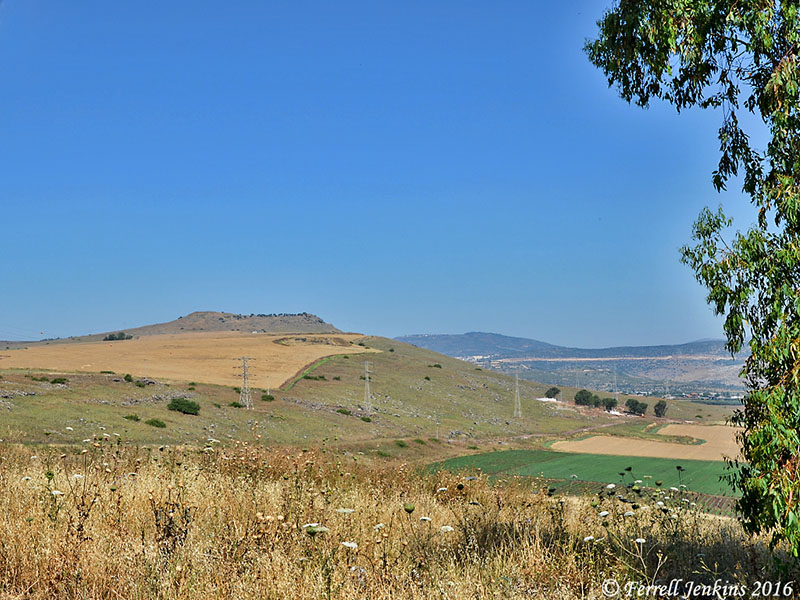
The Horns of Hattin is the name given to a saddle-shaped (or horn-shaped) extinct volcano located about five miles west of the Sea of Galilee. Several older writers, including Jesse L. Hurlbut, referred to this formation as the traditional Mount of the Beatitudes (A Bible Atlas [1910], 15). The hill is about 1200 feet above sea level. Few scholars hold this view today.

A view of the Horns of Hattin northwest of Highway 77. Photo by Ferrell Jenkins.

A view of the Horns of Hattin northwest of Highway 77. Photo by Ferrell Jenkins.

Below Hattin, on the edge of the Arbel Pass, there is a building believed by the Druze to be the burial site of Nebi Shu’eib (Jethro, the father-in-law of Moses; Exodus 3:1). The Druze gather here every spring for a festival.

One of the most important battles of history was fought at the Horns of Hattin on July 4, 1187. The Moslems, headed by Saladin, overpowered the Crusaders and captured most of Palestine including Jerusalem. Perhaps the most significant reason the Crusaders took their stand here was that they thought the Sermon on the Mount (Matthew 5-7) was spoken by Jesus on this hill.

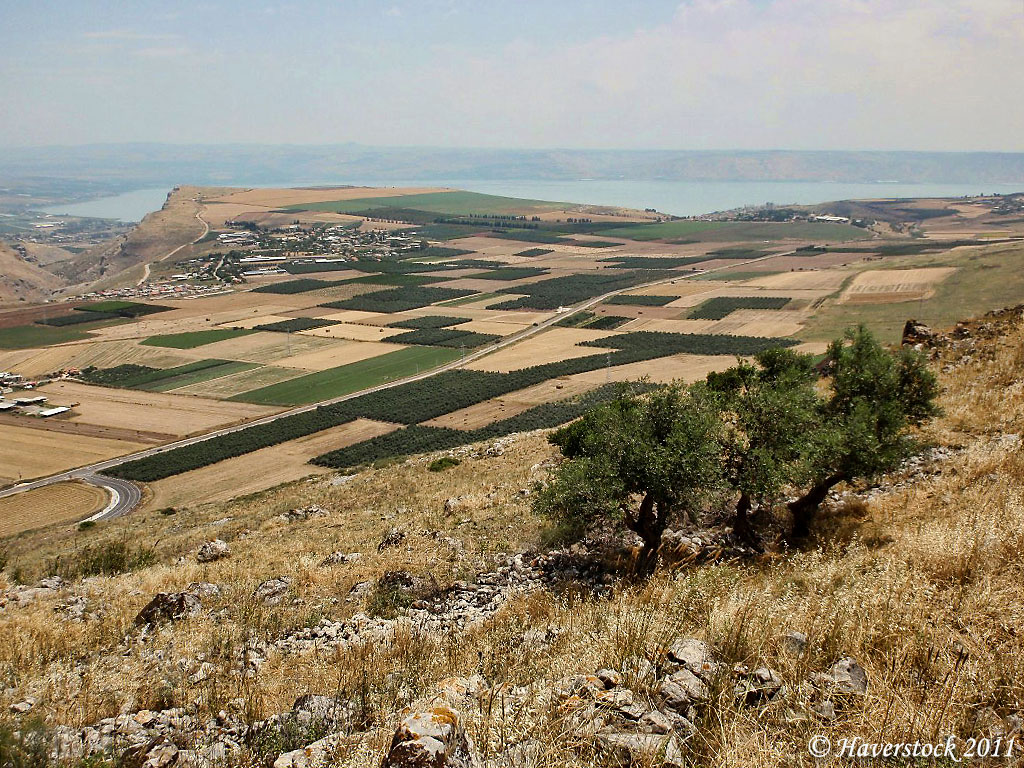
I have never stood atop Hattin, but a friend of mine walked the Jesus Trail after our tour in 2011. Larry Haverstock shared some of his photos of the fascinating formation as he crossed it on his five-day trip from Nazareth to Capernaum.

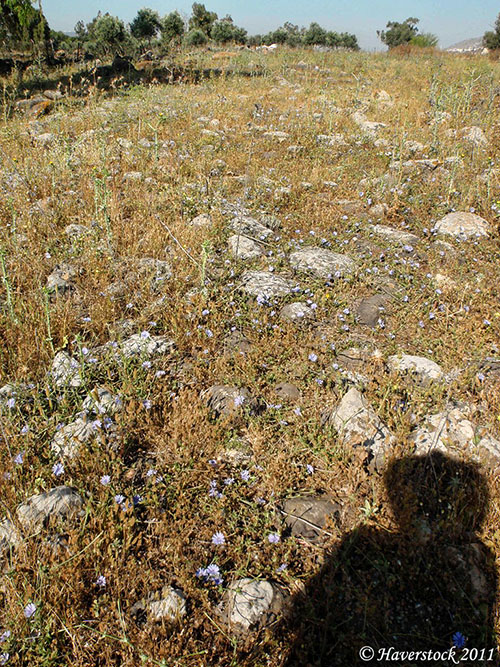
This first photo shows ruins of a Roman road between Golani Junction and Magdala on the Sea of Galilee. The Jesus Trail followed this road. Larry’s friends will recognize his shadow  in the photo.

The Jesus Trail follows ruins of the Roman road from Golani Junction to Magdala. Photo by Larry Haverstock.

The Jesus Trail follows ruins of the Roman road from Golani Junction to Magdala. Photo by Larry Haverstock.

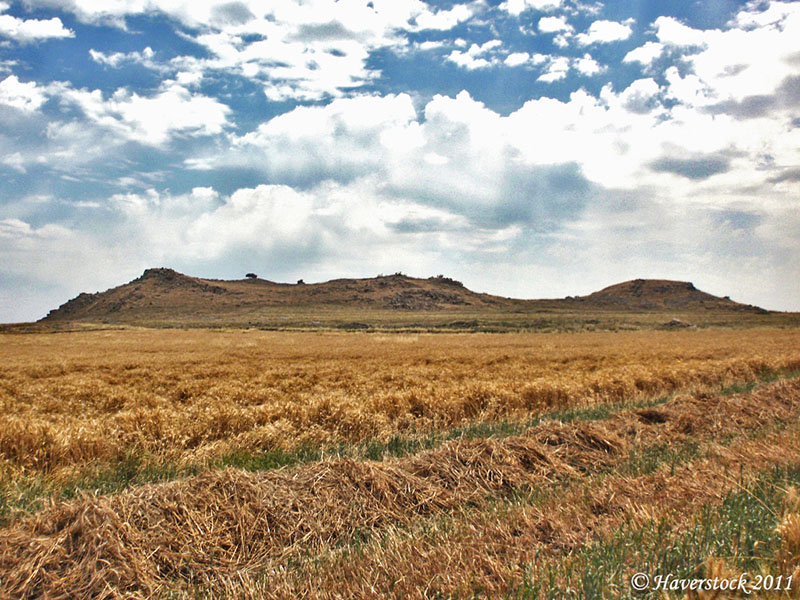
Following the road from the west one approaches the Horns of Hattin knowing that from the top there will be a wonderful view of the Sea of Galilee and the area of the Galilean ministry of Jesus.

The Horns of Hattin from the west. Photo by Larry Haverstock.

The Horns of Hattin from the west. Photo by Larry Haverstock.

Approaching the top of the formation you will see the southern hump and some of the volcanic rubble from ages past.

View to the east, while walking the Jesus Trail from Nazareth. Photo by Larry Haverstock.

View to the east, while walking the Jesus Trail from Nazareth. Photo by Larry Haverstock.

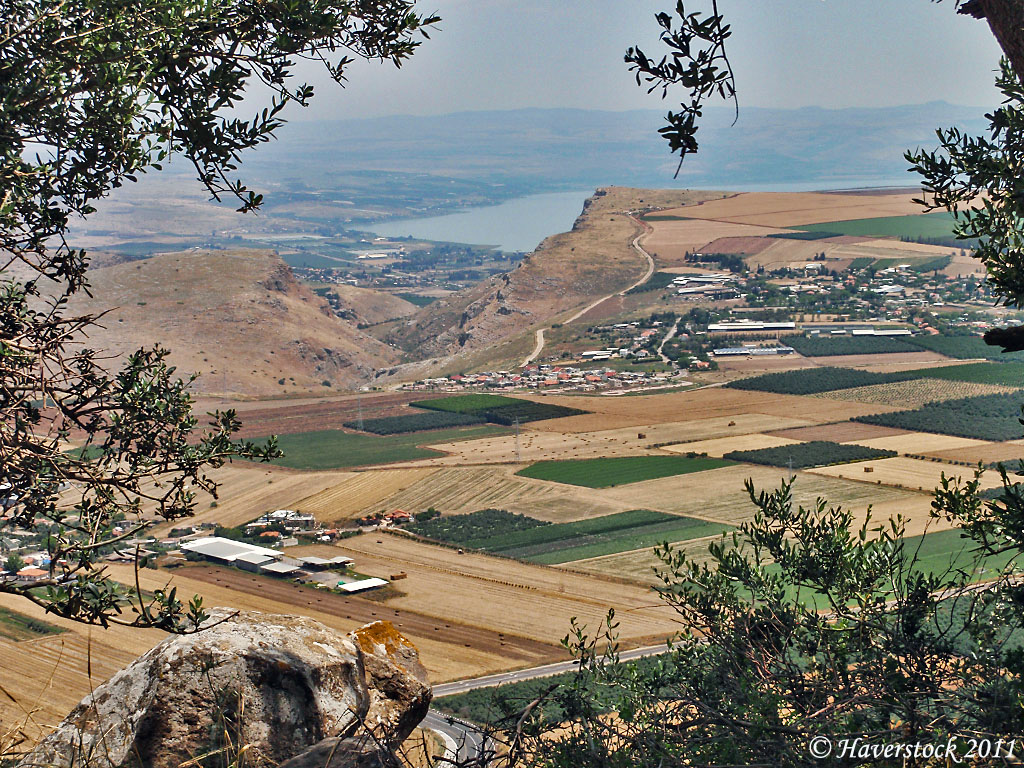
The next photo made from Hattin shows Mount Arbel and portions of the Sea of Galilee. Larry writes and speaks vividly. I notified him that I would be posting this article today. He replied,

Can’t wait to see your Hattin article. I was up there all alone, not one other person in sight as far as the eyes could see from that amazing height. Could almost hear the echoing sounds of war reverberating across the centuries.

View of the Sea of Galilee from the Horns of Hattin. Photo by Larry Haverstock.

View of the Sea of Galilee from the Horns of Hattin. Photo by Larry Haverstock.

This photo provides a clear view of the depression to the north (left) of Mount Arbel through which the ancient road ran. The valley leading from the Horns of Hattin to the Sea of Galilee is known as Wadi Hamam. It is more commonly called the Arbel Pass, the Valley of the Robbers, or the Valley of the Pigeons. Some scholars say that the main trunk road from the Coastal Plain to Damascus came through this valley. It is common to hear this spoken of as the Via Maris (the way to the sea). This means that the main road from Nazareth, Sepphoris, and Cana to Capernaum ran through this valley. This is the way Jesus and His disciples traveled (Matthew 4:13; John 4:11-12). Other scholars suggest that the route from Capernaum to Nazareth ran to the north of the wadi and the rugged cliffs to the north.

From the Horns of Hattin one sees Mount Arbel, the Arbel Valley, the plain of Gennesaret and the northern end of the Sea of Galilee. Photo by Larry Haverstock.

From the Horns of Hattin one sees Mount Arbel, the Arbel Valley, the plain of Gennesaret and the northern end of the Sea of Galilee. Photo by Larry Haverstock.

I have read several articles about the modern reenactment of the decisive 1187 battle between the Crusaders of the Kingdom of Jerusalem and the followers of Saladin. Here are a few links for those who would like to read more.

  • Times of Israel 2016 article by Ilan Ben Zion here.
  • Times of Israel 2015 article by Oded Balilty here.
  • Daily Mail article with photos here.

Alon describes the day of the battle in 1187.

The engagement took place on a blistering-hot day and the Crusader soldiers encumbered by their heavy and clumsy armor in face of the light cavalry of their enemy. After a day-long battle, not one Crusader soldier remained alive on the battlefield. (Azaria Alon, Israel National Parks & Nature Reserves, 168.)

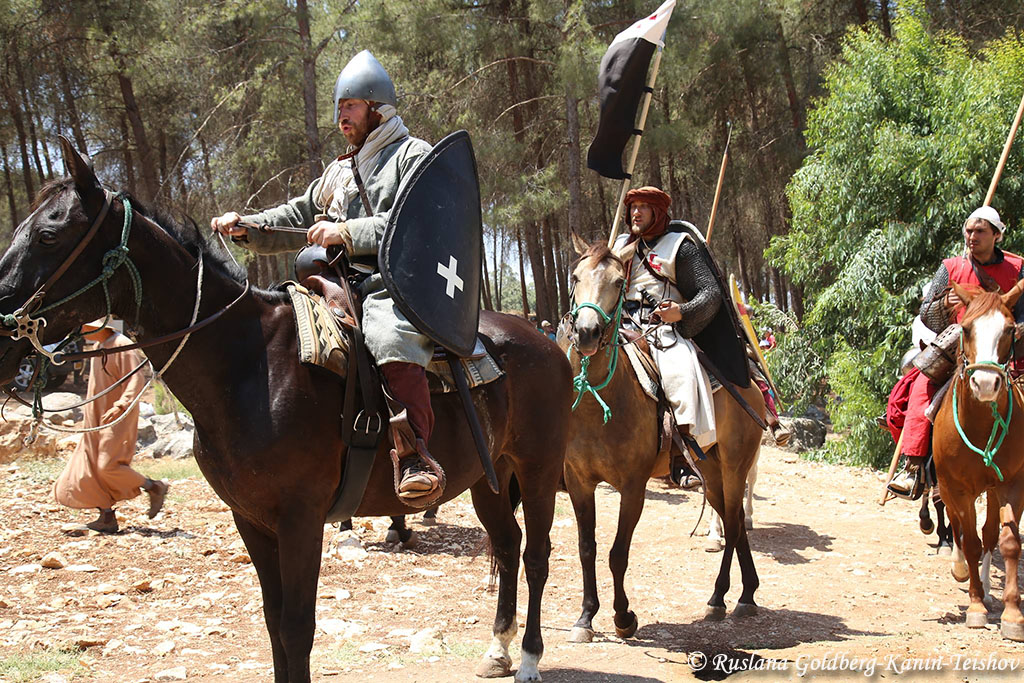
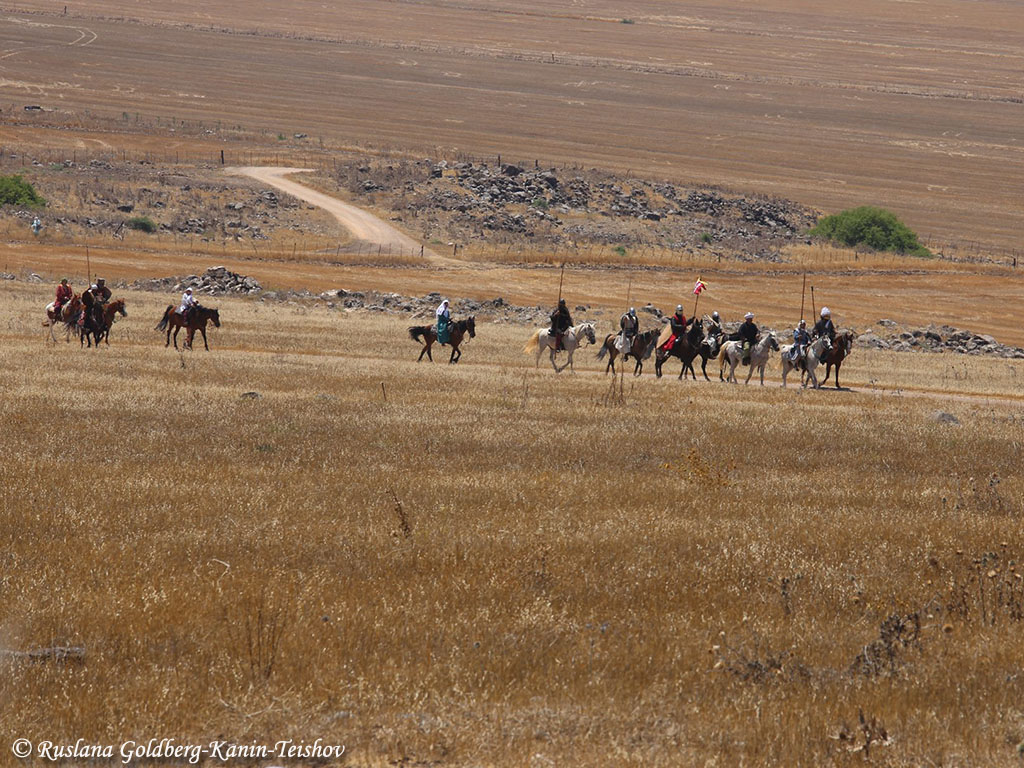
Numerous persons have included photos here and there on the Internet. I was impressed with some photos by Ruslana Goldberg-Kanin Teishov and requested permission to share two or three of them with our readers. Ruslana graciously granted permission. The next three photos are by her. The first shows Crusader soldiers readying for battle. You can see other of her photos here.

History buffs reenact the crusaders as they ready to defend the formation known as the Horns of Hattin. Photo by Ruslana Goldberg-Kanin Teishov.

History buffs reenact the crusaders as they ready to defend the formation known as the Horns of Hattin. Photo by Ruslana Goldberg-Kanin Teishov.

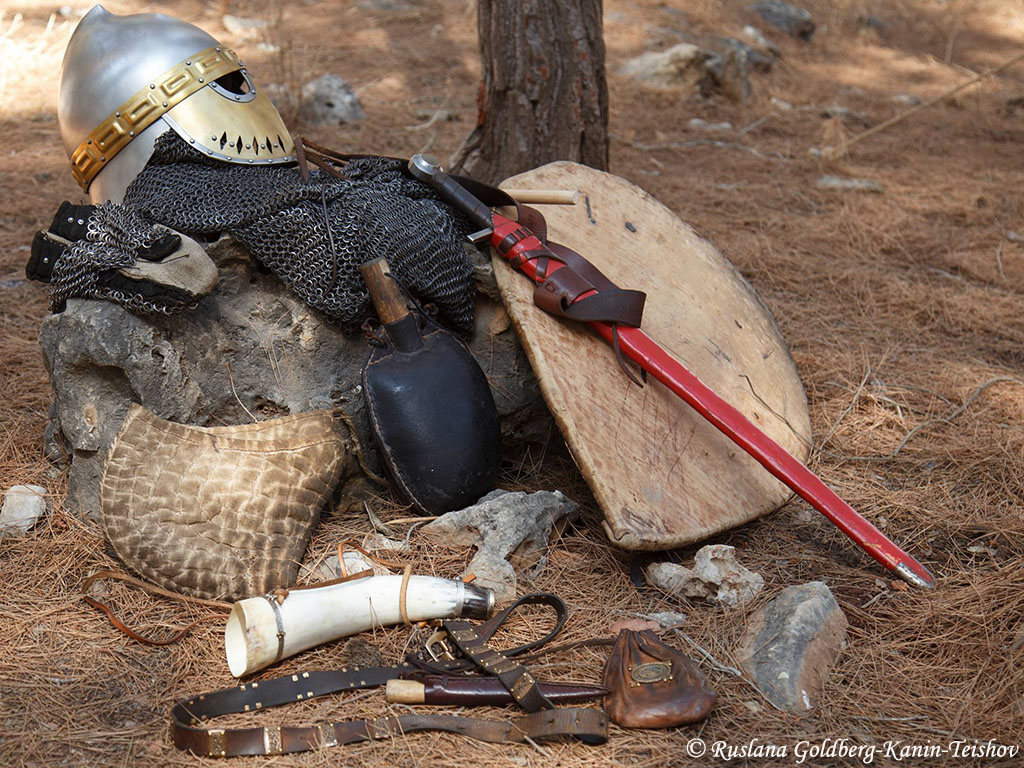
This photo shows the heavy armor worn by some of the soldiers.

One of the soldier actors had his armor laid out to show what the Crusaders had to wear. History buffs reenact the crusaders as they ready to defend the formation known as the Horns of Hattin. Photo by Ruslana Goldberg-Kanin Teishov.

One of the soldier actors had his armor laid out to show what the Crusaders had to wear. History buffs reenact the crusaders as they ready to defend the formation known as the Horns of Hattin. Photo by Ruslana Goldberg-Kanin Teishov.

This photo shows soldiers as they approached the western slope of the Horns of Hattin.

This photo shows soldiers as they approached the western slope of the Horns of Hattin. Photo by Ruslana Goldberg-Kanin Teishov.

This photo shows soldiers as they approached the western slope of the Horns of Hattin. Photo by Ruslana Goldberg-Kanin Teishov.

The official web page for the Horns of Hattin project is here.

Did Jesus preach the Sermon on the Mount here? Probably not.

Many thanks to Larry Haverstock and Ruslana Goldberg-Kanin Teishov for making this post much more interesting than it would have been without their photos. If you wish to follow Larry on the Jesus Trail you may begin here and then use his blog archive to locate the other posts.

Donation for Herod’s Temple in Jerusalem

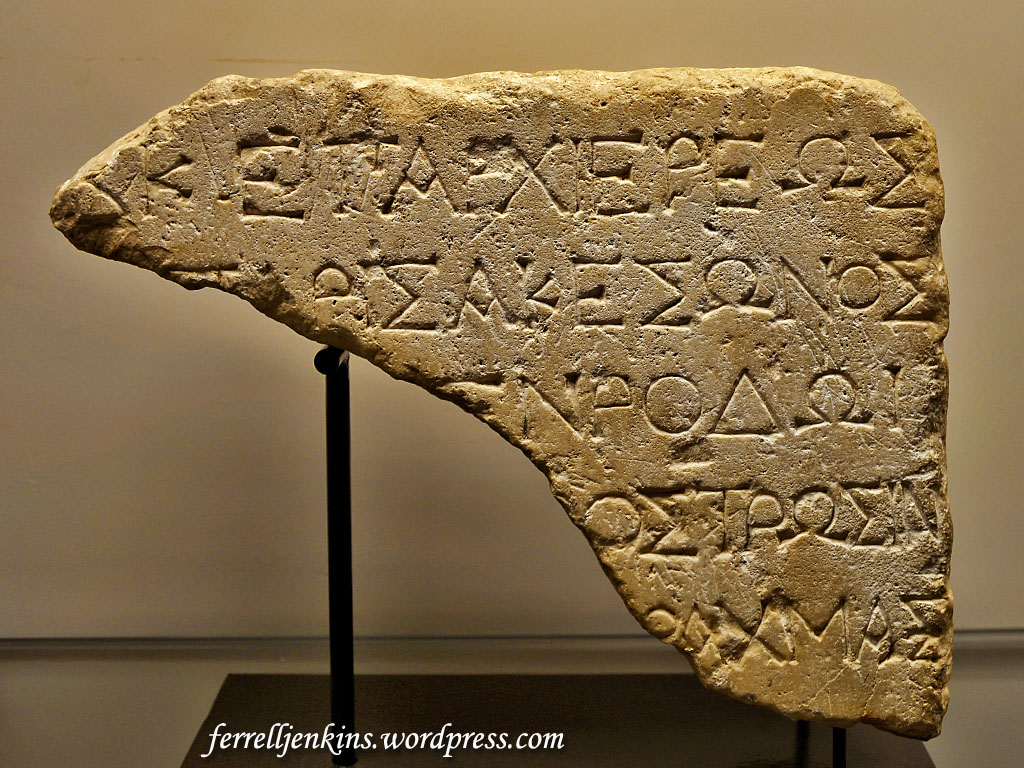
Last April I had the opportunity to visit the Hecht Museum at the University of Haifa. The archaeological artifact I wish to share today is an inscription from Jerusalem describing a donation by a “Paris son of Akeson of Rhodes” for Herod’s Temple.

Herod Temple Donation. Displayed in Hecht Museum, Haifa.

Herod Temple Donation. Displayed in Hecht Museum, Haifa.

The sign with the artifact provides this English translation of the fragment:

year 20 (Herod reign) during the time of the High
Priest (Simon son of Boethus)
Paris son of Akeson
of Rhodes
pavement (of the southern Temple Court?)
drachmas …

The following information is provided with the inscription:

This inscription was discovered among the debris in a palace pool of the Herodian period about 70 meters south of the plaza that runs along the southern wall of the Temple Mount. The inscription mentions the donation of Paris, son of Akeson, of Rhodes, probably toward the cost of paving the Temple’s open southern court (Azara). According to Josephus, this court was paved with a variety of stones. This pavement was constructed, as the inscription notes, during the period of the Temple’s reconstruction, in the twentieth year of Herod’s reign (21 BCE), at the time of the High Priest Simon, son of Boethus.

Herod the Great ruled as King of Judea at the time of the birth of Jesus (Matthew 2:1-19; Luke 1:5). Sources I use typically show the reign of Herod as king of Judea from 37 to 4 B.C. He served as Governor of Galilee as early as 47 B.C.

The inscription is displayed in the Hecht Museum by courtesy of the Israel Antiquities Authority.

Aleppo National Museum – #2

See our previous post on Aleppo here. Our #1 on the Aleppo National Museum is here.

In the first post on Aleppo I posted a photo of the Hittite Storm god Teshub standing on the back of a bull. I should have mentioned at the time that a large temple of the storm god from the Late Bronze and Early Iron ages has been excavated underneath Islamic buildings at the Aleppo Citadel. A well illustrated article by Kay Kohlmeyer states,

The storm god, first venerated as Hadda, then as Addu, Teshub, Tarhunta, and Hadad, played a supra-regional role in the ancient Near East, which explains the enormous size of his temple at Aleppo and the brilliance of its relief decoration. (Near Eastern Archaeology 72;4 (2009).

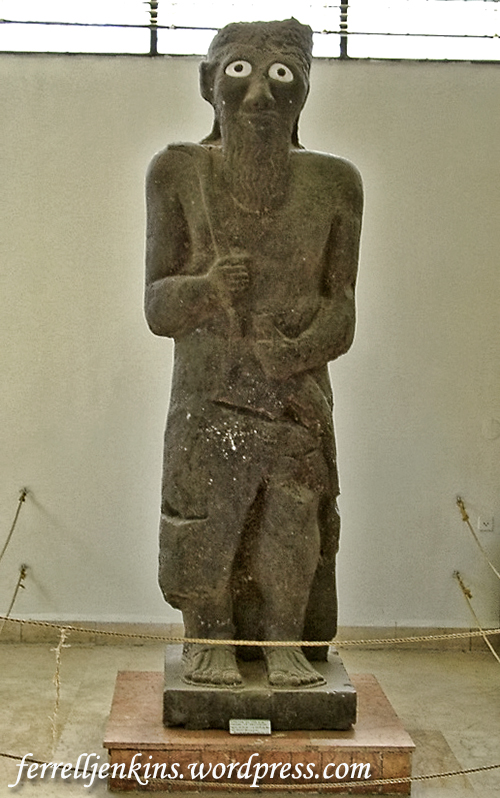
A statue of Hadad of poor quality is also displayed in the museum.

Statue of Hadad displayed in the Aleppo National Museum. Photo by Ferrell Jenkins.

Statue of Hadad displayed in the Aleppo National Museum. Photo by Ferrell Jenkins.

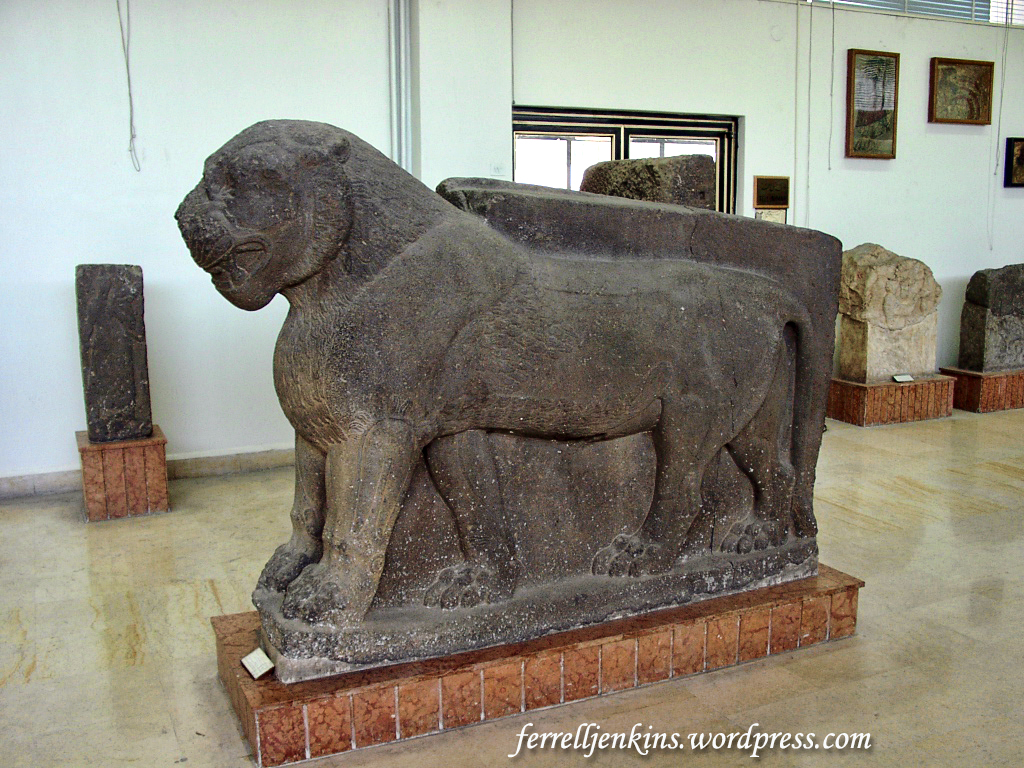
There are several other Neo-Hittite artifacts in the Aleppo National Museum. This first I am showing is a basalt lion with a slight wing relief. This is likely part of a pair that stood along an entrance to some building. Here you will notice that the lion is represented as having five legs. This allows the passerby to see at least four legs from almost any direction. We have become familiar with the huge winged bulls from Assyria that are made in the same fashion. I do not have the original source of the lion, but there are numerous Neo-Hittite sites  to the north of Aleppo in Syria and Turkey.

Lion from the Neo-Hittite Period in the Aleppo National Museum. Photo by Ferrell Jenkins.

Lion from the Neo-Hittite Period in the Aleppo National Museum. Photo by Ferrell Jenkins.

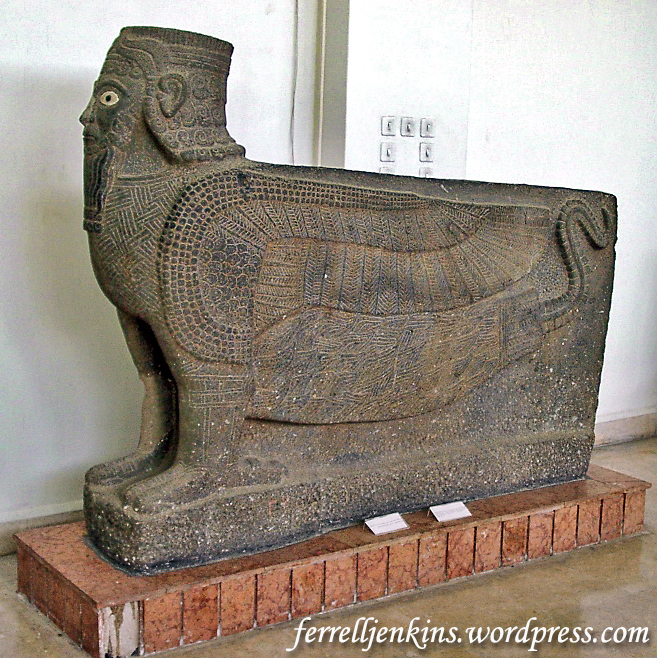
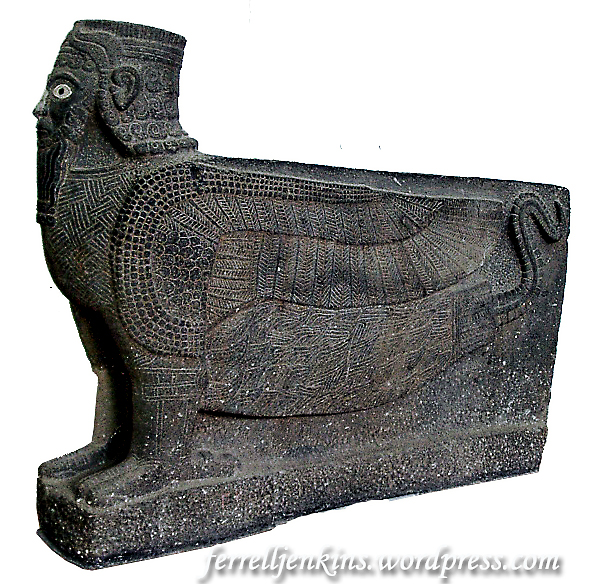
The next image is a fascinating one from the palace of Karara at Tell Halaf. It shows a composite creature of basalt consisting of the head of a man with the feet and wings of a bird, and the tail of a scorpion.

Composite creatures were common during the Hittite, Assyrian, and Babylonian periods of Old Testament history, and many of them have been found in the extended region. They provide us some insight into the background of apocalyptic literature. We find these creatures especially in the Old Testament books of Daniel, Ezekiel, and Zechariah, and in the New Testament book of Revelation (the Apocalypse). See a previous post, “Apocalyptic imagery is not strange,” here.

The composite creature here brought to my mind the events of the sounding of the fifth trumpet in Revelation 9:1-11.

Composite creature showing the head of a man, body and feet of a bird, and the tail of a scorpion. Photo by Ferrell Jenkins.

Composite creature showing the head of a man, body and feet of a bird, and the tail of a scorpion. Photo by Ferrell Jenkins.

I am adding an additional image that I was able to enhance to show a little better sharpness.

aleppo-museum-composite-creature-fjenkins051302_09en

 1 And the fifth angel blew his trumpet, and I saw a star fallen from heaven to earth, and he was given the key to the shaft of the bottomless pit.
2 He opened the shaft of the bottomless pit, and from the shaft rose smoke like the smoke of a great furnace, and the sun and the air were darkened with the smoke from the shaft.
3 Then from the smoke came locusts on the earth, and they were given power like the power of scorpions of the earth.
4 They were told not to harm the grass of the earth or any green plant or any tree, but only those people who do not have the seal of God on their foreheads.
5 They were allowed to torment them for five months, but not to kill them, and their torment was like the torment of a scorpion when it stings someone.
6 And in those days people will seek death and will not find it. They will long to die, but death will flee from them.
7 In appearance the locusts were like horses prepared for battle: on their heads were what looked like crowns of gold; their faces were like human faces,
8 their hair like women’s hair, and their teeth like lions’ teeth;
9 they had breastplates like breastplates of iron, and the noise of their wings was like the noise of many chariots with horses rushing into battle.
10 They have tails and stings like scorpions, and their power to hurt people for five months is in their tails.
11 They have as king over them the angel of the bottomless pit. His name in Hebrew is Abaddon, and in Greek he is called Apollyon. (Revelation 9:1-11 ESV)

Knowing that such imagery was common in the ancient Near East should assist us in our understanding of the nature of apocalyptic literature of the Bible.

Bethlehem and the birth of Jesus – Index of articles

Bethlehem and the Birth of Jesus.  Our total number of posts has now grown to more than 1800 [1960] and this makes it difficult to locate a post you may need. This index is prepared to assist you in your study of the birth of Jesus in ancient Bethlehem. Most, if not all, of the posts include at least one photo illustrating the lesson.

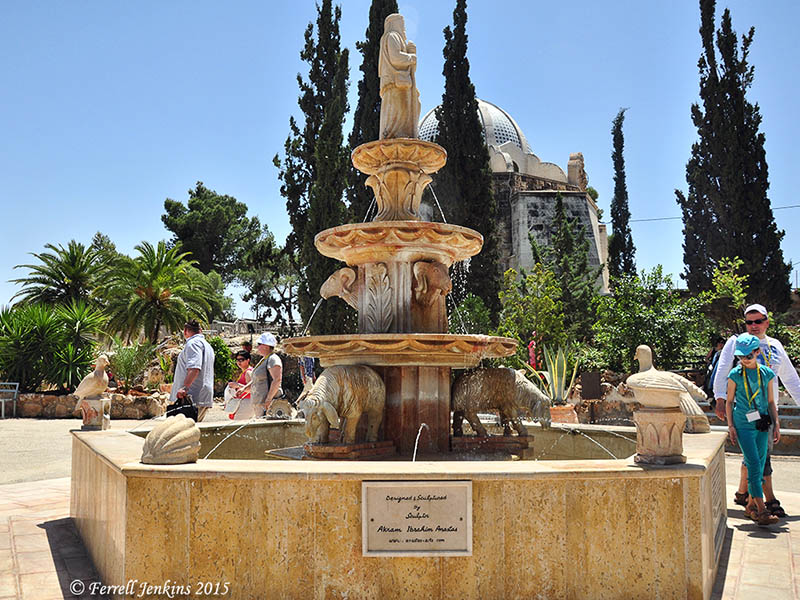
Fountain at Franciscan Custody Shepherd’s Field near Bethlehem.

Fountain at Franciscan Custody Shepherd’s Field near Bethlehem.

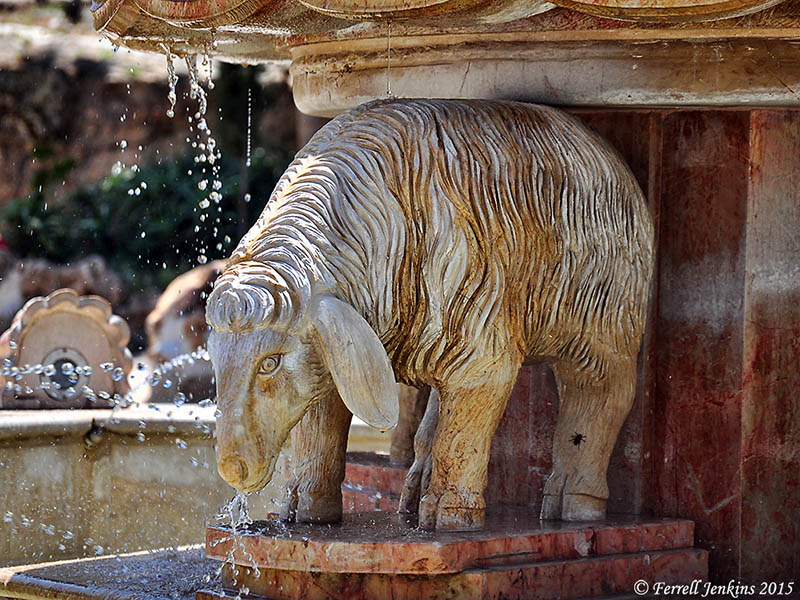
Sheep at fountain of Franciscan custody Shepherd’s Field near Bethlehem.

Sheep at fountain of Franciscan custody Shepherd’s Field near Bethlehem.

Other places near Bethlehem. Most of the links below are related to Herod the Great and the fortress he built near Bethlehem. I see that I have normally used the spelling Herodium, but sometime Herodion.

This photo was made on the side of the Herodion where remnants of the tomb of Herod the Great has been located. Photo by Ferrell Jenkins.

This photo was made on the side of the Herodion where remnants of the tomb of Herod the Great have been located. Photo by Ferrell Jenkins.

Historical Connections to Modern Christmas Celebrations. These post are post-biblical, historical references to customs associated with Christmas.

When other posts on this subject are written I will try to remember to update the list.

Roman soldiers in the region of Decapolis

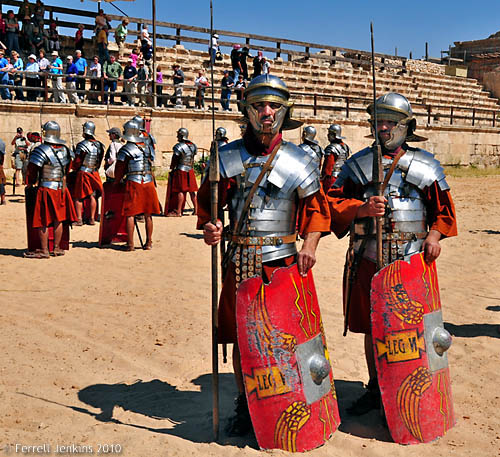
The RACE show at Jerash, Jordan, is a must if you have the opportunity to visit the area. RACE stands for Roman Army and Chariot Experience. You will see actors in authentic dress as armed legionaries, gladiators, and a short chariot race. The show takes place in the Roman hippodrome of Jerash. The view of the city ruins in the vicinity make this a wonderful setting for the performance. Full details may be found here. I have seen the program three times. On the last visit, earlier this year, I thought the performers showed less discipline and the show was not quite as good as on my previous visits.

Jerash was the second largest city of the Decapolis (after Damascus) in New Testament times. People from the Decapolis followed Jesus during His ministry in Galilee (Matthew 4:23-25). When Jesus traveled through the Decapolis he possibly visited the area around Jerash (Mark 7:31).

The photo shows the Roman soldiers of the 6th Legion from the time of the Emperor Hadrian (A.D. 117-138). A visit to this show provides several good photographs to illustrate New Testament times.

Roman soldiers at Jerash, Jordan. Photo by Ferrell Jenkins.

Roman soldiers at Jerash, Jordan. Photo by Ferrell Jenkins.

Repeat from October 8, 2010.

Roman inscription of formerly unknown governor of Judea discovered

Phillippe Bohstrom has written a fascinating and informative article about the discovery of a Roman inscription mentioning the province of Judea and a previously unknown Roman governor.

This Marcus Paccius ruled Judea before the Bar Kochba Revolt (about A.D. 135).

There were nearly 20 Roman prefects or governors during the first century A.D., but we learn only the names of Pontius Pilate (the trial of Jesus), Felix (Acts 23-24), and Festus (Acts 25-26) in the New Testament.

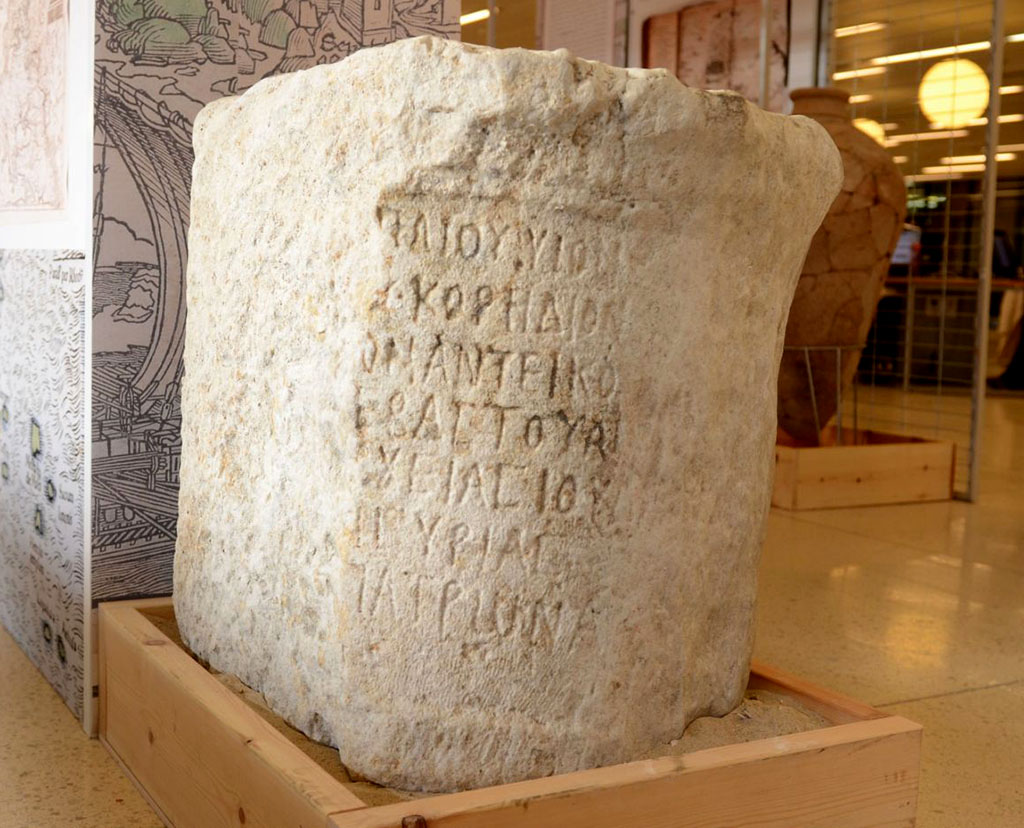
Haifa University underwater archaeologists found this inscription off the coast of Dor.

The newly found inscription, carved on the stone in Greek, is missing a part, but is thought to have originally read: “The City of Dor honors Marcus Paccius, son of Publius, Silvanus Quintus Coredius Gallus Gargilius Antiquus, governor of the province of Judea, as well as […] of the province of Syria, and patron of the city of Dor.”

The inscription is now on display in the Haifa University Library.

Stone inscription with the name of Marcus Paccius, governor of the province of Judea and Syria. Photo by Jenny Carmel in HaAretz.

Stone inscription with the name of Marcus Paccius, governor of the province of Judea and Syria. Photo by Jenny Carmel in HaAretz.

Read Bohstrom’s article with photos here.

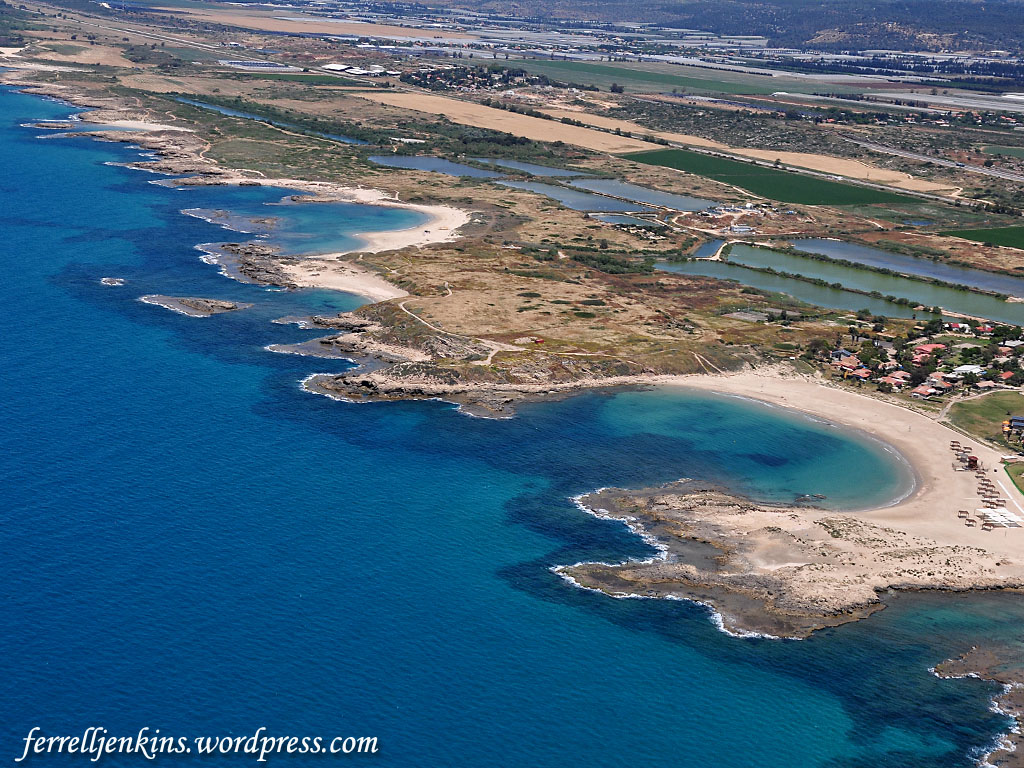
Our photo below shows the area around ancient Dor.

Aerial view of Dor. Photo by Ferrell Jenkins.

Aerial view of Dor. Photo by Ferrell Jenkins.

For a list of Old Testament reference to Dor click here.

Under the jail – a visit to the Kishle

Read The Citadel of Jerusalem here.
Read Views from the Citadel of Jerusalem here.

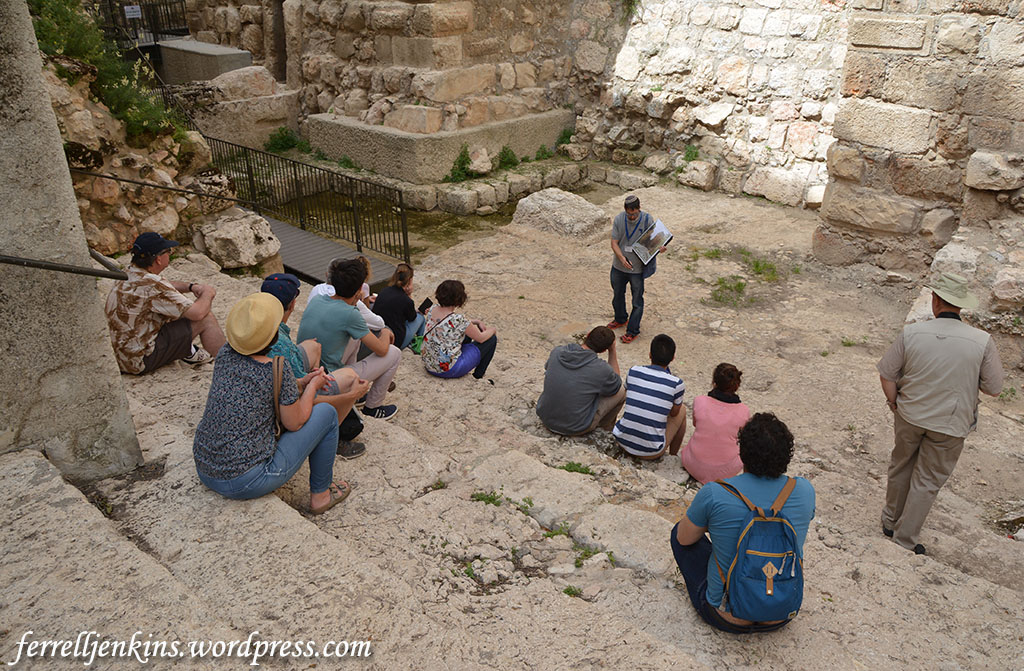
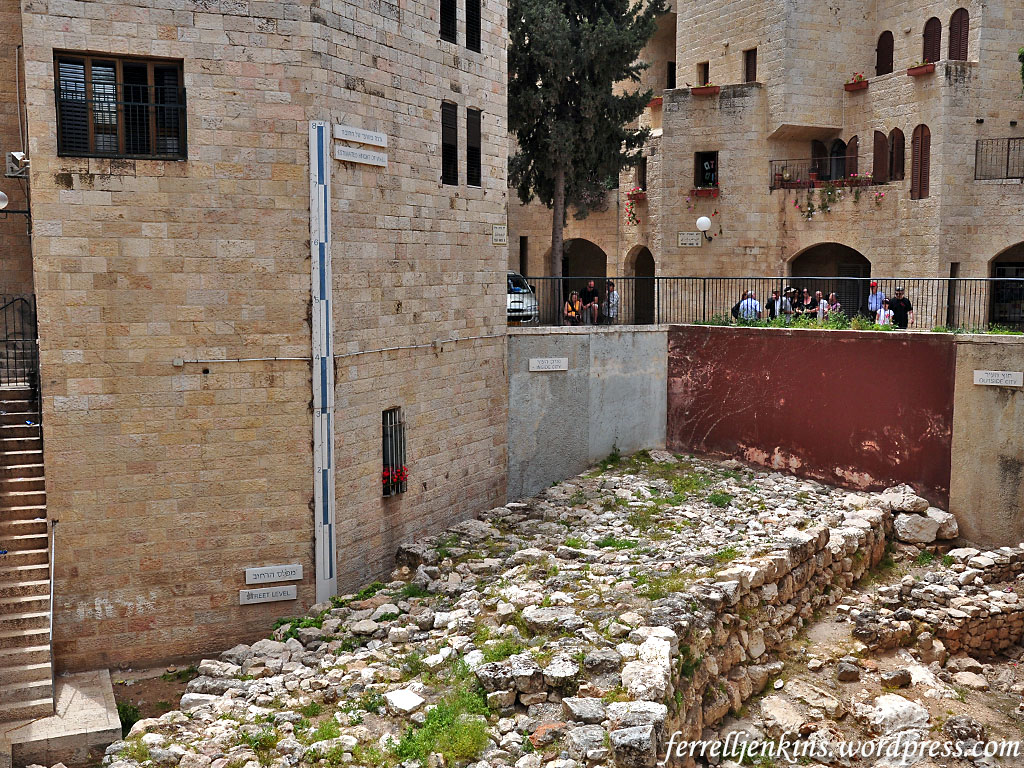
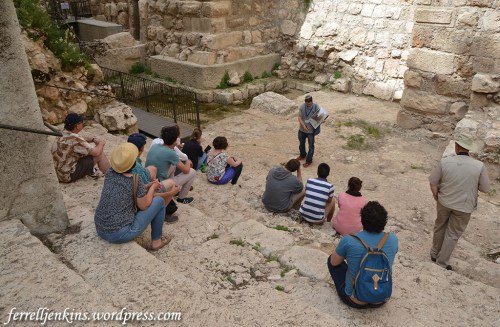
After our visit to see Jerusalem from the roof of the Citadel we made our way through the recently cleared dry moat to the steps and pool from the time of Herod the Great. Our guide, David, used a variety of visual aids to explain where we were and how this might have looked in the time of Herod.
Herodian steps at the Citadel. Photo by Ferrell Jenkins.

Herodian steps at the Citadel. Photo by Ferrell Jenkins.

From there David led us to the Kishle (Turkish word for Barracks, and many use it as Prison). The Tower of David web site has this brief explanation of the Kishle.

The site known as the “Kishle” is adjacent to the Citadel and Tower of David Museum complex. The structure was erected in 1834 by Ibrahim Pasha who governed the Land of Israel (Palestine) from Egypt.

When the Ottoman Turks regained the area in 1841, the “Kishle” continued to serve as a military compound. During the period of the British mandate, it was used as a police station and prison where some members of the Jewish underground were also incarcerated.

In an article in Archaeological Diggings, Caroline Shapiro (Nov. 2015) explains how this excavation came about.

The Kishle Building, as it is called, stands adjacent to the Tower of David, the ancient citadel that guards Jerusalem’s Old City at the Jaffa Gate entrance. It was built in 1860 as an Ottoman prison or army barracks. The prison was then used as such by the British during Mandate times and then left desolate until the Tower of David Museum decided to clean up the iron prison cells and create a new wing for the Education Department. It housed members of the pre-State underground, the Irgun, the evidence of which is scratched on the walls.

As with any digging in Jerusalem, the clearing up became an excavation and close to 3000 years of history was discovered under its floorboards. The excavations were carried out in 1999–2000 by Amit Re’em, Jerusalem District Archeologist, together with a team from the Israel Antiquities Authority (IAA), but since then the building has been left untouched. Entrance to the Kishle is via the newly opened moat where visitors walk down the impressive Herodian steps leading down into a Hasmonian pool that would have been the lavish pool connected to King Herod’s palace. (These are the only excavations of King Herod’s Palace; huge foundation walls can be seen as well as an impressive water sewage system.)

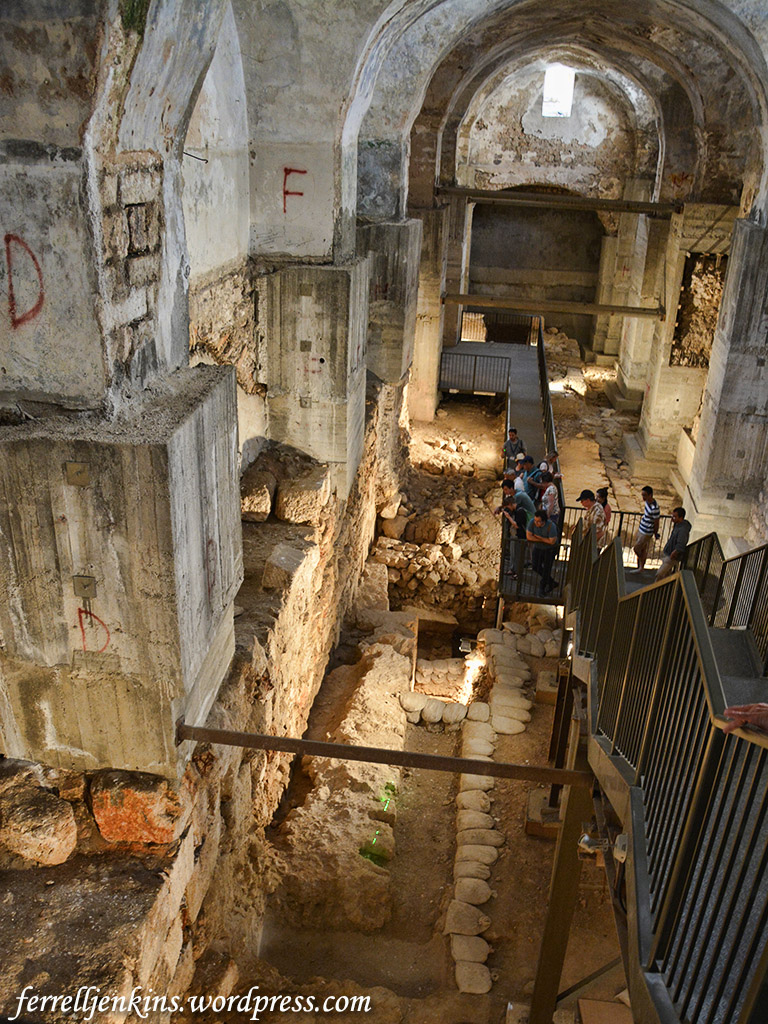
The whole site has been dug down some 10 metres (33 ft) deep and about 50 metres (165 ft) long to reveal the various strata. With an arched, cross-vaulted Ottoman ceiling, it is a cavernous, silent cathedral of ancient stones that had been untouched by daylight for millennia.

This is our first view of the excavation as we enter the Kishle. I think it is not incorrect to say that ancient ruins will be found anywhere archaeologists dig in Jerusalem. Many sites of importance are in basements.
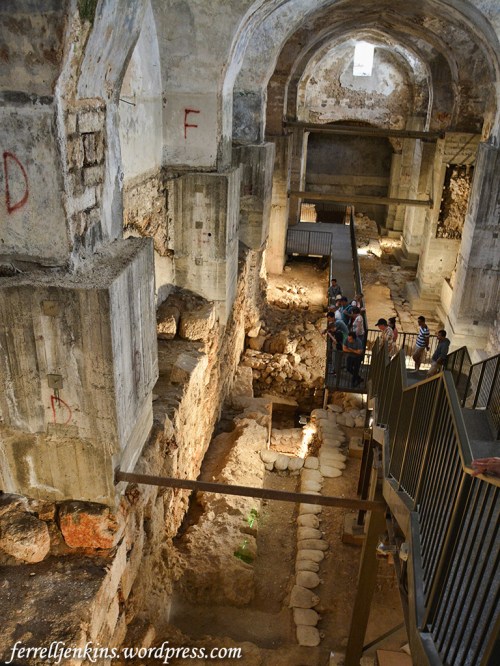
General view of the archaeological excavation of the Kishle. Photo by Ferrell Jenkins.

General view of the archaeological excavation of the Kishle. Photo by Ferrell Jenkins.

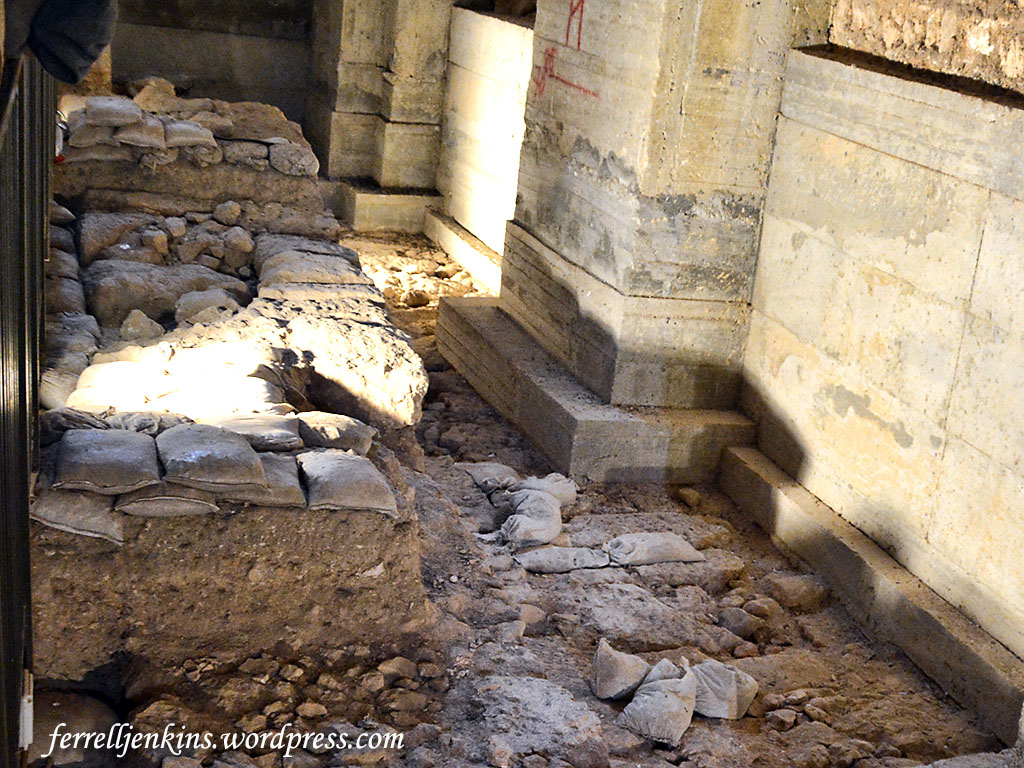
On the far right of the photo above, and below, you will see a stretch of wall from Herod’s palace.
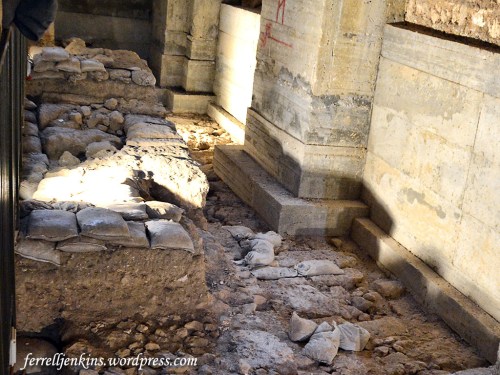
Herodian ruins in the Kishle. Photo by Ferrell Jenkins.

Herodian walls in the Kishle. Photo by Ferrell Jenkins.

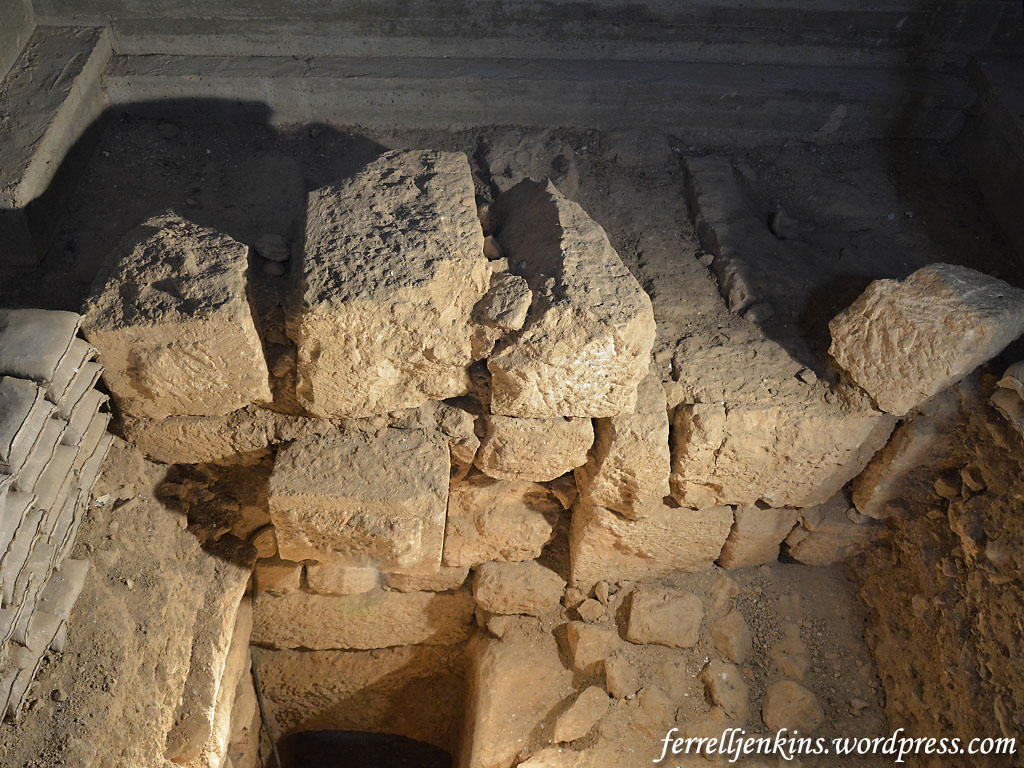
The oldest ruins uncovered during the excavation belong to the 8th century B.C. Perhaps these ruins belong to the time of Hezekiah, King of Judah (729-686 B.C., McKinny).
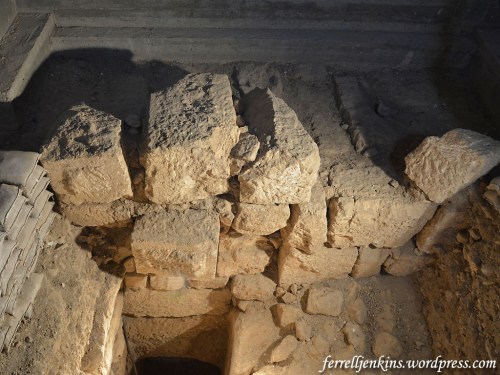
Ruins from the 8th century B.C., possibly from the time of King Hezekiah. Photo by Ferrell Jenkins.

Ruins from the 8th century B.C., possibly from the time of King Hezekiah. Photo by Ferrell Jenkins.

The Bible describes the work Hezekiah did in response to the Assyrian threat.

He set to work resolutely and built up all the wall that was broken down and raised towers upon it, and outside it he built another wall, and he strengthened the Millo in the city of David. He also made weapons and shields in abundance. (2 Chronicles 32:5 ESV)

The Jewish Quarter Excavations began in 1969 under the direction of Professor Nahman Avigad of Hebrew University. Shapiro says he uncovered a 130-foot long section of stone wall that was 23 feet wide and probably 27 feet high. This is the wall we now call the Broad Wall (Nehemiah 3:8; 12:38).
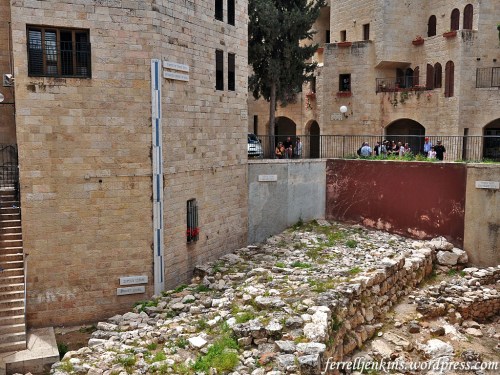
The Broad Wall excavated by Avigad. Photo by Ferrell Jenkins.

The Broad Wall excavated by Avigad. Photo by Ferrell Jenkins.

The wall within the Kishle is even further to the west, on the top of the western ridge of the Old City.

Re’em Amit, the archaeologists in charge of the dig, argues that this is the palace of Herod the Great, and the location of the Praetorium where the trial of Jesus took place (John 19:13). When I first began to visit Jerusalem we thought the paved area in the Sisters of Zion was the Praetorium. We still visit the site if time permits because it is important in understanding the Roman destruction of Jerusalem, but we now know that the pavement there belongs to the second century A.D.

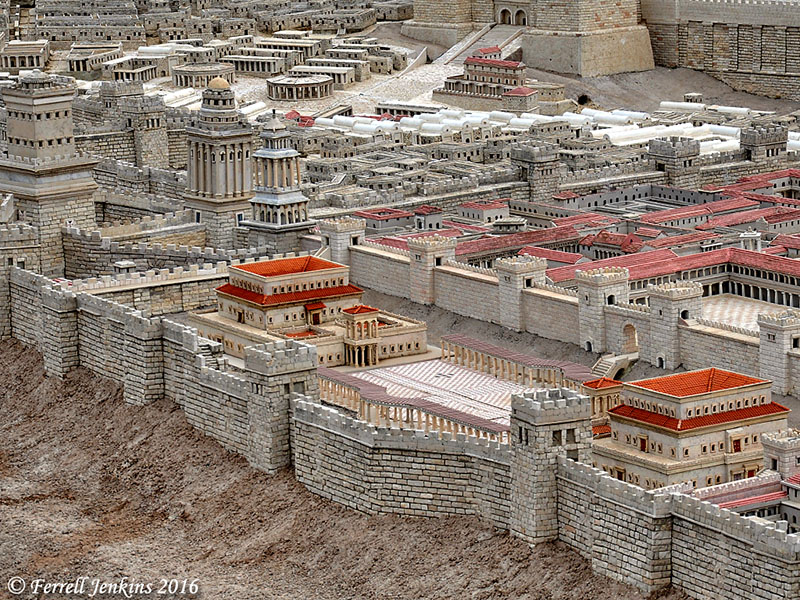
The Roman Prefect, such as Pilate, would make his residence in Herod’s Palace on his visits to Jerusalem from Caesarea. Herod Antipas, the son of Herod the Great, and Pontius Pilate, the governor [prefect] of Judea were both in Jerusalem at the time of the crucifixion of Jesus (Luke 3:1; 23:4-16). And they were both staying at the best “hotel” in town.
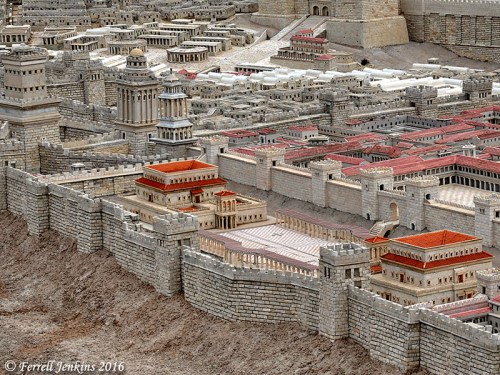
Herod's Palace in the Second Temple model at the Israel Museum. Photo by Ferrell Jenkins.

Herod’s Palace in the Second Temple model at the Israel Museum. The Fortress of Antonio is visible at the top/right of the photo. Photo by Ferrell Jenkins.

This is not a new hypothesis, but it does provide new evidence to sustain the view. Shimon Gibson has written extensively on this for several years. Gibson, with an allusion to the writing of Josephus, says,

After the grandeur of the Jewish Temple, Herod’s palace was reportedly the most amazing building complex in Jerusalem. (Final Days of Jesus, 93)

Gibson has a essay on this subject in The World of Jesus and the Early Church, edited by Craig A. Evans. In both of these articles Gibson includes drawings of the area under consideration.

Visiting the Kishle:

The Tower of David is open with English guides Sundays to Thursdays at 11 a.m. At other times one may visit with an audio guide. Adult admission is 40 NIS (about $11).

The guided tour including the Kishle (From Herod’s Palace to British Prison) is available in English on Fridays at 10 a.m. for 45 NIS.

Dates, hours, and admission prices change from time to time. Check the Tower of David web site for current information.


Josephus Elaborates on the Palace

— “ —

176 Now as these towers were themselves on the north side of the wall, the king had a palace inwardly thereto adjoined, which exceeds all my ability to describe it;
177 for it was so very elaborate as to lack no cost nor skill in its construction, but was entirely walled about to the height of thirty cubits, and was adorned with towers at equal distances, and with large bedchambers, that would contain beds for a hundred guests a piece,
178 in which the variety of the stones is not to be expressed; for a large quantity of those who were rare of that kind were collected together. Their roofs were also wonderful, both for the length of the beams, and the splendour of their ornaments.
179 The number of the rooms was also very great, and the variety of the figures that was about them was prodigious; their furniture was complete, and the greatest part of the vessels that were put in them was of silver and gold.
180 There were besides many porticoes, one beyond another, all around, and in each of those porticoes elaborate pillars; yet were all the courts that were exposed to the air everywhere green.
181 There were, moreover, several groves of trees, and long walks through them, with deep canals and cisterns, that in various parts were filled with brazen statues, through which the water ran out. There were with this many dove courts {a} of tame pigeons about the canals.  (Jewish War 5:176-181 or 5.4)

— ” —


Selected Sources:

AP You Tube video featuring Re’em Amit, the Jerusalem District Archaeologist of  the IAA in charge of the excavations of the Kishle. In this video Amit seems to be explaining in English and someone else is translating in another language.

Rasmussen, Carl. Kishle Tour. Photos included.

Rotem, Itay (guide), Tower of David Museum. You Tube.

Shapiro, Caroline. “Doorway to the Past.” Archaeological Diggings, Nov. 2015.

Tower of David web site. Here you will find several links to popular articles about the new excavation.

Ziese, Mark. “The Barracks.”

________.  “What Lies Beneath.”  In both articles Ziese includes some historic photos bringing to mind the use of the Kishle during the British period.