Category Archives: Jordan

Visualizing Isaiah 34: Judgment upon Edom

The judgment upon Edom is mentioned prominently in chapter 34 (verses 5, 6, 9; cf. the city of Bozrah, v. 6).

The most prominent place today within the ancient territory of Edom is Petra. Most people visit Petra to see the sculpted structures of the Nabateans. But the Nabateans came much later. The area was originally settled by the descendants of Esau, the brother of Jacob (Israel).

Our first photo, showing the desolate nature of the area, was made from a higher spot where several tourist hotels are located. To the right of center you will be able to see the parking lot and some of the buildings associated with the operation of the national park of Petra.
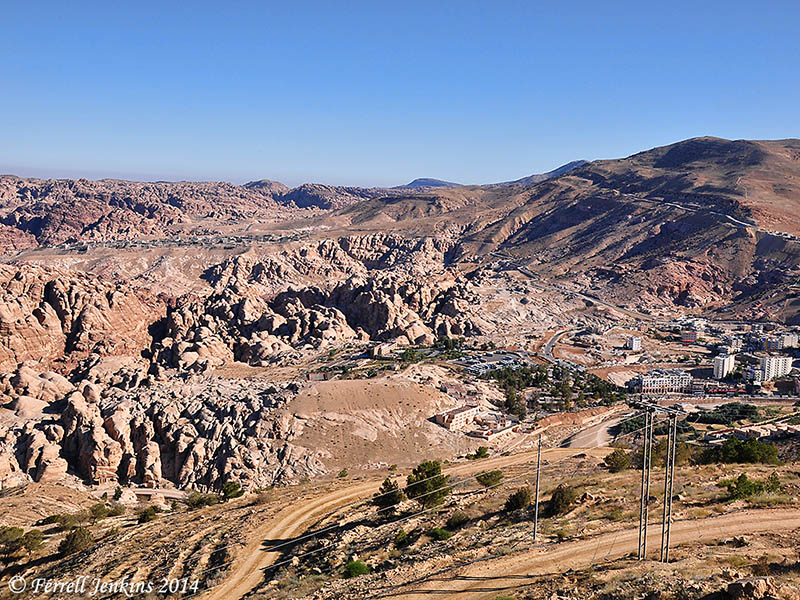
Petra is located within this ancient territory of Edom. Photo by Ferrell Jenkins.

Petra is located within this ancient territory of Edom. Photo by Ferrell Jenkins.

Our next photo was made inside Petra, but our attention is drawn to the large, high, steep-sided, flattop mountain named Umm el-Biyarah. From this vantage the ancient Edomites felt impregnable.
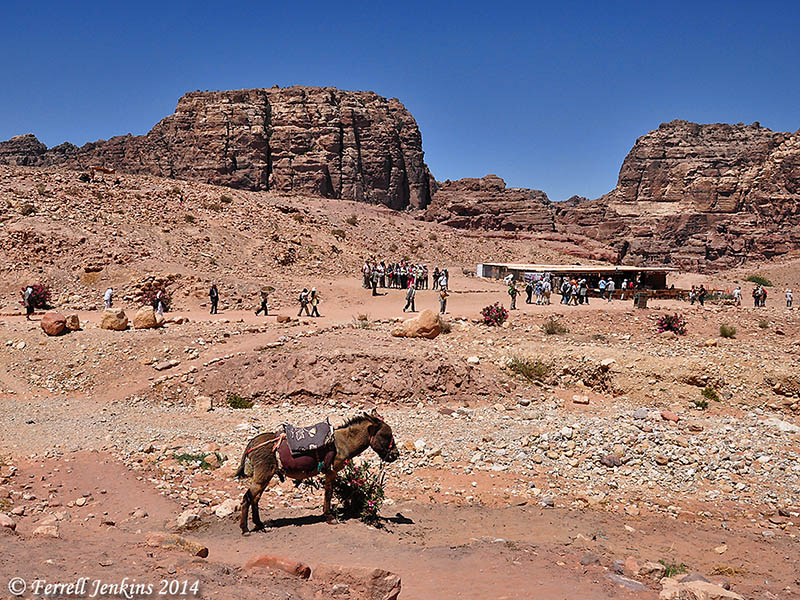
Umm el-Biyarah, the ancient stronghold of Esau. Photo by Ferrell Jenkins.

Umm el-Biyarah, the ancient stronghold of Esau. Photo by Ferrell Jenkins.

For those who wish to see a more comprehensive discussion about Edom, I call your attention to the succinct discussion by J. Alec Motyer in the Tyndale Old Testament Commentaries.

Edom is presented as a case in point. Even though Esau himself had no capacity for sustained animosity (Gen. 33:4–16), it was with him that relations with Jacob were soured (Gen. 27:41) and by the time of Numbers 20:14–21 hostility had become an established pattern. Saul made war on Edom (1 Sam. 14:47). David became the only king to subdue and annex Edom (2 Sam. 8:14; cf. 1 Kgs 11:15–16). Edom rebelled against Solomon (1 Kgs 11:1–17, 23–25) and was still rebelling a century later (2 Kgs 8:20). Fifty years further on, there was still fighting (2 Kgs 14:7, 10), and at the fall of Jerusalem the bitter hostility of Edom became notorious (Ps. 137:7; Obad. 10–14). Consequently Amos’ accusation (1:11) of perpetual hatred is well founded. Jeremiah 49:7–22 shows that, even prior to Edom’s behaviour at Jerusalem’s fall, the idea of judgment on Edom was part of the prophetic worldview. Obadiah saw Edom as both a place and a symbol: meriting judgment in its own right but also picturing the judgment which would mark the Day of the Lord. He was not innovating: in Psalms 60:8; 83:6, Edom had already a symbolic place in the theme of hostility to Zion. Two factors make Edom specially fit to stand as a motif for the whole world in the final judgment: first, its ceaseless hostility to the Lord’s people, and secondly the fact that it was only to David that it ever really succumbed. Thus Ezekiel, foreseeing the coming David (34:23), moves immediately to the conquest of Edom (35:1–15). Isaiah stands in this same tradition by following his forecast of the King (ch. 33) with the rout of Edom in the final judgment (cf. 11:14; 63:1–6). Recollecting 29:22 and the establishing of the family of Jacob, the overthrow of Edom/Esau makes the End the exact fulfilment of the beginning (Gen. 25:23). The purposes of God according to election stand.

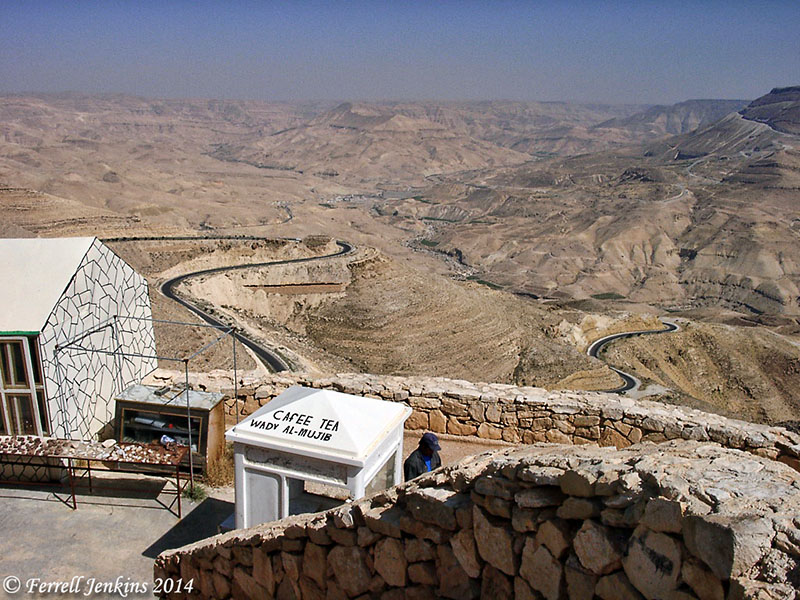
Visualizing Isaiah 15-16: the fords of the Arnon in Moab

When the prophets of ancient Israel pointed out the coming judgment of God upon the Israelites they typically pointed out that their enemies had already, or were going to, face the same judgment. This applied not only to the major powers such as Assyrian, Babylon, or Egypt, but also smaller powers that lived closer. It included Syria (Damascus), the Philistines, Moab, Edom, and the Ammonites. When Judah is being addressed there will be also a reference to Israel (Ephraim, Samaria).

Chapter 15 begins “an oracle concerning Moab.” We have, in previous posts, mentioned many of the Moabite towns. I think you can use the search box and locate photos of Dibon, Nebo, Medeba (Madaba), Elealeh, and Kir-hareseth. Isaiah mentions the daughters of Moab fleeing across the Arnon.

Like fleeing birds, like a scattered nest, so are the daughters of Moab at the fords of the Arnon. (Isaiah 16:2 ESV)

We commonly think of the Arnon River (or gorge) serving as the dividing line between Moab (to the south) and Ammon (to the north). However, you will notice that most of the towns mentioned above are north of the Arnon. The boundary changed throughout Biblical history. At the time of Isaiah the boundary certainly includes cities north of the Arnon.

The Arnon River is shown on this map. BibleAtlas.org.

The Arnon River is shown on this map. BibleAtlas.org.

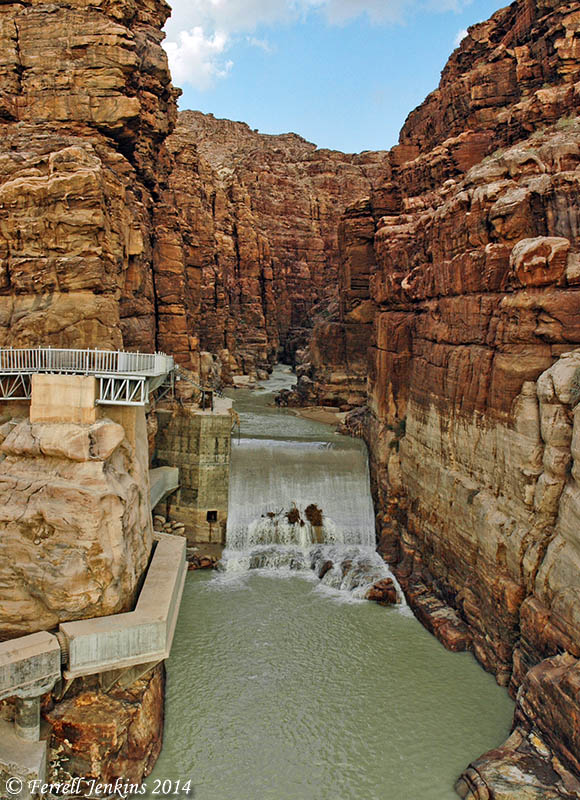
The Arnon is now known as the Wadi el-Mujib in Jordan. It was not an easy one to cross in ancient times.  The river served as a major barrier for north-south travel. A modern road runs through it today. The river flows from East to West where it empities into the Dead Sea. The locals now refer to this as the “Grand Canyon of Jordan.”

The Arnon gorge in Transjordan. View south. Photo by Ferrell Jenkins.

The Arnon gorge in Transjordan. View south. Photo by Ferrell Jenkins.

From this point the river flows west about 13 miles till it reaches the Dead Sea. A modern road now runs along the Dead Sea, and a small dam has been constructed to help control the water when it fills the gorge.

The Arnon River immediately before flowing into the Dead Sea. Photo by Ferrell Jenkins.

The Arnon River immediately before flowing into the Dead Sea. View east. Photo by Ferrell Jenkins.

No camels during the Patriarchal Age?

That’s what they are saying. It is a popular theme of those who want to put Bible believers in their place. Camels are mentioned repeatedly in Genesis 12-37, a section of Scripture set during the Middle Bronze Age (about 2100–1550 B.C.). Many of the well-known Bible characters of the Patriarchal Age are mentioned as riding camels.

A few days ago I was beginning to locate my sources to respond to the recent article in the New York Times, and in Time. While I was working on Visualizing Isaiah, Todd Bolen came out with two great articles on the subject. I include these links for the two people who read my blog but do not read the Bible Places Blog.

First, you should read the post about the Domestication of the Camel.

Then read.

Both are these posts are well documented with scholarly links you can track down to your own satisfaction. Don’t be unprepared the next time this subject comes up.

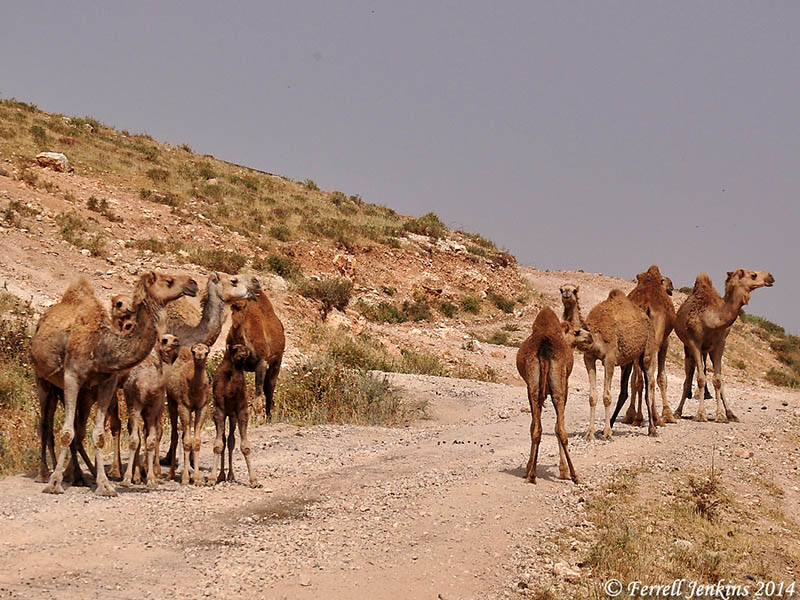
Camels at Abel-meholah, possibly the home of the prophet Elisha. Photo by Ferrell Jenkins.

Camels at Abel-meholah, possible home of the prophet Elisha. Photo by Ferrell Jenkins.

Reading the Blogs # 3

Michael J. Kruger (canon fodder) has written a review of each episode of the History Channel’s Bible Secrets Revealed. He says the series has reminded him of two critical truths:

1. Our popular culture is prone to distort and misrepresent the teachings of the Bible. I was struck again by how sensationalistic and misleading popular-level programming can actually be when it comes to the Bible.  Although this series had some good moments, as a whole I was disappointed to see the History Channel offer the standard Da Vinci Code-style approach to the Bible.

2. The church must be equipped to respond to these sorts of critiques.  Given the high-profile nature of the History Channel (and similar style programming), the average person we are trying to reach is going to be exposed to this type of material.  And we need to be ready to offer some answers if we expect non-Christians to give the biblical message a hearing.

The six reviews cover a wide variety of topics of interest to many people.

  1. Lost in Transmission
  2. The Promised Land
  3. The Forbidden Scriptures
  4. The Real Jesus
  5. Mysterious Prophecies
  6. Sex and the Scriptures

Begin here on canon fodder for links to each of the reviews.

Kruger is President and Professor of New Testament at Reformed Theological
Seminary, Charlotte. You will find much useful material on this blog.

HT: Brooks Cochran

Çatalhöyük. Polish archaeologists have discovered containers of barley, said to be 8,200 years old from the Neolithic period, at Çatalhöyük in Turkey.

The largest so far known in the Middle East amount of grain of the Neolithic period in a perfect state of preservation has been discovered by Polish archaeologists in Çatalhöyük, a famous archaeological site in Turkey. Çatalhöyük is one of the largest urban centers of first farmers and one of the most famous archaeological sites in the world.

Read the report, with photo, here.

Preserving Tal Al Umayri in Jordan. Many archaeological sites are in danger of destruction. Tal Al Umayri, south of Amman, Jordan, is going to become an archaeological park. The site is on private property. Now the owners have agreed to give the land for the project. Details here.

New Museum in Petra, Jordan. The report here says,

According  to the Petra National Trust, it was visited by around 450,000 people in  2013, though this was a significant drop from 2010’s record number of 975,000 visitors. Officials hope the new museum will encourage tourists to spend more time in the ancient city. It will present the history of Petra and the Nabataeans, as well as house antiquities, but it is unclear what this means for the site’s two existing museums: the Petra Nabataean Museum, opened in 1994, and the Petra Archaeological Museum, opened in 1963.

HT: Steven Braman

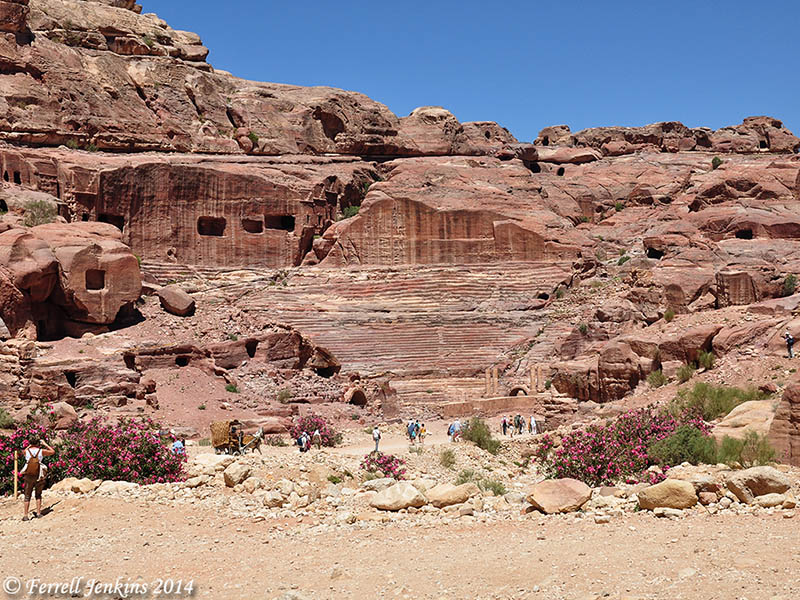
The Roman Theater at Petra. Photo by Ferrell Jenkins.

The Roman Theater at Petra. Photo by Ferrell Jenkins.

Old Testament Bibliography by Ray Clendenen. Here is the info from Charles Savelle at Bible X.

You can access Ray Clendenen’s recently revised 385-page Old Testament bibliography here. Note: you have to have an account with academia.edu to access it but if you don’t already have an account,signing up is free.

A Dictionary of the Bible. This five-volume set is now on Community Pricing at Logos. A bid of $15.00 will secure a set in Logos digital format. Information is here.

A Dictionary of the Bible, James Hastings.

A Dictionary of the Bible, James Hastings. The work will be in digital format for use with Logos Bible Software.

It is true that this is an old work first published between 1893 and 1905, but it contains some excellent material. The five volumes contain 4,718 page. The projected price of $15 is less than you might pay for a paperback with one good idea in it.

I have owned the hardback set for many years and am anxious to include these volumes in my Logos 5. Logos needs some more orders to produce this set of books. Let’s pull together. Once the work is published in digital format the price will be $99.95.

Hiking Abraham’s footsteps

The full title of this Haaretz article is “Hiking in Abraham’s footsteps, from Turkey to the Holy Land.” Sounds incredible at the moment. To hike this complete trail from Haran (Genesis 12:4) to Beersheba (Genesis 21:31) (not to mention the trip to Egypt) requires travel in Turkey, Syria, Jordan, Israel, and the Palestinian Authority (West Bank).

Among the leaders back of the concept is David Landis and his wife Anna Dintaman, developers of the Jesus Trail from Nazareth to the Sea of Galilee. Their book, Hiking the Jesus Trail and Other Biblical Walks in the Galilee, is worthwhile even for those who do not plan to walk the trail.
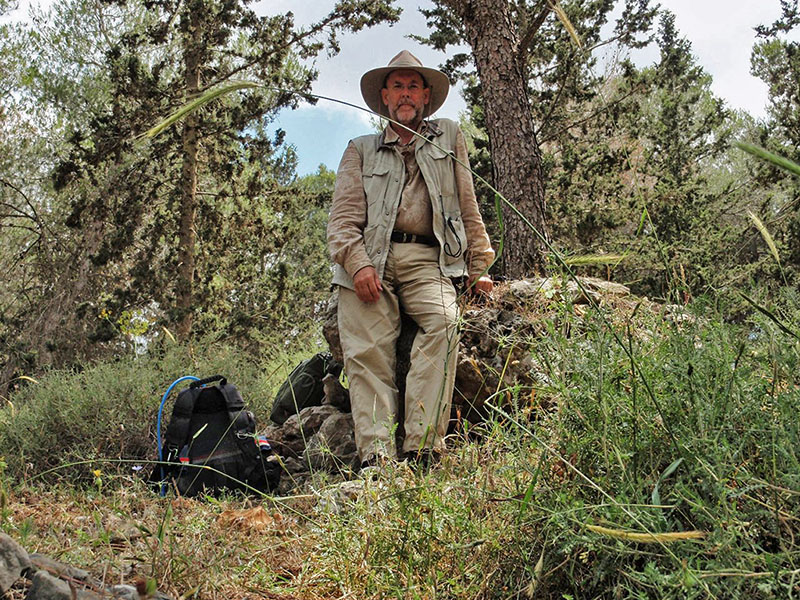
Larry Haverstock walked the Jesus Trail in 2011. I see that Larry’s posts about the experience is still available on his blog. See the 3rd Journey. You will find some fascinating stories along with beautiful photos you may never see from a bus or car.

Larry Haverstock in the Zippori Forest north of Nazareth.

Larry Haverstock in the Zippori Forest north of Nazareth.

The link to the Haaretz article may be accessed here. In order to read the full article you must register for free access to 10 articles a month.

Don’t expect to walk the Abraham Path from Haran (in Turkey) to Beersheva [Beersheba], but you might be able to walk small portions of the trail everywhere except the part going through Syria.

There are many hiking trails in Israel, but most of these avoid contact with the Palestinian Authority. The new plan seeks to involve the local people in the development of facilities useful to hikers.

If you like hiking, or if you appreciate the geography of the Bible lands you will probably enjoy the article. Abraham Path has a nice web site with maps and photos here.

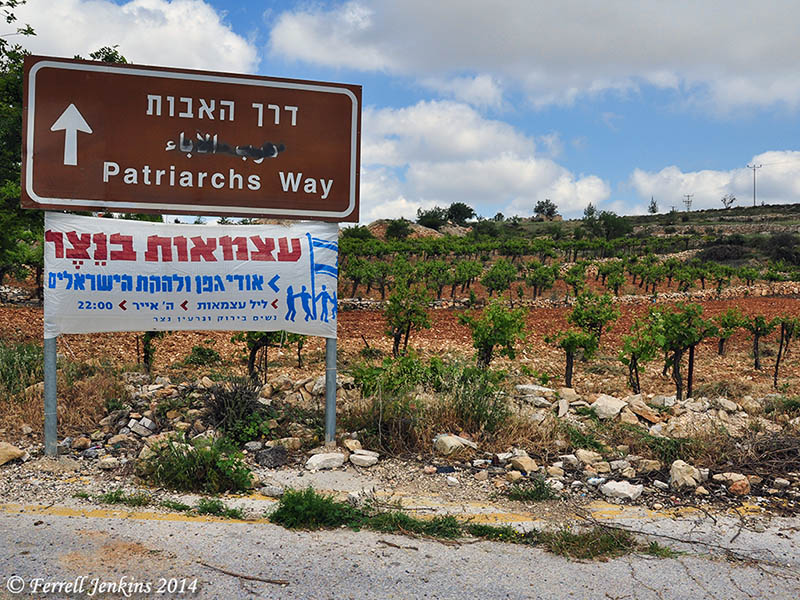
I don’t know what, if any, relationship there is between the Abraham  Path and the Patriarchs Way, a trail that is said to run from Beersheba to Nazareth. The defacing of the sign to eradicate the Arabic indicates one of the problems either trail might face. One often sees this sort of thing on signs pointing to Christian sites.

Sign pointing to Patriarchs Way off Hebron Road (Hwy. 60) south of Bethlehem . Photo by Ferrell Jenkins.

Sign pointing to Patriarchs Way off Hebron Road (Hwy. 60) south of Bethlehem . Photo by Ferrell Jenkins.

Walk the Land : A Journey on Foot through Israel, by Judith Galblum Pex, is a fascinating account of a couple who walked the Israel Trail from Eilat to Dan.

Zondervan Essential Atlas of the Bible

Frequently we have mentioned and recommended the Zondervan Atlas of the Bible by Carl G. Rasmussen. Every Bible student needs at least one or two good atlases to assist them in their study of the Scriptures.

Last month I attended some annual professional meetings in Baltimore and was pleased to see that Zondervan already had copies of the new Zondervan Essential Atlas of the Bible. One of the sales reps gave me a copy for review here.
At first appearance, the ZEAB has a beautiful cover of stiff, durable paper. It is a convenient 9 1/8″ x 7 3/8″ in size. The content is basically the same as the larger hard back edition. There has been some editing of the text to condense the book from 303 pages to 159 pages.

There are two major sections to the book: Geographical Section and Historical Section. The Geographical Section includes an Introduction to the Middle East as a Whole, and discusses the geography of Israel and Jordan, Egypt, Syria and Lebanon, and Mesopotamia.

The Historical Section covers the entire Bible from the Pre-Patriarchal Period to the Seven Churches of Revelation, with an additional chapter on Jerusalem, in 17 chapters.

The maps are superbly drawn and easy to read. A timeline accompanies each chapter. Rasmussen is noted for his Holy Land Photos web site. The photos are beautiful and helpful in illustrating the content.

This book has been prepared by a teacher, and I consider that a plus. In addition to his work at Bethel University, Carl continues to serve as an adjunct professor at Jerusalem University College. He has spent 16 years of his adult life in the Bible lands. His  Holy Land Photos’ Blog provides helpful, up-to-date, information about both familiar and unfamiliar places mentioned in the Bible. He has also led numerous tours through Bible lands.

This Atlas sells for $16.99. I see that Amazon has the Zondervan Essential Atlas of the Bible for $12.97. A Kindle version is about $3 less.

Either version is ideal for a person to take with them to Bible class, or on a tour of Bible lands.

The larger Zondervan Atlas of the Bible still remains indispensable for the serious student. I am trying to say you should have both books.

Carl has assisted me on several occasions in locating some of those hidden, out-of-the-way, places that most visitors to the Bible lands never see. I am pleased to commend this new edition of his book.

Scenes around Tell Ḥesbân (Heshbon)

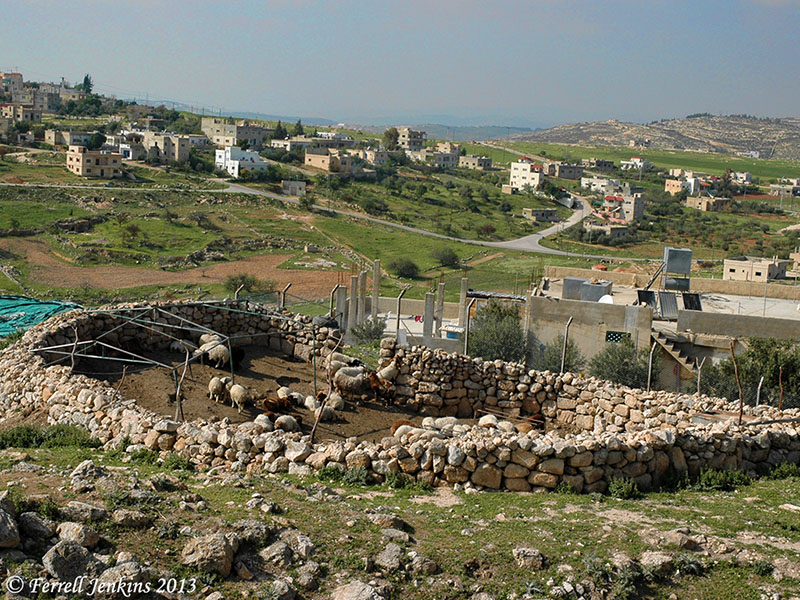
The photo below was made from the top of Tell Ḥesbân in Transjordan. It provides us a view of the general area of Moab during the period of the United Kingdom of Israel, and the Divided Kingdoms of Israel and Judah.

Sheepfold on the slope of Tell Ḥesbân. View of territory of Moab. Photo by Ferrell Jenkins.

Sheepfold on the slope of Tell Ḥesbân. View of territory of Moab. Photo by Ferrell Jenkins.

There are several biblical references to the sheepfold, or the fold of the sheep (Jeremiah 50:6; Micah 2:12; John 10:1, 16). Jesus used an illustration involving the sheepfold:

Truly, truly, I say to you, he who does not enter the sheepfold by the door but climbs in by another way, that man is a thief and a robber. But he who enters by the door is the shepherd of the sheep. (John 10:1-2 ESV)

We associate the land of Moab with Ruth the grandmother of King David.

So Naomi returned, and with her Ruth the Moabitess, her daughter-in-law, who returned from the land of Moab. And they came to Bethlehem at the beginning of barley harvest. (Ruth 1:22)

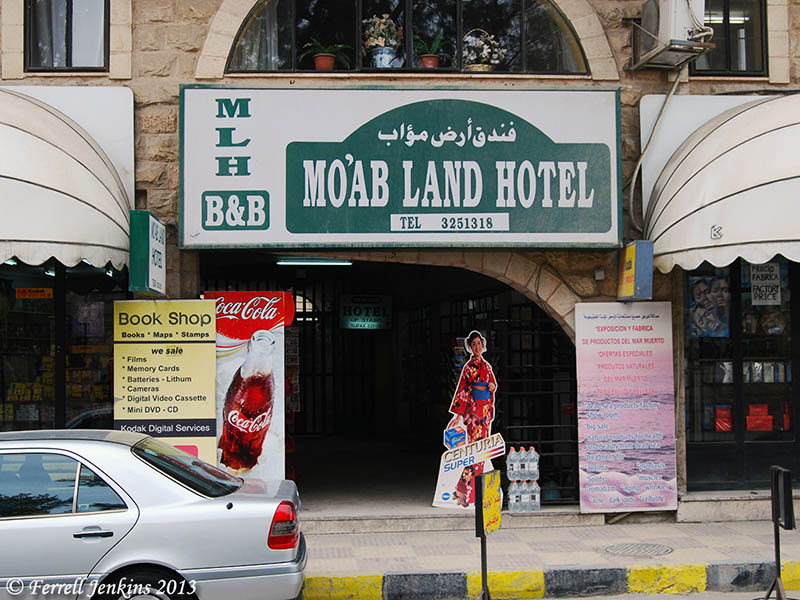
I find it fascinating that the modern locals pick up on the ancient names in order to attract the tourists who visit the area. At Madaba, about six miles south of Ḥesbân, there is a small hotel named Mo’ab Land Hotel. How appropriate.

The Moab Land Hotel in Madaba, Jordan. Photo by Ferrell Jenkins.

The Moab Land Hotel in Madaba, Jordan. Photo by Ferrell Jenkins.

If not Tell Ḥesbân, where is Heshbon?

If Tell Ḥesbân is not biblical Heshbon, then the pool uncovered by S. H. Horn is likely not the pool mentioned in Song of Solomon 7:4.

If Tell Ḥesbân is not biblical Heshbon, then where is biblical Heshbon?

A sign at Tell Ḥesbân, erected by the excavators, lists evidence of occupation during the following periods:

  • Ajarmah [local tribe] village – ca. AD 1870-present
  • Ottoman Village
  • Mamuluk Regional capital – AD 1260-1500
  • Abbasid pilgrim rest. – AD 750-1260
  • Umayyad market town – AD 650-750
  • Byzantine Ecclesiastical center – ca. AD 350-650
  • Roman temple town – ca. 63 BC – AD 350
  • Hellenistic fortress – ca. 198 BC – 63 BC
  • Ammonite citadel – ca. 900 – 500 BC
  • Proto Ammonite village – ca. 1200 – 900 BC
  • Traditional Ammorite Stronghold.
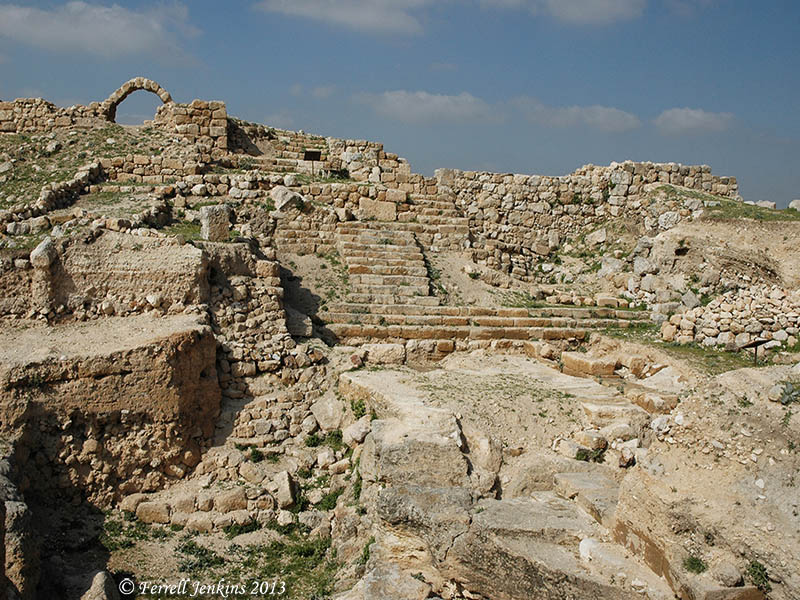
Roman steps and market area at Tell Ḥesbân. Photo by Ferrell Jenkins.

Roman steps and market area at Tell Ḥesbân. Photo by Ferrell Jenkins.

Remember that we are looking for a town of Moab, and there is no evidence of the Moabites at Tell Ḥesbân.

Because not every reader of this blog speaks Bronze Age and Iron Age, I think I should list the general dates of these archaeological periods (following J. A. Thompson, The Biblical World (ed. Charles Pfeiffer).

  • Early Bronze (EB) — ca. 3200 – 2100 BC
  • Middle Bronze (MB) — ca. 2100 – 1550 BC – period of the Patriarchs
  • Late Bronze (LB) — ca. 1550 – 1200 BC – period of Moses, the Exodus, and the Conquest
  • Iron I — ca. 1200 – 900 BC – period of the Judges & the United Kingdom
  • Iron II — ca. 900 – 600 BC – period of the Divided Kingdom
  • Iron III — ca. 600 – 300 BC – period of Exile and Return
  • Hellenistic (Grecian) — ca. 300 – 63 BC – Between the Testaments
  • Roman — ca. 63 BC – AD 323 – New Testament & early Christian period

We are looking for a city belonging to the period of Moses, the Exodus, and the Conquest (the Late Bronze archaeological period). [*see note below]

After the disappointment at Tell Ḥesbân, those associated with Horn formed the Madaba Plains Project in order to continue the search for Heshbon. One of the great things about Todd Bolen’s Pictorial Library of Bible Lands is the fact that many of the photos include brief documentation with the photos. With one of the Tell Ḥesbân photos he says,

After this disappointing series of digs, the Madaba Plains Project was formed and the search for Heshbon continued.  Four Late Bronze sites were found within a 6 mile (10 km) radius of Tel Hesban; Tel Jalul is the biggest and thus the most promising site. Tel Jalul is the largest site in Jordan south of Amman.
Three possibilities exist for the location of biblical Heshbon: Tel Hesban, Tel el-Umeiri, and Tel Jalul. Hesban preserves the name, which makes it a good candidate, but it lacks archaeological evidence.
The PLBL collection includes photos of all of these places. The Institute of Archaeology Siegfried H. Horn Museum at Andrews University maintains a helpful web site that includes information about the Madaba Plains Project here.
Byzantine church at Tel Hesban. Photo by Ferrell Jenkins.

Byzantine church at Tel Hesban. Photo by Ferrell Jenkins.

The photo above shows the ruins of the Byzantine church at Tell Ḥesbân. Tel Jalul may be seen in the distance. Look for the long, plain “hill”, on the top of the hill on the far left of the photo.
Added Note: In the original post I stated that “We are looking for a city belonging to the period of the Patriarchs (the Late Bronze archaeological period).” A friend called my attention to the oversight. The chart above shows that the period of the Patriarchs is the Middle Bronze Age. I should have said, as now corrected above, that “We are looking for a city belonging to the period of Moses, the Exodus, and the Conquest (the Late Bronze archaeological period).”

Is Tell Ḥesbân Heshbon?

S. H. Horn describes the biblical significance of Heshbon.

A city of Transjordan strategically located at the main north-south road, called the King’s Highway in the Bible, some 15 mi. (c. 24 km.) southwest of “Amman (Palestine Under Joshua and the Judges). The Israelites captured it from Sihon, an Amorite king, who had taken it from the Moabites and made it his capital (Num 21:25–30). The city was given to the Reubenites and rebuilt by them (Num 21:34; 32:37; Jos 13:17). However, since it lay on the border between Reuben and Gad, the latter tribe seems eventually to have occupied it (Jos 13:26). It was later assigned, as a town of Gad, to the Levites (Jos 21:39; 1 Chr 6:81). The Moabites reconquered the city in the period of the divided kingdom and occupied it in the time of Isaiah and Jeremiah (Is 15:4; 16:8, 9; Jer 48:2, 33, 34). However, during Jeremiah’s lifetime it seems to have changed hands again, since he refers to it as an Ammonite city in one of his later oracles (Jer 49:2, 3). The Ammonites seem to have taken it during an invasion of the Moabite territory referred to in Ezekiel (ch 25:9, 10). It was in the possession of Alexander Jannaeus in the time of the Maccabees, and was later ruled by Herod the Great (Jos. Ant. xiii. 15. 4; xv. 8. 5), who fortified it and made it into a garrison city called Esbus. Later it became a Christian city and seat of a bishop. Several bishops of Heshbon are known by name. In 614 the city suffered greatly during the Persian invasion, when its 3 churches—so far excavated—were destroyed. The Arabs who some 20 years later occupied the country made the city, then called Ḥesbân, the capital of the district. After the 13th cent. the city is never mentioned again.

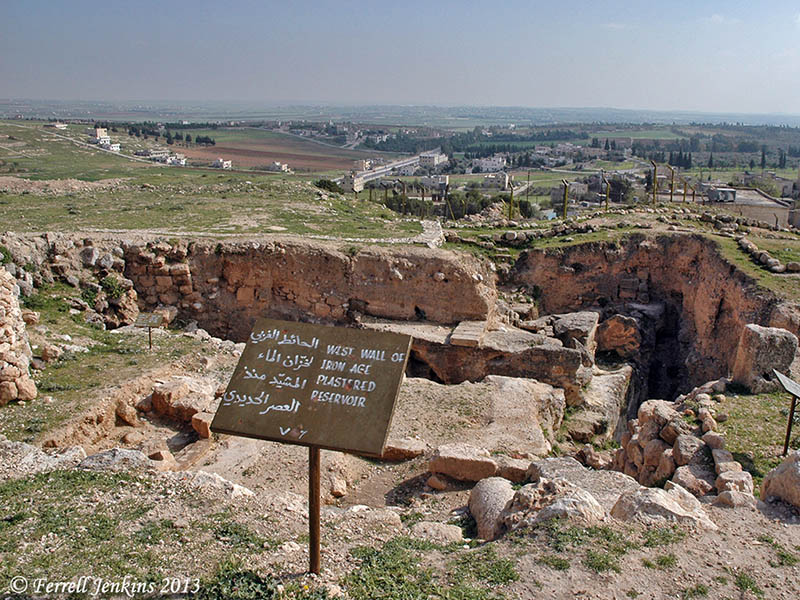
Excavations were conducted at Tell Ḥesbân under the direction of Siegfried Horn and Larry Gerarty from 1968 to 1976. A large open-air reservoir dating to the Iron Age, the period of the Israelite kings was uncovered. The pool measured about 50 ft. x 50 ft., and was 18 ft. deep. It was large enough to hold 300,000 gallons of water.

The Iron Age Pool at Heshbon. Photo by Ferrell Jenkins.

The Iron Age Plastered Reservoir at Heshbon. View West. Photo by Ferrell Jenkins.

Horn says this was “probably a pool to which Song 7:4 refers.”

Your neck is like an ivory tower.
Your eyes are pools in Heshbon,
by the gate of Bath-rabbim.
Your nose is like a tower of Lebanon,
which looks toward Damascus. (Song of Solomon 7:4)

I have followed the information by S. H. Horn in The Seventh-day Adventist Bible Dictionary. In a post to come I hope to explain why Tell Ḥesbân may not be biblical Heshbon.

The Moabite city of Elealeh

Elealeh (pronounced EL e A lah) is one of those little known cities from Bible times. It is now identified as Tell (or Tall) Al-Elealeh. The mound is located about two miles northeast of Heshbon.

When we first encounter the city of Elealeh it belongs to the Moabites. After the Israelites occupied the area the city was given to the tribe of Reuben as part of their territory (Numbers 32:3, 37).

Map showing Elealeh in Moab. BibleAtlas.org.

Map showing Elealeh in Moab. BibleAtlas.org.

The Seventh-day Adventist Bible Dictionary gives this brief information about the city.

A town which the Israelites took from the Amorite king of Heshbon, and which the Reubenites rebuilt (Num 32:3, 37). Later, when the Moabites extended their territory to the north, they reoccupied it (Is 15:4; 16:9; Jer 48:34). It is now el–‘Al, a ruin on top of a hill, 3,082 ft. (940 m.) above sea level, about 2 mi. (c. 3 km.) northeast of Heshbon (Palestine Under Joshua and the Judges). Archeological soundings were conducted at el–‘Al by W. L. Reed in 1962. The excavated evidence indicated that the ancient city had existed from the 3d millennium B.C. down to the Middle Ages with a possible gap in occupation from 1600–1200 B.C. since no Late Bronze Age remains were found. (Horn, Siegfried H. The Seventh-day Adventist Bible Dictionary 1979 : 318.)

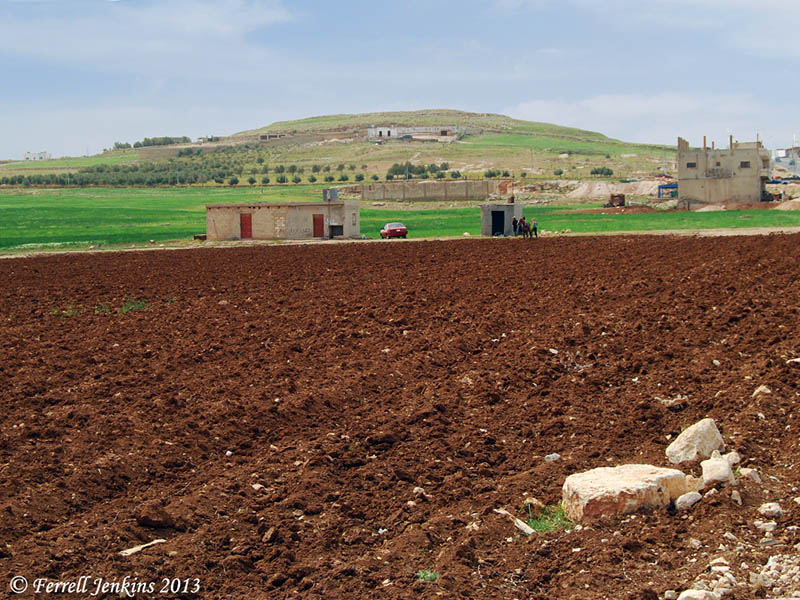
The site of ancient Elealeh. Photo by Ferrell Jenkins.

The site of ancient Elealeh. Photo by Ferrell Jenkins.