Category Archives: Israel

Where did Jeremiah go? Euphrates or En Prat?

The prophet Jeremiah is told to,

“Take the loincloth that you have bought, which is around your waist, and arise, go to the Euphrates and hide it there in a cleft of the rock.” (Jeremiah 13:4 ESV)

Various English translations use waistband, shorts, sash, girdle, and underwear to describe the piece of clothing that Jeremiah had bought. Whatever, the indication is that the garment was relatively new. Now he must take it to the Euphrates and hide it in a cleft of the rock.

Remember that Jeremiah was was from the little town of Anathoth, on the NE side of Jerusalem (Jeremiah 1:1). We still lack certainty regarding the specific location of the town, but the name lives on today in the Arab town of Anata.

Where was the Euphrates? At first we think of this as an easy question to answer. But on second thought there is another possibility. Jeremiah may have been told to go to a place identified as En Prat (or Ein Prat) in modern Israel. This place is identified with Parah in Joshua 18:23, and is called Perath in English transliteration of the Hebrew word. The Hebrew word en means spring. It is sometimes spelled ein, and in Arabic we find it as ain.

I have seen the Euphrates in several locations in Turkey, Syria, and Iraq. In Turkey the river is called the Firat Nehri.
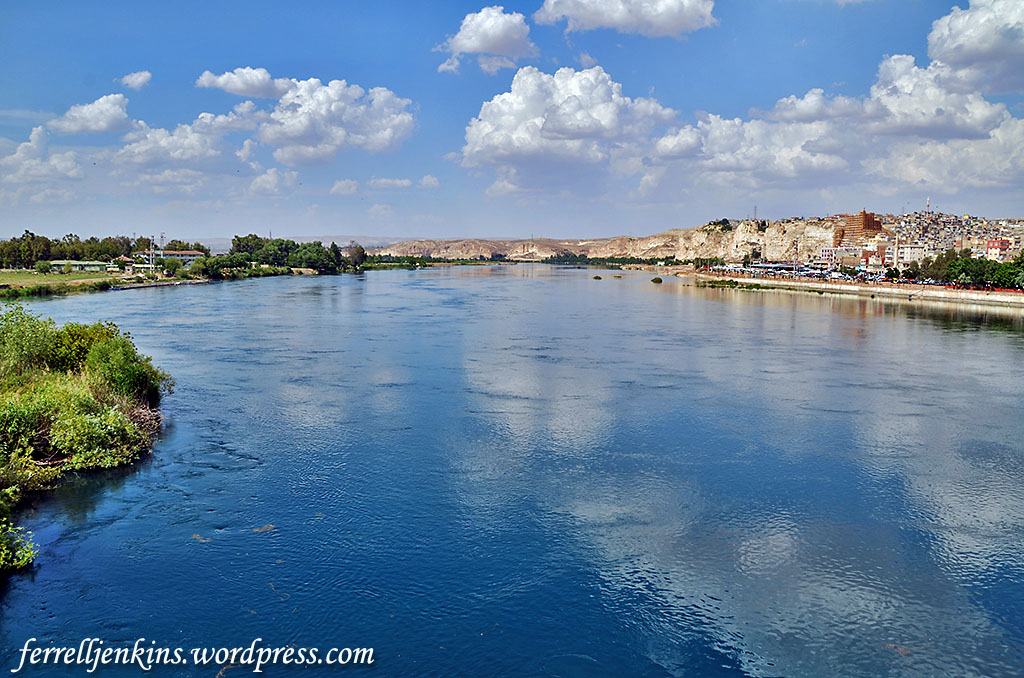
The Firat Nehri (Euphrates River) in Birecik, Turkey. Photo by Ferrell Jenkins.

The Firat Nehri (Euphrates River) in Birecik, Turkey. Photo by Ferrell Jenkins.

The translator notes in the NET Bible provide a helpful comment:

There has been a great deal of debate about whether the place referred to here is a place (Parah [= Perath] mentioned in Josh 18:23, modern Khirbet Farah, near a spring ’ain Farah) about three and a half miles from Anathoth which was Jeremiah’s home town or the Euphrates River. Elsewhere the word “Perath” always refers to the Euphrates but it is either preceded by the word “river of” or there is contextual indication that the Euphrates is being referred to. Because a journey to the Euphrates and back would involve a journey of more than 700 miles (1,100 km) and take some months, scholars both ancient and modern have questioned whether “Perath” refers to the Euphrates here and if it does whether a real journey was involved. Most of the attempts to identify the place with the Euphrates involve misguided assumptions that this action was a symbolic message to Israel about exile or the corrupting influence of Assyria and Babylon. However, unlike the other symbolic acts in Jeremiah (and in Isaiah and Ezekiel) the symbolism is not part of a message to the people but to Jeremiah; the message is explained to him (vv. 9–11) not the people. In keeping with some of the wordplays that are somewhat common in Jeremiah it is likely that the reference here is to a place, Parah, which was near Jeremiah’s hometown, but whose name would naturally suggest to Jeremiah later in the LORD’s explanation in vv. 9–11 Assyria-Babylon as a place connected with Judah’s corruption (see the notes on vv. 9–10). For further discussion the reader should consult the commentaries, especially W. Holladay, Jeremiah (Hermeneia), 1:396 and W. McKane, Jeremiah (ICC), 1:285–92 who take opposite positions on this issue.

I have no fixed view on this subject, but the thought that Jeremiah went from Anathoth to Perath (= En Prat), a distance of 3 miles or so, is more sensible to me. Remember that Jeremiah had to make two trips to Perath, one to deposit his undergarment and another to retrieve it.

En Prat is located in the western edge of the wilderness of Judah at an elevation of 910 feet above sea level. You recall that Jerusalem is about 2400 feet above sea level. Here is a view as we approach En Prat. The elevation where I was standing is 1,060 feet above sea level.
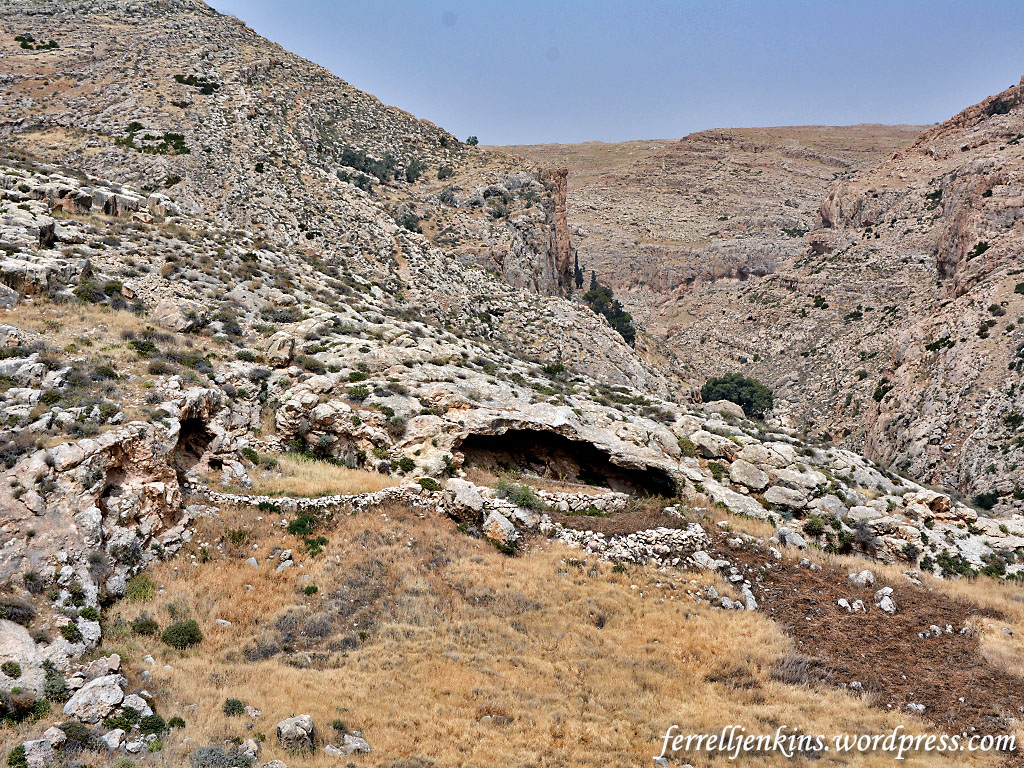
In the wilderness on the way to En Prat. Photo by Ferrell Jenkins.

In the wilderness on the way to En Prat. In the photo you see caves, some of which were used as sheepfolds in the past. Photo by Ferrell Jenkins.

As Leon Mauldin and I reached En Prat this was the first photo of the area with a view to the west.
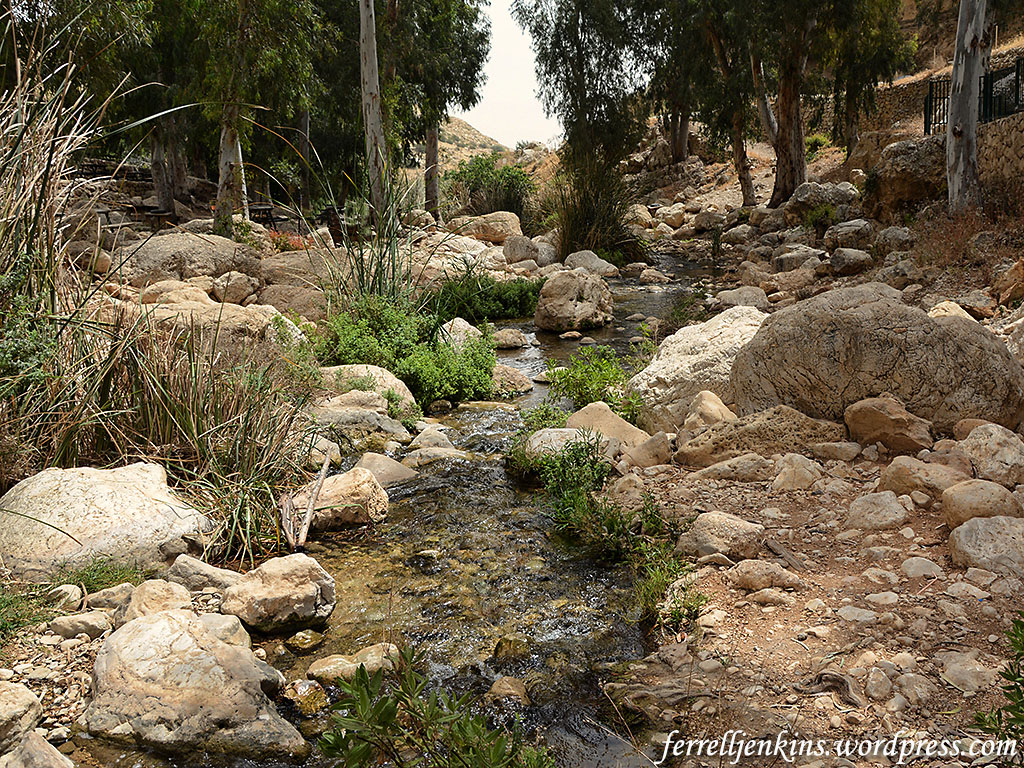
My first photograph of En Prat. Photo by Ferrell Jenkins.

My first photograph of En Prat. Photo by Ferrell Jenkins.

I thought about places Jeremiah might have hidden his under garment.
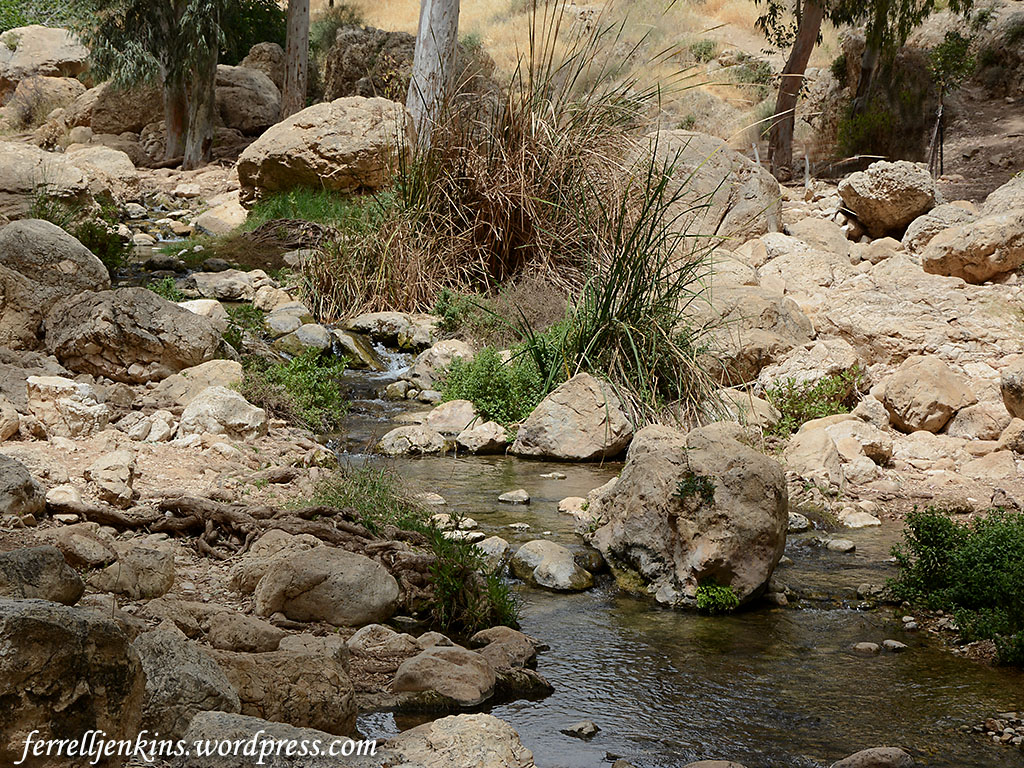
Many rocks around En Prat suitable for hiding a garment. Photo by Ferrell Jenkins.

Many rocks around En Prat suitable for hiding a garment. Photo by Ferrell Jenkins.

Here is a final photo with a view east. This stream, Nahal Prat, is also known as Wadi Kelt (or Qelt, or Qilt) and flows past Jericho to the Jordan Valley.
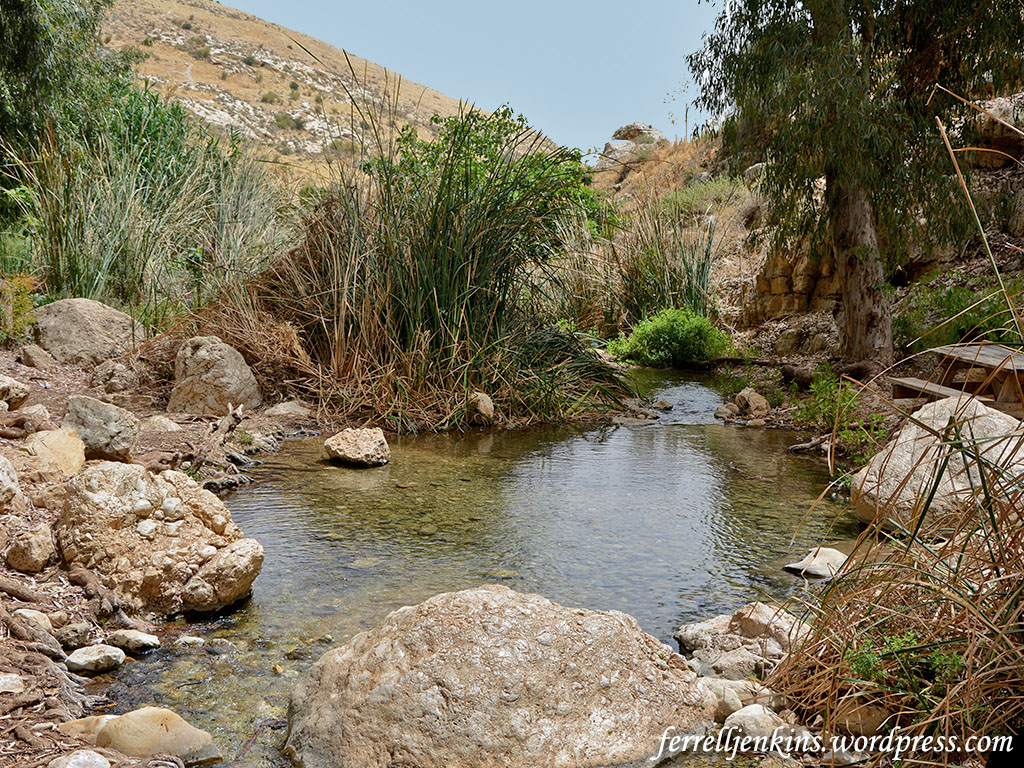
En Prat, view east toward the Jordan Valley. Photo by Ferrell Jenkins.

En Prat, view east toward the Jordan Valley. Photo by Ferrell Jenkins.

The small map below will show the relation between Jerusalem and Anathoth and En Prat (Perath, Parah).
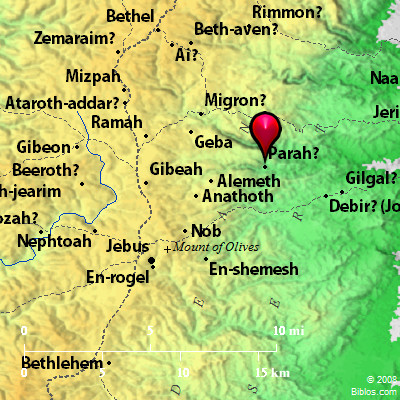
This map identifies Perath as possibly the site mentioned in Joshua 18:23. Map courtesty of BibleHub.com.

This map identifies Parah as possibly the site mentioned in Joshua 18:23. Map courtesty of BibleHub.com.

The Pictorial Library of Bible Lands, sold by BiblePlaces.com, includes a fabulous selection of photos of En Prat and Wadi Qilt in Vol. 4 – Judah and the Dead Sea.
Locating the Hadrian statue at Caesarea

There has been one inquiry about the specific location of the Hadrian statue and the Byzantine street. I am rather certain that in the months/years to come there will be other who will want to know how to location these things.

One interesting website (here) calls this Statues Square, and has links to some photos of the area.

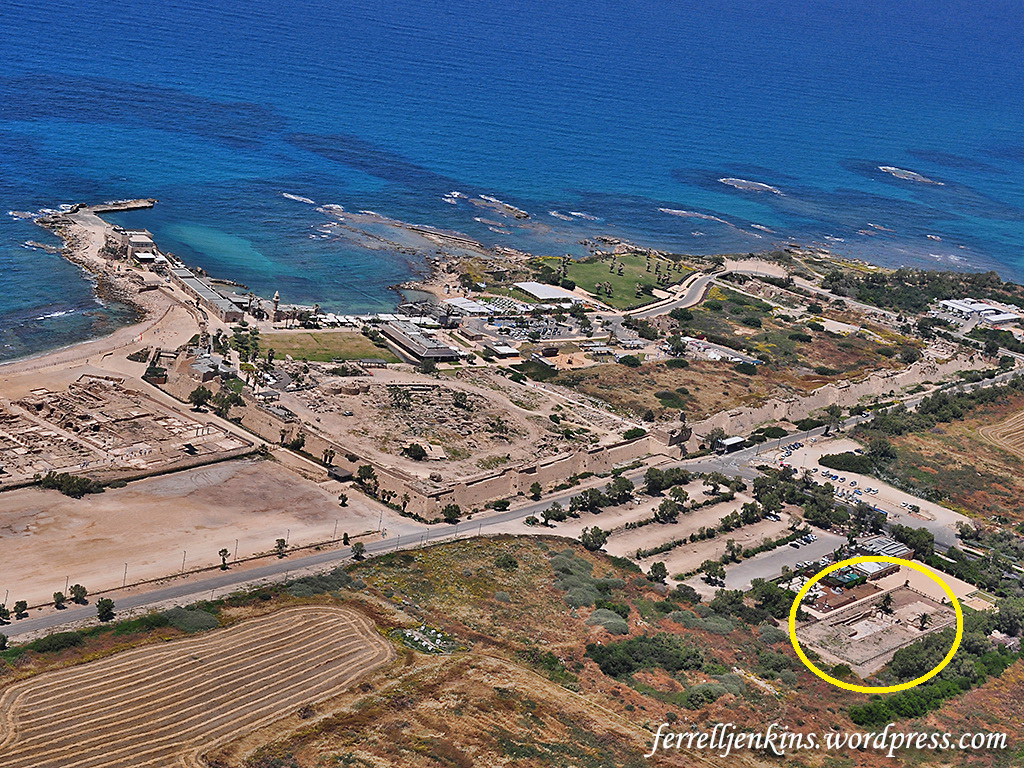
Then it occurred to me that I might have an aerial photo that includes Statues Square. The location is marked in the bottom right corner of this photo.

Aerial view of the Crusader Fortress at Caesarea. The Byzantine Street is marked in the lower right corner. Photo by Ferrell Jenkins.

Aerial view of the Crusader Fortress at Caesarea. The Byzantine Street is marked in the lower right corner. Photo by Ferrell Jenkins.

The Byzantine street, with the statues, was displayed on the first unpaved parking area parallel to the street when I first saw it years ago.

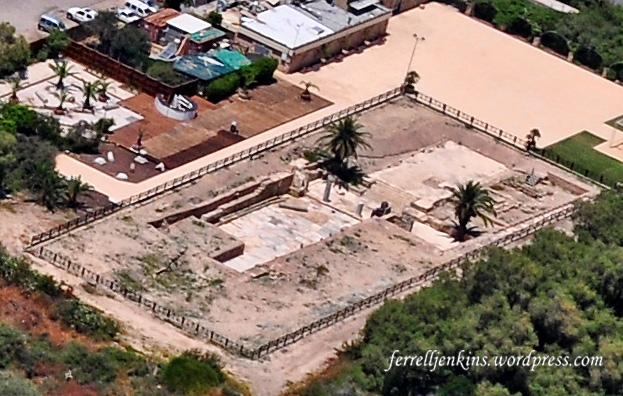
This cropped photo from the aerial shot shows the Statues Square.

Aerial view of the Byzantine and the earlier statues. Photo by Ferrell Jenkins.

Aerial view of the Byzantine and the earlier statues. Photo by Ferrell Jenkins.

Carole Madge has several web locations dealing with Hadrian. You will find photos of Caesarea here, and links to many other locations.

Having recently spent two weeks wandering about in Israel, visiting places I had never been, and places with recent changes, I noted that many of them were lacking in signs to help locate the site. Just saying …

Hadrian at Caesarea Maritima

We have written several posts about the Roman Emperor Hadrian (A.D. 117 – 138). The most recent one was about the unique Hadrian exhibit at the Israel Museum here. Others can easily be found by putting the Emperor’s name in the Search box.

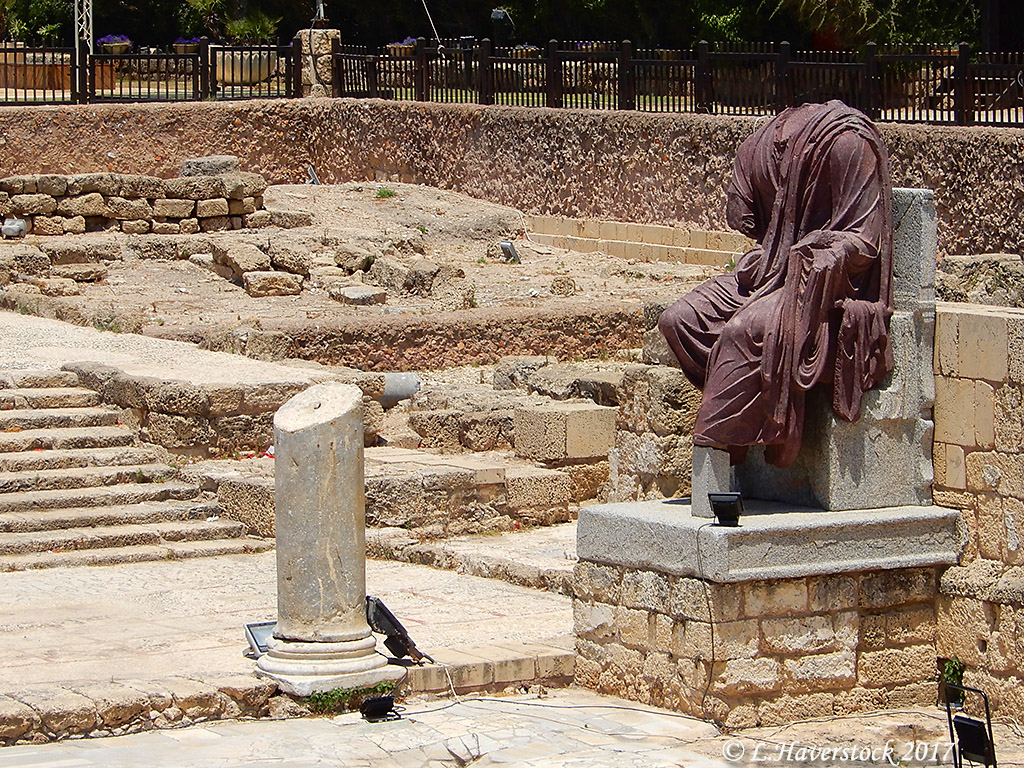
Years ago when I visited Caesarea with my groups I would see a headless statue made of porphyry thought to belong to Hadrian near the entrance to the Crusader Fortress. The statue, which was discovered accidentally in 1954, was displayed with a white marble statue on a later Byzantine street. I had asked a couple of guide friends but they did not know where the statue had been moved. A few weeks ago I spent some time trying to locate the statue in its new location but was unsuccessful.

When I realized that Larry Haverstock would be wandering around the Caesarea area for a few days ahead of joining a group tour I asked him if he would try to locate the statue.

Larry did not give up easily, and finally found the statue. Here is how he vividly describes his experience:

Turns out the elusive king’s imposing presence has been incorporated into the grounds of a large restaurant. According to Google Earth, his regal eminence is only 515 feet from the ticket seller for the Crusader Fortress / Harbor entrance at Caesarea. I just couldn’t believe it, after driving a couple of miles all around the site through banana groves and empty fields (following the museum guide’s instructions), only to discover that his headless visage had been hidden behind a fence which makes it impossible to know he’s there. In the end, I parked for free less than 200 feet from the truly impressive Emperor of Old.

A headless porphyry statue thought to be that of Emperor Hadrian displayed at Caesarea Maritima. Photo by Larry Haverstock.

A headless porphyry statue thought to be that of Emperor Hadrian displayed at Caesarea Maritima. Photo by Larry Haverstock.

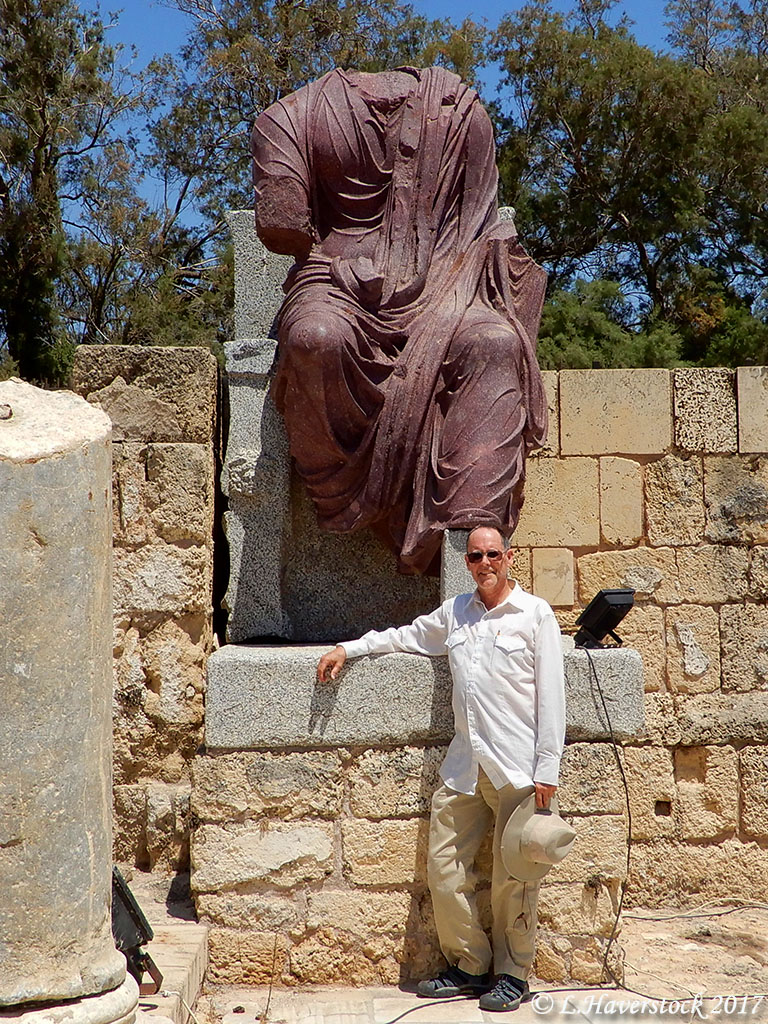
And Larry thought it helpful to pose in front of the statue to give us some idea of the size.

Larry Haverstock and the headless Emperor Hadrian. Photo by L. Haverstock.

Larry Haverstock and the headless Emperor Hadrian. Photo by L. Haverstock.

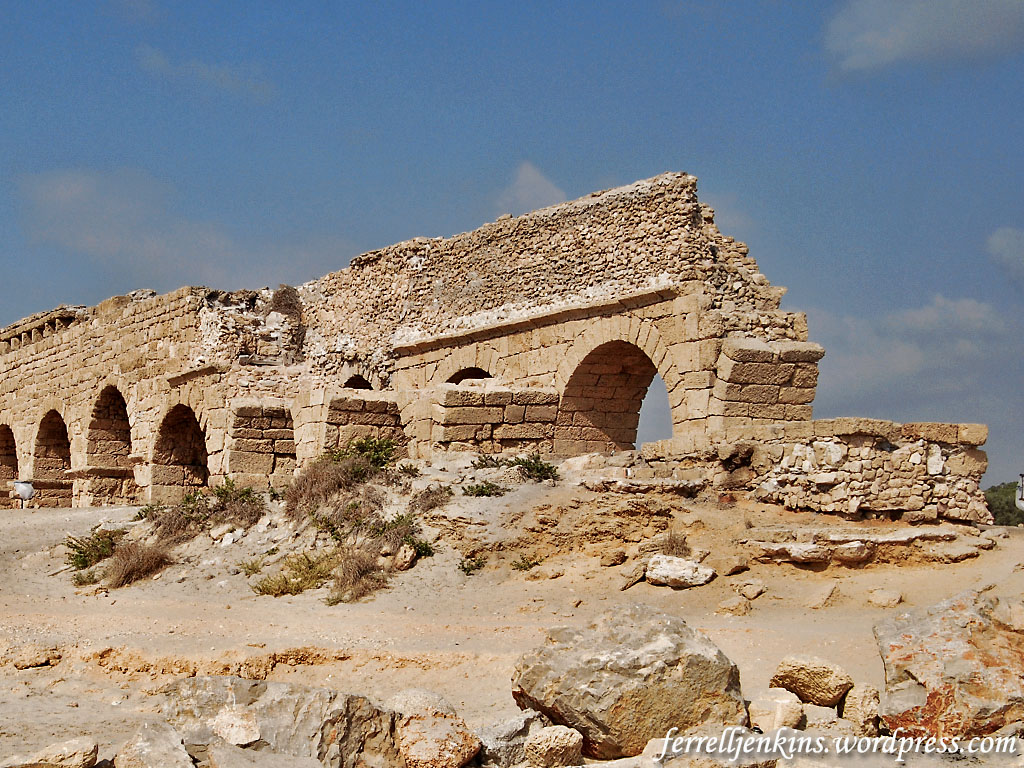
Is Hadrian important to Caesarea? Certainly. When the city began to need more water than that supplied by the aqueduct built by Herod the Great, Hadrian added another aqueduct.

High level aqueduct at Caesarea Maritima. the portion on the right of the photo (east side) was built by Herod the Great. The portion beside it on the left was added by Hadrian. Photo by Ferrell Jenkins.

High level aqueduct at Caesarea Maritima. the portion on the right of the photo (east side) was built by Herod the Great. The portion beside it on the left (west side) was added by Hadrian. Photo by Ferrell Jenkins.

Thanks to our intrepid explorer, or as he described himself in an email today, “your antiquities sleuth in the field.”

Caesarea Maritima was a first century Roman capital and seaport. The gospel was first preached to the Gentiles here when Peter came from Joppa to Caesarea to tell Cornelius words by which he could be saved (Acts 10, 11).

The Apostle Paul used the harbor at Caesarea several times. He was imprisoned in the city for two years before departing for Rome (Acts 24:27; 27:1).

The Double and Triple Gates of the Temple Mount

In two previous posts I wrote about visiting the Dome of the Rock and the Al-Aksa Mosque. You must know that I learn more from this blog than anyone. That is one of the reason I enjoy preparing it.

In the last post I stated that “There is good reason to believe that both Jesus and the Apostles used this entry to the Temple (Matthew 21:12-13; Acts 3:1).” Mark Hoffman, a professor who writes the helpful Biblical Studies and Technological Tools blog, after leaving nice comment about my post, said,

One question: I was under the impression that the typical pilgrim in Jesus’ time would enter by the triple gates to the right (east) and exit by the double gates to which you draw attention. Do you know if this is correct?

I’m trying to locate the rabbinic reference, but I believe that people who entered by the double gates were mourning or grieving, and by walking up the steps through the double gates, others were made aware of their sorrow.

I began to dig into the sources at hand to see if I could find an answer. Perhaps I had rushed past this information before, but I don’t remember it.

This morning Joseph I. Lauer, who provides so much helpful information that I use on the blog, provided an answer.

Mishnah Middot 1:3 states in part that “the two Huldah Gates in the south were used for entering and exiting.” Mishnah Middot 2:2 states in part that “All those entering the Temple Mount enter towards the right and circle and exit toward the left, except for one to whom something [adverse] occurred, for he would circle toward the left.” Circling toward the left would indicate to the others that he was a mourner or had been excommunicated.

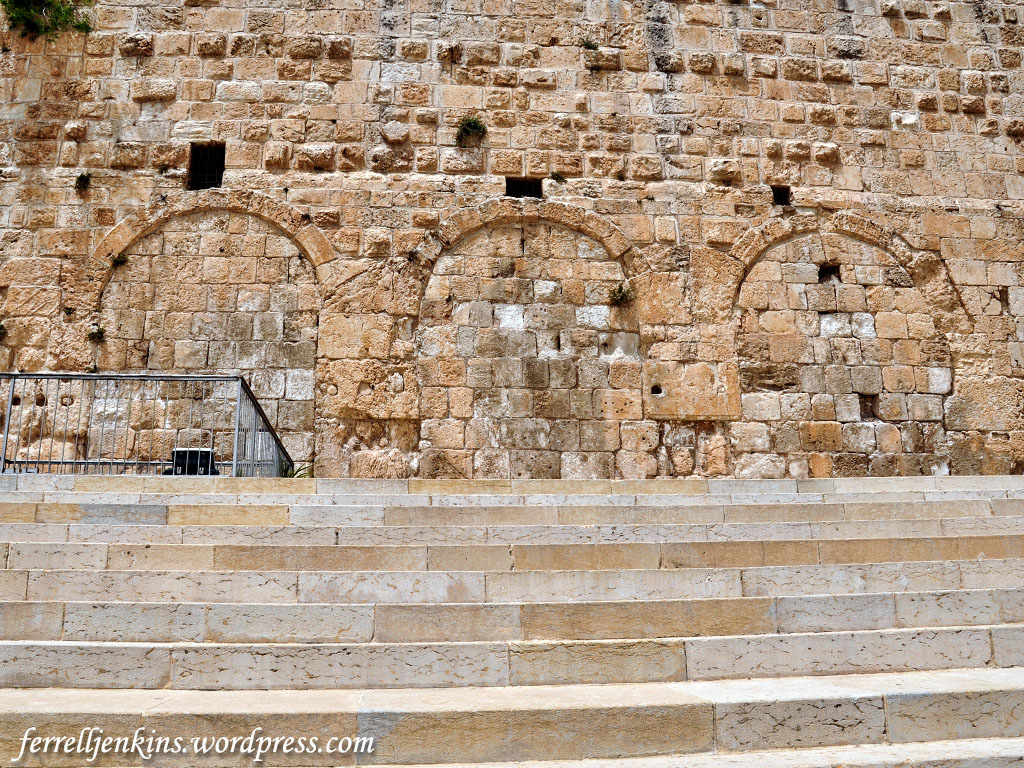
Most of the Double Gate is covered by a later building, but a small portion of the eastern door jamb can be seen in the left of our photo. Herodian stone work has been found inside the gate. The lower part of a window in the Al Aksa Mosque is visible at the top of the photo. Photo by Ferrell Jenkins.

Most of the Double Gate is covered by a later building, but a small portion of the eastern door jamb can be seen in the left of our photo. Herodian stone work has been found inside the gate. The lower part of a window in the Al Aksa Mosque is visible at the top of the photo. Photo by Ferrell Jenkins.

By this time I had already located that reference and other interpretations of the Mishnah quotation. One source that was helpful was John McRay’s Archaeology and the New Testament.

In the Mishnah it is said that temple worshippers entered on the right and exited on the left. [Middoth 2:2] This statement may relate to the purification process involved. At Qumran, for example, small partitions in the stairways of the ritual baths kept those purified from being defiled by those who were yet unclean. A Talmudic passage refers to Gamaliel (the teacher of the apostle Paul, Acts 22:3) and the elders standing on top of the stairs at the Temple Mount. [Tosepthta Sanhedrin 2:2] Thus, entrance to the Temple Mount may have been through the Double Gates and exit through the Triple Gates. [Middoth 1:3, etc.] (McRay, John. Archaeology and the New Testament. Grand Rapids: Baker, 1991: 107)

Jack Finegan, in The Archaeology of the New Testament, suggests that the Double Gate, on the west, was used both for the “entry and exit of pilgrims,” and that the Triple Gate (on the east) “was used by the priests.”

On the south side of the Temple enclosure may be seen two gates, which are about seventy meters apart and now walled up. They are known as the Double Gate and the Triple Gate. They are usually identified with the gates in the middle on the south side mentioned by Josephus, and with the two Huldah Gates mentioned in Middoth, and they are sometimes called the Western and Eastern Huldah Gates, with the supposition that pilgrims entered the Temple area by the western gate and departed by the eastern gate. An alternate theory supposes that the Double Gate itself provided for entry and exit of pilgrims and was thus itself the two Huldah Gates while the Triple Gate was used by the priests. (Finegan, Jack. The Archaeology of the New Testament. Rev. ed. Princeton: Princeton UP. 1992. 206-207.)

The Triple Gate in the southern wall of the Temple Mount. The gates you see here are much later, but an original Herodian stone is located to the left of the gates. Photo by Ferrell Jenkins.

The Triple Gate in the southern wall of the Temple Mount. The gates you see here are much later, but an original Herodian stone is located to the left of the gates. Photo by Ferrell Jenkins.

I would also like to share one additional comment by Meir Ben-Dov. He begins by discussing why the entry to the Temple would be from the south.

Throughout the ages it was a standard practice to build temples in the highest spot in any given area, so that a visit to the holy site involved “ascent.” The slope to the south of the Temple Mount was the longest and steepest of all the gradients surrounding it; only there was it possible to manifest the idea that the approach to the Temple Mount would be both impressive and steep enough to create the feeling of ascent. This also explains the call in the Bible, “Arise ye, and let us go up to Zion” (Jeremiah 31:6), not in its modern “Zionist” sense but quite literally; for it was addressed to the inhabitants of Jerusalem, most of whom were then living in the City of David, south of and below the Ophel.

After that he proceeds to discuss the southern gates that are the subject of interest here.

The two gates in the southern wall are about 70 meters apart and served the pattern established for entry and exit: “Whoever it was that entered the Temple Mount came in on the right and went around and came out on the left, save any [who have suffered some tragedy], for he went round to the left. ‘What aileth thee that thou goest to the left?’ ‘Because I am a mourner.’ ‘May He that dwelleth in this House give thee comfort’” (Midot Tractate 2:2).

The picture that emerges from this description has the majority of the public entering the compound via the eastern Hulda Gate, walking around the Temple, and exiting through the western Hulda Gate} while a person in mourning that year would walk around the Temple in the opposite direction, entering through the western gate and leaving through the eastern one. This was a fitting custom, for if a visitor to the Temple met anyone walking in the opposite direction – even a perfect stranger he immediately understood that the man had suffered a tragedy, inquired about it, and comforted the mourner in his grief. In this way, a visit to the Temple was personalized and helped to cultivate a sense of national solidarity, which was not common to the temples of other peoples. (Ben-Dov, Meir. In the Shadow of the Temple. Trans. Ina Friedman. Jerusalem: Keter, 1982. 136.)

Thanks to the two gentlemen who stimulated this study. I now leave it to others who may have interest to do additional research and draw their own conclusions.

Visiting the Al-Aksa Mosque

The entire Temple Precinct is called the Haram es-Sharif (Noble Sanctuary) by Moslems. They claim that the site has been identified with Islam since the religion’s beginning. The Al-Aksa (also El-Aqsa or el-Aksa) mosque is especially important because it is to this place that the Prophet Mohammad came on his night journey.

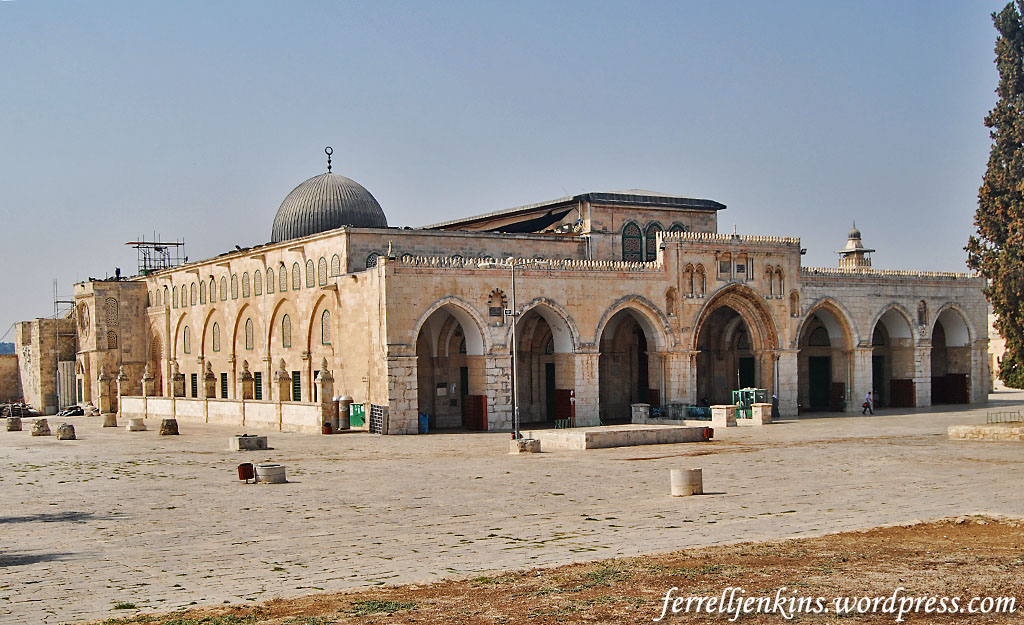
Our first photo shows the exterior of the mosque. Instead of being built on bedrock like the Dome of the Rock, this building sits on the substructure built by Herod the Great beginning in about 20 B.C. The Royal Stoa of Herod’s temple ran across the southern section of the platform at that time.

Exterior view of the Al-Aksa mosque. The dome of this building is made of lead. Photo by Ferrell Jenkins.

Exterior view of the Al-Aksa mosque. The dome of this building is plated with lead. Photo by Ferrell Jenkins.

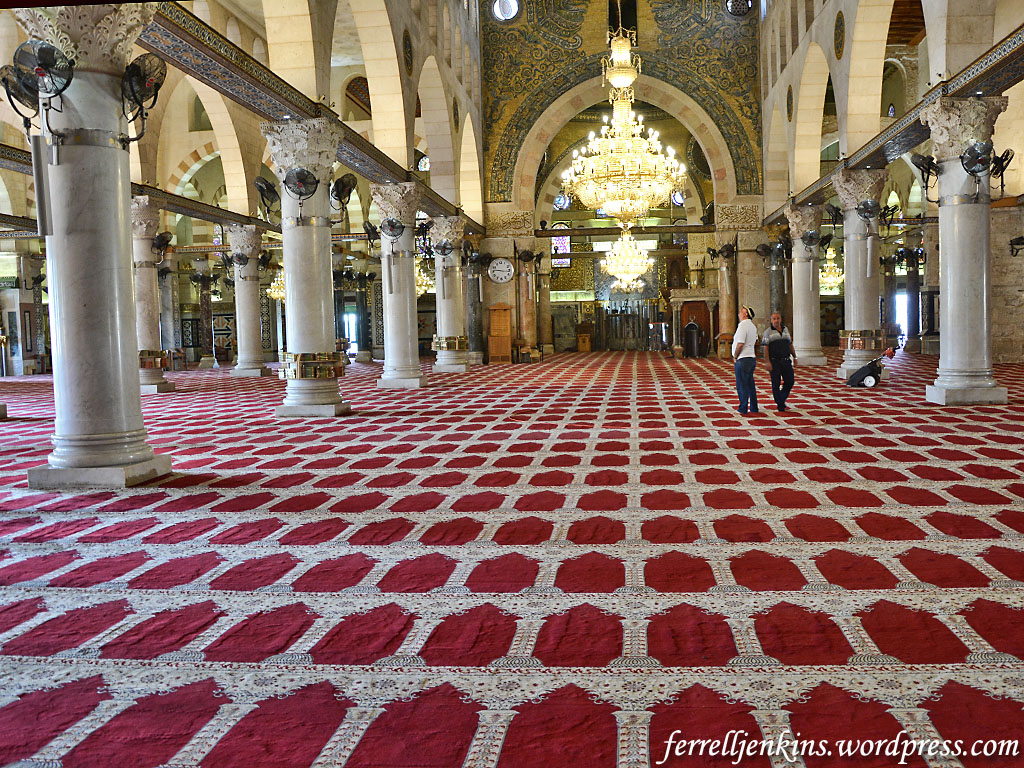
Murphy-O’Connor describes the impression when one first enters the building.

The first impression on entering is of a forest of glacial marble columns (donated by Mussolini) and a garish painted ceiling (a gift of King Farouk); they belong to the last restoration (1938-42). Virtually nothing (except perhaps the general proportions) remains of the first mosque built by the caliph al-Walid (AD 709-15), and twice destroyed by earthquakes in the first 60 years of its existence. As restored by the caliph al-Mahdi in 780 it had fifteen aisles, but these were reduced to the present seven when the caliph az-Zahir rebuilt it after the earthquake of 1033. (The Holy Land, 4th ed., 94)

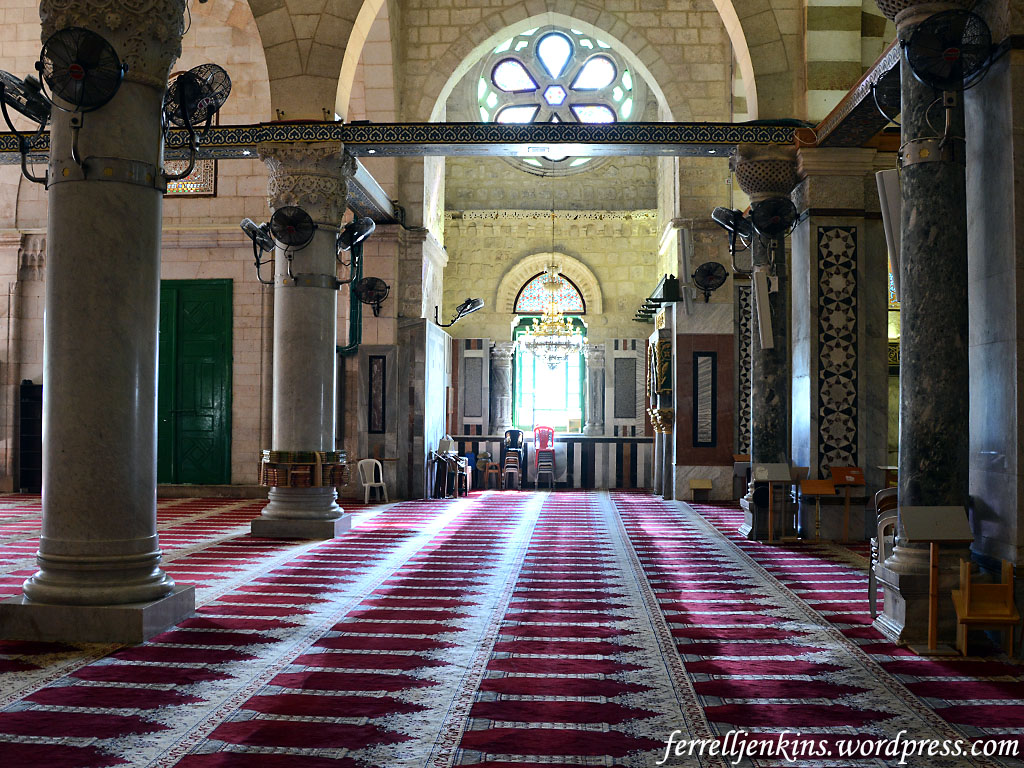
Al-Aksa has seven aisles running north-south. This is the central row. Photo by Ferrell Jenkins.

Al-Aksa has seven aisles running north-south. This is the central aisle with a view to the south. Photo by Ferrell Jenkins.

A special section of the Mosque is reserved for the Hashemite family of Jordan. Before the Six-Day war of 1967 their visits from Amman to Jerusalem must have been much more frequent. The Hashemite family claims descent from Mohammad, the name being derived from the name of the Prophet’s great-grandfather. The family is guardian of the Moslem holy places in Jerusalem.

This view to the east is reserved for the Hashemite family of Jordan. Photo by Ferrell Jenkins.

This view to the east is reserved for the Hashemite family of Jordan. Photo by Ferrell Jenkins.

Next, is a view looking west.

This view is toward the west. Photo by Ferrell Jenkins.

This view is toward the west. Photo by Ferrell Jenkins.

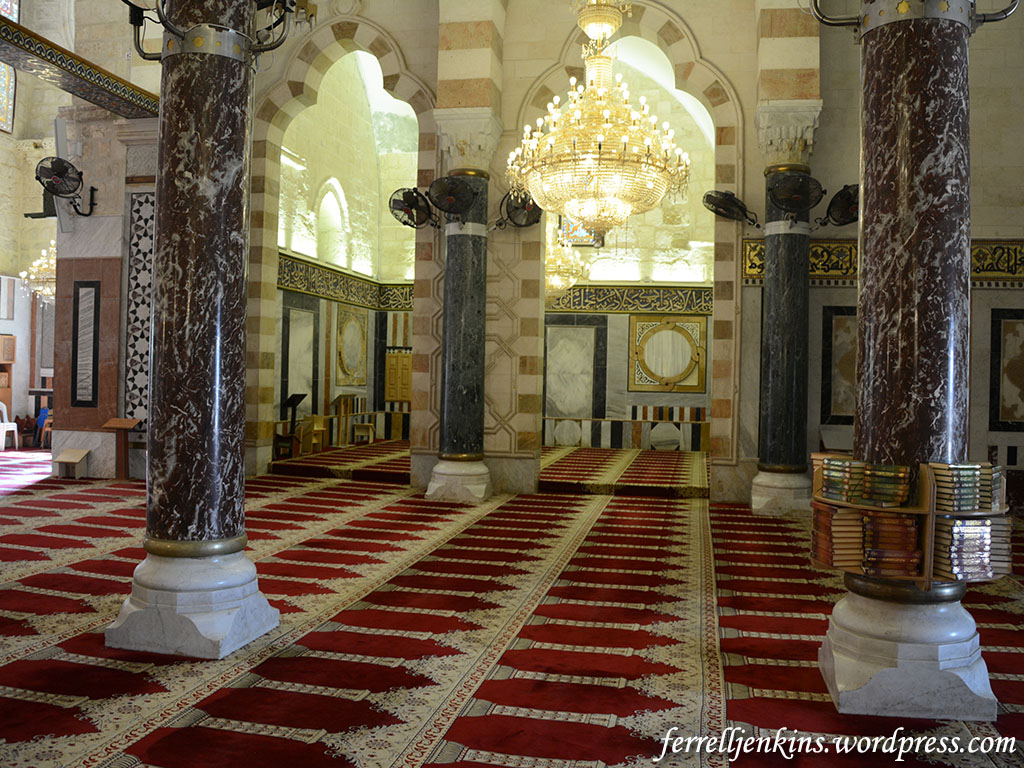
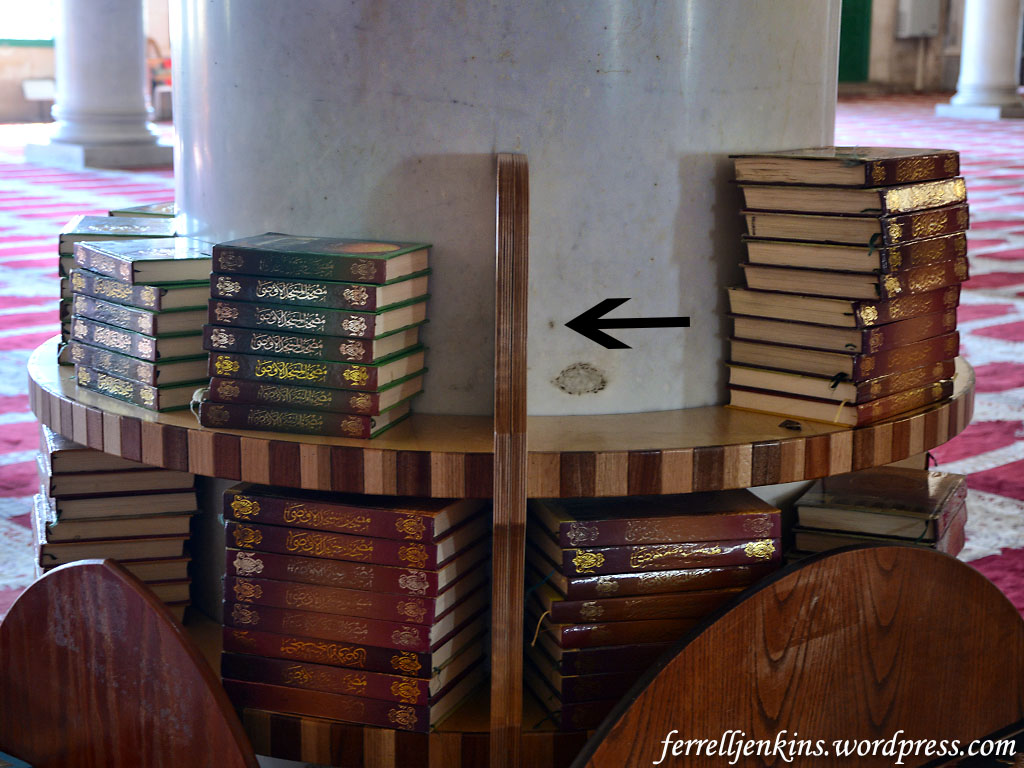
King Abdullah I was assassinated while entering the mosque in 1951. All of the sources I have read say this happened at the “entrance” to the mosque. Our guide moved aside a stack of books so we could see what he claimed was where one of the bullets lodged. I have placed the arrow to indicate the spot. This column is the first row as one enters the building. I have to leave the story there.

Our guide says that one of the bullets fired at King Abdullah I lodged in this column and was left here (where out arrow is pointing). Photo by Ferrell Jenkins.

Our guide says that one of the bullets fired at King Abdullah I lodged in this column and was left here (where out arrow is pointing). Photo by Ferrell Jenkins.

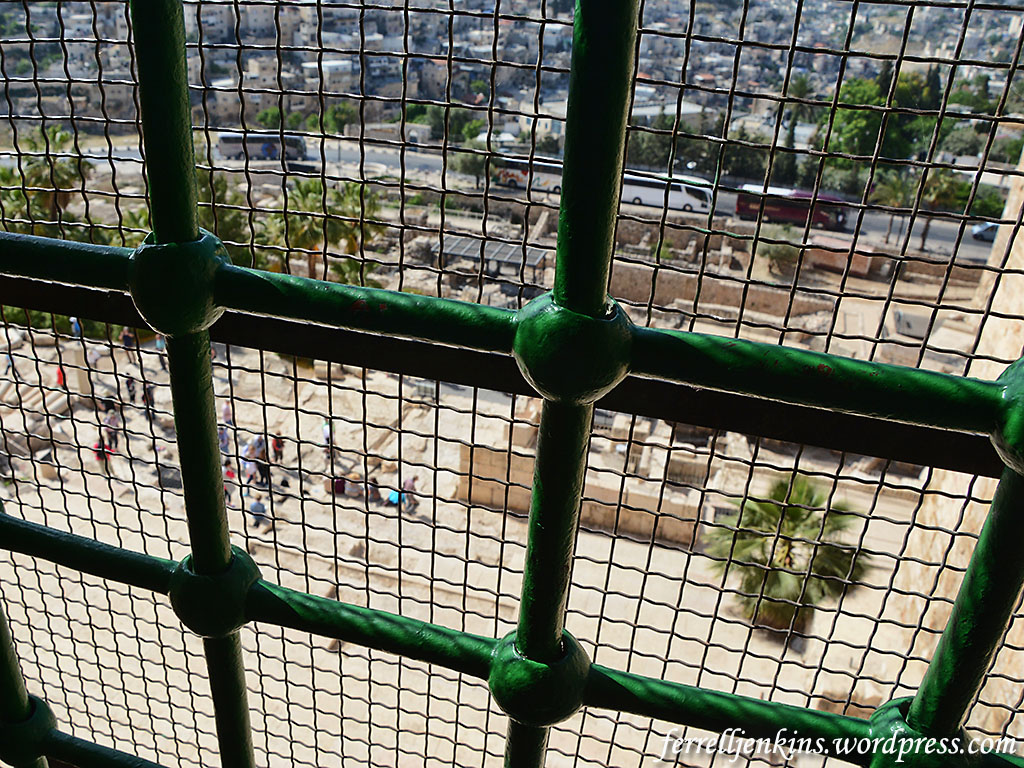
At the south end of the Mosque we were able to look down on the recently excavated steps that led to the Double Gate. This was one of the entrances to the Temple in the time of Jesus.

View of the Temple Mount steps from inside Al-Aksa moaque. Photo by Ferrell Jenkins.

View of the Temple Mount steps from inside Al-Aksa mosque. Photo by Ferrell Jenkins.

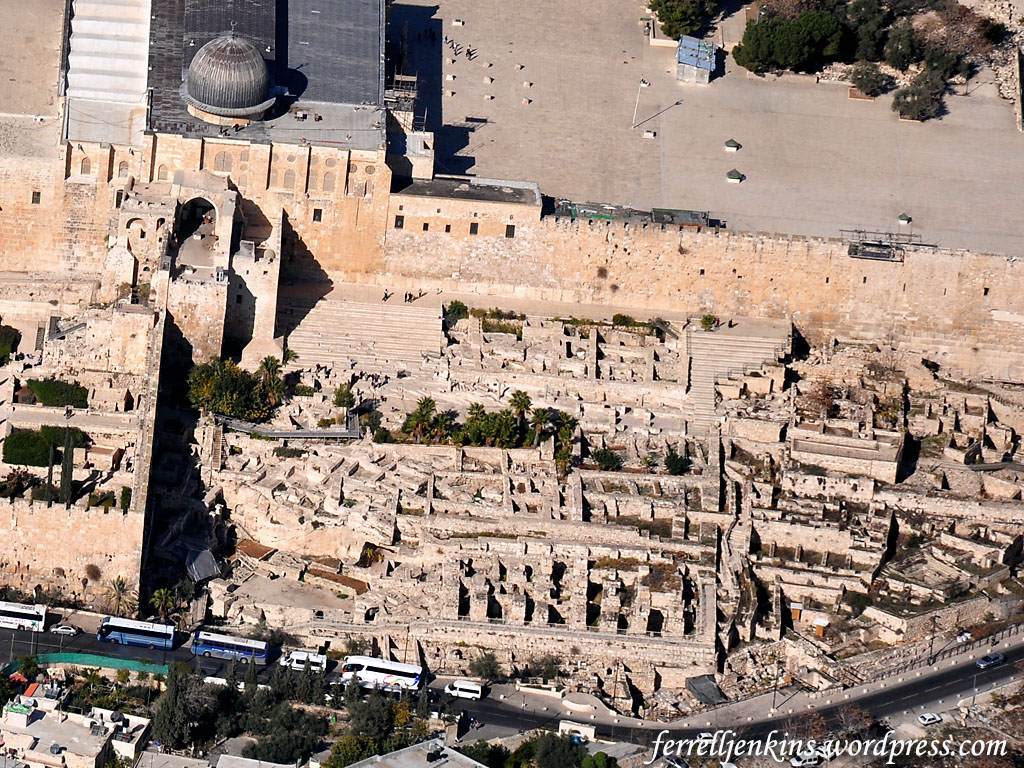
Below is our aerial photo of the Ophel excavations. The dome of the Al-Aksa Mosque is visible in the upper left. Notice the arrow-shaped shadow. Below the point we see what Benjamin Mazar called,

… a gigantic stairway which led from the Lower City (Ophel) to the [Hulda] gates. It is two hundred and fifteen feet wide; the foundation steps were cut into the natural bedrock on the slopes of the Temple Mount. The stairs were constructed of wide, trimmed and smoothed stone paving blocks, fitted together snugly. The stairway comprised thirty steps set alternately in wide and narrow rows. It ascended twenty-two feet to the upper road, also paved with large stones, immediately facing the Hulda Gates. South of it and below lay the wide plaza.” (The Mountain of the Lord, 1975, p. 143)

The window from which our previous photo was made can be seen in the wall, level with the top of the shadow arrow.

Aerial view showing the Al-Aksa dome, the Ophel, including the gigantic stairway that worshipers took to enter the temple. Photo by Ferrell Jenkins.

Aerial view showing the Al-Aksa dome, the Ophel, including the gigantic stairway that worshipers took to enter the temple. Photo by Ferrell Jenkins.

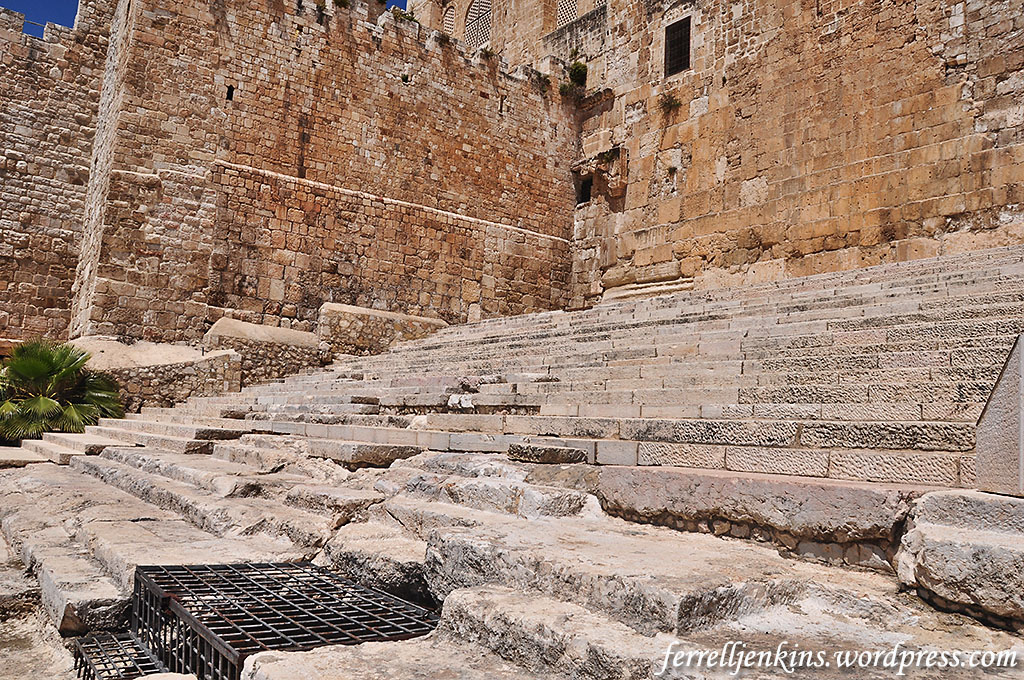
And, here is a closer view of the stairway. In this photo the window in the south wall of the Al-Aksa Mosque is visible at the top of the photo. At the time of Herod’s temple, worshipers ascended the steps, then entered through the double gates, taking more steps up to the Temple Mount platform.

The monumental steps that led to the temple in the time of Jesus. Photo by Ferrell Jenkins.

The monumental steps that led to the temple in the time of Jesus. Photo by Ferrell Jenkins.

There is good reason to believe that both Jesus and the Apostles used this entry to the Temple (Matthew 21:12-13; Acts 3:1).

Visiting the Dome of the Rock

We begin today’s journey with an aerial view of the Temple Mount, the site believed to be the Mount Moriah of the Bible, the location of the Temple of Solomon and the location of the Temple built by Herod the Great. The area underwent a number of changes after the destruction of the temple by the Romans in A.D. 70

Since the late 7th century A.D. the site has been occupied by Moslem shrines, the Dome of the Rock and the Al Aksa Mosque.

Our aerial photo shows the enclosed Islamic sanctuary area that is commonly called the Haram es-Sherif. Benjamin Mazar says that this area is about 40 acres in size. He points out that Josephus and the Mishna give smaller dimensions, and says that they apparently refer to “the Soreg or sacred enclosure” (The Mountain of the Lord, 119-120). Other writers say the area is 36 acres in size. Certainly large enough for the crowds who came to Jerusalem for festivals such as the Passover and Pentecost.

Aerial view of the temple precinct from the time of Herod the Great. Today the area is occupied by Moslem shrines, Al Aksa Mosque and the Mosque of Omar (Dome of the Rock). Photo by Ferrell Jenkins.

Aerial view of the temple precinct from the time of Herod the Great. Today the area is occupied by Moslem shrines, Al Aksa Mosque and the Dome of the Rock. Photo by Ferrell Jenkins.

In this precinct the events of Acts 2, including the first preaching of the Gospel by the apostles of Christ, took place on the first Pentecost after the resurrection of Jesus.

In A Brief Guide to the Dome of the Rock and Al-Haram Al-Sharif, published by the Supreme Awqaf Council (1966), it is stated that the entire area, also known as the Noble Sanctuary, “is the religious center of the Muslims of the Middle East and second only to Mecca in the Muslim World” (p.1). The claim is made that,

The Prophet himself spoke of Al-Aqsa, the original name for the place and, according to tradition, made a miraculous journey to it.

My first visit inside the Dome of the Rock was in April, 1967. It has been a number of years since I have been inside the Dome of the Rock. The beautiful building covers the rock upon which Abraham offered Isaac (Genesis 22), the site of some parts of Solomon’s Temple (2 Chronicles 3:1), and the site of the Temple Jesus visited during his earthly ministry.

This rock was once the threshing floor of Araunah purchased by David as a site upon which he built an altar to the LORD (2 Samuel 24).

The beautiful building now standing in this place is commonly called the Dome of the Rock. Here is an exterior view.

Dome of the Rock exterior. Photo by Ferrell Jenkins.

Dome of the Rock exterior. Photo by Ferrell Jenkins.

When one steps into the building he first sees a circular wall about six feet tall in the center. Drawing close, he peeks over the wall and sees a huge rock, the top of Mount Moriah. This is the centerpiece of the building.

The rock around which the Dome of the Rock is built. Photo by Ferrell Jenkins.

The rock around which the Dome of the Rock is built. Lights and electrical cords are laid out on the Rock. Photo by Ferrell Jenkins.

Leen Ritmeyer, one of the best experts on the Temple, believes that the rock is where Solomon built the Holy of Holies. See his Jerusalem The Temple Mount (published by Carta, 2015), pages 130-135, for details.

Over the rock is a beautiful dome. The interior is pictured here.

The ceiling of the Dome of the Rock. Photo by Ferrell Jenkins.

The ceiling of the Dome of the Rock. Photo by Ferrell Jenkins.

Next, we go to the cave underneath the rock. Ritmeyer says,

Walking round to the south, you reach an opening to an underground cave known as al-Maghara. This was a small natural cave, enlarged by the Crusaders and used to commemorate the angel’s announcement to Zacharias that he would have a son (Luke 1.1 3) . A hole is cut in the rocky ceiling to let the smoke from candles and incense escape (p. 132).

This photo shows the cave and a remnant of the structure built by the Crusaders.

The underground natural cave enlarged by the Crusaders for the construction of a church or chapel to commemorate the announcement to Zacharias (Luke 1:13). Photo by Ferrell Jenkins.

The underground natural cave enlarged by the Crusaders for the construction of a church or chapel to commemorate the announcement to Zacharias (Luke 1:13). Photo by Ferrell Jenkins.

There is much modern history of interest, but I will leave that for your further, individual study.

In a future post we hope to share our visit to the Al Aska Mosque.

More on the recently discovered Roman Road

Less than 3 months ago we reported here on the discovery of a second century Roman road uncovered in the vicinity of Beit Shemesh and the Elah Valley. Recently we came down to the area from Hwy. 60 south of Bethlehem on Hwy. 375. The information in the IAA press release indicated that the newly discovered road was near Beit Natif (Netiv), but we saw no indication of it. We went into the village of Beit Netiv and a gentleman pointed us back toward Bethlehem and told us that we would find a road on the left where he thought some work was being done.

Following the kind gentleman’s instruction we turned successively into two roads, but neither led us to the Roman road. Finally I checked this blog and downloaded the IAA Press Release for a phone number and called the IAA office. A lady there said she did not know where the road was located but that we should give her 10 minutes and then call back for the answer. When we called back there was no answer. Hmm.

Deciding to retrace our steps we headed back toward Bethlehem again. This time we had a good view to the left of the highway and saw the Roman road. The road did not come down to the modern highway 375. How would we get to it?

We had passed the satellite antennas and the Etziyona Junction of Hwy. 367 going to Neve Micha’el when we saw the Roman road on the hillside coming down from the hill on which Ramat Beit Shemesh is built. Then we realized that the Work Area, which seems to be for road work, was the only place we could turn in. This time there was not as much equipment in the area and we saw an opening leading toward the fields and the road. We took that road and found parking out of the way of any workmen that might need to come through. Note  Hwy. 3855 coming down to Hwy. 375. The Work Area is a short distance from the junction.

I am hopeful that the annotations on this previously published aerial photo will be helpful to anyone hoping to visit this road.

Aerial photograph of the road in the lower right corner of the photo. Photographic credit: the Griffin Aerial Photography Co., courtesy IAA. Annotations added.

Aerial photograph of the road in the lower right corner of the photo. Photographic credit: the Griffin Aerial Photography Co., courtesy IAA. Annotations added.

In the next photo you see the difference that a few months make in the fields. The satellite station and the turn to Hwy. 367 is a short distance to the right of this photo.

Roman road looking down to Highway 375. Photo by Ferrell Jenkins.

Roman road looking down to Highway 375. Photo by Ferrell Jenkins.

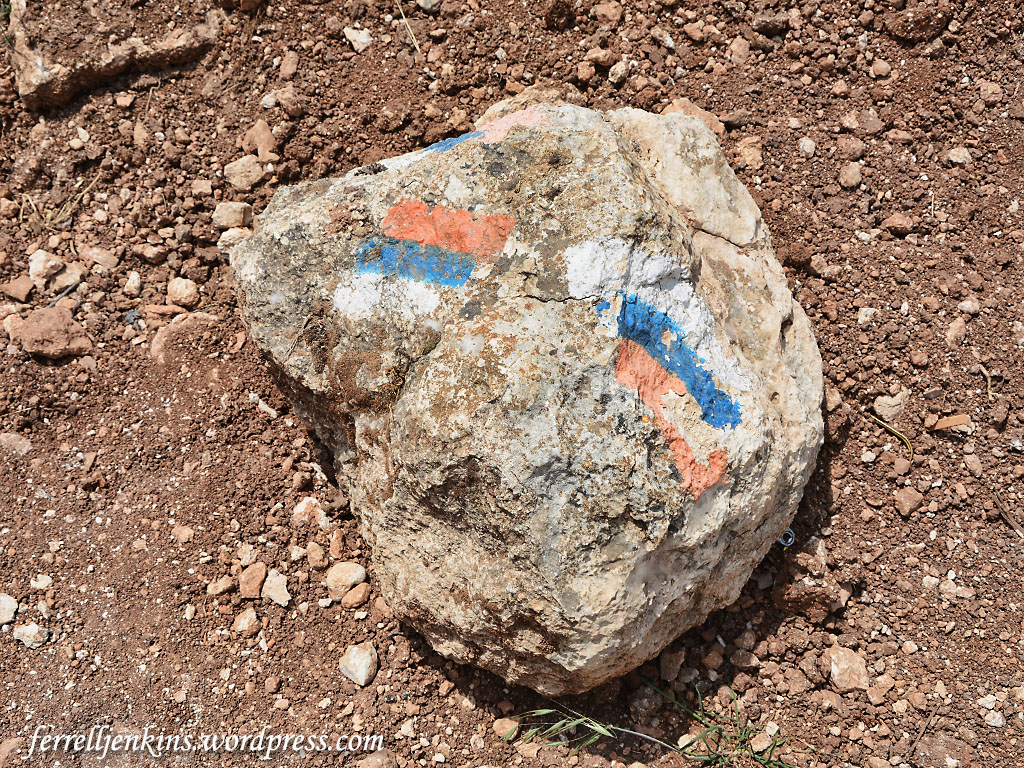
The Israel National Trail crosses the new road. The white, blue, and orange stripes mark this trail all over the country.

The Israel National Trail crosses the new road. The white, blue, and orange stripes make this trail all over the country. Photo by Ferrell Jenkins.

The Israel National Trail crosses the new road. The white, blue, and orange stripes mark this trail all over the country. Photo by Ferrell Jenkins.

In the short time we were there we saw two young men and three young ladies cross the 1800-year-old Roman road. The Trail continues up the field road and between the trees on the right.

Three young ladies take a break from hiking while standing on the Roman Road. Photo by Ferrell Jenkins.

Three young ladies take a break from hiking while standing on the Roman Road. Photo by Ferrell Jenkins.

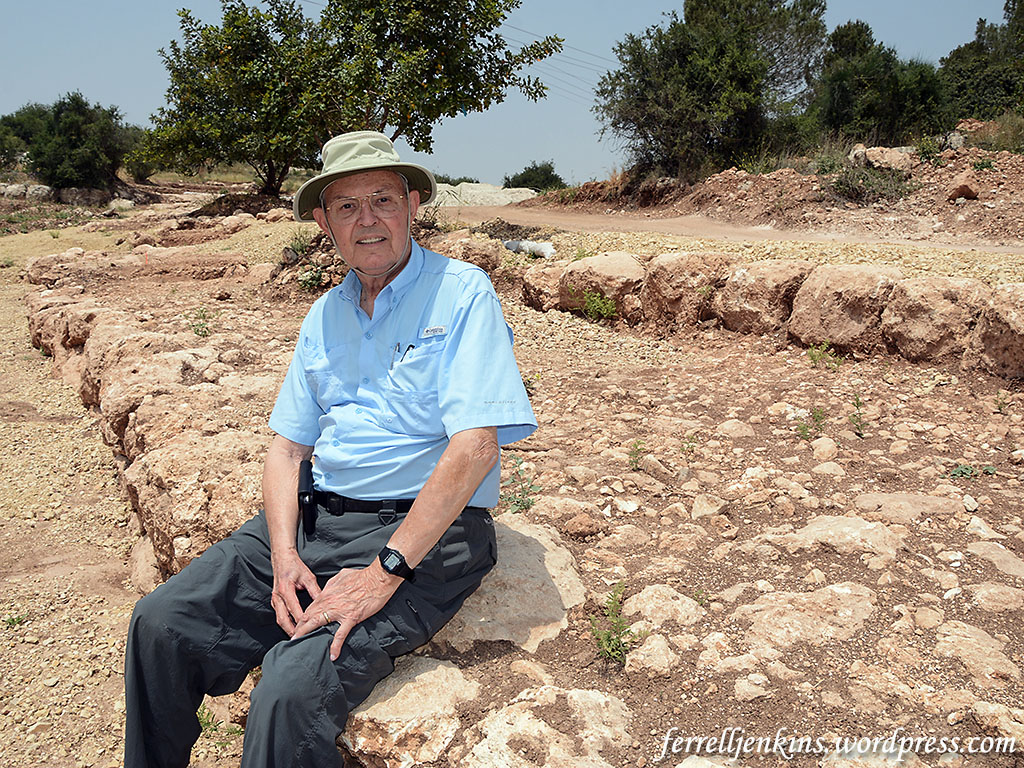
I decided to take a little break on the curb of the road which is thought by the archaeologists to have provided a way from an ancient village to connect with the Emperor’s highway which comes down from the mountain ridge of Judea.

Ferrell Jenkins waiting on the curb of the Roman Road as it approaches the location of the Emperor's Highway. Photo by Leon Mauldin.

Ferrell Jenkins waiting on the curb of the Roman Road as it approaches the location of the Emperor’s Highway. Photo by Leon Mauldin.

The Roman Roads of which we find remnants in Israel today date mostly from the late first or early second century A.D. Israel Roll, who has written much on the subject, says,

The Roman road network in Judaea was not constructed at once, but evolved gradually from the First Revolt onward. Until then the Roman administration used roads that had been built during or prior to the reign of Herod. Our knowledge of those roads is scanty, and is based essentially on isolated written sources—mainly in the New Testament and Josephus. These sources do not
mention anything relating to road construction or maintenance before the beginning of the rebellion in 66 C.E. (Israel Roll, “The Roman Road System in Judaea,” Jerusalem Cathedra 3 (1983): 138.)

James F. Strange, in discussing the roads in Roman Galilee, says,

Paved, Roman imperial roads mostly date from the second century CE. They are broad, hard-surfaced, featuring curb stones, sometimes center stones, and even milestones. Such is not the case for village ways or paths.

Strange concludes his study with this statement:

One can readily see that a dense network of trails, tracks, and footpaths probably covered Roman-period Galilee. The network was the imprint of everyday travel in the Galilee for trade, some of it from cities like Sepphoris or Tiberias and some from villages like Nazareth or Shikhin. Part of the network is international, but the majority is formed of local trails. Some have wondered how Jesus gathered crowds, but it is simpler to imagine given such a solid web of footpaths, ways, and roads. (James F. Strange. “The Galilean Road System.” Galilee in the Late Second Temple and Mishnaic Periods. Ed. David A. Fiensy and James Riley Strange. Minneapolis: Fortress, 2014.)

The Roman road was high on my wish list for this recent personal study trip, and I am glad to have seen it with my own eyes and walked on it with my own feet. Trust you will enjoy these photos until you have the opportunity to visit the road.

Update: Reader Barry Britnell pointed out that the road I identified as Hwy. 375 (before the curve) is actually Hwy. 3855. Many thanks for the correction. I think I have made the corrections in the text for those who may be serious about locating the Roman Road.

The Galilee sunrise after a night of fishing

Sunrise on the Sea of Galilee (Lake Kinneret; Sea of Tiberias) evokes many memories of the ministry of Jesus and His disciples. No matter how many photos one takes, each one is unique.

I usually make these sunrise photos with two cameras, using multiple settings. The photo today is one that I especially like because I was able to catch the fisherman heading to harbor after a night of fishing.

Sunrise on the Sea of Galilee, May 17, 2015, 5:54 a.m. Photo by Ferrell Jenkins.

Notice this text detailing the third appearance Jesus made to His disciples after the resurrection.

 1 After this Jesus revealed himself again to the disciples by the Sea of Tiberias, and he revealed himself in this way.
2 Simon Peter, Thomas (called the Twin), Nathanael of Cana in Galilee, the sons of Zebedee, and two others of his disciples were together.
3 Simon Peter said to them, “I am going fishing.” They said to him, “We will go with you.” They went out and got into the boat, but that night they caught nothing.
4 Just as day was breaking, Jesus stood on the shore; yet the disciples did not know that it was Jesus.
5 Jesus said to them, “Children, do you have any fish?” They answered him, “No.”  (John 21:1-5 ESV)

Read the rest of the story and the miraculous catch of fish in John 21:6-14.

This post is a repeat from October 21, 2015.

The Arch of Titus once had a golden menorah

Many who have visited the Roman Forum have seen the Arch of Titus at the southeast of the Forum. Mark Cartwright describes the Arch in the Ancient History Encycl0pedia here. There are many links within this quotation for those interested in following them.

The Arch of is a Roman Triumphal Arch which was erected by Domitian in c. 81 CE at the foot of the Palatine hill on the Via Sacra in the Forum Romanum, Rome. It commemorates the victories of his father Vespasian and brother Titus in the Jewish War in Judaea (70-71 CE) when the great city of Jerusalem was sacked and the vast riches of its temple plundered. The arch is also a political and religious statement expressing the divinity of the late emperor Titus.

The Arch of Titus in the Roman Forum commemorates the Roman victory of the Jews in A.D. 70. Photo by Ferrell Jenkins.

The Arch of Titus in the Roman Forum commemorates the Roman victory over the Jews in A.D. 70. Photo by Ferrell Jenkins.

The original inscription on the opposite side reads,

SENATUS
POPOLUS QUE ROMANUS
DIVO TITO DIVI VESPASIANI F
VISPASIANO AUGUSTO

The inscription attributes divinity to both Vespasian and his son Titus.

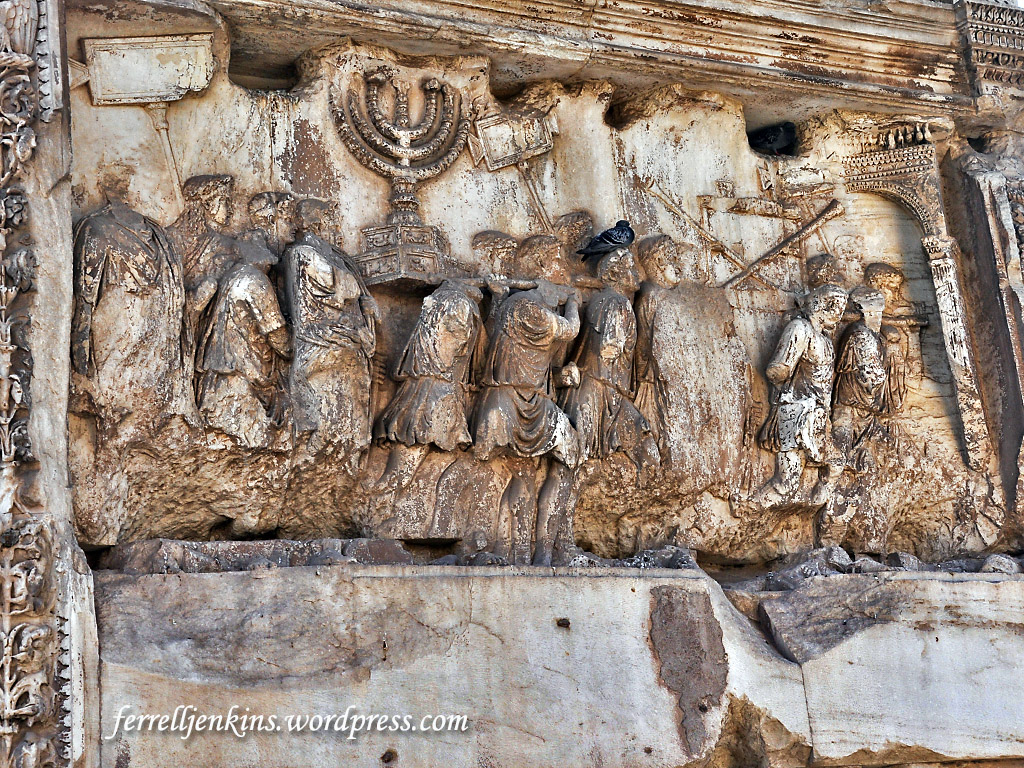
One of the large panels inside the arch shows Roman soldiers parading items taken from the Temple in Jerusalem in triumph through the streets of Rome. You will see the table of showbread, and the Menorah. One of the placards carried by the soldiers mentions the laws of the Jews.

Josephus, the first century Jewish historian, provides a first person account of the procession in Jewish Wars.

… and for the other spoils, they were carried in great plenty. But for those who were taken in the temple of Jerusalem, {c} they made the greatest figure of them all; that is, the golden table of the weight of many talents; the lampstand [Menorah] also, that was made of gold, though its construction was now changed from that which we made use of;
149 for its middle shaft was fixed upon a basis, and the small branches were produced out of it to a great length, having the likeness of a trident in their position, and had everyone a socket made of brass for a lamp at the tops of them. These lamps were in number seven, and represented the dignity of the number seven among the Jews;
150 and the last of all the spoils was carried the Law of the Jews.
151 After these spoils passed by a great many men, carrying the images of Victory, whose structure was entirely either of ivory or of gold.
152 After which Vespasian marched in the first place, and Titus followed him; Domitian also rode along with them, and made a glorious appearance, and rode on a horse that was worthy of admiration. (JW 7:148-152)

Arch of Titus relief showing Roman soldiers carrying the items taken from the Temple in Jerusalem in A.D. 70. Photo by Ferrell Jenkins.

Arch of Titus relief showing Roman soldiers carrying the items taken from the Temple in Jerusalem in A.D. 70. Photo by Ferrell Jenkins.

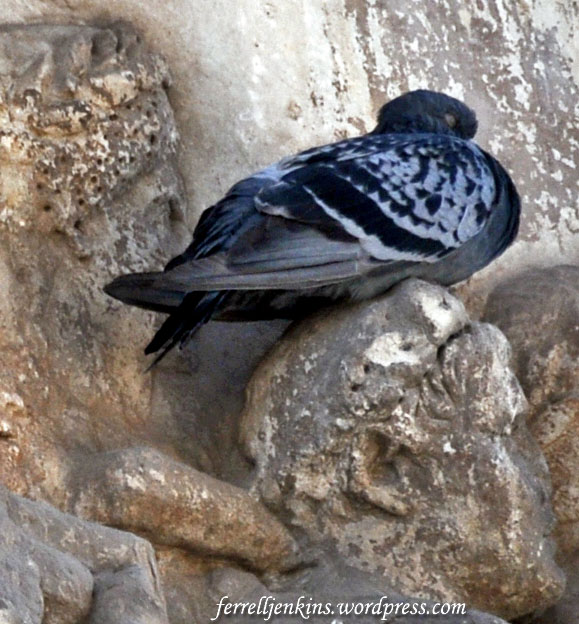
It appears that the first soldier carrying the Menorah on his shoulder is also carrying a pigeon, perhaps for an offering.  <grin>

Live pigeon on head of Roman soldier. Photo by Ferrell Jenkins.

Live pigeon on head of Roman soldier. Photo by Ferrell Jenkins.

For many years Dr. Steven Fine of Yeshiva University has been pursuing his interest in the Menorah. This, of course, led him to the Arch of Titus in Rome where the Menorah is depicted. The most recent results of his study,

includes the Digital Restoration Project, which in 2012 discovered the original yellow polychromy of the Arch menorah; numerous studies of the Arch and its menorah by Professor Fine, an upcoming exhibition and international conference on the Arch organized by Yeshiva University Museum (Summer, 2017), a free online Coursera course, The Arch of Titus: Rome and the Menorah, a 2016 summer seminar in Rome under the auspices of the Schottenstein Honors Program, and courses taught in Revel, Yeshiva College and Stern College.

Take a look at the Arch of Titus in color based on the 3D scan of the reliefs here. You will find a neat video showing the spoils panel in color, and a lecture by Dr. Fine presented at New York’s Metropolitan Museum of Art. There are also links to various articles about the project.

The emblem of the State of Israel is based on the Menorah depicted on the Arch of Titus.

The view from Mount Nebo

Our photo today was made on Mount Nebo in Jordan. The view is west across the northern end of the Dead Sea, the wilderness of Judea, and the central mountain ridge (or water-parting route).

View of the Dead Sea, the wilderness of Judea, and the central mountain range from Mount Nebo in the Transjordanian Plateau. Photo by Ferrell Jenkins.

View of the Dead Sea, the wilderness of Judea, and the central mountain range from Mount Nebo in the Transjordanian Plateau. Photo by Ferrell Jenkins.

Mount Nebo is the place from which Moses viewed the land that the LORD had promised to Abraham’s seed (Deuteronomy 34:1-8).

In the next photo the northern tip of the Dead Sea is visible on the left of the photo. This photo looks NW from Mount Nebo across the Jordan Valley (the plain of Moab) and toward the highlands of the promised land.

View from Mount Nebo NW across the Jordan Valley. Photo by Ferrell Jenkins.

View from Mount Nebo NW across the Jordan Valley. Photo by Ferrell Jenkins.

Moses saw this and much more, and probably more clearly. Both of our photos are sized for use in PowerPoint presentations.