Category Archives: Israel

Pomegranate Growing at Lachish

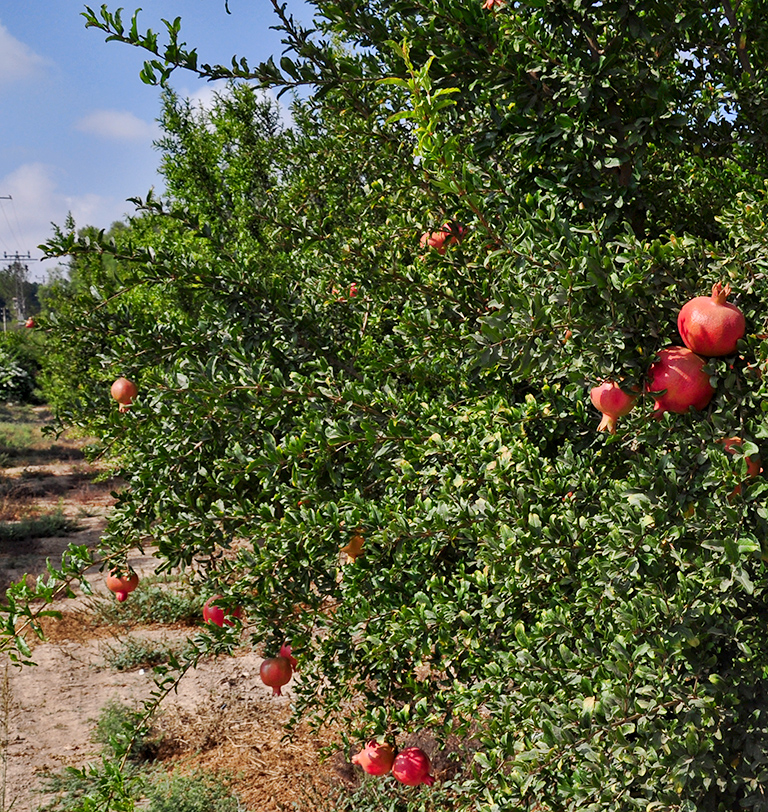
The Pomegranate was a popular fruit in Bible times. The ancient Israelites were promised “a land of wheat and barley, of vines and fig trees and pomegranates, a land of olive trees and honey” (Deuteronomy 8:8 ESV).

Our photo below shows the Pomegranate growing at Lachish in modern times.

Photo (c)FerrellJenkins2011


Lilies of the Field

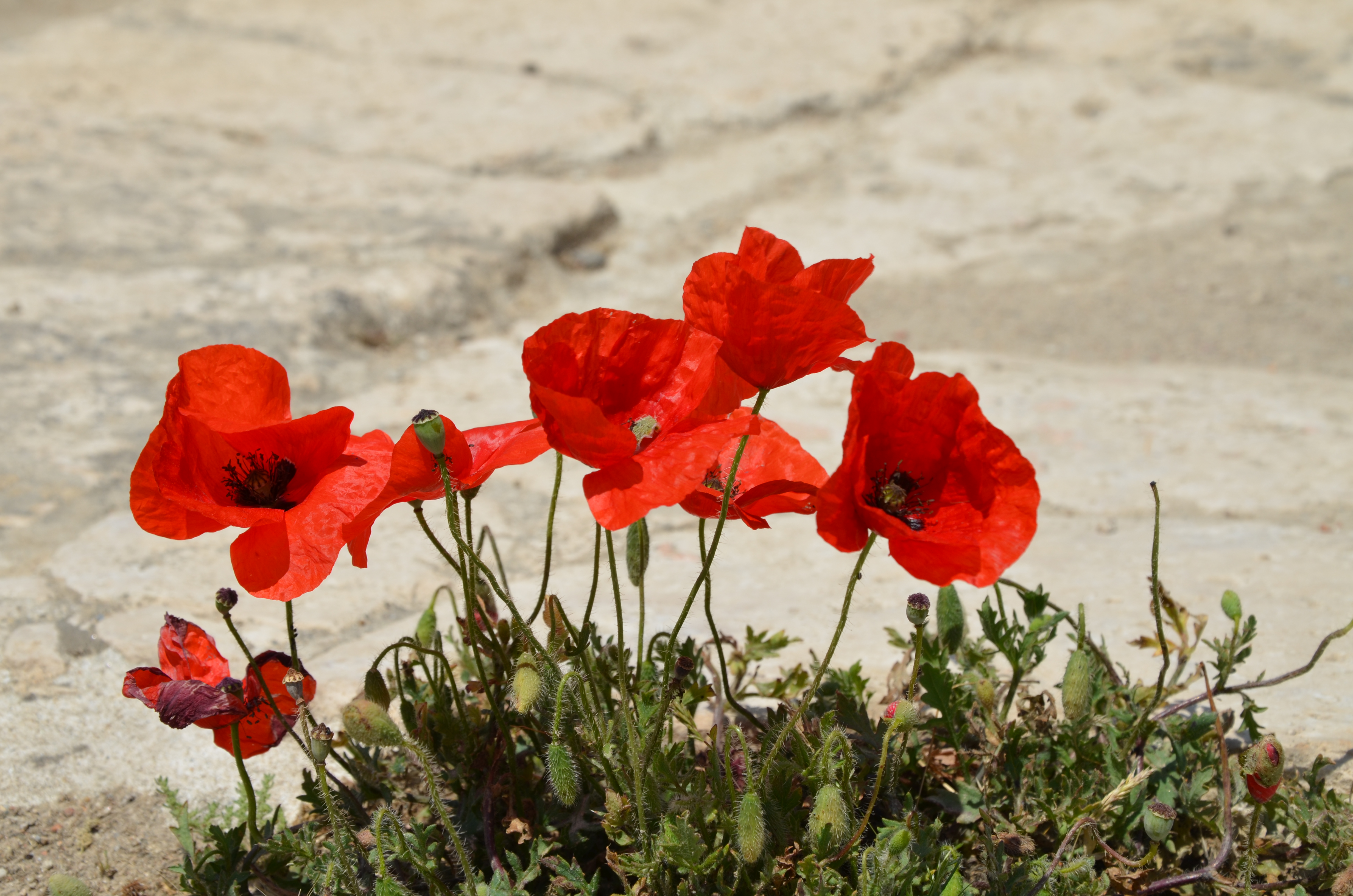
Jesus used an illustration of little flowers like those shown in our photo below to teach Hs disciples that God cares for them. See Luke 11:27. Older English translations used the term lilies. Some scholars identify the Anemone as the flower Jesus had in mind. When one sees fields full of these in the spring it is hard to disagree.

Jesus referred to little flowers like these as the lilies of the field.
Little flowers like these bloom on the hillsides and fields in abundance in the spring in the Bible lands. Photo (c) Ferrell Jenkins

Our readership is growing because some of you are asking your friends to take a look at the blog. Thank you.

Using the SEARCH box you can search for more posts that mentions the lilies or the Anemone

The Horns of Hattin

Apologies to those who received an Email of the post without the image. FJ

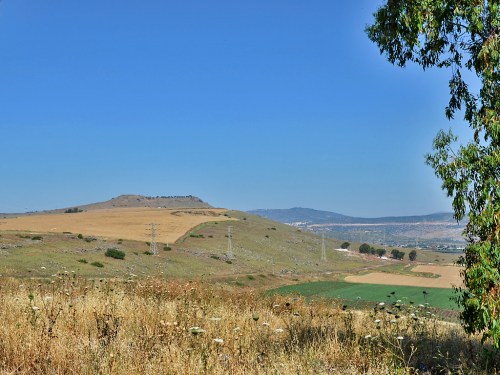
The photo below provides a view of the Horns of Hattin with a view NW from Highway 77 near Tiberias, Israel, and the Sea of Galilee .

The Horns of Hattin NE from Highway 77 near Tiberias.
The Horns of Hattin. Photo by Ferrell Jenkins.

Wild Goats at Mitzpe Ramon

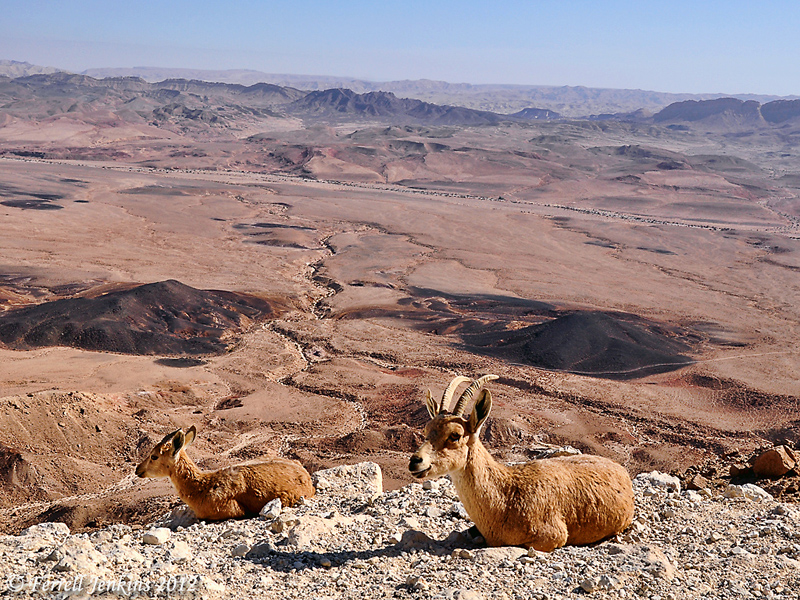
Ibex enjoy the view at Mitzpe Ramon, Israel, in the Wilderness of Zin. These two Ibex are lying on the edge of a steep cliff over a major highway below. Use the blog Search box to locate more photos of Ibex and additional information. Photo by Ferrell Jenkins.

Ibex enjoy the view at Mitzpe Ramon in the Wilderness of Zin. Photo by Ferrell Jenkins
https://wp.me/p1zOp-5yt

Taxes the easy way

24 When they came to Capernaum, the collectors of the two-drachma tax went up to Peter and said, “Does your teacher not pay the tax?” 25 He said, “Yes.” And when he came into the house, Jesus spoke to him first, saying, “What do you think, Simon? From whom do kings of the earth take toll or tax? From their sons or from others?” 26 And when he said, “From others,” Jesus said to him, “Then the sons are free. 27 However, not to give offense to them, go to the sea and cast a hook and take the first fish that comes up, and when you open its mouth you will find a shekel. Take that and give it to them for me and for yourself.” (Matthew 17:24-27 ESV).

Fishing is still important on the Sea of Galilee. Tour groups to Israel usually have at at least one meal of the famous St. Peter’s Fish when we are in the Galilee.
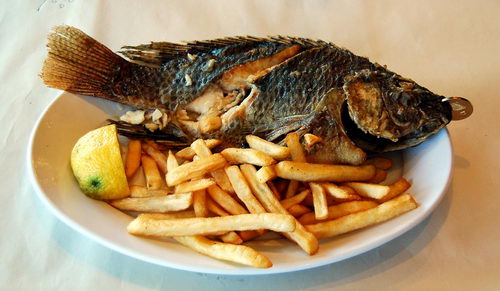
A fish from the Sea of Galilee with a coin in its mouth. Photo by F.Jenkins.

Mendel Nun spent more than 50 years fishing the Sea of Galilee. He became an expert in the history of fishing on the Sea.  His article, “Cast Your Net Upon the Waters: Fish and fishermen in Jesus’ Time” (Biblical Archaeology Review, 19:06), includes information on this episode. Because this is a lengthy quotation I will leave it full width for easier reading.

— • —

The musht is the only large fish in the lake that moves in shoals, which of course is a key to the identification of the fish in the story in Luke, although not the only one.

The flat shape of the musht makes it especially suitable for frying. The skeleton consists of an easily detachable backbone and relatively few small bones, and thus it is easy to eat. It has long been known as St. Peter’s fish. Recently, it has even been exported under this name. But, alas, the name is a misnomer.

Presumably the fish got its name because of an incident recorded in the Gospel of Matthew (Matthew 17:24–27). In this episode, the tax collectors come to Capernaum to collect the half-shekel Temple tax that each Jew was required to pay annually. Jesus tells Peter, “Go to the sea and cast a hook, and take the first fish that comes up, and when you open its mouth you will find a shekel; take that and give it to them for me and yourself.”

The musht was probably given the name St. Peter’s fish because of this miracle. However, this cannot have been the fish Peter caught with a hook and line. The reason is simple: Musht feeds on plankton and is not attracted by other food. It is therefore caught with nets, and not with hook and line. The fishermen on the lake have, since time immemorial, used a hook baited with sardine to fish for barbels, which are predators and bottom feeders. Peter almost surely caught a barbel. There can be only one explanation for the confusing change of name. It was good for tourism! The Sea of Galilee has always attracted pilgrims; musht (today raised mostly in ponds) is part of the unique local cuisine. It is delicious, especially when freshly fried. In ancient times, just as today, the fishing boats delivered their catch to the eating places on shore. Indeed, the proverbial metaphor for speed in the Talmud is “as from the sea into the frying pan.” This expression was part of daily speech in Tiberias and clearly refers to musht and not barbels; the latter are best when boiled.

The first Christians were local people and were therefore familiar with the various fish. They of course knew that the fish Peter caught could only have been a barbel and not a musht. However, as pilgrims began to come from distant regions, it no doubt seemed good for business to give the name “St. Peter’s fish” to the musht being served by the early lakeside eating houses. The most popular and easily prepared fish acquired the most marketable name! But even if Peter did not catch a musht, he deserves to have his name associated with the best fish in the lake.

Returning to the miracle of the fish caught in Luke (5:1–7), additional clues that the fish were musht are the kind of net referred to and the place and the time of the event. Several kinds of nets were used in the Sea of Galilee. The most important were the seine, the cast net and the trammel net.

— • —

For some time the most searched for article on this blog has been Fish of the Sea of Galilee. If you have not read the article and enjoy the photos I urge you to do so now.

Here is one of the photos from that post.

A fisherman unloading his catch early in the morning at a dock at Tiberias, Israel.

Use this shortlink to go to the article with more information about the fish of the Sea of Galilee: https://wp.me/p1zOp-42k

If you use our SEARCH box and insert the word fish you will locate many articles about fish and fishing on the Sea. If you search for Mendel Nun you will find several more helpful articles about fishing and the harbors of the Sea of Galilee.

Ramoth Gilead spelled death for King Ahab

The site of Ramoth Gilead is located in northern Jordan near the Syrian border. The exact site is uncertain, but many scholars think Tall ar-Rumeith is to be identified with the biblical site. Ahab, king of ancient Israel, was concerned because the town of Ramoth Gilead which he claimed for the northern kingdom of Israel was controlled by Syria. Jehoshaphat, the king of Judah, agreed to go with Ahab to fight for Ramoth Gilead.

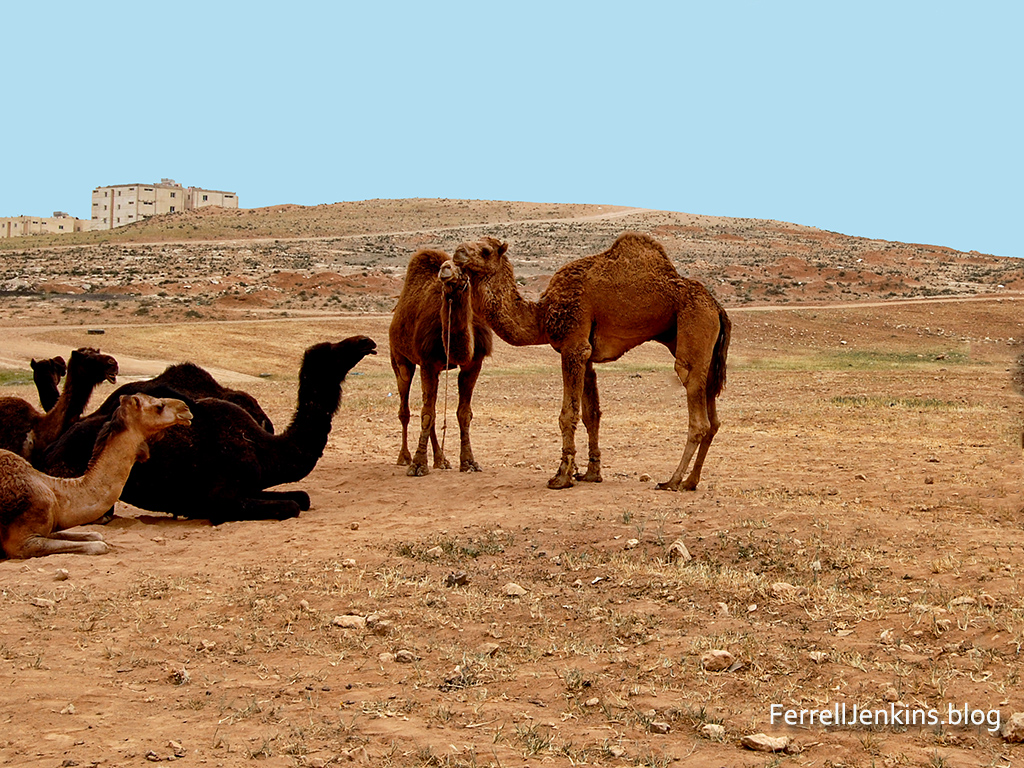
Camels at Ramoth Gilead.
Camels in the foreground of the site possibly identified with Ramoth Gilead.

The prophets of the day seemed to be indebted to the kings and like good politicians assured them they would prosper in their effort to take the city. One prophet, a man named Micaiah came and told the king that he would not prosper. Micaiah said that he could only speak what the LORD told him.

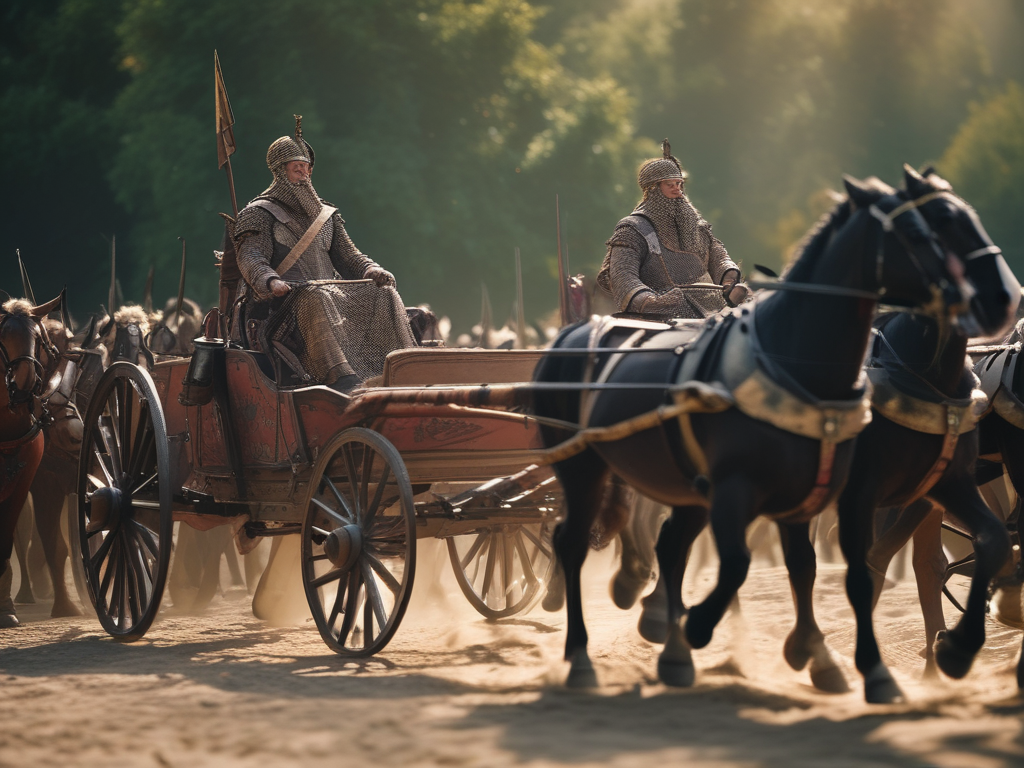
a-biblical-king-in-his-chariot-going-to-war

AI imagines that King Ahab looked something like this when he headed into battle.

When the kings arrived at Ramoth Gilead Ahab disguised himself and went into battle. He had convinced Jehoshaphat to put on  his robes and go into battle. When the Syrian captains saw him, thinking he was Ahab,  they went after him. When they saw it was not Ahab they turned back.

The Biblical record says that a “certain man drew his bow at random, and struck the King of Israel between the  joins of his armor.” The soldiers of Israel propped up the king in his chariot and he died that evening. Ahab was taken back to Samaria for burial.

No amount of disguise can hide one from the LORD. This is another events that shows that the LORD rules in the kingdoms of men.

Read 1 Kings 22 for the full account of this event.

Choppy Water at Sunset: A View of the Sea of Galilee from the East

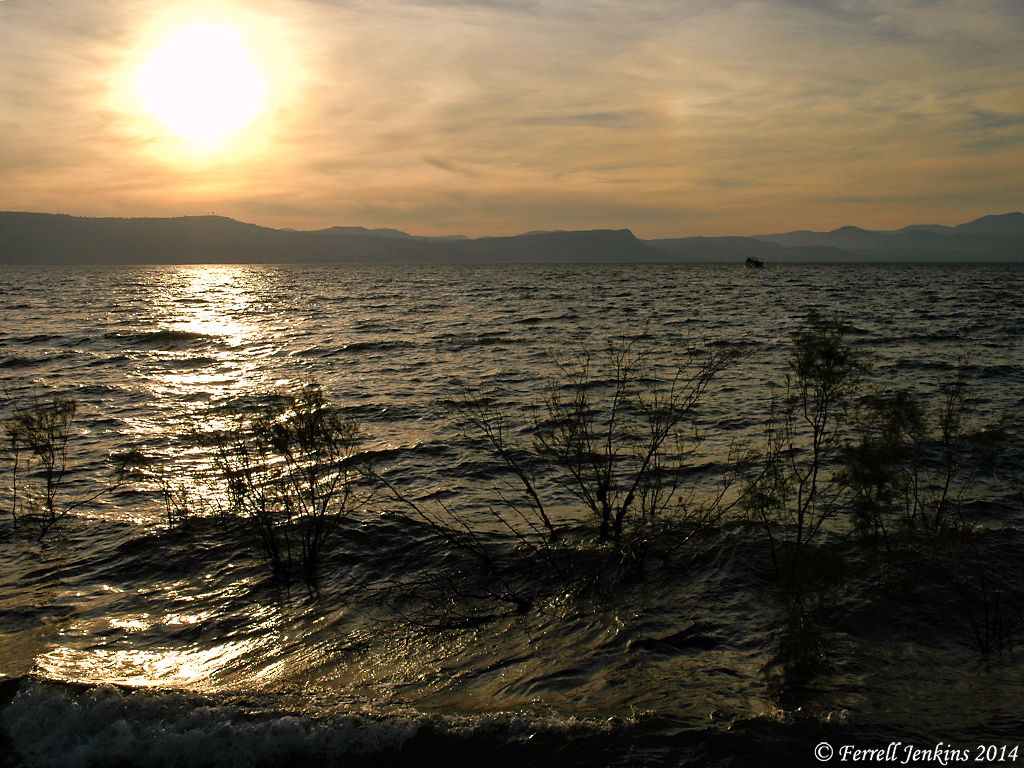
Many photos have been made of the sunrise on the Sea of Galilee. I certainly have made my share of them. On a rare occasion I have found my tour group or myself on the eastern shore of the Sea of Galilee at sunset. The photo below was made from En Gev. It illustrates several important things. The water looks choppy. This is more typical in the late afternoon than in the morning. The wind comes from the North East and causes turbulence on the water. That is what you see in this photo. Let me emphasize that this is NOT an AI generated picture..

The Sea of Galilee from the east at sunset. The water is choppy.
A view of the Sea of Galilee from the east at sunset. Photo by Ferrell Jenkins.

Something resembling this happened on the occasion when the disciples saw Jesus walking on the water. See Matthew 14, Luke 5 and John 6. Notice that a strong wind was blowing on the sea (John 6:18).

If you have traveled in this region of Israel you will recognize Mount Arbel and the Horns of Hattin in the distance on the western side of the Sea of Galilee (or Kinneret).

John baptized at Aenon near Salem.

There was a time that John (the baptizer) was baptizing in the vicinity of Aenon near to Salem. I have not had the opportunity to visit the site of Aenon, but I have been to Salem several times. Sergio and Rhoda (locate on YouTube) visited the site with Danny the Digger, a guide who who has lived in the vicinity.

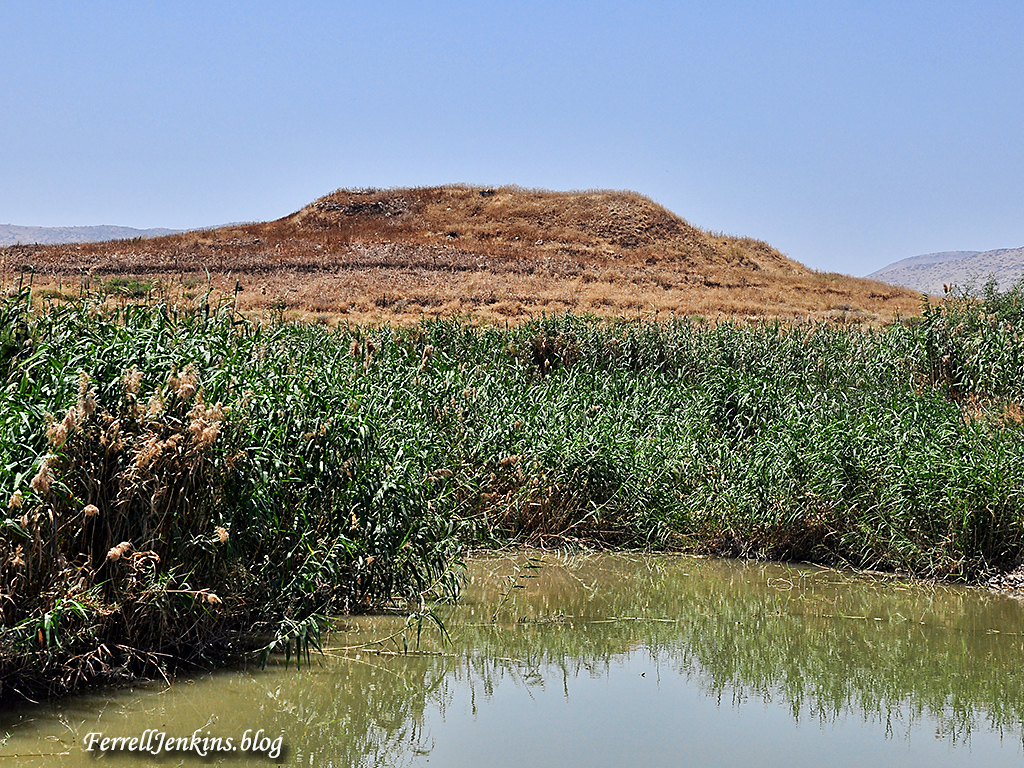
Salem is now identified with Tel Shalim. a site about eight miles south of Beth-shan (Beit She’an) on a dirt road between highway 90 and the Jordan River. In the vicinity there are many pools of water, many now used to raise the fish sold in the restaurants around the Sea of Galilee.

Tel Shalem. View south, with pond of water in foreground.
Tel Shalem in the northern Jordan Valley. Photo by Ferrell Jenkins.

The Resurrection of Jesus

A Roman period tomb cut from stone with a rolling stone.  This tomb is located near the Jezreel Valley in Israel. Photo by Ferrell Jenkins.
A Roman period tomb cut from stone, using a rolling stone to cover the opening.

The following text is taken from the Gospel of John, chapter 20.

Now on the first day of the week Mary Magdalene came to the tomb early, while it was still dark, and saw that the stone had been taken away from the tomb. So she ran and went to Simon Peter and the other disciple, the one whom Jesus loved, and said to them, “They have taken the Lord out of the tomb, and we do not know where they have laid him.” So Peter went out with the other disciple, and they were going toward the tomb. Both of them were running together, but the other disciple outran Peter and reached the tomb first. And stooping to look in, he saw the linen cloths lying there, but he did not go in. Then Simon Peter came, following him, and went into the tomb. He saw the linen cloths lying there  and the face cloth, which had been on Jesus’ head, not lying with the linen cloths but folded up in a place by itself. Then the other disciple, who had reached the tomb first, also went in, and he saw and believed; for as ye they did not understand the Scripture, that he must rise from the dead. Then the disciples went back to their homes. (Jn. 20:1-10 ESV)

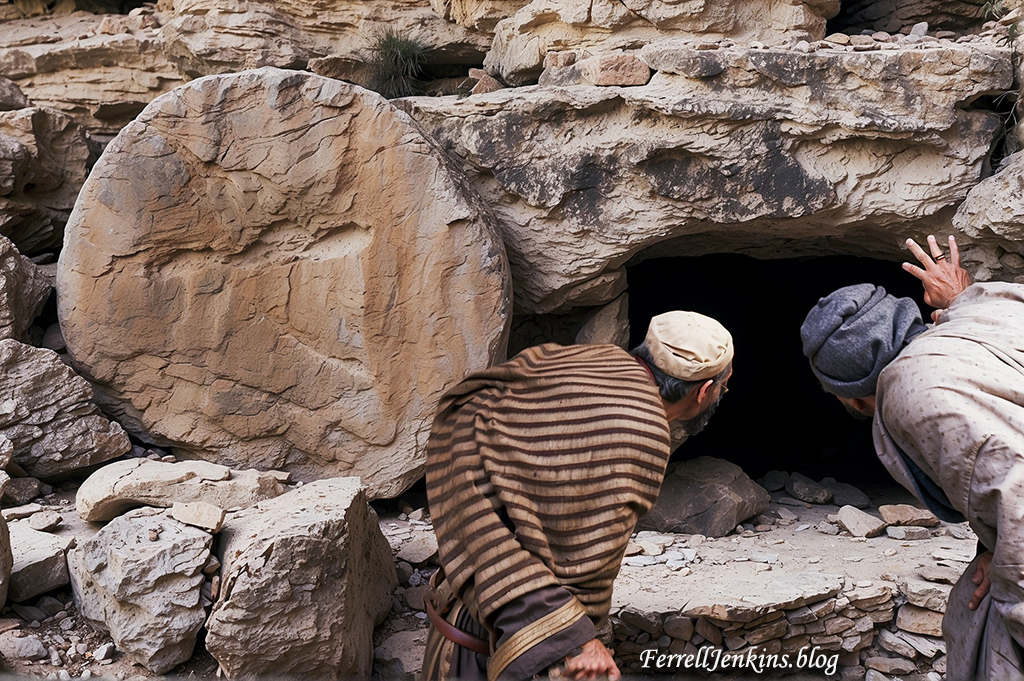
Imagine the emotions of the disciples of Jesus, both women and men, when they were told that the tomb that had been so carefully secured on Friday was found empty on the first day of the week, with only the grave clothes and the cloth that covered the head still in the tomb.

[The second photo showing the disciples of Jesus at the open tomb was made in Leonardo AI. David Padfield assisted me in this project.

Subscribe

Go back

Your message has been sent

Warning
Warning
Warning.

1–2 minutes

Israel’s Wilderness Wandering in the Gospels

In the gospels one may find several references or allusions to events of the wilderness wandering. This indicates the significance of the event and suggests that it should be studied carefully by Christians as well as Jews.

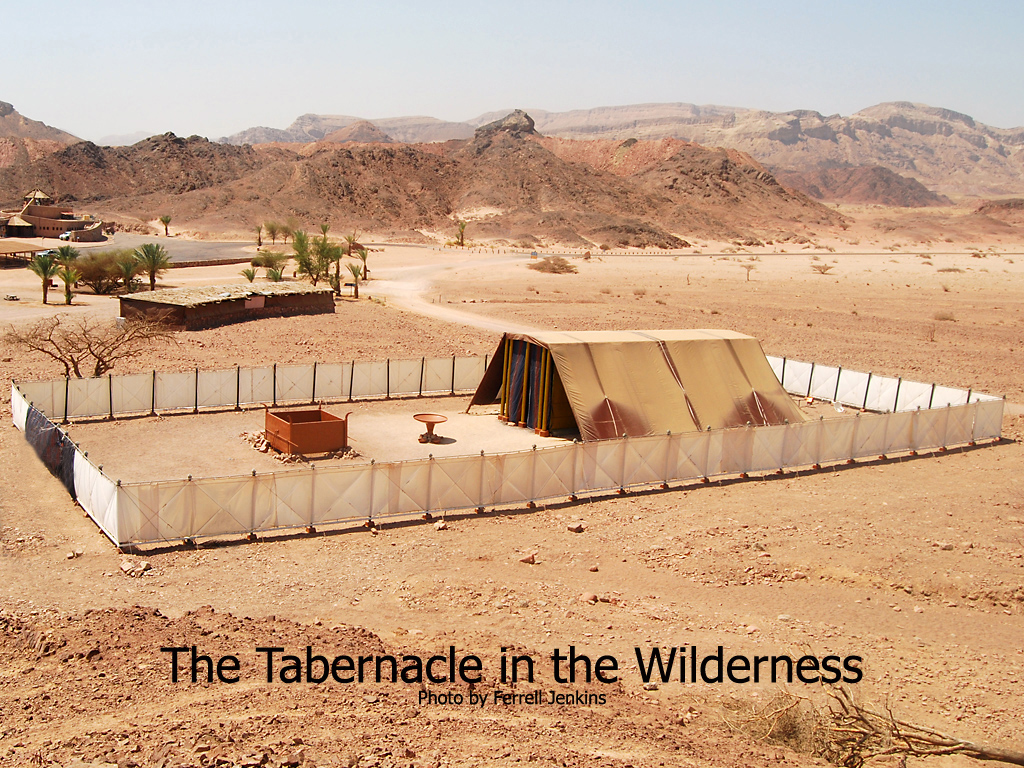
  • “The Word became flesh and dwelt [tented, tabernacled] among us…” (Jn. 1:14). The Lord made
    His presence known to the Israelites in the “tent of meeting” (the tabernacle; Ex. 29:45-46).
  • The Law was given through Moses [in the wilderness] (Jn. 1:17).
  • The serpent in the wilderness (Jn. 3:14ff.; cf. 8:28; 12:32).
  • The manna (Jn. 6:31ff.; notice the “grumbling” over the bread, vs. 41).
  • The water (Jn. 7:37-38).
  • Jesus was tempted in the wilderness by the devil. (Mt. 4:1-11).
  • Jesus fasted for 40 days and 40 nights (cf. Israel’s 40 years).
  • Jesus was tempted but did not succumb.
  • In response to the temptations of the devil Jesus quoted from the book of Deuteronomy (Mt. 4:4;
  • Dt. 8:3; Mt. 4:7; Dt. 6:16; Mt. 4:10; Dt. 6:13).
  • Stephen made several references to the events of the wilderness in his sermon (Acts
  • 7:30-44).
  • Paul calls attention to the exodus and events of the wilderness wandering (Acts 13:18; Gal.
    4:21-31).
    Notice his use of the phrase, “Remove the wicked man from among yourselves” (1 Cor. 5:13; cf.
    Dt. 13:5, the false prophet; 17:7, the one who served other gods; 17:12, one who acts presumptuously; 21:21, the rebellious son; 22:21, a girl not found a virgin).
  • Israel was baptized, ate spiritual food and drank spiritual drink, but practiced idolatry and immorality and fell (1 Cor. 10:1-13). Compare the situation at Corinth: Christians who had been baptized, ate and drank the Lord’s supper, were tempted by the idolatry (meat sacrificed to idols) and immorality of their city.


    The Writer of Hebrews speaks of events of the wilderness wandering.
  • The events at Mount Sinai (Heb. 12:18-29). The word spoken through angels (2:2; cf. Gal. 3:19).
  • The unfaithfulness of Israel in the wilderness (Heb. 3–4).

    In the book of Revelation.
  • “See…that you make all things according to the pattern which was shown you on the mountain”
    (Heb. 8:5; Ex. 25:40, the building of the tabernacle).
  • The woman who gave birth to the man child fled into the wilderness where she was nourished (Rev.
    12:6). This symbol makes the wilderness a place of protection and nourishing. The figure seems to
    be based on the experience of the nation of Israel and of Elijah (1 Kings 19:1-18) as they were cared
    for by the Lord.
  • Some of the trumpets of chapters 8-10 are drawn from the plagues of Egypt. The one like a son of
    man came on a white cloud (cf. Isa. 19:1, judgment of Egypt) and judged the enemy (Rev.
    14:14-20). The saints sing the song of Moses and the Lamb beside the sea (Rev. 15; cf. Ex. 14:31;
    15:1-19).