Category Archives: Flora and Fauna

Lilies of the Field

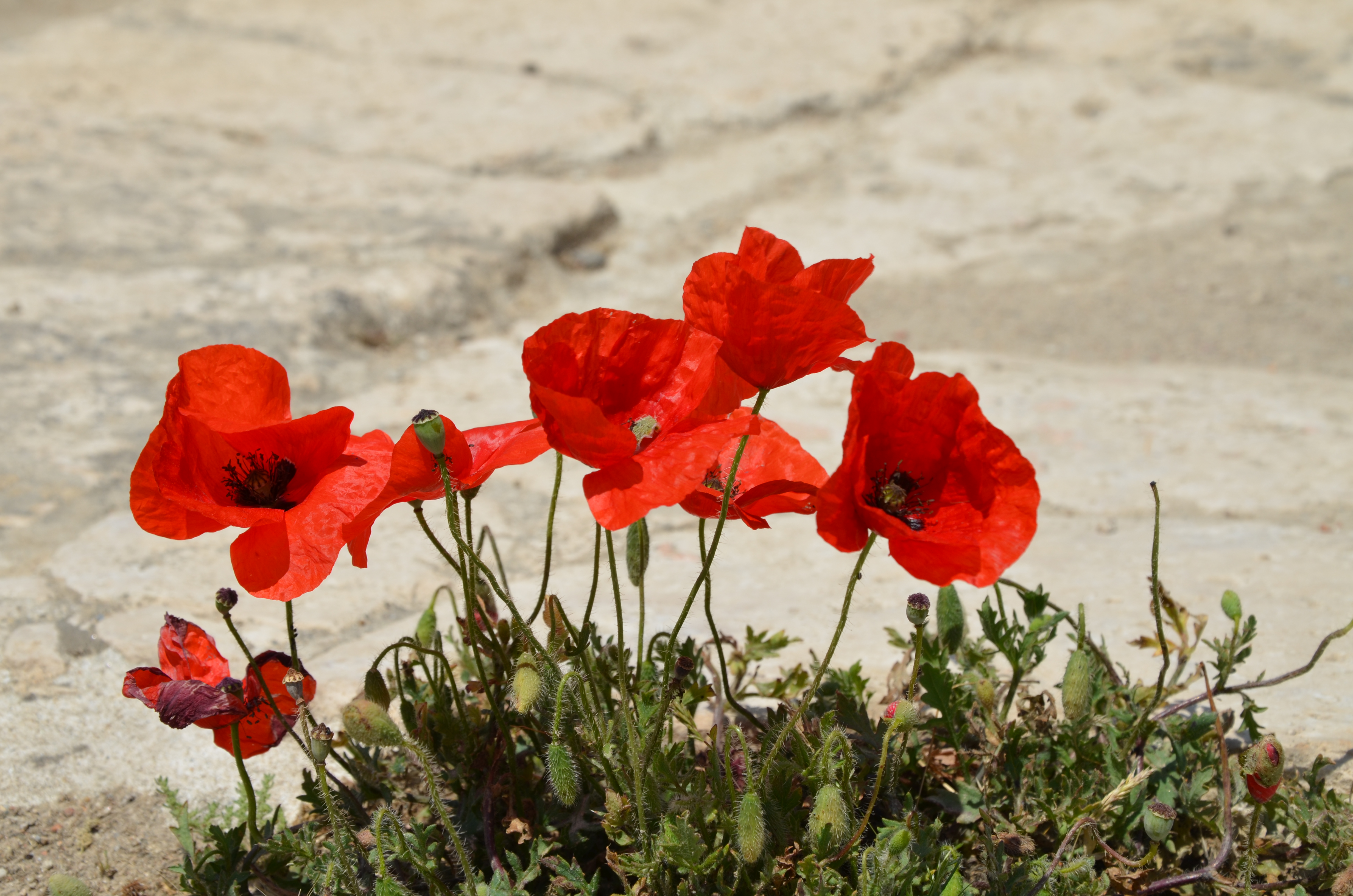
Jesus used an illustration of little flowers like those shown in our photo below to teach Hs disciples that God cares for them. See Luke 11:27. Older English translations used the term lilies. Some scholars identify the Anemone as the flower Jesus had in mind. When one sees fields full of these in the spring it is hard to disagree.

Jesus referred to little flowers like these as the lilies of the field.
Little flowers like these bloom on the hillsides and fields in abundance in the spring in the Bible lands. Photo (c) Ferrell Jenkins

Our readership is growing because some of you are asking your friends to take a look at the blog. Thank you.

Using the SEARCH box you can search for more posts that mentions the lilies or the Anemone

Wild Goats at Mitzpe Ramon

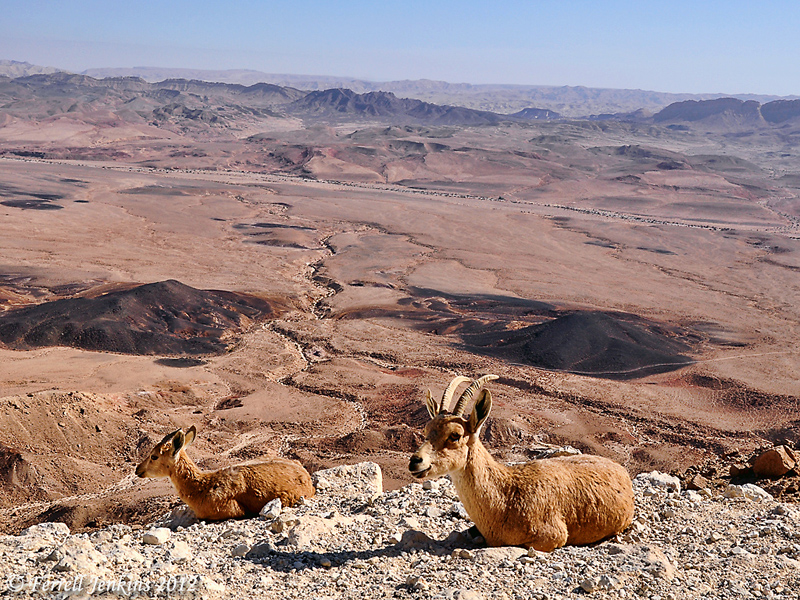
Ibex enjoy the view at Mitzpe Ramon, Israel, in the Wilderness of Zin. These two Ibex are lying on the edge of a steep cliff over a major highway below. Use the blog Search box to locate more photos of Ibex and additional information. Photo by Ferrell Jenkins.

Ibex enjoy the view at Mitzpe Ramon in the Wilderness of Zin. Photo by Ferrell Jenkins
https://wp.me/p1zOp-5yt

Girding up the loins of your mind

The Apostle Simon Peter followed Jesus during His personal ministry. It is not surprising that some of the illustrations he uses come from this experience. In 1 Peter 1:13 the apostle wrote,

Therefore gird up the loins of your mind, be sober, and rest your hope fully upon the grace that is to be brought to you at the revelation of Jesus Christ; (1 Peter 1:13 NKJ).

The Louw-Nida Lexicon says that the Greek phrase used in 1 Peter 1:13 is “(an idiom, literally ‘to bind up the loins of the mind’) to prepare oneself for learning and thinking – ‘to get one’s mind ready for action, to be ready to learn and to think, to be alert.” The Greek phrase is translated this way: ‘so then, have your minds ready for action.1 Peter 1:13.” (27:55)

In The IVP Bible Background Commentary, Craig Keener writes,

Men wore long robes and would tuck them into their belt, “gird up their loins,” so they could move more freely and quickly. Although the image also occurs elsewhere in the Old Testament, here Peter may specifically allude to the Passover (Exodus 12:11): once God’s people had been redeemed by the blood of the lamb (1 Peter 1:19), they were to be ready to follow God forth until he had brought them safely into their inheritance (cf. 1:4), the Promised Land.”

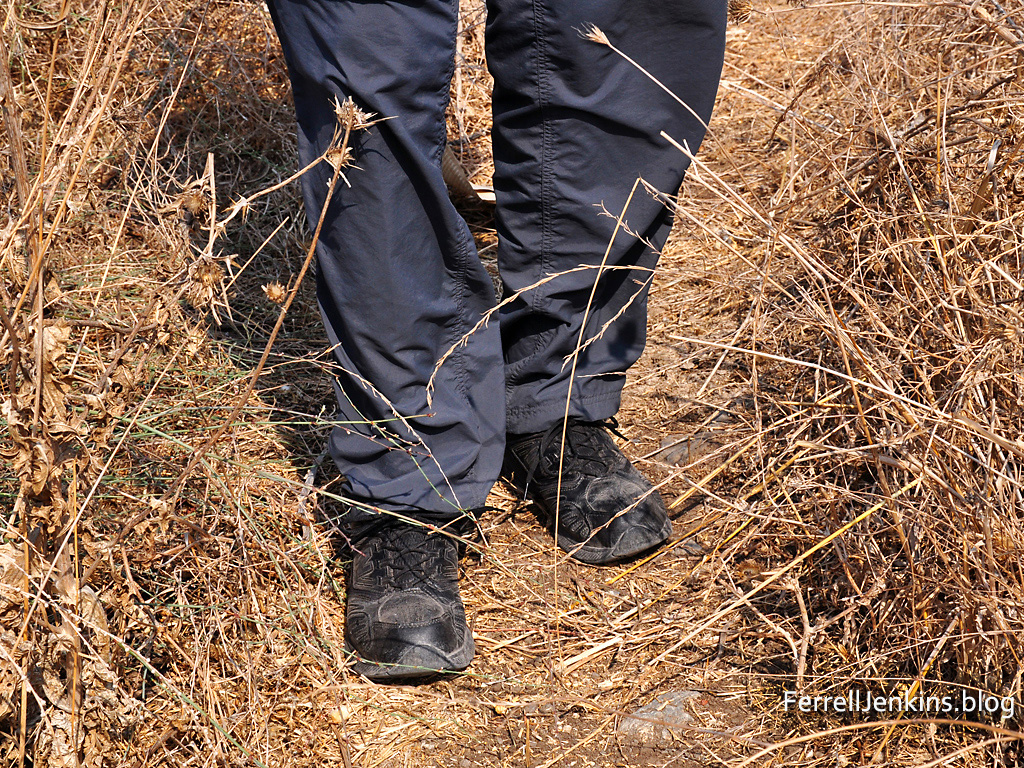
Even though I have never worn a long, flowing robe I could illustrate this over and over from my years of travel in Israel. Take a look at this photo made at Horbat Adumim in upper Galilee.

Walking through thistles.
Walking across fields to get a desired photo often brings one in contact with thistles, as happened at Horbat Adumim.

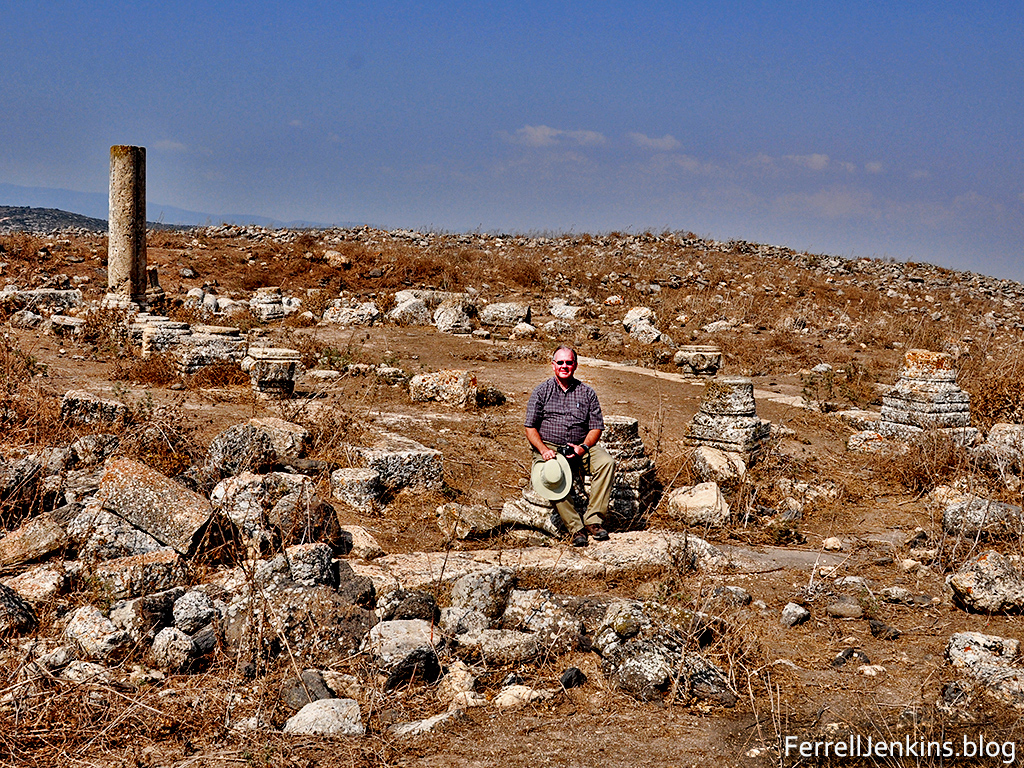
Horbat Adumim is a national park in Israel, the site of an the ruins of an ancient synagogue. My frequent traveling companion on private study tours is Leon Mauldin. Leon is seen here seated at the entrance to the old synagogue.

I have used this text from 1 Peter various times in discussing the need to avoid those things that hinder us in service to God. Gird up the loins of your mind.

, , , , , , , ,

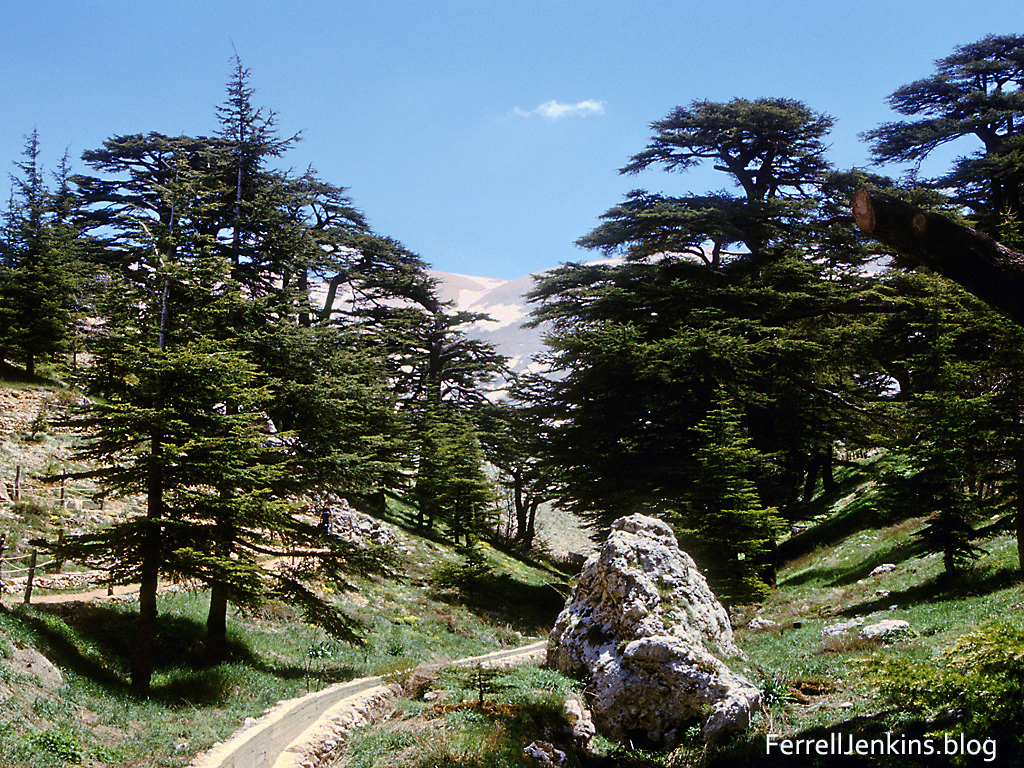
Cedars of Lebanon in 1969

My first trip to Lebanon was in May, 1968. At that time I was able to visit several of the historic places that I had read about in the Bible and other sources. These included Tyre and Sidon, Byblos, and the Cedars of Lebanon.

The Cedars are about 75 miles north of Beirut on a mountainous road and not included on my second Bible Lands Tour. But we had a half day free to visit as we wished. My wife Elizabeth and I were joined by Louis and Margie Garret, co-workers at Florida College, and Joe Corley who had come all the way from Lethbridge, Alberta, Canada to join the tour. We had met Joe and his family earlier when I preached there a year or two earlier. We crowded into a taxi willing to take us to the Cedars.

A couple of days ago I located a slide I made on Agfachrome film during that visit. I hope you will enjoy it about half as much as I enjoyed seeing it again.

There are numerous biblical references to the cedars, but I wanted to mention just one reference today.

About 1040 BC King Solomon, the new king of Israel, requested cedars from King Hiram of Tyre in Lebanon for use in building the temple in Jerusalem. If you have visited Israel or read about the buildings you know that most of them are made of stone. Wood for various purposes had to be brought from other places.

Now therefore command that cedars of Lebanon be cut for me. And my servants will join your servants, and I will pay you for your servants such wages as you set, for you know that there is no one among us who knows how to cut timber like the Sidonians” (1 Kings 5:6 ESV).

Over the years we have posted several articles about the Cedars of Lebanon. To access these just put Cedars of Lebanon in the Search box. Think of the blog as a mini-dictionary where you can find information about various Bible places and customs.

Continue reading

Vineyards at Lachish Then and Now

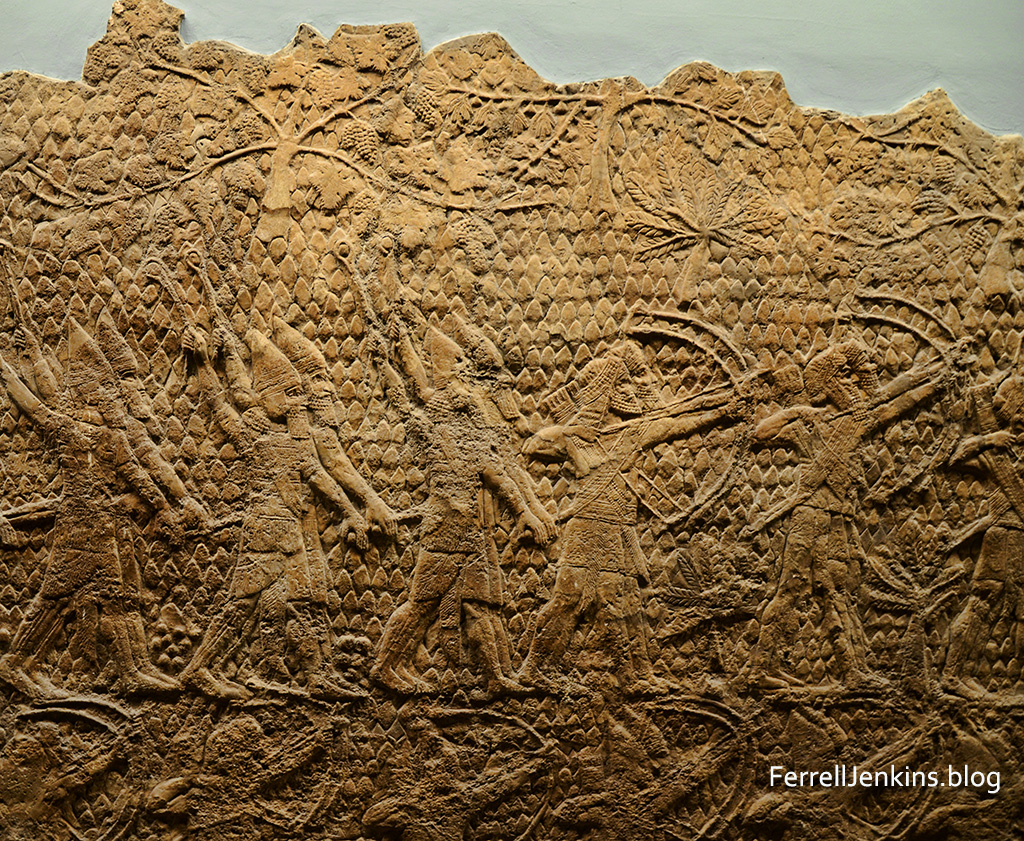
After Sennacherib, king of Assyria (704-681 BC), defeated the Judeans who lived at Lachish he tried to capture Jerusalem but was unsuccessful. Back home in Nineveh the king left a limestone relief of the siege of Lachish on his palace wall. The original is now in the British Museum. There is a replica in the Israel Museum.

The panel below shows the landscape around Lachish with palm trees and vineyards. Here is a small section of the relief. Notice especially the upper left corner of the relief.

A portion of the battle scene from Sennacharib's palace relief. British Museum. Photo by Ferrell Jenkins.

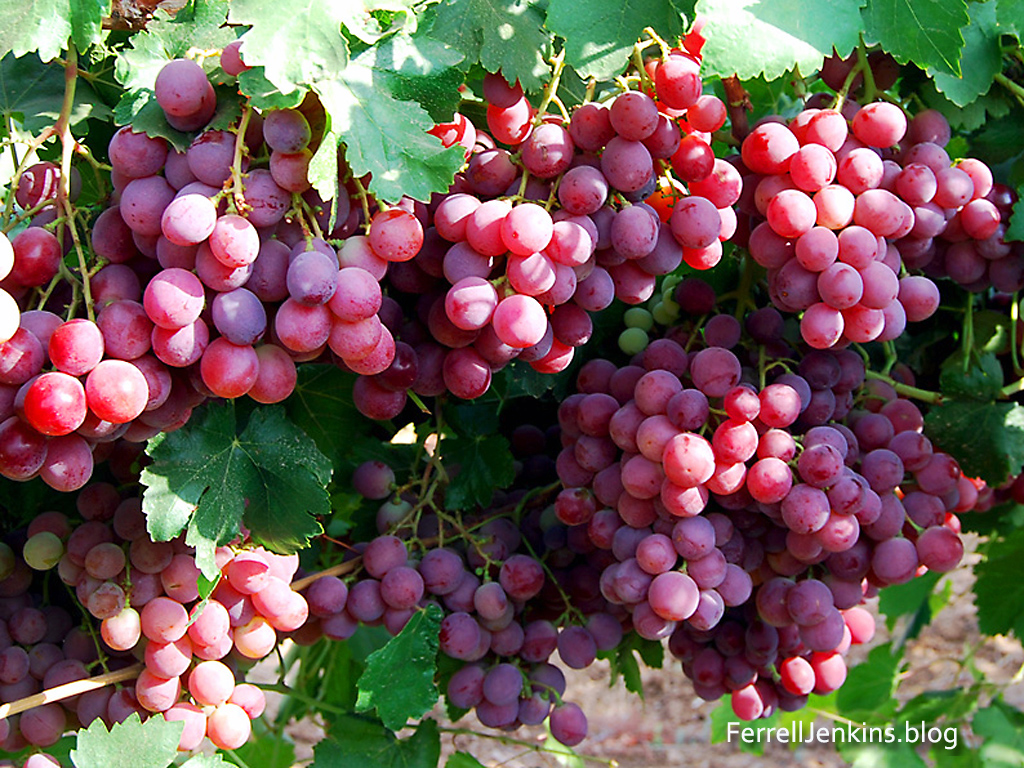
In resettling the land of Biblical Israel, the modern settlers tried to plant the same plants known in Bible times. The Sennacherib relief shows clearly that date palms and vineyards were in abundance in the region. Our next photo which I made in the Lachish area in the month of August shows grapes for eating in abundance.

Grapes growing in abundance in the area of Lachish, Israel.

Click on the images to see a larger photo suitable for use in your teaching.

The Broom Tree

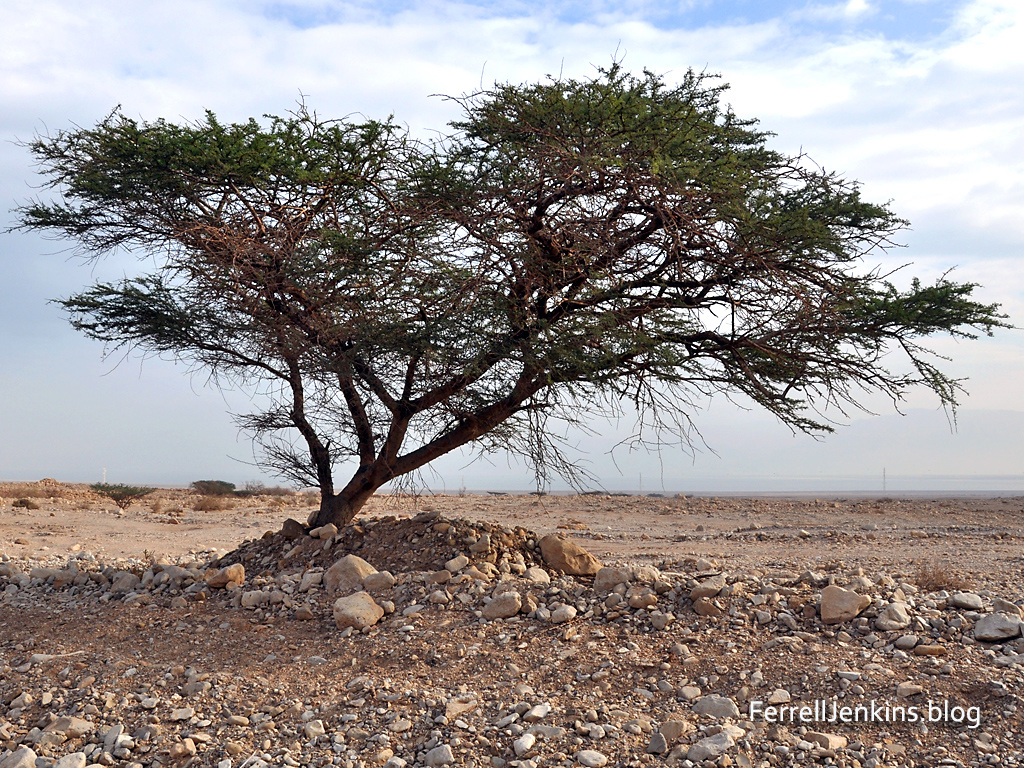
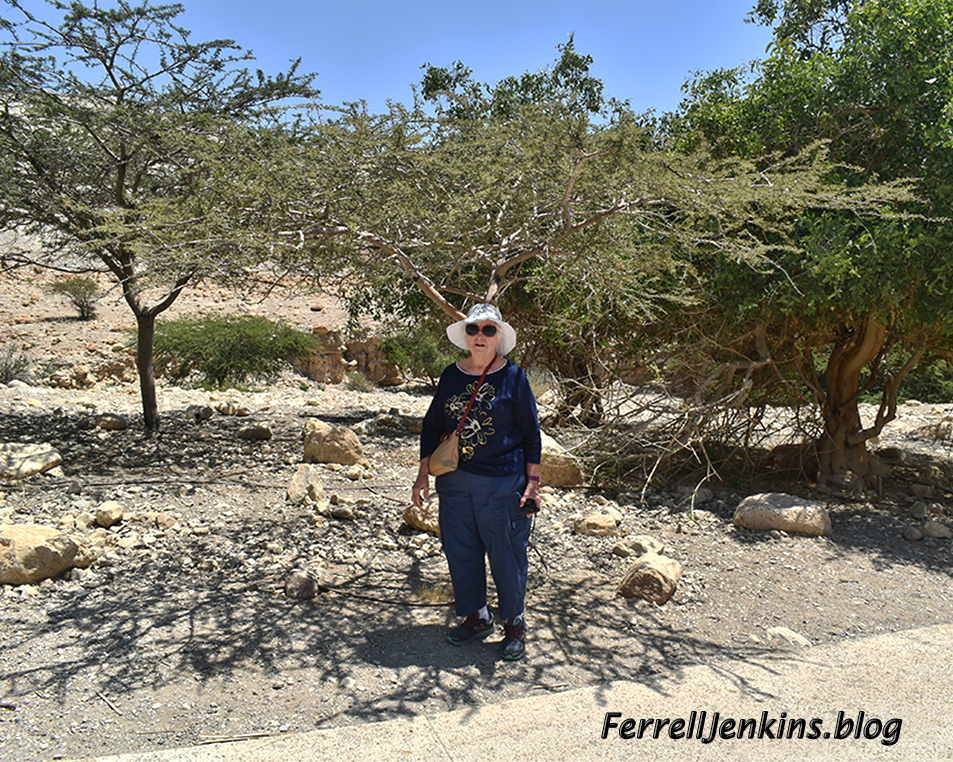
Traveling along the Dead Sea or in the Sinai one sees many Broom trees.  Our first picture shows one along the shore of the Dead Sea.

This Broom tree is growing along the shore of the Dead Sea.

The broom tree is mentioned only a few times in the Bible.

  • After Elijah had traveled a day’s journey he sat down under a broom tree, then he lay down and slept there (1 Kings 19:4-5). The Hebrew word for the tree (rethem) is also translated juniper tree, broom bush, and shrub.
  • Job 30:4 states that some eat the roots of the broom tree.
  • Psalm 120:4 mention burning coals of the broom tree.

It was hot when we visited EnGedi along the western shore of the Dead Sea. Numerous broom trees may be seen growing in the area. Paulette tried to get a little shade under one of the broom trees,

A Beautiful View

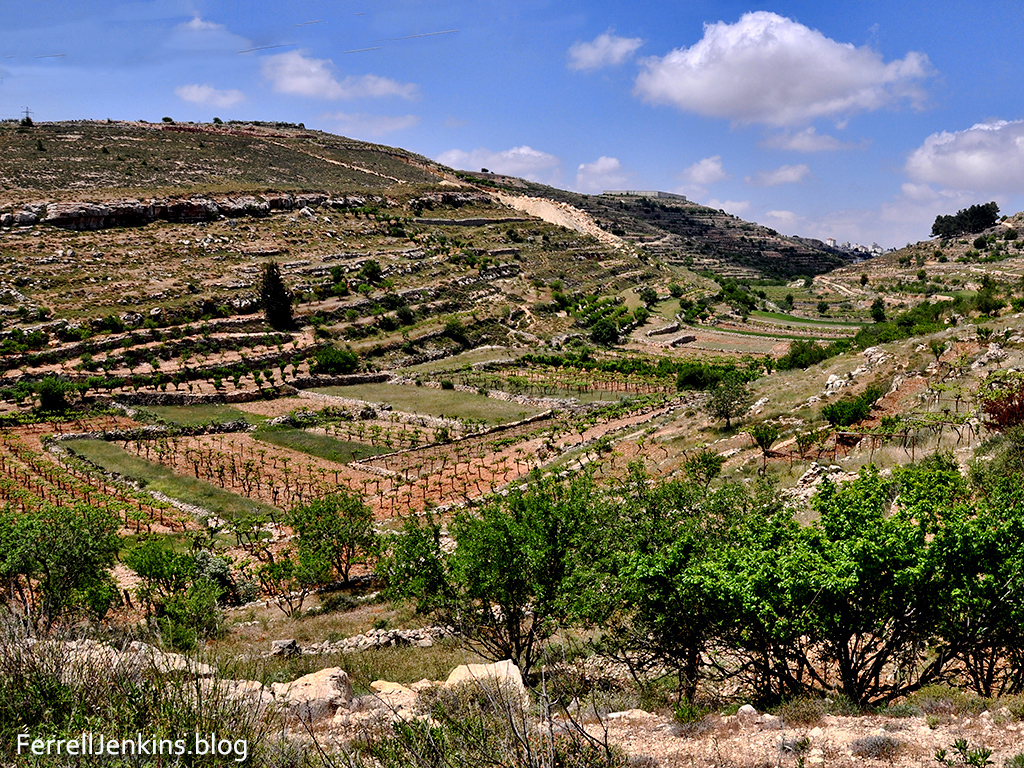
Along the central mountain road between Bethlehem and Hebron. There are many beautiful views. This one shows examples of the continued fertility of the land that was promised to the ancient Israelites. It illustrates the use of valleys to collect water during the rain season to provide water for the plants. The hillsides illustrate the terracing used as far back as the Biblical Iron age (around 1000 B.C.).

View of beautiful, fruitful hillsides along the road between Bethlehem and Hebron. Photo by Ferrell Jenkins.
View of hillsides and valleys along road between Bethlehem and Hebron. Photo by Ferrell Jenkins.

Like Almond Blossoms

There is emphasis in the Hebrew Bible and in the New Testament that the biblical tabernacle and its furniture were made according to the pattern given by God (Exodus 25:9;

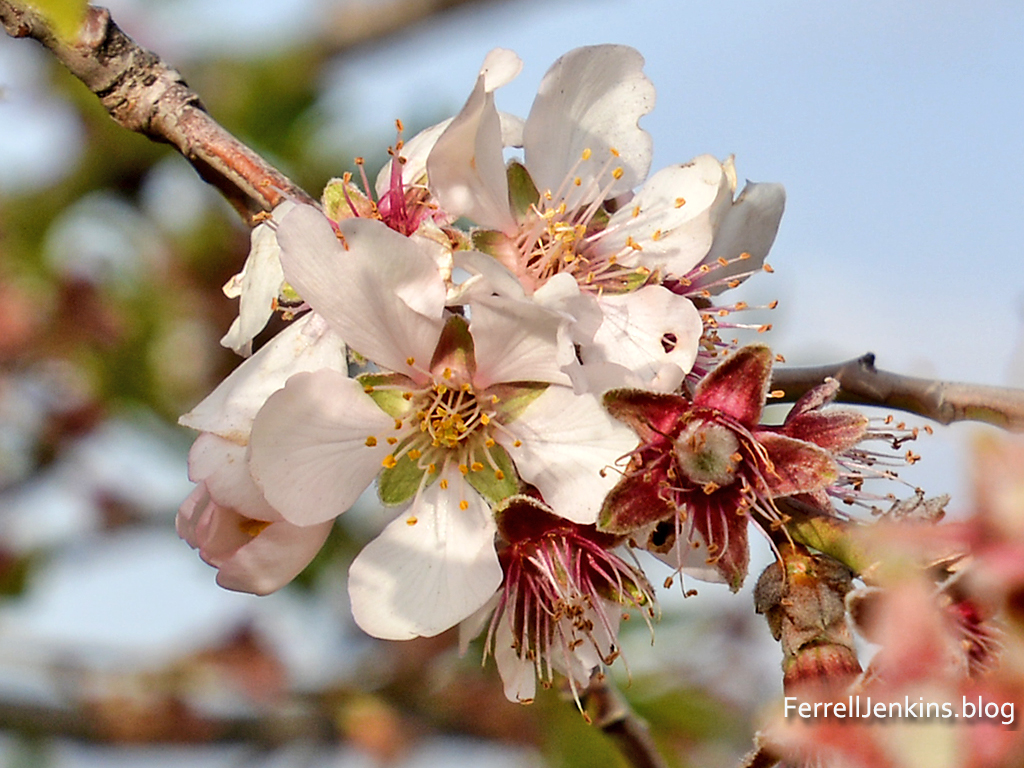
“And on the lampstand itself were four cups made like almond blossoms, with their calyxes [bulbs, knops, cups] and flowers,” (Exodus 37:20; Hebrews 8:5 ESV).

Earlier this year I made some pictures of almond trees in bloom at a site overlooking the Lebonah valley, on the north side of Shiloh. It is, in my judgment, a thing of beauty.

An almond blossom at a site overlooking the Lebonah Valley. Photo by Ferrell Jenkins.
An almond blossom at a site overlooking the Lebonah Valley north of Shiloh.

“The stork in the heavens knows her time”

The stork is listed among the unclean birds in Leviticus 11:19 and Deuteronomy 14:18. The Psalmist says, “the stork has her home in the fir trees” (Psalm 104:17.

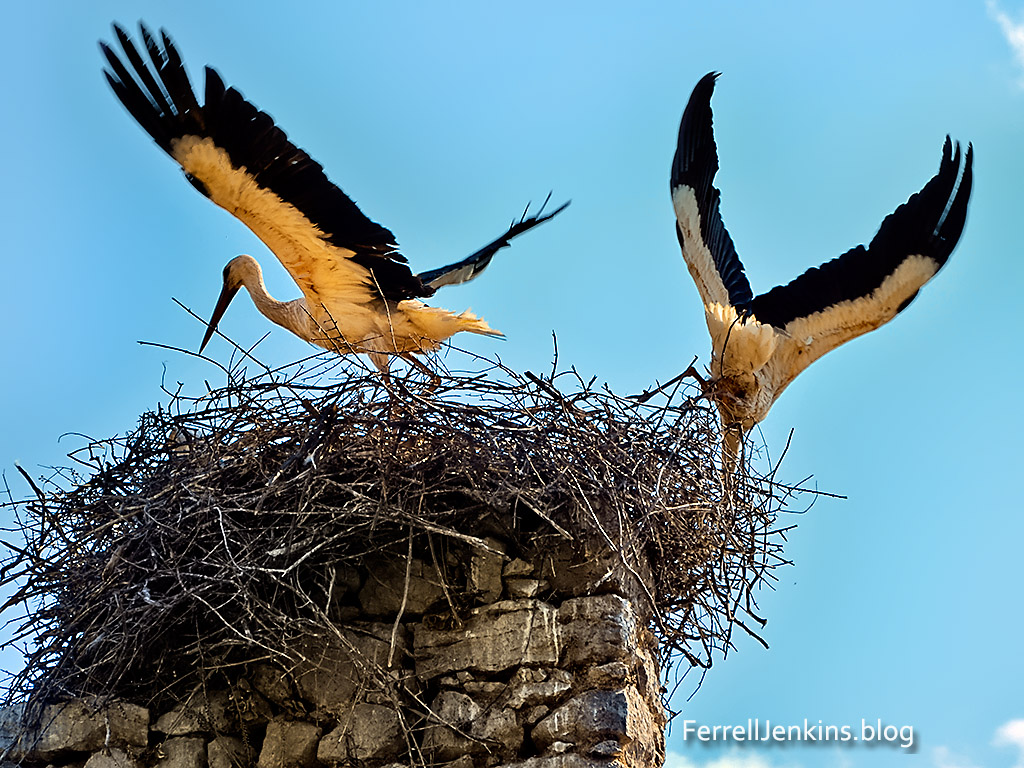
I have not seen a stork nest in a fir tree, but I have often seen them on the top of electric poles, chimneys, and ruined columns.

These storks are building a nest on the top of an old brick column at Kovanlik, Turkey. This photo was made yards away from the beginning of the Via Sebaste or Imperial Road that leads northeast across the mountains from the Pamphylian coastal plain to the Anatolian plateau. The approximate location is 37 10.4234N, 30 35.875E. Photo by Ferrell Jenkins

The prophet Jeremiah uses the faithfulness of the stork as it moves from one continent to another and then returns as an illustration of the faithfulness not seen in the people of the LORD.

Even the stork in the heavens knows her times, and the turtledove, swallow, and crane keep the time of their coming, but my people know not the rules of the LORD. (Jeremiah 8:7 ESV)

I have seen this played out repeatedly in my travels in Israel and Turkey. The storks fly from Europe and other northern climes to Africa in the fall of the year. The Great Rift provides the way for them to navigate through Syria and Israel/Jordan.

A stork heading north and a sunrise over the Golan Heights. Photo: ferrelljenkins.blog.

This is a composite photo showing a stork in the Jordan Valley and a sunrise over the Golan Heights. Photos by Ferrell Jenkins.

The prophet Zechariah also uses the wingspan of the stork as an illustration. In one of his visions he says,

Then I lifted my eyes and saw, and behold, two women coming forward! The wind was in their wings. They had wings like the wings of a stork, and they lifted up the basket between earth and heaven. (Zechariah 5:9 ESV)

The Keren Kayemeth Leisrael JNF website provides good information about storks, and other birds, in the Hulah valley here. Here is another nice site with information about storks and some good photos.

HT: Dr. Mark Wilson, author of Biblical Turkey, who gave the directions of the Via Sebaste mentioned with the first photo to Leon Mauldin and me. An article by Mark R. Fairchild in BAR includes a map showing two possible routes from Perga in Pampylia to Pisidian Antioch. The caption with the map suggests the Via Sebaste as possibly being used by Paul, but Dr. Fairchild does not think Paul would have traveled that way. Nonetheless it is possible that Paul might have used this route in one direction or the other, more likely on the return. (Fairchild, Mark R. “Why Perga?” Biblical Archaeology Review 39.6 (2013): 53–59.)

Ferrell’s Favorite Foto #38 – a thistle

Our favorite foto today was made near Tel Goded, also known as Tell el-Judeideh. This mound has been suggested as the site of Moresheth-gath, the home of the prophet Micah (1:14; see The Sacred Bridge, 170). This site is located on the Israel National Trail.
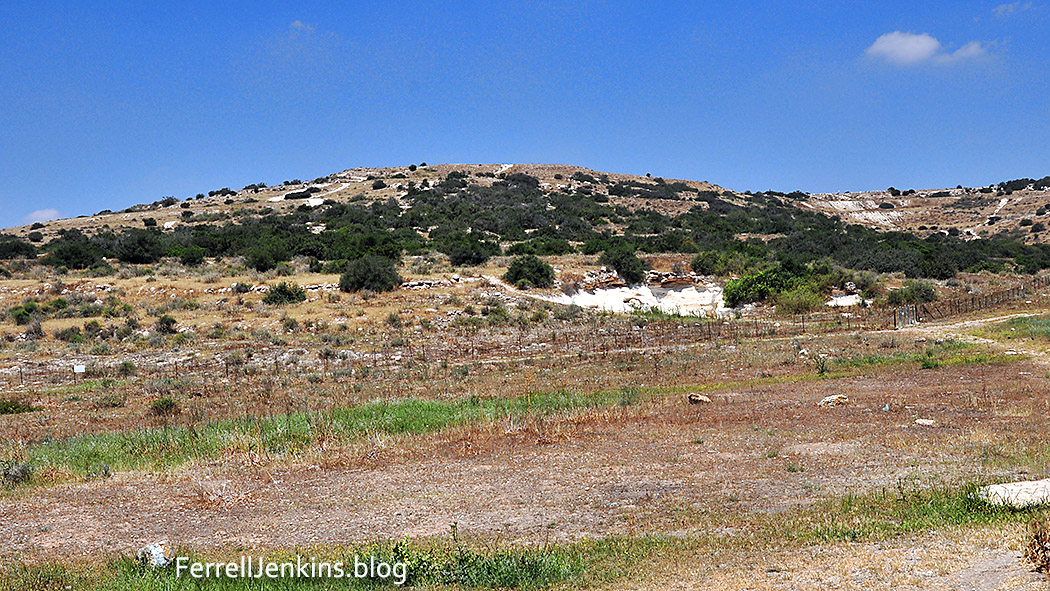
Tel Goded, also known as Tell el-Judeideh, may be the location of Moresheth-gath, the home of the prophet Micah. Photo by Ferrell Jenkins.

Our photo was made near an underground spring, or possibly a cistern, just outside the lower right corner of the photo.
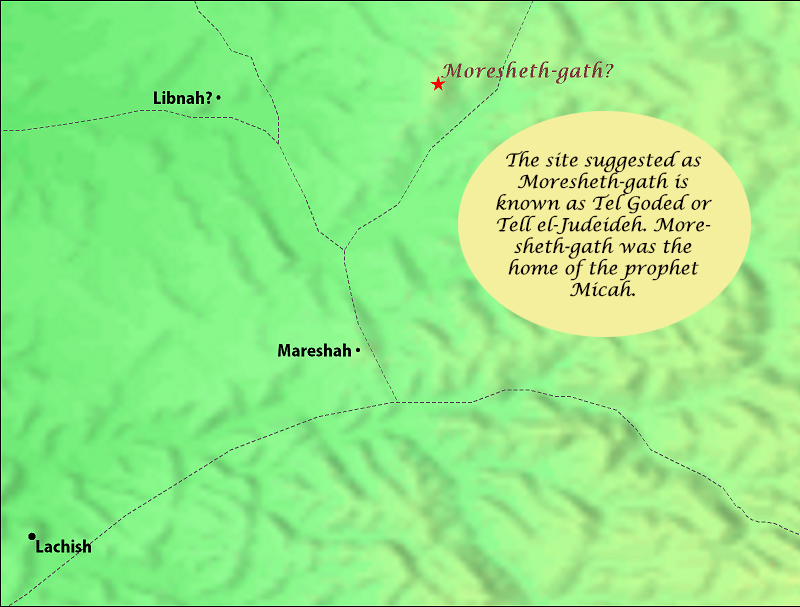
This map was created using BibleMapper 5. Moresheth-gath is located 5.9 miles from Lachish. The suggest site for Libnah is known today as Tel Burna.

Thorns and thistles are mentioned as a plant more or less worthless. As a result of man’s sin, the earth was to bring forth thorns and thistles (Genesis 3:18-19). Jesus said that false prophets could be recognized by their fruits. He said, “Are grapes gathered from thornbushes, or figs from thistles? (Matthew 7:15-16, ESV).

A large variety of thorns and thistles grow throughout the bible lands. During the rainy season many of them produce beautiful flowers, but later on they become a real problems to those who wish to walk through the fields. Peter may be drawing on this figure when he says, “Therefore, gird your minds for action”  (1 Peter 1:13 NAS). Just as a person of that time would gird up their flowing garment to keep it from hanging on the encroaching thistles along the path they were walking. We miss the imagery with our newer versions that say something like, “preparing your minds for action” (ESV).

William Barclay says,

He tells them to gird up the loins of their mind. This is a deliberately vivid phrase. In the east men wore long flowing robes which hindered fast progress or strenuous action. Round the waist they wore a broad belt or girdle; and when strenuous action was necessary they shortened the long robe by pulling it up within the belt in order to give them freedom of movement. The English equivalent of the phrase would be to roll up one’s sleeves or to take off one’s jacket. Peter is telling his people that they must be ready for the most strenuous mental endeavour. They must never be content with a flabby and unexamined faith; they must set to and think things out and think them through. It may be that they will have to discard some things. It may be that they will make mistakes. But what they are left with will be theirs in such a way that nothing and nobody can ever take it away from them. (Barclay, William, ed. The Letters of James and Peter. Philadelphia: Westminster John Knox Press, 1976. Print. The Daily Study Bible Series.)

I looked through several books showing the plants of the bible lands as well as the Thorns and Thistles photos in the Pictorial Library of Bible Lands. I think this is the Holy Milk Thistle, sometimes called Mary’s thistle.
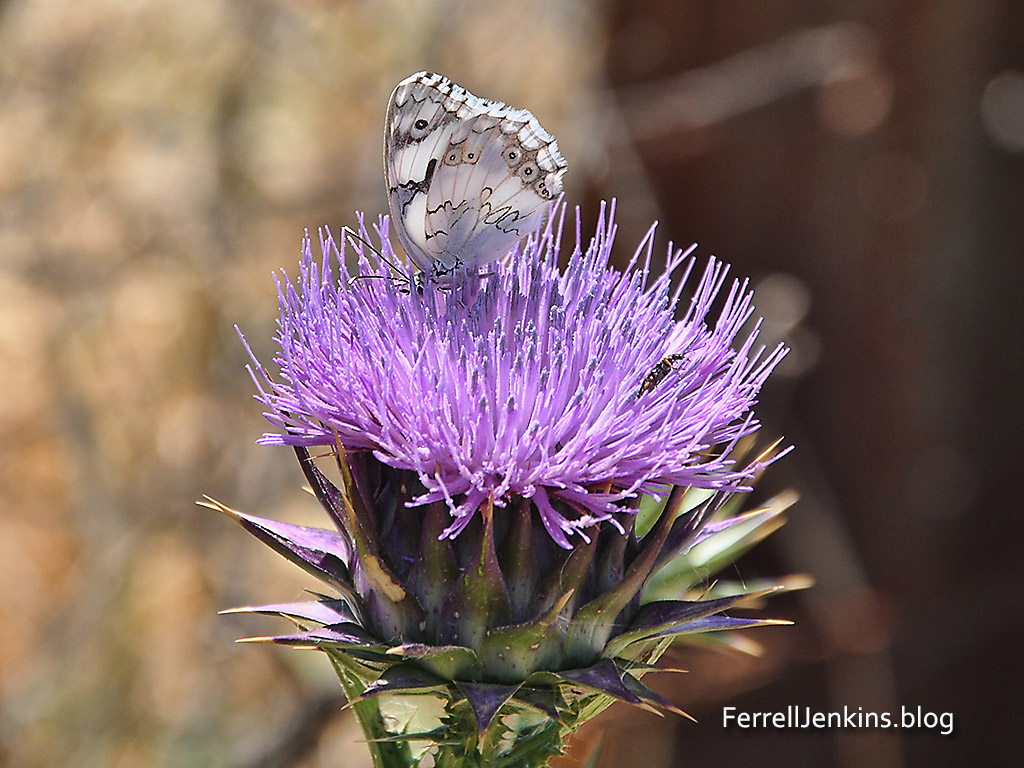
Butterfly, thistle, insect near Tel Goded. Photo: ferrelljenkins.blog.

A beautiful butterfly on a thistle near Tel Goded (T. Photo by Ferrell Jenkins.

What makes this photo a favorite is not only that it is a thistle but that it also has a beautiful butterfly on it. If you look closely you may also see an insect, but you can’t miss the sharp thorns.

The comment by G. E. Post in the old Hastings, A Dictionary of the Bible, is interesting – even colorful.

There is probably no country on earth of the same extent which has so many plants with prickles and thorns as the Holy Land. One would be tempted to believe that this is a providential provision to protect them from the ravages of goats, asses, and camels, were it not that the mouths of these creatures are provided with a mucous membrane so tough that it seems impervious to thorns.