Category Archives: Culture

Akko’s Hellentistic Harbor Revealed

The Israel Antiquities Authority announced the results of archaeological excavations carried out at the Mediterranean city of Akko (Acco in some English versions).
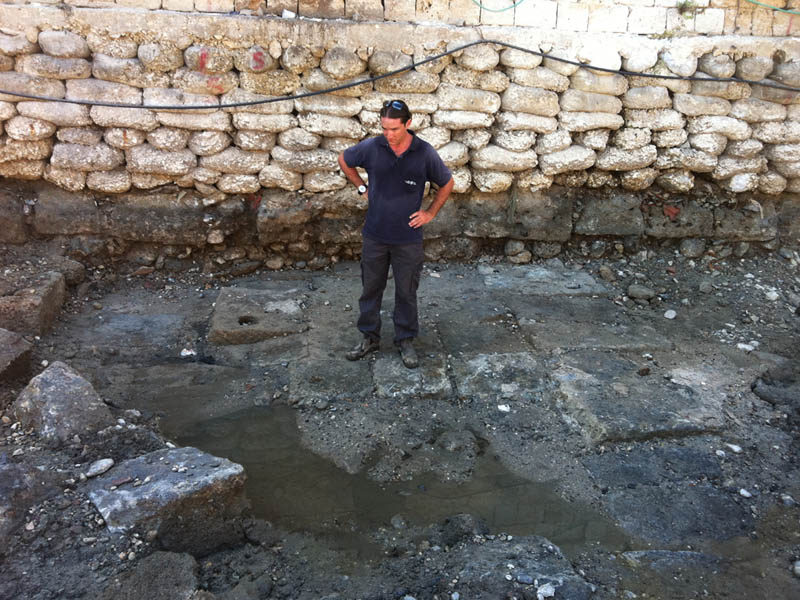
Akko Hellenistic Harbor quay. Photo: Kobi Sharvit, IAA.

A member of the Marine Archaeology Unit of the Israel Antiquities Authority standing on the ancient quay that was exposed in Akko. In the middle of the picture one can see the floor of the quay, built of large dressed stones. In some of the stones there is a hole for inserting a wooden pole – probably for mooring and/or dragging the boat. Photo: Kobi Sharvit, courtesy IAA.

Evidence of a harbor operating during the Hellenistic period (3rd-2nd century B.C.). This harbor was said to be the most important harbor in Israel at the time.

According to Kobi Sharvit, director of the Marine Archaeology Unit of the Israel Antiquities Authority, “Among the finds we’ve discovered now are large mooring stones that were incorporated in the quay and were used to secure sailing vessels that anchored in the harbor c. 2,300 years ago. This unique and important find finally provides an unequivocal answer to the question of whether we are dealing with port installations or the floor of a building. In addition, we exposed collapse comprised of large dressed stones that apparently belonged to large buildings or installations, which was spread of a distance of dozens of meters. What emerges from these finds is a clear picture of systematic and deliberate destruction of the port facilities that occurred in antiquity”

. Sharvit adds, “Recently a find was uncovered that suggests we are excavating part of the military port of Akko. We are talking about an impressive section of stone pavement c. 8 meters long by c. 5 meters wide that was partially exposed. The floor is delimited on both sides by two impressive stone walls that are also built in the Phoenician manner. It seems that the floor between the walls slopes slightly toward the south, and there was a small amount of stone collapse in its center. Presumably this is a slipway, an installation that was used for lifting boats onto the shore, probably warships in this case”. According to Sharvit, “Only further archaeological excavations will corroborate or invalidate this theory.”

The news release suggests that the pottery vessels came “from islands in the Aegean Sea, including Knidos [Cnidus], Rhodes, Kos [Cos] and others, as well as other port cities located along the Mediterranean coast.”
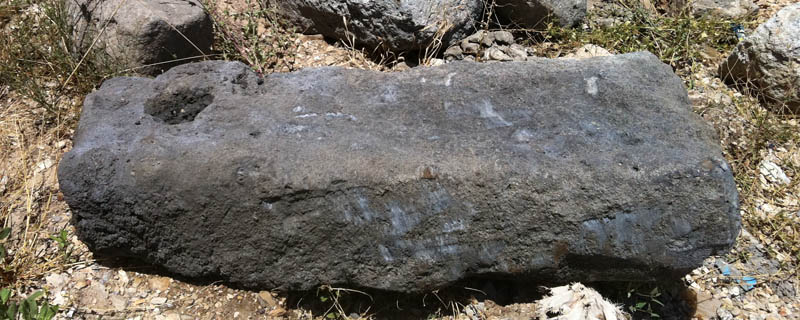
Akko Hellenistic harbor mooring stone. Photo: Kobi Sharvit, courtesy IAA.

A mooring stone that was incorporated in the quay. There was a hole in the stone in which the mooring/anchoring rope was inserted. Photo: Kobi Sharvit, courtesy IAA.

Acco is mentioned only once in the Bible. The city is within the territory originally allotted to the tribe of Asher, but the tribe was unable to conquer it.

Asher did not drive out the inhabitants of Acco, or the inhabitants of Sidon or of Ahlab or of Achzib or of Helbah or of Aphik or of Rehob, (Judges 1:31 ESV)

After about 100 B.C. the coastal city was known as Ptolemais (Acts 21:7). Paul spent one day with the brethren here on the return from his third journey.
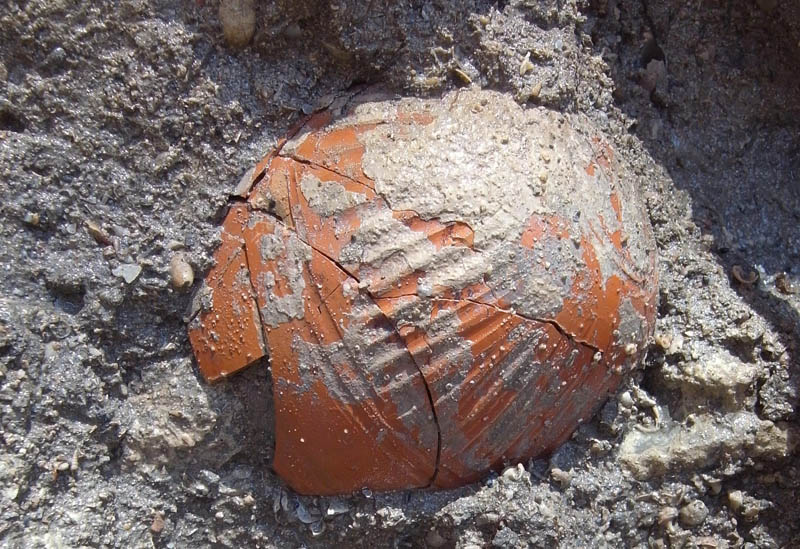
Imported bowl from Hellenistic period. Photo: Kobi Sharvit, courtesy IAA.

An imported bowl characteristic of the Hellenistic period. The bowl was found in a layer of harbor sludge. This layer contained thousands of intact pottery vessels, potsherds, etc. Photo: Kobi Sharvit, courtesy IAA.

The full IAA report with links to the photos is temporarily available here.

HT: Joseph Lauer
Memory

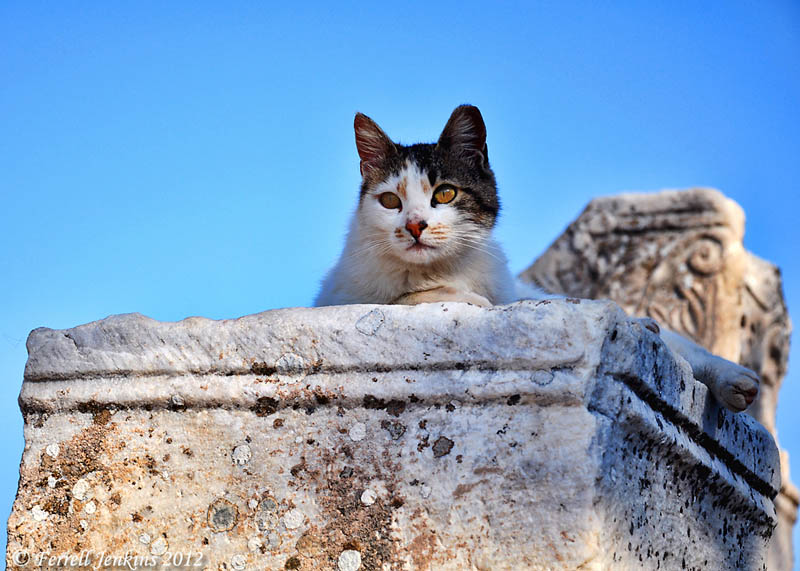
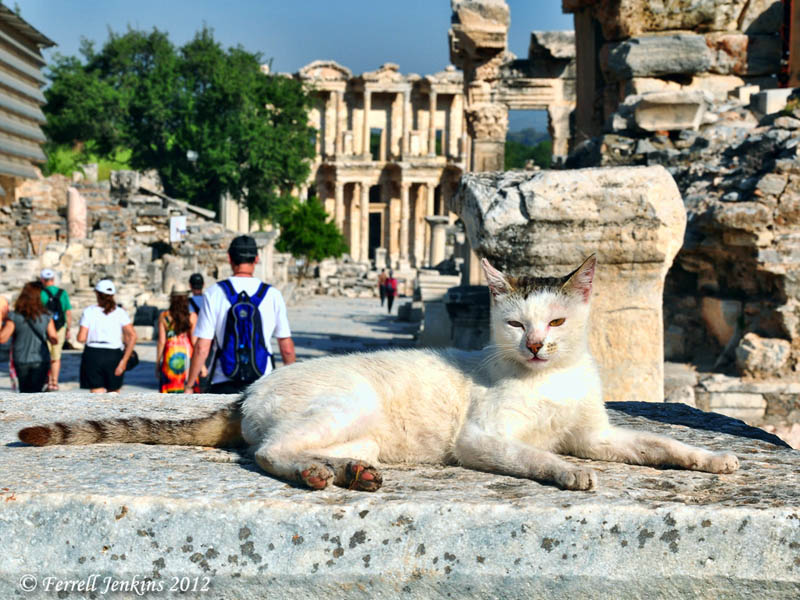
Several “Friends” on Facebook enjoy posting photos of cats. I would like to share a couple of pictures of the cats that hang out at Ephesus.

One of the Cats at Ephesus. Photo by Ferrell Jenkins.

One of the Cats at Ephesus. Photo by Ferrell Jenkins.

One of the Cats at Ephesus. Photo by Ferrell Jenkins.

One of the Cats at Ephesus. Photo by Ferrell Jenkins.

A neat place to hang out. Lots of memories here.

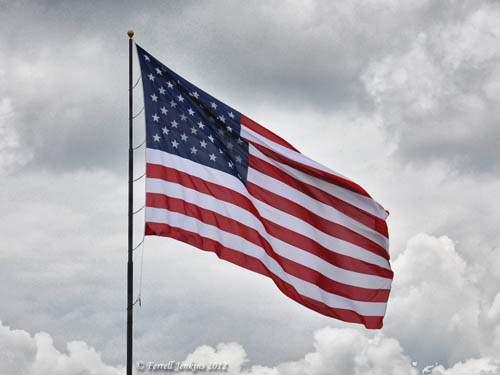
July 4, 2012 in the United States of America

Flag of the United States of America. Photo by Ferrell Jenkins.

Flag of the United States of America. Photo by Ferrell Jenkins.

Leeches in Sea of Galilee; Palestinian Village; Jericho

Sea of Galilee invaded by leeches. For the second time in 7 years the lake has an explosion of leeches. The article in Haaretz says,

Standing in the water for as little as two minutes will cause your legs to be covered in hundreds of leeches. These particular types are not blood-suckers, making them relatively easy to remove once one is out of the water

Causes for the large number of leeches include “human activity, including pollution, poisoning and overpumping.”

Read the full article here.

The Sea of Galilee was central to much of the ministry of Jesus.

While walking by the Sea of Galilee, he saw two brothers, Simon (who is called Peter) and Andrew his brother, casting a net into the sea, for they were fishermen. (Matthew 4:18 ESV)

Palestinian Village uses Roman irrigation system to continue terraced farming near Bethlehem. Read the story, with beautiful photo, in The New York Times here.

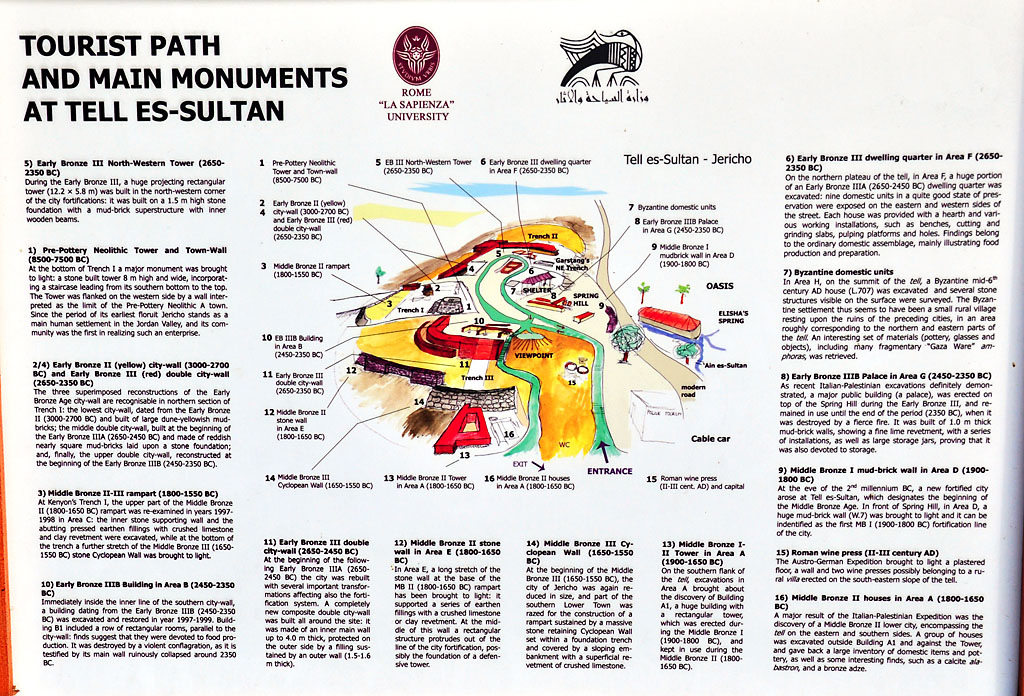
Tell es-Sultan/Jericho. Sepienza University in Rome, in cooperation with the Palestinian General Directorate of Antiquities, has published a Palestine Archaeological Databank and Information System. Check here for maps and other information. Our readers will likely be interested in the excavation reports on Tell es-Sultan/Jericho here. Click on the Results 2012 photo for the most recent work by the Italian-Palestinian Expedition at Jericho. Every visitor to the site will welcome is the new paths, identifying signs, and general clean-up of the site.

I was especially pleased to see the Digital Visit plan of the site. Click on it was a colorful, readable plan of the site like the central portion of the one shown below. Prof. Lorenzo Nigro is the director of the excavation.

Tourist Path and Main Monuments at Tell es-Sultan/Jericho. Photo by Ferrell Jenkins.

Tourist Path and Main Monuments at Tell es-Sultan/Jericho. Photo by Ferrell Jenkins.

Jericho is important in Old Testament history (Joshua 6).

HT: Bible Places Blog; Jack Sasson; Barry Britnell; “La Sapienza” Expedition to Palestine.

The Samsun Archaeological Museum

Hidden in Plain Sight. While driving around Samsun we saw a brown sign pointing to the Archaeology Museum, but we were not able to locate the building. We knew it was there because Mark Wilson mentions it in Biblical Turkey (340), as do some other guide books. I mentioned earlier that very few people in this region speak English. There was one girl at the hotel who could speak English. We met one young man in a local store who had been living in New York who spoke English, and a lady from the Netherlands. We always get by, and the locals are almost always helpful.

When we inquired about the Archaeology Museum we were always directed to the Gazi Museum. That is a museum devoted to the early history of Mustafa Kemal Atatürk, the founder of the Republic of Turkey. We enjoyed visiting that museum, but it still was not what we were looking for. After much effort, we finally found a policeman who pointed us in the right direction. Then, while we were standing on the street corner with an inquiring look, a Moslem lady asked if she could help us. She was from the Netherlands. She went in a store to inquire. They pointed us back to the Gazi Museum. When we indicated that was not the museum, we were finally pointed directly across the main street, beyond a little park, to the Archaeology Museum. By this time one of the local men indicated we should follow him. Success, at last.

The museum is small, but contains artifacts ranging from the Chalcolithic Period (as early as 4300 B.C.) to the Roman Period.

Excavation at Ikiztepe. Ikiztepe is a site located about 4 miles northwest of Bafra (see our discussion of the Halys River in yesterday’s post). In recent excavations, evidence of “cultures of the Chalcolithic Age, the Bronze Age and the Transition Age (Before Hittites) have been determined” (Museum brochure).

An article in Hurriyet Daily News says that discoveries at Ikiztepe range from the Chalcolithic Age to the Hellenistic period.

The most interesting findings unearthed during the excavations are skulls, which underwent surgical operation. In the graveyard on the highest hill in the ancient site, dating back to 2300-2100 BC, eight out of the 690 skeletons had skulls with traces of surgical operation. These skulls have archaeological importance since they are the only ones unearthed in Anatolia. They also show that people who lived there did not have the characteristics of Mediterranean people but of southern Russians and Bulgarians.

Read the full article here.

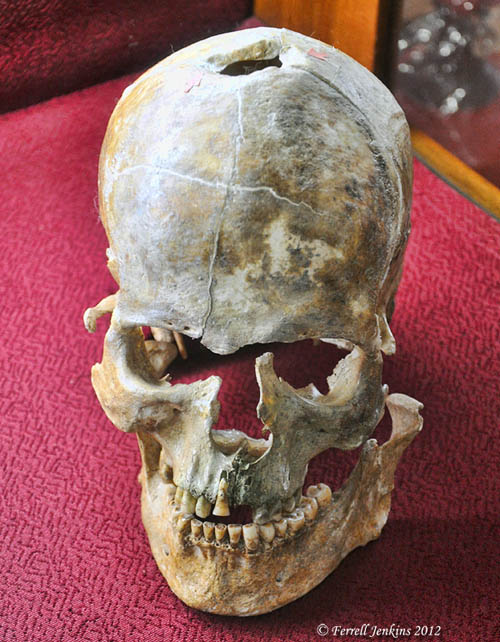
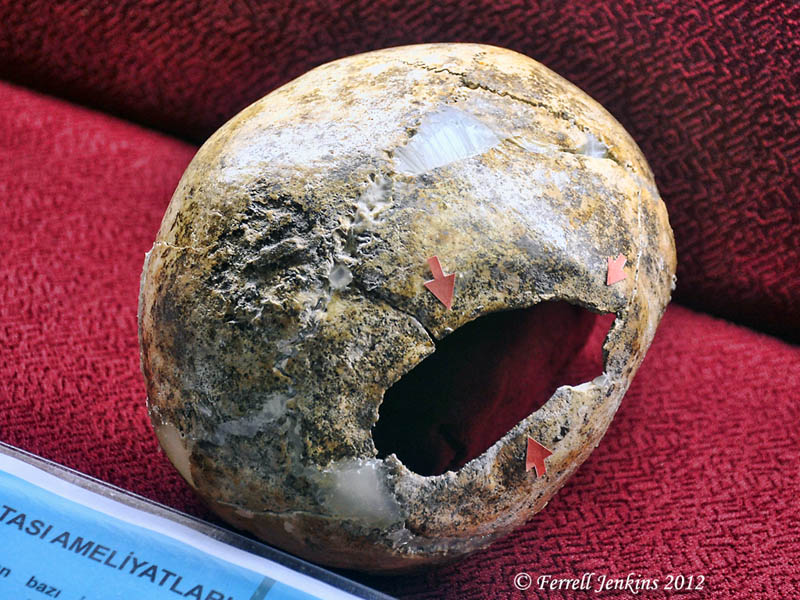
Ancient brain surgery that cut a hole in the skull to relieve pressure is referred to as trepanation. A few of the skulls found at Ikiztepe are displayed in the museum. They are said to belong to Bronze Age III. I think that would be in the neighborhood of 1600 B.C. Here are two of the photos I made that show the hole drilled in the skull.

Example of Trepanation, Bronze Age III, Ikiztepe. Samsun Archaeological Museum. Photo by Ferrell Jenkins.

Example of Trepanation, Bronze Age III, Ikiztepe. Samsun Archaeological Museum. Photo by Ferrell Jenkins.

The surgery in the case below required a much larger hole.

Example of Trepanation, Bronze Age III, Ikiztepe. Samsun Archaeological Museum. Photo by Ferrell Jenkins.

Example of Trepanation, Bronze Age III, Ikiztepe. Samsun Archaeological Museum. Photo by Ferrell Jenkins.

There is no indication whether the surgery was successful, or what happened to the surgeon if it failed.

Joe Zias, in an article in Mikhmanim (Spring 1999), says there have been 29 skulls showing trepanation (trephination) discovered in Israel. He says the survival rate based on “inflammatory or bone remodeling” indicate a 77 percent survival rate in these cases. You may read his entire article about this and other medical issues in ancient Israel here.

In a future post I plan to show you a few of the Roman period ruins, the time of Peter’s epistles (1 Peter 1:1).

A funny thing happened on the way to Samsun

Pardon the delay, but I have had a couple of grandson days since the last post. Not much else gets done.

In the last post I spoke of the mountainous road east of Sinop, and of the rare opportunity to pull off the two lane highway. The first time we found a place to safely pull off the road we stopped to make some photos. I walked a few yards away from the car to find a clearing for a photo.

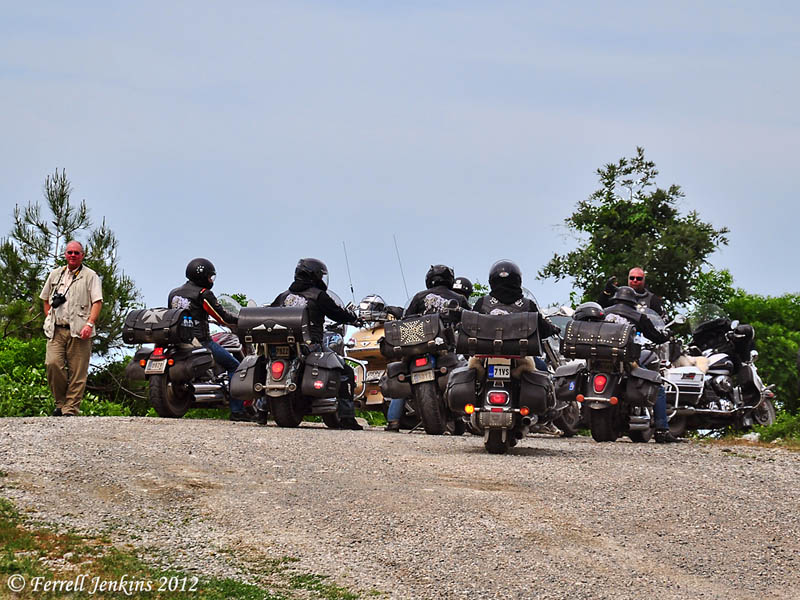
After a minute or two we heard a roaring sound. My first thought was that there might be a military air base in the vicinity. The sound came from jets taking off, I thought. To my surprise I saw a group of motorcyclists coming around the bend. One of the riders in the front of the group had a helmet with horns. Further back was another rider with the same kind of helmet. I didn’t know if these guys were a rogue motorcycle club or a bunch of “Wild Hogs.”

When the entire group of about 15 cyclists pulled in around our car which was up the hill a short distance from where I was, I thought of the old joke about the tourist group that got lost in cannibal territory. The cannibal leader told the group, “You take the bus and leave the driver for us.” I was able to snap a photo of Leon making a fast get away from the group. But the car is totally hidden from view by the cyclists.

Group of cyclists on the mountanious road east of Sinop. Photo by Ferrell Jenkins.

Cyclists on the mountainous road east of Sinop. Photo by Ferrell Jenkins.

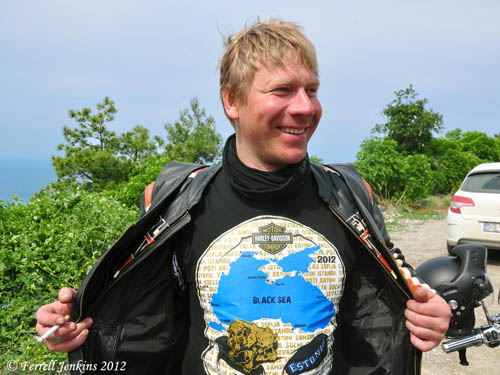
After conferring, Leon and I decided we should get to the car while there was opportunity. As we approached the cycles I noticed that most of the tags, and some of the leather jackets, bore the designation Estonia. When we spoke in English, several of the riders tried to communicate. The best English speaker in the group was from Russia. He told us that they were riding around the Black Sea.

An Estonian proudly showed me his shirt with a screen print showing the Black Sea and the names of the major places they were visiting. I think his smile tells how our encounter turned out. The Black Sea is slightly visible far below us.

Cyclist from Estonia making a circuit of the Black Sea. Photo by Ferrell Jenkins.

Cyclist from Estonia making a circuit of the Black Sea. Photo by Ferrell Jenkins.

Uneasiness past, we said good-bye and went on our way to Samsun. It was a nice experience; the sort that we often encounter in foreign travel.

More famous Sinopeans

In addition to Diogenes and Serapis, Sinop in Pontus was the home of several other well known people in early church history.

Aquila. (Not the Aquila of Acts 18:2.) This Aquila, a native of Sinop in Pontus, is said to have been a relative of the Emperor Hadrian (A.D. 117-138). He was converted to Christianity during a visit to Jerusalem, but was rejected because he refused to give up his studies of astronomy. Later he became a proselyte to Judaism.

Having become a disciple of the Rabbis, from whom he learned Hebrew and the rabbinical method of exegesis, he used his knowledge to make a revision of the Septuagint, bringing it into line with the official Hebrew text. It was soon adopted by Greek speaking Jews in preference to the LXX, which was used by the Christians. His translation, which was finished probably c. 140, was extremely literal, attempting to reproduce individual Hebrew words and phrases exactly. This procedure frequently obscured the sense; but the fidelity of Aquila’s version to the Hebrew original was admitted by the Fathers most competent to judge, such as Origen and Jerome. (Dictionary of the Christian Church, ed. Cross & Livingstone, 94).

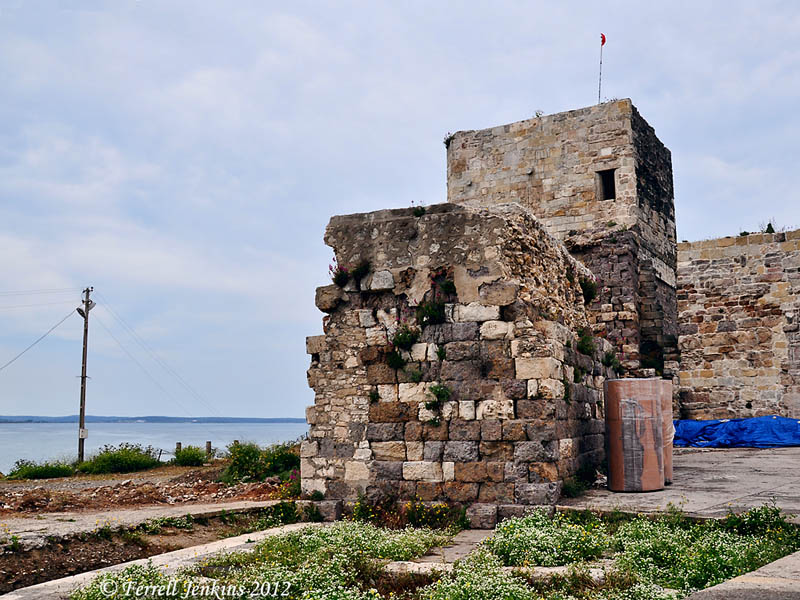
Tower and wall on the Black Sea at Sinop, Turkey. Photo by Ferrell Jenkins.

Tower and wall on the Black Sea at Sinop, Turkey. Photo by Ferrell Jenkins.

Marcion (died c. 160 A.D.). We rarely read or hear the name Marcion without the word heretic attached to it. None of his writings have survived, but his success can be seen by the many early Fathers who spoke of him. (For a list of these see Bercot, ed., A Dictionary of Early Christian Beliefs.) This influential ship master of Pontus rejected the God of the Old Testament who he described as evil and vengeful. According to him, the Christian gospel was a message of love, and the Father of Jesus was not the God of the Old Testament. Many of his views were similar to those of Gnosticism. Marcion accepted only the Gospel of Luke among the Gospels, and the writings of Paul.

Marcion went to Rome about A.D. 140, but within 4 years he was excommunicated from the church. From Rome he spread his teachings all over the Empire.

Phocas (Phokas). Phocas was martyred at Sinop in A.D. 117 during the reign of the Roman Emperor Trajan.

According to the Dictionary of the Christian Church (1282), a different man named Phocas “the Gardener” was martyred  during the persecution by the Roman Emperor Diocletian in A.D. 303. I haven’t determined if he was associated with the port city of Sinop. Wilson seems to confuse these two persons (Biblical Turkey, 342).

The Sinop Gospels is not a person, but should be mentioned in connection with the Black Sea port of Turkey. This parchment document was dyed purple and written in gold ink. The uncial manuscript 023 contains 43 pages of the gospel of Matthew. The manuscript was discovered in Sinop in the late 19th century is thought to have originated in Syria or Mesopotamia in the 6th century A.D. It is now in the Bibliothèque Nationale in Paris.

A brief description in French, and a small image of two pages of the manuscript may be found here. The manuscript features small drawings to illustrate the biblical text. The displayed page shows Jesus healing a blind man.

Free Kindle book on the Sermon on the Mount

DeWard Publishing Company is offering a free Father’s Day Kindle download for a limited time.

Invitation to a Spiritual Revolution (Studies in the Sermon on the Mount) by Paul Earnhart is available for free download from this link.

Paul Earnhart has served as minister at the Douglass Hills Church of Christ, Louisville, Kentucky, for many years. He is recognized for both his scholarly and practical approach to Biblical subjects.

The Sermon on the Mount (Matthew 5-7) is the seminal announcement of the teaching of Jesus.

This is a great book for any father, or anyone else interested in spiritual matters.

Thanks to DeWard Publishing Company for this gracious gift. Take a look at their other publications.

Two arrested in Greece for antiquities theft

Numerous news sources are reporting the arrest of two men east of Thessaloniki (Thessalonica), Greece, with a 4th century B.C. gold wreath and armband. The arrest was near the Biblical sites of Amphipolis and Apollonia. We recognize those as places passed by Paul and his companions as they traveled the Via Egnatia between Philippi and Thessalonica.

Now when they had passed through Amphipolis and Apollonia, they came to Thessalonica, where there was a synagogue of the Jews. (Acts 17:1 ESV)

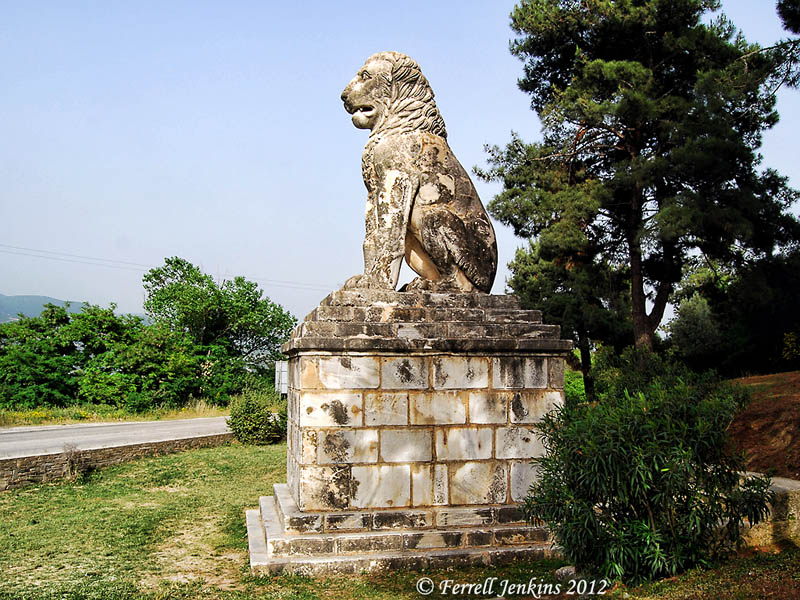
Very little archaeological work has been done in Amphipolis and Apollonia. One interesting artifact on the Strymon River at Amphipolis is this lion from the 4th century B.C.

The Lion of Amphipolis, Greece. Photo by Ferrell Jenkins.

The Lion of Amphipolis, Greece. Photo by Ferrell Jenkins.

The news report in The Republic, Columbus, Indiana, here  includes two nice photos of the wreath.

The photo of the gold wreath below comes from 4th century B.C. Greece. It is now displayed in the Metropolitan Museum, New York City.

Gold crown from Greece. Metropolitan Museum, NY. Photo by Ferrell Jenkins.

Gold crown from Greece. Metropolitan Museum, NY. Photo by Ferrell Jenkins.

Paul spoke of his beloved brothers at Philippi as his joy and crown.

Therefore, my brothers, whom I love and long for, my joy and crown, stand firm thus in the Lord, my beloved. (Philippians 4:1 ESV)

HT: Jack Sasson

The Antikythera Shipwreck and “Danger at sea”

The Antikythera Shipwreck is a special exhibition at the Athens (Greece) National Museum which is scheduled to run from April 2012 to April 2013.

The shipwreck off the eastern coast of Antikythera is dated to 60-50 BC, a period during which maritime trade and transportation of works of Greek art from the Eastern Mediterranean to Italy flourished. Its cargo dates from the 4th to the 1st century BC. The ship was a freighter of about 300 tons capacity and was sailings towards Italy.

We had visited Thera (aka Santorini) during our Aegean cruise. Antikythera (“opposite Kythera”) is a Greek island between Crete and the Peloponnese (where Corinth is located).

The statue below is made of Parian marble. Scholars in the field suggest that this is possibly Achilles. Being on the bottom of the Aegean Sea for centuries shows its effects on the statue.

Possibly Achilles. The Antikythera Shipwreck. Athens National Museum. Photo by Ferrell Jenkins.

Possibly Achilles in Parian Marble. The Antikythera Shipwreck. Athens National Museum. Photo by Ferrell Jenkins.

Numerous bronze pieces are displayed. The bust below is part of a portrait statue known as “The Antikythera Philosopher.” The head, hands, feet, and pieces of the himation were recovered and are displayed. This piece of art is said to date to about 230 B.C.

The Antikythera Philosopher. Athens National Museum. Photo by Ferrell Jenkins.

The Antikythera Philosopher. Athens National Museum. Photo by Ferrell Jenkins.

We typically think of ships from the Roman period, and earlier, staying near the shore. This was certainly true of many of the sea journeys of the Apostle Paul (Acts 20:5, 13-16 27:5-7).

Greek archaeologists announce here the discovery of two Roman-era shipwrecks in water nearly a mile deep. Sailing to Italy required leaving the safety of the nearby shore for deep waters. Such was true of Paul’s journey to Rome after leaving Crete (Acts 27).

Paul spoke of the dangers at sea in his second letter to the Corinthians (11:24-29) about A.D. 55.

  • Three times I was shipwrecked.
  • A night and a day I was adrift at sea.
  • He mentioned “Danger at sea.”

The Malta shipwreck is the only one recorded in Acts, and it occurred after the writing of 2 Corinthians. Hughes mentions at least nine voyages between Acts 9 and 18. Paul says three of these ended in shipwreck. Hughes says there were at least another nine voyages between the writing of 2 Corinthians and the Malta shipwreck (The Second Epistle to the Corinthians, NICNT, 410-411).

At least some of the ships used by Paul seem to have been grain ships (Acts 27:38), but there may have been other cargo on some of them.

If you visit Athens between now and April 2013, be sure to take some time for The Antikythera Shipwreck.