The arrogance of rulers frequently is given as a reason for God’s judgment upon the nations they rule. Notice first the example of ancient Egypt.
“Son of man, set your face against Pharaoh king of Egypt, and prophesy against him and against all Egypt; speak, and say, Thus says the Lord GOD: “Behold, I am against you, Pharaoh king of Egypt, the great dragon that lies in the midst of his streams, that says, ‘My Nile is my own; I made it for myself. (Ezekiel 29:2-3)
The Lord prophesied that (ancient) Egypt would become the lowest of the kingdoms (Ezekiel29:14-15). I have a lesson on the prophecies against Egypt in Introduction to Christian Evidences. All of my books are available from the Florida College Bookstore in Temple Terrace, FL (813-988-5131).
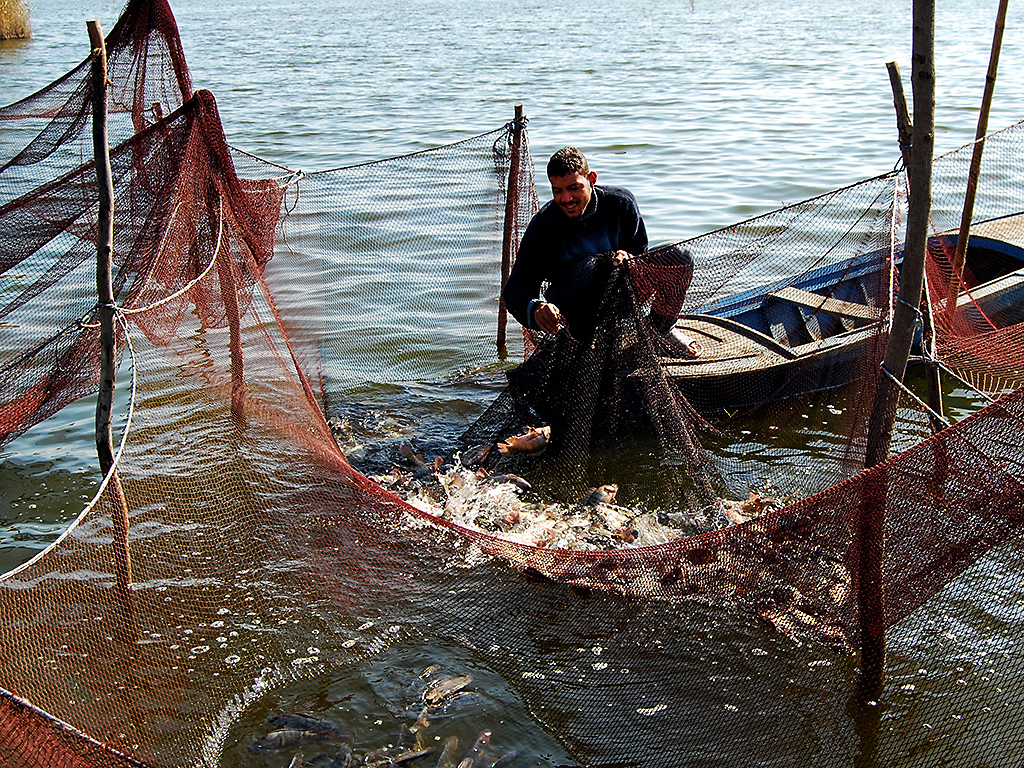
Fisherman in the Nile River south of Alexandria, Egypt. (C)FERRELL JENKINS 2008
The book of Habakkuk mentions a time when Edom (descendants of Esau). failed to come to the aid of Jacob (Israel) when they were under attack. Remember that Jacob and Esau were brothers.
When the prophet Habakkuk learned that the LORD was raising up the Chaldeans (the Babylonian Empire) against Edom, the prophet was puzzled that this could happen. In essence he said, “The Chaldeans are more wicked than the Edomites.” The LORD told Habakkuk that he would bring judgment upon the nations that failed to serve Him. That event was called the Day of the Lord (Habakkuk 1:15) or the Day of Jehovah. (ESV) or the Day of the LORD” (NAS, NKJ).
The Day of the Lord is described in highly figurative language in the Bible. It is a day when the mountains shake, when the rivers flood, the sun is darkened and the moon turns to blood. It is not the final judgment, but the judgment of nations. The prophet Obadiah spoke against Edom. Notice these words:
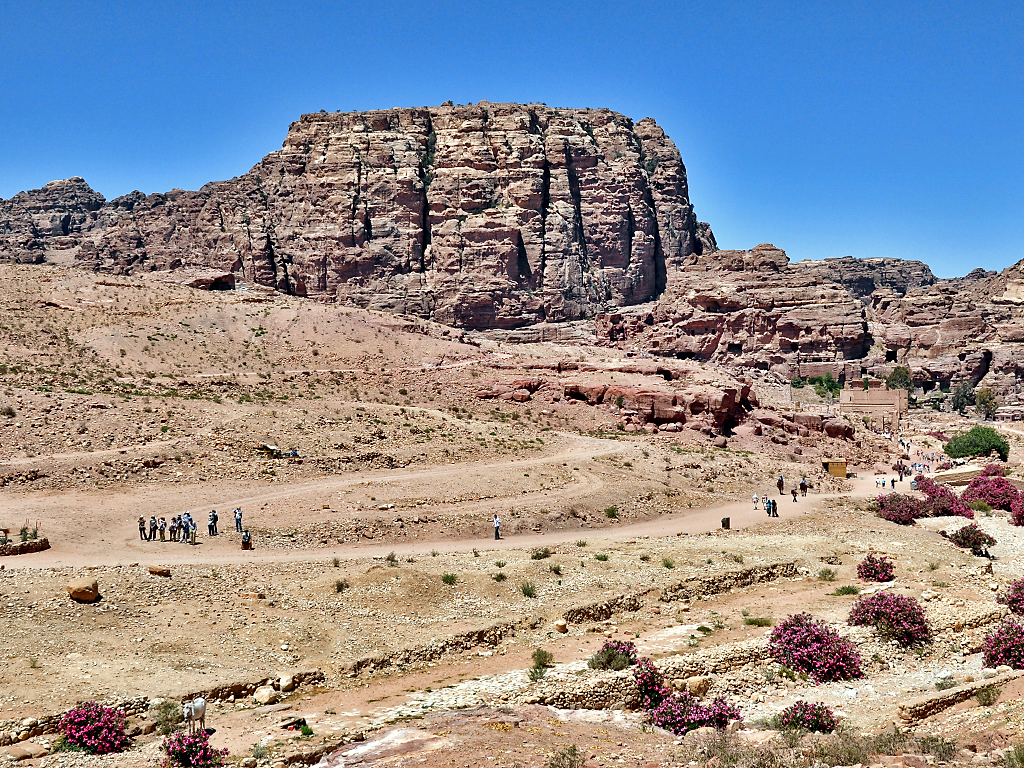
The vision of Obadiah. Thus says the Lord GOD concerning Edom: We have heard a report from the LORD, and a messenger has been sent among the nations: “Rise up! Let us rise against her for battle!” 2 Behold, I will make you small among the nations; you shall be utterly despised. 3 The pride of your heart has deceived you, you who live in the clefts of the rock, in your lofty dwelling, who say in your heart, “Who will bring me down to the ground?” 4 Though you soar aloft like the eagle, though your nest is set among the stars, from there I will bring you down, declares the LORD. (Obadiah1:1-4 ESV)
The site of Umm el Biyarah at Petra, Jordan. This was the fortress of the ancient Edomites Photo (c) Ferrell Jenkins.
Homer Hailey, my beloved college professor who first introduced me to the prophets, often said “God judges nations in time and individuals in eternity.”
The LORD used Assyria to punish the northern kingdom of Israel in 722 BC. Through the prophet Isaiah he said that he still held the Assyrians accountable (Isaiah 10:12).
The Assyrians were brought down by the Babylonians who also brought down the Egyptians (Ezekiel 29:17-30).
Am I able to say that a given conflict on this globe is the Day of the Lord? Since I do not have a “thus saith the Lord” in these cases I will not be dogmatic, but I think frequently about this clear biblical teaching.
There was a time that John (the baptizer) was baptizing in the vicinity of Aenon near to Salem. I have not had the opportunity to visit the site of Aenon, but I have been to Salem several times. Sergio and Rhoda (locate on YouTube) visited the site with Danny the Digger, a guide who who has lived in the vicinity.
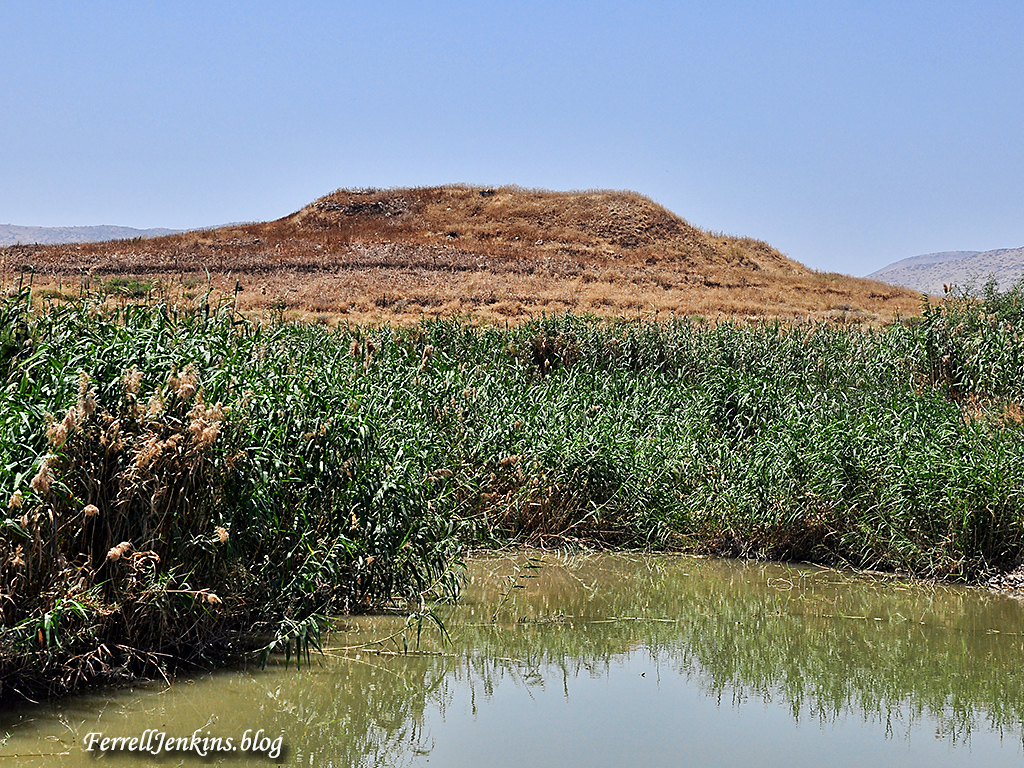
Salem is now identified with Tel Shalim. a site about eight miles south of Beth-shan (Beit She’an) on a dirt road between highway 90 and the Jordan River. In the vicinity there are many pools of water, many now used to raise the fish sold in the restaurants around the Sea of Galilee.
Tel Shalem in the northern Jordan Valley. Photo by Ferrell Jenkins.
My booklet on The Middle East Conflict and the Bible has been available off and on since 1991. I have presented numerous short series of lessons on this topic in past years.
Today Florida College Press has an attractive edition for sale in the bookstore at 119 N. Glen Arven Ave., Temple Terrace, FL 33617. This is just in time for those attending the Florida College lectures next week to pick up a copy. I remind you that the content of this booklet is written from the amillennial perspective. Specifically I have explained it as the Philosophy of History, Preterist, or Historical Background viewpoint.
We had hoped to have The Old Testament in the Book of Revelation available in a new format but still lack a little having that completed. We hope to have it ready soon.
My Studies in the Book of Revelation is available and I suggest it as the book one should choose if he/she wants to gain an understanding of the overall content of the great book of Revelation.
The Middle East Conflict and the Bible discusses the following questions.
Is the return of the Jews to Palestine in the twentieth century a fulfillment of Biblical prophecy?
Why do the Arabs and Israel have so much conflict
Was Saddam Hussein the successor to Nebuchadnezzar, king of Babylon? Will Babylon be rebuilt?
What does Biblical prophecy say about Israel, Babylon and Nineveh?
Does God use Nations to serve His purpose?
When and how will the nations turn their swords into plowshares?
It is difficult to locate these books on the Florida College Bookstore website, but you can ask for them by calling the bookstore at the college switchboard and asking for the Bookstore: 813.988.5131.
Review Comments:
Three persons received a preview copy of the book. Here are their comments.
Don Truex: “As has been the case for decades, Ferrell Jenkins sets the standard for Biblical, practical and applicational knowledge of the events in the Middle East and their relevance to Christians. His firsthand knowledge of the Text, the land and the people combine to bring essential insight into the all-too-common turmoil in this history filled region.”
Leon Mauldin: “Today I read my advance copy of The Middle East Conflict and the Bible. I know of nothing else like it, that packs so much in one small book. This is truly a great resource!”
Brooks Cochran: “The Middle East Conflict and the Bible” is an excellent resource to use in a study of current events in the Middle East as they relate to Bible Prophecy and the Nation of Israel. This updated edition includes a chapter on “Understanding Islam The Moslem Religion”.”
The New Testament site of Antipatris was known as Aphek in Old Testament times. It is the place where the Philistines were encamped when they took the ark of the covenant from the Israelites who had camped at nearby Ebenezer (1 Samuel 4:1).
Antipatris was built by Herod the Great and named in honor of his father Antipater.
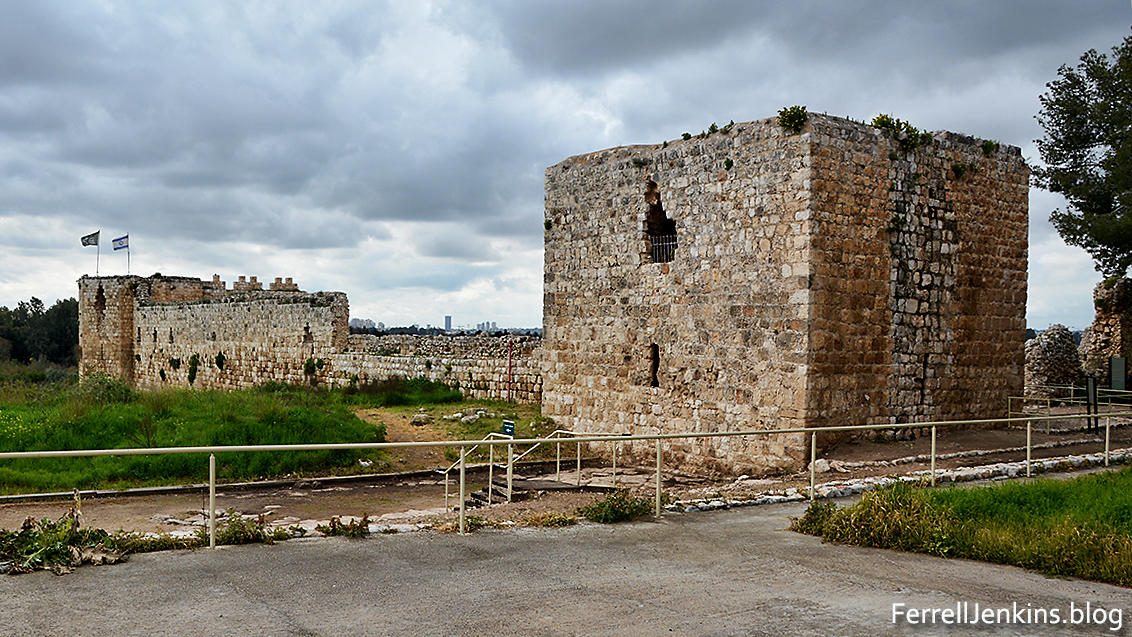
Because Aphek/Antipatris sat on a major south-north and west-east routes, it was dominated by many nations. The dominant feature of the site today is the Turkish fort. Inside are the excavated ruins of buildings from Canaanite to Herodian/Roman times.
The 16th century Turkish fortress at Aphek-Antipatris, now an Israeli National Park.
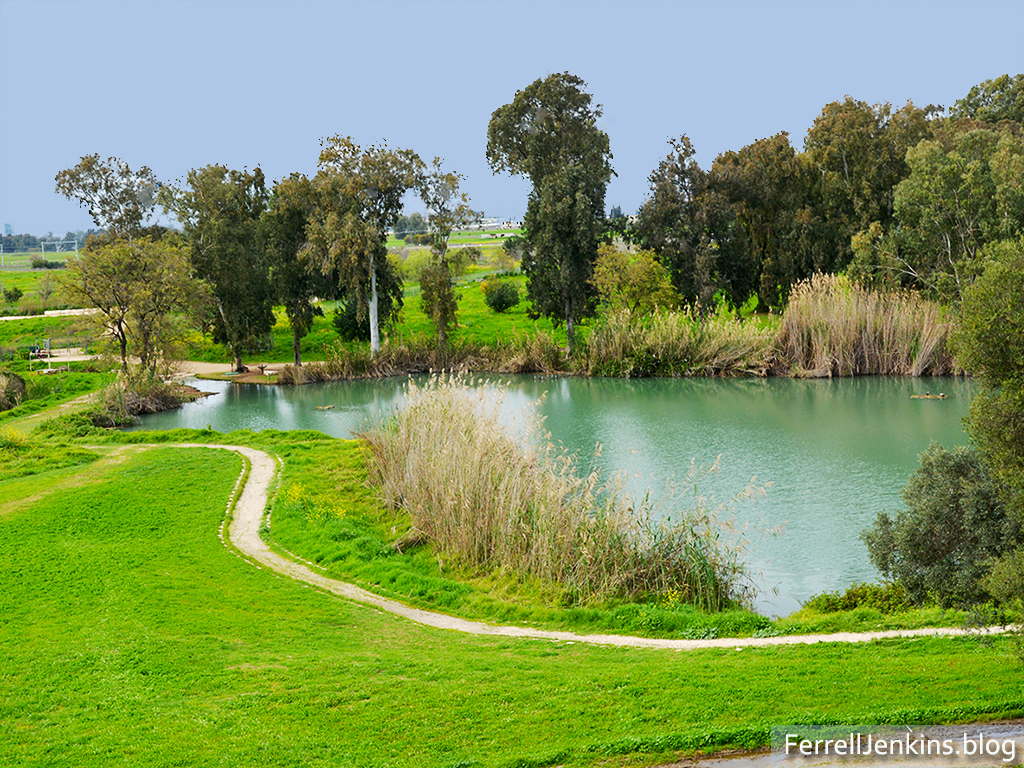
Aphek/Antipatris is known by the modern name Ras el-Ain because it is located at the source of the Yarkon River which flows a few miles into the Mediterranean.
Ras al ein, the source of the Yarkon River at Aphek-Antipatris.
When a plot was raised against Paul while he was in the Fortress of Antonia in Jerusalem, he was sent by night to Antipatris. The next day he was escorted to Caesarea Maritima. Luke records the event,
So the soldiers, according to their instructions, took Paul and brought him by night to Antipatris. And on the next day they returned to the barracks, letting the horsemen go on with him. When they had come to Caesarea and delivered the letter to the governor, they presented Paul also before him. (Acts 23:31-33 ESV)
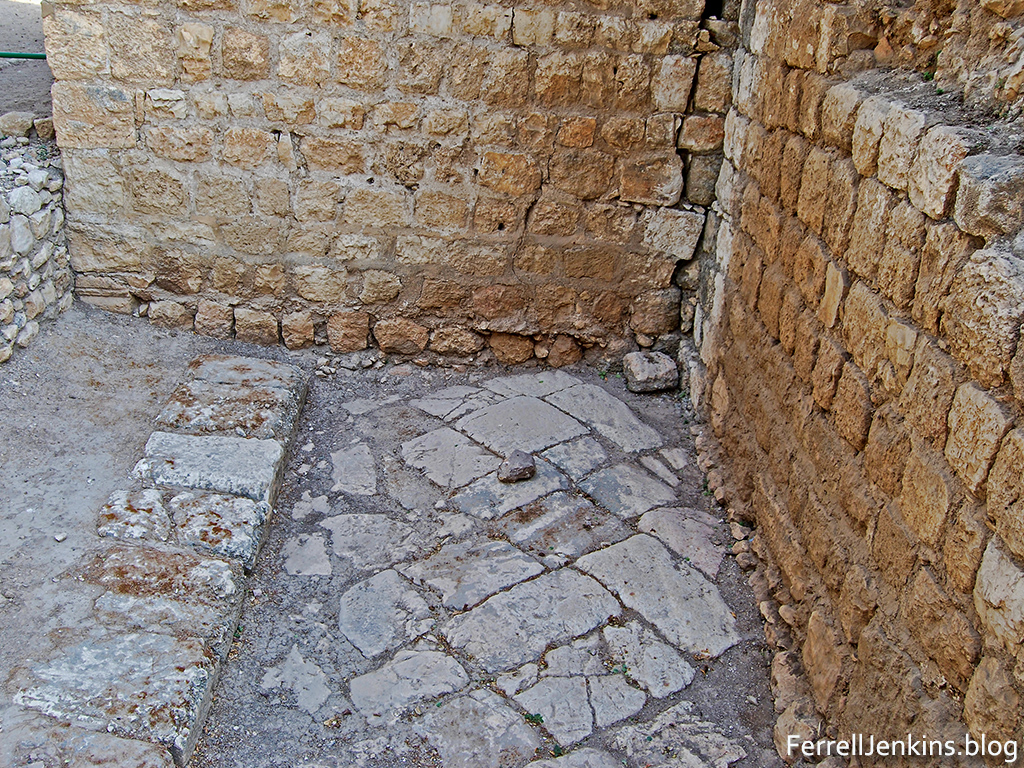
A small portion of the Roman cardo, the main East-West road has been uncovered.
From Jerusalem to Antipatris is about 30 miles. From there to Caesarea Maritima is an additional 27 miles.
Paul would remain in custody at Caesarea Maritima for two years. We probably realize that the wheels of power often turn slowly.
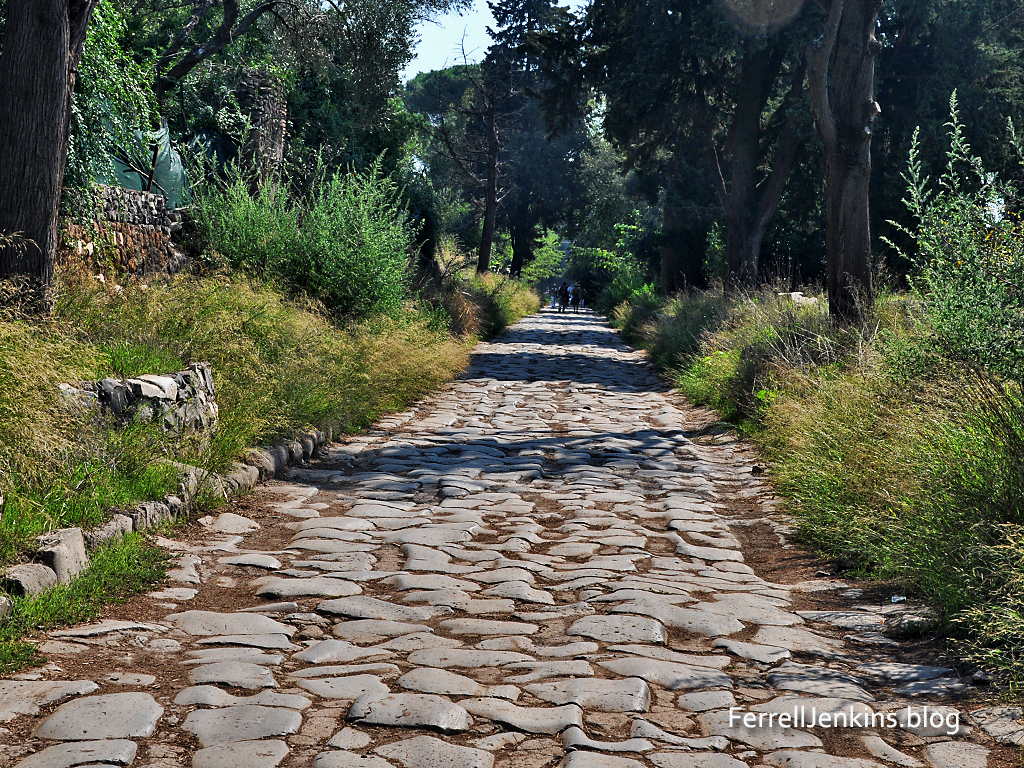
During his preaching journeys, the apostle Paul used several of the famous Roman roads. On the way to Rome as a prisoner he traveled the Appian Way (Latin Via Appia).
The Appian Way on the south side of Rome.
There we found brothers and were invited to stay with them for seven days. And so we came to Rome. And the brothers there, when they heard about us, came as far as the Forum of Appius and Three Taverns to meet us. On seeing them, Paul thanked God and took courage. And when we came into Rome, Paul was allowed to stay by himself, with the soldier who guarded him. (Acts 28:14-16 ESV)
Tirzah is used in the Bible as the name of one of the daughters of Zelopehad. She and her sisters were married into the clans of the people of Manasseh the son of Joseph (Numbers 36:11; Joshua 12:24). The man in Song of Songs (or Solomon) tells his lady “You are beautiful as Tirzah, my love, lovely as Jerusalem, awesome as an army with banners” (6:4 ESV). The context, including Jerusalem, indicates he is comparing her to a beautiful city.
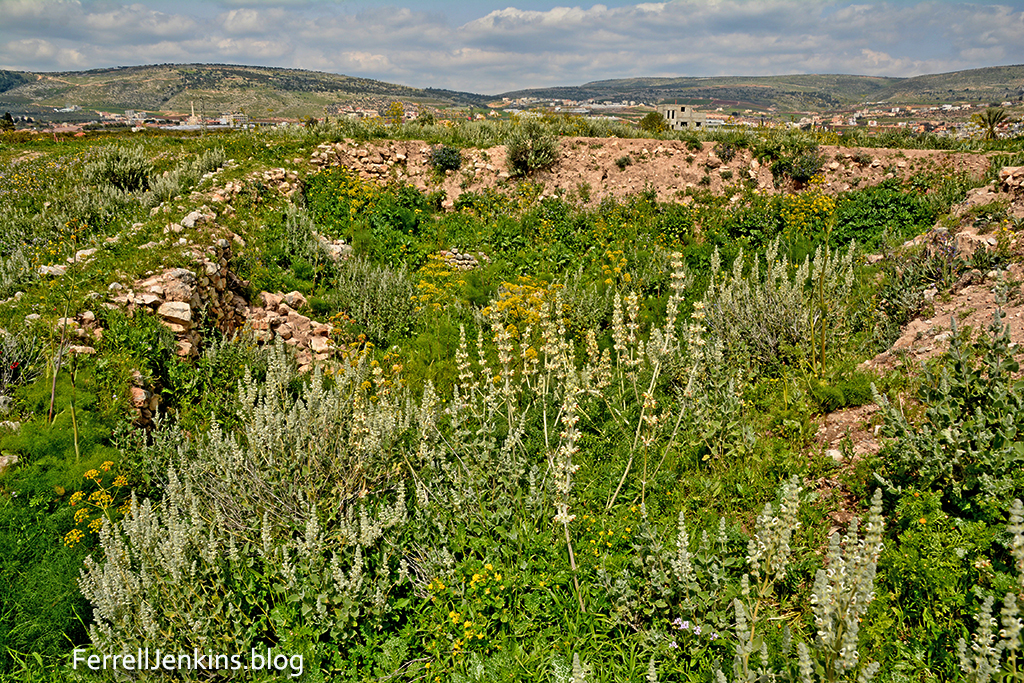
This photo shows a few of the excavated ruins of Tel el Farah, thought to be the site of Tirzah.
In today’s post we consider the name Tirzah as the name of a place.
Joshua captured the king of Tirzah during the conquest of the promised land (Joshua 12:24; 17:3).
Earlier when Abraham was at Shechem, the LORD promised him and his descendants the land of Canaan (modern Nablus) (Genesis 12:1-9).
About 931 BC after the death of Solomon Jeroboam rebelled and became king over Israel (the northern kingdom) at Shechem (1 Kings 11). Later the capital was moved to Tirzah (1 Kings 14:17).
R. K. Harrison describes the importance of Tirzah in the kingdom of Israel: “perhaps as the result of increasing political and economic relationships with Syria. Tirzah was the capital of Israel during the time of Baasha (1 Kings 15:21,33) and Elah (1 Kings 16:8-9). The seven-day reign of Zimri ended when he burned the palace over himself at Tirzah was being besieged by Omri (1 Kings 16:17-18). After ruling from Tirzah for six years, Omri moved the capital of Israel to Samaria (1 Kings 16:23-24) , probably because of his economic and political alignment with Phoenicia. Menahem, a resident of Tirzah, was able to overthrow Shallum (752 B.C.) toward the close of the northern kingdom’s existence and to usurp the throne, ruling for almost eleven years.
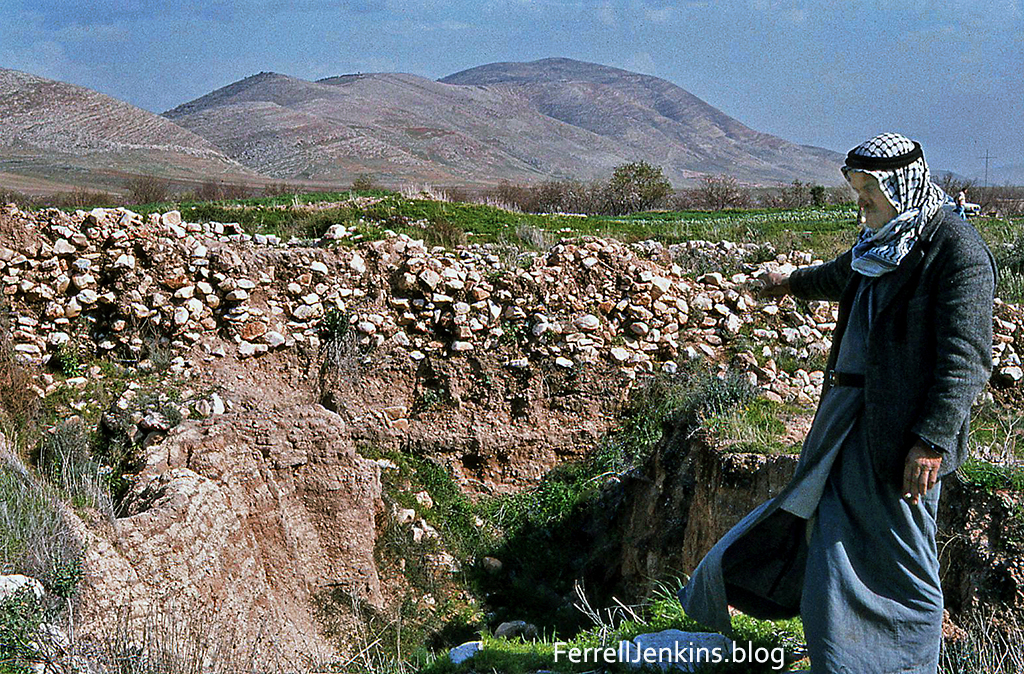
In 1982 I first visited Tel el Farah with the late Jimmy Cravens, a photographer friend from Tampa, Florida. The site still showed evidence of excavation. The gentlemen in the photo lived in a little house on the tel and served as the caretaker. I recall that he is showing us some of the walls that indicated a divider between the poor and those better off. He said he had worked with De Vaux during all of the excavations. The image is scanned from a slide that is still in good condition after 40 years.
The location of Tirzah is not certain. W. F. Albright identified it with Tel el Farah, a mound located about seven miles NE of Shechem (at modern Nablus). Roland De Vaux was associated with the Ecole Biblique in Jerusalem and conducted nine seasons of archaeological excavations at Tel el Farah between 1946 and 1960. Most of the tel is currently covered by an orchard.
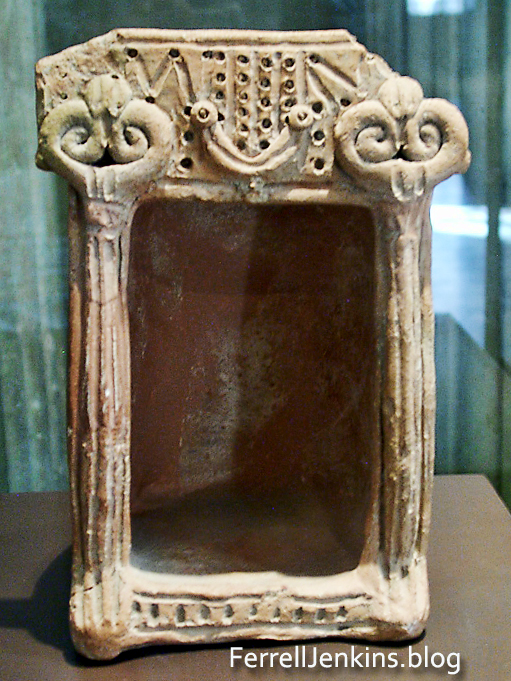
Several archaeological artifacts from Tel el Farah are displayed in the Louvre. This is a shrine or temple model from the site.
Tel el Farah north (likely Tirzah) should not be confused with Tel el-Farah south (likely Besor). See our article about a visit there a few years ago here. Google Earth Pro includes one photo from the south site with the information about the north site. It is easy to make this mistake.
If you wish to look up the site on Google Earth Pro or the maps you will need to search for Tel Fara North. Remember also that the site is in Palestine.
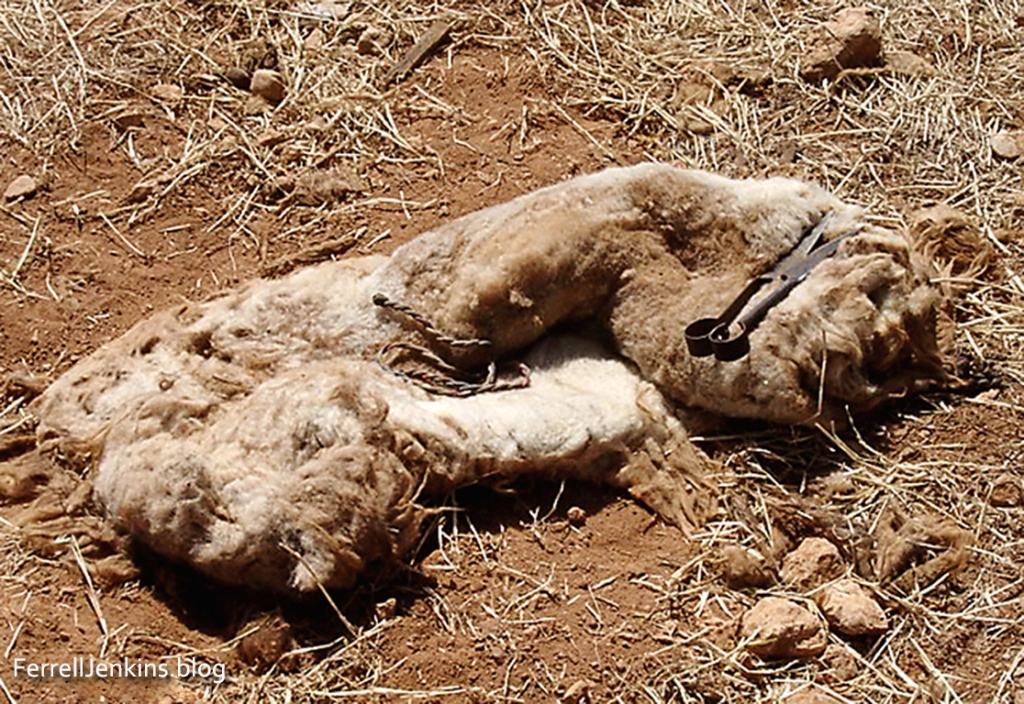
The wool from one sheep at shearing time. This photo was made in Syria near the ancient site of Kadesh where the famous battle between the Egyptians and the Hittites took place.
David is well known as a shepherd. An interesting episode from his life is recorded in 1 Samuel 25.
4 David heard in the wilderness that Nabal was shearing his sheep. 5 So David sent ten young men. And David said to the young men, “Go up to Carmel, and go to Nabal and greet him in my name. 6 And thus you shall greet him: ‘Peace be to you, and peace be to your house, and peace be to all that you have. 7 I hear that you have shearers. Now your shepherds have been with us, and we did them no harm, and they missed nothing all the time they were in Carmel. (1 Sam. 25:4-7 ESV)
A common expression among the Jews was that goats were kept for milk, hens for eggs, and sheep for wool. The wool could be converted into clothing for the family. I have seen Bedouin milking sheep.
Shepherd family living in tents in northwest Syria. Note the woman milking the sheep from the rear.
The wool was converted to yarn, primarily by the women of the village, to be used in the making of clothing for the family.
This yarn has been dyed to be used for making clothing by the women at Nazareth Village.
Aphrodisias, located in southwest Turkey, was an ancient city of Caria in Asia Minor. It is not mentioned in the Bible, but is close to the cities of Laodicea, Hierapolis and Colossae. Robert F. Tannenbaum, an ancient historian, describes the location of the city this way:
A quiet, fertile valley folded into the Mediterranean hills, clear streams, tall poplars, ancient ruins more than 1,400 years old—a picture of pastoral quiet. (Biblical Archaeology Review, Sept/Oct 1986)
The map above is cropped from the set of BibleMapper maps now available at https://biblemapper.com/blog//. Aphrodisias is clearly marked.
The site has been excavated since 1966, beginning under the direction of Kenan Erim of New York University. Marble was readily available at a nearby quarry and the excavation has brought to light a multitude of marble inscriptions and statues from the Roman period including a statue of the Emperor Domitian. Buildings include a theater, an agora, a bath, temples, and a well-preserved stadium.
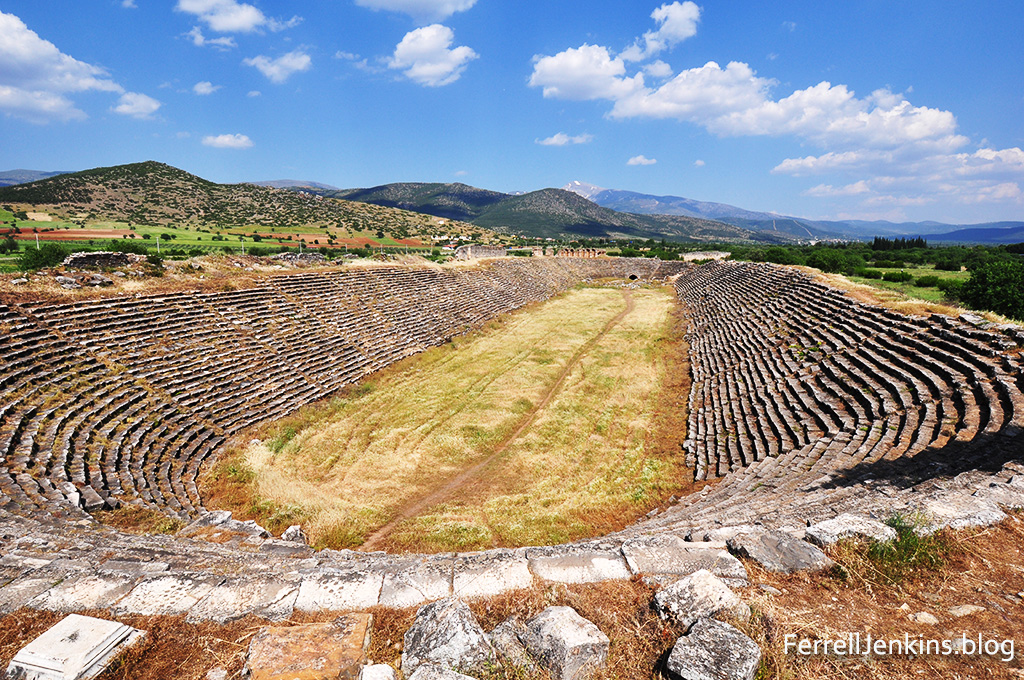
Louw-Nida describes a stadium as an “open, oval area (frequently including a racetrack) around which was built an enclosed series of tiers of seats for those who came to watch the spectacles – arena, stadium.” When Paul spoke of running the race in 1 Corinthians 9:24, he used the Greek term stadion. The term was also used as a measure of distance and is found in John 6:19. It was about one-eighth of a Roman mile. Most large Greek and Roman cities had a stadium. The figure of the stadium is in mind in Hebrews 12:1-2, where a host of witnesses watch as we run the race.
Therefore, since we are surrounded by so great a cloud of witnesses, let us also lay aside every weight, and sin which clings so closely, and let us run with endurance the race that is set before us,
2 looking to Jesus, the founder and perfecter of our faith, who for the joy that was set before him endured the cross, despising the shame, and is seated at the right hand of the throne of God.
(Hebrews 12:1-2 ESV)
The stadium at Aphrodisias is the best preserved I have seen and I wanted to share with you the photo I made in 2012. Picture yourself in the stadium.
The city of Thyatira, modern Akhisar, Turkey, is said to be the least important city among the seven mentioned in the book of Revelation. Yamauchi quotes Pliny the Elder’s statement about Thyatira in the Roman period as “a city of no first-rate dignity” (The Archaeology of New Testament Cities, 51). Thyatira was strategically situated on a main road that ran between Pergamum and Laodicea. Philadelphia also was on this road. Most travel was through the valleys. This road, which was part of “the imperial post road linking Italy-Greece-Asia Minor with Egypt, gave it commercial importance” (New International Dictionary of Church History, 974). The modern road between Izmir and Thyatira is good, but the road between Pergamum and Thyatira has not been among the best during my trips. See map here.
Inscriptions and coins show that Thyatira was noted for its many trade-guilds, roughly equivalent to our labor unions. “There are references to unions of clothiers, bakers, tanners, potters, linen-workers, wool-merchants, slave-traders, copper-smiths and dyers” (Hemer, “Unto the Angels of the Churches,” Bible History 11 (1975). 110). The Christians who lived there objected to the guilds because of the guild rites which required all members to eat a sacrificial meal and to honor a pagan deity. Immorality was often associated with the banquets.
One of the most prominent deities at Thyatira was Tyrimnos, an ancient sun god, but there was also a Artemis type temple whose goddess was called Boreitene. No temple to the Roman Emperor was ever built there. Cosmades says, “When the Romans took over the city, the emperor-worship cult was united with the dominant system” (Nothing Beside Remains, p. 56). Even without a temple to the Emperor at least four Christians of Thyatira (mid third century) were taken to Pergamum and martyred (Meinardus, St. Johnof Patmos and the Seven Churches of the Apocalypse, p. 95).
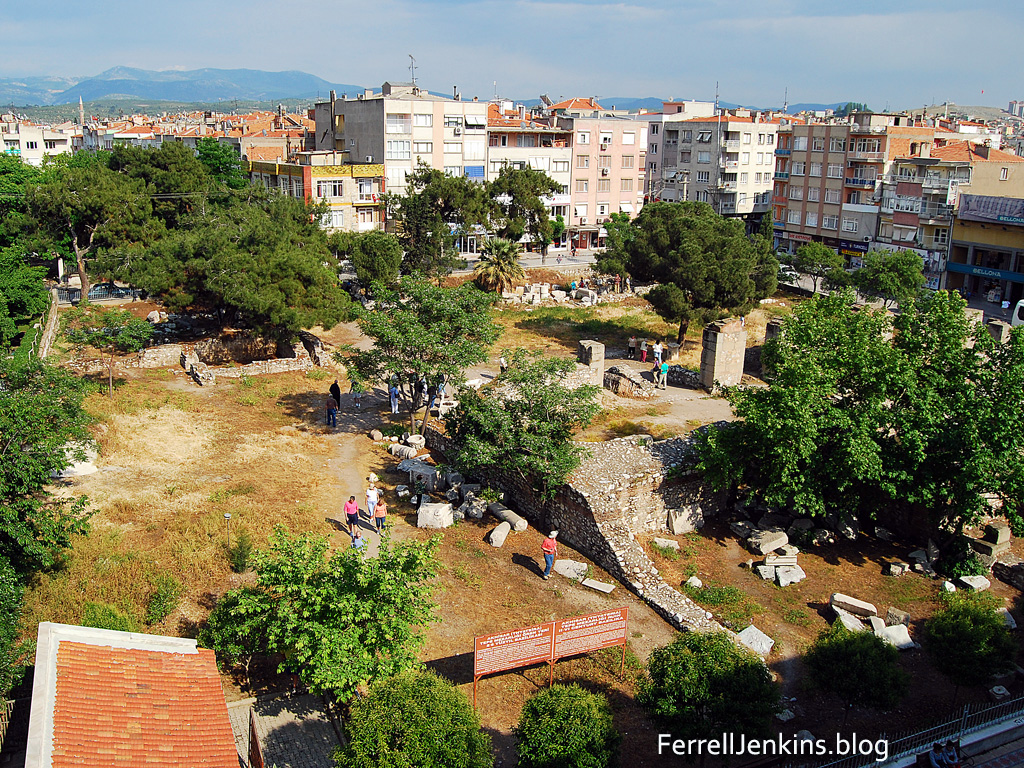
The major excavated ruins of Thyatira cover a square block in the center of modern Akhisar, Turkey.
A rooftop view of Thyatira. Photo by Ferrell Jenkins.
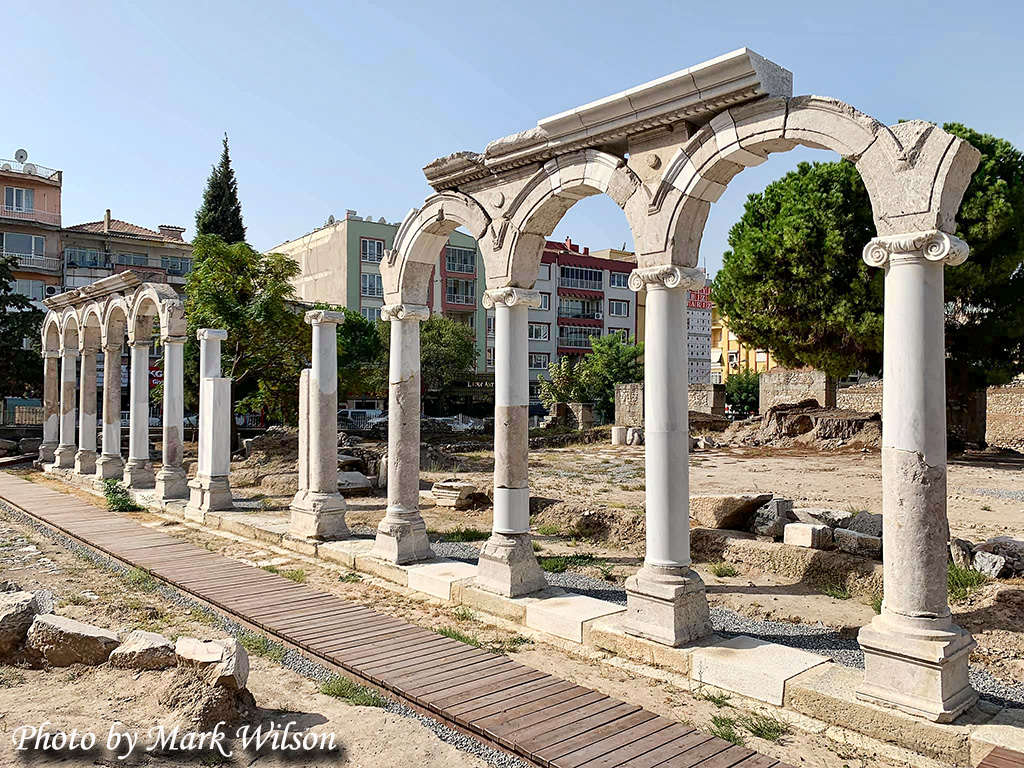
For years columns and arches of the ancient city have lain scattered across the square block in Akhisar. In October, 2020, Dr. Mark Wilson, author of Biblical Turkey who makes Turkey his home, was able to get his first photo of the restored stoa of Thyatira. I have only seen it in the ruins.
The recently reconstructed stoa of Thyatira. Photo by Dr. Mark Wilson. Used by permission.
There are numerous inscriptions strewn among the ruins of Thyatira that illustrate some aspects of this longest of the seven letters [edicts].
You may have noted that various statements about the glorified Christ in chapter 1 are used in the text of the individual edicts. One statement says, “his feet were like burnished bronze, refined in a furnace” (Rev. 1:15 ESV). Roman coins from Thyatira highlight this statement.
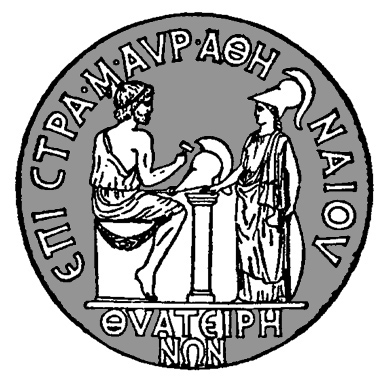
Hephaestus is portrayed as a metal worker making a helmet for Diana. Ramsay, Letters to the Seven Churches, p. 325.
The Lord tells the church at Sardis,
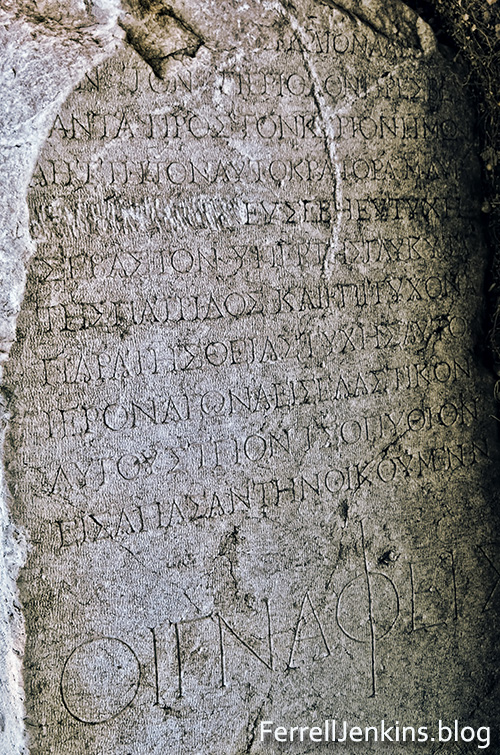
The one who conquers will be dressed like them in white clothing, and I will never erase his name from the book of life, but will declare his name before my Father and before his angels. (Rev. 3:5 NET
This inscription shows the erasure (blotting or wiping out) of the name of Emperor Marcus Aurelius Antoninus II ) = Elagabalus, A.D. 218-222) on the fifth line from the top. This indicates he was of damnable memory. Note last line – oi gnapheis – the fullers – one of the important trade guilds. Photo by Ferrell Jenkins.
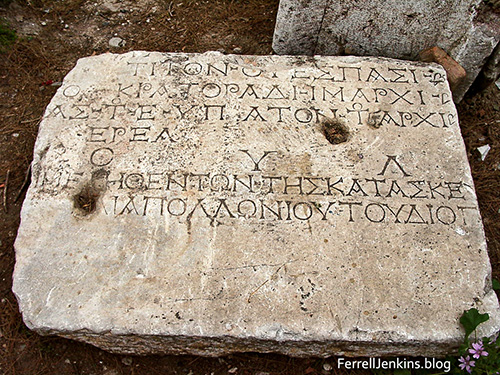
Another inscription from Thyatira has the name of Domitian chiseled off on the fourth or fifth line. You will see the name of Titus Vespasian, the brother of Domitian on the top line.
Inscription photographed at Thyatira in 2001. It has the name of Titus Vespasian on the top line, but the name of his brother Domitian (Roman Emperor A.D. 81-96) is erased. Photo by Ferrell Jenkins.
The problems faced by the saints at Thyatira was much the same as those faced by the other churches. Idolatry, the worship of pagan gods, and Emperor worship was a problem they all faced to some degree. Eating meat sacrificed to idols and immorality was also a problem for many of the Christians. Compromise with these more common practices had already been mentioned in the letter to the church at Pergamum where the Old Testament character responsible for leading the saints to compromise was the Old Testament character Balaam. In the letter to the saints at Thyatira the person responsible was a woman who claimed to be a prophetess like Jezebel.
What do we know about the Old Testament Jezebel?
She was the daughter of Ethbaal, king of the Sidonians, and a devotee to Baal.
She supported 450 prophets of Baal and 450 prophets of Asherah. It was these prophets of Baal with which Elijah contended on Mount Carmel (1 Kings 18).
She sought to kill the prophet Elijah (1 Kings 19:2).
She had Naboth murdered and confiscated his vineyard at Jezreel (1 Kings 21).
If you have read the Old Testament account you know that Jezebel came under the judgment of the LORD. Both this account and the one in Revelation illustrates the folly of making a concession to error and the practice of immorality.
As mentioned in an earlier post, the situation described in the book of Revelation fits perfectly with what we learn when we read the history of the area and visit the ruins of the ancient cities named in the book.






 Ferrell's Travel Blog
You must be logged in to post a comment.