Category Archives: Bible Study

Alexandria Troas # 2

For # 1 scroll down to November 7, or click here.

Paul visited Troas on the return from his third journey. His companions, including the men who were taking the contribution to the poor among the saints at Jerusalem arranged time to be with the disciples on the first day of the week. When they met to break bread Paul spoke for a long time and raised Eutychus (Acts 20:4‑12). After the raising of Eutychus, Paul’s companions set sail for Assos, but Paul decided to travel about 20 miles south by land from Troas to Assos and meet the ship there (Acts 20:13‑14).

On another occasion, while awaiting the return of Titus from Corinth, Paul was very discouraged during his stay at Troas (2 Cor. 2:12ff.). He did not write a letter to the church at Troas, but in his last letter he requested Timothy to bring the cloak, the books, especially the parchments, which he had left at Troas with Carpus (2 Tim. 4:13).

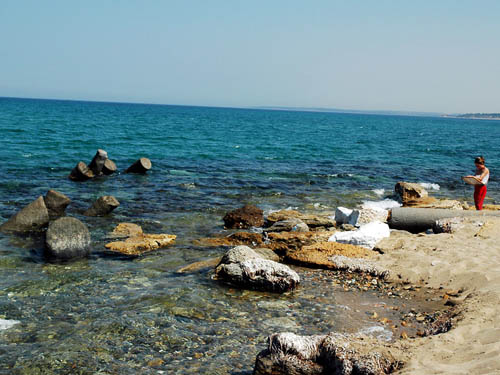
The inner harbor at Troas. Photo by Ferrell Jenkins.

The inner harbor at Troas. Photo by Ferrell Jenkins.

Earlier visits to Troas have allowed us to see only a few exposed ruins and a pathetic looking artificial harbor. The entry to the harbor is now clogged up; water flows into the harbor from the Aegean Sea, but none flows out. Over the past ten years archaeologists from the University of Münster and other institutions have been excavating in Troas. We will show some of the new discoveries in the next post.

The outter harbor at Troas. Photo by Ferrell Jenkins.

The outter harbor at Troas. Photo by Ferrell Jenkins.

Alexandria Troas

The terms Troy, Troas, and Troad were derived from the name of the ancient people known as the Troes. The Troes lived in the Troad. This region became part of the Roman province of Asia, and was a substantial portion of the area known as Mysia which included the cities of Troas, Assos and Pergamum.

The term Troas or Troad was used to describe the region where Alexander first defeated the Persians in the Battle of Granicus. The city of Alexandria Troas, located about 10 miles from ancient Troy was first called Antigonia. Lysimachus changed the name to Alexandria in about 300 B.C., but there were many cities named for Alexander, so this one came to be called Alexandria Troas.

Colin Hemer points out that “Troas was a nodal point on what became a sophisticated system of international routes, organized functionally with regard to complex variables of speed and safety, of season and weather and conditions by land and sea.” Troas was, therefore, an ideal place from which the Gospel would spread into Europe.

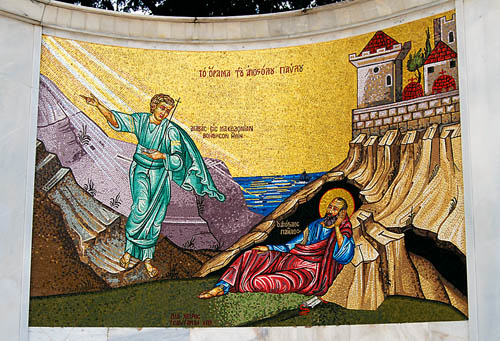
Troas was made a Roman colony by Augustus, and became one of the important cities of northwest Asia. A man of Macedonia appeared in a night vision to Paul at Troas and immediately his traveling party sailed for Macedonia (Acts 16:8‑11). Timothy, Silas, Luke, and perhaps others, were with Paul at Troas.

This photo from Berea illustrates the vision of the man of Macedonia calling on Paul to come over into Macedonia.

A man of Macedonia appears to Paul at Troas. Photo by Ferrell Jenkins.

A man of Macedonia appears to Paul at Troas. Photo by Ferrell Jenkins.

Ask in the next village

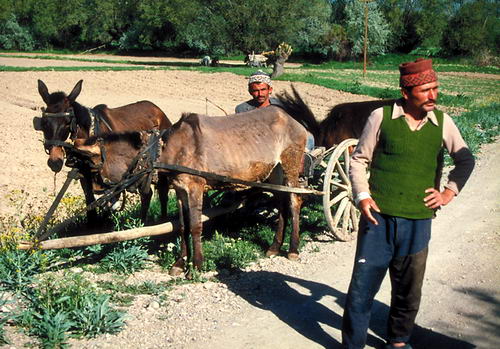
Once while visiting the site of Lystra our group enjoyed some time with local farmers who were working the fields below the tell (huyuk, in Turkey). I asked our guide to ask the men if they had heard of the apostle Paul. When he asked them, a puzzled look came over the face of the farmer who was doing most of the talking. He said, “No, but you might ask in the next village.”

The farmer said, "Ask in the next village." Photo by Ferrell Jenkins.

The farmer said, "Ask in the next village." Photo by Ferrell Jenkins.

Paul visited Lystra on his first journey (Acts 14). On the second journey he came through Lystra where Timothy lived. From that point on Timothy remained a faithful companion and co-worker with Paul in the spread of the gospel throughout the Roman Empire.

Paul came also to Derbe and to Lystra. And a disciple was there, named Timothy, the son of a Jewish woman who was a believer, but his father was a Greek,  2 and he was well spoken of by the brethren who were in Lystra and Iconium.  3 Paul wanted this man to go with him; and he took him and circumcised him because of the Jews who were in those parts, for they all knew that his father was a Greek.  (Acts 16:1-3 NASB)

Is the Apostle Paul known in your village? I mean, is the teaching of Christ and Him crucified known there? (1 Corinthians 2:2).

What shall we do now?

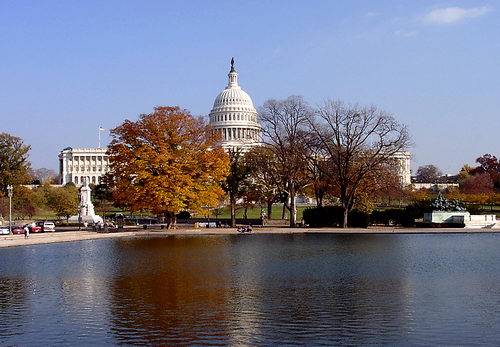
United States capitol in Washington, DC. Photo by Ferrell Jenkins.

United States capitol in Washington, DC. Photo by Ferrell Jenkins.

Paul’s Admonition to Christians
About Their Responsibility to Those in High Positions

1 Timothy 2:1-7

First of all, then, I urge that supplications, prayers, intercessions, and thanksgivings be made for all people, for kings and all who are in high positions, that we may lead a peaceful and quiet life, godly and dignified in every way.

This is good, and it is pleasing in the sight of God our Savior, who desires all people to be saved and to come to the knowledge of the truth.

For there is one God, and there is one mediator between God and men, the man Christ Jesus,  who gave himself as a ransom for all, which is the testimony given at the proper time.

For this I was appointed a preacher and an apostle (I am telling the truth, I am not lying), a teacher of the Gentiles in faith and truth. (ESV)

Assyria in Boston

The British Museum probably has the best collection of Assyrian artifacts in the world. The Louvre has a good collection, too. Currently 250 artifacts from the British Museum are on exhibit at the Museum of Fine Arts in Boston. The exhibition runs through January 4. This exhibition was likely timed to coincide with the meetings of the Society of Biblical Literature and the American Schools of Oriental Research in mid-November.

Even if you can’t make it to Boston you might find the web page of interest. Check mfa.org.

The Assyrian Empire ruled the ancient near east from the battle of Qarqar (853 B.C.) till the battle of Carchemish (605 B.C.) when they were defeated by the Babylonians. Nineveh had fallen seven years earlier. This was the time of the Divided Kingdom period in Israelite history, and Assyria had contact with a numerous biblical kings. Ahab, for example, fought against the Assyrians at Qarqar.

One of the famous Assyrian kings was Sargon II. He is mentioned only once in the Bible.

In the year that the commander came to Ashdod, when Sargon the king of Assyria sent him and he fought against Ashdod and captured it. (Isaiah 20:1)

For many years there was no known reference to Sargon II in the Assyrian records. Yet, the prophet Isaiah, writing at the time of the Assyrian captivity of the northern kingdom of Israel, mentions Sargon at Ashdod.

The palace of Sargon was discovered by Emile Botta at Khorsabad in 1843. This was the period of “momumental” discoveries in archaeology. The photo below shows the top half of Sargon (on the left) receiving his minister. I think you will have to go to London to see this one.

Sargon II receives his minister. From the palace in Khorsabad. British Museum. Photo by Ferrell Jenkins.

Sargon II receives his minister. From the palace in Khorsabad. British Museum. Photo by Ferrell Jenkins.

Khirbet Qeifaya Inscription

Khirbet Qeifaya is a fortified site overlooking the Valley of Elah where the great battle between Israel and the Philistines (David and Goliath) took place. A broken shard of pottery bearing an inscription was discovered during the excavation this year. There have been a lot of teasers going around about what the inscription may say.

The best summarized updates on this inscription that I have seen are the ones posted by Todd Bolen at Bible Places Blog. I suggest you go there and scroll back to these postings during the last days of October. If you would like to go to the specific posts, here are the links:

Be aware that many newspaper articles about archaeological discoveries are often exaggerated. There are NO specifics about David and Goliath. We don’t even have a translation of the inscription at this point. And, by the way, Noah’s ark has not been found, either!

A Judean seal in Assyrian style

There is so much archaeological work going on in Jerusalem today that we are not surprised about the announcement of another seal discovery.

An excavation at the Western Wall plaza has uncovered a seal in a building belonging to the seventh century B.C. This is the time when Manasseh, Amon, and Josiah ruled over the House of David in Jerusalem (2 Kings 20:21 – 2 Kings 21).

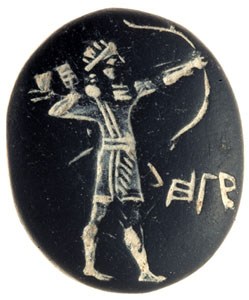
The seal is made of black stone and shows the image of an archer shooting a bow and arrow. The name in ancient Hebrew script reads LHGB (meaning for Hagab). Perhaps the most interesting thing about the seal is that it is decorated in Assyrian style. Here is what the Israel Antiquities Authority press release says about it.

The seal was sent for expert evaluation to Professor Benjamin Sass of the Tel Aviv University and Dr. Tali Ornan of the Hebrew University of Jerusalem. According to them the image of the archer was influenced by Assyrian wall reliefs in which archers are portrayed shooting bows and arrows – such as those that are known from the Lachish relief. The image of the archer appears in profile: he is standing in a firing position with his right foot in front of his left. His face is portrayed schematically but his body, his dress and especially the muscles of his arms and legs stand out prominently. He is barefoot. His attire includes a headband and a skirt that is wrapped around his hips. A quiver hangs from his back and its straps are drawn tightly across his exposed chest. He is holding a bow and arrow in his hands. His right hand is extended forward holding the bow while his left is pulled back grasping the arrow. The seal is quite unique since this is the first time that a private seal has been discovered that bears a Hebrew name and is decorated in the Assyrian style. The seal attests to the strong Assyrian influence that existed in Jerusalem in the seventh century BCE. It is usually assumed that the owner of private seals were individuals who held government positions. We can suggest that the owner of the seal – Hagab, who chose to portray himself as a Hebrew archer depicted in the Assyrian style – served in a senior military role in Judah.

The name Hagab is found among the list of Judean exiles who returned from Babylon to Jerusalem and Judah in 536 B.C. (Ezra. 2:46). The text says that his sons returned. We have no way of knowing whether there is any connection between the Hagab named in the Bible and the one named on the seal. The actual size of the seal is .04 inches by .55 inches.

Clara Amit, IAA.

Seal of Hagab in Assyrian style.Photo: Clara Amit, IAA.

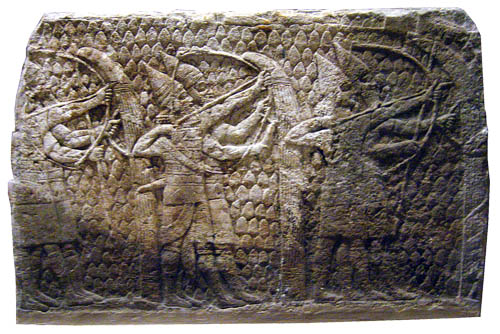
The photo below is one I made in the British Museum of the reliefs showing the siege of Lachish by the Assyrian King Sennacherib. It shows Assyrian archers behind shields with bows drawn and arrows ready to fly. This gives you an opportunity to see how the image on the seal compares with known images of Assyrian archers.

Assyrian archers at Lachish. British Museum. Photo by Ferrell Jenkins.

Assyrian archers at Lachish. British Museum. Photo by Ferrell Jenkins.

David used the figure of the archers metaphorically to describe the wicked.

For, behold, the wicked bend the bow, They make ready their arrow upon the string To shoot in darkness at the upright in heart. (Psalm 11:2)

Copper smelting in 10th century B.C. Edom

Several sources are reporting the discovery of copper smelting operations in Jordan dating to the 10th century B.C. This is the time of Solomon. The discovery was made at a site called Khirbat en-Nahas about 30 mile south of the Dead Sea on the eastern side of the Arabah. The photo below is by Thomas Levy, UC San Diego.
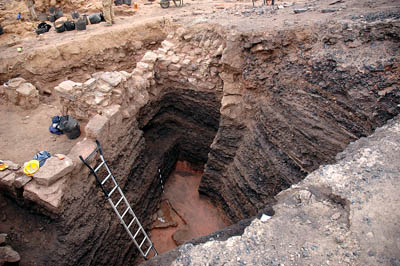
Industrial copper slag mound at Khirbat en-Nahas. Photo Thomas Levy.

Industrial copper slag mound at Khirbat en-Nahas. Photo Thomas Levy.

This is the ancient territory of Edom. Scholars have known for 30 or more years that there was metalworking there in the 7th century B.C. Researchers, led by Professor Thomas E. Levy of the Department of Anthropology at UC San Diego, and Mohammad Najjar of Jordan’s Friends of Archaeology, dug deeper into the site to find evidence of smelting from the 9th and 10th century.

Naysayers who seem frightened that some modern archaeological discovery might “confirm” the biblical record are already at work. Israel Finkelstein of Tel Aviv University is quoted as saying that the stories of the Old Testament “depict the concerns, theology and background of the time of the writers” which he says belong to the 5th century B.C. They cannot be accepted as factual according to Finkelstein.

From his study in Florida, Ferrell Jenkins said,

Instead of immediately linking a discovery such as this to a biblical character or event, would it not be better to think of the discovery in the terms of shedding light on the biblical record?

An Egyptian scarab from Tanis or the eastern delta and an amulet of the Egyptian goddess Mut caused Levy to suggest that these artifacts might be associated with the Egyptian pharaoh Sheshonq I. Pharaoh Sheshonq I is known as Shishak in the Bible. Here is a summary of the biblical references to Shishak.

  • Provided refuge to Jeroboam for a few years prior to the death of Solomon (1 Kings 11:40).
  • Invaded Israel (Canaan) in the fifth year of King Rehoboam (926 B.C.) and took away treasures from the temple in Jerusalem (1 Kings 14:25-26; 2 Chronicles 12:2-9).

Shishak left a record of his invasion of Canaan on the walls of the temple of Amum at Karnak (modern Luxor, Egypt). Here is a photo of the relief at Karnak showing Shishak holding lines to the 156 Canaanite cities he claims to have captured.
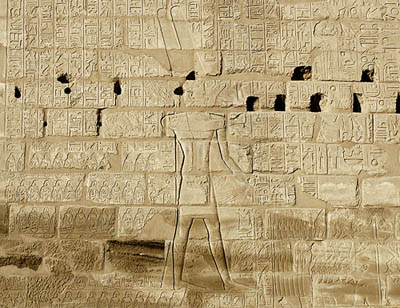
Pharaoh Shishak I of Egypt. Photo by Ferrell Jenkins.

Pharaoh Shishak I of Egypt. Photo by Ferrell Jenkins.

The Bible says that Israel would be able to dig copper from the hills of the country to which they were going (Deuteronomy 8:9). See also Job 28:1-2.

We have known for some time that copper was smelted by the Egyptians at Timna, about 25 miles north of Eilat. Here is a photo showing a reconstruction of the process for copper smelting there in the 13-12th century B.C.
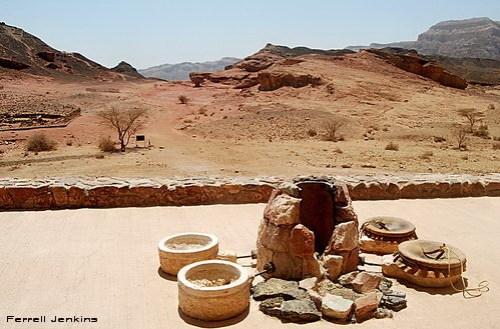
Model of copper smelting installation at Timna. Photo by Ferrell Jenkins.

Model of copper smelting installation at Timna. Photo by Ferrell Jenkins.

More details about this discovery may be found at the following sites: UC San Diego News Center. At the Los Angeles Times there is a nice 12 minute video about the discovery narrated by Thomas Levy.

HT: Joseph I. Lauer

Update [later in the day]: Todd Bolen has added three great photos taken at Khirbat en-Nahas at his Bible Places Blog.

Interested in ancient Roman history?

I just ran across a website maintained by Jona Lendering that is meant to keep people updated about the websites LacusCurtius (maintained by Bill Thayer in Chicago) and Livius.Org.

The page that caught my attention has links to some photos of ancient Syracuse. Check here.

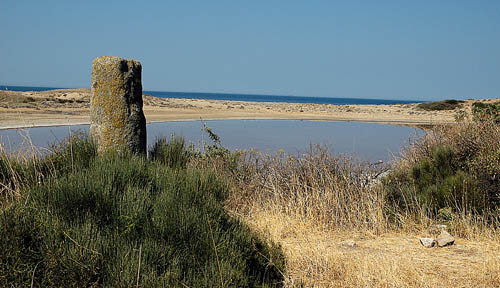
Paul and Luke stayed in Syracuse, Sicily, for three days on the voyage to Rome.

Putting in at Syracuse, we stayed there for three days. (Acts 28.12 ESV)

Syracuse is on my want list.

A fortnight in the oldest town in Texas

Since October 5-19 I have worked with the Stallings Drive Church of Christ in Nacogdoches, Texas, teaching a series of intensive Bible classes.

On Sunday morning and Wednesday evening, for a total of six lessons, we studied A Chronological Survey of the Bible. On Sunday evenings I presented three lessons on A Journey Through Ancient Lands. We discussed Eastern Turkey, Lebanon, and sites in the Sinai and Israel.

The center piece of the series was classes each Monday, Tuesday, and Thursday evening on Daily Life in Bible Times. These classes were two hours each evening.

We had a wonderful response to these classes, and it was a joy to be able to work with this good church in this way. I appreciate the vision of the elders in their willingness to plan such an effort. In too many churches Bible classes are taught on a level of mediocrity. There should be classes for the babes in Christ, but there should be classes that challenge those who have studied at the same level over and over.

Randy Harshbarger has been working with the church at Stallings Drive for about 15 years. He is loved by the church and, with his wife Marilyn, is doing a good work. Randy is allowed time each year to preach overseas in Russia, Italy, Ethiopia, and other places. He has begun a blog to report on his trips in Ethiopia. In between those trips you can expect some good inspirational lessons. Check it here.

Nacogdoches is the oldest town in Texas, and the home of Stephen F. Austin State University. A large number of college students attend at Stallings Drive. I was able to attend one of the football games and see SFA thrash Kentucky Weslyan.

I was treated royally while in Nacogdoches, but it is always good to be back to home base.