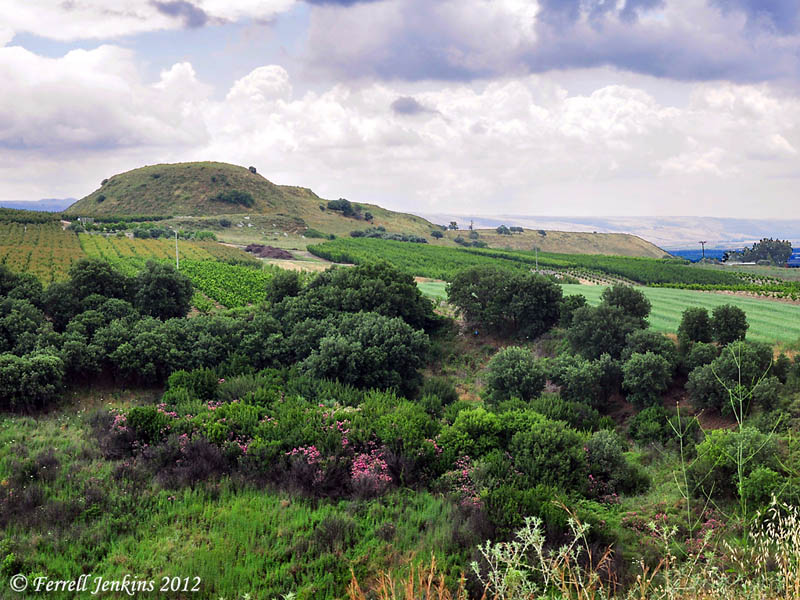
Category Archives: Bible Places

Has the tomb of a pre-70 A.D. Christian been found?

It happens either before Christmas or Easter. A tremendous discovery has been made that will support or undermine Christianity. Everything we have always thought about Jesus, the early Christians, and the Bible will undergo a radical change as soon as the book by the discoverers and the TV program is released. (I have some friends who think so literally that I am fearful they will not understand my attempt to be satirical.)
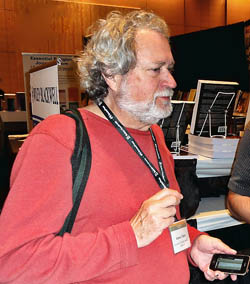
James Tabor at SBL, Atlanta, 2010.

Prof. James Tabor at SBL, 2010.

If I say nothing about this, some readers will send me links to it and ask my opinion. Rather than dig into all of this material about the discovery by Prof. James Tabor and filmmaker Simcha Jacobovici, I am going to direct my readers to Todd Bolen’s Bible Places Blog. Todd will do a much better job with this than I could. You might prefer to begin with the bottom link and move up. Then check for updates for the next few days.

Bolen has already posted three significant blogs ahead of the onslaught of media attention. Read, and examine carefully.

  • More Reports on the Jerusalem Fish Ossuary here.
  • Jesus Discovery: Early Christian Burial in Jerusalem here.
  • Tomorrow: The Jesus Discovery here.

The words of an early Christian apostle would be appropriate here.

But examine all things; hold fast to what is good. (1 Thessalonians 5:21 NET)

UPDATE: Todd Bolen has now commented on Dr. Tabor’s preliminary report here. The complete 46-page report is available in PDF here.

Let the media begin. Fox News just ran a report about this discovery. See link here. Trace Gallagher informed us that “the gospels date to 200 or 300 years after Jesus.” Poor guy. I think he means well, but has left his area of expertise.

UPDATE  Feb. 29: Bible Places Blog includes a report here by Gordon Franz who was present at the press conference. Franz says,

My initial impression is that the “fish” looks like an ornamental glass vessel, perhaps a pitcher or flask of some sort.

An illustration is included.

Another Update: See “Talpiot Tomb Updates” here.

Discovery of 20 mummies & wooden sarcophagus at Aswan, Egypt

Euro Weekly announces,

ARCHAEOLOGISTS from [the Spanish] Jaen University found some 20 mummies and a wooden sarcophagus at a site in Aswan, Egypt.

The report says,

The main find is a tomb built for a provincial governor from the XII dynasty (1830BC) and a wooden sarcophagus in which a high-ranking person was buried.

The brief article may be read here.

Aswan is famous for its granite quarries. An unfinished obelisk, which would have been 137 feet long and weighing 1152 tons, remains in the quarry lying on its side. Holes were drilled into the stone at intervals of about 2 ½ feet and wooden pegs were placed in them. As water was poured over the pegs they expanded to separate the obelisk from the surrounding stone.

Aswan Quarry with the unfinished obelisk. Photo by Ferrell Jenkins.

Aswan Quarry with the unfinished obelisk. Photo by Ferrell Jenkins.

Aswan is known as Syene in Ezekiel 29:10 and 30:6. The expression, “from Migdol to Syene and even to the border of Ethiopia” is similar to the familiar “from Dan to Beersheba.” Migdol was in the far northeast of the country, and Syene was near the southern border. The writer means the entire country.

HT: Jack Sasson

Visual illustrations for Daniel 8

In Daniel’s vision of a ram and a male goat we are given a glimpse of the two world empires following Babylon — the Medo-Persian Empire and the Alexandrian (or Hellenistic/Grecian) Empire.

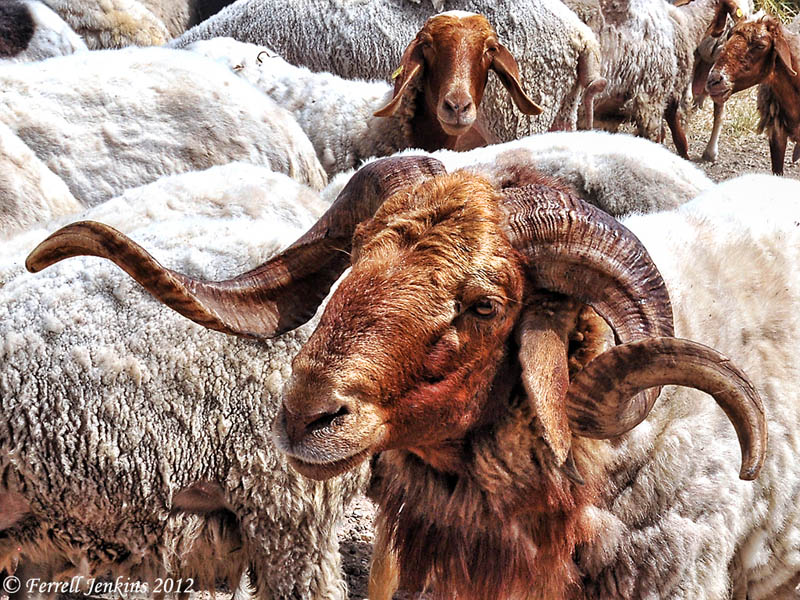
Daniel sees a ram.

I raised my eyes and saw, and behold, a ram standing on the bank of the canal. It had two horns, and both horns were high, but one was higher than the other, and the higher one came up last. (Daniel 8:3 ESV)

Ram at Socoh. Photo by Ferrell Jenkins.

A ram. With horns like that it is easy to see who is boss. Photo by Ferrell Jenkins.

In apocalyptic literature the visions take liberty with reality. It would require an artist to draw the ram and the male goat exactly as Daniel saw them.

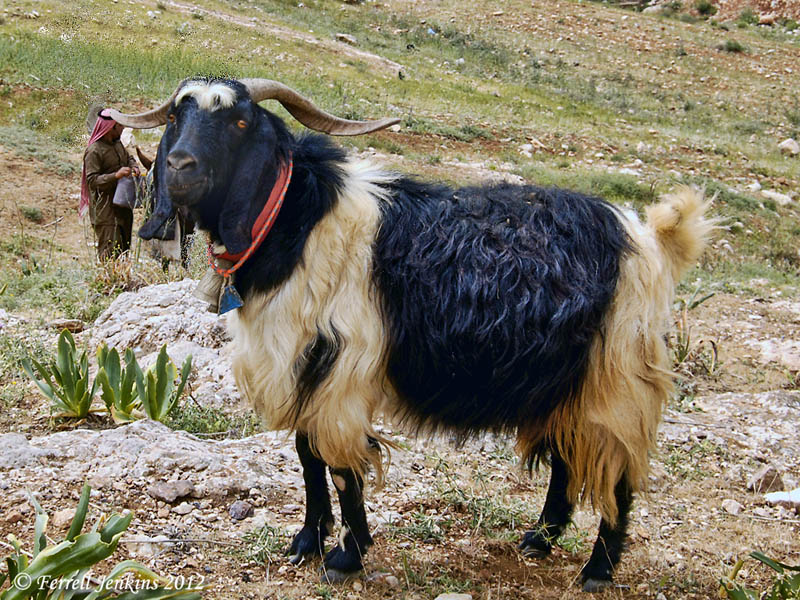
Then Daniel sees a male goat.

As I was considering, behold, a male goat came from the west across the face of the whole earth, without touching the ground. And the goat had a conspicuous horn between his eyes. (Daniel 8:5 ESV)

A male goat in Gilead (modern Jordan). Photo by Ferrell Jenkins.

A male goat in Gilead (modern Jordan). Photo by Ferrell Jenkins.

The interpretation is easier for us than it was for Daniel before Gabriel gave him an understanding of the vision (vs. 15-16).

As for the ram that you saw with the two horns, these are the kings of Media and Persia.  And the goat is the king of Greece. And the great horn between his eyes is the first king.  (Daniel 8:20-21 ESV)

It will not be difficult to find other uses for photos of the ram and the male goat in Bible lessons (e.g., Genesis 15:9; Leviticus 23:19; 16:5)

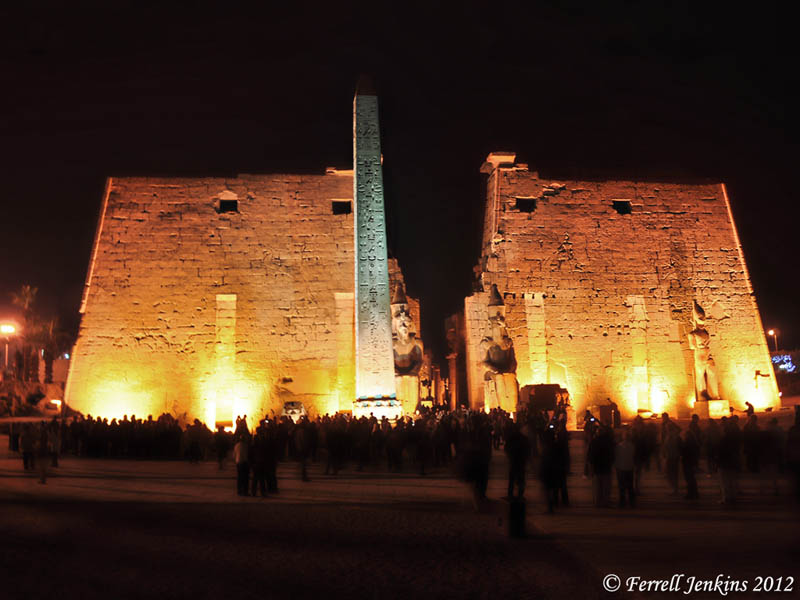
Luxor in Egypt has a long history

Luxor was known as Thebes in Old Testament times. Both Jeremiah and Ezekiel prophesied the Lord’s judgment of the city. Jeremiah says,

The LORD of hosts, the God of Israel, says, ‘Behold, I am going to punish Amon of Thebes, and Pharaoh, and Egypt along with her gods and her kings, even Pharaoh and those who trust in him’” (Jeremiah 46:25; see also Ezekiel 30:14-16 NET).

A visit to the ruined and unoccupied temples of Karnak and Luxor, where Amon (or Amun) was worshiped as a great god, certainly convinces us of the fulfillment of this prophecy. Shortly after the time of Jeremiah (about 586 B.C.), Egypt and Thebes began to decline as a world power.

Luxor Temple facade at night. Photo by Ferrell Jenkins.

Luxor Temple facade at night. Photo by Ferrell Jenkins.

In 663 B.C. the Assyrian king Ashurbanipal had already conquered Thebes (Hebrew, No Amon). The prophet Nahum, in prophesying the fall of Nineveh, calls attention to this event (3:8ff.).

Jeremiah and Ezekiel prophesied during the Babylonian period of world dominance. Darius the Great (521-486 BC), who befriended the Judeans, helping them rebuild the temple in Jerusalem, depicted himself as a Pharaoh on a shrine door now displayed in the British Museum.

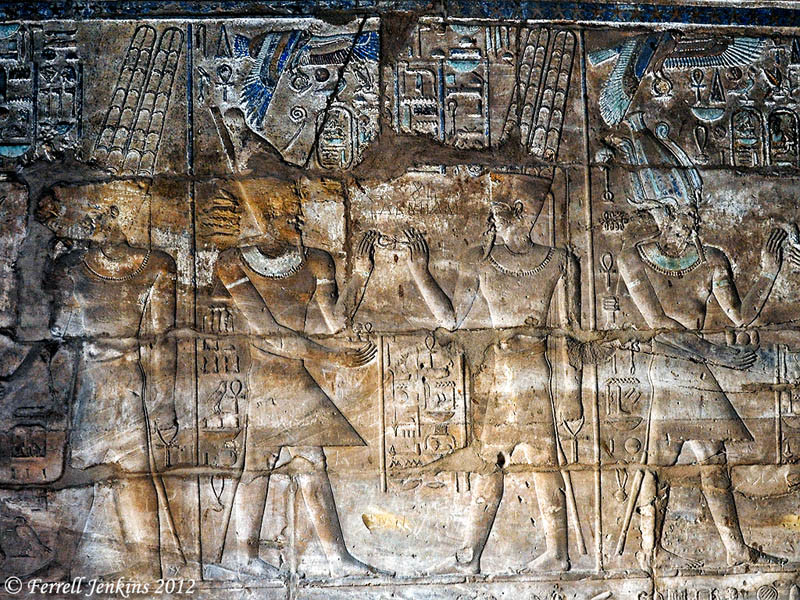
The young Alexander of Macedon came to Thebes in 336 BC and left reliefs of himself portrayed as a Pharaoh making offerings to the god Amon. Cassander rebuilt the city in 315 B.C. The later Ptolemaic kings who succeeded Alexander built temples to the gods at Edfu and Kom Ombo and regularly pictured themselves as worshiping the gods of Egypt. Likewise, the Roman emperors built temples beside the ancient temples of the Pharaoh. The temple of Philae has a small temple to the Roman Emperor Augustus ( 30 B.C. to A.D. 14) and another to Emperor Trajan (A.D. 98-117).

The photo below is from the chapel of Alexander the Great in the Karnak Temple. It was originally built by Thutmose III, and later decorated with these reliefs by Philip Arrhidaeus, the brother of Alexander the Great.

Relief of Alexander making an offering at Karnak. Photo by Ferrell Jenkins.

Relief of Alexander making an offering at Karnak. Photo by Ferrell Jenkins.

If a reader can provide more specific information about this relief, I would appreciate it.

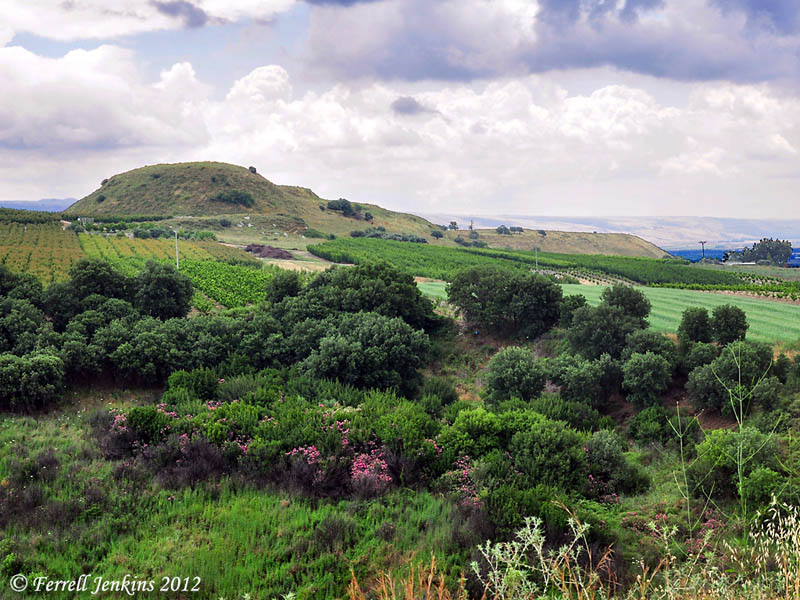
Photo of Abel Beth Maacah

If you would like to see a hi-res photo that I made of Abel Beth Maacah, take a look at the announcement (here) of the new excavation scheduled for this summer.

My recent posts about the important site in northern Israel may be seen here and here.

I suppose my name is just too hard to spell.

Abel Beth Maacah. Photo by Ferrell Jenkins.

Abel Beth Maacah. View to the east. Photo by Ferrell Jenkins.

Israel government plans to preserve Tel Shiloh

Haaretz announces that the “Israeli government allocates NIS 5 million to preserve Tel Shiloh in West Bank.” According to the article, a large tourist center is planned at the site.

This is a precedent-setting decision, since Israeli governments up to now have not allocated funds for renovation and preservation of the site, located within the area of the Binyamin Regional Council. The committee’s decision to embark on the project states that “Tel Shiloh is a unique heritage asset” for the Jewish people, and mention was made of the fact that work at the site will be backed by supplementary funds totaling some NIS 10 million, to be provided by private sources.

The full article may be read here. For our US readers, 5 million NIS [New Israeli Shekels] equals approximately $1,338,000.

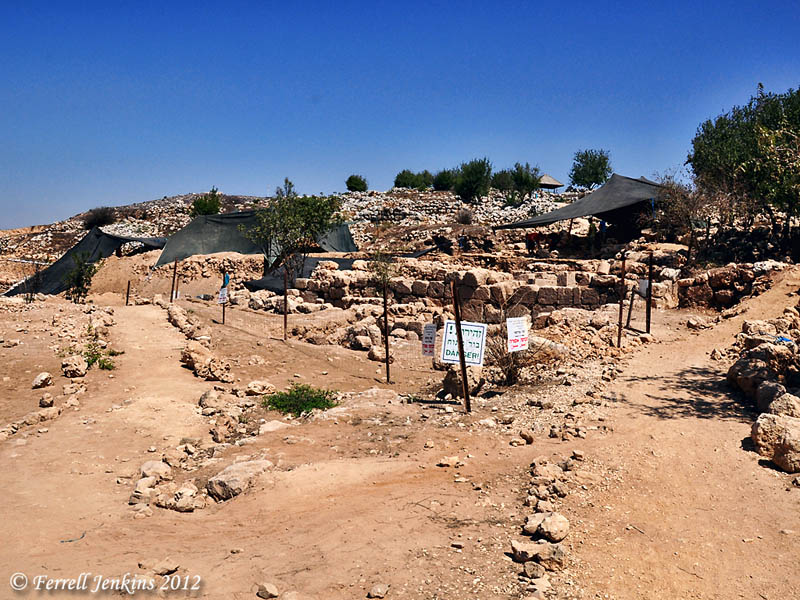
Some archaeological work was already underway last September when Leon Mauldin and I visited Tel Shiloh. The new excavation at the base of the mound dates to the Byzantine and Islamic period.

Tel Shiloh. New excavations at the base of the mound. Photo by Ferrell Jenkins.

Tel Shiloh. New excavations at the base of the mound. Photo by Ferrell Jenkins.

Shiloh is highly significant in Biblical history.

  • The tabernacle was set up at Shiloh, and it was here that the final division of the land among the tribes took place (Joshua 18).
  • Shiloh is located in specific terms.

However, there is an annual festival to the LORD in Shiloh, which is north of Bethel (east of the main road that goes up from Bethel to Shechem) and south of Lebonah.” (Judges 21:19 NET)

  • The Israelites took the ark of the covenant to the battle field near the coastal plain (1 Samuel 4). The ark never returned to Shiloh.
  • Shiloh was the home of Samuel (1 Samuel 1-3).

More info about Shiloh, with earlier photos, may be seen here.

HT: Joseph Lauer

Neil MacGregor: 2600 years of history in one object

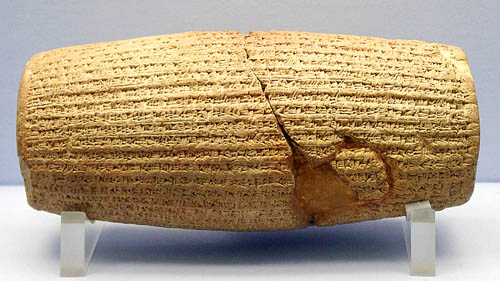
A friend just forwarded a link to a fascinating talk by Neil MacGregor, Director of the British Museum, about the Cyrus Cylinder. MacGregor took the Cyrus Cylinder from the British Museum to Iran when it was loan to the museum in Tehran.

What I learned was the use made of the Cyrus Cylinder by the Jews at the time of the Balfour Declaration, and the use made of it by the Shah of Iran.

MacGregor speaks of the Cyrus Cylinder as a “major player in the politics of the Middle East.”

Follow this link. The film is about 20 minutes old.

Now in the first year of Cyrus king of Persia, that the word of the LORD by the mouth of Jeremiah might be fulfilled, the LORD stirred up the spirit of Cyrus king of Persia, so that he made a proclamation throughout all his kingdom and also put it in writing:  “Thus says Cyrus king of Persia, ‘The LORD, the God of heaven, has given me all the kingdoms of the earth, and he has charged me to build him a house at Jerusalem, which is in Judah. Whoever is among you of all his people, may the LORD his God be with him. Let him go up.'” (2 Chronicles 36:22-23 ESV)

The Cyrus Cylinder in the British Museum. Photo by Ferrell Jenkins.

The Cyrus Cylinder in the British Museum. Photo by Ferrell Jenkins.

Check some of our previous links to the Cyrus Cylinder here and here. Use the search box to locate others.

Great deal for Logos (or Libronix) users

Logos has a feature called Community Pricing. It works like this. A book (or set) is chosen for publication. Interested persons are asked to place a bid on the completed digital publication. When there are enough bids to pay for publication the book is published. After the initial publication, the price goes up. I have purchased many Logos publication using Community Pricing and Pre-Publication Specials.

To use the Community Pricing or Pre-Pub specials you must already have Logos (or Libronix) on your computer. You may purchase a base package from Logos, or buy a relatively inexpensive set of books from someone like Rejoice Christian Software. I suggestion you buy something like the  Baker New Testament Commentary ($50 here), the Norman Geisler Apologetics CD-Rom Library ($25 here), or one of the other great specials they offer.

Back to the Community Pricing. The Travels through Bible Lands Collection (15 vols.) is now available for $15 (and it might go lower if more people purchase before noon Friday). I bid $20 several months ago. Just saved $5.

Travel through Bible Lands collection. Only in digital format.

Travel through Bible Lands collection. Only in digital format.

Here is some info about the set of nearly 7,000 pages. Just the four volumes by Tristram and Layard are worth far more than the asking price. The works are all old, but sometimes old is good.

The Dead Sea. Bethlehem. The Sea of Galilee. Jericho. Babylon. Cairo. These are but a few of the places visited by these courageous writers in the Travels through the Bible Lands Collection (15 Vols.). During the turn of the nineteenth century, traveling to and across the Holy Land was a dangerous and arduous journey for a Westerner. These diverse explorers—missionaries, writers, cartographers, theologians, ethnographers, diplomats, archeologists—risk the danger to trek the deserts between Egypt and Turkey, survey the caves of the Dead Sea, dig in the dirt of Babylon, fight disease in Beirut, spread the gospel in Turkey, and stand in awe of the pyramids of Egypt.

These fifteen volumes embody some of the best travel writing of the nineteenth century. After two failed expeditions, Henry Baker Tristram finally gets his chance to explore the east shore of the Dead Sea with the help of a prominent sheik and his armed men. Charles Warner chronicles his winter-long voyage through Egypt, culminating in an unforgettable Christmas spent on the Nile River. Austen Henry Layard and his team survive a perilous journey to The Holy Land, and make historical discoveries at the ruins of Nineveh and Babylon for their efforts. Ella Sykes, exploring the alleyways of Tehran and the beauty of the Indian desert, becomes one of the first European women to travel across Persia. William Wittman, a British surgeon, battles unfamiliar diseases as he treats patients from Turkey to Egypt on his long expedition with the British Army.

Each volume in this collection is rich with Scriptural landmarks, highlighting some of the most significant places from the Bible. Full of adventure and inspiration, Travels through Bible Lands Collection (15 Vols.) is a fascinating window into history that is perfect for any Logos collection.

Logos is also giving away a free book each month. The free one for February is The Works of B. B. Warfield, Vol. 1: Revelation and Inspiration.

To check out either offer, just go to Logos.com, and then click on the appropriate tab.

Those who ride white female donkeys

Deborah was a prophetess who judged Israel (Judges 4:4). In the Song of Deborah, the prophetess describes the conditions in the country before she arrived on the scene.

Caravans had ceased. Travelers kept to the side roads. There were no warriors in Israel till Deborah arose. She describes herself “as a mother in Israel” (Judges 5:7). She cared for and nurtured the nation just as a mother cares for and nurtures her own child. Under her leadership warriors arose and conditions improved.

6 “In the days of Shamgar son of Anath,
in the days of Jael, the caravans had ceased,
the travelers, they kept to the byways.
7 The warriors ceased;
they failed to appear in Israel;
until I, Deborah, arose;
I arose as a mother in Israel.
8 God chose new leaders,
then war was at the gates;
a small shield for a spear was not seen
among forty thousand in Israel.
9 My heart goes out to the commanders of Israel,
those offering themselves willingly among the people;
bless Yahweh!
10 The riders of white female donkeys,
those sitting on saddle blankets,
and those going on the way, talk about it!
11 At the sound of those dividing the sheep
among the watering places,
there they will recount the righteous deeds of Yahweh,
the righteous deeds for his warriors in Israel.
Then the people of Yahweh went down to the gates.
12 “Wake up, wake up, Deborah!
Wake up, wake up, sing a song!
Get up, Barak!
Take captive your captives, O son of Abinoam.  (Judges 5:6-12, The Lexham English Bible)

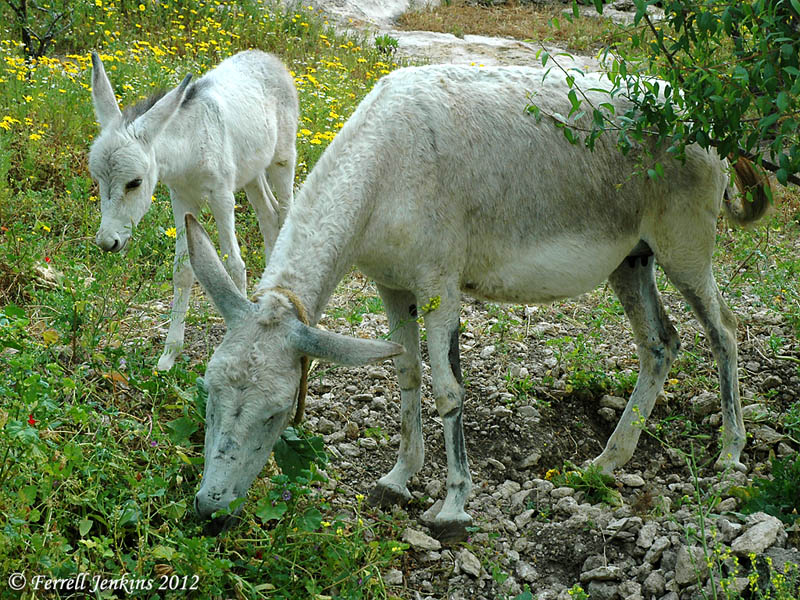
Verse 10 caught my attention. Deborah mentioned the riders of “white female donkeys” who sat on saddle blankets. I take it that these were the more well to do individuals.

Donkey and colt at Nazareth Village. Photo by Ferrell Jenkins.

Donkey and colt at Nazareth Village. Photo by Ferrell Jenkins.

The Hebrew word used for white is defined in several lexicons as “tawny.” The donkey being described by Deborah might look more like the one below.

Donkey near Nebi Samwil and Gibeon. Photo by Ferrell Jenkins.

Donkey between Nebi Samwil and Gibeon. Photo by Ferrell Jenkins.

Abel Beth Maacah excavation announced

Azusa Pacific University announced the first archaeological excavation of Abel Beth Maacah (Tel Abil; Abil al-Qamh) in northern Israel. The site is located just a few miles south of the border with Lebanon. The mound overlooks the Beka Valley to the east, with Mount Hermon in the distance.

Abel Beth Maacah. View to the east. Photo by Ferrell Jenkins.

Abel Beth Maacah. View to the east. Photo by Ferrell Jenkins.

The dates suggested in the following announcement seems very short (May 27-31).

This spring, Azusa Pacific University (APU) embarks on an exciting joint expedition with the Hebrew University of Israel to oversee an archeological dig at Abel Beth Maacah, a site of historical interest long envied by the world’s archeologists.

To date, the mound has not been excavated. Robert Mullins, Ph.D., associate professor of biblical studies at APU, leads the team along with Nava Panitz-Cohen and Ruhama Bonfil, faculty at the Hebrew University. On Jan. 25—26, 2012, team members plan to conduct an initial survey of the site in preparation for the May 27—31 excavation.

“I can’t overstate the huge potential of this project,” said Mullins. “First, it is an honor to partner with Israel’s oldest and most prestigious university. Given the site’s connection with the period of David and later Kings of Israel, the dig will draw worldwide interest. We can potentially solve questions regarding the nature of Israel’s ties with neighboring Phoenicia and Syria, as well as documenting through the destruction levels the various Aramean [Syrian] and Assyrian military campaigns mentioned in the Bible and other ancient records.”

The complete announcement is available here. You may observe that (a poor quality image of) one of my photos has been used in the announcement, but the copyright notice and name have been cut off. Hopefully this will be corrected in future releases.

The wise woman of Abel Beth Maacah describes the city as being “a mother in Israel” (2 Samuel 20:19).

We have written about the importance of Abel Beth Maacah here and here.

HT: Bible Places Blog; HolyLandPhotos’ Blog.