Category Archives: Bible Lands

Sunset from En Gev on the Sea of Galilee

Travelers to the Sea of Galilee are always delighted to get a sunrise photo from Tiberias. If you travel around the lake to the eastern shore in the late afternoon you might see two things. Because the winds from the Mediterranean come from the north east you might see the stormy waves on the sea. And you might see a beautiful sunset.

The photo below is made from Kibbutz En Gev. The small village, home to some of the fishing and touring boats that ply the Sea of Galilee, is located in the shadow of the impressive mound of Hippos (Susita).

Sunset from En Gev. Photo by Ferrell Jenkins.

Sunset from En Gev. Photo by Ferrell Jenkins.

The harbor of Hippos (Susita) is located immediately south of En Gev. It is one of 15 or more ancient harbors now known to have existed in the time of Jesus.

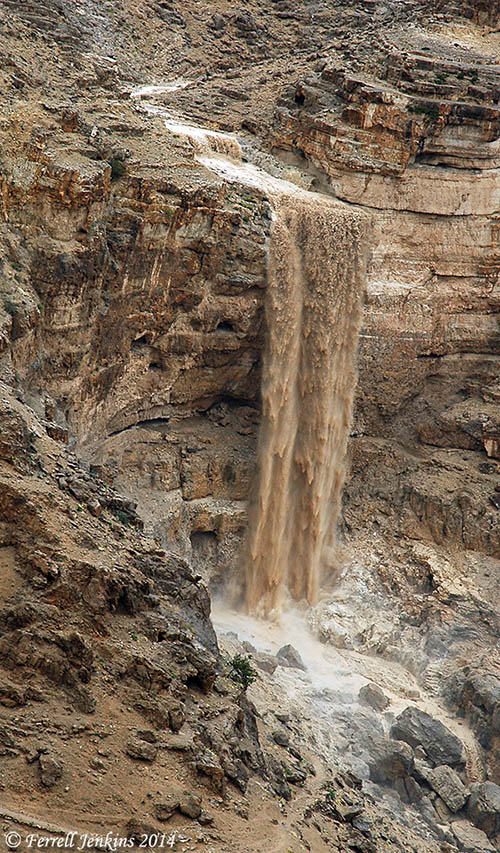
Heavy rains bring flooding at Qumran

Jack Sasson, the Agade list, passes along a video about heavy rains Sunday in the area of Qumran on the shore of the Dead Sea in the Wilderness of Judea. (I think the rain was mostly in the Judean mountains.)

The video by אביחי שורשן is posted on YouTube.

Qumran is where the Dead Sea Scrolls were found in 1947.

This video reminds me of the fortunate experience I had in April 2006 when strong rains in the central mountain range caused floods in the wilderness near Saint George Monastery on Wadi Qelt. Read about it, and see more photos, here.

Floods in the desert of Judea overlooking Wadi Qelt at St. George Monastery. Photo by Ferrell Jenkins.

Floods in the Judea wilderness near St. George Monastery. Photo by Ferrell Jenkins.

Babylon – index of articles

The Babylonian Empire was relatively short lived (626–539 B.C.), but it played a large role in biblical history. We have written about all of the Babylonian kings mentioned in the Bible. In this post I am pulling together an index collection of these articles to make it easy for one studying about the Babylonian captivity to locate all of them in one convenient place.

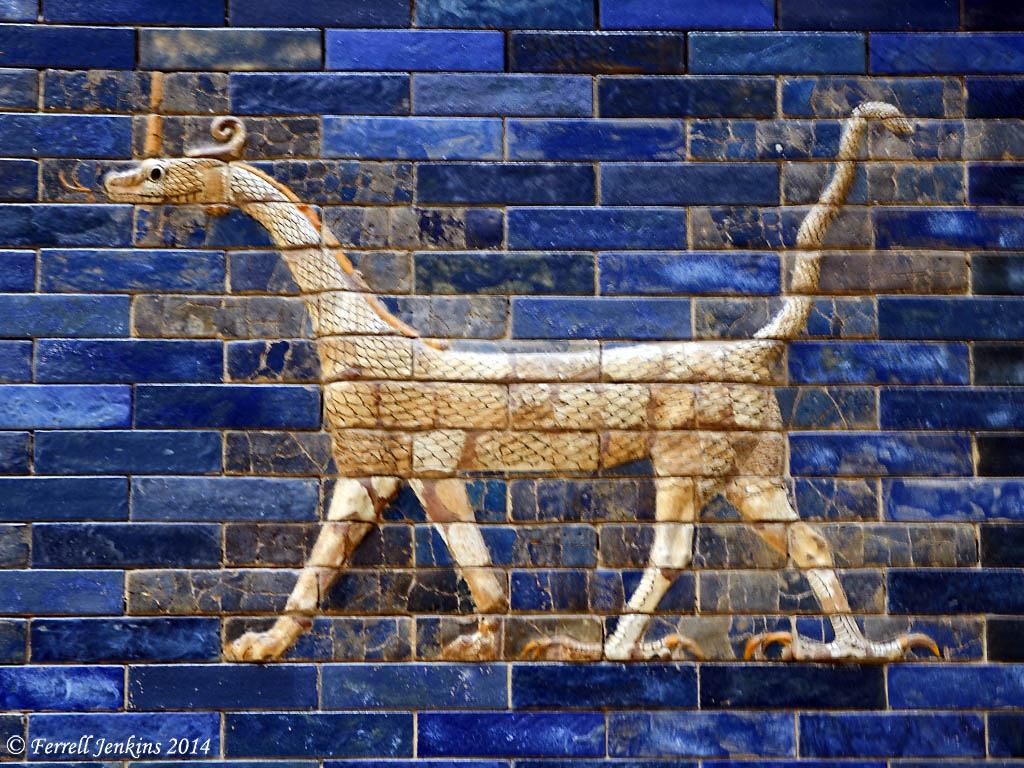
Dragon made of chrome brick on the Ishtar Gate. (Museum of the Ancient Near East, Berlin). The dragon is a composite creature with the head of a fire-spewing dragon, body and tail of a serpent, front feet of a feline, and back feet of a bird. This provides a good illustration of the apocalyptic language found in the Old Testament prophets. Photo by Ferrell Jenkins.

The dragon made of chrome brick on the Ishtar Gate from ancient Babylon was an emblem of Marduk (Museum of the Ancient Near East, Berlin). The dragon is a composite creature with the head of a fire-spewing dragon, body and tail of a serpent, front feet of a feline, and back feet of a bird. This provides a good illustration of the apocalyptic imagery found in the Old Testament prophets and the book of Revelation. Photo by Ferrell Jenkins.

The articles below, especially those with an * after the title, are considered minor references. They still might provide some helpful material and photos for the Bible student and teacher.

I trust this list will be helpful to students and teachers alike.

In the future, when I write something about Babylon I will try to remember to include a link in this index. I would appreciate learning if you find this index helpful.

Eric Cline – 1177 BC – Live Stream

The Explorers Club — New York City
Public Lecture Series featuring Eric Cline

Event open to: Public — Date: November 03, 2014
Time: 6:00 pm Reception, 7:00 pm Lecture
Location: NYC Headquarters, 46 E 70th Street, New York, NY, 10021

1177 BC: The Year Civilization Collapsed

This event will be streamed live. Please visit our Live Stream page here at 7pm on the evening of the event to view the lecture for free.

Here is a brief summary of the lecture provided by The Explorers Club.

For more than three hundred years during the Late Bronze Age, from about 1500 BC to 1200 BC, the Mediterranean region played host to a complex international world in which Egyptians, Mycenaeans, Minoans, Hittites, Assyrians, Babylonians, Cypriots, and Canaanites all interacted, creating a cosmopolitan and globalized world-system such as has only rarely been seen before the current day. It may have been this very internationalism that contributed to the apocalyptic disaster that ended the Bronze Age. When the end came, as it did after centuries of cultural and technological evolution, the civilized and international world of the Mediterranean regions came to a dramatic halt in a vast area stretching from Greece and Italy in the west to Egypt, Canaan, and Mesopotamia in the east. Large empires and small kingdoms, that had taken centuries to evolve, collapsed rapidly. With their end came the world’s first recorded Dark Ages.

It was not until centuries later that a new cultural renaissance emerged in Greece and the other affected areas, setting the stage for the evolution of Western society as we know it today. Blame for the end of the Late Bronze Age is usually laid squarely at the feet of the so-called Sea Peoples, known to us from the records of the Egyptian pharaohs Merneptah and Ramses III. However, as was the case with the fall of the Roman Empire, the end of the Bronze Age empires in this region was not the result of a single invasion, but of multiple causes. The Sea Peoples may well have been responsible for some of the destruction that occurred at the end of the Late Bronze Age, but it is much more likely that a concatenation of events, both human and natural — including earthquake storms, droughts, rebellions, and systems collapse — coalesced to create a “perfect storm” that brought the age to an end.

For more information about Dr. Cline, see here.

HT: Joseph I. Lauer

Index to Olives and Olive Trees

The olive tree was one of the most important plants in Bible times, and it still is today throughout portions of Europe and the Middle East.

The wood of the olive tree was used in some of the furnishings of the temple (1 Kings 6:23-33).

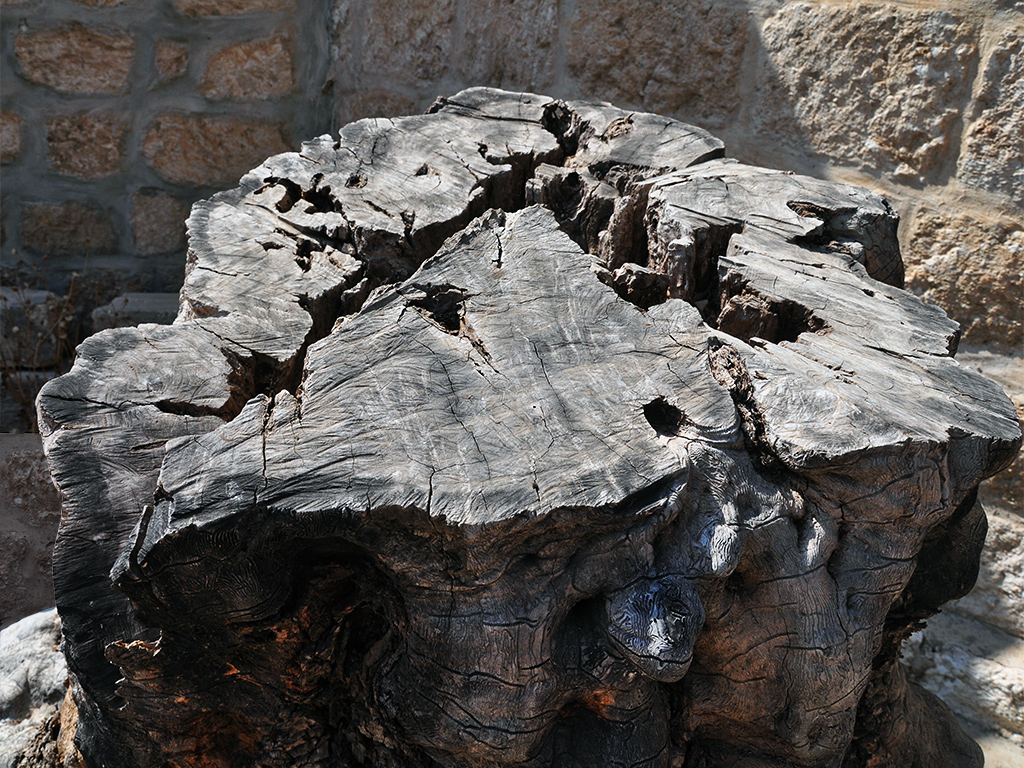
Stump of an olive tree at Beit Jimal. Photo by Ferrell Jenkins.

Stump of an olive tree at Beit Jamal (? En-Gannim). Photo by Ferrell Jenkins.

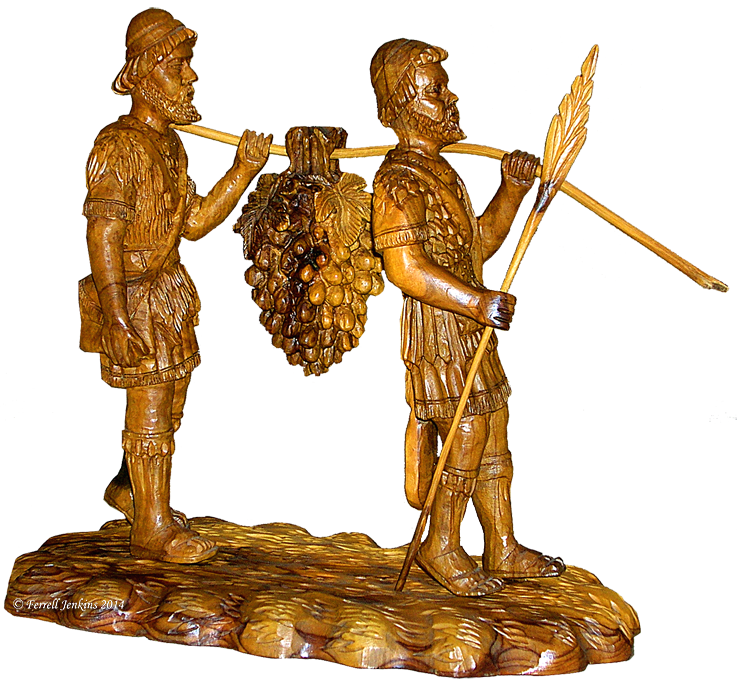
Wood from dead or destroyed olive trees is often turned into carvings and souvenirs such as this carving of the faithful spies (Caleb and Joshua; Numbers 14:30) that I secured in Bethlehem many years ago.

Then they came to the valley of Eshcol and from there cut down a branch with a single cluster of grapes; and they carried it on a pole between two men, with some of the pomegranates and the figs. That place was called the valley of Eshcol, because of the cluster which the sons of Israel cut down from there. (Numbers 13:23-24 NAU)

Olive wood carving of the faithful spies. Photo by Ferrell Jenkins.

Olive wood carving of the faithful spies. Photo by Ferrell Jenkins.

Index to Articles About the Olive Tree and Olives

Related minor posts about olives.

When I add other posts pertaining to olives I will try to remember to add them to this index.

Paul traveled through Amphipolis

When Paul and his companions went from Troas into Macedonia on his second preaching journey, they went ashore at Neapolis (modern Kavalla, Greece), and continued to Philippi. Luke remained at Philippi while Paul, Silas and Timothy followed the Egnatian Way to Thessalonica. There is no indication of any preaching done in Amphipolis and Appollonia. In fact, the reference to the cities barely attracts notice.

Now when they had passed through Amphipolis and Apollonia, they came to Thessalonica, where there was a synagogue of the Jews. (Act 17:1 ESV)

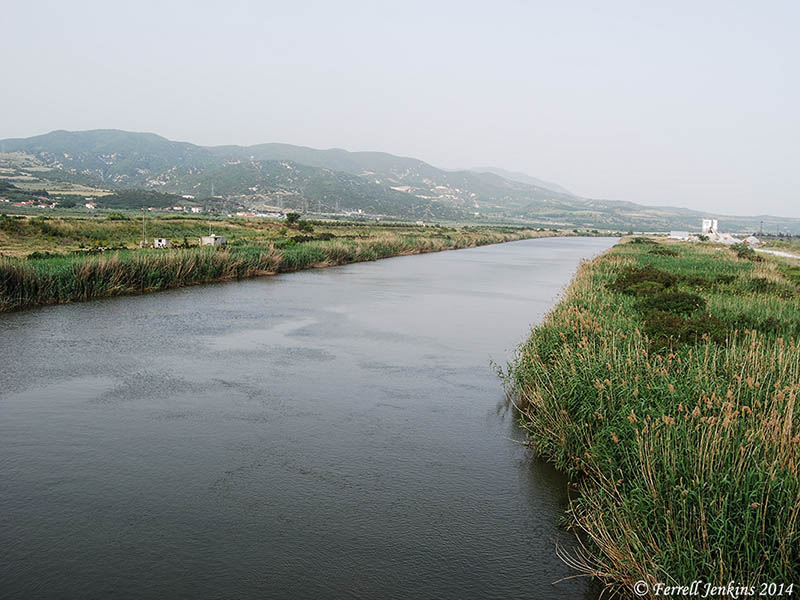
Amphipolis was situated about 30 miles west of Philippi on the Via Egnatia. The River Strymon runs past Amphipolis and continues for about 3 1/2 miles south where it flows into the Aegean Sea.

The River Strymon at Amphipolis. Photo by Ferrell Jenkins.

The River Strymon at Amphipolis. Photo by Ferrell Jenkins.

K. L. McKay, in an article in The New Bible Dictionary, describes the city briefly:

Prized by the Athenians and Macedonians as the key both to the gold, silver and timber of Mt Pangaeus and also to the control of the Dardanelles, it became under the Romans a free town and the capital of the first district of Macedonia. Amphipolis is about 50 km WSW of Philippi on the Via Egnatia, a great Roman highway, and Paul passed through it on his way to Thessalonica (Acts 17:1).

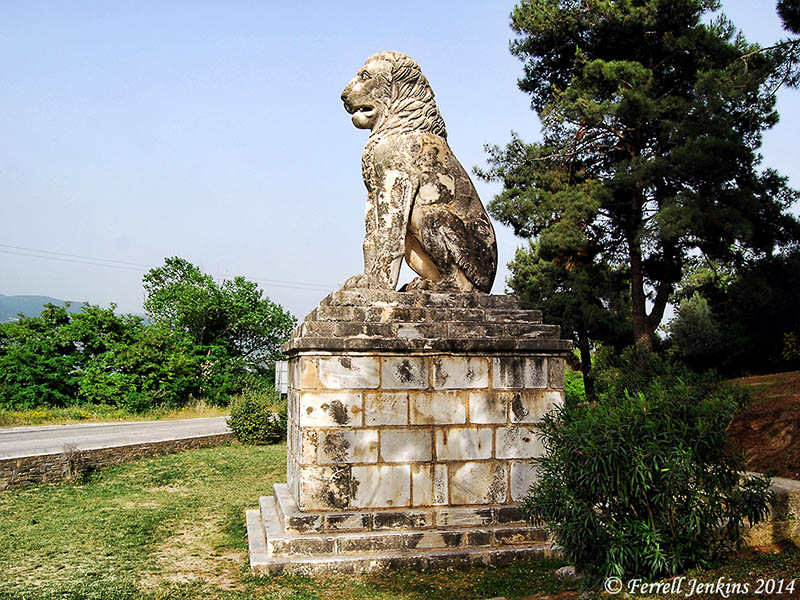
The city is somewhat difficult to reach and there is little to be seen. The most impressive ruin is a reconstructed lion dating to the 4th century B.C. standing along the highway.

The Lion of Amphipolis from the 4th century B.C. Photo by Ferrell Jenkins.

The Lion of Amphipolis from the 4th century B.C. Photo by Ferrell Jenkins.

New excavations recently have uncovered what may turn out to be an impressive tomb from the 4th century B.C.  More about that in a post to follow.

Uruk (Erech) in the Pergamum Museum

The Pergamon Museum’s Ancient Near Eastern Department (Vorderasiatisches Museum) has a collection of artifacts from Uruk, now know as modern Warka in Iraq. German excavators began work at Uruk in November 1912. An English sign with the display of artifacts explains the significance of the city.

In the Old Testament, Uruk is mentioned under the name Erech, along with Babylon and other important ancient cities. But written references to Uruk extend much further into the past. The city plays a role in the Gilgamesh epic which can be traced back to the second half of the 3rd millennium BC. The legendary Sumerian king Gilgamesh whose exploits are the subject of the poem is credited with building the wall that surrounded the city. A number of objects uncovered at Uruk before 1939 came to Berlin and the museum with the division of finds following on the excavations. Together with artifacts from Babylon and Assur, they document the material legacy of ancient oriental cultures.

Uruk was the major center for the worship of the goddess Inana/Ishtar. The first photo shows a portion from the façade of the Inanna Temple built by the Kassite ruler Kara-indash at Uruk about 1413 B.C. The museum explains,

Standing male and female deities alternate in the niches. Life-giving water pours forth onto the earth from the vessels in their hands. The hump-like symbols on the projecting elements of the niched façade and on the garments of the male divinities refer to the mountainous region where the Kassites originated. An inscription on the bricks names the Kassite ruler Kara-indash as the person who commissioned the structure.

Portion of the façade of the Inanna/Ishtar Temple at Warka (Uruk/Erech). Photo by Ferrell Jenkins.

Portion of the façade of the Inanna/Ishtar Temple at Warka (Uruk/Erech). Display in the Pergamum Museum, Berlin. Photo by Ferrell Jenkins.

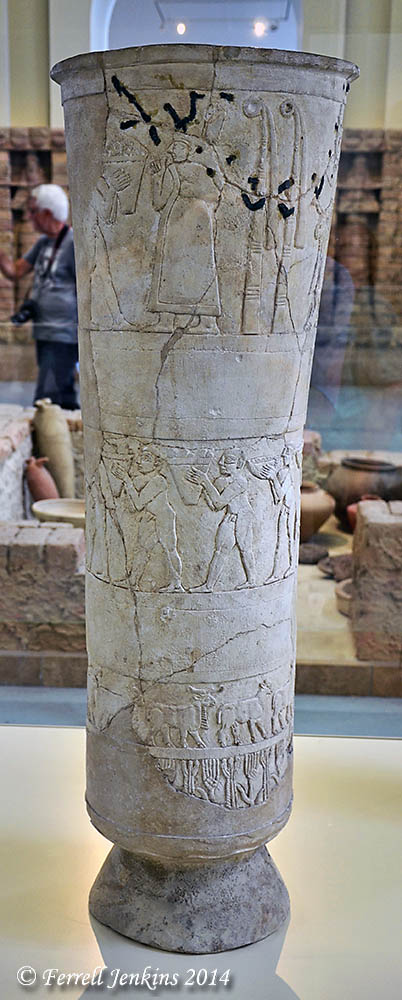
The next photo shows a reproduction of a limestone cult vessel from Uruk.

Stone cult vessel from Uruk. Photo by Ferrell Jenkins.

Stone cult vessel from Uruk. Photo by Ferrell Jenkins.

The Museum explains the design on the vessel.

The limestone vase from the Eanna Temple precinct at Uruk is one of the most impressive works of pictorial art produced in the Uruk Period. The arrangement of the motifs reflects the Sumerian world view, with life-giving water flowing forth in the lowest zone to sustain the plant and animal world above. The representations continue with a procession of nude men bearing votive offerings for the goddess Inanna which culminates in the upper register.

The New International Dictionary of Biblical Archaeology points out,

There are no direct references to Sumer in the Bible, although it corresponds to the “land of Shinar” mentioned eight times in the OT.

Amraphel is designated as the king of Shinar (Genesus 14:1). Notice a couple of other references.

The beginning of his [Nimrod] kingdom was Babel, Erech, Accad, and Calneh, in the land of Shinar. (Genesis 10:10 ESV)

And as people migrated from the east, they found a plain in the land of Shinar and settled there. (Genesis 11:2 ESV)

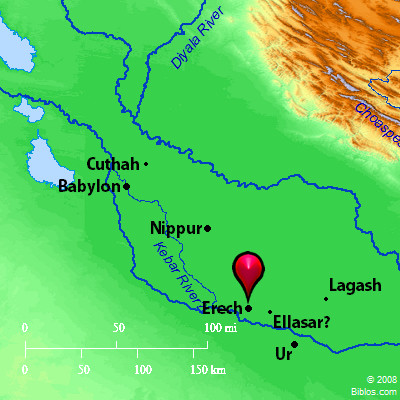
This map of southern Mesopotamia (modern Iraq) shows the location of Erech (Uruk) north of traditional Ur.

This map shows the location of Erech (Warka). Map: biblos.com.

This map shows the location of Erech (Warka in southern Iraq). Map: biblos.com.

Book on the origin of Israel available

Daniel I. Block’s book, Israel: Ancient Kingdom or Late Invention?, is available in Kindle format today for $2.99. The retail price of the hardback is $28.

The publisher (B&H) of the 2008 book describes it as

a collection of essays responding to the radical claims that Israel and its history actually began following the Babylonian exile, and that the history of Israel we read about in the Bible is a fictionalized account.

Contributors are leading Bible and archaeology scholars who bring extra-biblical evidence to bear for the historicity of the Old Testament and provide case studies of new work being done in the field of archaeology.

The book includes the following essays dealing with some of the current discussions in Biblical studies.

  • Israel – Ancient Kingdom or Late Invention? – Daniel I. Block
  • The Value and Limitations of the Bible and Archaeology – Alan R. Millard
  • Contextual Criticism as a Framework for Biblical Interpretation – John M. Monson
  • North-West Semitic Inscriptions and Biblical Interpretation – Joel Drinkard
  • From Joseph to David: Mari and Israelite Pastoral Traditions – Daniel E. Fleming
  • Major Geographical Issues in the Accounts of the Exodus – James K. Hoffmeier
  • Slavery and Slave Laws in Ancient Hatti and Israel – Harry A. Hoffner Jr.
  • Were the Israelites Really Canaanites? – Alan R. Millard
  • Syria and the Bible: The Luwian Connection – Richard S. Hess
  • David and Solomon’s Jemsalem: Do the Bible and Archaeology Disagree? – Alan R. Millard
  • Who Were Israel’s Transjordanian Neighbors and How Did They Differ? – Gerald L. Mattingly
  • Shalmaneser III and Israel – K. Lawson Younger Jr.
  • Did the Israelites Really Learn Their Monotheism in Babylon? Simon J. Shenvin
  • Did Persian Zoroastrianism Influence Judaism? – Edwin M. Yamauchi
  • Interpreting the Bible as an Ancient Near Eastern Document – John H. Walton

Following the Blogs

Available today only in Kindle format: How We Got the Bible by Neil Lightfoot. This is not the only book you need on this subject, but it is a good beginning source.
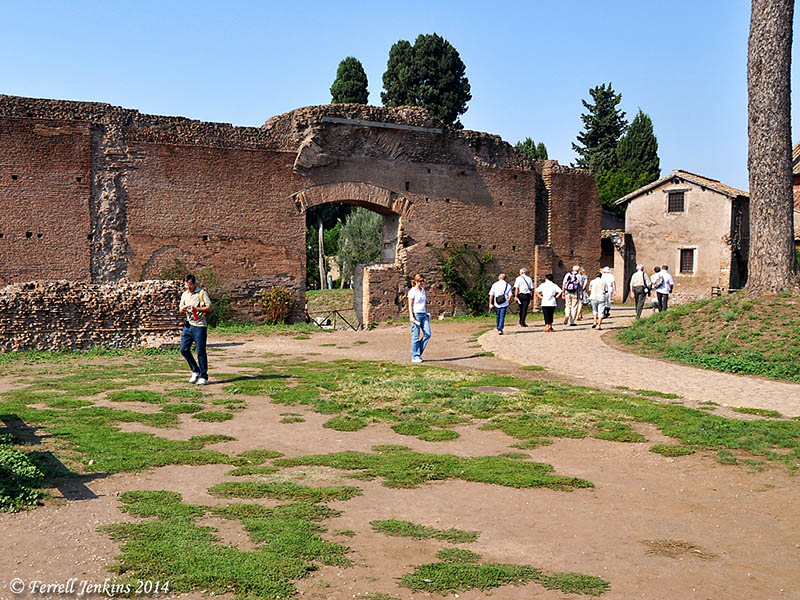
Todd Bolen’s Bible Places Blog is the best source for keeping up with news and recent materials related to Bible Places. I am a fan of the Weekend Roundup, with links to a variety of helpful materials. Today’s post reports that that rooms of Emperor Augustus on the Palatine Hill in Rome are now open to the public. Read here.

House of Augustus on the Palatine Hill, Rome. Photo by Ferrell Jenkins.

House of Augustus on the Palatine Hill, Rome. Photo by Ferrell Jenkins.

Charles Savelle provides a regular flow of links to helpful tools for serious Bible teachers and students at his BibleX (Bible Exposition). He recently pointed us to material on the Didache, The Dating of Deuteronomy and the Suzerain-Vassal Treaty Forms, and The Importance of Biblical Geography. I check this site regularly.

I enjoy following Bible Lands Explorer, the blog of Mark Ziese. Mark is a unique writer. His most recent post points us to a Brazilian newspaper for which he provided photos of the Jesus Trail. You may not be able to read the Portuguese newspaper, but there is a nice slide show of Mark’s photos.

Reading Acts. The blog by Phillip J. Long has some helpful articles for Bible students. Check some of these recent posts:

Ancient History Encyclopedia. This is a nice site including an encyclopedia that is primarily intended for high school level. Includes Index, Timeline, Maps, Photos, Videos, etc. Check the article on Roman Roads here.

ePlace. Research materials provided by Asbury Theological Seminary. Includes TREN collection of professional conference papers, dissertations, et al.

The Journal of Inductive Biblical Studies. This journal is built on the well-known work of Kuist, Traina, and others who wrote on Inductive Bible Study.

Daily Dose of Greek. Sign up for a 2-minute video Daily Dose of Greek by Rob Plumber, professor of Greek and New Testament at Southern Baptist Seminary.

Mark Hoffman, Biblical Studies and Technological Tools, recently posted two helpful lists of Greek lexical forms. Click here.

Resources to Help You Defend the Deity of Jesus. A list of resources by J. Warner Wallace, author of Cold Case Christianity.

HT: Brooks Cochran

Babylon’s Procession Street and Ishtar Gate

German archaeologists, under the direction of Robert Koldeway, excavated at ancient Babylon in Iraq, between 1899 and 1917. The Procession Street ran from the Ishtar Gate to the bridge over the Euphrates River. A 250 meter [820 feet] section of the street was excavated by the German expedition. Only a short section is reconstructed in the Museum in Berlin. The section here is 30 meters [98 feet] long and 8 meters [26 feet] wide. Original fragments were used in the reconstruction. The street was originally 20 to 24 meters [54-79 feet] wide. (See Fant & Reddish, Lost Treasures of the Bible, 199-205.)

The Procession Street from Babylon. Berlin. Photo by Ferrell Jenkins.

The Procession Street from Babylon. Berlin. Photo by Ferrell Jenkins.

The Ishtar Gate was constructed during the reign of Babylonian king Nebuchadnezzar (605-562 B.C.). All of these lions, bulls, and dragons were excavated from the mound of ancient Babylon, and eventually taken to Berlin in 1926. Even under the Communist government of East Germany this gate was preserved. I saw it several times before the Berlin Wall came down.

The Babylon Ishtar Gate. Berlin. Photo by Ferrell Jenkins.

The Babylon Ishtar Gate. Berlin. Photo by Ferrell Jenkins.

The Procession Street and Ishtar Gate are reconstructed in the Pergamum Museum in Berlin, but technically, this wing of the museum is called the Vorderasiatisches Museum (Museum of the Ancient Near East).

Babylon was once the greatest city of the world when the Neo-Babylonian Empire reigned supreme in the Ancient Near East (626-539 B.C.). The prophet Daniel was active in Babylon from 605 B.C. until after the fall of the city to the Persians (The prophecy of Daniel).  I can not imagine that he failed to see this gate.

Nebuchadnezzar was a megalomaniac. His pride is evident in the statement recorded by the prophet Daniel.

The king uttered these words: “Is this not the great Babylon that I have built for a royal residence by my own mighty strength and for my majestic honor?” (Daniel 4:30 NET Bible)