Category Archives: Archaeology

Conrad Schick — architect, explorer, model builder

Conrad Schick was born in Switzerland and first came to Jerusalem with a group of men who planned to teach the local young people vocational trades. This group soon disintegrated, and Schick eventually married Friederike Dubler, a German missionary.

Schick became well known as an architect and city planner. He also became involved with some of the late 19th century explorers. He surveyed significant parts of the Old City, and built models of the temple mount and other structures in Jerusalem to use in teaching.

Schick and his wife are buried in the Protestant Cemetery on Mount Zion.
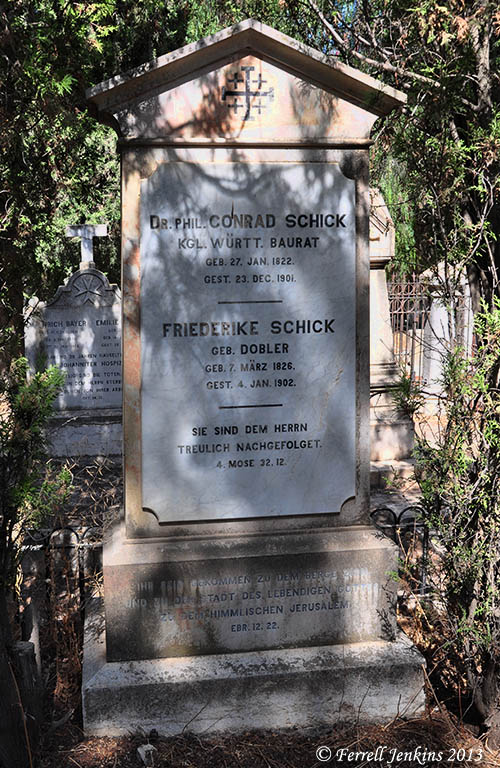
Grave marker for Conrad and Frederike Schick. Photo by Ferrell Jenkins.

Grave marker for Conrad and Frederike Schick. Photo by Ferrell Jenkins.

Epitaphs are often fascinating. This grave stone includes two Scriptures in German.

… for they have wholly followed the LORD (Numbers 32:12)

But you have come to Mount Zion and to the city of the living God, the heavenly Jerusalem … (Hebrews 12:22)

The short lane leading from Nablus Road to the Garden Tomb is named for Conrad Shick [Schick].
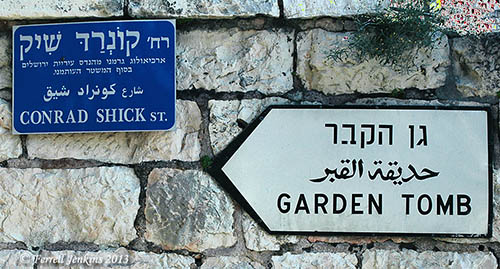
Conrad Schick Street leads to the Garden Tomb. Photo by Ferrell Jenkins.

Conrad Shick Street leads to the Garden Tomb. Photo by Ferrell Jenkins.

Tom Powers has prepared an article about Conrad Schick, and I have made use of it in this post. The entire paper is fascinating. See here.

There is also a page devoted to Schick here.

Special Note: If you have any interest in the American Colony, and other people buried in this cemetery, please take a look at the comments by Tom Powers (Outremer) following the two earlier posts about the Spaffords.
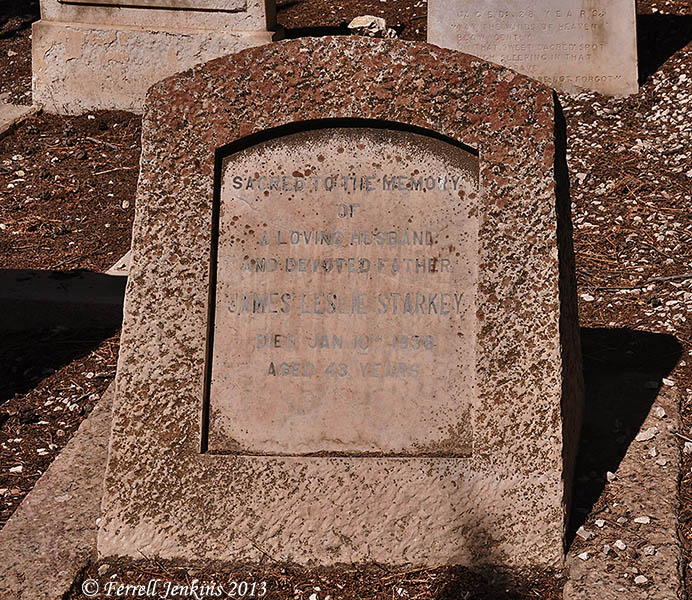
James Leslie Starkey, excavator of Lachish

James Leslie Starkey was born in London January 3, 1895. He became interested in ancient history by reading books such as Layard’s Nineveh and Its Remains. He took a course in Egyptology and came in contact with Flinders Petrie. Later he worked with Petrie in Egypt.

Starkey joined Petrie in the excavation at Tell Jemmeh, then at Tell el Far’ah (South) in southern Palestine, where he directed the dig during the final season.

In 1932 Starkey began his own dig at Tell ed-Duwer, identified as biblical Lachish. During his six years at the site, one of the more significant finds was the Lachish Letters which date to the period of the end of the Babylonian conquest of Judah, during the time of the prophet Jeremiah.

While on his way to Jerusalem in January 1938, for the opening of the new Palestine Archaeological (Rockefeller) Museum, Starkey was shot in an ambush.

Starkey was buried in the Protestant Cemetery on Mount Zion. Four years later the body of his former mentor, Flinders Petrie, was laid to rest a few yards away.

Tomb of James Leslie Starkey, excavator of Lachish. Photo by Ferrell Jenkins.

Tomb of James Leslie Starkey, excavator of Lachish. Photo by Ferrell Jenkins.

I found that information about Starkey is somewhat limited. Much of the info here has been gleaned from a page about Starkey on The Palestine Exploration Fund web site here. There you will see a photograph of Starkey with Petrie, and Olga Tufnell who spent twenty years to complete the four volumes of the Lachish Excavation Reports.

Herod the Great in the Israel Museum

Are you planning a visit to Jerusalem during the upcoming months? I suggest you visit the Israel Museum. There is much to see that is of importance to Bible students. We called attention to some of the archaeological artifacts several times.

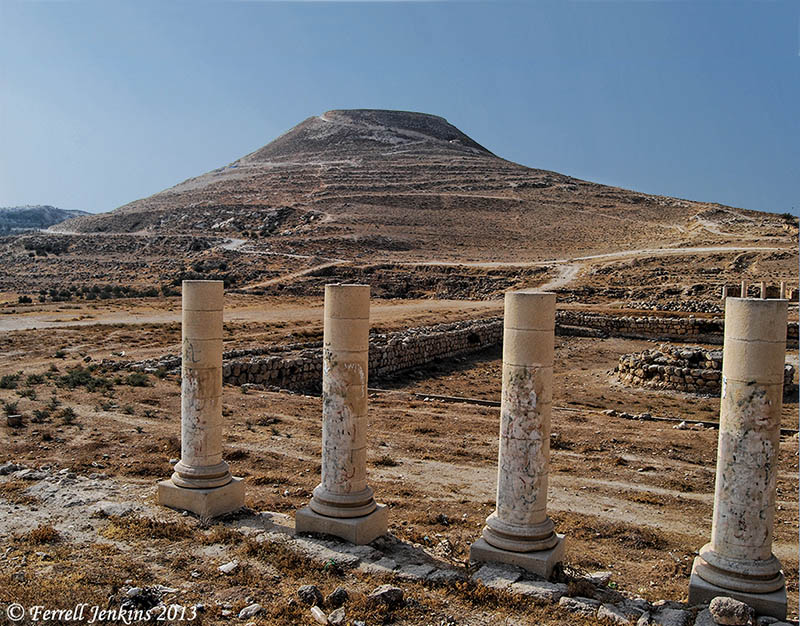
We have written about the Herodium here, here, here, here, and here (and perhaps a few other places) in this blog.

View of the Herodium toward the east. Photo by Ferrell Jenkins

View of the Herodium toward the east. Photo by Ferrell Jenkins

The Israel Museum recently opened a new exhibition called Herod the Great: The King’s Final Journey. The exhibition includes a reconstruction of the tomb and sarcophagus of the King from the Herodium. I suggest you begin by reading the article about the exhibition in The New York Times here.

Shmuel Browns, a tour guide in Israel, and a fellow-blogger, is quoted in the article. Please take a look at the beautiful photos and descriptions of the new exhibition by Browns.

Carl Rasmussen calls attention to the articles by Browns, and includes a nice photo of the large model of what Prof. Netzer thought the monumental tomb of Herod might have looked like here.

I’m looking forward to seeing this exhibition in a few weeks.

Some suggested reading…

Wayne Stiles has a nice blog in which he connects the Bible and its Lands to life. He has suggested five other blogs for his readers here. I am honored to be included in his list. I appreciate these introductory words.

Where biblical events took place are more than throwaway mentions in the pages of Scripture. Often, they have significant bearing on God’s participation in the lives of His people.

Unfortunately, because we’re unfamiliar with geography we often miss these nuggets. I have found a lot of help in several Holy Land blogs that open up the Bible’s lands to my understanding.

Take a look at his list here. How many of them do you read?

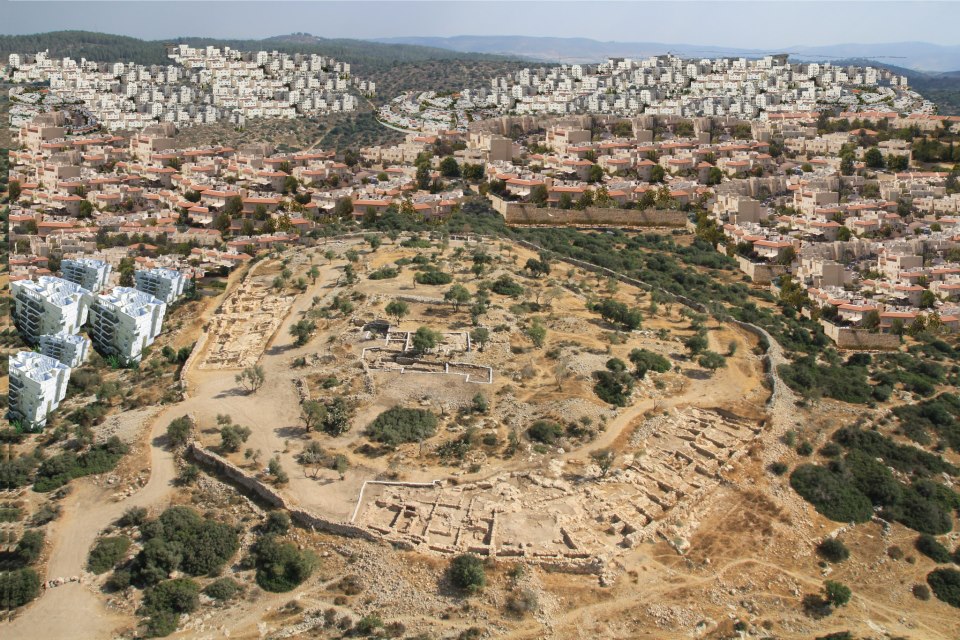
My friend and neighbor Luke Chandler has participated in the archaeological excavations at Khirbet Qeiyafa for at least three years. Qeiyafa is a city overlooking the Valley of Elah. Luke reported recently that a massive building program at the nearby town of Beit Shemesh would bring new residential buildings “no more than 20 meters from Qeiyafa’s western gate and wall.” At the present time the entire area from Qeiyafa eastward is without housing. The houses that have been drawn in show the proposed construction. Progress is sometimes good, but this is sad.

Proposed construction at Khirbet Qeiyafa.

The current plan for the expansion of Beit Shemesh. Some buildings are no more than 20 meters or so from the casemate wall and gate. The likelihood of damage to the site during and after construction would be significant. (Comment by Luke Chandler)

You can read Luke’s comments and see others photo here. Visit the Khirbet Qeiyafa: Save King David’s City Facebook page here. You will find more photos and diagrams.

The Great Pool at Gibeon

There are two references in the Bible to the pool of Gibeon. The first is in the account of a conflict between Abner and those aligned with King Saul, and Joab and the servants of David (2 Samuel).

Abner the son of Ner, and the servants of Ish-bosheth the son of Saul, went out from Mahanaim to Gibeon.  And Joab the son of Zeruiah and the servants of David went out and met them at the pool of Gibeon. And they sat down, the one on the one side of the pool, and the other on the other side of the pool.  (2 Samuel 2:12-13 ESV)

Arnold’s entry in The Anchor Yale Bible Dictionary says,

This “pool” undoubtedly refers to the impressive water system uncovered at el-Jib during recent archaeological excavations” [by Pritchard in the 1950s].

The pool had been constructed in the late 12th or early 13th century B.C. At first, it was thought to be a reservoir intended to hold water. Later it was learned that it served as a stairway leading to a source of water underneath the city.

After the destruction of Jerusalem by the Babylonians, the king of Babylon   made Gedaliah governor over the land. A rebellion led by a man named Ishmael killed Gedaliah at Mizpah (Jeremiah 41). The followers of Gedaliah and the men of Ishmael met at the great pool in Gibeon.

they took all their men and went to fight against Ishmael the son of Nethaniah. They came upon him at the great pool that is in Gibeon. (Jeremiah 41:12 ESV)

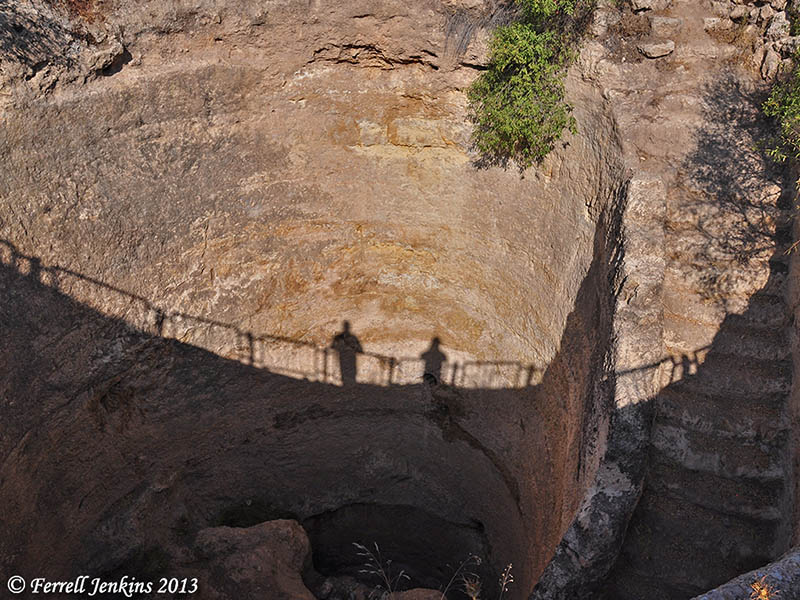
The great pool of Gibeon, cut from rock, measures 37 feet in diameter and 35 feet deep. Photo by Ferrell Jenkins.

The great pool of Gibeon, cut from rock, measures 37 feet in diameter and 35 feet deep. The steps led to the source of water located underneath. Photo by Ferrell Jenkins, whose shadow is visible, along with Leon Mauldin, standing at ground level.

For more information see James B. Pritchard’s Gibeon Where the Sun Stood Still (1962). For a ground level photo of the pool, see here.

Nabatean town of Avdat restored

Avdat is located in the Wilderness of Zin, about 50 miles south of Beersheba. The beautiful ruins were vandalized about three years ago. Six different Israeli ministries invested nearly $2 million to repair the damage. The city has been designated by UNESCO as a world’s cultural heritage site.

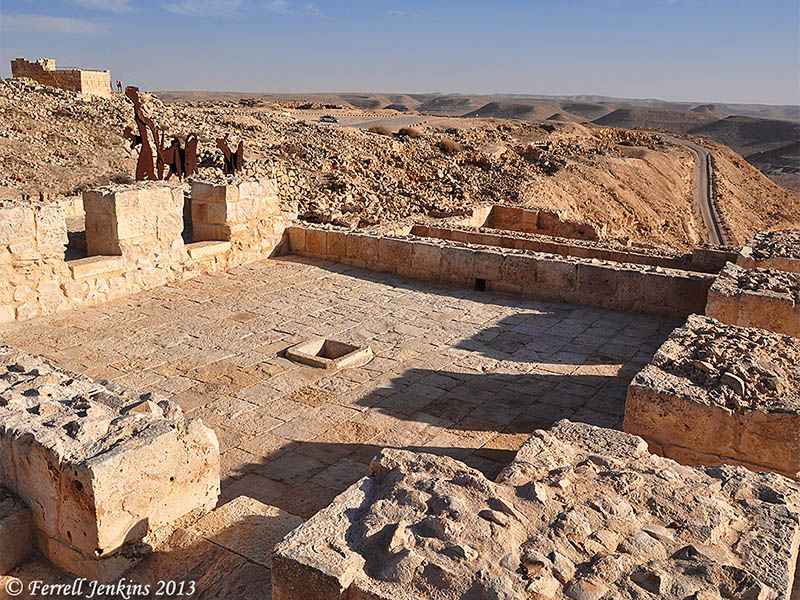
There are four wine presses at Avdat. The one I am showing below is a large Byzantine wine press.

Byzantine wine press at Avdat. Photo by Ferrell Jenkins.

Byzantine wine press at Avdat. Photo by Ferrell Jenkins.

Murphy-O’Connor describes the winepress.

The winepress has a square treading area into which grapes were fed from small storage rooms on three sides. On the fourth side is a round pit into which the grape juice flowed via a channel under the treading floor from a central sump. – The Holy Land, 201.

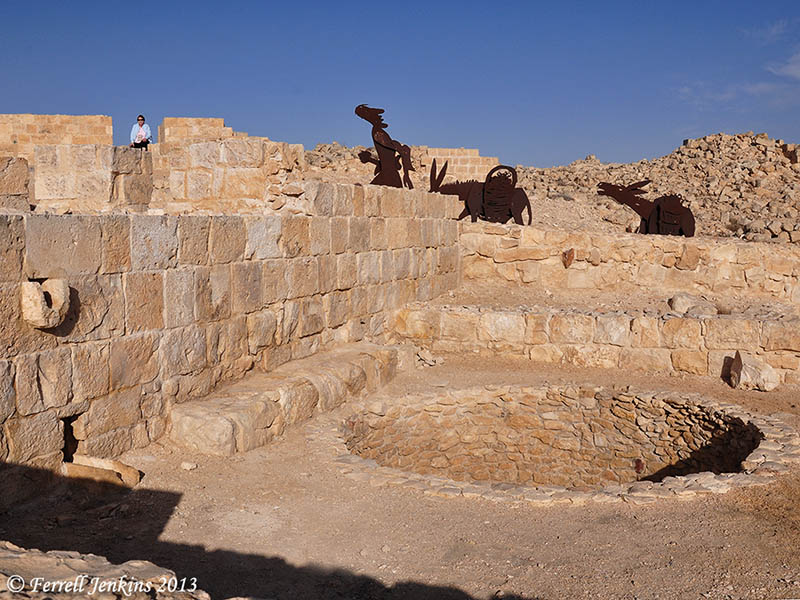
The next photo shows the round pit.

The round pit into which the juice flowed. Photo by Ferrell Jenkins.

The round pit into which the juice flowed. Photo by Ferrell Jenkins.

I have never been able to take a group to Avdat, but I have made personal visits twice. See here and here.

For more information on the restoration see here.

Xanathos in Lycia

The photo I am sharing today was made at ancient Xanthos, a city of Lycia, now in southwestern Turkey. The city is situated in the Lycian mountains a few miles from the Mediterranean coast and the ancient city of Patara (Acts 21:1). The small town of Kinik lies in the valley below Xanthos.

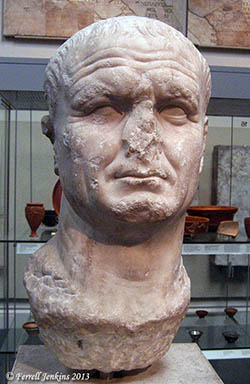
Roman Emperor Vespasian

Emperor Vespasian. BM. Photo by F. Jenkins

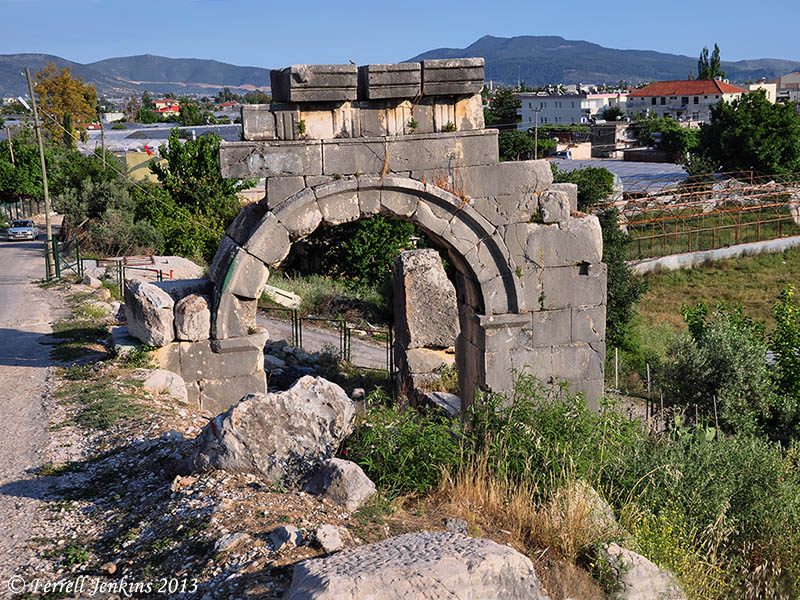
A road runs up the hill through the ancient ruins. One of the first monuments we come to is a Roman arch dedicated to the emperor Vespasian  (A.D. 69-79) by the Council and People of Xanthos. George E. Bean says,

The pavement which survives in part belongs to an ancient road which led up from Patara and the Letoum. – Lycian Turkey, 60.

Our view is made from above the arch. To the left you can see the narrow modern road leading to the parking lot at Xanthos.

Arch built by Vespasian partially below modern road level. Photo by Ferrell Jenkins.

Arch built by Vespasian partially below modern road level. Photo by Ferrell Jenkins.

This photo illustrates the build up of debris over the centuries.

Writers such as Bean tell of the time when the Persians conquered western Asia about 540 B.C. Rather than surrender, the fighting men of Xanathos placed their women, children, slaves, and property on the acropolis and set fire to it. These men then went forth and fought to the death.  This account reminds us of the one recorded by Josephus about the fall of Masada during the Jewish Wars against the Romans (The Jewish War 7.8.6).

For more information about Xanathos, and Lycia in general, see the nice Lycian Turkey website here.

Monument from Xanathos now in British Museum

The ancient Greek city of Xanthos (Xanthus) is mentioned in the Iliad as the greatest of the cities of Lycia. The site is located near Letoon, and a few miles north of Patara, the port where the Apostle Paul changed ships on the return from the Third Journey (Acts 21:1-2).

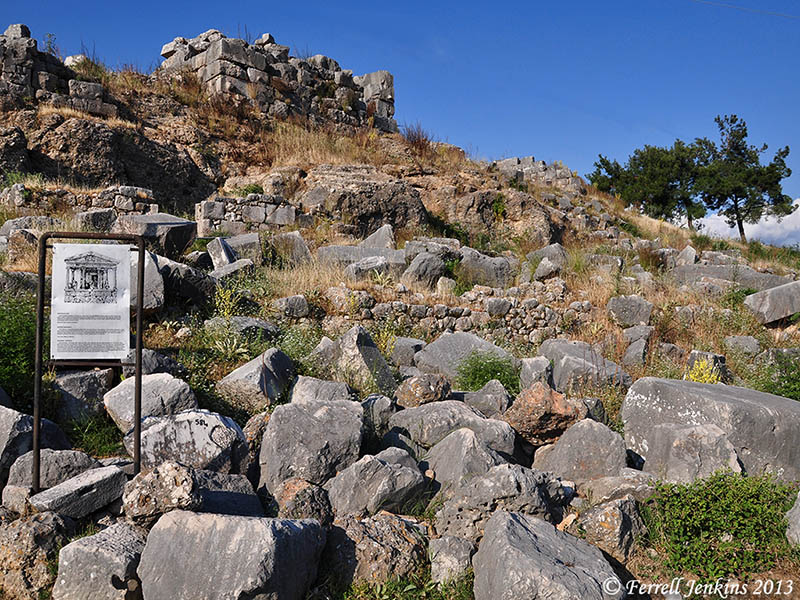
Our visit to Xanathos was limited due to the lateness of the day, but we took time to get a few photos of some significant ruins. Our first stop was what the Blue Guide Turkey calls “the few sad remains of the Nereid Monument.”

Xanathos_site-of-Nereid-Mon_fjenkins052012_043t

The site of the Nereid Monument at Xanathos. Photo by Ferrell Jenkins.

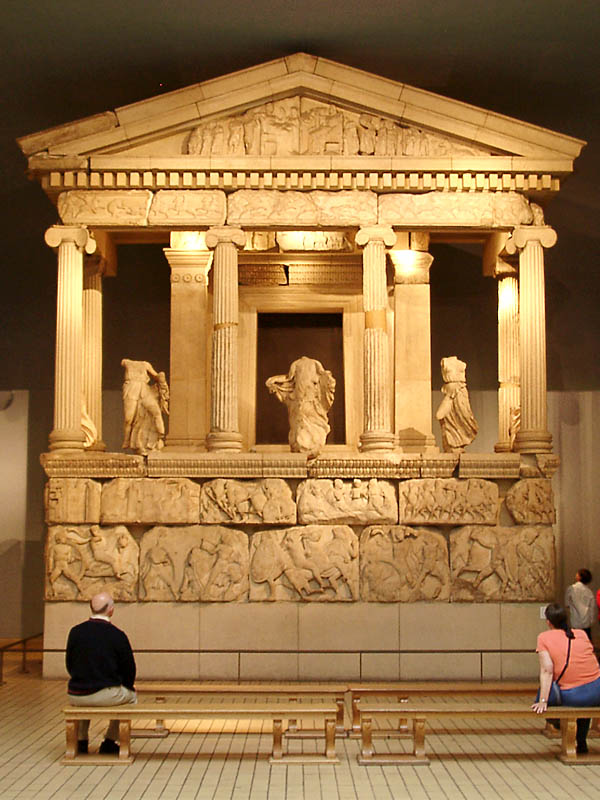
Charles Fellows took statues and friezes from the Monument to the British Museum in 1841-42, where they have been reconstructed.

Nereid Monument in British Museum. Photo by Ferrell Jenkins.

Nereid Monument in the British Museum. Photo by Ferrell Jenkins.

The sign at the original site (visible in the first photo) says,

This famous classical era monument was removed in its entirety to the British Museum in the last century [an old sign] and all that remains are a few rows of stones from the foundations and podium. This 4 by 6 columns Ionic temple style monument is embellished with reliefs and statues [sic]. The statues of twelve females between the columns are those of water spirits known as Nereids.

The Monument dates as early as 390 B.C.

The new Satellite Bible Atlas

Todd Bolen announced Monday the publication of the Satellite Bible Atlas. This new work is by Bill Schlegel, Associate Professor of the Bible at IBEX in Israel. Bill has lived and taught in Israel since 1984. He taught at the Jerusalem University College (formerly the Institute of Holy Land Studies) before joining The Master’s College IBEX program in 1995.

According to Bolen,

This resource is ready for personal use, classroom use, and field trip use. The author, Bill Schlegel, has been teaching college and seminary students in Israel for 25 years. Everything in the Satellite Bible Atlas is field-tested by a professor who knows God’s land and loves God’s Word.

He continues to give 7 additional reasons why he loves the Satellite Bible Atlas. I will leave it for you to read more details at the Bible Places Blog here.

sba2000c-t

I have had the opportunity for several days to see the various materials associated with the Satellite Bible Atlas, but late Monday I received my beautiful copy and have found it to be an amazing production.

After 17 pages of beautiful satellite maps, the additional maps are printed on one page with a brief, numbered, commentary on the opposite page. For example, looking at map 5-1, Samuel’s Ministry, we see a marked map of the portion of the land where Samson was born, and the places of his activity. Map 9-4 shows Jesus’ Move from Nazareth to Capernaum. Map 10-1 shows Acts of the Apostles in Israel. While the emphasis is on the Promised Land and the history of Israel, Jesus and the Early Church, there are maps showing the Journeys of Paul, The First Revolt Against Rome (c. 66-73 AD), the Bar Kochva Revolt, Jerusalem, the modern Middle East, etc. Eighty-five maps in all.

This beautiful book is published in Israel. I am surprised that the book is available for $30 plus tax and $3 shipping (in the U.S.). You will also be granted access to download the maps.

More information and ordering instructions are available here. Sample Maps, Commentary, Study Questions, and an Index to Sites, are available for download. There are also some Teaching Videos, and more are expected from time to time.

Herod the Great in the news

Herod is well known to students of the Bible. He is known especially as the king who was so frightened of losing his power that he ordered the death of the one who was born king of the Jews (Matthew 2).

Herod is also known from other historical records such as the Antiquities of the Jews and Wars of the Jews by Josephus.

We have learned much about Herod from the archaeological excavations at sites he is known to have built. We think of the Temple in Jerusalem with its platform and enclosure, the temples dedicated to Emperor Augustus at Caesarea Maritima, Samaria, and Caesarea Philippi (or Omrit), and the fortresses in several parts of the country, and the building at the Cave of Machpelah in Hebron.

The Herodium has received much attention in recent years as a result of the archaeological excavation conducted by the late Prof. Ehud Netzer in his search for Herod’s tomb.

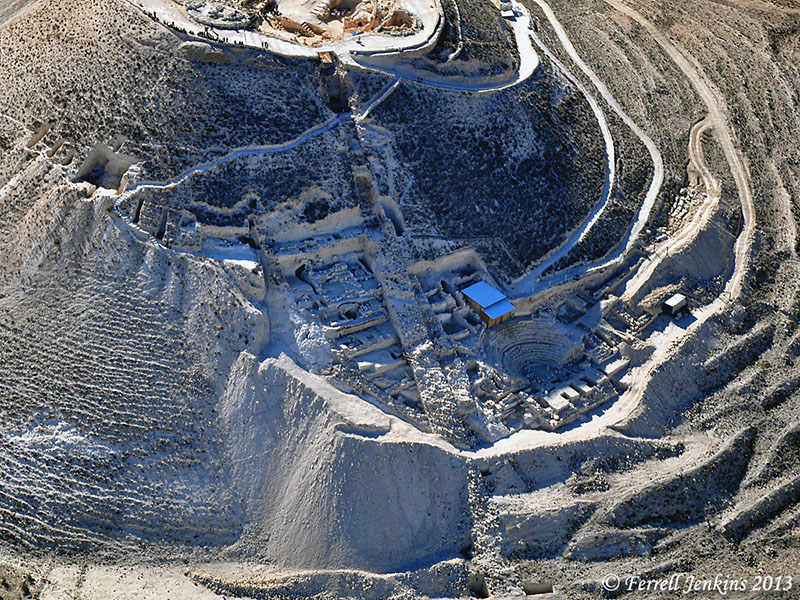
Aerial view of the Herodium with the area of Netzer's excavation visible.  Photo by Ferrell Jenkins.

Aerial view of the Herodium with the area of Netzer’s excavation visible. All of this was covered by earth just a few years ago. Photo by Ferrell Jenkins.

Now we are informed that the tomb of Herod at the Herodium is to be rebuilt.

The glory of King Herod, the Judean king famous for renovating the Temple Mount and building Masada, will rise again — or at least his tomb will — Israel announced Monday. As part of a new plan, a replica of his tomb at Herodium, situated outside the West Bank city of Bethlehem, will tower to 83 feet and will be visible from Jerusalem.

Herodium, an impressive feat of ancient engineering, is a conical artificial mound built between 23 and 15 BCE that housed a fortified royal palace and tomb. Its walls rose over 200 feet high and it contained elegant courtyards and baths. It was the only one of Herod’s many famed construction projects that bore his name, and was destroyed in 70 CE during the Great Revolt against Rome.

To read this report from the Times of Israel in its entirety, click here.

It must be the year of Herod. The Israel Museum is reconstructing the tomb of Herod in the museum for an exhibition opening February 12, 2013. I am definitely looking forward to seeing this. Read more about it here.

HT: Joseph I. Lauer