
Subscribe to continue reading
Subscribe to get access to the rest of this post and other subscriber-only content.

Subscribe to get access to the rest of this post and other subscriber-only content.
Comments Off on Conversions at Corinth in the mid first century A.D.
Posted in Apostle Paul, Bible Lands, Bible Places, Bible Study, Biblical Studies, New Testament, Photography, Travel
Tagged Apostle Paul, Photography, Roman Empire, Travel
Once upon a well-documented time in history there was an arrogant ruler of what seemed to be the most powerful kingdom. Nebuchadnezzar was the king of Babylon from 605 to 562 B.C. If you look to the top of our web page you will see a link INDEXES. Click on that and go to the Babylon Index of Articles where you will find Nebuchadnezzar, king of Babylon — 605-562 B.C. Click through to the articles dealing with this great king where you will find more information and numerous photos.
The Lord God determined to teach Nebuchadnezzar a lesson. He made him to be like a beast of the field and eat grass until the living learned that “the Most High rules the kingdom of men and gives it to whom he will and sets over it the lowliest of men.” Read Daniel 4:16-18. Read the text.
16 Let his mind be changed from a man’s, and let a beast’s mind be given to him; and let seven periods of time pass over him.
17 The sentence is by the decree of the watchers, the decision by the word of the holy ones, to the end that the living may know that the Most High rules the kingdom of men and gives it to whom he will and sets over it the lowliest of men.’
18 This dream I, King Nebuchadnezzar, saw. And you, O Belteshazzar, tell me the interpretation, because all the wise men of my kingdom are not able to make known to me the interpretation, but you are able, for the spirit of the holy gods is in you.” (Dan. 4:16-18 ESV)
Four times in the book of Daniel the statement is made that “God will cause the living to know that the Most High rules the kingdom of mankind and sets over it whom he will.” See Daniel 4:17, 25, 32, and 5:21.
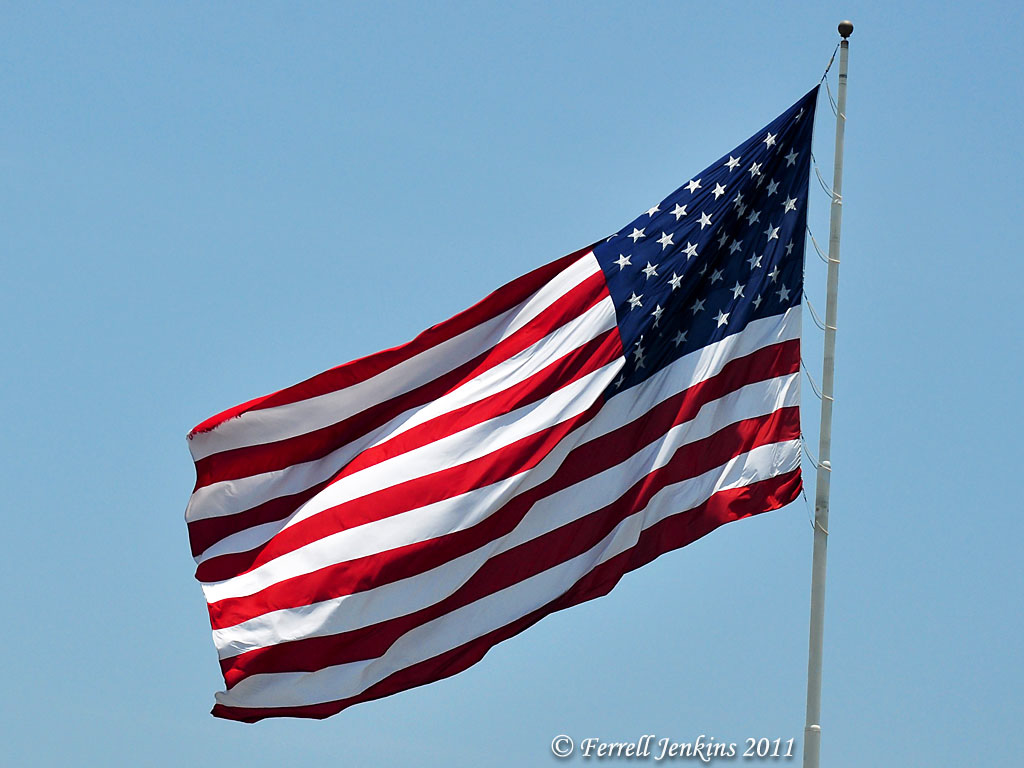
There are other Biblical references that seem appropriate on this day. Note these:
“Pride goes before destruction, and a haughty spirit before a fall. It is better to be of a lowly spirit with the poor than to divide the spoil with the proud.” (Prov. 16:18-19 ESV)
“Let every person be subject to the governing authorities. For there is no authority except from God, and those that exist have been instituted by God. 2 Therefore whoever resists the authorities resists what God has appointed, and those who resist will incur judgment. 3 For rulers are not a terror to good conduct, but to bad. Would you have no fear of the one who is in authority? Then do what is good, and you will receive his approval” (Romans 13:1-3 ESV)
This text from the New Testament book of Romans sets forth God’s ideal for government.
We all need to remember this text from the Old Testament book of Proverbs.
“Righteousness exalts a nation, but sin is a reproach to any people.” (Prov.erbs14:34 ESV) The rulers of our nation need to put arrogance aside and pay heed to these admonitions from the King of Kings (Revelation 19:11).
Corinth is located about two miles south of the narrow isthmus which forms the land bridge, and controlled access, between the main land mass of Greece and the Peloponnesus. Corinth seemed to have flourished from the 8th to the 5th centuries B.C., and there are signs of habitation much earlier. In 146 B.C. the Greek history of Corinth was terminated when the Roman consul Mummius destroyed it. All that remains today of the old Greek city are the seven columns of the Temple of Apollo. Julius Caesar rebuilt Corinth in about 46 /4 4 B.C. as a Roman colony and settled many Roman soldiers there. Corinth became the capital of the Roman province of Achaia and had direct communications with Rome. There were enough Jews in the city to account for a synagogue (Acts 18). Perhaps the two most noticeable sites at Corinth today are the ruins of the temple of Apollo and the Acrocorinth (the mountain or high point of Corinth). The temple of Apollo was built in the 6th century B.C., but only seven of the original 38 Doric monolith columns are standing. There were numerous other pagan temples in the city including one dedicated to Asklepios, the god of healing.

The judgment-seat (Greek, bema) was a speaker’s platform on which the judge sat or stood for the trial of one against whom an accusation had been made. In the excavations a t Corinth which have been conducted since 1896 the bema has been exposed in the agora. It is likely that Paul stood before Gallio at this place (Acts 1 8:12). The bema is dated to A.D. 44, but could be as early as the time of Augustus. The gospel was successful in this pagan city. Paul preached “Christ and Him crucified” (1 Cor. 2:2; 15:1-4). Paul was fearful but the Lord told him, “Do not be afraid any longer, but go on speaking and do not be silent; for I am with you, and no man will attack you in order to harm you, for I have many people in this ci ty” (Acts 18:9-10 ). Paul remained in Corinth for a year and six months.

Inscribed in a limestone pavement near the theater at Corinth is a phrase which reads in Latin: ERASTVS PRO AEDILITATE S P STRAVIT. The translation goes something like this: Erastus , in return for the aedileship, laid the pavement at his own expense. It is possible, but not certain, that this Erastus was the friend of Paul (Rom. 16:2-3; 2 Tim 4:20). If so, then Erastus may have been one of the few (contrast, not many) of the socially elite at Corinth who accepted the gospel (1 Cor 1:26).
Posted in Apostle Paul, Archaeology, Bible Places, Bible Study, Book of Acts, Greece, Photography, Travel
Tagged Bible, Bible Study, Christianity, Corinth, Paul
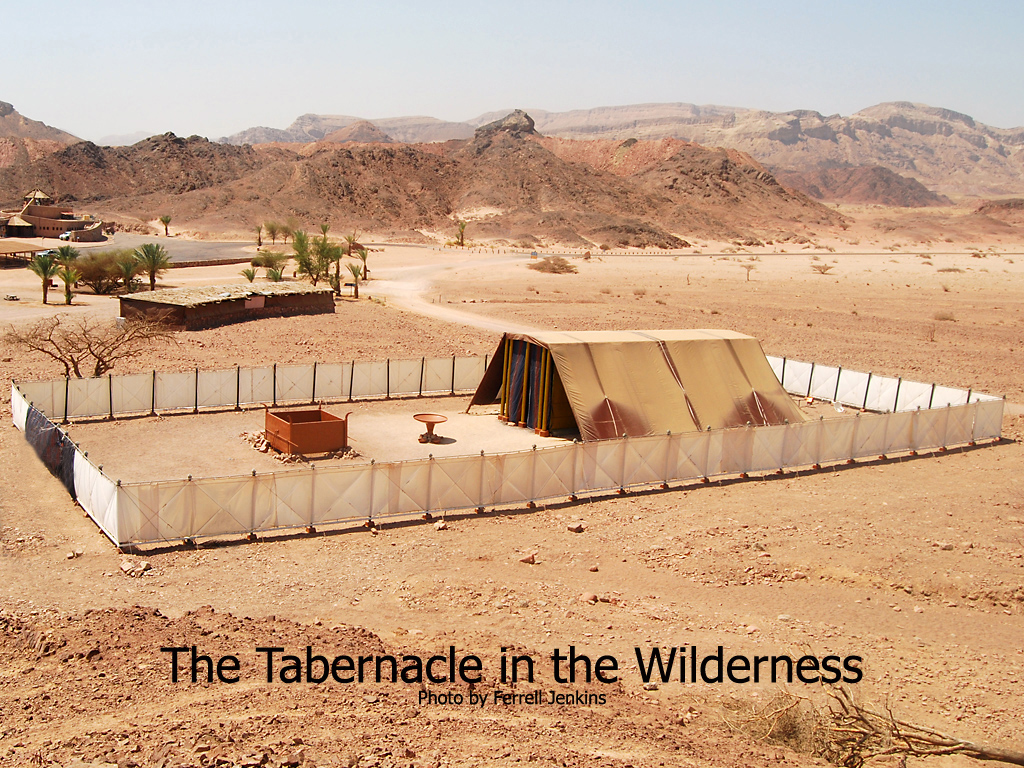
In the gospels one may find several references or allusions to events of the wilderness wandering. This indicates the significance of the event and suggests that it should be studied carefully by Christians as well as Jews.
Posted in Apostle Paul, Bible Lands, Bible Places, Bible Study, Egypt, Israel, New Testament, Old Testament, Photography, Revelation, Travel
Tagged Bible, Bible Study, Christianity, faith, Jesus
Cornelius, a Roman centurion, was the first Gentile convert to the faith. He was stationed at Caesarea on the Mediterranean coast at the time when the apostle Peter was actively working in the spread of the Gospel.
A centurion in the Roman army normally had charge of 100 men (= to an Army captain). A regular cohort was one tenth of a legion and had a paper strength of 600 men. An auxiliary cohort was usually comprised of 1,000 men. Cornelius was of the Italian cohort. There is inscriptional evidence for the “Italian cohort” from Syria (See Bruce, 215).
When Paul set sail from Caesarea for Rome he was accompanied by a centurion of the Augustan cohort named Julius (Acts 27:1). All of the centurions mentioned in the New Testament make favorable impressions. This was not true of soldiers generally (Luke 3: 14). Note these examples:
The centurion at the crucifixion of Jesus (Luke 23:47).
F. F. Bruce (The Book of Acts, NICNT) cites Polybius (History vi.24) saying,
“Centurions are required not to be bold and adventurous so much as good leaders, of steady and prudent mind not prone to take the offensive or start fighting wantonly, but able when overwhelmed and hard-pressed to stand fast and die at their post.”
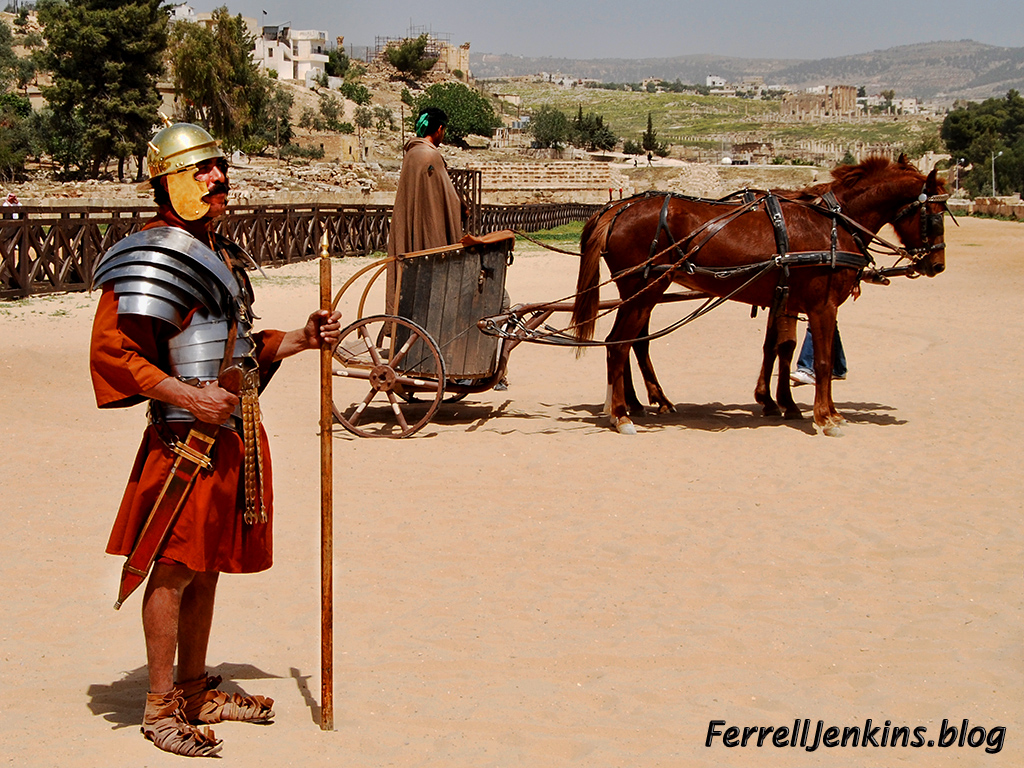
There is a wonderful performance in the early second century A.D. hippodrome at Jerash, Jordan. The RACE show (Roman Army Chariot Experience) shows actors dressed as Roman soldiers performing various activities of the early soldiers. Our photo shows a Roman centurion from that show.
Posted in Apostle Paul, Bible Places, Bible Study, Book of Acts, Israel, New Testament, Photography, Travel
Tagged Apostle Paul, Apostle Peter, Ministry of Jesus, Photography, Roman Empire, Travel
Only one of the Gospel accounts of the ministry of Jesus records a visit by Jesus to the town of Nain. Strangely it is Luke who wrote two volumes (Luke and Acts of the Apostles) to a man known as Theophilus (Luke 1:3; Acts 1:1).
John, who was a personal eyewitness to the ministry of Jesus, included only seven miraculous signs of Jesus in his gospel. He exaggerated for the sake of emphasis, “Now there are also many other things that Jesus did. Were every one of them to be written, I suppose that the world itself could not contain the books that would be written” (John 21:25 ESV). In addition to the resurrection of Jesus, John included the account of the resurrection of Lazarus in John 11.
I find it intriguing that Luke mentions this account of the resurrection of a young man as his mother was on the way to bury him. Luke was a physician who became what we might call the primary physician of the apostle Paul (Colossians 4:14; 2 Timothy 4:11; see also the “We” sections of Acts where Luke is traveling with Paul.
Scholars have written about the medical language of Luke used in his two volumes.
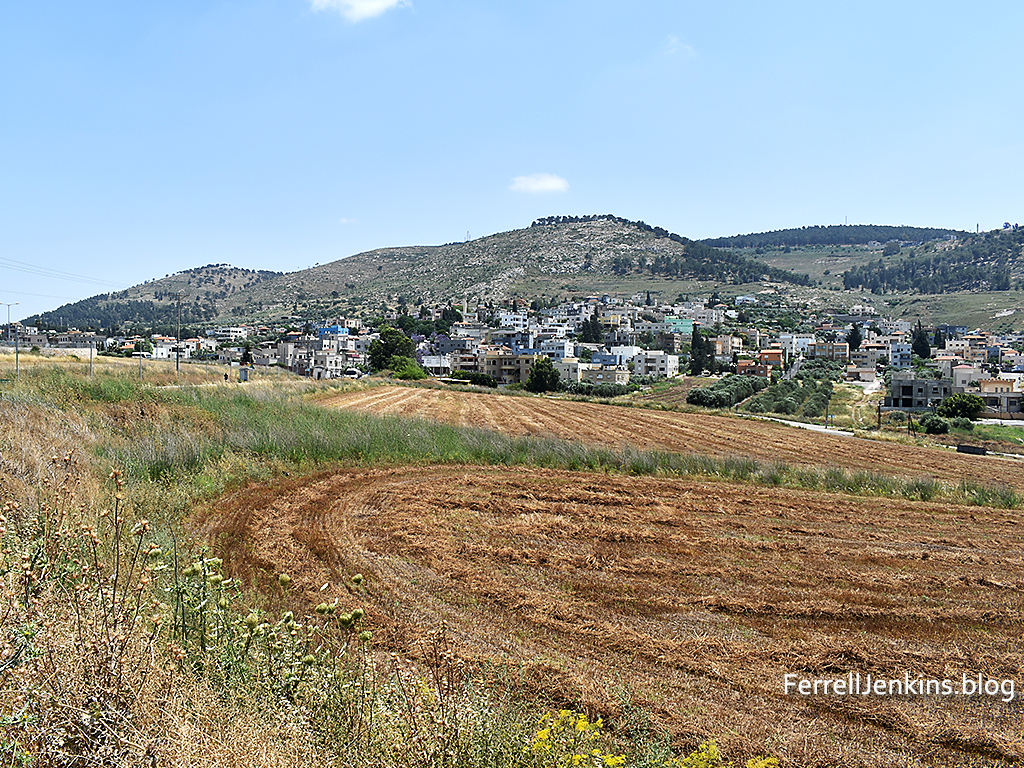
On our visit to Israel earlier this year I stopped to make a new photo of the town of Nain on the north side of the the Hill of Moreh.
Posted in Apostle Paul, Bible Places, Bible Study, Book of Acts, New Testament, Old Testament, Travel
Tagged Apostle Paul, Ministry of Jesus
Adramyttium is mentioned only once in the New Testament. In Acts 27:2 we are informed that the ship used to transport Paul to Rome for his appeal before Caesar was “a ship of Adramyttium” (Acts 27:1-2). Paul continued in this ship as far as Myra in Lycia (Acts 27:5-6) where he was transferred to an Alexandrian ship.
But there is still a chance that Paul stopped at Adramyttium on the return from his second preaching journey. Luke provides us with a detailed account of the stops along the way. He says, “And when he met us at Assos, we took him on board and went to Mitylene. And sailing from there we came the following day opposite Chios; the next day we touched at Samos; and the day after that we went to Miletus” (Acts 20:14-15 ESV).
Notice the reference to Chios. When we check a variety of versions we come up with some interesting results.
The Greek word used here is antikpus and usually means off or opposite. Mark Wilson suggests that “Paul probably passed near Adramyttium on his second journey to Troas, if the southern route below Mysia is reckoned (Acts 16:8). He also probably passed through the city following his departure from Ephesus while traveling up the coast to Troas (Acts 20:1-2; 2 Corinthians 2:12).” (15
So, whether or not, here is a photo from ancient Adramyttium in the modern Turkish town of Ören in the Mersin district of Turkey.
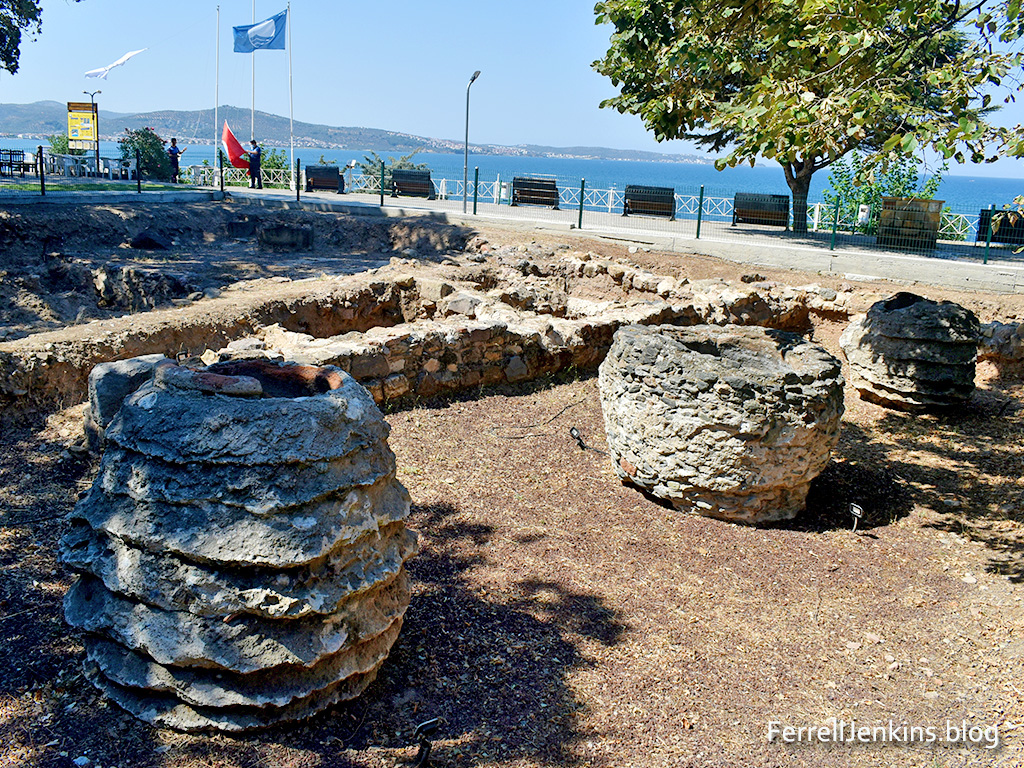 This area of excavation is under some large trees causing
the dark spots in some places.
The next photo shows the beautiful beach at Ören.
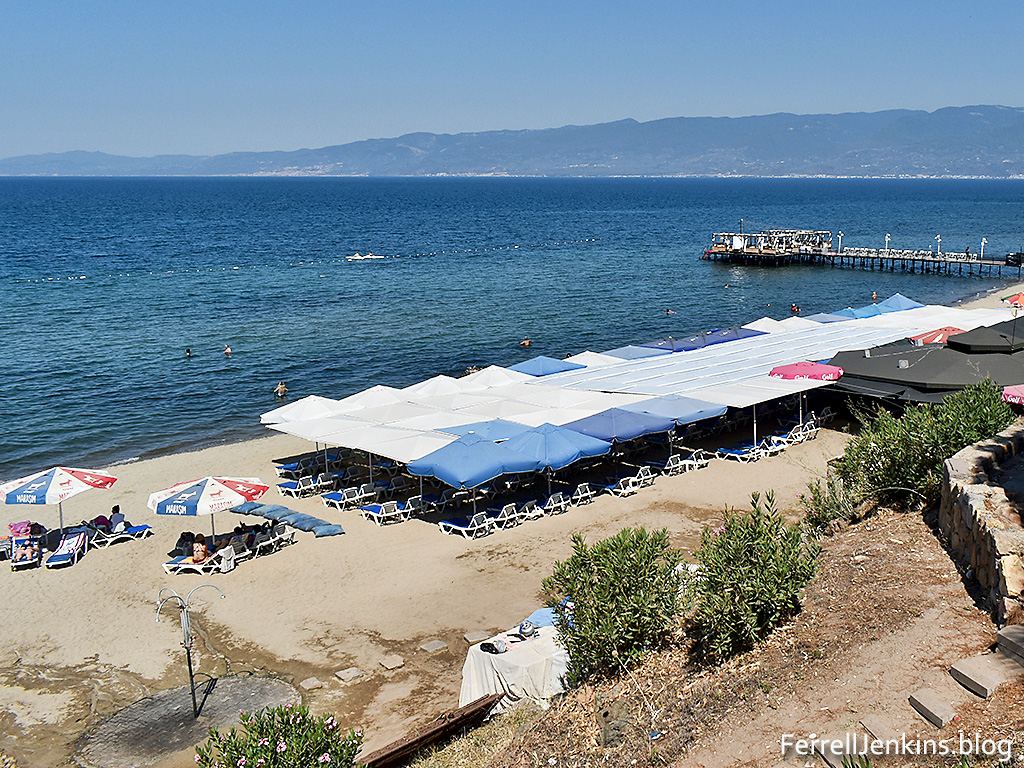
Source: Williams, Mark. Biblical Turkey. 4th ed., Yayinlari, 2020, pp. 185-87.
Posted in Apostle Paul, Archaeology, Bible Lands, Bible Places, Bible Study, Book of Acts, New Testament, Photography, Travel, Turkey
The areas of Turkey that have been hit by the 7.8 earthquake are along the East Anatolian Fault. It has been my pleasure to visit many of these cities: Gaziantep, Karaman, and Antakya. Also Aleppo in northern Syria. The areas around Antakya might include the other historical sites of Tel Tayinat and Tel Alalak.
Did you knowthat Antakya was part of Syria until about 1935 when it was annexed as part of Turkey? Antaka is the location of the New Testament site of Antioch of Syria. This was a city where Paul, Peter, and Barnabas worked, and where the disciples of Jesus were first call Christians.
So Barnabas went to aTarsus to look for Saul,
26 and when he had found him, he brought him to Antioch. For a whole year they met with the church and taught a great many people. And in Antioch the disciples were first called aChristians.
(Acts 11:25-26 ESV)
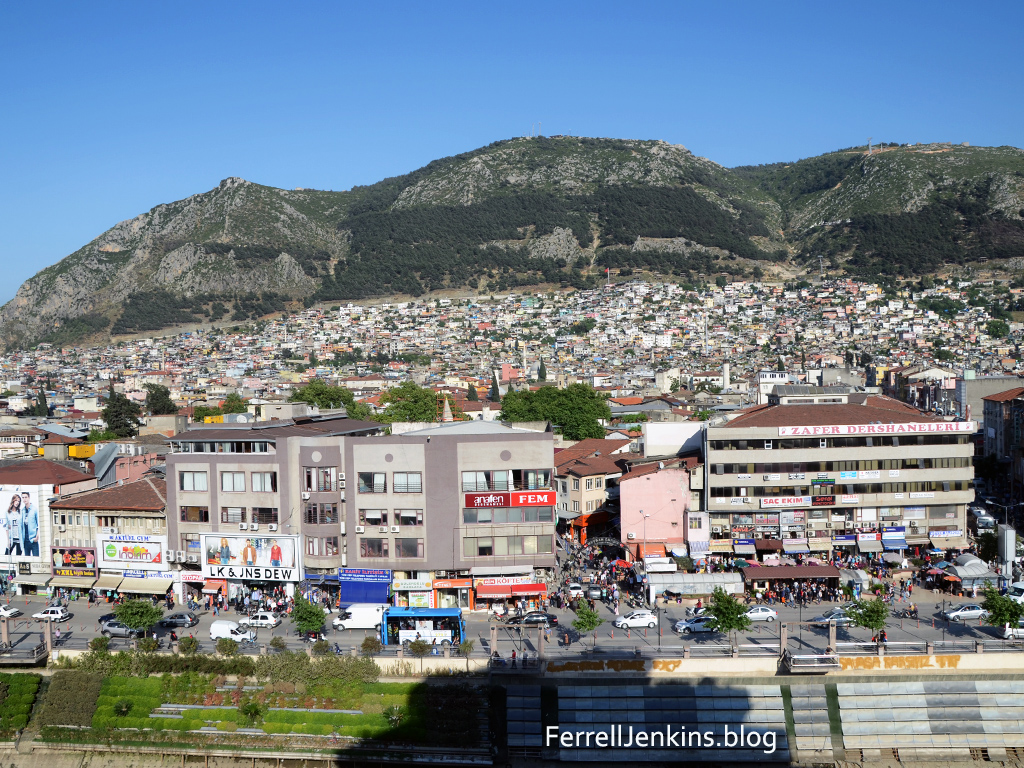
Our photo below shows the city of Antakya built on Mount Silpius along the Orontes River.
The New Testament site of Antipatris was known as Aphek in Old Testament times. It is the place where the Philistines were encamped when they took the ark of the covenant from the Israelites who had camped at nearby Ebenezer (1 Samuel 4:1).
Antipatris was built by Herod the Great and named in honor of his father Antipater.
Because Aphek/Antipatris sat on a major south-north and west-east routes, it was dominated by many nations. The dominant feature of the site today is the Turkish fort. Inside are the excavated ruins of buildings from Canaanite to Herodian/Roman times.
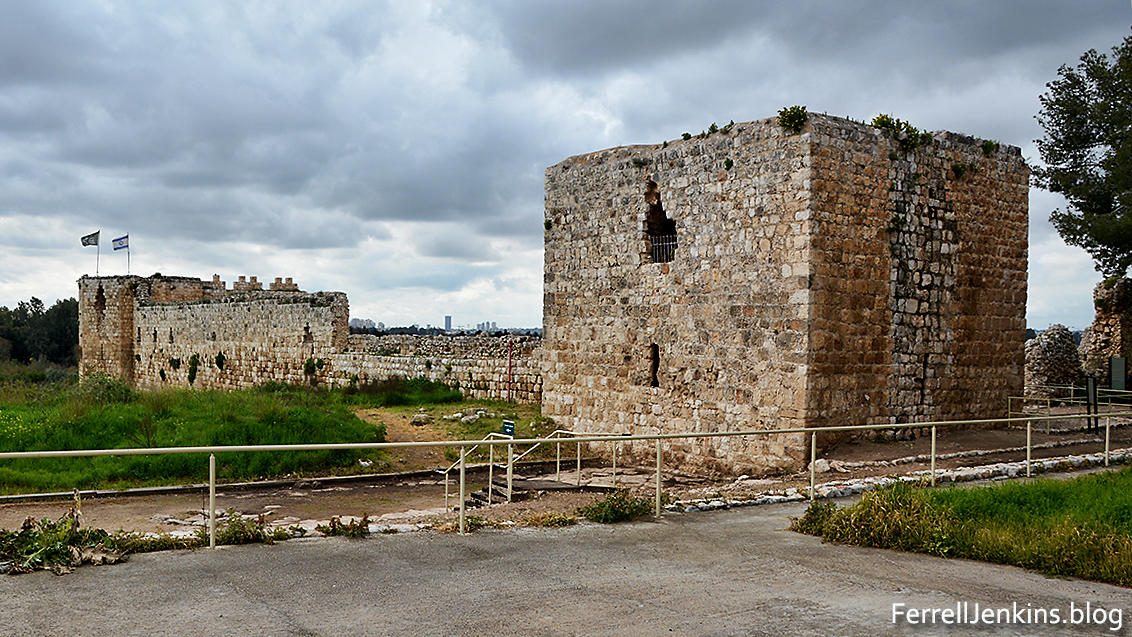
Aphek/Antipatris is known by the modern name Ras el-Ain because it is located at the source of the Yarkon River which flows a few miles into the Mediterranean.
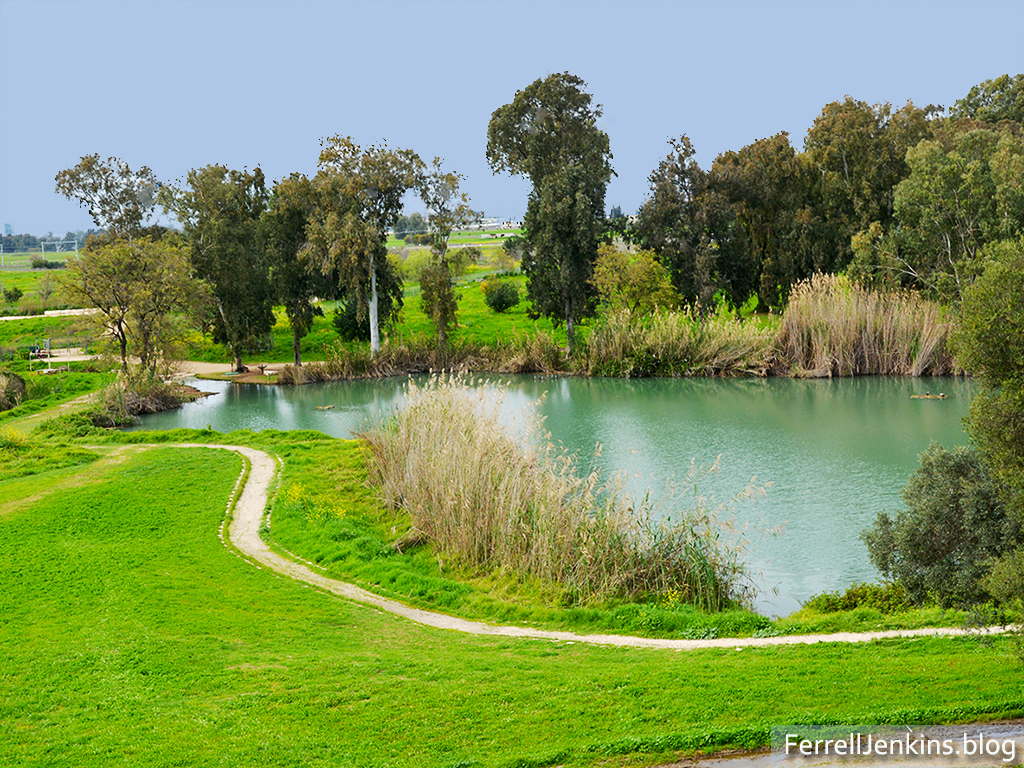
When a plot was raised against Paul while he was in the Fortress of Antonia in Jerusalem, he was sent by night to Antipatris. The next day he was escorted to Caesarea Maritima. Luke records the event,
So the soldiers, according to their instructions, took Paul and brought him by night to Antipatris. And on the next day they returned to the barracks, letting the horsemen go on with him. When they had come to Caesarea and delivered the letter to the governor, they presented Paul also before him. (Acts 23:31-33 ESV)
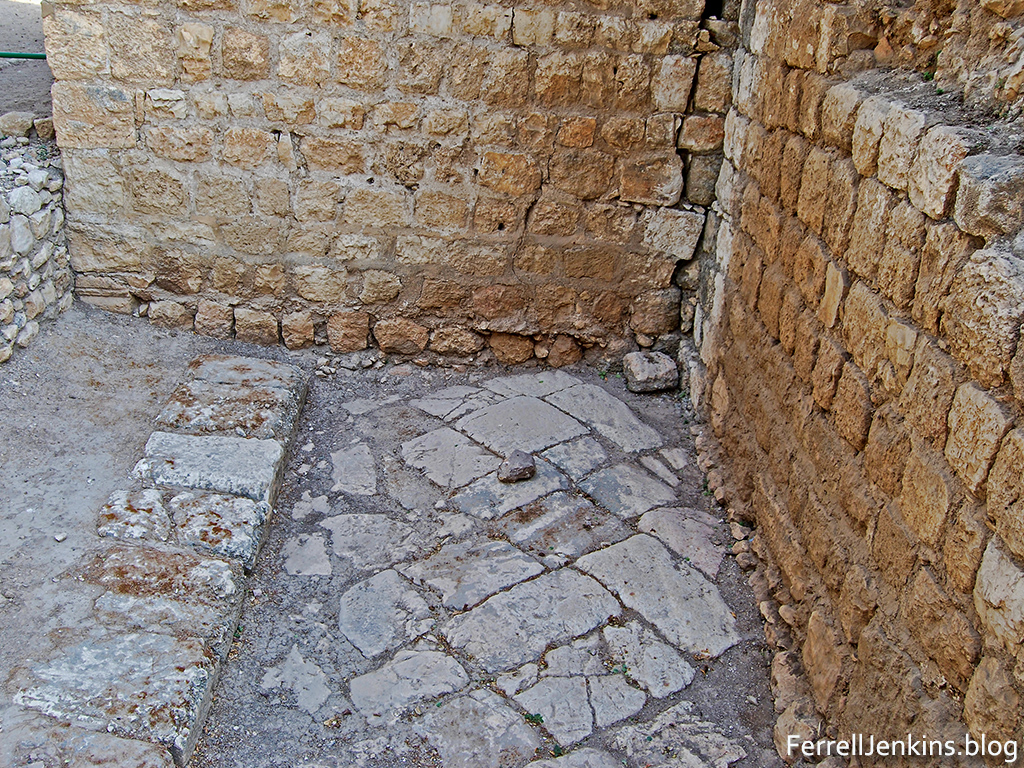
A small portion of the Roman cardo, the main East-West road has been uncovered.
From Jerusalem to Antipatris is about 30 miles. From there to Caesarea Maritima is an additional 27 miles.
Paul would remain in custody at Caesarea Maritima for two years. We probably realize that the wheels of power often turn slowly.
The map below is used courtesy of BibleMapper blog.

Courtesy of BibleMapper blog.
The expression used as our title may seen strange to modern man, but it was clearly understood in biblical times. Notice two biblical verses:
But they shall sit every man under his vine and under his fig tree, and no one shall make them afraid, for the mouth of the LORD of hosts has spoken. (Micah 4:4 ESV)
In that day, declares the LORD of hosts, every one of you will invite his neighbor to come under his vine and under his fig tree. (Zechariah 3:10 ESV)
Commenting on Zechariah 3:10, Hailey says,
Under one’s vine and fig tree was a symbol of peace enjoyed in the midst of safety and security (1 Kings 4;24-25; Isaiah 36:16), promised by Jehovah through Micah in the kingdom of the Messiah (4:4).” (Hailey, Homer. A Commentary on the Minor Prophets. Baker, 1972, p. 337).
The biblical record explains that Sennacherib, king of Assyria, was the dominant power in the region.For he had dominion over all the region west of the Euphrates from Tiphsah to Gaza, over all the kings west of the Euphrates. And he had peace on all sides around him. And Judah and Israel lived in safety, from Dan even to Beersheba, every man under his vine and under his fig tree, all the days of Solomon. (1 Kings 4:24-25 ESV)
Sennacherib, king of Assyria, urged the people of Judea,
Do not listen to Hezekiah. For thus says the king of Assyria: Make your peace with me and come out to me. Then each one of you will eat of his own vine, and each one of his own fig tree, and each one of you will drink the water of his own cistern, until I come and take you away to a land like your own land, a land of grain and wine, a land of bread and vineyards. (Isaiah 36:16-17 ESV)
We still see examples of people living under their own vine and fig trees in the Bible Lands today.
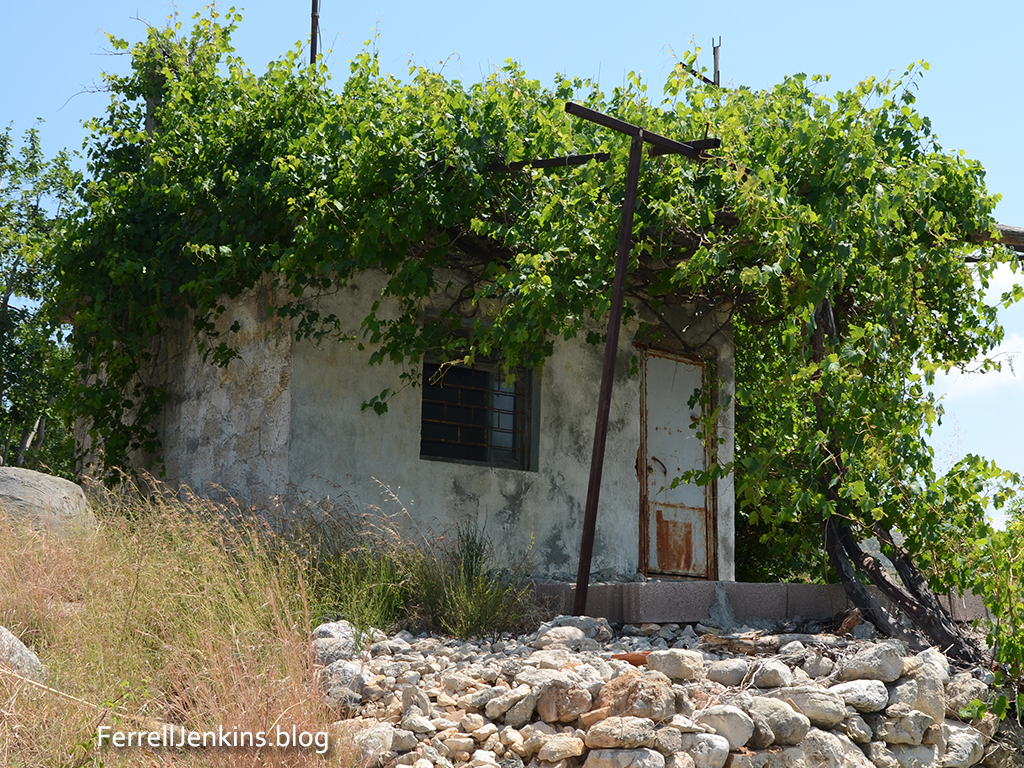
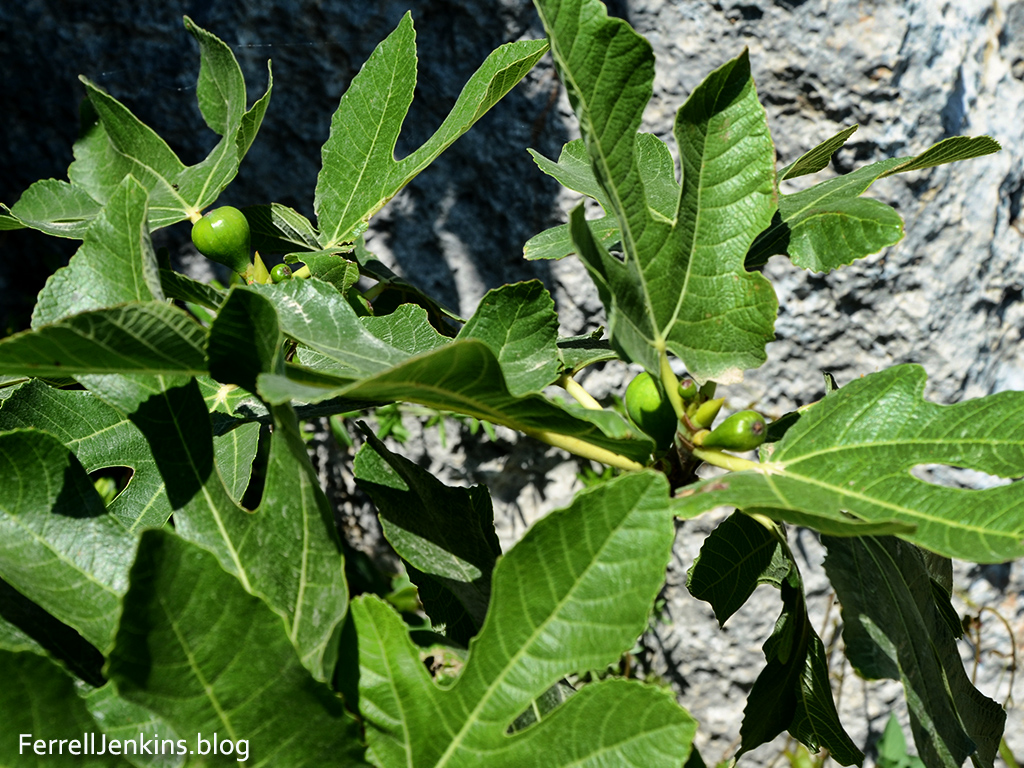
We might compare this to the modern expression, “We have a good job and have been able to buy a house and have enough to pay for the groceries.”
A Request: This blog is sent to you at no charge. We have never requested funds from our readers. If you enjoy our blog please encourage two or three of your friends to subscribe (follow) it. When they do this they will receive an Email with the content.
Posted in Apostle Paul, Bible Lands, Bible Study
Tagged Apostle Paul, Flora of the Bible, Isaiah
 Ferrell's Travel Blog
You must be logged in to post a comment.