Tag Archives: Ministry of Jesus

Jesus in Jerusalem during Hanukkah

The Gospel of John records more visits to Jerusalem by Jesus than any other of the Gospels. John is the only one to record the visit during the Feast of Dedication.

At that time the Feast of Dedication took place at Jerusalem. It was winter,  and Jesus was walking in the temple, in the colonnade of Solomon. (John 10:22-23 ESV)

BDAG translates the Greek term egkainia as “festival of rededication.” The feast is also known as Hanukkah and the Feast of Lights.

What is the Feast of Dedication? This feast, observed on the 25th of Kislev (roughly our December), had its origin in the period between the testaments. The desecration of the temple by the Seleucid ruler Antiochus Epiphanes took place in 168 B.C. The climax of the Maccabean revolt was the removal of all evidences of pagan worship from the temple. An eight-day feast of dedication was observed in 165 B.C., and continued to be observed annually by the Jews.
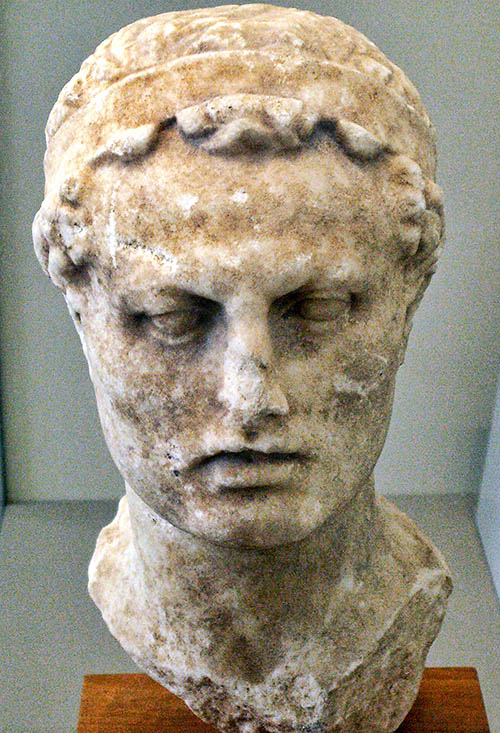
"Antiokhos IV" by Jniemenmaa (talk) 08:46, 20 July 2009 (UTC), own work. Licensed under CC BY-SA 3.0 via Commons - https://commons.wikimedia.org/wiki/File:Antiokhos_IV.jpg#/media/File:Antiokhos_IV.jpg

“Antiokhos IV” by Jniemenmaa (talk) 08:46, 20 July 2009 (UTC), own work. Licensed under CC BY-SA 3.0 via Commons – https://commons.wikimedia.org/wiki/File:Antiokhos_IV.jpg#/media/File:Antiokhos_IV.jpg

At Modin, a village north-west of Jerusalem, on the way from Jerusalem to Lod, the Syrians tried to force an old priest by the name of Mattathias to offer a pagan sacrifice. The priest refused but another Jew volunteered to offer the sacrifice. Mattathias killed his fellow Jew and the Syrian officer. As word spread, Mattathias became a national hero. He was of the family of Hasmon (or Asmoneus). Thus began the Hasmoneans.

Archaeologists working  with the Israel Antiquities Authority have been searching for the tomb of the Maccabeans at Modin in recent years. See the report here.

Fishing all night and the Galilee sunrise

Sunrise on the Sea of Galilee (Lake Kinneret; Sea of Tiberias) evokes many memories of the ministry of Jesus and His disciples. No matter how many photos one takes, each one is unique.

I usually make these sunrise photos with two cameras, using multiple settings. The photo today is one that I especially like because I was able to catch the fisherman heading to harbor after a night of fishing.

Sunrise on the Sea of Galilee, May 17, 2015, 5:54 a.m. Photo by Ferrell Jenkins.

Sunrise on the Sea of Galilee, May 17, 2015, 5:54 a.m. Photo by Ferrell Jenkins.

Notice this text detailing the third appearance Jesus made to His disciples after the resurrection.

 1 After this Jesus revealed himself again to the disciples by the Sea of Tiberias, and he revealed himself in this way.
2 Simon Peter, Thomas (called the Twin), Nathanael of Cana in Galilee, the sons of Zebedee, and two others of his disciples were together.
3 Simon Peter said to them, “I am going fishing.” They said to him, “We will go with you.” They went out and got into the boat, but that night they caught nothing.
4 Just as day was breaking, Jesus stood on the shore; yet the disciples did not know that it was Jesus.
5 Jesus said to them, “Children, do you have any fish?” They answered him, “No.”  (John 21:1-5 ESV)

Read the rest of the story and the miraculous catch of fish in John 21:6-14.

Babylonian and Roman destruction of the Temple

Many of the Jewish people recently observed Tisha B’Av. This phrase, strange to Christians, means the Fast of the Ninth. The observance “is a day of mourning to commemorate the many tragedies that have befallen the Jewish people” (Judaism 101). According to this source, five terrible events took place on or near the ninth day of the month Av, the fifth month of the Jewish calendar.

The most significant of these events are the destruction of the Temple by the Babylonians in 586 B.C. (2 Kings 25:8-9; Jeremiah 52:12-13), and the destruction by the Romans in A.D. 70.

In the past half century a considerable amount of evidence has come to light concerning the destruction of Jerusalem by the Babylonians. The temple destroyed in 586 B.C. had been constructed by King Solomon in about 966 B.C. It was rebuilt by those who returned from the Babylonian Exile (530-516 B.C.).

Herod the Great began about 19/20 B.C. to rebuild the temple. This work was still in progress during the ministry of Jesus.

Then the Jewish leaders said to him, “This temple has been under construction for forty-six years, and are you going to raise it up in three days?” (John 2:20 NET)

Christians take seriously the prophecy of Jesus.

Now as Jesus was going out of the temple courts and walking away, his disciples came to show him the temple buildings. And he said to them, “Do you see all these things? I tell you the truth, not one stone will be left on another. All will be torn down!” (Matthew 24:1-2 NET)

There is no archaeological evidence of the temple building itself. The site where the temple once stood is now covered with paving stones and the Dome of the Rock which was constructed by the followers of Mohammed in the 7th century A.D.

The Dome of the Rock stands where Solomon's Temple was built. Photo by Ferrell Jenkins.

The Dome of the Rock stands where Solomon’s Temple was built. Photo by Ferrell Jenkins.

Vivid evidence of the Roman destruction of Jerusalem was discovered at the SW corner of the temple area in the Tyropean Valley. Some of the rubble can still be seen on the street which was probably built by Agrippa II in the 60s of the first century.

Stones that fell from the Temple Mount to the street below in A.D. 70. Photo by Ferrell Jenkins.

Stones that fell, or were pushed, from the Temple Mount to the street below in A.D. 70 at the time of the destruction by the Romans. Photo by Ferrell Jenkins.

Wayne Stiles recently wrote an article here on this topic with several excellent photos from the Burnt House in Jerusalem, a house burned during the Roman destruction in A.D. 70.

Arson suspected at Tabgha, Church of Multiplication

Haaretz reports (here, premium edition) this morning the suspected arson at the Church of the Multiplication on the northwest shore of the Sea of Galilee at Heptapegon (= Tabgha). A storage room and offices were damaged in the fire.

The church is claimed by Catholics to be the site of the miracle of the feeding of the multitudes by Jesus (Matthew 14:13-21; Mark 6:32-44; Luke 9:10-17; John 6). Egeria described the site in her fourth century travel diary and claimed it to be the site of the feeding of the multitudes. Some also claim that this is the site of Dalmanutha (Mark 8:10).

I am among those who are uncertain that the area of Tabgha is the site of Dalmanutha, and rather certain that this is not the site of the feeding of the Five Thousand. It is, however, a beautiful location where one can study and meditate about the Biblical miracle.

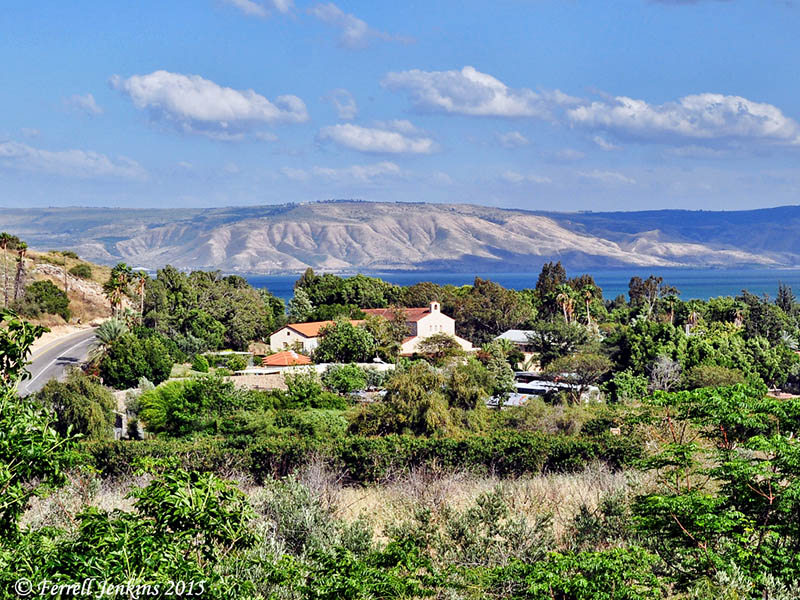
Our photo shows the location of the property associated with the Church of the Multiplication. Perhaps even more significant is the clarity of this view as it shows the eastern side of the Sea of Galilee and the Golan Heights.

A view of the area of Tabgha from the west. Photo by Ferrell Jenkins.

A view of the area of Tabgha from the west. Photo by Ferrell Jenkins.

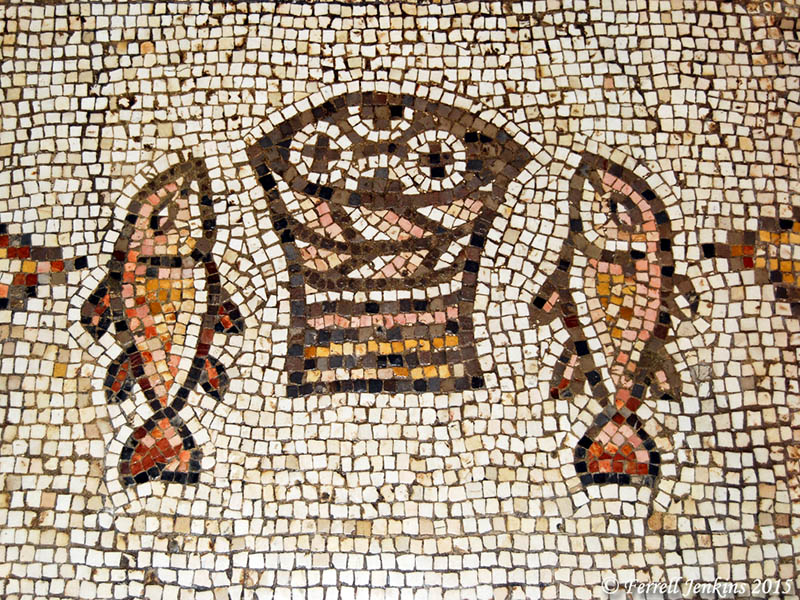
There are many ancient mosaics in the floor of the church. The most famous one is the mosaic of the loaves and fishes.

The mosaic of the loaves and fishes at Tabgha. Photo by Ferrell Jenkins.

The mosaic of the loaves and fishes at Tabgha. Photo by Ferrell Jenkins.

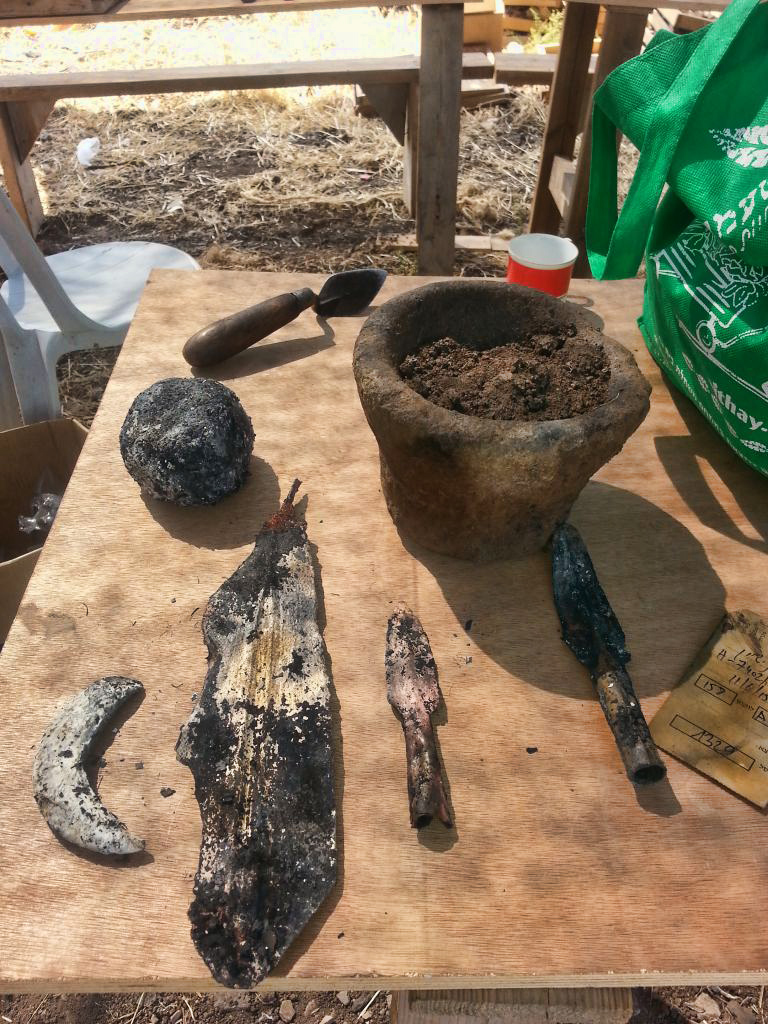
Archaeological Store Rooms Damaged. In a related matter, two days ago The Times of Israel reports (here) the arson of storerooms containing 4,000 year-old artifacts from an emergency excavation at Tel Kishon near Mount Tabor.

Bronze age tools and artifacts damaged in the fire. Photo: Israel Antiquites Authority

Bronze age tools and artifacts damaged in the fire. Photo: Israel Antiquities Authority.

When we destroy that of which we are ignorant we reflect lack of appreciation of any history. It happens all over the world. If we destroy that with which we disagree, what will happen when someone disagrees with us?

Jesus spoke about that when Simon Peter tried to defend Him with a sword.

Then Jesus said to him, “Put your sword back into its place. For all who take the sword will perish by the sword. (Matthew 26:52 ESV)

The new look at Magdala

Magdala was high on my list of places to revisit to see the changes taking place.

The town of Magdala is not mentioned in the Bible, but Mary Magdalene is mentioned a total of 12 times in the four gospels. This place may have been her birthplace or her home. A few late manuscripts mention Magdala (Matthew 15:39 KJV), but earlier manuscripts read Magadan. Magdala is located about 4 miles north of Tiberias on the western shore of the Sea of Galilee.

Josephus had his headquarters at Magdala during the first Jewish Revolt against Rome (A.D. 66-70). He was able to get a group of at least 230 boats to go from Magdala to Tiberias (Jewish Wars 2.635-637). Vespasian attacked the town from the sea and destroyed it.

We first learned of the new excavation planned for Magdala in early 2008 (here). Then in September, 2009, we were able to report the discovery of a Second Temple period synagogue (here). For several years the area was not open to the public. Since that time great improvements have been made and the site is now open without an admission charge (but this may change).

A view west toward Mount Arbel. The synagogue is immediately to the right (north) in this photo. Photo by Ferrell Jenkins.

A view west toward Mount Arbel. The synagogue is immediately to the right (north) of this photo. Travelers going from Nazareth to Capernaum on the Via Maris would pass, or even stop at, Magdala. Photo by Ferrell Jenkins.

The next photo shows the synagogue reading room.

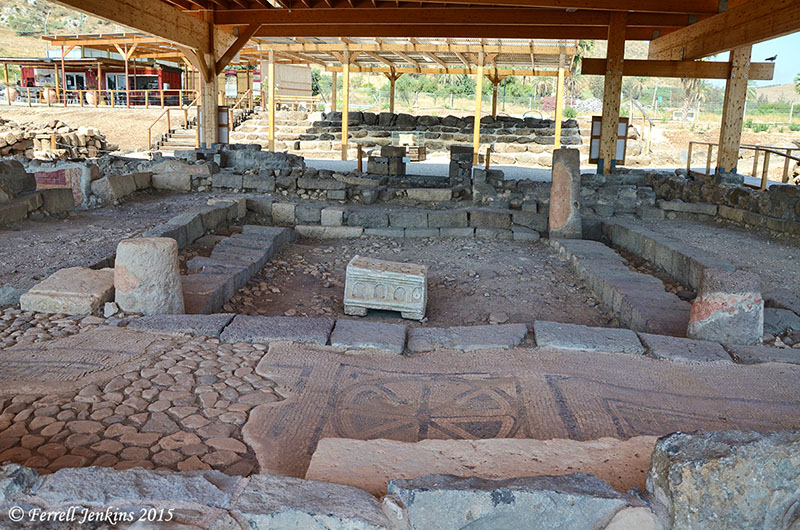
The Migdal synagogue reading room with the (suggested) reading table. Photo by Ferrell Jenkins.

The Migdal synagogue reading room with the (suggested) reading table. Photo by Ferrell Jenkins.

An IAA report on the excavation (which we cited here) reports,

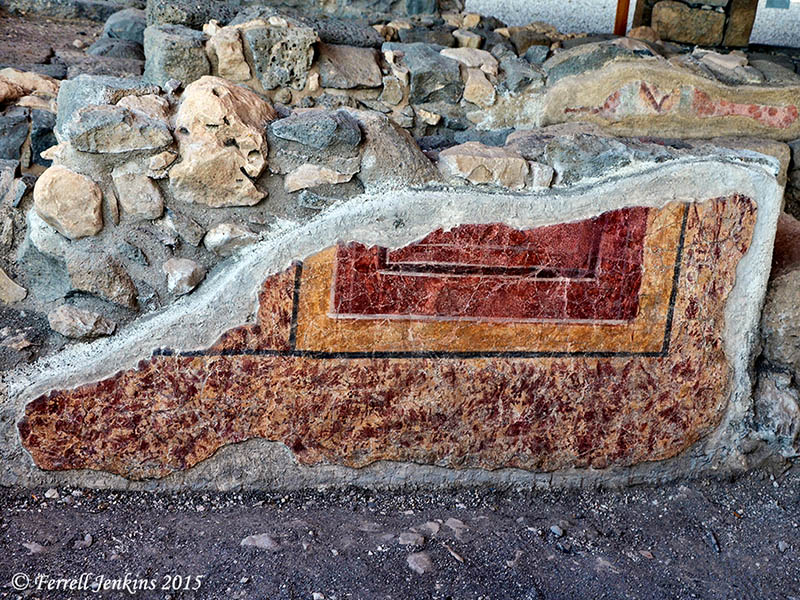
The main hall of synagogue is c. 120 square meters in area and its stone benches, which served as seats for the worshippers, were built up against the walls of the hall. Its floor was made of mosaic and its walls were treated with colored plaster (frescos).

An example of the reading room fresco. Photo Ferrell Jenkins.

An example of the reading room fresco. Photo Ferrell Jenkins.

The IAA report continues,

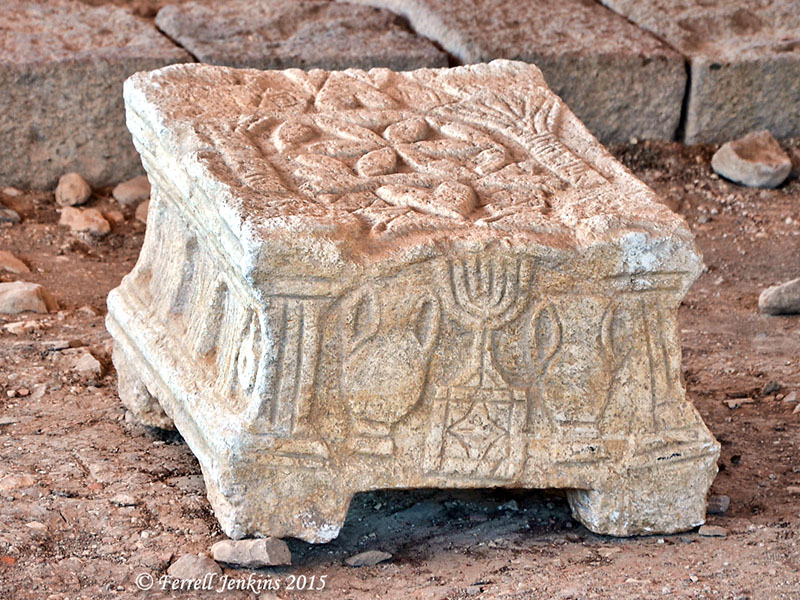
A square stone, the top and four sides of which are adorned with reliefs, was discovered in the hall. The stone is engraved with a seven-branched menorah set atop a pedestal with a triangular base, which is flanked on either side by an amphora (jars).

The Migdal synagogue reading table. Photo by Ferrell Jenkins.

A replica of the Migdal synagogue reading table. There are two replicas at the site and another at the Notre Dame Hotel in Jerusalem. I have been told that the original is now in the Rockefeller Museum, but I do not know if it is on display. Photo by Ferrell Jenkins.

Did Jesus visit this synagogue? At this point we can not say for sure, but it is possible.

Jesus went throughout all of Galilee, teaching in their synagogues, preaching the gospel of the kingdom, and healing all kinds of disease and sickness among the people. (Matthew 4:23 NET)

I think Magdala will become one of the most popular stops for Bible Study groups as they visit the Galilee area.

Capernaum has a new look

On our recent visit to Israel we visited some places we have been many times because of changes we expected to see. Capernaum was beginning to undergo some renovations when we were there in 2013.

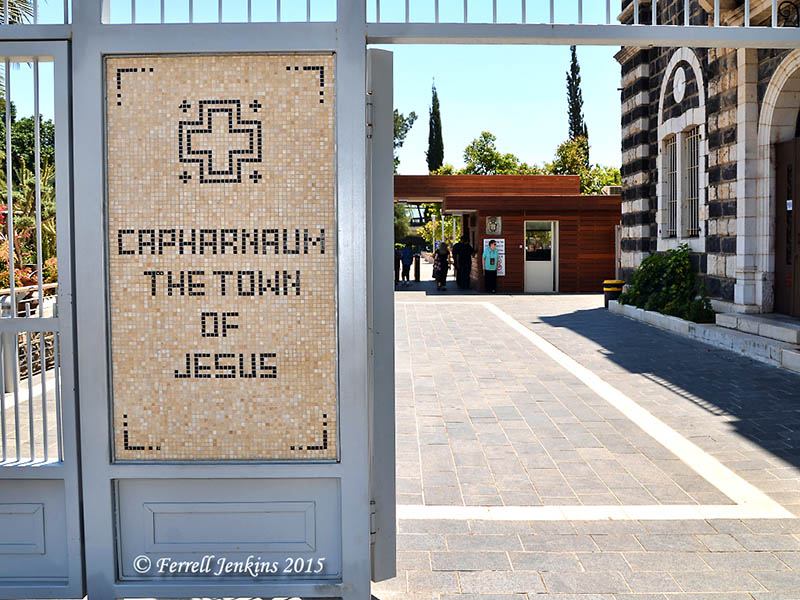
If first impressions are important, then Capernaum is now making a good first impression with the new entrance sign. You will observe that the ticket booth also has a new look. Since this is a private site, owned by the Franciscans, there is a small entry fee.

Capernaum (Capharnaum). Photo by Ferrell Jenkins.

The new entrance to Capernaum (Capharnaum). Photo by Ferrell Jenkins.

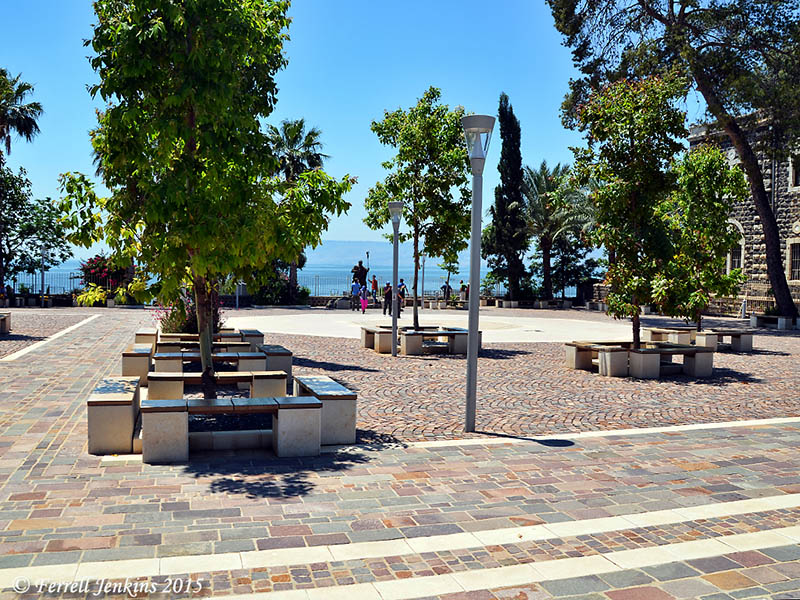
Instead of immediately moving into a crowded area to look at some of the architectural fragments excavated at the site, you have this beautiful plaza facing the Sea of Galilee. My photo can not do justice to the beauty of this site.

The new plaza at Capernaum. Photo by Ferrell Jenkins.

The new plaza at Capernaum. Photo by Ferrell Jenkins.

There were numerous bus loads of tourist visiting the site. I just waited for a larger group to move before making the picture. I did not see many American groups but the hotels were full of Asians, Africans, Hispanics, and some Australians, British, and Canadians.

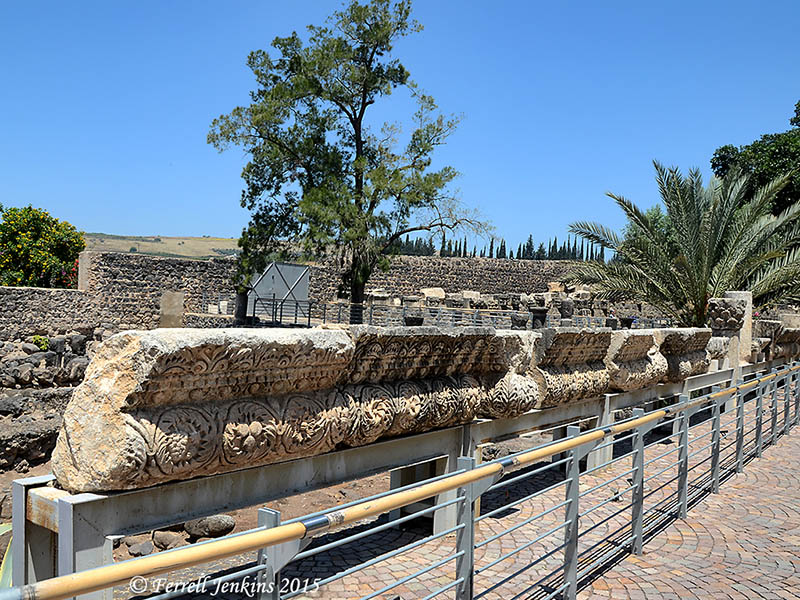
The architectural fragments uncovered in excavations have been moved to the north of the entrance (and the plaza). Rails have been installed to allow ease of access, and yet to protect the objects. This makes it easy to get nice closeups of certain artifacts.

Display of architectural fragments and other artifacts. Photo by Ferrell Jenkins.

Display of architectural fragments and other artifacts. Photo by Ferrell Jenkins.

Photos of the reconstructed synagogue at Capernaum were recently posted here.

Capernaum was located on the frontier between the territory of Herod Antipas and that of Herod Philip. The city became important in the earthly ministry of Jesus. Notice just a few events that make it so significant.

  • Jesus settled here, making Capernaum His “own city” (Mark 1:232-34).
  • Many of the miracles of Jesus were performed here (Mark 1:21-28).
  • Matthew worked as a tax collector at Capernaum (Matthew 9:9).
  • Peter lived here (Matthew 8:14).

Capernaum was one of three cities of the area denounced by Jesus  on account of their failure to believe.

Then he began to denounce the cities where most of his mighty works had been done, because they did not repent.  “Woe to you, Chorazin! Woe to you, Bethsaida! For if the mighty works done in you had been done in Tyre and Sidon, they would have repented long ago in sackcloth and ashes. But I tell you, it will be more bearable on the day of judgment for Tyre and Sidon than for you. (Matthew 11:20-22 ESV)

Pentecost in Jerusalem

Last evening at sundown the Jews began to celebrate their modern interpretation of  Pentecost (Shavu’ot). Christians know this from the Old Testament scriptures as the feast of weeks (Leviticus 23:15; Deuteronomy 16:9). Last evening we saw many Jews heading for the Western Wall through the Damascus Gate when we were there. The Orthodox Jews were the easiest to detect because of their distinctive dress.

Pentecost comes 50 days after Passover. It follows a sabbath and amounts to a two-day holiday here in Jerusalem. Those who are not religious may be seen at recreational places enjoying the time off as many persons in America do on any holiday. Some of the religious take the family to a hotel and allow non-Jews to serve them the food they wish. The hotel has a Shabbat elevator. You only make the mistake of getting on it once. It requires no work (= pushing the button for your floor), but it takes a long time to get where you are going. The elevator is programmed to stop at each floor. I don’t recall seeing anyone using the one in our hotel.

Back to more important issues. The church had its beginning with the preaching of the gospel in its fullness on the first Pentecost after the resurrection of Christ (Acts 2).

Model of Herod's Temple now displayed on the grounds of the Israel Museum. It was in this large area where the gospel of Christ was first preached in its fullness by Peter and the other Apostles on the first Pentecost after the resurrection of Christ. Photo by Ferrell Jenkins.

Model of Herod’s Temple now displayed on the grounds of the Israel Museum. It was in this large area where the gospel of Christ was first preached in its fullness by Peter and the other Apostles on the first Pentecost after the resurrection of Christ. Photo by Ferrell Jenkins.

The Apostle Paul, through his teaching and example, taught the early Christians to take their collection and to observe the Lord’s Supper on the first day of the week (1 Corinthians 16:1-2; Acts 20:7). On the return from his third preaching journey he hurried to be at Jerusalem for Pentecost.

For Paul had decided to sail past Ephesus, so that he might not have to spend time in Asia, for he was hastening to be at Jerusalem, if possible, on the day of Pentecost. (Acts 20:16 ESV)

I did not specifically pick the time of Pentecost to be in Jerusalem; it just happened to coincide with my travel schedule. It would be wonderful to see the gospel freely preached again in this city as it was on that first Pentecost after the death and resurrection of Jesus nearly two thousand years ago.

Jesus visited His hometown

Early in His ministry Jesus left Nazareth and made Capernaum his base of operation. From there He went all over Galilee and as far away as Tyre and Sidon and the Decapolis.

In the course of time Jesus returned to His hometown. Here is the  account of the events associated with that visit as recorded in the Gospel of Mark.

He went away from there and came to his hometown, and his disciples followed him. And on the Sabbath he began to teach in the synagogue, and many who heard him were astonished, saying, “Where did this man get these things? What is the wisdom given to him? How are such mighty works done by his hands? Is not this the carpenter, the son of Mary and brother of James and Joses and Judas and Simon? And are not his sisters here with us?” And they took offense at him. And Jesus said to them, “A prophet is not without honor, except in his hometown and among his relatives and in his own household.” And he could do no mighty work there, except that he laid his hands on a few sick people and healed them. And he marveled because of their unbelief. And he went about among the villages teaching.  (Mark 6:1-6)

We often hear the expression, “You can never go home again.” We see this played out in many ways. The college student who has enjoyed the freedom of being away from home seldom feels comfortable back in the family basement.

Jesus’ expression is also  commonly repeated.  “A prophet is not without honor, except in his hometown and among his relatives and in his own household.”

The familiarity with Jesus in His pre-ministry years, knowledge of his work as a carpenter, and his family, caused the residents of Nazareth to reject Him.

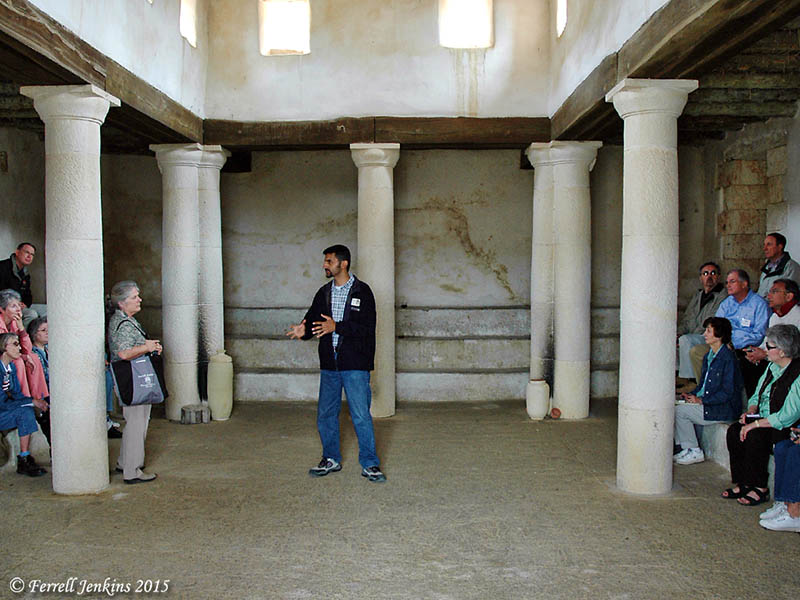
Our photo shows the interior of the synagogue at Nazareth Village. Perhaps the synagogue of Jesus’ time looked somewhat like this.

The Synagogue at Nazareth Village. Photo by Ferrell Jenkins.

The Synagogue at Nazareth Village. Photo by Ferrell Jenkins.

While we may not be able to return to the place where we grew up, we are always welcomed into the presence of the heavenly father.

Jesus taught in the synagogue at Capernaum

The gospel of Mark mentions Jesus teaching and performing miracles in the synagogue at Capernaum.

  • He taught in the synagogue and performed a miracle there (Mark 1:21-29)
  • He healed a man with a withered hand (Mark 3:1-5)
  • Jairus, one of the rulers of the synagogue, implored Jesus to make his daughter well. Jesus raised the young girl from the dead (Mark 5:22-43)

A synagogue has been partially reconstructed from the archaeological ruins at Capernaum. Scholars differ on the age of the synagogue with opinions ranging from the late second century to the fifth century. Italian archaeologists who excavated the site in 1981 say the synagogue dates to the Byzantine period (late fourth or early fifth century). Israeli scholars tend to place the synagogue in the second/third century.

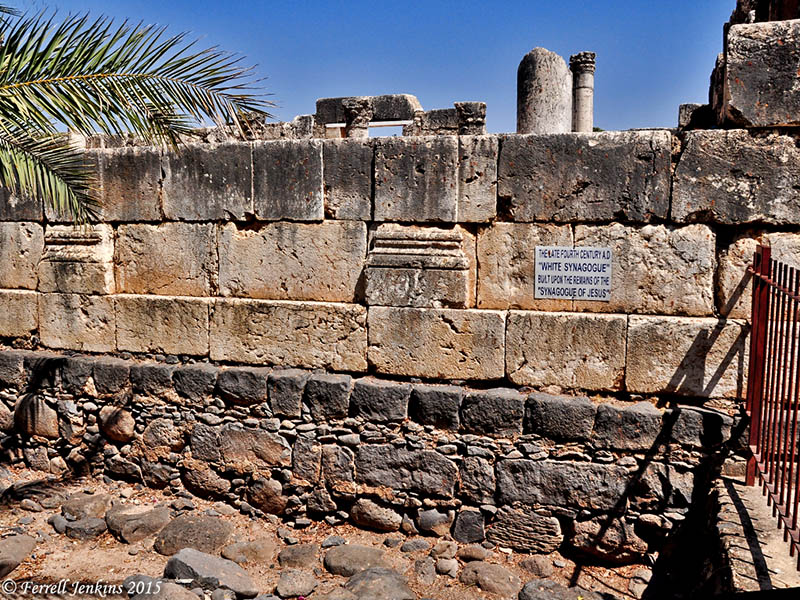
The Italians think they have found the basalt ruins of the first century synagogue under the floor of the fourth/fifth century one. You can see part of that black basalt foundation to the left of the steps. They believe that this earlier synagogue is the one built by the Roman centurion (Luke 5:1-5).

The reconstructed synagogue at Capernaum. Photo by Ferrell Jenkins.

The reconstructed synagogue at Capernaum. Photo by Ferrell Jenkins.

Our photo below shows a closer view of the basalt foundation.

The black basalt foundation is visible under the white limestone building. Photo by Ferrell Jenkins.

The black basalt foundation is visible under the white limestone building. Photo by Ferrell Jenkins.

Several articles about the Capernaum synagogue are available in Biblical Archaeology Review (1982 and 1983).

A sower went out to sow…

One of the best known parables of Jesus is the parable of the sower and the soils. Note the account recorded in Mark.

 Again he began to teach beside the sea. And a very large crowd gathered about him, so that he got into a boat and sat in it on the sea, and the whole crowd was beside the sea on the land. And he was teaching them many things in parables, and in his teaching he said to them: “Listen! Behold, a sower went out to sow. And as he sowed, some seed fell along the path, and the birds came and devoured it. Other seed fell on rocky ground, where it did not have much soil, and immediately it sprang up, since it had no depth of soil. And when the sun rose, it was scorched, and since it had no root, it withered away. Other seed fell among thorns, and the thorns grew up and choked it, and it yielded no grain. And other seeds fell into good soil and produced grain, growing up and increasing and yielding thirtyfold and sixtyfold and a hundredfold.” And he said, “He who has ears to hear, let him hear.” (Mark 4:1-9 ESV)

Jesus used this simple, easily understood illustration to teach about the word of God and the hearts of men. Read the full account in Matthew 13:3-23, Mark 4:1-20, and Luke 8:5-15.

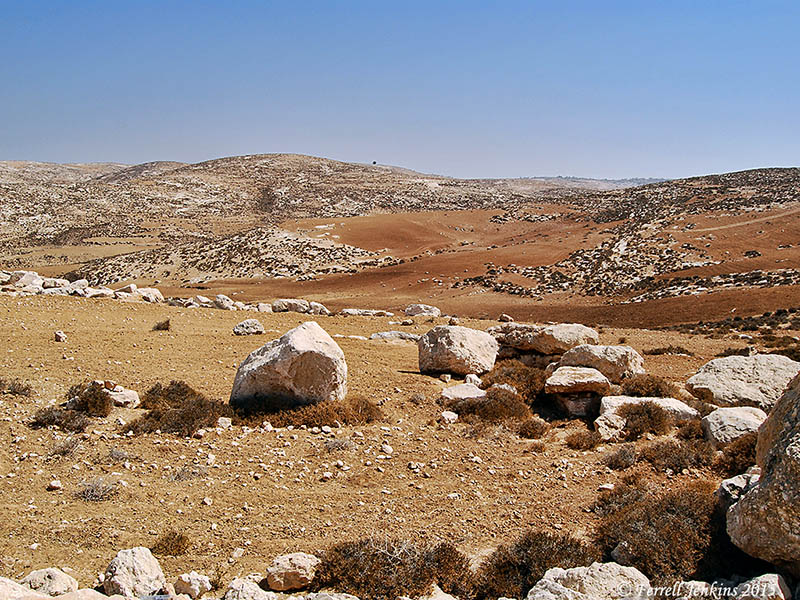
A few years ago I was traveling in the vicinity of Hebron in late August and saw these fields that had been plowed and readied for planting. I assume the crop would be barley or wheat. I was standing on the road. You can see the rocks (be sure the soil is rocky), the weeds (if not thorns), and the good ground. In the time of Jesus seed would be broadcast, scattered by hand. Seed would fall on all the areas, but only that which fell on good ground would bring forth an acceptable crop. Many of the fields in the central mountain range north of Bethlehem are much smaller, but each field has the four elements of good soil, rocks, thorns, and road. How would you describe your heart?

A field showing good soil, rocks, and weeds. Photo by Ferrell Jenkins.

A field showing good soil, rocks, and weeds. Photo by Ferrell Jenkins.

For photos of the area where Jesus likely taught this and other parables, see this post on The Cove of the Sower here.