Tag Archives: Apostle Paul

Acts 18 — Photo Illustrations: the Emperor Claudius

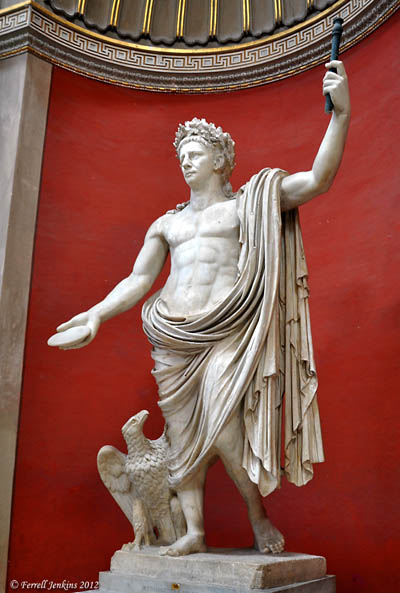
Claudius was the emperor of Rome from A.D. 41-54. This was a time when the message of Christ was spreading across the Roman Empire beginning from Jerusalem (Acts 1:8; 9:15). Much of the ministry of Paul took place during this period.

Claudius is mentioned twice in the Book of Acts.

  1. The great famine which affected the Empire during the time of Claudius prompted the disciples at Antioch to send relief to their brethren living in Judea (Acts 11:28-30). This is thought to have occurred about A.D. 46.
  2. The Emperor ordered all Jews to leave Rome. Because the Christians were considered by many as a sect of the Jews, Aquila and Priscilla left and went to Corinth where they met Paul (Acts 18:1-3). Paul was at Corinth for a period of 18 months between A.D. 51-53.
Emperor Claudius (37-54 A.D.). Vatican Museum. Photo by Ferrell Jenkins.

Emperor Claudius (41-54 A.D.), shown as Jupiter, wearing the civil crown of oak leaves and with the eagle at his feet. Found at Lanuvio, Italy, in 1865.Vatican Museum. Photo by Ferrell Jenkins.

The beautiful sculpture of Claudius is now displayed in the Vatican Museum.

Acts 16 — Photo Illustrations

The Apostle Paul came to Philippi on his second preaching journey. Luke accurately describes the city with these words:

So putting out to sea from Troas, we ran a straight course to Samothrace, and on the day following to Neapolis; and from there to Philippi, which is a leading city of the district of Macedonia, a Roman colony; and we were staying in this city for some days. (Act 16:11-12 NAU)

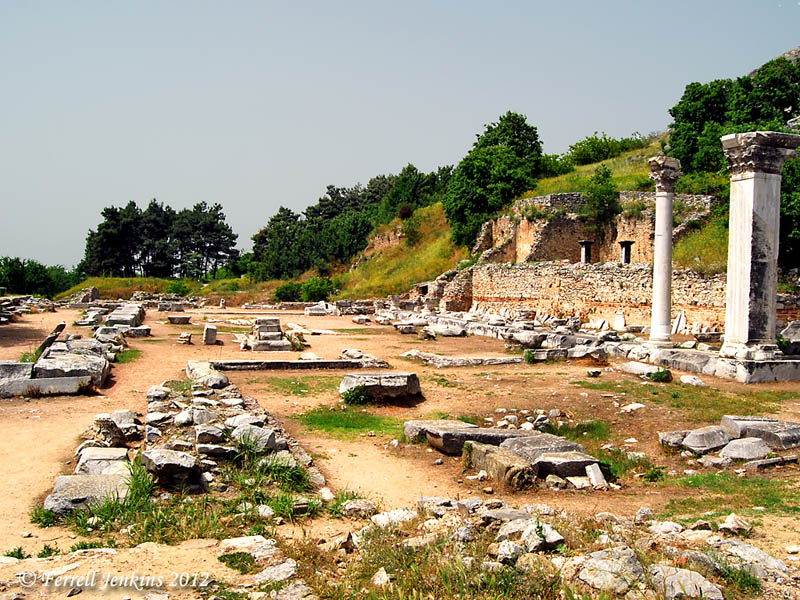
The photo below shows ruins of the forum (or agora) of the city where much of the activity took place. Portions of the famous Egnatian Way may be seen at the edge of the forum, but partially buried under the earth and modern road on the right. [See correction here.]

Forum of Philippi. Photo by Ferrell Jenkins.

The Forum (Agora) of Philippi. Photo by Ferrell Jenkins.

At Philippi, Paul preached to and baptized Lydia and her household, and the jailer.

“From the Land of Black Tents”

In his book The Apostle: A Life of Paul, noted biographer John Pollock begins his book with information about Paul’s background at Tarsus. He calls the first chapter, “From the Land of Black Tents.”

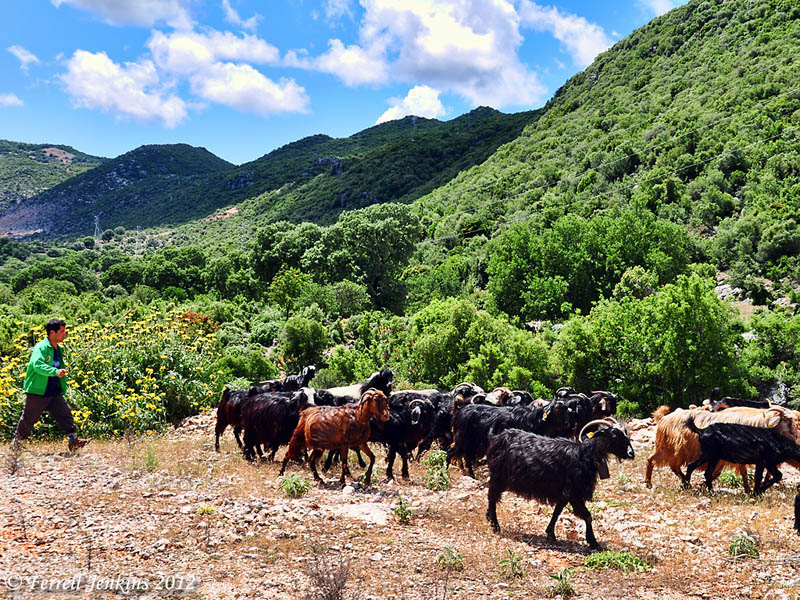
His father most likely was a master tentmaker, whose craftsmen worked in leather and in cilicium, a cloth woven from the hair of the large long-haired black goats that grazed (as they still do) on the slopes of the Taurus. The black tents of Tarsus were used by caravans, nomads, and armies all over Asia Minor and Syria.

We still see these herds of long-haired black goats in many parts of Turkey. The photo below was made east of Myra near the Mediterranean coast of Turkey.

Goats with long black hair, east of Myra, Turkey. Photo by Ferrell Jenkins.

Goats with long black hair east of Myra, Turkey. Photo by Ferrell Jenkins.

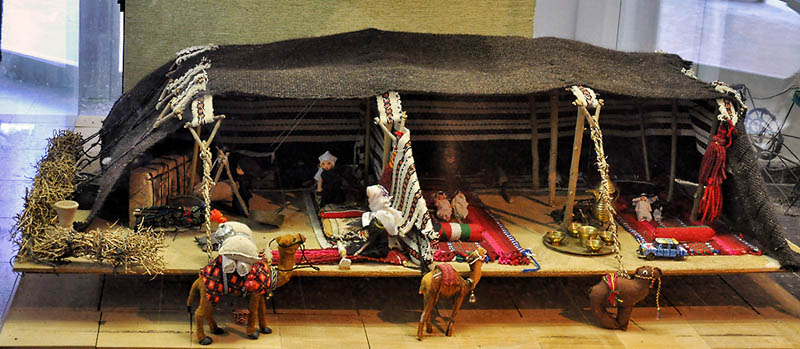
The Museum for Beduin Culture at Kibbutz Halav in the Negev of Israel displays a small model of a beduin (bedouin) tent. This museum intends to preserve the memory of the original bedouin life that is quickly being replaced by a permanent life and housing.

Bedouin Tent Model displayed at the Museum for Beduin Culture. Photo by Ferrell Jenkins.

Tent Model displayed at the Museum for Beduin Culture. Photo by Ferrell Jenkins.

Paul said,

But Paul said, “I am a Jew of Tarsus in Cilicia, a citizen of no insignificant city; and I beg you, allow me to speak to the people.” (Acts 21:39 NAU)

Acts 13 — Photo Illustrations # 2

During the trip to Israel I got a little behind in the photo illustrations for the chapters of Acts.

When we come to Acts 13 and 14, there are so many places to consider that it could take weeks to cover them all in detail. In fact, if you use the search box you will see that we have posts on most of the places mentioned in these chapters.

It seems that Paul and Barnabas did not stop to preach in Perga on the outgoing portion of the first journey. The text says, almost casually, that “going on from Perga, they arrived at Pisidian Antioch” (Acts 13:14).

Here we have one of the longer sermons of the book of Acts — Paul’s sermon in the Jewish synagogue. While it appears that we have a vibrant Jewish community in Pisidian Antioch, we also find a receptive Gentile audience. When the Jews rejected the message of the risen Christ, Paul and Barnabas said,

“we are turning to the Gentiles.” (Acts 13:46 ESV)

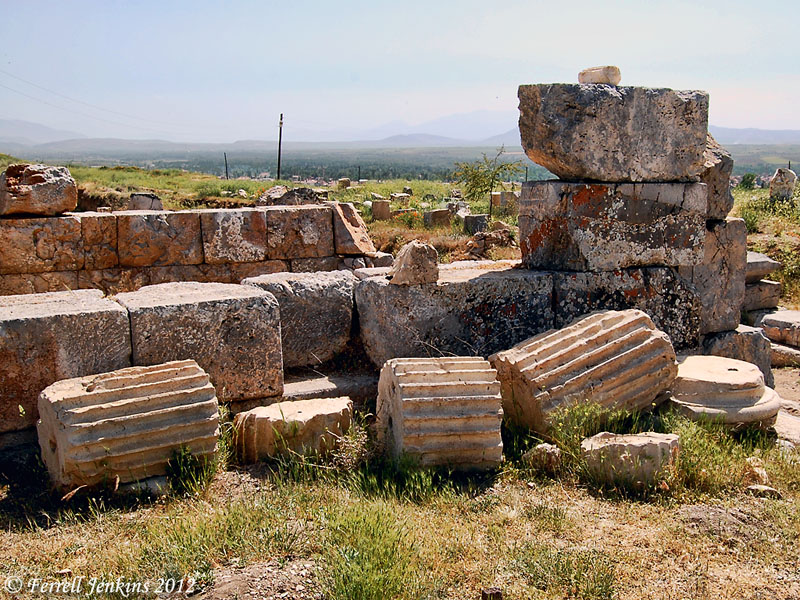
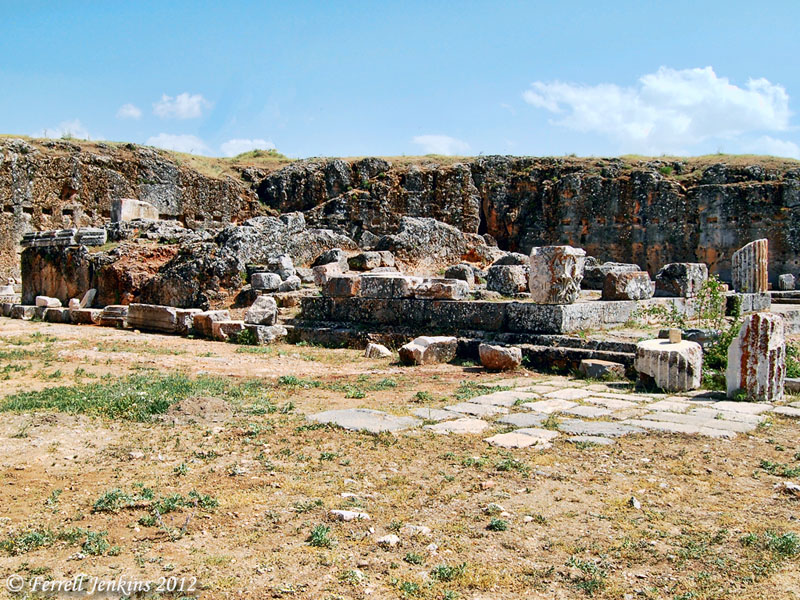
Pisidian Antioch was a city of numerous idol temples. There was a sanctuary or temple dedicated to the Emperor Augustus (30 B.C. – A.D. 14) built by Tiberias (A.D. 14-37).

Ruins of the Augustus Imperial Sanctuary at Pisidian Antioch. Photo by Ferrell Jenkins.

Ruins of the Augustus Imperial Sanctuary at Pisidian Antioch. Photo by Ferrell Jenkins.

The foundation of the sanctuary is cut from the solid bedrock.
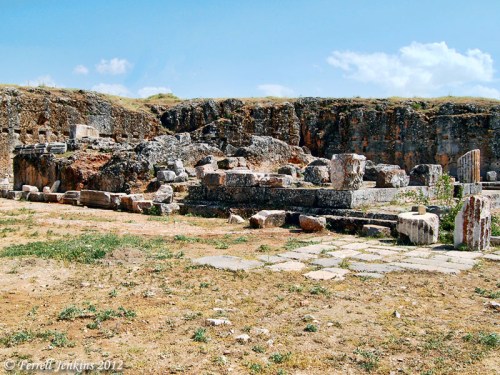
The Augustus Imperial Sanctuary at Pisidian Antioch. Photo by Ferrell Jenkins.

The Augustus Imperial Sanctuary at Pisidian Antioch. Photo by Ferrell Jenkins.

Peter Walker describes the temple,

Beyond the propylon was a large, semicircular courtyard, surrounded by colonnades, the eastern part of which was cut out from the hill-side’s rock. And standing in the centre, towards the back, was the sanctuary of Augustus’ temple. Though quite small – some 15 by 30 feet (4.5 x 9 m) – it was set on a high foundation of natural rock and approached by a further twelve steps. Antioch’s residents were expressing in impressive fashion their gratitude to the emperor for their city’s increased prestige under his rule. However, for Paul it demonstrated the daunting challenge ahead. What room would there be for his own message, focused on a rival world-ruler, in a city where this imperial cult was evidently growing at such a pace? (In the Steps of Paul, 87,89).

Maps. In your study of Acts you might enjoy the use of the Digital Map of the Roman Empire available here. This map, based on the Barrington Atlas, includes the road system. Because the maps show the terrain, you can get some concept of the difficulties encountered by Paul and his companions as they traveled from place to place.

Thanks to Dr. Rasmussen for the lead to this map.

Acts 13 — Photo Illustrations

How long would it take to provide photo illustrations for Acts 13? Here are some of the places and persons we might consider.

  • Syrian Antioch
  • Seleucia
  • Cyprus
  • Salamis, Cyprus
  • Paphos, Cyprus
  • Barnabas
  • Sergius Paulus
  • Perga in Pamphylia
  • Pisidian Antioch
  • Iconium

Not to mention the historical references in Paul’s sermon in the synagogue at Pisidian Antioch. (You can find posts about most, if not all, of the above list by using the Search box.)

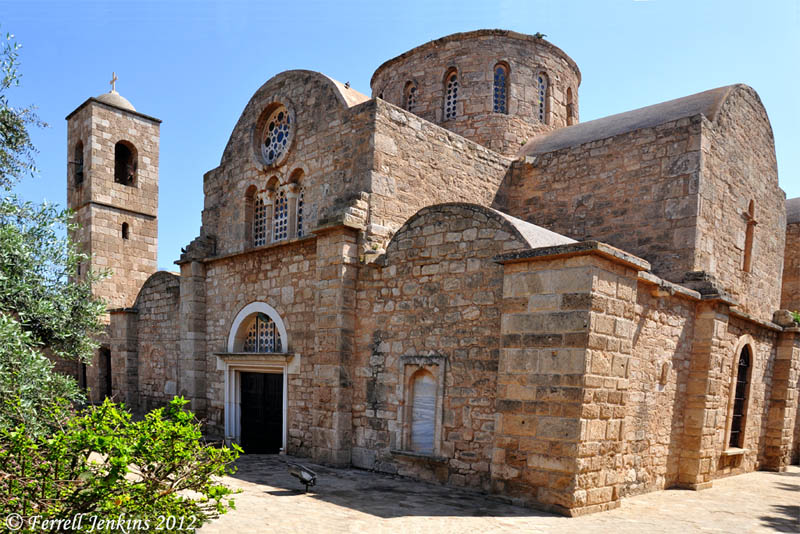
For today, I have chosen to call attention to Barnabas and his association with Cyprus. The first stop made by Barnabas, Saul, and John Mark on Cyprus was at the eastern port of Salamis. A few miles west of the harbor and ancient city we now have the Monastery and Church of St. Barnabas. Salamis, and this building, are now located in the Turkish Republic of Norther Cyprus. The folks in the south, the Republic of Cyprus, speak of the north as occupied territory. (I leave the politics of the issue for others.) The monastery and church, erected in A.D. 477, now houses an icon museum and a small archaeological museum.

Tradition has it that Barnabas was martyred by Jews on Cyprus, but we have no evidence to back up this assertion.

Church of St. Barnabas at Salamis, Cyprus.

Late 5th century church of St. Barnabas at Salamis, Cyprus. Photo by Ferrell Jenkins.

Acts 4:36 informs us that Joseph was also called Barnabas by the apostles. The name Barnabas means Son of Encouragement or Exhortation. He must have been an eloquent speaker, especially good at exhorting and encouraging others. He was generous with his property, a good man, full of the Holy Spirit and of faith (Acts 11:24).

Barnabas was of the tribe of Levi and a native of the island of Cyprus. He later introduced Saul of Tarsus (Paul) to the brethren in Jerusalem (Acts 9:26-27) and preached in Antioch (Acts 11:22-30). Barnabas, and his cousin John Mark (Colossians 4:10), joined Saul for the first preaching journey (Acts 13-14).

After a sharp disagreement between Barnabas and Paul, Barnabas took Mark with him to Cyprus (Acts 15:39). One wonders if Mark also was a native of Cyprus.

Acts 9 & 11 — Photo Illustrations: Tarsus in Cilicia – home of Saul (Paul)

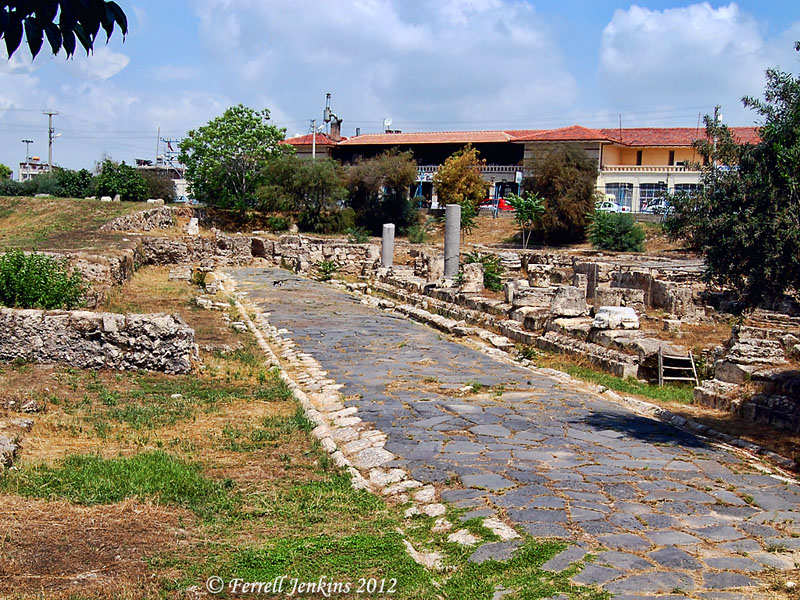
Tarsus in Cilicia was Paul’s native home, described as “no insignificant city” (Acts 9:11; 21:39; 22:3). The city had been important historically. Located near the Mediterranean on the River Cydnus, about 30 miles from the famous Cilician Gates, it was a fortified city and trade center as early as 2000 B.C. It had been captured by the Assyrian kings, Shalmaneser III (833 B.C.) and Sennacherib (698 B.C.), and had seen the likes of Alexander the Great and Cleopatra.

Roman Road at Tarsus in Cilicia. Photo by Ferrell Jenkins.

Roman Road at Tarsus in Cilicia. Photo by Ferrell Jenkins.

Tarsus was important commercially. Ancient writers mention the linen woven here from flax which grew in the fertile plain. A material called cilicium was woven from goat’s hair and used to make coverings which would protect against cold and wet. The city was also culturally important. Strabo describes the people as being avid in the pursuit of culture. Tarsus was a university town and noted as the home of several well-known philosophers, especially of the Stoic school. Barclay says:

“If a man was destined to be a missionary to the world at large, there was no better place in all the east for him to grow to manhood than in Tarsus” (The Mind of Paul, 25-26).

After Hellenistic Jews in Jerusalem sought to put Saul to death, the brethren sent him off to Tarsus.

And he was talking and arguing with the Hellenistic Jews; but they were attempting to put him to death. But when the brethren learned of it, they brought him down to Caesarea and sent him away to Tarsus. (Acts 9:29-30 NAU)

When Barnabas was overwhelmed in the work at Antioch, he went to Tarsus to look for Saul. Saul came to Antioch with Barnabas and they taught a large number of people (Acts 11:25-26).

Paul and the Nabatean ruler Aretas IV

Luke’s account of the conversion of Saul and his subsequent time in Damascus records the nighttime escape from the city.

When many days had passed, the Jews plotted to kill him, but their plot became known to Saul. They were watching the gates day and night in order to kill him,  but his disciples took him by night and let him down through an opening in the wall, lowering him in a basket.  (Acts 9:23-25 ESV)

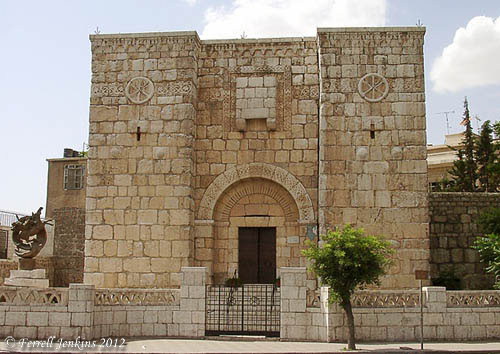
A modern chapel built into the old city wall marks a spot where this might have happened. Tradition calls it St. Paul’s Window.

St. Paul's Window in Damascus. Photo by Ferrell Jenkins.

St. Paul’s Window in Damascus. Photo by Ferrell Jenkins.

In 2 Corinthians, Paul provides historical context for this event.

At Damascus, the governor under King Aretas was guarding the city of Damascus in order to seize me,  but I was let down in a basket through a window in the wall and escaped his hands. (2 Corinthians 11:32-33 ESV)

Paul says that the governor (literally ethnarch) under Aretas the king was guarding the city. Aretas IV was a Nabatean ruler whose jurisdiction, in some way, extended to Damascus. The king, whose rule extended from 9 B.C. to A.D. 40, was father-in-law to Herod Antipas. This chronological note lets us know that Saul’s conversion was prior to A.D. 40.

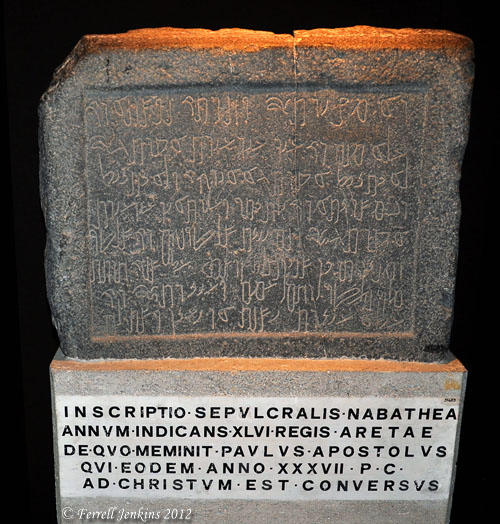
Sometimes one gets lucky when visiting certain sites or museums. My last visit to the Vatican Museum in Rome provided a nice surprise. A Nabatean tomb inscription mentioning Aretas was on display in a special exhibit.

Nabatean inscription mentioning King Aretas. Vatican Museum. Photo by Ferrell Jenkins.

Nabatean inscription mentioning King Aretas. Vatican Museum. Photo: Ferrell Jenkins.

A friend in Pisa, Italy, Dr. Arrigo Corazza, has provided me with a quick translation of the Latin sign underneath the inscription:

NABATEAN SEPULCHRAL INSCRIPTION REFERRING TO THE 46th YEAR OF THE KING ARETAS (37 AD), WHO IS QUOTED BY THE APOSTLE PAUL (WHO CONVERTED AROUND THIS TIME).

For those who may have forgotten, the Nabateans were responsible for the beautiful temples and tombs we see when we visit Petra.

Acts 9 — Photo Illustrations

Damascus is first mentioned in the Bible at the time of Abraham (Gen. 14:15; 15:2-3). As the capital of Syria, the city had much contact with the kingdoms of Israel and Judah.

All of the New Testament references to Damascus are related to the conversion of Saul of Tarsus (Acts 9; 22; 26; 2 Cor. 11:32; Gal. 1:17). Saul had participated in the stoning of Stephen and was active in the persecution of the disciples of Christ in Jerusalem. He asked the high priest for authority to go to Damascus and seek out men and women who belonged to the Way and bring them bound to Jerusalem.

The Lord appeared to Saul as he approached Damascus and told him to go into the city where he would be told what he must do (Acts 9:6). Saul stayed at a house on the street called Straight. Ananias came to him and told him to arise and be baptized so that his sins might be washed away (Acts 22:16; 9:18). Saul stayed with the disciples for several days and immediately began to proclaim Jesus in the synagogues as the Son of God (9:20).

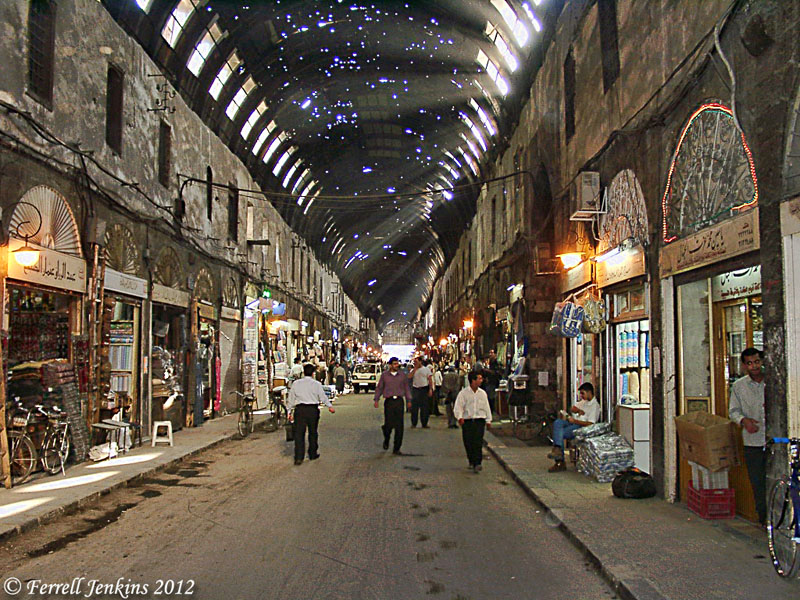
The photo below is one I made on Straight Street in 2002. This is not the main shopping street in the old city, but is historically significant.

The street called Straight in Damascus (the Via Recta). Photo by Ferrell Jenkins.

The street called Straight in Damascus (the Via Recta). Photo by Ferrell Jenkins.

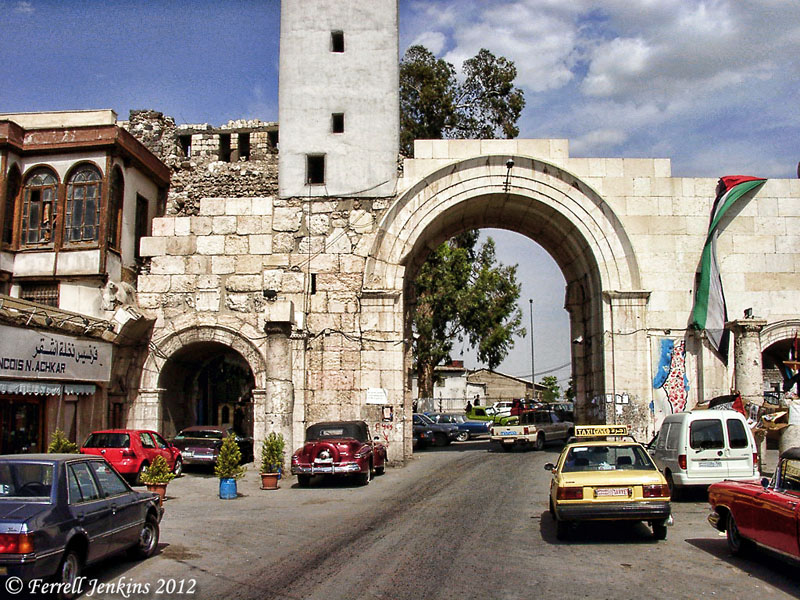
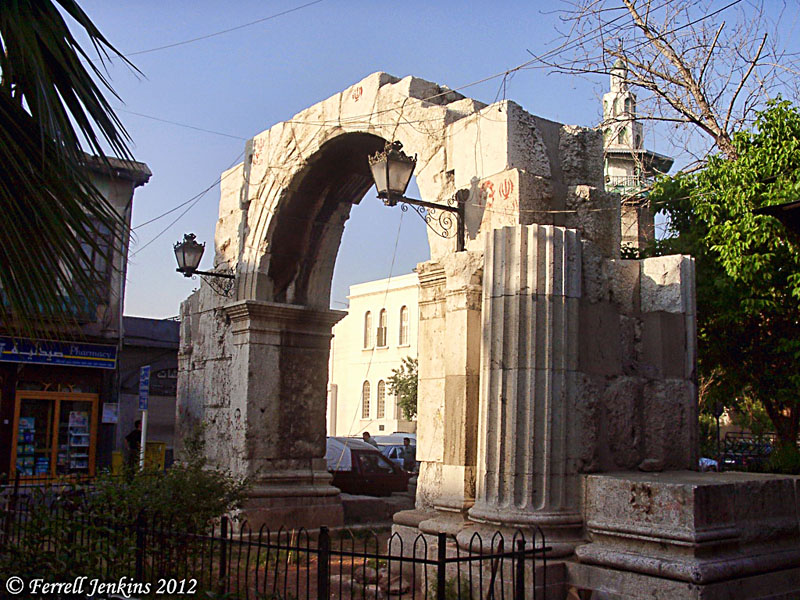
The street called Straight (Acts 9:11), the ancient Via Recta of the Roman city, now lies about 20 feet below the present street which runs the length of the old city, east to west. At the east end of the street a Roman gate has been elevated to the present level and partially restored.

Roman arch at the east end of Straight Street. Photo by Ferrell Jenkins.

Roman arch at the east end of Straight Street. Some of the stone work on the left of the central arch is original. The gate is now called Bab Sharki (Eastern Gate). Photo by Ferrell Jenkins.

A small monumental arch, pictured below, can be seen near the middle of the Via Recta.

Roman Gate on Straight Street in Damascus. Photo by Ferrell Jenkins.

Roman Gate on Straight Street in Damascus. Photo by Ferrell Jenkins.

Note: This post is repeated, with editing, from Sept. 26, 2008 where it was entitled “Saul (Paul) in Damascus.” Another post on Damascus and Paul may be read here.

Akko’s Hellentistic Harbor Revealed

The Israel Antiquities Authority announced the results of archaeological excavations carried out at the Mediterranean city of Akko (Acco in some English versions).

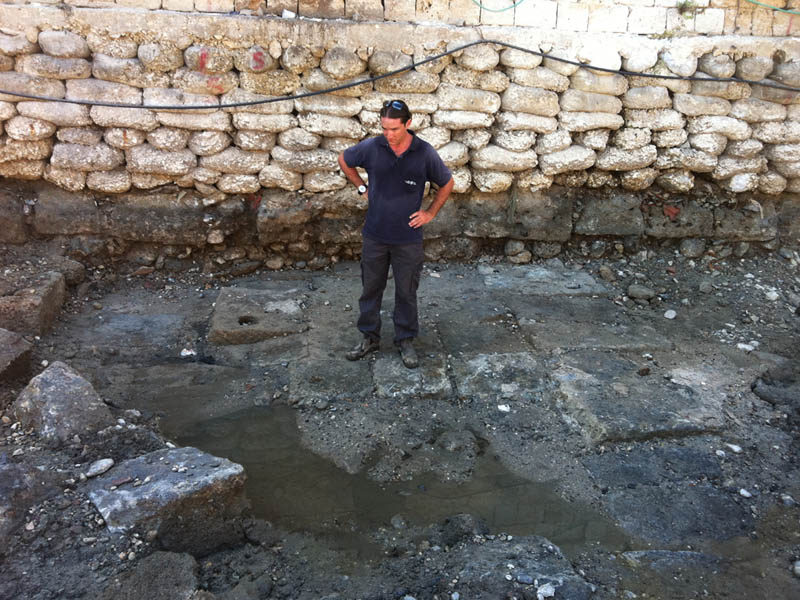
Akko Hellenistic Harbor quay. Photo: Kobi Sharvit, IAA.

A member of the Marine Archaeology Unit of the Israel Antiquities Authority standing on the ancient quay that was exposed in Akko. In the middle of the picture one can see the floor of the quay, built of large dressed stones. In some of the stones there is a hole for inserting a wooden pole – probably for mooring and/or dragging the boat. Photo: Kobi Sharvit, courtesy IAA.

Evidence of a harbor operating during the Hellenistic period (3rd-2nd century B.C.). This harbor was said to be the most important harbor in Israel at the time.

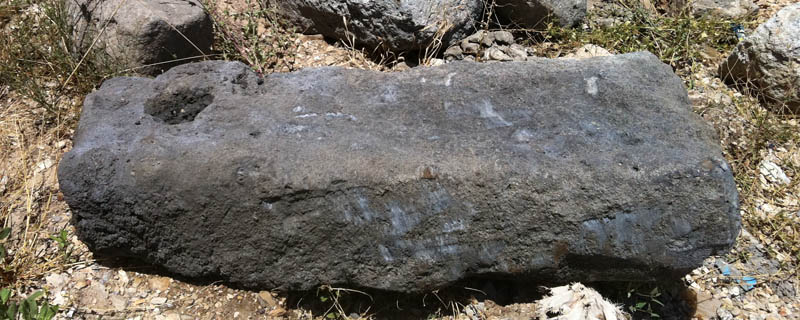
According to Kobi Sharvit, director of the Marine Archaeology Unit of the Israel Antiquities Authority, “Among the finds we’ve discovered now are large mooring stones that were incorporated in the quay and were used to secure sailing vessels that anchored in the harbor c. 2,300 years ago. This unique and important find finally provides an unequivocal answer to the question of whether we are dealing with port installations or the floor of a building. In addition, we exposed collapse comprised of large dressed stones that apparently belonged to large buildings or installations, which was spread of a distance of dozens of meters. What emerges from these finds is a clear picture of systematic and deliberate destruction of the port facilities that occurred in antiquity”

. Sharvit adds, “Recently a find was uncovered that suggests we are excavating part of the military port of Akko. We are talking about an impressive section of stone pavement c. 8 meters long by c. 5 meters wide that was partially exposed. The floor is delimited on both sides by two impressive stone walls that are also built in the Phoenician manner. It seems that the floor between the walls slopes slightly toward the south, and there was a small amount of stone collapse in its center. Presumably this is a slipway, an installation that was used for lifting boats onto the shore, probably warships in this case”. According to Sharvit, “Only further archaeological excavations will corroborate or invalidate this theory.”

The news release suggests that the pottery vessels came “from islands in the Aegean Sea, including Knidos [Cnidus], Rhodes, Kos [Cos] and others, as well as other port cities located along the Mediterranean coast.”

Akko Hellenistic harbor mooring stone. Photo: Kobi Sharvit, courtesy IAA.

A mooring stone that was incorporated in the quay. There was a hole in the stone in which the mooring/anchoring rope was inserted. Photo: Kobi Sharvit, courtesy IAA.

Acco is mentioned only once in the Bible. The city is within the territory originally allotted to the tribe of Asher, but the tribe was unable to conquer it.

Asher did not drive out the inhabitants of Acco, or the inhabitants of Sidon or of Ahlab or of Achzib or of Helbah or of Aphik or of Rehob, (Judges 1:31 ESV)

After about 100 B.C. the coastal city was known as Ptolemais (Acts 21:7). Paul spent one day with the brethren here on the return from his third journey.

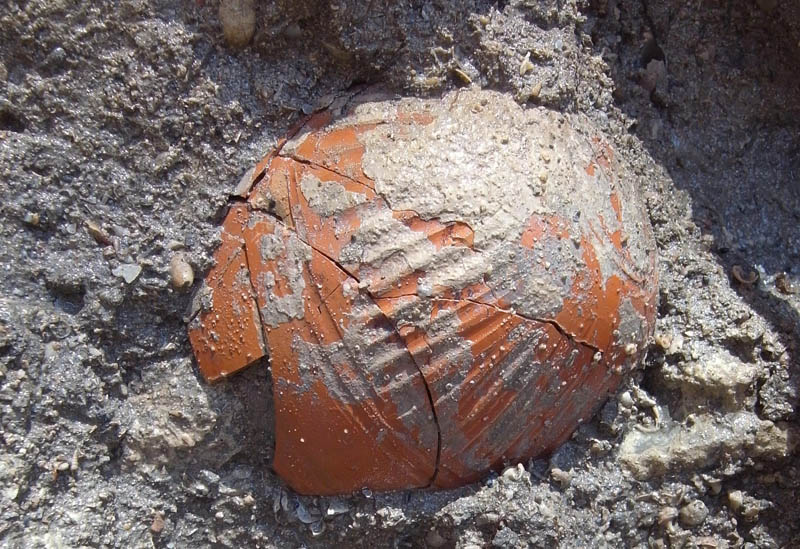
Imported bowl from Hellenistic period. Photo: Kobi Sharvit, courtesy IAA.

An imported bowl characteristic of the Hellenistic period. The bowl was found in a layer of harbor sludge. This layer contained thousands of intact pottery vessels, potsherds, etc. Photo: Kobi Sharvit, courtesy IAA.

The full IAA report with links to the photos is temporarily available here.

HT: Joseph Lauer

Roman artifacts in the Samsun Archaeology Museum

Our main interest in visiting the Black Sea coastal cities of Samsun and Sinop is because they are part of the ancient Roman province of Pontus. Somewhere in Pontus, probably Amisos (now Samsun), was the beginning point for the messenger who carried Peter’s first epistle to the elect of the diaspora residing in Pontus, Galatia, Cappadocia, Asia, and Bithynia (1 Peter 1:1).

The Archaeology Museum in Samsun has only a few items from the first century Roman period on display, but they are significant.

A marble head of Augustus is displayed prominently. Augustus was the Roman Emperor from 30 B.C. to A.D. 14. He is mentioned only once in the New Testament, but his influence in the eastern part of the Empire is evident in many way. The apostles traveled along roads built in the days of Augustus.

Luke records that the decree for a census to be taken of all the inhabited earth went out from Augustus.

Now in those days a decree went out from Caesar Augustus, that a census be taken of all the inhabited earth. (Luke 2:1 NAU)

This accounts for Mary and Joseph traveling from Nazareth to Bethlehem at the time of the birth of Jesus.

Roman Emperor Augustus. Displayed in Samsun Archaeology Museum. Photo by Ferrell Jenkins.

Augustus. Displayed in Samsun Archaeology Museum. Photo by Ferrell Jenkins.

I was surprised at the many references to Augustus on this blog. Just put the word Augustus in the search box to locate posts that mention him.

There is a first century image is that of a young athlete in the museum. He is full height, with arms missing.

Young Roman athlete in Samsun Archaeology Museum. Photo by Ferrell Jenkins.

Young Roman athlete in Samsun Archaeology Museum. Photo by Ferrell Jenkins.

The Apostle Paul used several illustrations from athletics. He told the young preacher Timothy that discipline and self control were necessary in his work as a preacher.

Every athlete exercises self-control in all things. They do it to receive a perishable wreath, but we an imperishable. So I do not run aimlessly; I do not box as one beating the air.  But I discipline my body and keep it under control, lest after preaching to others I myself should be disqualified. (1 Corinthians 9:25-27 ESV)