Excavations at Derbe

The first excavations ever have begun at the ancient city of Derbe. Derbe was visited by the Apostle Paul and Barnabas on the first preaching journey (Acts 14:20-21). Paul returned with Silas on the second journey (Acts 16:1).

Today our tour group visited Kerti Hüyuk, the site widely believed to be ancient Derbe. Several squares were opened on the top of the mound in 2013.
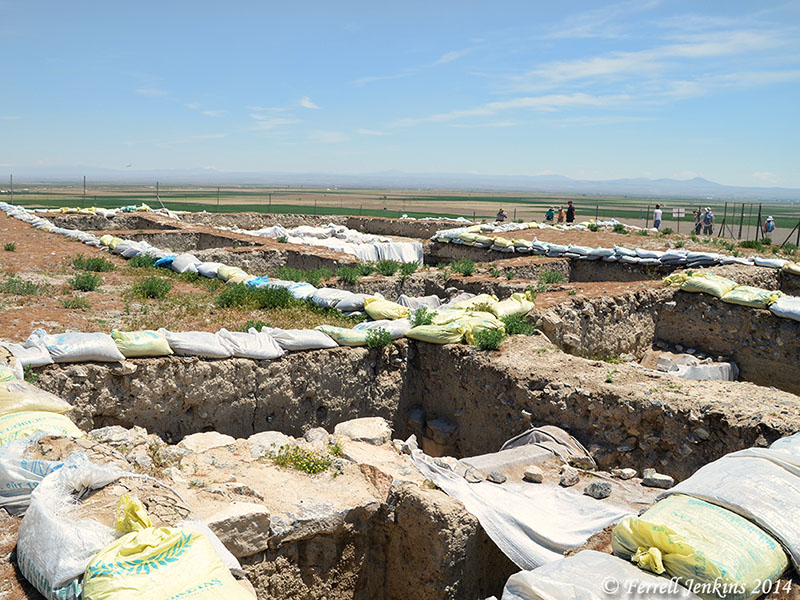
Recent excavation at Derbe. Photo by Ferrell Jenkins, May 14, 2014.

Recent excavation at Derbe. Photo by Ferrell Jenkins, May 14, 2014.

The report in a Turkish newspaper quotes Associate Professor Mehmet Tekocak of Selçuk University:

So far the excavations have unearthed ancient wall remains. “There are brick and stone walls. We found graves and skeletons inside the walls. Anthropologic works will reveal the ages and genders of these skeletons and how they died. Works show us that this place received a lot of damage, and most architectural materials were removed for use in other places. This place was seen as a kind of stone quarry. We found the remains of a church-like structure, and we believe that we will find new structures as excavations continue. Even these remains alone show us that a Christian society lived in this tumulus,” Tekocak said.

There is no hint as to the age of the church-like structure.

See the report in Hurriyet Daily News here. We look forward to future reports from Derbe.

HT: HolyLandPhotos Blog.
Another blogger

Just learned this morning that Brian Johnson is blogging during the tour in Turkey. He has visited other parts of Turkey previously and spent a semester at Jerusalem University College in Israel. The name of his blog is Byteofisrael.blogspot.com. Since he is involved with computers in his work, he is doing something unique for us. He began today charting our trip on Google Maps.

Scroll back a couple of posts for others of our group who are blogging.

The tour photo

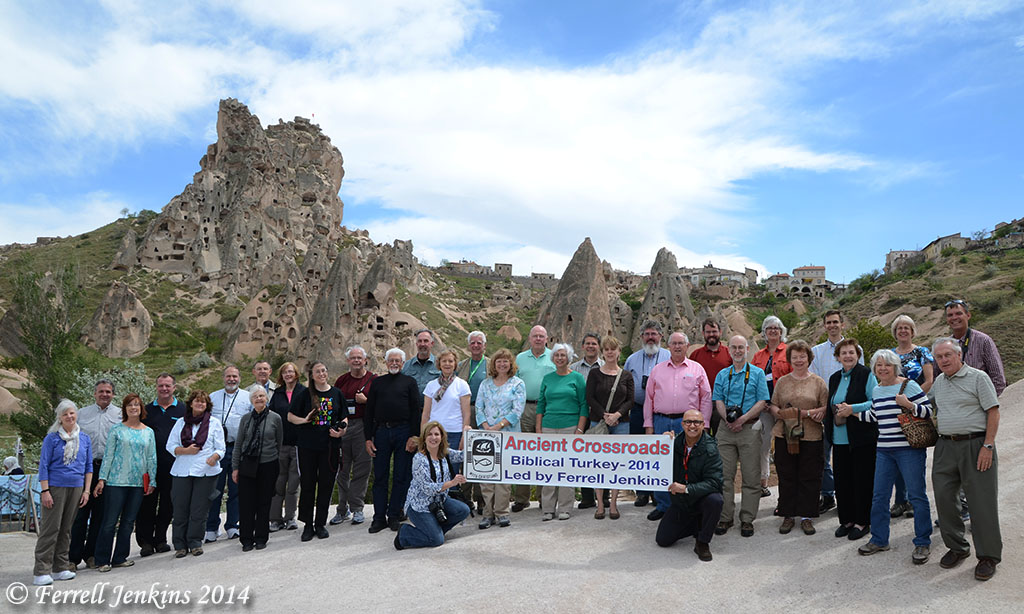
We spent the full day in Cappadocia. As usual with our tour, we have a local photographer to make a group photo at one of the interesting spots we visit. Our photo this time was made at Uchisar. Do you know anyone in our group?

Ancient Crossroads Tour of Biblical and Historical Turkey. Photo taken at Uchisar in Cappadocia. Photo by Ferrell Jenkins.

Ancient Crossroads Tour of Biblical and Historical Turkey. Photo taken at Uchisar in Cappadocia. Click on photo for a larger image.

The Bible tells us that Jews of Cappadocia were present in Jerusalem on the day of Pentecost (Acts 2:9). Peter wrote his epistles to saints scattered throughout Cappadocia and other places in Roman Asia Minor (modern Turkey).

Peter, an apostle of Jesus Christ, To those who are elect exiles of the dispersion in Pontus, Galatia, Cappadocia, Asia, and Bithynia,  2 according to the foreknowledge of God the Father, in the sanctification of the Spirit, for obedience to Jesus Christ and for sprinkling with his blood: May grace and peace be multiplied to you. (1 Peter 1:1-2)

John Freely describes Cappadocia in these words:

“Most of this part of Cappadocia is covered with a deep layer of tufa, a soft stone of solidified mud, ash and lava which once poured down from the now extinct volcanoes on Hasan Dagi and Ericiyes Dagi, the two great mountain peaks of Cappadocia. In the eons since then the rivers of the region have scoured canyons, gorges, valleys and gulleys through the soft and porous stone, and the elements have eroded it into fantastic crags, folds, turrets, pyramids, spires, needles, stalagmites, and cones, creating a vast outdoor display of stone sculptures in an incredible variety of shapes and colours” (The Companion Guide to Turkey, 238).

In the centuries after New Testament times many Christians settled in this volcanic region of perhaps 50,000 cones.

Traveling in Turkey

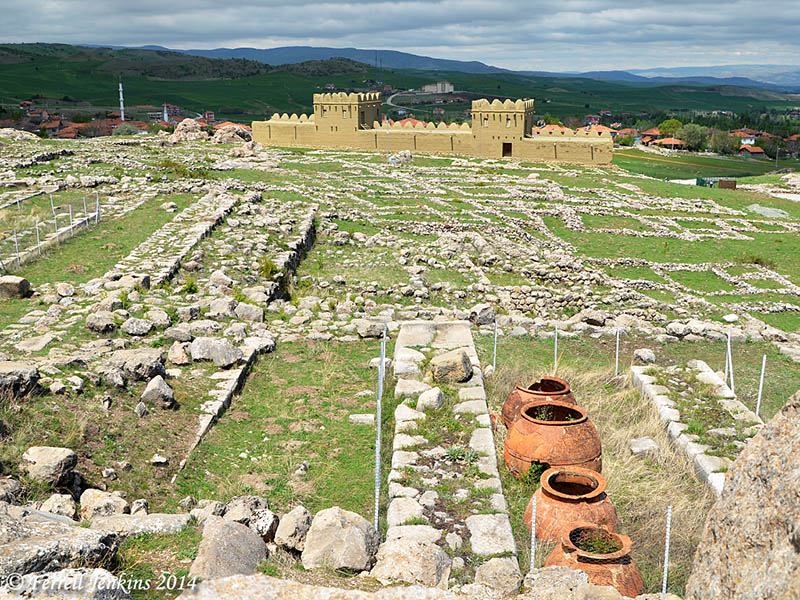
Tuesday afternoon our group arrived in Ankara, capital of the Republic of Turkey. Wednesday traveled about three hours of Ankara to Bogazkale, the capital of the ancient Hittite (Hatti) kingdom.

The photo below shows ruins of what is designated Temple 1 in the Lower City of ancient capital. The walls seen here are the only reconstructed walls from the ancient city. The ruins belong to the most sacred building of the city. The jars in the foreground are samples of many that were found. They were used to hold cuneiform tablets, and grain, wine, and oil used in the temple services.

Temple area and reconstructed walls at Bogazkale. Photo by Ferrell Jenkins.

Temple area and reconstructed walls at Bogazkale. Photo by Ferrell Jenkins.

I don’t seem to be finding the time to blog, but several of our travelers are doing so. You may find what they write more interesting because they tend to write about things as they see them through fresh eyes that have not been here before. All of them have traveled with me before, and I think most of them have visited Western Turkey on a previous tour.

Alexander’s Adventurehttp://jimmyanddarlene.wordpress.com/
This is the blog of Jimmy and Darlene Alexander. What an appropriate title for a tour in Turkey. Jimmy and Darlene are new to blogging, but they have traveled a lot, and Darlene has recently learned how to use an iPad Mini, photo editor, etc., and doing a good job of it.

Braman’s Wanderinghttp://bramanswanderings.wordpress.com/
Steven Braman is literally a world traveler in his work. He blogs on a wide variety of things.

The other side of the worldhttp://stacyjobe.blogspot.com/
Stacy Jobe blogged during our Steps of Paul and John tour in 2012. She has updated her blog for this tour. Stacy is a multi-talented young lady who finds something interesting in whatever she sees.

Scene With Sharon http://scenewithsharon.blogspot.com/
 According to the NASA website, Sharon Cobb “is the lead scientist developing an important facility for studying materials in the International Space Station.” She loves traveling on earth, too. Sharon blogged from Egypt during our 2009 tour.

Turkey is a wonderful place to visit for those interested in ancient and biblical history. Enjoy the country through the eyes of these people are traveling with me on this journey.


Regarding the Visualizing Isaiah series

The response to the Visualizing Isaiah series has been good by my estimation. Numerous readers have written that they enjoyed/profited by the series. Several bloggers have linked to the series and a few have re-blogged almost all of them to their readers.

This was an ambitious project. First, there was the responsibility to understand Isaiah well enough to make appropriate comments. Second, the selection of good photos was quite a task. I often looked through photos from various Bible sites and/or several museums with Ancient Near Eastern collections to locate what I thought was the right image. Some chapters offered numerous possibilities; others were a bit more difficult.

Hopefully I will be able to continue the series later. At this time I must take a break because I will be traveling in the Bible world most of May. I do plan to post something most days to indicate where I am traveling.

I trust that the Isaiah series has illustrated how you can enhance your study and teaching with visuals. You may say, “but I haven’t been to all of those places.” But you can search this blog for illustrations. Some time back we provided illustrations for the entire book of Acts. You can go to your Pictorial Library of Bible Lands collection and find the photos you need. Or, search the Bible Places Blog, or the Holy Land Photos’ Blog, or the vast collection at Holy Land Photos, or David Padfield’s collection here.

For my next series, I plan to select a shorter book such as Philemon or Jude.

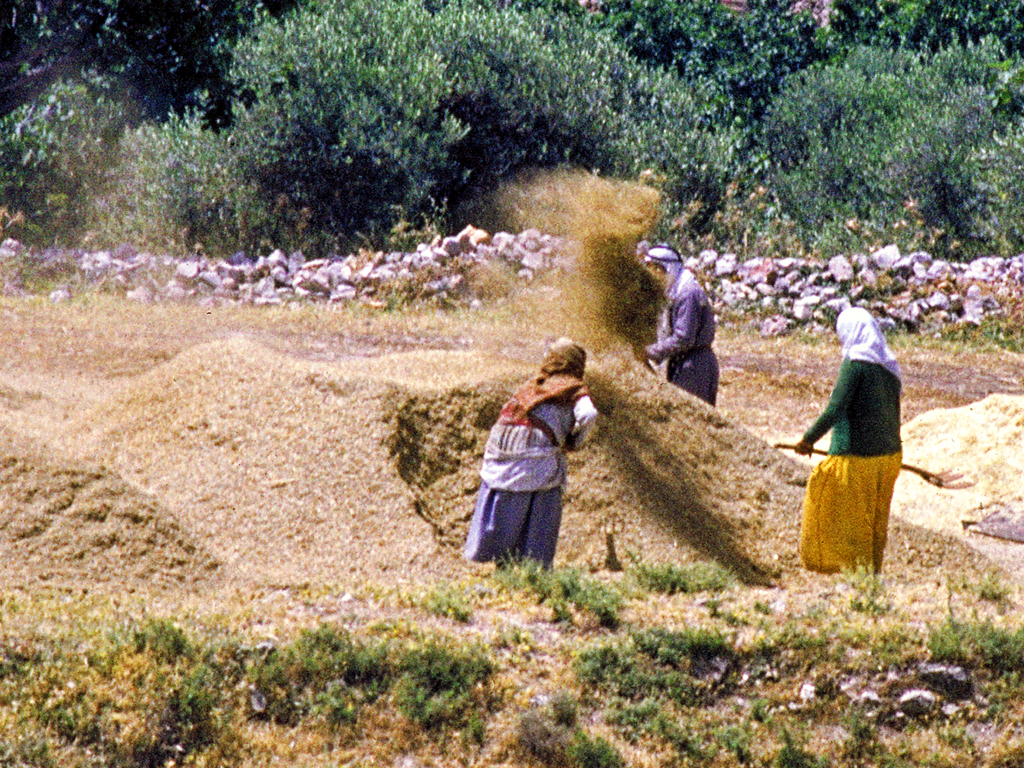
Just in case some of you are looking ahead to Isaiah 41, I will include an image to help with verses 15-16.

Behold, I make of you a threshing sledge, new, sharp, and having teeth; you shall thresh the mountains and crush them, and you shall make the hills like chaff; you shall winnow them, and the wind shall carry them away, and the tempest shall scatter them. And you shall rejoice in the LORD; in the Holy One of Israel you shall glory.  (Isaiah 41:15-16 ESV)

Winnowing at Shechem. Photo by Ferrell Jenkins.

Winnowing at Shechem. Photo by Ferrell Jenkins.

Visualizing Isaiah 40: He will tend His flock like a shepherd

The LORD comforts His people. Isaiah 40 is a beautiful chapter showing the care the LORD has for His people, even when they go astray.

He will tend his flock like a shepherd; he will gather the lambs in his arms; he will carry them in his bosom, and gently lead those that are with young. (Isaiah 40:11 ESV)

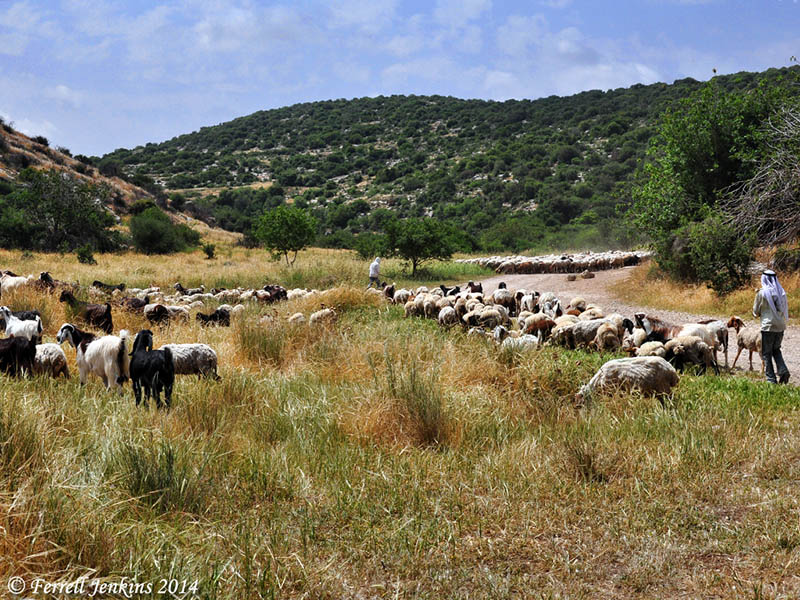
The photo below is just one of hundreds that I have made of shepherds with their sheep. Notice that there are two separate flocks and two shepherds.

Shepherds tending their flocks at Socoh. Photo by Ferrell Jenkins.

Shepherds tending their flocks at Socoh. Photo by Ferrell Jenkins.

Socoh is identified with the tel on the left of the photo. It is located on the south side of the Elah valley. Socoh was a city of Judah where the Philistines gathered to fight with Saul and the men of Israel (1 Samuel 17).

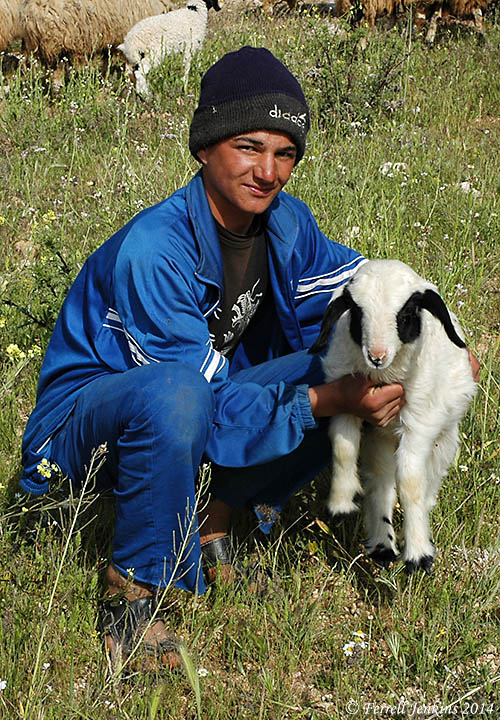
Shepherds frequently take the lambs in their arms. The Photo below was made near Heshbon in Jordan.

A shepherd and a lamb. Photo by Ferrell Jenkins.

A shepherd and a lamb. Photo by Ferrell Jenkins.

Visualizing Isaiah 39: Hezekiah showed all his treasures

It seems to be a common human failing to reveal too much about ourselves, even to people we do not know very well. This is a mistake made by King Hezekiah when he was visited by Merodach-baladan, king of Babylon.

And Hezekiah had very great riches and honor, and he made for himself treasuries for silver, for gold, for precious stones, for spices, for shields, and for all kinds of costly vessels; storehouses also for the yield of grain, wine, and oil; and stalls for all kinds of cattle, and sheepfolds. He likewise provided cities for himself, and flocks and herds in abundance, for God had given him very great possessions. (2 Chronicles 32:27-29 ESV)

I would think that Hezekiah would have shown the Babylonian monarch his gold and silver treasures, but he may have shown him some of the storehouses where various significant goods were stored. We know that Lachish was a place for the storage of wheat and oil.

Three contiguous storehouse units to the right of the gate were excavated by archaeologists under the direction of Prof. Yohanan Aharoni at Beersheba. Aharoni says,

At Beer-sheba one found many storage vessels in every one of the two side chambers of each storehouse and also a Hebrew ostracon recording the shipment of quantities of a certain commodity (wine?) from two places near Beersheba, (El)tolad and (Beth-)Jamam (Joshua 15:26, 30; 19:4; 1 Chron. 4:29. (The Archaeology of the Land of Israel, p. 223)

These storehouses are dated to the 8th century B.C., the time of Isaiah and Hezekiah.

Storehouses at Beersheba. Photo by Ferrell Jenkins.

Storehouses at Beersheba. Photo by Ferrell Jenkins.

Seal from time of Sargon II found at Roman-era site

Haaretz, an Israeli newspaper, reports on the discovery of a seal dating to the time of Sargon II, king of Assyria (722-705 B.C.), at a Roman-period site in northern Israel. This is a rather unusual find to have been uncovered at the site of Omrit. The excavators at the site believe it to be the site of a temple dedicated to the Emperor Augustus.

The seal, the older of the two artifacts, was found behind the wall of the earliest shrine, within a layer of filler between an internal and external wall. Archaeologists are unaware of how the seal ended up at the site, as the temple was built roughly 700 years before [this should read after] the seal was created. The layer of filler also contained small glass tools and other objects which were apparently taken out of the temple during construction.

Prof. Ziona Grossmark of Tel-Hai Academic College in northern Israel conducted research on the seal, along with Baruch Brendl from the Israel Antiquities Authority. “The seal depicts a battle between a winged figure and a bull standing on its hind legs,” says Grossmark, adding that “comparative research allows us to date it to the time of Sargon II, an Assyrian king who ruled between 722 and 705 B.C.E. and completed the conquest of ancient Israel. The seal was apparently brought to Israel by one of his subjects. What happened to the seal after that remains a mystery, but ancient seals like this one are very rare − only a few of this nature have been found in remains from the Roman period, mostly in graves and temples.”

According to Grossmark, “the seal was a means of identifying its owners, similar to a modern ID card. Seals were in use in the Galilee from the third millennium B.C.E. until about the fifth century B.C.E. They were used mostly during the period during which clay tablets were used for writing, until the introduction of papyrus or leather scrolls. Some say that in later periods, seals were still significant, but they were not used for their original purposes.”

The seal discovered was perfectly preserved, and is still in the process of research and cataloguing. Grossmark says that for archaeologists and historians, it is one of the most beautiful seals ever found.

You may access the Haaretz article by Eli Ashkenazi here. The article does not include a photo of the seal, but you may be able to see the seal by using this link.

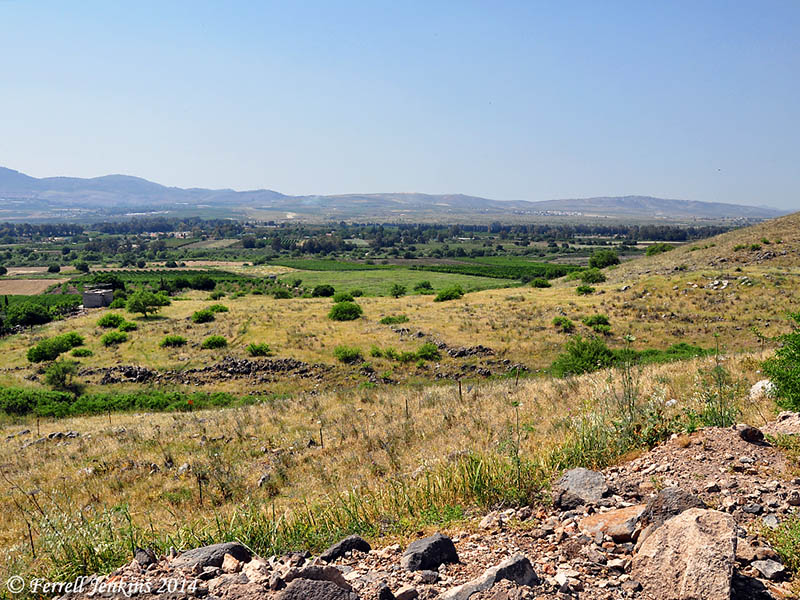
Our photo below was made from Omrit with a view NW of the northern Hula Valley. Omrit is located about 2½ miles southwest of Banias (Caesarea Philippi).

View NW from Omrit of the northern Hula Valley. Photo by Ferrell Jenkins.

View NW from Omrit of the northern Hula Valley. Photo by Ferrell Jenkins.

See our earlier discussions about Sargon II and Isaiah 20, here and here.

HT: Joseph Lauer

Visualizing Isaiah 38: a cake of figs for medication

King Hezekiah was at the point of death, but the LORD heard his prayer and extended his life by 15 years. There are several visual illustrations in this chapter. I have selected the one in verse 21.

Now Isaiah had said, “Let them take a cake of figs and apply it to the boil, that he may recover.” Hezekiah also had said, “What is the sign that I shall go up to the house of the LORD?” (Isaiah 38:21-22 ESV)

The IVP Bible Background Commentary: Old Testament offers this comment on the use of fig cakes at 2 Kings 20:7:

Fig cakes may have been used as condiments and for medicinal purposes at Ugarit. Both later rabbinical Jewish and classical sources (e.g., Pliny the Elder) shared the belief that dried figs had medicinal value. Poultices were sometimes used for diagnosis rather than for medication. A day or two after the poultice was applied, it would be checked for either the skin’s reaction to the poultice or the poultice’s reaction to the skin. One medical text from Emar prescribes the use of figs and raisins for such a process. They helped determine how the patient should be treated and whether or not he would recover.

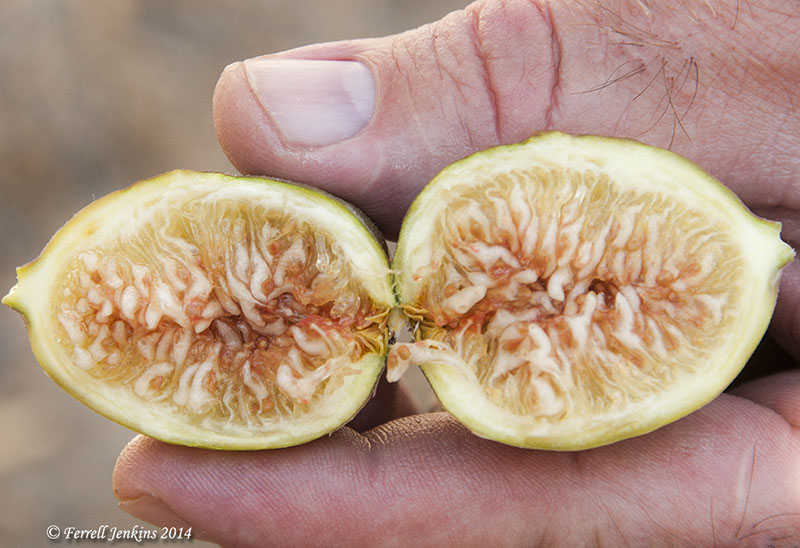
The photo below shows a freshly cut fig from Shechem.

A fresh fall fig from Shechem. Photo by Ferrell Jenkins.

A fresh fall fig from Shechem. Photo by Ferrell Jenkins.

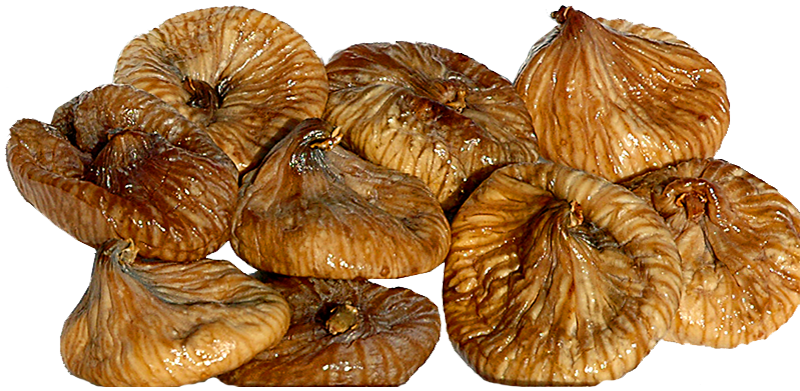
The next photo shows dried figs from Jericho.

Dried figs from Jericho. Photo by Ferrell Jenkins.

Dried figs from Jericho. Photo by Ferrell Jenkins.


Visualizing Isaiah 37: Sennacherib’s assassins escape to the land of Ararat

After the LORD struck down 185,000 of the Assyrians who were camped outside Jerusalem, Sennacherib returned home and lived at Nineveh. In the final verse of this chapter we are told that his sons killed him and fled to the land of Ararat.

Then Sennacherib king of Assyria departed and returned home and lived at Nineveh. And as he was worshiping in the house of Nisroch his god, Adrammelech and Sharezer, his sons, struck him down with the sword. And after they escaped into the land of Ararat, Esarhaddon his son reigned in his place. (Isaiah 37:37-38 ESV; see also 2 Kings 19:37)

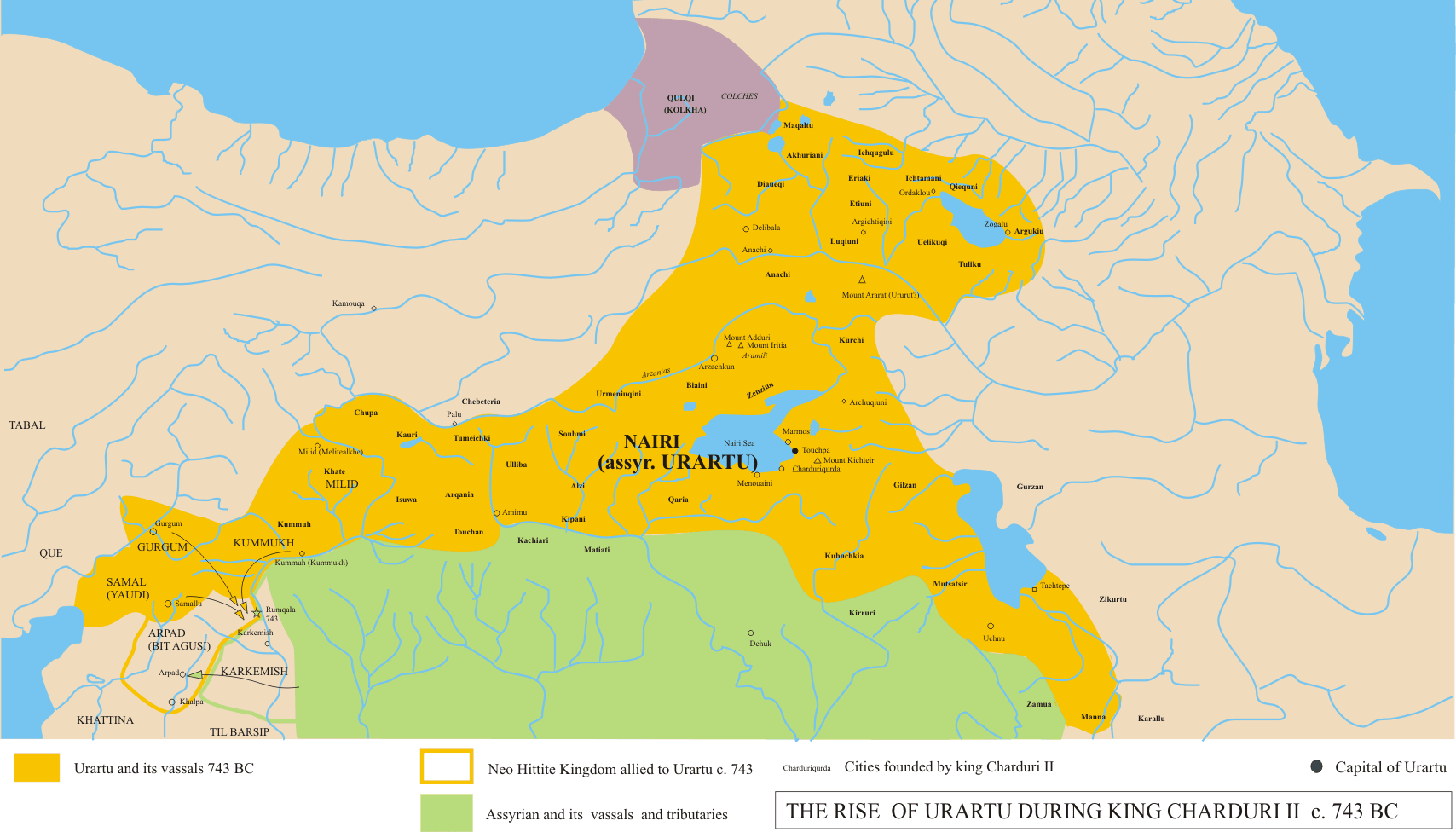
The Biblical land of Ararat (Urartu) is located in modern eastern Turkey. We might think of the land of Urartu being centered in Lake Van. From Nineveh to Van is an air distance of about 150 miles. The map below is from the Wikipedia entry on the Urartu-Assyria War. Click the map to enlarge. Lake Van is 5737 feet above sea level.

Wikimedia Commons.

Map of the Urartu-Assyrian war in 743 B.C. Wikimedia Commons.

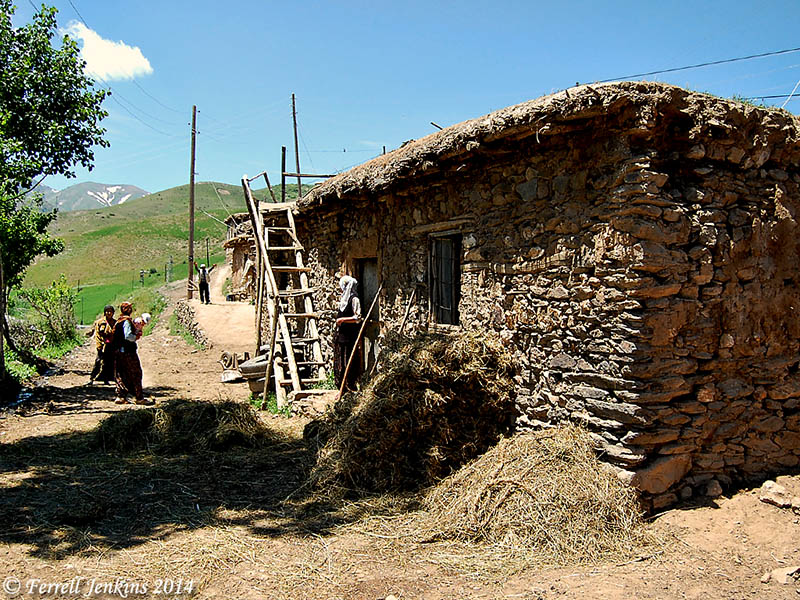
The entirety of the land of Urartu is mountainous. Our photo below shows the region between Van and Batman in Turkey. Note the snow-covered slopes in the distance.

A house in Turkey between Van and Batman. In ancient times the area was known as Urartu (Biblical Ararat). Photo by Ferrell Jenkins.

A house in Turkey between Van and Batman. In ancient times the area was known as Urartu (Biblical Ararat). Photo by Ferrell Jenkins.

Use our search box to look for more entries dealing with Urartu. Remember that the ark built by Noah came to rest on the “mountains of Ararat” (Genesis 8:4).

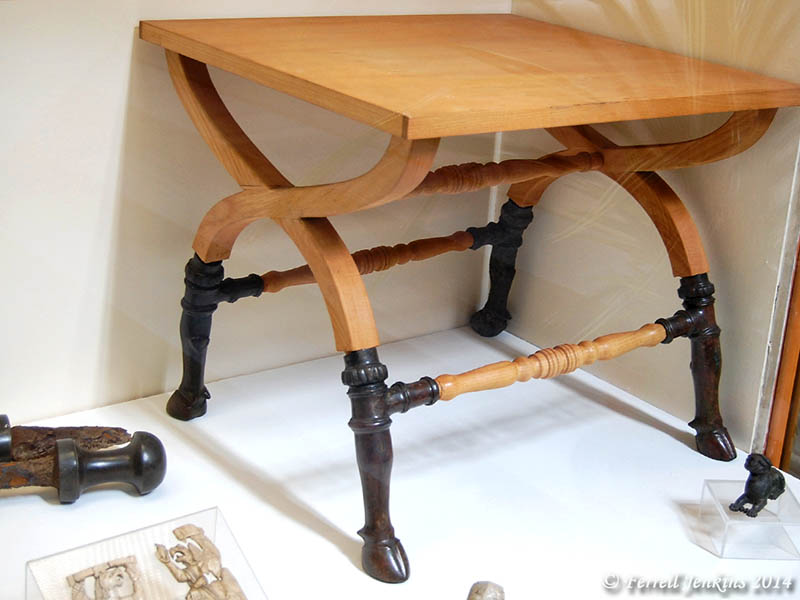
The photo below was taken in the Anatolian Civilizations Museum in Ankara, Turkey. It shows (the metal legs of) some Urartian furniture. In the left bottom corner you should see some of the ivory pieces that decorated walls and furniture.

Urartian furniture displayed in the Anatolian Civilization Museum. Photo by Ferrell Jenkins.

Urartian furniture displayed in the Anatolian Civilization Museum. Photo: F. Jenkins.