“Some Places You May Never Visit”

“Some Places You May Never Visit” is the title I have chosen for a presentation Tuesday (12 noon in Puckett Auditorium) as part of the Florida College Annual [Bible] Lectures, Temple Terrace, FL. This is where I taught for 25 years, and it is always a pleasure to participate in the program. Usually I make a presentation dealing with archaeology and Bible history, archaeological artifacts in famous museums, or one of the places I have had the opportunity to visit.

Last years I spoke on “Roads Less Traveled.” The presentation this year will be about four places in Israel that are difficult to get to. I won’t give away the places now, but hopefully will be able to share some information about them in the weeks to come.

Florida College Annual Lectures 2012The main program this year, consisting of 15 lectures, is entitled Of First Importance: He Died and Was Buried. Information is available on the website of the college bookstore here. There are also links to an eBook edition  which is available in a variety of formats for only $9.99. Dr. David Edwin Harrell, respected historian, spoke Monday evening to a packed auditorium (around 1500, I estimate).

Nebuchadnezzar, king of Babylon — 605-562 B.C.

Nebuchadnezzar, king of the Neo-Babylon empire for more than 40 years, is one of the best known royal personages of the Bible. His name occurs more than 90 times. He was responsible for huge building projects throughout his empire.

The arrogance of Nebuchadnezzar is seen in the comment attributed to him in the Book of Daniel.

The king uttered these words: “Is this not the great Babylon that I have built for a royal residence by my own mighty strength and for my majestic honor?” (Daniel 4:30 NET)

The Babylonians left many inscriptions bearing testimony to the building programs of the various kings.

Our first photo shows one of the cylinder annals of Nebuchadnezzar that mentions building projects of temples in Babylon, Borsippa, Larsa and Sippar for the gods Marduk, Nabu, Shamash and Ishtar. It also recounts rebuilding city walls. This annal is displayed in the Istanbul Archaeology Museum.

Nebuchadnezzar Cylinder Annal. Istanbul Archaeology Museum. Photo by Ferrell Jenkins.

Nebuchadnezzar Cylinder Annal. Istanbul Archaeology Museum. Photo by Ferrell Jenkins.

Building bricks bearing the name of the king, along with his titles, have been discovered in the various cities of Babylon. The one below comes from Sippar. It is displayed in the British Museum (BM90081).

Brick of Nebuchadnezzar (605-562 B.C.). British Museum. Photo by Ferrell Jenkins.

Brick of Nebuchadnezzar (605-562 B.C.). British Museum. Photo by Ferrell Jenkins.

The museum sign associated with this artifact describes the nature of these building bricks.

 “Nebuchadnezzar made extensive use of baked bricks in his many buildings. They are usually square, and often bear inscriptions, generally stamped but occasionally written by hand, which give the king’s name, titles, and patronym.”

A list of the major biblical events during the reign of Nebuchadnezzar should prove helpful for Bible students.

  • 605 BC — Nebuchadnezzar defeats Egypt, and Pharaoh Neco, at Carchemish.
  • 605 BC — Daniel and his friends taken from Judah to Babylon (Daniel 1).
    • Daniel was in Babylon during the entire reign of Nebuchadezzar (Daniel 1-4).
  • 597 BC — Jerusalem captured by Nebuchadnezzar.
    • March 16, 597 BC, according to a Babylonian Chronicle.
    • The young Judean king, Jechoichin (Jeconiah, Coniah), taken captive to Babylon (2 Kings 24:6-15; 2 Chronicles 36:8-10).
    • Mattaniah-Zedekiah becomes puppet king in Judah (2 Kings 24:17).
    • Many Judeans, including the prophet Ezekiel, taken captive to Babylon.
  • 587 BC — The fall of Jerusalem (2 Kings 25; Jeremiah 52).
    • Zedekiah rebelled; city destroyed; Zedekiah taken to Riblah (Ribleh in modern Syria) where his sons were slaughtered. Zedekiah’s eyes put out, and he was taken captive to Babylon.
The Correct MLA Way to Cite This Article

“Nebuchadnezzar, King of Babylon – 605-562 B.C.” Ferrell’s Travel Blog, 6 Feb. 2012, ferrelljenkins.blog/2012/02/06/nebuchadnezzar-king-of-babylon-605-562-b-c/.

The Kings of Babylon and Bible History

It is important as we study the Bible that we have some understanding of the historical background and setting of the events described. There is no place where this is more obvious than in the Book of Daniel.

Daniel and his friends were taken to Babylon by the new king of the Neo-Babylonian Empire, Nebuchadnezzar. It was during the early reign of Nebuchadnezzar that Daniel’s friends were thrown into the fiery furnace (Daniel 3).

Daniel was cast into the den of lions during the reign of the king Darius the Mede, who gained control of Babylon in 539 B.C. Thus, at least 66 years pass from the time Daniel was taken to Babylon until he was put in the den of lions.

To put this is practical terms for modern readers, the events mentioned above are as far apart as events during the presidency of Harry S.  (1945-1953) and Barack Obama (2009–).

The Neo-Babylonian Empire came to power in 626 B.C., and fell in 539 B.C. Perhaps this list of the kings of Babylon will be helpful in your study. The rulers mentioned in the Bible are listed in bold type.

  • Nabopolassar — 626-605 B.C.
  • Nebuchadnezzaar — 605-562 B.C.
    • 2 Kings 24; Daniel 1-5; et al.
  • Evil Merodach — 562-560 B.C.
    • 2 Kings 25:27; Jeremiah 52:31.
  • Nergal-Sharezer — 560-556 B.C.
    • Jeremiah 39:3, 13, when he was an official of Nebuchadnezzar.
  • Labaši-Marduk — 556 B.C. (ruled only 9 months)
  • Nabonidus — 556-539 B.C. Not named in the Bible. His son, Belshazzar, served as co-regent the last ten years of the reign.
    • Daniel 5-8.

The names and dates above have been summarized from the article by the late D. J. Wiseman in The New Bible Dictionary (3rd edition).

Map of world showing Babylon in the center. British Museum. Photo: Ferrell Jenkins.

Map of world showing Babylon in the center. British Museum. Photo by Ferrell Jenkins.

Perhaps later we will be able to describe in more detail the Biblical events during the Neo-Babylonian Empire.

The pollen is blowin’ in the wind

The unseasonably warm weather here in Florida has already begun to affect allergy sufferers, including yours truly. The pollen is not as high as it will be, but high enough to cause sniffling, sneezing and stuffiness. That’s nothing new. Keep reading.

The excavations at Ramat Rachel, between Jerusalem and Bethlehem, reveal evidence of etrogs and myrtle from the ancient royal garden. A word of explanation might be appropriate for some readers. English readers know Sukkot as the Feast of Booths, Tabernacles, or Temporary Shelters – Leviticus 23:34).

Ha’aretz reports here today:

The earliest evidence of local cultivation of three of the Sukkot [commonly know to English readers as the Feast of Booths or Tabernacles,  holiday’s traditional “four species” has been found at the most ancient royal garden ever discovered in Israel.

The garden, at Kibbutz Ramat Rachel in Jerusalem, gave up its secrets through remnants of pollen found in the plaster of its walls.

The garden was part of an Israelite palace at Ramat Rachel that has been excavated for many years, most recently in a joint dig by Prof. Oded Lipschits and Dr. Yuval Gadot of Tel Aviv University and Prof. Manfred Oeming of Heidelberg University. The palace existed from the time of King Hezekiah until the Hasmonean period in the second century B.C.E.

The excavations revealed that the garden must have had a beautiful – and strategic – view, but it lacked its own water source. Thus the ancient landscape architects had to build channels and pools to collect rainwater for irrigation.

The archaeologists discovered that the garden’s designers had removed the original hard soil and replaced it with suitable garden soil. But until recently, they had no idea what was grown there.

Then, Lipschits said, he and his colleagues had a “wild thought”: If plasterers had worked on the garden walls in springtime, when flowers were blooming, breezes would have carried the pollen to the walls, where it would have become embedded in the plaster.

Enlisting the aid of Tel Aviv University archaeobotanist Dr. Daphne Langot, they carefully peeled away layers of the plaster, revealing pollen from a number of plant species.

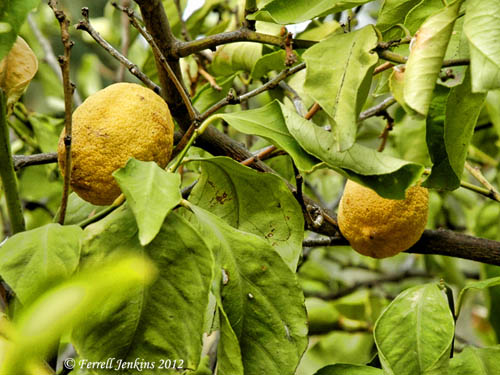
Etrog late in the season at Qatzrin. Photo by Ferrell Jenkins.

Etrog late in the season at Qatzrin. Photo by Ferrell Jenkins.

The article continues,

Most of the plants were wild, but in one layer of plaster, apparently from the Persian period (the era of the Jewish return from the Babylonian exile in 538 B.C.E. ) they found pollen from ornamental species and fruit trees, some of which came from distant lands.

The find that most excited the scholars was pollen from etrogs, or citrons, a fruit that originated in India. This is the earliest botanical evidence of citrons in the country.

Scholars believe the citron came here via Persia, and that its Hebrew name, etrog, preserves the Persian name for the fruit – turung. They also say royal cultivation of the exotic newcomer was a means of advertising the king’s power and capabilities.

The garden at Ramat Rachel is also the first place in the country to yield evidence of the cultivation of myrtle and willow – two more of the four species used in Sukkot rituals.

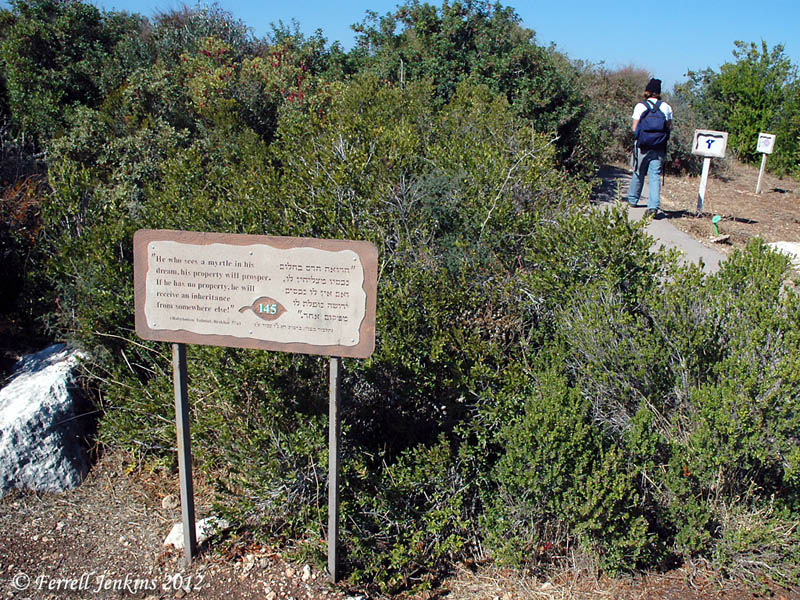
Myrtle growing at Neot Kedumim in Judean Hills. Photo by Ferrell Jenkins.

Myrtle growing at Neot Kedumim in Judean Hills. Photo by Ferrell Jenkins.

For an earlier post on the royal garden at Ramat Rachel, read here.

HT: Joseph Lauer

Nabopolassar, father of Nebuchadnezzar, destroyed Nineveh

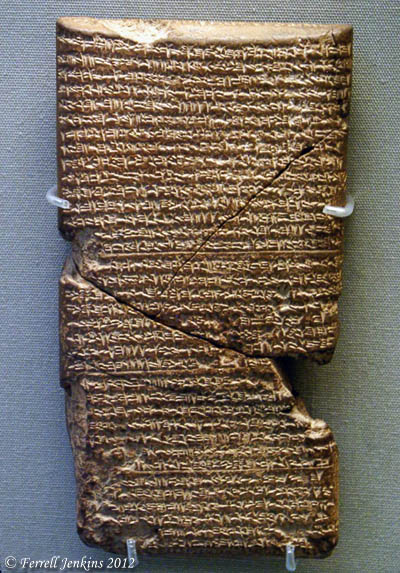
Babylonian king Nabopolassar ruled over the rising empire from about 626 to 605 B.C. The Babylonian Chronicle for the years 615-609 B.C. tells of the fall of Nineveh in 612 B.C. The wounded Assyrian Empire would collapse seven years later at the battle of Carchemish. The British Museum item number is BM 21901.

Babylonian Chronicles for years 615-609 B.C. British Museum. Photo by Ferrell Jenkins.

Babylonian Chronicles for years 615-609 B.C. British Museum. Photo by Ferrell Jenkins

The name of Nabopolassar is not recorded in the Bible, but the events of this period of time are highly significant.

The Chronicle of Nabopolassar describes the activity of the king for the years 608-605 B.C. The struggle of the Babylonians with the Egyptians (Pharaoh Necho) for control of the western portion of the Assyrian Empire is also described. This included the kingdom of Judah and Jerusalem. The crown-prince Nebuchadnezzar, the most celebrated Babylonian king mentioned in the Bible, became the leader of the Neo-Babylonian Empire at the battle of Carchemish (605 B.C.). The British Museum item number is BM 22047.

Chronicles of Nabopolassar. British Museum. Photo by Ferrell Jenkins.

Chronicle of Nabopolassar. British Museum. Photo by Ferrell Jenkins.

The prophet Nahum describes the fall of Nineveh in vivid language.

Woe to the city guilty of bloodshed! She is full of lies; she is filled with plunder; she has hoarded her spoil!
2 The chariot drivers will crack their whips; the chariot wheels will shake the ground; the chariot horses will gallop; the war chariots will bolt forward!
3 The charioteers will charge ahead; their swords will flash and their spears will glimmer! There will be many people slain; there will be piles of the dead, and countless casualties– so many that people will stumble over the corpses.
4 “Because you have acted like a wanton prostitute– a seductive mistress who practices sorcery, who enslaves nations by her harlotry, and entices peoples by her sorcery–
5 I am against you,” declares the LORD who commands armies. “I will strip off your clothes! I will show your nakedness to the nations and your shame to the kingdoms;
6 I will pelt you with filth; I will treat you with contempt; I will make you a public spectacle.
7 Everyone who sees you will turn away from you in disgust; they will say, ‘Nineveh has been devastated! Who will lament for her?’ There will be no one to comfort you!”  (Nahum 3:1-7 NET)

Exploits of Samson

The exploits of Samson are well known to Bible students. Samson was a strong man who was unable to control his own desires. One of the best known stories about him is recorded in Judges 15.

So Samson went and caught 300 foxes and took torches. And he turned them tail to tail and put a torch between each pair of tails.  And when he had set fire to the torches, he let the foxes go into the standing grain of the Philistines and set fire to the stacked grain and the standing grain, as well as the olive orchards. (Judges 15:4-5 ESV)

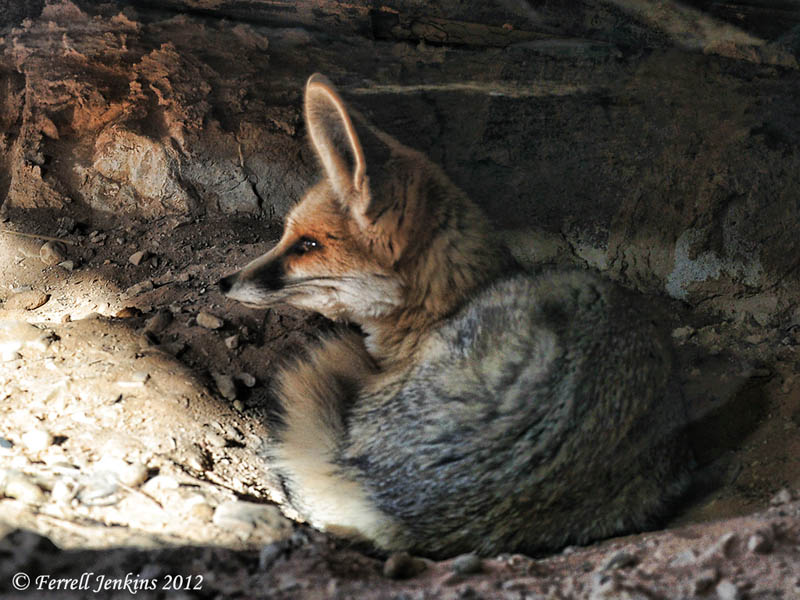
The photo below is of a Sand Fox. Samson used 300 similar foxes to destroy the wheat fields of the Philistines.

A Sand Fox at the Hai Bar Reserve, north of Eilat. Photo by Ferrell Jenkins.

A Sand Fox at the Hai Bar Reserve, north of Eilat. Photo by Ferrell Jenkins.

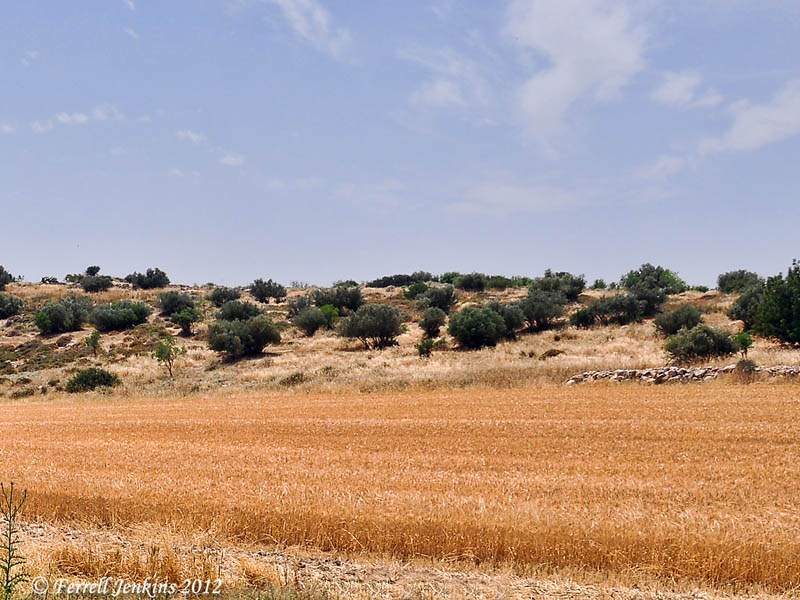
Our next photo is of a wheat field near Maresha, not far from the Sorek Valley, and typical of many fields in the Shephelah. It is typical in modern Israel for an area between the road and the field to be cleared. This is done to protect the grain from fire in the event that someone tosses a lighted cigarette along the edge of the road. Imagine the damage of the 150 pair of foxes in the ripe grain as they tried to release themselves from the burning torches.

Wheat field near Maresha in the Shephelah. Photo by Ferrell Jenkins.

Wheat field near Maresha in the Shephelah. Photo by Ferrell Jenkins.

I enjoy hearing from teachers who find this material helpful in their classes.

Should Herod’s tomb be rebuilt?

The Israel Nature and Parks Authority and the Gush Etizion Regional Council has announced plans to rebuild the tomb of Herod the Great at the Herodium.

An article published Sunday in Ha’aretz describes the plan:

The plan, which is being promoted by the Israel Nature and Parks Authority and the Gush Etzion Regional Council, includes building a lavish mausoleum in its original size out of light plastic material, and turning it into a visitor’s center. The plan is the first of its kind in the realm of Israeli archeological digs, as most sites consist of either miniaturized or renovated historical sites that use the original materials found at the site.

Miniature model of Tomb of Herod. Photo: Israel Nature and Parks Authority.

Miniature model of Tomb of Herod. Photo: Israel Nature & Parks Authority.

One archaeologist, who wished to remain anonymous, said,

“It’s crazy — Archaeology is not Disneyland, you don’t take an archeological site and make a joke out of it.”

The entire article may be read here.

We have called attention to the Herodium and the work of the late Ehud Netzer numerous times. Just use the search box to location the posts.

HT: Joseph I. Lauer

Mary and Joseph went a day’s journey. Where did they stop?

After his presentation in the Temple, there is no record of Jesus returning to Jerusalem until he is 12 years of age.

Now his parents went to Jerusalem every year at the Feast of the Passover.  And when he was twelve years old, they went up according to custom.  (Luke 2:41-42 ESV)

When the Feast of the Passover ended, his parents began the return to Nazareth. We can easily imagine that a large caravan of people were traveling together on this trip that would take several days. Jesus stayed behind in Jerusalem spending time among the teachers, “listening to them and asking them questions.” Because Mary and Joseph had relatives and acquaintances in the caravan they assumed that Jesus was among them until the end of the first day.

Keener provides some background on caravan travel.

Caravans, which afforded protection from robbers, were common on pilgrimages for the feasts in Jerusalem. Traveling with a caravan, in which neighbors from their town would watch the community children together, Mary and Joseph might assume that the near-adult Jesus was with companions, especially if by now they had younger children to attend to. If we assume a pace of twenty miles per day (though perhaps slower, depending on transportation and the children), Nazareth would be a little over three days’ journey along the shortest route. (Keener, C. S., The IVP Bible background commentary : New Testament)

Where did Mary and Joseph stop at the end of that first day of travel? We can not be certain of the route taken from Jerusalem to Nazareth. Travel from Galilee to Jerusalem was often through Perea on the eastern side of the Jordan Valley. We later find Jesus traveling north along the central mountain range through Samaria (John 4).
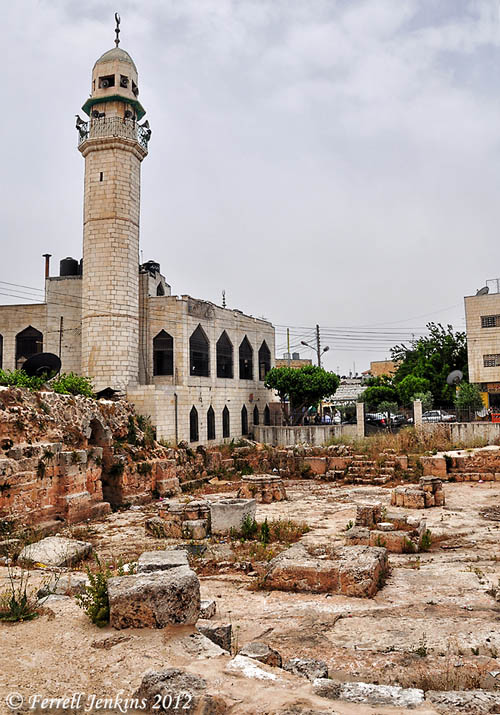
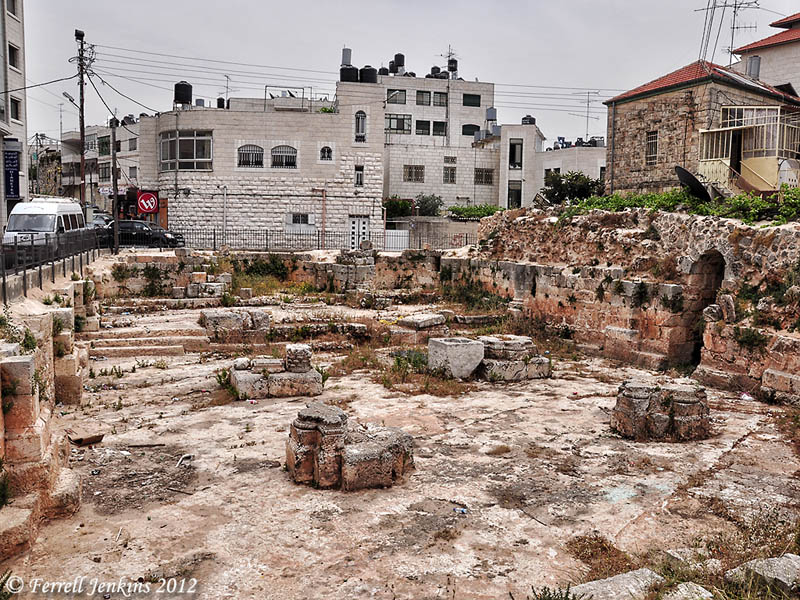
Ruins of medieval church beneath a Mosque in El Bireh. Photo by Ferrell Jenkins.

Ruins of medieval church beneath a Mosque in El Bireh. Photo by Ferrell Jenkins.

Tradition identifies the stop at El Bira. Tradition has it that the first day’s stop after leaving Jerusalem was at a place now known as El Bira (or Bireh) east of Ramallah. El Bira is an Arab town. There is a spring and ruins of a medieval church. The Hachette World Guides: The Middle East (1966) says that the tradition associating this event with El Bireh dates to the 16th century. Eugene Hoade says it is probable that this church was built in 1146 “in memory of” the event mentioned in Luke 2 (Guide to the Holy Land). The apse of the church is visible in the photo below. The Hachette World Guide says the building was destroyed in 1915 and the stones were used for building bridges along the mountain route.

This site is only about 8 miles north of Jerusalem, but with a large caravan including women and children it is possible that a short distance was covered the first day. It was necessary to stop where water and various food supplies were available (John 4:6-8; Luke 9:51-53).
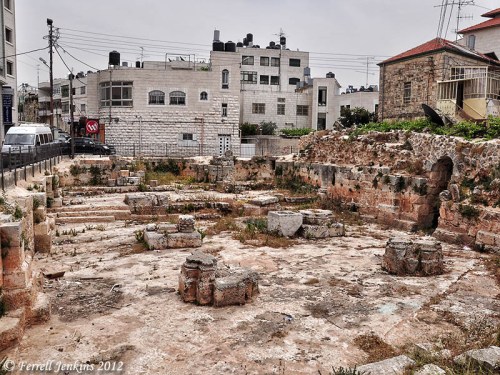
Ruins of the medieval church in El Bireh. Photo by Ferrell Jenkins.

Ruins of the medieval church in El Bireh. Photo by Ferrell Jenkins.

Is this Beeroth? Since the time of explorer Edward Robinson (1867), some scholars have identified El Bireh with the Old Testament Gibeonite city of Beeroth. The word Beeroth indicates the presence of a well. Biblical references include Joshua 9:17, 18:25, Ezra 2:25, and Nehemiah 7:29. Beeroth was considered part of the tribe of Benjamin (2 Samuel 4:2).

David Dorsey, after surveying the scholarship on the matter, says,

At present, therefore, the site of biblical Beeroth remains a matter of dispute. The most likely candidate would still seem to be the one originally proposed by Robinson, i.e., el-Bireh. (The Anchor Yale Bible Dictionary)

John wore a garment of camel’s hair

Now John wore a garment of camel’s hair and a leather belt around his waist, and his food was locusts and wild honey.  (Matthew 3:4 ESV)

Emmerson comments on the type of garment worn by John:

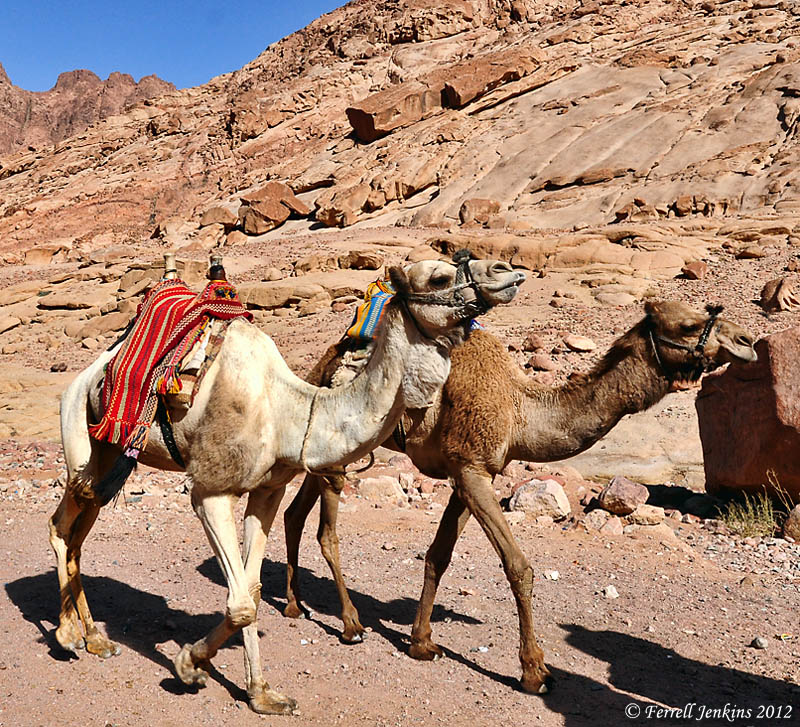
Hair from the back and hump of the camel was woven into a harsh material, and a softer cloth was produced from the finer hair taken from underneath the animal. The natural variations in the color of the hair could be woven into a pattern. (The International Standard Bible Encyclopedia Revised, 1:584).

Camels in the Sinai Peninsula. Photo by Ferrell Jenkins.

Camels in the Sinai Peninsula. Photo by Ferrell Jenkins.

John did not wear the soft clothing typical of those who dwell in royal palaces.

What then did you go out to see? A man dressed in soft clothing? Behold, those who are dressed in splendid clothing and live in luxury are in kings’ courts. (Luke 7:25 ESV)

Bible students immediately remember similarities between John and the prophet Elijah (2 Kings 1:8; cf. Luke 1:7).

John baptized in the river Jordan

John the Baptist proclaimed the coming Messiah in the Wilderness of Judea. The Gospel accounts point out that many people from Jerusalem and all Judea and the region about the Jordan came to be baptized. These were Jews who were being called to repent and confess their sins.

Then Jerusalem and all Judea and all the region about the Jordan were going out to him,  and they were baptized by him in the river Jordan, confessing their sins. (Matthew 3:5-6 ESV)

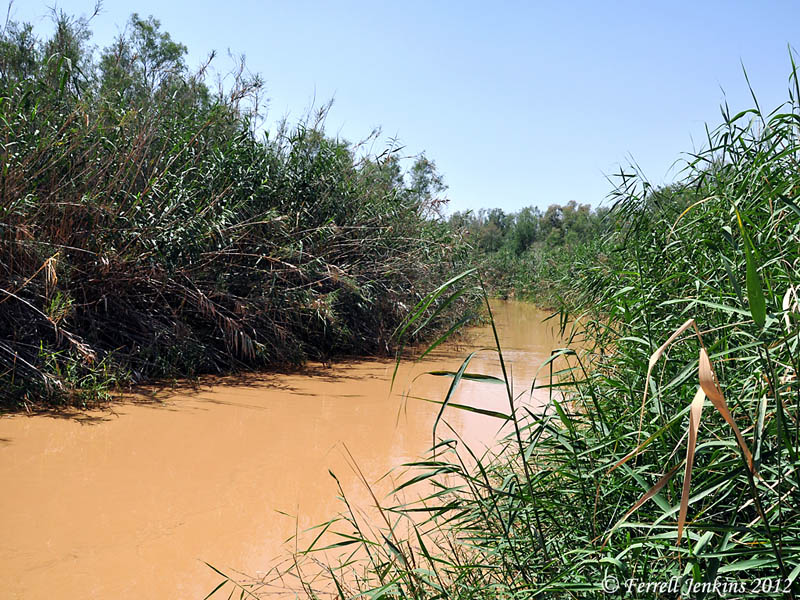
The photo shows a view of the River Jordan at the traditional site where John was baptizing. This photo was made in the spring of the year when the river shows the flow of mud as a result of the spring rains.

Jordan River (view south) at traditional site where John baptized. Photo: Ferrell Jenkins.

Jordan River (view south) where John baptized. Photo by Ferrell Jenkins.

Jesus was baptized by John, not because he was a sinner, but because it was part of God’s plan for him “to fulfill all righteousness.”

Then Jesus came from Galilee to the Jordan to John, to be baptized by him. John would have prevented him, saying, “I need to be baptized by you, and do you come to me?” But Jesus answered him, “Let it be so now, for thus it is fitting for us to fulfill all righteousness.” Then he consented. And when Jesus was baptized, immediately he went up from the water, and behold, the heavens were opened to him, and he saw the Spirit of God descending like a dove and coming to rest on him; and behold, a voice from heaven said, “This is my beloved Son, with whom I am well pleased.” (Matthew 3:13-17 ESV)