Category Archives: Turkey

Earthquake hits Eastern Turkey

The earth seems to be shaking a lot in recent months. This morning we have reports of an earthquake which measured 6.0 on the Richter scale hit the mainly Kurdish region of eastern Turkey.

A powerful earthquake in eastern Turkey on Monday buried villagers as they slept in mud-brick houses, killing at least 57 and injuring dozens more, officials said.

The quake, which measured 6.0 on the Richter scale, struck at 4:32 am (0232 GMT) at a depth of five kilometres, with an epicentre near the Karakocan town in Elazig province, the Istanbul-based Kandilli observatory said.

Rescuers struggled to dig survivors from the rubble after the quake tore down mud-brick houses in several mountainous villages in the mainly Kurdish area, killing whole families in their sleep.

The report may be read in its entirety here.

In January I wrote about some preparations for earthquakes that I saw in eastern Turkey here.
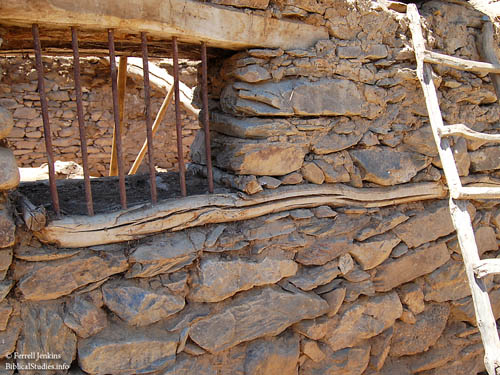
Preparations for earthquake in Eastern Turkey

Preparing for an earthquake in Eastern Turkey. Photo by Ferrell Jenkins.

Several other blogs about earthquakes and the Bible World are here, and here, and here.

  • Earthquakes common in the Bible World here.
  • Earthquakes still a problem in the Middle East here.
  • Philadelphia (Revelation 3) – Church with an open door here.
  • Earthquake felt in Israel, Syria, and Lebanon here.

Earthquakes were so common in the Bible World that they are often used to provide imagery for the direct action of God. John uses this symbolism to describe what happened when the Lamb (Christ) broke the sixth seal (Revelation 6:12-17). A few words from the Dictionary of Biblical Imagery will give us something to think about today.

Some references to earthquakes appear to be bald statements of historic fact and seem to have little, if any, symbolic value (Amos 1:1, cf. Zech 14:5; Acts 16:26). Most references, however, particularly in the poetic parts of the Bible, accord a high degree of symbolism to earthquakes. Earthquakes in Scripture are often seen as manifestations of the direct action of God’s power. The example that is probably alluded to most is the earthquake at the giving of the law at Sinai (Ex 19:18). In their poetic reviews of the Exodus, later writers seem to have emphasized this element (Ps 68:8; 77:18; 114:4–7) and broadened its scope to cover the whole exodus event. Matthew’s linkage of the earthquake at Jesus’ crucifixion with the rending of the temple veil (Mt 27:54) is thus far more than a statement of physical cause and effect: it is profoundly symbolic. (225)
Todd Bolen’s Bible Places Newsletter

The February issue of the Bible Places Newsletter has been released. If you do not receive the Newsletter, I suggest you check it now (here). When you reach the bottom of the page you will see a link that allows you to subscribe.

The current issue of the Newsletter features photo from the Early 20th-Century History, the seventh volume in The American Colony and Eric Matson Collection. You will be able to download a PowerPoint presentation featuring these historic photos.

The entire album of more than 400 historic photos is available at the discounted price of $15. The entire 8-volume collection is on sale for $99. This is a great and important collection. Read about it at Life in the Holy Land.

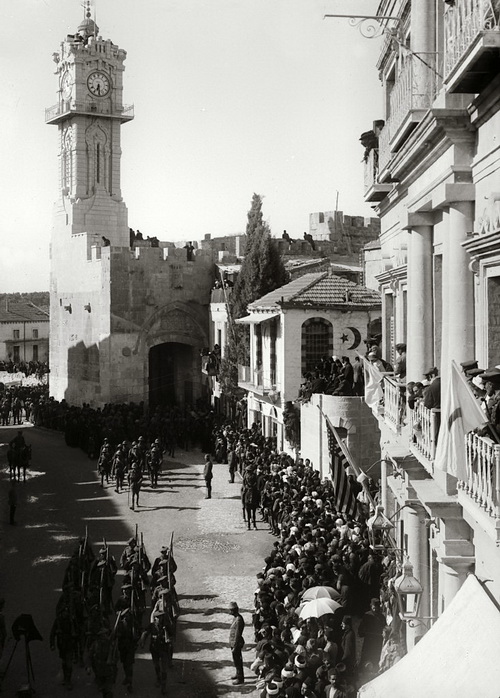
Palestine was under the control of the Turkish Ottoman Empire from 1517 to 1917. The photo below shows General Allenby and the British troops entering Jerusalem through the Jaffa Gate, Dec. 11, 1917.

General Allenby enters Jerusalem through Jaffa Gate - 1917.

General Allenby enters Jerusalem through Jaffa Gate - 1917.

Older than the pyramids

Newsweek, March 1, 2010, has an article here about a temple complex in Turkey that is said to predate the pyramids.
Göbekli tepe in southeastern Turkey. The site is southeast of Sanliurfa, the Moslem traditional birthplace of Abraham. It is east of Haran, the home of Abraham according to Genesis 12:4, and north of the Syrian border.

German archaeologist Prof. Klaus Schmidt is directing the dig at the site said to have a temple built 11,500 years ago — 7,000 years before the pyramids.

Ben Witherington has a good post about this temple and some of the biblical implications at his Bible and Culture blog here. Among other good things he says,

The importance of this find for Biblical thinking is this— the Bible says that from the outset, human beings were created in God’s image.  Human beings were religious creatures from Day One.  Archaeologists and sociologists have long dismissed this theory saying organized religion comes much later in the game than the beginning of civilization and city building.  As  Ian Holder director of Stanford’s prestigious archaeology program says— this is a game changer. Indeed, it changes everything experts in the Neolithic era have been thinking.   Schmidt is saying that religion is the cause of civilization, not the result of it. Towns were built to be near the Temple complex. Agriculture was undertaken to feed those living there and supply the temple complex, and so on. The first instincts of humans were to put religion first. Maybe there is more to that Genesis story than some have been willing to think or admit. Maybe human beings are inherently homo religiosis.

This short video features Prof. Schmidt at Göbekli tepe.

HT: Ben Witherington

Planning for earthquakes in Eastern Turkey

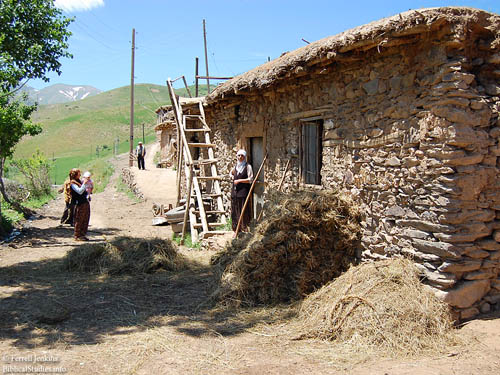
Last week I wrote about references to earthquakes in the Bible. In 2007 I traveled in Eastern Turkey, in the Biblical land of Ararat (Urartu) (2 Kings 19:37). Along the road between Van and Batman we saw a group of men adding a room to a house.

Notice that the house is built of field stones. Above the window there is a lintel of wood. To the right side of the window you may also see a long piece of wood. I will come back to that later. Notice the roof. It is made of timber, straw, and mud.

House between Van and Batman in Eastern Turkey. Photo by Ferrell Jenkins.

House between Van and Batman in Eastern Turkey. Photo by Ferrell Jenkins.

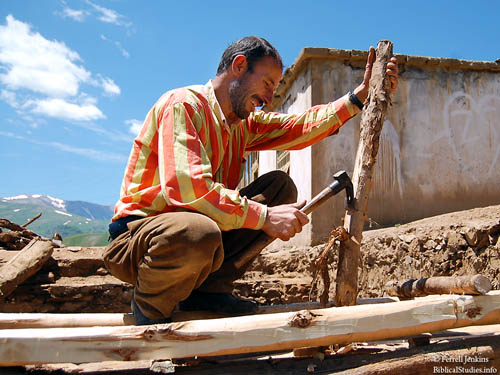
The photo below shows one of the men working on the roof of the new room. Notice the mud roof of the existing room.  The worker is preparing a piece of timber with a simple hand tool similar to those used three to four thousand years ago.

Adding a new room in the land of Ararat. Photo by Ferrell Jenkins.

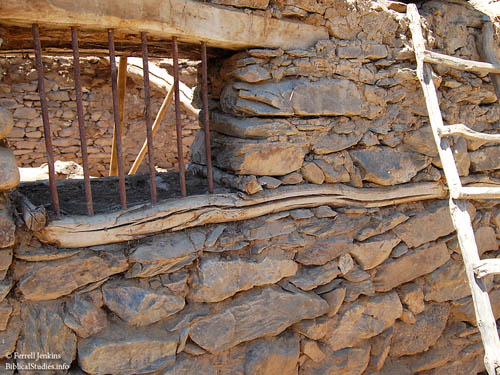
Here we see part of the new wall. Notice the field stone filled with smaller stones. A wooden lintel is used over the window. That might not be unusual to us. Look below the window. The timber is not only under the window, but also extends several feet to the right.

Preparing for an earthquake in Eastern Turkey. Photo by Ferrell Jenkins.

Preparing for an earthquake in Eastern Turkey. Photo by Ferrell Jenkins.

My friends and I spoke only a few words in Turkish. The men building the house spoke no English. I pointed to the wood below the window and did my imitation of the shaking of an earthquake. This evoked a good smile from one of the Turkish men. He nodded to indicate that I had the right idea. The wood helps to absorb the shock of an earthquake.

In our modern housing we use rebar to strengthen our buildings. This, along with metal ties help reinforce our buildings to resist the damage from hurricanes, tornadoes, and earthquakes. If an earthquake similar to the one in Haiti had hit southern California there likely would have been little loss of life. The buildings in Haiti were made of concrete blocks without any reinforcement. Ancient people knew they had to find ways to cushion the shock. The people of Eastern Turkey have learned the same.

In principle, Jesus taught the same thing about building.

“Everyone then who hears these words of mine and does them will be like a wise man who built his house on the rock. And the rain fell, and the floods came, and the winds blew and beat on that house, but it did not fall, because it had been founded on the rock. And everyone who hears these words of mine and does not do them will be like a foolish man who built his house on the sand. And the rain fell, and the floods came, and the winds blew and beat against that house, and it fell, and great was the fall of it.” And when Jesus finished these sayings, the crowds were astonished at his teaching, for he was teaching them as one who had authority, and not as their scribes. (Matthew 7:24-29 ESV)

Are you building on the rock?

Earthquakes common in the Bible world

Earthquakes were, and are, common in the Bible world. Earthquakes are common in Iran (Persia), Turkey (Asia Minor), Syria, Lebanon, Israel, and Jordan.

The Great Rift runs all the way from northern Syria through Lebanon, Israel, the Arabah, and into eastern Africa. In Israel the area is called the Jordan Valley or the Dead Sea Rift, It is not surprising that earthquakes are mentioned frequently in the Bible. The prophet Amos dates his visions to “two years before the earthquake” (Amos 1:1). The earthquake he makes reference to must have been so memorable that everyone would know what he was talking about. Zechariah (14:5) also calls attention to this earthquake in the days of Uzziah king of Judah.

Jesus, in predicting the fall of Jerusalem to the Romans, said, “and in various places there will be famines and earthquakes” (Matthew 24:7; see Luke 21:11).

About a year and a half ago I wrote about Philadelphia with special attention to the danger of earthquakes here. I suggest you read that post. The letter to the church at Philadelphia (Revelation 3:7-13) makes an allusion to the events that occur after an earthquake. In the promise to the overcomers the Lord says “I will make him a pillar in the temple of My God, and he will not go out from it anymore (v 12). In the case of earthquakes people stay outside for several days due to the fear of aftershocks. Those who overcome need not fear being toppled, as a pillar might be toppled in the earthquake.

He who overcomes, I will make him a pillar in the temple of My God, and he will not go out from it anymore; and I will write on him the name of My God, and the name of the city of My God, the new Jerusalem, which comes down out of heaven from My God, and My new name. (Revelation 3:12 NAU)

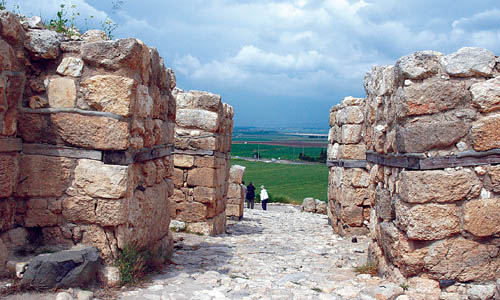
The archaeological excavations of many Biblical cities throughout Asia Minor, and along the Great Rift, reveal evidence of earthquakes. Some of the gates were built with pieces of timber to absorb the shock from the tremors. The reconstructed gate at Megiddo illustrates this practice.

Megiddo Gate with view of Jezreel Valley. Photo by Ferrell Jenkins.

Megiddo Gate with view of Jezreel Valley. Photo by Ferrell Jenkins.

The same practice is reflected in Scripture in the account of the rebuilding of the temple according to the order of the Persian King Cyrus.

In the first year of Cyrus the king, Cyrus the king issued a decree: Concerning the house of God at Jerusalem, let the house be rebuilt, the place where sacrifices were offered, and let its foundations be retained. Its height shall be sixty cubits and its breadth sixty cubits, with three layers of great stones and one layer of timber. Let the cost be paid from the royal treasury. (Ezra 6:3-4 ESV)

Don’t try this on your first trip

Some adventuresome souls who have been reading the posts about the recent trip to Israel may have in mind doing the same. After all, you have some friends who went to Europe on their own, bought an Eurail pass and saw everything in two weeks.

Not that I think that is the best way to see Europe in a limited amount of time, but I definitely warn against this for the first trip or two to Israel, Turkey, Jordan, or Egypt. When you read about a trip like the one I just completed the first two weeks of December, keep in mind that I have been traveling to Israel almost annually since 1967.

Your best choice for a first or second trip to the Bible Lands (or Holy Lands) is to travel with someone who has experience in this area. Look at a lot of itineraries before you make a decision. Look at the qualifications of the person leading the tour. Examine carefully the details such as class of hotels, number of meals, etc.

The most important thing you can do is to study about the places you will visit for several months in advance of the trip. A few weeks ago we presented a list of books that we suggest for this purpose here. Your most important study will come during the first year after you return from your trip. Because then you will have a better understanding of what you are reading about.

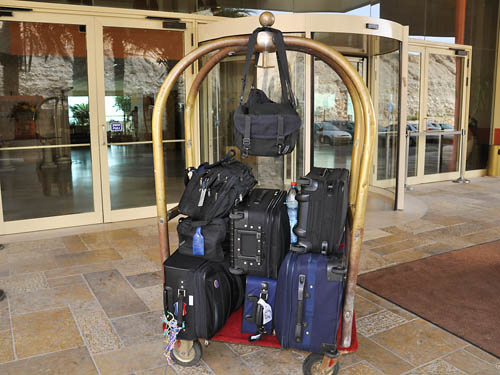
And don’t take too much luggage. It can spoil a good trip. I caught this photo of two tourists coming out of a hotel near the Dead Sea. Perhaps they had packed for a group.

Overloaded at the Dead Sea.

Overloaded at the Dead Sea. Photo by Ferrell Jenkins.

Christmas article gets attention in London

Clay Harris, formerly (perhaps, still) with the Financial Times, calls attention to “The Truth About Christmas” which is posted on our Biblical Studies Info Page here, and at Bible World. Harris argues for an appropriate secular observance of Christmas in his post in The London Echo here.

Two years ago I wrote about the origin of the legend about Santa Claus in a post on “Christmas, St. Nicholas, and Myra” here.

Take a look at all of this material.

Thanksgiving Day – 2009

Oh give thanks to the LORD, for he is good, for his steadfast love endures forever! (Psalm 107:1 ESV)

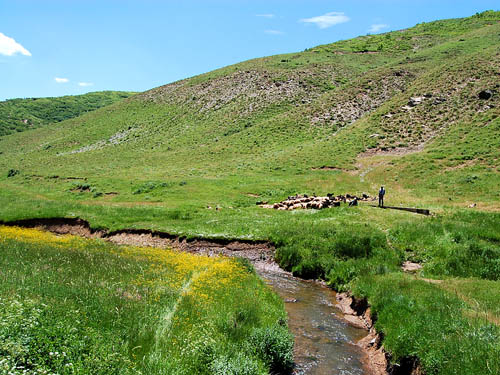
Shepherd with sheep in the Land of Ararat. Photo by Ferrell Jenkins.

Shepherd with sheep in the Land of Ararat. Photo by Ferrell Jenkins.

Ephesus: “Turkey’s ancient splendour”

A recent article in stuff.co.nz calls Ephesus “Turkey’s ancient splendour.” Here a few excerpts from the article by Brenda Webb of the Marlborough Express.

The ruins of Ephesus on Turkey’s west coast are among the best preserved and most impressive in the Mediterranean.

Imagine 250,000 people living in an area roughly the size of Picton township [a New Zealand town of about 3000 population].

Throw in an amphitheatre that seats 25,000 people, a massive three-story library, several temples, an agora (market place), a brothel, Roman baths complex, a gymnasium and various basilicas, temples and fountains.

This gives some idea of the size and complexity of the amazing ancient city of Ephesus, one of the 12 cities of the Ionian League and a once thriving Mediterranean port where skillful artisans and rich merchants gathered.

Today it’s a frantically busy historical site, so it’s best to visit early morning or late afternoon and avoid peak holiday season of July and August.

Half an hour inland from the Turkish coastal city of Kusadasi, Ephesus retains much of its former grandeur thanks to sensitive excavation and preservation that began around 100 years ago and continues today, with only 20 per cent of the site uncovered.

It certainly is a work in progress – the day we visited a huge crane was removing rubble from yet another new excavation site beside the magnificent amphitheatre that took 60 years to build.

In was here that gladiatorial combats were said to be held during Roman times as well as less brutal concerts and theatrical performances.

The acoustics in the amphitheatre are fantastic. We watched and listened in awe as an Italian tourist recited poetry on the stage, his words clearly reaching us some distance away.

Ephesus was first inhabited as long ago as 6000 BC but reached its peak in Roman times and most of the remains you see today date from then.

Despite its age and years of plundering, Ephesus remains surprisingly intact, especially its marble streets, the much photographed library and massive amphitheatre.

Some of the best-preserved artefacts, statues and tools have been taken to the nearby Ephesus Museum in Selcuk but some amazing structures remain and it is its completeness that gives it the edge over other historical sites in the Mediterranean.

Read the rest of the article here.

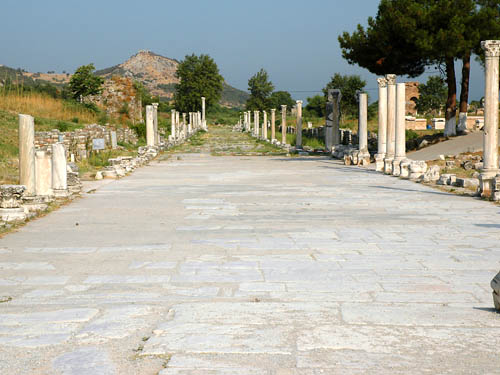
The Arcadian Way - Ephesus

The Arcadian Way runs from the Theater (to our back) and the harbor (now silted up). Photo by Ferrell Jenkins.

Luke describes some of the work of Paul at Ephesus in these words:

And he entered the synagogue and continued speaking out boldly for three months, reasoning and persuading them about the kingdom of God. But when some were becoming hardened and disobedient, speaking evil of the Way before the people, he withdrew from them and took away the disciples, reasoning daily in the school of Tyrannus. This took place for two years, so that all who lived in Asia heard the word of the Lord, both Jews and Greeks. (Acts 19:8-10 NAU)

For the full account of Paul’s work in Ephesus read Acts 18-20.

HT: Biblical Paths.

Sunset at Hierapolis

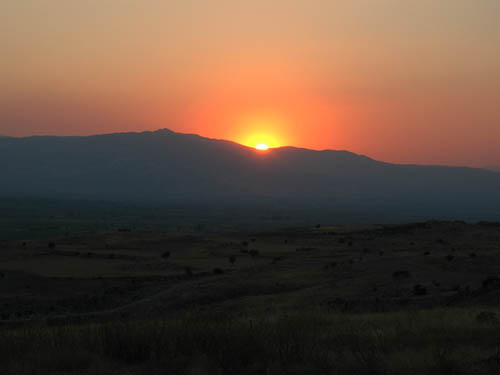
This is a sunset view I made at Pamukkale (biblical Hierapolis; Colossians 4:13). Hierapolis is famous for hot mineral springs and terraced travertine formations. It is now a World Heritage site.

For I bear him witness that he [Epaphras] has worked hard for you and for those in Laodicea and in Hierapolis. (Colossians 4:13 ESV)

Sunset at Hierapolis in the Lycus River Valley. Photo by Ferrell Jenkins.

Sunset at Hierapolis in the Lycus River Valley. Photo by Ferrell Jenkins.