Category Archives: Travel

James the Lord’s Brother

In anticipation of the “James Ossuary” verdict which is scheduled to be announced March 14, I decided to provide some background material. First, here is a brief discussion of the identity of James, and his relation to Jesus.

— • —

The name James was a common name in New Testament times. Several people bearing that name are mentioned in the New Testament. Two apostles bore that name: James the son of Zebedee (Matthew 4:21; 10:2), and James the son of Alphaeus (Matthew 10:3). James, the son of Zebedee, and brother of the apostle John, was put to death by Herod Agrippa I before A.D. 44 (Acts 12:1-2). There was also James, the brother of Jesus. Paul refers to him, along with Cephas [Peter] and John as men who were reputed to be pillars among the brethren (Galatians 2:9). Paul identifies James as “the Lord’s brother” in Galatians 1:19.

The New Testament mentions the brothers and sisters of Jesus in Mark 6:3 and Matthew 13:55-56. Roman Catholics make every effort to evade the plain meaning of “brother.” Roman Catholics hold the non-biblical doctrine of the perpetual virginity of Mary. They claim that the brothers of Jesus were really half-brothers or cousins. The inscription on the James ossuary has opened this issue anew, but more about that at another time (see Matthew 1:25). The New Testament indicates that James and the others listed were the uterine brothers of Jesus. James, the Lord’s brother, is generally thought to be the author of the Epistle of James. Jude, another brother of Jesus, wrote a short book in which he says that he is “a bond-servant of Jesus Christ, and brother of James.” This last expression indicates that Jude was not as well known as James.

The brothers of Jesus did not believe in him during His public ministry (John 7:5), but after the resurrection they are mentioned among the disciples (Acts 1:14). Paul informs us that Jesus made an appearance to James (1 Corinthians 15:7). At least some of the brothers of Jesus seem to be preachers of the gospel (1 Corinthians 9:5). It appears that the brothers of Jesus were convinced by the resurrection. James proved to be influential among the brethren both in Jerusalem and in other places (Galatians 2:11-13; Acts 15; 21:17-26). We’ll leave this matter for another time.

Josephus, the Jewish historian, makes a reference to “the brother of Jesus, who was called Christ, whose name was James” (Ant. Xx.9.1). Eusebius, the early church historian, records the martyrdom of “James, the brother of the Lord” in his Ecclesiastical History (2.23). He cites the earlier accounts by Hegesippus, Clement of Alexandria, and Josephus. This would have been shortly after the death of Festus, procurator of Judea, in A.D. 61.

The photo below shows two of the monumental tombs in the Kidron Valley between the Old City of Jerusalem and the Mount of Olives, south of the so-called Tomb of Absalom (see here). Modern Jewish tombs are visible on the slopes of the Mount of Olives above the older monuments.

The tomb on the right is known as the Tomb of Zachariah. The tomb on the left, with a porch and two Doric columns is the Tomb of Beni Hezir from the latter half of the second century B.C. (the Maccabean Period). It is incorrectly identified as the Tomb of James.
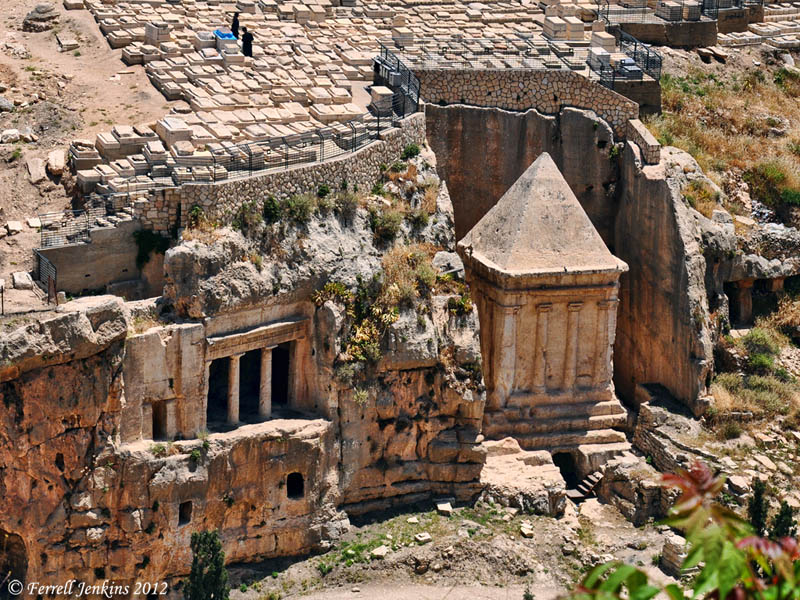
Bene Hezir (traditional James) Tomb and Tomb of Zachariah. Photo by Ferrell Jenkins.

Bene Hezir (traditional James) Tomb and Tomb of Zachariah. Photo by Ferrell Jenkins.

We have pointed out before that many structures have been incorrectly identified with specific biblical characters over the centuries. The tomb identified with James belonged to a priestly family named Hezir. Perhaps this Hezir was a descendant of a priest mentioned in 1 Chronicles 24:15. The name appears again in Nehemiah 10:20. The connection with James was a mistaken idea.

The synagogue at Chorazin

The ancient synagogue at Chorazin has been partially reconstructed. The structure is made of the local basalt (volcanic) stone that is found in the area.

Restored Synagogue at Chorazin. Photo by Ferrell Jenkins.

Restored Synagogue at Chorazin. Photo by Ferrell Jenkins.

Scholars date the synagogue from the second century to the fourth century A.D. Ze’ev Yeivin, the director of archaeological excavations at Chorazin, is cautious in dating the synagogue.

Thus far, I have said very little about dating—always a difficult and sensitive subject.

The synagogue at Chorazin was first built at the end of the third century or the beginning of the fourth century A.D. Probably in the second half of the fourth century, the synagogue, as well as the rest of the town, was partially destroyed by an earthquake.

The town apparently lay in ruins for some time thereafter. The Church father Eusebius, writing at the end of the fourth century, tells us that Chorazin was a destroyed village, apparently in fulfillment of the prediction in the Gospels of Matthew and Luke. (BAR 13:05 (Sep/Oct 1987).

Yeivin comments on one of the most significant discoveries within the synagogue:

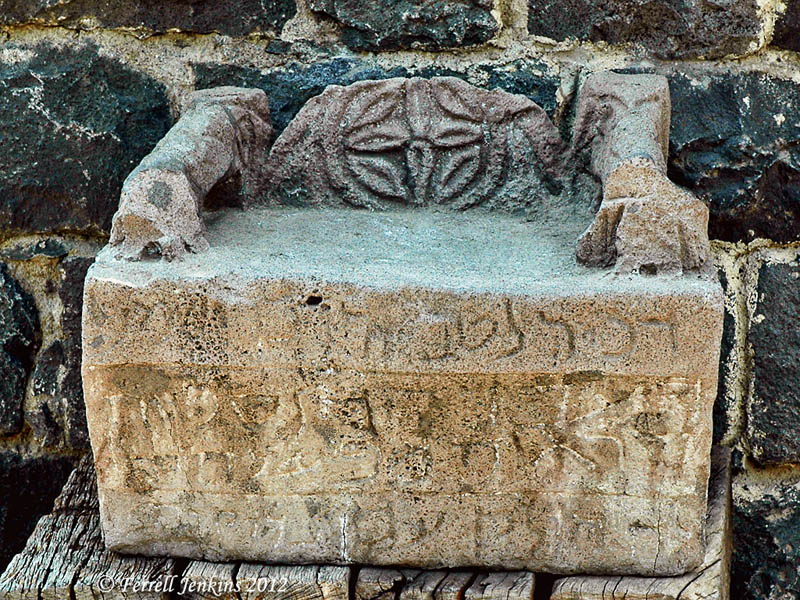
In 1926 a unique stone seat was found near the southern wall of the Chorazin synagogue. Since then it has been called the “Chair of Moses.” The Chair of Moses is a special seat that is used in some synagogues, even today, on certain occasions, usually located near the most important wall, that which faces Jerusalem. (BAR 13:05 (Sep/Oct 1987).

The photo below is of a replica of the Chair (or Seat) of Moses. The original is displayed in the Israel Museum, Jerusalem.

Chorazin Synagogue Chair. Photo by Ferrell Jenkins.

Replica of Chorazin Synagogue Chair. Photo by Ferrell Jenkins.

It may be that Jesus had this type of seat in mind in Matthew 23:2.

“The scribes and the Pharisees sit on Moses’ seat,  so do and observe whatever they tell you, but not the works they do. For they preach, but do not practice.  (Matthew 23:2-3 ESV)

A parallel might be that we should listen to those who teach the Bible from the pulpit, but not follow their example when they do not live according to the Bible.

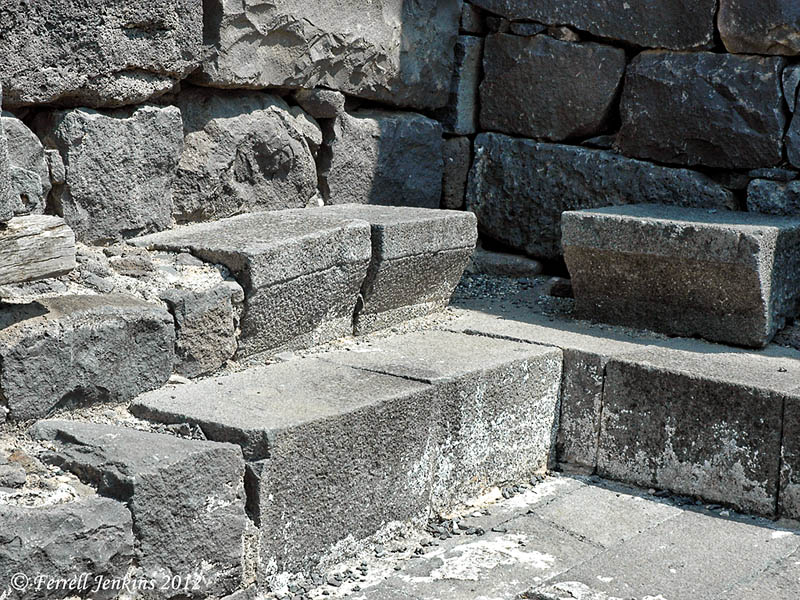
The seating running around the inside walls of the building is typical of what we know from several synagogues.

Chorazin Synagogue Seating - Photo by Ferrell Jenkins.

Chorazin Synagogue Seating. Photo by Ferrell Jenkins.

James uses the Greek word sunagogue to describe the meeting place of early Christians. It is most commonly translated assembly.

My brothers, show no partiality as you hold the faith in our Lord Jesus Christ, the Lord of glory.  For if a man wearing a gold ring and fine clothing comes into your assembly, and a poor man in shabby clothing also comes in,  and if you pay attention to the one who wears the fine clothing and say, “You sit here in a good place,” while you say to the poor man, “You stand over there,” or, “Sit down at my feet,”  have you not then made distinctions among yourselves and become judges with evil thoughts?  (James 2:1-4 ESV)

Whether our meeting place is elaborate or humble, we should not show partiality.

“Woe to you, Chorazin!”

Chorazin (also spelled Chorozain and Korazim) is one of three cities that rejected the message of Jesus, and upon which he pronounced a woe.

 “Woe to you, Chorazin! Woe to you, Bethsaida! For if the mighty works done in you had been done in Tyre and Sidon, they would have repented long ago in sackcloth and ashes. (Matthew 11:21 ESV; cf. Luke 10:13)

BDAG describes the Greek word used here as an “interjection denoting pain or displeasure, woe, alas.”

Murphy-O’Connor describes the location of Chorazin in contrast to Capernaum.

Capernaum with a view is perhaps the most succinct characterization of Chorozain. Both contain synagogues in the midst of an excavated urban area, but sited 3.5 km [2.17 miles] up the slope and 270 m [885 feet] above the Sea of Galilee Chorozain offers a wide perspective over the northern end of the lake. (The Holy Land)

Both Eusebius and Jerome are said to have referred to a desolate place near Capernaum as Chorazin. Dalman describes the area as “a desolate basalt wilderness” (Sacred Sites and Ways 154).

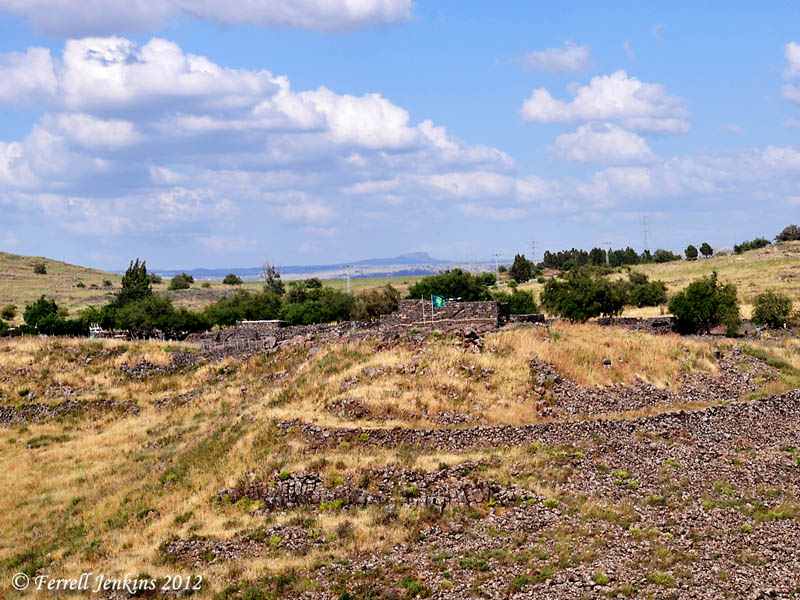
In the photo below you can see the location of Chorazin with a view to the southwest. Mount Arbel is visible in the distance. The Sea of Galilee is below on the left.

Chorazin (Korazim) in the basalt hills north of the Sea of Galilee. Photo by Ferrell Jenkins.

Chorazin is situated in the basalt hills north of the Sea of Galilee. This view is to the SW. Mount Arbel can be seen in the distance. Photo by Ferrell Jenkins.

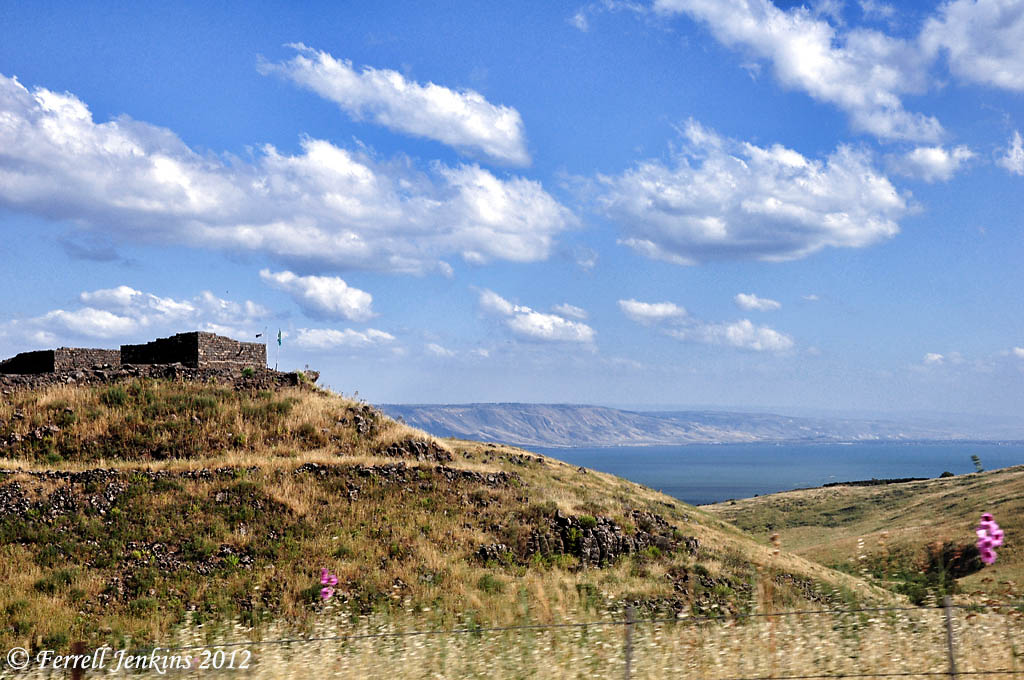
Move a little west of Chorazin and you have a wonderful view of the Sea of Galilee to the southeast. The eastern side of the Sea is clearly visible. A few reconstructed buildings at the site are visible on the hill to the left.

Chorazin and the Sea of Galilee. Photo by Ferrell Jenkins.

Chorazin and the Sea of Galilee. Photo by Ferrell Jenkins.

In a future post we will include a photo of the synagogue at Chorazin.

Our last post about Capernaum, including an aerial photo, may be seen here. Use the search box to locate other references to the site.

New discoveries at the Colossi of Memnon

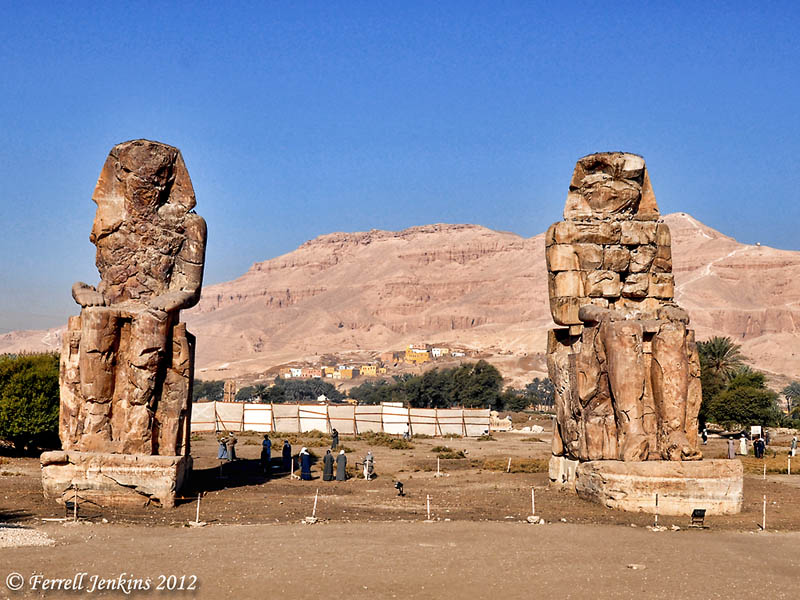
On the way from Luxor to the Valley of the Kings on the West Bank of the Nile one passes two huge statues known as the Colossi of Memnon. The statues are nearly 60 feet tall, and once stood at the entrance to the funerary temple of Amenhotep III (also known as Amenophis III). With their crowns, each statue would have been about 66 feet tall. Amenhotep III ruled Egypt during the 18th Dynasty (14th century B.C.).

During the time of the Roman Empire the statues were mistakenly associated with “Memnon, son of Eos and Tithonus, who was killed by Achilles during the Trojan War” (Baedeker’s Egypt).

Travelers since the time of the Emperor Nero have carved their name in these sandstone statues.

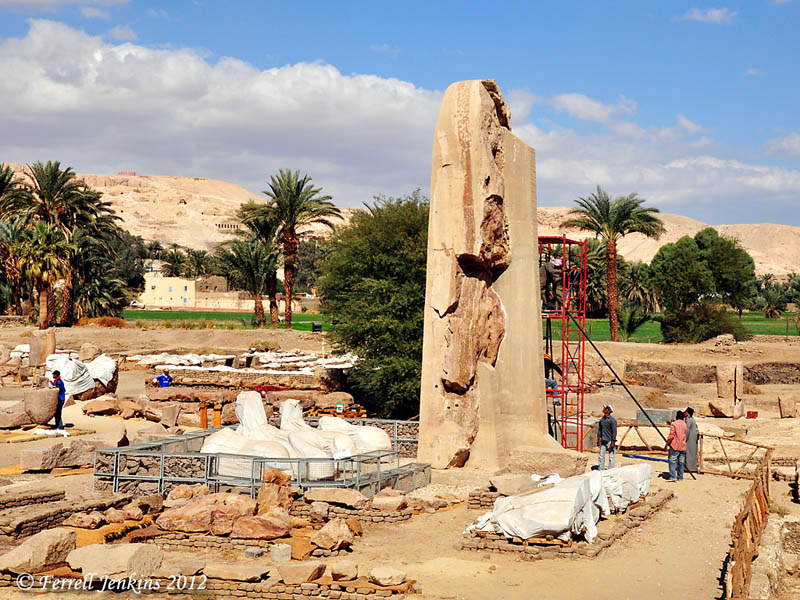
The photo below was made January 17, 2011. A fence may be seen in the background where archaeologists were working to restore new statues that have been found over the past few years.

The Colossi of Memnon in the West Bank of the Nile. Photo by Ferrell Jenkins.

The Colossi of Memnon in the West Bank of the Nile. Photo by Ferrell Jenkins.

I was able to get a few photos of the area where the workers were restoring some of the statues recently uncovered. Notice some items covered with white, and others lined up on the right side of our photo.

Temple of Amenophis III - West Bank of the Nile. Photo by Ferrell Jenkins.

Temple of Amenophis III - West Bank of the Nile. Photo by Ferrell Jenkins.

In the next photo you will see several pieces covered. One shows the distinct appearance of a giant arm in my original photo.

Temple of Amenophis III - West Bank of the Nile. Photo by Ferrell Jenkins.

Temple of Amenophis III - West Bank of the Nile. Photo by Ferrell Jenkins.

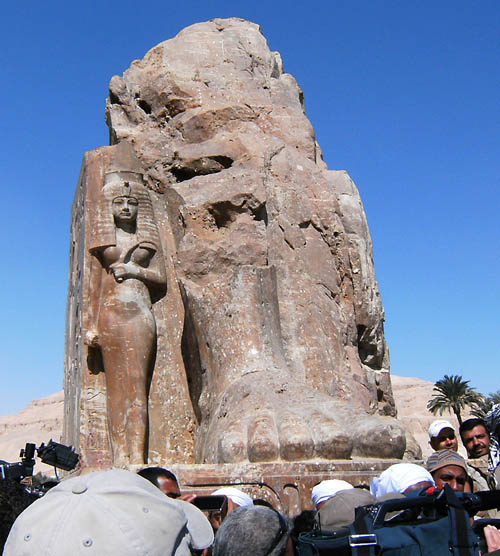
In addition to what I was able to see, the Luxor Times reported the unveiling of yet another new statute that has been restored. Here is one of the photo from that report. The brief news report with several photos may be read here.

Colossian statue of Amenhotep III - Luxor Times.

Colossian statue of Amenhotep III - Luxor Times.

Yodfat (= Jotapata) — where Josephus commanded Galilean forces against Rome

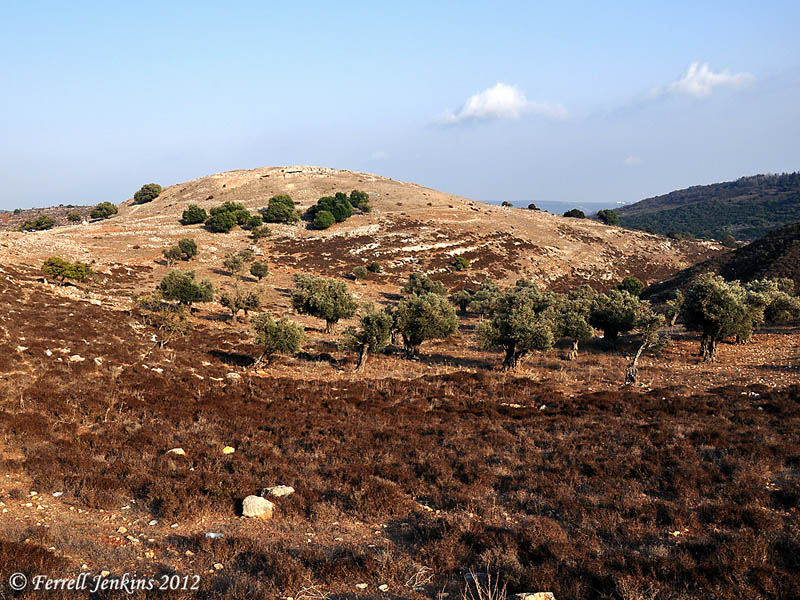
Yodfat (or Yodefat) may be better known to English readers as Jotapata. It was here that Josephus, later known as a significant historian of first century Judaism, commanded the Galilean forces against Rome in A.D. 66.

Josephus wrote about the significant battle at Yodfat in his Wars of the Jews (Bk. III:141-339). Yodfat is located about 20 miles inland from Ptolemais (modern Akko) along the main route from Ptolemais to Magdala on the shore of the Sea of Galilee.

View of Yodfat from the west. Photo by Ferrell Jenkins.

View of Yodfat from the west. Photo by Ferrell Jenkins.

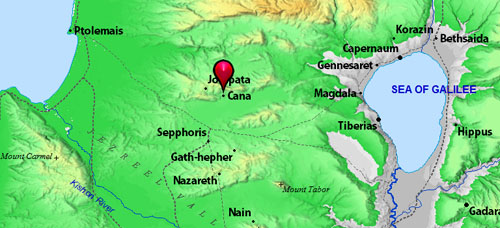
The map below from BibleAtlas shows Nazareth, Sepphoris, [Khirbet] Cana, and Jotapata. Notice that Jotapata and Cana are situated on the north side of the Beit Netofa Valley. A main road ran from Ptolemais to Magdala through the Beit Netofa Valley.

Map showing Nazareth, Sepphoris, Cana, and Jotapata. BibleAtlas.org.

Map showing Nazareth, Sepphoris, Cana, and Jotapata. BibleAtlas.org.

Josephus commanded the rebel Jewish forces who were trying to stop the Roman soldiers from reaching Jerusalem. He took refuge at Yodfat. When it was clear that Rome, under the leadership of Vespasian and his son Titus, had the upper hand, some of the troops committed suicide rather than submit to the Romans. Many of the Jewish rebels were slain, but the life of Josephus was spared when he predicted that Vespasian would eventually become Emperor of the Roman Empire.

Bonnie Rochman reports that bones discovered in 1997 may be those of men who died in the battle with Rome.

Bones from at least 30 people were discovered this past summer in a cistern in the Galilee, giving strong support to Josephus’s account of a bloody battle there between Jews and Romans in 67 A.D. The bones are thought to be the remains of residents of the nearby city of Yodfat, which was besieged by Roman troops en route to Jerusalem to suppress the First Jewish Revolt. The Roman forces captured Yodfat (also written Yodefat and Jotapata and even Iotape) after battling the city’s Jews for 47 days. (Biblical Archaeology Review. 23:06 (Nov/Dec 1997).

Josephus records that 40,000 died in the conflict, and and that 1200 were enslaved. Some scholars believe this number is an exaggeration. Whatever the exact number, it was a significant battle in the Jewish War.

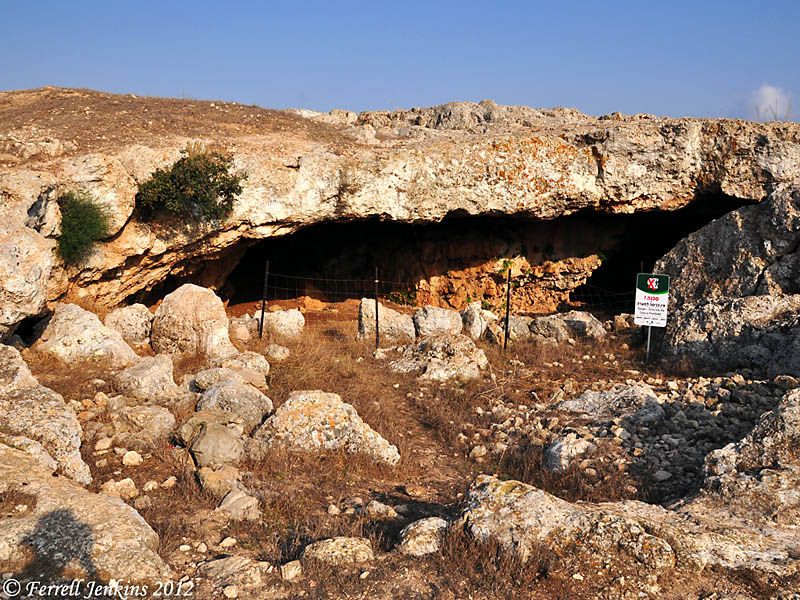
Yodfat differs from the typical tel (archaeological mound). It is mostly a rock, with few remains on the surface. The site is filled with numerous caves in which the Jewish soldiers hid, and cisterns that provided water for them. The photo below shows the entrance to one of the caves on the south side of the site.

One of many caves at Yodfat. Photo by Ferrell Jenkins.

One of many caves at Yodfat. Photo by Ferrell Jenkins.

The Encyclopedia Judaica provides a short summary here about the excavations at Jotapata

Excavations were conducted at the site in 1992 by D. Edwards, M. Aviam, and D. Adan-Bayewitz, revealing remains dating from the Hellenistic period through to medieval times. A fortification wall from the Ptolemaic period was uncovered with three phases of construction evident. To the northwest were the remains of a ramp dating from the time of the Roman siege in 67 C.E. The finds included remains from the battle including ballista balls and iron bow and catapult arrowheads. Rubble walls built at this location seem to have been part of the Jewish preparations prior to the arrival of the Romans. An oil press, pottery kilns, and several ritual baths (mikva’ot) were uncovered. The lower part of the site was reoccupied in the late first or early second centuries C.E., and there were also signs of occupation of medieval date.

Some scholars have identified Jotapata with the Jotbah of 2 Kings 21:19. Jotbah was the birthplace of the mother of the Judean King Amon. The town may be mentioned in the annals of Tiglath-pileser III (New Bible Dictionary; Anchor Yale Bible Dictionary).

Discovery of 20 mummies & wooden sarcophagus at Aswan, Egypt

Euro Weekly announces,

ARCHAEOLOGISTS from [the Spanish] Jaen University found some 20 mummies and a wooden sarcophagus at a site in Aswan, Egypt.

The report says,

The main find is a tomb built for a provincial governor from the XII dynasty (1830BC) and a wooden sarcophagus in which a high-ranking person was buried.

The brief article may be read here.

Aswan is famous for its granite quarries. An unfinished obelisk, which would have been 137 feet long and weighing 1152 tons, remains in the quarry lying on its side. Holes were drilled into the stone at intervals of about 2 ½ feet and wooden pegs were placed in them. As water was poured over the pegs they expanded to separate the obelisk from the surrounding stone.

Aswan Quarry with the unfinished obelisk. Photo by Ferrell Jenkins.

Aswan Quarry with the unfinished obelisk. Photo by Ferrell Jenkins.

Aswan is known as Syene in Ezekiel 29:10 and 30:6. The expression, “from Migdol to Syene and even to the border of Ethiopia” is similar to the familiar “from Dan to Beersheba.” Migdol was in the far northeast of the country, and Syene was near the southern border. The writer means the entire country.

HT: Jack Sasson

Visual illustrations for Daniel 8

In Daniel’s vision of a ram and a male goat we are given a glimpse of the two world empires following Babylon — the Medo-Persian Empire and the Alexandrian (or Hellenistic/Grecian) Empire.

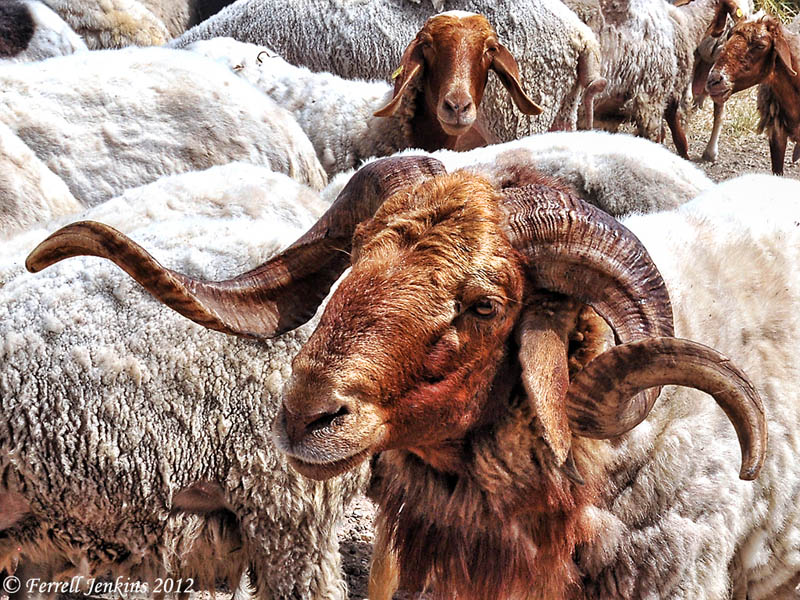
Daniel sees a ram.

I raised my eyes and saw, and behold, a ram standing on the bank of the canal. It had two horns, and both horns were high, but one was higher than the other, and the higher one came up last. (Daniel 8:3 ESV)

Ram at Socoh. Photo by Ferrell Jenkins.

A ram. With horns like that it is easy to see who is boss. Photo by Ferrell Jenkins.

In apocalyptic literature the visions take liberty with reality. It would require an artist to draw the ram and the male goat exactly as Daniel saw them.

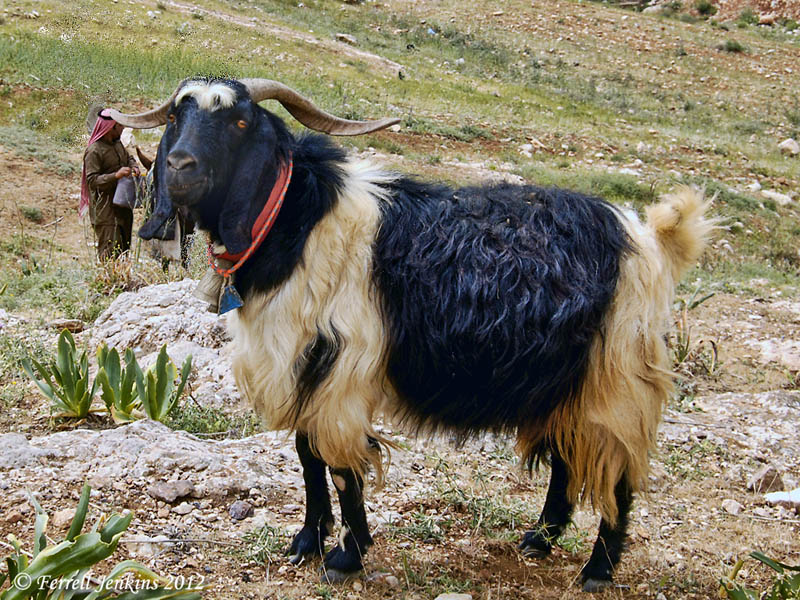
Then Daniel sees a male goat.

As I was considering, behold, a male goat came from the west across the face of the whole earth, without touching the ground. And the goat had a conspicuous horn between his eyes. (Daniel 8:5 ESV)

A male goat in Gilead (modern Jordan). Photo by Ferrell Jenkins.

A male goat in Gilead (modern Jordan). Photo by Ferrell Jenkins.

The interpretation is easier for us than it was for Daniel before Gabriel gave him an understanding of the vision (vs. 15-16).

As for the ram that you saw with the two horns, these are the kings of Media and Persia.  And the goat is the king of Greece. And the great horn between his eyes is the first king.  (Daniel 8:20-21 ESV)

It will not be difficult to find other uses for photos of the ram and the male goat in Bible lessons (e.g., Genesis 15:9; Leviticus 23:19; 16:5)

Luxor in Egypt has a long history

Luxor was known as Thebes in Old Testament times. Both Jeremiah and Ezekiel prophesied the Lord’s judgment of the city. Jeremiah says,

The LORD of hosts, the God of Israel, says, ‘Behold, I am going to punish Amon of Thebes, and Pharaoh, and Egypt along with her gods and her kings, even Pharaoh and those who trust in him’” (Jeremiah 46:25; see also Ezekiel 30:14-16 NET).

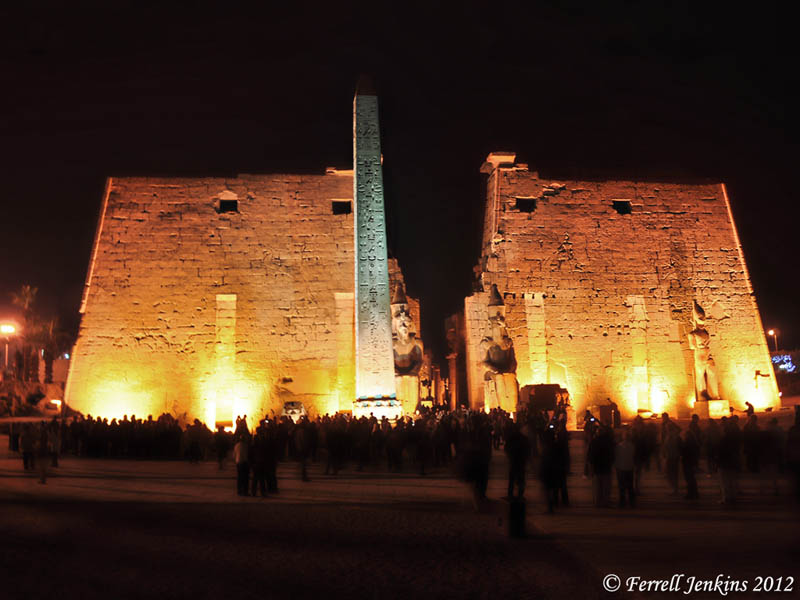
A visit to the ruined and unoccupied temples of Karnak and Luxor, where Amon (or Amun) was worshiped as a great god, certainly convinces us of the fulfillment of this prophecy. Shortly after the time of Jeremiah (about 586 B.C.), Egypt and Thebes began to decline as a world power.

Luxor Temple facade at night. Photo by Ferrell Jenkins.

Luxor Temple facade at night. Photo by Ferrell Jenkins.

In 663 B.C. the Assyrian king Ashurbanipal had already conquered Thebes (Hebrew, No Amon). The prophet Nahum, in prophesying the fall of Nineveh, calls attention to this event (3:8ff.).

Jeremiah and Ezekiel prophesied during the Babylonian period of world dominance. Darius the Great (521-486 BC), who befriended the Judeans, helping them rebuild the temple in Jerusalem, depicted himself as a Pharaoh on a shrine door now displayed in the British Museum.

The young Alexander of Macedon came to Thebes in 336 BC and left reliefs of himself portrayed as a Pharaoh making offerings to the god Amon. Cassander rebuilt the city in 315 B.C. The later Ptolemaic kings who succeeded Alexander built temples to the gods at Edfu and Kom Ombo and regularly pictured themselves as worshiping the gods of Egypt. Likewise, the Roman emperors built temples beside the ancient temples of the Pharaoh. The temple of Philae has a small temple to the Roman Emperor Augustus ( 30 B.C. to A.D. 14) and another to Emperor Trajan (A.D. 98-117).

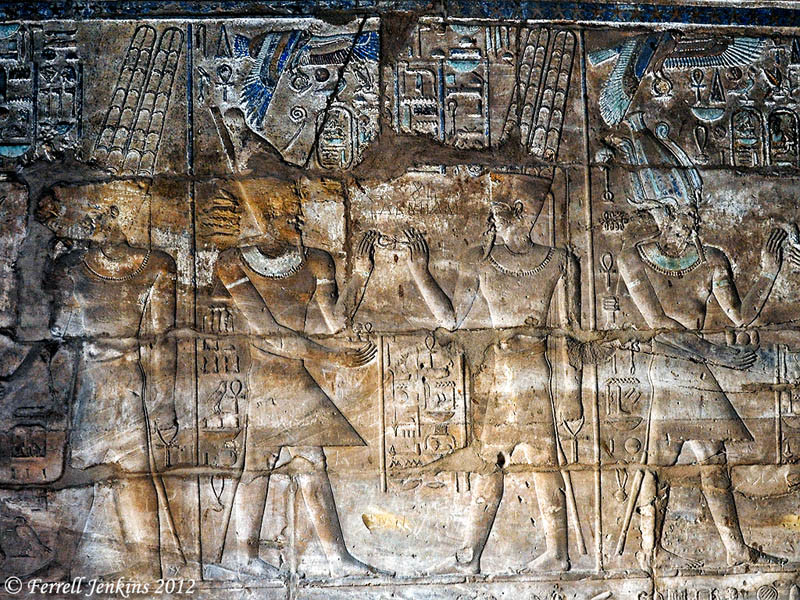
The photo below is from the chapel of Alexander the Great in the Karnak Temple. It was originally built by Thutmose III, and later decorated with these reliefs by Philip Arrhidaeus, the brother of Alexander the Great.

Relief of Alexander making an offering at Karnak. Photo by Ferrell Jenkins.

Relief of Alexander making an offering at Karnak. Photo by Ferrell Jenkins.

If a reader can provide more specific information about this relief, I would appreciate it.

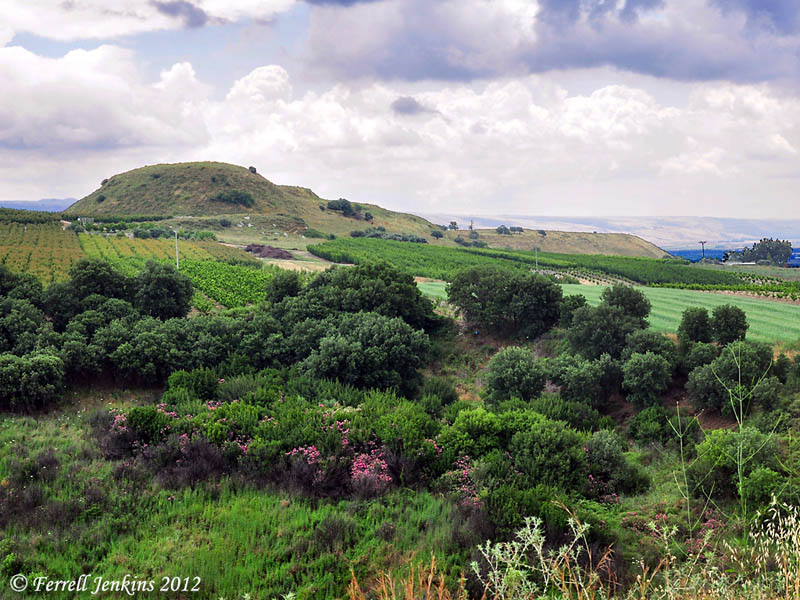
Photo of Abel Beth Maacah

If you would like to see a hi-res photo that I made of Abel Beth Maacah, take a look at the announcement (here) of the new excavation scheduled for this summer.

My recent posts about the important site in northern Israel may be seen here and here.

I suppose my name is just too hard to spell.

Abel Beth Maacah. Photo by Ferrell Jenkins.

Abel Beth Maacah. View to the east. Photo by Ferrell Jenkins.

Israel government plans to preserve Tel Shiloh

Haaretz announces that the “Israeli government allocates NIS 5 million to preserve Tel Shiloh in West Bank.” According to the article, a large tourist center is planned at the site.

This is a precedent-setting decision, since Israeli governments up to now have not allocated funds for renovation and preservation of the site, located within the area of the Binyamin Regional Council. The committee’s decision to embark on the project states that “Tel Shiloh is a unique heritage asset” for the Jewish people, and mention was made of the fact that work at the site will be backed by supplementary funds totaling some NIS 10 million, to be provided by private sources.

The full article may be read here. For our US readers, 5 million NIS [New Israeli Shekels] equals approximately $1,338,000.

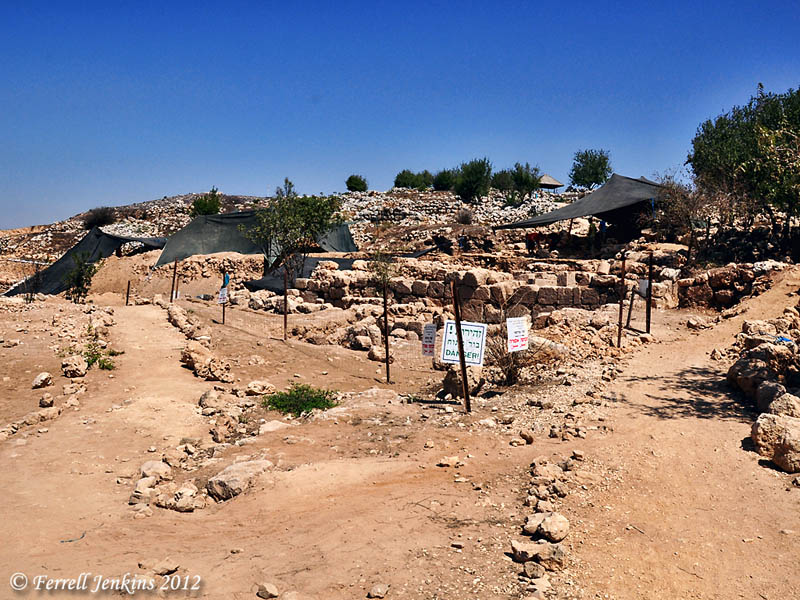
Some archaeological work was already underway last September when Leon Mauldin and I visited Tel Shiloh. The new excavation at the base of the mound dates to the Byzantine and Islamic period.

Tel Shiloh. New excavations at the base of the mound. Photo by Ferrell Jenkins.

Tel Shiloh. New excavations at the base of the mound. Photo by Ferrell Jenkins.

Shiloh is highly significant in Biblical history.

  • The tabernacle was set up at Shiloh, and it was here that the final division of the land among the tribes took place (Joshua 18).
  • Shiloh is located in specific terms.

However, there is an annual festival to the LORD in Shiloh, which is north of Bethel (east of the main road that goes up from Bethel to Shechem) and south of Lebonah.” (Judges 21:19 NET)

  • The Israelites took the ark of the covenant to the battle field near the coastal plain (1 Samuel 4). The ark never returned to Shiloh.
  • Shiloh was the home of Samuel (1 Samuel 1-3).

More info about Shiloh, with earlier photos, may be seen here.

HT: Joseph Lauer