Category Archives: Travel

Unique Hadrian exhibit at the Israel Museum

The Roman Emperor Hadrian (Publius Aelius Hadrianus) ruled the Empire from A.D. 117 to 138. Numerous statues of him are displayed in museums spread across the region. Most of them are made of stone, but there are three unique bronze statues of the Emperor. These are on display at the Israel Museum in Jerusalem until June. They come from the Israel Museum, the Louvre, and the British Museum.

Ilan Ben Zion says that Hadrian,

…was venerated by contemporary Roman historians as one of the Five Good Emperors: a just ruler, a peacemaker and great architect of the empire. The wall he famously constructed along the border with Scotland bears his name to this day. But in Jewish memory, Hadrian is best known as a brutal dictator who crushed the Bar Kochba revolt in 135, slaughtered hundreds of thousands of Jews, rebuilt Jerusalem as a pagan city, banned circumcision, and changed the name of Judaea to Palaestina. (The Times of Israel, Dec. 22, 2015)

I have seen all three of these pieces, but look forward to seeing them displayed together in the spring.

The most magnificent statue is the one of Hadrian discovered at Tel Shalem (Shalim) a few miles south of the Beth Shean (Beit She’an) in the Jordan Valley. Tel Shalem is thought to be the Salim mentioned in John 3:23.
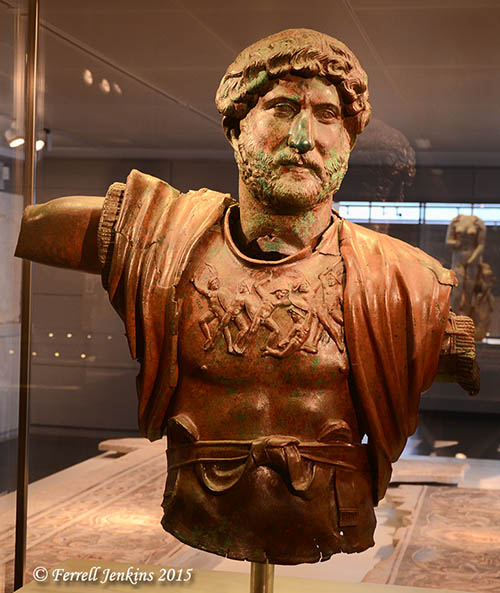
Bronze statue of Hadrian discovered in a Roman army camp of the Sixth Roman Legion. He is portrayed as the supreme military commander. Photo by Ferrell Jenkins.

Bronze statue of Hadrian discovered in a Roman army camp of the Sixth Roman Legion at Tel Shalem. He is portrayed as the supreme military commander. Photo by Ferrell Jenkins.

Only the head remains of the other two statues. The first of these was acquired by the Louvre in 1984.
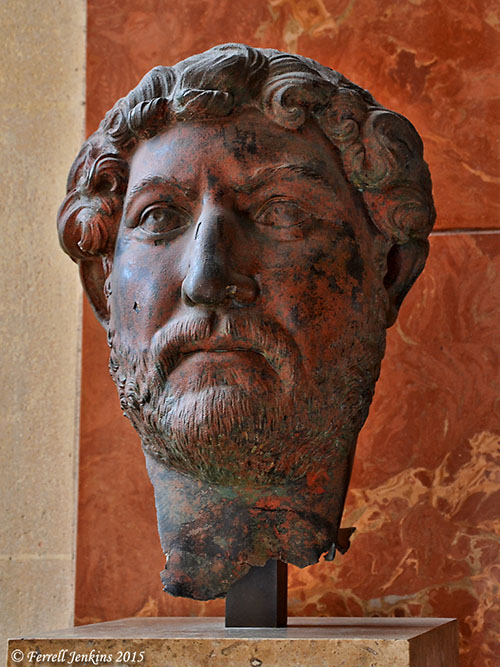
Bust of Hadrian thought to have come from Egypt. Louvre. Photo by Ferrell Jenkins.

Bust of Hadrian thought to have come from Egypt. Louvre. Photo by Ferrell Jenkins.

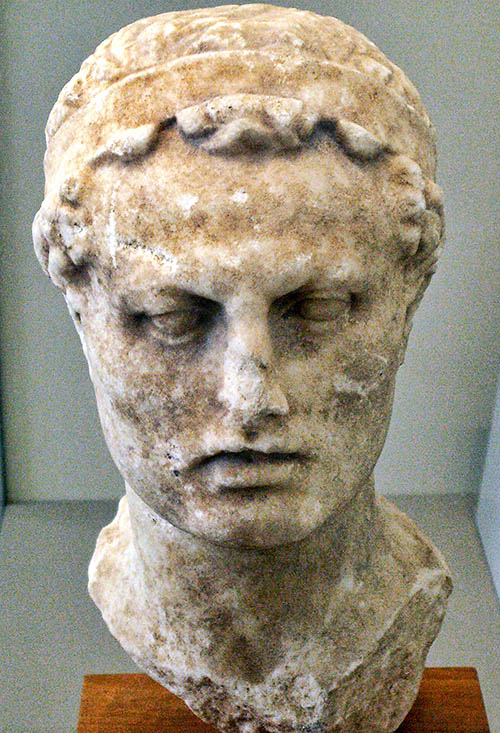
The next bronze head comes from a larger than life-size statue that is thought to have stood in a public area of Roman London. It commemorates Hadrian’s visit to Britain in A.D. 122. It was found in the River Thames near London Bridge in 1834. This head is displayed in a room of Roman statues in the British Museum, but I have never known it to be open. I arranged to visit the room one time and have a photo but it is not as sharp as I prefer. This photo comes from Following Hadrian here. I refer you to that blog and Twitter feed for everything Hadrian.
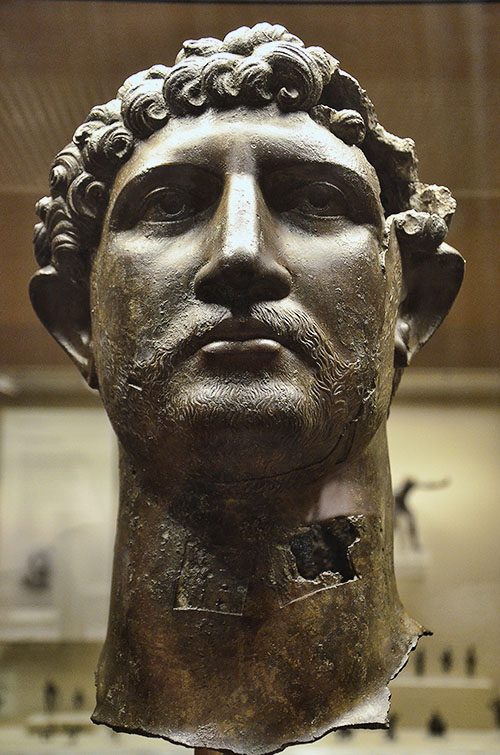
Bronze Head of Hadrian. Following Hadrian.

Bronze head from a statue of the Emperor Hadrian, Romain Britain, British Museum
Carole Raddato CC BY-SA

Richard Batey writes about Hadrian’s relation to Jerusalem:

Hadrian visited Jerusalem in A.D. 129–130 and rebuilt the city on the plan of a Roman military camp. On the Temple Mount he erected a temple dedicated to Jupiter Capitolinus and nearby a second temple honoring the goddess Aphrodite. Hadrian renamed Jerusalem Aelia Capitolina, a designation that combined one of his names with Rome’s Capitoline triad: Jupiter, Juno and Minerva. Hadrian’s actions and policies provoked a second revolt by the Jews in A.D. 132. Led by Bar Kokhba, the Jewish troops succeeded in taking control of Jerusalem briefly but were soon (A.D. 135) crushed by the superior Roman army. After this decisive defeat it became a capital offense for a Jew to set foot in Jerusalem. (Batey, R. A. “Jerusalem.” Ed. Craig A. Evans and Stanley E. Porter. Dictionary of New Testament background: a compendium of contemporary biblical scholarship 2000 : 561. Print.)

Shmuel Browns, Israel Tour Guide, includes a beautiful photo of the Tel Shalem bust currently on display (outside the case?), and he presents another opinion about the rebuilding of the city. He also includes a list of some other things related to Hadrian that can be seen in and around Jerusalem. See his post here.

Information about the exhibit at the Israel Museum may be found here.
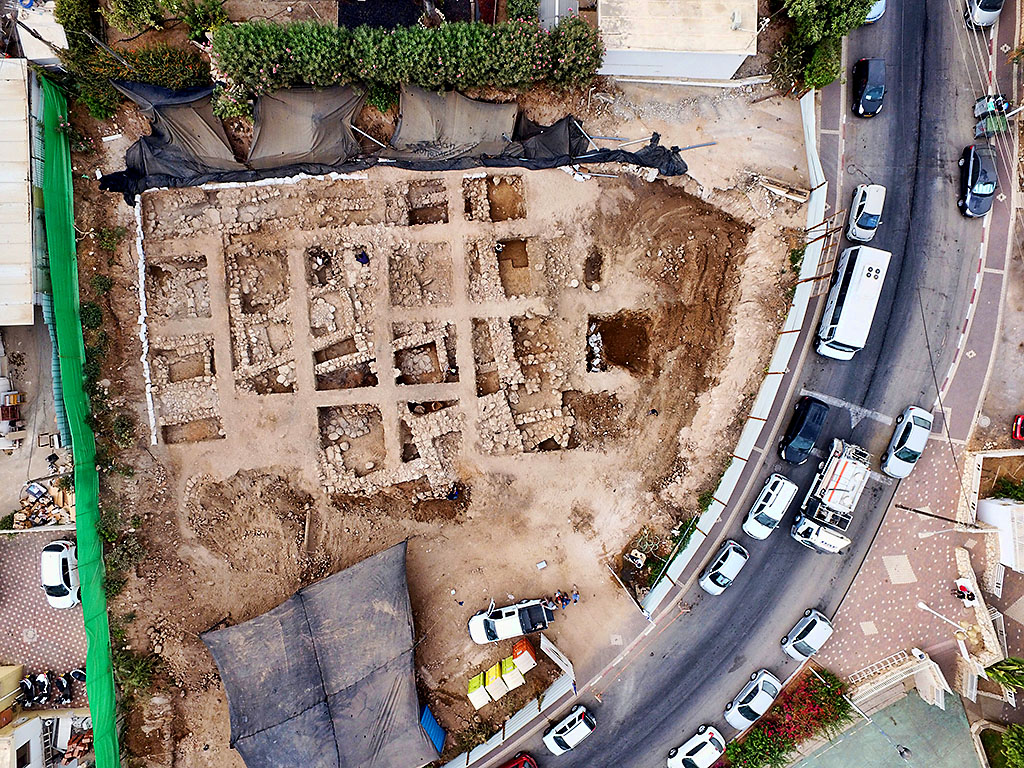
Canaanite citadel exposed in Nahariya

Announcement was made this week of the discovery of a Canaanite citadel in the middle of the Israeli northern coastal town of Nahariya. The Israel Antiquities Authority and the University of Haifa announced an agreement that would allow construction on a high-rise apartment building to continue with the inclusion of the Canaanite ruins to remain in the basement.

An aerial photograph of the excavation. Photographic credit: Guy Fitoussi, courtesy of the Israel Antiquities Authority.

An aerial photograph of the excavation. Photographic credit: Guy Fitoussi, courtesy of the Israel Antiquities Authority.

The IAA announcement reads,

In an agreement reached between the director of the Israel Antiquities Authority, Mr. Israel Hasson, and the director of the Kochav Company, Ltd., Mr. Danny Kochav, remains of a 3,400 year old citadel that were recently uncovered in an archaeological excavation will be integrated in an apartment high-rise that the Kochav Company is building on Balfour Street in Nahariya, close to the beach.

The large excavation, which the Israel Antiquities Authority conducted together with youth groups, including students from the Shchakim High School in Nahariya, was carried out as part of a project by the Kochav Company to build a residential high-rise with underground parking. Given the extraordinary nature and quality of the finds, the Israel Antiquities Authority sought a solution that would allow the conservation of some of the remains for the benefit of the public. Thus, with the assistance of Architect Alex Shpol, planner for the Interior Ministry’s regional committee for planning and construction, it was decided that part of the citadel would be preserved in the building’s basement level where it will be displayed for the enjoyment of the residents and visitors.

According to Nimrod Getzov, Yair Amitzur and Dr. Ron Be’eri, excavation directors on behalf of the Israel Antiquities Authority, “It seems that the citadel which we uncovered was used as an administrative center that served the mariners who sailed along the Mediterranean coast 3,400 years ago. There was probably a dock alongside the citadel. Numerous artifacts were discovered in its rooms, including ceramic figurines in form of humans and animals, bronze weapons and imported pottery vessels that attest to the extensive commercial and cultural relations that existed at that time with Cyprus and the rest of the lands in the Mediterranean basin”.

The fortress was destroyed at least four times by an intense conflagration, and each time it was rebuilt. An abundance of cereal, legumes and grape seeds were found in the burnt layers, which are indicative of the provisions the sailors would purchase.

Nahariya is not mentioned in the Bible by name. The city is located along the Mediterranean coast of the Plain of Acco about 5 or 6 miles north of Acco (Acre). This territory was allotted to the Israelite tribe of Asher, but they were not able to maintain control over the Canaanites in the region.

Asher did not drive out the inhabitants of Acco, or the inhabitants of Sidon or of Ahlab or of Achzib or of Helbah or of Aphik or of Rehob, (Judges 1:31 ESV)

The book of Judges describes the territory of Asher as being along the seashore.

Asher remained on the seacoast, he stayed by his harbors. (Judges 5:17 NET)

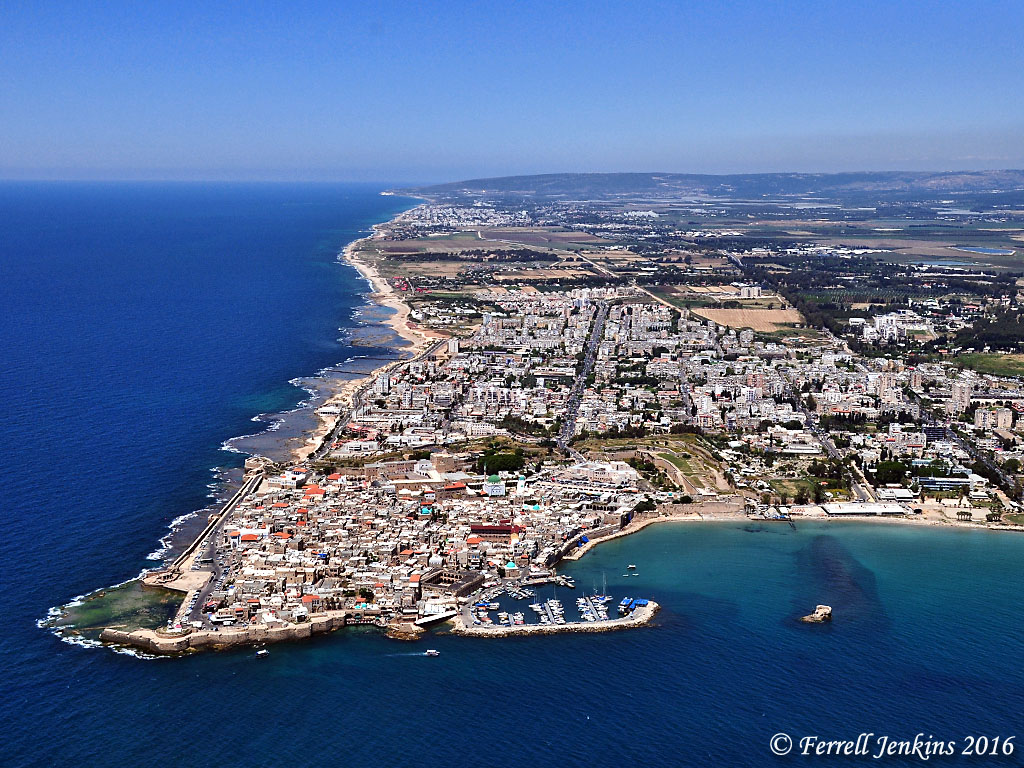
Aerial view of the plain of Acco, territory of the Biblical tribe of Asher ran from Haifa (Mount Carmel) north. Photo by Ferrell Jenkins.

Aerial view of the plain of Acco, territory of the Biblical tribe of Asher ran from Haifa (Mount Carmel) north. Photo by Ferrell Jenkins.

In the far north of this photo you will see a small horizontal white line extending into the sea. That is known as the Ladder of Tyre. The cluster of buildings between Acco and the Ladder of Tyre is Nahariya.

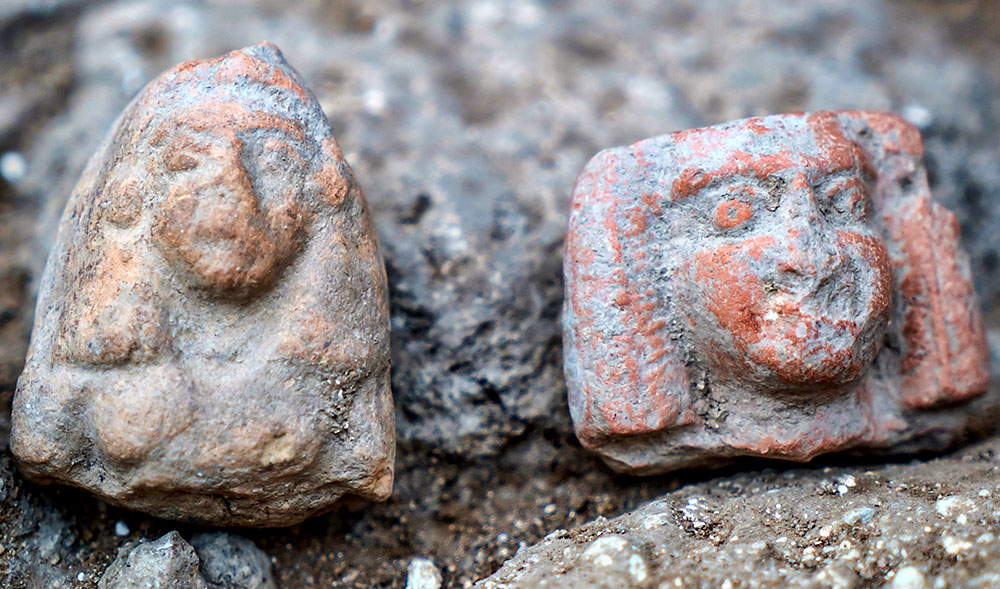
During earlier excavations at Nahariya a Cannanite temple with a mold for making images of the goddess Asherah had been uncovered. Beginning with Ahab, numerous kings of Israel were responsible for worshiping Asherah. I suggest you use a Bible concordance to locate all the reference to Asherah, Asherim, Asheroth, and Ashtoreth.

Solomon also worshiped Ashtoreth the goddess of the Sidonians in Jerusalem (1 Kings 11:5; 2 Kings 23:13).

Female figurines dating to the Late Bronze Age. Photographic credit: Eran Gilvarg, courtesy of the Israel Antiquities Authority

Female figurines dating to the Late Bronze Age. Photographic credit: Eran Gilvarg, courtesy of the Israel Antiquities Authority

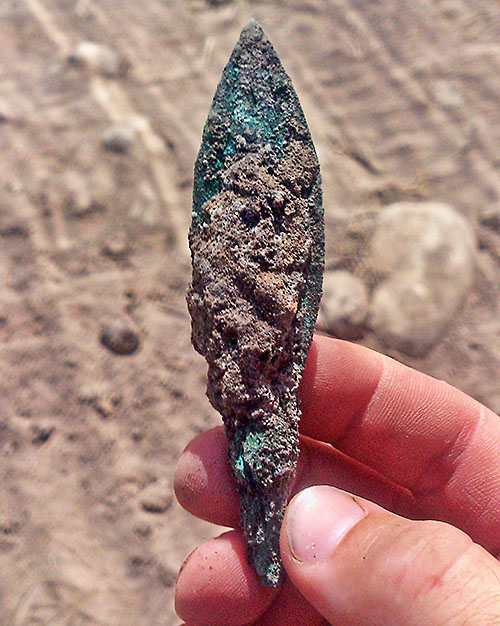
The IAA news release simply says that the recent discoveries at Nahariya date to 3400 years ago, i.e., about 1400 B.C. This period is known as the Late Bronze Age (about 1550 to 1200 B.C.). Bible students will recognize this as the period of the conquest of Canaan by the Israelites. The bronze arrowhead is a good reminder of the conflict in the land at that time.

An arrowhead made of bronze. Photographic credit: Eran Gilvarg, courtesy of the Israel Antiquities Authority.

An arrowhead made of bronze. Photographic credit: Eran Gilvarg, courtesy of the IAA.

I find these photos so fascinating that I want to share more of them with you.

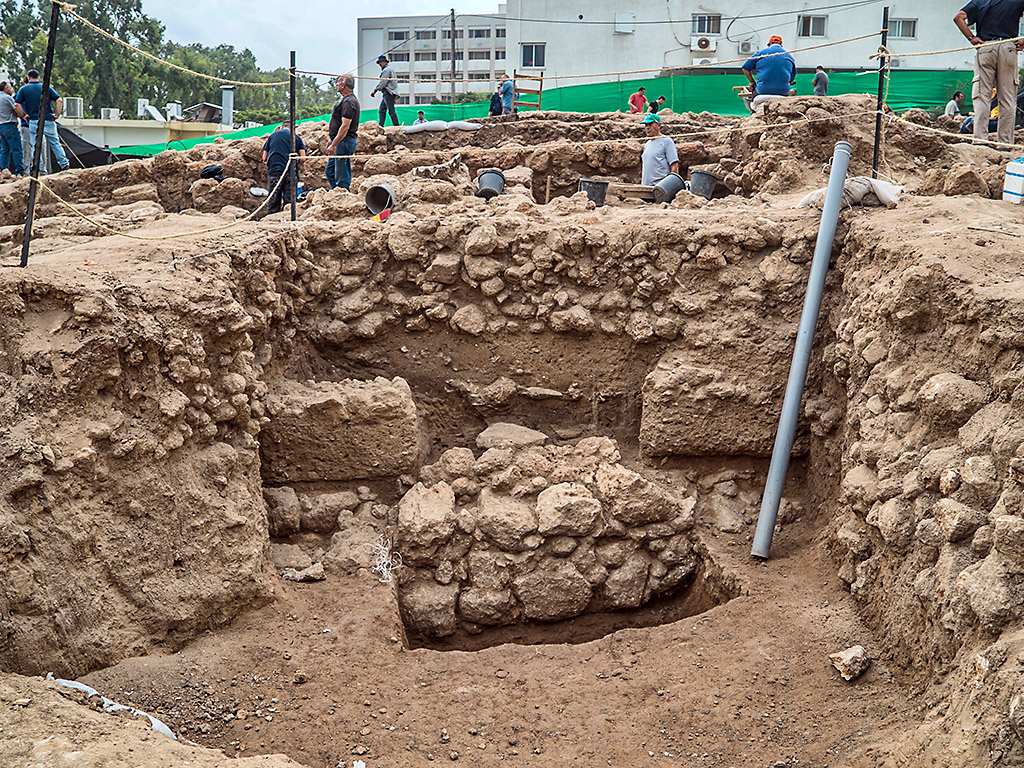
Photograph of the work being conducted at the site. Photo: IAA.

Photograph of the work being conducted at the site. Photo: IAA.

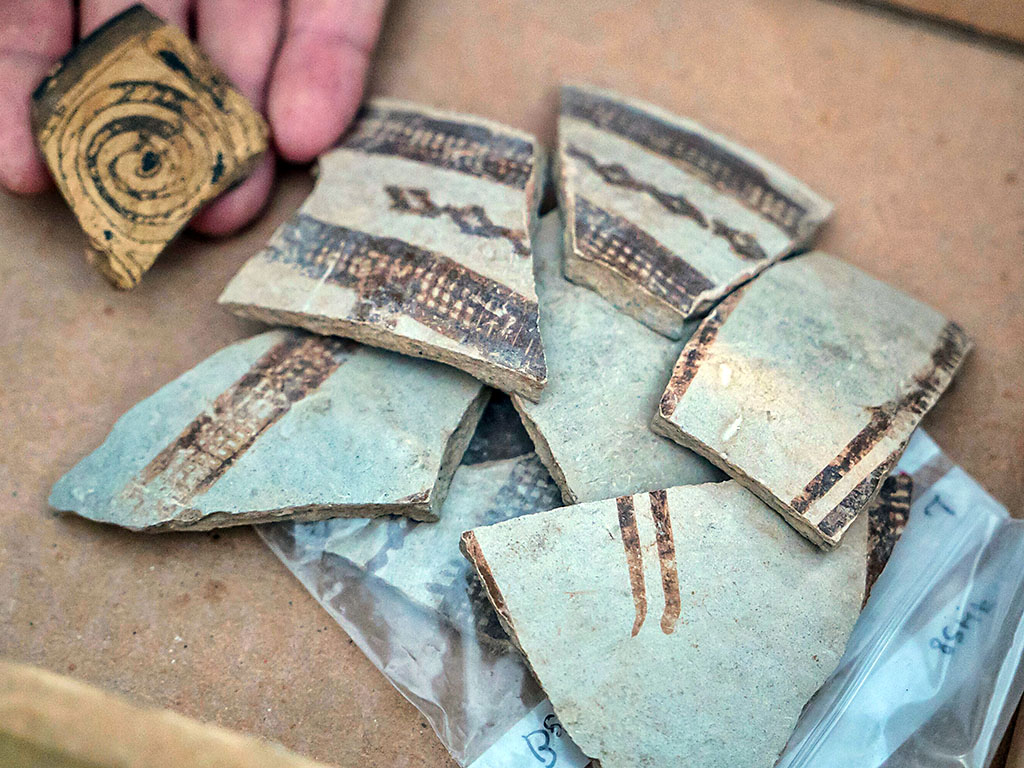
Imported pottery from Cyprus and Greece was found at the site.

Fragments of decorated pottery vessels imported from Cyprus and Greece 3,400 years ago. Photo: IAA.

Fragments of decorated pottery vessels imported from Cyprus and Greece 3,400 years ago. Photo: IAA.

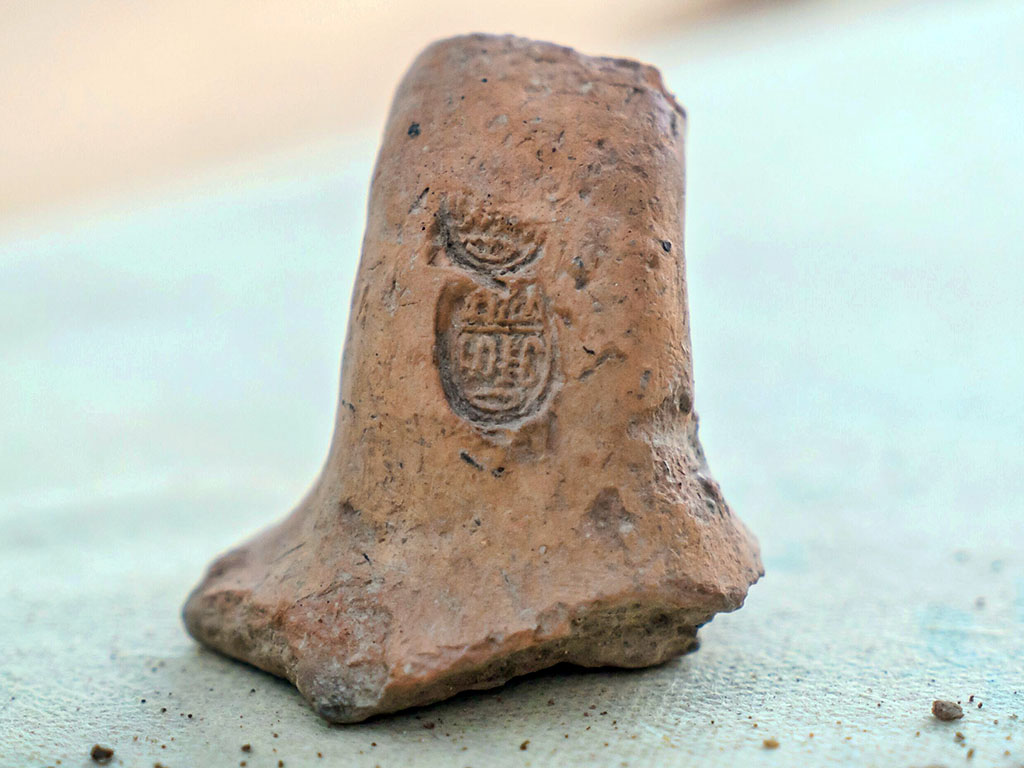
A stamped jar handle is dated to the Middle Bronze Age (about 2100 to 1550 B.C.). I look forward to some insight into the reading of the impression.

A stamped jar handle dating to the Middle Bronze Age. Photo: IAA.

A stamped jar handle dating to the Middle Bronze Age. Photo: IAA.

We never know what may be dug up tomorrow.

HT: Joseph Lauer

Ram statue discovered at Caesarea Maritima

The IAA announced last Thursday the discovery of the statue of a ram at Caesarea Maritima. The announcement says,

The statue … might have been part of the decoration of a Byzantine church from the sixth–seventh centuries CE at Caesarea. By the same token it could also be earlier, from the Roman period, and was incorporated in secondary use in the church structure.”

The photo below seems to have been made in a metal storage shed and provides some idea of the size of the ram whose front legs are missing.

Ram discovered at Caesarea. Photo: Vered Sarig, The Caesarea Development Corp.

Ram discovered at Caesarea. Photo: Vered Sarig, The Caesarea Development Corp.

In the next photo the ram looks much larger than it is because of the relationship to the camera.

Ram discovered at Caesarea. Photo: Vered Sarig, The Caesarea Development Corp.

Ram discovered at Caesarea. Photo: Vered Sarig, The Caesarea Development Corp.

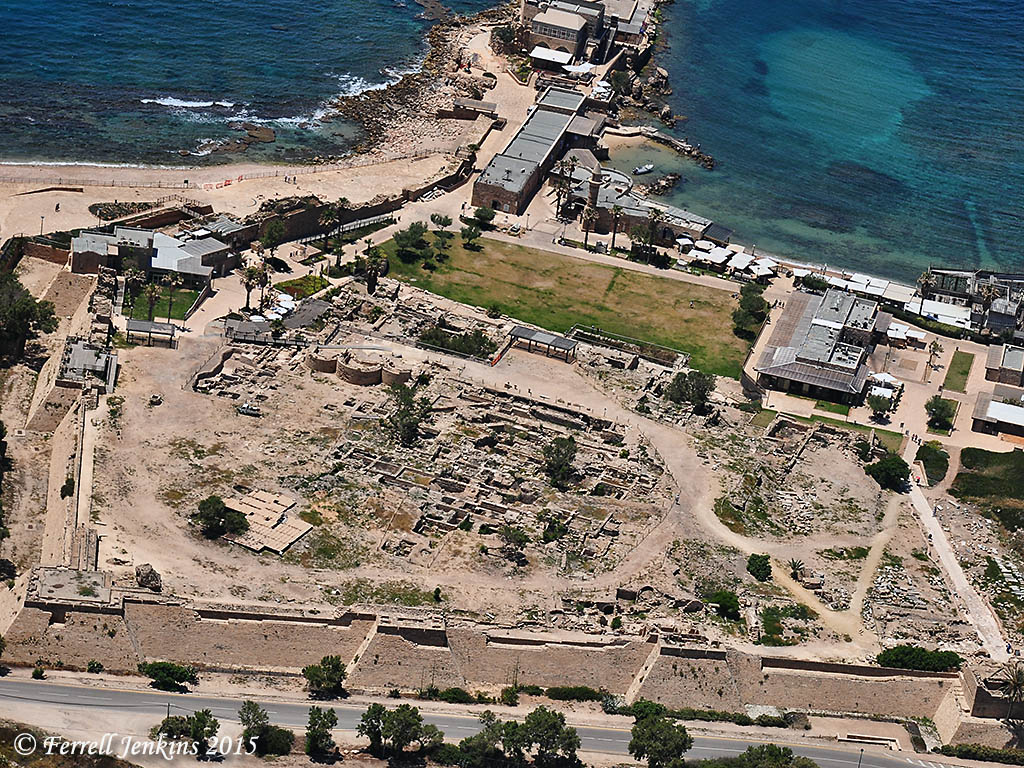
The aerial photo below will help you put the discovery location in perspective. It shows the area of the Byzantine church that was built on the site about A.D. 525. Kenneth Holum of the University of Maryland announced in 1995 the discovery of Herod the Great’s enormous temple dedicated to the Roman Emperor Augustus underneath the ruins of the Byzantine church.

Aerial view of Caesarea Maritima showing area of the Byzantine church ruins. Photo by Ferrell Jenkins.

Aerial view of Caesarea Maritima showing the area of the Byzantine church ruins. The view also shows the Crusader wall. Photo by Ferrell Jenkins.

When the Pharisees and scribes complained that Jesus received sinners and ate with them, He told them a parable that we call the parable of the lost sheep (Luke 15:1-7).

“What man of you, having a hundred sheep, if he has lost one of them, does not leave the ninety-nine in the open country, and go after the one that is lost, until he finds it?  And when he has found it, he lays it on his shoulders, rejoicing.  And when he comes home, he calls together his friends and his neighbors, saying to them, ‘Rejoice with me, for I have found my sheep that was lost.’  Just so, I tell you, there will be more joy in heaven over one sinner who repents than over ninety-nine righteous persons who need no repentance.  (Luke 15:4-7 ESV)

“When he has found it, he lays it on his shoulder, rejoicing.” This describes the work of good shepherds and a practice that was well known to those who heard Jesus. On another occasion Jesus called Himself the good shepherd (John 10:11, 14).

The motif of the good shepherd with the sheep on his shoulder became common in later Christian iconography. For some examples of Good Shepherd statues/statuettes from the Byzantine period see our post here.

HT: Joseph I. Lauer

The real story about Saint Nicholas on Amazon Prime

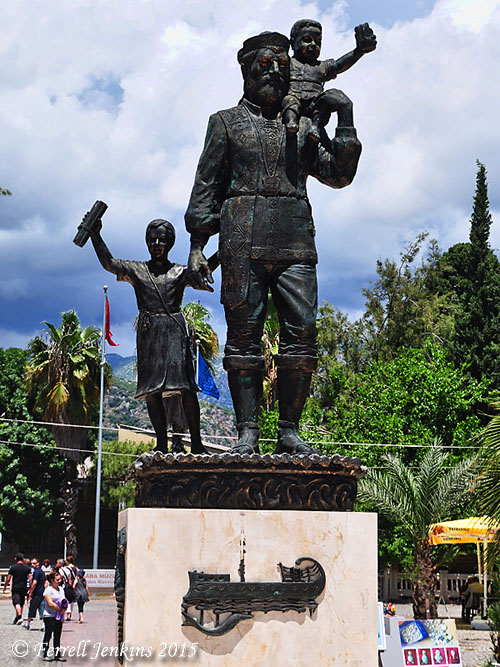
You have read on this blog and other places about the Saint Nicholas of Myra, a town on the southern Mediterranean coast of Turkey. Recently I learned of the video featuring Dr. Mark Wilson and Dr. Adam English now available free for those who have access to Amazon Prime. The 55-minute video is high quality.

The video provides information about the priest by the name of Nicholas and his work in and around Myra. As Bishop of Myra, Nicholas defended the doctrine of the trinity at the Council of Nicea (Nicaea) in A.D. 325. There is a strong claim that he is buried in Bari, Italy.

I think you might enjoy the film and learn something about Church History in the process.

If you have Amazon Prime you can search for Saint Nicholas: the Real Story, or use this link: Saint Nicholas: the Real Story.

The town of Myra is known to students of the New Testament as a place where the apostle Paul transferred ships while he was being taken to Rome for trial before Caesar (Acts 27:5). My most recent post about the city is available here.

Modern statue of Saint Nicholas at Myra. Photo by Ferrell Jenkins.

Modern statue of Saint Nicholas at Myra. Photo by Ferrell Jenkins.

Index of articles on Bethlehem and the Birth of Jesus

Bethlehem and the Birth of Jesus.  Our total number of posts has now grown to more than 1800 and this makes it difficult to locate a post you may need. This index is prepared to assist you in your study of the birth of Jesus in ancient Bethlehem. Most, if not all, of the posts include at least one photo illustrating the lesson.

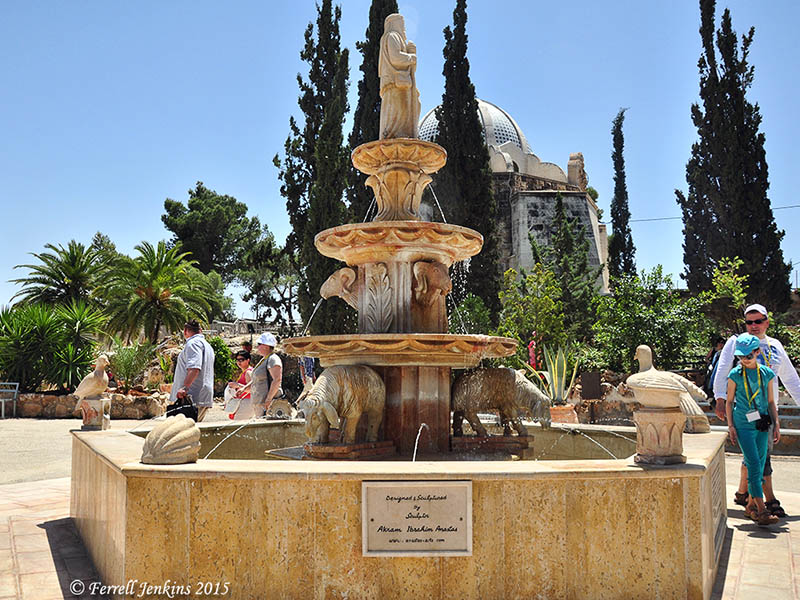
Fountain at Franciscian Custody Shepherd's Field near Bethlehem. Photo by Ferrell Jenkins.

Fountain at Franciscan Custody Shepherd’s Field near Bethlehem.

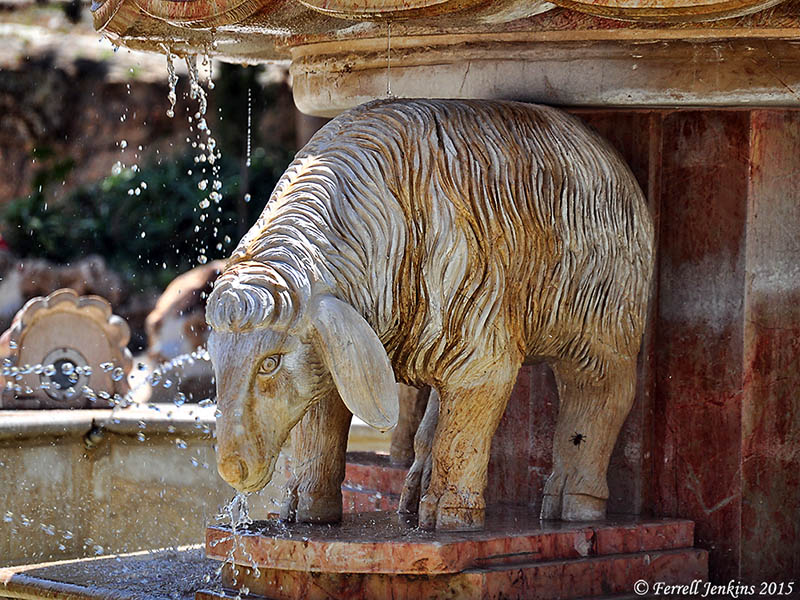
Sheep at fountain of Franciscan custody Shepherd's Field near Bethlehem. Photo by Ferrell Jenkins.

Sheep at fountain of Franciscan custody Shepherd’s Field near Bethlehem.

Other places near Bethlehem. Most of the links below are related to Herod the Great and the fortress he built near Bethlehem. I see that I have normally used the spelling Herodium, but sometime Herodion.

Historical Connections to Modern Christmas Celebrations. These post are post-biblical, historical references to customs associated with Christmas.

When other posts on this subject are written I will try to remember to update the list.

Note: This post is a repeat from Dec. 12, 2014

Books for self and others #3 – books by David E. Graves

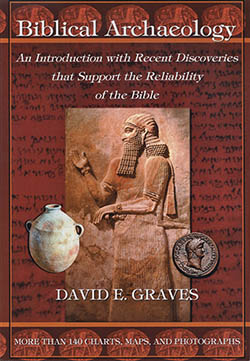
David E. Graves sent me two of his recent books. The first to mention is Biblical Archaeology: An Introduction with Recent Discoveries that Support the Reliability of the Bible. I like the subtitle: An Introduction with Recent Discoveries that Support the Reliability of the Bible. This is a large paperback of 375 pages, published in 2014.
  1. Introduction to Biblical Archaeology
  2. Archaeology and Biblical Manuscripts
  3. Genesis
  4. Exodus and Conquest
  5. United and Divided Monarchy
  6. The Gospels
  7. Acts and Epistles
  8. Revelation

Graves, Biblical ArchaeologyBiblical Archaeology includes more than 140 charts, maps and photographs (all in black and white), a glossary, extensive bibliography and index.

Dr. Graves holds a Ph.D. from the University of Aberdeen, has been involved in teaching the Bible and archaeology for more than 30 years. He has participated in archaeological digs for several years.

This book will not please the person who wants a slick paper, large print book filled with color photos. It will be extremely helpful to the person who would like to have a thorough survey of Biblical Archaeology.

Key Themes of the New Testament: A Survey of Major Theological Themes is a 2014 paperback of 441 pages. Here are the chapters:

  1. Kinds of Literature
  2. Birth and Early Years of Jesus
  3. Ministry of Jesus
  4. The Death of Jesus
  5. Resurrection and Ascension
  6. The Founding of the Church
  7. The Formation of the Church
  8. The Development of the Church
  9. The Future of the Church
  10. Conclusion

This book covers so comprehensive that one is bound to disagree with a point here and there. Points that I observed gave me opportunity to think and expand my thinking. The book is available in Kindle format for about half the price. Graves also has a similar book dealing with the Old Testament themes.

David maintains Deus Artefacta, a blog about issues like those discussed in these books.

I provided five photos for this book, and two for the book on archaeology.

Books for self and others # 2 – four from Carta Jerusalem

Recently I received two packages of books from Shay Hausman, president & CEO of Carta Jerusalem. Each package included two books I needed or wanted. Far back I have called attention to some of the excellent Carta publications. I will make a list to those posts at the bottom of this one.

R. Steven Notley wrote the New Testament portion of The Sacred Bridge, an excellent book too comprehensive and expensive for the average non-trained Bible student. The material was published in an abridged edition without all of the scholarly notes in a work entitled Carta’s New Century Handbook and Atlas of the Bible.

Now Carta has published some of the New Testament material is a new format. This book by R. Steven Notley is entitled In the Master’s Steps: The Gospels in the Land (The Carta New Testament Atlas). The book of 9 chapters plus preface and index covers the ministry of Jesus from His Birth to the Resurrection and Ascension. It has lavish drawings, photos, and maps to assist the Bible student. And it has print large enough for older readers to enjoy. (Just ask me!) Those who have visited the proposed site of Bethsaida may already know that Notley has taken exception to the identification of the site of et-Tell with the home of Peter, Andrew, and Philip (John 1:44). In this new work you will be able to examine his evidence and draw your own conclusions.  I am pleased to recommend this excellent paperback.
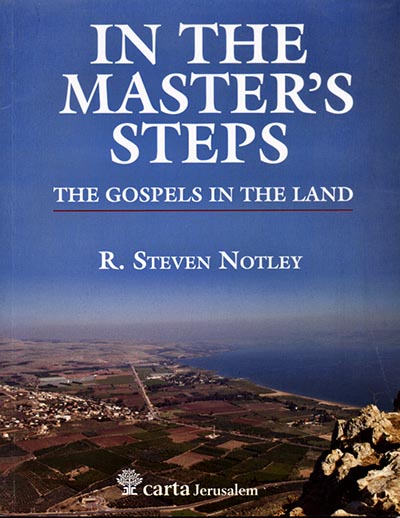
Notley, In the Master's Steps.

Notley, In the Master’s Steps: The Gospels in the Land.

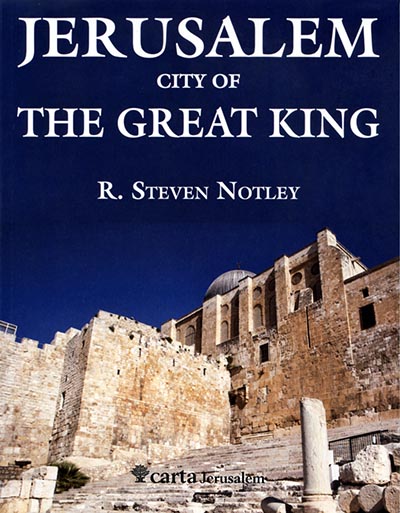
The second new book by R. Steven Notley is Jerusalem: City of the Great King. This book of 112 pages has 10 chapters. The work begins with the Pre-Herodian History and develops the history of the city with the greater portion of the material being devoted to Jerusalem at the time of Christ. A short section that caught my attention deals with “The Myth of an Essene Quarter.”
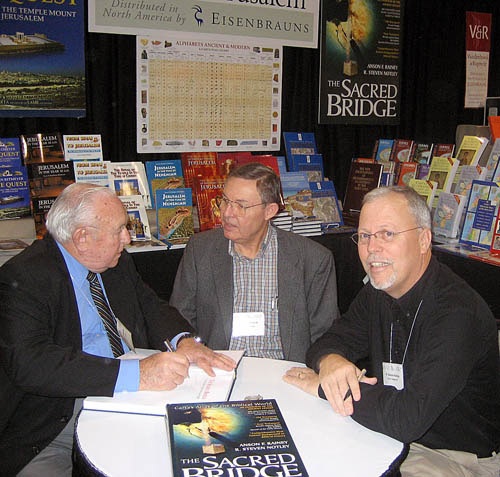
I saw Prof. Notley browsing the book exhibits at the Society of Biblical Literature meeting in Atlanta a few weeks ago. Having met him at a previous annual meeting I spoke. He pulled a copy of this next book from his briefcase and showed it to me. When I asked if this was mostly the content of the larger atlas he said that they were criticized for not including enough material on Jerusalem. This book, he said, was to remedy that situation. He stated that there are more books to come.

This book is a good one for most anyone studying portions of the Bible with their setting in Jerusalem. It is especially helpful for those studying the ministry of Jesus.

Notely, Jerusalem City of the Great King

Notely, Jerusalem City of the Great King

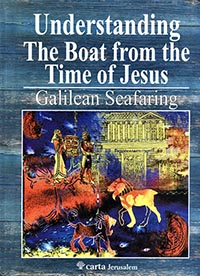
The next book is smaller, being only 40 pages. Understanding the Boat from the Time of Jesus: Galilean Seafaring is written by Shelley Wachsmann. Those who have seen the Roman-era boat uncovered from the Sea of Galilee in 1986 will revel in the story told by Wachsmann who directed the excavation of the 2000 year old fishing boat. The story of this discovery, the excavation, and preparation of this boat for display at Nof Ginnosar is a fascinating one.
Understanding the Boat from the Time of Jesus

Understanding the Boat from the Time of Jesus

Understanding the Alphabet

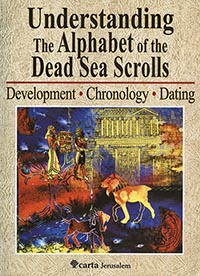
Understanding the Alphabet


The final of these four books is Understanding the Alphabet of the Dead Sea Scrolls by Ada Yardeni. This is a valuable book for those interested in the Dead Sea Scrolls, the Hebrew Bible, and the Hebrew language. It occurs to me that anyone involved in calligraphy might find the book interesting. The book is filled with illustrations showing how to draw the alphabet of various scrolls and inscriptions.

Earlier references to Carta Jerusalem books.

Ritmeyer, The Temple Mount – a Carta Guide Book

Carta’s New Century Handbook and Atlas of the Bible

The links I have provided go to Amazon. The books are not as easily located in the United States as some other books, but you may be able to locate them elsewhere.

Anson Rainey, Ferrell Jenkins, and R. Steven Notley at SBL in 2006.

Anson Rainey (1930-2011), Ferrell Jenkins, and R. Steven Notley at SBL in 2006.

As mentioned above, these books were sent to me by the publisher. The comments represent my own opinion. Books purchased from Amazon through these links will net me a few cents per book. Nothing I think of as substantial. Happy reading.

Books for self and others — # 1

When you read good books and when you give good books to others, especially those who teach the Bible, you are doing a favor for several persons at one time.

During the past six months I have received several good books sent to me by authors or publishers who would like you to know about their publication. Normally I might have gotten to these publications much sooner, but due to two episodes of major disruptions to our home life I have gotten behind. One was the flooding of the house from a water line break resulting in disruption for three months. The other was due to a large fallen Laurel Oak limb that did considerable damage. We had two huge dying trees that had to be taken out. Add to that some family health issues and you will know my excuse for this delay.

Rather than writing a long review of each book I will list each with a few comments.

Make your Mark: Getting Right What Samson Got Wrong

The first book is Brad Gray’s Make Your Mark: Getting Right What Samson Got Wrong. Gray is a teaching pastor in Holland, Michigan, who has lived in Israel and traveled extensively in the Bible lands. I met him in Jerusalem back in May. This paperback of 194 pages deals with the four chapter of Judges (13-16) telling the story of Samson. Everyone who goes to Bible classes and church knows about Samson, but you will get a new understanding and appreciation of the episodes recorded here when you let Brad Gray explain the setting of the events.
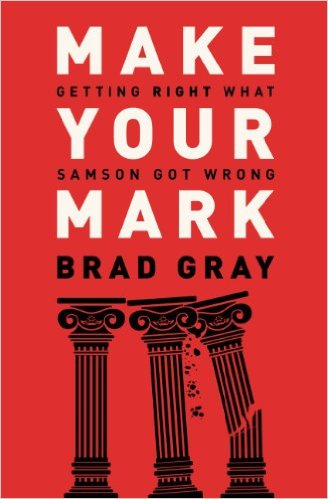
Brad Gray, Make Your Mark.

Brad Gray, Make Your Mark.

The author’s acquaintance with the Bible lands, the relevant archaeological discoveries, and his engaging writing will help bring this section of Scripture to life.

Samson got a lot of things wrong, but author Gray says you can avoid his mistakes and get these things right in your life. This book is recommended for anyone teaching the book of Judges or anyone grappling with the serious issues of life.

Make Your Mark is published by Faith Words, which seems to be a division of Hachette (New York, Boston, Nashville), and is available in print and Kindle format.

This book was sent to be by the publisher at the request of the author. The comments here are my own.

Jesus in Jerusalem during Hanukkah

The Gospel of John records more visits to Jerusalem by Jesus than any other of the Gospels. John is the only one to record the visit during the Feast of Dedication.

At that time the Feast of Dedication took place at Jerusalem. It was winter,  and Jesus was walking in the temple, in the colonnade of Solomon. (John 10:22-23 ESV)

BDAG translates the Greek term egkainia as “festival of rededication.” The feast is also known as Hanukkah and the Feast of Lights.

What is the Feast of Dedication? This feast, observed on the 25th of Kislev (roughly our December), had its origin in the period between the testaments. The desecration of the temple by the Seleucid ruler Antiochus Epiphanes took place in 168 B.C. The climax of the Maccabean revolt was the removal of all evidences of pagan worship from the temple. An eight-day feast of dedication was observed in 165 B.C., and continued to be observed annually by the Jews.

"Antiokhos IV" by Jniemenmaa (talk) 08:46, 20 July 2009 (UTC), own work. Licensed under CC BY-SA 3.0 via Commons - https://commons.wikimedia.org/wiki/File:Antiokhos_IV.jpg#/media/File:Antiokhos_IV.jpg

“Antiokhos IV” by Jniemenmaa (talk) 08:46, 20 July 2009 (UTC), own work. Licensed under CC BY-SA 3.0 via Commons – https://commons.wikimedia.org/wiki/File:Antiokhos_IV.jpg#/media/File:Antiokhos_IV.jpg

At Modin, a village north-west of Jerusalem, on the way from Jerusalem to Lod, the Syrians tried to force an old priest by the name of Mattathias to offer a pagan sacrifice. The priest refused but another Jew volunteered to offer the sacrifice. Mattathias killed his fellow Jew and the Syrian officer. As word spread, Mattathias became a national hero. He was of the family of Hasmon (or Asmoneus). Thus began the Hasmoneans.

Archaeologists working  with the Israel Antiquities Authority have been searching for the tomb of the Maccabeans at Modin in recent years. See the report here.

Antiquities “dealer” arrested with 3000+ coins

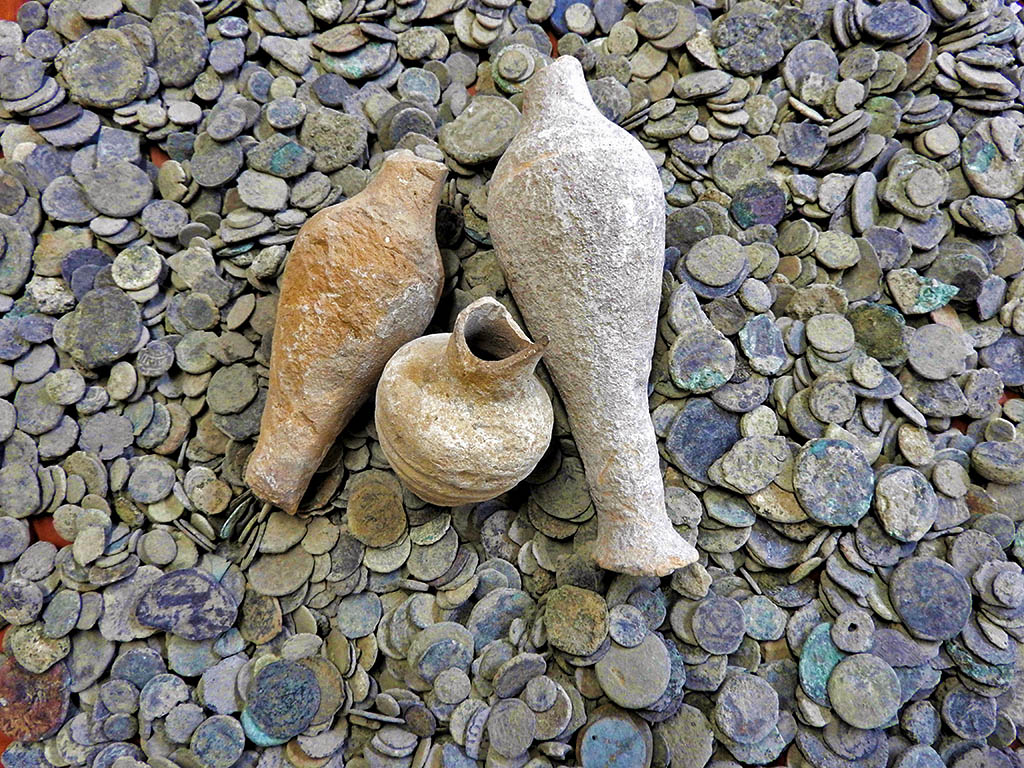
Earlier this week the Israel Antiquities Authority and the Police arrested a man living near Beit Shean (Bethshan) with some pottery and more than 3000 coins that he was illegally trying to sell. One report says the coins dated from the Roman period, the Bar Kochba revolt, the Byzantine period, and the Muslim period. The Roman coins included some from the time of the Roman destruction of Jerusalem in A.D. 70. These coins bear the title “Judaea Capta.”

Pottery and coins confiscated by the Israel Antiquities Authority near Beit Shean, Nov. 24, 2015. Photo: IAA.

Pottery and coins confiscated by the Israel Antiquities Authority near Beit Shean, Nov. 24, 2015. Photo: IAA.

The unnamed “dealer” had been digging up the coins and pottery in fields in the vicinity of Beit Shean. For additional information about Beit Shean see our post here.

There are legitimate dealers in antiquities, but there are others who take advantage of unsuspecting buyers. Many antiquities are destroyed by those who do not appreciate the value of the artifacts.

For a copy of the IAA Hebrew press release go here. For an informative English article with several photos see the article in The Times of Israel here.

HT: Joseph Lauer