Category Archives: Photography

“Every man under his vine…”

A biblical way of describing a time of peace and prosperity is expressed in the following passage describing the time of King Solomon.

And Judah and Israel lived in safety, from Dan even to Beersheba, every man under his vine and under his fig tree, all the days of Solomon. (1 Kings 4:25 ESV)

It is not uncommon in the middle east to see vines used as a shade. Sometime the vine runs up the side of a house and covers a porch on the roof. When I saw this single vine by itself in front of the theater at Miletus I could not help but think of the biblical saying. I asked my traveling buddy, Leon Mauldin, to make a picture of me sitting under my vine.

I can imagine a person sitting under the vine in the late summer and enjoying the fresh grapes from the vine.

Miletus-theater_fj-vine_fjenkins072906_07t

Sitting under the vine at the theater of Miletus. Photo by Leon Mauldin.

Miletus is the city where the Apostle Paul met with the elders from the church at Ephesus as he returned to Jerusalem at the end of his third journey (Acts 20).

The prophet Micah used the same illustration to describe the nature of the Messiah’s kingdom.

It shall come to pass in the latter days that the mountain of the house of the LORD shall be established as the highest of the mountains, and it shall be lifted up above the hills; and peoples shall flow to it, 2 and many nations shall come, and say: “Come, let us go up to the mountain of the LORD, to the house of the God of Jacob, that he may teach us his ways and that we may walk in his paths.” For out of Zion shall go forth the law, and the word of the LORD from Jerusalem. 3 He shall judge between many peoples, and shall decide for strong nations far away; and they shall beat their swords into plowshares, and their spears into pruning hooks; nation shall not lift up sword against nation, neither shall they learn war anymore; 4 but they shall sit every man under his vine and under his fig tree, and no one shall make them afraid, for the mouth of the LORD of hosts has spoken. (Micah 4:1-4 ESV)
New biography of C. S. Lewis by Allister McGrath

Allister McGrath, a native of Belfast, Ireland, and currently a professor of theology and apologetics at Kings College, London, announces that his  biography of C. S. Lewis is to be published this year.

In this video, McGrath speaks about the biography from the study of C. S. Lewis at the Kilns.

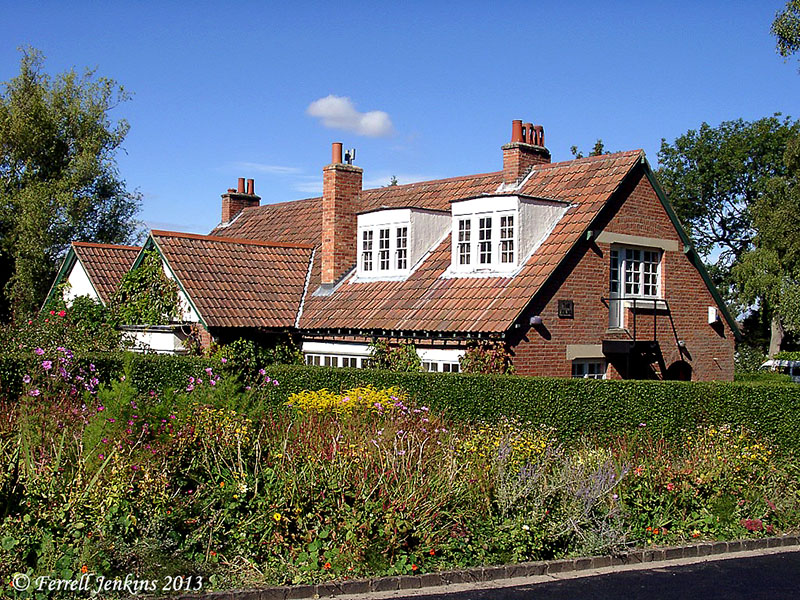
Several years ago I had the opportunity to visit Lewis sites in and around Oxford, England. The photo below shows the Kilns, former home of C. S. Lewis and his older brother Warnie. The house was not open for visitors at that time, but I understand it is now open at certain times.

The Kilns, Oxford, home of C. S. Lewis. Photo by Ferrell Jenkins.

The Kilns, former home of C. S. Lewis. Photo by Ferrell Jenkins.

If you have an interest in Lewis and his writing, you will probably enjoy looking at some of the other photos I made. Click here.

Herod the Great in the news

Herod is well known to students of the Bible. He is known especially as the king who was so frightened of losing his power that he ordered the death of the one who was born king of the Jews (Matthew 2).

Herod is also known from other historical records such as the Antiquities of the Jews and Wars of the Jews by Josephus.

We have learned much about Herod from the archaeological excavations at sites he is known to have built. We think of the Temple in Jerusalem with its platform and enclosure, the temples dedicated to Emperor Augustus at Caesarea Maritima, Samaria, and Caesarea Philippi (or Omrit), and the fortresses in several parts of the country, and the building at the Cave of Machpelah in Hebron.

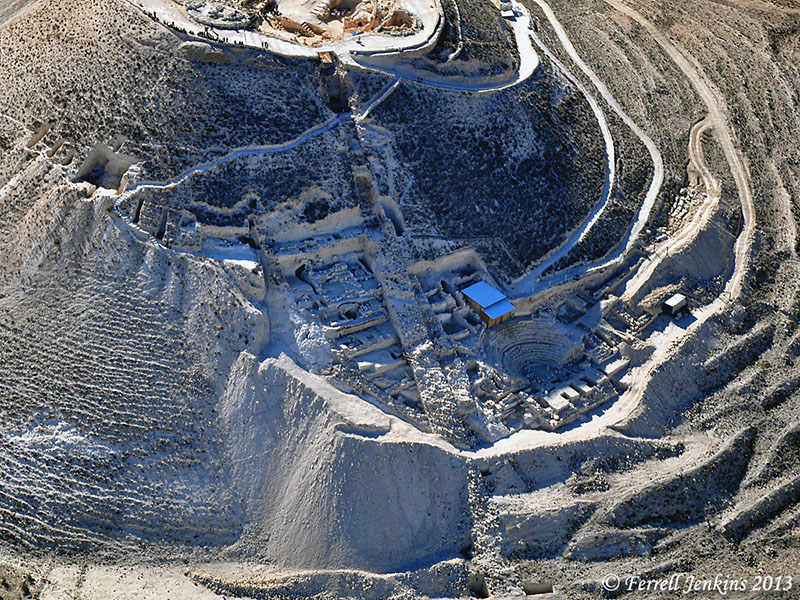
The Herodium has received much attention in recent years as a result of the archaeological excavation conducted by the late Prof. Ehud Netzer in his search for Herod’s tomb.

Aerial view of the Herodium with the area of Netzer's excavation visible.  Photo by Ferrell Jenkins.

Aerial view of the Herodium with the area of Netzer’s excavation visible. All of this was covered by earth just a few years ago. Photo by Ferrell Jenkins.

Now we are informed that the tomb of Herod at the Herodium is to be rebuilt.

The glory of King Herod, the Judean king famous for renovating the Temple Mount and building Masada, will rise again — or at least his tomb will — Israel announced Monday. As part of a new plan, a replica of his tomb at Herodium, situated outside the West Bank city of Bethlehem, will tower to 83 feet and will be visible from Jerusalem.

Herodium, an impressive feat of ancient engineering, is a conical artificial mound built between 23 and 15 BCE that housed a fortified royal palace and tomb. Its walls rose over 200 feet high and it contained elegant courtyards and baths. It was the only one of Herod’s many famed construction projects that bore his name, and was destroyed in 70 CE during the Great Revolt against Rome.

To read this report from the Times of Israel in its entirety, click here.

It must be the year of Herod. The Israel Museum is reconstructing the tomb of Herod in the museum for an exhibition opening February 12, 2013. I am definitely looking forward to seeing this. Read more about it here.

HT: Joseph I. Lauer

Being there is best

Reading and studying about the Bible lands is good, but being there is best. Last September as we traveled around at the end of the long dry season, even though I thought I had made it perfectly clear, one of the tour members asked, “Is it always this dry?” I tried to explain it again.

For a few tips on the rainy season in Israel, see here. For more information about what happens during the winter rains in Israel, see Rivers in the Desert here.

Somewhere I read a comment by a photographer that the best photo is the one when you have your camera. Lots of truth to that. But another idea is that the best photo is when you have your camera and something significant happens.

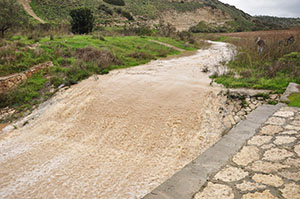
Brook of Elah after 3 days of rain. Photo: Carl Rasmussen.

Brook of Elah after 3 days of rain Jan. 9, 2013. Photo: Carl Rasmussen.

Well, Prof. Carl Rasmussen had his camera on January 9, and something significant had happened. He was in the Valley of Elah after three days of rain. The usually dry brook (nahal or wadi; 1 Samuel 17), of Elah was flowing with water. His photo shows Tel Azekah and the brook as it runs below it.

If you would like to see this beautiful photo in a large resolution, see here.

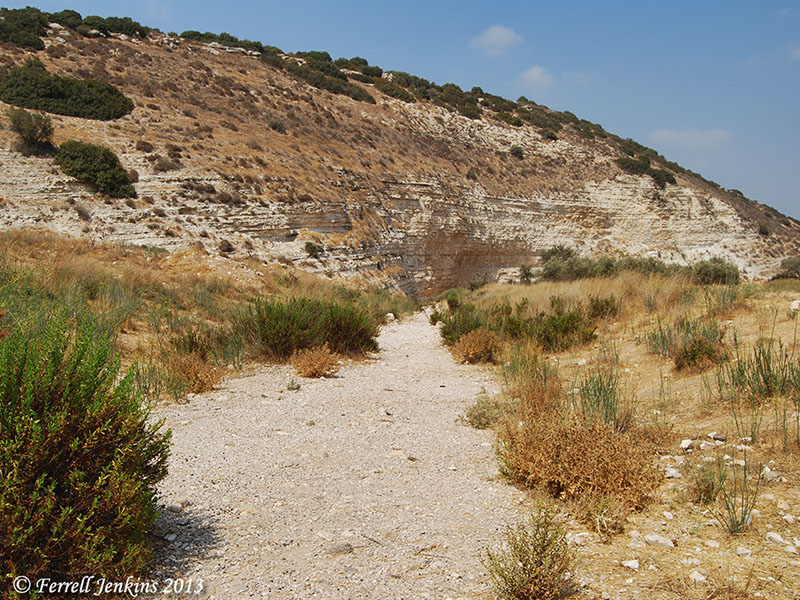
Here is a photo I made in August, 2008, showing the book  [brook] from the same position – dry as a bone. [see comments]

Brook of Elah below Azekah, August, 2008. Photo by Ferrell Jenkins.

Brook of Elah below Azekah, August, 2008. Photo by Ferrell Jenkins.

The land east of the Sea of Galilee

The land of Bashan is located east of the Sea of Galilee and the Hula Valley along the strip of land north of the Yarmuk River as far north as Mount Hermon. Bashan is mentioned no less than 60 times in the Hebrew Bible.

Og is designated as the king of Bashan about 20 times. Bashan is territory given to half of the Israelite tribe of Manasseh (Joshua 17:1). One of the cities of refuge was Golan in Bashan (Joshua 21:27).

Bashan was noted for its cattle, especially bulls (Psalm 22:12; Ezekiel 39:18). The prophet Amos calls the women of Samaria “cows of Bashan” (Amos 4:1). For sure, he was not a very popular prophet.

In recent history Bashan (Golan) was controlled by Syria, but was annexed by Israel in 1981.

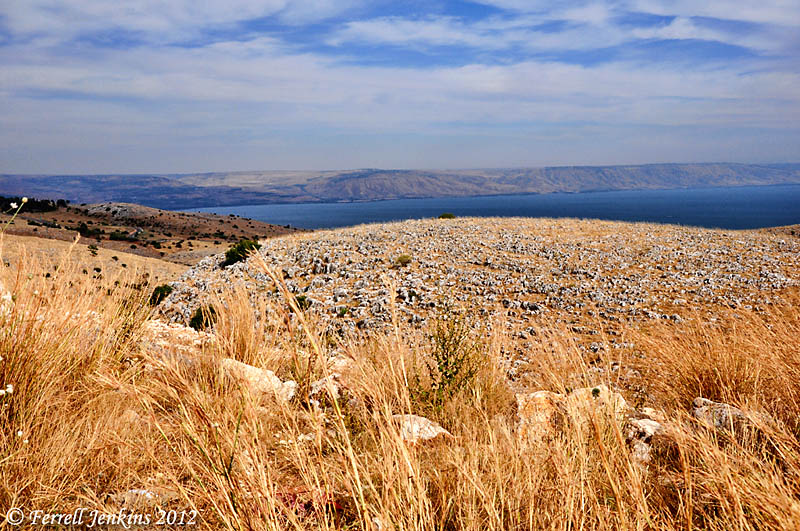
The photo below was made one afternoon as I approached the Sea of Galilee from the north. The view is to the southeast. The visible plateau on the east side of the Sea of Galilee is the southern part of the Golan Heights, the ancient land of Bashan.

The Sea of Galilee from the north. View toward Bashan in the east. Photo by Ferrell Jenkins.

The Sea of Galilee from the north. View toward Bashan in the east. Photo by Ferrell Jenkins.

In New Testament times the same territory, immediately east of the Sea of Galileee, and possibly a little south, was known as the land of the Gadarenes (Mark 5:1; Luke 8:26,37, KJV, NKJV), or the land of the Gergesenes in most modern English versions. These texts record the episode of the healing by Jesus of a man possessed with an unclean spirit. The unclean spirits entered into a herd of swine (pigs) and ran down the steep cliffs, visible in our photo, into the sea (Mark 5:11-13).

Ophel Excavation 2012

Amir Kohen Klonymus, Area A supervisor of the Ophel Excavation, shows a few of the items found in a fire pit at the Ophel Excavation in December. You may find it difficult to understand his English, but stay with the 11 minute video, past the family visit of some sponsors of the dig, to the summation by Prof. Eilat Mazar.
I think anyone who has seen any part of the excavation areas on the south side of the Temple Mount will enjoy this video.

This video and others are available on the blog of The Key to David’s City here.

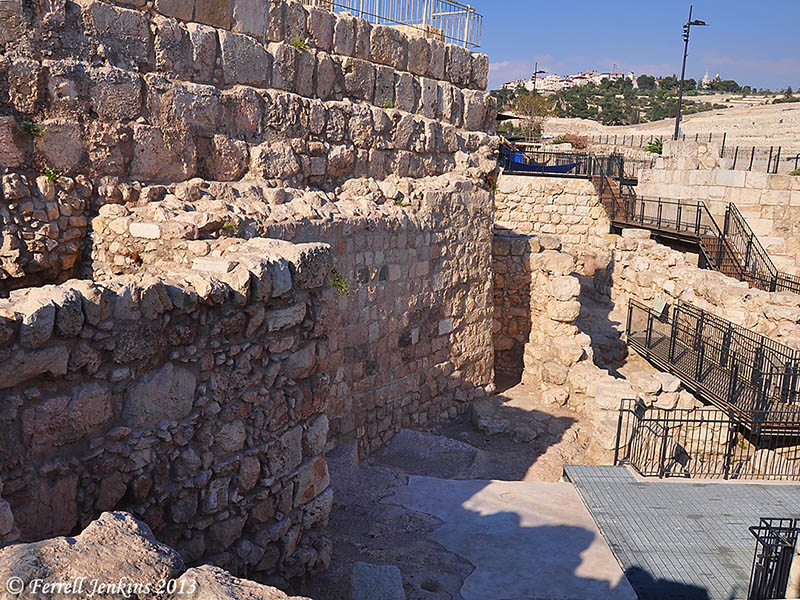
The photo below shows a portion of the Ophel Excavation.

Ophel Excavations - View East. Photo by Ferrell Jenkins.

Ophel Excavations – View East. Photo by Ferrell Jenkins.

Jothan, king of Judah (740-732 B.C.), is said to have built extensively in the area known as Ophel.

He built the Upper Gate to the LORD’s temple and did a lot of work on the wall in the area known as Ophel. (2 Chronicles 27:3 NET)

HT: Jack Sasson

The significance of Gaza

After my first tour to the Bible Lands, including Rome, Greece (Athens and Corinth), Egypt, Lebanon, Syria (Damascus), Jordan, and Israel, in April/May, 1967, I decided to make a second tour the following year. For many years, I always added some new places on each tour. In 1968 I added Beersheba and Gaza. The Gaza Strip (named such because of the long, narrow size of the small entity) had been under Egyptian control for several decades until June, 1967.

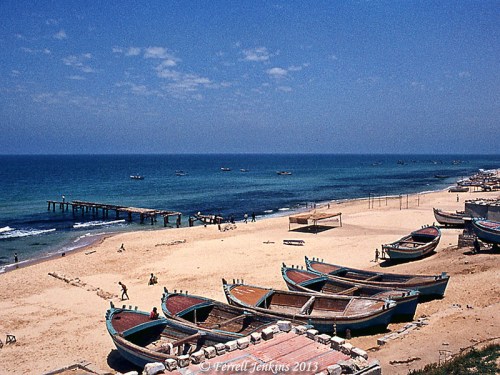
There was not much to see at Gaza. By the time we visited in 1968, Gaza was under Israeli control. We drove to the coast where there were only a few houses and some small fishing boats. This is one of the few slides that I have to illustrate the visit to Gaza.

Gaza on the Mediterranean Sea in May, 1968. Photo by Ferrell Jenkins.

Gaza on the Mediterranean Sea in May, 1968. Photo by Ferrell Jenkins.

Gaza is mentioned several times in the Old Testament. Here is a summary of these references.

  • Gaza was the southwestern boundary of the Canaanites in the table of Nations (Genesis 10:19).
  • The original inhabitants of Gaza were replaced by the Caphtorim, likely the ancestors of the Philistines (Deuteronomy 2:23).
  • Joshua defeated Canaanites “even as far as Gaza” (Joshua 10:41).
  • Joshua eliminated the Anakites except in Gaza, Gath, and Ashdod (Joshua 11:21-22). We recognized these cities as later belonging to the Philistines.
  • Gaza is listed as belonging to the tribe of Judah (Joshua 15:47; Judges 1:18).
  • The Midianites oppressed Israel, “as far as Gaza”, for seven years (Judges 6:4).
  • Samson had contact with the inhabitants of Gaza (Judges 16).
  • Gaza is listed as one of the five Philistine cities in the time of the Israelite Judges (1 Samuel 6:17).
  • Solomon controlled territory as far southwest as Gaza (1 Kings 4:24).
  • Hezekiah defeated the Philistines as far as Gaza and its territory (2 Kings 18:8).
  • Jeremiah makes reference to Gaza being conquered by Pharaoh (Jeremiah 47:1).
  • The prophets of Judah pronounced judgments upon Gaza (Amos 1:6-7; Zephaniah 2:4; Zechariah 9:5).

The only New Testament reference to Gaza is in Acts 8:26. Philip the evangelist was instructed to go south on the road that descends from Jerusalem to Gaza. English translators struggle with the issue of whether the city was desert, or the road leading to the city ran through a desert area. (I will leave that for some other time.)

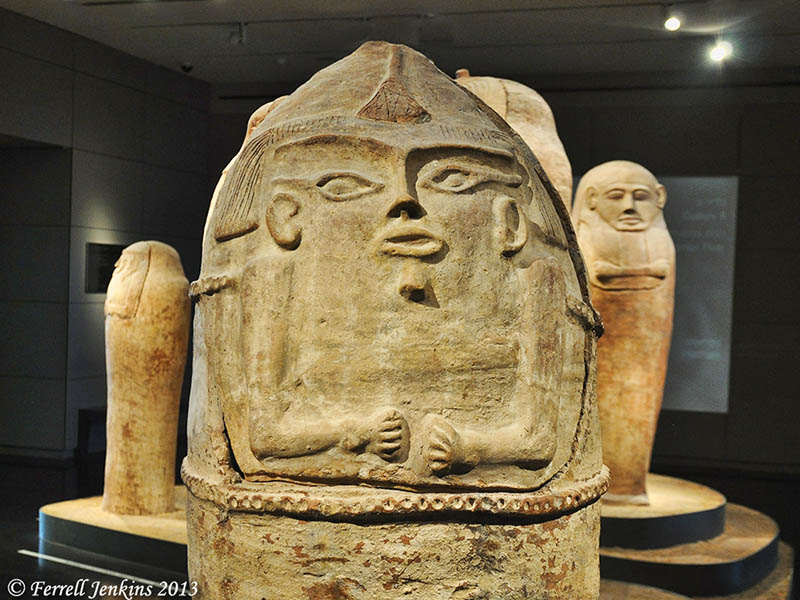
The first display one sees as he enters the archaeology wing of the Israel Museum is that of the anthropoid coffins from Deir el-Balah, a site south of Gaza city. The coffins, excavated by Trude Dothan in 1972, bear evidence of Egyptian influence. They date to the 13th century B.C.
Anthropoid Coffins from Deir el-Balah in the Israel Museum. Photo by Ferrell Jenkins.

Anthropoid Coffins from Deir el-Balah in the Israel Museum. Photo by Ferrell Jenkins.

Acts 28 — Photo Illustrations

Many of the places mentioned in Acts 28 have been discussed, with photos, over a period of years. For sure, we have posts on Malta, (Publius), Syracuse, Rhegium, (Appian Way), and Rome. Use the search box to locate these for your study and teaching.

For this final post on the Book of Acts I have decided to look at a thought suggested by Paul when he spoke with the leading men of the Jews in Rome.

 17 After three days Paul called together those who were the leading men of the Jews, and when they came together, he began saying to them, “Brethren, though I had done nothing against our people or the customs of our fathers, yet I was delivered as a prisoner from Jerusalem into the hands of the Romans.
18 “And when they had examined me, they were willing to release me because there was no ground for putting me to death.
19 “But when the Jews objected, I was forced to appeal to Caesar, not that I had any accusation against my nation.
20 “For this reason, therefore, I requested to see you and to speak with you, for I am wearing this chain for the sake of the hope of Israel.” (Acts 28:17-20 NAU)

Paul was taken to Rome in chains as a prisoner of the Roman Empire. See also Acts 21:33; 22:29; 26:29; Ephesians 6:20.

The Basilica of St. Paul, commonly known as St. Paul Outside the Walls, dates to the time of Constantine, and is thought to be the site of the burial of Paul.

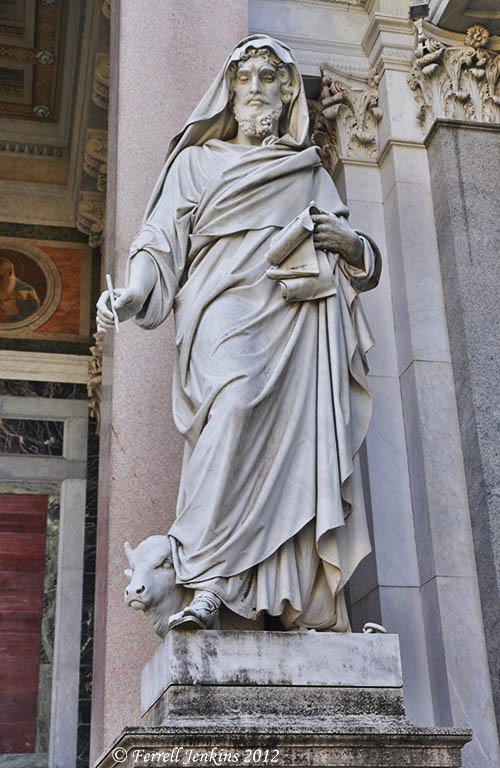
Among the statues on the property is the one shown below. Paul is portrayed as a writer and a prisoner ready to be offered. We recall that the Prison Epistles (Ephesians, Colossians, Philemon, and Philippians) were written from Rome. My own understanding is that Paul was likely released after about two years. During that time we know very little about his activities, but believe that he wrote 1 Timothy and Titus. Later he was imprisoned a second time in Rome and writes another prison epistle, 2 Timothy.

Statue representing Paul as a writer in chains. Photo by Ferrell Jenkins.

Statue representing Paul as a writer in chains. Photo by Ferrell Jenkins.

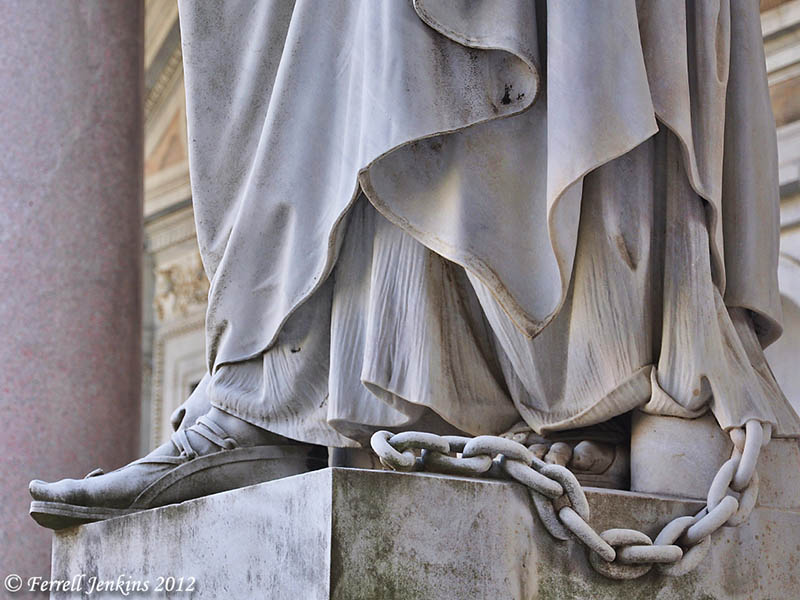
The chains are difficult to see in the photo above, but in the view below they are clearly visible.

Paul in chains. Photo by Ferrell Jenkins.

Paul in chains. Photo by Ferrell Jenkins.

This final post in the series on Acts is sent forth with the hope that the material will be of value to students and Bible class teachers for years to come.

Hoping to grow frankincense in the Arava of Israel

Botanist Dr. Elaine Solowey is already known to us for the successful sprouting of a 2,000 year old date palm. See here.

Matthew Kalman reports that she is now trying her hand at growing frankincense in the Arava Institute for Environmental Studies.

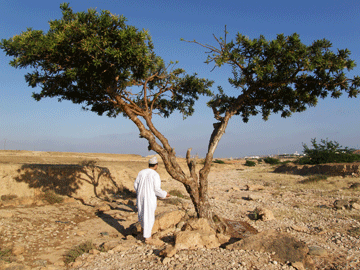
“This is the first frankincense tree to set seed in Israel in 1500 years,” Dr Solowey told me as she presented the tiny sapling for its first public photo-call this week. “It was necessary to bring this variety back to the country because the last people growing these trees near the Dead Sea left and the trees left with them.”

Frankincense tree, Salalah, Oman.

Frankincense tree, Salalah, Oman.

In biblical times, frankincense, myrrh  and balm of Gilead were used among the ingredients of the incense used in Solomon’s Temple (1 Chronicles 9:29-30). Solowey and other scientists are examining the medical uses of these products.

Every student of the New Testament remembers the gifts brought by the Magi (wise men) to Jesus.

As they came into the house and saw the child with Mary his mother, they bowed down and worshiped him. They opened their treasure boxes and gave him gifts of gold, frankincense, and myrrh. (Matthew 2:11 NET)

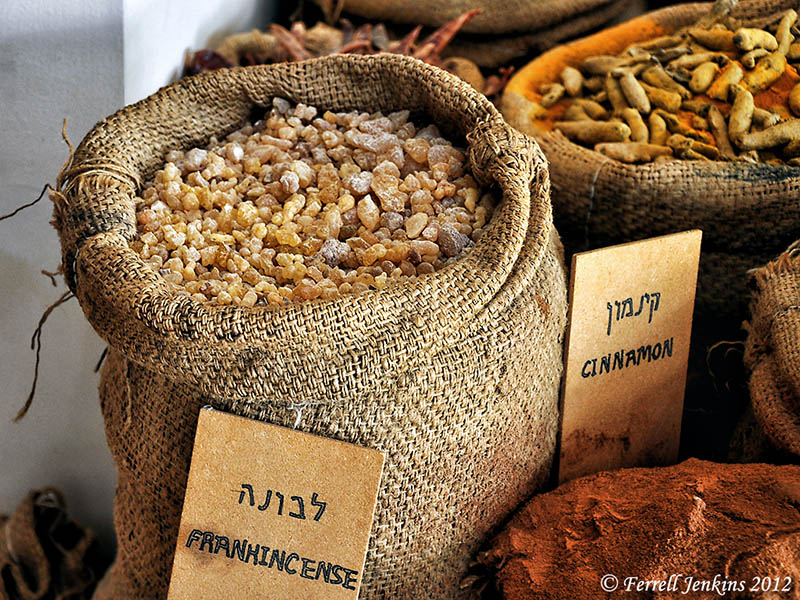
Our photo show frankincense displayed at Avdat, a Nabatean site along the ancient incense route. Frankincense is linked with gold in Isaiah 60:6, and is considered a great value.

Frankincense on the ancient spice route at Avdat, Israel. Photo by Ferrell Jenkins.

Frankincense on the ancient spice route at Avdat, Israel. Photo by Ferrell Jenkins.

To read all of Kalman’s informative article, see here.

We have written about frankincense and myrrh, with more photos and details, here and here and here.

HT: Joseph I. Lauer

When a lot of rain is a good thing

Having watched the rise and fall of the Sea of Galilee (Lake Kinneret) over a period of 45 years, it is exciting to learn that winter storms have pushed the lake to the sharpest December rise in 20 years.

According to an article in Haaretz the lake “is expected to have risen 26 centimeters [9.84″] since heavy rains began Thursday, it sharpest December rise in 20 years. [1991 and 1992]”

As a result of the increased flow in northern streams, the Kinneret’s water level rose sharply, reaching 212.07 meters [695.77 feet] below sea level Saturday morning.

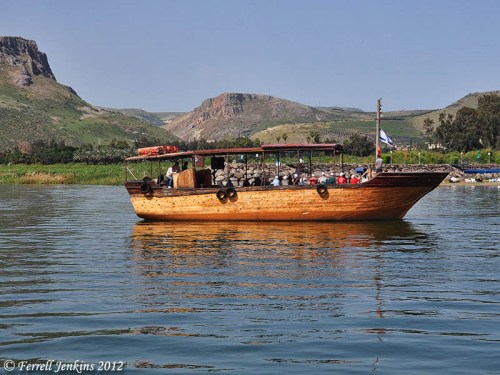
Sightseeing boat on the Sea of Galilee. Photo by Ferrell Jenkins.

Boat on the Sea of Galilee near the Plain of Gennesaret. Photo by Ferrell Jenkins.

And when they had crossed over, they came to land at Gennesaret. (Matthew 14:34 ESV)

Rain also fell as far south as Ashdod and Kiryat Gat, “but failed to affect the Negev this time.” This reminds us of the days of the Patriarchs whose lives were often disrupted by lack of rain in the Negev.

According to the report, almost 20 inches of snow has fallen on Mount Hermon.

If you have an interest in weather conditions in Israel, I suggest Kinneret Bot and the site of the Israel Meterological Service.

Geographer Carl Rasmussen says,

All of us who have traveled in Israel and the surrounding countries are well-aware of the importance of the winter rains for the well-being of the inhabitants of the area, local agriculture, and the water supply in general.

HT: Bible Places Blog; Holy Land Photos’ Blog.