Category Archives: Old Testament

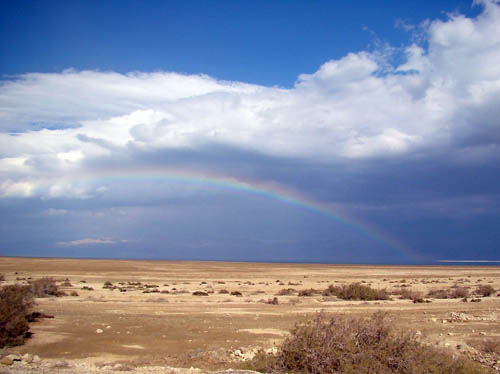
Rainbow over the Dead Sea

My friend Leon Mauldin is in Israel. He sent me a nice photo in which he captured a rainbow over the Dead Sea. I publish it here with his permission. This view looks east toward the Transjordan tableland. You can’t see the mountains because of the heavy clouds. To the far right of the photo you will see a glimmer of light on the surface of the Dead Sea.

Rainbow over the Dead Sea. Photo by Leon Mauldin.

Rainbow over the Dead Sea. Photo by Leon Mauldin.

The land in the foreground of the photo was covered by the water of the Dead Sea just forty years ago. With less water flowing into the Dead Sea the level has been declining over the past few decades.

The name Dead Sea is not used in the Bible. Rather, this body of water is called the Sea of the Arabah, the Salt Sea, or the Eastern Sea. The Bible describes the territory of the Transjordan tribes, Reuben and Gad, this way:

The Arabah and the Jordan River were also a border, from the sea of Chinnereth to the sea of the Arabah (that is, the Salt Sea), beneath the watershed of Pisgah to the east. (Deuteronomy 3:17).

Josepus called this body of water Lake Asphaltitis.

Royal seals from the time of Hezekiah

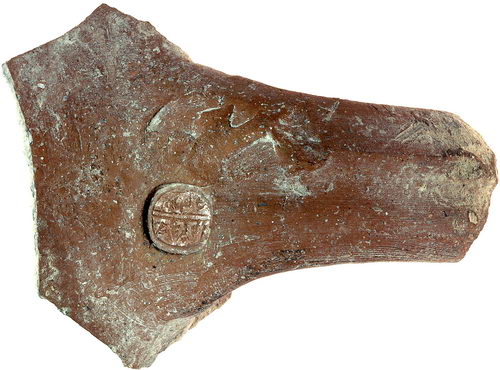
The Israel Antiquities Authority has announced the discovery of several impressive artifacts from Umm Tuba, in the southern hill of Jerusalem. These items include royal seal impressions from the time of Hezekiah, king of Judah (c. 716-687 BC; Schultz, ISBE).

A large building that dates to the time of the First and Second Temples, in which there was an amazing wealth of inscriptions, was discovered in a salvage excavation conducted by Zubair Adawi, on behalf of the Israel Antiquities Authority, in the village of Umm Tuba in southern Jerusalem (between Zur Bahar and the Har Homa quarter), prior to construction work by a private contractor.

Considering the limited area of the excavation and the rural nature of the structure that was revealed, the excavators were surprised to discover in it so many royal seal impressions that date to the reign of Hezekiah, King of Judah (end of the eighth century BCE). Four “LMLK” type impressions were discovered on handles of large jars that were used to store wine and oil in royal administrative centers. These were found together with the seal impressions of two high ranking officials named Ahimelekh ben Amadyahu and Yehokhil ben Shahar, who served in the kingdom’s government. The Yehokhil seal was stamped on one of the LMLK impressions before the jar was fired in a kiln and this is a very rare instance in which two such impressions appear together on a single handle.

Royal seal from the time of Hezekiah. Photo: Mariana Saltzberger, IAA.

Royal seal from the time of Hezekiah. Photo: Mariana Saltzberger, IAA.

The site of this discovery has been identified as Biblical Netofa (English Netophah). Two of David’s “mighty men” (or warriors) were from Netophah.

Zalmon the Ahohite, Maharai the Netophathite, Heleb the son of Baanah the Netophathite, Ittai the son of Ribai of Gibeah of the sons of Benjamin (2 Samuel 23:28-29).

The full press release may be seen at the IAA site at the bottom of the page.  A ZIP file of the seven pictures is available here for those interested.

HT: Joseph Lauer and several bloggers.

The Vulture

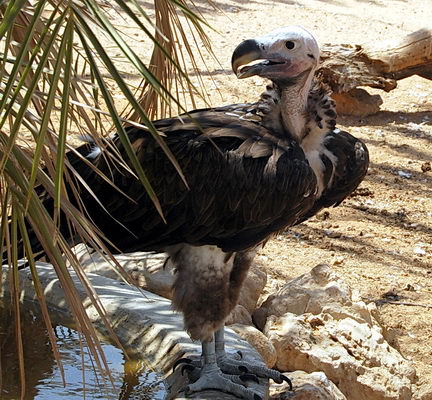
Vultures were among the unclean animals for the Israelites (Leviticus 11:13, 18; Deuteronomy 14:12, 17). This means that Israelites were not permitted to eat vultures. In some of the references both eagles and vultures are mentioned.

Vulture at the Hai-Bar Reserve in Israel. Photo by Ferrell Jenkins.

Vulture at the Hai-Bar Reserve in Israel. Photo by Ferrell Jenkins.

In the Greek New Testament the word aetos is translated both eagle (Revelation 8:13; 12:14) and vulture (Matthew 24:28; Luke 17:37).

One of the most memorable comments about the vulture was made by Jesus in His discussion of the destruction of Jerusalem. He described the condition of the Jewish state at the time when the Roman armies invaded the country.

Wherever the corpse is, there the vultures will gather. (Matthew 24:28 ESV)

Not a pretty picture. And a clear warning for all.

Travel to Egypt

Because of a severe famine in Canaan, Abraham traveled to Egypt and sojourned there (Genesis 12:10). Joseph was sold by his brothers and eventually became a slave in Egypt (Genesis 37:28). Jacob and his family, at least 70 persons, went into Egypt and settled in the land of Goshen (the eastern Delta) during a time of famine in Canaan (Genesis 46; Acts 7:11-16).

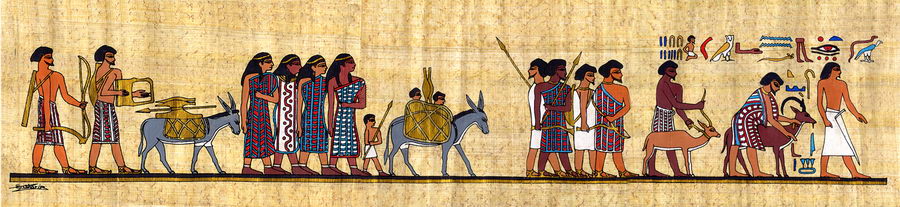
What do we know outside the Bible about travel to Egypt during the Patriarchal age (the Middle Bronze age)? It is clear that foreigners traveled to Egypt. In the tomb of Khnum-hotep III at Beni Hasan, about 169 miles south of Cairo, there is a painting showing 37 Asiatics of the desert bringing gifts to Egypt and desiring trade. This tomb painting is dated to about 1890 B.C.

Here is a description of the painting given by J. A. Thompson in The New International Dictionary of Biblical Archaeology:

One picture shows thirty-seven seminomadic tribesmen from Palestine, from the land of Shutu (central Trans-Jordan), led by Absha, their chief. The men were beared, and the women used bands to hold their long hair in place. Their clothes were multicolored, the men wearing short skirts and sandals and the women having calf-length dresses, which they fastened at the shoulder by means of a clasp. Instead of sandals, the women had shoes on their feet. One of the men carried a lyre, and on one of the donkeys were two bellows, indicating that at least some members of the group were traveling metalworkers.

Egypt has many shops selling papyrus sheets. Some have tomb paintings. I am told that the Abu Simbel Papyrus store in Giza is the only one that has permission to sell a painting of the Asiatics arriving in Egypt. This looks better than any tomb painting one might see today while visiting a tomb. This papyrus painting shows only a portion of the 37 travelers making their way into Egypt. The Asiatics are wearing multicolored clothing. The person to the right in white is an Egyptian.

A portion of the Beni Hasan painting showing Asiatics arriving in Egypt.

A portion of the Beni Hasan painting showing Asiatics arriving in Egypt.

Click on the art for a larger image that might be suitable for use in a PowerPoint presentation.

The Story of Sinuhe – an Egyptian traveler

The earliest description of Canaan comes from an Egyptian literary text. In The Story of Sinuhe (see-NUU-hay) written in the 20th century B.C., a traveler tells of his pleasant stay in northern Canaan (possibly the Beka Valley of Lebanon). He describes the land as follows:

Figs were in it, and grapes. It had more wine than water. Plentiful was its honey, abundant its olives. Every (kind of) fruit was on its trees. Barley was there, and emmer. There was no limit to any (kind of) cattle. (qtd. in Pritchard, Ancient Near Eastern Texts, 19)

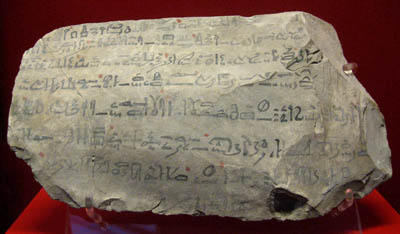
This description reminds one of the promise God made to the Israelites to bring them into a land flowing with milk and honey (Exodus 3:8). A copy of The Story of Sinuhe written on stone is on display in the Ashmolean Museum, Oxford, England. The stone below, now in the British Museum, contains the final stanza of the Story or Tale.

Final stanza of the Story of Sinuhe in the British Museum. Photo by Ferrell Jenkins.

The Tale of Sinuhe in the British Museum. Photo by Ferrell Jenkins.

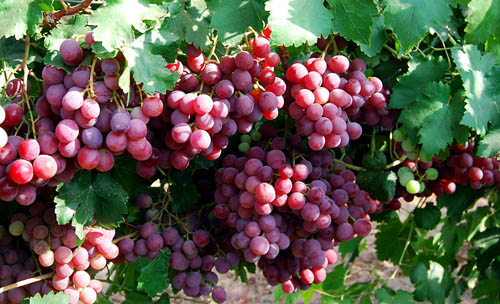
The photo of grapes from Lachish reminds us of the abundance of the land through which Sinuhe traveled.

Grapes near Lachish. Photo by Ferrell Jenkins.

Grapes on the vine near Lachish. Photo by Ferrell Jenkins.

From Egypt to New York in 12 hours

We arrived in the USA yesterday afternoon, and got a good night of rest. Typically it takes about a day for every hour in time change to get over jet-lag. We look forward t0 making our way to Florida this afternoon.

Delta now has a non-stop New York/Cairo flight. The service was good in both directions, and the flights were on time. We felt fortunate yesterday to have quite a few empty seats that allowed passengers to spread out over the plane. We know that other members of the tour group arrived in the USA last Monday. We have heard from most of them after arrival at their homes. For this we are thankful.

Our tour members repeatedly said that the trip was a real adventure,  just as we had advertised. It was fun, but primarily it was a real educational and spiritual experience. We not only learned about ancient and modern Egypt, but we related this to the biblical characters who called Egypt home for a while.

Elizabeth and I went to Alexandria on Tuesday. We traveled along the high desert road from Giza to Alexandria. The area is filled with new housing, factories, and agricultural area made possible by modern irrigation.

Shortly before we reached Alexandria we passed an area filled with bulrushes. We stopped to watch some fishermen pull in their nets. We were told that these fish are farm fish.
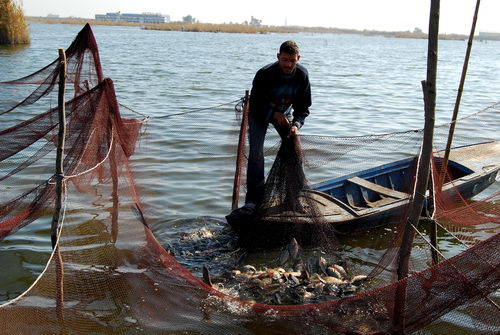
An Egyptian fisherman working the nets. Photo by Ferrell Jenkins.

An Egyptian fisherman working the nets. Photo by Ferrell Jenkins.

I also made some similar photos along the Nile and the canals of Egypt. As we think of ancient Egypt we recall the oracle against Egypt in Isaiah 19. I suggest you read the entire chapter. For now, note these verses.

The bulrushes by the Nile, by the edge of the Nile And all the sown fields by the Nile Will become dry, be driven away, and be no more. And the fishermen will lament, And all those who cast a line into the Nile will mourn, And those who spread nets on the waters will pine away. (Isaiah 19:7-8 NAS)

References like these from the Old Testament prophets were fulfilled in the centuries before the coming of Christ. Remember that the ancient Hamitic Egyptian disappeared long ago. The modern Semitic Egyptians are caretakers of an antiquity they had nothing to do with.

A final visit to the Sphinx and Pyramids

For the past six days my wife and I have been staying at a hotel near the famous Giza Pyramids as we traveled in the area to visit various sites. Children from the early grades learn about the Pyramids of Egypt. Our four-year-old grandson stayed with us shortly before we left for this tour. Early one morning he said, “What were the pyramids?” I tried to explain.

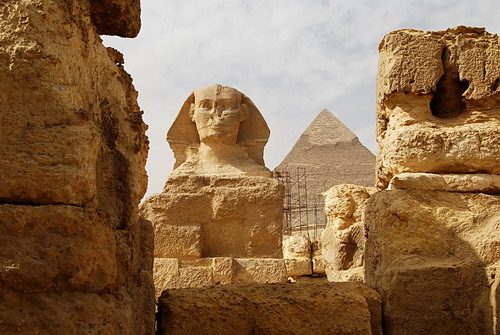
This morning Elizabeth and I went to the Pyramid Plateau for one last view.  Our first visit here was 1967. We never fail to be impressed with the enormity of the structures, and the motivation that caused them to be built.

The sphinx and the pyramid of Cheops. Photo by Ferrell Jenkins.

The sphinx and the pyramid of Cheprern. Photo by Ferrell Jenkins.

The Giza Pyramids were built about 2400-2600 B.C. Biblical characters such as Abraham, Joseph, and Moses likely saw these structures. Obviously the biblical Israelites, who lived in the country nearly a millennium later, had nothing to do with their building.

Alexandria, Egypt

Today we visited Alexandria on the Mediterranean coast. The drive from our hotel in Giza takes about 3 hours along the high desert road. The weather was fine, and the light and sky was good for photography.

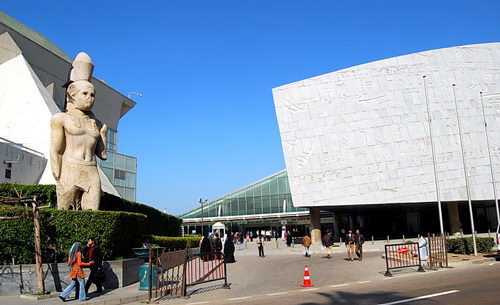
Alexandria was founded by Alexander the Great. The library of ancient Alexandria was the most famous in the world at the time. Originally it was established in the 4th century B.C. by Ptolemy Soter I, or a few years later by his son. About 220 languages are presented on the granite wall that surrounds the library.

The new Bibliotheca Alexandria. Photo by Ferrell Jenkins.

The new Bibliotheca Alexandrnia. Photo by Ferrell Jenkins.

The new library, the Bibliotheca Alexandrina, opened in 2003. It may not be the best library of the world today, but it is likely one of the most beautiful. A statue of Ptolemy stands outside the entrance to the modern Library.

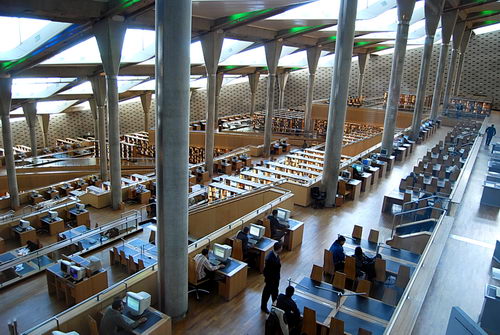
The reading room is impressive.

Reading room of the new Bibliotheca Alexandria. Photo by Ferrell Jenkins.

Reading room of the new Bibliotheca Alexandrina. Photo by Ferrell Jenkins.

The Hebrew scriptures were translated into Greek under the Ptolemaic rulers, beginning about 280 B.C. There are four references to Alexandria or the Alexandrians in the  New Testament.

  • Alexandrians were among those who disputed with Stephen (Acts 6:9).
  • Apollos was an Alexandrian by birth (Acts 18:24).
  • The ship Paul sailed on from Myra toward Rome was an Alexandrian ship. Eventually the ship was wrecked off the island of Malta (Acts 27:5ff.).
  • The ship used for the final leg of Paul’s voyage to Rome was an Alexandrian ship (Acts 28:11).

Another day in Goshen

Today I spent another “long” day in the land of Goshen, but still did not get to all of the places I had hoped to visit.

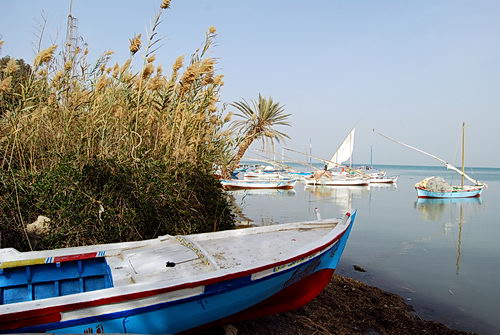
This photo shows reeds (bulrushes) growing on the banks of the Great Bitter Lake. The Suez Canal runs through a chain of lakes. This is the largest of them.

Reeds (bulrushes) growing in the Great Bitter Lake. Photo by F. Jenkins.

Reeds (bulrushes) growing in the Great Bitter Lake. Photo by F. Jenkins.

There are several good suggestions for the place of the exodus recorded in Exodus 14. This vicinity may be the sea described in Exodus 14:9.

Then the Egyptians chased after them with all the horses and chariots of Pharaoh, his horsemen and his army, and they overtook them camping by the sea, beside Pi-hahiroth, in front of Baal-zephon.

Other scholars suggest a location associated with Lake Timsa which is further north.

Memphis in Egypt

This morning, after a period of worship, we visited the ruins of ancient Memphis. The prophet Ezekiel has this to say about Memphis.

This is what the sovereign LORD says: I will destroy the idols, and put an end to the gods of Memphis. There will no longer be a prince from the land of Egypt; so I will make the land of Egypt fearful.  (Ezekiel 30:13)

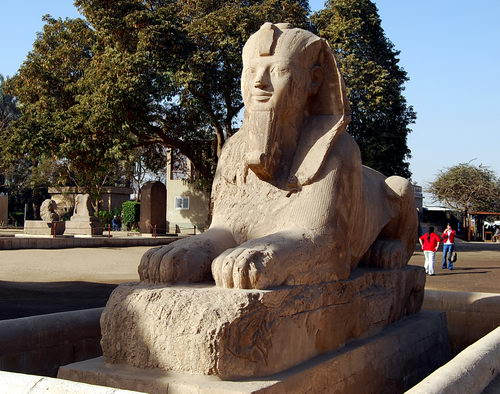
The alabaster sphinx of Rameses II  (13th century B.C.) is one of the nicest pieces on display at the site. It is also one of the few artifacts to be seen. The prophecy has surely come to pass.

Alabaster sphinx of Rameses II at Memphis. Photo by Ferrell Jenkins.

Alabaster sphinx of Rameses II at Memphis. Photo by Ferrell Jenkins.

Next we moved to the edge of the desert to visit the tomb of a Nobleman dating to about 2400 B.C., and the Step Pyramid of Zoser.

After lunch we returned to Old Cairo to spend some time in the Coptic Museum and the Abu Sarga church. This is the church associated with the visit of Mary, Jopseph, and Jesus to Egypt (Matthew 2).

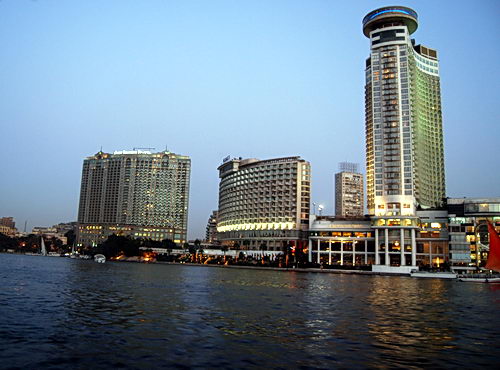
The last event of the day, and of the tour, was a felucca ride on the Nile River. The large buildings of down town Cairo are beautiful after sunset.

Cairo on the Nile at Night. Photo by Ferrell Jenkins.

Cairo on the Nile at Night. Photo by Ferrell Jenkins.