Category Archives: Old Testament

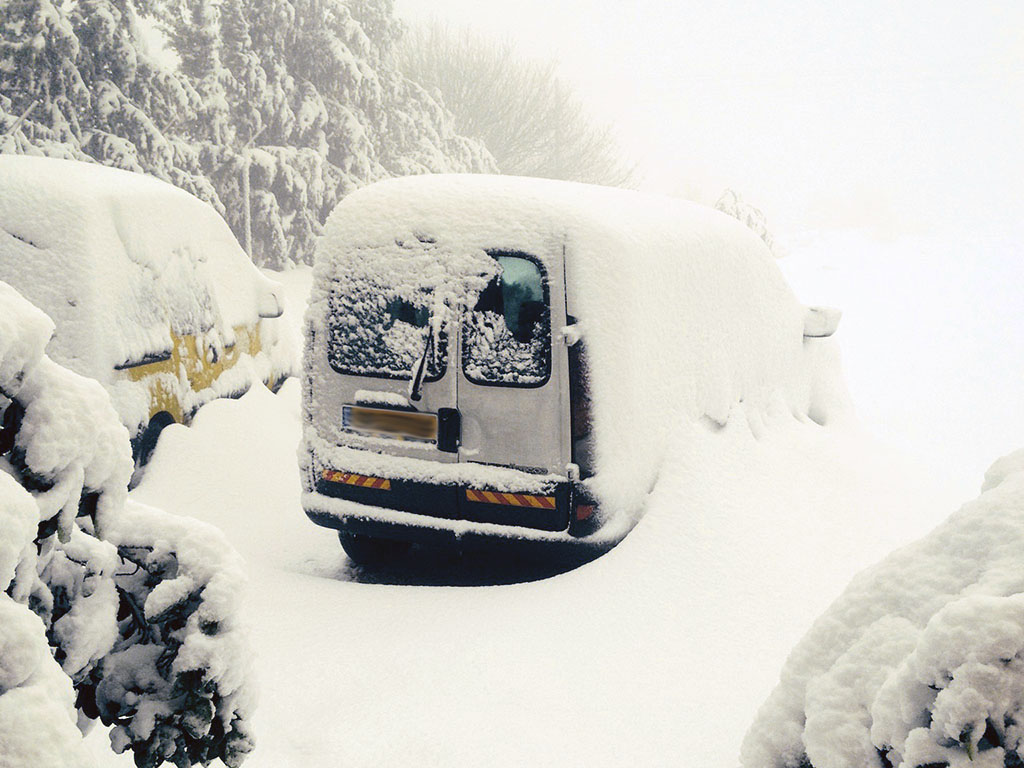
A snow house in Jerusalem

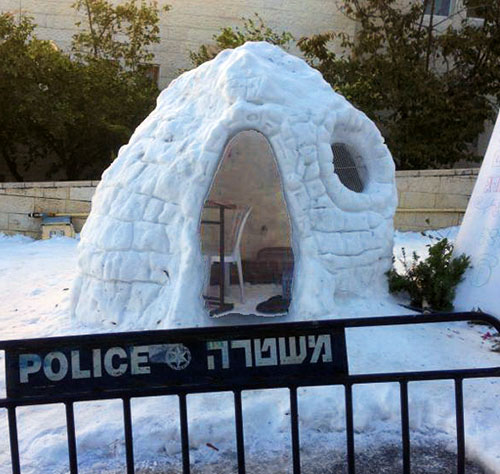
Elie sent me a photo he made this morning of a snow house in Jerusalem. If you know Jerusalem you know that the houses are built of stone (some of Jerusalem stone). The person building this snow house made it in imitation of the stone houses. It’s always good to have police protection!

Snon house in Jerusalem appears to be made of snow stone. Photo by EMB. Dec. 16, 2013.

Snow house in Jerusalem appears to be made of snow stone. Photo by EMB. 12/16/13.

Benaiah the son of Jehoiada, one of David’s mighty men “went down and struck down a lion in a pit on a day when snow had fallen” (1 Chronicles 11:22 ESV)

Snow in Israel

Today I have been reading of snow in Lebanon and Israel. There are reports that a foot of snow has fallen in Jerusalem in the past day. Todd Bolen links to the Jerusalem Post (with photos) and other snow links here.

My friend Elie just sent a photo of his back yard. This is in Bar Giyora, a town on Hwy. 375 between Bethlehem and the Valley of Elah. The town is located in the hill country of Judea.

Snow in the mountains of Judea. Photo by EMB, 12/14/13.

Snow in the mountains of Judea. Photo by EMB, 12/14/13.

“For as the rain and the snow come down from heaven and do not return there but water the earth, making it bring forth and sprout, giving seed to the sower and bread to the eater, so shall my word be that goes out from my mouth; it shall not return to me empty, but it shall accomplish that which I purpose, and shall succeed in the thing for which I sent it.” (Isaiah 55:10-11 ESV)

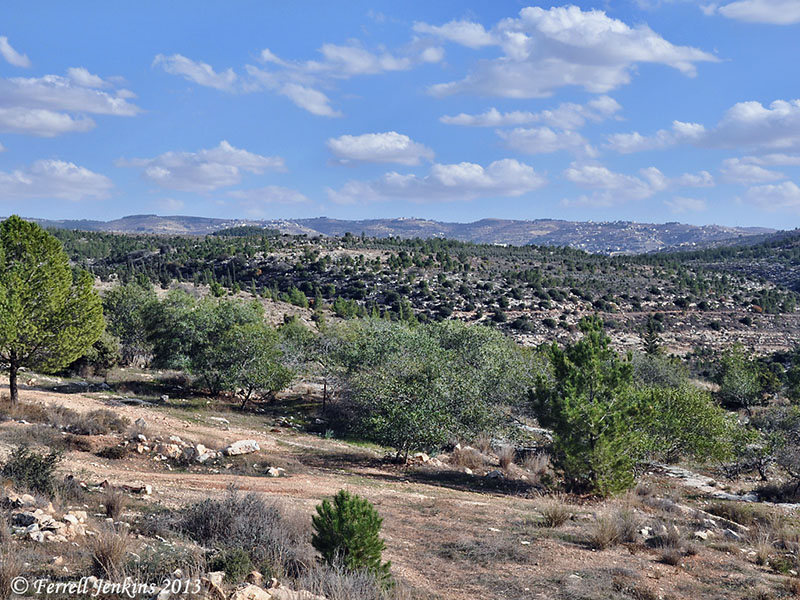
Here is a photo of the general area along Hwy. 375 with a view east toward the central mountain ridge (without snow).

Judean Hills. View east to central mountain range from Hwy. 375. Photo by Ferrell Jenkins.

Judean Hills. View east to central mountain range from Hwy. 375. Photo by Ferrell Jenkins.

On the Facebook page of Jerusalem University College you will find several nice photos of the snow in Jerusalem. Check here.

Zondervan Essential Atlas of the Bible

Frequently we have mentioned and recommended the Zondervan Atlas of the Bible by Carl G. Rasmussen. Every Bible student needs at least one or two good atlases to assist them in their study of the Scriptures.

Last month I attended some annual professional meetings in Baltimore and was pleased to see that Zondervan already had copies of the new Zondervan Essential Atlas of the Bible. One of the sales reps gave me a copy for review here.

At first appearance, the ZEAB has a beautiful cover of stiff, durable paper. It is a convenient 9 1/8″ x 7 3/8″ in size. The content is basically the same as the larger hard back edition. There has been some editing of the text to condense the book from 303 pages to 159 pages.

There are two major sections to the book: Geographical Section and Historical Section. The Geographical Section includes an Introduction to the Middle East as a Whole, and discusses the geography of Israel and Jordan, Egypt, Syria and Lebanon, and Mesopotamia.

The Historical Section covers the entire Bible from the Pre-Patriarchal Period to the Seven Churches of Revelation, with an additional chapter on Jerusalem, in 17 chapters.

The maps are superbly drawn and easy to read. A timeline accompanies each chapter. Rasmussen is noted for his Holy Land Photos web site. The photos are beautiful and helpful in illustrating the content.

This book has been prepared by a teacher, and I consider that a plus. In addition to his work at Bethel University, Carl continues to serve as an adjunct professor at Jerusalem University College. He has spent 16 years of his adult life in the Bible lands. His  Holy Land Photos’ Blog provides helpful, up-to-date, information about both familiar and unfamiliar places mentioned in the Bible. He has also led numerous tours through Bible lands.

This Atlas sells for $16.99. I see that Amazon has the Zondervan Essential Atlas of the Bible for $12.97. A Kindle version is about $3 less.

Either version is ideal for a person to take with them to Bible class, or on a tour of Bible lands.

The larger Zondervan Atlas of the Bible still remains indispensable for the serious student. I am trying to say you should have both books.

Carl has assisted me on several occasions in locating some of those hidden, out-of-the-way, places that most visitors to the Bible lands never see. I am pleased to commend this new edition of his book.

Scenes around Tell Ḥesbân (Heshbon)

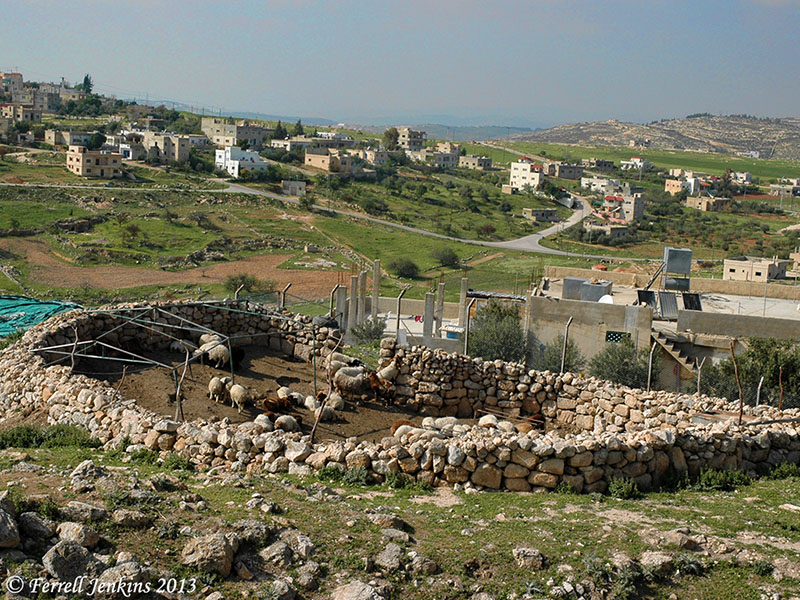
The photo below was made from the top of Tell Ḥesbân in Transjordan. It provides us a view of the general area of Moab during the period of the United Kingdom of Israel, and the Divided Kingdoms of Israel and Judah.

Sheepfold on the slope of Tell Ḥesbân. View of territory of Moab. Photo by Ferrell Jenkins.

Sheepfold on the slope of Tell Ḥesbân. View of territory of Moab. Photo by Ferrell Jenkins.

There are several biblical references to the sheepfold, or the fold of the sheep (Jeremiah 50:6; Micah 2:12; John 10:1, 16). Jesus used an illustration involving the sheepfold:

Truly, truly, I say to you, he who does not enter the sheepfold by the door but climbs in by another way, that man is a thief and a robber. But he who enters by the door is the shepherd of the sheep. (John 10:1-2 ESV)

We associate the land of Moab with Ruth the grandmother of King David.

So Naomi returned, and with her Ruth the Moabitess, her daughter-in-law, who returned from the land of Moab. And they came to Bethlehem at the beginning of barley harvest. (Ruth 1:22)

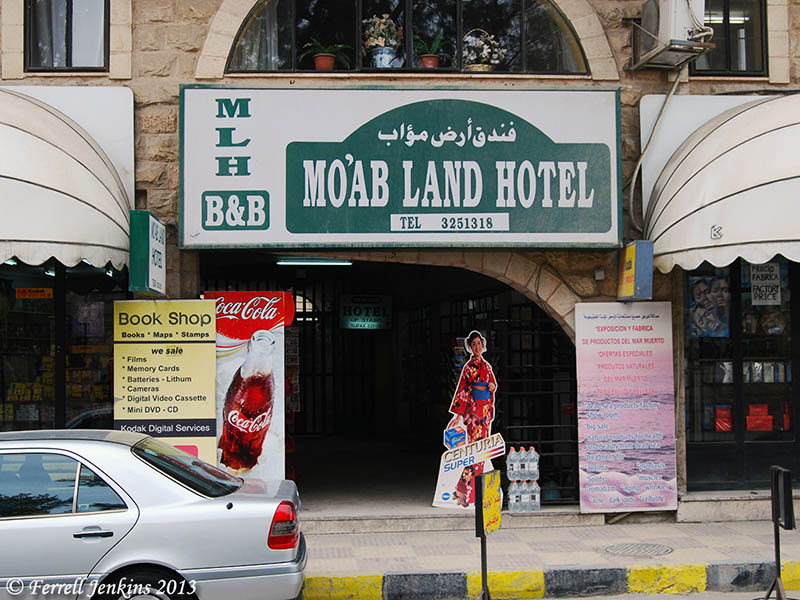
I find it fascinating that the modern locals pick up on the ancient names in order to attract the tourists who visit the area. At Madaba, about six miles south of Ḥesbân, there is a small hotel named Mo’ab Land Hotel. How appropriate.

The Moab Land Hotel in Madaba, Jordan. Photo by Ferrell Jenkins.

The Moab Land Hotel in Madaba, Jordan. Photo by Ferrell Jenkins.

If not Tell Ḥesbân, where is Heshbon?

If Tell Ḥesbân is not biblical Heshbon, then the pool uncovered by S. H. Horn is likely not the pool mentioned in Song of Solomon 7:4.

If Tell Ḥesbân is not biblical Heshbon, then where is biblical Heshbon?

A sign at Tell Ḥesbân, erected by the excavators, lists evidence of occupation during the following periods:

  • Ajarmah [local tribe] village – ca. AD 1870-present
  • Ottoman Village
  • Mamuluk Regional capital – AD 1260-1500
  • Abbasid pilgrim rest. – AD 750-1260
  • Umayyad market town – AD 650-750
  • Byzantine Ecclesiastical center – ca. AD 350-650
  • Roman temple town – ca. 63 BC – AD 350
  • Hellenistic fortress – ca. 198 BC – 63 BC
  • Ammonite citadel – ca. 900 – 500 BC
  • Proto Ammonite village – ca. 1200 – 900 BC
  • Traditional Ammorite Stronghold.
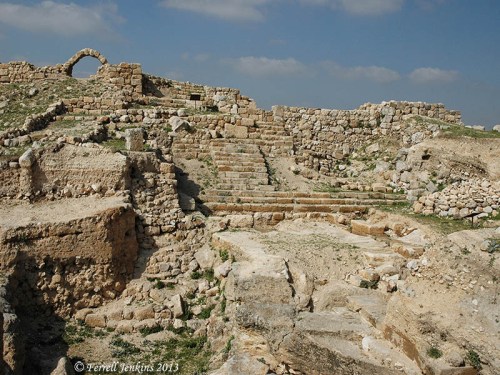
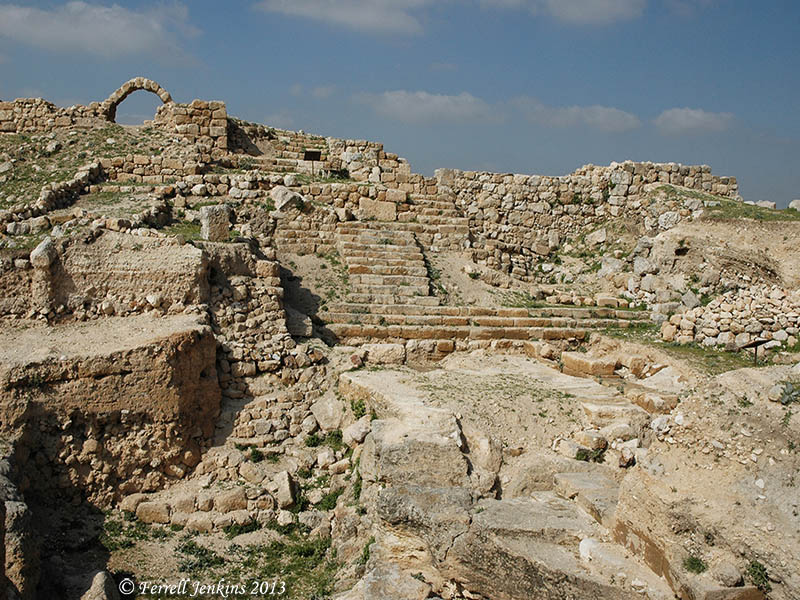
Roman steps and market area at Tell Ḥesbân. Photo by Ferrell Jenkins.

Roman steps and market area at Tell Ḥesbân. Photo by Ferrell Jenkins.

Remember that we are looking for a town of Moab, and there is no evidence of the Moabites at Tell Ḥesbân.

Because not every reader of this blog speaks Bronze Age and Iron Age, I think I should list the general dates of these archaeological periods (following J. A. Thompson, The Biblical World (ed. Charles Pfeiffer).

  • Early Bronze (EB) — ca. 3200 – 2100 BC
  • Middle Bronze (MB) — ca. 2100 – 1550 BC – period of the Patriarchs
  • Late Bronze (LB) — ca. 1550 – 1200 BC – period of Moses, the Exodus, and the Conquest
  • Iron I — ca. 1200 – 900 BC – period of the Judges & the United Kingdom
  • Iron II — ca. 900 – 600 BC – period of the Divided Kingdom
  • Iron III — ca. 600 – 300 BC – period of Exile and Return
  • Hellenistic (Grecian) — ca. 300 – 63 BC – Between the Testaments
  • Roman — ca. 63 BC – AD 323 – New Testament & early Christian period

We are looking for a city belonging to the period of Moses, the Exodus, and the Conquest (the Late Bronze archaeological period). [*see note below]

After the disappointment at Tell Ḥesbân, those associated with Horn formed the Madaba Plains Project in order to continue the search for Heshbon. One of the great things about Todd Bolen’s Pictorial Library of Bible Lands is the fact that many of the photos include brief documentation with the photos. With one of the Tell Ḥesbân photos he says,

After this disappointing series of digs, the Madaba Plains Project was formed and the search for Heshbon continued.  Four Late Bronze sites were found within a 6 mile (10 km) radius of Tel Hesban; Tel Jalul is the biggest and thus the most promising site. Tel Jalul is the largest site in Jordan south of Amman.
Three possibilities exist for the location of biblical Heshbon: Tel Hesban, Tel el-Umeiri, and Tel Jalul. Hesban preserves the name, which makes it a good candidate, but it lacks archaeological evidence.
The PLBL collection includes photos of all of these places. The Institute of Archaeology Siegfried H. Horn Museum at Andrews University maintains a helpful web site that includes information about the Madaba Plains Project here.
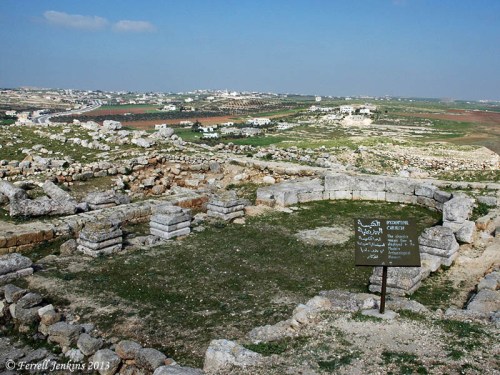
Byzantine church at Tel Hesban. Photo by Ferrell Jenkins.

Byzantine church at Tel Hesban. Photo by Ferrell Jenkins.

The photo above shows the ruins of the Byzantine church at Tell Ḥesbân. Tel Jalul may be seen in the distance. Look for the long, plain “hill”, on the top of the hill on the far left of the photo.
Added Note: In the original post I stated that “We are looking for a city belonging to the period of the Patriarchs (the Late Bronze archaeological period).” A friend called my attention to the oversight. The chart above shows that the period of the Patriarchs is the Middle Bronze Age. I should have said, as now corrected above, that “We are looking for a city belonging to the period of Moses, the Exodus, and the Conquest (the Late Bronze archaeological period).”

Is Tell Ḥesbân Heshbon?

S. H. Horn describes the biblical significance of Heshbon.

A city of Transjordan strategically located at the main north-south road, called the King’s Highway in the Bible, some 15 mi. (c. 24 km.) southwest of “Amman (Palestine Under Joshua and the Judges). The Israelites captured it from Sihon, an Amorite king, who had taken it from the Moabites and made it his capital (Num 21:25–30). The city was given to the Reubenites and rebuilt by them (Num 21:34; 32:37; Jos 13:17). However, since it lay on the border between Reuben and Gad, the latter tribe seems eventually to have occupied it (Jos 13:26). It was later assigned, as a town of Gad, to the Levites (Jos 21:39; 1 Chr 6:81). The Moabites reconquered the city in the period of the divided kingdom and occupied it in the time of Isaiah and Jeremiah (Is 15:4; 16:8, 9; Jer 48:2, 33, 34). However, during Jeremiah’s lifetime it seems to have changed hands again, since he refers to it as an Ammonite city in one of his later oracles (Jer 49:2, 3). The Ammonites seem to have taken it during an invasion of the Moabite territory referred to in Ezekiel (ch 25:9, 10). It was in the possession of Alexander Jannaeus in the time of the Maccabees, and was later ruled by Herod the Great (Jos. Ant. xiii. 15. 4; xv. 8. 5), who fortified it and made it into a garrison city called Esbus. Later it became a Christian city and seat of a bishop. Several bishops of Heshbon are known by name. In 614 the city suffered greatly during the Persian invasion, when its 3 churches—so far excavated—were destroyed. The Arabs who some 20 years later occupied the country made the city, then called Ḥesbân, the capital of the district. After the 13th cent. the city is never mentioned again.

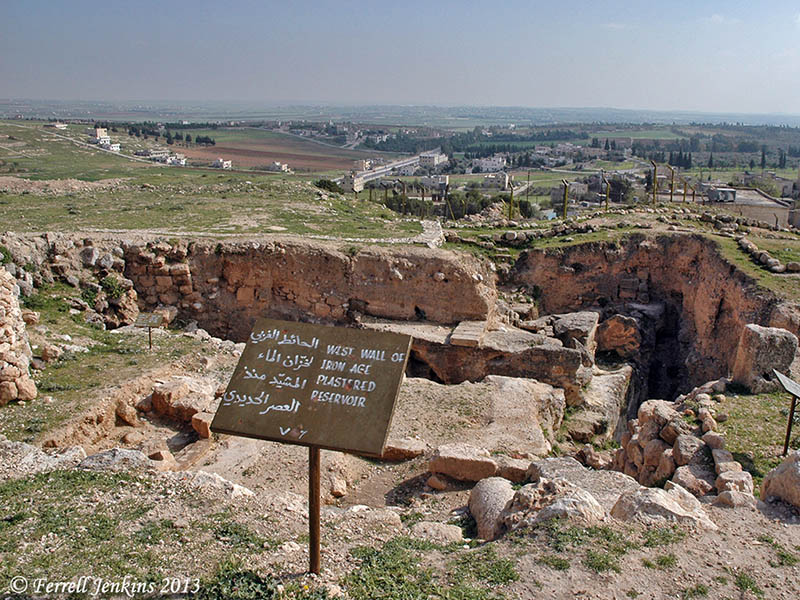
Excavations were conducted at Tell Ḥesbân under the direction of Siegfried Horn and Larry Gerarty from 1968 to 1976. A large open-air reservoir dating to the Iron Age, the period of the Israelite kings was uncovered. The pool measured about 50 ft. x 50 ft., and was 18 ft. deep. It was large enough to hold 300,000 gallons of water.

The Iron Age Pool at Heshbon. Photo by Ferrell Jenkins.

The Iron Age Plastered Reservoir at Heshbon. View West. Photo by Ferrell Jenkins.

Horn says this was “probably a pool to which Song 7:4 refers.”

Your neck is like an ivory tower.
Your eyes are pools in Heshbon,
by the gate of Bath-rabbim.
Your nose is like a tower of Lebanon,
which looks toward Damascus. (Song of Solomon 7:4)

I have followed the information by S. H. Horn in The Seventh-day Adventist Bible Dictionary. In a post to come I hope to explain why Tell Ḥesbân may not be biblical Heshbon.

The Moabite city of Elealeh

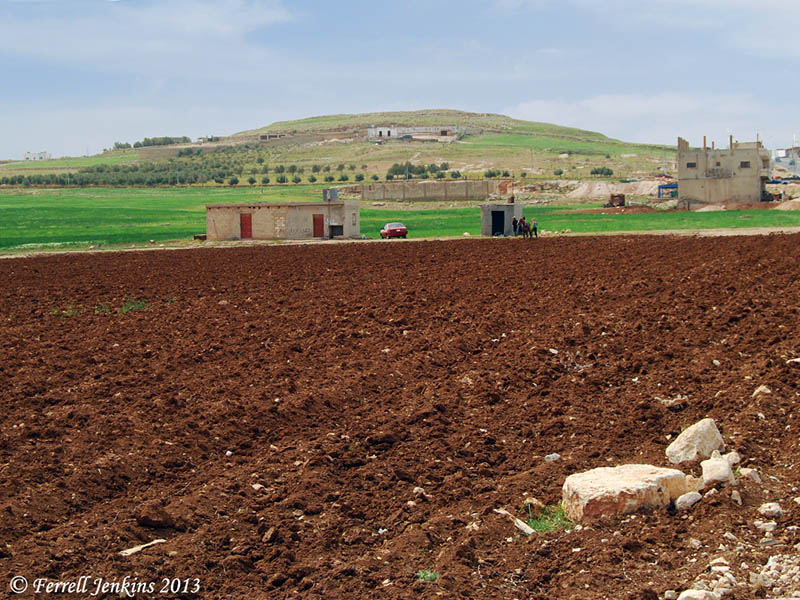
Elealeh (pronounced EL e A lah) is one of those little known cities from Bible times. It is now identified as Tell (or Tall) Al-Elealeh. The mound is located about two miles northeast of Heshbon.

When we first encounter the city of Elealeh it belongs to the Moabites. After the Israelites occupied the area the city was given to the tribe of Reuben as part of their territory (Numbers 32:3, 37).

Map showing Elealeh in Moab. BibleAtlas.org.

Map showing Elealeh in Moab. BibleAtlas.org.

The Seventh-day Adventist Bible Dictionary gives this brief information about the city.

A town which the Israelites took from the Amorite king of Heshbon, and which the Reubenites rebuilt (Num 32:3, 37). Later, when the Moabites extended their territory to the north, they reoccupied it (Is 15:4; 16:9; Jer 48:34). It is now el–‘Al, a ruin on top of a hill, 3,082 ft. (940 m.) above sea level, about 2 mi. (c. 3 km.) northeast of Heshbon (Palestine Under Joshua and the Judges). Archeological soundings were conducted at el–‘Al by W. L. Reed in 1962. The excavated evidence indicated that the ancient city had existed from the 3d millennium B.C. down to the Middle Ages with a possible gap in occupation from 1600–1200 B.C. since no Late Bronze Age remains were found. (Horn, Siegfried H. The Seventh-day Adventist Bible Dictionary 1979 : 318.)

The site of ancient Elealeh. Photo by Ferrell Jenkins.

The site of ancient Elealeh. Photo by Ferrell Jenkins.

Just doing a little road work

When I was a kid in North Alabama I found Indian arrowheads in the cotton fields when we hoed and picked cotton. (Yes, I really did!) The only Indian I ever heard of (on the radio) was Tonto.

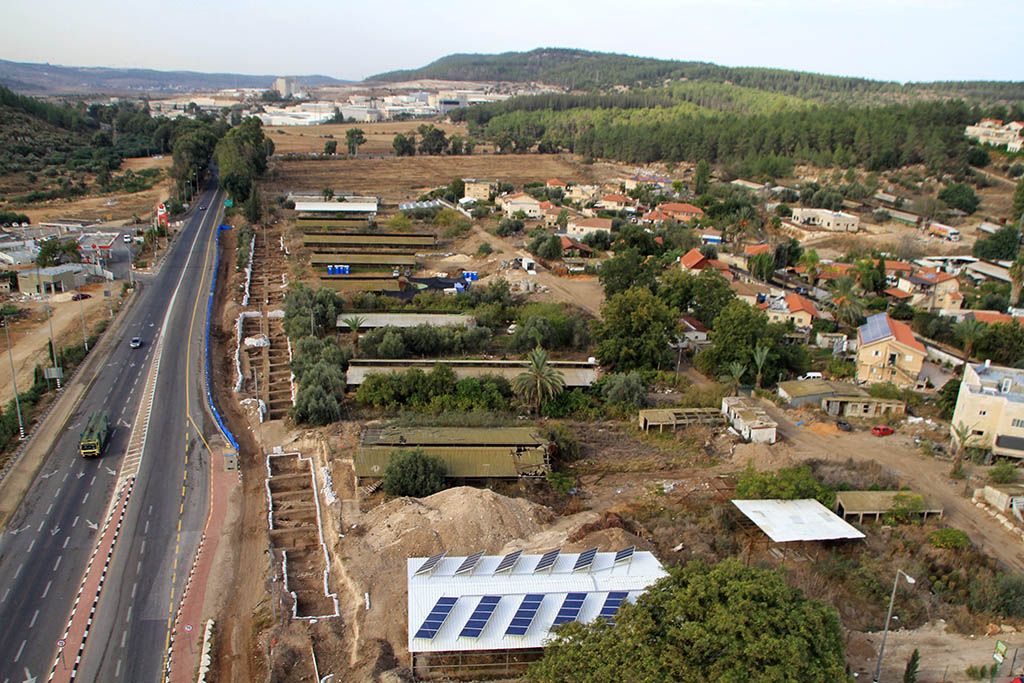
In Israel, ancient ruins are discovered as foundations are dug for new buildings or roads are being widened. It happened recently along Highway 38 at Eshtaol, the area where Samson grew up (physically) (Judges 13:24-25). Eshtaol is located about 10 miles west of Jerusalem as one approaches the Sorek Valley and Beth Shemesh. I have stopped several times for gas and water at the station on the left side of the highway.

An aerial view of the large excavation along Highway 38. Photo: Sky View Company, courtesy of the IAA.

An aerial view of the large excavation along Highway 38. Photograph: Sky View Company, courtesy of the Israel Antiquities Authority.

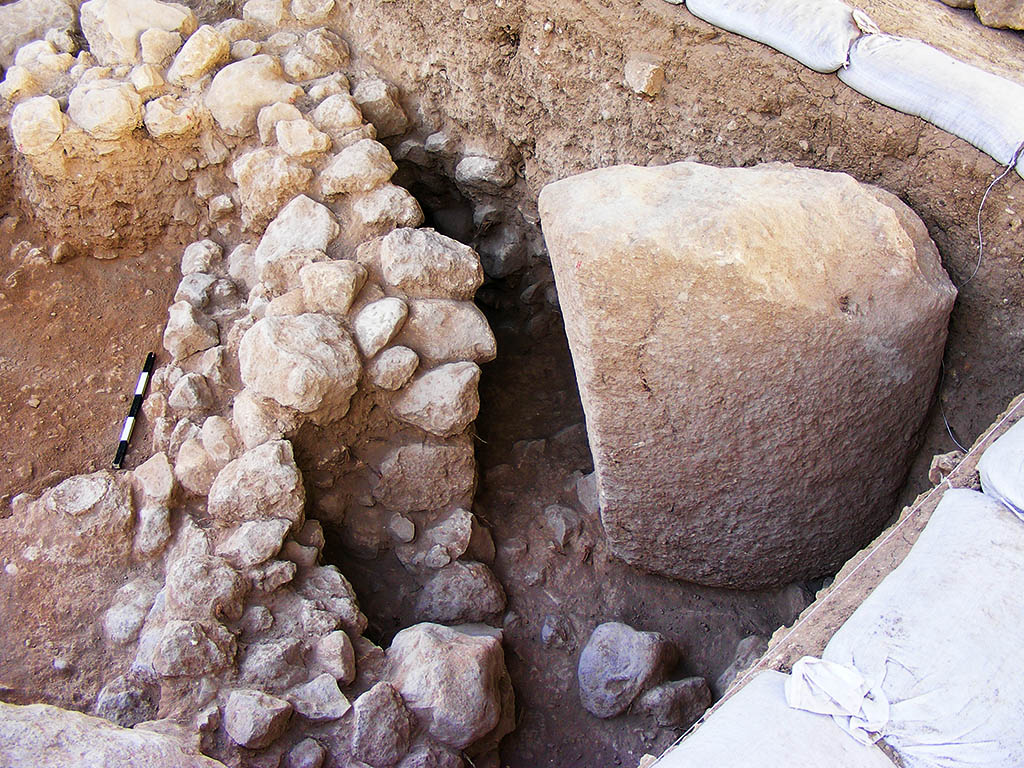
Archaeologists working on behalf of the Israel Antiquities Authority exposed a site belonging to the Pre-Pottery Neolithic period. Buildings belonging to the end of the Chalcolithic period exposed a large standing stone (massebah) 51 inches high. The archaeologists said,

“The standing stone was smoothed and worked on all six of its sides, and was erected with one of its sides facing east. This unique find alludes to the presence of a cultic temple at the site”.  …  “In the past numerous manifestations have been found of the cultic practice that existed in the Chalcolithic period; however, from the research we know of only a few temples at ‘En Gedi and at Teleilat Ghassul in Transjordan”.

A Chalcolithic period building and the standing stone (massebah) positioned at the end of it. Photo: Assaf Peretz, courtesy IAA.

A Chalcolithic period building and the standing stone (massebah) positioned at the end of it. Photo: Assaf Peretz, courtesy IAA.

The IAA news release is available here. The photos we have used here, and four others, are available here. Several Israeli papers have articles about the find, including the one in Arutz Sheva here.

Todd Bolen discussed the identification of Eshtaol here.

Canaanite Wine Cellar discovered at Tel Kabri

Tel Kabri is a Canaanite site located a few miles east of Nahariya in the Plain of Akko in northern Israel. Excavations have been conducted at the site for several years under the direction of Prof. Eric H. Cline of Washington University and scholars from the University of Haifa, Israel.

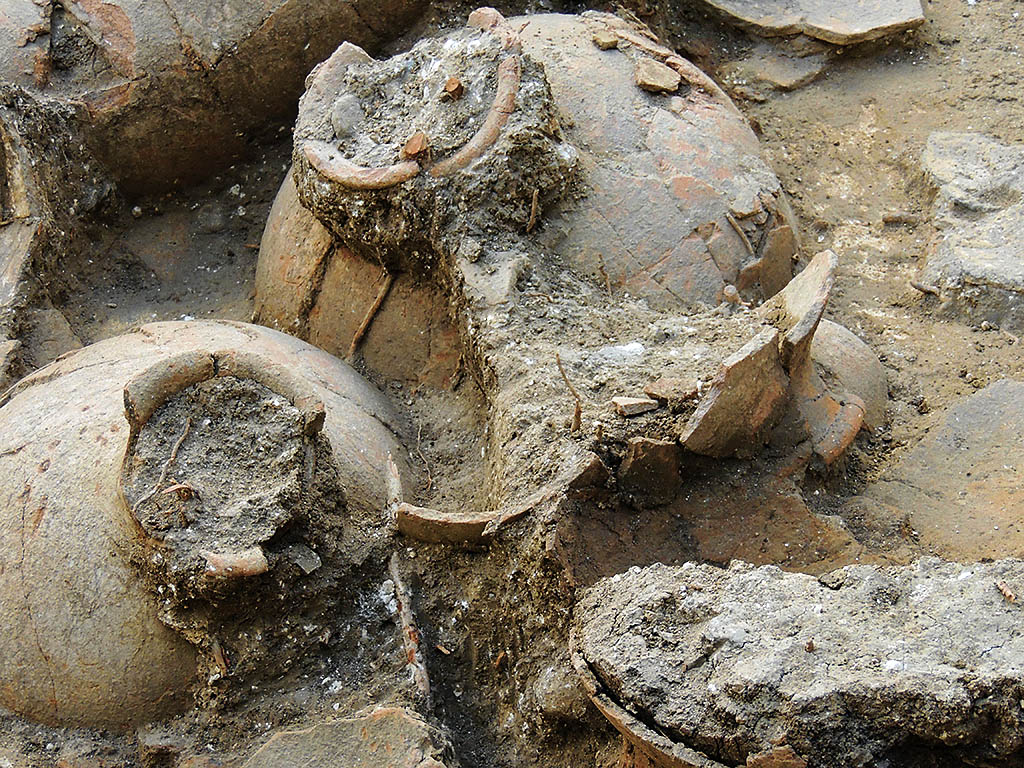
A total of forty clay jars were discovered. Each have a capacity of 13 gallons. You may read more about the discovery here and here.

Wine jars at Tel Kabri. Credit: Prof. Eric H. Cline & Tel Kabri Excavation.

Wine jars at Tel Kabri. Credit: Prof. Eric H. Cline and the Tel Kabri Excavation.

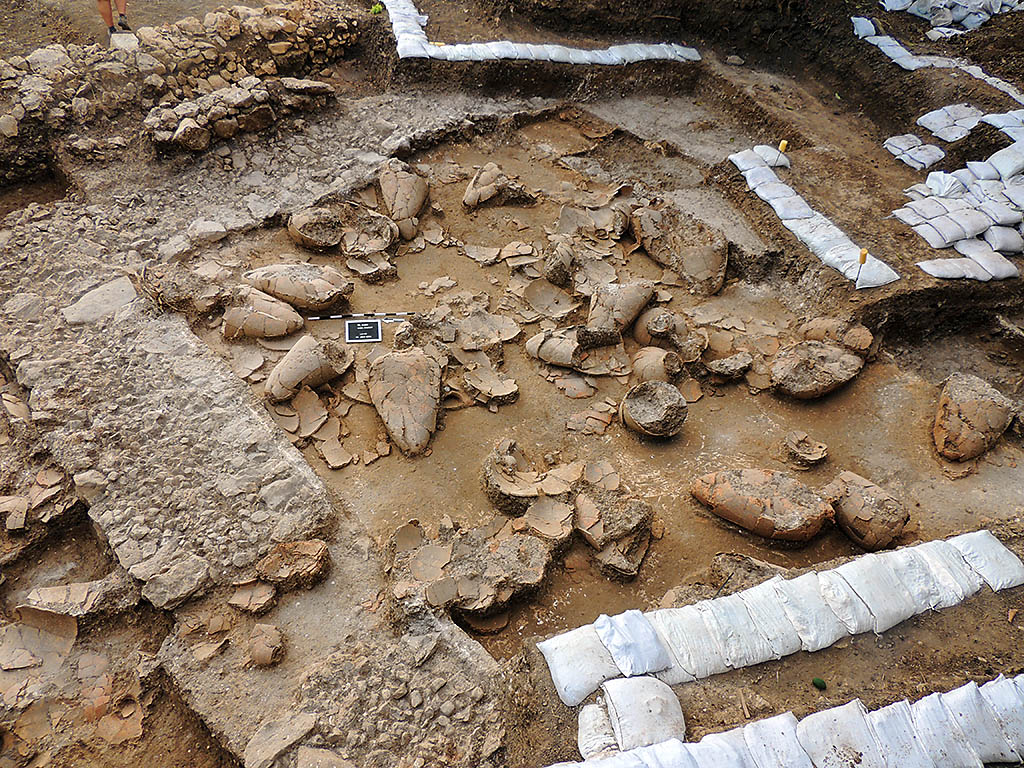
The photo below shows a room in the Canaanite palace at Tel Kbri. The excavators date this structure to 1700 B.C.

Wine cellar at Tel Kabri. Credit: Prof. Eric H. Cline and Tel Kabri Excavation.

Wine cellar at Tel Kabri. Credit: Prof. Eric H. Cline and the Tel Kabri Excavation.

This discovery reminds us of the wine cellars discovered at El-Jib (Gibeon) by James Pritchard in 1959. Sixty-three cellars with a possible capacity of 25,000 gallons were excavated (Pritchard, Gibeon, 79-99).

HT: Joseph Lauer

Damage Reported at Mari in Syria

The French archaeologist André Parrot (1901-1980) carried out several excavations at Mari between 1933 and 1960. Having read about recent damage to the ancient buildings of Mari, I wanted to share a couple of photos of artifacts from the site.

The first statue is of the Iku-Shamagan, King of Mari. It dates to about 2650 B.C. and is from the temple of Ishtar in Mari. The statue is about 47 inches high and was displayed in the Damascus Museum in 2002 when I made this photograph.

King of Mari statue in Damascus Museum. Photo by Ferrell Jenkins 2002.

Iku-Shamagan, King of Mari, praying. Statue in Damascus Museum. Photo by Ferrell Jenkins 2002.

The small (about 20 inches high) statue of Ebih-II, the superintendent of Mari, was discovered in the temple of Ishtar. It dates to the period of about 2900-2750 B.C. and is made of gypsum, with eyes of shells and lapis lazuil. This artifact, along with several others, is displayed in the Louvre.

Attendant to Ebih II of Mari. Louvre. Photo by Ferrell Jenkins.

Statue of Ebih II superintendent of Mari. Louvre. Photo by Ferrell Jenkins.

Mari is located far east in Syria near the Euphrates River. The city was located on the main route between Assyria and Babylon. If Abraham first lived in south Mesopotamia then he might have passed this way on the trip to Haran (Genesis 11:27 – 12:5).

Project Syrian Archaeology has some photos of poor quality showing damage to historical sites at their Facebook page here.