Category Archives: New Testament

Pistachio nuts among best products of the land

During the days of a severe famine in the land of Canaan, Israel (Jacob) agreed to allow his youngest son Benjamin to go to Egypt at the request of the man who was in charge of dispensing food. That man was Joseph, the son of Israel. Jacob agreed to allow Benjamin to go with his older brothers. He also told the boys to take some of “the best products of the land” including pistachio nuts.

Then their father Israel said to them, “If it must be so, then do this: take some of the best products of the land in your bags, and carry down to the man as a present, a little balm and a little honey, aromatic gum and myrrh, pistachio nuts and almonds. (Genesis 43:11 NAU)

I began thinking about this post while studying John 12.

Mary then took a pound of very costly perfume of pure nard, and anointed the feet of Jesus and wiped His feet with her hair; and the house was filled with the fragrance of the perfume. (John 12:3 NAU)

There are several significant words in this text: perfume (muron), pure (pistikos), and nard (vardos). The Greek word for pure (pistikos)  is difficult to define. Bauer-Danker says it is “variously interpreted, but evidently suggesting exceptional quality.” A comment by William Barclay caught my attention.

Oddly enough, no one really knows what that word means. There are four possibilities. It may come from the adjective pistos which means faithful or reliable, and so may mean genuine. It may come from the verb pinein which means to drink, and so may mean liquid. It may be a kind of trade name, and may have to be translated simply pistic nard. It may come from a word meaning the pistachio nut, and be a special kind of essence extracted from it. In any event it was a specially valuable kind of perfume.

Then I noticed the comments by Keil and Delitzsch on pictachio nuts (sic) in Genesis 43:11.

which are not mentioned anywhere else, are, according to the Samar. vers., the fruit of the pistacia vera, a tree resembling the terebinth, – long angular nuts of the size of hazel-nuts, with an oily kernel of a pleasant flavour; it does not thrive in Palestine now [1875], but the nuts are imported from Aleppo.

Well, that led me to think of photos I made in a pistachio orchard near Carchemish on the Euphrates (Jeremiah 46:2). This is about 65 miles from Aleppo.
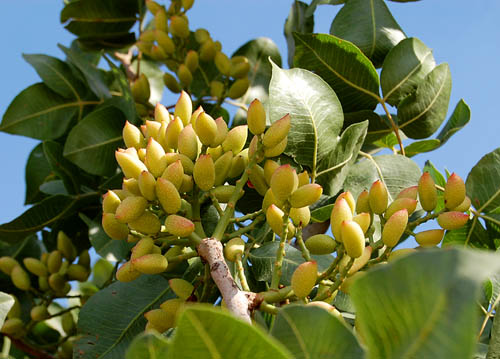
Pistachio's growing near Carchemish on the Euphrates. Photo by Ferrell Jenkins.

Pistachio's growing near Carchemish on the Euphrates. Photo by Ferrell Jenkins.

I think this is the only place I have seen pistachio’s growing on a tree. The practical comment by Matthew Henry is worth meditating on for a while.

Note, (1.) Providence dispenses its gifts variously. Some countries produce one commodity, others another, that commerce may be preserved. (2.) Honey and spice will never make up the want of bread-corn. The famine was sore in Canaan, and yet they had balm and myrrh, etc. We may live well enough upon plain food without dainties; but we cannot live upon dainties without plain food. Let us thank God that that which is most needful and useful is generally most cheap and common.

That sort of outlines the rambling of the mind back of this post. It is amazing what one may learn once he begins to track down leads. I still don’t know if pure (pistikos) has anything to do with pistachio nuts! Meditate.
Laodicea Photos

Laodicea is known to us from the book of Revelation (1:11; 3:14-22), and from Paul’s epistle to the Colossians.

For I testify for him that he has a deep concern for you and for those who are in Laodicea and Hierapolis. Luke, the beloved physician, sends you his greetings, and also Demas. Greet the brethren who are in Laodicea and also Nympha and the church that is in her house. When this letter is read among you, have it also read in the church of the Laodiceans; and you, for your part read my letter that is coming from Laodicea. (Col 4:13-16 NAU)

Ben Witherington has posted several nice photos recently made at Laodicea. Take a look here. These photo are high resolution and may be reduced and enhanced a bit for use in class and sermon presentation. Ben concludes his post with these words:

There is much more to be said, but let this be said at this juncture.  The archaeological evidence at Laodicea simply confirms what the NT suggests about the city– it was large,  rich in the first century, a city materially on the rise, but sometimes prosperity has a deadening effect on spirituality as John of Patmos reminds.   The reconstruction of the city today is a work still in progress— but then, so are we. If even Laodicea warrants a visit from the Master who knocks and promises to enter and sup with them, despite all its sin and shortcomings, then there is still hope for us.

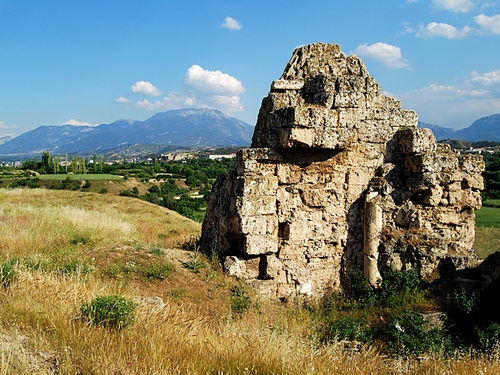
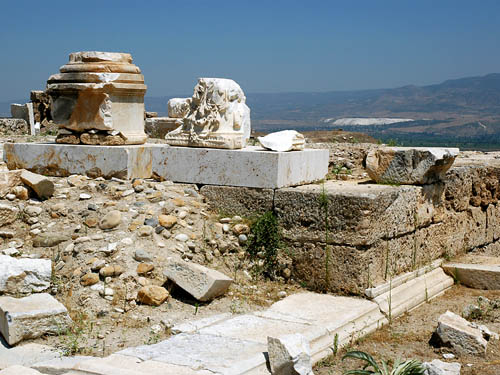
The photo below is one I took showing what was labeled “North Temple” at the time. I see on the new sign Ben includes among his photos the structure (# 15) is labeled “Corinth Temple and North Basilica.” The white area on the hillside across the Lycus River valley marks the limestone formations of Hierapolis (Colossians 4:13; modern Pamukkale).

Temple ruins at Laodicea. View north to Hierapolis. Photo by Ferrell Jenkins.

Temple ruins at Laodicea. View north to Hierapolis. Photo by Ferrell Jenkins.

Thanks, Ben. We look forward to more good material from Turkey.

We called attention to the water distribution system of Laodicea here.

HT: Brooks.

The Samaritans

Samaritan Priest with Samaritan Pentateuch Scroll. Photo by Ferrell Jenkins.

Samaritan Priest with Samaritan Pentateuch Scroll. Photo by Ferrell Jenkins.

“Samaritans use modern means to keep ancient faith” is the title of an informative article about the modern Samaritans on Mount Gerizim at Reuters. A slide show of 10 good photos is included. I especially liked the one showing the priest in the museum with a painting of Jesus and the Samaritan woman at the well.

We recently wrote about the meeting of Jesus with the woman of Samaria at Jacob’s Well here. We wrote about Jesus passing through Samaria here.

Todd Bolen’s article on the Samaritan Passover may be read here.

Years back I made black and white photos for use in publications. This one shows a Samaritan priest displaying a copy of the Samaritan Pentateuch. He said it was the oldest book in the world. Textual scholars think it is no older than the 12th century A.D.

A Reuter’s Blog here gives some additional information about how the reporters got to Mount Gerizim. Check the video at the bottom of the page.

HT: Joseph Lauer; Paleojudaica.

Another reason to attend Bible study

“Kansas girl rides ‘Laodicean’ to National Spelling Bee victory”

According to  USA Today, 13 year old Kavya Shivashankar won the national Spelling Bee championship by correctly spelling the word Laodicean. Several news reports say the word means lukewarm or indifferent in religion or politics, but they fail to mention that the concept comes from the Bible.

Laodicea was one of three cities of the Lycus River Valley in Asia Minor (Colossians 2:1; 4:15-16). Today this area is in Turkey. Toward the end of the first century the book of Revelation was distributed to several churches of Asia (Revelation 1:11).

The water of Laodicea came from hot springs immediately south of the city. By the time the water reached Laodicea it was lukewarm.  Jesus described the church as being like the water supply of the city.

I know your deeds, that you are neither cold nor hot; I would that you were cold or hot.  16 ‘So because you are lukewarm, and neither hot nor cold, I will spit you out of My mouth. (Revelation 3:15-16 NAS)

This photo shows part of the water distribution tower at ancient Laodicea. Mount Cadmus is seen in the distance.

Ruins of the water distribution tower at Laodicea. Photo by Ferrell Jenkins.

Ruins of the water distribution tower at Laodicea. Photo by Ferrell Jenkins.

We might also define Laodicean as a member of the body of Christ in the city of Laodicea.  Or, simply, a citizen in the city of Laodicea.

HT: Olen, Harriet

Paul in Ephesus

Paul taught in the school of Tyrannus during his stay in Ephesus. We need not think that Paul was assigned as an Associate Professor, or Lecturer. He may have simply used a rented facility or hall for his teaching.

But when some were becoming hardened and disobedient, speaking evil of the Way before the people, he withdrew from them and took away the disciples, reasoning daily in the school of Tyrannus. (Acts 19:9)

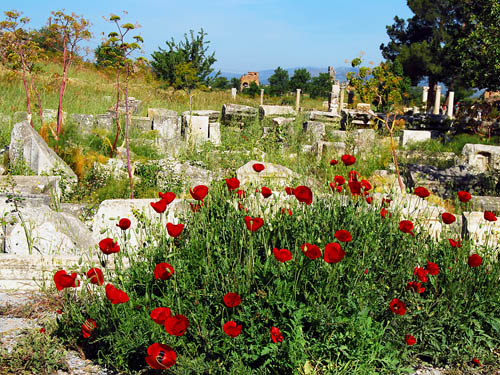
When we visit Ephesus today we see nothing but ruins and a few partially reconstructed buildings. We wonder about all of the things that happened to Paul, Apollos, Aquila, Priscilla, and Timothy in these places. Meditate on these things as you enjoy today’s photo.

Flowers blooming among the ruins at Ephesus. Photo by Ferrell Jenkins.

Flowers blooming among the ruins at Ephesus. Photo by Ferrell Jenkins.

Discovery of the Roman Pool of Siloam

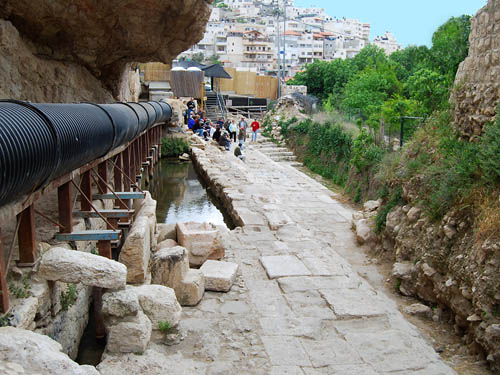
In early June, 2004, an announcement was made by Ronny Reich and Eli Shukron of the discovery of a pool dating to the Second Temple period (Herod’s temple). Continuing excavations have revealed three sets of stairs leading down into the pool. Most of the pool has not yet been uncovered. In November, 2005, I spoke with Professor Reich at the pool and he explained several things about the discovery.

A feature article was published in Biblical Archaeology Review, Sept.-Oct., 2005. Todd Bolen of BiblePlaces.com, who assisted in the excavations at the site, included some comments on his BiblePlaces Blog here in August, 2005. Many reports that appear in the news media are incomplete and sometimes misleading.

Pool of Siloam. View toward East. Byzantine pool is to our back. Photo by F.Jenkins.

Pool of Siloam. View toward East. Byzantine pool is to our back. Photo by F. Jenkins.

See Todd’s photos and comments about The Pool of Siloam Revealed at BiblePlaces.com.

Our photo shows the northern steps and the eastern corner of the pool. You can detect the present road level at the top of the wooden steps. In the distance, across the Kidron Valley, you can see a hill south of the Mount of Olives, sometimes called the Hill of Evil Counsel. Beyond that lies the Judean Wilderness.

The Pool of Siloam

More than 700 years before Christ, the Judean King Hezekiah dug a tunnel to bring the water of the Gihon spring to a new pool which he constructed on the west side of the city of David (2 Kings 20:20; 2 Chron 32:30; Sirach 48:17). This pool would later be known as the pool of Siloam.

One of the great signs of Jesus, recorded in the Gospel of John, is the healing of a man born blind (John 9). Jesus spat on the ground and made clay of the spittle. He then applied the mud to the blind man’s eyes and told him, “Go, wash in the pool of Siloam.” We understand that mud made from saliva and water from Siloam will not normally cause a blind person to see. This sign demonstrates the power of Jesus over blindness and demonstrates the validity of His claim to be “the Light of the world” (9:5). The blind man’s faith to obey Jesus clearly played a role in his healing.

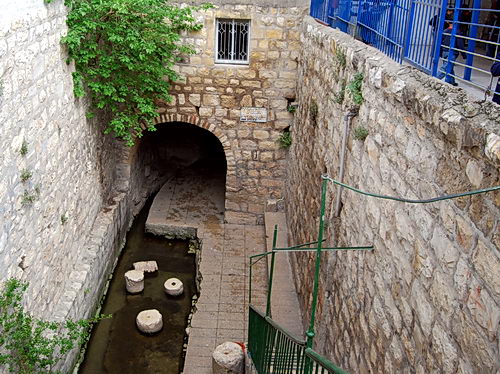
For many years we have been aware of the Pool of Siloam at the southern end of Hezekiah’s tunnel. A church dedicated to “Our Savior, the Illuminator” was built here in the fifth century by the Byzantine Empress Eudokia, but was destroyed in A.D. 614 and never rebuilt. Some columns from the building can still be seen. See Hoade, Guide to the Holy Land, and Murphy-O’Connor, The Holy Land, for details.

This photo shows the Byzantine pool at the southern end of Hezekiah’s tunnel. Note the present ground level along the blue fence.

Ruins of the Byzantine church at end of Hezekiah's Tunnel. Photo by F. Jenkins.

Ruins of the Byzantine church at end of Hezekiah's Tunnel. Photo by F. Jenkins.

In a post to follow we will discuss the newly discovered Pool of Siloam from the Roman period.

Jesus spoke in the treasury of the Temple

The events of John 8 take place in the Temple precinct in Jerusalem. At this time He claims to be the light of the world (John 8:12). Notice verse 20.

These words he spoke in the treasury, as he taught in the temple; but no one arrested him, because his hour had not yet come. (John 8:20 ESV)

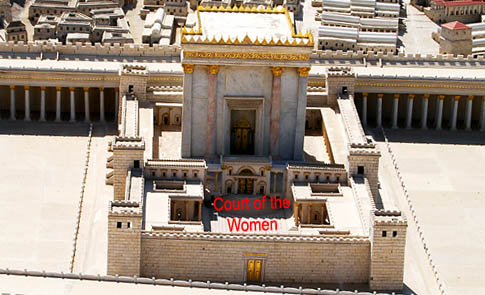
This photo of the Second Temple Model shows the area of the Court of the Woman where the “treasury” or offering boxes were located.

Second Temple Model showing the Court of the Women. Photo by F. Jenkins.

Second Temple Model showing the Court of the Women. Photo by F. Jenkins.

Alfred Edersheim includes the following information about the Court of the Women with an explanation of the 13 offering boxes found there. The info follows without indentation.

——

The Court of the Women obtained its name, not from its appropriation to the exclusive use of women, but because they were not allowed to proceed farther, except for sacrificial purposes. Indeed, this was probably the common place for worship, the females occupying, according to Jewish tradition, only a raised gallery along three sides of the court. This court covered a space upwards of 200 feet square. All around ran a simple colonnade, and within it, against the wall, the thirteen chests, or ‘trumpets,’ for charitable contributions were placed. These thirteen chests were narrow at the mouth and wide at the bottom, shaped like trumpets, whence their name.

Their specific objects were carefully marked on them. Nine were for the receipt of what was legally due by worshippers; the other four for strictly voluntary gifts. Trumpets I and II were appropriated to the half-shekel Temple-tribute of the current and of the past year. Into Trumpet III those women who had to bring turtledoves for a burnt- and a sin-offering dropped their equivalent in money, which was daily taken out and a corresponding number of turtledoves offered. This not only saved the labour of so many separate sacrifices, but spared the modesty of those who might not wish to have the occasion or the circumstances of their offering to be publicly known. Into this trumpet Mary the mother of Jesus must have dropped the value of her offering (Luke 2:22, 24) when the aged Simeon took the infant Saviour ‘in his arms, and blessed God.’ Trumpet IV similarly received the value of the offerings of young pigeons. In Trumpet V contributions for the wood used in the Temple; in Trumpet VI for the incense, and in Trumpet VII for the golden vessels for the ministry were deposited. If a man had put aside a certain sum for a sin-offering, and any money was left over after its purchase, it was cast into Trumpet VIII. Similarly, Trumpets IX, X, XI, XII, and XIII were destined for what was left over from trespass-offerings, offerings of birds, the offering of the Nazarite, of the cleansed leper, and voluntary offerings. In all probability this space where the thirteen Trumpets were placed was the ‘treasury,’ where Jesus taught on that memorable Feast of Tabernacles (John 7 and 8; see specially 8:20). We can also understand how, from the peculiar and known destination of each of these thirteen ‘trumpets,’ the Lord could distinguish the contributions of the rich who cast in ‘of their abundance’ from that of the poor widow who of her ‘penury’ had given ‘all the living’ that she had (Mark 12:41; Luke 21:1).

But there was also a special treasury-chamber, into which at certain times they carried the contents of the thirteen chests; and, besides, what was called ‘a chamber of the silent,’ where devout persons secretly deposited money, afterwards secretly employed for educating children of the pious poor.

It is probably in ironical allusion to the form and name of these treasure-chests that the Lord, making use of the word ‘trumpet,’ describes the conduct of those who, in their almsgiving, sought glory from men as ‘sounding a trumpet’ before them (Matthew 6:2)—that is, carrying before them, as it were, in full display one of these trumpet-shaped alms-boxes (literally called in the Talmud, ‘trumpets’), and, as it were, sounding it.

Alfred Edersheim, The Temple: Its Ministry and Services as They Were at the Time of Jesus Christ, electronic ed. (Garland, TX: Galaxie Software, 2000).

The Aladdin Lamp gave light to all in the house

The New Dictionary of Cultural Literacy, provides this information about the Aladdin Lamp:

The subject of a story in the Arabian Nights. The young boy Aladdin acquires a magic lamp that, when rubbed, brings forth a genie, who grants Aladdin’s wishes to win the hand of the sultan’s daughter and to build a palace. The magician who first gave Aladdin the lamp steals it back, but Aladdin regains the lamp, and he and the sultan’s daughter live happily ever after.

The lamp that Americans of the 1930s and 1940s came to know as the Aladdin Lamp was already in use in Germany during the early part of the 20th century. The flat wick kerosene lamp was common in the rural south when I was a youngster, but the Aladdin Lamp provided much more light because the flame heated a frameless mantle that hung over the flame. We had one Aladdin Lamp which we kept in the “big room” where both my parents and I slept until during my earliest grammar school years. This was literally our “living room.”

All of my evening school work was done in the light of the bright Aladdin Lamp. I thought that was the brightest light I had ever seen at night, and it was.

A few years ago, during a speaking engagement, I stayed with a fine family in Cullman, Alabama. They had the largest collection of Aladdin Lamps I have seen. Many of them have been refitted with electric fittings to make them usable today, like the one in our photo. I asked if he knew how much “wattage” one of the original lamps provided. He told me that it was about 60 watts.

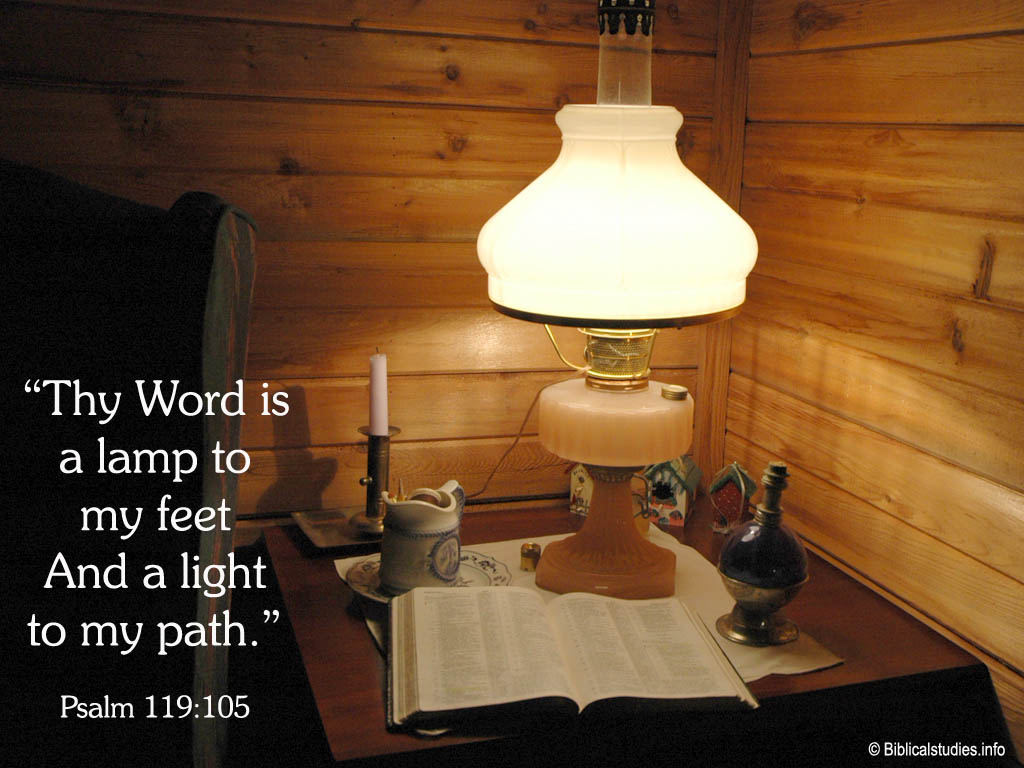
The Aladdin Lamp provided light for all in the house. Photo by Ferrell Jenkins.

The Aladdin Lamp provided light for all in the house. Photo by Ferrell Jenkins.

Lamps like this provide us with a reminder of the wonderful illustration used by Jesus.

Again Jesus spoke to them, saying, “I am the light of the world. Whoever follows me will not walk in darkness, but will have the light of life.” (John 8:12 ESV)

And, we recall the illumination and guidance provided by the LORD and His word.

Your word is a lamp to my feet And a light to my path. (Psalm 119:105 NAS)

This photo has been prepared in a size large enough to be used in PowerPoint presentations by my preaching/teaching friends. Just click on the image for a larger one.

Hebrew seal of “Saul” found in Jerusalem

A Hebrew seal dating to the time of the First Temple was displayed yesterday in the City of David in Jerusalem.

Hebrew Seal bearing name of "Saul." Photo by Vladimir Naykhin, IAA.

Hebrew Seal bearing name of "Saul." Photo by Vladimir Naykhin, IAA.

The news release issued by the Israel Antiquities Authority follows:

The seal, which is made of bone, was found broken and is missing a piece from its upper right side. Two parallel lines divide the surface of the seal into two registers in which Hebrew letters are engraved:

לשאל
]ריהו

A period followed by a floral image or a tiny fruit appear at the end of the bottom name.

The name of the seal’s owner was completely preserved and it is written in the shortened form of the name שאול (Shaul). The name is known from both the Bible (Genesis 36:37; 1 Samuel 9:2; 1 Chronicles 4:24 and 6:9) and from other Hebrew seals.

This name appears many other times in the Bible. Our minds are immediately drawn to the name of Saul, the first king of Israel.

Now there was a man of Benjamin whose name was Kish the son of Abiel, the son of Zeror, the son of Becorath, the son of Aphiah, the son of a Benjamite, a mighty man of valor.  He had a son whose name was Saul, a choice and handsome man, and there was not a more handsome person than he among the sons of Israel; from his shoulders and up he was taller than any of the people. (1 Samuel 9:1-2 NAU)

Saul, the son of Kish, lived several decades before the First Temple period. Saul was king of Israel from about 1050-1010 B.C. The temple was built by Solomon about 966 B.C. Do not make the mistake of saying that this is the seal of Saul the king. Seals and bullae (seal impressions) are fairly common. What they reveal is that the names found are the ones we might expect in given time periods, and similar, or sometimes identical, to those names found in the Bible.

The news release continues:

According to Professor Reich, “This seal joins another Hebrew seal that was previously found and three Hebrew bullae (pieces of clay stamped with seal impressions) that were discovered nearby. These five items have great chronological importance regarding the study of the development of the use of seals. While the numerous bullae that were discovered in the adjacent rock-hewn pool were found together with pottery sherds from the end of the ninth and beginning of the eighth centuries BCE, they do not bear any Semitic letters. On the other hand, the five Hebrew epigraphic artifacts were recovered from the soil that was excavated outside the pool, which contained pottery sherds that date to the last part of the eighth century.

It seems that the development in the design of the seals occurred in Judah during the course of the eighth century BCE. At the same time as they engraved figures on the seal, at some point they also started to engrave them with the names of the seals’ owners. This was apparently when they started to identify the owner of the seal by his name rather than by some sort of graphic representation.

It appears that the “office” which administered the correspondence and received the goods that were all sealed with bullae continued to exist and operate within a regular format even after a residential dwelling was constructed inside the same “rock-hewn pool” and the soil and the refuse that contained the many aforementioned bullae were trapped beneath its floor. This “office” continued to generate refuse that included bullae, which were opened and broken, as well as seals that were no longer used and were discarded into the heap of rubbish that continued to accumulate in the vicinity.
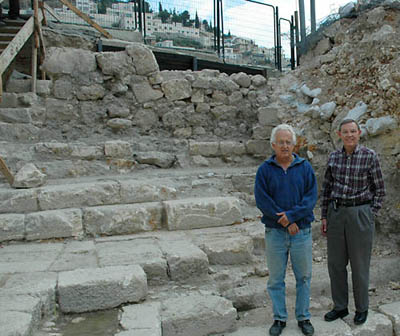
Professor Ronnie Reich is well known for his work in uncovering the Pool of Siloam and the street leading from the Pool to the Temple Mount. The Pool of Siloam is mentioned in John 9. This photo was made at the Pool of Siloam in 2005.
Professor Reich and Ferrell Jenkins at the Pool of Siloam. Photo by Leon Mauldin.

Professor Reich and Ferrell Jenkins at the Pool of Siloam. Photo by Leon Mauldin.

HT: Joseph Lauer