Category Archives: New Testament

Padfield’s visit to Explorations In Antiquity Center #2

We actually spent two days at the Explorations In Antiquity Center. We visited the Center on a Thursday morning, when they were not busy, so I could photograph the exhibits without other visitors getting in the way. We returned the following day to meet up with Gene and Sandy Taylor so we could have a guided tour of the Center and enjoy an authentic “Biblical meal” together.
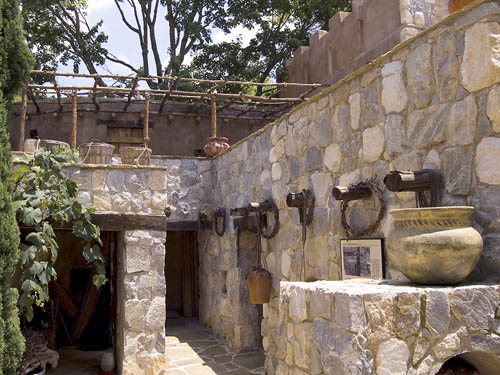
House exterior at Explorations in Antiquity Center. Photo by David Padfield.

House exterior at Explorations In Antiquity Center. Photo by David Padfield.

Our guide for the three-hour tour was Lamar Hamric and he did an excellent job of explaining the exhibits and putting them in a Bible context. The first half of the tour took place in the outside exhibit area and the last half was in a dining area designed to look like a Roman period banquet hall.

In the meal room we enjoyed a four-course meal with fifteen different food items, including unleavened bread, fruit, nuts, hard-boiled eggs, vegetables and bitter herbs. The meal was supposed to represent a Jewish Passover meal, but instead of roasted lamb they served roasted chicken (which, by the way, was excellent).

In the center of the room is a Roman triclinium—a U-shaped table like the one our Lord probably used at the Last Supper (Luke 22:12). During the meal Mr. Hamric discussed the various Passover customs and the social aspects of sharing a meal in the ancient Near East. Hamric gave the best explanation of the events at the Last Supper I have ever heard.
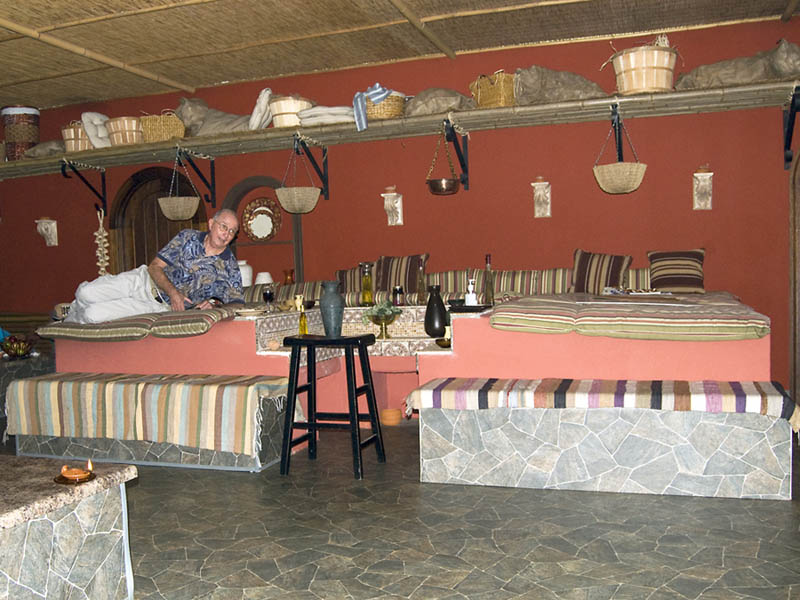
Roman period triclinium. Photo by David Padfield. Click for larger image.

Roman period triclinium. Photo by David Padfield. Click for larger image.

If you are anywhere near LaGrange, Georgia I would highly recommend you visit the Center. In fact, take your whole Bible class! The tour and meal costs $30 per adult and is well worth it. You need to make reservations in advance. They can prepare the Biblical meal for a small group (a minimum of 10) or a larger group of up to 140 people. Reservations can be made by calling the Center at (706) 885-0363.

-o-o-o-o-o-o-

David Padfield has visited the Bible Lands several times and is well qualified to evaluate the Explorations In Antiquity Center. Many of you have used his photographs and other materials that are made available through his web site (padfield.com).

The Explorations In Antiquity Center web site is available here.
David Padfield visits the Explorations In Antiquity Center at LaGrange, Georgia

If you have a desire to visit the lands of the Bible, but can’t afford the trip, I would suggest you visit the Explorations In Antiquity Center in LaGrange, Georgia. Recently my wife and I visited the Center for the first time and were amazed at the quality of the displays.

The Explorations In Antiquity Center is a living museum of life in Bible times. As you walk through the outdoor exhibits you will see realistic replicas of scenes from the Ancient Near East, such as water wells, vineyards, olive presses, mangers, and a sheepfold, watchtower and a threshing floor.

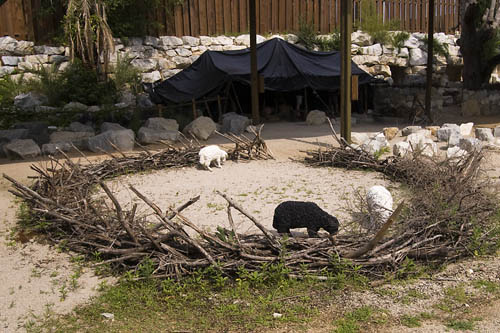
Sheepfold at Explorations in Antiquity Center. Photo by David Padfield.

Sheepfold at Explorations in Antiquity Center. Photo by David Padfield.

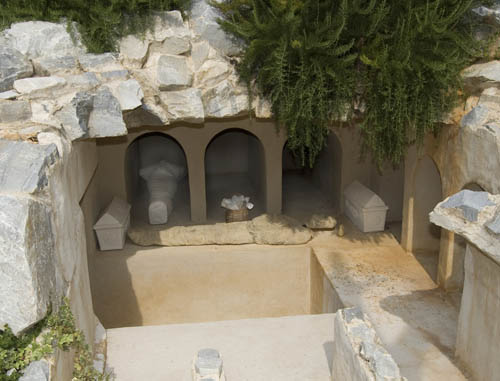
The tomb exhibit is especially worthy of notice. They have a replica of a typical Israelite tomb from around 700 to 500 BC, and a wonderful Herodian Period tomb like the one in which our Lord was probably buried. The replica was designed to show a cross section of the tomb (i.e., one of the walls is missing) and this makes it easier to explain the burial process in our Lord’s time upon this earth.

Cut-away replica of Herodian Period niche-type tomb. Photo by David Padfield.

Cut-away replica of Herodian Period niche-type tomb. Photo by David Padfield.

My favorite exhibit is the one that depicts life in an ancient village. They have built a typical four room Israelite house that will help you to understand the importance of a courtyard, the place of domestic animals in village life, how household storage was managed and the way the sleeping quarters were divided.

The center is open Tuesday through Saturday, from 10:00 AM to 6:00 PM. You can walk through the displays at your leisure, or call in advance for a guided tour that includes a Biblical meal (more about that in our second post).

-o-o-o-o-o-o-

David Padfield has visited the Bible Lands several times and is well qualified to evaluate the Explorations In Antiquity Center. Many of you have used his photographs and other materials that are made available through his web site (padfield.com).

The Explorations In Antiquity Center web site is available here.
The Exploration in Antiquity Center

The Explorations in Antiquity Center at LaGrange, Georgia, is the brainchild of Dr. James Fleming. Fleming has lived and worked in Israel since 1973. Numerous tour groups have visited his Biblical Resources center there. I first met Jim many years ago in the home of Richard Cleave in Jerusalem. Cleave is the author/photographer/publisher of The Holy Land Satellite Atlas and other photographic and geographic materials. In that meeting I saw that the three of us shared a common passion in wanting to use what we had learned about the Bible lands in teaching others.

The Explorations in Antiquity Center web page says,

Dr. Fleming established Biblical Resources in 1975, for the purpose of producing educational materials and aids for teaching the historical, geographical, and archaeological background of the Bible.

It was wonderful to have these resources together at one place in Israel, but it is beneficial to many more to have the resources available in the Southeastern United States.

David Padfield recently visited the Center in LaGrange. At my request he has written a brief review for Ferrell’s Travel Blog. We plan to run the review with photographs during the next few days.

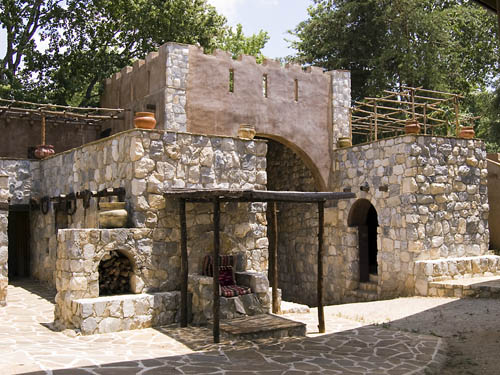
The city gate at Exploration in Antiquities Center. Photo by David Padfield.

The city gate at Exploration in Antiquities Center. Photo by David Padfield.

You may access the Center’s web site here.

David Padfield is well known for his helpful web site, Padfield.com.

The Garrard temple model

A few months ago the world discovered Alec Garrard’s model of Herod’s Temple. I was traveling a lot then, and many of the blogs covered the news, so I let it go. I suppose I received 10 or 12 emails from readers informing me about the articles. Well, finally, here it is for those who missed it.

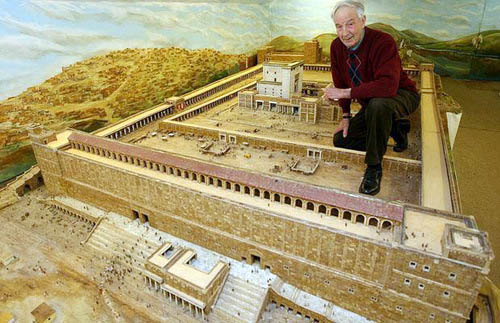
Garrard is a 78 year old retired property developer from Norfolk in the East of England who has spent 33,000 hours researching and building a model of Herod’s Temple. It is fascinating that one person spends so much time on a project. The Daily Mail reporter comments on this.

And while he sees it as a form of relaxation, he says his wife thinks he is mad. ‘She wishes she’d married a normal person,’ he said.

Garrard and his Temple Model. Photo: Geoff Robinson Photography.

Garrard and his Temple Model. Photo: Geoff Robinson Photography.

The article in the Daily Mail is here. The Telegraph article is here.

The Telegraph has added an album of nice photos here.

Walter Bingham of Israel National News has a report about the model, including an interview with Garrard, here.

HT: Reminder – Joseph I. Lauer.

Update: I see that Leen Ritmeyer has a set of PowerPoint slides based on Garrard’s model. Full details here.

Breakfast with Jesus

Jesus told the disciples that after His resurrection He would go ahead of them to Galilee (Matthew 26:32). His third appearance to the disciples was on the shore of the Sea of Tiberias (Galilee/Gennesaret).

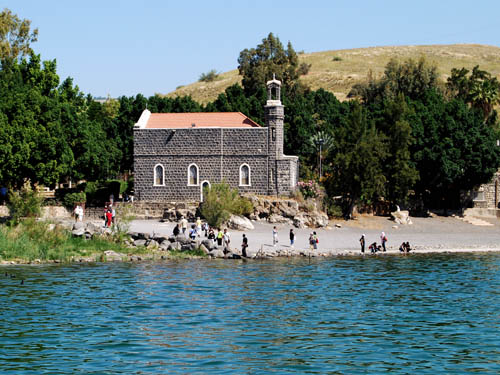
Tradition locates the place of His meeting with the disciples at (or near) Tabgha on the northwest shore of the Sea of Tiberias. The events are recorded in John 21. The disciples had fished during the night and caught nothing. At day break Jesus invited them to “Come and have breakfast.”

The small church, made of the local basalt stone, is called the Church of the Primacy of Peter. Roman Catholics believe Christ promised and conferred the primacy of jurisdiction over the entire church on the Apostle Peter at this time and place (John 21:14-17). Need I say that many do not agree with this interpretation?

The traditional site where Jesus prepared breakfast for the disciples. Photo by Ferrell Jenkins.

The traditional site where Jesus prepared breakfast for the disciples. The building covers what Catholics call the Mensa Christi (the Table of Christ). Photo by Ferrell Jenkins.

Observe in the photo that the shoreline is far from the building. This is because the water level has been extremely low in the past few years. Remnants of a small harbor can be seen beside the building. Mendel Nun, in his well-known article about the 15 man-made harbors around the Sea of Galilee, writes about Tabgha:

In the winter, fishermen from Capernaum worked at Tabgha, where several warm mineral springs attracted musht, popularly called St. Peter’s Fish. (The name Tabgha is a corruption of the Greek for “Seven Springs.”) Today the remains of this small harbor’s breakwater can be seen when the water level is low. Christian tradition ascribes the meeting place of Jesus with his disciples to a prominent rock at the warm springs. From a fisherman’s viewpoint, this is the correct choice. This is the area where musht schools formerly concentrated in the winter and spring. Here Jesus met his disciples for the first—and also the last—time (Luke 5:1–7; John 21:1–8). On this rock, now known as the rock of the primacy of Peter, stands a small modern Franciscan chapel, the Church of the Primacy of Peter. It was built on the foundations of earlier churches, the oldest of which dates from the first half of the fourth century. The altar is built around a stone outcropping known to pilgrims as the Lord’s Table (Mensa Domini), on which Jesus served the disciples after the miraculous draught of fishes (John 21:13). (Nun, Mendel. “Ports of Galilee.” Biblical Archaeology Review. July/August 1999).

Extraordinary Finds at the Mt Zion Excavation

That the title of the July update after three weeks of digging at the Mt Zion Excavation. The report by James D. Tabor is available here. The location is a beautiful one. It lies between the road and the old city wall on the south side of the Old City of Jerusalem, and it overlooks the Hinnom Valley (Joshua 18:16). There are some nice photos of the site and some of the discoveries.

Discoveries in the past three weeks include:

  1. A stone vessel with an ancient inscription of ten lines in archaic Jewish script.
  2. Murex snail shells with holes drilled in them.
  3. A fire pit dated to just after the Roman destruction of Jerusalem in A.D. 70.
  4. The threshold of a Fatimid period double gate.
  5. An arched doorway with mosaic floor and plastered wall.
  6. Several 2nd temple vaulted chambers that likely contained mikvot (ritual baths).
  7. Miscellaneous items such as coins, intact lamps, etc.
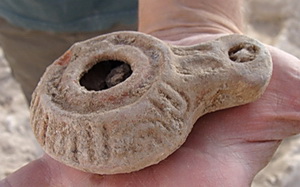
Herodian lamp from Mt Zion Excavation. Photo: Tabor Blog.

Herodian lamp from Mt Zion Excavation. Photo: Tabor Blog.

The excavators, Tabor and Gibson, have found evidence in some of these items that causes them to think this might have been an area were priests from the Second Temple period lived. (Second Temple means the Herodian Temple, which was really the Third Temple!).

Archaeology is hard work, but as these little things come to light it is exciting to have a better understanding of the past.

HT: Joseph I. Lauer

Codex Sinaiticus now online

According to a BBC report, the 4th century Codex Sinaiticus is now available online. More information about the project is available in this report by Reuthers. The link to Codex Sinaiticus is here.

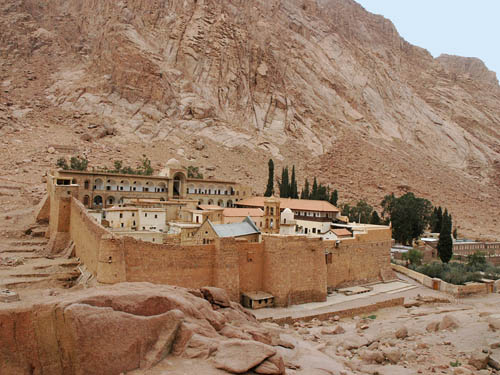
Here is a photo of Saint Catherine’s monastery, at the foot of Jebel Musa, the traditional Mount Sinai, where the manuscript was discovered in the 19th century.

St. Catherine's Monastery at Jebel Musa. Photo by Ferrell Jenkins.

St. Catherine's Monastery at Jebel Musa. Photo by Ferrell Jenkins.

HT: Paleojudaica; Frank Walton

USA sends ambassador back to Syria

For whatever reason(s) the media seems to have overlooked the decision of the Obama administration to send an ambassador back to Syria. Read a little about the decision at CNN.

Syria is an important country historically and politically. The capital city of Damascus is mentioned as early as the time of Abraham (Genesis 14:15), and there is indication that Abraham had considerable contact with the city. He suggests that Eliezer of Damascus might become his heir in the absence of a natural son (Genesis 15:2).

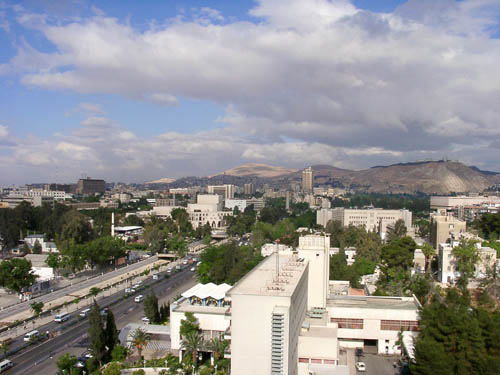
Damascus is situated immediately east of the Anti-Lebanon mountain range on what Rainey calls “the Damascus tableland” (The Sacred Bridge, 32). The River Barada (probably the Abanah of 2 Kings 5:12) runs east from the Anti-Lebanon range through the city of Damascus. The Syrian Desert stretches east of Damascus to the Euphrates River valley. The photo below was made looking west from my hotel balcony to the mountain range. The main part of the city is to the right (north). Go south a few miles and you have a clear view of Mount Hermon.

View of Damascus looking west. Photo by Ferrell Jenkins 2002.

View of Damascus looking west. Photo by Ferrell Jenkins 2002.

The only references to Damascus in the New Testament are those associated with the conversion of Saul of Tarsus (the Apostle Paul). All but two of these are in Acts 9, 22, and 26. The others are in 2 Corinthians 11:32 and Galatians 1:17.

The Syria of today is not the same political entity we read about in the Bible; only the name is the same.

Flag faux pas

We have been flying our flag since a few days before Memorial Day.

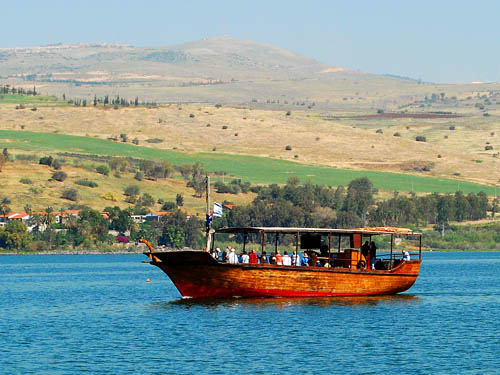
When traveling outside the United States it is fairly common to see the flag of the USA displayed in front of hotels that cater to citizens of the USA. Dozens of boats carry tourists across the Sea of Galilee from one port to another. This is an important part of our tours to give the travelers some sense of the elevation of the sea, and of the quietness of its water.

Tourist boat on Sea of Galilee. View to East. Photo by Ferrell Jenkins.

Tourist boat on Sea of Galilee. View to East. Photo by Ferrell Jenkins.

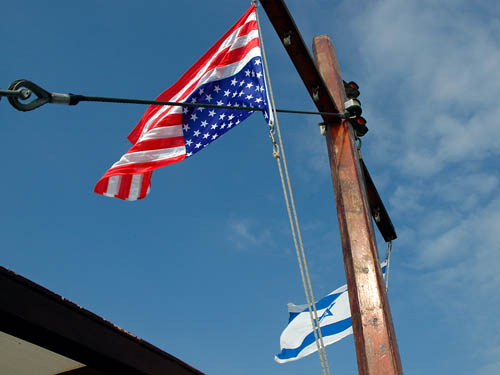
It is fairly typical of these boats to hoist a flag of the country from which its passengers come. In 2006 the boat we were on had inadvertently hoisted the USA flag upside down. The rules of etiquette for the display of the flag say that the flag should be flown upside down only as a distress signal. Fortunately we did not have a storm like the one mentioned in the gospels. Such storms still occur when the strong winds come down upon the sea from the surrounding mountains. In that case I suppose a distress signal might have been helpful.

But as they were sailing along He fell asleep; and a fierce gale of wind descended on the lake, and they began to be swamped and to be in danger. They came to Jesus and woke Him up, saying, “Master, Master, we are perishing!” And He got up and rebuked the wind and the surging waves, and they stopped, and it became calm. (Luke 8:23-24 NAU)

United States flag upside down on Israeli boat. Photo by Ferrell Jenkins.

United States flag upside down on Israeli boat. Photo by Ferrell Jenkins.

Happy fourth of July to my USA friends. Fly your flag proudly, but don’t turn it upside down!

The Sea of Galilee

A boat ride on the Sea of Galilee is one of the highlights of a trip to Israel for most Christian tourists. They enjoy seeing the lake and recognizing the places they have read about so much in their Bible study: Tiberias, Magdala, the Mount of Beatitudes, Capernaum. They reflect on the accounts of Jesus walking on the water and stilling the tempest, etc.

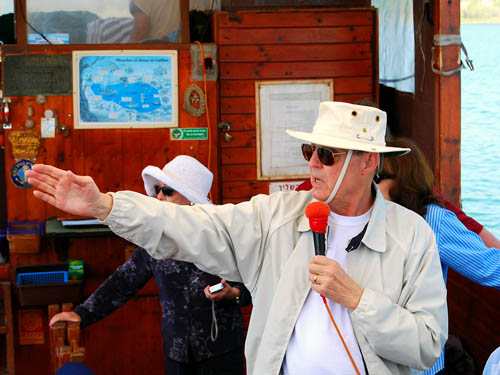
My wife had someone shooting photos while I was pointing out sites of interest along the shores of Galilee. I think I was pointing out the possible location of the account of the swine rushing down the steep bank into the sea (Matthew 8:28 – 9:1).

Ferrell Jenkins pointing out sites of interest on the shore of Galilee.

Ferrell Jenkins pointing out sites of interest along the shore of Galilee.

Luke calls the Sea of Galilee a lake (Luke 5:1-2; 8:22-23,33).

Now Jesus was standing by the Lake of Gennesaret, and the crowd was pressing around him to hear the word of God. (Luke 5:1 NET)