Category Archives: New Testament

New discoveries at Paphos, Cyprus

The Cyprus Mail reports the results of archaeological work in the agora at ancient Paphos, Cyprus, by the Institute of Archaeology of the Jagiellonian University, Kraków, Poland.

One of the significant discoveries during the August/September excavations was a small tablet with the name of an official on it in the Greek language. According to the article, the Greek inscription reads,

Seleukos, son of Agoranomos (market administrator) Ioulios Bathylos.

Architectural remains from the Roman period were also uncovered in the same area as the Greek inscription.

The short article maybe read here.

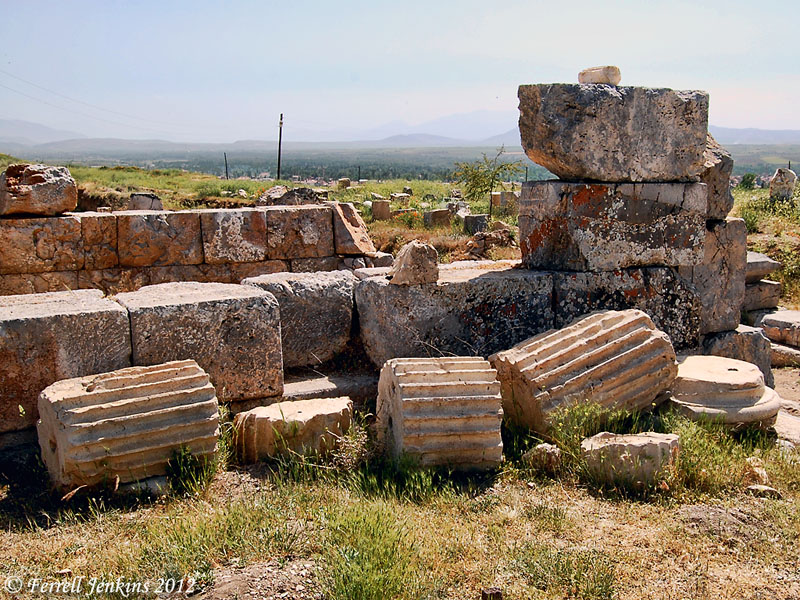
The photo below shows a few fallen columns in the mostly unexcavated agora in mid-May, 2012.
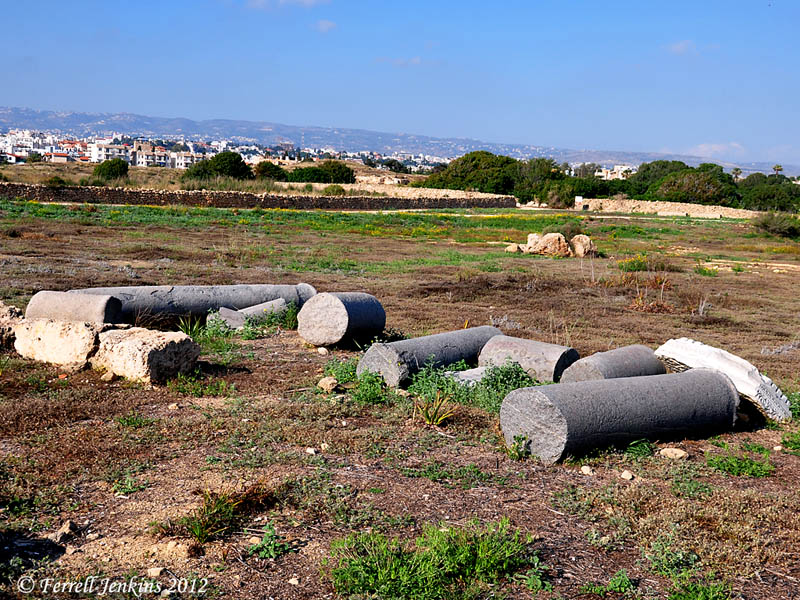
Ancient agora at Paphos, Cyprus. Photo by Ferrell Jenkins.

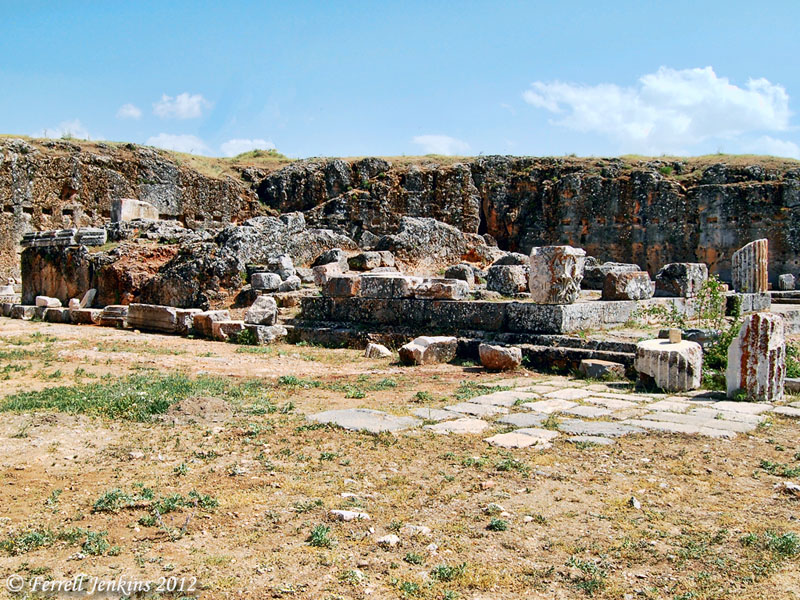
Ancient agora at Paphos, Cyprus. Photo by Ferrell Jenkins.

Barnabas, Saul, and John Mark arrived at Paphos after crossing the length of the island of Cyprus on the first missionary journey. It was here that Saul’s name was changed to Paul.

 6 When they had gone through the whole island as far as Paphos, they came upon a certain magician, a Jewish false prophet named Bar-Jesus.
7 He was with the proconsul, Sergius Paulus, a man of intelligence, who summoned Barnabas and Saul and sought to hear the word of God.
8 But Elymas the magician (for that is the meaning of his name) opposed them, seeking to turn the proconsul away from the faith.
9 But Saul, who was also called Paul, filled with the Holy Spirit, looked intently at him
10 and said, “You son of the devil, you enemy of all righteousness, full of all deceit and villainy, will you not stop making crooked the straight paths of the Lord?
11 And now, behold, the hand of the Lord is upon you, and you will be blind and unable to see the sun for a time.” Immediately mist and darkness fell upon him, and he went about seeking people to lead him by the hand.
12 Then the proconsul believed, when he saw what had occurred, for he was astonished at the teaching of the Lord. (Acts 13:6-12 ESV)

HT: Jack Sasson
Visiting the Lynn H. Wood Archaeological Museum

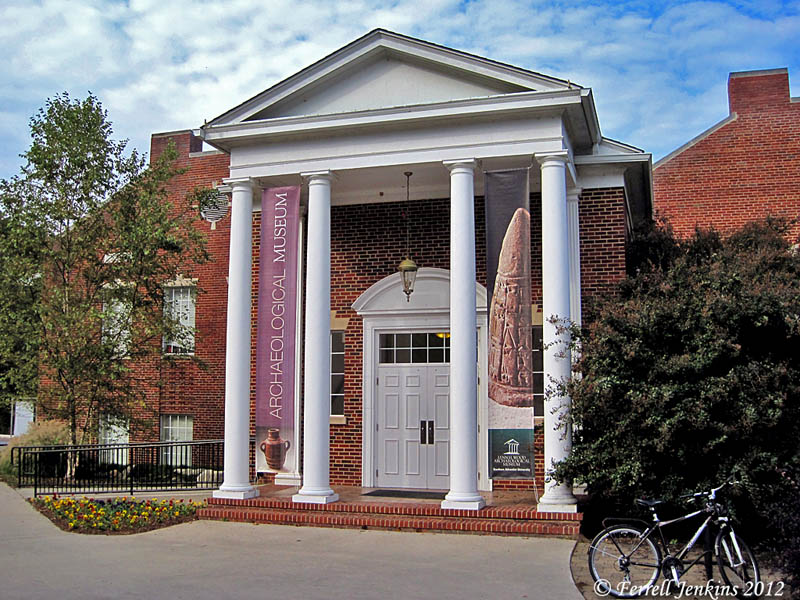
You might never expect to find an excellent archaeological museum nearly hidden in the woods of eastern Tennessee. But that is what you will find at the Lynn H. Wood Archaeological Museum on the campus of  Southern Adventist University in Collegedale, Tennessee.

When we arrived on campus we asked a student the location of the Museum. After walking up a long series of steps that some students were skipping up (ah, youth!), we asked two other students. Each of them offered to show us. And, neither had been to the Museum. Everyone on campus that we spoke with was friendly and helpful.

Inside Hackman Hall is housed a wonderful educational exhibit.

The Lynn H. Wood Archaeological Museum is located in this building.

The Lynn H. Wood Archaeological Museum is located in this building.

A few years ago William G. Dever gave his research library of nearly 3000 volumes and a large collection of archaeological artifacts to Southern. The artifacts are built into an award-winning exhibition under the title Vessels in Time: A Journey Into the Biblical World. Archaeology Professor Dr. Michael G. Hasel serves as curator of the Museum.

Iron Age IIA (1000-900 B.C.) Pottery in the Lynn H. Wood Museum.

Iron Age IIA (1000-900 B.C.) Pottery in the Lynn H. Wood Museum.

The exhibits follow a chronological order from the early days in Mesopotamia to New Testament times.  Each display has a good timeline which coordinates the archaeological periods with the Biblical record. The photo above shows some pottery from the Iron Age IIA (1000-900 B.C.). This is the period of the United Kingdom (or Monarchy). The bowl on the left has been slipped and shinned. The accompanying information explains that during this period vessels were sometimes dipped “into red watery clay” to create the colored slip. The bowl was then hand burnished with a stone like the one shown above it.

Three examples of dipper juglets from the period are shown:

  1. A Phoenician import.
  2. A simple local juglet.
  3. A black-slipped, burnished juglet.

There is a nice model of Solomon’s Temple in the same room.

If your travels take you anywhere near Chattanooga, Tennessee, I suggest you take time to drive a few miles east to Collegedale and visit the Lynn H. Wood Archaeological Museum.

Full information about the Museum including visiting hours may be found here.

Acts 16 — Photo Illustrations (corrected)

What is the best way to correct a blunder? Shall I totally delete the post and start anew, or shall I edit the existing one? I decided to leave the existing one for the time being and post the correction here.

Forum/Agora. One reader suggests that I have incorrectly identified the forum at Philippi as the agora. Some sources indicate that the forum was primarily used for civic or judicial matters while the agora was considered the commercial center or market place.

My intention was to use both words because they are often used interchangeably. At Philippi, Corinth, and other places, these activities are not far removed from each other. In fact, the Forum at Philippi, and the Agora at Corinth contain a Bema (judgment seat) as well as numerous commercial shops.

I am not at home and do not have access to some of the sources I might normally use to check these things, but I have access to some dictionaries online.

The American Heritage Dictionary gives this definition for forum:

The public square or marketplace of an ancient Roman city that was the assembly place for judicial activity and public business.

The Compact Oxford English Dictionary defines the forum…

(in an ancient Roman city) a public square or marketplace used for judicial and other business.

The Wrong Photo. But my serious blunder was in the photo I labeled as the forum/agora. After publishing it I began to think I had uploaded the wrong photo. A friend has written privately to remind me that I have posted a photo of one of the basilicas at Philippi rather than the forum. I plead guilty. My oversight.

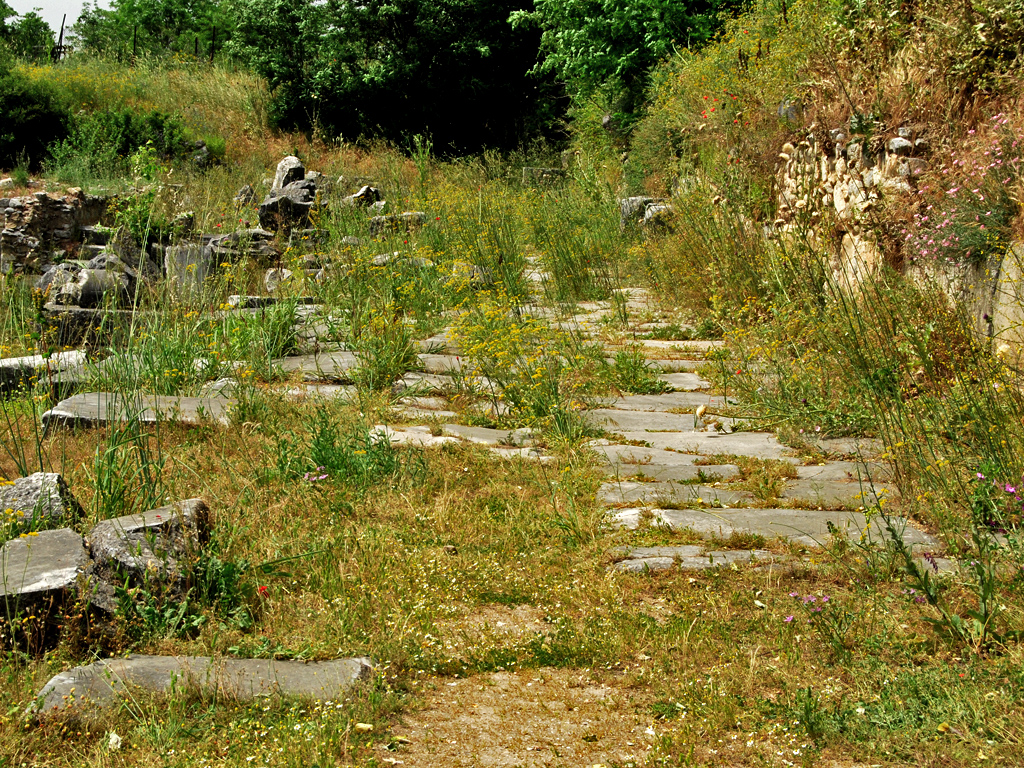
Here is a photo of a portion of the Via Egnatia (the Egnatian Way) in the forum at Philippi. Much of it is covered by several feet of earth. The modern road runs above the ancient one.

A portion of the Via Egnatia in the Forum at Philippi. Photo by Ferrell Jenkins.

A portion of the Via Egnatia in the Forum at Philippi. Photo by Ferrell Jenkins.

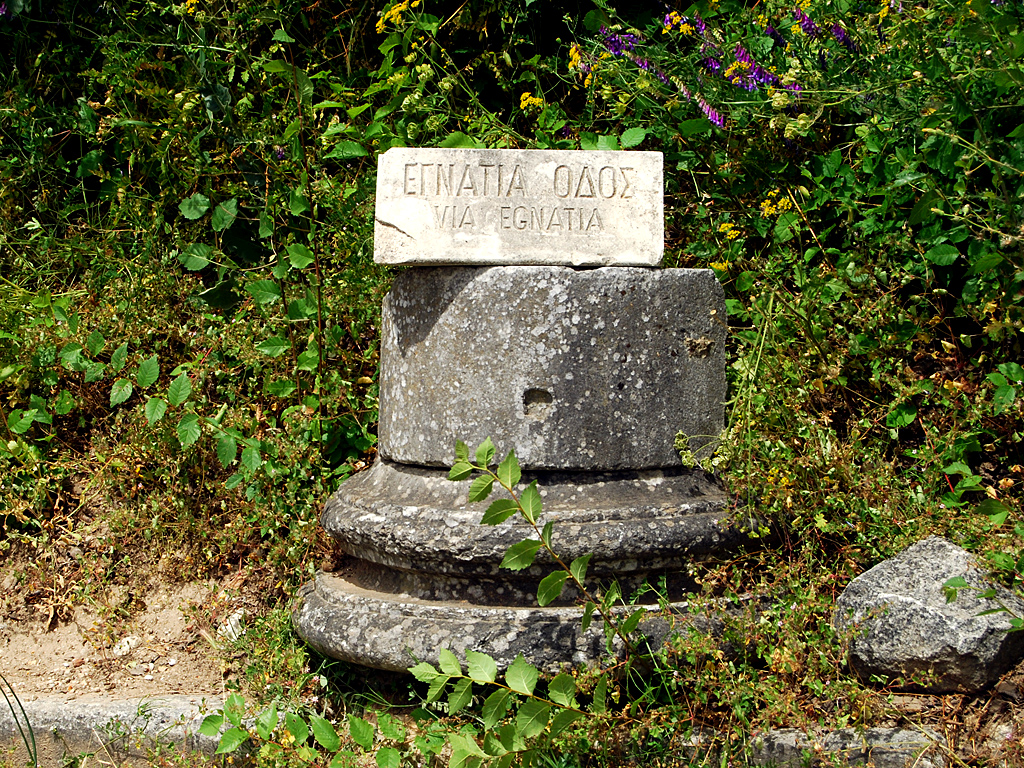
The next photo shows a sign that once sat on the road.

Identifying the Via Egnatia in the Forum at Philippi. Photo by Ferrell Jenkins.

Identifying the Via Egnatia in the Forum at Philippi. Photo by Ferrell Jenkins.

Perhaps later I will post a photo of some of the shops in the forum.

Acts 16 — Photo Illustrations

The Apostle Paul came to Philippi on his second preaching journey. Luke accurately describes the city with these words:

So putting out to sea from Troas, we ran a straight course to Samothrace, and on the day following to Neapolis; and from there to Philippi, which is a leading city of the district of Macedonia, a Roman colony; and we were staying in this city for some days. (Act 16:11-12 NAU)

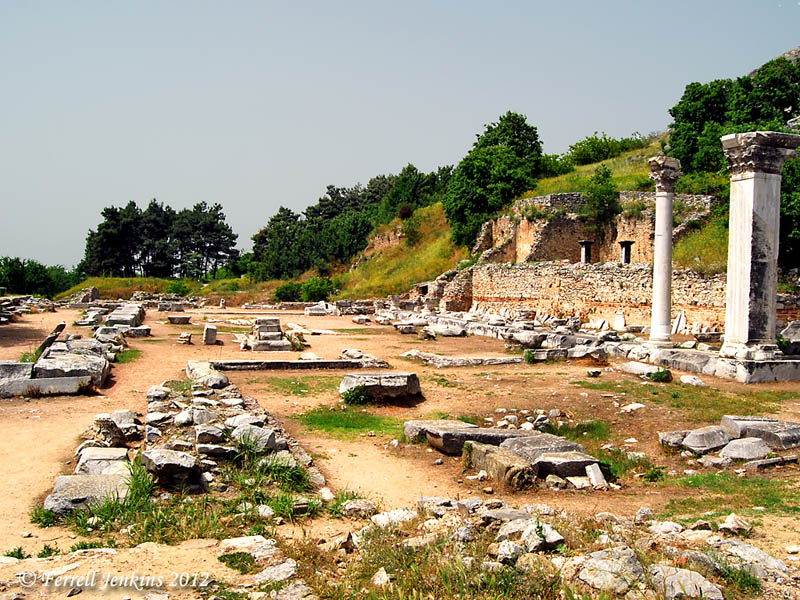
The photo below shows ruins of the forum (or agora) of the city where much of the activity took place. Portions of the famous Egnatian Way may be seen at the edge of the forum, but partially buried under the earth and modern road on the right. [See correction here.]

Forum of Philippi. Photo by Ferrell Jenkins.

The Forum (Agora) of Philippi. Photo by Ferrell Jenkins.

At Philippi, Paul preached to and baptized Lydia and her household, and the jailer.

Wallace: Fifteen Myths about Bible Translation

Prof. Daniel B. Wallace discusses “Fifteen Myths about Bible Translation.” Wallace is a well known and respected scholar dealing with issues pertaining to the Greek language and Textual Criticism.

Wallace says,

Perhaps the number one myth about Bible translation is that a word-for-word translation is the best kind.

Whatever your current level of knowledge about Bible translations, you are sure to learn something from these “Fifteen Myths” even if you don’t agree with all of them.

Read the full article here.

HT: BibleX

Acts 15 — Photo Illustrations

James, the Lord’s brother, is one of the prominent characters in Acts 15. In fact, Paul later refers to the events of Acts 15, and speaks of James, Cephas,and John.

and when James, Cephas, and John, who had a reputation as pillars, recognized the grace that had been given to me, they gave to Barnabas and me the right hand of fellowship, agreeing that we would go to the Gentiles and they to the circumcised.  (Galatians 2:9 NET)

In the Armenian Quarter of the Old City of Jerusalem we find the Cathedral of St. James. Murphy-O’Connor says,

Facts and legend are juxtaposed as casually as are artistic creations of different talents and periods. The church is dedicated to St. James the Great, son of Zebedee, who was executed by king Herod Agrippa I in 44 (Acts 12:1-3).

But the building also claims to hold the “patriarchal throne of St James the Less, the brother of the Lord…” (Murphy-O’Connor). This is the James of Acts 15. (It is sometimes difficult for readers to keep all of those named James, John, and Mary, separate when reading the New Testament — not to mention Herod.)

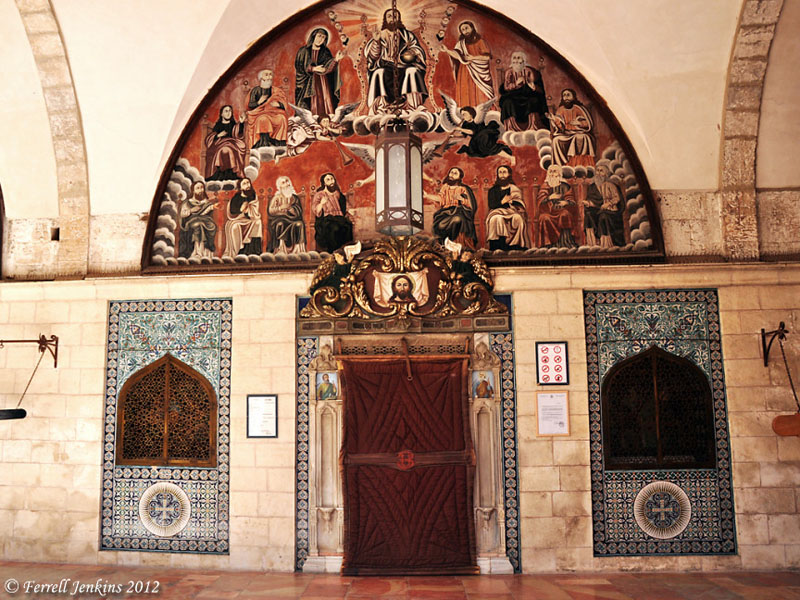
Photos were not allowed inside the building when I was there to observe a service. This photo shows the entrance to the Cathedral.

Entrance to St. James Cathedral in the Armenian Quarter of Jerusalem. Photo by Ferrell Jenkins.

Entrance to St. James Cathedral in the Armenian Quarter. Photo by Ferrell Jenkins.

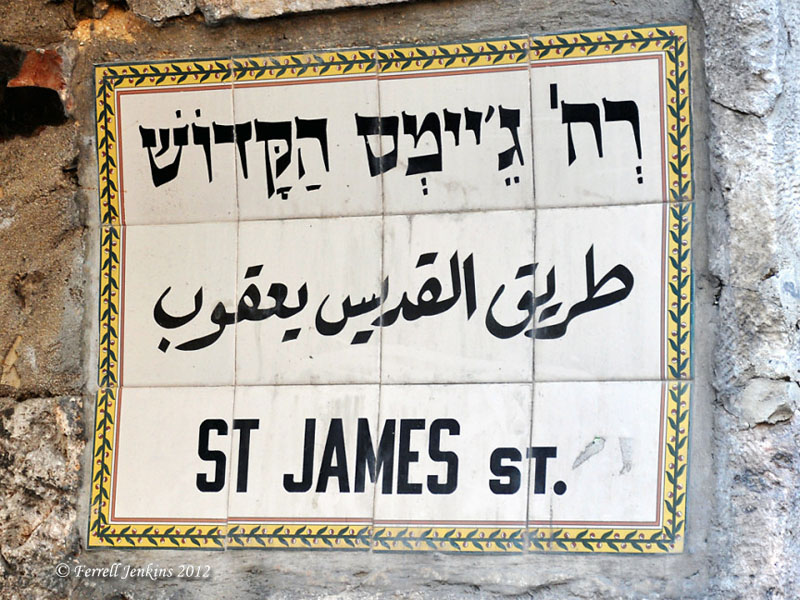
In one of the quietest places in the Old City one comes upon St. James Street.

St. James Street in the Armenian Quarter. Photo by Ferrell Jenkins.

St. James Street in the Armenian Quarter. Photo by Ferrell Jenkins.

Other names of interest in the Armenian Quarter include St. Mark’s Street and Ararat Street. A century ago the Armenians had a large presence in eastern Turkey, where the Mountains of Ararat are located.

“From the Land of Black Tents”

In his book The Apostle: A Life of Paul, noted biographer John Pollock begins his book with information about Paul’s background at Tarsus. He calls the first chapter, “From the Land of Black Tents.”

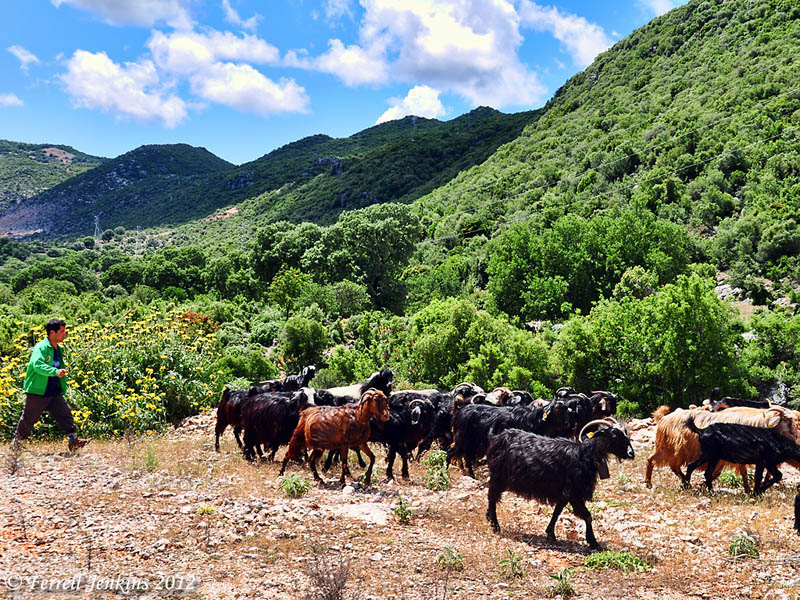
His father most likely was a master tentmaker, whose craftsmen worked in leather and in cilicium, a cloth woven from the hair of the large long-haired black goats that grazed (as they still do) on the slopes of the Taurus. The black tents of Tarsus were used by caravans, nomads, and armies all over Asia Minor and Syria.

We still see these herds of long-haired black goats in many parts of Turkey. The photo below was made east of Myra near the Mediterranean coast of Turkey.

Goats with long black hair, east of Myra, Turkey. Photo by Ferrell Jenkins.

Goats with long black hair east of Myra, Turkey. Photo by Ferrell Jenkins.

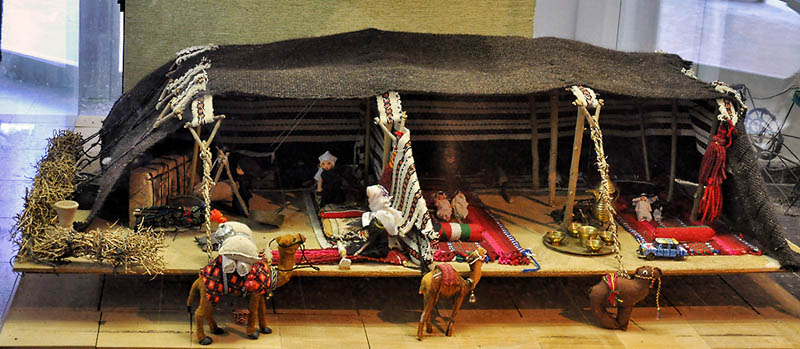
The Museum for Beduin Culture at Kibbutz Halav in the Negev of Israel displays a small model of a beduin (bedouin) tent. This museum intends to preserve the memory of the original bedouin life that is quickly being replaced by a permanent life and housing.

Bedouin Tent Model displayed at the Museum for Beduin Culture. Photo by Ferrell Jenkins.

Tent Model displayed at the Museum for Beduin Culture. Photo by Ferrell Jenkins.

Paul said,

But Paul said, “I am a Jew of Tarsus in Cilicia, a citizen of no insignificant city; and I beg you, allow me to speak to the people.” (Acts 21:39 NAU)

Acts 14 — Photo Illustrations

G. Walter Hansen comments on the religious life of Galatia and the importance of Zeus and Hermes to the people who lived there.

Zeus was the most widely worshipped god in Galatia; temples to Zeus were ubiquitous. Zeus was often linked with other gods. In the territory of Lystra there are carvings and inscriptions which show Zeus accompanied by Hermes. An inscription found near Lake Sugla is a dedication to Zeus of a sundial and a statue of Hermes. The names of the dedicators are Lycaonian. A stone altar near Lystra is dedicated to “the Hearer of Prayer [presumably Zeus] and Hermes.” A relief near Lystra depicts Hermes with the eagle of Zeus. In Lystra a stone carving shows Hermes with two other gods, G and Zeus. (Gill and Gempf, The Book of Acts in its First Century Setting, Vol. 2: Graeco-Roman Setting, 393)

This evidence, says Hansen, provides the setting for the events of Paul and Barnabas at Lystra. Luke describes the reaction of the Lystrans when they saw Paul heal a lame man.

When the crowds saw what Paul had done, they raised their voice, saying in the Lycaonian language, “The gods have become like men and have come down to us.”  And they began calling Barnabas, Zeus, and Paul, Hermes, because he was the chief speaker.  The priest of Zeus, whose temple was just outside the city, brought oxen and garlands to the gates, and wanted to offer sacrifice with the crowds.  (Acts 14:11-13 NAU)

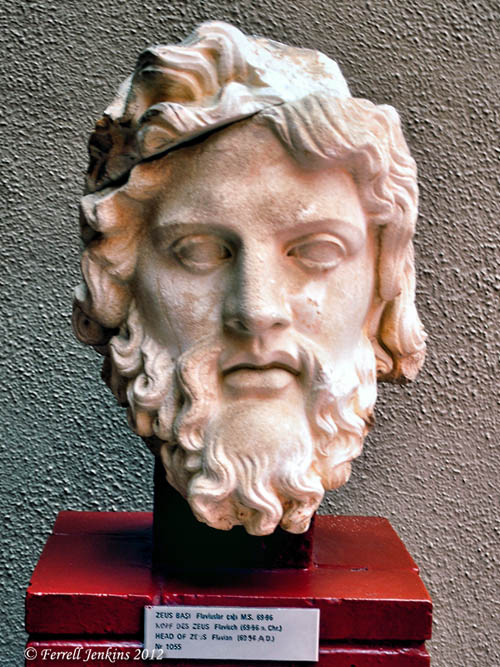
Bruce reminds us that “Zeus was the chief god in the Greek pantheon; Hermes, the son of Zeus by Maia, was the herald of the gods” (The Book of the Acts, NICNT, 292).

Our photo of Zeus is of a bust displayed in the archaeological museum at Ephesus.
Image

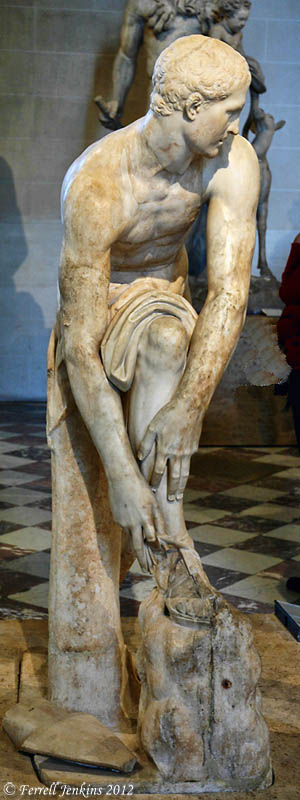
Paul was called Hermes because he was the chief speaker. Hermes was the messenger of the gods. How appropriate that our word hermeneutics, coming from the name Hermes, is used to describe the important work of interpreting the Scriptures. I have heard some speakers make fun of the word and then proceed to say that a certain phrase in the Scripture means … ! The photo below shows Hermes tying on his sandal in preparation for delivering a message. Some may recognize Hermes as the Latin Mercury, who is used as the symbol for the floral industry.

Image

The King James Version used the Latin terms Jupiter and Mercurius in Acts 14:12. Bruce says this is “due to an old and foolish fashion of replacing Greek proper names by their Latin equivalents in English translations from the Greek.”

This post is reprinted from December 1, 2011, with improved photos.

Acts 13 — Photo Illustrations # 2

During the trip to Israel I got a little behind in the photo illustrations for the chapters of Acts.

When we come to Acts 13 and 14, there are so many places to consider that it could take weeks to cover them all in detail. In fact, if you use the search box you will see that we have posts on most of the places mentioned in these chapters.

It seems that Paul and Barnabas did not stop to preach in Perga on the outgoing portion of the first journey. The text says, almost casually, that “going on from Perga, they arrived at Pisidian Antioch” (Acts 13:14).

Here we have one of the longer sermons of the book of Acts — Paul’s sermon in the Jewish synagogue. While it appears that we have a vibrant Jewish community in Pisidian Antioch, we also find a receptive Gentile audience. When the Jews rejected the message of the risen Christ, Paul and Barnabas said,

“we are turning to the Gentiles.” (Acts 13:46 ESV)

Pisidian Antioch was a city of numerous idol temples. There was a sanctuary or temple dedicated to the Emperor Augustus (30 B.C. – A.D. 14) built by Tiberias (A.D. 14-37).

Ruins of the Augustus Imperial Sanctuary at Pisidian Antioch. Photo by Ferrell Jenkins.

Ruins of the Augustus Imperial Sanctuary at Pisidian Antioch. Photo by Ferrell Jenkins.

The foundation of the sanctuary is cut from the solid bedrock.

The Augustus Imperial Sanctuary at Pisidian Antioch. Photo by Ferrell Jenkins.

The Augustus Imperial Sanctuary at Pisidian Antioch. Photo by Ferrell Jenkins.

Peter Walker describes the temple,

Beyond the propylon was a large, semicircular courtyard, surrounded by colonnades, the eastern part of which was cut out from the hill-side’s rock. And standing in the centre, towards the back, was the sanctuary of Augustus’ temple. Though quite small – some 15 by 30 feet (4.5 x 9 m) – it was set on a high foundation of natural rock and approached by a further twelve steps. Antioch’s residents were expressing in impressive fashion their gratitude to the emperor for their city’s increased prestige under his rule. However, for Paul it demonstrated the daunting challenge ahead. What room would there be for his own message, focused on a rival world-ruler, in a city where this imperial cult was evidently growing at such a pace? (In the Steps of Paul, 87,89).

Maps. In your study of Acts you might enjoy the use of the Digital Map of the Roman Empire available here. This map, based on the Barrington Atlas, includes the road system. Because the maps show the terrain, you can get some concept of the difficulties encountered by Paul and his companions as they traveled from place to place.

Thanks to Dr. Rasmussen for the lead to this map.

More about Magdala

Yesterday we called attention to the Magdala synagogue and table. We noted that it was impossible to get any good photos at the site. I didn’t even try.

We visited the site on the most recent tour, but everything is covered in a way that make it difficult or impossible to make sense of it.

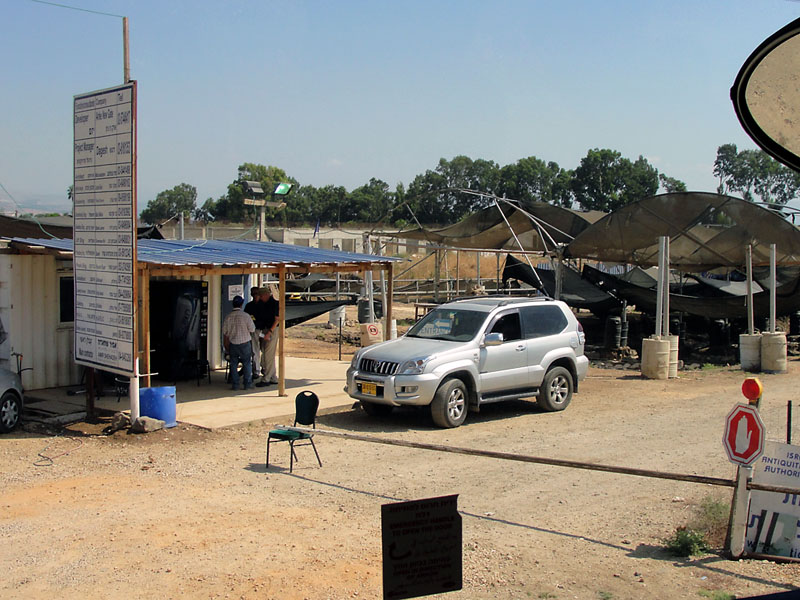
Overnight I received a photo from Steven Braman who was with us on the tour. He shared a photo he made from the bus window while our guide was negotiating a visit. I had been turned away on two previous attempts to see the site.

Site of the Magdala synagogue. Photo by Steven Braman.

Site of the Magdala synagogue. Photo by Steven Braman.

This looks like a construction site. It is. Notice the new buildings in the background of the photo. The Franciscians, under the name Galilee Project, are building a hotel, media center, cathedral, et al. In fact, the synagogue might not have been found for decades had it not been for the construction project. Hundreds of emergency excavations are conducted each year in Israel as a result of construction projects, the widening of roads, laying of pipe lines, and improving sewer systems.